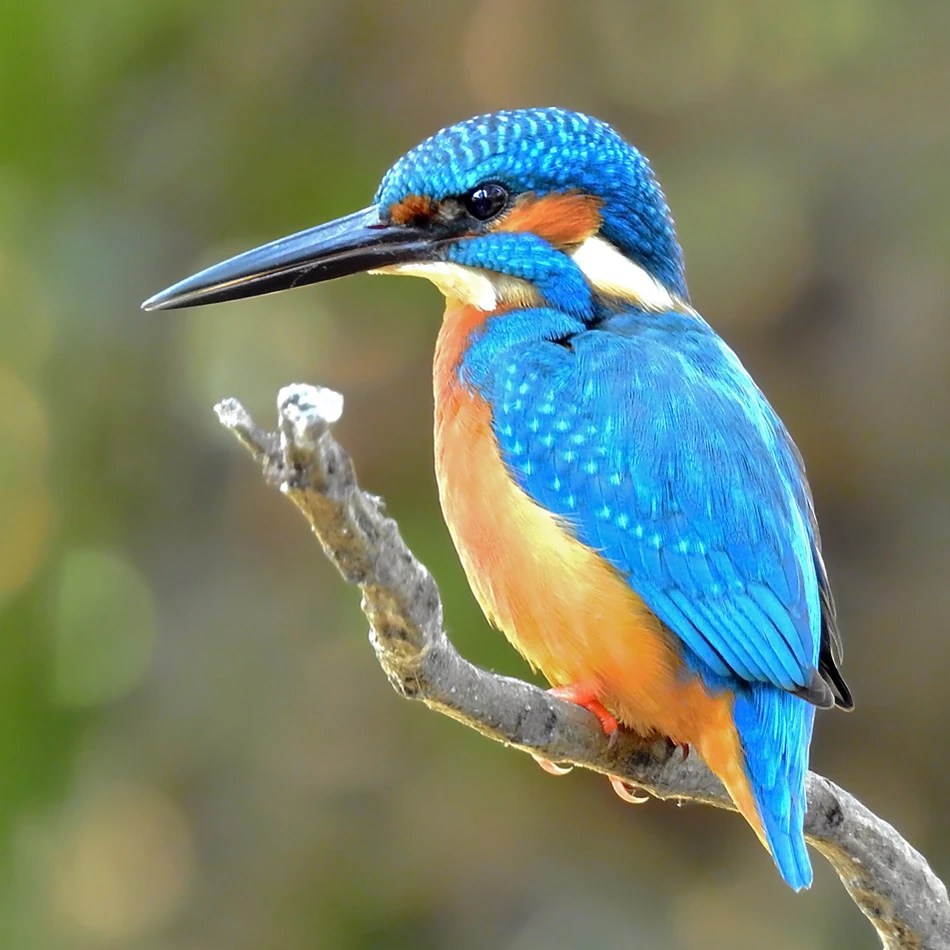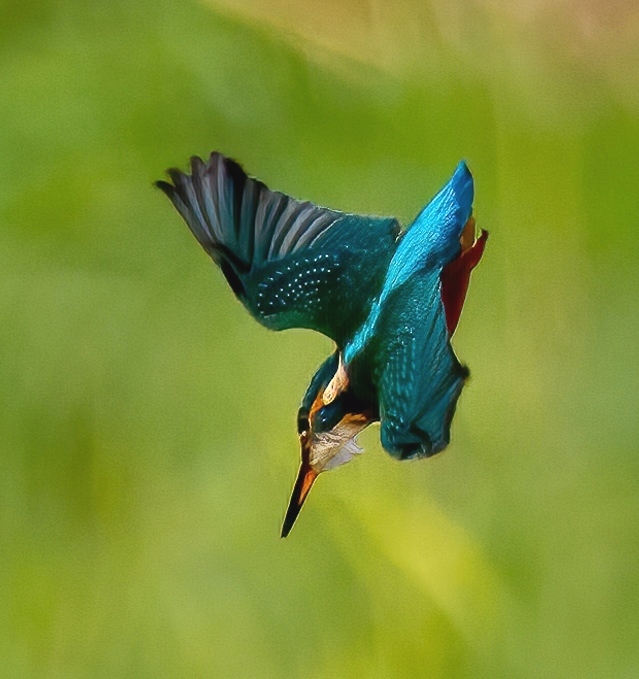
A Kingfisher, a brightly colored fish-eating bird with a large head, a dagger-like bill, which dives to catch prey
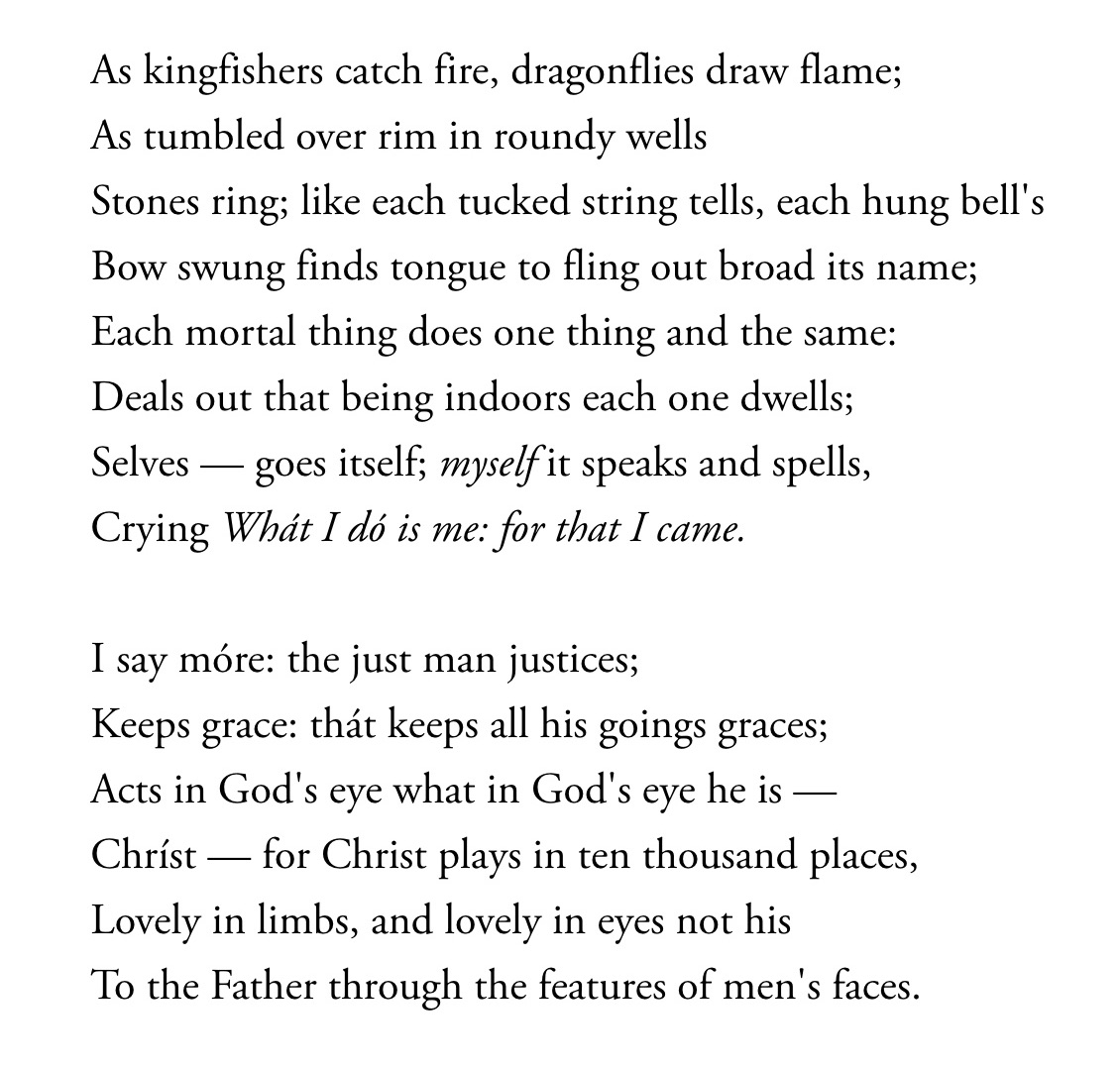
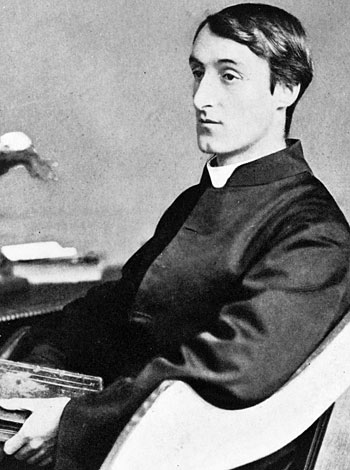
One of my favorite poems was written by the English poet and Jesuit priest, Gerard Manley Hopkins (1844-1889), from whom I have received inspiration in my continuing desire to glorify God by helping others perceive and give thanks for beauty. The poem from which I have borrowed my title for this post, provides a wondrous example of his gifts at work. I quote his poem here in full:
Hopkins’ Kingfisher poem, which is known by its first line
Reading poetry with insight does not come naturally to me, though I much appreciate the art form. As many others do, when approaching a poem like Hopkins’ “As Kingfishers catch fire,” I rely upon essays written by interpreters trained in literature. Since poems involve verbal communication, it may be that sharing insight about a poem with words is a more fruitful endeavor as compared with attempting the same regarding a painting. Yet, I believe that – as with most art forms – we can best express the things that have caught our attention and stirred our spirit in the paintings and poems that have stayed with us. Here are some aspects of Hopkins’ Kingfisher poem that continue to draw me in when I read its lines and speak its words aloud.
In this poem, Gerard Manley Hopkins displays what I consider to be an essentially “Catholic” sensibility when reflecting upon the world and our place within it. Here, his suggestion of the inner relationship and yet the difference between God’s mission in Creation and in Redemption, stands out to me, as does the continuity that may be perceived between the two. Order, purpose, meaning, and – yes – beauty, are to be found in God’s handiwork. The patterns we discern in nature attest to God’s intentions for us and for all other things touched by God’s ‘hands’ and by ours, and so we are reminded to look within ourselves for the same kind of purpose.
In discerning something of God’s purposes for us, we act in accord with what we observe and come to know. We are created to be just and so we choose to act justly. And we are created and then blessed further with God’s grace to be instruments of the same beautiful love. Risen Jesus, who comes to be with us, and then in us, manifests his divine role, inhabits our being, and brings new life to where it was not. In us, among the myriads upon myriads of those who see his beauty, who say, “Yes.”
Gerard Manly Hopkins as a JesuitA kingfisher – metaphorically – ‘catching fire’Diving for a catch
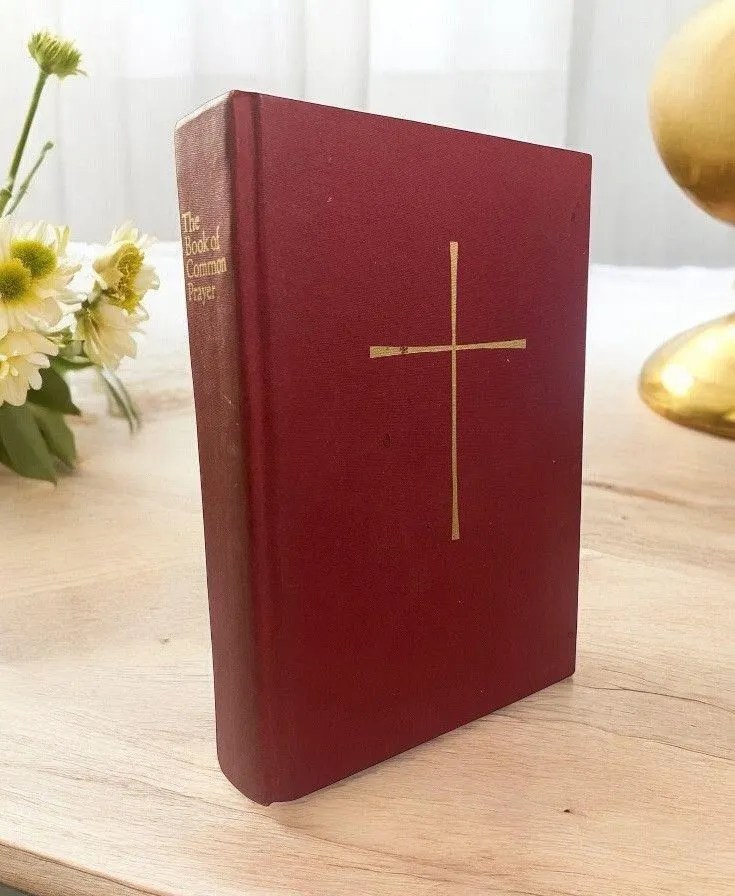
Anglican artists, writers, and musicians, have found deep spiritual significance in our encouter with beauty in the natural world, and they have left us with abundant examples of beauty in the places and things of worship. Our liturgies have been shaped by faithful people who, echoing the Psalmist, have sought to glorify “the fair beauty of the Lord.” It is therefore somewhat surprising to notice the relative paucity of references to beauty in The Book of Common Prayer, though the concept is interwoven in its many texts. In subtle and in sometimes hidden ways, beauty nevertheless functions as a significant concept in our prayers.
For Anglicans, The Book of Common Prayer [hereafter as BCP] functions as a resourcefor our prayers. And, in time and through practice, it becomes the sourceof our prayers, especially in the way that it is founded upon, and leads back into the Holy Scriptures. We are open to individually-crafted voluntary prayers offered for specific occasions. Yet, in our experience, these ‘unscripted’ prayers characteristically also become formulaic and repetitive in content as well as in phrasing, just our BCP prayers are sometimes said to be. As Anglicans, we find that – like practices handed down over generations – prayers shaped by communities also become ‘hallowed by time.’
Further, we hold in common a premise upon which Anglican Christians have typically relied. We often find our basic doctrine expressedin our prayers, though we do not usually look to our prayers to find nor to establish our doctrine. For it would be contrary to the spirit of this approach if we were to conclude that, by simply changing our prayers, we would then change our doctrine. Therefore, in the same spirit, the phrases that I cite here from the BCP are authoritative because they are true, rather than true as a result of coming from what we consider to be an authoritative source.
From the BCP, we are reminded about many things concerning Beauty, among them that:
⁃ Beauty is an attribute of God ⁃ God’s beauty is manifest in God’s handiwork in Creation, and therefore {by implication} manifest also in us, and between us ⁃ Creation is permeated with God’s beauty and grace, which is a reflection of God’s goodness as well as of divine truth, God’s own nature and a characteristic attribute of God’s creative activity ⁃ When we behold the beauty with which God has imbued Creation, we rejoice and experience joy as we encounter the presence of God’s love for the world and for us ⁃ Having this encounter, we perceive how God has given us work to do in truth and beauty and for the common good
Goodness, Beauty, and Truth, are attributes of God’s being and nature. How do we know this? We see the reflection, even the manifestation, of these transcendentals in the things that are created and here for us to behold and encounter. When we encounter these transcendentals in the things that are made, we encounter these attributes of God, not merely the residue of God’s action. And in so doing, we experience peaceful joy. This joy in us is our experience of God’s love for God’s work, the fruit of God’s creativity.
We often experience a disconnect between ourselves and our work, between who we are and how we act. With God, there is no such disconnect. God’s being and activity are indivisible, even if we distinguish them in our reflection. For at least in traditional Christian doctrine, God is all good, all knowing, and all powerful, dwelling outside of time, but acts and is fully present within it.
In our reflection therefore, God’s work of Creation and God’s work of Redemption may and should be distinguished but not confused nor separated. The principal reason for this is our recognition of the fallen state of Creation and of our human nature within it, to which God’s loving work of Redemption has been addressed.
As I previously reflected, in both Creation and in Redemption, God has formed and shaped the world and its inhabitants so that the world through God’s Creation is good and beautiful, and also a repository for what is true. Through Redemption, God embraces and transforms fallen Creation in such a way so that all that is amenable to fulfillment and completion in Christ may come to be so, and those things that are not amenable to the same have no future in Christ. Along with Truth and Goodness, Beauty plays a principal role in this ongoing process.
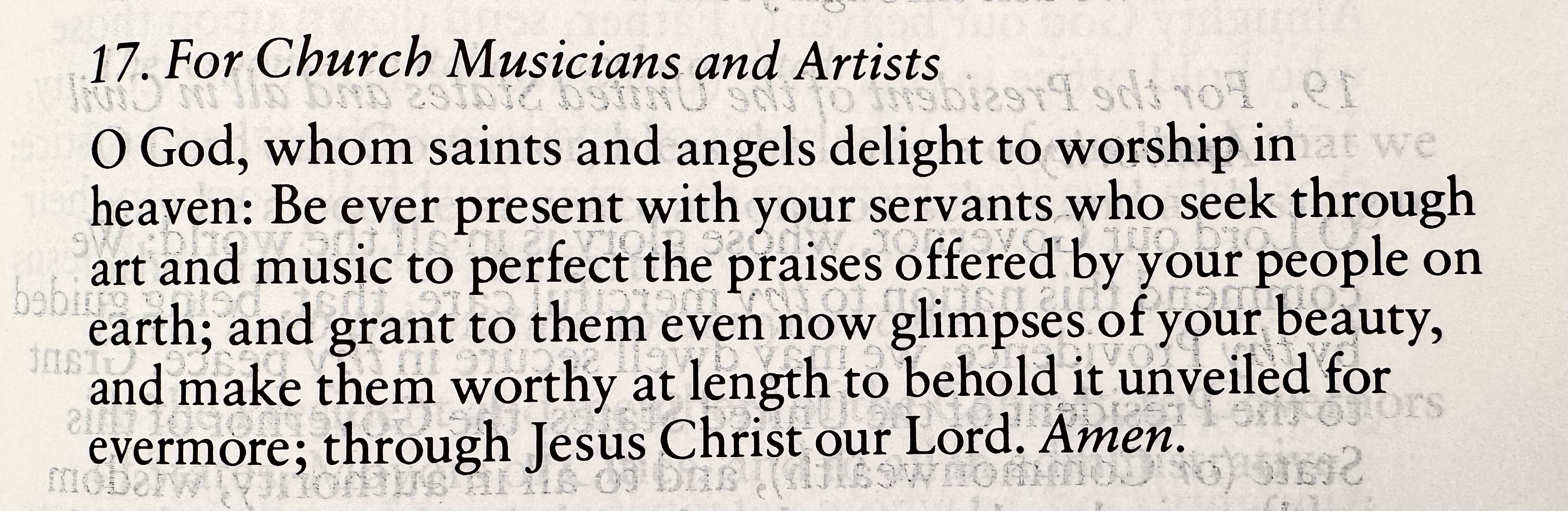
A Collect from The Book of Common Prayer
As a portion of Psalm 90 can be translated, “Let the beauty of the Lord our God be upon us, and prosper us for the work of our hands!” And in Psalm 96, we find: “Sing to the Lord a new song; sing to the Lord, all the earth… Honor and majesty are before him; strength and beauty are in his sanctuary.” And so, by divine grace, may these attributes of God and of the Risen Lord be present in our midst, and within us.
For reference, and as background material for the above, I include here some specific sources in the BCP for what I have shared:
In the BCP section, Prayers and Thanksgivings [BCP:814], Prayers for the World, from the Collect, For Joy in God’s Creation [BCP:814], we are reminded that: ⁃ Our Heavenly Father has filled the world with beauty ⁃ We ask God to open our eyes so that we can then behold God’s gracious in all of God’s works ⁃ So that, by rejoicing in God’s whole creation, we may learn to serve God with gladness, for Jesus’ sake, through whom all things were made ⁃ In other words, we find this implied sequence of ideas: —> God has filled the world with beauty -> God opens our eyes -> we behold God’s gracious hand in God’s works -> thereby we rejoice in God’s whole creation -> in the process, we learn to serve God with gladness
From the Collect for “The Transfiguration” [BCP:243], we are reminded that ⁃ We ask God to grant that we might be delivered from the disquietude of this world, so that we may by faith hold the King in his beauty, who with the Father and the Holy Spirit lives and reigns, one God, world without end
From the Collects for “Various Occasions,” the Collect for Vocation in Daily Work” [BCP:251], we are reminded that ⁃ Almighty God, our Heavenly Father, declares his glory and shows forth his handiwork in the heavens and in earth ⁃ We ask God to deliver us in our various occupations from serving ourselves alone, so that we may do the work God has given us to do in truth and beauty and for the common good
From the liturgy for “The Dedication and Consecration of a Church” [BCP:567ff], we are reminded that ⁃ We give God thanks for the gifts of God’s people, and for the work of many hands, which have beautified places and furnished them for the celebration of God’s holy mysteries ⁃ We ask God to accept and bless all that we have done, and to grant that in these earthly things we may behold the order and beauty of things heavenly ⁃ Through Jesus Christ our Lord
From the “A Litany of Thanksgiving for a Church” [BCP:578, from within the above liturgy], we are reminded that ⁃ we thank God whom we worship [here] in the beauty of holiness
In the BCP section, Prayers and Thanksgivings [BCP:814], Prayers for the Church, from the Collect, “ForChurch Musicians and Artists,” we are reminded that ⁃ Saints and angels delight to worship God in heaven ⁃ We ask God to be ever present with his servants who seek through art and music to perfect the praises offered by God’s people on earth ⁃ And, to grant to them even now glimpses of God’s beauty and make them worthy at length to behold it unveiled for evermore ⁃ Through Jesus Christ our Lord ⁃ {and thus that God’s beauty is unveiled to those faithful who have gone before us to the other side}
In the BCP section, Thanksgivings [BCP:836ff], by “A General Thanksgiving” [BCP:836], we are reminded that ⁃ we thank God for the splendor of the whole creation, and for the beauty of this world ⁃ {and} for the wonder of life, and ⁃ for the mystery of love
In the same section, by “A Litany of Thanksgiving,” we are reminded that ⁃ we “give thanks to God our Father for all his gifts so freely bestowed upon us” ⁃ {and} for the beauty and wonder of God’s creation, in earth and sky and sea
Among the “Thanksgivings for National Life” [BCP:838ff, by the Thanksgiving “For the Nation,” we are reminded that ⁃ we thank almighty God for the natural majesty and beauty of this land, which restore us though we often destroy them
From among the “Thanksgivings for the Natural Order” [BCP:840ff], by the Thanksgiving “For the Beauty of the Earth,” we are reminded that ⁃ We give our most gracious God thanks for the beauty of earth and sky and sea; for the richness of mountains, plains, and rivers; for the songs of birds and the loveliness of flowers ⁃ That we praise God for these good gifts, and pray that we may safeguard them for our posterity ⁃ we ask God to grate that we may continue to grow in our grateful enjoyment of God’s abundant creation, to the honor and glory of God’s name
Note: I have retained and employed the pronouns and grammatical style employed by the 1979 Book of Common Prayer, which continues to be our primary and most widely shared reference point for theological expression and beliefs. Our beliefs are founded upon Scripture, which always provides the standard for a community that believes that prayer both reflects and shapes belief. And the Scripture that we “read, mark, learn, and inwardly digest” is the Scripture that has been received and confirmed by the believing community of the wider Church through the centuries. Different Christian communities of course prefer differing translations of the Bible. Here, for Anglicans, Scripture is authoritative as we are guided by an ancient maxim attributed to St. Vincent of Lérin: What has always been believed by everyone, everywhere. Very little, it may seem, wholly fulfills the requirements of this maxim. Yet, what comes closest to fulfilling it is therefore most authoritative for us.
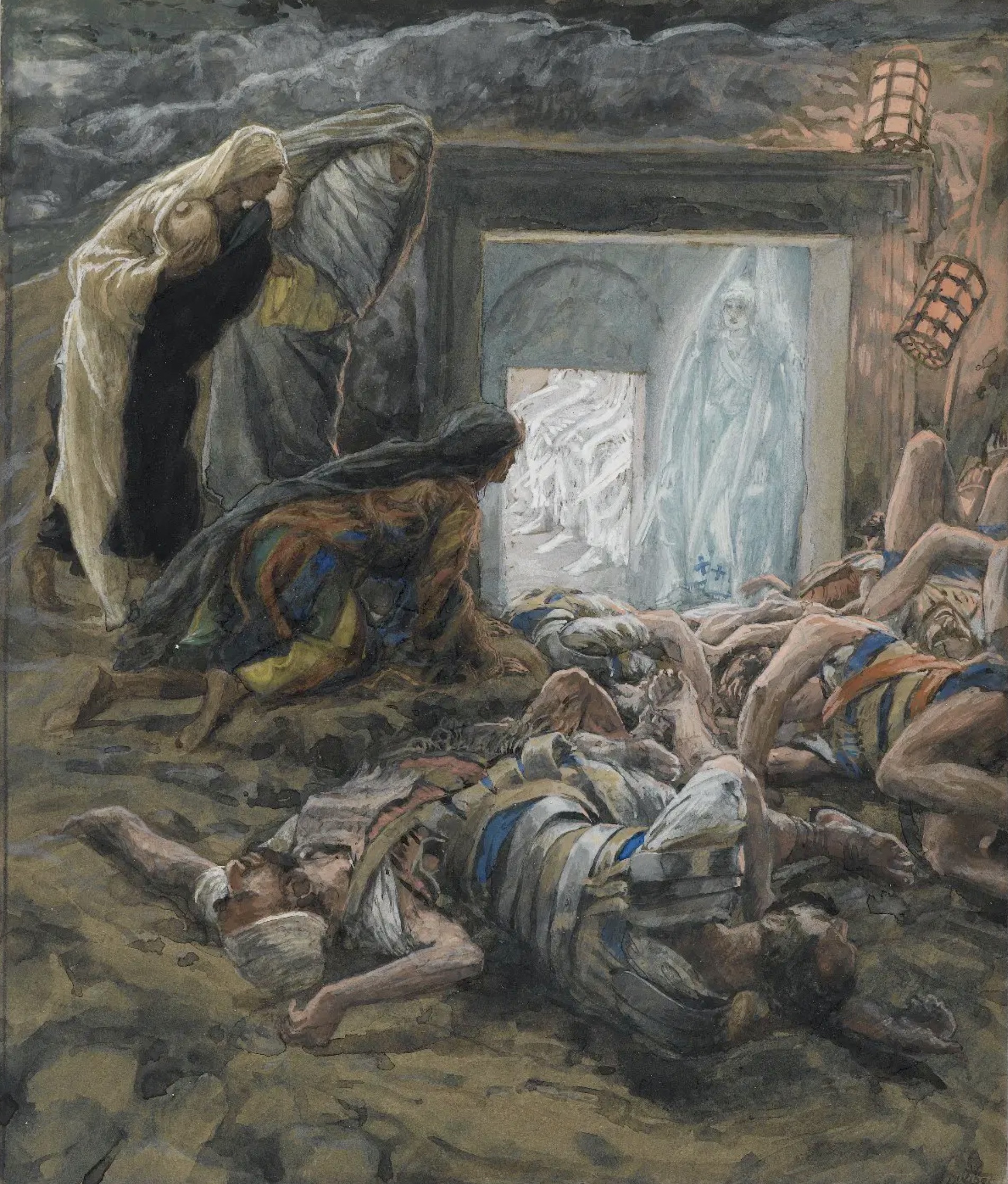
James Tissot, Mary Magdalen and the Holy Women at the Tomb
What an indescribable series of moments those were with the discovery of the empty tomb, first by the women, and then by some of the disciples. What made those moments so unexpected was the sense of emptiness that pervaded the scene after Jesus’ death on Golgotha. A few had stayed until the last. Most left, surely overwhelmed by a feeling of loss and of dark absence. He was gone. And then, so were they. Furtively moving off toward a place of hiding.
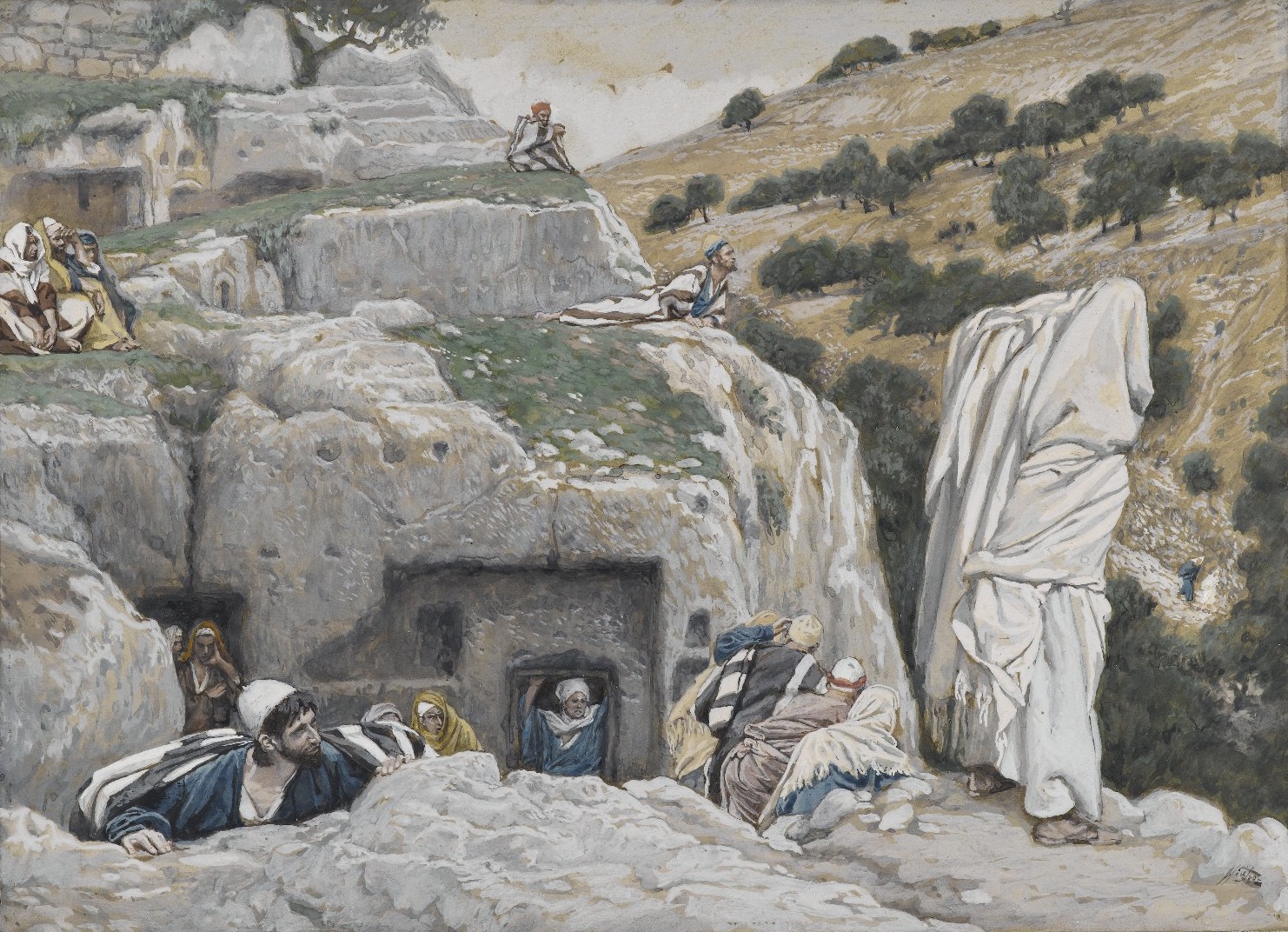
James Tissot, The Apostles’ Hiding Place
Then… from nothing came something. On the morning after the sabbath, surprised joy broke through fear and sadness as He who seemed no longer to be appeared amidst them. Among many promises, God had once said, “Behold, I make all things new.” This promise was now fulfilled, but not in a way that his people were expectating. Listless because of doubt, immobile due to their fears, their place of retreat strangely mirrored their Lord’s entombment.
Then, amidst the stillness of a death-prompted isolation, the followers of the Holy One experienced startling wonder, unanticipated joy, and a new sense of community. Excitement overcame their troubled conviction that all was lost. How had this come about? By reflecting on this question, we join writers of the New Testament and others by imagining how the Resurrection of Jesus not only happened to him, but how it also then happened to the disciples.
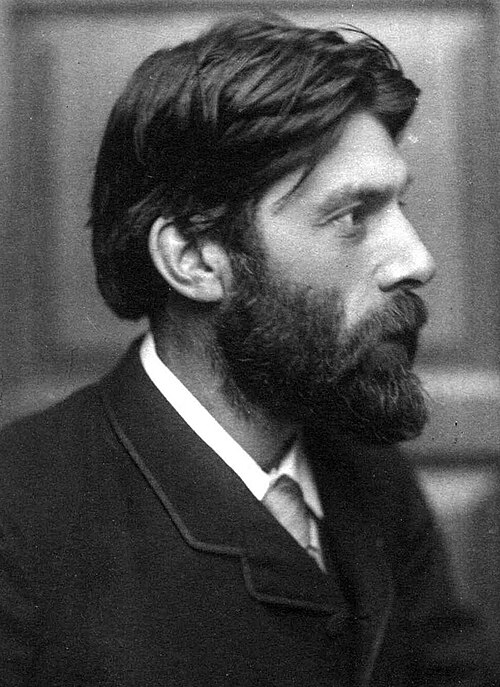
Robert Seymour Bridges was a nineteenth century physician and an esteemed poet, such that later in life he was named Poet Laureate of the United Kingdom. Though not well-known now, he deserves our attention for how he adapted and rendered in lyrical English verse a hymn text by the seventeenth century German theologian and hymn writer, Joachim Neander. Bridges’ version of that text is known by its first line, “All My Hope on God is Founded.”
Robert Seymour Bridges
Bridges’ poetic text is familiar to people in our own day because of the way it has been set to a twentieth century tune, MICHAEL, by Herbert Howells. Many heard this hymn when it was sung as a fitting part of an internationally televised occasion, the Committal Service for Queen Elizabeth II, in September of 2022.
“All My Hope on God is Founded” therefore represents a remarkable synthesis of a seventeenth century devotional text, Victorian poetical sensibility, and expressive twentieth century hymnology. Each of these features can be appealing, and in my perception, how they work together in this example makes for a very moving hymn that enhances contemporary eucharistic worship.
Hope, based on God’s grace and providence, provides the thematic structure for the five verses of the text as it appears in The Hymnal 1982 (of The Episcopal Church). The third verse evokes the blessings that we have received through God’s work in Creation. The text here is nuanced, evoking the role of divine wisdom, while at the same time making allusion to things we have learned through the science of astronomy. Here is verse 3 in full:
“God’s great goodness e’er endureth, deep his wisdom, passing thought: splendor, light, and life attend him, beauty springeth out of nought.”
Clearly, the hymn’s words here speak of what theologians refer to as creation ex nihilo, how God created all that is from nothing rather than from something preexisting. We remember the way that God’s handiwork is portrayed in Genesis 1, especially God’s recognition that what has been created isgood. Andrew Cuneo observes how, in Genesis’s opening chapter, this repeated refrain that it was good, “contains a Hebrew word which may be translated either as good or as beautiful. The feel of the whole chapter changes if one hears God proclaim that the light, the sun, the greenery, the animals are all beautiful, and mankind very beautiful.”
This helps us appreciate how Robert Bridges’ rendering of Neander’s text transposes the object of God’s appreciative regard from the attribute of goodness to that of Beauty. The beautiful splendor, light, and life that attend God then, by implication, become attributes that accrue to humankind, we who are created in God’s image and likeness.
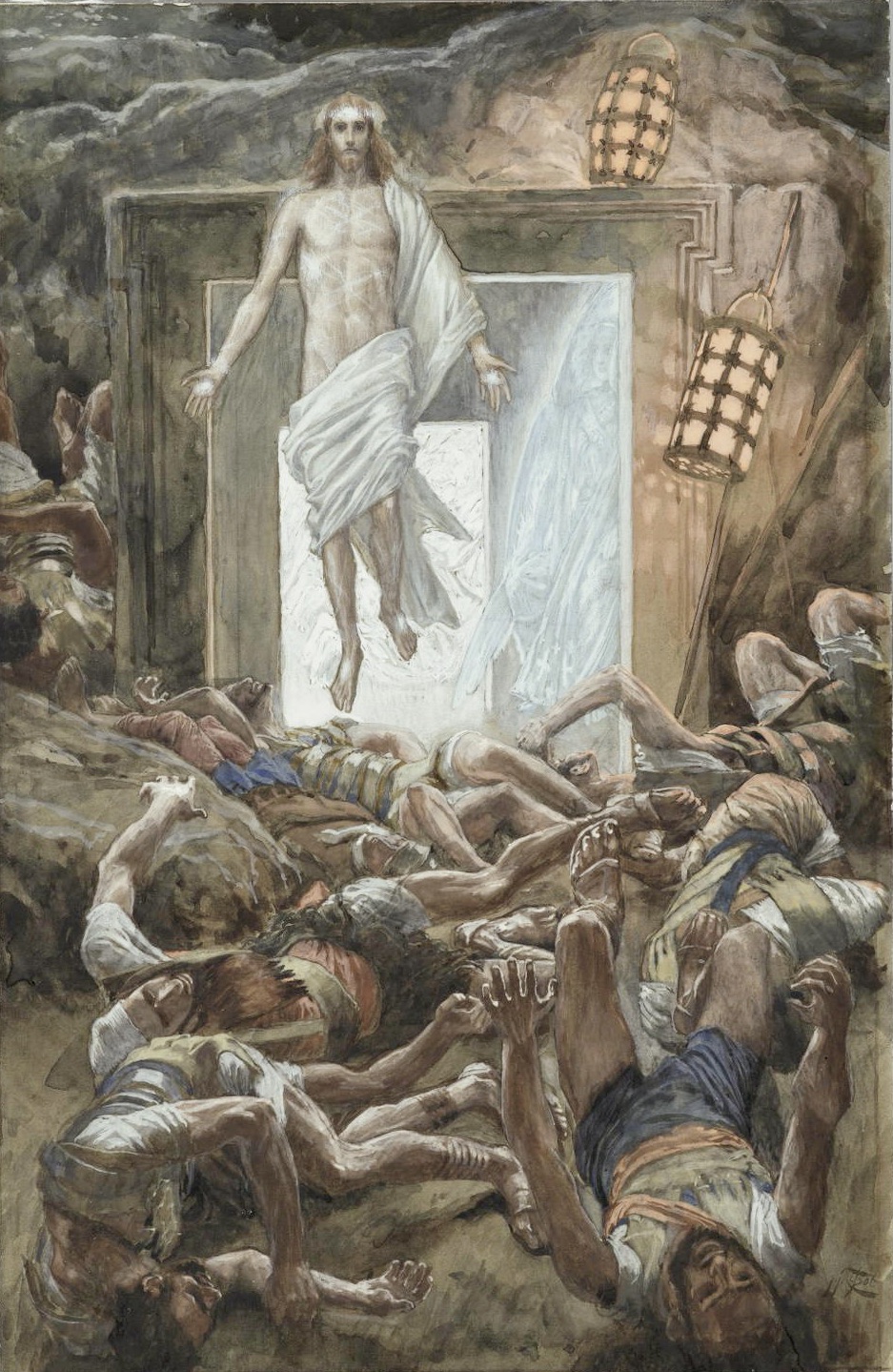
James Tissot, The Resurrection
A significant feature of New Testament theology appears in the theme of “a new creation,” signified by and inaugurated through Jesus’ Resurrection from the dead. As Paul puts it, “if anyone is in Christ, there is a new creation. The old has passed away; behold, the new has come” (2 Corinthians 5:17). Paul is here referring to death and resurrection, and the transformation we undergo through Baptism, when “what is mortal is swallowed up by life.” We can therefore say that the pattern of God’s work of Redemption mirrors that of Creation. For just as God created goodness and beauty out of nothing, God brought beautiful redemption to the world out of the emptiness of Jesus’ tomb. And as we feel joy when encountering beauty in Creation, so we find joy in God’s work of Redemption.
The disciples discovered new life within themselves through their encounter with and transformation by the Risen Jesus. This led them to a renewed sense of confidence that the Lord’s mission continued, and would now continue in and through them. They would have found fitting, and would have been able to sing, Robert Bridges’ words from the first verse of his hymn:
“All my hope on God is founded; he doth still my trust renew, me through change and chance he guideth, only good and only true.”
In a prior post I offered a reflection on the Committal Service for Queen Elizabeth II and noted its inclusion of the hymn, All My Hope on God is Founded. That post may be found here.
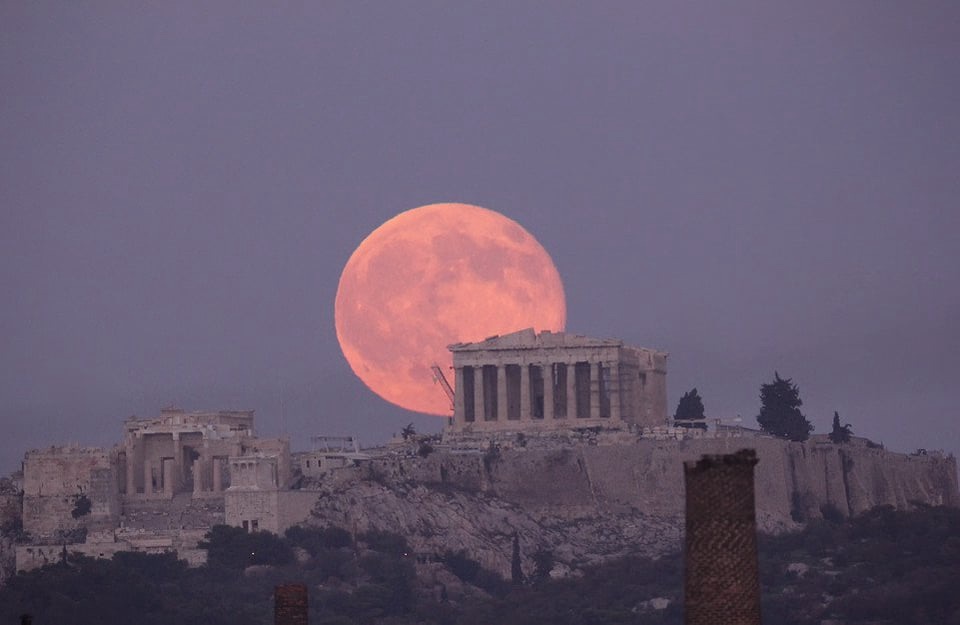
A dusky early evening left a soft glow on the Acropolis, periodically visible as I walked from the hostel toward the church. Yet, the size and warmth of the rising full moon held my attention as its blush touched the hills, for a brief while silhouetting the pillars and pediments of the Parthenon.
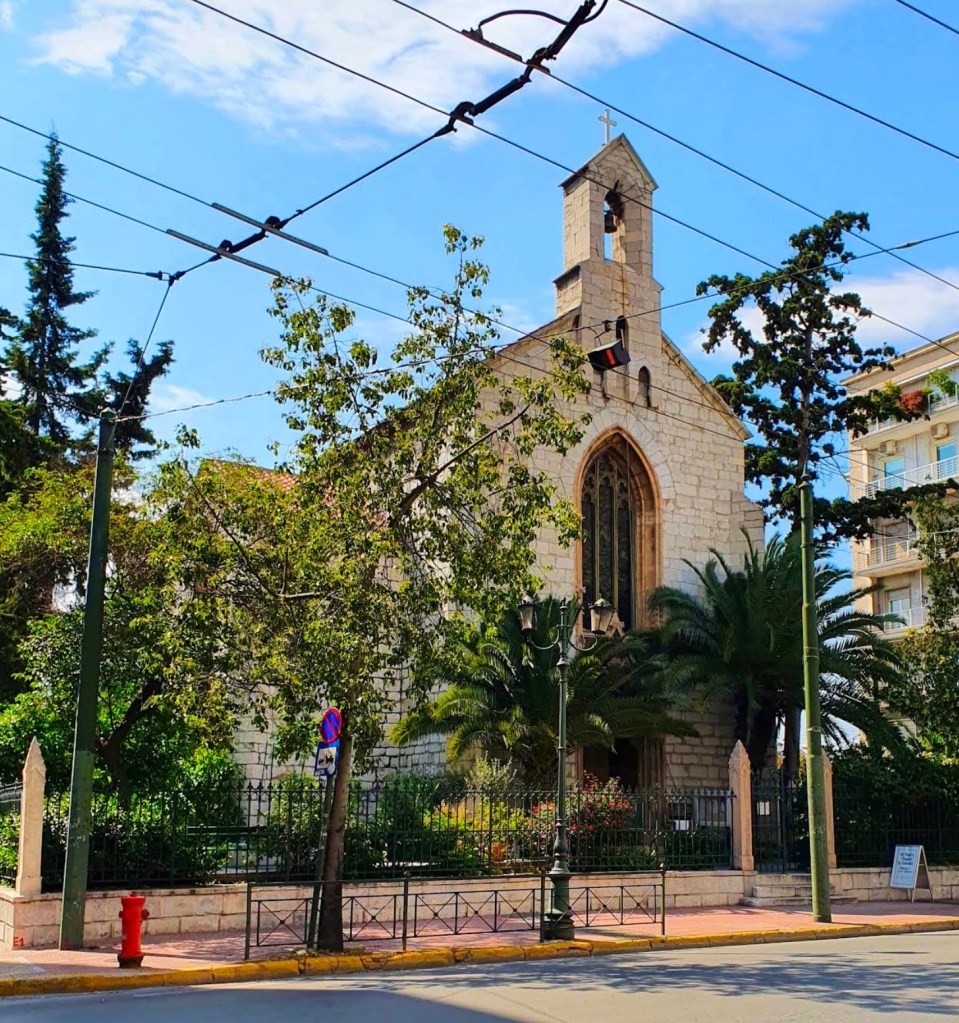
It was the evening of Holy Saturday, which fell on March 25 that year. In other years the day would have been the Feast of the Annunciation, but in 1978 it was the eve of Easter Sunday. I walked the short distance to Syntagma Square, to revisit the Anglican parish I had found that morning. Now, in the approaching darkness, I was returning to make my first confession, and be baptized at the Great Easter Vigil.
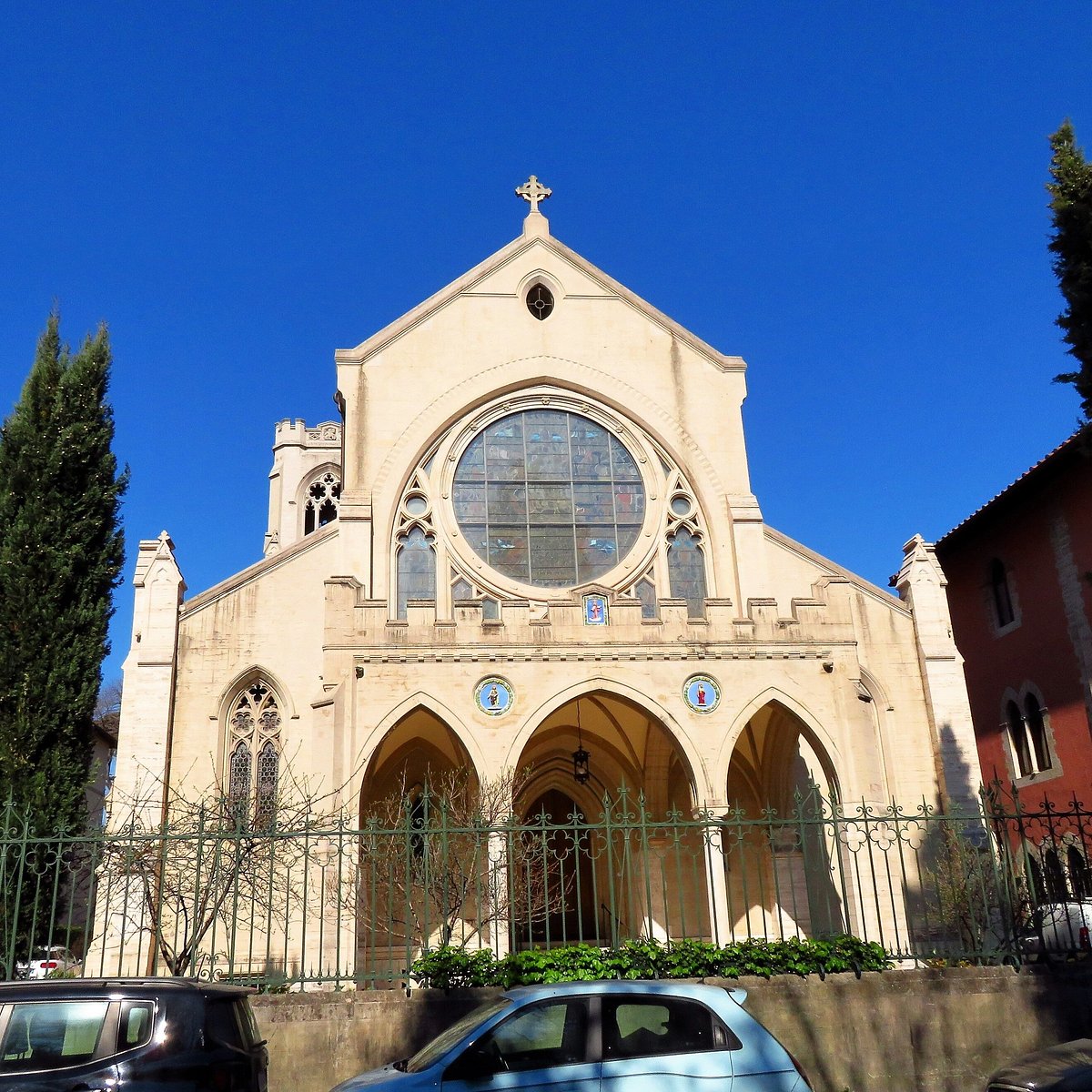
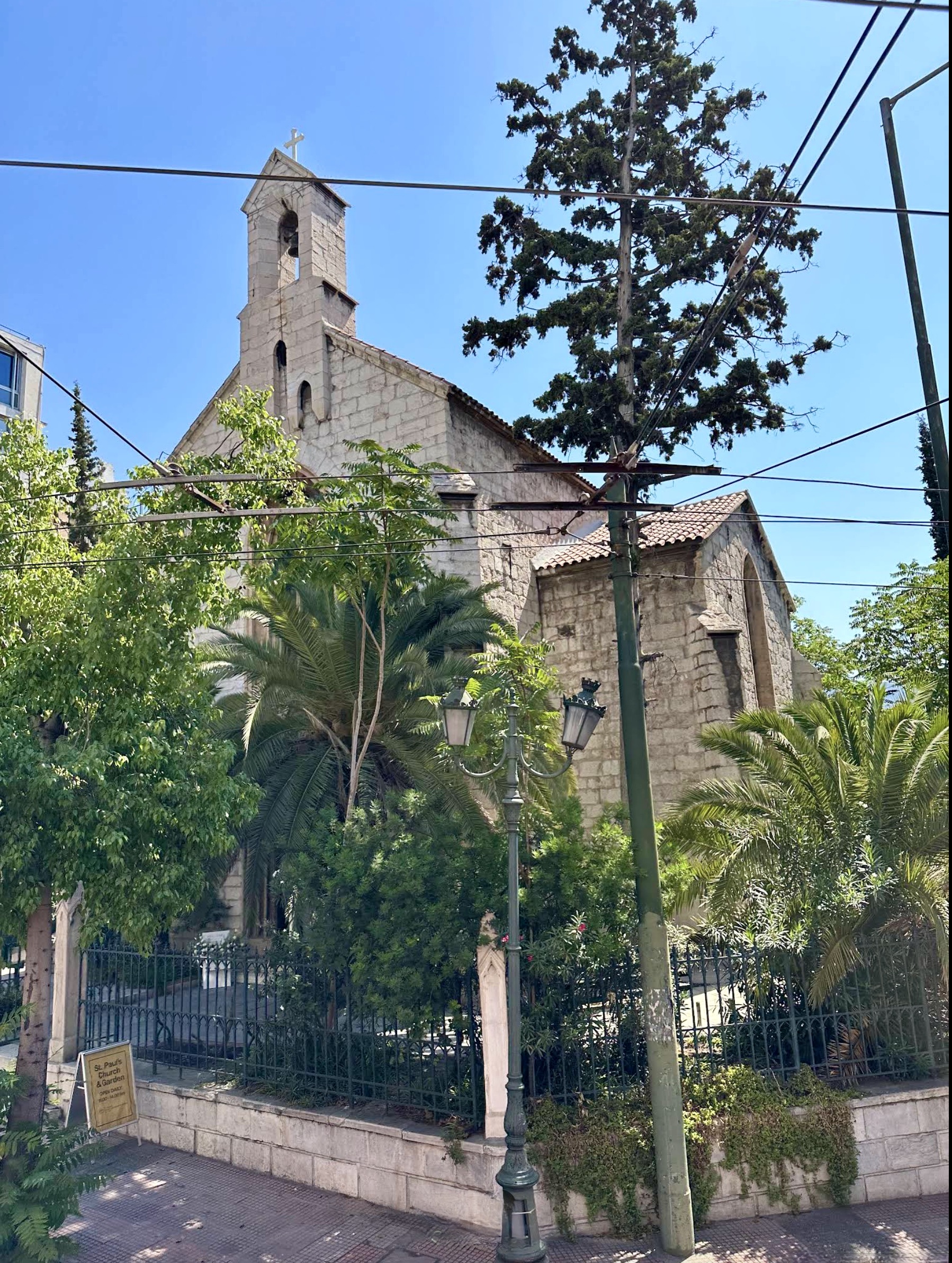
St Paul’s Anglican Church, Athens
How this came to be was largely due to providential grace, for I had not traveled to Greece with this particular result in mind. I was on a college year abroad, having lived and studied in Florence during the autumn. Then, after Christmas in Germany, I traveled to England for two eight week terms of study at Oxford. My plan for the year was to focus on Art History, fulfilling in part my chosen college major.
But, as in the biblical Damascus Road surprise, when first walking into the piazza around the Duomo in Florence, I experienced an unexpectedly sudden conviction: That it was time for me to surrender to the divine power I had come to recognize but had yet to affirm. Asking if there was an English-speaking congregation nearby, I was directed to St James Episcopal Church near the American Consulate. Over the next few months, and with the guidance of Fr. Edward Lee, the parish became for me a place of spiritual nurture.
The autumn course of studies for our group of visiting students in Florence was a fixed one. But my subsequent program in England allowed me the freedom to choose a personal area of focus. The exotic sounding topic of Christian Mysticism had been commended to me, and upon naming this to my Oxford program administrator, I learned that she could arrange tutorials for me with a recognized specialist in the field. What a blessing this turned out to be.
St. James Episcopal Church, Florence, Italy
And so, during a cold and wet English winter, my catechesis in the Christian Faith was suddenly deepened. My growth was fed by readings from the early desert saints, on through to the spiritual writers of the medieval period. My study experience was complemented by a different approach to worship from what I had encountered in the liturgy at St. James Episcopal Church in Florence. By chance, I discovered Pusey House and Anglo-Catholic liturgy soon after arriving in Oxford. Passing by a notice board, I saw an announcement about an upcoming sermon focused on the spirituality of Thomas Merton, whose Seven Story Mountain autobiography I had read the year before. Fr. Cheslyn Jones, the Chaplain at Pusey and a specialist in the Greek New Testament, along with the history of liturgy and spirituality, became my next catechist.
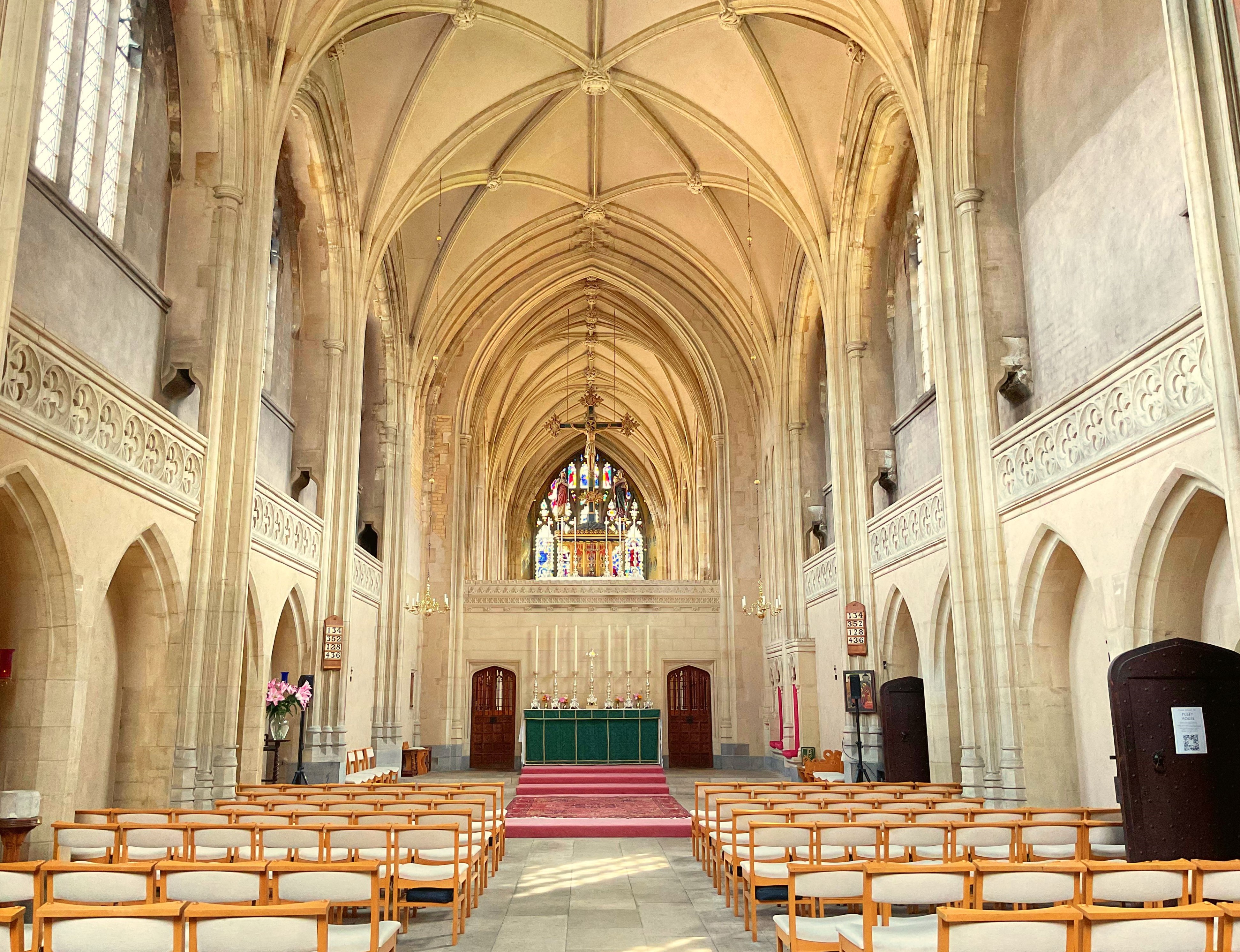
Pusey House Chapel, Oxford, England
At the end of the Hilary (or winter) Term, I made the kind of plans many American students undertake hoping for spring warmth: To head as far south as cheaply possible, for what in my case would be a six week break before the Trinity Term.
I found a used tent and some economical camping supplies in local shops in Oxford, and located a round-trip bus ticket from London to Athens, offered by a discount travel bureau. This led to a remarkable pair of journeys to and from the continent, crossing between Dover and Ostend, through Belgium, Germany, Austria, and Yugoslavia, before finally arriving in Greece. Deposited on an Athenian curbside on an early afternoon, I found a local bus to the port of Piraeus. There I arranged for an overnight passage to Crete on a vintage island cargo and passenger ferry. The next morning, I bought a bus ticket to the south coast of Crete, going to a place a friend had recommended, the little seaside town of Ierapetra, near where St. Paul’s ship had sailed off the coast (Acts 27). Aside from my basic gear, I had brought along only a New Testament and a book of the sayings of the Desert Fathers for my Lenten reading. My plan to do a lot of fasting for spiritual reasons fit neatly with my need for economy.
My first couple of nights were spent in a farmer’s field, above the town and seaside. I awoke one of those mornings to a rapping on the tent pole that alarmed me, sensitive to a probable complaint about my trespassing. Instead, there was a kind man, his arms folded across his chest, cradling fresh tomatoes and cucumbers. I was very touched.
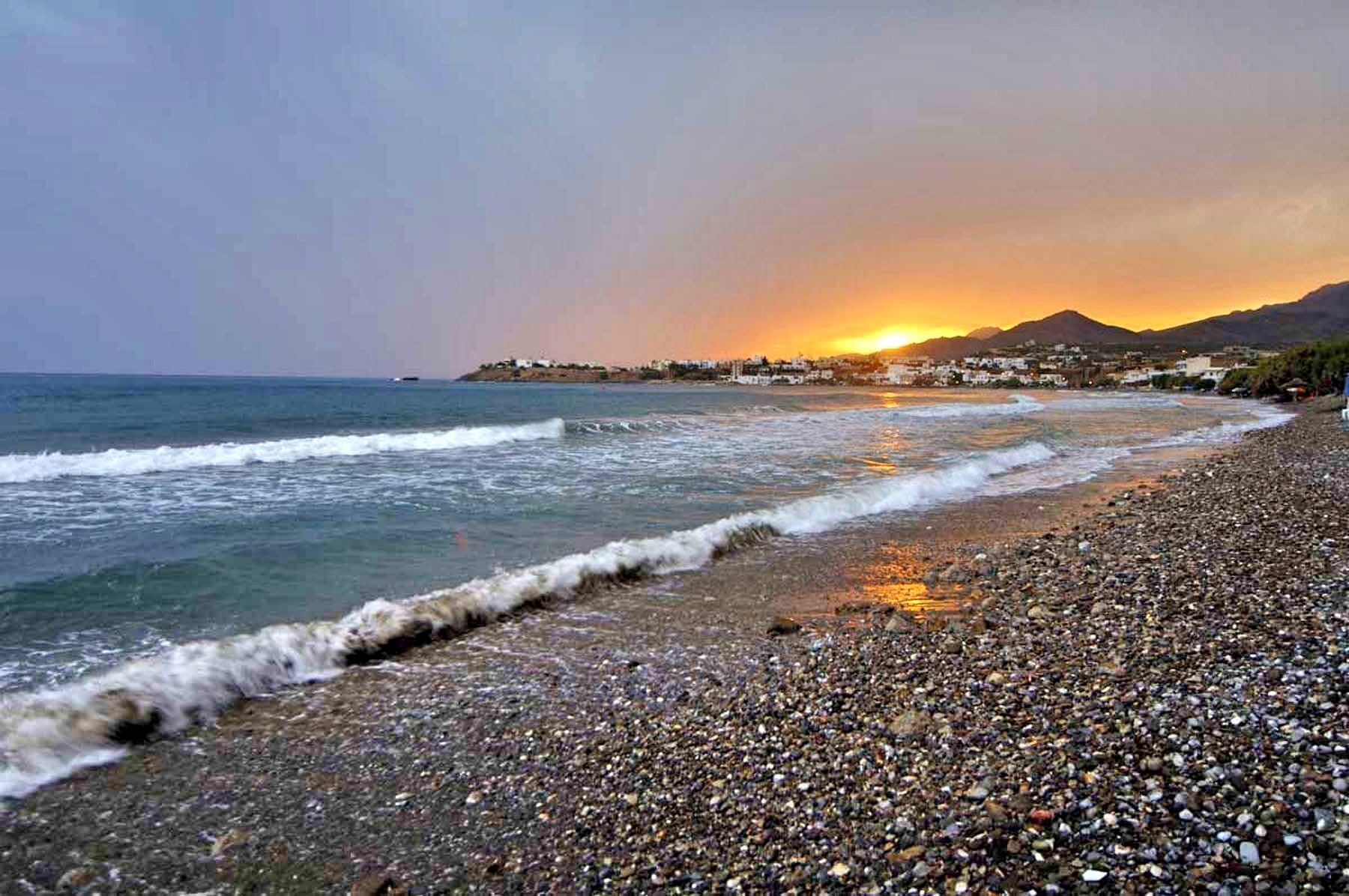
The beach along which I walked to Ierapetra on Crete
After a few days I relocated my tent to an area just above the pebbled beach, adjacent to the long shore upon which I would daily walk to the town. There I would buy a loaf of hearty brown bread, some cheese and sausage meat, as well as more tomatoes and cucumbers. These became the staples of my diet for about 5 weeks.
With just a couple of weeks to go before my return journey to England, a friend from our study program found me on Crete. He was conflicted and wrestling with a need to fly back to the States to be reconciled with his father. After a day or two, he resolved to act on his intuition, and departed on his long journey home.
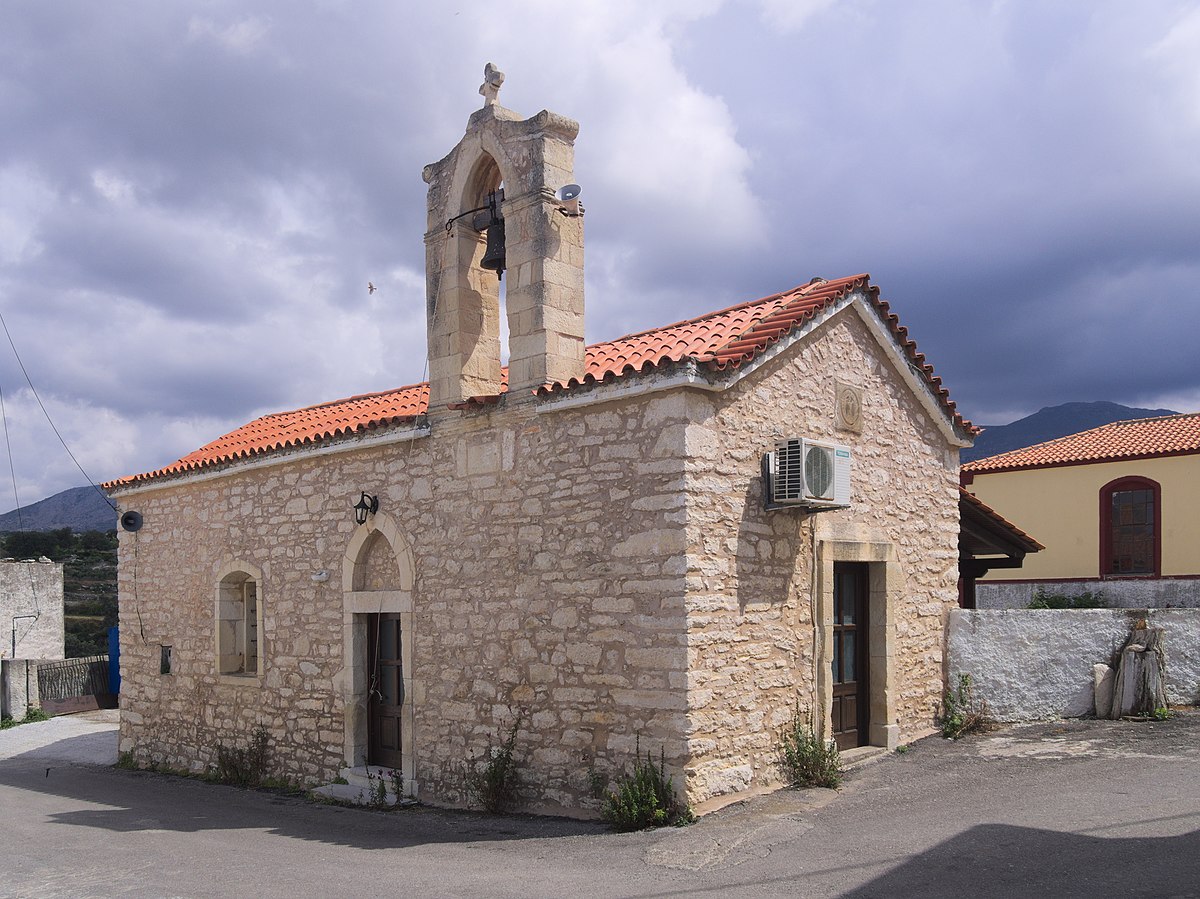
A little Greek Orthodox church like the one in which I prayed on a morning of decision
Musing about his decision, I realized that I was moving toward a similar resolve, but that in my case it was a need to be reconciled with our spiritual Father. I was still fuzzy about what this might mean in concrete terms, but awoke the next morning with greater clarity. I walked into town to pray in a small Greek Orthodox church when I realized what I needed to do. That was to go back to Athens, find an English Church, and ask to be baptized. Fetching my sleeping bag from the tent and my New Testment, I booked a bus ticket back to the north shore of Crete for a return to Piraeus on the same overnight ship. It was then I learned that it was Good Friday.
The Greek inter-island ferry ship, the Minos, upon which I sailed overnight between Piraeus and Crete
Holy Saturday morning, the bus from Piraeus dropped me at Syntagma Square in central Athens where – very conveniently – I found St Paul’s Anglican Church. Reading the church sign with its parish notices, I learned the name of the priest, Fr. Jeremy Peake, and his telephone number. Taking the risk of calling him early on Holy Saturday morning, I surprised him with an unanticipated but what I hoped would be a welcome request: I wished to be baptized. In a wonderfully understated British way, he responded by saying, “Perhaps we should talk about that!” He then invited me to come by for coffee. When I shared with him about my months of study, and with whom I had been receiving instruction in the Christian Faith, he was reassured. Warmly, he invited me to come early to the church that evening to make my first confession, and receive Baptism at the Great Easter Vigil.
The garden area where new light of Easter was lit
The liturgy began in the darkened forecourt of the parish church, just off a main boulevard in central Athens. Amidst the busy sounds of the city around us, we gathered in silence to light the new fire with which the liturgy begins. Being my first experience of the Vigil, I was quite moved by the sequence of readings, starting with the Creation, through the Fall and the Flood, the Exodus and entrance into the Promised Land, with stories of God’s covenantal grace being extended and renewed again and again. When I was then baptized, I felt like I was on fire, an overwhelming experience of cleansing embrace and transformation. I received communion as a new member of the Body of Christ, and left the liturgy feeling like I was several feet off the ground.
On Sunday morning following the Eucharist I was invited to lunch by the kind couple who had agreed to be my sponsors for Baptism. During that wonderful meal, they explained a practice with which I was unfamiliar: Easter eggs all colored dark red, recalling a wonderful Eastertide legend associated with Mary Magdalene.
After a further week in my tent near Ierapetra, I returned to Oxford for another term of formation in the history of Christian spiritual theology. At the end of the term, I received the sacrament of Confirmation through the hands of a suffragan bishop of Winchester, at Pusey House on Pentecost Sunday.
My experience of what now seems to have been a magical series of months, forty eight years ago, comes back to me every Easter. Especially when the Feast of the Annunciation on March 25 happens to occur near Holy Week, as it did this year.
Additional note: Readers interested in the legend about St. Mary Magdalen and the red egg might like to read my earlier post on this topic, which may be found here. A further reflection of the impact of the story I share here can be seen in the opening chapter and the thematic structure of my book, Ethics After Easter.
Visitors to this space are familiar with my fondness for the words of St. Richard of Chichester: “Day by day, dear Lord, of thee three things I pray: to see thee more clearly, love thee more dearly, follow thee more nearly, day by day.” The theme can be expressed more compactly: We seek to live more nearly as we pray. These words voice our desire to walk a path of beauty in life, such as we find in ‘Easter Living.’
While serving as an Assistant Professor at one of our seminaries in The Episcopal Church, I was invited by the editor of the New Churches Teaching Series to write the volume on Ethics and Moral Theology. This was the third such series of books going back to the 1950’s that seek to provide learning for persons interested in our tradition. Books in these series have addressed a wide range of areas in faith and community life pertinent to our common desire to become informed members. I wrote my book while teaching its content in the seminary, and in about 10 different parish weekend teaching events in Episcopal churches across the country, ‘field testing’ the material. My book was published in 2000, and is still in print. I wish to note that proceeds from all the books in this series were and are donated to the Anglican Theological Review, an independent journal offering the fruits of scholarship for the benefit and educational formation of those within as well as beyond the academy.
At the time of being granted tenure, a seminary trustee asked me what the title of the book implied about its content. It became evident that her concern was focused on my use of the word “after.” I was able to explain that I used the word to mean “in light of.” The book’s title is an indirect tribute to the theological vision of my doctoral supervisor, Oliver O’Donovan, then Regius Professor of Moral and Pastoral Theology at the University of Oxford, whose book, Resurrection and Moral Order, has had a profound impact upon my thinking.
It may be helpful to clarify that I use the terms “Christian ethics” and “moral theology” interchangeably. However, it is worth observing that many within the wider Protestant tradition tend to prefer the term “Christian ethics,” while those within the wider Catholic tradition tend to use that of “moral theology.” Note that “ethics,” as a named field of inquiry without the religious qualifier, is generally understood as a branch of philosophy, which may or may not observably underpin theological writings relevant to this field.
I would like to highlight a number of themes evident within and or suggested by the structure my book, which I think are particularly relevant to Christians at this point of time:
Foremost, the interdependence between ethics and spirituality, which I refer to as ‘two sides of the same coin’ despite their separate spheres of concern.
The centrality of Baptism in the lives of every Christian believer, and its implications regarding the vital relationship between what we believe and how we live
Our historic Anglican dependence upon the natural world as a source of insight about the Creator’s intentions for us and for our lives. This reflects our traditional emphasis upon the Incarnation of our Lord in human embodiment. We look for the complementarity between – but do not equate nor confuse – what the Medievals called the Book of Nature and the Book of Scripture, ‘written’ by the same Author, while having different even if overlapping purposes.
The distinctions that I offer between what I call “laws,” “manners,” and “moral principles.” Neglecting to distinguish among what these terms represent frequently causes confusion.
The final chapter of the book moves from elaboration of basic principles in Christian ethics/moral theology to an application of these principles by offering a methodological approach to how they might be applied with reference to a particular set of ethical questions, centering on how we approach a broad concern for all of us: “Should a Christian ever been involved in or associated with an act of violence?”
I wish to stress that this is not a book about “issues.” My goal was -and remains – an effort to recover and present the foundations of a solid Christian world view for how we might best approach any issue that may be of concern. So, this is not a book where you can turn to the index and look up such matters as capital punishment or a discussion of what might be a fair interest rate on loans. I try to remain careful about observing the important distinction between moral or ethical principles that we might share, and particular policy implementations that we then undertake to reflect or enact those principles in our common life.
For those who may be interested, I include here a précis of the structure of my book, articulated in the series of Axioms that are appended within it, as well as bullet point chapter summaries:
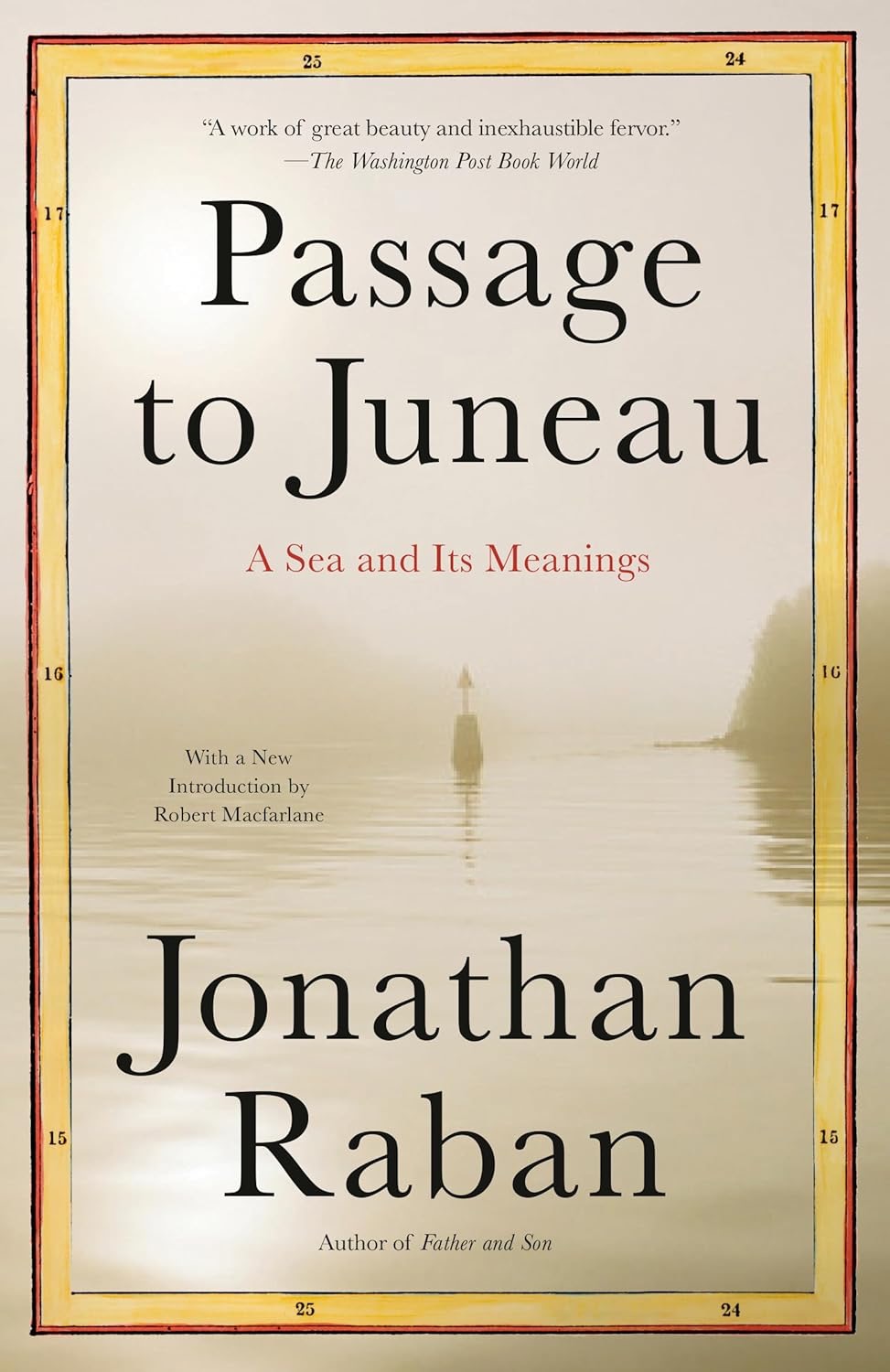
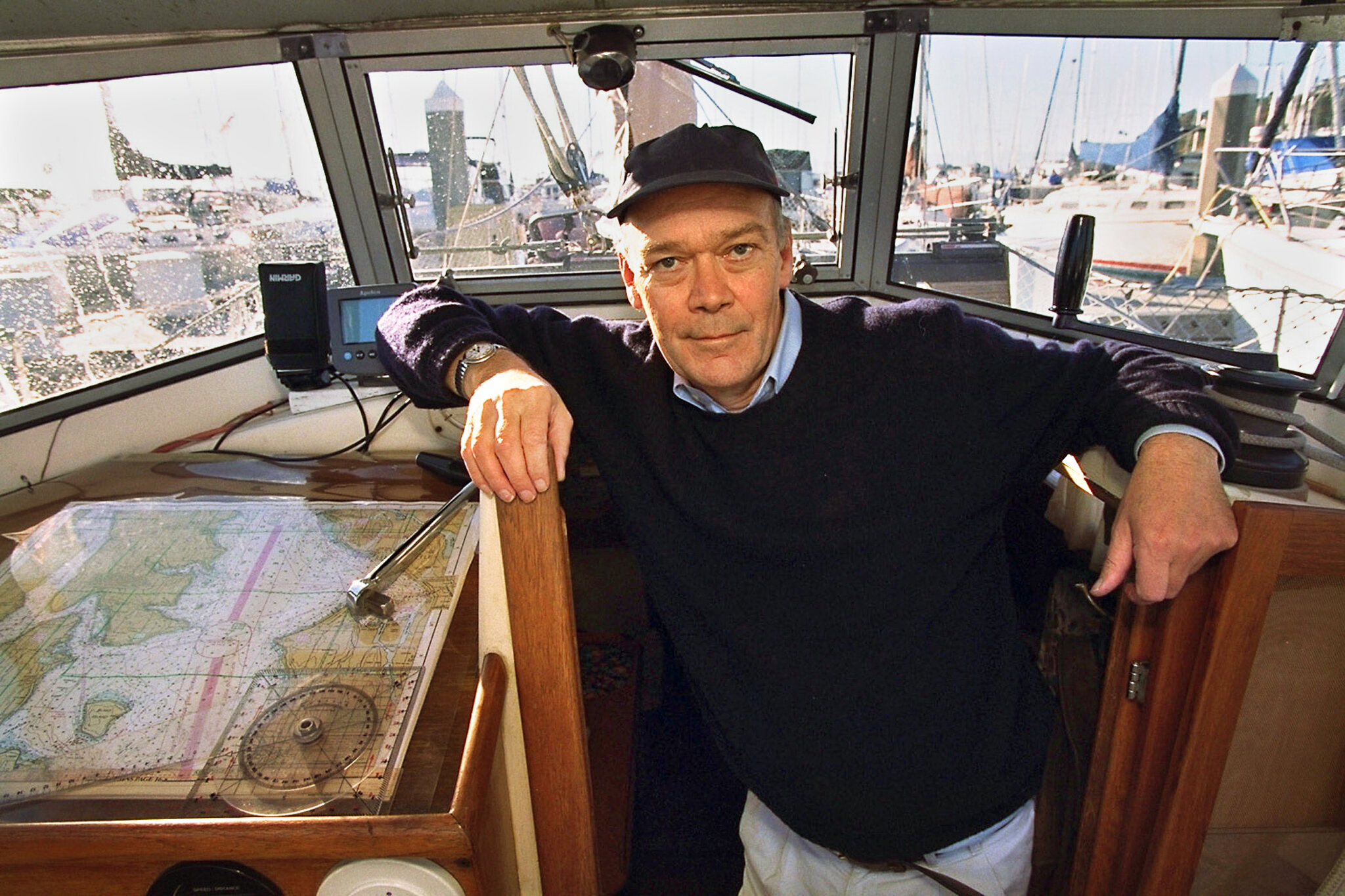
I find that authors who are effective at reading aloud their own writing offer an extra dimension of insight regarding their work. Jonathan Raban’s recording of A Passage to Juneau, is an example to which I like to return. Being a sailor myself, I find voyages, sailboat cruising, and basic navigation provide more compelling metaphors for how we think of our course through life than the often used one of journeying. Raban’s book about sailing his 35′ Swedish-built ketch from Seattle north to the capital of Alaska recounts so much more than a trip up the Inside Passage through the interior waters of British Columbia. His reflective narrative allows us to witness – through his eyes – how he faces the challenges associated with the death of his father, an English Vicar, as well as the coming apart of his marriage while he remains close to his young daughter.
Jonathan Raban in his boat
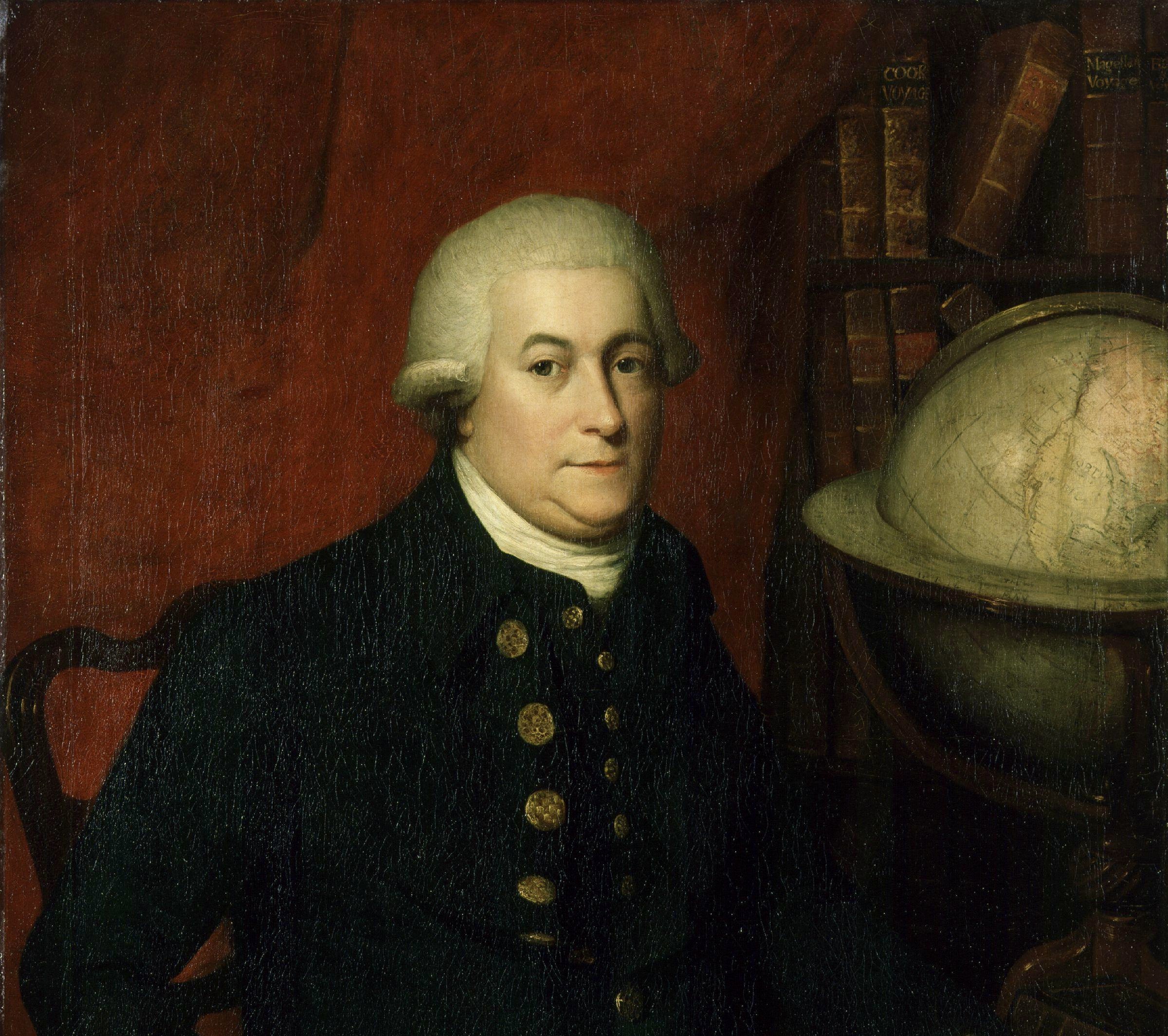
Raban includes as a literary companion, on what unfolds as an imaginatively-shared voyage, the technically gifted but personally flawed explorer, George Vancouver, through the latter’s ships logs and historical biography. Raban’s log of his passage in the Penelope is interspersed with perceptive observations about his family off in England and down in Seattle, while also sharing reflective thoughts regarding Vancouver’s own earlier exploration of the same waters. So there are three interwoven strands within the writer’s expressive narrative, Raban’s cruise, his interior journey through memories and toward an uncertain future, and a travel oriented book that shares his evocative impressions of the waters and terrain of Puget Sound and the Straight of Georgia that is mixed with those Vancouver.
The explorer and esteemed navigator, George Vancouver (1757-1798)
Having lived on Vashon Island while commuting to college on the Washington State ferries, I remain drawn to some of the same locations in Puget Sound that play an early role in the book. The immediacy of the author’s description of the area in and around Seattle’s Fishermen’s Terminal where he prepared for setting off, as well as of the beautiful San Juan Islands, provide a very good sense of what he was leaving behind on his travels, while also emotionally carrying aspects associated with those places with him as he ventured into less familiar waters.
A Hallberg-Rassy 35′ ketch much like Raban’s boat, Penelope
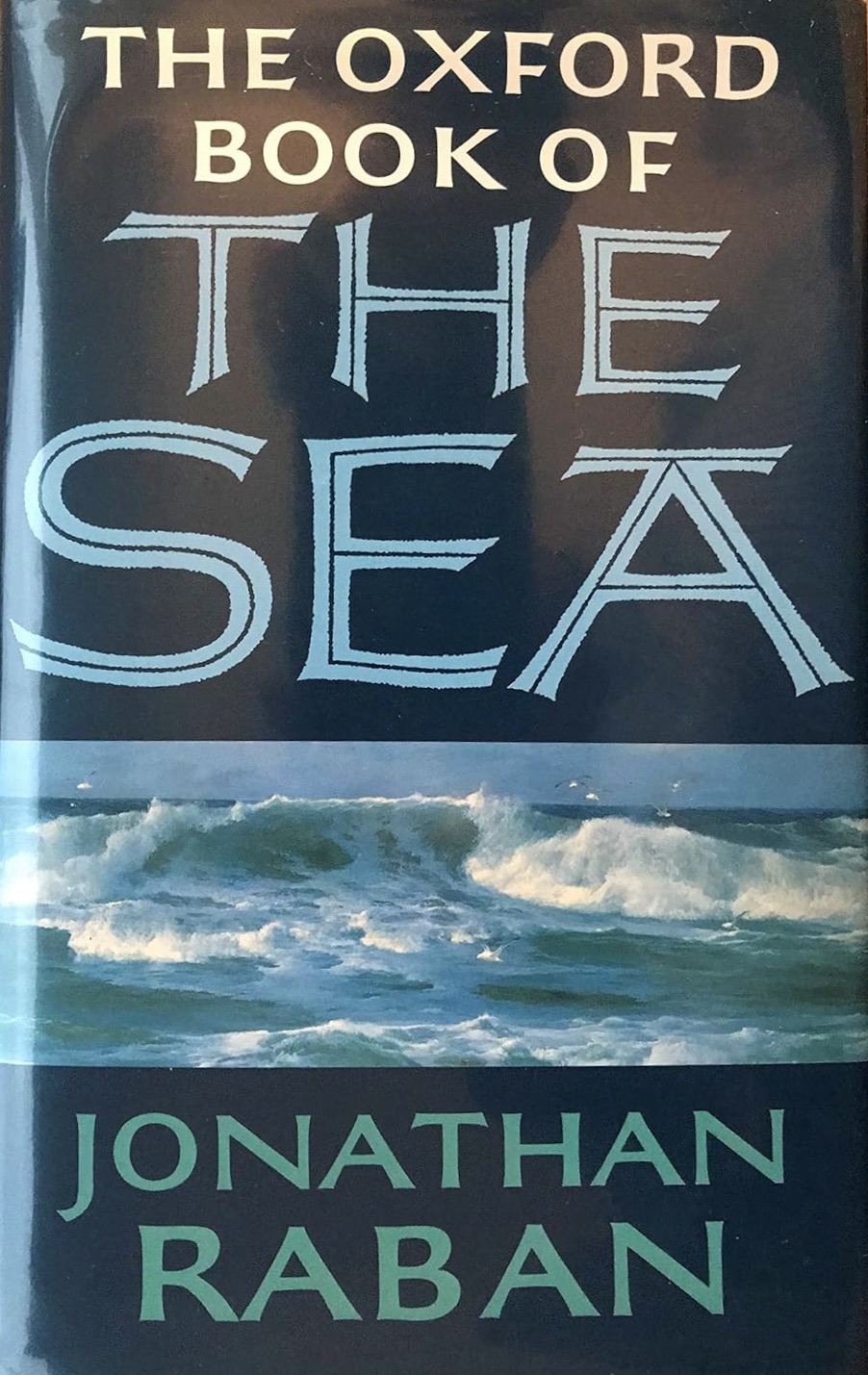
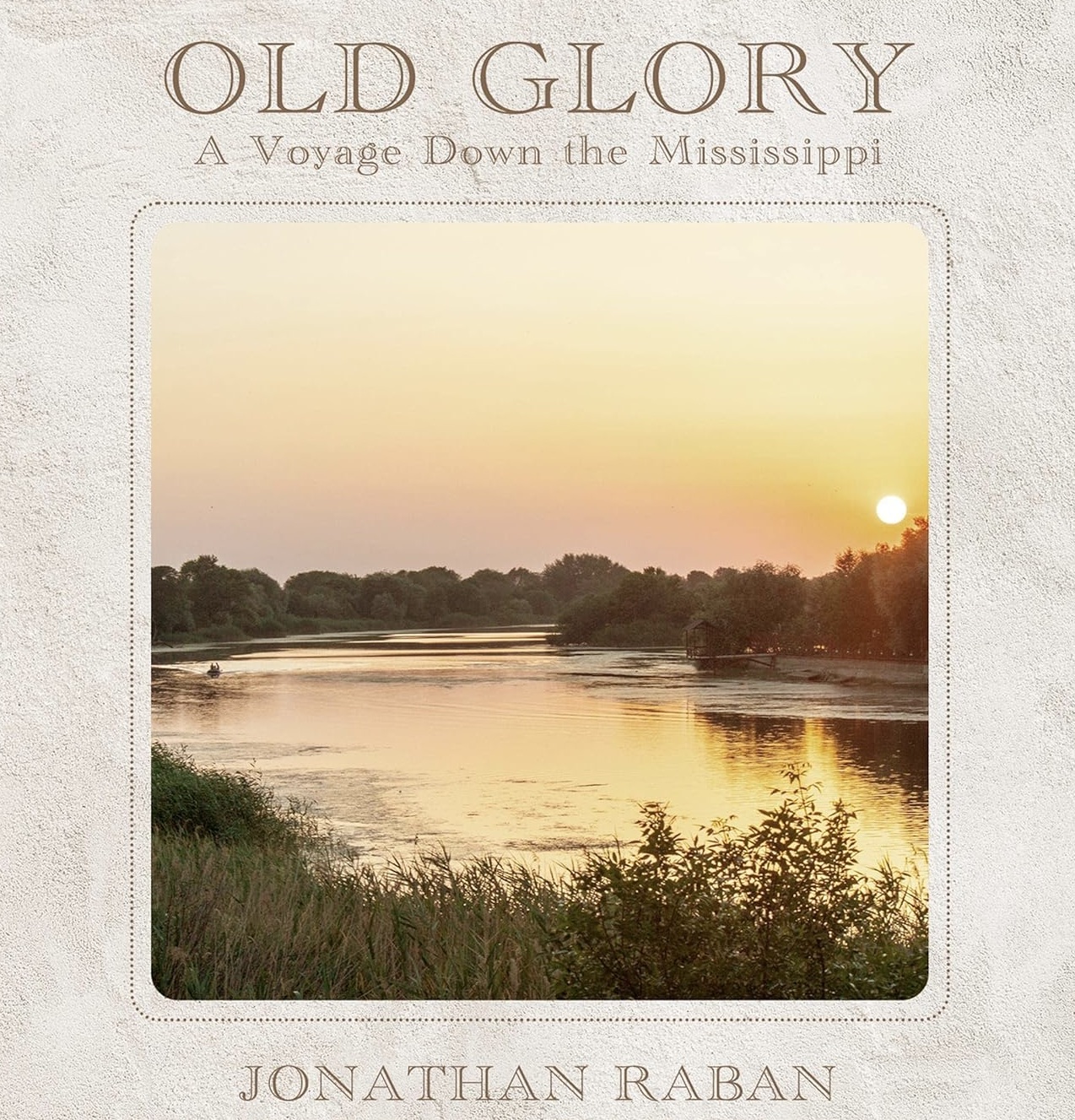
Raban was nothing like an enthusiastic newcomer to sailing when embarking upon his “Passage.” His other voyaging books, particularly his account of his circumnavigation of his native United Kingdom (Coasting), as well as his editorship of The Oxford Book of the Sea, attest to his deep knowledge of sailing and all things nautical. His attraction to such voyages is also reflected in his highly readable account of his water journey down the Mississippi (Old Glory), from St Paul to New Orleans, and was the fulfillment of a childhood fascination with the Great River and its history .
The Audible recording of a condensed version of Passage to Juneau nicely captures Raban’s resonant voice and British vocal style. Portions of his recording give a good sense of the author’s subtle humor, accentuated by his sharp eye for memorable detail. Imagining how Vancouver’s voice must have sounded to his shipmates, Raban reads passages from the explorer’s diary with a slightly exaggerated flat nasal intonation, imbuing the historical figure with a fuller sense for us of the 18th century navigator’s complicated humanity. And Raban’s description of his brief interaction with officious Canadian Customs inspectors regarding a suspect American potato, found during a search of his boat, provides a memorable anecdote. Both examples and others like them function, I think, as thoughtful counterpoints to the more difficult aspects of Raban’s ‘interior passage,’ a journey through reflections prompted by the loss of a parent and the diminishment of a marriage.
The Audible version of a cover for Raban’s book, Old Glory
One key to appreciating Jonathan Raban’s, Passage to Juneau: A Sea and its Meanings, lies in its subtitle. Clearly the author has written something more than an absorbing description of a nautical adventure, though he certainly provides that. The interest of this book for me lies in its implicit invitation to reflect on what draws some of us to the sea, to find our way on waters that may have patterns but no directional lines or unnecessary limits. For the sea is where what is called ‘human geography’ and our created pathways may diverge from the given features of the natural world.
As is broadly true with much of our life on land, a parallel to navigation over the water exists with how we make our way forward in our decisions and actions, day by day. This is the parallel we can perceive between sailing and what is formally called casuistry in moral theology. All of us, in all circumstances, are challenged to apply universal principles or rules of thumb to the ideosyncracies of everyday situations. Generic and abiding principles (with boats, it is things like Coast Guard rules and the observed behavior of tides), coupled with familiar tools (a compass, wind direction finder, charts, etc.), need to be brought into engagement with particular circumstances (the wind, waves, and tides, as we find them today). Through this process we discern with greater clarity location and direction, especially when our efforts are coupled with a grasp of purpose. Otherwise, and in more ways than one, knowing where we are and where we are headed can be difficult.
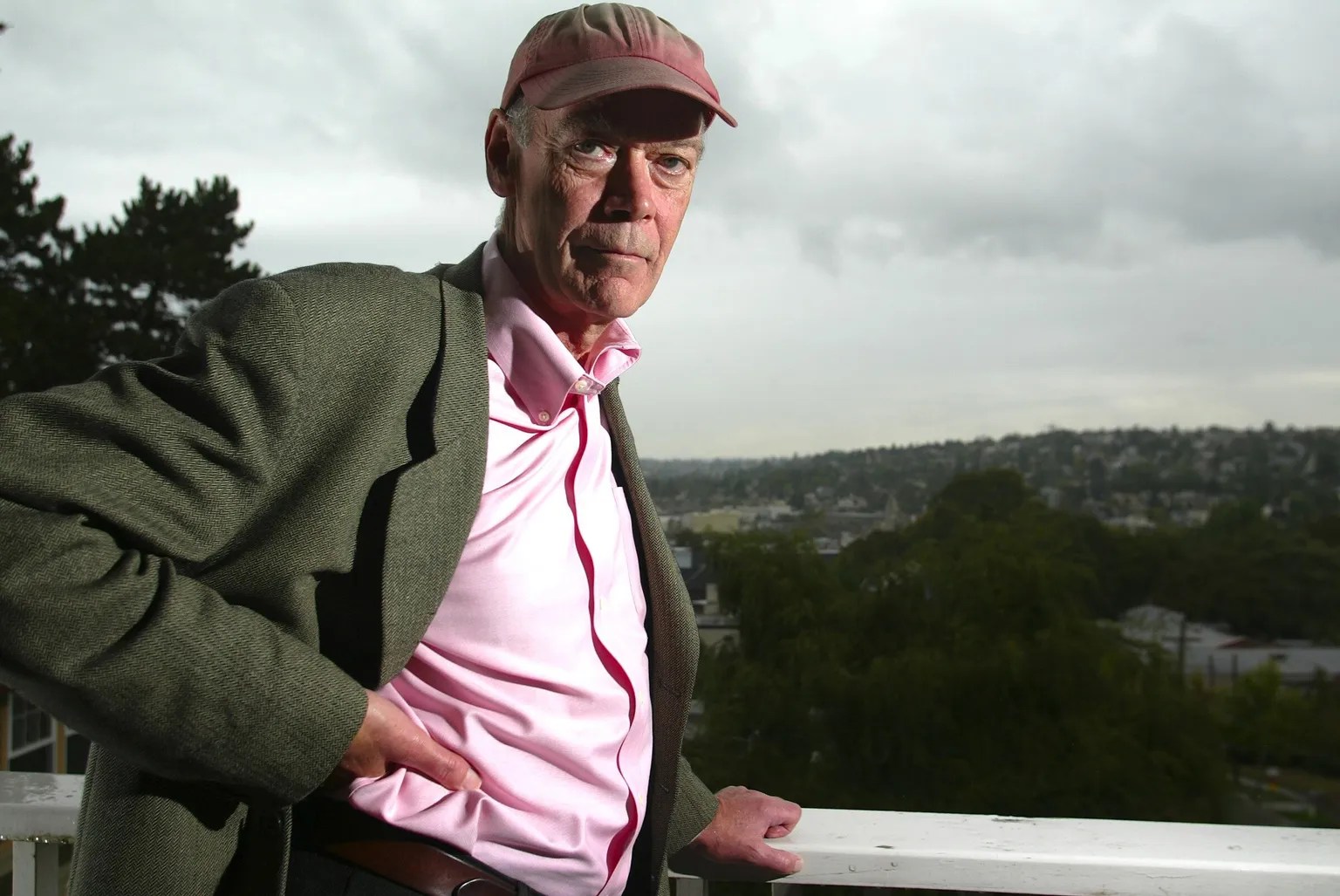
The author on the veranda overlook of his Seattle home
If reading this by email, please tap the title at the top to open your browser for the best experience. Then, clicking individual pictures will reveal higher resolution images.
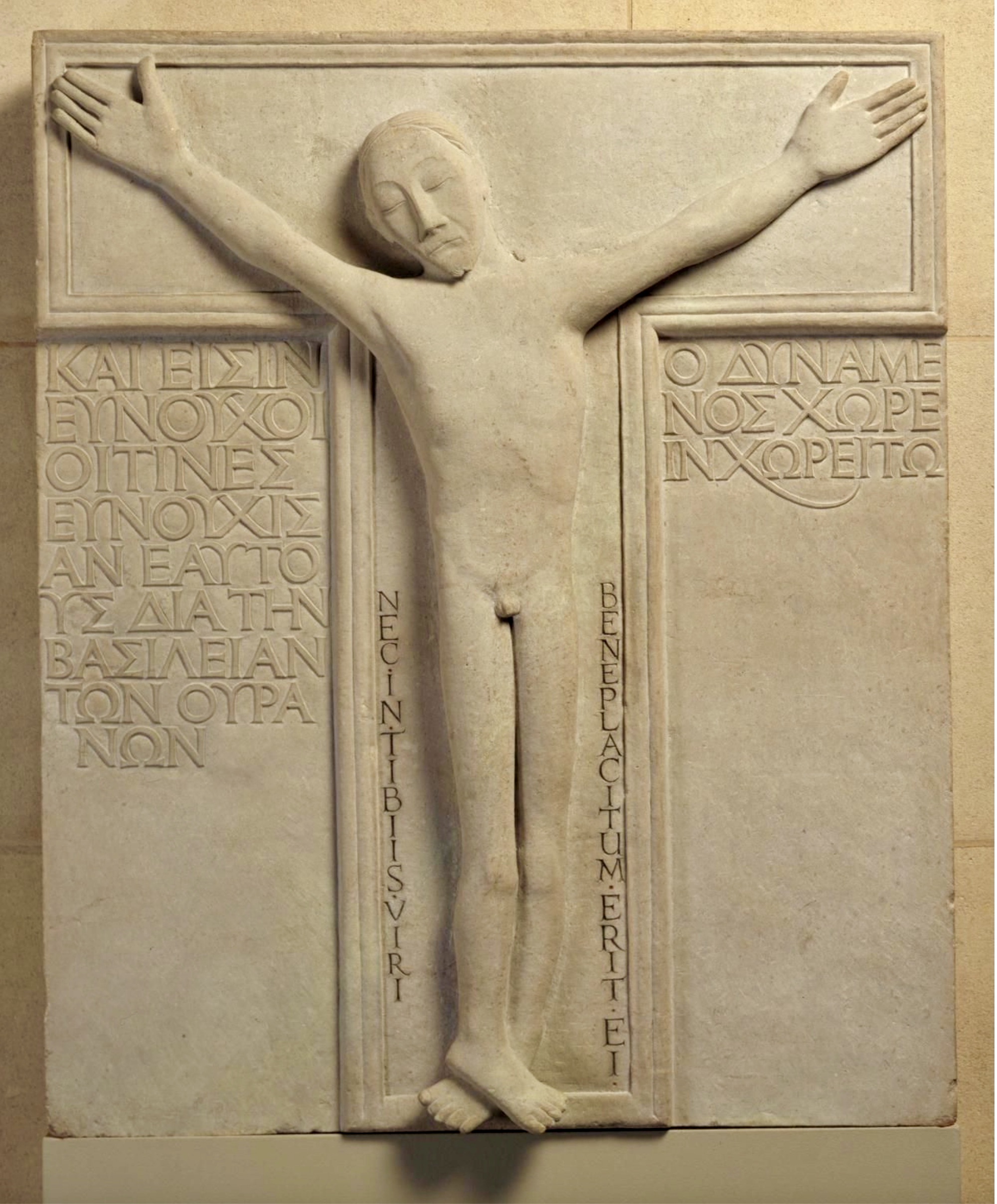
Eric Gill, Christ Crowned
To my mind, some of the most beautiful work in the area of graphic art was created by the British artist and craftsman, Eric Gill. The intractable problem posed by Eric Gill is not a legacy of his artistic output, but of his personal life. Largely unknown to those outside his family until about 50 years after his death, Eric Gill – by admission in his own unpublished writings – had engaged in personal behavior of a kind that most people would find not only abhorrent but, increasingly, as also criminal.
This is related to the larger problem posed by the work of artists, musicians, and architects whose work is seen as having been collaborative with tyrannical regimes (eg., the Third Reich, the Soviet Union). How do we view beauty in art that either depicts or is simply associated in some way with sin or with evil? (This is a matter I have previously tried to understand in relation to Picasso’s great painting, Guernica.)
To cite Scripture to the effect that “all have sinned,” may help us begin to locate the terrain upon which we need to address the problems stemming from Eric Gill’s biography, but it is not in any way to excuse his conduct. Though all sin is bad, and equally problematic in the eyes of God, not all sin is equal in its damaging effect upon others, and upon ourselves. The traditional distinction in moral theology between mortal and venial sins provides one way to try to parse some of these differences, while not excusing any forms or examples of sin, whether in ourselves or among others.
My purpose here is to invite reflection upon how we might appreciate Eric Gill’s religious art, as many did for several generations, without having our view of the merit of his work diminished by our moral evaluation of troubling ethical choices he made, and the lapses from good moral judgment they represent. In other words, and as an amateur student of the arts while also being a retired parish priest and former professor of moral theology, I wish to present some examples of Eric Gill’s art, letting his work speak for itself apart from ethical consideration of his personal life, and without ignoring the problems associated with the latter.
Perhaps my theme here can be summed up in this way: I invite you to benefit from the beauty of what Eric Gill created without asking you to overlook what we have learned about his private life. And I offer this invitation aware that some will not find it possible to accept.
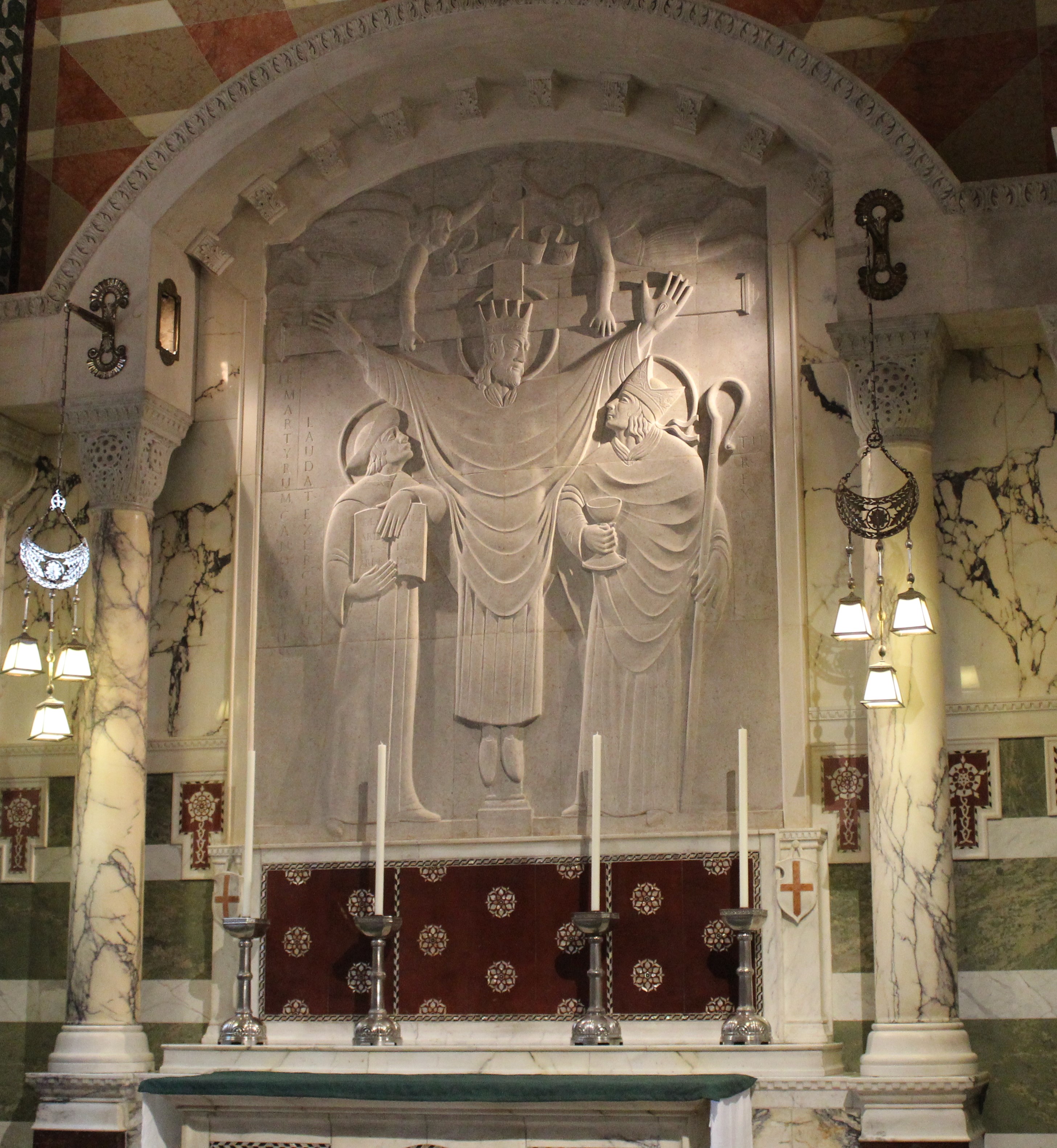
A sculpted carving by Eric Gill above the altar of the Chapel of St George and the English Martyrs, Westminster Cathedral, LondonEric Gill, CrucifixionEric Gill, sculpted relief panel from a series of the Stations of the Cross, Westminster Cathedral, London
As we consider some of his art, we should not overlook Eric Gill’s impact, at least indirectly, upon much of the daily life of the population of Great Britain (and elsewhere), in the form of three type faces he created. The most well-known is Gill Sans, named after its designer, and evident at almost every Tube stop in London. An effort to erase his work from the public eye, and replace it with alternatives, would require removing virtually every train station sign in Britain. It could be done. Should it?
Three fonts designed by Eric Gill
To put the problem I have raised here most bluntly, how can we appreciate the beauty in the holy art created by someone who behaved in a way most people would describe as sinful? I do not have a ready answer to this question. Note that, in what I have written above about Gill’s behavior, I have not gone into detail. Would that make a difference? If so, in what way?
And even if we refuse to give any amount of attention to Eric Gill’s artwork, we must still grapple with a timeless question: are there any unforgivable sins? Is anyone, because of his or her behavior, beyond the power of God’s redeeming love? Is it not likely that someone having Gill’s religious inclination also possesses a glimmer of moral awareness such that he or she might be open to repentance when – at the end of life – the person faces the awesome and undiminished light of God’s truth-seeking love?
Here is one thing that we can do: pray for the repose of the soul of Eric Gill, and for God’s Providential mercy.
In beginning to approach the questions I have raised here, I would start with some of the distinctions I shared above. I do not think we can deny this reality – that we, as people who are created in the image and likeness of God, and who have lost that likeness through the Fall and human sin, still bear God’s image however marred it may be by the corruption resulting from our sins. And, that we are still capable while in this life of acts and works of uplifting beauty.
If reading this by email, please tap the title at the top to open your browser for the best experience. Then, clicking individual pictures will reveal higher resolution images.
Peter Koenig, Christ as Second Moses (The Rainbow Resurrection)
Having six granddaughters, aged twelve down to two years, I’m very familiar with unicorns and rainbows. There is something about little girls and pastel colors that seems universal. So, when I go into the stores these days, and see all the Easter decorations, I think of our granddaughters. Because everything I see on display seems to be a rainbow of pastels, colors, and patterns, which our little girls love.
Well, as we know, our culture has tamed and domesticated Easter. Good Friday with its silence and its dark remembering is a challenge for us. For we seem to have enough darkness and bad news everyday as it is. And Easter Sunday morning provides the antidote we long for. For a few hours, and even for a few days, we can get a lift, a happy bounce, in a way that we hope for.
But deep down, we know that we want more than a brief lift in our mood, a brief enhancement of our sense of well-being. Our hearts truly long for a lasting joy. For we hope that though happiness may be fleeting, blessedness is abiding. And it was blessedness that Jesus was announcing and commending in his Sermon on the Mount. So here is our question this morning: How does the Gospel Good News about the discovery of an empty tomb help us find a sense of blessedness, and, in a way that might be lasting.
This morning I share with you three images by the English painter, Peter Koenig, images which I think can help us on our spiritual journey this Eastertide. This is our Easter journey toward discovering and experiencing a lasting sense of blessedness. For we discover the kind of blessedness that does not overlook the darkness, or pain, or sadness, that may be a real part of our lives. What we celebrate at Easter is not the simple replacement of what has come before, with something new that wipes away the past. We are not celebrating the spiritual equivalent of a vacation from daily life. For then, in a few days or weeks, we would have a sense that ‘we must now return to reality.’ The reality we celebrate today and throughout Eastertide is the reality of Resurrection transformation.
Now, how do we know this? We know this first from the reports of the Disciples – both the women and the men – who saw the Risen Lord. And who recognized him when they saw his healed scars – not absent scars, but healed scars! They were the first witnesses to the transformation that God brings to us in Resurrection Life. And Resurrection Life is God’s great culminating chapter of what we call Salvation History.
So let’s set our spiritual awareness within the sweep of biblical Salvation History. Here, I offer you a simple phrase with which to help identify and to remember the heart of this mystery. “Through the waters of death into a new covenant life with God.”
Left side panel for Christ as Second Moses
I invite you to look at Peter Koenig’s painting, Jesus as a Second Moses (or, The Rainbow Resurrection), along with its two glorious side panels. Here we notice several details, at least one of which will direct our thoughts toward Easter. We readily notice the rainbow, along with the pastel colors at the top and bottom of the central panel. These – of course – suggest the pastel colors we associate with Easter cards and Easter eggs, and other holiday decorations.
But let’s remind ourselves of what that rainbow first represented. In Salvation History, a rainbow came after a forty day period of massive death and destruction. Most of what we would consider to have been ‘life on earth’ was destroyed and lost, most people, and almost all animals and plants. Noah and his family, and the animals on the ark, traveled through the waters of death into a new covenant life with God. That death, however extensive, however gruesome and abhorrent, was and never would be the last word. God’s Word is – and always has been – a word of promise, a word of covenant. Where we aim for good, things often seem to go bad. Yet, God always aims for good, and achieves good.
Next, we should think of Israel, walking between and through the waters of death at the Red Sea. This brought them to Mt. Sinai, and to the great new Covenant between God and Israel, where blood was sprinkled upon the altar of God, and also upon God’s people. They were then led on a forty year journey through the wilderness to the threshold of their Land of Promise.
This was the moment when Joshua and God’s people crossed the Jordan. This water crossing echoed and recalled our forebears’ two prior journeys through the waters of death into a renewed covenant relation with God. Israel’s renewed covenant relation with God upon the west bank of the Jordan, within the Promised Land, signaled their desire to be faithful to God, and to God’s ways, no matter what.
Right side panel for Christ as Second Moses
And yet, the next most significant event embodying this pattern was the baptismal practice of John at the same river Jordan, centuries later, and Jesus’ own Baptism, by John. Of those who came out to John, many if not most of them were Jews by birth and also upbringing. To them, baptism was foreign. For baptism was what Gentile converts did, not Jews! And so, for them to submit to, and receive, John’s Baptism, was a genuine act of living into God’s holy covenants with their ancestors. Yet it was also a submersion into the waters of death ~ death to old ways and old ideas, as well as death to certain prior social and family relations. For John pointed to the renunciation of sin, and a return to God’s ways. It was also the path into a re-newed covenant life with God.
Jesus’ own acceptance of Baptism at the hands of his cousin, John, symbolized something other than a personal need of his. Scripture instead suggests that Jesus, himself, chose to live into this moment. He did so out of his deep identification with all of us, in what would become his world-wide family. Through John’s ministry, and in Jesus’ acceptance of it, Jordan waters once again became a symbol ~ a symbol of going through the waters of death to sin, and acceptance of a renewed or new covenant life with God.
And so, when each of us was or is baptized into Christ, we join all of these faithful people who came before us. In Baptism, with them we cross through the waters of death, into a new covenant life with God.
This may prepare us to acknowledge how we are portrayed in Peter Koenig’s painting. For we are represented by those depicted as standing in the purple shadows, behind the ‘Christ-as-Moses’ figure. We are people who live and walk in darkness until we meet the true light, the Light that comes into the world to enlighten everyone. On what, then do we base our hope? Surely, it is on the hope represented by the fruit of Jesus’ death and Resurrection.
The Son of God embraced the human body, and he became one with it. His body has become the Body we have embraced, and with which we have become one. The Body of his transformation has become the Body of our own transformation. His death and Resurrection was and is our doorway into a new life. This is what this day and our liturgy are all about.
Alleluia! Christ is Risen!
Additional note: here I offer my Easter homily, shared this morning at Grace Church, St. Francisville, LA.
If reading this by email, please tap the title at the top to open your browser for the best experience. Then, clicking individual pictures will reveal higher resolution images.
Michael John Trotta introducing his choral work, “Requiem,” in a YouTube video
Recently, I had the providential opportunity to meet Baton Rouge resident, and LSU School of Music doctoral recipient, Michael John Trotta. Only later did I learn of his impressive and internationally recognized accomplishments. Four albums incorporating recordings of his musical work can be found on Spotify, among them his stirring and evocative setting for the traditional Latin Requiem. Through subsequent messaging with him, I learned of the recording session that he directed this year of his “Requiem,” with the London Symphony Orchestra and the London Voices. It is a beautiful work of music, all the more meaningful for him and subsequent listeners in that the recording was made in support of the charity, Hospice UK.
A recent screenshot from Spotify featuring the music of Michael John Trotta
Michael John Trotta writes passionate and lyrical sacred music – a series of words not everyone will string together. Reflecting on his music, I am aware of my inclination to find verbal analogies rooted in the visual arts. And so, parallel to how some painters, sensitive to the role of light in our perception of color, seek to mix several colors to achieve a particular hue, Trotta’s choral music strikes me as an effort to express a wide and full spectrum of harmonious sound.
My initial perception of his compositions, that he presents sacred music that is passionate and lyrical, may also be akin to my use of the word beauty in connection with the paintings of Jackson Pollack. In both cases, I may be expressing an unexpected conjunction of ideas that can, I believe, properly belong together. Trotta’s musical works inspire me to write about them in this way.
Those who love to hear large groups of voices singing in harmonic patterns, especially of examples from Renaissance and early English vocal music, as well as modern compositions influenced by them, may find a similar pleasure in hearing his work. For me, this is due to how Trotta’s original choral music and his arrangements provide a moving and also meditative listening experience.
Trotta conducting the London Symphony Orchestra and London Voices while recording his “Requiem”
As an amateur listener, I find that Trotta’s compositions and arrangements are evocative of traditional art forms without sounding imitative. Composed in creative dialogue with musical history, his work retains what we might call a traditional ‘vocabulary.’ This may have parallels with what we can discern in various works by contemporary practitioners of other art forms. Parallel examples of an engagement with traditional elements in an artistic field may include composition and subject matter in painting; ornament or the lack of it and the use of certain structural elements in architecture; as well as selected harmonic patterns and chord sequences in music.
Nigel Short leading the ensemble, Tenebrae, accompanied by organ, while recording “Requiem” in the parish Church of St. John the Evangelist, Islington, North London
Michael John Trotta’s music helps support my renewed sense of confidence that contemporary artists and composers, as well as writers, can utilize and work creatively with inherited forms of expression and yet present new, fresh and compelling compositions. Trotta may epitomize the wisdom expressed by Jesus in another context, that “every scribe {or composer} who has been trained for the kingdom of heaven is like a master of a house, who brings out of his treasure what is new and what is old (Mt. 13:52).”
Michael John Trotta, in Carnegie Hall, conducting the premier of his compositional setting for the traditional Septem Verba Ultima (The Seven Last Words {of Christ})
The pieces that Trotta has composed and or arranged are not only musically harmonious, but also spiritually congruent with what we know about the grace-filled peace and presence of God. Michael John Trotta’s approach to the art of music can broaden our appreciation not only for beauty expressed in the past, but also for beauty as it may be presented anew today. I am very encouraged by my new experience of historically informed music that Trotta’s compositional work has opened for me.
A performance of Michael John Trotta’s” Requiem,” Sunday, April 21, 2024 at Tabernacle Presbyterian Church in Indianapolis, Indiana
Since first posting this piece I have corrected a couple of the details mentioned in two of the photo captions.
Sir Geoffrey Jellicoe at his London home shortly before his 90th birthday
Discerning beauty always presents an opportunity to experience joy. As many find, though, creating representations of beauty, as a chosen task, can be difficult.
Alive in my memory are images of areas of New York City and decaying areas of urban New England, during my high school years in the early 1970’s. I remember asking myself, as an aspiring architect and artist, how might I meet the challenge of creating examples of beauty in the world as we presently find it? Well, after some years, I discovered the life and work of Geoffrey Jellicoe, which provide an example of one way of answering questions that stay with me.
Late in his life, at a time when many seek the solace of retirement from actively pursuing such questions, Geoffrey Jellicoe took on a significant challenge. How might 150 acres of a seemingly forlorn stretch of a barrier island, adjacent to an urban area that has long surrendered to the declining effects of industrialization, be redeemed and transformed into a place for renewal by a humanistic vision of what might yet be?
Jellicoe, at the age of 80, and to the surprise of some, accepted the opportunity to submit a proposal for what might become the Moody Gardens. In the process, he embraced the idea of working with a hundred-plus acres of neglected sea marsh and dune land on Galveston Island. This site even included a need to take into account an existing but under-used local airport. Nevertheless, the esteemed landscape architect, Jellicoe, envisioned a large facility centered on the nurture of human flourishing by designing what he hoped would become a significant botanical garden. Its plan would be dedicated to re-creating documented historic human efforts to re-shape areas of the world through the practices of horticulture and landscape architecture.
The Texas-based Moody Foundation, a philanthropic organization committed to education, health, and community development, found in Jellicoe the person they believed was best equipped to provide a master plan for what might become Moody Gardens, in the vicinity of Houston. And he brought to this challenge a lifetime of learning and accomplished work, which fitted him well to address this auspicious opportunity.
Encountering Moody Gardens as it has come to be, a vibrant, attractive, and an apparently successful facility, we may be mislead about Jellicoe’s orginal concept for the project. In presenting itself now as a tourist destination with resort-like amenities, Jellicoe’s early proposals for the Gardens seem fanciful if not also highly visionary. Yet, there may be significant things we can learn from his initial plans, and the concepts he sought to embody in his hoped-for realization of the project.
I can suggest a few of these potential learnings by posing some rhetorical questions – questions that I hope to address in future posts.
What is ‘our human nature,’ that we hope or believe we all share? What environments are most suited for nurturing the flourishing of our human nature?
What is Nature, and what humanly-created environments are most true to Nature? What things or places do we consider to be ‘natural’?
Why does it require human effort, financial capital, and institutional resources to facilitate, maintain, and preserve ‘natural’ environments? (Consider here the scope of the funding for the National Park Service, and the United States Forest Service.)
And, why is concern about the natural world- the ‘environment’ – properly a matter for serious theological reflection, and one especially related to our regard for Beauty? Why do our concerns about the natural world have theological significance?