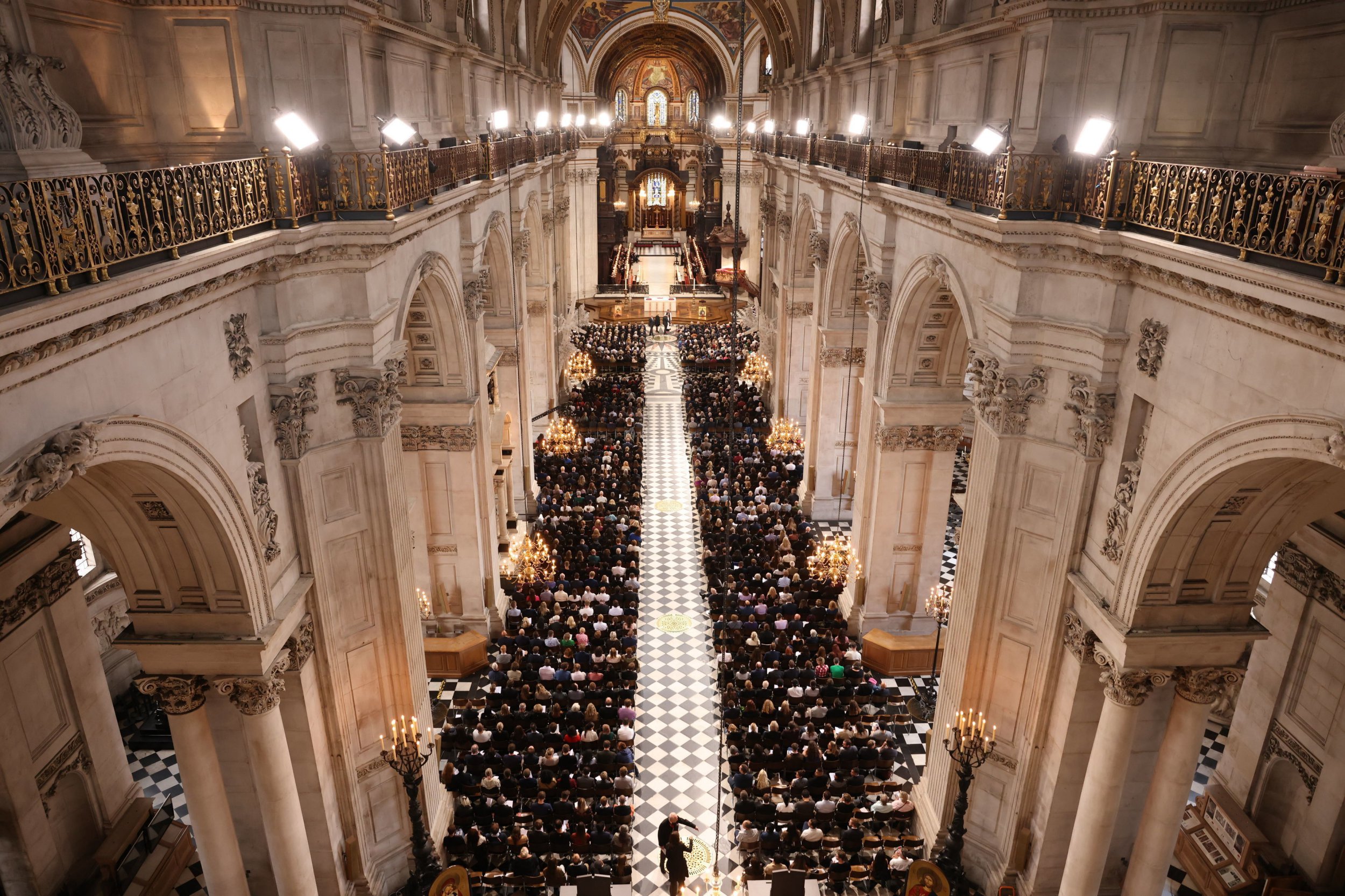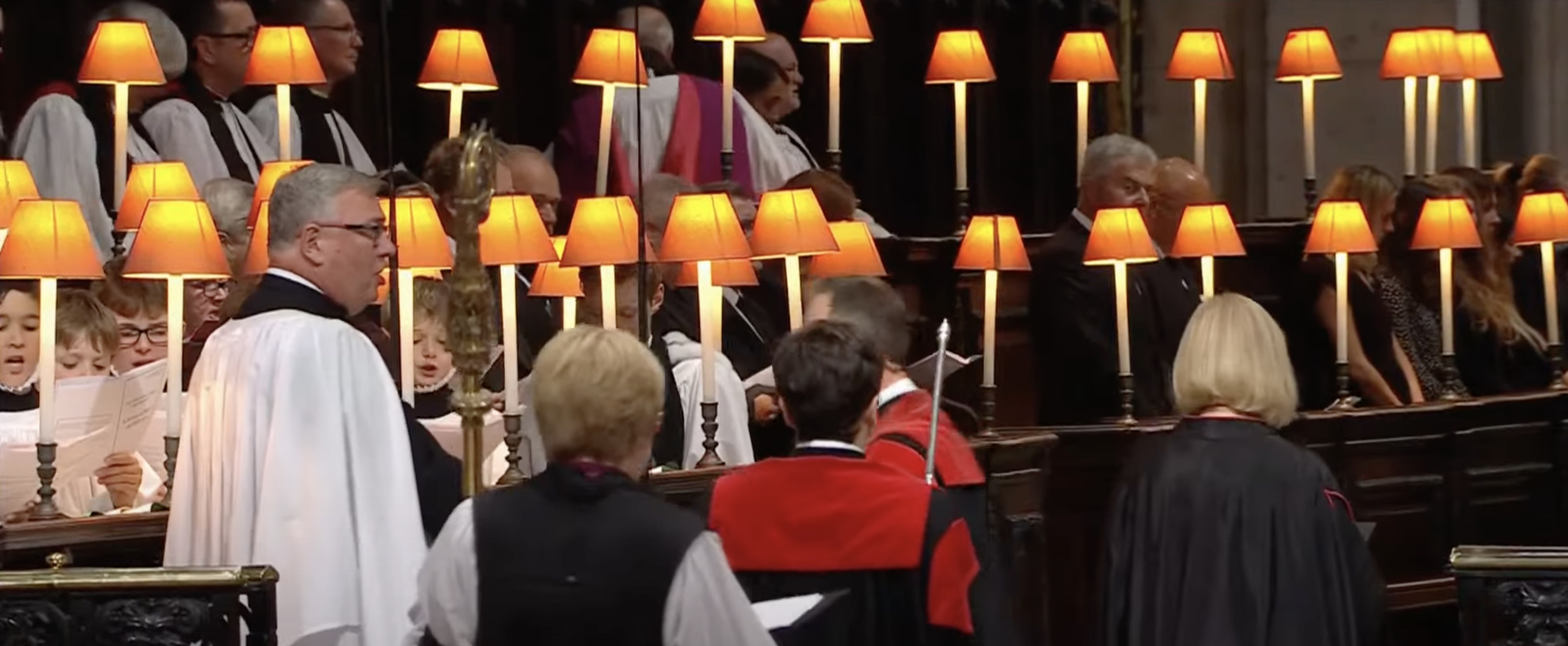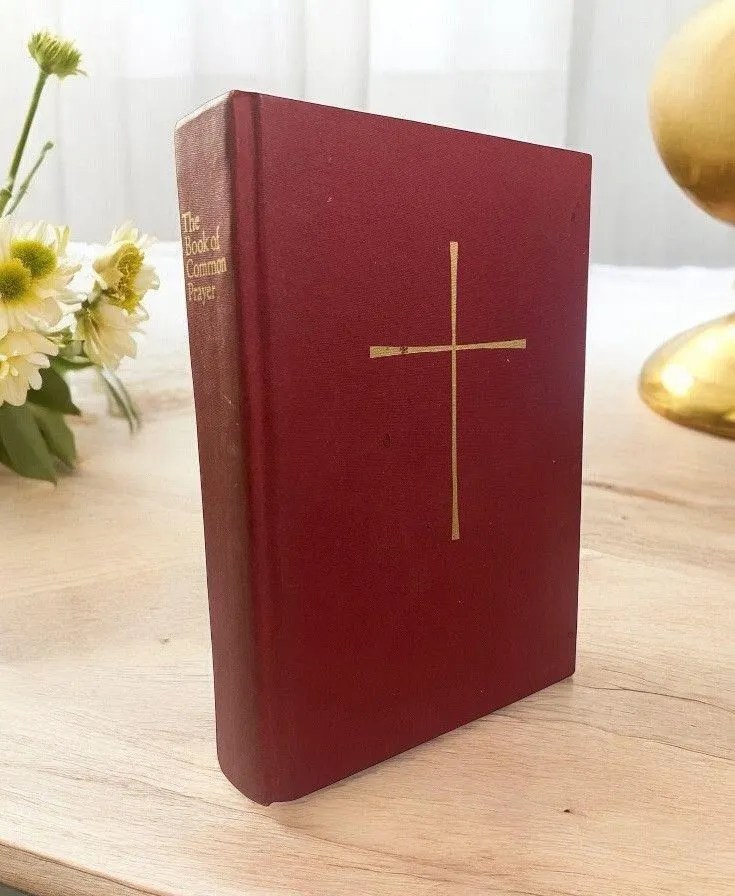
Anglican artists, writers, and musicians, have found deep spiritual significance in our encouter with beauty in the natural world, and they have left us with abundant examples of beauty in the places and things of worship. Our liturgies have been shaped by faithful people who, echoing the Psalmist, have sought to glorify “the fair beauty of the Lord.” It is therefore somewhat surprising to notice the relative paucity of references to beauty in The Book of Common Prayer, though the concept is interwoven in its many texts. In subtle and in sometimes hidden ways, beauty nevertheless functions as a significant concept in our prayers.
For Anglicans, The Book of Common Prayer [hereafter as BCP] functions as a resource for our prayers. And, in time and through practice, it becomes the source of our prayers, especially in the way that it is founded upon, and leads back into the Holy Scriptures. We are open to individually-crafted voluntary prayers offered for specific occasions. Yet, in our experience, these ‘unscripted’ prayers characteristically also become formulaic and repetitive in content as well as in phrasing, just our BCP prayers are sometimes said to be. As Anglicans, we find that – like practices handed down over generations – prayers shaped by communities also become ‘hallowed by time.’
Further, we hold in common a premise upon which Anglican Christians have typically relied. We often find our basic doctrine expressed in our prayers, though we do not usually look to our prayers to find nor to establish our doctrine. For it would be contrary to the spirit of this approach if we were to conclude that, by simply changing our prayers, we would then change our doctrine. Therefore, in the same spirit, the phrases that I cite here from the BCP are authoritative because they are true, rather than true as a result of coming from what we consider to be an authoritative source.
From the BCP, we are reminded about many things concerning Beauty, among them that:
⁃ Beauty is an attribute of God
⁃ God’s beauty is manifest in God’s handiwork in Creation, and therefore {by implication} manifest also in us, and between us
⁃ Creation is permeated with God’s beauty and grace, which is a reflection of God’s goodness as well as of divine truth, God’s own nature and a characteristic attribute of God’s creative activity
⁃ When we behold the beauty with which God has imbued Creation, we rejoice and experience joy as we encounter the presence of God’s love for the world and for us
⁃ Having this encounter, we perceive how God has given us work to do in truth and beauty and for the common good
Goodness, Beauty, and Truth, are attributes of God’s being and nature. How do we know this? We see the reflection, even the manifestation, of these transcendentals in the things that are created and here for us to behold and encounter. When we encounter these transcendentals in the things that are made, we encounter these attributes of God, not merely the residue of God’s action. And in so doing, we experience peaceful joy. This joy in us is our experience of God’s love for God’s work, the fruit of God’s creativity.
We often experience a disconnect between ourselves and our work, between who we are and how we act. With God, there is no such disconnect. God’s being and activity are indivisible, even if we distinguish them in our reflection. For at least in traditional Christian doctrine, God is all good, all knowing, and all powerful, dwelling outside of time, but acts and is fully present within it.
In our reflection therefore, God’s work of Creation and God’s work of Redemption may and should be distinguished but not confused nor separated. The principal reason for this is our recognition of the fallen state of Creation and of our human nature within it, to which God’s loving work of Redemption has been addressed.
As I previously reflected, in both Creation and in Redemption, God has formed and shaped the world and its inhabitants so that the world through God’s Creation is good and beautiful, and also a repository for what is true. Through Redemption, God embraces and transforms fallen Creation in such a way so that all that is amenable to fulfillment and completion in Christ may come to be so, and those things that are not amenable to the same have no future in Christ. Along with Truth and Goodness, Beauty plays a principal role in this ongoing process.
As a portion of Psalm 90 can be translated, “Let the beauty of the Lord our God be upon us, and prosper us for the work of our hands!” And in Psalm 96, we find: “Sing to the Lord a new song; sing to the Lord, all the earth… Honor and majesty are before him; strength and beauty are in his sanctuary.” And so, by divine grace, may these attributes of God and of the Risen Lord be present in our midst, and within us.
For reference, and as background material for the above, I include here some specific sources in the BCP for what I have shared:
In the BCP section, Prayers and Thanksgivings [BCP:814], Prayers for the World, from the Collect, For Joy in God’s Creation [BCP:814], we are reminded that:
⁃ Our Heavenly Father has filled the world with beauty
⁃ We ask God to open our eyes so that we can then behold God’s gracious in all of God’s works
⁃ So that, by rejoicing in God’s whole creation, we may learn to serve God with gladness, for Jesus’ sake, through whom all things were made
⁃ In other words, we find this implied sequence of ideas: —> God has filled the world with beauty -> God opens our eyes -> we behold God’s gracious hand in God’s works -> thereby we rejoice in God’s whole creation -> in the process, we learn to serve God with gladness
From the Collect for “The Transfiguration” [BCP:243], we are reminded that
⁃ We ask God to grant that we might be delivered from the disquietude of this world, so that we may by faith hold the King in his beauty, who with the Father and the Holy Spirit lives and reigns, one God, world without end
From the Collects for “Various Occasions,” the Collect for Vocation in Daily Work” [BCP:251], we are reminded that
⁃ Almighty God, our Heavenly Father, declares his glory and shows forth his handiwork in the heavens and in earth
⁃ We ask God to deliver us in our various occupations from serving ourselves alone, so that we may do the work God has given us to do in truth and beauty and for the common good
From the liturgy for “The Dedication and Consecration of a Church” [BCP:567ff], we are reminded that
⁃ We give God thanks for the gifts of God’s people, and for the work of many hands, which have beautified places and furnished them for the celebration of God’s holy mysteries
⁃ We ask God to accept and bless all that we have done, and to grant that in these earthly things we may behold the order and beauty of things heavenly
⁃ Through Jesus Christ our Lord
From the “A Litany of Thanksgiving for a Church” [BCP:578, from within the above liturgy], we are reminded that
⁃ we thank God whom we worship [here] in the beauty of holiness
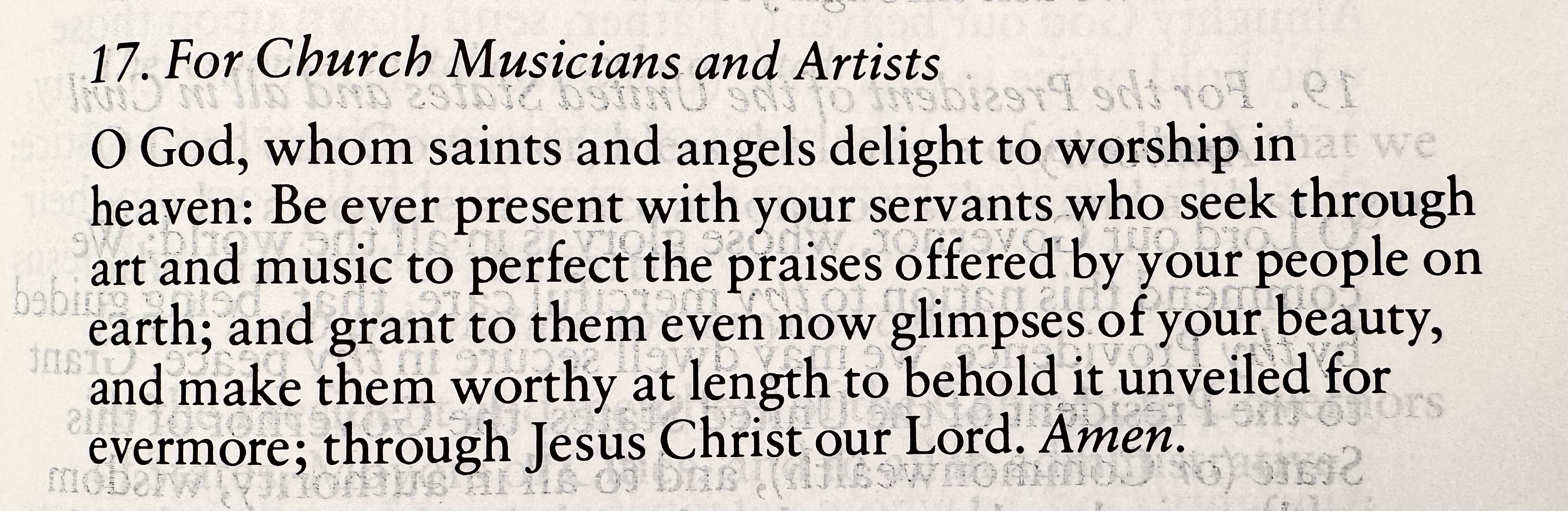
In the BCP section, Prayers and Thanksgivings [BCP:814], Prayers for the Church, from the Collect, “For Church Musicians and Artists,” we are reminded that
⁃ Saints and angels delight to worship God in heaven
⁃ We ask God to be ever present with his servants who seek through art and music to perfect the praises offered by God’s people on earth
⁃ And, to grant to them even now glimpses of God’s beauty and make them worthy at length to behold it unveiled for evermore
⁃ Through Jesus Christ our Lord
⁃ {and thus that God’s beauty is unveiled to those faithful who have gone before us to the other side}
In the BCP section, Thanksgivings [BCP:836ff], by “A General Thanksgiving” [BCP:836], we are reminded that
⁃ we thank God for the splendor of the whole creation, and for the beauty of this world
⁃ {and} for the wonder of life, and
⁃ for the mystery of love
In the same section, by “A Litany of Thanksgiving,” we are reminded that
⁃ we “give thanks to God our Father for all his gifts so freely bestowed upon us”
⁃ {and} for the beauty and wonder of God’s creation, in earth and sky and sea
Among the “Thanksgivings for National Life” [BCP:838ff, by the Thanksgiving “For the Nation,” we are reminded that
⁃ we thank almighty God for the natural majesty and beauty of this land, which restore us though we often destroy them
From among the “Thanksgivings for the Natural Order” [BCP:840ff], by the Thanksgiving “For the Beauty of the Earth,” we are reminded that
⁃ We give our most gracious God thanks for the beauty of earth and sky and sea; for the richness of mountains, plains, and rivers; for the songs of birds and the loveliness of flowers
⁃ That we praise God for these good gifts, and pray that we may safeguard them for our posterity
⁃ we ask God to grate that we may continue to grow in our grateful enjoyment of God’s abundant creation, to the honor and glory of God’s name
Note: I have retained and employed the pronouns and grammatical style employed by the 1979 Book of Common Prayer, which continues to be our primary and most widely shared reference point for theological expression and beliefs. Our beliefs are founded upon Scripture, which always provides the standard for a community that believes that prayer both reflects and shapes belief. And the Scripture that we “read, mark, learn, and inwardly digest” is the Scripture that has been received and confirmed by the believing community of the wider Church through the centuries. Different Christian communities of course prefer differing translations of the Bible. Here, for Anglicans, Scripture is authoritative as we are guided by an ancient maxim attributed to St. Vincent of Lérin: What has always been believed by everyone, everywhere. Very little, it may seem, wholly fulfills the requirements of this maxim. Yet, what comes closest to fulfilling it is therefore most authoritative for us.