prayer

Reminders of Divine Beauty in The Book of Common Prayer

Anglican artists, writers, and musicians, have found deep spiritual significance in our encouter with beauty in the natural world, and they have left us with abundant examples of beauty in the places and things of worship. Our liturgies have been shaped by faithful people who, echoing the Psalmist, have sought to glorify “the fair beauty of the Lord.” It is therefore somewhat surprising to notice the relative paucity of references to beauty in The Book of Common Prayer, though the concept is interwoven in its many texts. In subtle and in sometimes hidden ways, beauty nevertheless functions as a significant concept in our prayers.

For Anglicans, The Book of Common Prayer [hereafter as BCP] functions as a resource for our prayers. And, in time and through practice, it becomes the source of our prayers, especially in the way that it is founded upon, and leads back into the Holy Scriptures. We are open to individually-crafted voluntary prayers offered for specific occasions. Yet, in our experience, these ‘unscripted’ prayers characteristically also become formulaic and repetitive in content as well as in phrasing, just our BCP prayers are sometimes said to be. As Anglicans, we find that – like practices handed down over generations – prayers shaped by communities also become ‘hallowed by time.’

Further, we hold in common a premise upon which Anglican Christians have typically relied. We often find our basic doctrine expressed in our prayers, though we do not usually look to our prayers to find nor to establish our doctrine. For it would be contrary to the spirit of this approach if we were to conclude that, by simply changing our prayers, we would then change our doctrine. Therefore, in the same spirit, the phrases that I cite here from the BCP are authoritative because they are true, rather than true as a result of coming from what we consider to be an authoritative source.

From the BCP, we are reminded about many things concerning Beauty, among them that:

⁃ Beauty is an attribute of God
⁃ God’s beauty is manifest in God’s handiwork in Creation, and therefore {by implication} manifest also in us, and between us
⁃ Creation is permeated with God’s beauty and grace, which is a reflection of God’s goodness as well as of divine truth, God’s own nature and a characteristic attribute of God’s creative activity
⁃ When we behold the beauty with which God has imbued Creation, we rejoice and experience joy as we encounter the presence of God’s love for the world and for us
⁃ Having this encounter, we perceive how God has given us work to do in truth and beauty and for the common good

Goodness, Beauty, and Truth, are attributes of God’s being and nature. How do we know this? We see the reflection, even the manifestation, of these transcendentals in the things that are created and here for us to behold and encounter. When we encounter these transcendentals in the things that are made, we encounter these attributes of God, not merely the residue of God’s action. And in so doing, we experience peaceful joy. This joy in us is our experience of God’s love for God’s work, the fruit of God’s creativity.

We often experience a disconnect between ourselves and our work, between who we are and how we act. With God, there is no such disconnect. God’s being and activity are indivisible, even if we distinguish them in our reflection. For at least in traditional Christian doctrine, God is all good, all knowing, and all powerful, dwelling outside of time, but acts and is fully present within it.

In our reflection therefore, God’s work of Creation and God’s work of Redemption may and should be distinguished but not confused nor separated. The principal reason for this is our recognition of the fallen state of Creation and of our human nature within it, to which God’s loving work of Redemption has been addressed.

As I previously reflected, in both Creation and in Redemption, God has formed and shaped the world and its inhabitants so that the world through God’s Creation is good and beautiful, and also a repository for what is true. Through Redemption, God embraces and transforms fallen Creation in such a way so that all that is amenable to fulfillment and completion in Christ may come to be so, and those things that are not amenable to the same have no future in Christ. Along with Truth and Goodness, Beauty plays a principal role in this ongoing process.
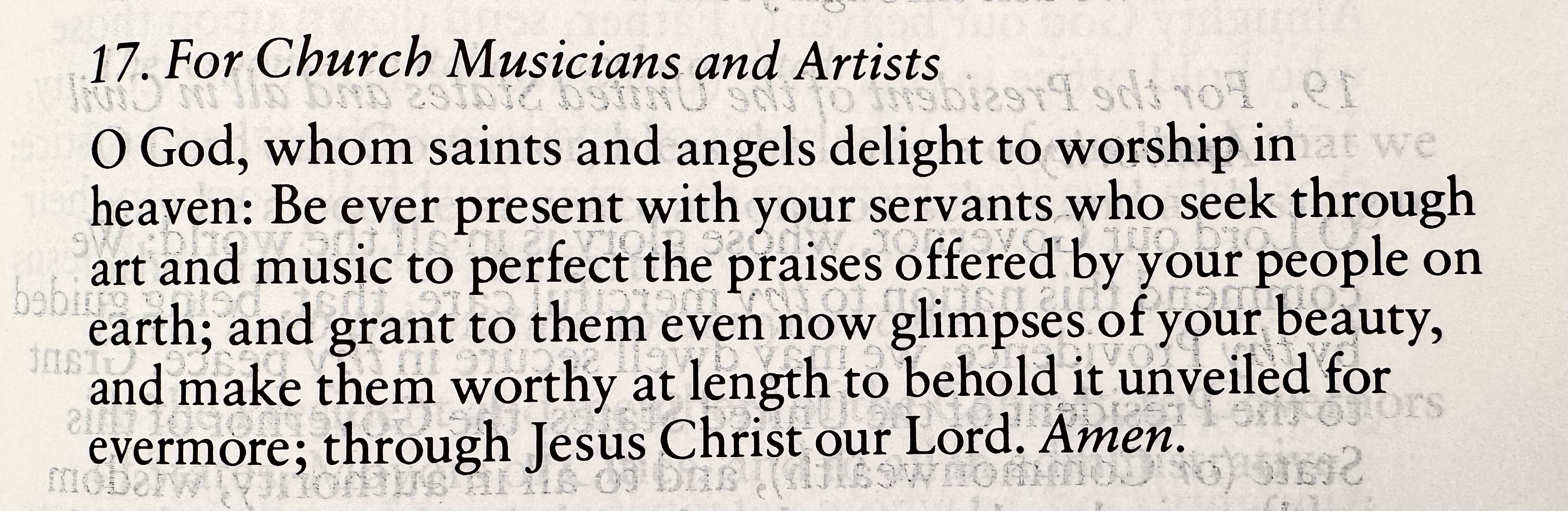
A Collect from The Book of Common Prayer

As a portion of Psalm 90 can be translated, “Let the beauty of the Lord our God be upon us, and prosper us for the work of our hands!” And in Psalm 96, we find: “Sing to the Lord a new song; sing to the Lord, all the earth… Honor and majesty are before him; strength and beauty are in his sanctuary.” And so, by divine grace, may these attributes of God and of the Risen Lord be present in our midst, and within us.


For reference, and as background material for the above, I include here some specific sources in the BCP for what I have shared:

In the BCP section, Prayers and Thanksgivings [BCP:814], Prayers for the World, from the Collect, For Joy in God’s Creation [BCP:814], we are reminded that:
⁃ Our Heavenly Father has filled the world with beauty
⁃ We ask God to open our eyes so that we can then behold God’s gracious in all of God’s works
⁃ So that, by rejoicing in God’s whole creation, we may learn to serve God with gladness, for Jesus’ sake, through whom all things were made
⁃ In other words, we find this implied sequence of ideas: —> God has filled the world with beauty -> God opens our eyes -> we behold God’s gracious hand in God’s works -> thereby we rejoice in God’s whole creation -> in the process, we learn to serve God with gladness

From the Collect for “The Transfiguration” [BCP:243], we are reminded that
⁃ We ask God to grant that we might be delivered from the disquietude of this world, so that we may by faith hold the King in his beauty, who with the Father and the Holy Spirit lives and reigns, one God, world without end

From the Collects for “Various Occasions,” the Collect for Vocation in Daily Work” [BCP:251], we are reminded that
⁃ Almighty God, our Heavenly Father, declares his glory and shows forth his handiwork in the heavens and in earth
⁃ We ask God to deliver us in our various occupations from serving ourselves alone, so that we may do the work God has given us to do in truth and beauty and for the common good

From the liturgy for “The Dedication and Consecration of a Church” [BCP:567ff], we are reminded that
⁃ We give God thanks for the gifts of God’s people, and for the work of many hands, which have beautified places and furnished them for the celebration of God’s holy mysteries
⁃ We ask God to accept and bless all that we have done, and to grant that in these earthly things we may behold the order and beauty of things heavenly
⁃ Through Jesus Christ our Lord

From the “A Litany of Thanksgiving for a Church” [BCP:578, from within the above liturgy], we are reminded that
⁃ we thank God whom we worship [here] in the beauty of holiness

In the BCP section, Prayers and Thanksgivings [BCP:814], Prayers for the Church, from the Collect, “For Church Musicians and Artists,” we are reminded that
⁃ Saints and angels delight to worship God in heaven
⁃ We ask God to be ever present with his servants who seek through art and music to perfect the praises offered by God’s people on earth
⁃ And, to grant to them even now glimpses of God’s beauty and make them worthy at length to behold it unveiled for evermore
⁃ Through Jesus Christ our Lord
⁃ {and thus that God’s beauty is unveiled to those faithful who have gone before us to the other side}

In the BCP section, Thanksgivings [BCP:836ff], by “A General Thanksgiving” [BCP:836], we are reminded that
⁃ we thank God for the splendor of the whole creation, and for the beauty of this world
⁃ {and} for the wonder of life, and
⁃ for the mystery of love

In the same section, by “A Litany of Thanksgiving,” we are reminded that
⁃ we “give thanks to God our Father for all his gifts so freely bestowed upon us”
⁃ {and} for the beauty and wonder of God’s creation, in earth and sky and sea

Among the “Thanksgivings for National Life” [BCP:838ff, by the Thanksgiving “For the Nation,” we are reminded that
⁃ we thank almighty God for the natural majesty and beauty of this land, which restore us though we often destroy them

From among the “Thanksgivings for the Natural Order” [BCP:840ff], by the Thanksgiving “For the Beauty of the Earth,” we are reminded that
⁃ We give our most gracious God thanks for the beauty of earth and sky and sea; for the richness of mountains, plains, and rivers; for the songs of birds and the loveliness of flowers
⁃ That we praise God for these good gifts, and pray that we may safeguard them for our posterity
⁃ we ask God to grate that we may continue to grow in our grateful enjoyment of God’s abundant creation, to the honor and glory of God’s name

Note: I have retained and employed the pronouns and grammatical style employed by the 1979 Book of Common Prayer, which continues to be our primary and most widely shared reference point for theological expression and beliefs. Our beliefs are founded upon Scripture, which always provides the standard for a community that believes that prayer both reflects and shapes belief. And the Scripture that we “read, mark, learn, and inwardly digest” is the Scripture that has been received and confirmed by the believing community of the wider Church through the centuries. Different Christian communities of course prefer differing translations of the Bible. Here, for Anglicans, Scripture is authoritative as we are guided by an ancient maxim attributed to St. Vincent of Lérin: What has always been believed by everyone, everywhere. Very little, it may seem, wholly fulfills the requirements of this maxim. Yet, what comes closest to fulfilling it is therefore most authoritative for us.

… always and everywhere …

(An earlier than usual post — for your Thanksgiving Week!)

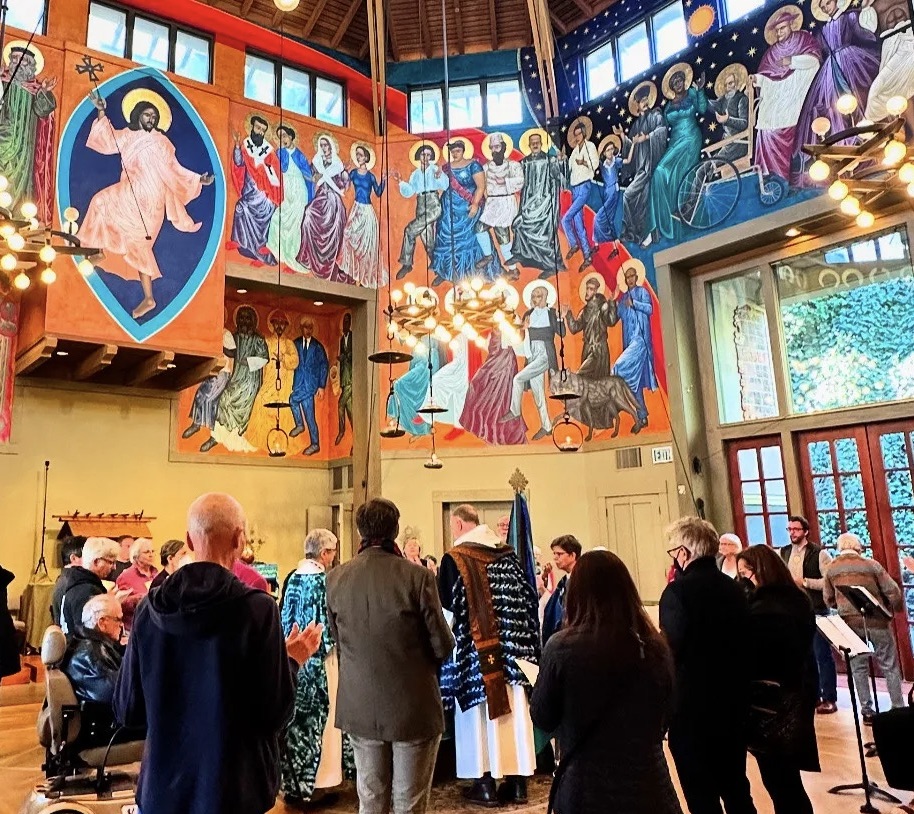
A lively celebration of the Eucharist, or The Great Thanksgiving, at St. Gregory of Nyssa Episcopal Church, San Francisco

It is right, and a good and joyful thing, always and everywhere to give thanks to you, Father Almighty, Creator of heaven and earth.” So begins the body of one of the Eucharistic Prayers in The Book of Common Prayer, as used in Episcopal Churches for the celebration of Holy Communion. “Always and everywhere” – these words regarding giving thanks remind us of the characteristic posture of the Church, and of all of its members, whether at worship in their parishes or at work or play in the world around them.

When Baptized Christians gather for a celebration of the Lord’s Supper, they remember that “the Lord Jesus on the night when he was betrayed took bread, and when he had given thanks (eucharistesas / εὐχαριστήσας), he broke it, and said, ‘This is my body which is for you. Do this in remembrance of me’ (1 Corinthians 11:23-24).” What we as Christians do in a formal way, when gathered for the Eucharist, enacts our normative way of shaping our whole lives. Which is always and everywhere to offer thanks to God for mercy and grace, and for God’s love poured into our hearts by the Holy Spirit. For we seek to live as we pray: Offering thanks to the Father, through the Son, in the power of the Holy Spirit.

“Give thanks in all circumstances; for this is the will of God in Christ Jesus for you.” Paul shares this counsel in his first letter to the Thessalonians (5:18). These words are sometimes mis-remembered as saying, “for all circumstances.” The difference between the two prepositions, in and for, is significant. In our daily rounds, it is very difficult for most of us to be thankful for adverse circumstances and experiences, and we find it hard to reconcile their occurrence with the oversight of a loving God.

Yet Paul believed in the doctrine that we call Providence. He firmly believed that the evil conditions and events that we experience in this life are not in themselves acts of God, imposed upon us by the divine will. Instead, they are things that are allowed to occur by a God who loves us and who intends our good. This is clearly a mystery to us, on this side of the veil separating us from the eternal.*

Another Eucharist at St Gregory of Nyssa

As we well know, the society in which we live in the United States sets aside one day of the year as a public holiday that is called Thanksgiving Day. Its history lies in a presidential proclamation by Abraham Lincoln. Yet, regardless of the circumstances of its origin, the day is widely celebrated by many who are unfamiliar with its history, and who may identify with traditions, practices, and holidays passed on from other cultures. This is only proper, as giving thanks is a universally human act. The people and circumstances, and the particular reasons for it, may all differ. Yet, the spirit of the act is the same.

I have heard it explained, that the sanctuary candle we see in the sanctuary of some churches is to remind us that God is present. The implication of this explanation might be misconstrued in such a way as to suggest that God’s presence elsewhere might not be as assured. Yet, the explanation can also be understood positively, as saying something like this: “This candle is here to assure us of God’s presence. We keep a candle here lit perpetually to remind us that God is always and everywhere present, even in the darkness or when we are alone elsewhere.”

Celebrating Thanksgiving Day can bring with it a similarly positive understanding. We give thanks formally, as a nation of many peoples, on one day of the civil year as reminder that giving thanks should be natural for us every day of the year. And the thanks we should offer are for the good things we enjoy with those whom we know and love, but also for things, people, and even institutions, about which we may be indifferent or even disapproving.

Gathering for a shared meal in the context of a spirit of thanks

In this spirit, I would like to share a prayer found in The Book of Common Prayer, that is principally used in the closing portion of the rites for Morning and Evening Prayer. It is therefore not specifically designated for use in observance of our national celebration of Thanksgiving Day, though it could be. This is a prayer intended for use everyday, and is a fine one for us to use at our celebrations this week:

Almighty God, Father of all mercies,
we your unworthy servants give you humble thanks
for all your goodness and loving-kindness
to us and to all whom you have made.
We bless you for our creation, preservation,
and all the blessings of this life;
but above all for your immeasurable love
in the redemption of the world by our Lord Jesus Christ;
for the means of grace, and for the hope of glory.
And, we pray, give us such an awareness of your mercies,
that with truly thankful hearts we may show forth your praise, not only with our lips, but in our lives,
by giving up our selves to your service,
and by walking before you
in holiness and righteousness all our days;
through Jesus Christ our Lord,
to whom, with you and the Holy Spirit,
be honor and glory throughout all ages. Amen.


*A note about the distinction offered above, regarding what God allows: Readers may wish to consider the way that Aristotle, and others since, have distinguished various dimensions of the idea of ‘cause,’ or causation (four dimensions have been articulated in the Western tradition). “Efficient cause” is the familiar form of the word cause, as in causing a row of dominos to cascade forward. “Final cause” can be conceptually helpful, especially as we think about God drawing persons and events toward their fulfillment in Christ. In this sense of the word cause, instead of our thinking of God as pushing events forward, some of them good and some perhaps bad in our eyes, God summons, and pulls toward the future, those people and things that may be made whole in Christ (ie, those that are open and willing recipients of his Grace), to their true end.

Our Prayers and God’s Blessing

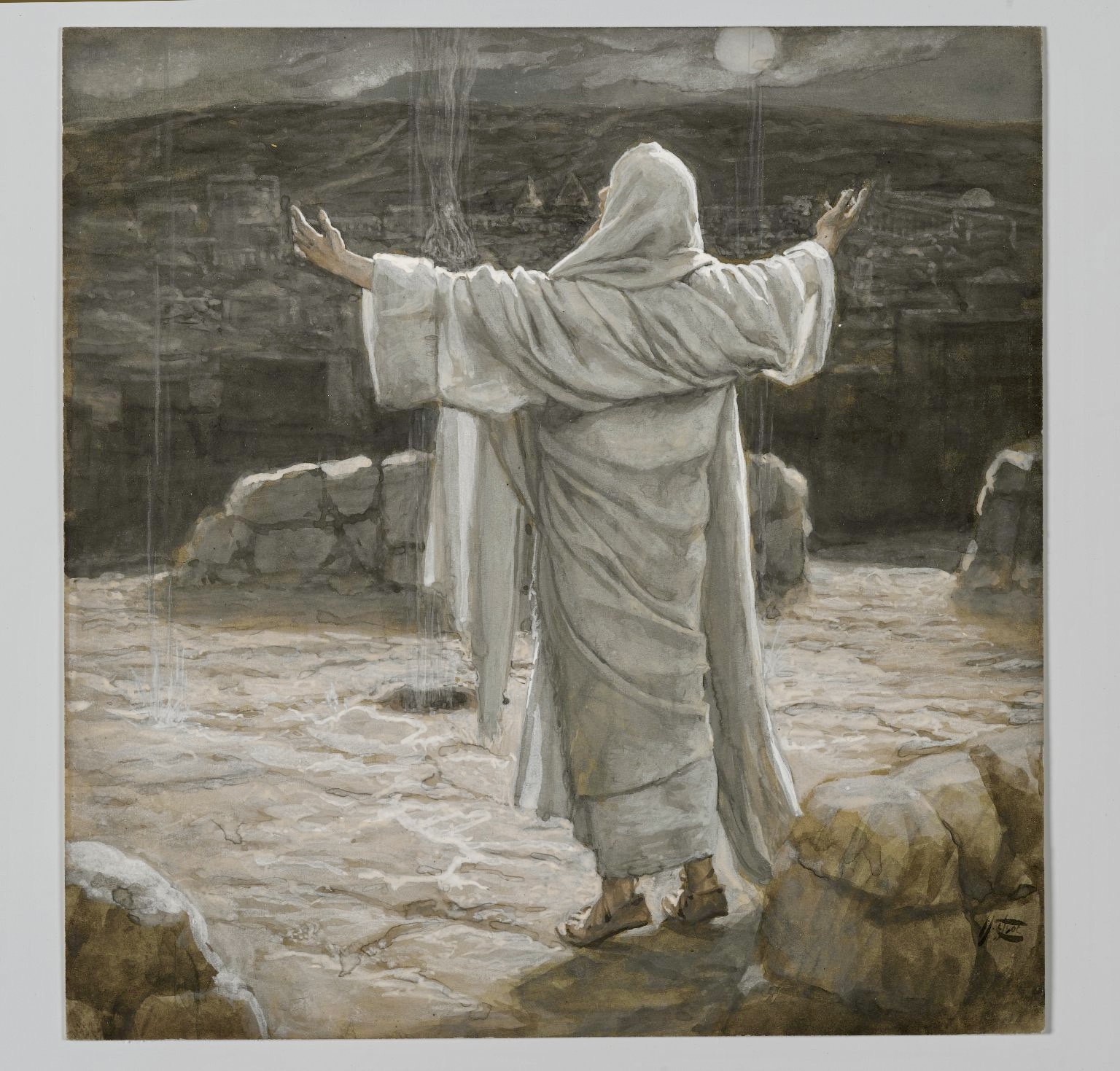
Christ Retreats to the Mountain to Pray, by James Tissot

I have become fond of quoting a particular question and response found in the Catechism included in our Book of Common Prayer. The question is straightforward: “What is prayer?” The first part of the extended answer to this question is also put plainly, and it is instructive. “Prayer is responding to God.”

Consider the significance of those words. If we gained our concept of prayer during childhood, we probably still think about this activity in the same terms – terms which are rather different from the way that the Prayer Book Catechism sets forward its definition. For it seems almost universal that we associate our concept of prayer with ’petition.’ Petition is the formal name for prayers that ask, in which we make our personal requests to God. ‘Intercession’ is what we call the prayers that we offer for other persons and their needs. The frequency with which we might engage in these two forms of prayer may help explain why we are so accustomed to seeking what we call “answers to prayer.” If answers to prayers are sought, it suggests that prayers are posed to God by us unidirectionally, as questions and or as requests.

Yet, our Catechism begins its teaching about prayer by characterizing this activity as one in which we respond to God, rather than one in which we envision God responding to us and to our concerns!

St. James the Less (at prayer), by James Tissot

Putting the matter very simply, the Prayer Book presents prayer as something that is God-centered, God-initiated, and as God-enabled. Such a notion of prayer is fully biblical and properly theological. Yet, we like to be ‘in the driver’s seat.’ Habitually, we think of prayer as something we initiate, and for which we supply the purpose and direction. But if prayer is to be centered upon communion with God, then it ought also to be the other way around, so as to follow the words of Jesus. For he taught us to address “our Father in heaven” by saying “thy will be done.” When we follow his teaching, instead of so often asking God to please do what we want, we are more willing to let God be quietly present and foremost in our consciousness.

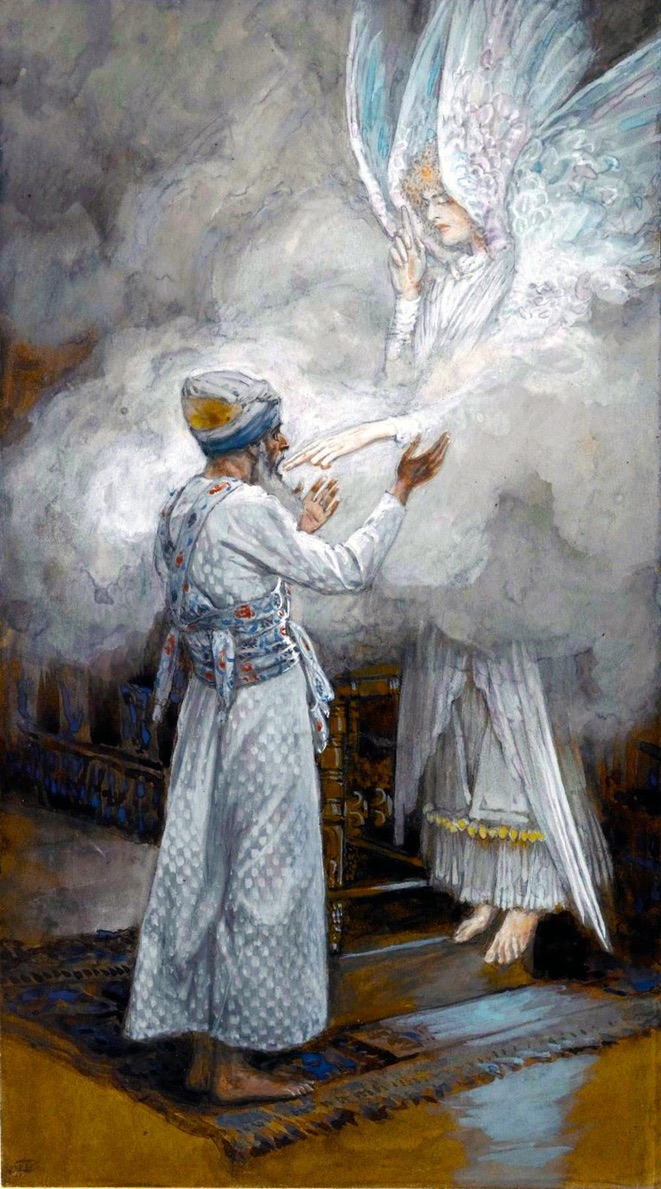
The Vision of Zechariah (while at prayer in the Temple), by James Tissot

In a similar way, I think we habitually also misperceive the nature of divine blessing. Two examples of blessing that admittedly are not everyday occurrences, but which sometimes receive mention in discussions about blessing, can help make the point. These examples are provided by occasions when our chaplains are asked to offer prayers for, and pronounce blessings at, the launching of military ships and submarines, or to offer similar words over the participants and their hounds at fox hunts. Such prayers should not be seen as providing sanction for or as necessarily implying divine approval of whatever we ask on such occasions. Blessings in such contexts can instead be understood as words that we offer so that what is prayed for might be in accord with God’s will, rather than as words offered in support of purposes that we prefer and will into effect. Therefore, prayers offered for persons seeking public office, or who serve in that capacity, would best be shaped according to this understanding.

In view of these observations, blessing as a spiritual activity can be defined in the following way. For those who desire a blessing in the context of the church, a bishop or priest might say words of this kind: “May God’s will be furthered in your life, to the end that our Lord’s revealed and known purposes may be brought to their fulfillment in you, and for you.”

Here, the parallel we can discern between engaging in prayer, and offering blessings, provides insight. If prayer begins with responding to God, rather than with inviting God to respond to us, then surely words of blessing pronounced by our clergy are equally contingent upon the revealed direction of God’s purposes rather than those of our own. Therefore, we should always seek to offer prayers and blessings that are in accord with God’s known will, with the aim that our wills and desires might be in harmony with those of our Lord. Prayers and blessings are most genuine when we are most open to letting God be God.

James Tissot, Christ Goes Up Alone onto a Mountain (detail)

Our Doorway Into God’s Trinitarian Being

William Holman Hunt, The Shadow of Death (1870-73)

When we as Christians pray, we don’t simply pray to God. With faithful assurance, we pray with and through God! As Paul tells us, “When we cry, ‘Abba! Father!’ it is that very Spirit bearing witness with our spirit…” This is because, when we pray “to the Father,” we also pray with and through the Son. We are enabled to pray with and through the Son following our Baptism. For after Baptism, we are assured that we pray in the Holy Spirit. We therefore pray to God not ‘from the outside,’ but ‘from the inside’ of God’s own being and nature!

Well, how can this be? As we can easily discover, every Eucharistic Prayer in The Book of Common Prayer has a common shape. For all of our Eucharistic Prayers are prayed to the Father, through the Son, in the Holy Spirit. This is not an accident. Jesus modeled this in his own life, and particularly at the Last Supper.

When we repeat Jesus’ pattern, offered at that supper, we stand with him around the same table. And by his graceful invitation, we join his prayer to the One he called, ‘Our Father.’ Our prayer with him, to the Father, is in the power of the Spirit, the same Spirit he spoke about at that table. He modeled at that supper what grace means in practice.

Through the grace of the Holy Spirit, Jesus shares with us his own particular intimacy with the Father. Inviting us to stand with him as he prays, he offers the whole world back to the Father-Creator. By this, Jesus – and us with him – fulfills the divinely intended-but-failed stewardship vocation of the mythical Adam and Eve. And so, this is also our vocation, to offer up to our Father all that truly belongs to the Creator. Sharing with Jesus the grace of the Holy Spirit allows us to join him, the Son, in his ongoing Eucharistic vocation.

A good way we can live into the saving implications of God’s Trinitarian nature, is to engage in some creative imagining. Imagine that, in this moment, Jesus reaches out his hands to us. In reaching out his hands, he does not simply extend his greeting. Extending his embrace, he invites us to join him by standing with him, closely at his side. By his invitation, and our acceptance of it, he shares with us his own intimate and particular relationship with our Father.

And with this invitation, he gives us the power of the Spirit, making it a reality in our lives. Because the invitation comes from him, the power of the Spirit he shares with us is God’s grace-filled power. Jesus makes all this actual and true, whether we feel it or not.

This Trinitarian shape of prayer is different from how we usually imagine prayer. Commonly, we think of prayer as our communication to God. When we feel aware of God and close to God, we speak to God of what is good and well and of that for which we feel thankful. And we often ask for help. But, when there seems to be a veil between us and God, we speak to God with lament or we complain, sometimes in anger. This concept and experience of prayer is ‘subjective,’ and therefore narrow. That is, it is a concept of prayer based primarily upon our personal, interior, experience. It reflects our experience of being the subjects of perception and action. Yet, as the Prayer Book Catechism teaches us, prayer is first of all responding to God.

As we learn from Jesus, and by the Holy Spirit, true prayer is not something we do, which we somehow manage to achieve through our faithfulness, devotion, or energy. True prayer is something we allow God to do within us. True prayer is the kind of praying that we find God already making real within us through the indwelling Grace of the Holy Spirit. The Father and the Son and the Holy Spirit are constantly engaged with one another, in what the Eastern Christian tradition calls ‘a dance,’ a perichoresis. Prayer involves being drawn into this dance. Prayer is sharing in the Trinitarian relational being of God. Prayer is participation in the community of fellowship that exists within God’s own being.

The Trinitarian pattern of our lives rests upon the Trinitarian shape of our prayers. We can accept Jesus’ invitation to stand with him. We then experience his own fellowship with the Father, in the grace-filled power of the Holy Spirit. This enables us to live truly. To live truly, is to live to the Father. It is to live with and through the Son. And true prayer is to live in the power of the Holy Spirit.

And so, we seek to live in the way that we pray: to the Father, with and through the Son, in the Holy Spirit.

Note: This post is based on the Western Church’s observance of Trinity Sunday, on June 15, 2025. My title is based on a well-known metaphor found in John’s Gospel. The text here is based on my homily for that occasion, which may be accessed by clicking here.

My goal is to commend the assurance of hope that lies within the Gospel. And while being aware of concerns about the so-called ’scandal of particularity’ associated with Christianity and Judaism, we should be aware that God is free to offer a similarly positive spiritual experience to those of other religious traditions, or of no particular tradition with which they may identify. I hope to address Hunt’s evocative painting, featured above, in a subsequent post.

The Beauty of Responding to God


Luke in chapter 12 tells us that “Jesus was praying in a certain place.” The disciples surely noticed that Jesus often prayed in private. Corporate worship is public, and it engages a community in various forms of prayer and praise. But, for the disciples, Jesus modeled a form of prayer that is typically private. Luke tells us that Jesus would often “withdraw to deserted places and pray.” Mark tells us about a time when Jesus got up very early, long before daylight, to pray in a lonely place by himself. Luke also tells us how Jesus went out to a mountain and spent the whole night in prayer before calling the twelve to join him. These stories tell us that, for Jesus, prayer was a way to feed himself spiritually. And through it, he re-grounded himself in mission.

And so, having set his face toward Jerusalem, Jesus is praying by himself. Perhaps his words are like his later prayer on the cross: “Father, into your hands I commend my spirit.” In other words, in both living and in dying, Jesus was in the habit of saying to the Father, ‘I put my whole being into your hands.’

How fitting, then, that a disciple boldly says, “Lord, teach us to pray!” Well, who do we typically ask, to teach us things we want to learn? Of course, we ask someone who knows about the subject. Indeed, we are likely to ask someone who not only knows about the matter, but who actually lives it. On occasion, Jesus may have prayed like other rabbis. Yet the disciples noticed that he also prayed differently and, probably, more sincerely and more deeply. Luke, among the Gospels, is most clear that Jesus embodied and modeled a life of prayer, not just the occasional practice of it. Here, it’s helpful to remember what The Book of Common Prayer Catechism teaches us ~ that “prayer is responding to God.” The kind of prayer that Jesus lived and modeled was at least this, a genuine and intentional process of responding to God.

What a wonderful thing for them to ask, ‘O Lord, please teach us to pray!’ For prayer is something at which all of us are just beginners. Jesus honors their request by teaching them the Lord’s Prayer. The contemporary form in our Prayer Book is based on how Luke shares it. Jesus teaches us to speak to God directly, as Father. In this prayer, we speak with Jesus, and through Jesus, as he shares with us his own relationship with the Father. Therefore, his Father becomes “our” Father. Jesus underscores the personal nature of our new relationship with the Father, by saying, “Father, hallowed be your name.” As Moses learned in the wilderness, the holiness of God’s name is directly connected with the holiness of God’s being. Through the prayer Jesus teaches us, we begin to live into a new personal relationship with God.


The image above is of Stanley Spencer’s painting, Christ in the Wilderness: Driven by the Spirit. This post is based on my homily for Sunday, July 28, 2019, which can be accessed by clicking hereOther homilies of mine may be accessed by clicking here. The Revised Common Lectionary, which specifies the readings for Sundays and other Holy Days, can be accessed by clicking here.