philosophy

The Virtues and Life in the Spirit of Pentecost

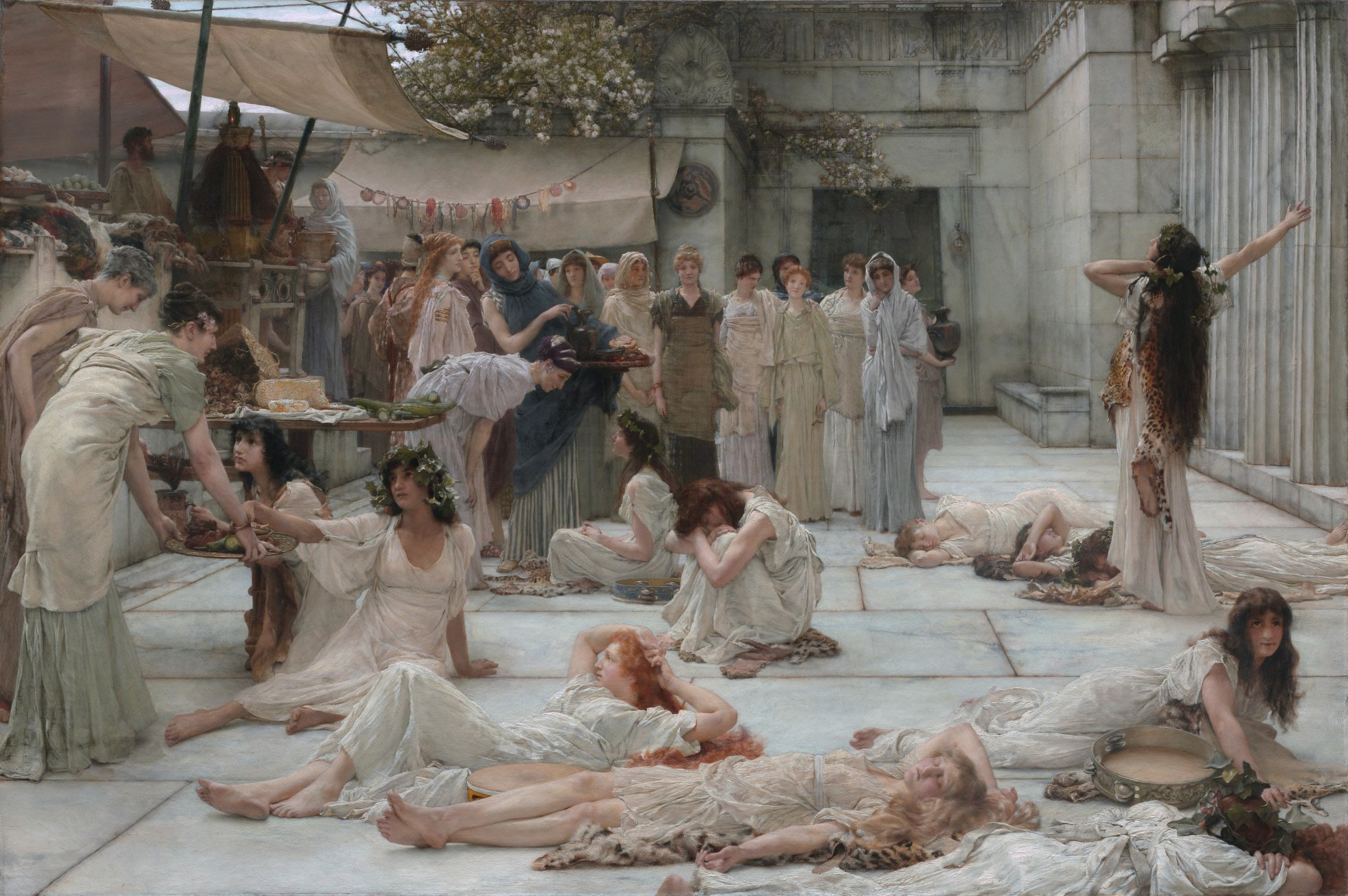
Lawrence Alma-Tadema (1836-1912), The Women of Amphissa, depicting female followers of Dionysus met by women of the city who have been more consistent in their practice of virtue

Watching video productions set in pre-twentieth century times, such as the 1995 Pride and Prejudice and the more recent series Victoria, viewers will notice how the word ‘virtue’ is often used narrowly to refer to something women are obliged to protect. This collapse of the wider meaning of the term, and its more specific association with sexual propriety, diminishes a concept which has very wide significance, especially in the history of moral theology or in Christian ethics.

The ancients and their successors teach us that virtue is a strength or capacity that we need to exercise, and which gains stature through our practice as a shaping dimension of a person’s character. And our tradition teaches us that character is a disposition to act in particular ways. Acts shape character, and character is displayed in acts.

Building on what we can discern about the narrowing of the concept of virtue in the Victorian period, we can be happy that the twentieth century became an era in which the broader meaning of virtue was gradually rediscovered in teaching and in writing, both in Catholic moral theology and in Protestant ethics. The writings of the Roman Catholic Peter Kreeft and the Protestant Stanley Hauerwas provide examples of the contemporary recovery of the importance of virtue for how to think about how to live.

In view of this recovery, it is helpful to think about two virtues in particular, sobriety and chastity. In popular thinking and often in conversation, sobriety for many has come to be equated with complete abstinence from alcohol, and chastity is usually understood to mean refraining from sexual relations. This specific diminishment of our understanding of sobriety and of chastity has had an unfortunate consequence – we think of sobriety as of principal concern for those who have had difficulty in not over-indulging in drinking, and chastity as a way of avoiding sexual activity. However, as virtues with a long history of reflection behind them, we will do well to recover the fuller significance of these two terms.

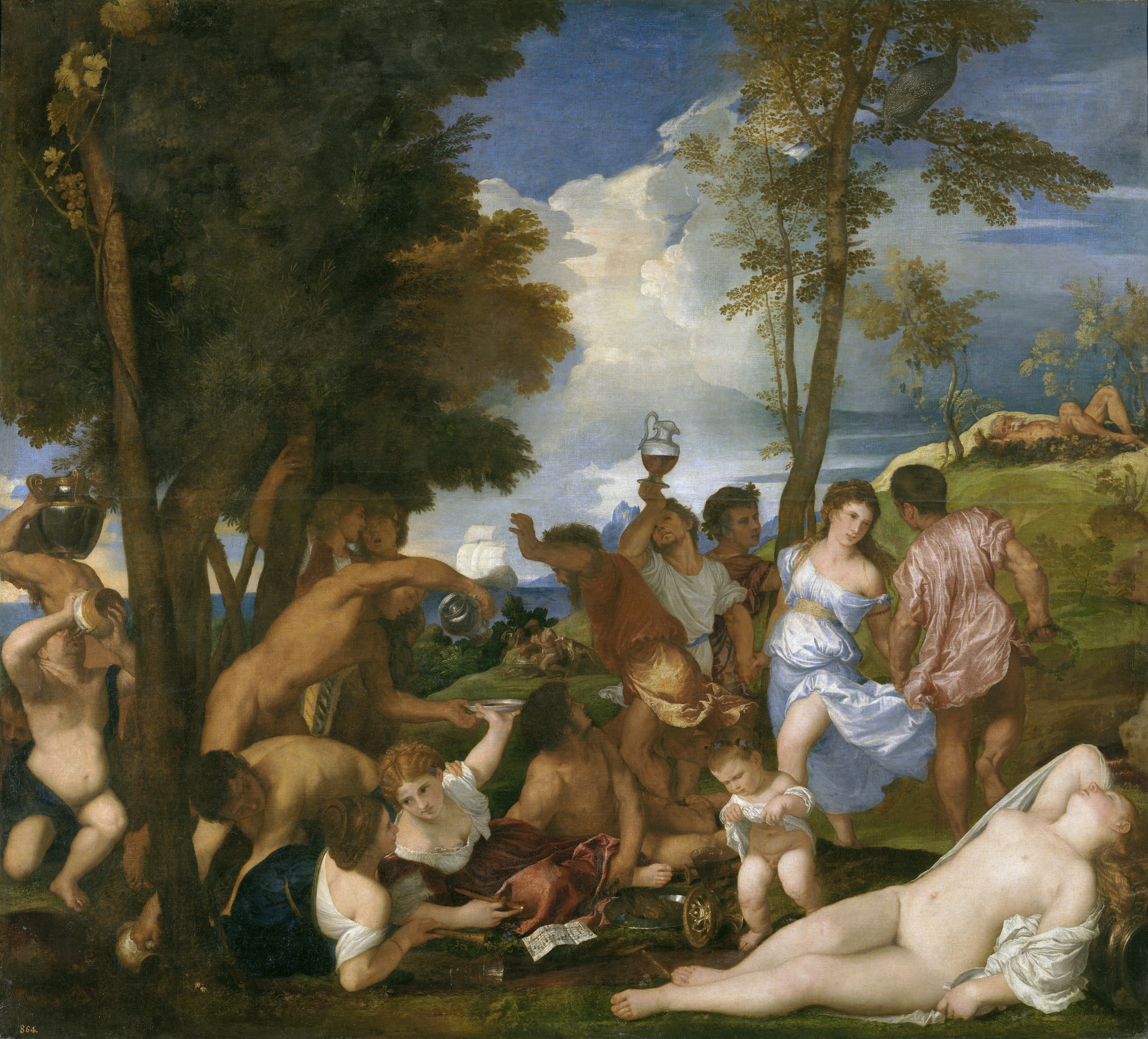
Titian (1488-1576), The Bacchanal of the Andrians, depicting the mythical Island of Andros where a stream flowed with wine

As a virtue, sobriety is best seen as the practice of respecting our bodily integrity and emotional equilibrium in our relationships with others, in both social circumstances and when alone. The appropriate and temperate consumption of alcohol, along with a general indifference rather than a preoccupation with its presence, in our homes or in festive gatherings with others, are features of the practice of the virtue of sobriety.

In a similar way, chastity is also best seen as involving the practice of respecting our bodily integrity and honor in our relationships with others, especially with regard to marriage. In traditional Christian thinking, chastity specifically refers to a respect for the marriage covenant, and more broadly to fidelity in committed relationships, as we seek to practice temperance regarding our sensual inclinations.

It may surprise many in this era to read that all people are called to practice the virtues of sobriety and chastity, as well as other often named virtues. Not all are called or feel the need to abstain from alcohol and/or from sexual relations. Those who do find it difficult to consume alcohol or engage in sexual activity within what we consider to be appropriate and healthy bounds then sometimes choose never to drink and to practice celibacy. We should therefore be cautious about equating sobriety with the more specific practice of abstinence from drinking, and chastity from being equated with celibacy.

For the delight we can find in various alcoholic drinks, and the mysterious wonder of human sexuality, are gifts of Creation. They are to be enjoyed while practicing the virtue of prudence along with those of sobriety and chastity. And our lives are the better for practicing virtue as we prepare for passing through the veil into the fullness of blessedness that awaits us.

Our common focus upon sobriety and chastity may reflect a pervasive aspect of life in society after the so-called ‘sexual revolution,’ or in what many call ‘post-Christian’ times. The unbounded consumption of alcohol and engagement in indiscriminate sexual relations seem to be an ever-present aspect of social life in North America and apparently in Western Europe, if not also across the world.

Classical Christian thought has identified four ‘natural’ virtues, prudence, justice, temperance, and fortitude, which are seen as natural capacities or strengths that can be developed through practice as a result of being born as a human being. Three additional virtues, seen as gifts of the Holy Spirit rather than as natural endowments of our common human nature, are then commended, both by Scripture and the broader Christian tradition. These are the more familiar virtues of Faith, Hope, and Charity (or agapic or other-oriented love). The identification of these seven virtues has not precluded the identification of further virtues – such as sobriety and chastity – which in one way or another manifest aspects of the seven formally named in the history of Christian ethics.

Our practice of any or all of the virtues, including sobriety and chastity, reflects a fundamentally positive choice to honor the integrity of our human embodiment and the communities in which we live, so that we might grow toward flourishing in fulfillment of our created and redeemed potential.


I write the above aware of how the virtue of temperance was in the nineteenth and twentieth centuries narrowed in social communication to become a term referring to total abstinence from alcohol and even its legal prohibition. One familiar example was the 1864 English naming of the Temperance River, the only stream that flows into the North Shore of Lake Superior without having a ‘bar’ (or sandbar) at its mouth. Though a common example, it reinforces why we should want to recover the fuller significance of the Virtues in our ethical and spiritual thinking.

Further note: Prudence is the virtue of practical reasoning

An Offering for Sunday, May 10, Easter 6 A

The Areopagus Hill, in Athens adjacent to the Acropolis, where Paul met with the questioning Athenians

Prior homilies or sermons of mine are occasionally downloaded by readers. Noticing this, I anticipate that some of those preparing to preach (or offer a reading) on an upcoming Sunday might benefit from the perspective I have taken regarding the Lectionary readings for a particular day. I am therefore offering (when I can) a prior text that I have used for the occasion. I will try to do this on Sunday evenings or Mondays believing that there might interest in these texts being made available. When I have one prepared, I will also offer an accompanying handout (in pdf format) in case these may also be helpful.

For this coming Sunday, Easter 6 in Lectionary year A, I offer the following.

The link for it is here. The link to the handout may be found further below.

Here is the link to the handout.

Finding Beauty in Easter Living

A book for the New Church’s Teaching Series

Visitors to this space are familiar with my fondness for the words of St. Richard of Chichester: “Day by day, dear Lord, of thee three things I pray: to see thee more clearly, love thee more dearly, follow thee more nearly, day by day.” The theme can be expressed more compactly: We seek to live more nearly as we pray. These words voice our desire to walk a path of beauty in life, such as we find in ‘Easter Living.’

While serving as an Assistant Professor at one of our seminaries in The Episcopal Church, I was invited by the editor of the New Churches Teaching Series to write the volume on Ethics and Moral Theology. This was the third such series of books going back to the 1950’s that seek to provide learning for persons interested in our tradition. Books in these series have addressed a wide range of areas in faith and community life pertinent to our common desire to become informed members. I wrote my book while teaching its content in the seminary, and in about 10 different parish weekend teaching events in Episcopal churches across the country, ‘field testing’ the material. My book was published in 2000, and is still in print. I wish to note that proceeds from all the books in this series were and are donated to the Anglican Theological Review, an independent journal offering the fruits of scholarship for the benefit and educational formation of those within as well as beyond the academy.

At the time of being granted tenure, a seminary trustee asked me what the title of the book implied about its content. It became evident that her concern was focused on my use of the word “after.” I was able to explain that I used the word to mean “in light of.” The book’s title is an indirect tribute to the theological vision of my doctoral supervisor, Oliver O’Donovan, then Regius Professor of Moral and Pastoral Theology at the University of Oxford, whose book, Resurrection and Moral Order, has had a profound impact upon my thinking.

It may be helpful to clarify that I use the terms “Christian ethics” and “moral theology” interchangeably. However, it is worth observing that many within the wider Protestant tradition tend to prefer the term “Christian ethics,” while those within the wider Catholic tradition tend to use that of “moral theology.” Note that “ethics,” as a named field of inquiry without the religious qualifier, is generally understood as a branch of philosophy, which may or may not observably underpin theological writings relevant to this field.

I would like to highlight a number of themes evident within and or suggested by the structure my book, which I think are particularly relevant to Christians at this point of time:

  • Foremost, the interdependence between ethics and spirituality, which I refer to as ‘two sides of the same coin’ despite their separate spheres of concern.
  • The centrality of Baptism in the lives of every Christian believer, and its implications regarding the vital relationship between what we believe and how we live
  • Our historic Anglican dependence upon the natural world as a source of insight about the Creator’s intentions for us and for our lives. This reflects our traditional emphasis upon the Incarnation of our Lord in human embodiment. We look for the complementarity between – but do not equate nor confuse – what the Medievals called the Book of Nature and the Book of Scripture, ‘written’ by the same Author, while having different even if overlapping purposes.
  • The distinctions that I offer between what I call “laws,” “manners,” and “moral principles.” Neglecting to distinguish among what these terms represent frequently causes confusion.

The final chapter of the book moves from elaboration of basic principles in Christian ethics/moral theology to an application of these principles by offering a methodological approach to how they might be applied with reference to a particular set of ethical questions, centering on how we approach a broad concern for all of us: “Should a Christian ever been involved in or associated with an act of violence?”

I wish to stress that this is not a book about “issues.” My goal was -and remains – an effort to recover and present the foundations of a solid Christian world view for how we might best approach any issue that may be of concern. So, this is not a book where you can turn to the index and look up such matters as capital punishment or a discussion of what might be a fair interest rate on loans. I try to remain careful about observing the important distinction between moral or ethical principles that we might share, and particular policy implementations that we then undertake to reflect or enact those principles in our common life.


For those who may be interested, I include here a précis of the structure of my book, articulated in the series of Axioms that are appended within it, as well as bullet point chapter summaries:

Finding Identity in Who We Are Becoming

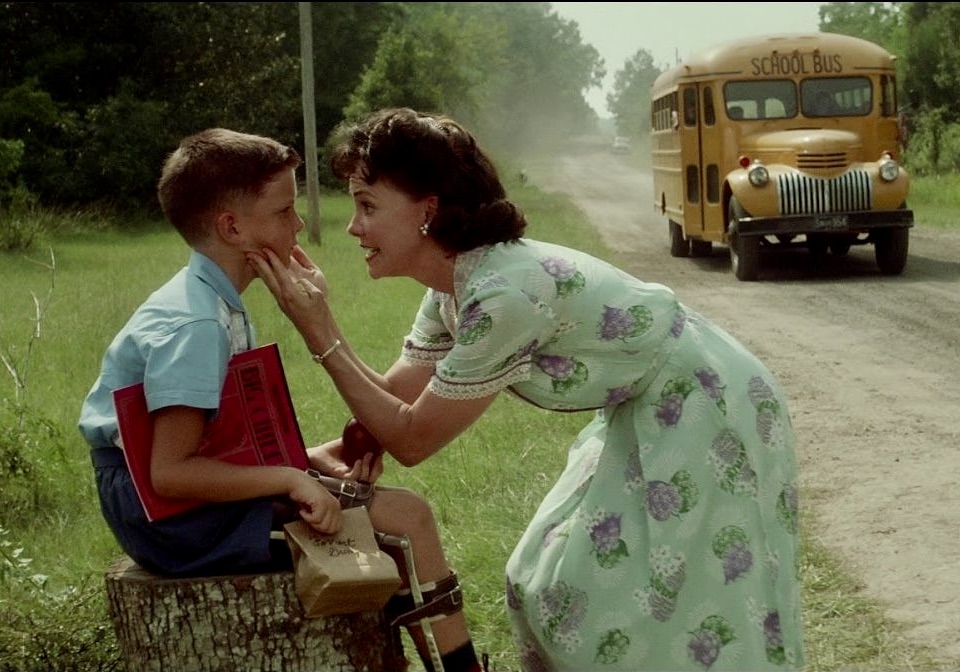
A promotional photo for Forrest Gump, a film exploring destiny and chance in relation to personal identity as people move through their lives

We are simultaneously two things that may seem to be in tension: We are who we are and have been, and, we are who we are becoming. The paradoxical conjunction between these statements challenges a prevalent social assumption, that personal identity is in some ways fixed.

Another observation to consider: We can no longer be who we were, years ago, nor who we thought we might someday become. For we are no longer who we were then, and surely not the person who we thought we might want to be as we matured.

But who we are now is the person we are becoming.

A trustworthy maxim from my field of ethics provides a reliable insight: practice shapes character. And character shapes practice. What we do shapes who we are (and who we are becoming), just as who we are shapes what we are likely to do. And a good definition of character is “a disposition to act in particular ways.” Our character is shaped by what we do, and what we do continues to shape our character.

Sally Fields and a youth playing the roles of Forrest Gump and his mama

Or, as Forrest Gump’s mama famously said, “Stupid is as stupid does.”

Whatever truth may be found in another old saying (“character is destiny”), who we are becoming is not in some way predetermined. We are in large part shapers of ourselves, even while we may feel like we are being shaped by events and or by other people. Yet, from the Beginning, God has been the Great Shaper of all things, even of us. As our Redeemer, through Baptism, God changes us and gives us a new life centered on the graced possibility of redemptive transformation.

In formal terms, the ideas I am exploring here involve dialectical relationships, such as we find between act and character, and between us and others. In these relationships, there is always a two-way, dynamic process of interaction between these various entities, whether we are speaking of God, ourselves, others, and or the circumstances in which we find ourselves.

Within all this, we experience a lifelong quest for a better sense of our identity. It is too easy, though often tempting, to try and resolve this quest in terms of external factors, such as who we imagine ourselves to be in the eyes and thoughts of other people. To be directed in our ideas and actions by what we think may be expected of us, or by what other people hope for us, usually comes at the expense of the influence of the Great Shaper, the One who reveals to us our true meaning and the purpose of our life journeys. Our primary dialectical relationship is with our Creator and Redeemer, our grounding guide for who we are meant to be, and become.

For these reasons, it is good to resist the typical kinds of “I am… “ statements so current in popular culture – statements like “I am a Democrat, or a Republican,” or “I am an introvert, or an extrovert.” A more helpful kind of self-definition springs from statements based on what we tend to do. For example, instead of the prior statements, it would help us to say things like, “I tend to vote in the following ways…,” or “I tend to respond to social situations by preferring to…” Consistent with these views, I resist self-definition in similar “I am” terms when it comes to how I measure when using Myers-Briggs related personal inventory instruments. This is, in part, because of their foundation upon Jungian thought, which anticipates how we as human beings have the opportunity to grow and change over time, especially in the direction of our ‘shadow’ strengths or areas of challenge.

I continue to value an insight offered by a former teaching colleague. In a conference he once said, “People don’t actually ‘learn from experience;’ they learn from reflecting on experience.” We experience and do things; we reflect on both, and we learn as we continue to think about what we encounter, and choose to do.” In the process, we are becoming who we are now.

Who am I becoming in relation to what I am doing now? This is a helpful Lenten question in light of our preparation for Easter living.

Living with God as Thou and I

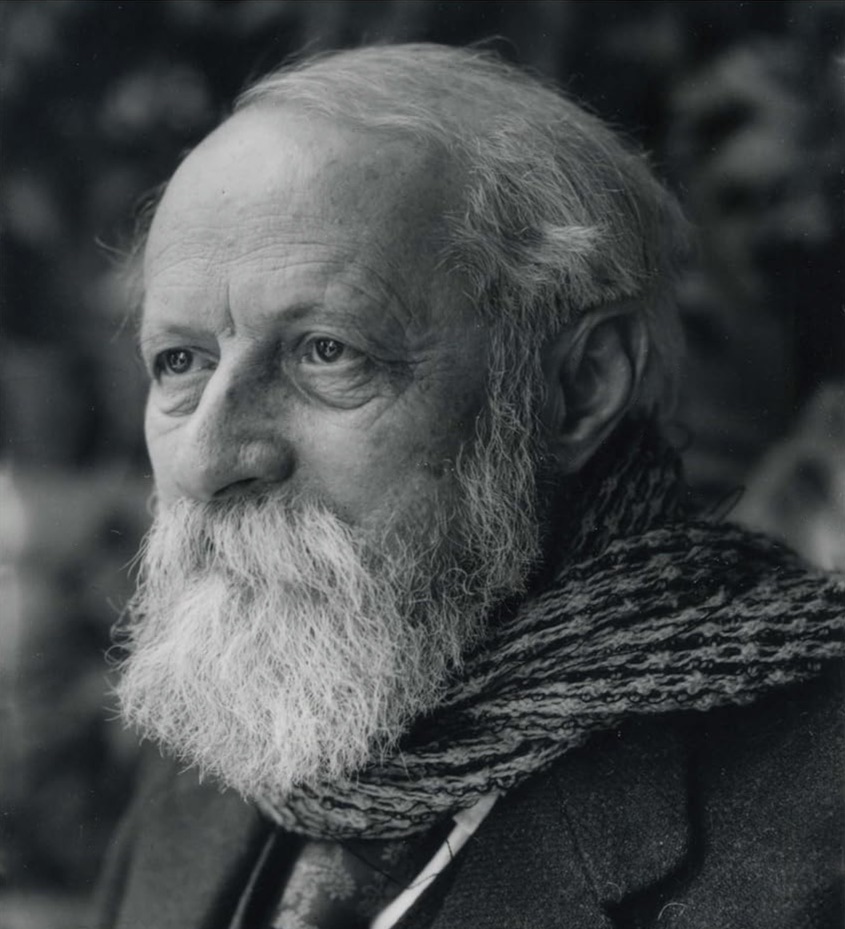
Martin Buber (1878-1965)

I was in college in the 1970’s. Though at first I was an agnostic art student while attending two Lutheran liberal arts colleges, many of my friends and two housemates were religion majors. This was at a time when the curricula for religion majors still included courses in Bible and in fundamental theology. Paul Tillich’s three Systematics volumes were still much read, as were Bonhoeffer and Barth. And Martin Buber’s once better-known book, I and Thou, was often recommended as a reading for various liberal arts majors.

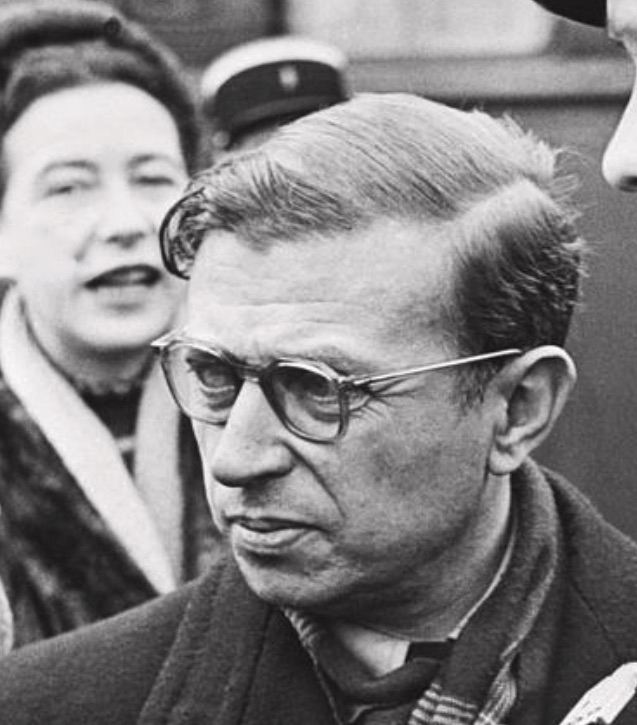
The significance of Buber’s book was something I only came to realize much later, after grappling with Jean Paul Sartre’s rather dark, or as some would say ‘more realistic,’ view of human relationships. Those familiar with Sartre’s play, No Exit, may recall a phrase penned by Sartre, “Hell is other people.”

As I remember it, Sartre had in mind our experience of ourselves as being regarded by other people as an object. For Sartre, we function primarily, and are aware of ourselves, as subjects – subjects who resist being seen as the objects of other person’s perceptions and especially their judgement. Only later did I perceive the paradoxical affinity between the views of Sartre and Buber. For both were sensitive to the experiential problems that arise when people feel they are regarded as objects rather than as fellow-subjects. It is no coincidence that the lifespans of Buber and Sartre overlapped.

Jean Paul Sartre (1905-1980)

How hard it is for us then, spiritually and in religious terms. to be open to a related idea. For we find it difficult to experience and therefore to accept ourselves as being an object of God’s love. To see ourselves in this way is understandably uncomfortable for us, given how our fundamental way of living and of perceiving ourselves is to function as subjects who regard, come to know, and evaluate everything as an object of our perception – even and more especially, other people. And yet, as one of John’s New Testament Letters teaches us, we were first loved by God… before we were aware of it, much less come to believe this as true or live by it.

In view of these observations, we might want to invert Sartre’s rhetorical phrase regarding how our experience with other people can be ‘hellish.’ We might also say that for religious believers and especially Christians, our fellowship with other people may provide us with real experiential glimpses of what has traditionally been meant by ‘heaven.’

Here we can employ another often superficially-used phrase about certain experiences as being moments of ‘heaven on earth.’ With that phrase, we may need to expand our perception of ourselves in this way: Consciously and intentionally we want to live as an object of God’s love, of God’s enduringly positive regard and embrace, within God’s shared Trinitarian-fellowship. To see ourselves and others, as well as then to live, in this way, may require us to cease to think in terms of subject and object in a binary, either/or way. We learn from Buber that with one another we can be “I and Thou.” And each day, when first emerging from sleep, we can begin our morning with prayerfully re-orienting words like these: “Regardless of what I may have dreamed, Thou art, and as a result, I am.”

For as Jesus promised, saying, “Because I live, you also will live. In that day you will know that I am in my Father, and you in me, and I in you.” (John 14:19-20). Every day can be, and is, that day.

Our Baptism recalls Jesus’ Baptism, for both function – in part – as moments of designation. For us, it is the sacramental act when we are told that we have been included among God’s own children, made a part of Christ’s Body, and named for the community by the celebrant. In all these ways, we are the objects of God’s redemptive work through Christ and in the power of the Holy Spirit, by means of the Church. God chooses us before we are ever aware of our choice to respond.

“I recognize Thou, who first knew me before I ever became conscious of myself. Thou first loved me before I ever felt a challenge to love myself.”