Easter

Being True, Being Good, and Being Beautiful

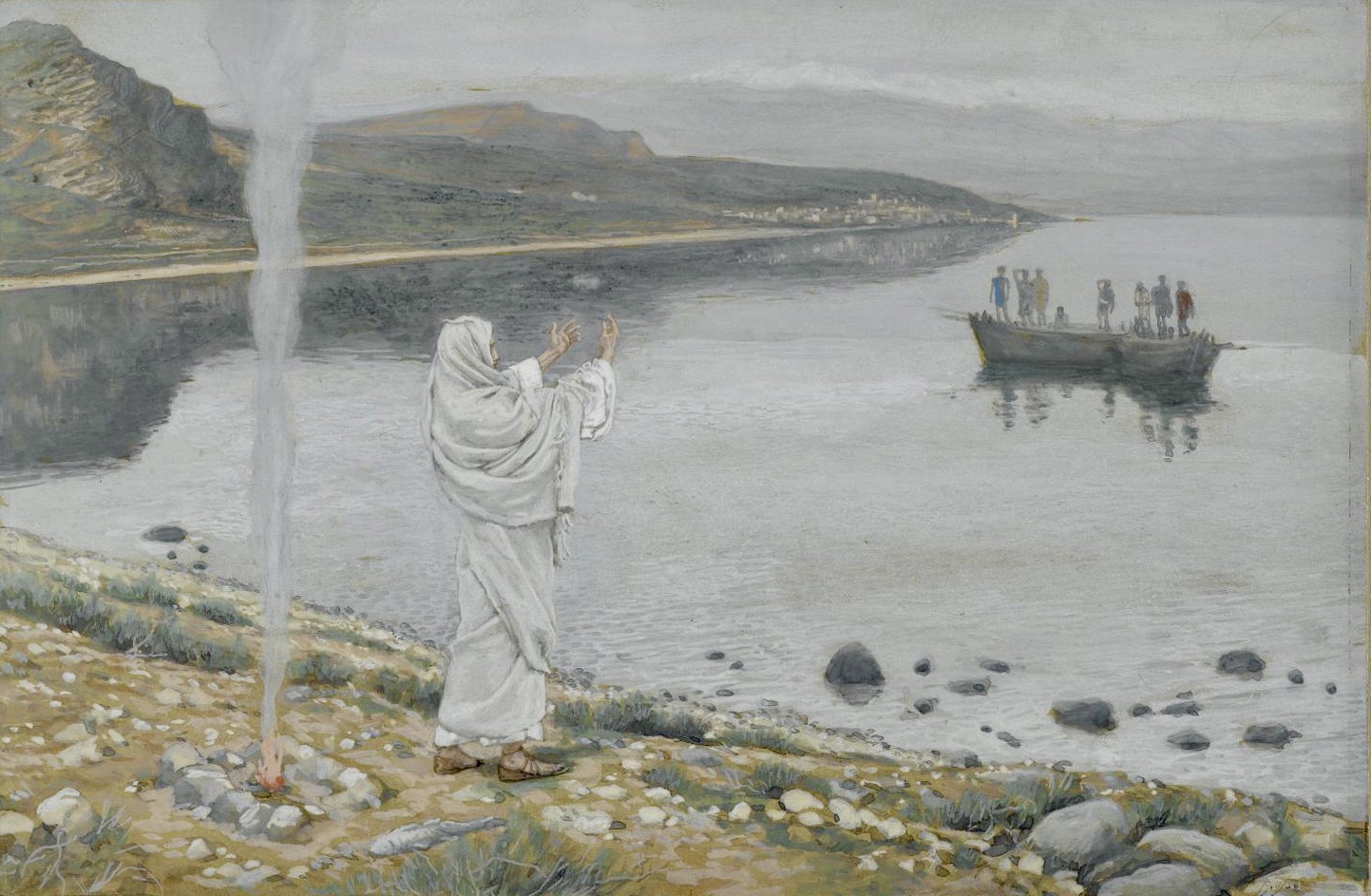
James Tissot, Christ Appears on the Shore of Lake Tiberius

“To thine own self be true.” This familiar adage is now known to many people through their experience with 12-Step Recovery programs. Yet the phrase is traced back to its appearance in a play by Shakespeare, and hearkens back to a simple statement attributed to Plato from the pre-Christian Classical period, “Know thyself.” One way to understand being true to ourselves involves living toward spiritual wellness and in an ethical manner. If these pursuits are of value to us, we may be open to receiving counsel about how we can be truthful, and good in our conduct, even if we are not comfortable with the degree of our adherence to these ideals. But to be beautiful?

Here, modern translations of the New Testament may provide a benefit to our thinking about questions like these. In our contemporary sensitivity to employing gender-neutral and inclusive language, sayings from the lips of Jesus or in the Letters of Paul are often cast in plural language. The potential benefit to us may lie in the encouragement we can receive to think in corporate or in community-minded terms.

We often need to remind ourselves to think about our lives with a wider frame of reference, for we are so much more than individuals with only chosen or willed connections and relationships with others. We will be truer to the message of Jesus and the teaching of the New Testament when we are equally attentive to our membership in the Body of Christ, the Church, within the Communion of Saints. Our baptismal identity is shaped fundamentally not by what we do, but by our grace-enabled incorporation within the community of the Risen Lord.

In other words, we can learn to receive and follow gladly the advice that we be true to ourselves when we do so as members of the Body of Christ. We can then see ourselves in more expansive terms than those based merely upon our physical birth identity as unique individuals, our social status, or upon our achievements.

One way to understand Jesus’ use of the mysterious phrase, the Son of Man, is to see this title in terms of the transformed personhood we apprehend in the Risen Lord. As such, he embodies for us the ‘true’ and fully redeemed human person and therefore the full goodness of human being. If so, the Risen Christ also embodies for us the fully realized beauty of both created and also redeemed human personhood. In him we find our new baptismal identity in communion fellowship with one another, which is the distinctive characteristic of participation in the Risen Body of Christ. We are, in Christ, people living together into the beauty of his Resurrection.
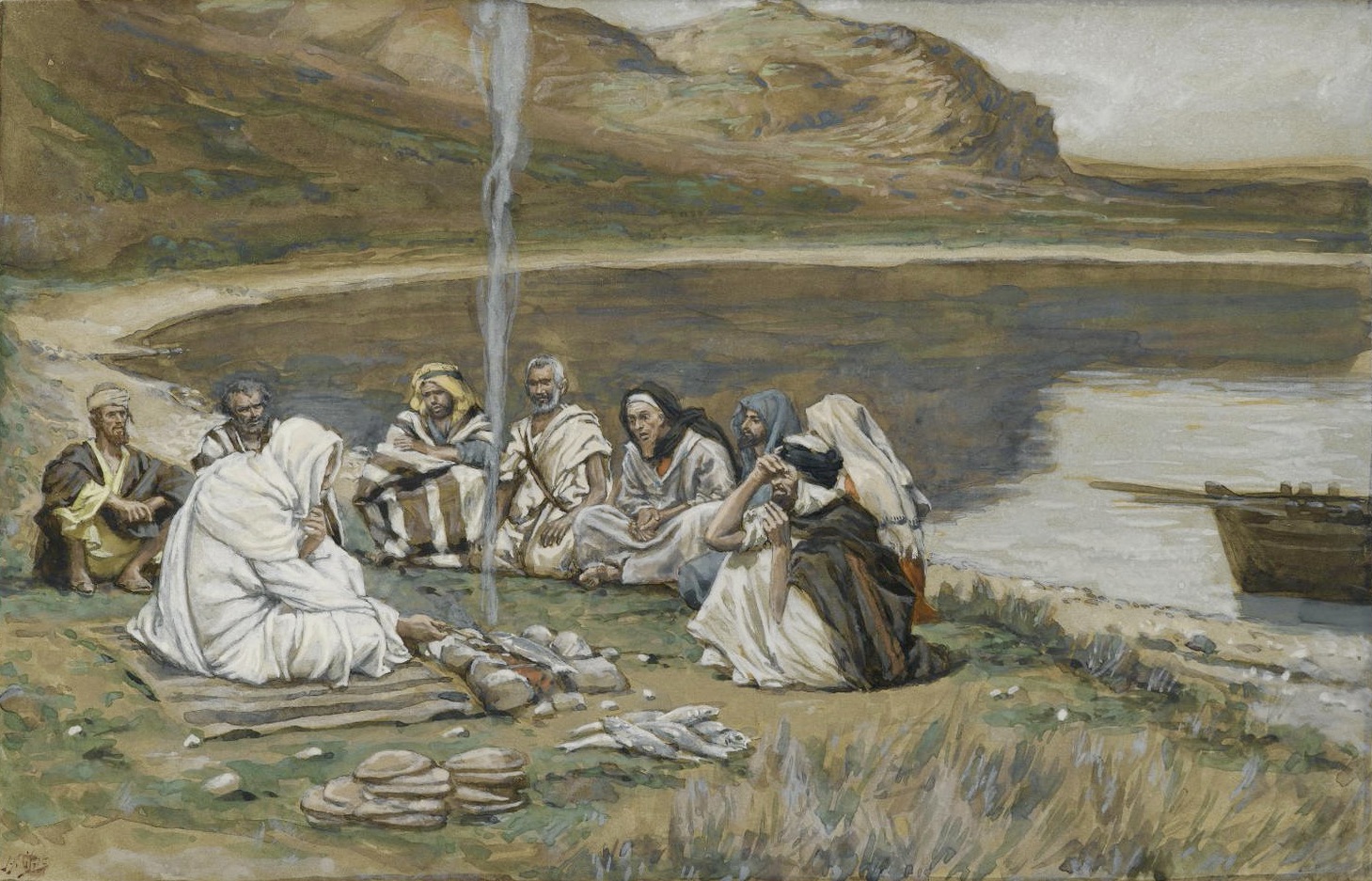
James Tissot, Meal of Our Lord and the Apostles

Here is the challenge that arises with disciplining ourselves to think in these corporate and communal terms. In the culture in which we live and raise our children and grandchildren, beauty for us is most commonly thought of in visible, physiological terms. Perhaps encouraged by the advertising and media to which we are contstantly subjected, we pursue pharmaceutical products, health and exercise regimens, and even plastic surgery. We do so in search of achieving outward beauty of a kind communicated to us by others as a goal we need to seek.

We then lose sight of inward beauty, the beauty we can attain as persons who mature, become wiser, and more generous in our viewpoints. I have previously written about Sister Wendy Beckett, who I have described as one of the most beautiful persons I have come to know through my reading and media viewing. Outwardly, it must be admitted, Sister Wendy was not the kind of person whose countenance would be featured on magazine covers as an exemplar of physical beauty. Our view of what it means to be fully human is diminished if we do not also see how she, over her long years of life as a solitary devoted to prayer, became one whose face and physical presence radiated the beauty of the Risen Lord.

In this Eastertide, we hear stories from the Gospels that are echoed in passages from Acts of the appearances of the Risen Jesus, returning to his first followers. He came into their presence, encouraging and strengthening them for mission as witnesses to his realization of God’s hopes and plans for all people, for we all are God’s beloved. By grace, we are among those who have been embraced by this mission, as are those who have yet to hear and receive the hope of the Gospel. Too quickly, we assume that in the lives of hearers and readers of these stories the appropriate fruit of these appearances will be manifest primarily in truthful speaking and admirable conduct. As a result, we neglect to imagine how these stories also encourage us to embody the Beauty of the Risen Lord.

“He is Risen! The Lord is Risen, indeed!” These are wonderful phrases for us to repeat, and take to heart in this season of the Great Fifty Days. We can find in these words their intended corollary: For us who are baptised, ‘we are risen’! We are risen, indeed, and called to live into the Way, the Truth, and the beautiful Life into which the Risen Lord has invited all people. And he has made this possible for all who might be open to receiving this wonder-filled message.
48 Years Ago Easter Turned My Life Downside Up

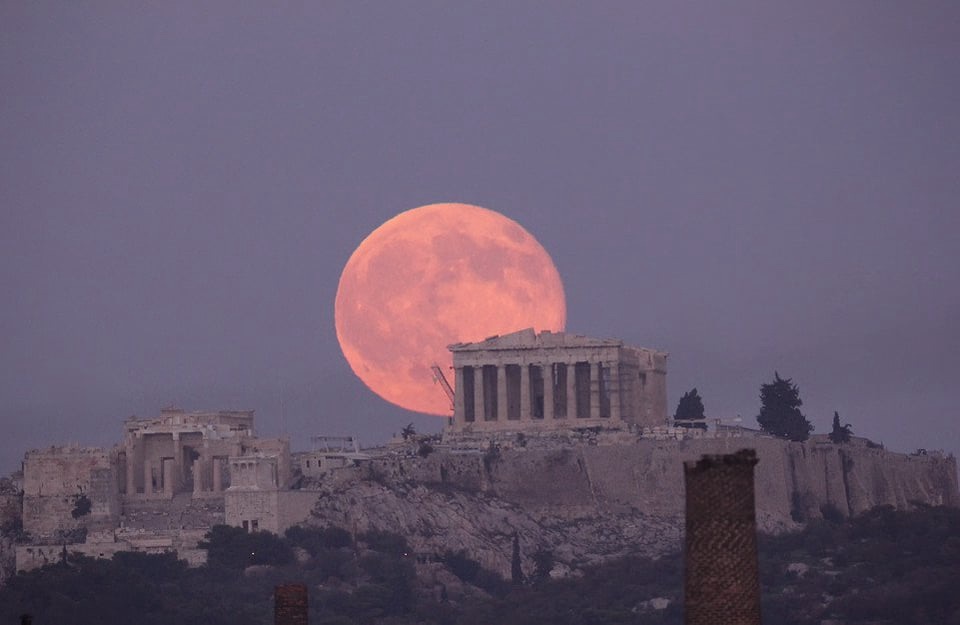
Moonrise over Athens, much as I remember it

A dusky early evening left a soft glow on the Acropolis, periodically visible as I walked from the hostel toward the church. Yet, the size and warmth of the rising full moon held my attention as its blush touched the hills, for a brief while silhouetting the pillars and pediments of the Parthenon.

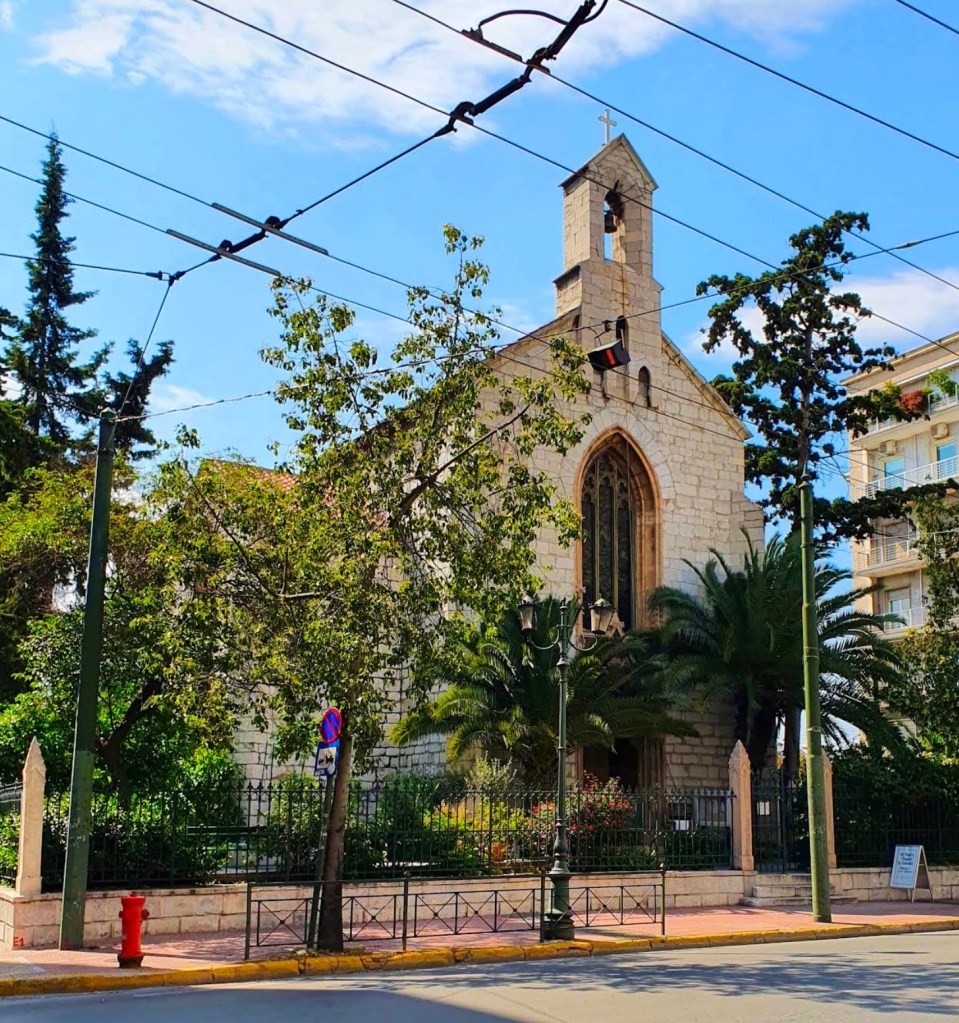
It was the evening of Holy Saturday, which fell on March 25 that year. In other years the day would have been the Feast of the Annunciation, but in 1978 it was the eve of Easter Sunday. I walked the short distance to Syntagma Square, to revisit the Anglican parish I had found that morning. Now, in the approaching darkness, I was returning to make my first confession, and be baptized at the Great Easter Vigil.

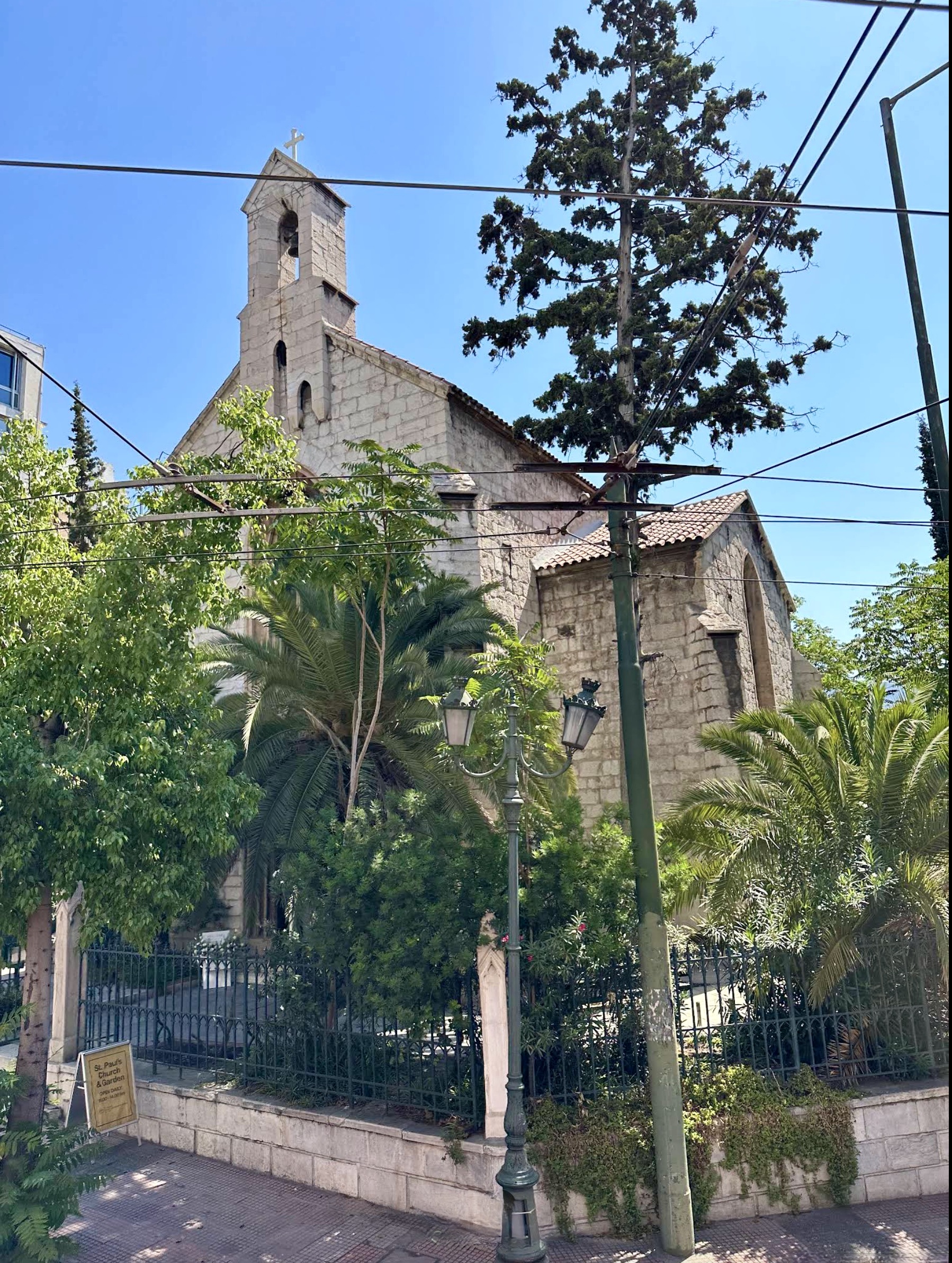
St Paul’s Anglican Church, Athens

How this came to be was largely due to providential grace, for I had not traveled to Greece with this particular result in mind. I was on a college year abroad, having lived and studied in Florence during the autumn. Then, after Christmas in Germany, I traveled to England for two eight week terms of study at Oxford. My plan for the year was to focus on Art History, fulfilling in part my chosen college major.

But, as in the biblical Damascus Road surprise, when first walking into the piazza around the Duomo in Florence, I experienced an unexpectedly sudden conviction: That it was time for me to surrender to the divine power I had come to recognize but had yet to affirm. Asking if there was an English-speaking congregation nearby, I was directed to St James Episcopal Church near the American Consulate. Over the next few months, and with the guidance of Fr. Edward Lee, the parish became for me a place of spiritual nurture.

The autumn course of studies for our group of visiting students in Florence was a fixed one. But my subsequent program in England allowed me the freedom to choose a personal area of focus. The exotic sounding topic of Christian Mysticism had been commended to me, and upon naming this to my Oxford program administrator, I learned that she could arrange tutorials for me with a recognized specialist in the field. What a blessing this turned out to be.

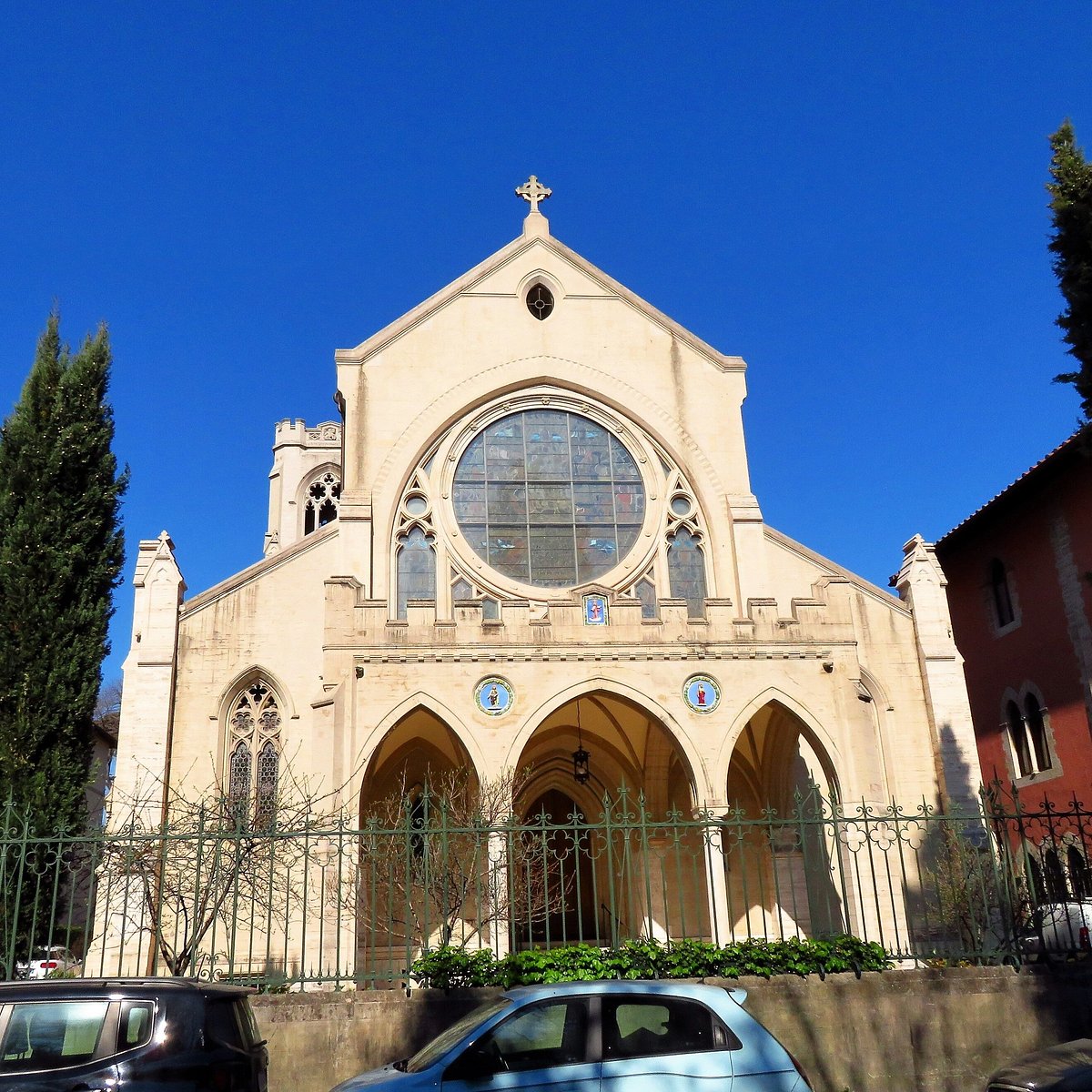
St. James Episcopal Church, Florence, Italy

And so, during a cold and wet English winter, my catechesis in the Christian Faith was suddenly deepened. My growth was fed by readings from the early desert saints, on through to the spiritual writers of the medieval period. My study experience was complemented by a different approach to worship from what I had encountered in the liturgy at St. James Episcopal Church in Florence. By chance, I discovered Pusey House and Anglo-Catholic liturgy soon after arriving in Oxford. Passing by a notice board, I saw an announcement about an upcoming sermon focused on the spirituality of Thomas Merton, whose Seven Story Mountain autobiography I had read the year before. Fr. Cheslyn Jones, the Chaplain at Pusey and a specialist in the Greek New Testament, along with the history of liturgy and spirituality, became my next catechist.

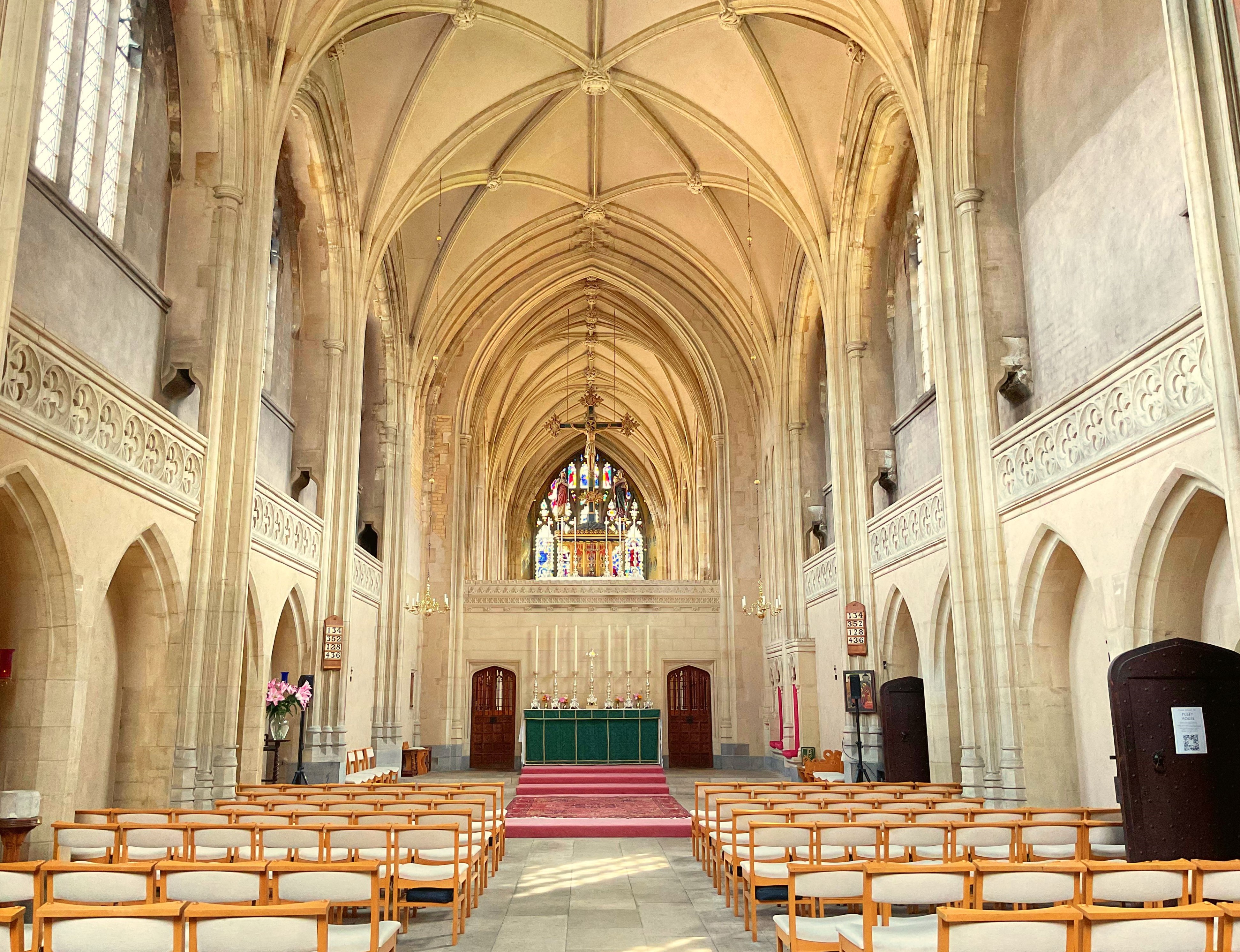
Pusey House Chapel, Oxford, England

At the end of the Hilary (or winter) Term, I made the kind of plans many American students undertake hoping for spring warmth: To head as far south as cheaply possible, for what in my case would be a six week break before the Trinity Term.

I found a used tent and some economical camping supplies in local shops in Oxford, and located a round-trip bus ticket from London to Athens, offered by a discount travel bureau. This led to a remarkable pair of journeys to and from the continent, crossing between Dover and Ostend, through Belgium, Germany, Austria, and Yugoslavia, before finally arriving in Greece. Deposited on an Athenian curbside on an early afternoon, I found a local bus to the port of Piraeus. There I arranged for an overnight passage to Crete on a vintage island cargo and passenger ferry. The next morning, I bought a bus ticket to the south coast of Crete, going to a place a friend had recommended, the little seaside town of Ierapetra, near where St. Paul’s ship had sailed off the coast (Acts 27). Aside from my basic gear, I had brought along only a New Testament and a book of the sayings of the Desert Fathers for my Lenten reading. My plan to do a lot of fasting for spiritual reasons fit neatly with my need for economy.

My first couple of nights were spent in a farmer’s field, above the town and seaside. I awoke one of those mornings to a rapping on the tent pole that alarmed me, sensitive to a probable complaint about my trespassing. Instead, there was a kind man, his arms folded across his chest, cradling fresh tomatoes and cucumbers. I was very touched.

The beach along which I walked to Ierapetra on Crete

After a few days I relocated my tent to an area just above the pebbled beach, adjacent to the long shore upon which I would daily walk to the town. There I would buy a loaf of hearty brown bread, some cheese and sausage meat, as well as more tomatoes and cucumbers. These became the staples of my diet for about 5 weeks.

With just a couple of weeks to go before my return journey to England, a friend from our study program found me on Crete. He was conflicted and wrestling with a need to fly back to the States to be reconciled with his father. After a day or two, he resolved to act on his intuition, and departed on his long journey home.

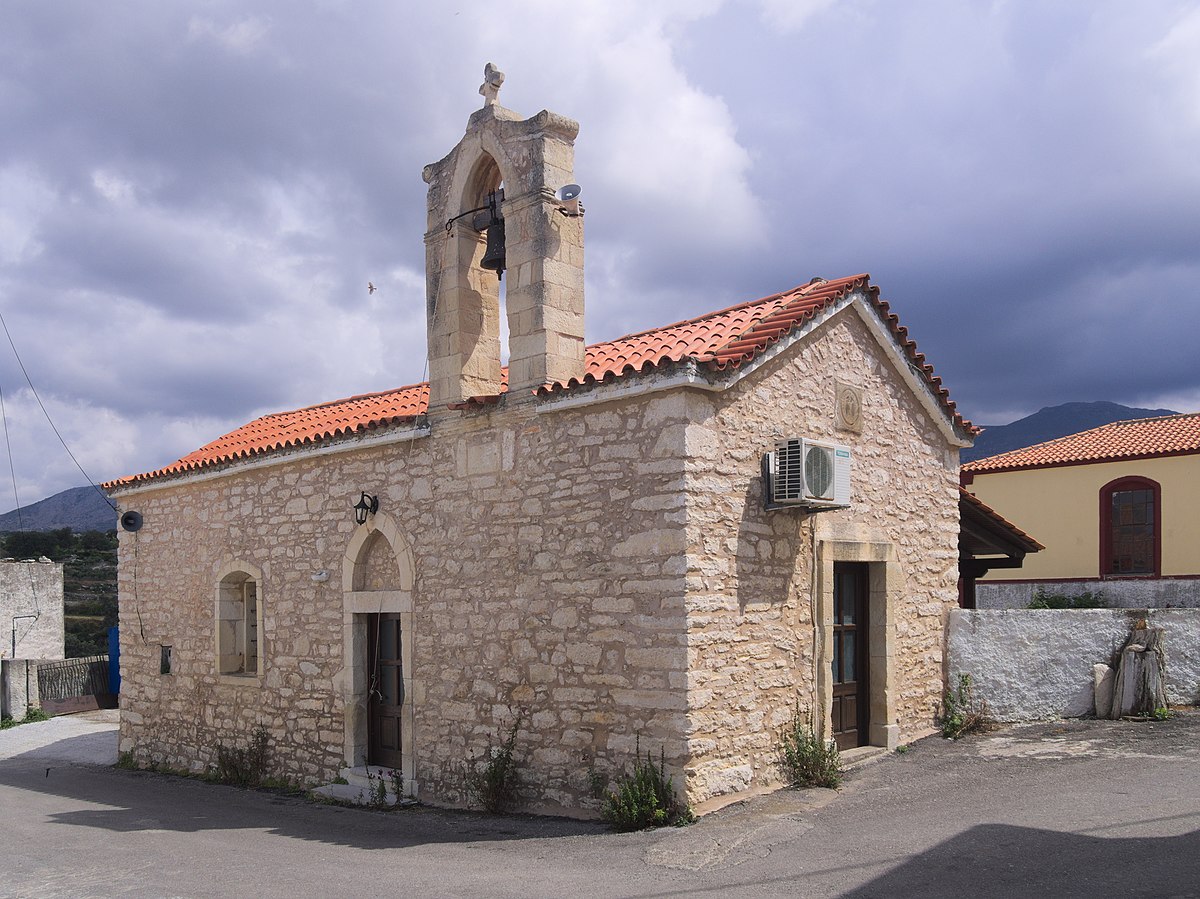
A little Greek Orthodox church like the one in which I prayed on a morning of decision

Musing about his decision, I realized that I was moving toward a similar resolve, but that in my case it was a need to be reconciled with our spiritual Father. I was still fuzzy about what this might mean in concrete terms, but awoke the next morning with greater clarity. I walked into town to pray in a small Greek Orthodox church when I realized what I needed to do. That was to go back to Athens, find an English Church, and ask to be baptized. Fetching my sleeping bag from the tent and my New Testment, I booked a bus ticket back to the north shore of Crete for a return to Piraeus on the same overnight ship. It was then I learned that it was Good Friday.

The Greek inter-island ferry ship, the Minos, upon which I sailed overnight between Piraeus and Crete

Holy Saturday morning, the bus from Piraeus dropped me at Syntagma Square in central Athens where – very conveniently – I found St Paul’s Anglican Church. Reading the church sign with its parish notices, I learned the name of the priest, Fr. Jeremy Peake, and his telephone number. Taking the risk of calling him early on Holy Saturday morning, I surprised him with an unanticipated but what I hoped would be a welcome request: I wished to be baptized. In a wonderfully understated British way, he responded by saying, “Perhaps we should talk about that!” He then invited me to come by for coffee. When I shared with him about my months of study, and with whom I had been receiving instruction in the Christian Faith, he was reassured. Warmly, he invited me to come early to the church that evening to make my first confession, and receive Baptism at the Great Easter Vigil.

The garden area where new light of Easter was lit

The liturgy began in the darkened forecourt of the parish church, just off a main boulevard in central Athens. Amidst the busy sounds of the city around us, we gathered in silence to light the new fire with which the liturgy begins. Being my first experience of the Vigil, I was quite moved by the sequence of readings, starting with the Creation, through the Fall and the Flood, the Exodus and entrance into the Promised Land, with stories of God’s covenantal grace being extended and renewed again and again. When I was then baptized, I felt like I was on fire, an overwhelming experience of cleansing embrace and transformation. I received communion as a new member of the Body of Christ, and left the liturgy feeling like I was several feet off the ground.

On Sunday morning following the Eucharist I was invited to lunch by the kind couple who had agreed to be my sponsors for Baptism. During that wonderful meal, they explained a practice with which I was unfamiliar: Easter eggs all colored dark red, recalling a wonderful Eastertide legend associated with Mary Magdalene.

After a further week in my tent near Ierapetra, I returned to Oxford for another term of formation in the history of Christian spiritual theology. At the end of the term, I received the sacrament of Confirmation through the hands of a suffragan bishop of Winchester, at Pusey House on Pentecost Sunday.

My experience of what now seems to have been a magical series of months, forty eight years ago, comes back to me every Easter. Especially when the Feast of the Annunciation on March 25 happens to occur near Holy Week, as it did this year.


Additional note: Readers interested in the legend about St. Mary Magdalen and the red egg might like to read my earlier post on this topic, which may be found here. A further reflection of the impact of the story I share here can be seen in the opening chapter and the thematic structure of my book, Ethics After Easter.

Beauty and Revelation

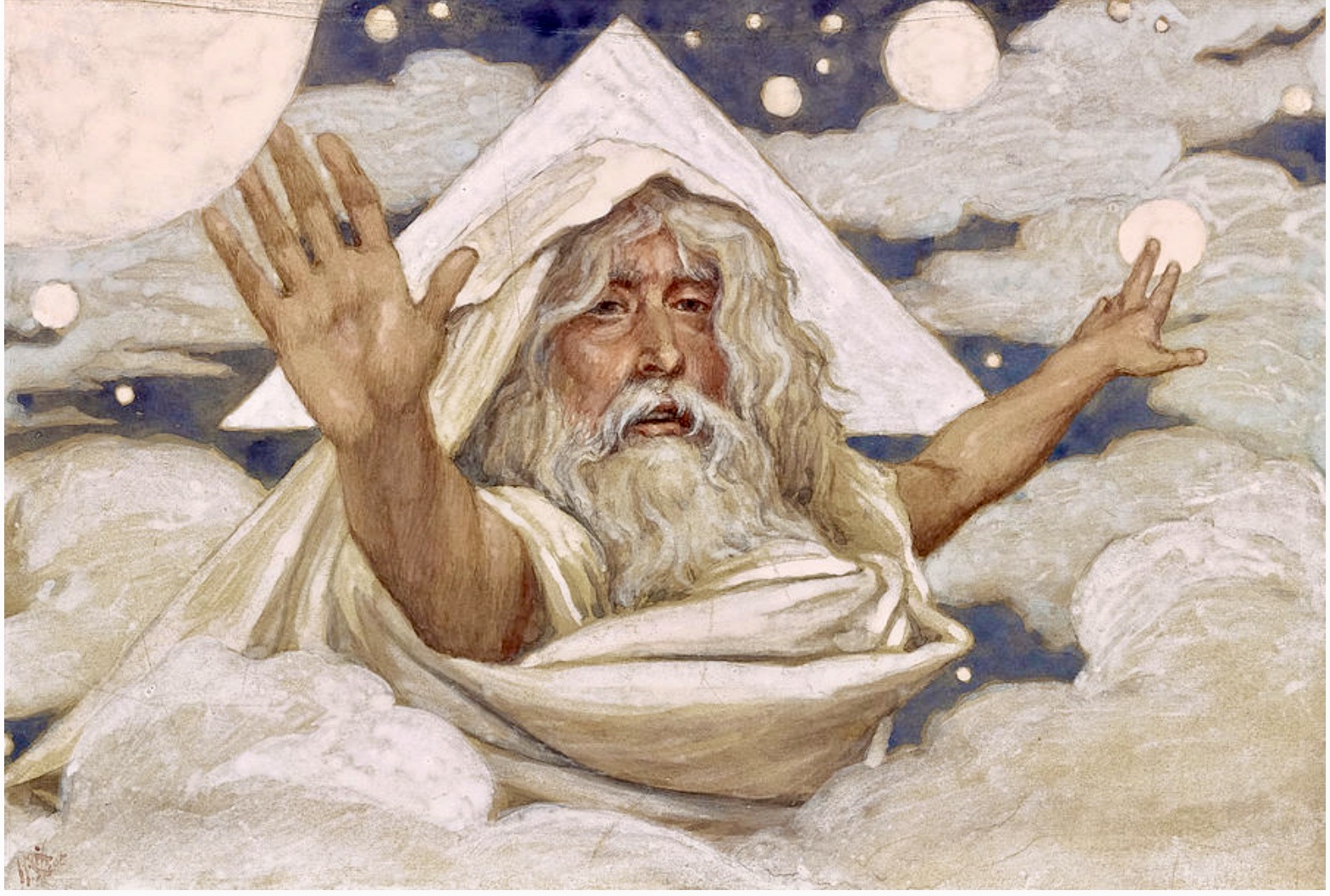
James Tissot, God Creating

James Tissot’s painting depicting God’s creative work is likely to strike us as childishly simplistic in its portrayal of divinity. For it quite obviously displays what we consider to be the flaw of anthropomorphism, as if the artist was naive in his approach to faith. But what if our hesitation about anthropomorphism, aside from reflecting a proper theological concern, could also become an obstacle for us? What if the mysterious implausibility of God entering into and sharing the limitations of human being keeps us from appreciating how fallen human beings can – by the same graceful Providence – share in the beautiful fullness of God?

I believe that James Tissot came to realize this: Beauty is a form of divine revelation. And, that our joy when beholding beauty is our experience of God’s love manifest to and within us.

These themes are intrinsic to our participation in Holy Week. As we can learn from observing the traditional pattern for the liturgy on Good Friday, our focus in Holy Week is upon what God has done and is doing for us. The sign of this on Good Friday is our abstention from celebrating the Eucharist, and instead we receive communion from the sacrament reserved following the Maundy Thursday liturgy on the prior evening.

For God creates, God discloses, and God provides. Through all, God reveals self. God’s revelation involves God’s self-disclosing gifts. Within the divine attributes are those of initiative and efficacy, constitutive aspects of creativity. And so, when God creates human beings in God’s own image and likeness, God not only exercises creativity but also self-revelation.

Among the ways that we resemble our Maker is one that paradoxically can become a source of frustration for us. Positively, our Creator has given us intelligence and a God-reflecting capacity for creativity, initiative, and efficacy. In addition, God has given us an inclination toward experiencing freedom and an accompanying desire for its fulfillment. Employing these gifts can lead to an ironic and negative result: They allow us the freedom wrongly to imagine that God is actually a dispensable concept, and a coping mechanism which is just a reflection of our psychological needs and a projection of ourselves.

Reflecting on these things can lead us to recognize the heart of divine humility, that it should please God to create us in God’s own image and likeness. God has given us the capacity to imagine that we are self-made, and then to function in a parody of the divine role in Creation. This happens when we fool ourselves into thinking that we are the center of the universe. Expressions of this parody include our ideas that the universe is infinite, as are our own endless possibilities within it. Yet – and this is critical – only God is infinite, and we – like the universe – are finite beings, endowed not only with divine-reflecting capacities, but also with purpose, meaning, and identities that are not of our own making.

James Tissot, What Our Lord Saw From the Cross, a remarkable inversion of how we so often picture the scene

As we approach Holy Week, we have the opportunity once again to be those who watch, who listen, and reflect. As we do, we remind ourselves that we are bit players in the Divine Drama, whose Author has generously written for us a script that has a curious feature, ample provision for ‘ad-libbing.’ In fact, divine generosity is so abounding that we are allowed to create sub-plots within the overall story. To the point that we forget to reference the overall plot lines shaping the whole, as well as the Author’s purposes in creating them.

One thing that God achieved in the events of the Exodus was to remind both Pharaoh, as well as Moses and the people of Israel, that God was and is sovereign over history as well as over geography, the realms of both time and place. Forgetting this ancient truth, we neglect the comfort we can gain from the doctrine of Providence, that God provides for the needs of the world as well as our own, which God knows more intimately and with greater perception than we do. We should wonder that we are left free to imagine otherwise, a fantasy in which some of us at least occasionally engage.

But the humility we are invited to recover in this latter part of Lent, and most of all in Holy Week, involves opening ourselves to a very real possibility. That God’s way of overcoming our refusal and failure to live into the potential we have been given involves the beauty of a strange and unexpected gift. Christmas reminded us of part of this gift, that God became human so that humans could become God-like, and in the best possible way. Holy Week allows us to rediscover the gift that God chose to identify so much with us that, in the ‘Son of Man,’ the Incarnate divine-human being, God passed through human death into the fullness of human life so that we might be enabled by grace to do the same.

The Beauty of ‘Something Further’

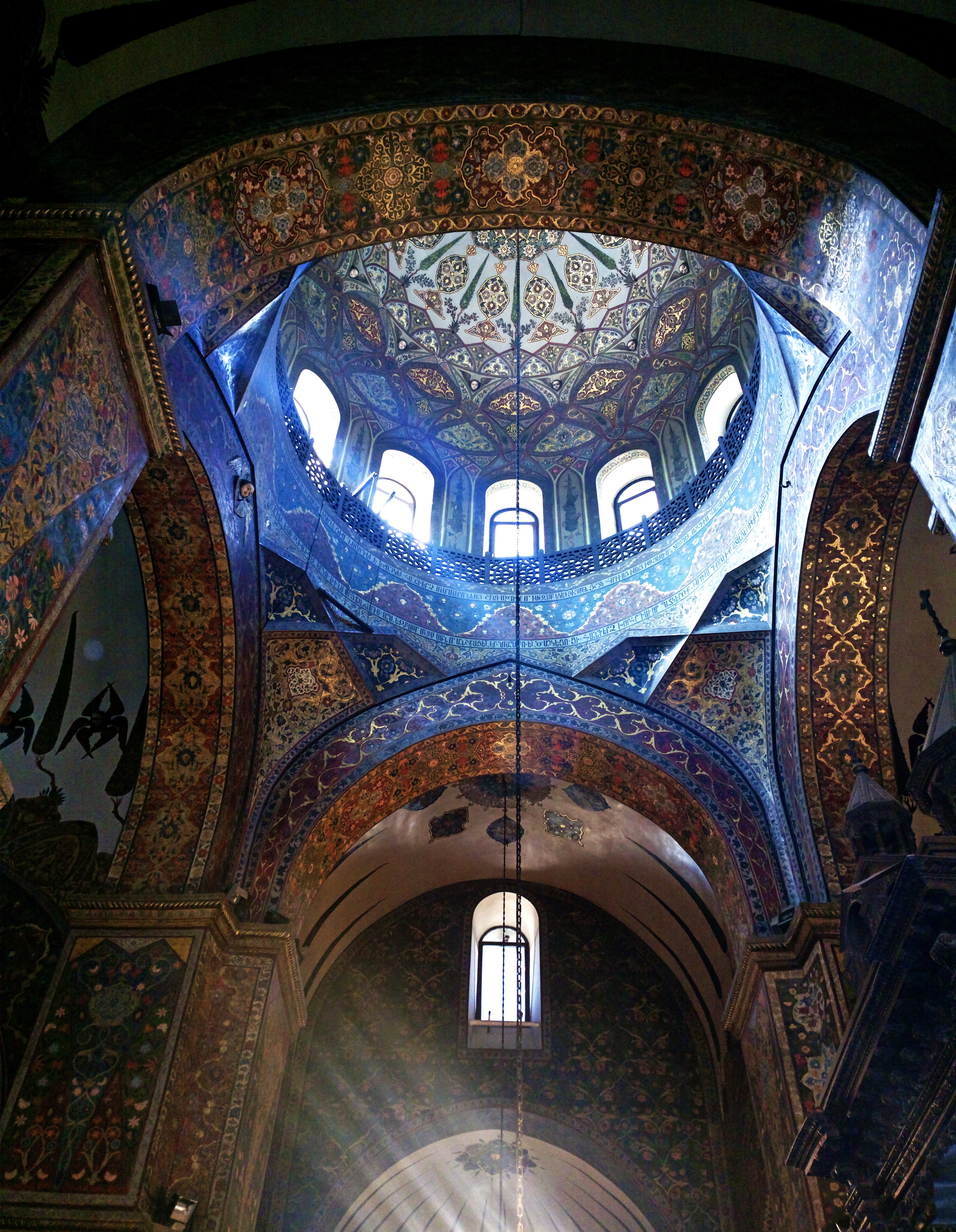
An interior dome, Etchmiadzin Cathedral, Armenia

{This past week I had the honor of offering a homily at the funeral of my longtime friend, Tom, a neurosurgeon and person of faith. What follows is a portion of my homily.}

People in our culture who have been trained in the sciences and who work in medicine can face a particular challenge. They can find it hard to grapple with the intangible aspects of the spiritual life. Walker Percy is a great example of someone who overcame this apparent divide. For Percy, like Tom, was very smart and educated in the medical arts. Like Tom, Percy came to see something very important: we rely upon science to explain too much of the world. And, if we are honest and sensitive in our inquiry, we come to see how – through science alone – we cannot understand ourselves.

Tom, with his advanced work in surgery and in neurology, knew far more about our brains than most of us will ever know. And yet, he also was quite aware of the limits to such knowledge. He was sensitive to how ‘our minds,’ though inextricably connected to our brains, always somehow transcend what we know about brain function. And therefore, despite our continuing advances in understanding neurophysiology, there remains this ineffable, something further, about what it means to human, this thing that non-specialists like the rest of us, as well as priests and pastors, call our souls.

Walker Percy might have put it in terms like this: We can learn the names and composition of the myriad of chemicals that are a part of human brain function. And therefore, as conscious subjects, we can approach our brains as objects of study. Yet, paradoxically, we, as the subjects of our studies, can never really know ourselves as the objects of our studies. There will always be something beyond, something further and equally real about ourselves, even if not fully measurable. And this ‘something further,’ believers call our souls. For even the most brilliant neurologist, even the most perceptive psychologist, can never really know him or herself, just as I – at least in this life, on this side of the veil – can never really know myself. Only God can. And only God does.

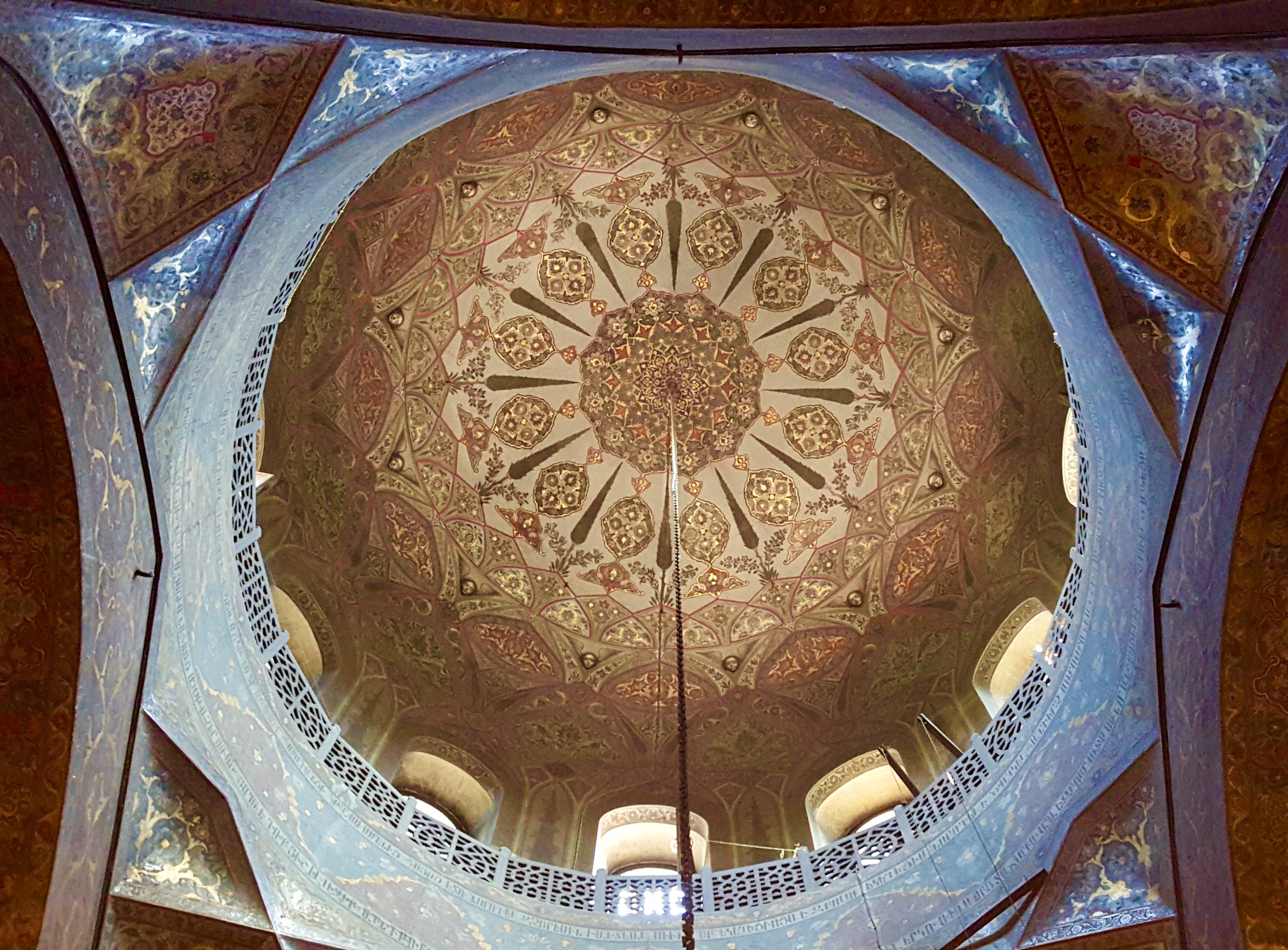
Etchmiadzin Cathedral

Physicians can map how our physical bodies eventually fail us when we get older, and cease to function ably as before. But what our physicians and scientists cannot map – at least not yet – is how our consciousness can survive this breakdown in our physiological function. Yet, somehow we continue in self-awareness, and in our awareness of others, especially that great Other One. And we will probably never be able to map, in terms we understand, how we come to have conscious contact with our Creator and Redeemer. For our conscious contact with God happens through God’s loving embrace of us. This is the embrace into which we have all been received – even if we are not conscious of it, and especially when we have not chosen to refuse it.

Tom consciously chose to recognize and accept this embrace. And he put his trust in it, even if – as an accomplished scientist – he could not explain it. For that, we honor him and his memory, as we continue to have fellowship with him in the Communion of Saints. And as we share with him in our celebration of the Eucharist. For just as our Lord Jesus continues to be present with us, and in us, so all the saints – both Tom and ourselves – and all the faithful departed stand before the throne of the Lamb. In Christ, we are joined together, so that we, too, might also be lost in wonder, thanks, and praise.

Tom knew and believed all this. And that is why we are here today. We can honor Tom for his contributions to the sciences and to the practice of medicine. Here, in this church and in this community of faith, we can join others in honoring what God has done in Tom’s life and work. And more especially, we are here today to honor what God is still doing in Tom’s continuing life. For Tom’s life and consciousness continue, even now, in and through God’s loving Grace and favor. His death is the veil that only appears to separate him from us. It disguises the way he is still really connected with us through his Baptism and ours, into Christ’s death and Resurrection.

Chora Church, Istanbul

Most enduring is this truth. And it is a truth for all of us to embrace: we have continuing fellowship with Tom, through Christ, in the power of the Holy Spirit. Thanks be to God!

The Believing Eleven

If reading this by email, please tap the title at the top to open your browser for the best experience. Then, clicking individual pictures will reveal higher resolution images.

Peter Paul Rubens, The Rockox Altarpiece, 1613-1615 (center panel)


It is evening on the day of Resurrection-discovery. John tells us that ten of the disciples are hiding behind a secured door out of fear. Judas is deceased, and Thomas is away.

Jesus suddenly appears to the unprepared disciples, and shares with them his peace. He shows them his hands and his side, and then – as a direct consequence of seeing the places on his body associated with his death – the ten disciples rejoice when they see their Lord. In other words, their recognition of him, and that he was somehow alive again, brings them joy by restoring their belief in him.

When hearing this story from John’s Gospel on the second Sunday of Easter, we may be prone to considering it apart from what happens just before it. The disciples, who are hiding out of fear, have already received an eye-witness to the resurrection of Jesus. Mary Magdalene, to whom Jesus revealed himself at the tomb that morning, had come and told the ten the Lord was alive, and that he had appeared to her. Clearly, and prior to Jesus’ unexpected appearance, the ten disciples are still doubting her personal witness. Even after receiving what should have been trusted testimony from Mary Magdalene, a fellow follower of Jesus.

So why – in popular imagination – isn’t this well-known Gospel reading from John 20 commonly referred to as the “doubting disciples” reading? Why should Thomas be singled out, when his joyful recognition of the risen Jesus depended on nothing more or less than what the 10 had needed, and received, before him?

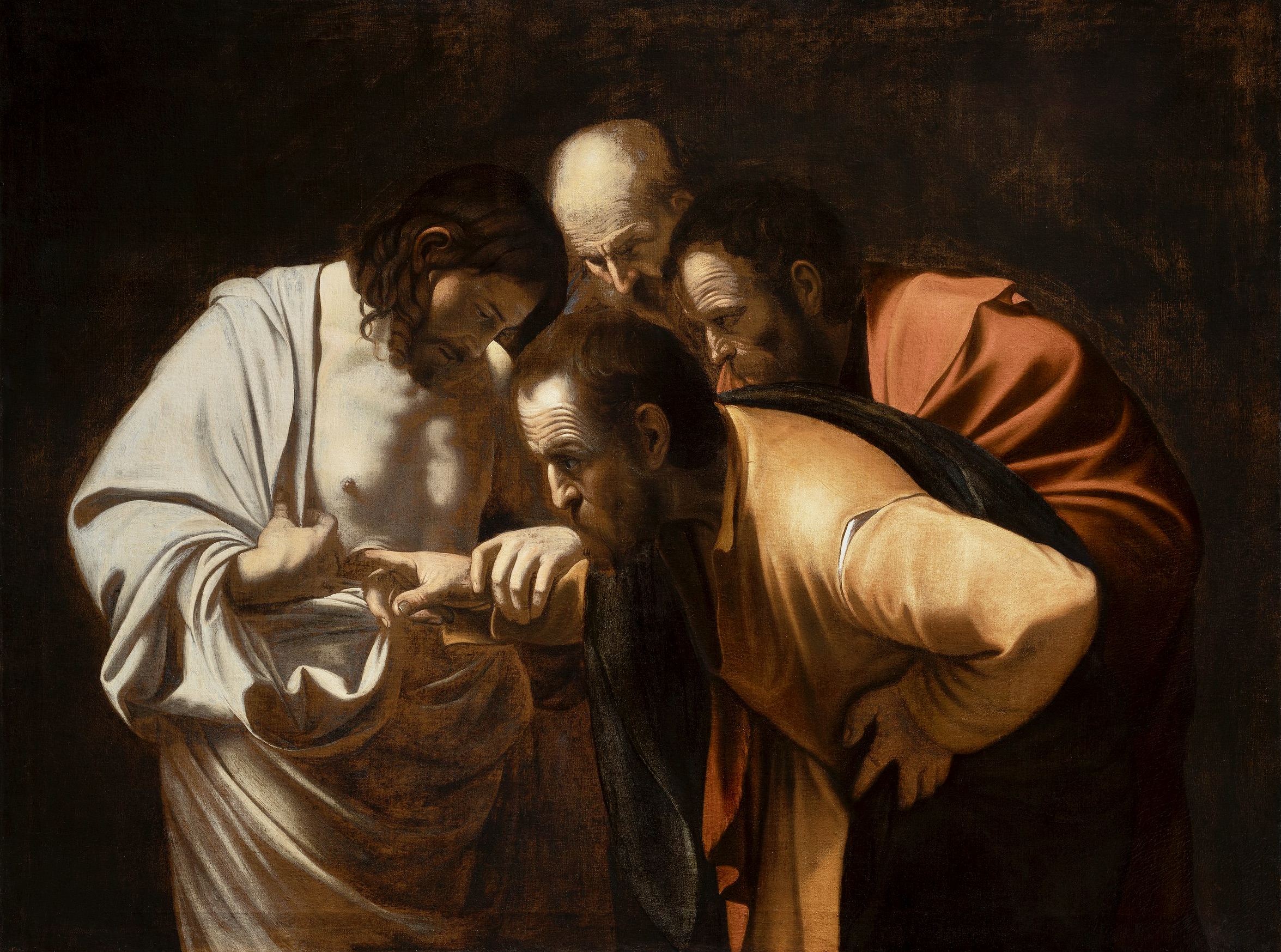
And why have so many painters in the Western tradition privileged Thomas’ purported unbelief in the Risen Lord, rather than depict the earlier reluctance of the ten others to arrive at joyful confidence about the Lord’s astonishing return? Apparently, in many painters’ eyes (especially Caravaggio), more visual drama was to be found in images of a doubter’s hand placed within an open wound.

Caravaggio, Doubting Thomas, 1601 (a famous traditional presentation of the event in John 20)

A further detail to notice, which our familiarity with so many paintings helps to obscure, has to do with how Thomas responds to Jesus. According to John, Jesus appears to the not-yet-believing ten, and – unbidden – shows them his hands and his side. Seeing the traces of his wounds on his risen body brings them joy. Jesus then appears unexpectedly a week later, this time showing himself to the one not present on the prior occasion. And just as he had done previously, Jesus offers Thomas the same opportunity he had provided to the others.

We should therefore not be misled by Thomas’ oft-quoted comment to the other disciples, prior to his own epiphany, about what he needed in order to believe. According to the text, Jesus – upon appearing in the same house a second time – bids Thomas to touch him. Yet, Thomas immediately responds to Jesus’ words without any mention in the Gospel of him having physical contact with the risen Lord’s wounds. Jesus then asks Thomas a rhetorical question, “Have you believed because you have seen me?” Naturally, Thomas’ implied answer is ‘yes.’

For all these reasons, we will do better to find a different and more positive descriptive phrase by which to refer to this well-known passage from John 20. “Jesus meets the disciples according to their needs,” though wordy, would do better.

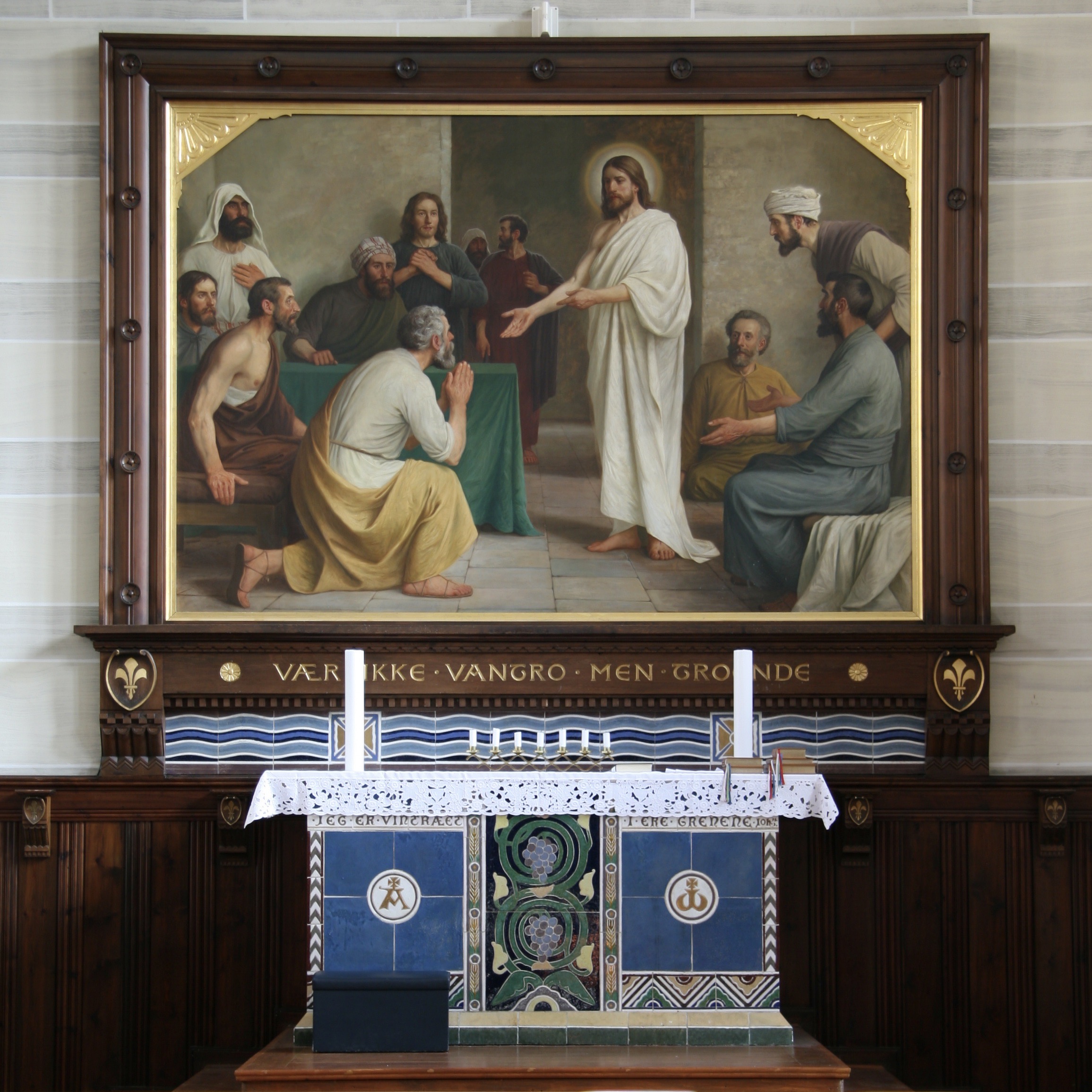
P. Steffensen’s altarpiece painting behind the altar of Zion Lutheran Church, Copenhagen


This post is based on the traditional Gospel reading for the second Sunday of Easter (April 7 in 2024), John 20:19-31. The story within it concludes with these words: “Jesus said to Thomas, ‘Have you believed because you have seen me? Blessed are those who have not seen and yet have believed’.”

Note: The altarpiece paintings by P. Steffensen and Rubens provide an interesting counterpoint to the prevailing tendency of painters to focus on Thomas placing his hand in the side of the Risen Jesus.


Finding Beauty During Holy Week

James Tissot, The Resurrection


I had the privilege of seeing the original of this image by James Tissot at a recent exhibit of his work in San Francisco. I have known about this painting for some time, but was struck by how relatively small it is (image size approximately 8″ x 12″). Given the size, Tissot’s attention to detail is astonishing, especially when seen alongside his large oil paintings.

Like the one above, Tissot’s biblical paintings were largely done with opaque water color paint (now commonly termed “gouache” paint) and graphite on textured gray paper. This sets the water color paintings apart from his oil paintings in terms of their technical quality and pictorial finish. Nevertheless, they are in some ways more remarkable because Tissot was using the less forgiving medium of water colors instead of oil paints, which provide greater flexibility for painting over unsatisfactory or undesired results.

Choosing a single image for consideration in the context of Holy Week presents a certain challenge. For which of the events that we commemorate this week provides the most suitable reference point for our reflection? Considering this question, and possible answers to it, can help us gain insight about how we understand Holy Week in relation to Easter and more specifically whether we view the Passion (the arrest, trial, torture, and crucifixion) of Jesus as an essential part of the Easter story.

We know that it is not just among Christians, but also among Jews and Muslims, that notable differences concerning belief and practice exist among pious adherents of a shared religious tradition. A significant variable for Christians concerns how -in our prayers, worship and practices this week- we approach the relative significance of the key liturgical ‘moments’ that we commemorate during the ‘Holy Three Days’ (or Paschal Triduum). According to the biblical concept of time, these three days commence at sundown on what we now call Maundy Thursday. And so, the first ‘day’ includes remembrance of the Last Supper, Jesus’ arrest and trial, as well as his Good Friday crucifixion. The second ‘day’ then begins on Good Friday evening, just after when Jesus would have been buried. And the third begins after sundown on Holy Saturday evening, and includes the twenty four hours during which Jesus’ resurrection occurred and his empty tomb was then discovered.

When considering the significance of the events we commemorate at this time of the year, some Christians think primarily in terms of Easter Sunday and what Jesus’ resurrection will mean for them. Many others include in their reflection a spiritual consideration of the events we associate with Maundy Thursday and Good Friday. The broader ‘catholic’ liturgical tradition reflects this wider perspective in the liturgies appointed for Palm Sunday at the beginning of Holy Week. For example, The Book of Common Prayer liturgy for Palm Sunday commemorates Jesus’ journey on a donkey down from the Mount of Olives and his entrance into the Holy City, which leads to his ‘cleansing of the Temple’ and the subsequent conflict this provoked. A central feature of the Palm Sunday liturgy is a reading of the full Passion narrative from one of the first three Gospels. John’s Passion narrative is always read every year on Good Friday. And, on both Palm Sunday and Good Friday, the Passion story often incorporates readers who give voice to individual parts within the narrative.

In light of these observations, and as we prepare to enter the ‘Holy Three Days,’ I invite you to consider Tissot’s painting titled, The Resurrection. As you view and reflect on it, here are some details you may want to take into account:

  • Tissot portrays the moment of Jesus’ resurrection at night (rather than ‘Sunday morning,’ with lanterns partially illuminating the scene
  • Matthew’s Gospel mentions Joseph of Arimathea placing Jesus’ body “in his own new tomb, which he had hewn in the rock;” Tissot adds a dressed stone frame around the tomb entrance
  • though the crucifixion was enacted by Roman soldiers, Matthew suggests that the guard of soldiers sent to the tomb belong to the chief priests and the Pharisees and are primarily local citizens
  • the risen Lord still bears the marks of his torture and execution, though his wounds are transformed into points of light
  • diaphanous angels appear on the righthand side of the tomb opening

These and other observations about this resurrection painting make it relevant to our observance of Holy Week, as well as to Easter. I offer this image and these comments as a way into the mystery of this week.


The image above is James Tissot’s painting, The Resurrection, which with many of his other biblical paintings is part of the collection of the Brooklyn Museum.