Prior homilies or sermons of mine are occasionally downloaded by readers. Noticing this, I anticipate that some of those preparing to preach (or offer a reading) on an upcoming Sunday might benefit from the perspective I have taken regarding the Lectionary readings for a particular day. I am therefore offering (when I can) a prior text that I have used for the occasion. I will try to do this on Sunday evenings or Mondays believing that there might interest in these texts being made available. When I have one prepared, I will also offer an accompanying handout (in pdf format) in case these may also be helpful.
For this coming Sunday, Easter 4 in Lectionary year A, I offer the following.
The link for it is here. The link to the handout may be found further below.
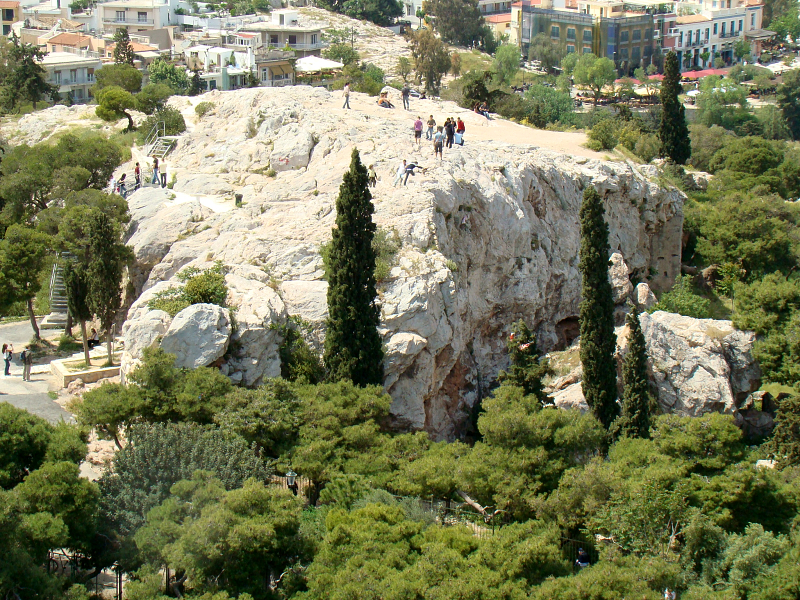
First edition book jacket of Walker Percy’s last novel, The Thanatos Syndrome
Prior homilies or sermons of mine are occasionally downloaded by readers. Noticing this, I anticipate that some of those preparing to preach (or offer a reading) on an upcoming Sunday might benefit from the perspective I have taken regarding the Lectionary readings for a particular day. I am therefore offering (when I can) a prior text that I have used for the occasion. I will try to do this on Sunday evenings or Mondays believing that there might interest in these texts being made available. When I have one prepared, I will also offer an accompanying handout (in pdf format) in case these may also be helpful.
For this coming Sunday, Easter 3 in Lectionary year A, I offer the following.
The link for it is here. The link to the handout may be found further below.
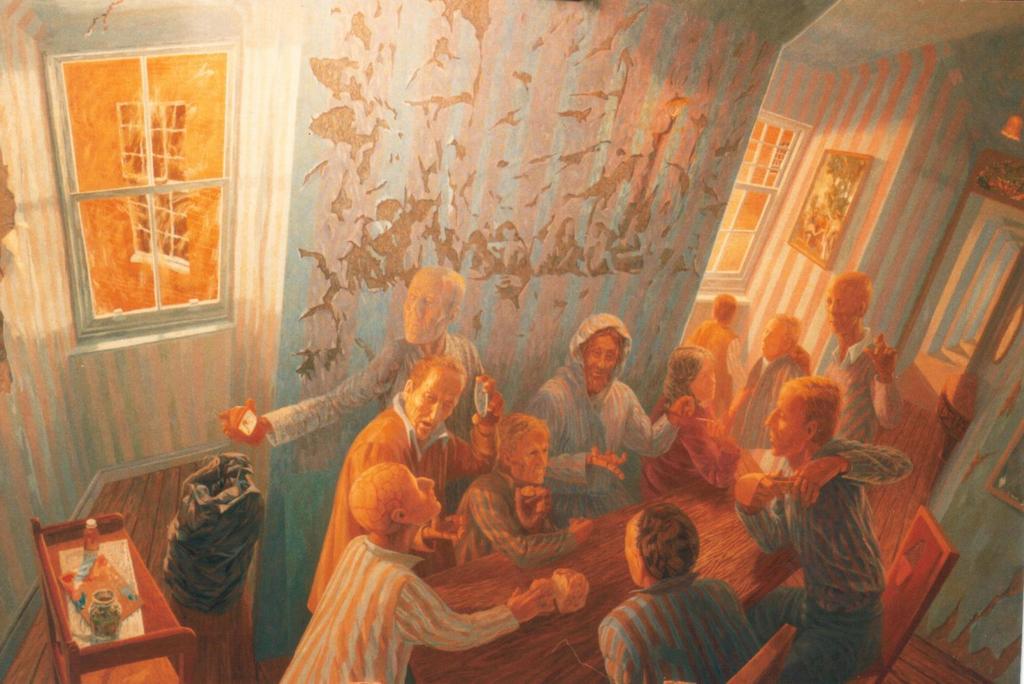
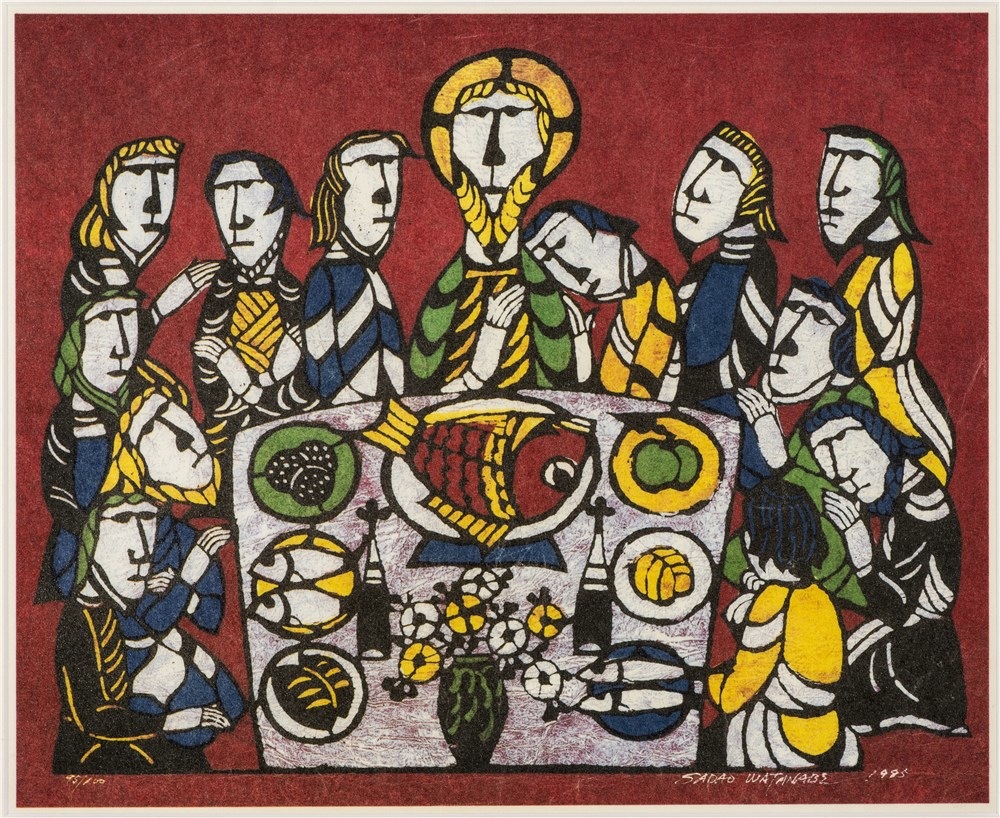
Justin Matherly, (Untitled), Fear Anxiety Joy, 2016
Prior homilies or sermons of mine are occasionally downloaded by readers. Noticing this, I anticipate that some of those preparing to preach (or offer a reading) on an upcoming Sunday might benefit from the perspective I have taken regarding the Lectionary readings for a particular day. I am therefore offering (when I can) a prior text that I have used for the occasion. I will try to do this on Sunday evenings or Mondays believing that there might interest in these texts being made available. When I have one prepared, I will also offer an accompanying handout (in pdf format) in case these may also be helpful.
For this coming Sunday, Easter 2 in Lectionary year A, I offer the following.
The link for it is here. The link to the handout may be found further below.
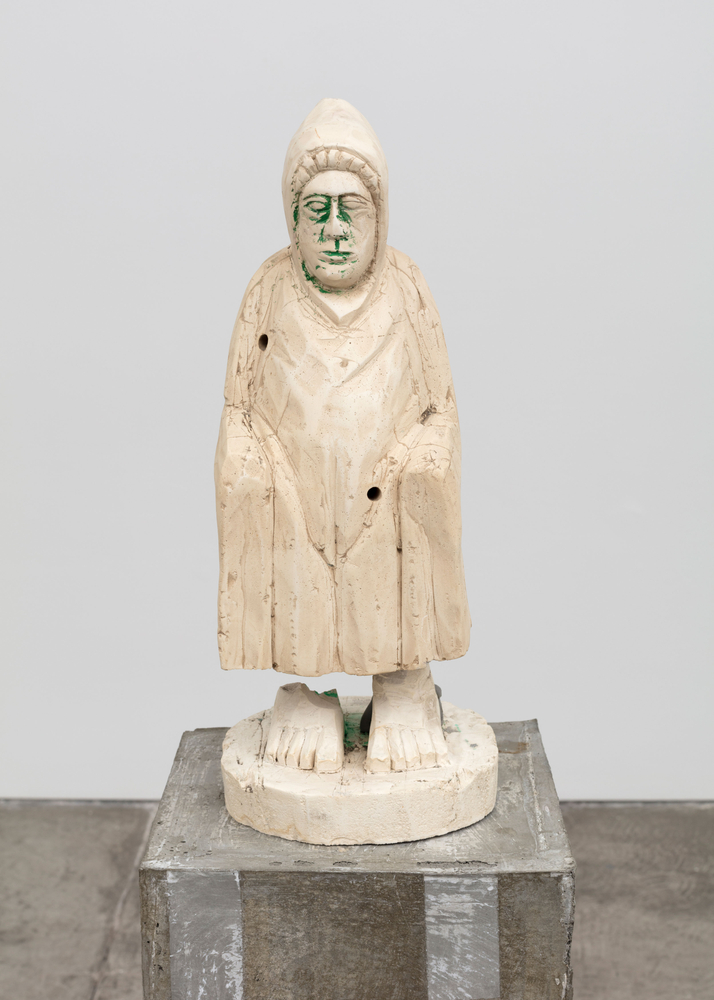
Peter Koenig, Christ as Second Moses, The Rainbow ResurrectionSide Panels that accompany Christ as Second Moses
A perennial theme in the New Testament and in Christian reflection concerns how – in Christ – we are called to live through death into new life. When we die to our worldly attachments and their hold upon us, we open ourselves to a greater life that extends beyond this present one. As the Christ our Passover canticle from The Book of Common Prayer puts it,
Christ being raised from the dead will never die again; * death no longer has dominion over him. The death that he died, he died to sin, once for all; * but the life he lives, he lives to God. So also consider yourselves dead to sin, * and alive to God in Jesus Christ our Lord.
Peter Koenig’s painting with its side panels, centered on themes within this Easter season, expresses this motif in a particularly evocative way. Just as Moses led the people of Israel through the waters of death into a new covenant life with God, so Christ leads us through and to the same. This happens for us liturgically in the rite of Baptism. As Koenig explores this idea, he not only depicts Christ parting the waters but also shows the water emerging from the Lord’s side. This reflects John’s account of how blood and water came forth from Jesus’ side on the cross, but also suggests how water from the rock in the wilderness brought life to God’s people during Israel’s wandering toward the Promised Land. The “Thanksgiving over the Water,” in The Prayer Book Baptismal Rite articulates these ideas in a compact way:
“We thank you, Almighty God, for the gift of water. Over it the Holy Spirit moved in the beginning of creation. Through it you led the children of Israel out of their bondage in Egypt into the land of promise. In it your Son Jesus received the baptism of John and was anointed by the Holy Spirit as the Messiah, the Christ, to lead us, through his death and resurrection, from the bondage of sin into everlasting life.
We thank you, Father, for the water of Baptism. In it we are buried with Christ in his death. By it we share in his resurrection. Through it we are reborn by the Holy Spirit.”
Notice how, in the painting at the top, Peter Koenig portrays the crucified and risen Christ before what appears to be a darkened tomb filled with people. As we hear Isaiah quoted in Advent, “The people who walked in darkness have seen a great light; those who dwelt in a land of deep darkness, on them has light shone.” Christ leads the way, and makes possible our journey from the darkness of death into our new covenant life with God.
The two side paintings that accompany Koenig’s Christ as Second Moses artfully yet powerfully suggest the drama within the Exodus account of Israel’s Red Sea Crossing. The chariots of Pharaoh succumb to the waters of death while Israel is safely delivered on dry ground to their Covenant encounter with God at Sinai. Another canticle from The Prayer Book puts it well:
I will sing to the Lord, for he is lofty and uplifted; *
the horse and its rider has he hurled into the sea.
The Lord is my strength and my refuge; *
the Lord has become my Savior.
This is my God and I will praise him, *
the God of my people and I will exalt him.
The Lord is a mighty warrior; *
Yahweh is his Name.
The chariots of Pharaoh and his army has he hurled into the sea; *
the finest of those who bear armor have been drowned in the Red Sea.
The fathomless deep has overwhelmed them; *
they sank into the depths like a stone.
Your right hand, O Lord, is glorious in might; *
your right hand, O Lord, has overthrown the enemy.
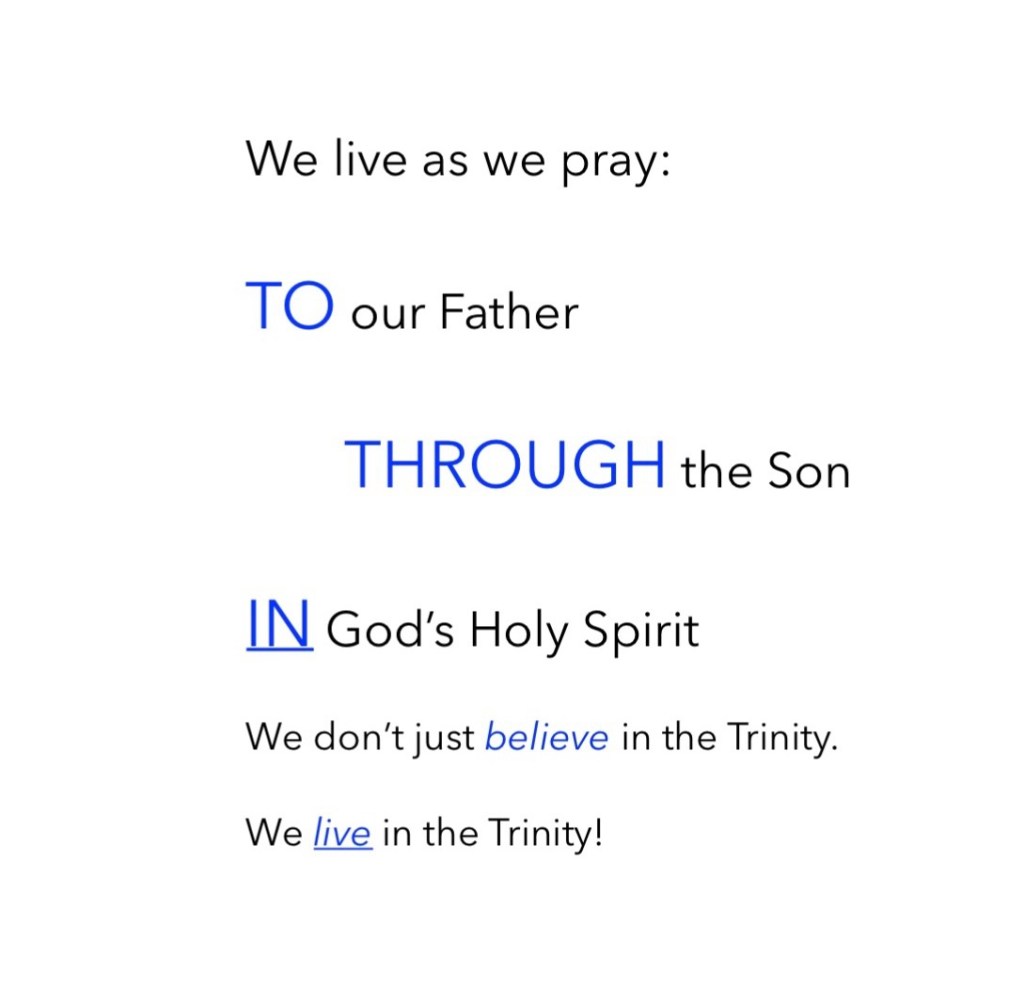
Most of us have the blessing of not facing the equivalent of Pharaoh’s army. But we do have an enemy. And our enemy is the darkness and death of loving self and this world, even to the point of contempt for God, when God bids us to love him, even to the point of contempt for self and this world. When we live as we pray, to the Father, through the Son, and in the Spirit, we experience new life.
The above painting is Peter Koenig’s, Christ as the Second Moses, also known as The Rainbow Resurrection (used by permission of the artist). The final paragraph contains a paraphrase of St. Augustine concerning how we love God, from The City of God (Book 14, chapter 28). / I am once again pleased to share Peter Koenig’s painting and the material in this post as we prepare for Easter Sunday, and the Baptisms that may be a part of the liturgy in many churches.
James Tissot, The Procession in the Streets of Jerusalem
Prior homilies or sermons of mine are occasionally downloaded by readers. Noticing this, I anticipate that some of those preparing to preach (or offer a reading) on an upcoming Sunday might benefit from the perspective I have taken regarding the Lectionary readings for a particular day. I am therefore offering (when I can) a prior text that I have used for the occasion. I will try to do this on Sunday evenings or Mondays believing that there might interest in these texts being made available. When I have one prepared, I will also offer an accompanying handout (in pdf format) in case these may also be helpful.
For this coming Sunday, the Palm Sunday in Lent in Lectionary year A, I offer the following.
The link for it is here. The link to the handout may be found further below.
Prior homilies or sermons of mine are occasionally downloaded by readers. Noticing this, I anticipate that some of those preparing to preach (or offer a reading) on an upcoming Sunday might benefit from the perspective I have taken regarding the Lectionary readings for a particular day. I am therefore offering (when I can) a prior text that I have used for the occasion. I will try to do this on Sunday evenings or Mondays believing that there might interest in these texts being made available. When I have one prepared, I will also offer an accompanying handout (in pdf format) in case these may also be helpful.
For this coming Sunday, the Fifth Sunday in Lent in Lectionary year A, I offer the following.
The link for it is here. The link to the handout may be found further below.
Visitors to this space are familiar with my fondness for the words of St. Richard of Chichester: “Day by day, dear Lord, of thee three things I pray: to see thee more clearly, love thee more dearly, follow thee more nearly, day by day.” The theme can be expressed more compactly: We seek to live more nearly as we pray. These words voice our desire to walk a path of beauty in life, such as we find in ‘Easter Living.’
While serving as an Assistant Professor at one of our seminaries in The Episcopal Church, I was invited by the editor of the New Churches Teaching Series to write the volume on Ethics and Moral Theology. This was the third such series of books going back to the 1950’s that seek to provide learning for persons interested in our tradition. Books in these series have addressed a wide range of areas in faith and community life pertinent to our common desire to become informed members. I wrote my book while teaching its content in the seminary, and in about 10 different parish weekend teaching events in Episcopal churches across the country, ‘field testing’ the material. My book was published in 2000, and is still in print. I wish to note that proceeds from all the books in this series were and are donated to the Anglican Theological Review, an independent journal offering the fruits of scholarship for the benefit and educational formation of those within as well as beyond the academy.
At the time of being granted tenure, a seminary trustee asked me what the title of the book implied about its content. It became evident that her concern was focused on my use of the word “after.” I was able to explain that I used the word to mean “in light of.” The book’s title is an indirect tribute to the theological vision of my doctoral supervisor, Oliver O’Donovan, then Regius Professor of Moral and Pastoral Theology at the University of Oxford, whose book, Resurrection and Moral Order, has had a profound impact upon my thinking.
It may be helpful to clarify that I use the terms “Christian ethics” and “moral theology” interchangeably. However, it is worth observing that many within the wider Protestant tradition tend to prefer the term “Christian ethics,” while those within the wider Catholic tradition tend to use that of “moral theology.” Note that “ethics,” as a named field of inquiry without the religious qualifier, is generally understood as a branch of philosophy, which may or may not observably underpin theological writings relevant to this field.
I would like to highlight a number of themes evident within and or suggested by the structure my book, which I think are particularly relevant to Christians at this point of time:
Foremost, the interdependence between ethics and spirituality, which I refer to as ‘two sides of the same coin’ despite their separate spheres of concern.
The centrality of Baptism in the lives of every Christian believer, and its implications regarding the vital relationship between what we believe and how we live
Our historic Anglican dependence upon the natural world as a source of insight about the Creator’s intentions for us and for our lives. This reflects our traditional emphasis upon the Incarnation of our Lord in human embodiment. We look for the complementarity between – but do not equate nor confuse – what the Medievals called the Book of Nature and the Book of Scripture, ‘written’ by the same Author, while having different even if overlapping purposes.
The distinctions that I offer between what I call “laws,” “manners,” and “moral principles.” Neglecting to distinguish among what these terms represent frequently causes confusion.
The final chapter of the book moves from elaboration of basic principles in Christian ethics/moral theology to an application of these principles by offering a methodological approach to how they might be applied with reference to a particular set of ethical questions, centering on how we approach a broad concern for all of us: “Should a Christian ever been involved in or associated with an act of violence?”
I wish to stress that this is not a book about “issues.” My goal was -and remains – an effort to recover and present the foundations of a solid Christian world view for how we might best approach any issue that may be of concern. So, this is not a book where you can turn to the index and look up such matters as capital punishment or a discussion of what might be a fair interest rate on loans. I try to remain careful about observing the important distinction between moral or ethical principles that we might share, and particular policy implementations that we then undertake to reflect or enact those principles in our common life.
For those who may be interested, I include here a précis of the structure of my book, articulated in the series of Axioms that are appended within it, as well as bullet point chapter summaries:
James Tissot, The Blind Man Washes in the Pool of Siloam
Prior homilies or sermons of mine are occasionally downloaded by readers. Noticing this, I anticipate that some of those preparing to preach (or offer a reading) on an upcoming Sunday might benefit from the perspective I have taken regarding the Lectionary readings for a particular day. I am therefore offering (when I can) a prior text that I have used for the occasion. I will try to do this on Sunday evenings or Mondays believing that there might interest in these texts being made available. When I have one prepared, I will also offer an accompanying handout (in pdf format) in case these may also be helpful.
For this coming Sunday, the Fourth Sunday in Lent in Lectionary year A, I offer the following.
The link for it is here. The link to the handout may be found further below.
Prior homilies or sermons of mine are occasionally downloaded by readers. Noticing this, I anticipate that some of those preparing to preach (or offer a reading) on an upcoming Sunday might benefit from the perspective I have taken regarding the Lectionary readings for a particular day. I am therefore offering (when I can) a prior text that I have used for the occasion. I will try to do this on Sunday evenings or Mondays believing that there might interest in these texts being made available. When I have one prepared, I will also offer an accompanying handout (in pdf format) in case these may also be helpful.
For this coming Sunday, the Third Sunday in Lent in Lectionary year A, I offer the following.
The link for it is here. The link to the handout may be found further below.
James Tissot, Interview Between Jesus and Nicodemus
Prior homilies or sermons of mine are occasionally downloaded by readers. Noticing this, I anticipate that some of those preparing to preach (or offer a reading) on an upcoming Sunday might benefit from the perspective I have taken regarding the Lectionary readings for a particular day. I am therefore offering (when I can) a prior text that I have used for the occasion. I will try to do this on Sunday evenings or Mondays believing that there might interest in these texts being made available. When I have one prepared, I will also offer an accompanying handout (in pdf format) in case these may also be helpful.
For this coming Sunday, the Second Sunday in Lent in Lectionary year A, I offer the following.
The link for it is here. The link to the handout may be found further below.