Theophany

An Offering for Sunday, April 26, Easter 4 A

A shepherd boy in Africa

Prior homilies or sermons of mine are occasionally downloaded by readers. Noticing this, I anticipate that some of those preparing to preach (or offer a reading) on an upcoming Sunday might benefit from the perspective I have taken regarding the Lectionary readings for a particular day. I am therefore offering (when I can) a prior text that I have used for the occasion. I will try to do this on Sunday evenings or Mondays believing that there might interest in these texts being made available. When I have one prepared, I will also offer an accompanying handout (in pdf format) in case these may also be helpful.

For this coming Sunday, Easter 4 in Lectionary year A, I offer the following.

The link for it is here. The link to the handout may be found further below.

Here is the link to the handout.

An Offering for Sunday, April 19, Easter 3 A

First edition book jacket of Walker Percy’s last novel, The Thanatos Syndrome

Prior homilies or sermons of mine are occasionally downloaded by readers. Noticing this, I anticipate that some of those preparing to preach (or offer a reading) on an upcoming Sunday might benefit from the perspective I have taken regarding the Lectionary readings for a particular day. I am therefore offering (when I can) a prior text that I have used for the occasion. I will try to do this on Sunday evenings or Mondays believing that there might interest in these texts being made available. When I have one prepared, I will also offer an accompanying handout (in pdf format) in case these may also be helpful.

For this coming Sunday, Easter 3 in Lectionary year A, I offer the following.

The link for it is here. The link to the handout may be found further below.

Here is the link to the handout.

48 Years Ago Easter Turned My Life Downside Up

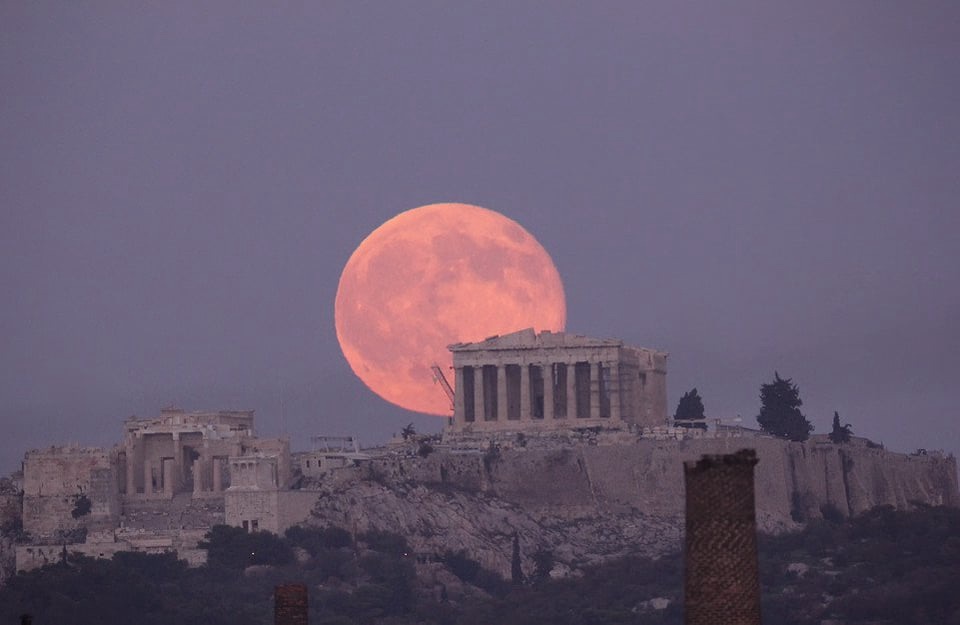
Moonrise over Athens, much as I remember it

A dusky early evening left a soft glow on the Acropolis, periodically visible as I walked from the hostel toward the church. Yet, the size and warmth of the rising full moon held my attention as its blush touched the hills, for a brief while silhouetting the pillars and pediments of the Parthenon.

It was the evening of Holy Saturday, which fell on March 25 that year. In other years the day would have been the Feast of the Annunciation, but in 1978 it was the eve of Easter Sunday. I walked the short distance to Syntagma Square, to revisit the Anglican parish I had found that morning. Now, in the approaching darkness, I was returning to make my first confession, and be baptized at the Great Easter Vigil.

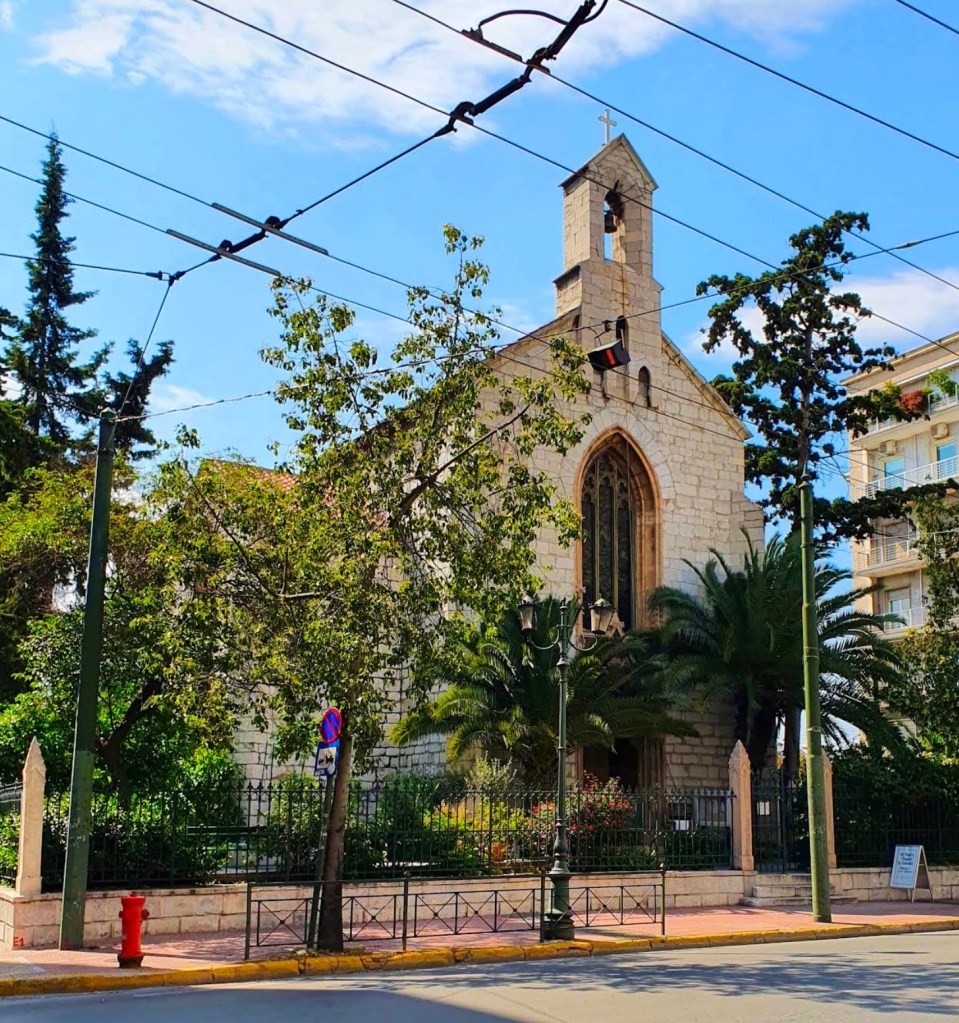
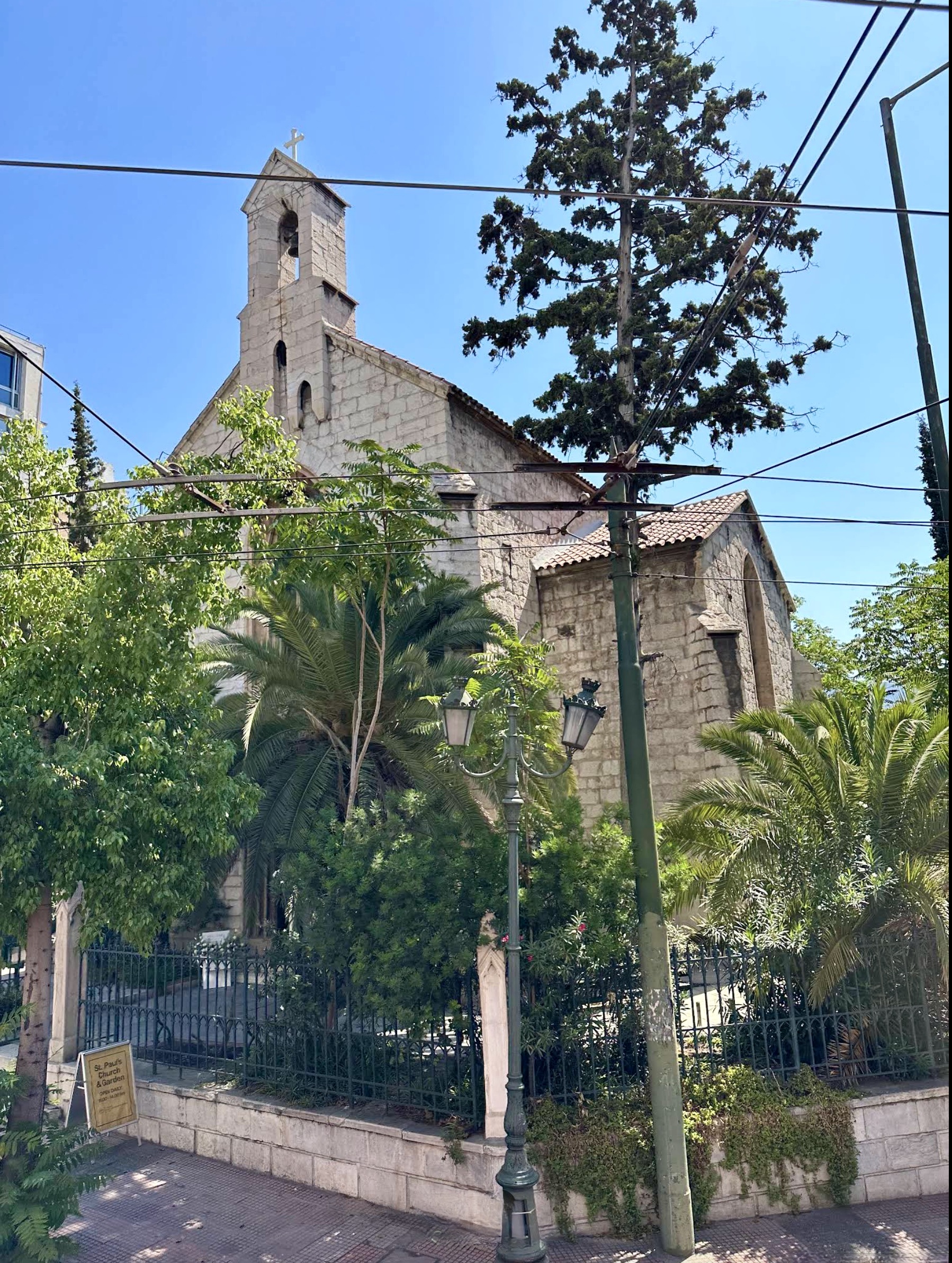
St Paul’s Anglican Church, Athens

How this came to be was largely due to providential grace, for I had not traveled to Greece with this particular result in mind. I was on a college year abroad, having lived and studied in Florence during the autumn. Then, after Christmas in Germany, I traveled to England for two eight week terms of study at Oxford. My plan for the year was to focus on Art History, fulfilling in part my chosen college major.

But, as in the biblical Damascus Road surprise, when first walking into the piazza around the Duomo in Florence, I experienced an unexpectedly sudden conviction: That it was time for me to surrender to the divine power I had come to recognize but had yet to affirm. Asking if there was an English-speaking congregation nearby, I was directed to St James Episcopal Church near the American Consulate. Over the next few months, and with the guidance of Fr. Edward Lee, the parish became for me a place of spiritual nurture.

The autumn course of studies for our group of visiting students in Florence was a fixed one. But my subsequent program in England allowed me the freedom to choose a personal area of focus. The exotic sounding topic of Christian Mysticism had been commended to me, and upon naming this to my Oxford program administrator, I learned that she could arrange tutorials for me with a recognized specialist in the field. What a blessing this turned out to be.

St. James Episcopal Church, Florence, Italy

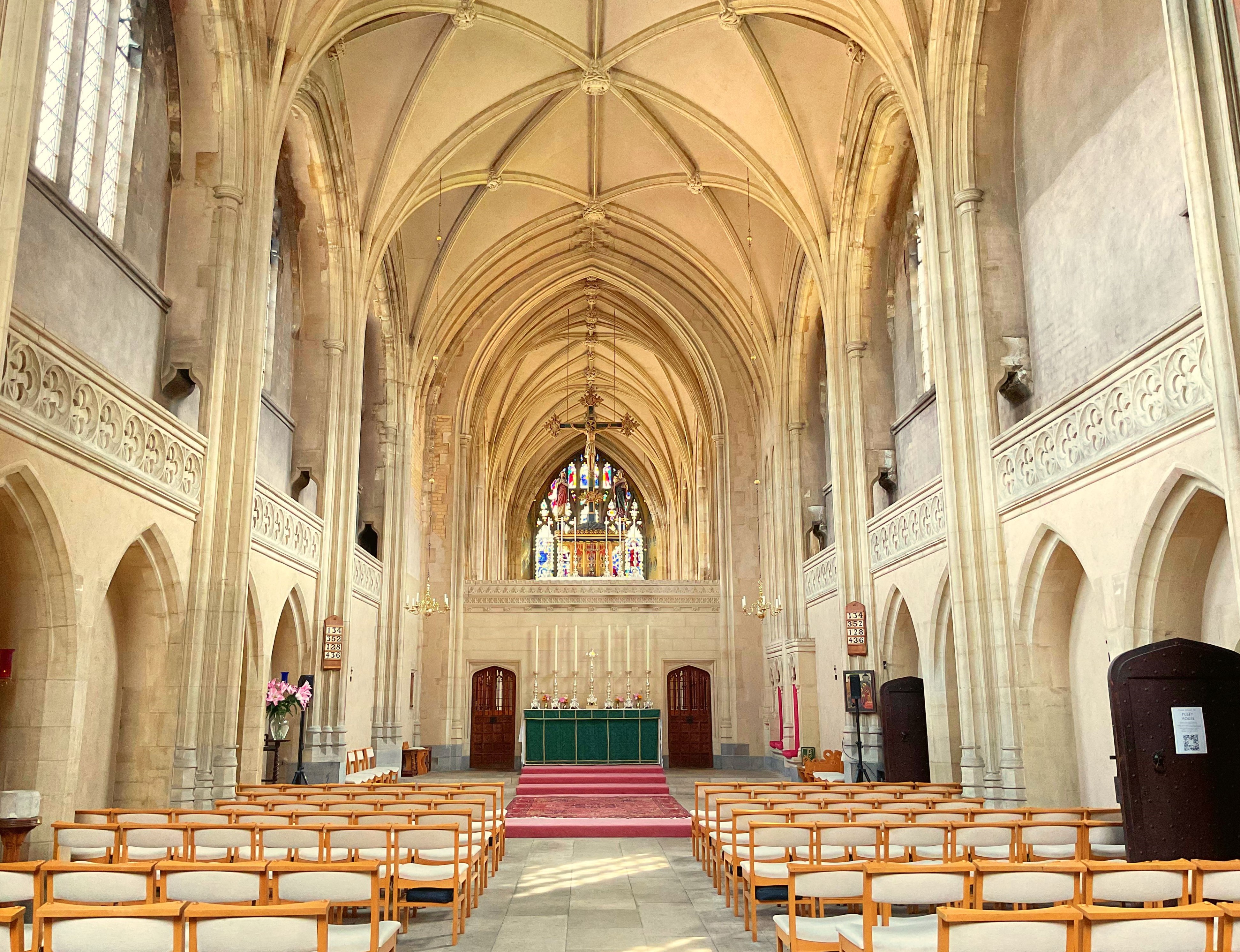
And so, during a cold and wet English winter, my catechesis in the Christian Faith was suddenly deepened. My growth was fed by readings from the early desert saints, on through to the spiritual writers of the medieval period. My study experience was complemented by a different approach to worship from what I had encountered in the liturgy at St. James Episcopal Church in Florence. By chance, I discovered Pusey House and Anglo-Catholic liturgy soon after arriving in Oxford. Passing by a notice board, I saw an announcement about an upcoming sermon focused on the spirituality of Thomas Merton, whose Seven Story Mountain autobiography I had read the year before. Fr. Cheslyn Jones, the Chaplain at Pusey and a specialist in the Greek New Testament, along with the history of liturgy and spirituality, became my next catechist.

Pusey House Chapel, Oxford, England

At the end of the Hilary (or winter) Term, I made the kind of plans many American students undertake hoping for spring warmth: To head as far south as cheaply possible, for what in my case would be a six week break before the Trinity Term.

I found a used tent and some economical camping supplies in local shops in Oxford, and located a round-trip bus ticket from London to Athens, offered by a discount travel bureau. This led to a remarkable pair of journeys to and from the continent, crossing between Dover and Ostend, through Belgium, Germany, Austria, and Yugoslavia, before finally arriving in Greece. Deposited on an Athenian curbside on an early afternoon, I found a local bus to the port of Piraeus. There I arranged for an overnight passage to Crete on a vintage island cargo and passenger ferry. The next morning, I bought a bus ticket to the south coast of Crete, going to a place a friend had recommended, the little seaside town of Ierapetra, near where St. Paul’s ship had sailed off the coast (Acts 27). Aside from my basic gear, I had brought along only a New Testament and a book of the sayings of the Desert Fathers for my Lenten reading. My plan to do a lot of fasting for spiritual reasons fit neatly with my need for economy.

My first couple of nights were spent in a farmer’s field, above the town and seaside. I awoke one of those mornings to a rapping on the tent pole that alarmed me, sensitive to a probable complaint about my trespassing. Instead, there was a kind man, his arms folded across his chest, cradling fresh tomatoes and cucumbers. I was very touched.

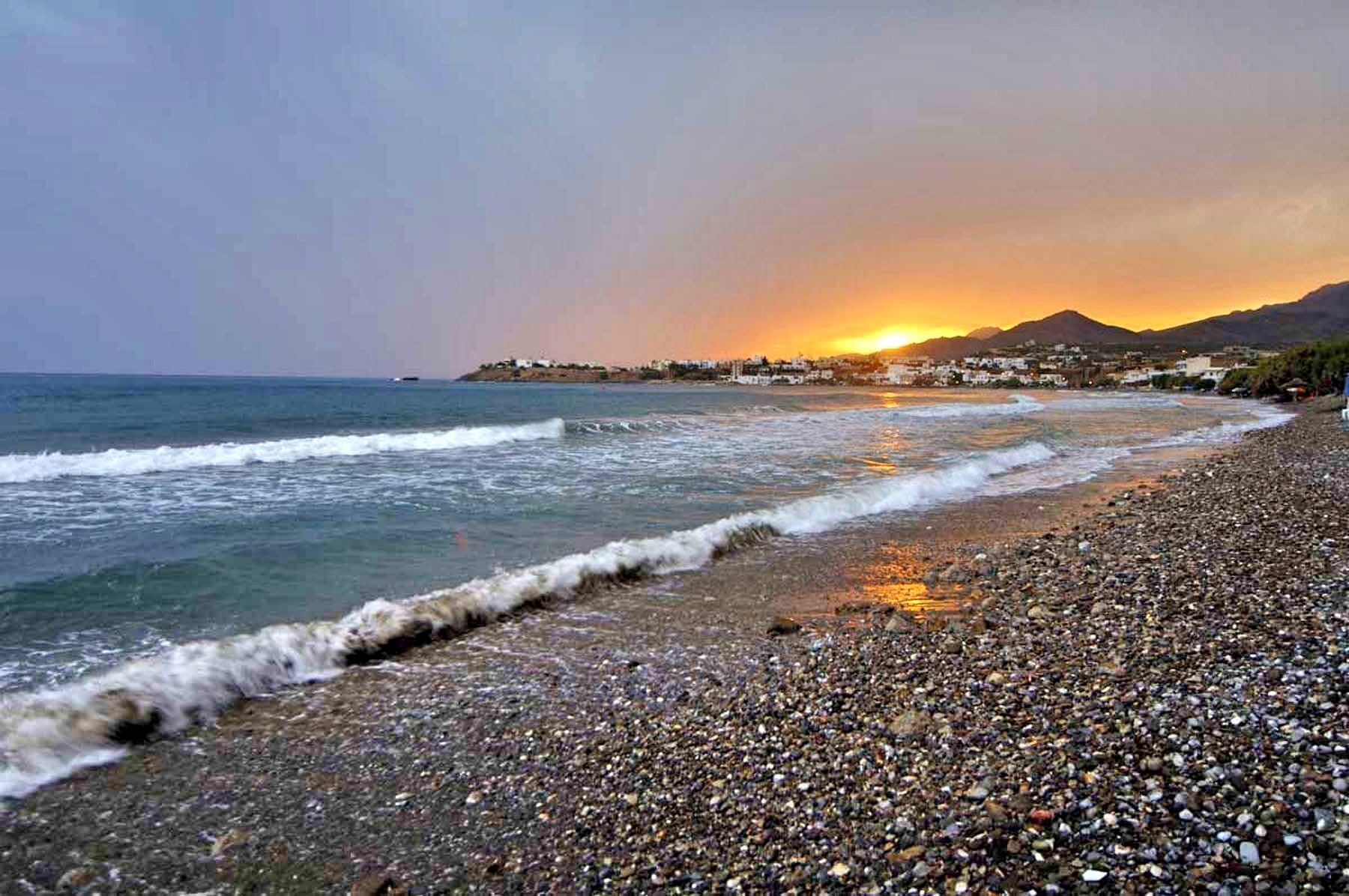
The beach along which I walked to Ierapetra on Crete

After a few days I relocated my tent to an area just above the pebbled beach, adjacent to the long shore upon which I would daily walk to the town. There I would buy a loaf of hearty brown bread, some cheese and sausage meat, as well as more tomatoes and cucumbers. These became the staples of my diet for about 5 weeks.

With just a couple of weeks to go before my return journey to England, a friend from our study program found me on Crete. He was conflicted and wrestling with a need to fly back to the States to be reconciled with his father. After a day or two, he resolved to act on his intuition, and departed on his long journey home.

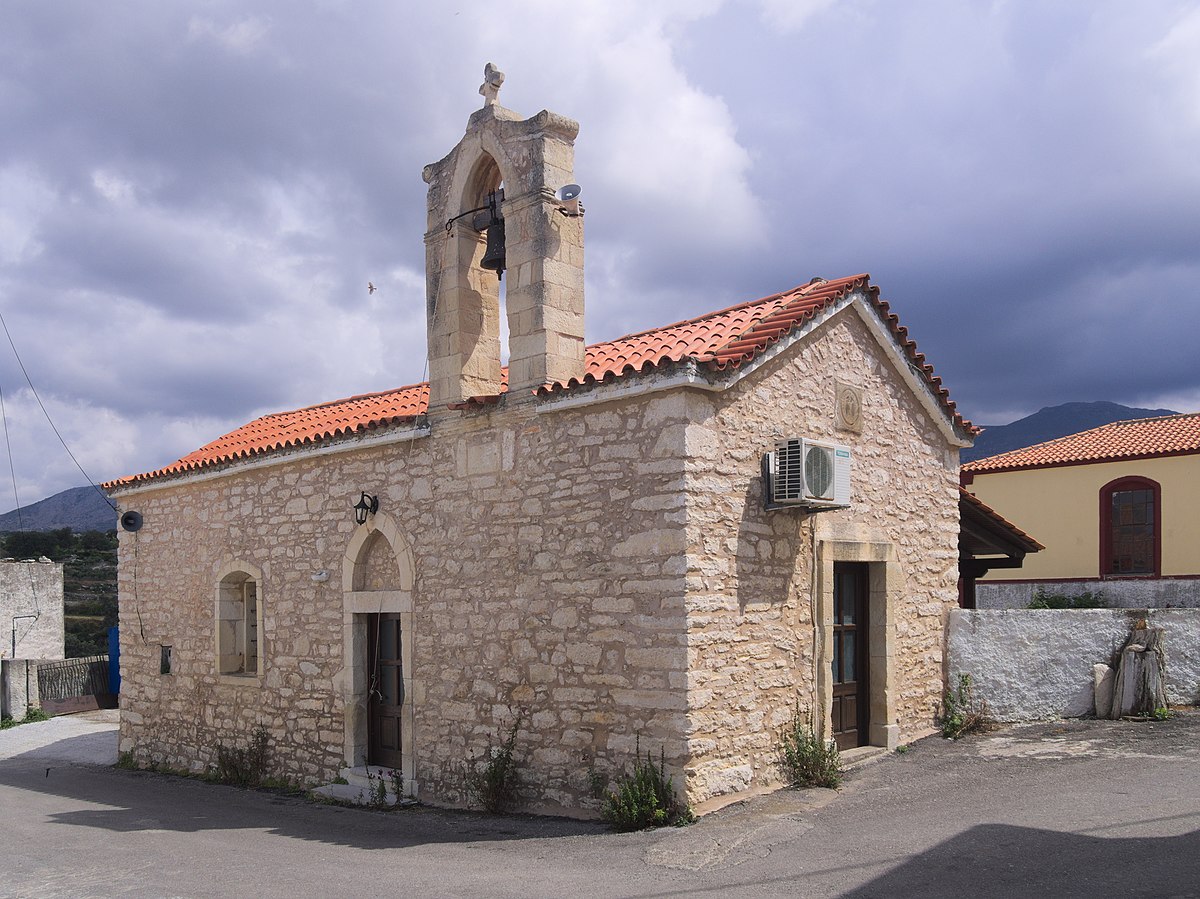
A little Greek Orthodox church like the one in which I prayed on a morning of decision

Musing about his decision, I realized that I was moving toward a similar resolve, but that in my case it was a need to be reconciled with our spiritual Father. I was still fuzzy about what this might mean in concrete terms, but awoke the next morning with greater clarity. I walked into town to pray in a small Greek Orthodox church when I realized what I needed to do. That was to go back to Athens, find an English Church, and ask to be baptized. Fetching my sleeping bag from the tent and my New Testment, I booked a bus ticket back to the north shore of Crete for a return to Piraeus on the same overnight ship. It was then I learned that it was Good Friday.

The Greek inter-island ferry ship, the Minos, upon which I sailed overnight between Piraeus and Crete

Holy Saturday morning, the bus from Piraeus dropped me at Syntagma Square in central Athens where – very conveniently – I found St Paul’s Anglican Church. Reading the church sign with its parish notices, I learned the name of the priest, Fr. Jeremy Peake, and his telephone number. Taking the risk of calling him early on Holy Saturday morning, I surprised him with an unanticipated but what I hoped would be a welcome request: I wished to be baptized. In a wonderfully understated British way, he responded by saying, “Perhaps we should talk about that!” He then invited me to come by for coffee. When I shared with him about my months of study, and with whom I had been receiving instruction in the Christian Faith, he was reassured. Warmly, he invited me to come early to the church that evening to make my first confession, and receive Baptism at the Great Easter Vigil.

The garden area where new light of Easter was lit

The liturgy began in the darkened forecourt of the parish church, just off a main boulevard in central Athens. Amidst the busy sounds of the city around us, we gathered in silence to light the new fire with which the liturgy begins. Being my first experience of the Vigil, I was quite moved by the sequence of readings, starting with the Creation, through the Fall and the Flood, the Exodus and entrance into the Promised Land, with stories of God’s covenantal grace being extended and renewed again and again. When I was then baptized, I felt like I was on fire, an overwhelming experience of cleansing embrace and transformation. I received communion as a new member of the Body of Christ, and left the liturgy feeling like I was several feet off the ground.

On Sunday morning following the Eucharist I was invited to lunch by the kind couple who had agreed to be my sponsors for Baptism. During that wonderful meal, they explained a practice with which I was unfamiliar: Easter eggs all colored dark red, recalling a wonderful Eastertide legend associated with Mary Magdalene.

After a further week in my tent near Ierapetra, I returned to Oxford for another term of formation in the history of Christian spiritual theology. At the end of the term, I received the sacrament of Confirmation through the hands of a suffragan bishop of Winchester, at Pusey House on Pentecost Sunday.

My experience of what now seems to have been a magical series of months, forty eight years ago, comes back to me every Easter. Especially when the Feast of the Annunciation on March 25 happens to occur near Holy Week, as it did this year.


Additional note: Readers interested in the legend about St. Mary Magdalen and the red egg might like to read my earlier post on this topic, which may be found here. A further reflection of the impact of the story I share here can be seen in the opening chapter and the thematic structure of my book, Ethics After Easter.

An Offering for Sunday, April 12, Easter 2 A

Justin Matherly, (Untitled), Fear Anxiety Joy, 2016

Prior homilies or sermons of mine are occasionally downloaded by readers. Noticing this, I anticipate that some of those preparing to preach (or offer a reading) on an upcoming Sunday might benefit from the perspective I have taken regarding the Lectionary readings for a particular day. I am therefore offering (when I can) a prior text that I have used for the occasion. I will try to do this on Sunday evenings or Mondays believing that there might interest in these texts being made available. When I have one prepared, I will also offer an accompanying handout (in pdf format) in case these may also be helpful.

For this coming Sunday, Easter 2 in Lectionary year A, I offer the following.

The link for it is here. The link to the handout may be found further below.

Here is the link to the handout.

Walter Inglis Anderson and the Beauty of Humanity

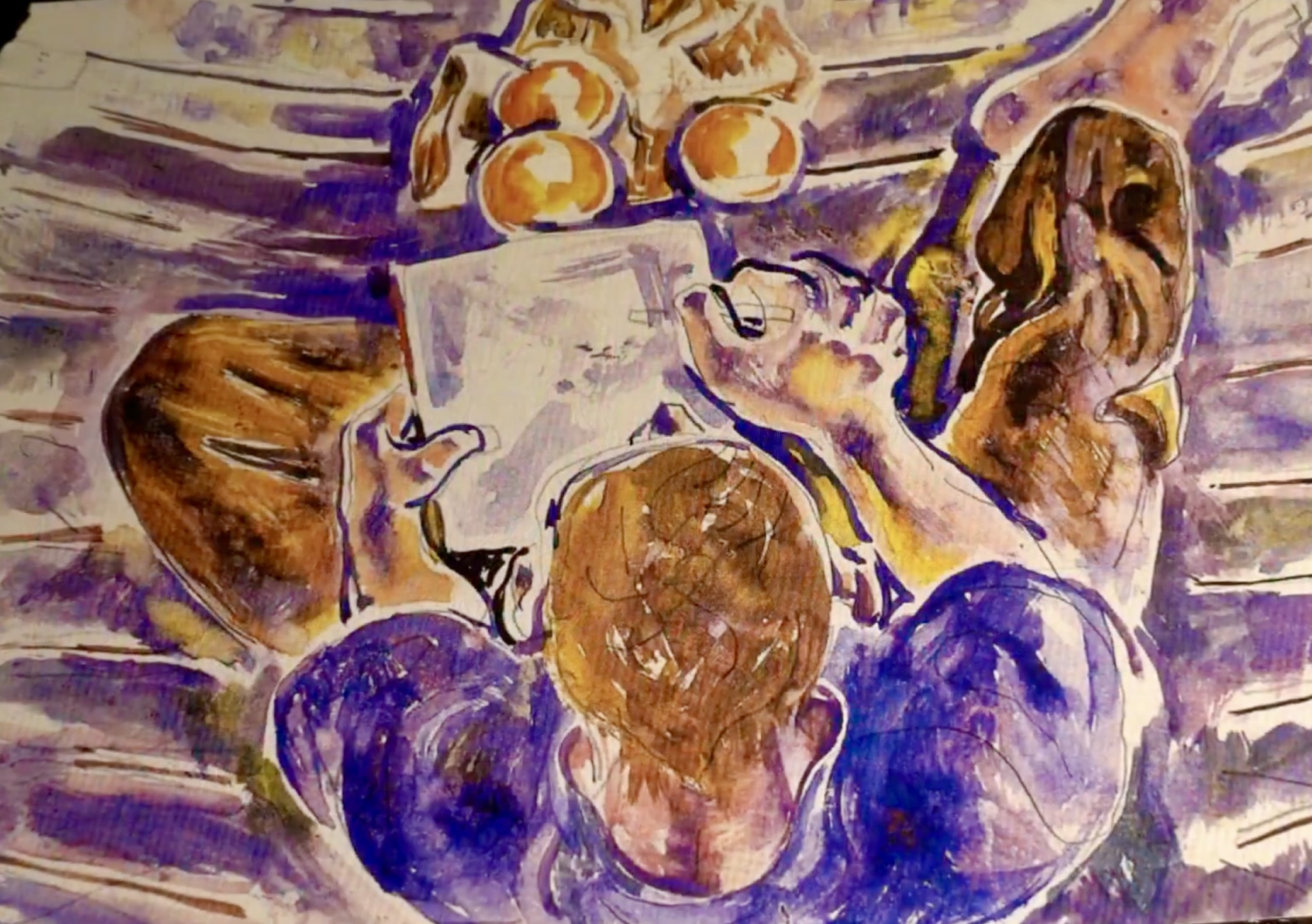
Walter Inglis Anderson, Self-Portrait from above

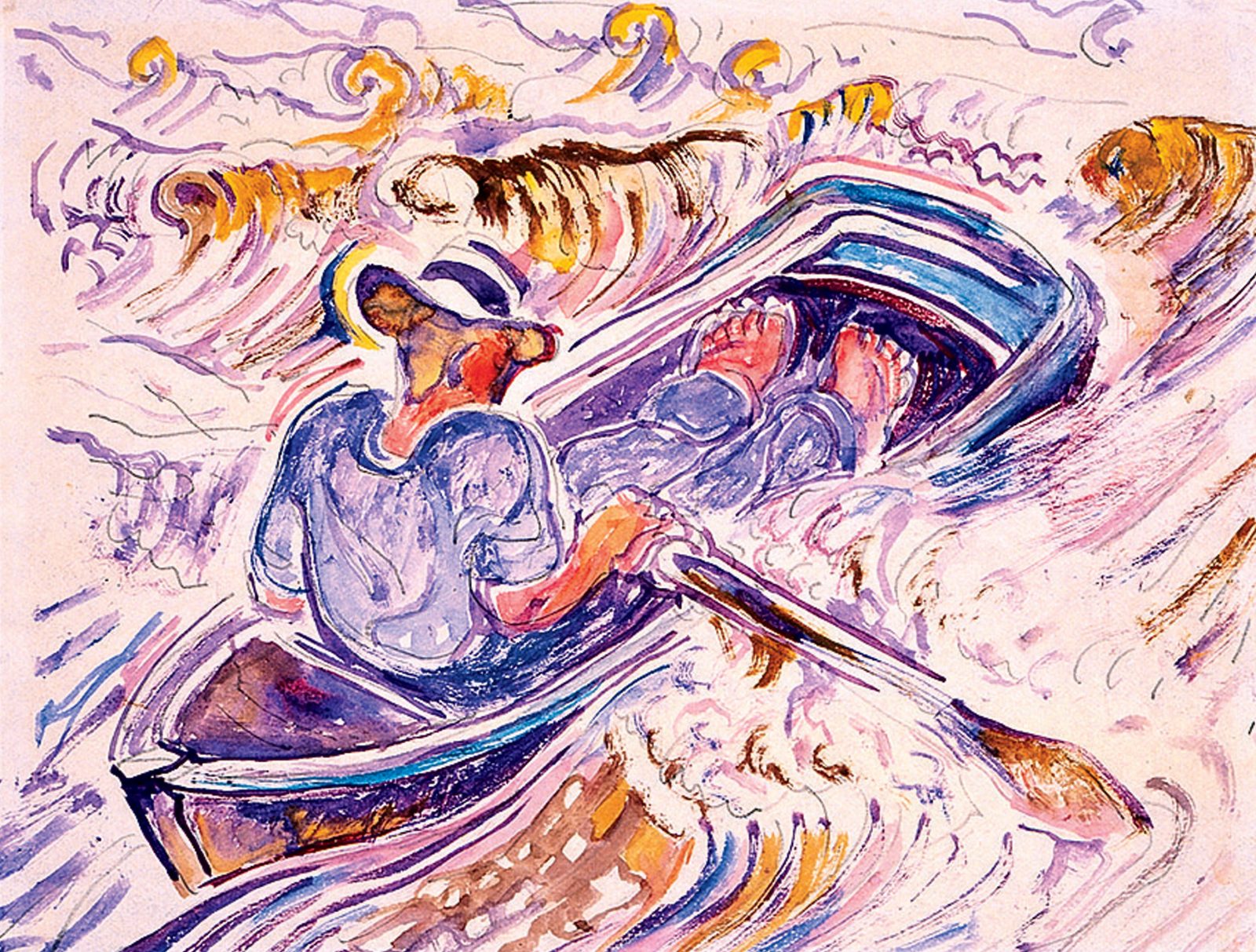
Perhaps like Henry David Thoreau or John Muir, a gifted painter named Walter Inglis Anderson came to discern some things of great significance within the visible beauty latent in nature. Like his venturesome forbears, he did this by seeking out an area of wilderness. It became his habit to row out the ten or so miles to Horn Island in the Mississippi Sound, where he slept on the sand using his upturned dinghy as his hermitage. Out there amidst the shifting dunes, with only the shell of his boat for cover against storms, Walter Anderson perceived more of who he was as he experienced harmony with what was around him. In time, compelling objects of his attention became for him fellow-subjects apprehending the splendor of Creation.

A shoreline inhabitant whose common name (‘hermit’ crab) was often derisively applied to Walter Anderson

Paradoxically, by his solitary coastal journeys, a man who had suffered bouts of mental illness became aware of an elusive but precious quality that he shared with those from whom he was isolated. His transient island resting places, where he spent weeks at a time over the course of twenty years, provided him with fleeting glimpses of what it might mean to be more fully human. There, away from others, he experienced moments when he felt he had become who he was meant to be.

As one writer has put it, “Anderson’s isolation from humanity convinced him, in the end, of humanity’s beauty… [He] believed that if we re-established our primal relationship with nature, we would regain our beauty.” Walter’s youngest son, John, summed it up succinctly: “Solitude was a tool that helped him to find unity with all people and all creatures.”

Anderson’s portrayal of himself rowing out to the island

Walter Anderson expressed the point compactly in one of his Horn Island logbooks: “In order to realize the beauty of man, we must realize our relation to nature.” His son, John, later explained what his father had meant by this. “I think that in those twenty years that he was living in solitude on the wilderness island, he was attempting to realize his relation to nature so that he could realize the beauty of humanity.”

Underlying these words, and the perception they express, may be a nature-mysticism of the kind often associated with Thoreau and Muir. I also find an affinity here with the spirituality we can discern in traditions as widely different as Zen Buddhism and the writings of Christian monastic solitaries.

Eugene Peterson’s rendering of Jesus’ words in John 12:25 (in context), captures a similar perception: “Listen carefully: Unless a grain of wheat is buried in the ground, dead to the world, it is never any more than a grain of wheat. But if it is buried, it sprouts and reproduces itself many times over. In the same way, anyone who holds on to life just as it is destroys that life. But if you let it go, reckless in your love, you’ll have it forever, real and eternal.”

To this mystical vision of the world I think we can also connect an insight attributable to St. Augustine of Hippo, regarding what we love, and how we love. If we love ourselves and our lives, or the world around us, for our own sake, we belong to the ‘city of the world,’ and we live turned away from God. Yet, if we love these same things for God’s sake, we belong to the City of God, and live in a God-ward way. Here it is important to remember that to love in the latter way that Augustine commended may not necessarily be an activity that we undertake with conscious awareness.

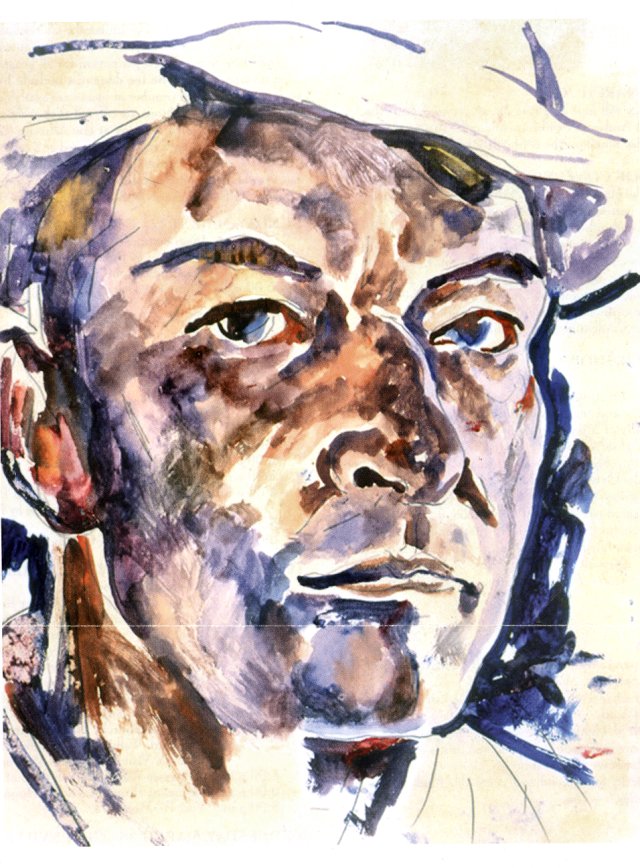
Self-Portrait by Anderson

It is actually possible to love God without ever consciously intending to do so. I believe this was the case in the adult life of Walter Anderson. It happens when we love what God dearly loves. And such true love can be expressed unconsciously, in ways that may be apparent to others while not to ourselves.

This truth connects the experience of the non-religious nature mystic with that of the religious contemplative, as both in various ways are focussed upon the Beauty inherent in Creation and within our human experience of Nature. This brings joy to the Author of Creation, who so loves the world that he has brought us into the new life that – through the Word made flesh – he now shares with us.


Emphasis has been added to the Eugene Peterson quote above. In a later post I will offer further reflection on Walter Anderson’s life and work, including his wondrous artistic creations, among which are paintings and drawings, as well as ceramics, linoleum prints and patterns for fabrics.

Learning from Mary’s Attentive Openness


Perhaps people living at the time of our Lord’s first coming were in some important ways like us. They may have been just as prone to orienting their security and sense of wellbeing around material concerns, while being generally indifferent to the spiritual life. Yet, in this season of Advent when many sing “O come, O come Emmanuel,” it is easy to imagine the people of Roman-occupied Palestine crying out with longing for the God of Israel to draw near in power. Even so, God chose an out of the way place in which to appear among us, incarnate in human form. Paradoxically, for this and other reasons, the arrival of the Holy One was largely overlooked. At least until his person and message provoked enough reactivity to cause the authorities to have to deal with him. Otherwise, the periodic waves of public attention that he received were most often inspired by the miraculous works of mercy attributed to him. While he encountered significant examples of deference to the revealed Law among his contemporaries, lived-adherence to God’s hope-shaping promises appeared to be rare.

This is why the Lectionary features a particular aspect of the Christian Gospel story at this time of the year. It does this by presenting some notable counter-examples to what may have been – in the first century – a widespread indifference to or loss of confidence in God’s promises. We learn about Zechariah, the father of the ‘forerunner,’ John the Baptizer, and about Elizabeth, John’s mother, who was a cousin of Mary and another woman that would bear a promised child. These three stand out for having been open in heart and mind to the heavenly glory that God was about to reveal in the midst of the lives of his wayward children.

In particular we remember the spirit of attentiveness that we find displayed in a third aspect of Mary’s response to God’s call through the Angel Gabriel. God’s call often challenges us to live in a different way; or to try and be a different person, especially in our relationships with our family, our friends, and those with whom we work. Receiving this call, we can react at first in fear at what this call will mean in practice. We can also respond with uncertainty, wondering about our worthiness or suitability for what God may have in mind for us. We have reflected on these themes in the last two web posts on this site.

But we can also see that —in faith— we are able to go into the heart of our fear, and find God’s power. Receiving God’s grace, we may move beyond relying on our own strength, and resist depending upon our estimate of our own abilities and worthiness for what God may have in mind. And we can choose to respond to God’s gracious invitation to participate in the Spirit’s redeeming work, just as Mary did, by saying, “Yes!” As John Lennon so simply captured the spirit of it, in the words of his famous song, “Let it be!” As Mary said to God through the Angel, “Behold the handmaid of the Lord; let it be unto me according to thy Word.”

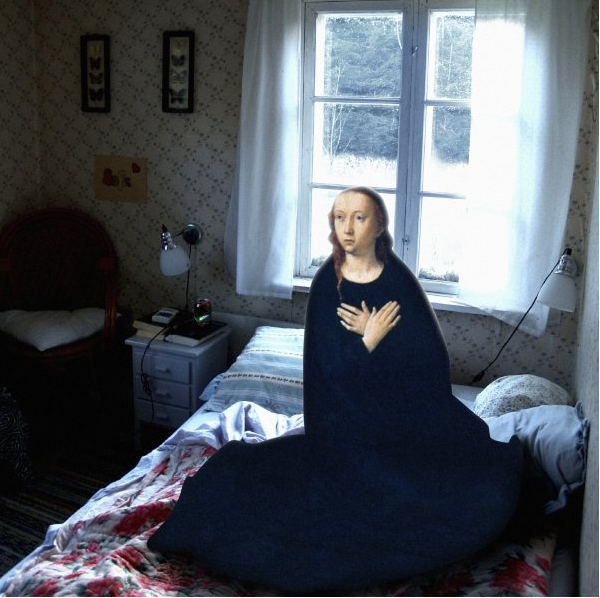
This is the spirit of Mary’s response to the message of the angel as portrayed in the third image I am sharing with you this Advent ~ Trygve Skogrand’s photo-collage, pictured above. The artist has skillfully placed a traditional painted figure onto a contemporary scene, juxtaposing an image of something old within a contemporary setting. We see a simplicity and spirit of humility in Mary’s posture, as she kneels in her plain gown. In the plain ‘bed-sit’ room in which she prays, we notice her uplifted eyes. They are now focused on the divine source of the message she is receiving.

Attentiveness is key to meaningful perception, just as we find in the Gospel reading for the third Sunday in Advent. John the Baptizer sends his disciples to Jesus with what should be our most persistent question ~ “Are you the One?” ‘Are you the One for whom we are looking, and whom we are awaiting?’ Notice Jesus’ response: “Go and tell John what you hear and see…” For they only hear and see if they are attentive. This is one reason why the Church sets aside this season of Advent ~ to encourage our attentiveness, so that we can hear and see, and then accept God’s Word to and for us.

“Let it be as God would have it.” Let things be as God wills. Let God be God! Perhaps nothing will be so hard in our lives, as to say those words in faith and in humility. Our pride objects. Our desire to be at the center of reality intrudes. But to say, “Let it be…,” in faith and in humility, is to return to the grace of the Garden of Creation. And it is also to begin to live forward into the fullness of the Kingdom, manifest in the New Jerusalem, as God will have things be.


The image above is a detail of Trygve Skogrand’s photo-collage, Bedsit Annunciation (one of my favorite artistic renderings of the Annunciation). This post is based on my homily for the Third Sunday of Advent, December 15, 2019, which can be accessed by clicking here.

Wrestling With God

Marc Chagall, Jacob Wrestles with the Angel (and receives a blessing)

Recently, the Lectionary included a familiar reading from Genesis (chapter 32). It describes Jacob’s dilemma concerning his brother, Essau, from whom he is alienated. Alone at night in the wilderness, Jacob lays down on the ground and places his head upon a stone to sleep. In the darkness, Jacob then contends with an angel in what becomes a wrestling match that lasts through much of the night.

In parsing the elements of this deeply symbolic story, we must remember that in much of the Old Testament, angels appear and act as divine representatives. They also function as a literary device where the angelic figure is a stand-in for God. This is why it is appropriate to read this passage as a story about Jacob wrestling with God, as well as the more literal reading of it as an account of his wrestling with an angelic being. In either case, we are right to understand that the story portrays Jacob’s struggle to discern, and then accept, God’s will for him and for his future.

We are told that Jacob is fearful about meeting Esau, who is traveling with a large band of men. For, as we may remember, Jacob has wronged his brother by ‘stealing’ Esau’s birthright blessing, which Esau was to have received from their father, Isaac. As recorded in a well-known earlier story, Jacob had deceived their aged father by masquerading as his twin brother, who was only-minutes-older than him, thus receiving the blessing that Isaac had intended for Esau.

Now, with our modern understanding of psychology, contemporary readers of the nighttime angelic wrestling story may prefer to understand it as simply a symbolic portrayal of Jacob’s wrestling with his conscience. Though partly true, accepting such a univocal reading of the story comes at the expense of a profound dimension of the narrative. For this episode is what students of the Bible call a ‘theophany,’ a story about divine self-revelation, as Jacob himself (as well as the narrator) understood it to be.

So how might we appreciate this story of a nighttime struggle, involving unresolved aspects of a particular person’s history having to do with family relationships, as well as recording a pivotal moment within his long term quest for divine guidance?

I find it helpful to read the story within the following interpretive framework. When we refer to ‘struggling with God,’ I believe that what we often mean is our struggle to accept what we perceive to be (or suspect is) God’s will for us. As such, it has much to do with our understanding of prayer.

Jacob Wrestling With the Angel (attribution uncertain)

As I noted in a recent post, our Prayer Book teaches us that prayer is first of all a matter of responding to God. Responding to God, and responding to our perception of God’s will for us, are not often automatic or straightforward activities. Our natural disposition may be to fall back into thinking of prayer as enacting our desire to bring God’s will into accord with our own wants and hopes. For our prayers may often take this form. Yet, prayer is most holy when prayer is pursued in a way where we give ourselves up to an acceptance of our real need, not our wants. This is to accept our basic need for our wills to be brought into accord with the divine will. When this comes to be our more usual pattern of response to God, we are less likely to find ourselves having the feeling that we are struggling with God, and more likely to experience the peace of living harmoniously with God’s hopes and plans for us.
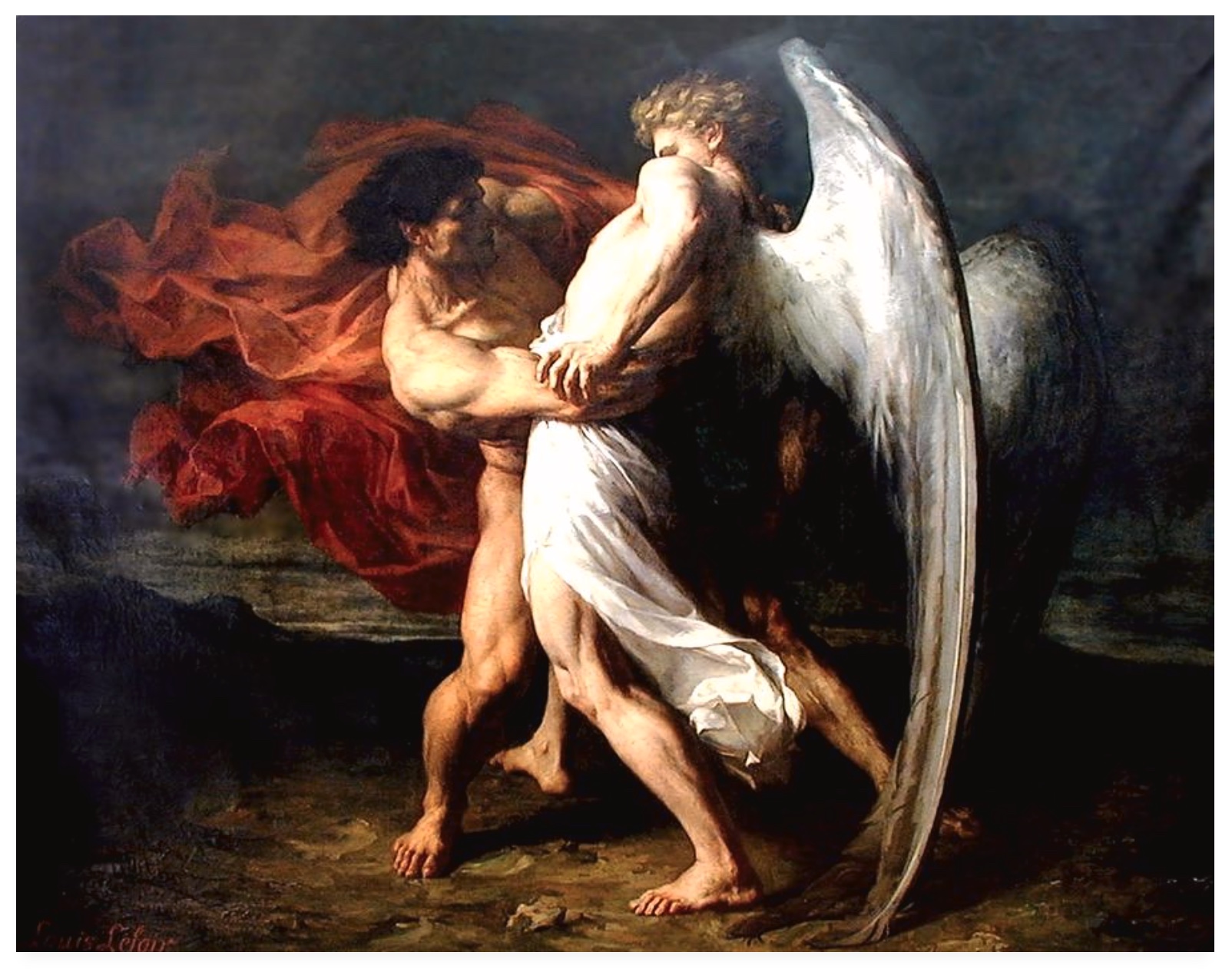
Alexander Louis Leloir, Jacob Wrestling with the Angel

When the Genesis story refers to Jacob’s having prevailed we will do better than to settle for the conclusion that he has ‘won’ or achieved a goal. Jacob hung on to the angel; he did not let go. And in the process he came to have a limp, the struggle having dislocated aspects of his prior way of being. The limp was therefore less a sign of an injury and more a sign of a deep change within him, and within his mode of engaging the world that lay before him. Jacob could then utter his famous words: “For I have seen God face to face, and yet my life has been delivered.” Encountering God’s awesome and holy presence did not consume him as fire would dry tinder. Instead, Jacob was transformed, and received a new name, Israel.

Responding to God – and God’s will for us – with acceptance, will likely disrupt aspects of our present ways of living. And we may feel that some important parts of our lives, even of ourselves, have been dislocated in the process. But if we cling to God, even through the feeling of struggle, with the aim of coming to be more fully in accord with God, and God’s ways, we will be blessed, just as Jacob was.


Note: among the many symbolic elements in Chagall’s painting, shown at the top, you might see if you can discern elements of the larger context of Jacob’s story, including those related to Joseph, in Genesis.