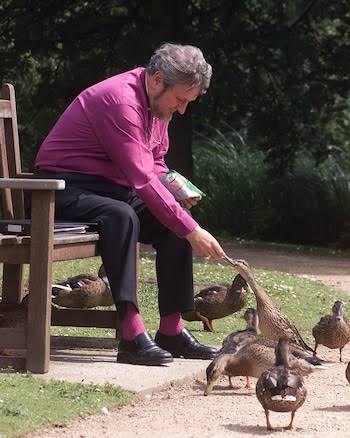
Geoffrey Rowell, in his time as the Anglican Bishop of Europe
Many Christians may be familiar with an old phrase, “Word and Sacraments.” This expression is often employed to help describe a comprehensive approach to Christian faith and worship that transcends some Reformation era emphases. At the time of the Reformation, the Roman Catholic Church retained a primary focus upon the Sacraments, interwoven with a sacramental understanding of the nature of the Church, while the Protestant tradition became associated with the phrase, sola scriptura, understood as ‘the Word alone.’ To emphasize the significant difference between these two focuses, indeed to privilege them, is to maintain a classic example of what I call “either/or” thinking. But what about “both–and”?
My use of the dash in the latter couplet is deliberate, and an intentional way of marking a distinction between it and that of “either/or.”
Anglicans, especially American Episcopalians, like “both–and” thinking, and our common weakness is to begin to see everything in terms of what that couplet-phrase might signify. Yet, examples abound of what we may refer to as “either/or” thinking, the most evident being the sharp divisions to be found between participants in political discourse, but also among faithful adherents to various and widely different religious traditions. But here is an irony: to begin to see everything in both–and terms, in an all or nothing way, is to think in either/or terms!
One of my early academic mentors at Oxford, whom I was later able to assist as a pastoral colleague, had a phrase that he liked to commend. “People are more often right in what they affirm than in what they deny.” Geoffrey Rowell had traced this saying back to at least the Enlightenment era, and found great beauty in its continuing applicability. I have found the same to be true, and continue to share to students the insight it represents.
Now, why or how might Geoffrey’s saying be true? I think it is often true because we tend to have more of ourselves invested in the ideas and causes we wish to affirm than in those we wish to deny. And, generally, we are not as careful in our analysis of things in the latter category. For this reason, when assigning readings to students over the years, I have suggested they keep a page for note-taking nearby, which has two columns. I have advised them to put “what the author wishes to affirm” at the top of one column, and “what the author is concerned to deny” at the top of the other. And, I have alerted them to the likelihood that – after reading and note-taking – they would not find a direct inverse correlation between the content of the two columns. The reason being that, “people are more often right in what they affirm than in what they deny,” including authors and academic scholars!
And so we come to Word and Sacraments, which I commend as a statement with continuing significance in contrast to its alternative, “either/or” form. I would observe about my own Anglican – Episcopal Church tradition that we have become rather casual in our treatment and understanding of the Word, especially as we find it employed by John in the first chapter of his Gospel. We are more comfortable with multiples of our words, words we think we can master and employ at will, while we assume that our forebears thought the same. A result can often be a low or weak view of Scriptural revelation. The danger then, as preachers, interpreters, and readers, is that we begin to substitute our words for the Word.
A further result is that we come to rely upon the liturgy, and hence also upon the sacraments, to ‘carry the freight,’ or upon emotion or shared ideology to create community and a sense of mission, which then risks becoming our mission and not necessarily God’s mission. How ironic that we, who identify with our Protestant heritage as we do our Catholic one, should begin to mimic some characteristics we associate with the Roman Catholic tradition!
John’s Gospel proclaims this profound insight right at the beginning: “The Word became flesh…” For the Word continues to become flesh, in us, because the Word continues to become flesh – or enfleshed in matter – in the Sacraments. The Church is a form of His continuing Incarnation, as the Church’s sacraments continue to ‘incarnate’ his living presence, just as does faithful Gospel proclamation of the Word.
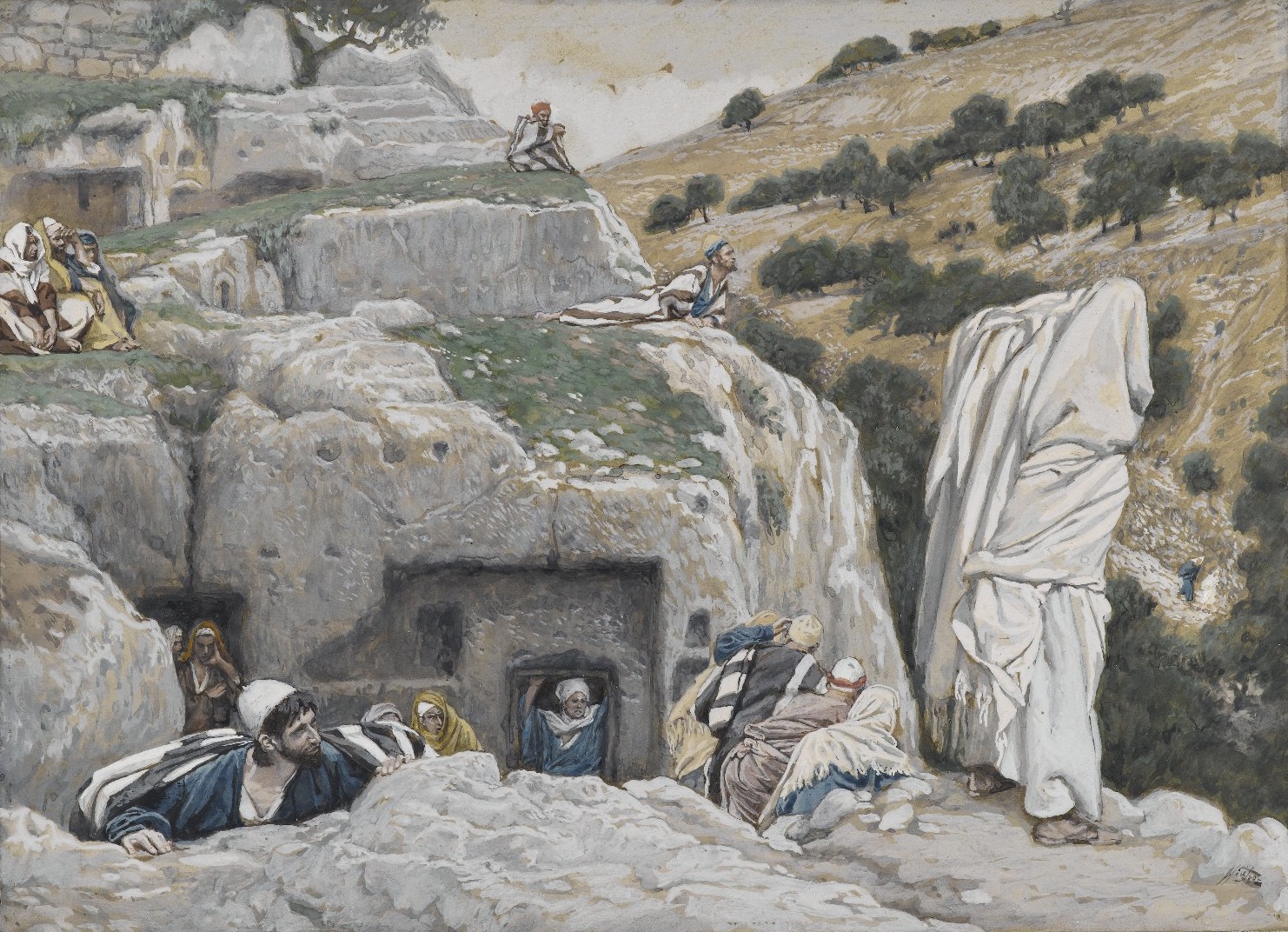
James Tissot, The Ordaining of the Twelve Disciples
As Matthew tells the story, those who are called to follow Jesus are then sent out. Before they go, they are not only commissioned to represent him and his message; he shares with them portion of his remarkable power. According to Matthew, “… Jesus summoned his twelve disciples and gave them authority over unclean spirits, to cast them out, and to cure every disease and every sickness.” They have witnessed his teaching in what we know of as the Sermon on the Mount, which in the first Gospel runs over several chapters. Yet this moment is relatively early in the Gospel narrative, and it should surprise us that Jesus is so willing to let them go out on his behalf, and apart from him.
It is sometimes observed that with certain vocations one never really ‘retires” even if one ceases to be engaged in remunerated employment. This bears witness to the fact that through the calling that underlies all other callings, our baptismal vocation never has a terminus though it may come to greater fulfillment in life. Yet as we go through successive stages in our lives, we may be more open to being ‘sent out’ when we are younger even if we continue to be open to being ‘called’ – and, indeed, called anew – through our later years. My parents were relatively young when they were sent out as missionaries to Japan, living into a pattern that we can recognize in many spheres of our human communities such as in the Peace Corps and in Teach for America. Having myself been more recently retired, I find that I am now less inclined toward the opportunity of being sent out in and for the mission of the Kingdom though I still experience being called.
For reasons like these I tend to think that the twelve whom Jesus first called to be his disciples were more likely to have been young rather than middle-aged. In that they may have had a greater openness to discipleship formation; they may have had a greater degree of idealism and more energy for a new kind of work; and they may simply have had the prospect of more years ahead with which to share with others what they would perceive and learn about God’s mission in and to his Creation.
It is a subtle point, but this may be why Tissot – following Matthew – portrays what is titled The Ordaining of the Twelve Disciples separately from a depiction of their initial experiences of being called. For this moment in their lives and in their time with him became the occasion of their formal participation in Jesus’ mission, even when they were not in proximity to him and his work. Jesus, as Matthew tells us, had already gone “about all the cities and villages, teaching in their synagogues and proclaiming the good news of the kingdom, and curing every disease and every sickness.” And having commissioned the twelve, and given them his own authority, Jesus sent them “out with the following instructions: ‘… go to the lost sheep of the house of Israel. As you go, proclaim the good news, The Kingdom of heaven has come near. Cure the sick, raise the dead, cleanse the lepers, cast out demons’.”
When doing this, Jesus not only equips them for the mission upon which they are sent. He also forewarns them of the adversity they are likely to face, adversity which might involve betrayal, trials and flogging, being hated, and even being put to death. This is yet another reason why I tend to think of the disciples, at this point in their lives, as generally younger than older, just as we saw with Caravaggio’s likely portray of Matthew’s calling, last week.
As we get older, some but not all of us may be less open to being sent out, and less inclined to seek such an opportunity. But we should never cease to be open to ‘the call,’ and the varying ways it may be ever-renewed in our lives.
This posting is offered in relation to the readings appointed for Proper 6, Year A, in the Revised Common Lectionary for Sunday, June 14, 2026.
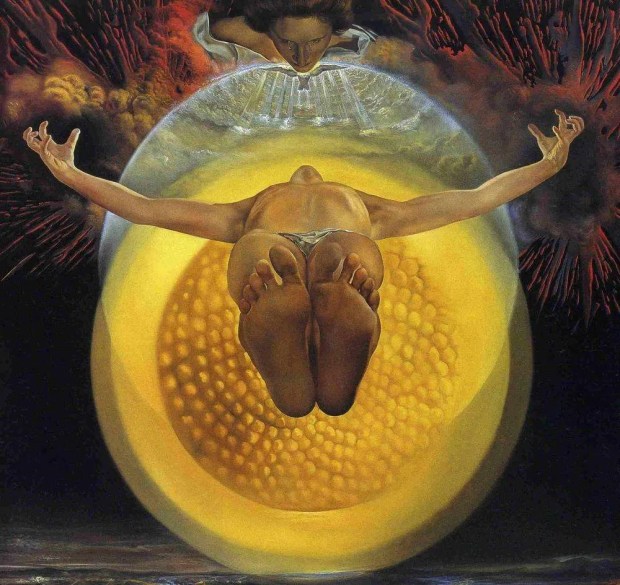
Salvadore Dali, The Ascension of Christ {Christ lifting in his embrace the whole of Creation to the Father, in the Holy Spirit}
Jesus ascended not so that he might withdraw from the world, making room as it were for the mission of the Holy Spirit. Instead, his Ascension marked his transition from being present at one time and in one place, to becoming present in all places, all the time. Before his death, there were countless places where he was not. After his Ascension, there is no place where he is not. From being with only some of those who lived during his earthly years, he is with all of us now. And from having a particular presence and context for his ministry, Jesus in his Ascension transitioned to a universal presence for his continuing mission, so “that he might fill all things,” even us.
The way that we envision the Ascension of Jesus is largely shaped by Luke’s Gospel, as well as by his book of Acts. As the Church’s liturgy observes and celebrates Luke’s presentation of this event, it occurs on the fortieth day after Easter Sunday, which always falls on a Thursday. With diminished weekday worship attendance in most churches, the feast of the Ascension is often observed on the following Sunday, on the Seventh Sunday of Easter. As Luke’s Gospel records the event,
“[Jesus] led [the disciples] out as far as Bethany, and lifting up his hands he blessed them. While he blessed them, he parted from them and was carried up into heaven. And they worshiped him and returned to Jerusalem with great joy, and were continually in the temple blessing God.”
In Acts, Luke presents a fuller account of
“… the day when he was taken up…, [when] he presented himself alive to them… [H]e said to them, ‘… you will receive power when the Holy Spirit has come upon you, and you will be my witnesses in Jerusalem and in all Judea and Samaria, and to the end of the earth.’ And when he had said these things, as they were looking on, he was lifted up, and a cloud took him out of their sight. And while they were gazing into heaven as he went, behold, two men stood by them in white robes, and said, ‘Men of Galilee, why do you stand looking into heaven? This Jesus, who was taken up from you into heaven, will come in the same way as you saw him go into heaven.'”
Giotto, The Ascension of Jesus
Giotto beautifully portrays Jesus’ Ascension in a fresco found within the Scrovegni Chapel (also known as the Arena Chapel) in Padua, Italy. Giotto’s approach to painting proved pivotal in the transition within Western art from dependence upon Eastern Christian iconographic imagery toward a greater realism and sensitivity to ‘ordinary’ human life in this world. Unlike medieval and eastern Christian icons, which tend to be absorbed with expressing dimensions of the eternal, Giotto portrays an actual event in the temporal lives of actual people. Nevertheless, Giotto’s Ascension is clearly also attentive and faithful to the supernatural elements of the Luke-Acts descriptions of Jesus’ Ascension.
It has been observed that in these modern times, among the most neglected aspects of traditional Christian doctrine is a proper understanding of Jesus’ Ascension. This may be due to a contemporary proclivity to read the New Testament as if its significance is primarily ethical, while shying away from engagement with the metaphysical and the supernatural elements of the Gospel narratives. Yet, though often overlooked within the spiritual reflections of many people in this modern era, we need to remember that Jesus’ atoning work was not limited to his offering himself for the life of the world in going to Golgotha. His Ascension and his Resurrection, just as his anticipation of the acknowledged presence and gift of the Holy Spirit, were all a part of his mission of atonement – opening our pathway to one-ness with God.
A collect from The Book of Common Prayer helps us appreciate why the Ascension of Jesus continues to be a major feast of Our Lord on the Church’s calendar:
“Almighty God, whose blessed Son our Savior Jesus Christ ascended far above all heavens that he might fill all things: Mercifully give us faith to perceive that, according to his promise, he abides with his Church on earth, even to the end of the ages; through Jesus Christ our Lord, who lives and reigns with you and the Holy Spirit, one God, in glory everlasting.” (BCP:226)
Just as at his Baptism, in the Ascension of Jesus, the veil between heaven and earth, between the spiritual and the material, between God and us, is pierced and set aside.
Alleluia. Christ is Risen and Ascended! And in the Holy Spirit he is present everywhere and in all who might welcome him into our lives.
Note: this post is adapted from one I have shared previously. We honor our Lords Ascension this week, as we do throughout our days, especially when we speak of it together in the Apostles Creed, in daily Morning and Evening Prayer as well as in the renewal of our Baptismal Covenant, and when we recite the Nicene Creed during the Eucharist. For He is risen, ascended, and continues to be glorified through our prayers.
On Monday of this week, I offered a sample homily for this coming Sunday, Easter 7 A, and an accompanying handout based on themes in the reading from John’s Gospel. I will offer here another sample handout based more directly on Ascension themes related to the above post.
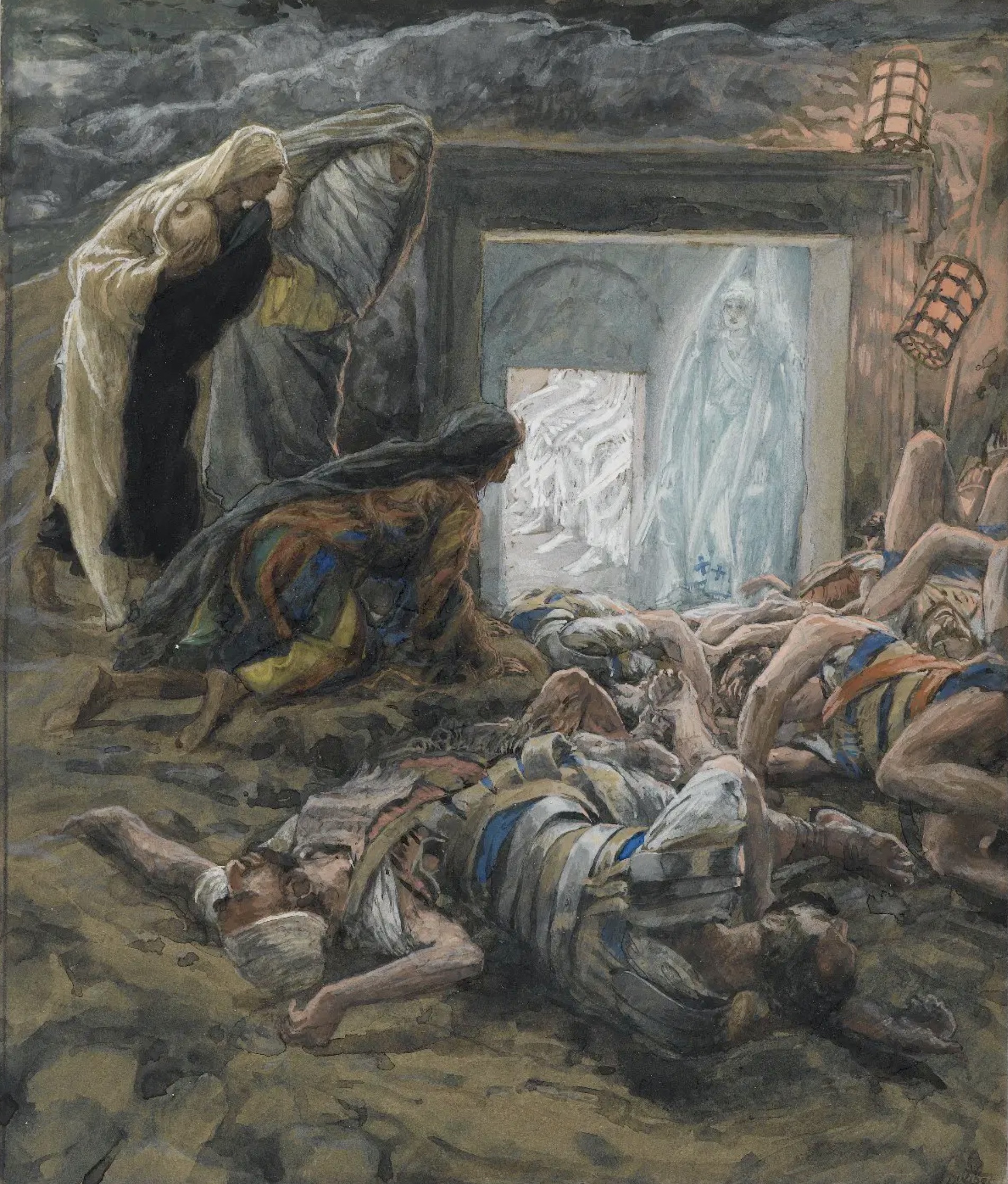
James Tissot, Mary Magdalen and the Holy Women at the Tomb
What an indescribable series of moments those were with the discovery of the empty tomb, first by the women, and then by some of the disciples. What made those moments so unexpected was the sense of emptiness that pervaded the scene after Jesus’ death on Golgotha. A few had stayed until the last. Most left, surely overwhelmed by a feeling of loss and of dark absence. He was gone. And then, so were they. Furtively moving off toward a place of hiding.
James Tissot, The Apostles’ Hiding Place
Then… from nothing came something. On the morning after the sabbath, surprised joy broke through fear and sadness as He who seemed no longer to be appeared amidst them. Among many promises, God had once said, “Behold, I make all things new.” This promise was now fulfilled, but not in a way that his people were expectating. Listless because of doubt, immobile due to their fears, their place of retreat strangely mirrored their Lord’s entombment.
Then, amidst the stillness of a death-prompted isolation, the followers of the Holy One experienced startling wonder, unanticipated joy, and a new sense of community. Excitement overcame their troubled conviction that all was lost. How had this come about? By reflecting on this question, we join writers of the New Testament and others by imagining how the Resurrection of Jesus not only happened to him, but how it also then happened to the disciples.
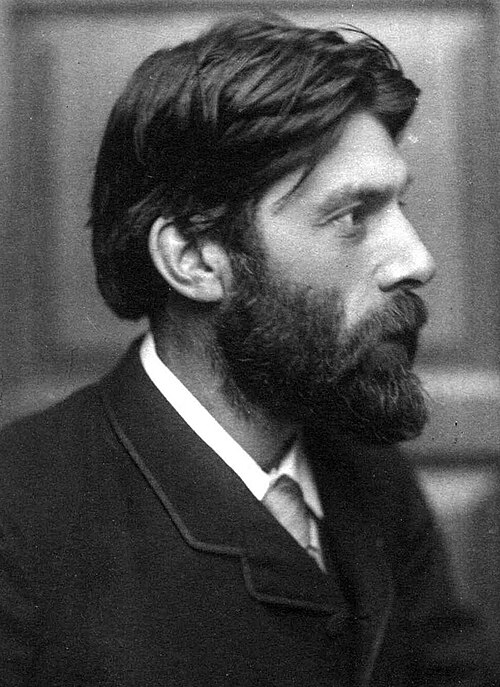
Robert Seymour Bridges was a nineteenth century physician and an esteemed poet, such that later in life he was named Poet Laureate of the United Kingdom. Though not well-known now, he deserves our attention for how he adapted and rendered in lyrical English verse a hymn text by the seventeenth century German theologian and hymn writer, Joachim Neander. Bridges’ version of that text is known by its first line, “All My Hope on God is Founded.”
Robert Seymour Bridges
Bridges’ poetic text is familiar to people in our own day because of the way it has been set to a twentieth century tune, MICHAEL, by Herbert Howells. Many heard this hymn when it was sung as a fitting part of an internationally televised occasion, the Committal Service for Queen Elizabeth II, in September of 2022.
“All My Hope on God is Founded” therefore represents a remarkable synthesis of a seventeenth century devotional text, Victorian poetical sensibility, and expressive twentieth century hymnology. Each of these features can be appealing, and in my perception, how they work together in this example makes for a very moving hymn that enhances contemporary eucharistic worship.
Hope, based on God’s grace and providence, provides the thematic structure for the five verses of the text as it appears in The Hymnal 1982 (of The Episcopal Church). The third verse evokes the blessings that we have received through God’s work in Creation. The text here is nuanced, evoking the role of divine wisdom, while at the same time making allusion to things we have learned through the science of astronomy. Here is verse 3 in full:
“God’s great goodness e’er endureth, deep his wisdom, passing thought: splendor, light, and life attend him, beauty springeth out of nought.”
Clearly, the hymn’s words here speak of what theologians refer to as creation ex nihilo, how God created all that is from nothing rather than from something preexisting. We remember the way that God’s handiwork is portrayed in Genesis 1, especially God’s recognition that what has been created isgood. Andrew Cuneo observes how, in Genesis’s opening chapter, this repeated refrain that it was good, “contains a Hebrew word which may be translated either as good or as beautiful. The feel of the whole chapter changes if one hears God proclaim that the light, the sun, the greenery, the animals are all beautiful, and mankind very beautiful.”
This helps us appreciate how Robert Bridges’ rendering of Neander’s text transposes the object of God’s appreciative regard from the attribute of goodness to that of Beauty. The beautiful splendor, light, and life that attend God then, by implication, become attributes that accrue to humankind, we who are created in God’s image and likeness.
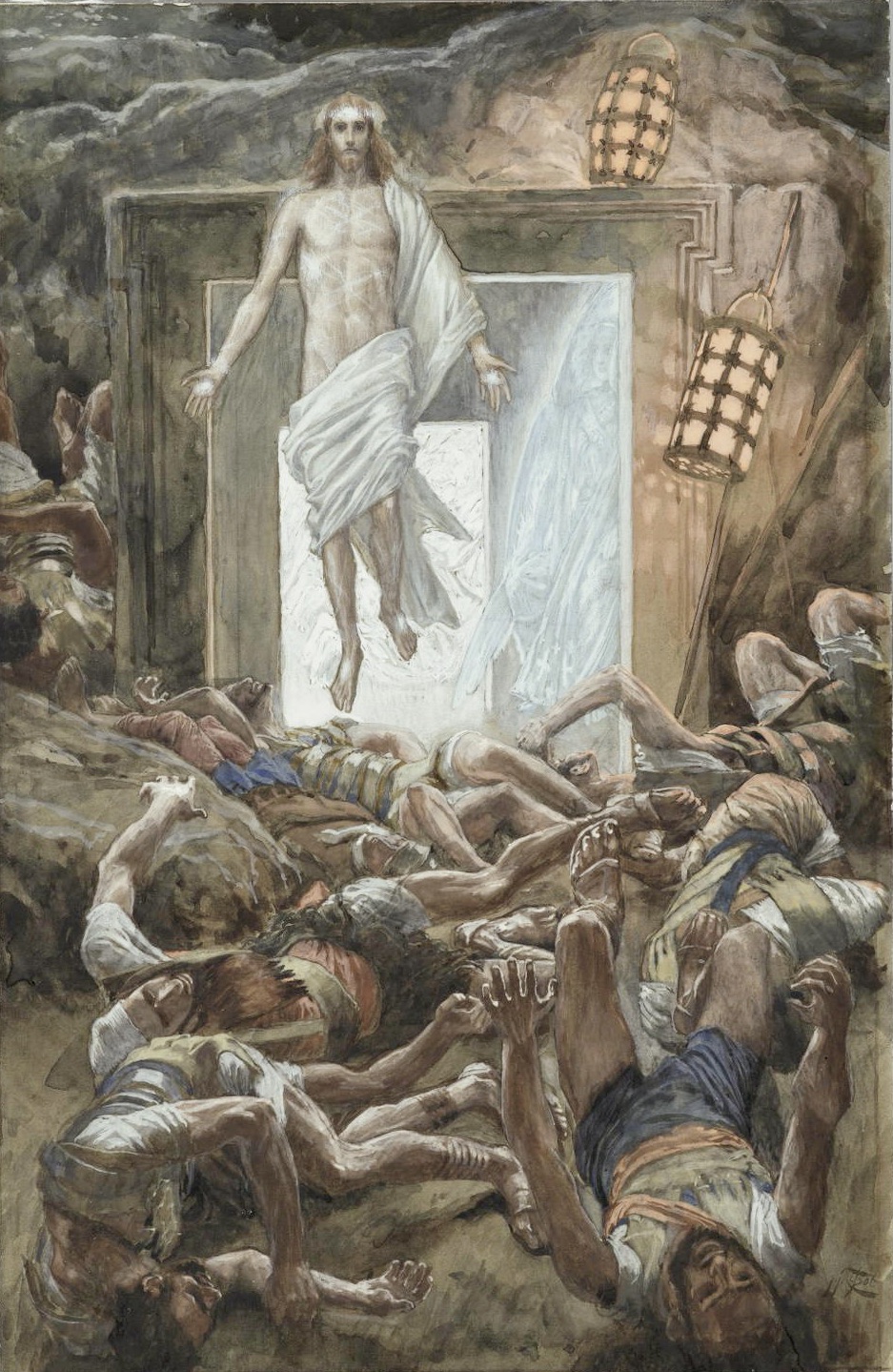
James Tissot, The Resurrection
A significant feature of New Testament theology appears in the theme of “a new creation,” signified by and inaugurated through Jesus’ Resurrection from the dead. As Paul puts it, “if anyone is in Christ, there is a new creation. The old has passed away; behold, the new has come” (2 Corinthians 5:17). Paul is here referring to death and resurrection, and the transformation we undergo through Baptism, when “what is mortal is swallowed up by life.” We can therefore say that the pattern of God’s work of Redemption mirrors that of Creation. For just as God created goodness and beauty out of nothing, God brought beautiful redemption to the world out of the emptiness of Jesus’ tomb. And as we feel joy when encountering beauty in Creation, so we find joy in God’s work of Redemption.
The disciples discovered new life within themselves through their encounter with and transformation by the Risen Jesus. This led them to a renewed sense of confidence that the Lord’s mission continued, and would now continue in and through them. They would have found fitting, and would have been able to sing, Robert Bridges’ words from the first verse of his hymn:
“All my hope on God is founded; he doth still my trust renew, me through change and chance he guideth, only good and only true.”
In a prior post I offered a reflection on the Committal Service for Queen Elizabeth II and noted its inclusion of the hymn, All My Hope on God is Founded. That post may be found here.
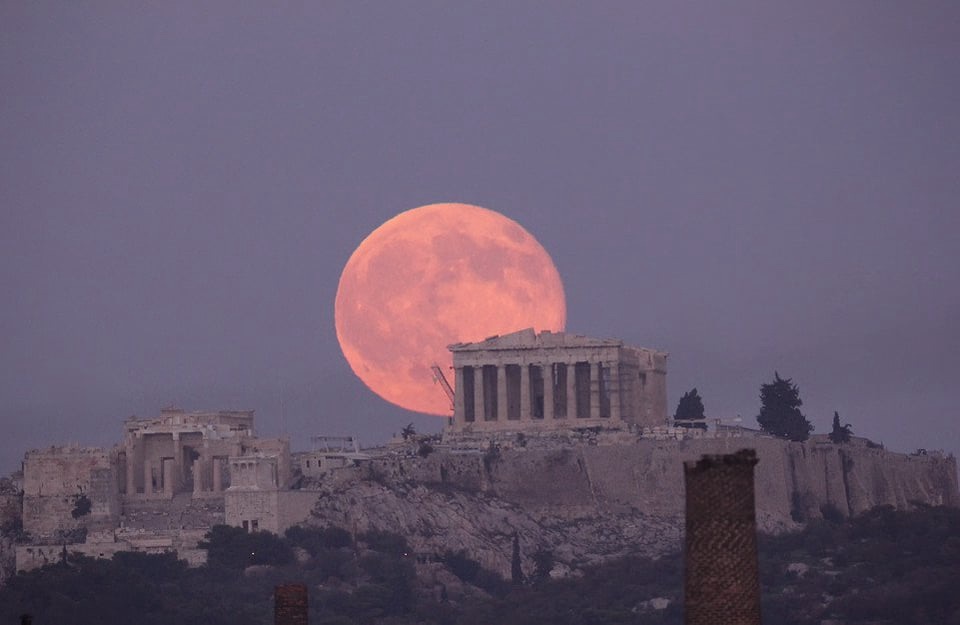
A dusky early evening left a soft glow on the Acropolis, periodically visible as I walked from the hostel toward the church. Yet, the size and warmth of the rising full moon held my attention as its blush touched the hills, for a brief while silhouetting the pillars and pediments of the Parthenon.
It was the evening of Holy Saturday, which fell on March 25 that year. In other years the day would have been the Feast of the Annunciation, but in 1978 it was the eve of Easter Sunday. I walked the short distance to Syntagma Square, to revisit the Anglican parish I had found that morning. Now, in the approaching darkness, I was returning to make my first confession, and be baptized at the Great Easter Vigil.
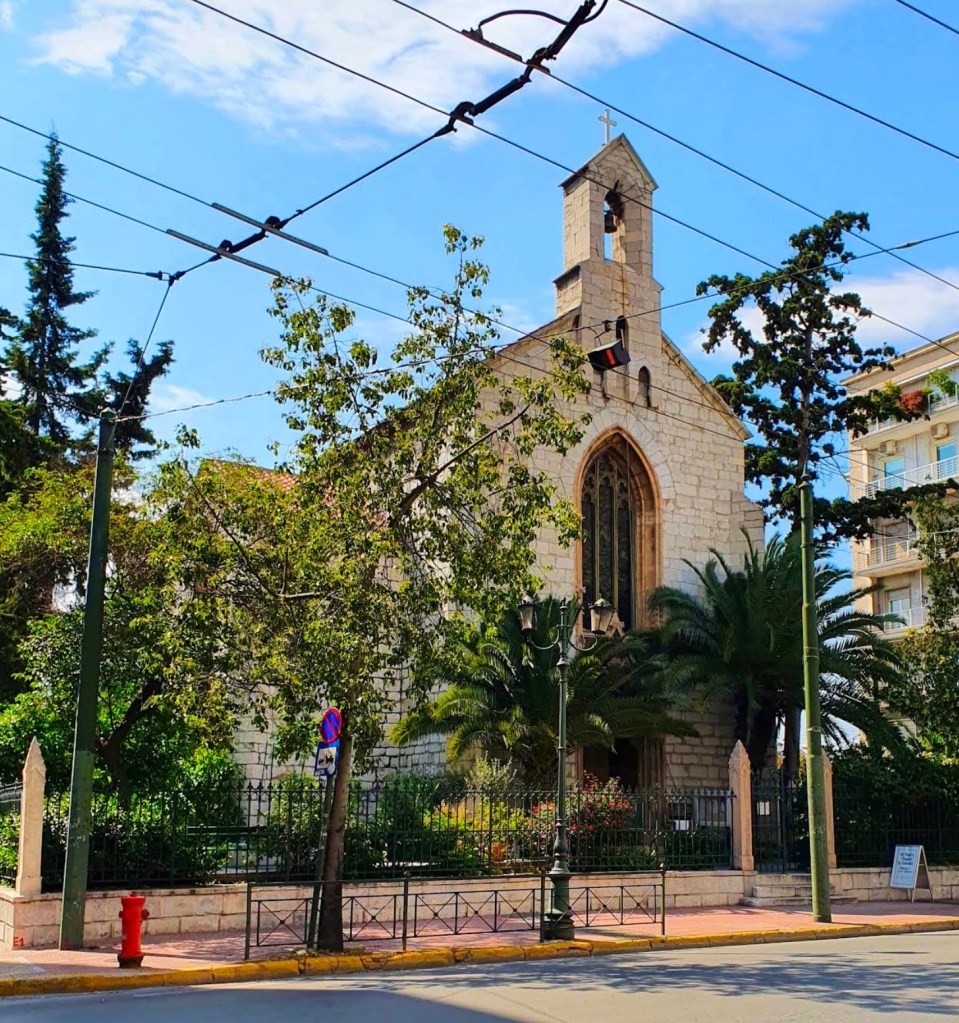
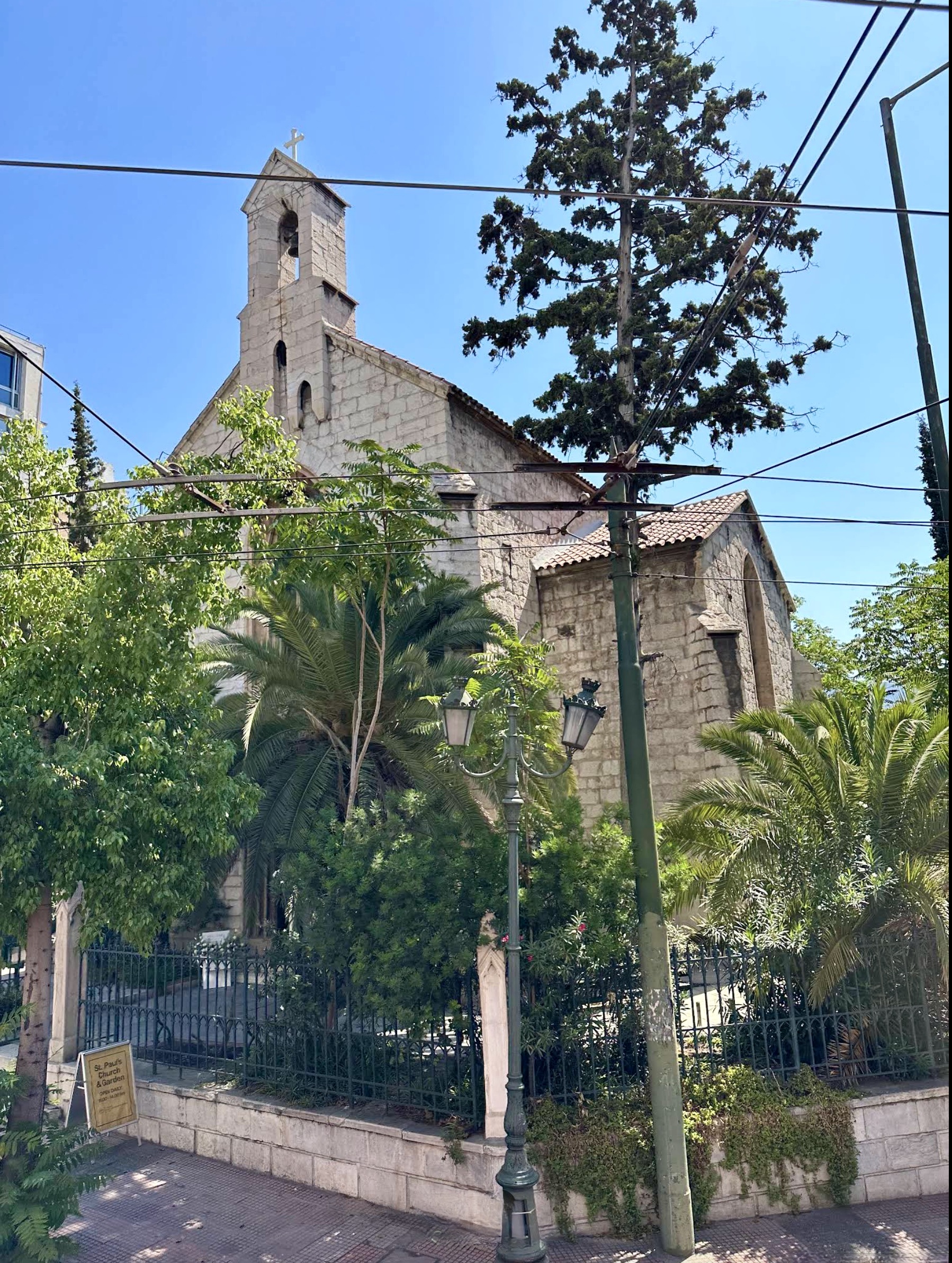
St Paul’s Anglican Church, Athens
How this came to be was largely due to providential grace, for I had not traveled to Greece with this particular result in mind. I was on a college year abroad, having lived and studied in Florence during the autumn. Then, after Christmas in Germany, I traveled to England for two eight week terms of study at Oxford. My plan for the year was to focus on Art History, fulfilling in part my chosen college major.
But, as in the biblical Damascus Road surprise, when first walking into the piazza around the Duomo in Florence, I experienced an unexpectedly sudden conviction: That it was time for me to surrender to the divine power I had come to recognize but had yet to affirm. Asking if there was an English-speaking congregation nearby, I was directed to St James Episcopal Church near the American Consulate. Over the next few months, and with the guidance of Fr. Edward Lee, the parish became for me a place of spiritual nurture.
The autumn course of studies for our group of visiting students in Florence was a fixed one. But my subsequent program in England allowed me the freedom to choose a personal area of focus. The exotic sounding topic of Christian Mysticism had been commended to me, and upon naming this to my Oxford program administrator, I learned that she could arrange tutorials for me with a recognized specialist in the field. What a blessing this turned out to be.
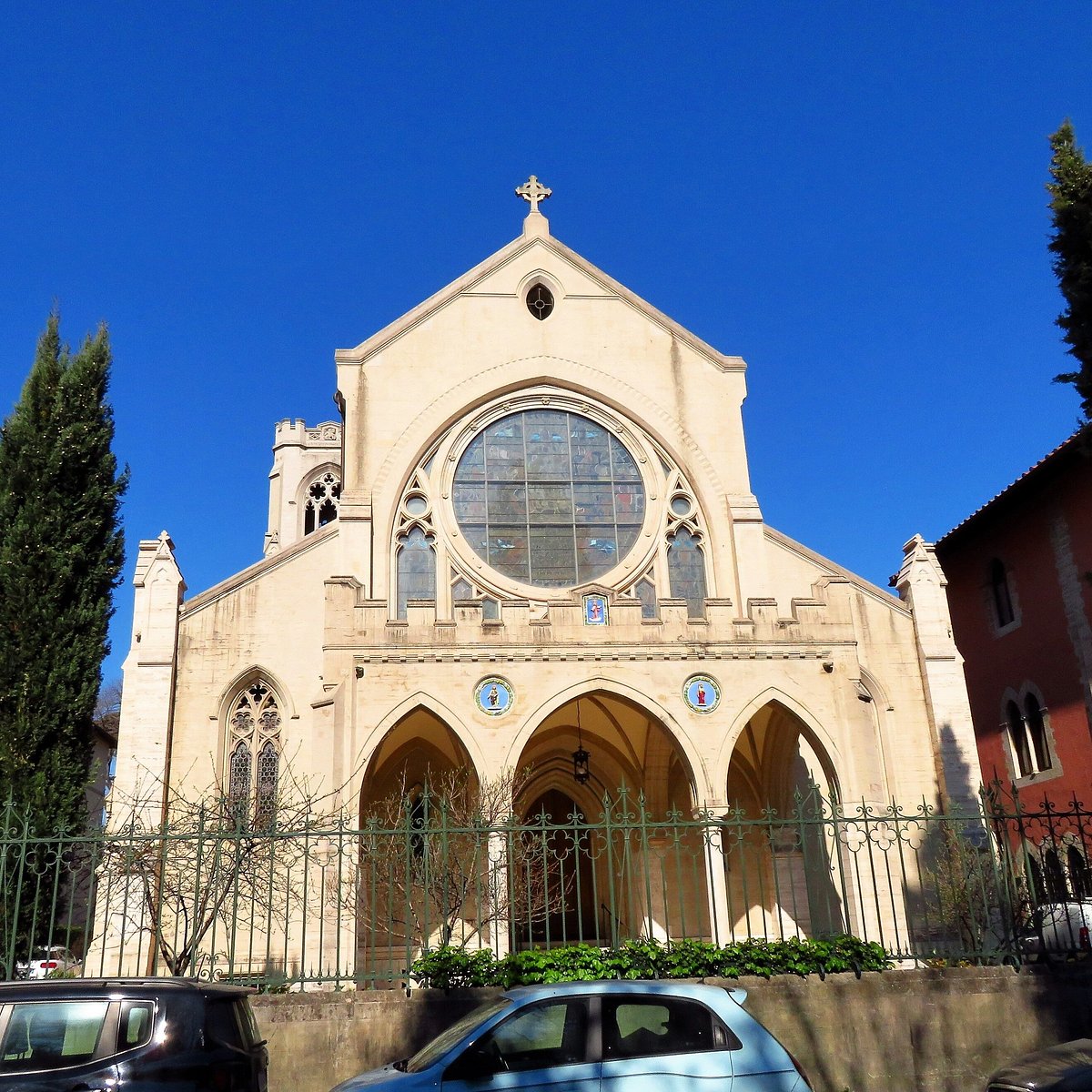
St. James Episcopal Church, Florence, Italy
And so, during a cold and wet English winter, my catechesis in the Christian Faith was suddenly deepened. My growth was fed by readings from the early desert saints, on through to the spiritual writers of the medieval period. My study experience was complemented by a different approach to worship from what I had encountered in the liturgy at St. James Episcopal Church in Florence. By chance, I discovered Pusey House and Anglo-Catholic liturgy soon after arriving in Oxford. Passing by a notice board, I saw an announcement about an upcoming sermon focused on the spirituality of Thomas Merton, whose Seven Story Mountain autobiography I had read the year before. Fr. Cheslyn Jones, the Chaplain at Pusey and a specialist in the Greek New Testament, along with the history of liturgy and spirituality, became my next catechist.
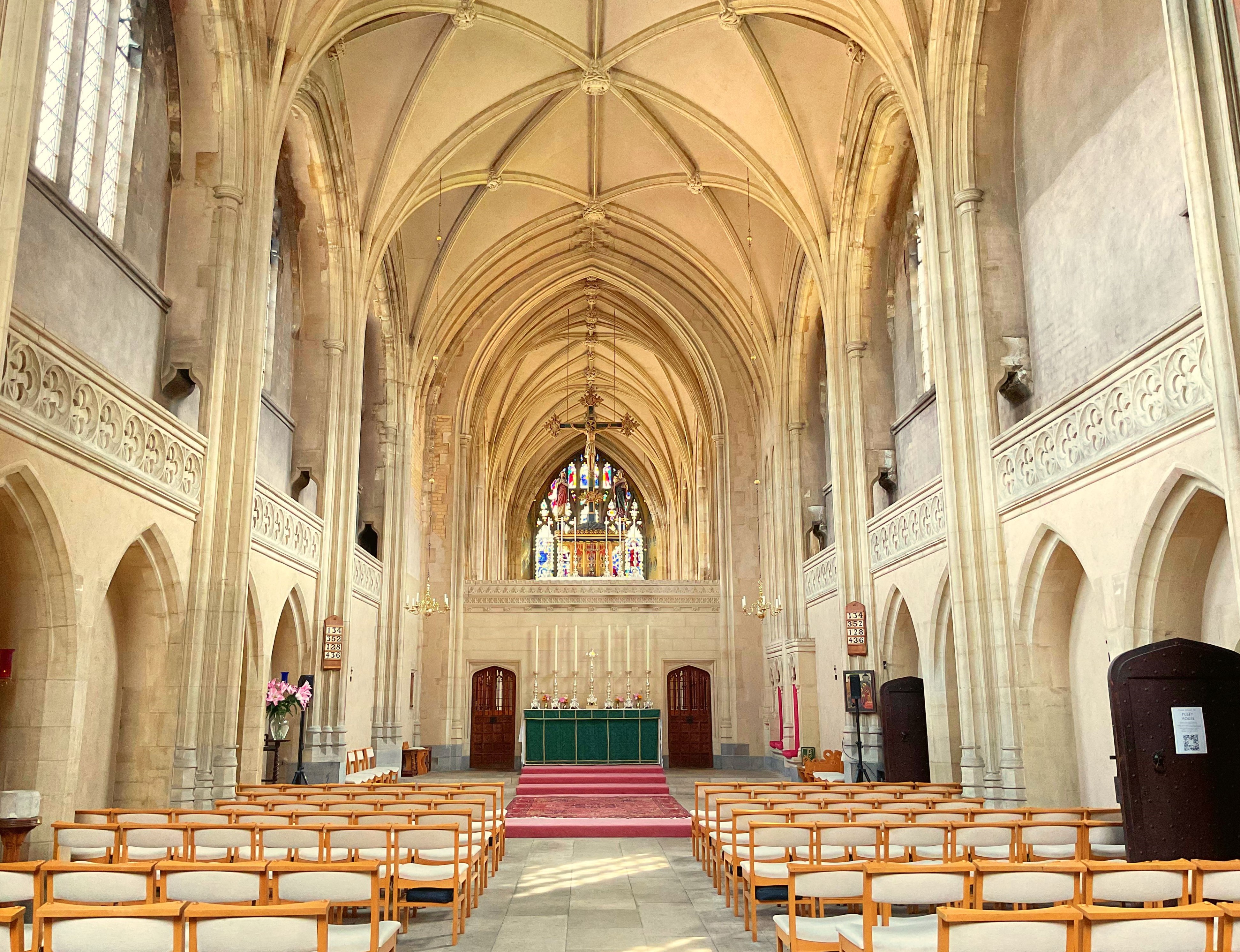
Pusey House Chapel, Oxford, England
At the end of the Hilary (or winter) Term, I made the kind of plans many American students undertake hoping for spring warmth: To head as far south as cheaply possible, for what in my case would be a six week break before the Trinity Term.
I found a used tent and some economical camping supplies in local shops in Oxford, and located a round-trip bus ticket from London to Athens, offered by a discount travel bureau. This led to a remarkable pair of journeys to and from the continent, crossing between Dover and Ostend, through Belgium, Germany, Austria, and Yugoslavia, before finally arriving in Greece. Deposited on an Athenian curbside on an early afternoon, I found a local bus to the port of Piraeus. There I arranged for an overnight passage to Crete on a vintage island cargo and passenger ferry. The next morning, I bought a bus ticket to the south coast of Crete, going to a place a friend had recommended, the little seaside town of Ierapetra, near where St. Paul’s ship had sailed off the coast (Acts 27). Aside from my basic gear, I had brought along only a New Testament and a book of the sayings of the Desert Fathers for my Lenten reading. My plan to do a lot of fasting for spiritual reasons fit neatly with my need for economy.
My first couple of nights were spent in a farmer’s field, above the town and seaside. I awoke one of those mornings to a rapping on the tent pole that alarmed me, sensitive to a probable complaint about my trespassing. Instead, there was a kind man, his arms folded across his chest, cradling fresh tomatoes and cucumbers. I was very touched.
The beach along which I walked to Ierapetra on Crete
After a few days I relocated my tent to an area just above the pebbled beach, adjacent to the long shore upon which I would daily walk to the town. There I would buy a loaf of hearty brown bread, some cheese and sausage meat, as well as more tomatoes and cucumbers. These became the staples of my diet for about 5 weeks.
With just a couple of weeks to go before my return journey to England, a friend from our study program found me on Crete. He was conflicted and wrestling with a need to fly back to the States to be reconciled with his father. After a day or two, he resolved to act on his intuition, and departed on his long journey home.
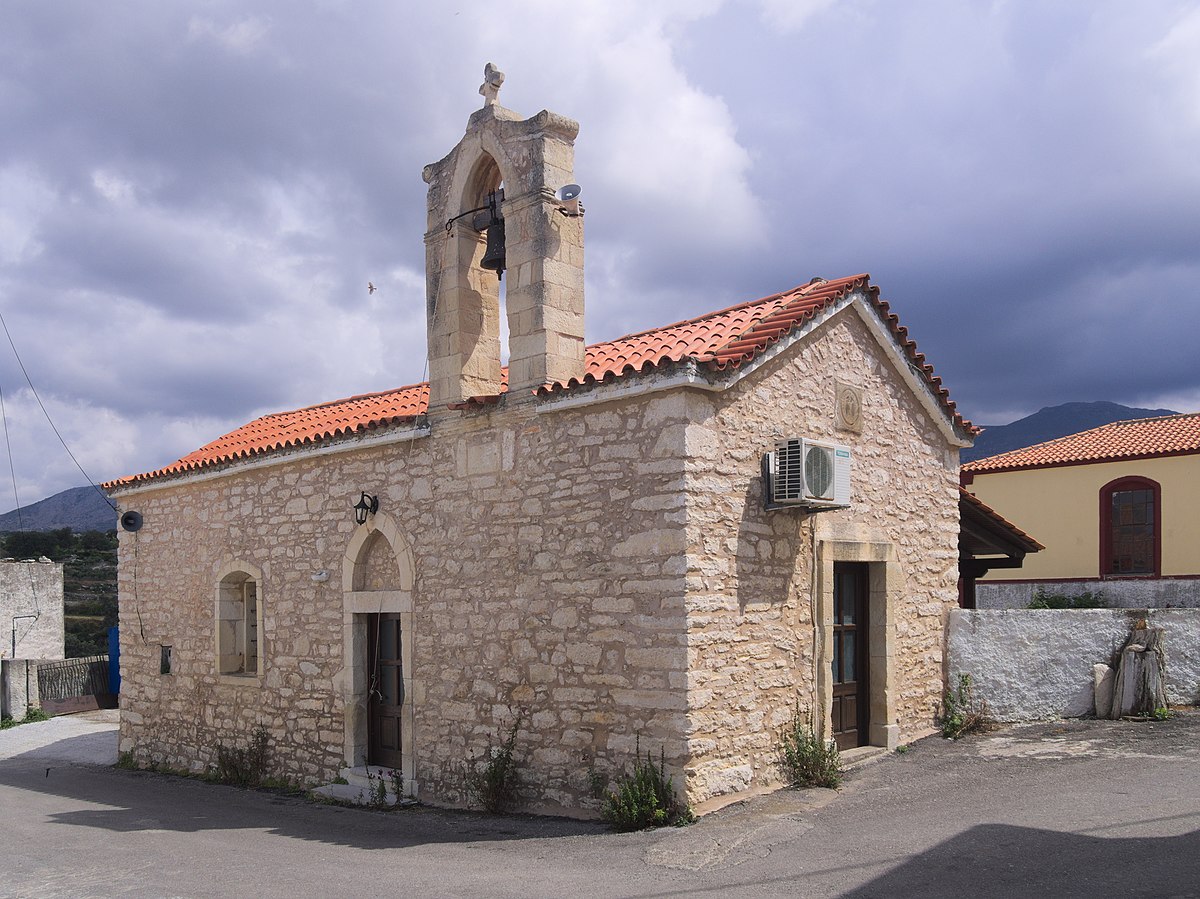
A little Greek Orthodox church like the one in which I prayed on a morning of decision
Musing about his decision, I realized that I was moving toward a similar resolve, but that in my case it was a need to be reconciled with our spiritual Father. I was still fuzzy about what this might mean in concrete terms, but awoke the next morning with greater clarity. I walked into town to pray in a small Greek Orthodox church when I realized what I needed to do. That was to go back to Athens, find an English Church, and ask to be baptized. Fetching my sleeping bag from the tent and my New Testment, I booked a bus ticket back to the north shore of Crete for a return to Piraeus on the same overnight ship. It was then I learned that it was Good Friday.
The Greek inter-island ferry ship, the Minos, upon which I sailed overnight between Piraeus and Crete
Holy Saturday morning, the bus from Piraeus dropped me at Syntagma Square in central Athens where – very conveniently – I found St Paul’s Anglican Church. Reading the church sign with its parish notices, I learned the name of the priest, Fr. Jeremy Peake, and his telephone number. Taking the risk of calling him early on Holy Saturday morning, I surprised him with an unanticipated but what I hoped would be a welcome request: I wished to be baptized. In a wonderfully understated British way, he responded by saying, “Perhaps we should talk about that!” He then invited me to come by for coffee. When I shared with him about my months of study, and with whom I had been receiving instruction in the Christian Faith, he was reassured. Warmly, he invited me to come early to the church that evening to make my first confession, and receive Baptism at the Great Easter Vigil.
The garden area where new light of Easter was lit
The liturgy began in the darkened forecourt of the parish church, just off a main boulevard in central Athens. Amidst the busy sounds of the city around us, we gathered in silence to light the new fire with which the liturgy begins. Being my first experience of the Vigil, I was quite moved by the sequence of readings, starting with the Creation, through the Fall and the Flood, the Exodus and entrance into the Promised Land, with stories of God’s covenantal grace being extended and renewed again and again. When I was then baptized, I felt like I was on fire, an overwhelming experience of cleansing embrace and transformation. I received communion as a new member of the Body of Christ, and left the liturgy feeling like I was several feet off the ground.
On Sunday morning following the Eucharist I was invited to lunch by the kind couple who had agreed to be my sponsors for Baptism. During that wonderful meal, they explained a practice with which I was unfamiliar: Easter eggs all colored dark red, recalling a wonderful Eastertide legend associated with Mary Magdalene.
After a further week in my tent near Ierapetra, I returned to Oxford for another term of formation in the history of Christian spiritual theology. At the end of the term, I received the sacrament of Confirmation through the hands of a suffragan bishop of Winchester, at Pusey House on Pentecost Sunday.
My experience of what now seems to have been a magical series of months, forty eight years ago, comes back to me every Easter. Especially when the Feast of the Annunciation on March 25 happens to occur near Holy Week, as it did this year.
Additional note: Readers interested in the legend about St. Mary Magdalen and the red egg might like to read my earlier post on this topic, which may be found here. A further reflection of the impact of the story I share here can be seen in the opening chapter and the thematic structure of my book, Ethics After Easter.
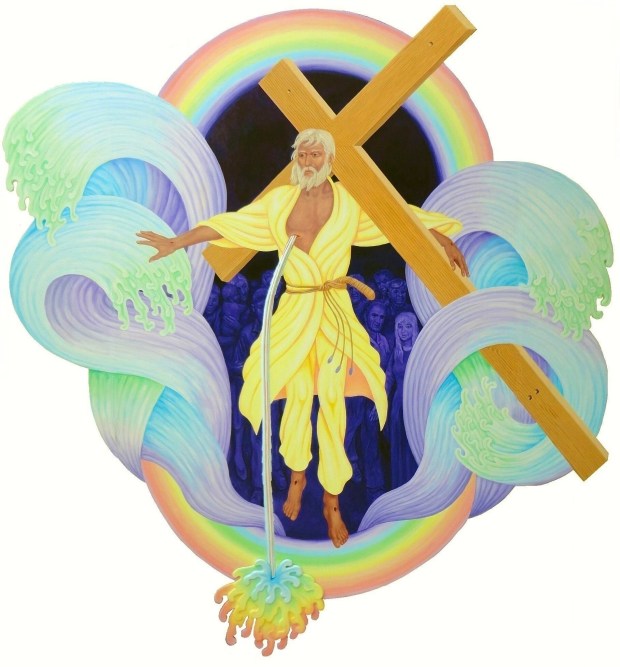
Peter Koenig, Christ as Second Moses, The Rainbow ResurrectionSide Panels that accompany Christ as Second Moses
A perennial theme in the New Testament and in Christian reflection concerns how – in Christ – we are called to live through death into new life. When we die to our worldly attachments and their hold upon us, we open ourselves to a greater life that extends beyond this present one. As the Christ our Passover canticle from The Book of Common Prayer puts it,
Christ being raised from the dead will never die again; * death no longer has dominion over him. The death that he died, he died to sin, once for all; * but the life he lives, he lives to God. So also consider yourselves dead to sin, * and alive to God in Jesus Christ our Lord.
Peter Koenig’s painting with its side panels, centered on themes within this Easter season, expresses this motif in a particularly evocative way. Just as Moses led the people of Israel through the waters of death into a new covenant life with God, so Christ leads us through and to the same. This happens for us liturgically in the rite of Baptism. As Koenig explores this idea, he not only depicts Christ parting the waters but also shows the water emerging from the Lord’s side. This reflects John’s account of how blood and water came forth from Jesus’ side on the cross, but also suggests how water from the rock in the wilderness brought life to God’s people during Israel’s wandering toward the Promised Land. The “Thanksgiving over the Water,” in The Prayer Book Baptismal Rite articulates these ideas in a compact way:
“We thank you, Almighty God, for the gift of water. Over it the Holy Spirit moved in the beginning of creation. Through it you led the children of Israel out of their bondage in Egypt into the land of promise. In it your Son Jesus received the baptism of John and was anointed by the Holy Spirit as the Messiah, the Christ, to lead us, through his death and resurrection, from the bondage of sin into everlasting life.
We thank you, Father, for the water of Baptism. In it we are buried with Christ in his death. By it we share in his resurrection. Through it we are reborn by the Holy Spirit.”
Notice how, in the painting at the top, Peter Koenig portrays the crucified and risen Christ before what appears to be a darkened tomb filled with people. As we hear Isaiah quoted in Advent, “The people who walked in darkness have seen a great light; those who dwelt in a land of deep darkness, on them has light shone.” Christ leads the way, and makes possible our journey from the darkness of death into our new covenant life with God.
The two side paintings that accompany Koenig’s Christ as Second Moses artfully yet powerfully suggest the drama within the Exodus account of Israel’s Red Sea Crossing. The chariots of Pharaoh succumb to the waters of death while Israel is safely delivered on dry ground to their Covenant encounter with God at Sinai. Another canticle from The Prayer Book puts it well:
I will sing to the Lord, for he is lofty and uplifted; *
the horse and its rider has he hurled into the sea.
The Lord is my strength and my refuge; *
the Lord has become my Savior.
This is my God and I will praise him, *
the God of my people and I will exalt him.
The Lord is a mighty warrior; *
Yahweh is his Name.
The chariots of Pharaoh and his army has he hurled into the sea; *
the finest of those who bear armor have been drowned in the Red Sea.
The fathomless deep has overwhelmed them; *
they sank into the depths like a stone.
Your right hand, O Lord, is glorious in might; *
your right hand, O Lord, has overthrown the enemy.
Most of us have the blessing of not facing the equivalent of Pharaoh’s army. But we do have an enemy. And our enemy is the darkness and death of loving self and this world, even to the point of contempt for God, when God bids us to love him, even to the point of contempt for self and this world. When we live as we pray, to the Father, through the Son, and in the Spirit, we experience new life.
The above painting is Peter Koenig’s, Christ as the Second Moses, also known as The Rainbow Resurrection (used by permission of the artist). The final paragraph contains a paraphrase of St. Augustine concerning how we love God, from The City of God (Book 14, chapter 28). / I am once again pleased to share Peter Koenig’s painting and the material in this post as we prepare for Easter Sunday, and the Baptisms that may be a part of the liturgy in many churches.
(This week, I am offering a Good Friday homily that I have shared before.)
In the Passion Reading for this day, we are reminded of the dark spectacle of what human cruelty can accomplish. With Jesus, it was a vain attempt to obliterate the most beautiful human being who ever lived. Thank God, we have no photographs of the horrifying things that were done to him, but only paintings. But consider this paradox: the beauty of art has provided a way for us to a reflect on one of the darkest examples of human violence.
Paintings of our Lord’s Passion seem divided into two broad groups. There are those concerned to portray the grim reality of Roman execution. And, there are those inclined to explore and express the inner redemptive significance of what happened.
At the center of any portrayal of the Crucifixion of Jesus is an inescapable fact ~ that it was an act of political and judicial violence, where the forces of earthly injustice pretended to act in the name of human truth. The corollary to this is how Jesus’ subsequent Resurrection restored heavenly justice in the name of divine truth. Paintings of Jesus’ Crucifixion, and those of his Resurrection, usually give attention to his wounded body, even though his wounds then appear transformed on the Third Day. After all, this is one way the disciples recognize him after his death. How the death-marked body of Jesus looked after his resurrection, also provides a preview of his appearance at the end of time.
Charles Wesley’s Advent hymn, “Lo! he comes, with clouds descending” offers words that also apply to Good Friday.
“Every eye shall now behold him,
robed in dreadful majesty;
those who set at nought and sold him,
pierced and nailed him to the tree,
deeply wailing, deeply wailing…
shall the true Messiah see.
Those dear tokens of his passion
still his dazzling body bears,
cause of endless exultation
to his ransomed worshippers;
with what rapture, with what rapture
gaze we on those glorious scars!”
It is natural to imagine how the people directly responsible for Jesus’ death, from Judas and the high priests, to Herod and Pilate, might be overcome with grief at the triumphal Second Coming of the Lord. Those who pierced him might feel themselves pierced by awakened guilt and remorse. Indeed, for every one of us, seeing the fruit of our mischief and misdeeds can provoke us to tears.
But I think Wesley was getting at more than repentance and contrition. Surely, seeing the full beauty of the glory of our Lord, with his wounds transfigured, will also summon our tears — but with tears of joy. Wesley, prayerfully and with sensitivity, has given voice to the profound power of beauty. Especially when it is discerned in the most unexpected of places – in the face and body of the Crucified One. Love… the most profound love beyond human imagining, is manifest in the face and gestures of the crucified messiah. For he reaches out his hands even to forgive those who have tortured and sought to kill him. This is the most beautiful thing we could ever see.
As we pray in a Morning Prayer collect, “Lord Jesus Christ, you stretched out your arms of love on the hard wood of the cross that everyone might come within the reach of your saving embrace…”
Perceiving all this helps us make sense of the paradox at the heart of Jesus’ Crucifixion. For, in it, we perceive the dramatic juxtaposition of serenity with antagonism, of beauty with its dark opposite, and of moral good with apparent evil. We can see this in two paintings I have included with your worship bulletin: Hieronymus Bosch’ painting of Christ Carrying the Cross, and Stanley Spencer’s 1958 painting, The Crucifixion. Looking at them, I encourage you to join me in asking an awkward question: with which person or persons in these paintings do we identify?
Hieronymus Bosch, Christ Carrying the Cross
Though some 500 years apart, both painters portray the tranquil appearance of the peaceful heart of Jesus, even in the face of vicious hostility. And like Bosch, Spencer helps us see what the beautiful One in our midst sometimes provokes. Especially when the shining light of his presence exposes the dark shadows within and around us. For his light sometimes prompts fierce anger and envy, as well as a callous indifference to cruelty and suffering. Things of which we are all capable. And we are likely to have much invested in denying this ugly truth. Strangely, when confronted face to face with the divine opposite of our perversity, we will either fight the light that we encounter, or surrender to it. The Passion Narratives give us examples of those who resisted and even fought against the Light of the World. For we sometimes fight against the disturbing possibility that Jesus will conquer our pervasive ungodliness. And so, consciously or not, we try to do away with his godliness.
An encounter with true beauty can be unsettling and troubling, especially if we have already settled for so much less. We may often hope for the triumph of good over evil, that beauty will overcome darkness, and serenity will displace antagonism. But we cannot find it within ourselves to do more than hope. We cannot achieve the redemptive resolution for which we haltingly reach out with our feeble hands and hearts.
It is not an accident that the figure of Jesus in Stanley Spencer’s painting visually recedes in the foreground, while those who oppose and crucify him grab our interest and attention. Spencer, after mastering traditional realism, adopted what he called a neo-primitive style. He was a gifted colorist, and highly proficient with composition. And so, as Spencer has rendered him, Jesus’ skin tone and color roughly match that of the wood of the cross, as well as the clothing of the man with the hammer swung over his head. Spencer’s rendering of the Lord’s skin tone and color also match much of the sky and the ground below… including the tunic of Mary Magdalene, prostrate at the foot of the cross. This forms a compelling visual symbol. For Jesus totally identified with us, in his Incarnation, and in his Crucifixion. His crucifixion symbolizes his complete joining with us, and with our world of wrenching hurts and suffering.
In fact —as we see in Spencer’s composition and coloring— it is precisely because Jesus blended in so well with everyday life, that those who opposed him could literally gain the upper hand, ultimately with hammers and nails. (For he did not call down an army of angels to help him, as he could have.) But this is the marvel of the incarnation of our God in Jesus. The fullness of divinity thoroughly became joined with our fallen humanity. As the Gospels attest, this joining was so complete that many did not notice or have regard for his divinity. When we do notice his total identification with us, when we come face to face with the truth it represents, we have either one or the other of two reactions. We throw ourselves down in humility before him. Or, we seek to throw him down, to humble him before us.
These paradoxes are brought to their greatest prominence when, as he predicted, he is lifted up. His lifting up is his glorification, and the glorification of God within him. Yet his lifting up is on a cross, and in the agony of a humiliating public execution. Here we see the ‘strange beauty’ of our Lord — a beauty for which churches and museums better prepare us than do our malls and most TV shows.
So, let us “behold the fair beauty of the Lord, and … seek him in his temple.” We will find him! We will find him in the “temple” that he promised to raise in three days.
Attached here is a link to a handout that I have used in connection with this homily.
Additional note: Those interested in further reflection on some of the Holy Week themes raised here might wish to read my prior post, “The Beauty of What God Can Do, and Is Doing.”
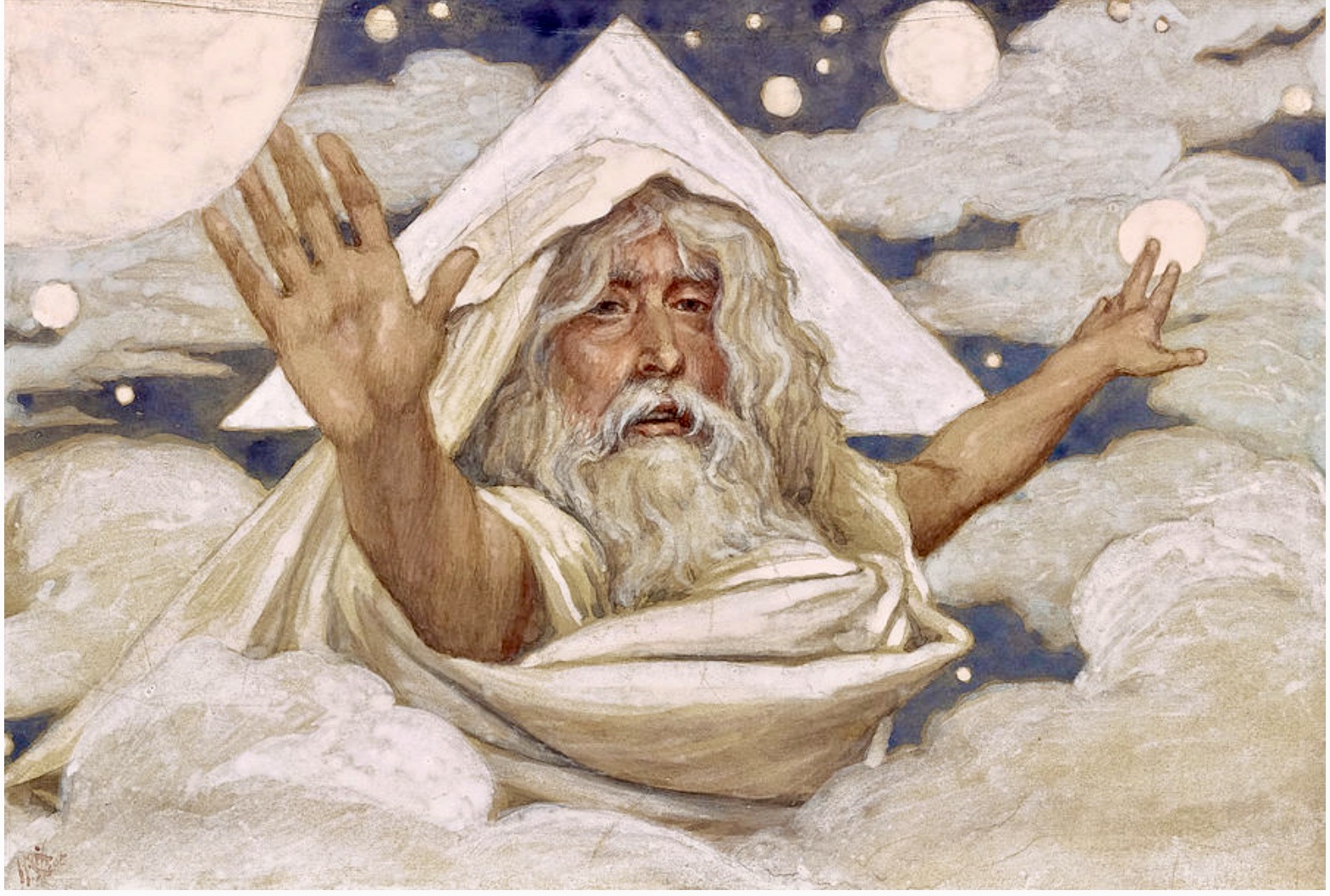
James Tissot’s painting depicting God’s creative work is likely to strike us as childishly simplistic in its portrayal of divinity. For it quite obviously displays what we consider to be the flaw of anthropomorphism, as if the artist was naive in his approach to faith. But what if our hesitation about anthropomorphism, aside from reflecting a proper theological concern, could also become an obstacle for us? What if the mysterious implausibility of God entering into and sharing the limitations of human being keeps us from appreciating how fallen human beings can – by the same graceful Providence – share in the beautiful fullness of God?
I believe that James Tissot came to realize this: Beauty is a form of divine revelation. And, that our joy when beholding beauty is our experience of God’s love manifest to and within us.
These themes are intrinsic to our participation in Holy Week. As we can learn from observing the traditional pattern for the liturgy on Good Friday, our focus in Holy Week is upon what God has done and is doing for us. The sign of this on Good Friday is our abstention from celebrating the Eucharist, and instead we receive communion from the sacrament reserved following the Maundy Thursday liturgy on the prior evening.
For God creates, God discloses, and God provides. Through all, God reveals self. God’s revelation involves God’s self-disclosing gifts. Within the divine attributes are those of initiative and efficacy, constitutive aspects of creativity. And so, when God creates human beings in God’s own image and likeness, God not only exercises creativity but also self-revelation.
Among the ways that we resemble our Maker is one that paradoxically can become a source of frustration for us. Positively, our Creator has given us intelligence and a God-reflecting capacity for creativity, initiative, and efficacy. In addition, God has given us an inclination toward experiencing freedom and an accompanying desire for its fulfillment. Employing these gifts can lead to an ironic and negative result: They allow us the freedom wrongly to imagine that God is actually a dispensable concept, and a coping mechanism which is just a reflection of our psychological needs and a projection of ourselves.
Reflecting on these things can lead us to recognize the heart of divine humility, that it should please God to create us in God’s own image and likeness. God has given us the capacity to imagine that we are self-made, and then to function in a parody of the divine role in Creation. This happens when we fool ourselves into thinking that we are the center of the universe. Expressions of this parody include our ideas that the universe is infinite, as are our own endless possibilities within it. Yet – and this is critical – only God is infinite, and we – like the universe – are finite beings, endowed not only with divine-reflecting capacities, but also with purpose, meaning, and identities that are not of our own making.
James Tissot, What Our Lord Saw From the Cross, a remarkable inversion of how we so often picture the scene
As we approach Holy Week, we have the opportunity once again to be those who watch, who listen, and reflect. As we do, we remind ourselves that we are bit players in the Divine Drama, whose Author has generously written for us a script that has a curious feature, ample provision for ‘ad-libbing.’ In fact, divine generosity is so abounding that we are allowed to create sub-plots within the overall story. To the point that we forget to reference the overall plot lines shaping the whole, as well as the Author’s purposes in creating them.
One thing that God achieved in the events of the Exodus was to remind both Pharaoh, as well as Moses and the people of Israel, that God was and is sovereign over history as well as over geography, the realms of both time and place. Forgetting this ancient truth, we neglect the comfort we can gain from the doctrine of Providence, that God provides for the needs of the world as well as our own, which God knows more intimately and with greater perception than we do. We should wonder that we are left free to imagine otherwise, a fantasy in which some of us at least occasionally engage.
But the humility we are invited to recover in this latter part of Lent, and most of all in Holy Week, involves opening ourselves to a very real possibility. That God’s way of overcoming our refusal and failure to live into the potential we have been given involves the beauty of a strange and unexpected gift. Christmas reminded us of part of this gift, that God became human so that humans could become God-like, and in the best possible way. Holy Week allows us to rediscover the gift that God chose to identify so much with us that, in the ‘Son of Man,’ the Incarnate divine-human being, God passed through human death into the fullness of human life so that we might be enabled by grace to do the same.
Visitors to this space are familiar with my fondness for the words of St. Richard of Chichester: “Day by day, dear Lord, of thee three things I pray: to see thee more clearly, love thee more dearly, follow thee more nearly, day by day.” The theme can be expressed more compactly: We seek to live more nearly as we pray. These words voice our desire to walk a path of beauty in life, such as we find in ‘Easter Living.’
While serving as an Assistant Professor at one of our seminaries in The Episcopal Church, I was invited by the editor of the New Churches Teaching Series to write the volume on Ethics and Moral Theology. This was the third such series of books going back to the 1950’s that seek to provide learning for persons interested in our tradition. Books in these series have addressed a wide range of areas in faith and community life pertinent to our common desire to become informed members. I wrote my book while teaching its content in the seminary, and in about 10 different parish weekend teaching events in Episcopal churches across the country, ‘field testing’ the material. My book was published in 2000, and is still in print. I wish to note that proceeds from all the books in this series were and are donated to the Anglican Theological Review, an independent journal offering the fruits of scholarship for the benefit and educational formation of those within as well as beyond the academy.
At the time of being granted tenure, a seminary trustee asked me what the title of the book implied about its content. It became evident that her concern was focused on my use of the word “after.” I was able to explain that I used the word to mean “in light of.” The book’s title is an indirect tribute to the theological vision of my doctoral supervisor, Oliver O’Donovan, then Regius Professor of Moral and Pastoral Theology at the University of Oxford, whose book, Resurrection and Moral Order, has had a profound impact upon my thinking.
It may be helpful to clarify that I use the terms “Christian ethics” and “moral theology” interchangeably. However, it is worth observing that many within the wider Protestant tradition tend to prefer the term “Christian ethics,” while those within the wider Catholic tradition tend to use that of “moral theology.” Note that “ethics,” as a named field of inquiry without the religious qualifier, is generally understood as a branch of philosophy, which may or may not observably underpin theological writings relevant to this field.
I would like to highlight a number of themes evident within and or suggested by the structure my book, which I think are particularly relevant to Christians at this point of time:
Foremost, the interdependence between ethics and spirituality, which I refer to as ‘two sides of the same coin’ despite their separate spheres of concern.
The centrality of Baptism in the lives of every Christian believer, and its implications regarding the vital relationship between what we believe and how we live
Our historic Anglican dependence upon the natural world as a source of insight about the Creator’s intentions for us and for our lives. This reflects our traditional emphasis upon the Incarnation of our Lord in human embodiment. We look for the complementarity between – but do not equate nor confuse – what the Medievals called the Book of Nature and the Book of Scripture, ‘written’ by the same Author, while having different even if overlapping purposes.
The distinctions that I offer between what I call “laws,” “manners,” and “moral principles.” Neglecting to distinguish among what these terms represent frequently causes confusion.
The final chapter of the book moves from elaboration of basic principles in Christian ethics/moral theology to an application of these principles by offering a methodological approach to how they might be applied with reference to a particular set of ethical questions, centering on how we approach a broad concern for all of us: “Should a Christian ever been involved in or associated with an act of violence?”
I wish to stress that this is not a book about “issues.” My goal was -and remains – an effort to recover and present the foundations of a solid Christian world view for how we might best approach any issue that may be of concern. So, this is not a book where you can turn to the index and look up such matters as capital punishment or a discussion of what might be a fair interest rate on loans. I try to remain careful about observing the important distinction between moral or ethical principles that we might share, and particular policy implementations that we then undertake to reflect or enact those principles in our common life.
For those who may be interested, I include here a précis of the structure of my book, articulated in the series of Axioms that are appended within it, as well as bullet point chapter summaries:
(Note: At the time of publication, what has happened to Nancy, the mother of Samantha Guthrie, is still unclear.)
The beginning of Lent offers us a stark reminder of our mortality, and of our ’nothingness’ apart from God’s Grace. This may lead some of us to be mindful of the death that we fear, or the deaths of loved ones whom we mourn. Our observance of ‘a holy Lent’ provides a season when we can grow in our assurance of the New Life we are given in and through Christ. This happens through our Baptism into his death and Resurrection. The Easter season that lies ahead has much to say about this, which is one reason we might devote ourselves to particular disciplines of preparation during these Forty Days.
I want to approach this theme in light of the recent widespread publicity given to the abduction of Nancy, the mother of Samantha Guthrie. This tragedy has focused a great deal of attention on some words that she and her siblings have used with reference to their mother: “We believe she is still out there.” This cautious statement has been oft-repeated by law officers and the news media.
We hear these words in the context of learning that Samantha Guthrie has been a member of St. Philip in the Hills Episcopal Church, in Tucson, where a prayer vigil was offered on behalf of her mother. Samantha has also written a book in which she expresses her Christian faith, a fact also evident in some of her recent public communications.
For Christians, our loved ones are always ‘still out there.’ I want to offer some reflection on this phrasing, and explore what the Guthries’ quoted words may mean in terms of Christian belief.
Despite a common notion we sometimes encounter in popular culture, people who die do not become ‘angels.’ Nevertheless, traditional Christian faith teaches us that angels are like us in reflecting a divine attribute, personhood. For we believe in One God in Three Persons (the Father, the Son, and the Holy Spirit). This is the mystery of the holy Trinitarian nature of God, in whose image and likeness all persons have been created. From our knowledge of God, and our experience of ourselves, we know that an integral feature of personhood is being in relationship with other persons.
Yet, unlike angels, we are embodied, and remain embodied regardless of our transformation through the resurrection of the dead at the end of our mortal, physical, lives.
Since the time of the New Testament, Christians have spoken about this transformation into a new form of embodiment by employing various metaphors. In view of this, at our demise, we do not become like a drop of water returning to the sea, or move from a personal identity based on our differentiation from others into an unconscious and undifferentiated state of life. As if – at death – we will somehow be dissolved into a greater realm of ‘Spirit.’
By our Baptism into the death and Resurrection of Jesus, we become named members of His Body, the one Body of Christ. This is the Church in its essence, which comprises the communion of all the Baptized, whether they are ‘on this side of the veil’ or have gone before us to the next life. Thus, though we (as Anglicans) do not pray to saints, we pray with them as the Holy Spirit enables this activity within us. Those presently alive in this life and those who have ‘gone before us’ – are both ‘here’ and ‘there,’ in a shared living stream of ongoing prayer and fellowship.
An oft-neglected article of traditional Christian faith is that of the Ascension of our Lord, directly tied to his Resurrection from the dead. In our faith, Christ did not ‘go up’ alone, but carried with him our human nature. This enabled our own transition – with him – into the next life. When we die, by Grace we move into a greater experience of nearness with our Lord, who is already with us, and in us. Therefore, we do not cease ‘to be’ at death. And we are taught not to fear physical death in view of our belief in the significance of our Baptism into Christ’s death and Resurrection. By virtue of this Ascension-fortified faith, we have assurance about our continuing fellowship with those who have died “in the Lord.”
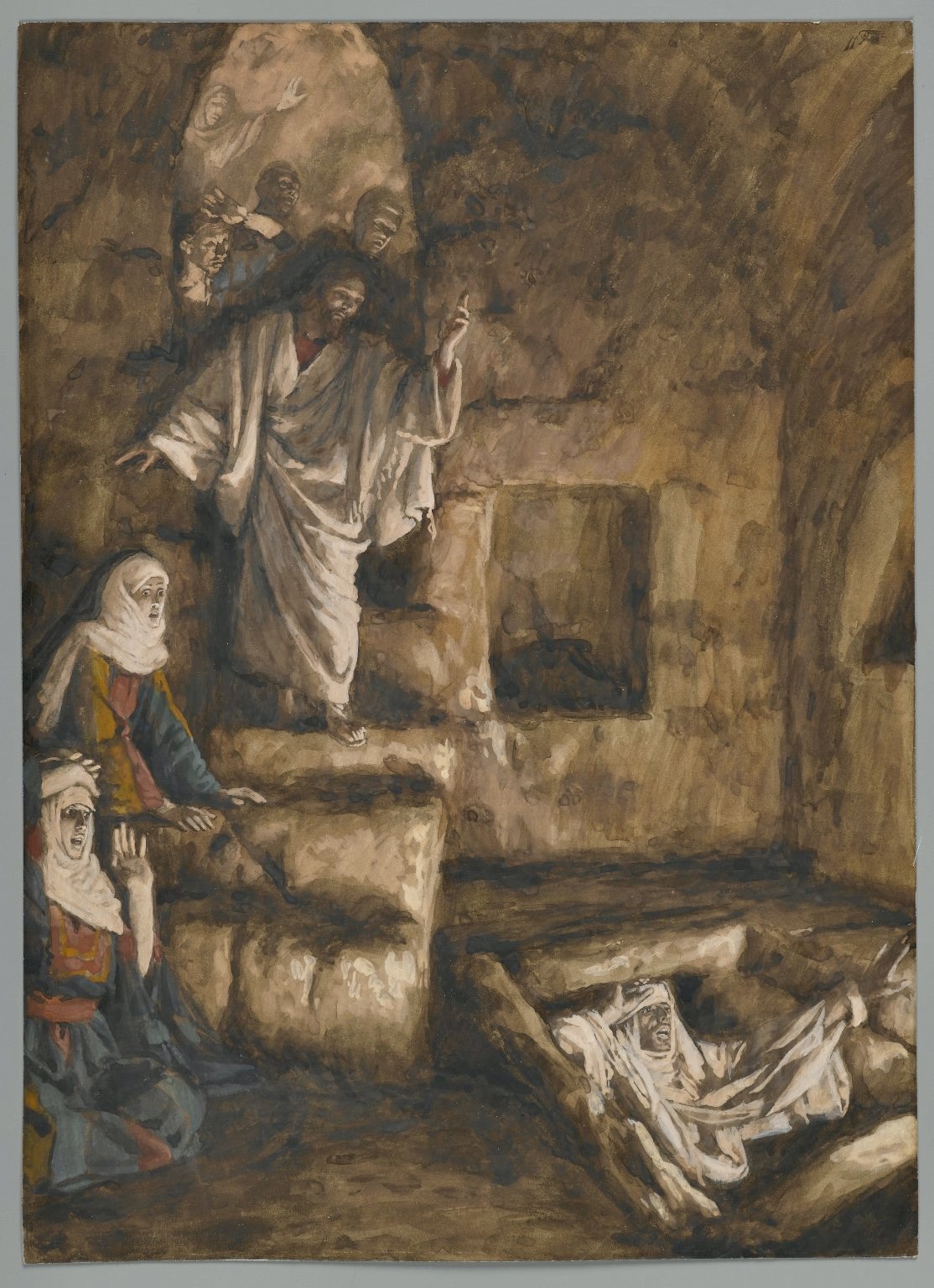
In view of these fundamental aspects of Christian believing, we can recognize how Nancy Guthrie continues to be among us, and always will be, regardless of what may have happened to her in the recent tragic circumstances now so familiar to us. For as Jesus is quoted as saying, in John 11:25-26, “I am the resurrection and the life. Those who believe in me, even though they die, will live, and everyone who lives and believes in me will never die.”
Note: I present these reflections without implying that my words here have negative implications regarding those who donot share our faith nor our baptismal identity. As for people whose faith (or lack of it) is known to God alone, we need to remind ourselves that, in God’s Providential wisdom, the divine will for those who do not identify as Christian remains a mystery to us.