England and the English

The Stirring Choral Music of Michael John Trotta

If reading this by email, please tap the title at the top to open your browser for the best experience. Then, clicking individual pictures will reveal higher resolution images.

Michael John Trotta introducing his choral work, “Requiem,” in a YouTube video


Recently, I had the providential opportunity to meet Baton Rouge resident, and LSU School of Music doctoral recipient, Michael John Trotta. Only later did I learn of his impressive and internationally recognized accomplishments. Four albums incorporating recordings of his musical work can be found on Spotify, among them his stirring and evocative setting for the traditional Latin Requiem. Through subsequent messaging with him, I learned of the recording session that he directed this year of his “Requiem,” with the London Symphony Orchestra and the London Voices. It is a beautiful work of music, all the more meaningful for him and subsequent listeners in that the recording was made in support of the charity, Hospice UK.

A recent screenshot from Spotify featuring the music of Michael John Trotta

Michael John Trotta writes passionate and lyrical sacred music – a series of words not everyone will string together. Reflecting on his music, I am aware of my inclination to find verbal analogies rooted in the visual arts. And so, parallel to how some painters, sensitive to the role of light in our perception of color, seek to mix several colors to achieve a particular hue, Trotta’s choral music strikes me as an effort to express a wide and full spectrum of harmonious sound.

My initial perception of his compositions, that he presents sacred music that is passionate and lyrical, may also be akin to my use of the word beauty in connection with the paintings of Jackson Pollack. In both cases, I may be expressing an unexpected conjunction of ideas that can, I believe, properly belong together. Trotta’s musical works inspire me to write about them in this way.

Those who love to hear large groups of voices singing in harmonic patterns, especially of examples from Renaissance and early English vocal music, as well as modern compositions influenced by them, may find a similar pleasure in hearing his work. For me, this is due to how Trotta’s original choral music and his arrangements provide a moving and also meditative listening experience.
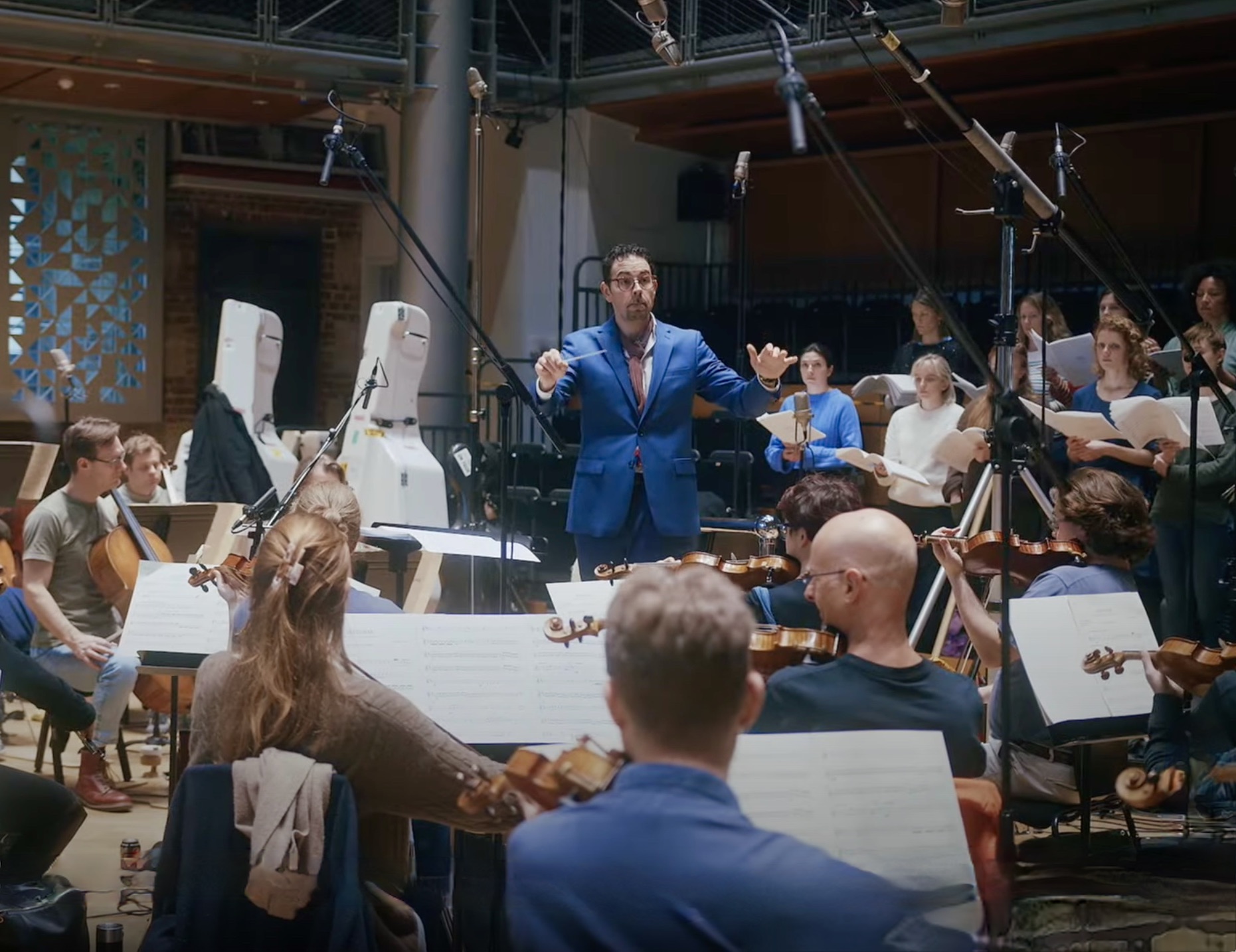
Trotta conducting the London Symphony Orchestra and London Voices while recording his “Requiem”

As an amateur listener, I find that Trotta’s compositions and arrangements are evocative of traditional art forms without sounding imitative. Composed in creative dialogue with musical history, his work retains what we might call a traditional ‘vocabulary.’ This may have parallels with what we can discern in various works by contemporary practitioners of other art forms. Parallel examples of an engagement with traditional elements in an artistic field may include composition and subject matter in painting; ornament or the lack of it and the use of certain structural elements in architecture; as well as selected harmonic patterns and chord sequences in music.

Nigel Short leading the ensemble, Tenebrae, accompanied by organ, while recording “Requiem” in the parish Church of St. John the Evangelist, Islington, North London

Michael John Trotta’s music helps support my renewed sense of confidence that contemporary artists and composers, as well as writers, can utilize and work creatively with inherited forms of expression and yet present new, fresh and compelling compositions. Trotta may epitomize the wisdom expressed by Jesus in another context, that “every scribe {or composer} who has been trained for the kingdom of heaven is like a master of a house, who brings out of his treasure what is new and what is old (Mt. 13:52).”

Michael John Trotta, in Carnegie Hall, conducting the premier of his compositional setting for the traditional Septem Verba Ultima (The Seven Last Words {of Christ})

The pieces that Trotta has composed and or arranged are not only musically harmonious, but also spiritually congruent with what we know about the grace-filled peace and presence of God. Michael John Trotta’s approach to the art of music can broaden our appreciation not only for beauty expressed in the past, but also for beauty as it may be presented anew today. I am very encouraged by my new experience of historically informed music that Trotta’s compositional work has opened for me.
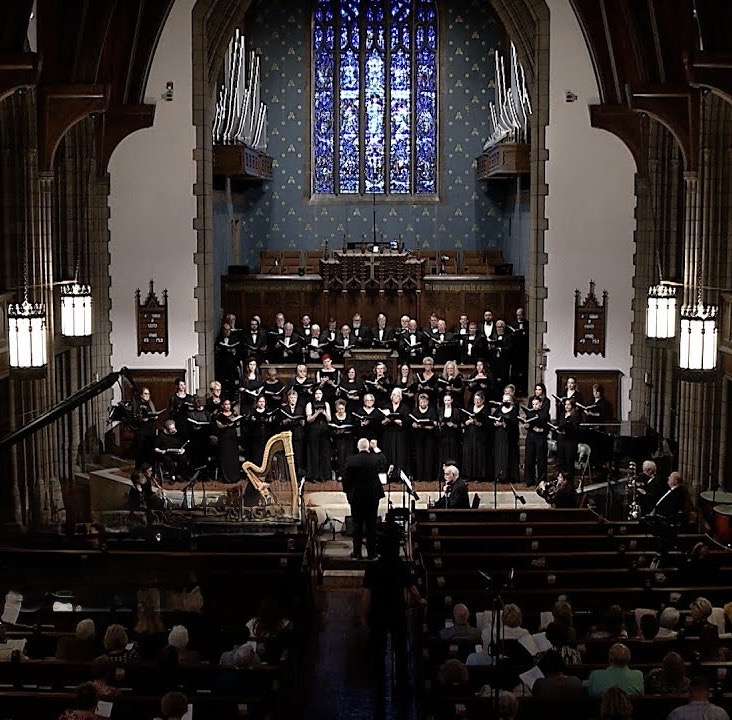
A performance of Michael John Trotta’s” Requiem,” Sunday, April 21, 2024 at Tabernacle Presbyterian Church in Indianapolis, Indiana


Since first posting this piece I have corrected a couple of the details mentioned in two of the photo captions.
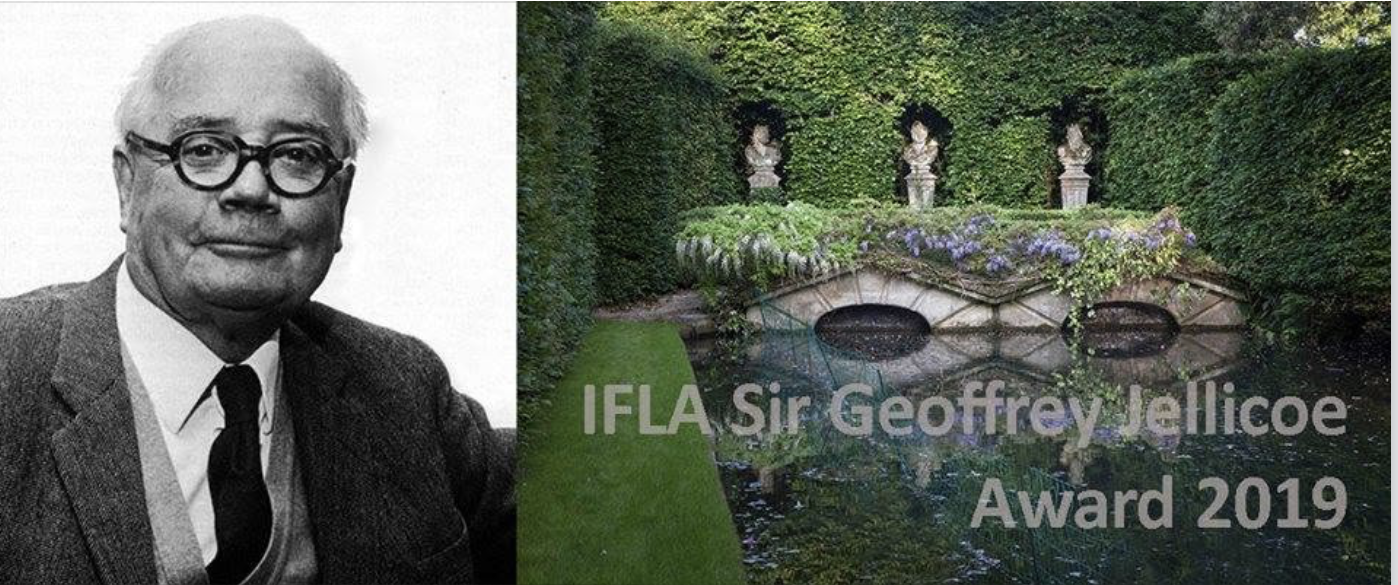
Geoffrey Jellicoe: Finding and Creating Beauty in the World

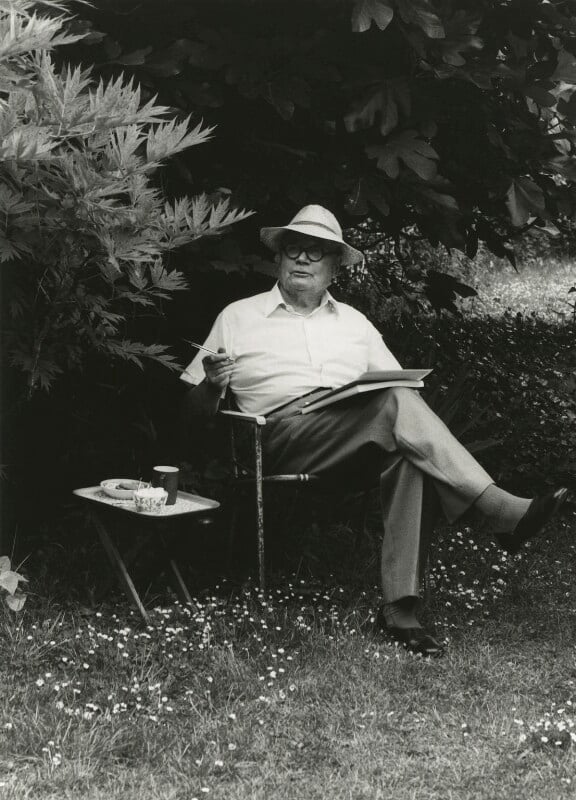
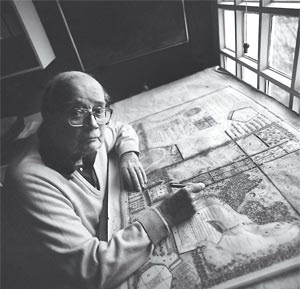
Sir Geoffrey Jellicoe at his London home shortly before his 90th birthday


Discerning beauty always presents an opportunity to experience joy. As many find, though, creating representations of beauty, as a chosen task, can be difficult.

Alive in my memory are images of areas of New York City and decaying areas of urban New England, during my high school years in the early 1970’s. I remember asking myself, as an aspiring architect and artist, how might I meet the challenge of creating examples of beauty in the world as we presently find it? Well, after some years, I discovered the life and work of Geoffrey Jellicoe, which provide an example of one way of answering questions that stay with me.

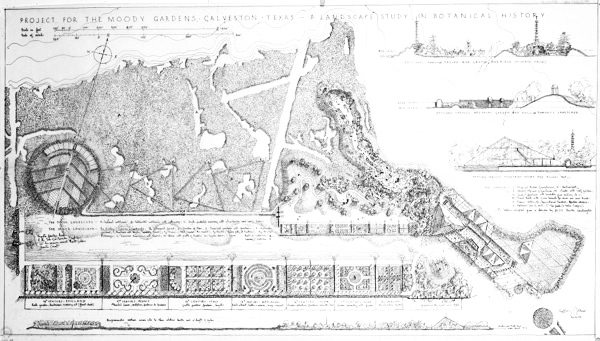
Late in his life, at a time when many seek the solace of retirement from actively pursuing such questions, Geoffrey Jellicoe took on a significant challenge. How might 150 acres of a seemingly forlorn stretch of a barrier island, adjacent to an urban area that has long surrendered to the declining effects of industrialization, be redeemed and transformed into a place for renewal by a humanistic vision of what might yet be?

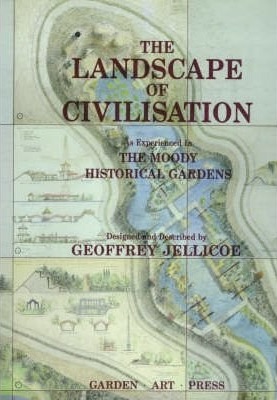
Jellicoe, at the age of 80, and to the surprise of some, accepted the opportunity to submit a proposal for what might become the Moody Gardens. In the process, he embraced the idea of working with a hundred-plus acres of neglected sea marsh and dune land on Galveston Island. This site even included a need to take into account an existing but under-used local airport. Nevertheless, the esteemed landscape architect, Jellicoe, envisioned a large facility centered on the nurture of human flourishing by designing what he hoped would become a significant botanical garden. Its plan would be dedicated to re-creating documented historic human efforts to re-shape areas of the world through the practices of horticulture and landscape architecture.

The Texas-based Moody Foundation, a philanthropic organization committed to education, health, and community development, found in Jellicoe the person they believed was best equipped to provide a master plan for what might become Moody Gardens, in the vicinity of Houston. And he brought to this challenge a lifetime of learning and accomplished work, which fitted him well to address this auspicious opportunity.

Encountering Moody Gardens as it has come to be, a vibrant, attractive, and an apparently successful facility, we may be mislead about Jellicoe’s orginal concept for the project. In presenting itself now as a tourist destination with resort-like amenities, Jellicoe’s early proposals for the Gardens seem fanciful if not also highly visionary. Yet, there may be significant things we can learn from his initial plans, and the concepts he sought to embody in his hoped-for realization of the project.

I can suggest a few of these potential learnings by posing some rhetorical questions – questions that I hope to address in future posts.

  • What is ‘our human nature,’ that we hope or believe we all share? What environments are most suited for nurturing the flourishing of our human nature?
  • What is Nature, and what humanly-created environments are most true to Nature? What things or places do we consider to be ‘natural’?
  • Why does it require human effort, financial capital, and institutional resources to facilitate, maintain, and preserve ‘natural’ environments? (Consider here the scope of the funding for the National Park Service, and the United States Forest Service.)
  • And, why is concern about the natural world- the ‘environment’ – properly a matter for serious theological reflection, and one especially related to our regard for Beauty? Why do our concerns about the natural world have theological significance?

Geoffrey Jellicoe at work in his garden

The Beauty of Faithful and Determined Courage

If reading this by email, please tap the title at the top to open your browser for the best experience. Then, clicking individual pictures will reveal higher resolution images.


Remarkably, Violet Jessop survived life-threatening illnesses during her childhood, having contracted both typhoid and tuberculosis. This was in a time of pre-modern medicine, when – in her weakened condition – both diseases (and others) could easily have taken her life. Then, as a young woman, she lost her mother to illness. Becoming her family’s primary income earner, she followed in her mother’s steps by serving as what was then called a stewardess on ocean liners. This position combined the roles of nurse and personal attendant, most likely assisting with the health and other needs of passengers traveling in First Class.

This choice of employment in a relatively modest role led to her unexpectedly remembered place in history. She survived not only the sinking of the fated Titanic (1912), but also the demise of the Titanic’s sister ship, the Britannic, in 1916. The Britannic was serving as a hospital ship when it struck a mine in the Aegean Sea. Before the sinking of those two ships, she had earlier survived the feared near-sinking of the eldest nautical sibling of the Titanic, the Olympic. In 1911, the Olympic accidentally struck the British warship, HMS Hawke, and was significantly damaged.

Many of us, if we had faced her circumstances following her rescue from the Olympic, might have reevaluated our occupational choices and instead sought a similar role to her ship-borne duties but one safely on land. Jessop, as we learn, chose otherwise. Upon the completion of repairs to the Olympic, she returned to her role on that ship, where she served until she was transferred to the Titanic the following year.

The Olympic (left) and the Titanic in Belfast on March 2, 1912

Courage, self-possession, duty to her family’s needs, and a continued desire to serve others, clearly numbered among Violet Jessop’s attributes. Perhaps easy to overlook, in this time of our social history, is another feature of Jessop’s character, her abiding religious faith and practice. Courage (or Fortitude), and Faith, are two of the virtues commended in the Christian tradition, and both were a practiced part of Violet Jessop’s spiritual life. Earlier on the morning of the Britannic’s sinking, while following her regular pattern, Jessop had attended mass on the ship in the company of medical staff and other caregivers.

The Britannic seen while serving as a hospital ship during World War I

Upon the Britannic’s encounter with a German mine, causing it to sink in less than an hour, Jessop’s lifeboat was pulled toward the still-turning propellers and into their direct path, crushing the boat and killing some of its occupants. She suffered a skull fracture, and was cared for by doctors with whom she had earlier been present at morning worship.

The size and kind of propellers that nearly took Jessop’s life

In spite of all this – including surviving three disasters at sea – Violet Jessop continued to work on ships for the rest of her career, and died in England at the age of 83.

In the life and experiences of Violet Jessop, we find a beautiful example of a congruence between her Baptismal vocation – one shared by all who have found new life through the font – and her chosen occupation in its serial settings upon the waves. In her later years, Jessop told a friend what had helped her survive and get beyond the multiple challenges she had faced. She summed it up by saying, “[It was] just the will to live. And a huge chunk of faith in divine intervention.”