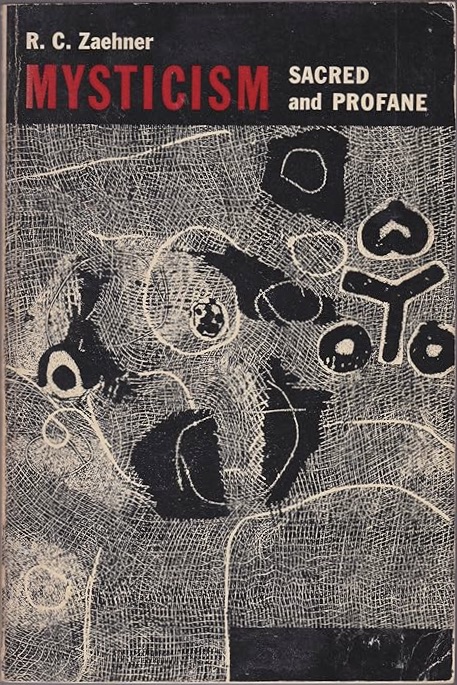
‘Mysticism’ sounds like an exotic topic to most of us, even though mystical experience has been a mainstay in our spiritual tradition. I find that most people, in this hurried era in the West, speak frequently about a desire for tranquility and an escape from the pressures of tasks, schedules, and activities, that are of less consequence than we would prefer. In our search for such escape, we do not always pursue the most humanly fulfilling or enduring ways of attaining our goal.
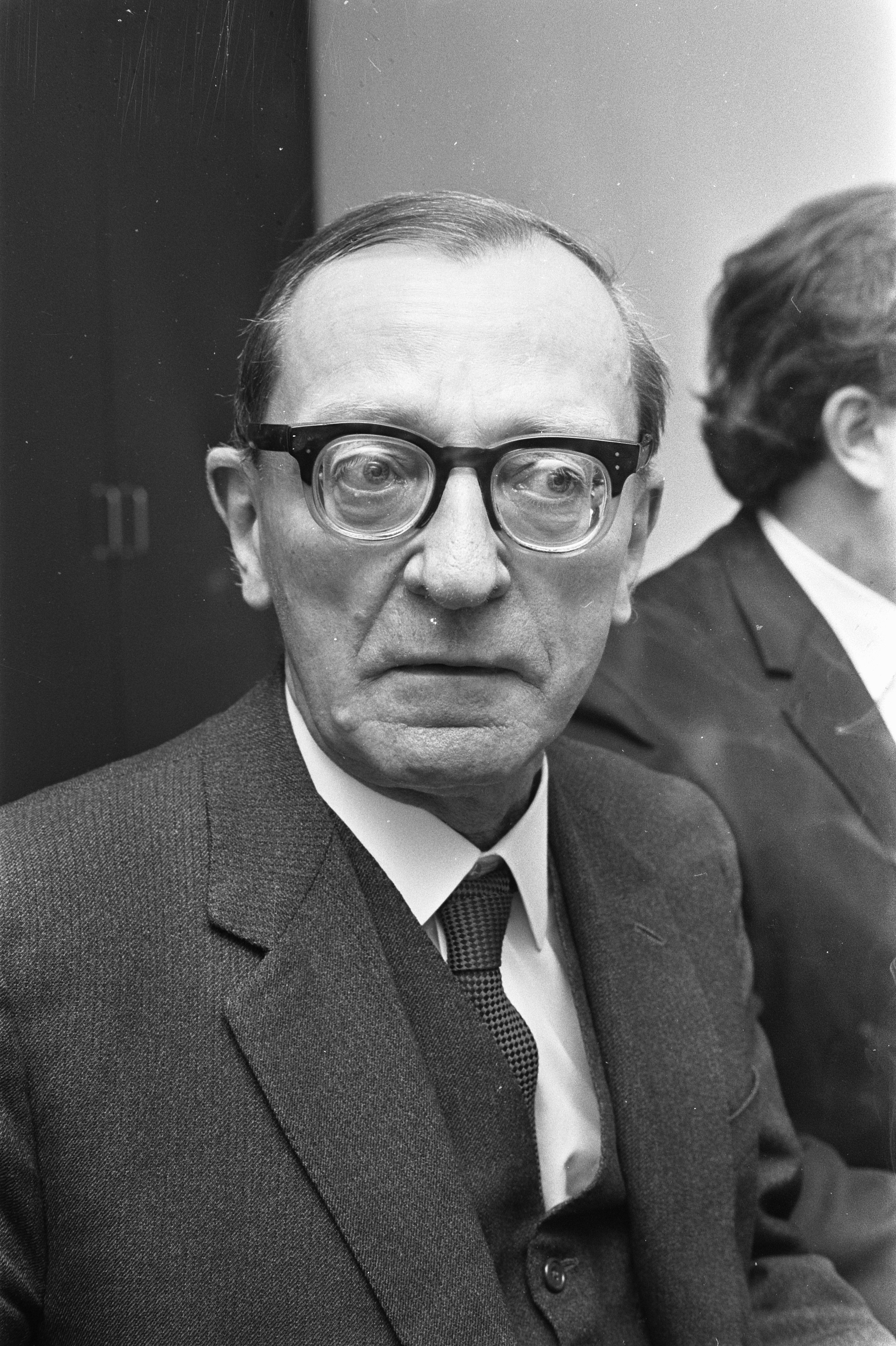
When receiving catechesis during the academic year in which I was baptized, I had the good fortune to be guided by an expert in the field of Christian mysticism, John Feneley of Oxford. During that year, one of the most influential books in my faith formation was one Feneley asked me to read, by R.C. Zaehner, with whom Feneley had studied. The book was Mysticism: Sacred and Profane. Zaehner (1913-1974) was an Oxford specialist in Oriental Languages, who also served as a diplomat. In that time and place, ‘Oriental Languages’ primarily referred to the historic languages of what we now broadly call the Middle East. Zaehner mastered Sanskrit, Persian and a host of associated languages, eventually publishing a translation into English of the Bhagavad Gita. While thoroughly engaged in these intellectual pursuits, he remained a practicing Roman Catholic, and died at the age of 61 while walking to an evening mass in Oxford.
In his principal book on the subject, Zaehner delineated two basic experiential types of what are often considered to be forms of mysticism. Under the heading of the first, ‘profane mysticism,’ he grouped the reported experiences of those who imbibed mescaline and other pharmaceutical substances in order to gain episodic experiences of transcendence away from our usual orientation to time and place. Apparently, Zaehner was motivated in part to respond to Aldous Huxley, whose book, The Doors of Perception, described his mescalin-induced experience as being of sacramental beauty. Zaehner was concerned to distinguish such memorable experiences, however profound for some, from what he considered to be an authentic experience of the divine.
The second basic type of mystical experience articulated by Zaehner he termed, ‘sacred mysticism.’ Here, within sacred mysticism, he distinguished three varieties, which are likely to be of interest to those who wish to learn more about ‘mysticism’ of a religious kind. The three forms of sacred mysticism identified by Zaehner are ‘nature mysticism,’ ‘theistic mysticism,’ and non-theisitc or ‘monist mysticism.’ As a Roman Catholic, Zaehner was particularly concerned to clarify how and why what he termed theistic mysticism differs from other forms of sacred mysticism. His clarification centers on the concept of and quest for encounter with the divine, and more specifically the goal of union with God.
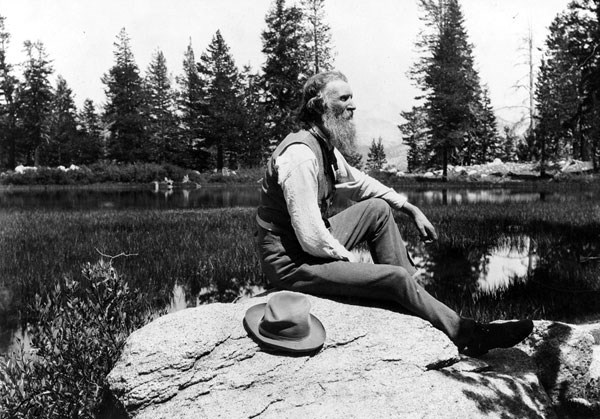
I am presently reading two biographies of John Muir (1838-1914), the pivotal American figure who may be credited with the origin of our National Parks and an inspiration for what we broadly refer to as the environmental movement. In Muir, I recognize a wilderness lover enthralled with the natural world, and a writer who remains an abiding representative example of Zaehner’s nature mysticism typology.
Monistic mysticism, in which we can include even the poly-theism of Hinduism, as well as forms of pantheism, perceives an ultimate unity between and among all things, both material and spiritual. It has some overlap with the nature mysticism of someone like Muir. Characteristic of monistic mysticism would be this kind of statement: “The universe and I are one, and any perception otherwise is a temporary illusion.”
In contrast to these two categories, Zahner’s theistic mysticism category focuses upon the fundamental difference made by a believer’s desire to find and experience union with the divine in a spiritual context. In mystical experiences related to this quest, there is always an indissoluble “I” and “Thou” relationship between the person and God, who despite the union always remains an ‘other.’
This latter distinction has had a lasting value in my own thinking, especially in this era in which a quest for transcendence from ‘the material,’ and from the experience of being bound by time and place, is so common. The legalization of marijuana, as well as the ubiquitous availability of alcohol, may be examples of circumstances that lend themselves to such a quest, but the extraordinary levels at which many pursue athletics such as triathlons and other ‘extreme’ sports for the resulting exhilaration, may provide another.
Assuming I have characterized fairly Zaehner’s concepts in Mysticism: Sacred and Profane, I would add one other distinguishing characteristic among those the author associates with theistic mysticism. In addition to the theme of the active pursuit of the divine (what we usually mean when we speak of ‘finding God’), a distinctive feature of Christian apologetics involves an emphasis upon God finding us. Here we discern the dimension of Grace, and a theme that runs throughout the Hebrew as well as Christian Scriptures, of God’s finding and calling individuals and then communities to be a part of God’s ongoing mission of Redemption. The Old Testament prophets, as well as the New Testament disciples who were found and called by Jesus, provide inspiration and hope for those who through misfortune and other undesirable circumstances may feel lost, overlooked, even abandoned by God. However exotic it may sound, mysticism is a desirable aspect of every human life.
Note: One other facet of R.C. Zaehner’s life and work must be mentioned, to supplement our understanding of a man who was a rather complex figure. In addition to his personal faith, and academic career of research, he served in the British intelligence services. Because of his areas of expertise, he was recruited to serve in the British Embassy in Tehran, and was a prominent figure who was active in setting up the groundwork for the subsequent overthrow of Mohammad Mosaddegh (16 June 1882 – 5 March 1967), the Prime Minister of Iran, whose downfall led to the authoritarian monarchy of the Shah. The history of politics like those of sporting events usually benefits from hindsight, and we do a greater justice to history to be as perceptive as we can about the persons who were participants in the events in which we are interested, and the circumstances that led to their involvements and activities.