Our search for Beauty

Danah Zohar: Finding Beauty in the Structure of the Cosmos and the Human Mind

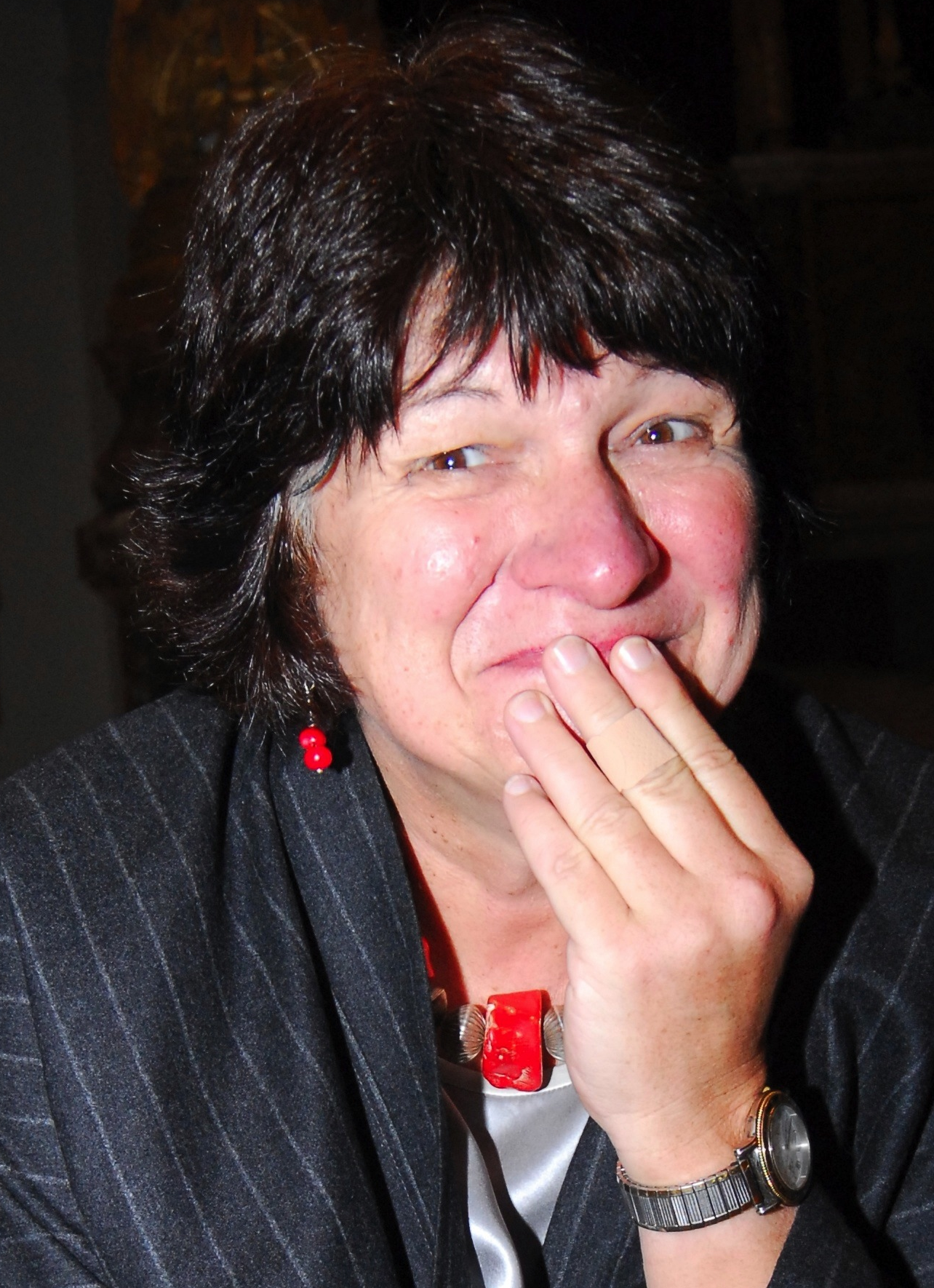
Danah Zohar, showing her delight in all that we can learn about the world and ourselves

Living across the narrow street from St Barnabas Church in Jericho, formerly a working class neighborhood in central Oxford built for employees of the University Press, on Sundays we met some rather interesting people from the academic community and city. Among them was Danah Zohar, a theoretical physicist and philosopher, and her husband, Ian Marshall, who was a perceptive analytical psychiatrist and co-author in her early work. She was educated at MIT, being among one of their first women graduates, and did her postgraduate research at Harvard.

Danah was fascinated by what seemed to her to be the largely unexplored significance of Quantum Physics for understanding human consciousness and its relation to the world around us. Her work in this area has yielded a series of books, beginning with The Quantum Self, and has led her to work as a consultant for how her complex ideas can be implemented within business and in corporate management. Building on her personal interest in spiritual intelligence among the aspects of human consciousness, she was fascinated by the intersection between what lies at the core of the human religious impulse and its functioning, and a modern understanding of how twentieth century physics explains aspects of the world with which we interact.

As has recently been observed, her “interdisciplinary work blends subatomic physics, nonlinear complex systems, philosophy, and psychology to replace rigid, “machine-like” corporate models with fluid, human-centric systems.” I am not surprised by how she has since been recognized for her abilities and accomplishments, with a major British newspaper describing her as being among “the world’s fifty greatest management thinkers.” This latter characterization of her work should not be viewed in reductionistic terms.
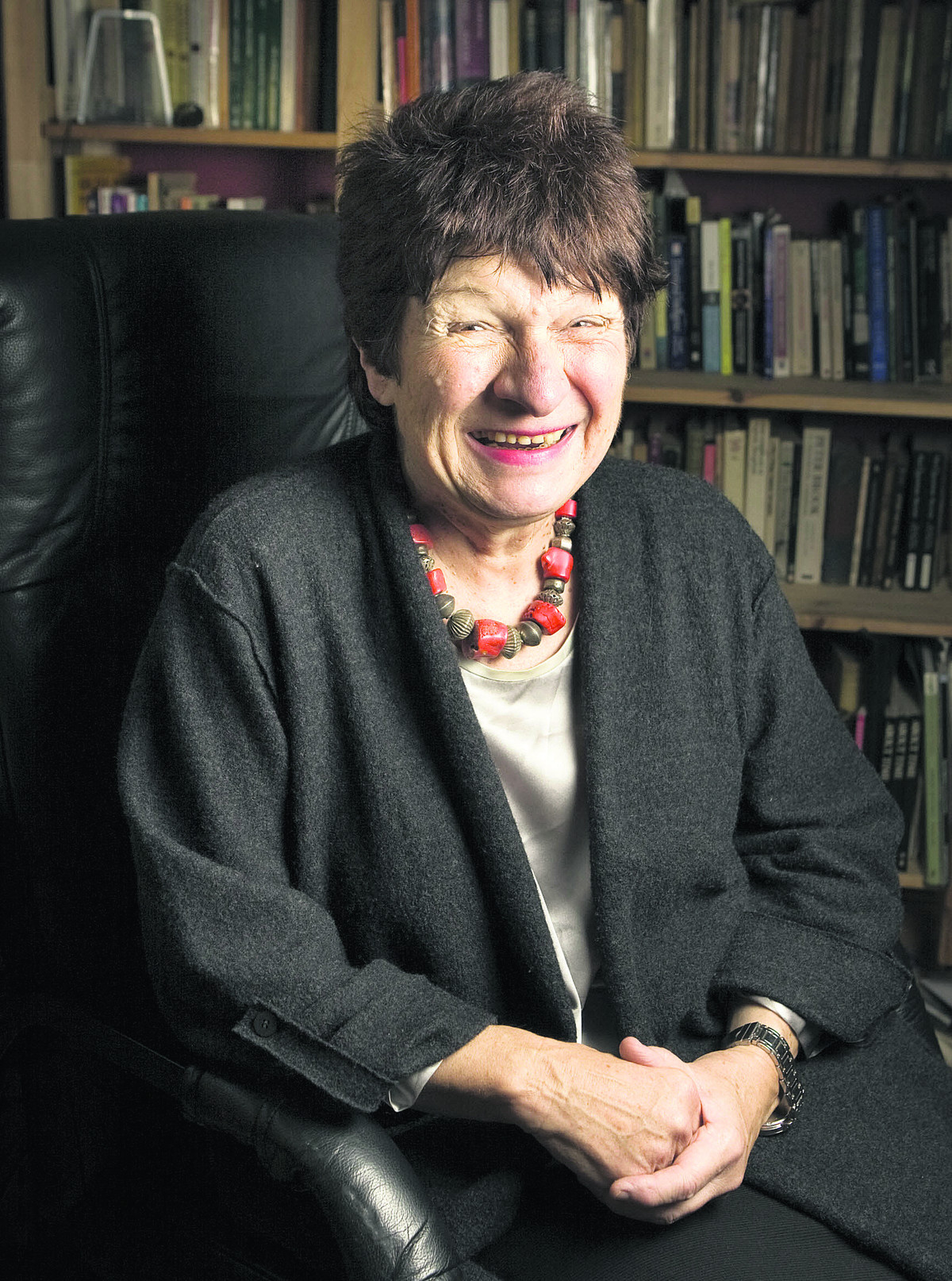
Danah in her study

What I most enjoyed about getting to know Danah was her synthetic approach to thinking about what it means to be fully human, and to live in a way that reflects a desire for, and commitment towards, flourishing through the fulfillment of our human potential. Born into a Protestant family in northern Ohio, her subsequent choice of her name by which she has become known, and with which she publishes, is significant: it derives from medieval Jewish mysticism. We worshipped together regularly with our families at our Anglo-Catholic (or ritualistic) parish, and celebrated holidays together. With her expansively spiritual worldview, anchored in a deeply rooted and intuitive faith, she always gently prodded me to enlarge the parameters of my thinking, especially with regard to my doctoral work at Oxford in contemporary Christian sexual ethics, while she was working on her first book.

In particular, I would credit Danah’s influence upon my thinking about our given inter-relatedness with one another, and how a more fluid and dynamic understanding of the inner connection between spirit and matter, mind and body, can and should shape our understanding of our human embodiment and, hence, our approach to our sexuality.

I found that her thinking stimulated my study of Paul Ramsey’s exploration of what Christian ethics might learn from the philosophy of Jean Paul Sartre. Ramsey’s work on Sartre along with early Christian sources, helps us to transcend the influence of will-based Kantian ethics as well as the analytical or deterministic thinking of some contemporary philosophers and biologists. And though Danah would not typically have thought in biblical terms, I came to see how these ideas can illuminate our appreciation for Paul’s concerns expressed in 1 Corinthians 6, regarding the conduct of Christian’s who thought they could engage in uncomplicated and spiritually irrelevant sexual relations with the women attendants at the Greek temple in Corinth.
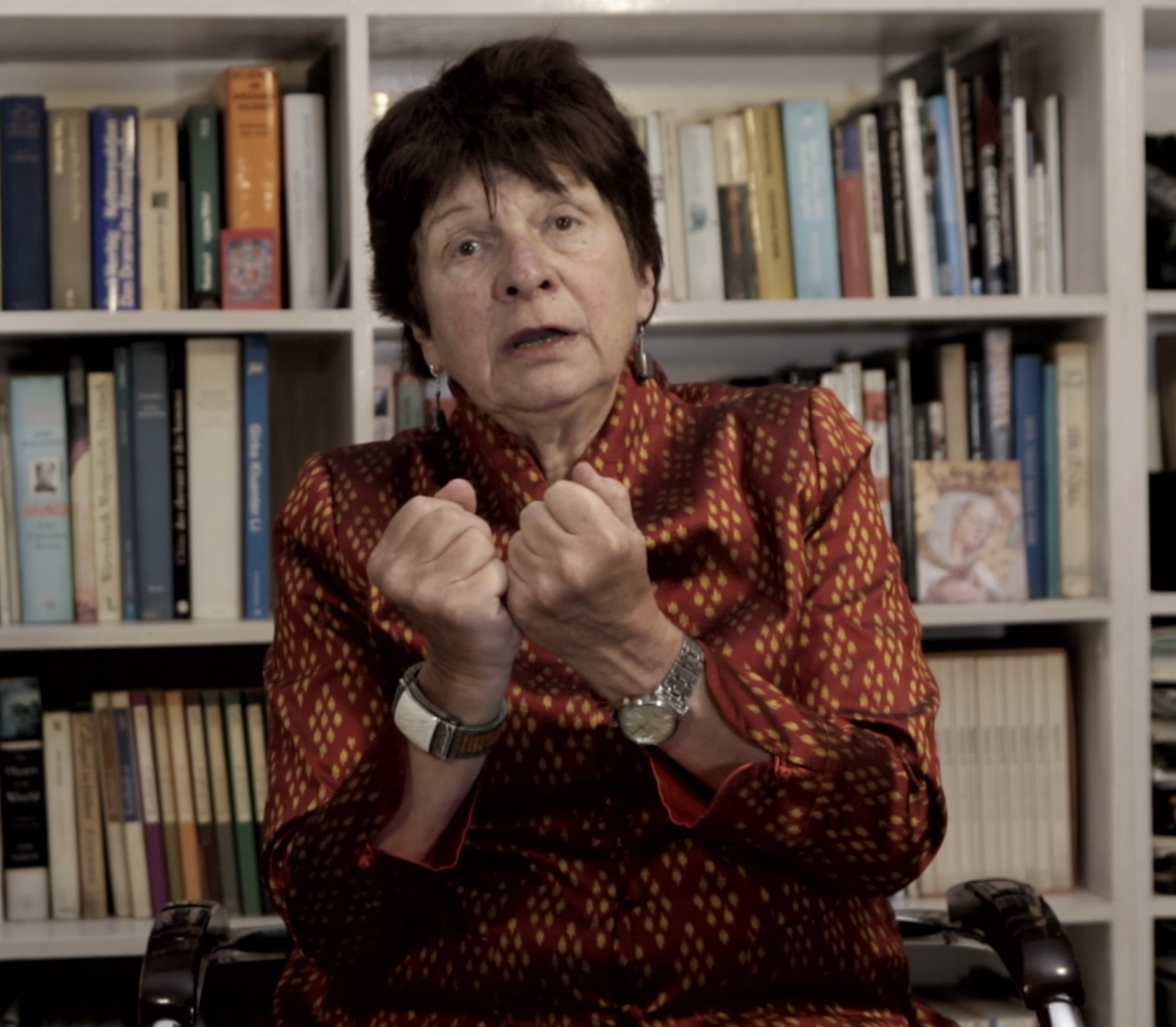
Danah as I remember her in many conversations

Though our academic training and focus in our writing has occurred in different contexts, and with different foci, I continue to be inspired by Danah’s ever-creative and wholistic worldview. I find a complementarity between her thinking and a maxim offered to me when I was invited to write my book on ethics: ‘Morality should be based on reality.’ As Oliver O’Donovan once said to me, “Our principal modern challenge in ethics is description.” Danah remains an exemplar of a commitment to making our description of the world and our lives within it as perceptively accurate as we can. For her, as well as for me, such a commitment to ‘description’ must always take into account our spiritual lives and the persistent gift of radiant beauty around us, and to be found within our consciousness of the world.
David Wojnarowicz, and Our Search for Beauty Amidst Darkness

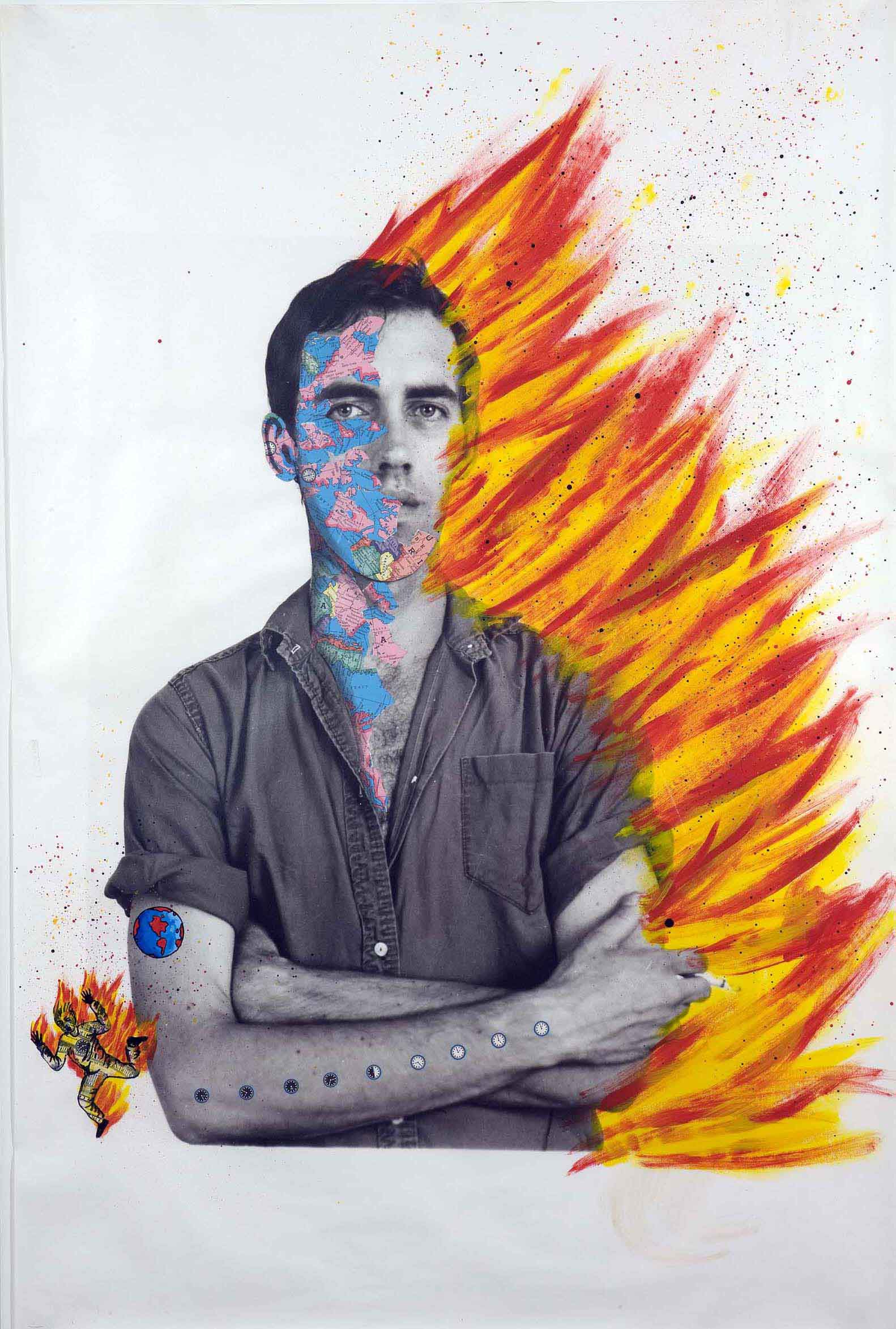
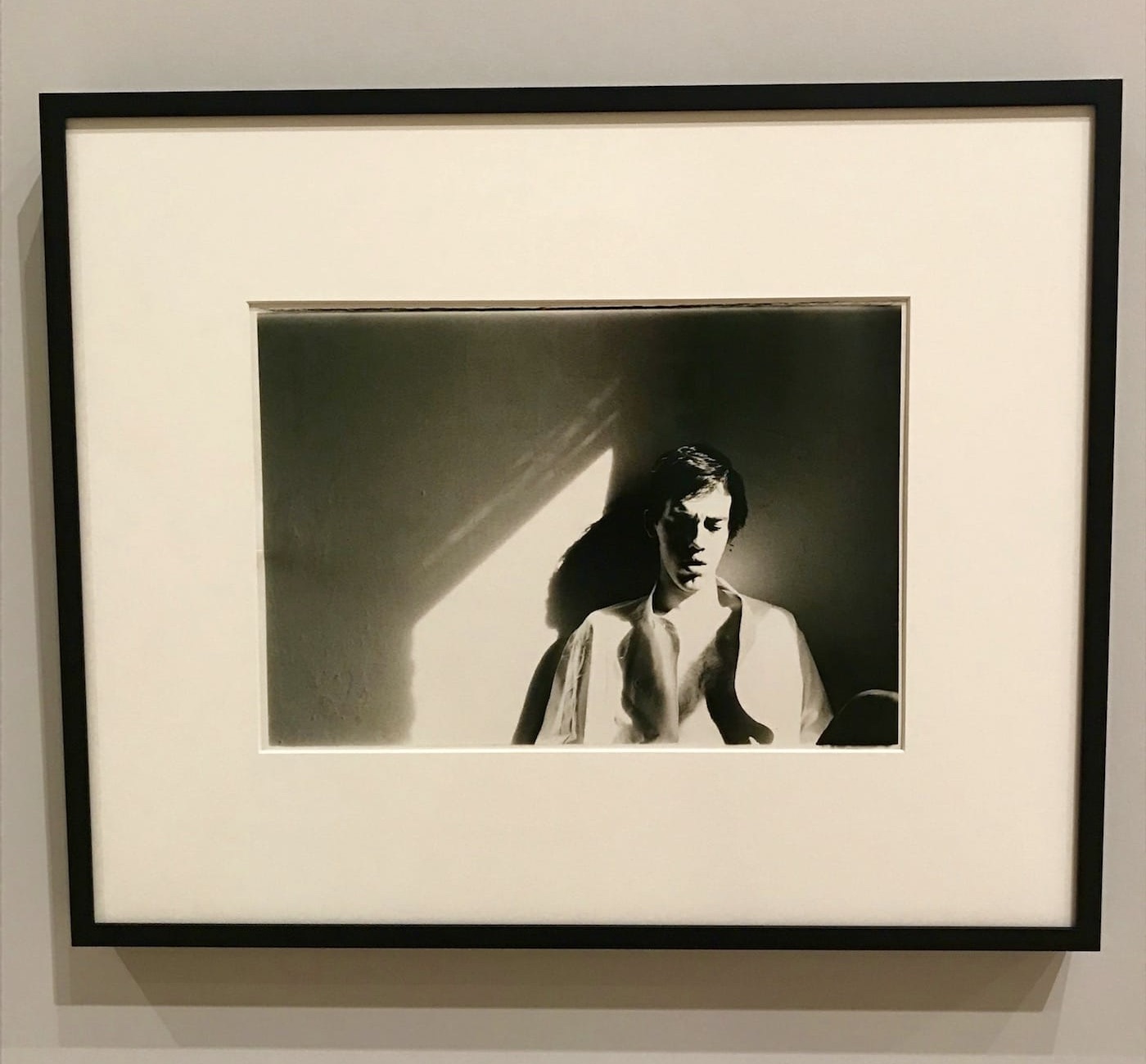
David Wojnarowicz, Self Portrait (photo collage with paint / I knew the ‘blue,’ inner and gentle side of David)

One of the most visited posts on this website is the piece I wrote about Picasso’s painting, Guernica. In it, I began to explore the challenging question of where and how we find beauty amidst darkness, evil, and grievous misfortune. One key that I am discerning in the process of exploring this question is to be open to finding glimpses of beauty within such unpromising circumstances, rather than try to gain an impression of beauty from them. Moments of beauty can be found even within the horror of war, such as in the fabled Christmas Day truce during WW I. And artists such as Henry Moore and writers such as Ernest Hemingway and TS Eliot have captured aspects of beauty that can be discerned within the traumatizing devastation caused by armed conflict.

My challenge in addressing this topic continues as I contemplate my early friendship with someone whose later work in the arts became notorious for his willingness to become completely transparent about his own involvement in acts and relationships that, at the time, moved beyond the bounds of social acceptability.

After graduating from high school in 1974, I found a job at Bookmasters, a chain of stores later absorbed into Barnes & Noble. I worked at the location in New York City’s Times Square, which like parts of the city in those days was chaotic. I remember ducking with fellow passengers on the subway as we pulled into the 42nd St. station when gunshots were fired on the platform. I began to carry an otherwise superfluous cane, imagining that it was for safety. Times Square at night was less populated by curious tourists and more by ‘ladies of the evening’ and their business-protective minders. Aside from Nathan’s Famous (hotdog restaurant) and the One Times Square building with its news ticker banner flashing around the center of the square, our bookstore appeared to be to be one of the few places patronized by people looking for products and experiences that might be found in ‘ordinary’ neighborhoods.

Having just turned 18, I was a newcomer to working a shift in a business location, learning such basic matters as clocking in with a time card, running a cash register and manually processing credit cards with carbon copy receipt slips. I was befriended by a very kind and supportive young man who gently taught me how to complete such tasks, as well as how to manage new inventory and then shelve books in their proper locations. He was David Wojnarowicz, whose name was easier to pronounce than it was to spell. I was impressed by his thoughtfulness, while I also saw that he had a perceptive sense of humor, aware of the irony that could be found in our interactions with some of our colorful late evening customers and with our night manager.

As I got to know him, I learned first about his particular interest in poetry, and more specifically in the work of those known as the Beat Generation, William S. Burroughs, Allen Ginsburg, and Gregory Corso. David was sensitive to not only the content of the little collections of poems that we would shelve, but to aspects of their printing, to the quality of the paper chosen for their covers and texts, and also to the sewn bindings and sometimes unusual fonts selected by the small scale publishers of these interesting and – in our chain bookstore – distinctive little books.

Soon David and I would meet in the early afternoons, before our 3–11 shift, at the apartment he shared with a couple on the Upper West Side, overlooking Central Park. While I was beginning to learn about contemporary poetry from him, I shared with David how to make collages, using an X-ACTO knife on a plate of glass with pages from cast-aside glossy magazines that we had found. I had no way of knowing then that, along with paint, David’s new interest in this medium would later play a significant role in the artistic output for which he has become known.

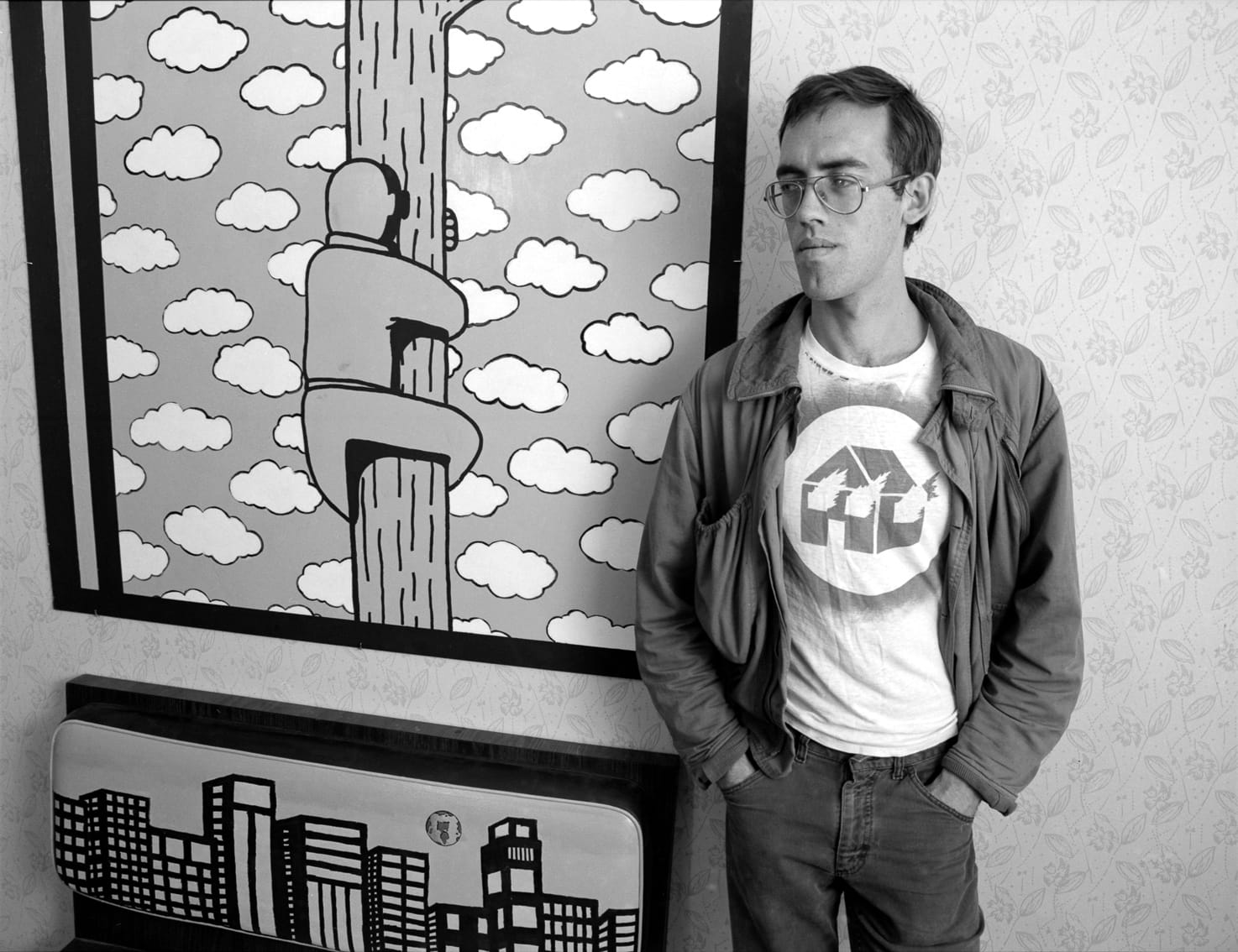
David with two of his works on display (along with his T-shirt here, and his self-portrait above, there must have been ‘a house on fire’ inside my calm friend)

It was only after some months that I became aware of a number of things David tentatively shared with me regarding his traumatic childhood. He still kept hidden from me what we now call his sexual orientation, not yet apparent to me because of my own naivety, and given my girlfriend and our occasional banter about attractive women we had seen at the store or on the subway.

It was probably as a result of me telling David about crossing the Pacific Ocean numerous times during my childhood that he shared with me how his father had been a steward on the famed SS United States, a man whose frequent extended absences were not unwelcome because he was an abusive alcoholic while on shore leave. I came to learn only the barest details of how David had survived, living on the streets at times, and how he had found escape in the City after his childhood across the Hudson.

Toward the end of my first and only year in New York, David and I made a couple of trips down to the far Lower East Side of Manhattan to explore some abandoned tenement buildings. David had an abiding vision for how one or more of these buildings might be reclaimed for use by a community of artists and writers who – because of costs – were willing to live and work in the most marginal of circumstances. I was too young, and less prepared than David to face the realities involved in such a venture, to be able to join him in starting it.

In late summer after that year, I moved to Minnesota in a failed attempt at being a college art student for two quarters. I took a room in the old Victorian style Stuart Hotel in Northfield, built the year after Jessie James had robbed the local bank. Thinly populated by some old men who I suppose were living with hot plates and getting by on meager Social Security checks, and by occasional overnight guests who used shared bathrooms down the hall, the Stuart was a just-affordable place for me to stay. But it was the sort of place with which I now realize David was very familiar. He came to visit me on his first cross-country trip, traveling with a friend on their way to San Francisco. We talked mostly about art and our hopes for the future. I still have a postcard drawn and watercolored by David, showing a hobo ‘traveler’ heading toward the sunset, and featuring a caption that had become a mantra between us, “Goodbye, blue Monday!

When he and his friend left on a Jefferson Lines bus that stopped regularly at the hotel, it was the last time I saw him. It was only later, after numerous years, that I became aware of David’s subsequent notable art works, published writing, occasional film pieces, and the acclaim he has received following his early death due to HIV.


In a future post I hope to explore some aspects of David’s work and his struggle to find and express beauty in the midst of the darkness that he often experienced, and faced more boldly than I think I could. At the same time, I urge caution to anyone unfamiliar with David’s artwork – some of it is ‘unsafe for family viewing’ and may offend those who seek to be guided by a traditional approach to ethics.