nature and grace

… always and everywhere …

(An earlier than usual post — for your Thanksgiving Week!)

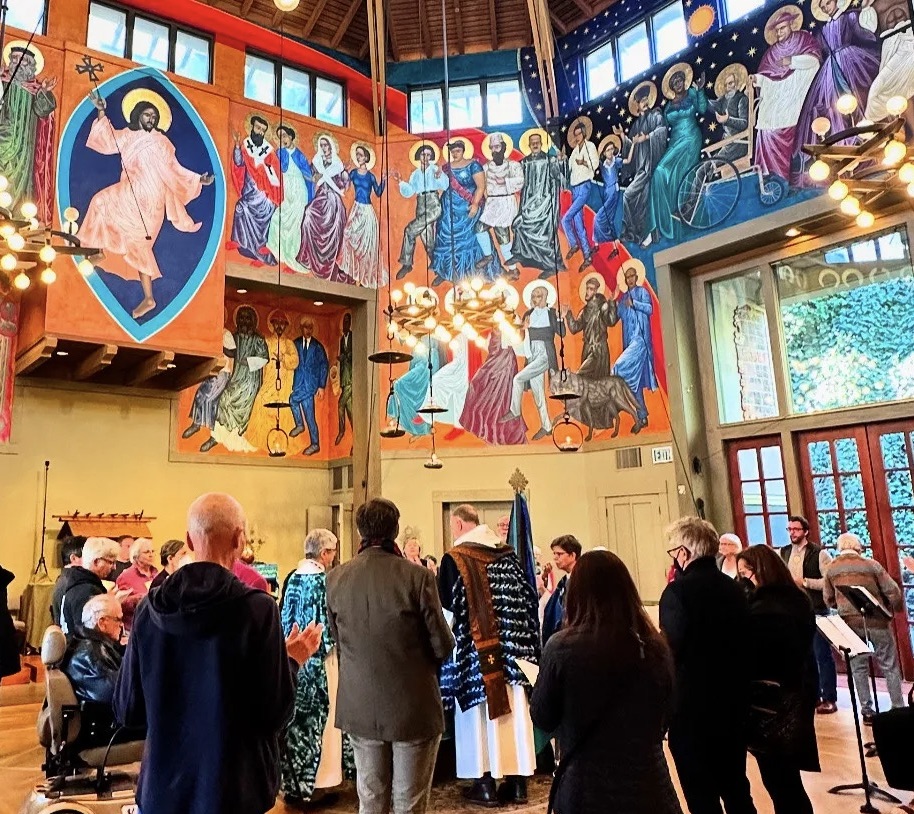
A lively celebration of the Eucharist, or The Great Thanksgiving, at St. Gregory of Nyssa Episcopal Church, San Francisco

It is right, and a good and joyful thing, always and everywhere to give thanks to you, Father Almighty, Creator of heaven and earth.” So begins the body of one of the Eucharistic Prayers in The Book of Common Prayer, as used in Episcopal Churches for the celebration of Holy Communion. “Always and everywhere” – these words regarding giving thanks remind us of the characteristic posture of the Church, and of all of its members, whether at worship in their parishes or at work or play in the world around them.

When Baptized Christians gather for a celebration of the Lord’s Supper, they remember that “the Lord Jesus on the night when he was betrayed took bread, and when he had given thanks (eucharistesas / εὐχαριστήσας), he broke it, and said, ‘This is my body which is for you. Do this in remembrance of me’ (1 Corinthians 11:23-24).” What we as Christians do in a formal way, when gathered for the Eucharist, enacts our normative way of shaping our whole lives. Which is always and everywhere to offer thanks to God for mercy and grace, and for God’s love poured into our hearts by the Holy Spirit. For we seek to live as we pray: Offering thanks to the Father, through the Son, in the power of the Holy Spirit.

“Give thanks in all circumstances; for this is the will of God in Christ Jesus for you.” Paul shares this counsel in his first letter to the Thessalonians (5:18). These words are sometimes mis-remembered as saying, “for all circumstances.” The difference between the two prepositions, in and for, is significant. In our daily rounds, it is very difficult for most of us to be thankful for adverse circumstances and experiences, and we find it hard to reconcile their occurrence with the oversight of a loving God.

Yet Paul believed in the doctrine that we call Providence. He firmly believed that the evil conditions and events that we experience in this life are not in themselves acts of God, imposed upon us by the divine will. Instead, they are things that are allowed to occur by a God who loves us and who intends our good. This is clearly a mystery to us, on this side of the veil separating us from the eternal.*

Another Eucharist at St Gregory of Nyssa

As we well know, the society in which we live in the United States sets aside one day of the year as a public holiday that is called Thanksgiving Day. Its history lies in a presidential proclamation by Abraham Lincoln. Yet, regardless of the circumstances of its origin, the day is widely celebrated by many who are unfamiliar with its history, and who may identify with traditions, practices, and holidays passed on from other cultures. This is only proper, as giving thanks is a universally human act. The people and circumstances, and the particular reasons for it, may all differ. Yet, the spirit of the act is the same.

I have heard it explained, that the sanctuary candle we see in the sanctuary of some churches is to remind us that God is present. The implication of this explanation might be misconstrued in such a way as to suggest that God’s presence elsewhere might not be as assured. Yet, the explanation can also be understood positively, as saying something like this: “This candle is here to assure us of God’s presence. We keep a candle here lit perpetually to remind us that God is always and everywhere present, even in the darkness or when we are alone elsewhere.”

Celebrating Thanksgiving Day can bring with it a similarly positive understanding. We give thanks formally, as a nation of many peoples, on one day of the civil year as reminder that giving thanks should be natural for us every day of the year. And the thanks we should offer are for the good things we enjoy with those whom we know and love, but also for things, people, and even institutions, about which we may be indifferent or even disapproving.

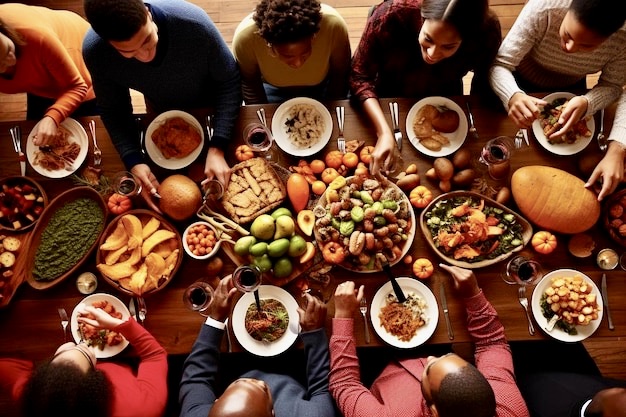
Gathering for a shared meal in the context of a spirit of thanks

In this spirit, I would like to share a prayer found in The Book of Common Prayer, that is principally used in the closing portion of the rites for Morning and Evening Prayer. It is therefore not specifically designated for use in observance of our national celebration of Thanksgiving Day, though it could be. This is a prayer intended for use everyday, and is a fine one for us to use at our celebrations this week:

Almighty God, Father of all mercies,
we your unworthy servants give you humble thanks
for all your goodness and loving-kindness
to us and to all whom you have made.
We bless you for our creation, preservation,
and all the blessings of this life;
but above all for your immeasurable love
in the redemption of the world by our Lord Jesus Christ;
for the means of grace, and for the hope of glory.
And, we pray, give us such an awareness of your mercies,
that with truly thankful hearts we may show forth your praise, not only with our lips, but in our lives,
by giving up our selves to your service,
and by walking before you
in holiness and righteousness all our days;
through Jesus Christ our Lord,
to whom, with you and the Holy Spirit,
be honor and glory throughout all ages. Amen.


*A note about the distinction offered above, regarding what God allows: Readers may wish to consider the way that Aristotle, and others since, have distinguished various dimensions of the idea of ‘cause,’ or causation (four dimensions have been articulated in the Western tradition). “Efficient cause” is the familiar form of the word cause, as in causing a row of dominos to cascade forward. “Final cause” can be conceptually helpful, especially as we think about God drawing persons and events toward their fulfillment in Christ. In this sense of the word cause, instead of our thinking of God as pushing events forward, some of them good and some perhaps bad in our eyes, God summons, and pulls toward the future, those people and things that may be made whole in Christ (ie, those that are open and willing recipients of his Grace), to their true end.

The Act of Joy

An icon of Thomas Aquinas, by Nicholas Markell

A joy that many of us have occasion to experience – either directly or through friends and extended family – accompanies time with young children. Preschool and kindergarten teachers are by the nature of their work in the most favorable position to have this opportunity. The experience of joy we associate with time given in this way stands out for me because it is a shared joy – one shared with and inspired by those young ones who exemplify this virtue. For me, this experience has been awakened especially by my interaction with my granddaughters.

I have written previously about activities that I have enjoyed with our grandson. He shares being a grandchild of ours with six young ‘ladies’ in various stages of growing maturity. Here, I find myself musing about the wonder I have experienced with our granddaughters, who have been the source of some unique experiences for me. Having grown up with three brothers and no sisters, and having three sons and no daughters, I am encountering and learning things with my granddaughters for which I have not previously had the opportunity to experience first hand.

Among our granddaughters is one whom I like to describe as being ebullient. For she just naturally models energetic cheerfulness. She has her challenges, as we all do. But she approaches each new day’s activities with a joyfulness and positive spirit that are infectious. Though being a patient and engaging grandfather is still a growth point for me, I delight in her youthful exuberance.

An image that reminds me of my granddaughters among autumn leaves

I have mentioned before an icon of St. Thomas Aquinas that I particularly value (shown above). I have seen this image attributed to Brother Robert Lentz, but now believe it is by Nicholas Markell. This icon shows Blessed Thomas holding a small plaque with the following words: “Joy is the noblest human act.”

For many of us, joy is a welcome feeling and as such we think of it as something ‘that happens to us.’ Like love and forgiveness, joy therefore is generally an experience we anticipate receiving passively, and an experience for whose value we often rely upon feelings as our guide.

The beauty of Markell’s icon, and the quotation it features, is the reminder it provides that joy is also something we choose, something we do, and not simply something that we happen to feel. We rejoice; we can choose to enjoy; and we are able to express our joy about things we encounter or experiences that we have with others.

We experience joy when we read good books with our grandchildren

We live in a culture that tends to distrust expressions of joy, even though most people we know – and us with them – are sadly in want of it. Perhaps it’s because we encounter so few examples of spontaneous, genuine, and selfless joy, inspired by what we see around us. Is this because there is less beauty in the world these days, or are we less prepared to perceive it? My reflection and training incline me toward the latter belief. 

Joy is not one of the seven formally identified virtues taught to us by the greater Christian Tradition (among then, faith, hope, charity {or love}, prudence, justice, temperance and fortitude {or courage}). Yet, the traditional listing of virtues is not meant to exclude naming others, but rather to help us perceive their common source as well as their unity, being gifts given to us through Creation and through Redemption. Like other virtues, joy is a human capacity and a strength that we can develop through practice.

The rite for Holy Baptism in The Book of Common Prayer includes words that are prayed over candidates after they are baptized. Some of these words are particularly appropriate when thinking about the joy we often see expressed by children, but are also about something that we pray will be given to adult candidates for Baptism. In the rite, the officiant asks God to give the newly baptized persons “an inquiring and discerning heart, the courage to will and to persevere, a spirit to know and to love you, and the gift of joy and wonder in all your works.”

Here we discern a principal attribute of Beauty. In Beauty, among God’s works, we find a repository of joy and a source of wonder. For the beauty that we find in the world embodies and expresses our Father’s love for his Creation. Encountering this love brings us joy as we perceive its source and embrace him.

Today, I am thinking about the joy that each of my grandchildren encourages me to experience with them. I notice the natural joy that many children seem more able to find than do adults of my age. More readily, children delight in the world around them and in the experiences they are blessed to have. At the same time, and especially in this next phase of my life, I am reminded that joy – like Beauty, Goodness, and Truth – is not simply passively experienced. More importantly, joy is something that I want to – and can – practice.

So, with my grandchildren, I choose joy!

I close with a prayer attributed to St Francis, which speaks of joy as something we can contribute to a needy world:

Lord, make us instruments of your peace. Where there is
hatred, let us sow love; where there is injury, pardon; where
there is discord, union; where there is doubt, faith; where
there is despair, hope; where there is darkness, light; where
there is sadness, joy
. Grant that we may not so much seek to
be consoled as to console; to be understood as to understand;
to be loved as to love. For it is in giving that we receive; it is
in pardoning that we are pardoned; and it is in dying that we
are born to eternal life. Amen.

Nature & Grace, and What We May Learn About Beauty

Found Beauty: a colorful palette in front of a local garden store

I continue to be grateful for things I have learned from my former teaching colleague, Ralph McMichael. Among the insights I have gained from him is one way to sum up some basic understandings that people have of the relationship between Nature and Grace. Whether by these names or not, we all seem to have a concept of this relationship. Nature, an all embracing category, is the common term widely used to refer to what Jews and Christians call Creation. Grace is a term that some use to refer to the presence of the supernatural realm, as it may touch upon or be found in Nature.

There are many ways of thinking about the relationship between these terms, and what they represent. Among them are four basic concepts or models of the interaction between them, which Ralph McMichael often presented in his teaching at the seminary. His articulation of these four ways can be summed up with four words: Compatible; Opposition; Identification; and Fusion. The most common understanding of the interaction between the supernatural realm and the natural world is represented by the first two terms. I will explain.

Many of us were raised in social environments where this interaction was seen as one in which the supernatural, or Grace, only episodically touches aspects of the natural world, or Nature. Based on the first model, some of us tend to see this interaction as involving the compatible yet occasional way that Grace touches Nature. It touches Nature here and there, unpredictably ‘gracing’ the natural realm in which we find ourselves. In this first model, Grace is a friendly presence to and upon those beings or things that it visits, making up for something of value that we seek or yearn for. 

In the second model of the relationship between Nature and Grace, the latter is once again seen as episodic, touching Nature just as unpredictably. But, in this case, Grace – although sometimes also friendly – can appear to be incompatible with some things it touches. In this view, while Grace may be friendly to Nature, aspects of Nature may be unfriendly to Grace, and opposed to it!

Found Beauty: Boat rudder in clear northern water

The third model for understanding the relationship between Nature and Grace might not be as familiar to many of us, and it may represent a reaction to the perceived inadequacy of the first two models. This third view has affinities with what is called pantheism, the view that Nature and Grace are so intertwined that they are indistinguishable. In this view, there is no separation between sacred and profane, or between God and the world, for – despite appearances and sometimes contrary experience – the two ideas or things are really one. Hence, according to this third mode of approaching the question, Nature is Grace.

McMichael referred to the fourth model as the Fusion model, one that he and many ‘catholic-minded’ thinkers commend. In this model, rather than seeing Nature and Grace identified as one entity, Nature is best seen as infused by Grace. With this understanding, we can see Nature and Grace as distinguishable but also as inseparable. Nature is graced. A theological extension of this idea is for us to say that ‘there is no place where God is not.’

In offering McMichael’s four models for understanding the relationship between Nature and Grace, I realize that I have presented a conceptually-dense set of ideas. Yet, I encourage you to consider them – and muse about them – for I believe you will come to recognize how you – like me – often assume one or more of them. Sometimes we think with these four models in overlapping ways, or at other times inconsistently when viewing one set of circumstances followed by another.

Found Beauty: A rainbow breaks through a late evening storm

These four models, because they so fundamentally shape our world-view, continue to play a role in my reflection upon Art, Beauty, and the theme of Transcendence. I invite you to join me in reflecting on how these models for understanding the relationship between Nature and Grace might inform our thinking about Beauty, its presence in the world around us, and how Beauty is a fundamental aspect of our experience of the natural realm in which we find ourselves every day.

Here is one way to apply McMichael’s four models to how we think about Beauty:

  • Beauty graces Nature episodically, in a compatible way.
  • Beauty appears in Nature episodically, and challenges that which is other than beautiful.
  • Nature is identified with Beauty.
  • Nature is infused with Beauty, and thoroughly permeated by it.

If we identify with the fourth view, as presented here, we of course need to do some thinking about those circumstances when we are confronted by an encounter with ugliness, as well as with evil. We must then try to explain our experiences of these latter real aspects of what we encounter. Here, both-and thinking will serve us in a way that either/or thinking will prove unsatisfactory. And, hence, we must be sure to distinguish the Identification model (which tends toward pantheism) from the Fusion model (which can be consistent with traditional theism).

Found Beauty: A quiet early morning at the same marina

Additional note: the photos included in this post were taken in Charlevoix, Michigan, in the summer of 2025

Reinhold Marxhausen and Finding Beauty

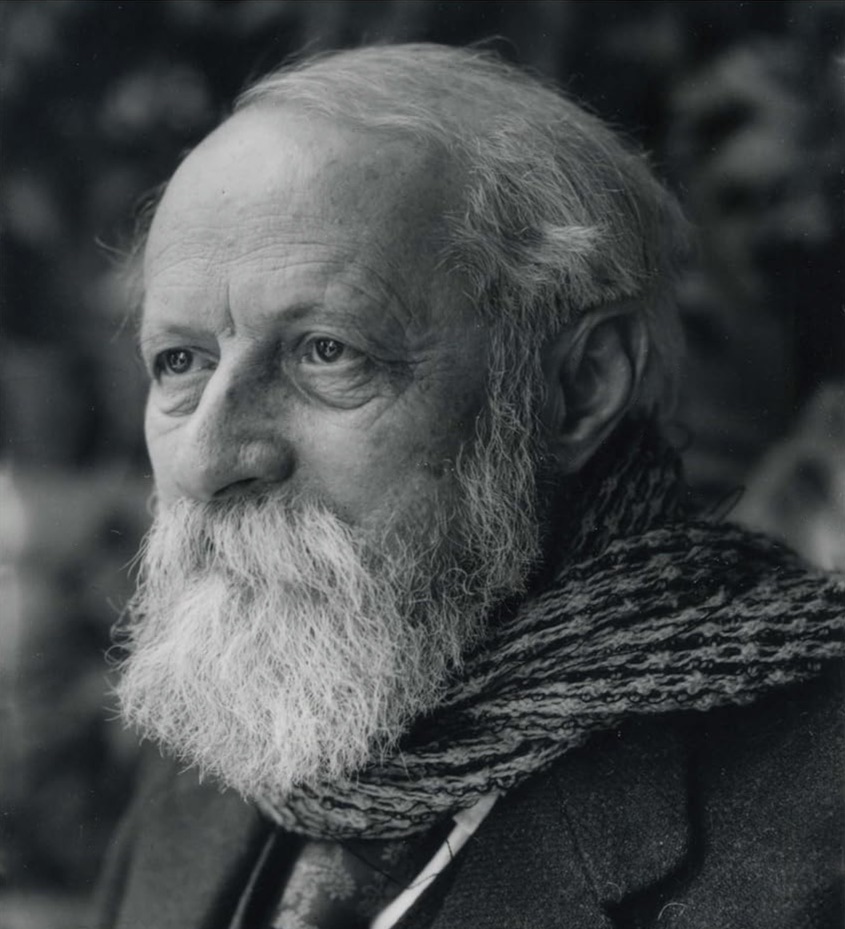
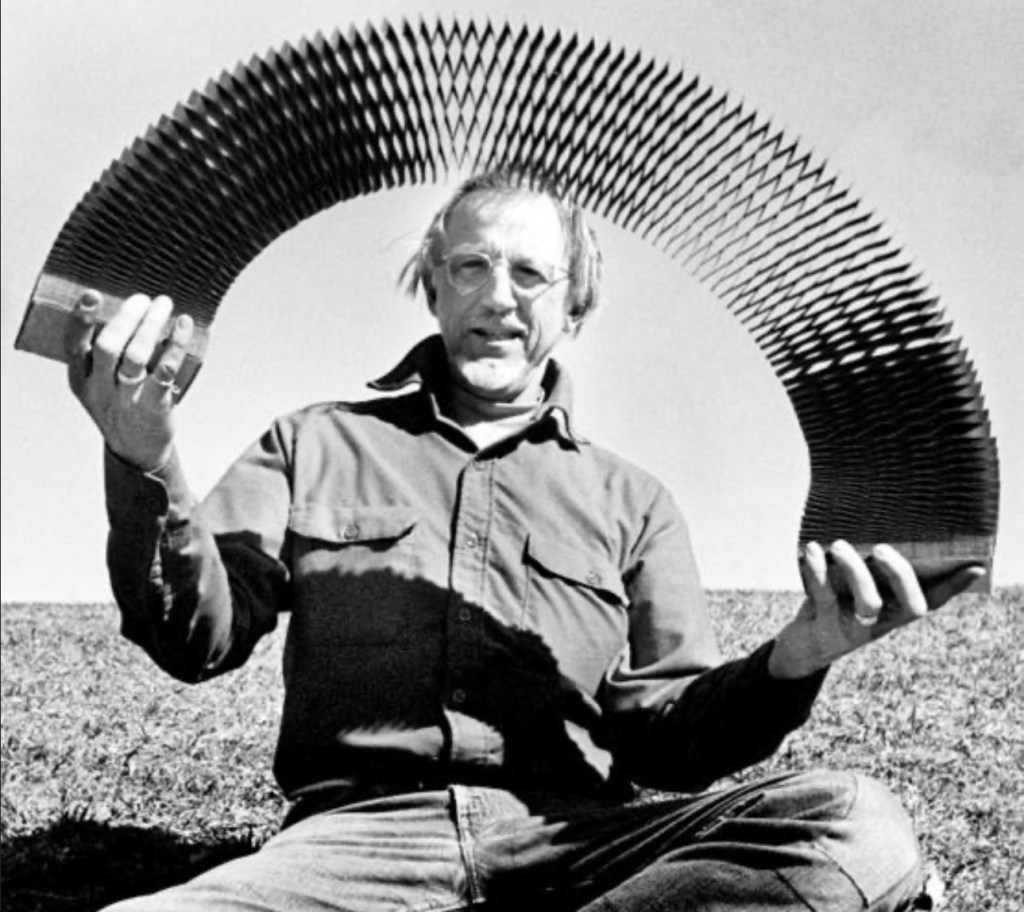
Reinhold Marxhausen

I am currently leading an adult learning group on the theme of Art, Beauty, and Transcendence. Some wonderful observations were offered by my fellow learners at our first session. After inviting our participants to introduce themselves and share a recollection of a memorable encounter with Beauty, I provided a discussion prompt: Is Beauty essential, or is it a luxury? We seemed to share a consensus that it is an essential part of our lives. And then a participant said, “I find Beauty everywhere!”

Hearing this, I thought of Reinhold Marxhausen, a remarkable artist and teacher who had a vision for how we all might approach our daily encounter with our ordinary, everyday circumstances. His captivating approach to life impacted many people beyond the classroom and studio – me among them. Here is one way to sum up the vision he shared with others: “Beauty can be found everywhere – you just need to look for it!” So simple is this message that I am sure it has more often been dismissed than pursued as a practice. 

Marxhausen in his studio workshop

Reinhold Marxhausen did not just send folks away to try this on their own; it became his mission to show people how to do it. This is made clear in a video of his appearance on the David Letterman show, with the interviewer doing a great job of giving rein to the artist’s creative spark and communicative abilities. Marxhausen‘s Letterman show appearance can be found on YouTube.

Reinhold Marxhausen on the David Letterman show, March 25, 1986

I continue to be intrigued by what Marxhausen’s abiding belief implies- that Beauty is found, in addition to how we are led to it by others, or more simply that it is something we just designate for ourselves. These are three different ways that we might encounter Beauty as a feature in our lives, if not as something even more profound for how we view our lives and the world.

Readers of my posts in this space will be familiar with the parallel I have discerned between the three principal forms of jurisprudence (or theories about the source of Law, and three main sources for our concept of the Good in our understanding of ethics. Found, received, and or made, are the three terms I use to summarize these three approaches to where Law comes from, as well as for sources of our notion(s) of the Good. In offering this summary, I do not exclude the possibility of other sources for Law and or the Good.

More expansively, according to the first view (1), Law and the Good are entities written into the structure of ‘reality.’ As such, these things are ‘there’ for us to find. Another possibility (2), sees Law and the Good as worthy principles we receive from those who have come before us, as things commended to us by longstanding traditions. We sometimes describe them as things that have stood the test of time. A third possibility (3) is that Law as well as the Good are sets of principles about which we come to agreement, or decide upon and enact for ourselves and others. Hence they are things of our crafting, things that we ‘make,’ as we project our preferences outward upon the world. Formal labels for these three approaches include natural law or Creation order (1), historicism or common law (2), and positivism or civil law (3). 

Here is something I want to stress: we are rarely consistent in how we think, perceive, and understand important aspects of our lives. We should therefore anticipate an overlap between these several conceptual categories for how we think about Law and about ethics.  In other words, a ‘both-and’ approach regarding them may be much more appropriate than seeing them in an ‘either/or’ way.

So, is Beauty amenable to a similar analysis? I think it is. For Beauty is found (1); we also discern Beauty in the company of others and through their guidance (2); and we surely fashion notions about what is beautiful through personal preference and decision-making (3). 

If you believe you have ‘found’ Beauty at some or at many points in your life experience, would you be content to accept the proposition that your encounter with Beauty is actually reducible to the social impact of others upon your perception, and or that it was and is merely the result of personal preference and choice?

God’s Handiwork Inspires Ours

Stones found on a northern Lake Michigan beach

Labor Day is around the corner and some of us may receive and enjoy a day off from work. What we call retirement, a stage in life I am presently enjoying, tends to represent leaving work behind. Yet these and related ideas rest upon a common assumption, that work is different from, and in some ways inimical to, enjoying fulfillment in life.

I find a biblically based theological insight helpful when thinking about work. As with many matters that can be looked at from the perspective of Christian moral theology, our view of work can be enhanced by making reference to four specific reference points. These are, first, what we have learned about God’s purposes in Creation for this or that aspect of our lives; then, what impact sin associated with our Fall has had upon what we are thinking about; third, how God’s ongoing work of Redemption has restored and or transformed the matter presently under consideration; and fourth, to ask what future – if any – does this aspect of our lives have in Christ. 

Work provides a wonderful topic for engaging in this fourfold inquiry. Based on our common way of thinking about work, it may be hard for us to consider the meaning of work from any other vantage point than of attributing its role in our lives to the Fall and to the ongoing effects of human sin. Yet, we can also learn from many who have come before us who have distinguished work from toil. This can help us see how forms of labor, and pejorative associations the word may have for us, are surely due to our proclivity to link such activity with burdensome unpleasant duties.

For what we may overlook is the biblical view of how God has shared stewardship responsibility for aspects of Creation with us, as beings created in God’s image and likeness. This was symbolized by the way that our mythic forebears (Adam and Eve) were given their ‘work’ of naming the animals as a path toward fulfillment. It was not until their expulsion from the Garden that the first human beings are described as prone to acts characteristic of sin. Thereupon, in biblical theology, our heavenly ‘work’ of praise, and of divinely-invited participation in God’s Creation stewardship, ceased to be pleasingly ready pathways toward human fulfillment, and became energy draining and spirit-diminishing activities – such as we tend to find them to be now.

A growing segment of the wider Christian community shows signs of acknowledging how God’s work of Redemption is ongoing, quite aside from its ‘once and for all time’ episodic saving events. The pattern and purpose remains the same – nothing fundamentally new is added, nothing old of lasting value taken away. Preeminent remains God’s abiding purpose for us to become and be God-like in God-intended ways. For, as Athanasius taught us, the Son of God became the Son of Man, so that the children of men and women could become the children of God. Work – not toil nor burdensome labor but creative and fulfilling work – remains a vital part of our holy path toward wholeness.

And to remind us of this abiding truth, the loving Creator has spread around us an uncountable abundance. These are the signs of outpoured and participatory grace, some of them very small, like stepped-upon seashore pebbles and tiny blossoms among hurried-by roadside weeds.

Too quickly we dismiss the significance of our our small acts of selfless giving, not to be counted by us, but adding up to so much more than we imagine in the life-growth of others. This is our holy ‘work,’ overlooked but important stepping stones on our path toward living into the godly fullness with which Christ fills us.

If on our daily course our mind

Be set, to hallow all we find,

New treasures still, of countless price,

God will provide for sacrifice.

Old friends, old scenes, will lovelier be,

As more of heaven in each we see:

Some softening gleam of love and prayer

Shall dawn on every cross and care.

[John Keble, “Morning,” from The Christian Year]

Our Doorway Into God’s Trinitarian Being

William Holman Hunt, The Shadow of Death (1870-73)

When we as Christians pray, we don’t simply pray to God. With faithful assurance, we pray with and through God! As Paul tells us, “When we cry, ‘Abba! Father!’ it is that very Spirit bearing witness with our spirit…” This is because, when we pray “to the Father,” we also pray with and through the Son. We are enabled to pray with and through the Son following our Baptism. For after Baptism, we are assured that we pray in the Holy Spirit. We therefore pray to God not ‘from the outside,’ but ‘from the inside’ of God’s own being and nature!

Well, how can this be? As we can easily discover, every Eucharistic Prayer in The Book of Common Prayer has a common shape. For all of our Eucharistic Prayers are prayed to the Father, through the Son, in the Holy Spirit. This is not an accident. Jesus modeled this in his own life, and particularly at the Last Supper.

When we repeat Jesus’ pattern, offered at that supper, we stand with him around the same table. And by his graceful invitation, we join his prayer to the One he called, ‘Our Father.’ Our prayer with him, to the Father, is in the power of the Spirit, the same Spirit he spoke about at that table. He modeled at that supper what grace means in practice.

Through the grace of the Holy Spirit, Jesus shares with us his own particular intimacy with the Father. Inviting us to stand with him as he prays, he offers the whole world back to the Father-Creator. By this, Jesus – and us with him – fulfills the divinely intended-but-failed stewardship vocation of the mythical Adam and Eve. And so, this is also our vocation, to offer up to our Father all that truly belongs to the Creator. Sharing with Jesus the grace of the Holy Spirit allows us to join him, the Son, in his ongoing Eucharistic vocation.

A good way we can live into the saving implications of God’s Trinitarian nature, is to engage in some creative imagining. Imagine that, in this moment, Jesus reaches out his hands to us. In reaching out his hands, he does not simply extend his greeting. Extending his embrace, he invites us to join him by standing with him, closely at his side. By his invitation, and our acceptance of it, he shares with us his own intimate and particular relationship with our Father.

And with this invitation, he gives us the power of the Spirit, making it a reality in our lives. Because the invitation comes from him, the power of the Spirit he shares with us is God’s grace-filled power. Jesus makes all this actual and true, whether we feel it or not.

This Trinitarian shape of prayer is different from how we usually imagine prayer. Commonly, we think of prayer as our communication to God. When we feel aware of God and close to God, we speak to God of what is good and well and of that for which we feel thankful. And we often ask for help. But, when there seems to be a veil between us and God, we speak to God with lament or we complain, sometimes in anger. This concept and experience of prayer is ‘subjective,’ and therefore narrow. That is, it is a concept of prayer based primarily upon our personal, interior, experience. It reflects our experience of being the subjects of perception and action. Yet, as the Prayer Book Catechism teaches us, prayer is first of all responding to God.

As we learn from Jesus, and by the Holy Spirit, true prayer is not something we do, which we somehow manage to achieve through our faithfulness, devotion, or energy. True prayer is something we allow God to do within us. True prayer is the kind of praying that we find God already making real within us through the indwelling Grace of the Holy Spirit. The Father and the Son and the Holy Spirit are constantly engaged with one another, in what the Eastern Christian tradition calls ‘a dance,’ a perichoresis. Prayer involves being drawn into this dance. Prayer is sharing in the Trinitarian relational being of God. Prayer is participation in the community of fellowship that exists within God’s own being.

The Trinitarian pattern of our lives rests upon the Trinitarian shape of our prayers. We can accept Jesus’ invitation to stand with him. We then experience his own fellowship with the Father, in the grace-filled power of the Holy Spirit. This enables us to live truly. To live truly, is to live to the Father. It is to live with and through the Son. And true prayer is to live in the power of the Holy Spirit.

And so, we seek to live in the way that we pray: to the Father, with and through the Son, in the Holy Spirit.

Note: This post is based on the Western Church’s observance of Trinity Sunday, on June 15, 2025. My title is based on a well-known metaphor found in John’s Gospel. The text here is based on my homily for that occasion, which may be accessed by clicking here.

My goal is to commend the assurance of hope that lies within the Gospel. And while being aware of concerns about the so-called ’scandal of particularity’ associated with Christianity and Judaism, we should be aware that God is free to offer a similarly positive spiritual experience to those of other religious traditions, or of no particular tradition with which they may identify. I hope to address Hunt’s evocative painting, featured above, in a subsequent post.

A Tao of Seeing: Reflections Inspired by Feng Shui

Michael Pollan’s writer’s hut, intentionally situated by a boulder on the brow of a hill

Recently, I observed my middle son moving a black plastic pond module around in a small space in his New Orleans courtyard. As he moved the container that would soon have fish in it, he tried situating the vessel in various ways, in relation to a tree, a fence, some potted plants, and an existing low stone wall. He is not a student or practitioner of feng shui, but I believe I was seeing some of those principles at work in his decision-making.

Western readers may have heard of feng shui, the Asian philosophical approach to discerning the unseen forces that affect objects and their balance in nature. It gives attention to the metaphysical or non-material energies thought to be at work upon or within the world around us. We might say that this approach provides a Tao of seeing, or a natural way of perceiving within and around surface phenomena to the underlying dynamisms that are believed to affect what happens in nature.

This notion that there are unseen forces at work in the world is an idea that is receiving something of a revival in Western Christian spirituality. This is noticeable when people refer to a concept attributable to the Celtic tradition, in which it has become common to refer to “thin places. “ These are places where the veil between the material and the ethereal or the heavenly seems temporarily dissolved. Another parallel here between East and West may lie in the quest within Christian spirituality for the goal of harmony and balance between people and the created world.

However, my reflections here constitute an aesthetic rather than a philosophical or historical inquiry. I am interested in the dynamics of movement we perceive in the circumstances that we encounter, and less in the metaphysical forces or energies that may be present within them. At the outset, however, I want acknowledge how a nuanced Asian approach can be an authentic route toward a culturally-informed appreciation of the phenomena we encounter, especially from a historically Asian perspective.

As we look at paintings in the context of Western culture, one factor we discern assesses composition and attends to the way our seeing is drawn from one part of a larger image to another. This dynamic is often an artist-intended aspect of an overall composition. Sight lines in garden design and arrangement provide another example, as does the architectural arrangement of space in buildings.

Attention given by Western designers to feng shui is sometimes criticized as being a superficial application of historically and philosophically nuanced ideas. But I want to give credit to ways in which our sensitivity toward perceiving movement and direction is a genuine factor that is available for analysis and articulation. We notice this when we encounter both two dimensional compositions as well as three dimensional spaces and the objects we find in them. We can always come to know more about what we see.  Because what we see is something that is there, not simply what we believe, or are disposed or inclined to see.

An Asian garden said to be designed according to feng shui principles

Motion, balance between forces, spatial arrangement of objects, and the dynamic relationships that are visible because they exist between and among these variables, continue to grab my interest. Contrasts between colors and textures, as well as between sizes and shapes, play a significant role.  Additionally, the perceived difference between what is natural and things that are humanly fashioned is equally significant, as is our perception of the criteria for what constitutes that which we consider to be natural. These are among the factors that help account for our sensitivity towards and interest in these many observable variables, and our common quest for purpose and meaning in the contexts where we find ourselves.

Motions and balance as we find these factors in Wassily Kandinsky’s painting, Several Circles

Painters, sculptors, and architects, seriously consider these factors within visual and spatial compositions. The painter, Wassily Kandinsky, and the architect, Frank Lloyd Wright, provide two examples of those who also perceived a spiritual dimension within their creative work.

If so, we –  as caring lay observers of the world and of the things and places among which we find ourselves – should give deference to this evident fact. For we can all be thoughtful, as people often are inclined to be, about what we see, touch, and experience when we interact with visual phenomena.

I find myself increasingly sensitive to these aspects of our appreciation for Beauty, and endeavor to be more mindful about them. I am intrigued by possible parallels that may exist between Eastern metaphysical interpretations of visual phenomena and more familiar approaches to what we see that are shaped by Western aesthetics. Especially as these familiar approaches are described and developed within our artistic and architectural best practices.

Leo XIV: The Beauty of Possibility

If reading this by email, please tap the title at the top to open your browser for the best experience. Then, clicking individual pictures will reveal higher resolution images.

Pope Leo XIV, upon his election

As an Anglican, I join other non-Roman Catholics in hoping and praying that the new Bishop of Rome will live fully into the beautiful opportunity he has been given. His new office brings with it a symbolic role for all Christians, to be a principled unifier and peacemaker. In this era, that will surely be a challenge.

People of good will seek truth where it is to be found. We want all persons to live in harmony with one another, and with the beautiful world in which we find ourselves. We see this spirit of inquiry and discernment exemplified in many Christian leaders, as well as in non-Christian leaders like the Dalai Lama.

At heart, we seek and desire to serve what Christians and Jews hold to be true regarding all human beings. For we believe that all persons were and are created in the image of God, and that despite the woeful effects of our sin, we all still bear that image, however much we may have lost likeness with God. This was the central insight that some Roman Catholic Christian thinkers, along with fellow spiritual travelers from other traditions, brought to the creation of the United Nations Universal Declaration on Human Rights.

Principal documents from the Second Vatican Council display this theme in abundance. These texts continue to inform and guide wise souls who are genuinely concerned about the numerous lingering and emerging problems within the worldwide Church, and in the many societies and cultures where Christians seek to serve Christ in all persons, and respect the dignity of every human being.

Pope Leo has in large measure the same opportunity that we all have. May he have grace to live and serve well, and may we remember the importance of our own often overlooked roles in seeking to do the same. Every day brings new opportunities to seek and serve what is true, especially as we come to know the source of all Beauty, Goodness, and Truth, in Christ.

As St. Richard, the 13th century pre-Reformation Bishop of Chichester (England), taught us to pray: “Dear Lord, of thee three things [we] pray: to see thee more clearly, to love thee more dearly, and to follow thee more nearly, day by day.” (text from The Hymnal 1982, yet familiar to many from the musical, Godspell)

We find the same words as part of a prayer found in the liturgy of the Roman Catholic Church:

MOST merciful Redeemer,
who gavest to thy Bishop Richard a love of learning,
a zeal for souls, and a devotion to the poor:
grant that, encouraged by his example,
and aided by his prayers,
we may know thee more clearly,
love thee more dearly,
and follow thee more nearly,
day by day;
who livest and reignest with the Father
in the unity of the Holy Spirit, ever one God,
world without end. Amen.

A stained glass window commemorating St. Richard of Chichester, found in the church of St. Saviour, Eastbourne, East Sussex, England

Laetitia Jacquetton and the Art of Both-And

If reading this by email, please tap the title at the top to open your browser for the best experience. Then, clicking individual pictures will reveal higher resolution images.


Not so long ago, my friend James brought to my attention the striking glass-based sculptural work of Laetitia Jacquetton. Born in France, Jacquetton has a background in fashion design and a longterm interest in the minimalist qualities present within much of Japanese art and its Mingei (or folk art) tradition.

When I consider what I find compelling about her sculpture, I am reminded of the art of photography. A decisive factor in effective photography, especially black and white photography, is that of contrast. This is a predominant feature in Jacquetton’s work. Though this may seem obvious, perhaps too obvious for comment, I would like briefly to explore the significance of this element of contrast, and what her work might help us to appreciate regarding other spheres within our life experience. For the sculpture of Laetitia Jacquetton may alert us to an expansive question: can dissimilar and even contrasting things – as well as ideas – be brought together into beautiful harmony? And, what might asking this tell us about our concepts of nature and grace?

Photos of Jacquetton’s sculptures help acquaint us with how contrast functions in her sculptures. For example, the photo at the top displays an intentional contrast between light and dark, as well as between shiny and matte materials.

Here, we see a contrast between translucent and opaque materials.

We also see in these photos a further contrast, between smooth and textured materials. This feature, along with those previously noted, stems from the way a fluid and malleable material has been brought into relation with a static and unyielding one. Observing this allows us to infer something about the creative process involved in the production of Jacquetton’s sculptures. The artist has taken a humanly-fashioned form and adapted it to a naturally shaped object, bringing something crafted in the studio to bear upon something found in nature.

Empirically observed contrasts like these may also have a bearing upon our ideas, and how we think about concepts like nature and grace. We may have been taught to view such ideas in terms of a perceived contrast between them, even an antithetical one. Here, when thinking about objects found in relation to others that are crafted, or about nature in relation to our view of grace, we may gain insight by considering some apposite words that Eucharistic celebrants may say before consecrating the bread: “Fruit of the earth and work of human hands, it will become for us the Bread of Life.”

Several contrasts already noted are also evident in photos of Jacquetton’s other works:

Reflecting on these photos that feature contrasts allows us to articulate what is most significant within Jacquetton’s work, her intentional juxtaposition of contrasting elements.

Jacquetton as an artisan, a human agent gifted with a creative vision and developed skills, has juxtaposed dissimilar materials, achieving aesthetically pleasing results. A singular focus upon one or more of the contrasting materials (or the qualities associated with their appearance), could lead us to highlight one aspect of the artwork at the expense of another, in an either/or way. Yet, it is the dynamic conjunction between dissimilar materials that Jacquetton prioritizes in her work. Evident contrast is accompanied by intentional conjunction, leading us to appreciate the interplay of the differences in a both-and manner.

Noticing this, I think once again of the Eucharist, which – like the Incarnation – is another and relatable example of what I am referring to as a ‘dynamic conjunction.’ For the Eucharist makes present together both the natural physical properties of bread, and the supernaturally graced properties of the sacrament.

Nevertheless, we tend to view many aspects of our world, and of our lives within it, in a simplistic and reductionist manner. For me, comparative reference to the influence of Plato and Aristotle helps limit this tendency toward reductionism.

For example, I credit Plato’s influence with an implicit encouragement to view things, and especially their moral value, in relation to a single reference point. According to this approach, something either possesses or manifests this or that quality – let us say beauty, or goodness – or it does not.

I credit to Aristotle’s influence a more nuanced approach, which nurtures a willingness to consider what we see and come to know in relation to several reference points. We are then better able to say (in a both-and way) how this or that object of attention has a particular quality, while also possessing something of a second quality, and how it can be aptly described by referring to other qualities or attributes.

In all this, I do not attribute my reflections to Laetitia Jacquetton, though her compelling sculptures have clearly inspired them.


Additional notes: Thanks to my friend, James Ruiz, for introducing me to Laetitia Jacquetton and her evocative sculptural work. / Regarding my references to Plato and Aristotle, I do not presume to have accurately summarized aspects of their thought, but rather cite what I think are aspects of their dual influences.

I hope readers might perceive how my reflective observations above are related to the paradoxical conjunctions of ideas upon which I reflected in my prior post, regarding how repentance may display beauty, and how painful grief may be accompanied by joyful reassurance.

The Epiphany: Human Power Encounters Divine Authority

If reading this by email, please tap the title at the top to open your browser for the best experience. Then, clicking individual pictures will reveal higher resolution images.

James Tissot, The Magi Journeying (detail)


Instinctively, there is something we all seem to seek. We want to find purpose and meaning, and organizing principles for our lives. This desire is anchored in a larger one: we seek to discern what is real, and true.

But where does our common impulse come from? In what does this impulse consist? I think the best answer to these questions is found at the heart of the Feast of the Epiphany. On Epiphany, we celebrate how God has revealed to the world the real and true meaning and purpose for our lives. Epiphany is all about God revealing to us the divine center of everything. Epiphany highlights God’s self-revealing in the natural world, and preeminently in God’s Incarnation, which the Magi came to discover and then worship.

We are able to recognize that it is in the nature of a Creator to order reality, imbue it with purpose and meaning, and hence to bring order, purpose, and meaning to our lives. A perhaps-unexpected word that captures this broad idea is authority, in that God possesses the authorizing power to create things, and guide them. Specifically, we discern this authorizing power in God’s creation of the universe and in the divine agency shaping ongoing history. For God is the author of all that is real and true.

In human life, authority and power are not always neatly aligned, and we experience trouble when the two are at odds with one another. We see this dialectic between the two at work in the events of Holy Week, in the confrontation between divine authority (in the vocation of Jesus), and worldly power (as exemplified by Pontius Pilate). Less obvious is the way this dialectic is manifest in the events that are commemorated in our celebration of Christmas and the Epiphany of our Lord, especially in connection with the visit of the Magi from the East.

James Tissot, The Magi in the House of Herod

The Magi, also called ‘wise men,’ or ‘kings’ from the East, arrive in Israel having been guided by an authoritative power greater than themselves. Because of their witness to this higher authority and its implied power, the visitors pose a threat to Herod and his courtiers, who exercise earthly authority and its attendant power. This emerges in the interaction between people who are witnesses to divine authority and its power, and others who are possessors of worldly authority and power. The emerging conflict, later seen in the events of Holy Week, arises amidst the challenges surrounding the beauty revealed in what we call the Epiphany, the revealing of divine light to the whole world rather than to just a particular nation or the people of a particular religious tradition.

The Magi from the East, by explaining their quest, prompt Herod to act. He acts viciously and violently through orders given to soldiers under his command. The result is the series of murders we acknowledge every year on December 28, in the ‘red letter day’ we call the Massacre of the Innocents.

James Tissot, the Adoration of the Magi

What are we to make of the Epiphany of God in human form, and the tragic circumstances to which it led? At the heart of Christian belief is the conviction that God became present to us through a human birth. He revealed himself in a human person who embodied two natures, one fully divine, and one fully human, whose natures are distinguishable yet inseparable. Such a person, regardless of appearances, was and is the transcending center or heart of all that is, manifest in human form. He is, therefore, the One who truly possesses divine authority and divine power. Einstein – who was not in any sense a traditional believer – said this: “The most beautiful thing we can experience is the mysterious.” The divine center of reality, manifest and revealed in a human being, is the most mysterious beautiful thing that we can experience.

Here is the wonder of it: in God’s mysterious Providence, the birth of the Messiah would bring death to many (in the Massacre of the Innocents). And – years later – the death of the Messiah would bring the possibility of new birth to all, through the redemption of human being from the power of sin and death.

Yet, it would be some decades later before those who proclaimed Jesus as Messiah, and the embodiment of God, could understand the connection between his birth along with those soon-resulting deaths of the Innocents, and his later death, along with its soon-resulting new births for those who came to believe in him.

Our proper response to all this — indeed our only response to all this can and should be to praise the Holy One of Israel, the one whose death brought new life to all who receive him. He has come to us. Come let us adore him. And let us receive him with renewed hope and joyful hospitality, in all his light-filled glory.

A blessed Epiphanytide to you and your loved ones.