Liturgy

Learning from Mary’s Attentive Openness


Perhaps people living at the time of our Lord’s first coming were in some important ways like us. They may have been just as prone to orienting their security and sense of wellbeing around material concerns, while being generally indifferent to the spiritual life. Yet, in this season of Advent when many sing “O come, O come Emmanuel,” it is easy to imagine the people of Roman-occupied Palestine crying out with longing for the God of Israel to draw near in power. Even so, God chose an out of the way place in which to appear among us, incarnate in human form. Paradoxically, for this and other reasons, the arrival of the Holy One was largely overlooked. At least until his person and message provoked enough reactivity to cause the authorities to have to deal with him. Otherwise, the periodic waves of public attention that he received were most often inspired by the miraculous works of mercy attributed to him. While he encountered significant examples of deference to the revealed Law among his contemporaries, lived-adherence to God’s hope-shaping promises appeared to be rare.

This is why the Lectionary features a particular aspect of the Christian Gospel story at this time of the year. It does this by presenting some notable counter-examples to what may have been – in the first century – a widespread indifference to or loss of confidence in God’s promises. We learn about Zechariah, the father of the ‘forerunner,’ John the Baptizer, and about Elizabeth, John’s mother, who was a cousin of Mary and another woman that would bear a promised child. These three stand out for having been open in heart and mind to the heavenly glory that God was about to reveal in the midst of the lives of his wayward children.

In particular we remember the spirit of attentiveness that we find displayed in a third aspect of Mary’s response to God’s call through the Angel Gabriel. God’s call often challenges us to live in a different way; or to try and be a different person, especially in our relationships with our family, our friends, and those with whom we work. Receiving this call, we can react at first in fear at what this call will mean in practice. We can also respond with uncertainty, wondering about our worthiness or suitability for what God may have in mind for us. We have reflected on these themes in the last two web posts on this site.

But we can also see that —in faith— we are able to go into the heart of our fear, and find God’s power. Receiving God’s grace, we may move beyond relying on our own strength, and resist depending upon our estimate of our own abilities and worthiness for what God may have in mind. And we can choose to respond to God’s gracious invitation to participate in the Spirit’s redeeming work, just as Mary did, by saying, “Yes!” As John Lennon so simply captured the spirit of it, in the words of his famous song, “Let it be!” As Mary said to God through the Angel, “Behold the handmaid of the Lord; let it be unto me according to thy Word.”

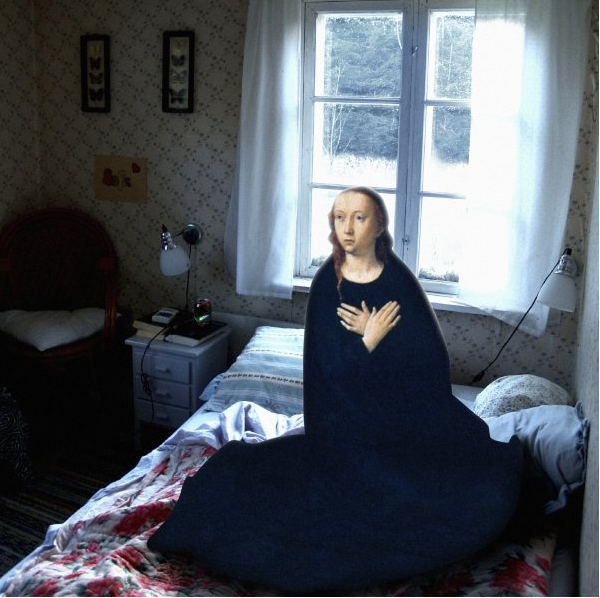
This is the spirit of Mary’s response to the message of the angel as portrayed in the third image I am sharing with you this Advent ~ Trygve Skogrand’s photo-collage, pictured above. The artist has skillfully placed a traditional painted figure onto a contemporary scene, juxtaposing an image of something old within a contemporary setting. We see a simplicity and spirit of humility in Mary’s posture, as she kneels in her plain gown. In the plain ‘bed-sit’ room in which she prays, we notice her uplifted eyes. They are now focused on the divine source of the message she is receiving.

Attentiveness is key to meaningful perception, just as we find in the Gospel reading for the third Sunday in Advent. John the Baptizer sends his disciples to Jesus with what should be our most persistent question ~ “Are you the One?” ‘Are you the One for whom we are looking, and whom we are awaiting?’ Notice Jesus’ response: “Go and tell John what you hear and see…” For they only hear and see if they are attentive. This is one reason why the Church sets aside this season of Advent ~ to encourage our attentiveness, so that we can hear and see, and then accept God’s Word to and for us.

“Let it be as God would have it.” Let things be as God wills. Let God be God! Perhaps nothing will be so hard in our lives, as to say those words in faith and in humility. Our pride objects. Our desire to be at the center of reality intrudes. But to say, “Let it be…,” in faith and in humility, is to return to the grace of the Garden of Creation. And it is also to begin to live forward into the fullness of the Kingdom, manifest in the New Jerusalem, as God will have things be.


The image above is a detail of Trygve Skogrand’s photo-collage, Bedsit Annunciation (one of my favorite artistic renderings of the Annunciation). This post is based on my homily for the Third Sunday of Advent, December 15, 2019, which can be accessed by clicking here.

… always and everywhere …

(An earlier than usual post — for your Thanksgiving Week!)

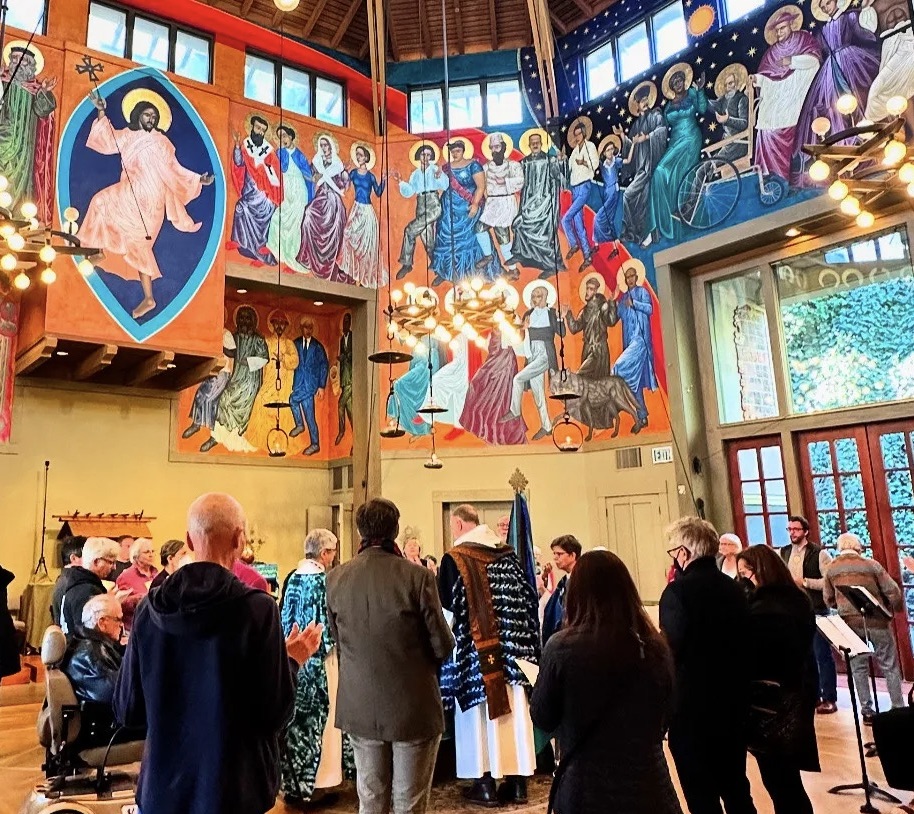
A lively celebration of the Eucharist, or The Great Thanksgiving, at St. Gregory of Nyssa Episcopal Church, San Francisco

It is right, and a good and joyful thing, always and everywhere to give thanks to you, Father Almighty, Creator of heaven and earth.” So begins the body of one of the Eucharistic Prayers in The Book of Common Prayer, as used in Episcopal Churches for the celebration of Holy Communion. “Always and everywhere” – these words regarding giving thanks remind us of the characteristic posture of the Church, and of all of its members, whether at worship in their parishes or at work or play in the world around them.

When Baptized Christians gather for a celebration of the Lord’s Supper, they remember that “the Lord Jesus on the night when he was betrayed took bread, and when he had given thanks (eucharistesas / εὐχαριστήσας), he broke it, and said, ‘This is my body which is for you. Do this in remembrance of me’ (1 Corinthians 11:23-24).” What we as Christians do in a formal way, when gathered for the Eucharist, enacts our normative way of shaping our whole lives. Which is always and everywhere to offer thanks to God for mercy and grace, and for God’s love poured into our hearts by the Holy Spirit. For we seek to live as we pray: Offering thanks to the Father, through the Son, in the power of the Holy Spirit.

“Give thanks in all circumstances; for this is the will of God in Christ Jesus for you.” Paul shares this counsel in his first letter to the Thessalonians (5:18). These words are sometimes mis-remembered as saying, “for all circumstances.” The difference between the two prepositions, in and for, is significant. In our daily rounds, it is very difficult for most of us to be thankful for adverse circumstances and experiences, and we find it hard to reconcile their occurrence with the oversight of a loving God.

Yet Paul believed in the doctrine that we call Providence. He firmly believed that the evil conditions and events that we experience in this life are not in themselves acts of God, imposed upon us by the divine will. Instead, they are things that are allowed to occur by a God who loves us and who intends our good. This is clearly a mystery to us, on this side of the veil separating us from the eternal.*

Another Eucharist at St Gregory of Nyssa

As we well know, the society in which we live in the United States sets aside one day of the year as a public holiday that is called Thanksgiving Day. Its history lies in a presidential proclamation by Abraham Lincoln. Yet, regardless of the circumstances of its origin, the day is widely celebrated by many who are unfamiliar with its history, and who may identify with traditions, practices, and holidays passed on from other cultures. This is only proper, as giving thanks is a universally human act. The people and circumstances, and the particular reasons for it, may all differ. Yet, the spirit of the act is the same.

I have heard it explained, that the sanctuary candle we see in the sanctuary of some churches is to remind us that God is present. The implication of this explanation might be misconstrued in such a way as to suggest that God’s presence elsewhere might not be as assured. Yet, the explanation can also be understood positively, as saying something like this: “This candle is here to assure us of God’s presence. We keep a candle here lit perpetually to remind us that God is always and everywhere present, even in the darkness or when we are alone elsewhere.”

Celebrating Thanksgiving Day can bring with it a similarly positive understanding. We give thanks formally, as a nation of many peoples, on one day of the civil year as reminder that giving thanks should be natural for us every day of the year. And the thanks we should offer are for the good things we enjoy with those whom we know and love, but also for things, people, and even institutions, about which we may be indifferent or even disapproving.

Gathering for a shared meal in the context of a spirit of thanks

In this spirit, I would like to share a prayer found in The Book of Common Prayer, that is principally used in the closing portion of the rites for Morning and Evening Prayer. It is therefore not specifically designated for use in observance of our national celebration of Thanksgiving Day, though it could be. This is a prayer intended for use everyday, and is a fine one for us to use at our celebrations this week:

Almighty God, Father of all mercies,
we your unworthy servants give you humble thanks
for all your goodness and loving-kindness
to us and to all whom you have made.
We bless you for our creation, preservation,
and all the blessings of this life;
but above all for your immeasurable love
in the redemption of the world by our Lord Jesus Christ;
for the means of grace, and for the hope of glory.
And, we pray, give us such an awareness of your mercies,
that with truly thankful hearts we may show forth your praise, not only with our lips, but in our lives,
by giving up our selves to your service,
and by walking before you
in holiness and righteousness all our days;
through Jesus Christ our Lord,
to whom, with you and the Holy Spirit,
be honor and glory throughout all ages. Amen.


*A note about the distinction offered above, regarding what God allows: Readers may wish to consider the way that Aristotle, and others since, have distinguished various dimensions of the idea of ‘cause,’ or causation (four dimensions have been articulated in the Western tradition). “Efficient cause” is the familiar form of the word cause, as in causing a row of dominos to cascade forward. “Final cause” can be conceptually helpful, especially as we think about God drawing persons and events toward their fulfillment in Christ. In this sense of the word cause, instead of our thinking of God as pushing events forward, some of them good and some perhaps bad in our eyes, God summons, and pulls toward the future, those people and things that may be made whole in Christ (ie, those that are open and willing recipients of his Grace), to their true end.

The Beauty of ‘Something Further’

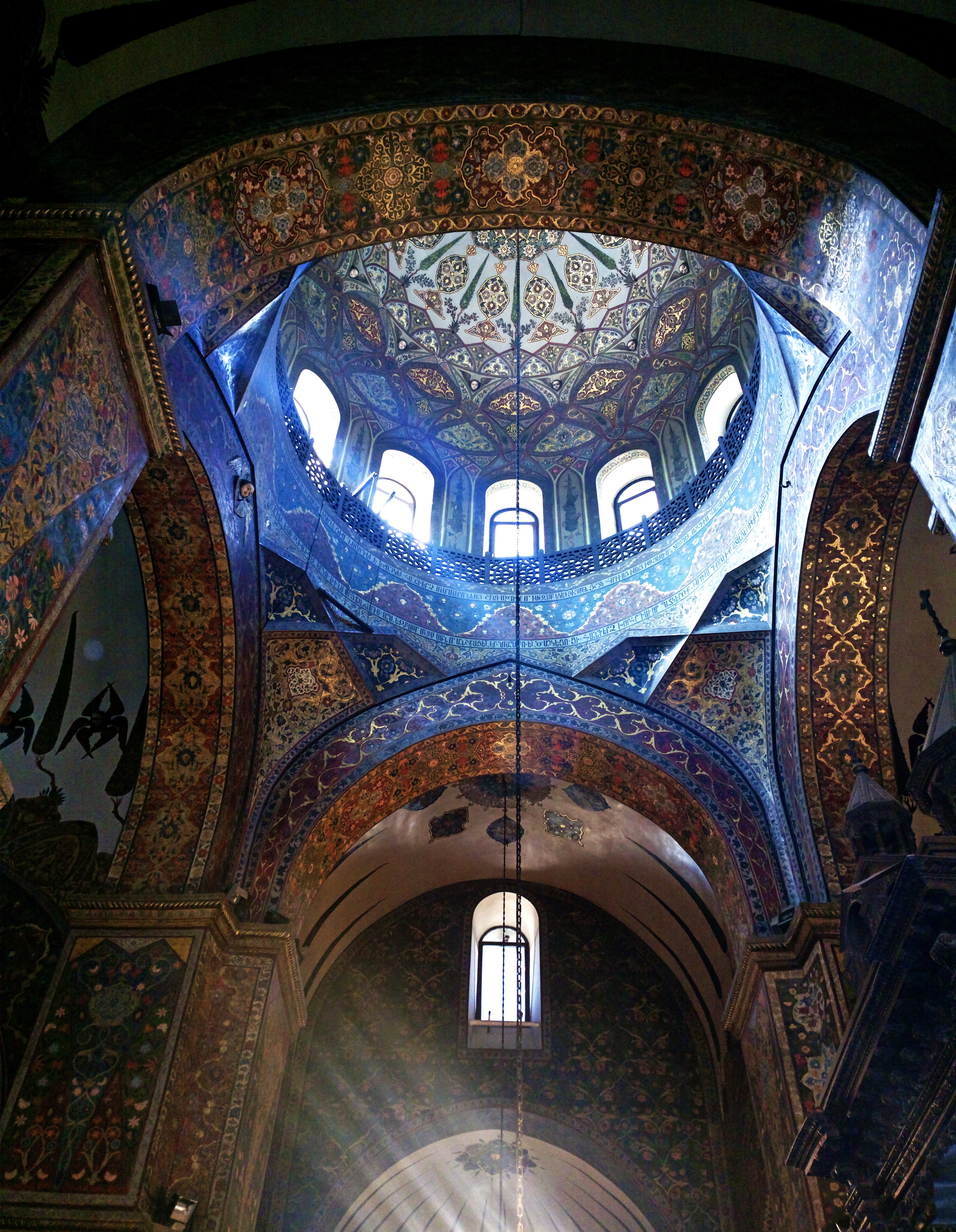
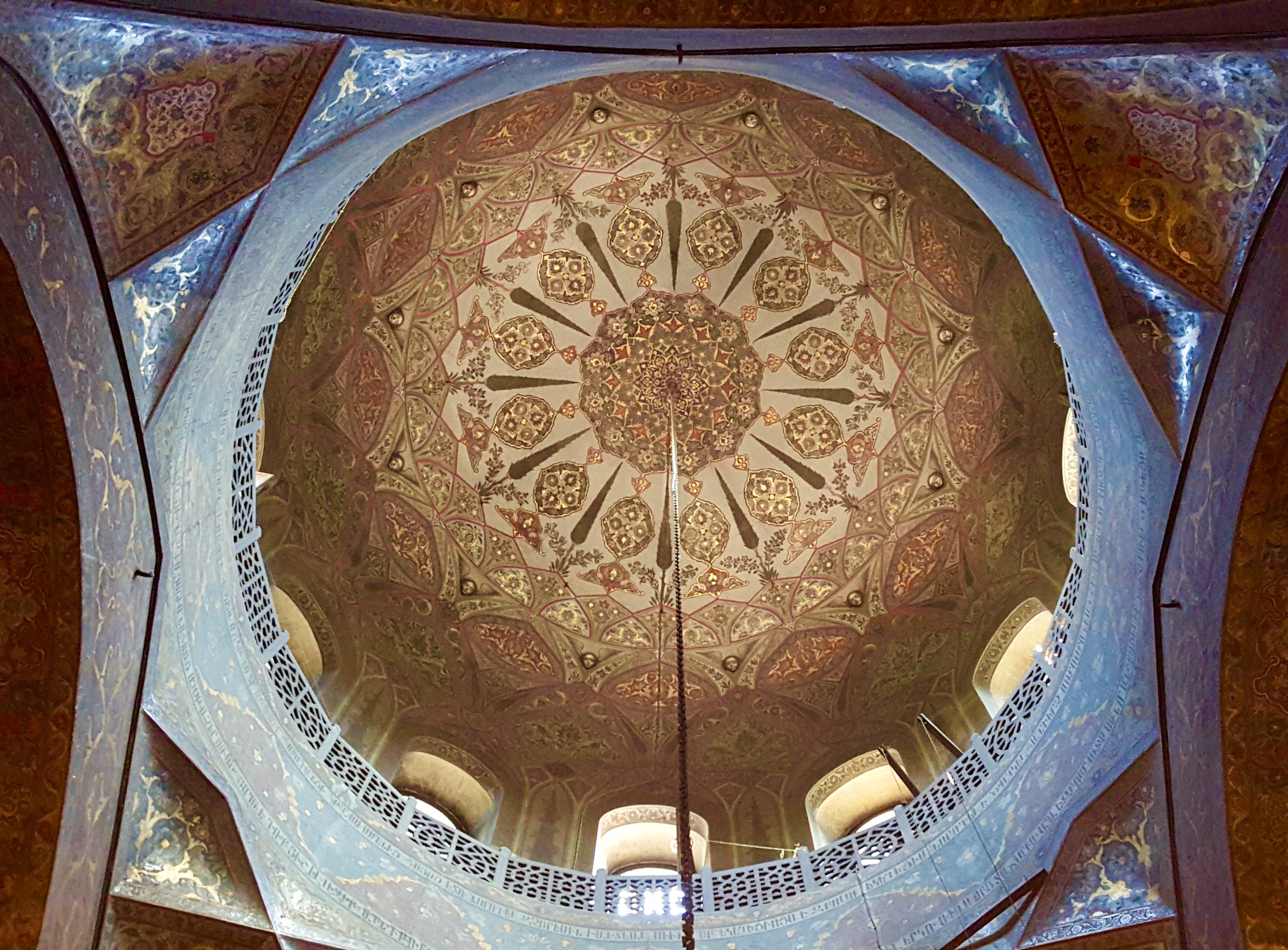
An interior dome, Etchmiadzin Cathedral, Armenia

{This past week I had the honor of offering a homily at the funeral of my longtime friend, Tom, a neurosurgeon and person of faith. What follows is a portion of my homily.}

People in our culture who have been trained in the sciences and who work in medicine can face a particular challenge. They can find it hard to grapple with the intangible aspects of the spiritual life. Walker Percy is a great example of someone who overcame this apparent divide. For Percy, like Tom, was very smart and educated in the medical arts. Like Tom, Percy came to see something very important: we rely upon science to explain too much of the world. And, if we are honest and sensitive in our inquiry, we come to see how – through science alone – we cannot understand ourselves.

Tom, with his advanced work in surgery and in neurology, knew far more about our brains than most of us will ever know. And yet, he also was quite aware of the limits to such knowledge. He was sensitive to how ‘our minds,’ though inextricably connected to our brains, always somehow transcend what we know about brain function. And therefore, despite our continuing advances in understanding neurophysiology, there remains this ineffable, something further, about what it means to human, this thing that non-specialists like the rest of us, as well as priests and pastors, call our souls.

Walker Percy might have put it in terms like this: We can learn the names and composition of the myriad of chemicals that are a part of human brain function. And therefore, as conscious subjects, we can approach our brains as objects of study. Yet, paradoxically, we, as the subjects of our studies, can never really know ourselves as the objects of our studies. There will always be something beyond, something further and equally real about ourselves, even if not fully measurable. And this ‘something further,’ believers call our souls. For even the most brilliant neurologist, even the most perceptive psychologist, can never really know him or herself, just as I – at least in this life, on this side of the veil – can never really know myself. Only God can. And only God does.

Etchmiadzin Cathedral

Physicians can map how our physical bodies eventually fail us when we get older, and cease to function ably as before. But what our physicians and scientists cannot map – at least not yet – is how our consciousness can survive this breakdown in our physiological function. Yet, somehow we continue in self-awareness, and in our awareness of others, especially that great Other One. And we will probably never be able to map, in terms we understand, how we come to have conscious contact with our Creator and Redeemer. For our conscious contact with God happens through God’s loving embrace of us. This is the embrace into which we have all been received – even if we are not conscious of it, and especially when we have not chosen to refuse it.

Tom consciously chose to recognize and accept this embrace. And he put his trust in it, even if – as an accomplished scientist – he could not explain it. For that, we honor him and his memory, as we continue to have fellowship with him in the Communion of Saints. And as we share with him in our celebration of the Eucharist. For just as our Lord Jesus continues to be present with us, and in us, so all the saints – both Tom and ourselves – and all the faithful departed stand before the throne of the Lamb. In Christ, we are joined together, so that we, too, might also be lost in wonder, thanks, and praise.

Tom knew and believed all this. And that is why we are here today. We can honor Tom for his contributions to the sciences and to the practice of medicine. Here, in this church and in this community of faith, we can join others in honoring what God has done in Tom’s life and work. And more especially, we are here today to honor what God is still doing in Tom’s continuing life. For Tom’s life and consciousness continue, even now, in and through God’s loving Grace and favor. His death is the veil that only appears to separate him from us. It disguises the way he is still really connected with us through his Baptism and ours, into Christ’s death and Resurrection.

Chora Church, Istanbul

Most enduring is this truth. And it is a truth for all of us to embrace: we have continuing fellowship with Tom, through Christ, in the power of the Holy Spirit. Thanks be to God!

A Church by Errol Barron in Gulfport

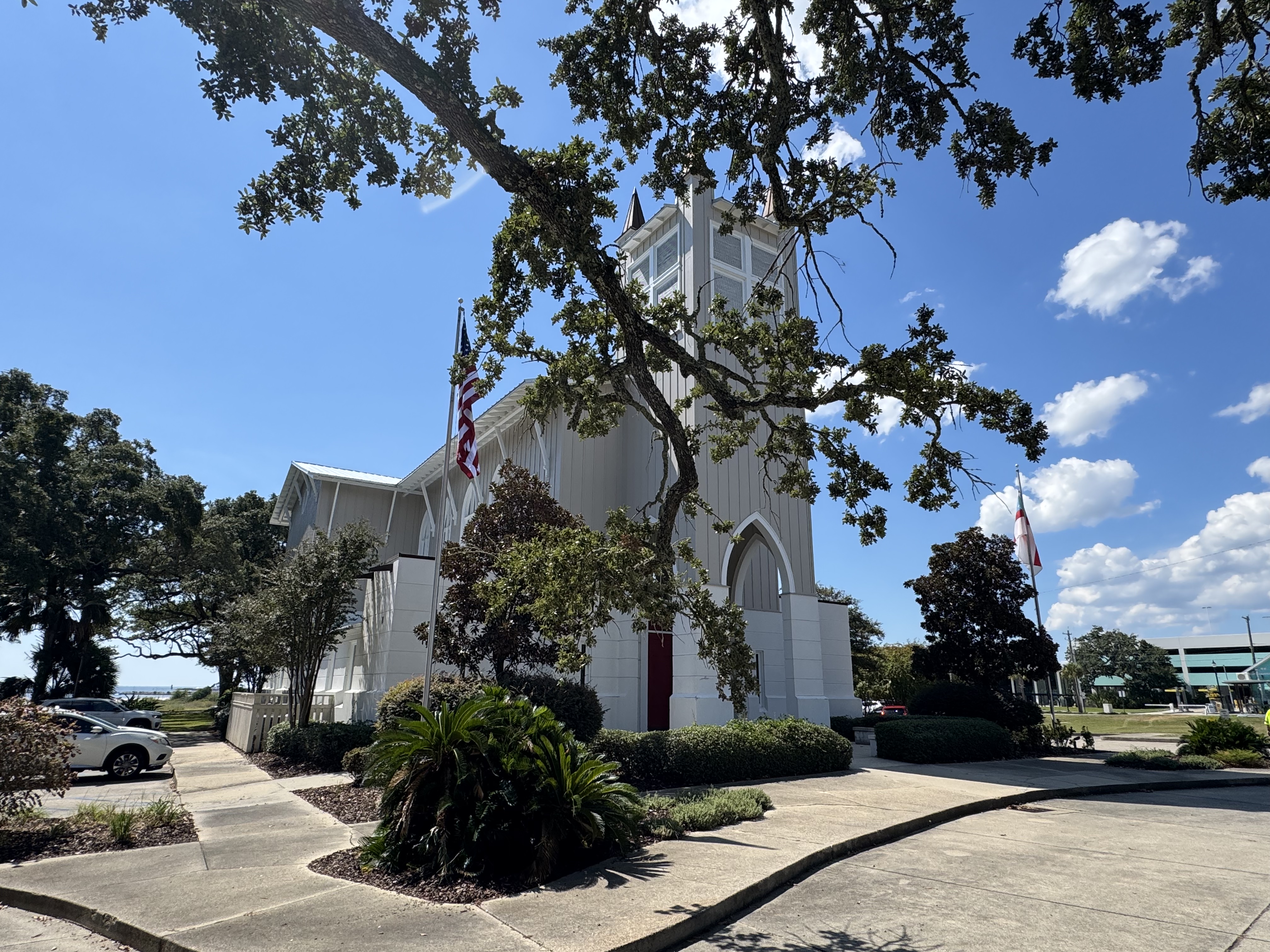
St Peter’s by the Sea, Gulfport, MS, designed by Errol Barron

Errol Barron’s work as an artist may be familiar to readers of this website based on some of his evocative New Orleans water color paintings previously featured here. His paintings of that city as well as of Tulane University, where he has taught for many years, provide strong indications that he is more than a skilled painter and draftsman, but also a trained architect. He has taught generations of architectural students at Tulane, and he has practiced his profession to great effect not only in this region but also overseas, with some houses of his located in Greece. Given Barron’s evident sensitivity to historical architecture and design features characteristic of this region, I was surprised to learn about a notable but unexpected feature of his resume. He worked for seven years with Paul Rudolph, architect of the well-known and oft-criticized Boston Government Services Center and a partial inspiration for the movie, The Brutalist.

St Peter’s by the Sea, interior

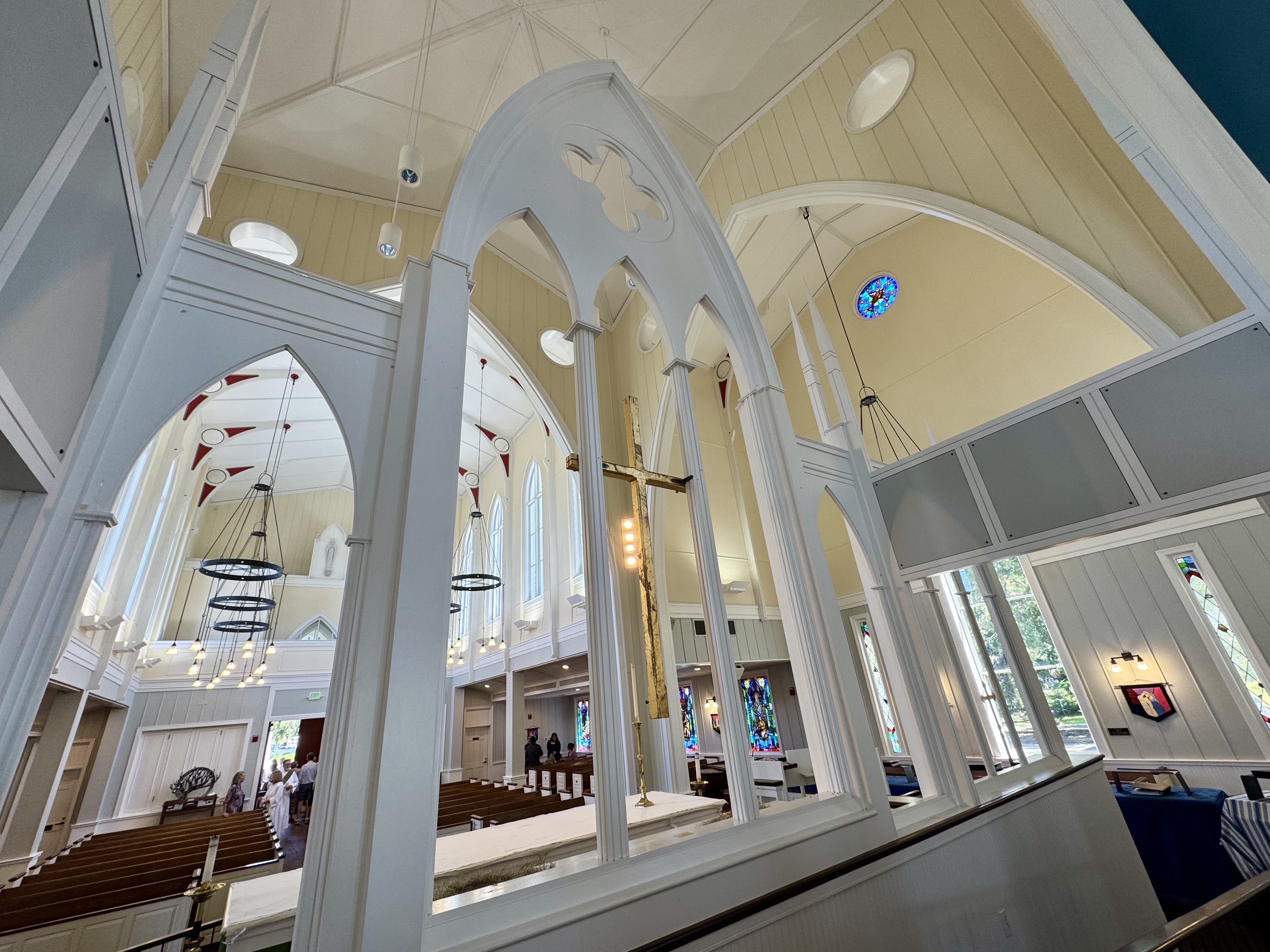
I was recently delighted to discover the Episcopal church in Gulfport, Mississippi, St. Peter’s by the Sea, and that Errol Barron was its architect. It is a gem of a church, and a very successful design that incorporates traditional ecclesiastical elements associated with European Gothic churches along with features reflecting contemporary liturgical renewal. I have heard people refer to this style of church building as Carpenter Gothic, and as Southern Gothic, and the labels seem to fit well. The worship space exudes an appreciation for traditional forms while harmoniously blending them with a contemporary focus upon light, color, and the greater participation of worshippers in flowing open spaces.

The main altar with the ornamental rood screen

Visitors to the Washington National Cathedral, and similar churches of Gothic-revival style, may recognize the particular heritage that stands behind the floor plan of St Peter by the Sea. At the National Cathedral, and in its medieval forebears (such as London’s Westminster Abbey), an arched stone ‘rood screen’ separates the chancel and choir (beyond the screen) from the nave where the congregation is seated. When, in the 1960’s, the liturgical renewal movement began to influence changes in the worship arrangements of these buildings, a new main altar was often then placed in the nave, on the congregation’s side of the rood screen. Smaller gatherings for weekday services could still occur in the choir side of that screen, while Sunday gatherings for the principal Eucharist would be celebrated in the nave, with the clergy, altar, and liturgical action proximate and visible to the congregation.

A view of the ceiling and woodwork above the choir

Though St Peter’s by the Sea is a comparatively recent building, its design reflects something of the historical sequence described above. Instead of an imposing stone rood screen, shielding the chancel and choir spaces beyond, Barron has designed an ornamental arched screen of light-colored wood that suggests rather than imposes separate areas within the overall space. This allows the evocative blue canopy of the ceiling over the chancel to draw one’s eyes forward, toward the visible clear windows at the liturgical ‘east end’ of that space behind the chapel altar, facing the seashore.

Further, the notably narrow, even sharp-looking, wooden ‘spires’ protruding above where the choir chairs are placed enhance the upward sense of lift in the nave, complemented by the radiant cream and white color scheme above where the congregation sits. Light pours in through clear windows above, while delicately fashioned and dangling wrought iron fixtures provide supplemental illumination for evening services and in poor weather.

A view toward the nave from the choir, through the rood screen

On the Sunday of my recent visit, I was told that the congregation numbered about 145, and I estimate that the nave would comfortably seat about 200 people, though it could probably accommodate more. With the Gothic-inspired longitudinal floorplan, evident when one approaches the exterior of the building, a visitor might expect a rather narrow and linear worship space. Such an initial impression of the likely effect of the interior spatial arrangement is overcome by a number of subtle but effective design choices made by the architect and those who worked with him.

Accompanying the verticality of the large open area above the center of the nave are the seating areas adjoining the side aisles, taking the places of side chapels found in many medieval Gothic churches. The relatively low height of the box pews enhances the sense of horizontal width created by these adjacent seating areas, which provide relatively unobstructed views of the altar and lecterns. I also found the acoustics within the worship space to be well-suited for music as well as for public reading and speaking.

I am drawn to the ethos of historical churches; I am enthused by many examples of modern architecture; and I appreciate the fruits of the liturgical renewal movement. In my experience, a successful blend of these three things is not always found in contemporary buildings designed for worship and intended for the enhancement of congregational life. In his design for St. Peter’s by the Sea, in Gulfport, Mississippi, and in his supervision of its restoration after Hurricane Katrina, Errol Barron has achieved just such of a desirable synthesis.

A representative side window incorporating stained glass window fragments recovered after Hurricane Katrina

The Beauty of Witness

Memorial sculpture commemorating the Martyrs of Memphis

This week, on September 9, we observed a significant date on our personal calendar by celebrating the birthday of one of our sons. September 9 was already a notable date for us beginning some years before his birth, after our move to Memphis in the summer of 1983. During those years, the date became associated with an addition to the Episcopal Church Calendar that has readings appointed for it in our Lectionary. September 9 is designated as the feast of The Martyrs of Memphis: Constance, Thecla, Ruth, Frances, Charles Parsons, and Louis Schuyler.

To those unfamiliar with its history, the official title for this feast day may suggest dramatic images of early Christian saints contending with ferocious animals and or human adversaries in the name of the Faith. Which then raises questions about whether, perhaps, the Memphis in question was the one in ancient Egypt. Yet, the name designation for this day can be instructive for all of us because it may remind us of something we once learned – that the etymological root of the word martyr lies in the ancient Greek word meaning ‘witness.’ Hence, those persons we commemorate on the Church’s Calendar because of their examples of Faith are remembered for being especially compelling witnesses to God’s redemptive mission in Christ, regardless of whether they faced circumstances that might have led to a heroic death.

The Martyrs of Memphis provides an occasion for us to remember the men and women who remained in Memphis to minister to those with whom they faced together the ravages of a severe Yellow Fever epidemic, from which they could have fled to safer places elsewhere. Unknown to them was the fact that this horrible plague was a mosquito-borne infectious virus, and not something arising from ‘swamp vapors’ or bad city air. Among the faithful persons who succumbed to the fever, and who are remembered on the feast day of September 9, are the four women named in the feast’s title who were community members of the Sisters of St. Mary, Father Charles Parsons, the last remaining Episcopal priest in the city, and Father Louis Schuyler, who came as a volunteer from New Jersey to take Parsons’ place and join the Sisters in ministry.

Monument by Harris Sorrelle, in the Memphis Martyrs Park, overlooking the Mississippi River

Words from the collect (or principal prayer) for the feast day of the Martyrs of Memphis capture well why these particular individuals are named among so many others – known and unknown – who shared their faith as well as fate: “We give you thanks and praise, O God of compassion, for the heroic witness of the Martyrs of Memphis, who, in a time of plague and pestilence, were steadfast in their care for the sick and dying, and loved not their own lives, even unto death…”

The generic character of the title for this significant feast day was chosen to help us also remember that the number of those who died in the epidemic, not only in Memphis, but up and down the Mississippi River and beyond, numbered in the thousands. Memphis’s historic Elmwood Cemetery, its oldest, has a particularly moving monument that complements the contemporary riverside sculptural composition by Harris Sorrelle (displayed above). At Elmwood, instead of having an impact upon the use of anonymous and aptly dark-colored figurative silhouettes, as Sorrelle’s sculpture does, the cemetery monument provides just paragraphs of words, stating in plain but moving terms the reality that lies below where cemetery visitors walk (as the following image attests). As the Elmwood monument notes, at least 1,400 Yellow Fever victims are buried in nearby unmarked mass graves.

Martyrs monument in Elmwood Cemetery (clicking the photo will provide an expanded view of it)

The faithful witness of those who died ministering to and with others among the Yellow Fever victims in Memphis in the 1870’s can have the effect of prompting us to reflect on the very different circumstances in which we live, with our advances in medicine, healthcare, and social services. Nevertheless, the COVID crisis of 2020, and its lingering legacy, can also remind us of our mortality, our higher calling to seek godly life in its fulness, and to be faithful companions with and to those less fortunate than ourselves.

A state-provided historical marker that includes use of the word ‘martyr’

Additional note: a tragic-comic aspect of the Yellow Fever’s impact upon Memphis was another pre-scientific belief (in addition to the ‘swamp vapors’ theory regarding its origin) amongst those who remained in the city. It is said that those who seemed to have the lowest mortality rate were corpulent men who smoked cigars, the smoke from which may have warded off the mosquitos responsible for the plague’s transmission.

Our Doorway Into God’s Trinitarian Being

William Holman Hunt, The Shadow of Death (1870-73)

When we as Christians pray, we don’t simply pray to God. With faithful assurance, we pray with and through God! As Paul tells us, “When we cry, ‘Abba! Father!’ it is that very Spirit bearing witness with our spirit…” This is because, when we pray “to the Father,” we also pray with and through the Son. We are enabled to pray with and through the Son following our Baptism. For after Baptism, we are assured that we pray in the Holy Spirit. We therefore pray to God not ‘from the outside,’ but ‘from the inside’ of God’s own being and nature!

Well, how can this be? As we can easily discover, every Eucharistic Prayer in The Book of Common Prayer has a common shape. For all of our Eucharistic Prayers are prayed to the Father, through the Son, in the Holy Spirit. This is not an accident. Jesus modeled this in his own life, and particularly at the Last Supper.

When we repeat Jesus’ pattern, offered at that supper, we stand with him around the same table. And by his graceful invitation, we join his prayer to the One he called, ‘Our Father.’ Our prayer with him, to the Father, is in the power of the Spirit, the same Spirit he spoke about at that table. He modeled at that supper what grace means in practice.

Through the grace of the Holy Spirit, Jesus shares with us his own particular intimacy with the Father. Inviting us to stand with him as he prays, he offers the whole world back to the Father-Creator. By this, Jesus – and us with him – fulfills the divinely intended-but-failed stewardship vocation of the mythical Adam and Eve. And so, this is also our vocation, to offer up to our Father all that truly belongs to the Creator. Sharing with Jesus the grace of the Holy Spirit allows us to join him, the Son, in his ongoing Eucharistic vocation.

A good way we can live into the saving implications of God’s Trinitarian nature, is to engage in some creative imagining. Imagine that, in this moment, Jesus reaches out his hands to us. In reaching out his hands, he does not simply extend his greeting. Extending his embrace, he invites us to join him by standing with him, closely at his side. By his invitation, and our acceptance of it, he shares with us his own intimate and particular relationship with our Father.

And with this invitation, he gives us the power of the Spirit, making it a reality in our lives. Because the invitation comes from him, the power of the Spirit he shares with us is God’s grace-filled power. Jesus makes all this actual and true, whether we feel it or not.

This Trinitarian shape of prayer is different from how we usually imagine prayer. Commonly, we think of prayer as our communication to God. When we feel aware of God and close to God, we speak to God of what is good and well and of that for which we feel thankful. And we often ask for help. But, when there seems to be a veil between us and God, we speak to God with lament or we complain, sometimes in anger. This concept and experience of prayer is ‘subjective,’ and therefore narrow. That is, it is a concept of prayer based primarily upon our personal, interior, experience. It reflects our experience of being the subjects of perception and action. Yet, as the Prayer Book Catechism teaches us, prayer is first of all responding to God.

As we learn from Jesus, and by the Holy Spirit, true prayer is not something we do, which we somehow manage to achieve through our faithfulness, devotion, or energy. True prayer is something we allow God to do within us. True prayer is the kind of praying that we find God already making real within us through the indwelling Grace of the Holy Spirit. The Father and the Son and the Holy Spirit are constantly engaged with one another, in what the Eastern Christian tradition calls ‘a dance,’ a perichoresis. Prayer involves being drawn into this dance. Prayer is sharing in the Trinitarian relational being of God. Prayer is participation in the community of fellowship that exists within God’s own being.

The Trinitarian pattern of our lives rests upon the Trinitarian shape of our prayers. We can accept Jesus’ invitation to stand with him. We then experience his own fellowship with the Father, in the grace-filled power of the Holy Spirit. This enables us to live truly. To live truly, is to live to the Father. It is to live with and through the Son. And true prayer is to live in the power of the Holy Spirit.

And so, we seek to live in the way that we pray: to the Father, with and through the Son, in the Holy Spirit.

Note: This post is based on the Western Church’s observance of Trinity Sunday, on June 15, 2025. My title is based on a well-known metaphor found in John’s Gospel. The text here is based on my homily for that occasion, which may be accessed by clicking here.

My goal is to commend the assurance of hope that lies within the Gospel. And while being aware of concerns about the so-called ’scandal of particularity’ associated with Christianity and Judaism, we should be aware that God is free to offer a similarly positive spiritual experience to those of other religious traditions, or of no particular tradition with which they may identify. I hope to address Hunt’s evocative painting, featured above, in a subsequent post.

Leo XIV: The Beauty of Possibility

If reading this by email, please tap the title at the top to open your browser for the best experience. Then, clicking individual pictures will reveal higher resolution images.

Pope Leo XIV, upon his election

As an Anglican, I join other non-Roman Catholics in hoping and praying that the new Bishop of Rome will live fully into the beautiful opportunity he has been given. His new office brings with it a symbolic role for all Christians, to be a principled unifier and peacemaker. In this era, that will surely be a challenge.

People of good will seek truth where it is to be found. We want all persons to live in harmony with one another, and with the beautiful world in which we find ourselves. We see this spirit of inquiry and discernment exemplified in many Christian leaders, as well as in non-Christian leaders like the Dalai Lama.

At heart, we seek and desire to serve what Christians and Jews hold to be true regarding all human beings. For we believe that all persons were and are created in the image of God, and that despite the woeful effects of our sin, we all still bear that image, however much we may have lost likeness with God. This was the central insight that some Roman Catholic Christian thinkers, along with fellow spiritual travelers from other traditions, brought to the creation of the United Nations Universal Declaration on Human Rights.

Principal documents from the Second Vatican Council display this theme in abundance. These texts continue to inform and guide wise souls who are genuinely concerned about the numerous lingering and emerging problems within the worldwide Church, and in the many societies and cultures where Christians seek to serve Christ in all persons, and respect the dignity of every human being.

Pope Leo has in large measure the same opportunity that we all have. May he have grace to live and serve well, and may we remember the importance of our own often overlooked roles in seeking to do the same. Every day brings new opportunities to seek and serve what is true, especially as we come to know the source of all Beauty, Goodness, and Truth, in Christ.

As St. Richard, the 13th century pre-Reformation Bishop of Chichester (England), taught us to pray: “Dear Lord, of thee three things [we] pray: to see thee more clearly, to love thee more dearly, and to follow thee more nearly, day by day.” (text from The Hymnal 1982, yet familiar to many from the musical, Godspell)

We find the same words as part of a prayer found in the liturgy of the Roman Catholic Church:

MOST merciful Redeemer,
who gavest to thy Bishop Richard a love of learning,
a zeal for souls, and a devotion to the poor:
grant that, encouraged by his example,
and aided by his prayers,
we may know thee more clearly,
love thee more dearly,
and follow thee more nearly,
day by day;
who livest and reignest with the Father
in the unity of the Holy Spirit, ever one God,
world without end. Amen.

A stained glass window commemorating St. Richard of Chichester, found in the church of St. Saviour, Eastbourne, East Sussex, England

Easter Sunday 2025

If reading this by email, please tap the title at the top to open your browser for the best experience. Then, clicking individual pictures will reveal higher resolution images.

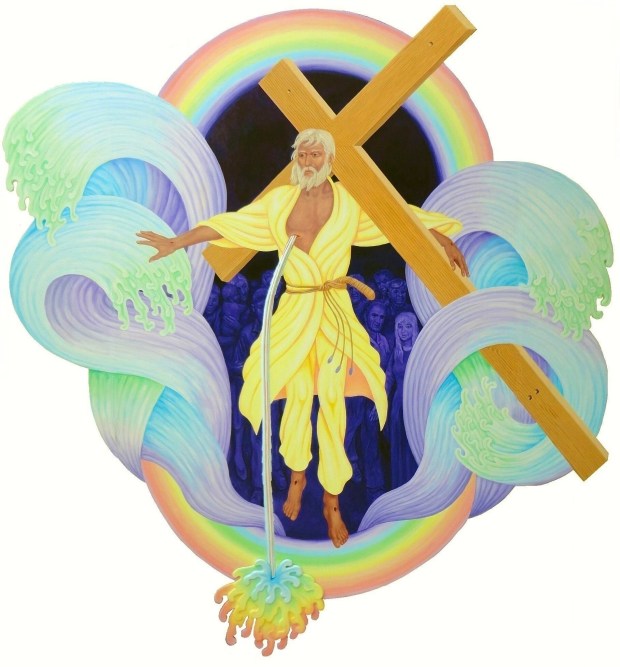
Peter Koenig, Christ as Second Moses (The Rainbow Resurrection)


Having six granddaughters, aged twelve down to two years, I’m very familiar with unicorns and rainbows. There is something about little girls and pastel colors that seems universal. So, when I go into the stores these days, and see all the Easter decorations, I think of our granddaughters. Because everything I see on display seems to be a rainbow of pastels, colors, and patterns, which our little girls love.

Well, as we know, our culture has tamed and domesticated Easter. Good Friday with its silence and its dark remembering is a challenge for us. For we seem to have enough darkness and bad news everyday as it is. And Easter Sunday morning provides the antidote we long for. For a few hours, and even for a few days, we can get a lift, a happy bounce, in a way that we hope for.

But deep down, we know that we want more than a brief lift in our mood, a brief enhancement of our sense of well-being. Our hearts truly long for a lasting joy. For we hope that though happiness may be fleeting, blessedness is abiding. And it was blessedness that Jesus was announcing and commending in his Sermon on the Mount. So here is our question this morning: How does the Gospel Good News about the discovery of an empty tomb help us find a sense of blessedness, and, in a way that might be lasting.

This morning I share with you three images by the English painter, Peter Koenig, images which I think can help us on our spiritual journey this Eastertide. This is our Easter journey toward discovering and experiencing a lasting sense of blessedness. For we discover the kind of blessedness that does not overlook the darkness, or pain, or sadness, that may be a real part of our lives. What we celebrate at Easter is not the simple replacement of what has come before, with something new that wipes away the past. We are not celebrating the spiritual equivalent of a vacation from daily life. For then, in a few days or weeks, we would have a sense that ‘we must now return to reality.’ The reality we celebrate today and throughout Eastertide is the reality of Resurrection transformation.

Now, how do we know this? We know this first from the reports of the Disciples – both the women and the men – who saw the Risen Lord. And who recognized him when they saw his healed scars – not absent scars, but healed scars! They were the first witnesses to the transformation that God brings to us in Resurrection Life. And Resurrection Life is God’s great culminating chapter of what we call Salvation History.

So let’s set our spiritual awareness within the sweep of biblical Salvation History. Here, I offer you a simple phrase with which to help identify and to remember the heart of this mystery. “Through the waters of death into a new covenant life with God.”

Left side panel for Christ as Second Moses

I invite you to look at Peter Koenig’s painting, Jesus as a Second Moses (or, The Rainbow Resurrection), along with its two glorious side panels. Here we notice several details, at least one of which will direct our thoughts toward Easter. We readily notice the rainbow, along with the pastel colors at the top and bottom of the central panel. These – of course – suggest the pastel colors we associate with Easter cards and Easter eggs, and other holiday decorations.

But let’s remind ourselves of what that rainbow first represented. In Salvation History, a rainbow came after a forty day period of massive death and destruction. Most of what we would consider to have been ‘life on earth’ was destroyed and lost, most people, and almost all animals and plants. Noah and his family, and the animals on the ark, traveled through the waters of death into a new covenant life with God. That death, however extensive, however gruesome and abhorrent, was and never would be the last word. God’s Word is – and always has been – a word of promise, a word of covenant. Where we aim for good, things often seem to go bad. Yet, God always aims for good, and achieves good.

Next, we should think of Israel, walking between and through the waters of death at the Red Sea. This brought them to Mt. Sinai, and to the great new Covenant between God and Israel, where blood was sprinkled upon the altar of God, and also upon God’s people. They were then led on a forty year journey through the wilderness to the threshold of their Land of Promise.

This was the moment when Joshua and God’s people crossed the Jordan. This water crossing echoed and recalled our forebears’ two prior journeys through the waters of death into a renewed covenant relation with God. Israel’s renewed covenant relation with God upon the west bank of the Jordan, within the Promised Land, signaled their desire to be faithful to God, and to God’s ways, no matter what.

Right side panel for Christ as Second Moses

And yet, the next most significant event embodying this pattern was the baptismal practice of John at the same river Jordan, centuries later, and Jesus’ own Baptism, by John. Of those who came out to John, many if not most of them were Jews by birth and also upbringing. To them, baptism was foreign. For baptism was what Gentile converts did, not Jews! And so, for them to submit to, and receive, John’s Baptism, was a genuine act of living into God’s holy covenants with their ancestors. Yet it was also a submersion into the waters of death ~ death to old ways and old ideas, as well as death to certain prior social and family relations. For John pointed to the renunciation of sin, and a return to God’s ways. It was also the path into a re-newed covenant life with God.

Jesus’ own acceptance of Baptism at the hands of his cousin, John, symbolized something other than a personal need of his. Scripture instead suggests that Jesus, himself, chose to live into this moment. He did so out of his deep identification with all of us, in what would become his world-wide family. Through John’s ministry, and in Jesus’ acceptance of it, Jordan waters once again became a symbol ~ a symbol of going through the waters of death to sin, and acceptance of a renewed or new covenant life with God.

And so, when each of us was or is baptized into Christ, we join all of these faithful people who came before us. In Baptism, with them we cross through the waters of death, into a new covenant life with God.

This may prepare us to acknowledge how we are portrayed in Peter Koenig’s painting. For we are represented by those depicted as standing in the purple shadows, behind the ‘Christ-as-Moses’ figure. We are people who live and walk in darkness until we meet the true light, the Light that comes into the world to enlighten everyone. On what, then do we base our hope? Surely, it is on the hope represented by the fruit of Jesus’ death and Resurrection.

The Son of God embraced the human body, and he became one with it. His body has become the Body we have embraced, and with which we have become one. The Body of his transformation has become the Body of our own transformation. His death and Resurrection was and is our doorway into a new life. This is what this day and our liturgy are all about.

Alleluia! Christ is Risen!


Additional note: here I offer my Easter homily, shared this morning at Grace Church, St. Francisville, LA.

Good Friday 2025

If reading this by email, please tap the title at the top to open your browser for the best experience. Then, clicking individual pictures will reveal higher resolution images.

Stanley Spencer, The Cruicifixion (1958)


(I am offering here my Good Friday homily for this year, based on one previously shared)

In the passion reading we have just heard, we are reminded of the dark spectacle of what human cruelty can accomplish. With Jesus, it was a vain attempt to obliterate the most beautiful human being who ever lived. Thank God, we have no photographs of the horrifying things that were done to him, but only paintings. But consider this paradox: the beauty of art has provided a way for us to a reflect on one of the darkest examples of human violence.

Paintings of our Lord’s Passion seem divided into two broad groups. There are those concerned to portray the grim reality of Roman execution. And, there are those inclined to explore and express the inner redemptive significance of what happened.

At the center of any portrayal of the Crucifixion of Jesus is an inescapable fact ~ it was an act of political and judicial violence, where the forces of earthly injustice pretended to act in the name of human truth. The corollary to this is how Jesus’ subsequent Resurrection restored heavenly justice in the name of divine truth. Paintings of Jesus’ Crucifixion, and those of his Resurrection, usually give attention to his wounded body, even though his wounds then appear transformed on the Third Day. After all, this is one way the disciples recognize him after his death. How the death-marked body of Jesus looked after his resurrection, also provides a preview of his appearance at the end of time.

Charles Wesley’s Advent hymn, “Lo! he comes, with clouds descending” offers words that also apply to Good Friday.

“Every eye shall now behold him,
robed in dreadful majesty;
those who set at nought and sold him,
pierced and nailed him to the tree,
deeply wailing, deeply wailing…
shall the true Messiah see.

Those dear tokens of his passion
still his dazzling body bears,
cause of endless exultation
to his ransomed worshippers;
with what rapture, with what rapture
gaze we on those glorious scars!”

It is natural to imagine how the people directly responsible for Jesus’ death, from Judas and the high priests, to Herod and Pilate, might be overcome with grief at the triumphal Second Coming of the Lord. Those who pierced him might feel themselves pierced by awakened guilt and remorse. Indeed, for every one of us, seeing the fruit of our mischief and misdeeds can provoke us to tears.

But I think Wesley was getting at more than repentance and contrition. Surely, seeing the full beauty of the glory of our Lord, with his wounds transfigured, will also summon our tears — but with tears of joy. Wesley, prayerfully and with sensitivity, has given voice to the profound power of beauty. Especially when it is discerned in the most unexpected of places – in the face and body of the crucified One. Love… the most profound love beyond human imagining, is manifest in the face and gestures of the crucified messiah. For he reaches out his hands even to forgive those who have tortured and sought to kill him. This is the most beautiful thing we could ever see.

As we pray in a Morning Prayer collect, “Lord Jesus Christ, you stretched out your arms of love on the hard wood of the cross that everyone might come within the reach of your saving embrace…”

Perceiving all this helps us make sense of the paradox at the heart of Jesus’ Crucifixion. For, in it, we perceive the dramatic juxtaposition of serenity with antagonism, of beauty with its dark opposite, and of moral good with apparent evil. We can see this in two paintings I have included with your worship bulletin: Hieronymus Bosch’ painting of Christ Carrying the Cross, and Stanley Spencer’s 1958 painting, The Crucifixion. Looking at them, I encourage you to join me in asking an awkward question: with which person or persons in these paintings do we identify?

Hieronymus Bosch, Christ Carrying the Cross

Though some 500 years apart, both painters portray the tranquil appearance of the peaceful heart of Jesus, even in the face of vicious hostility. And like Bosch, Spencer helps us see what the beautiful One in our midst sometimes provokes. Especially when the shining light of his presence exposes the dark shadows within and around us. For his light sometimes prompts fierce anger and envy, as well as a callous indifference to cruelty and suffering. Things of which we are all capable. And we are likely to have much invested in denying this ugly truth. Strangely, when confronted face to face with the divine opposite of our perversity, we will either fight the light that we encounter, or surrender to it. The Passion narratives give us examples of those who resisted and even fought against the Light of the World. For we sometimes fight against the disturbing possibility that Jesus will conquer our pervasive ungodliness. And so, consciously or not, we try to do away with his godliness.

An encounter with true beauty can be unsettling and troubling, especially if we have already settled for so much less. We may often hope for the triumph of good over evil, that beauty will overcome darkness, and serenity will displace antagonism. But we cannot find it within ourselves to do more than hope. We cannot achieve the redemptive resolution for which we haltingly reach out with our feeble hands and hearts.

It is not an accident that the figure of Jesus in Stanley Spencer’s painting visually recedes in the foreground, while those who oppose and crucify him grab our interest and attention. Spencer, after mastering traditional realism, adopted what he called a neo-primitive style. He was a gifted colorist, and highly proficient with composition. And so, as Spencer has rendered him, Jesus’ skin tone and color roughly match that of the wood of the cross, as well as the clothing of the man with the hammer swung over his head. Spencer’s rendering of the Lord’s skin tone and color also match much of the sky and the ground below… including the tunic of Mary Magdalene, prostrate at the foot of the cross. This forms a compelling visual symbol. For Jesus totally identified with us, in his Incarnation, and in his Crucifixion. His crucifixion symbolizes his complete joining with us, and with our world of wrenching hurts and suffering.

In fact —as we see in Spencer’s composition and coloring— it is precisely because Jesus blended in so well with everyday life, that those who opposed him could literally gain the upper hand, ultimately with hammers and nails. (For he did not call down an army of angels to help him, as he could have.) But this is the marvel of the incarnation of our God in Jesus. The fullness of divinity thoroughly became joined with our fallen humanity. As the Gospels attest, this joining was so complete that many did not notice or have regard for his divinity. When we do notice his total identification with us, when we come face to face with the truth it represents, we have either one or the other of two reactions. We throw ourselves down in humility before him. Or, we seek to throw him down, to humble him before us.

These paradoxes are brought to their greatest prominence when, as he predicted, he is lifted up. His lifting up is his glorification, and the glorification of God within him. Yet his lifting up is on a cross, and in the agony of a humiliating public execution. Here we see the ‘strange beauty’ of our Lord — a beauty for which churches and museums better prepare us than do our malls and most TV shows.

So, let us “behold the fair beauty of the Lord, and … seek him in his temple.” We will find him! We will find him in the “temple” that he promised to raise in three days.


Additional note: Those interested in further reflection on some of the Holy Week themes raised here might wish to read my prior post, “What God Can Do, and Is Doing.”

The Beautiful Spirit of my Friend, Renee


I want to share my continuing appreciation for the beautiful spirit of a friend with whom I have been a colleague in life and work for over twenty years, and from whom I have learned much. Renee was first a mentor to me, as someone who exemplified spiritual authenticity while also demonstrating leadership gifts that have come to be recognized in the wider Church and in the corporate world. Renee truly loves people in a genuinely infectious way. It is no surprise, therefore, that she is a natural team leader who is blessed with the gift of inspiring others to become more whole, and to take the pursuit of holiness more seriously.

Renee was raised in the Midwest and the Southwestern desert, but yearned for a wider worldview than what her family and her early educational and social communities seemed to offer. This has led her to pursue a great deal of travel throughout her life, a good bit of it overseas. She has always been a seeker who has moved through life with the humility of an inquisitive learner and perceptive observer. To me, these qualities are fundamental.

I got to know her as a fellow leader at conferences in what she and I humorously might call the ‘early days,’ when she sought to share her vision for mission and ministry with a wider community. I remember her approaching the task of assembling some fifty-plus plastic transparencies to be set upon an overhead projector {remember those?}. And yet, despite these kinds of challenges we commonly faced as conference presenters, her story and personal witness were always compelling. For she quickly made meaningful connections with others in ways that encouraged us to identify with what she had come to see and know, and then as things we could take on to value in our own lives.

Some personal details of Renee’s life-journey fortify my appreciation for who she is, and the person she has been open to becoming. After her childhood and subsequent education, largely shaped by life in middle America, she adventurously responded to a ministry opportunity that took her to a rural area in the Philippines. This was likely a significant growth opportunity as well as an early indication of some emerging directions in her future vision and work. In so many ways, she has had an inclination to approach ideas about what it means to live as a spiritual being who engages with this world in all its complexity, with curiosity and a compelling equanimity. I particularly value her intentional pursuit of aspects of Asian cultural and spiritual life, and her frequent travels to the far side of the Pacific. These pursuits stand out to me given my own childhood and adolescent experience of growing up in Japan.

As a practical example, her decision for many years to risk adopting a pattern of clothing that could by some be labeled as ‘cultural appropriation,’ was yet a sign of her openness to other and non-traditional ways of living and of seeing things. Based on a spiritual principle, she has also often led worship after removing her shoes. For her, these kinds of decisions regarding how she approaches daily life are not an affectation, and call attention to what she is focused upon and to those things in which she finds value, rather than to herself.

Having lived and worked for a period of time in the humid hill country of the Philippines, Renee has also been effective in encouraging church community in the comparatively arid rural areas of Idaho, the azure coastal region of central California, as well as in the rice-growing flat land of southeastern Arkansas. Throughout her life, Renee has been drawn most to the desert, and to the spirituality that can be found in places like where Abraham perceived the nearness of God, outside his tent on a bright starry night, and where Jesus confirmed his vocation while setting aside the alluring possibilities offered by the Enemy. Her regard for the divine Spirit, who is often best found in the desert and in desert-like places, provides insight about the abiding interiority of Renee’s spiritual character.

What particularly marks Renee as a learner and as a teacher is her remarkable capacity for creative but also sincere self-remaking. She has in many ways transcended perceived attitudinal ‘boundaries,’ and has not only grown but has flourished in her life-informed path, to the joy of many others.

I offer this with thanks for my friend, Renee Miller, who embodies a wonderful appreciation for ‘the beauty of holiness.’

Here are some words from Renee that I think capture well her positive view of her life and ministry: “My primary core value is attributing the highest motive to people’s behavior. This helps me stay in the place of unconditional love, and for me, there’s nothing more theological or beautiful than the reality and demonstration of love. It can transform even the ugly and horrific, and if not transform, at least lessen its power.” Surley, these are words that we all want to live by.