faith

Our Doorway Into God’s Trinitarian Being

William Holman Hunt, The Shadow of Death (1870-73)

When we as Christians pray, we don’t simply pray to God. With faithful assurance, we pray with and through God! As Paul tells us, “When we cry, ‘Abba! Father!’ it is that very Spirit bearing witness with our spirit…” This is because, when we pray “to the Father,” we also pray with and through the Son. We are enabled to pray with and through the Son following our Baptism. For after Baptism, we are assured that we pray in the Holy Spirit. We therefore pray to God not ‘from the outside,’ but ‘from the inside’ of God’s own being and nature!

Well, how can this be? As we can easily discover, every Eucharistic Prayer in The Book of Common Prayer has a common shape. For all of our Eucharistic Prayers are prayed to the Father, through the Son, in the Holy Spirit. This is not an accident. Jesus modeled this in his own life, and particularly at the Last Supper.

When we repeat Jesus’ pattern, offered at that supper, we stand with him around the same table. And by his graceful invitation, we join his prayer to the One he called, ‘Our Father.’ Our prayer with him, to the Father, is in the power of the Spirit, the same Spirit he spoke about at that table. He modeled at that supper what grace means in practice.

Through the grace of the Holy Spirit, Jesus shares with us his own particular intimacy with the Father. Inviting us to stand with him as he prays, he offers the whole world back to the Father-Creator. By this, Jesus – and us with him – fulfills the divinely intended-but-failed stewardship vocation of the mythical Adam and Eve. And so, this is also our vocation, to offer up to our Father all that truly belongs to the Creator. Sharing with Jesus the grace of the Holy Spirit allows us to join him, the Son, in his ongoing Eucharistic vocation.

A good way we can live into the saving implications of God’s Trinitarian nature, is to engage in some creative imagining. Imagine that, in this moment, Jesus reaches out his hands to us. In reaching out his hands, he does not simply extend his greeting. Extending his embrace, he invites us to join him by standing with him, closely at his side. By his invitation, and our acceptance of it, he shares with us his own intimate and particular relationship with our Father.

And with this invitation, he gives us the power of the Spirit, making it a reality in our lives. Because the invitation comes from him, the power of the Spirit he shares with us is God’s grace-filled power. Jesus makes all this actual and true, whether we feel it or not.

This Trinitarian shape of prayer is different from how we usually imagine prayer. Commonly, we think of prayer as our communication to God. When we feel aware of God and close to God, we speak to God of what is good and well and of that for which we feel thankful. And we often ask for help. But, when there seems to be a veil between us and God, we speak to God with lament or we complain, sometimes in anger. This concept and experience of prayer is ‘subjective,’ and therefore narrow. That is, it is a concept of prayer based primarily upon our personal, interior, experience. It reflects our experience of being the subjects of perception and action. Yet, as the Prayer Book Catechism teaches us, prayer is first of all responding to God.

As we learn from Jesus, and by the Holy Spirit, true prayer is not something we do, which we somehow manage to achieve through our faithfulness, devotion, or energy. True prayer is something we allow God to do within us. True prayer is the kind of praying that we find God already making real within us through the indwelling Grace of the Holy Spirit. The Father and the Son and the Holy Spirit are constantly engaged with one another, in what the Eastern Christian tradition calls ‘a dance,’ a perichoresis. Prayer involves being drawn into this dance. Prayer is sharing in the Trinitarian relational being of God. Prayer is participation in the community of fellowship that exists within God’s own being.

The Trinitarian pattern of our lives rests upon the Trinitarian shape of our prayers. We can accept Jesus’ invitation to stand with him. We then experience his own fellowship with the Father, in the grace-filled power of the Holy Spirit. This enables us to live truly. To live truly, is to live to the Father. It is to live with and through the Son. And true prayer is to live in the power of the Holy Spirit.

And so, we seek to live in the way that we pray: to the Father, with and through the Son, in the Holy Spirit.

Note: This post is based on the Western Church’s observance of Trinity Sunday, on June 15, 2025. My title is based on a well-known metaphor found in John’s Gospel. The text here is based on my homily for that occasion, which may be accessed by clicking here.

My goal is to commend the assurance of hope that lies within the Gospel. And while being aware of concerns about the so-called ’scandal of particularity’ associated with Christianity and Judaism, we should be aware that God is free to offer a similarly positive spiritual experience to those of other religious traditions, or of no particular tradition with which they may identify. I hope to address Hunt’s evocative painting, featured above, in a subsequent post.

The Challenge Posed by Eric Gill

If reading this by email, please tap the title at the top to open your browser for the best experience. Then, clicking individual pictures will reveal higher resolution images.

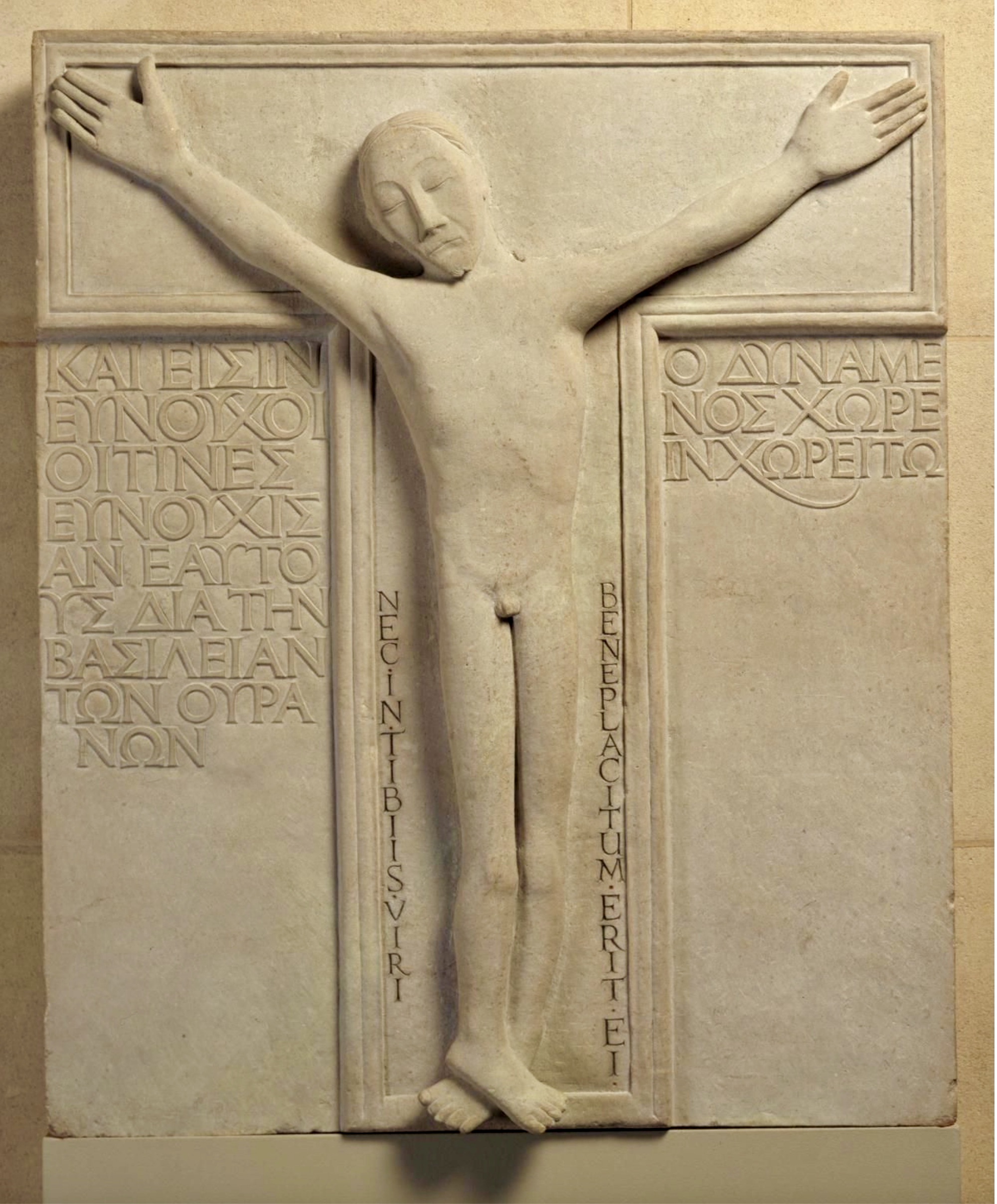
Eric Gill, Christ Crowned


To my mind, some of the most beautiful work in the area of graphic art was created by the British artist and craftsman, Eric Gill. The intractable problem posed by Eric Gill is not a legacy of his artistic output, but of his personal life. Largely unknown to those outside his family until about 50 years after his death, Eric Gill – by admission in his own unpublished writings – had engaged in personal behavior of a kind that most people would find not only abhorrent but, increasingly, as also criminal.

This is related to the larger problem posed by the work of artists, musicians, and architects whose work is seen as having been collaborative with tyrannical regimes (eg., the Third Reich, the Soviet Union). How do we view beauty in art that either depicts or is simply associated in some way with sin or with evil? (This is a matter I have previously tried to understand in relation to Picasso’s great painting, Guernica.)

To cite Scripture to the effect that “all have sinned,” may help us begin to locate the terrain upon which we need to address the problems stemming from Eric Gill’s biography, but it is not in any way to excuse his conduct. Though all sin is bad, and equally problematic in the eyes of God, not all sin is equal in its damaging effect upon others, and upon ourselves. The traditional distinction in moral theology between mortal and venial sins provides one way to try to parse some of these differences, while not excusing any forms or examples of sin, whether in ourselves or among others.

My purpose here is to invite reflection upon how we might appreciate Eric Gill’s religious art, as many did for several generations, without having our view of the merit of his work diminished by our moral evaluation of troubling ethical choices he made, and the lapses from good moral judgment they represent. In other words, and as an amateur student of the arts while also being a retired parish priest and former professor of moral theology, I wish to present some examples of Eric Gill’s art, letting his work speak for itself apart from ethical consideration of his personal life, and without ignoring the problems associated with the latter.

Perhaps my theme here can be summed up in this way: I invite you to benefit from the beauty of what Eric Gill created without asking you to overlook what we have learned about his private life. And I offer this invitation aware that some will not find it possible to accept.

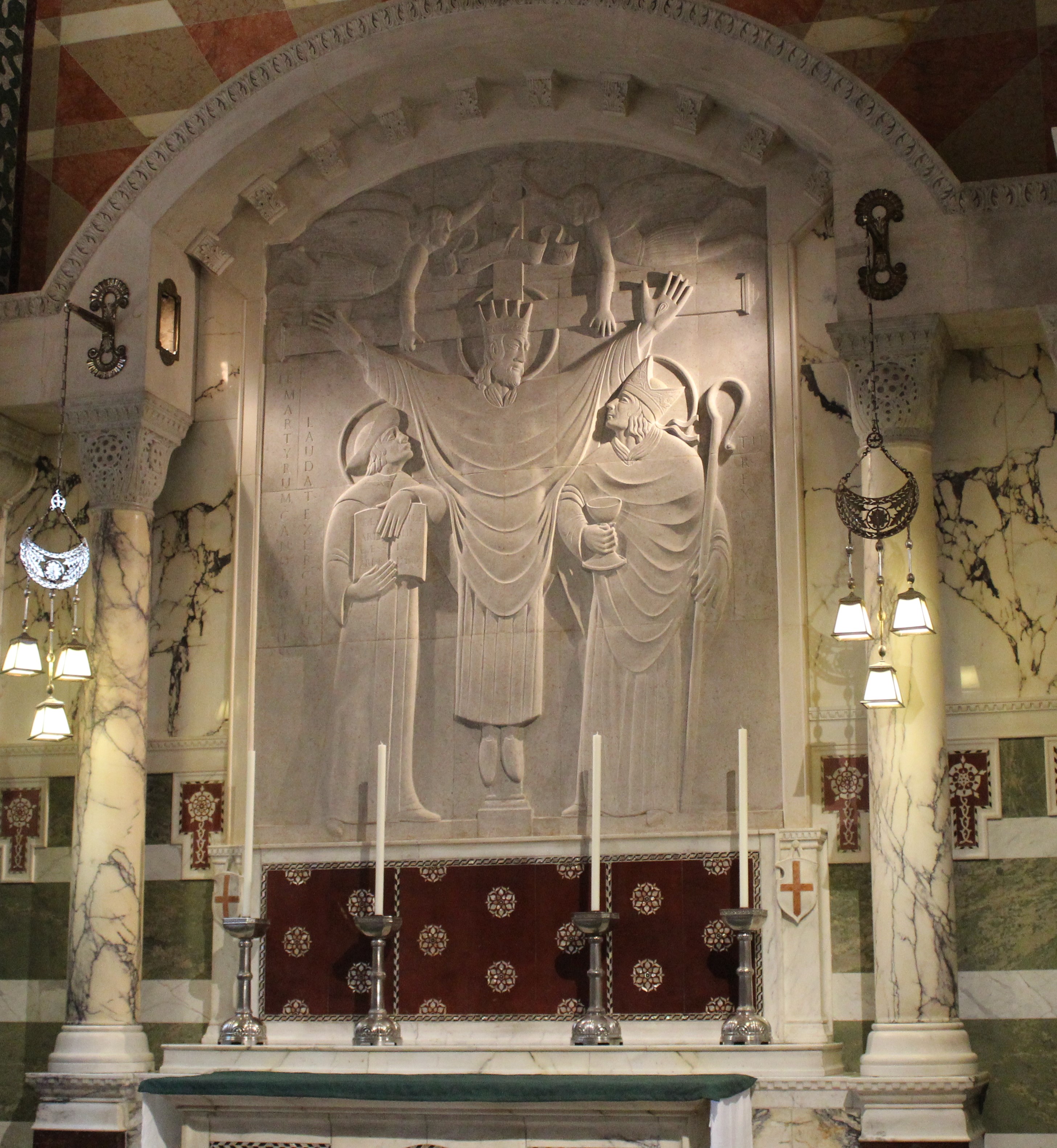
A sculpted carving by Eric Gill above the altar of the Chapel of St George and the English Martyrs, Westminster Cathedral, London
Eric Gill, Crucifixion
Eric Gill, sculpted relief panel from a series of the Stations of the Cross, Westminster Cathedral, London

As we consider some of his art, we should not overlook Eric Gill’s impact, at least indirectly, upon much of the daily life of the population of Great Britain (and elsewhere), in the form of three type faces he created. The most well-known is Gill Sans, named after its designer, and evident at almost every Tube stop in London. An effort to erase his work from the public eye, and replace it with alternatives, would require removing virtually every train station sign in Britain. It could be done. Should it?

Three fonts designed by Eric Gill

To put the problem I have raised here most bluntly, how can we appreciate the beauty in the holy art created by someone who behaved in a way most people would describe as sinful? I do not have a ready answer to this question. Note that, in what I have written above about Gill’s behavior, I have not gone into detail. Would that make a difference? If so, in what way?

And even if we refuse to give any amount of attention to Eric Gill’s artwork, we must still grapple with a timeless question: are there any unforgivable sins? Is anyone, because of his or her behavior, beyond the power of God’s redeeming love? Is it not likely that someone having Gill’s religious inclination also possesses a glimmer of moral awareness such that he or she might be open to repentance when – at the end of life – the person faces the awesome and undiminished light of God’s truth-seeking love?

Here is one thing that we can do: pray for the repose of the soul of Eric Gill, and for God’s Providential mercy.

In beginning to approach the questions I have raised here, I would start with some of the distinctions I shared above. I do not think we can deny this reality – that we, as people who are created in the image and likeness of God, and who have lost that likeness through the Fall and human sin, still bear God’s image however marred it may be by the corruption resulting from our sins. And, that we are still capable while in this life of acts and works of uplifting beauty.

Leo XIV: The Beauty of Possibility

If reading this by email, please tap the title at the top to open your browser for the best experience. Then, clicking individual pictures will reveal higher resolution images.

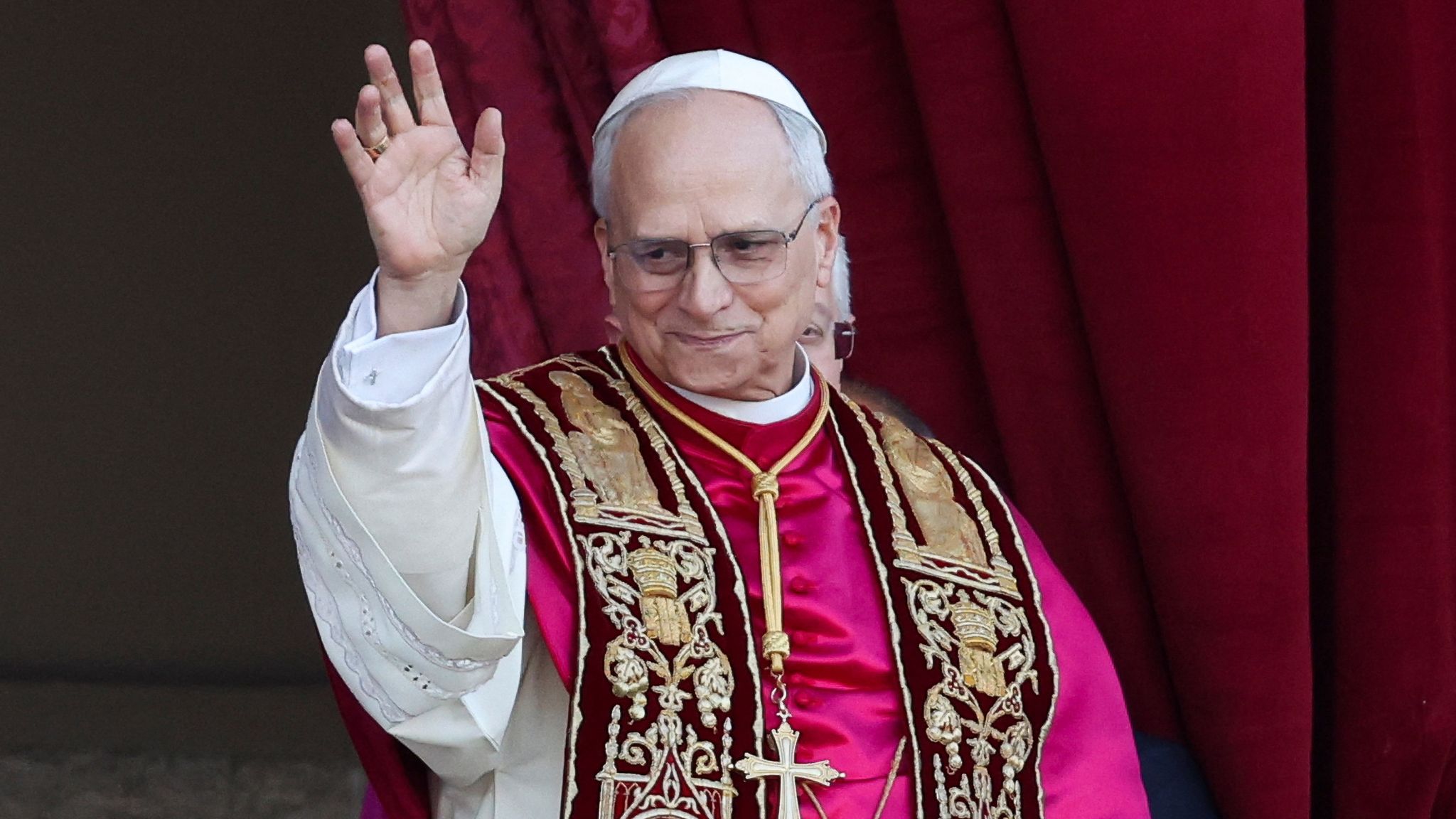
Pope Leo XIV, upon his election

As an Anglican, I join other non-Roman Catholics in hoping and praying that the new Bishop of Rome will live fully into the beautiful opportunity he has been given. His new office brings with it a symbolic role for all Christians, to be a principled unifier and peacemaker. In this era, that will surely be a challenge.

People of good will seek truth where it is to be found. We want all persons to live in harmony with one another, and with the beautiful world in which we find ourselves. We see this spirit of inquiry and discernment exemplified in many Christian leaders, as well as in non-Christian leaders like the Dalai Lama.

At heart, we seek and desire to serve what Christians and Jews hold to be true regarding all human beings. For we believe that all persons were and are created in the image of God, and that despite the woeful effects of our sin, we all still bear that image, however much we may have lost likeness with God. This was the central insight that some Roman Catholic Christian thinkers, along with fellow spiritual travelers from other traditions, brought to the creation of the United Nations Universal Declaration on Human Rights.

Principal documents from the Second Vatican Council display this theme in abundance. These texts continue to inform and guide wise souls who are genuinely concerned about the numerous lingering and emerging problems within the worldwide Church, and in the many societies and cultures where Christians seek to serve Christ in all persons, and respect the dignity of every human being.

Pope Leo has in large measure the same opportunity that we all have. May he have grace to live and serve well, and may we remember the importance of our own often overlooked roles in seeking to do the same. Every day brings new opportunities to seek and serve what is true, especially as we come to know the source of all Beauty, Goodness, and Truth, in Christ.

As St. Richard, the 13th century pre-Reformation Bishop of Chichester (England), taught us to pray: “Dear Lord, of thee three things [we] pray: to see thee more clearly, to love thee more dearly, and to follow thee more nearly, day by day.” (text from The Hymnal 1982, yet familiar to many from the musical, Godspell)

We find the same words as part of a prayer found in the liturgy of the Roman Catholic Church:

MOST merciful Redeemer,
who gavest to thy Bishop Richard a love of learning,
a zeal for souls, and a devotion to the poor:
grant that, encouraged by his example,
and aided by his prayers,
we may know thee more clearly,
love thee more dearly,
and follow thee more nearly,
day by day;
who livest and reignest with the Father
in the unity of the Holy Spirit, ever one God,
world without end. Amen.

A stained glass window commemorating St. Richard of Chichester, found in the church of St. Saviour, Eastbourne, East Sussex, England