Beauty of Creation

Reflections Inspired by Tiny Houses

A 14′ Tiny House inspired by Japanese Aesthetics (from the Baluchan website)

As earlier posts of mine attest, I have been interested for some time in the Tiny House movement, which has now become a widespread phenomenon. Whole Tiny House communities are being developed, and Tiny House construction designs have been proposed as an alternative approach to addressing homelessness. Reflecting on this movement, and the broad appeal examples of Tiny Houses seem to have, I have given some thought to what this development in small scale architecture may represent, and to what it may tell us about how we want to live.

I can see an impulse similar to the pursuit and enjoyment of living in a Tiny House in some attractive parallels, which also represent a quest for discerning a simpler way to live. Quite aside from a specific focus on contemporary examples of Tiny Houses, many people appear to have an interest in reading books like Thoreau’s Walden, or those by John Muir. I continue to meet folks who like the idea of having a small boat in which one can actually ’cruise,’ even on local lakes. And still others seem to share my fascination with living environments inspired by Japanese aesthetics.

An interior shot of the Baluchan Bonzai 14′ Tiny House

If these musings seem familiar, learning more about the Tiny House movement is worth pursuing. Here are some observations I have made in the course of my own reflections on the current popularity of this movement: 

First, the appeal of Tiny Houses has much to do with the process of rediscovering, and learning more about the beauty of living simply. And therefore, about more than managing to accept being without some things, but actually doing well with less. Marie Kondo’s videos and published writing have attracted a good deal of attention regarding the desirability of organizing our household belongings, and paring down what we have toward living with what we truly love.

Viewing and reflecting on examples of Tiny Houses can aid one’s discernment regarding needs vs wants. Most of us have probably considered this distinction from time to time, and have likely also experienced some frustration with our halting efforts to enact our reflection upon it. We know we have wants, which often masquerade as needs, while we may not sufficiently consider the potential value to us of having wants that are correlated with our needs. After all, a premise of this post rests on a paradox: the assumption that I not only want to live more simply, but that I may also need to!

The kitchen space between the bathroom and the small main living area

Here, briefly noted, are some potential benefits that may come from spending time in a Tiny House:

  • Living off the grid becomes a much more realistic goal when choosing to live in a Tiny House. Tiny Houses also allow for mobility in relation to one’s surroundings, even if it is not a frequently exercised opportunity. Changes in one’s locale can lead to learning opportunities.
  • Those who build their own or who choose to do maintenance work on a Tiny House are more likely to learn how to use, and use more ably, simple and hand-powered tools.
  • Tiny Houses are well suited as places in which we can experience solitude as a positive aspect of our lives, while also providing an excellent context for significant times spent with others. 
  • Living or spending time in a Tiny House may allow us to have increased time for personal reflection, and an opportunity further to discern our vocation, in addition to our more usual absorption with occupational concerns.
  • Tiny Houses therefore have the potential to be places in which we read more, and spend less time consuming social media or watching videos. While every living place for which we have some care requires time and attention, the theory behind choosing a Tiny House as a place to live assumes that we can devote more time to actually living, rather than preparing to live. Reading makes the world bigger and our lives richer.

For much of the above, and as a bothand rather than an either/or starting point, I commend considering adding a form of a ‘Tiny House’ to your present circumstances rather than making a radical change from them. Experimenting with what can be done with less, while also still retaining one’s present home, can be instructive. This can be accomplished by, for example, purchasing a used but well-equipped small RV. We have recently seen some interesting examples on the road, and ones that could fit in a standard home garage.

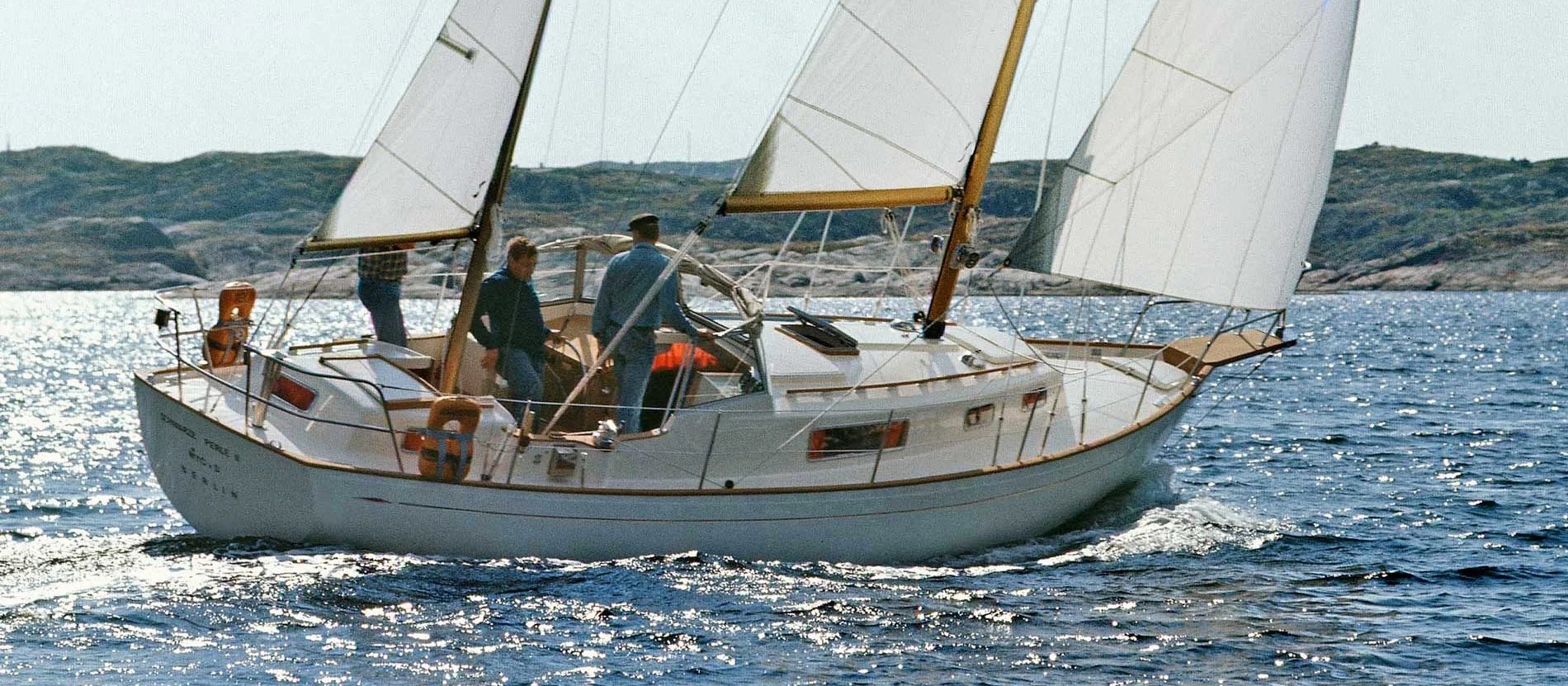
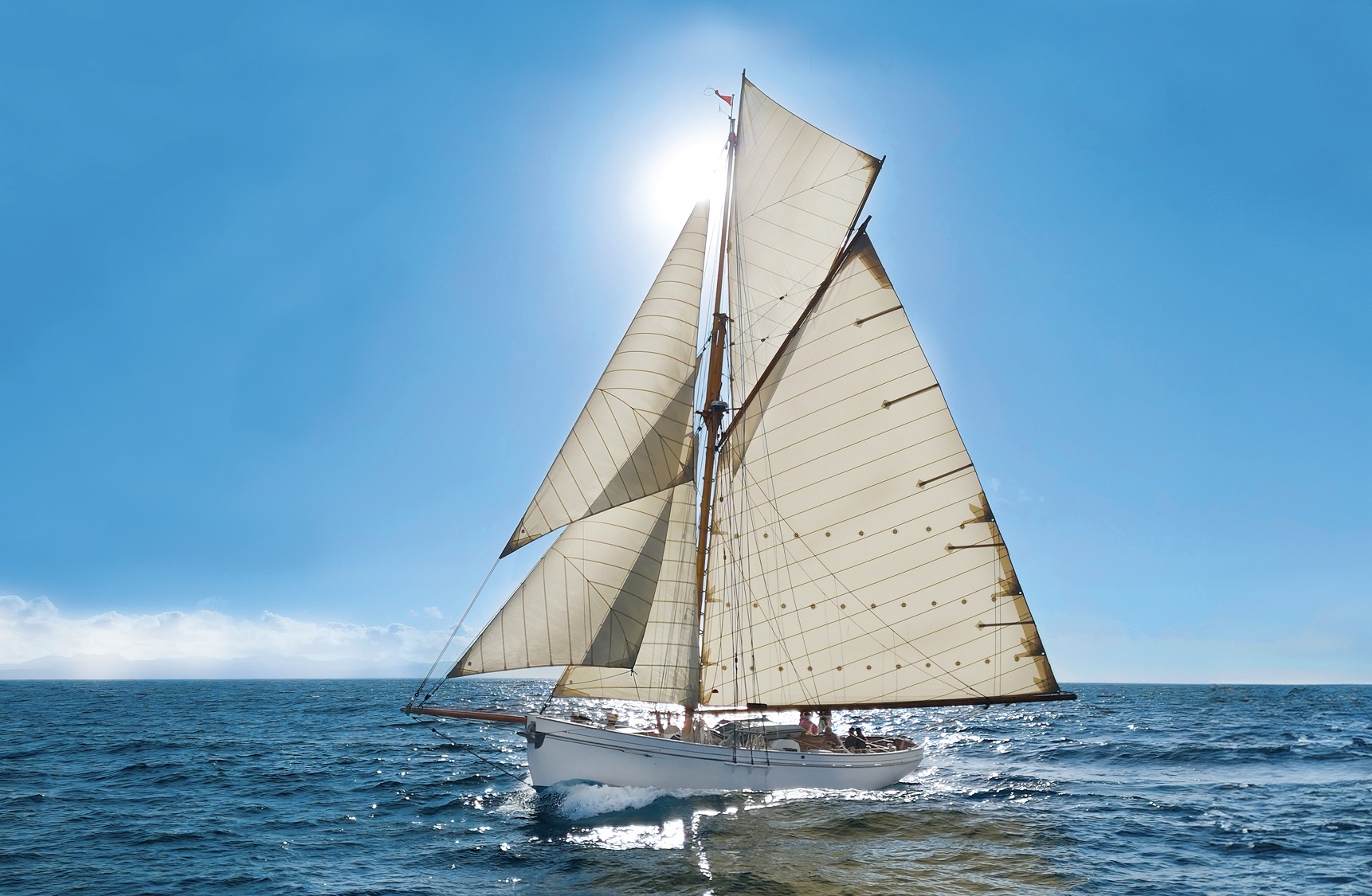
For us, it has been our 1988 24 ft trailerable sailboat that has provided this kind of learning opportunity. With its relatively small cabin (about half the length of the boat), comfortable berths (or bunks), a camping stove, cooler, portable toilet, and cockpit which serves as a small ‘back porch,’ we can meet most of our daily needs for a week or more at a time. The slip for our boat is under $200/ month, including electricity and water connections, if needed (ie, if the boat is not yet off-the-grid-ready, though our boat is now thus equipped). DAYSTAR has become our floating ‘tiny house’ or ‘cottage.’

Ably and effectively inhabiting this principle of beautiful simplicity is turning out to be a lifelong project for me, and I believe this is also true for others. I am a neophyte in the process. Perhaps my readers have some similar experience with this ongoing process!

The Act of Joy

An icon of Thomas Aquinas, by Nicholas Markell

A joy that many of us have occasion to experience – either directly or through friends and extended family – accompanies time with young children. Preschool and kindergarten teachers are by the nature of their work in the most favorable position to have this opportunity. The experience of joy we associate with time given in this way stands out for me because it is a shared joy – one shared with and inspired by those young ones who exemplify this virtue. For me, this experience has been awakened especially by my interaction with my granddaughters.

I have written previously about activities that I have enjoyed with our grandson. He shares being a grandchild of ours with six young ‘ladies’ in various stages of growing maturity. Here, I find myself musing about the wonder I have experienced with our granddaughters, who have been the source of some unique experiences for me. Having grown up with three brothers and no sisters, and having three sons and no daughters, I am encountering and learning things with my granddaughters for which I have not previously had the opportunity to experience first hand.

Among our granddaughters is one whom I like to describe as being ebullient. For she just naturally models energetic cheerfulness. She has her challenges, as we all do. But she approaches each new day’s activities with a joyfulness and positive spirit that are infectious. Though being a patient and engaging grandfather is still a growth point for me, I delight in her youthful exuberance.

An image that reminds me of my granddaughters among autumn leaves

I have mentioned before an icon of St. Thomas Aquinas that I particularly value (shown above). I have seen this image attributed to Brother Robert Lentz, but now believe it is by Nicholas Markell. This icon shows Blessed Thomas holding a small plaque with the following words: “Joy is the noblest human act.”

For many of us, joy is a welcome feeling and as such we think of it as something ‘that happens to us.’ Like love and forgiveness, joy therefore is generally an experience we anticipate receiving passively, and an experience for whose value we often rely upon feelings as our guide.

The beauty of Markell’s icon, and the quotation it features, is the reminder it provides that joy is also something we choose, something we do, and not simply something that we happen to feel. We rejoice; we can choose to enjoy; and we are able to express our joy about things we encounter or experiences that we have with others.

We experience joy when we read good books with our grandchildren

We live in a culture that tends to distrust expressions of joy, even though most people we know – and us with them – are sadly in want of it. Perhaps it’s because we encounter so few examples of spontaneous, genuine, and selfless joy, inspired by what we see around us. Is this because there is less beauty in the world these days, or are we less prepared to perceive it? My reflection and training incline me toward the latter belief. 

Joy is not one of the seven formally identified virtues taught to us by the greater Christian Tradition (among then, faith, hope, charity {or love}, prudence, justice, temperance and fortitude {or courage}). Yet, the traditional listing of virtues is not meant to exclude naming others, but rather to help us perceive their common source as well as their unity, being gifts given to us through Creation and through Redemption. Like other virtues, joy is a human capacity and a strength that we can develop through practice.

The rite for Holy Baptism in The Book of Common Prayer includes words that are prayed over candidates after they are baptized. Some of these words are particularly appropriate when thinking about the joy we often see expressed by children, but are also about something that we pray will be given to adult candidates for Baptism. In the rite, the officiant asks God to give the newly baptized persons “an inquiring and discerning heart, the courage to will and to persevere, a spirit to know and to love you, and the gift of joy and wonder in all your works.”

Here we discern a principal attribute of Beauty. In Beauty, among God’s works, we find a repository of joy and a source of wonder. For the beauty that we find in the world embodies and expresses our Father’s love for his Creation. Encountering this love brings us joy as we perceive its source and embrace him.

Today, I am thinking about the joy that each of my grandchildren encourages me to experience with them. I notice the natural joy that many children seem more able to find than do adults of my age. More readily, children delight in the world around them and in the experiences they are blessed to have. At the same time, and especially in this next phase of my life, I am reminded that joy – like Beauty, Goodness, and Truth – is not simply passively experienced. More importantly, joy is something that I want to – and can – practice.

So, with my grandchildren, I choose joy!

I close with a prayer attributed to St Francis, which speaks of joy as something we can contribute to a needy world:

Lord, make us instruments of your peace. Where there is
hatred, let us sow love; where there is injury, pardon; where
there is discord, union; where there is doubt, faith; where
there is despair, hope; where there is darkness, light; where
there is sadness, joy
. Grant that we may not so much seek to
be consoled as to console; to be understood as to understand;
to be loved as to love. For it is in giving that we receive; it is
in pardoning that we are pardoned; and it is in dying that we
are born to eternal life. Amen.

Two Architects Build Houses for Themselves

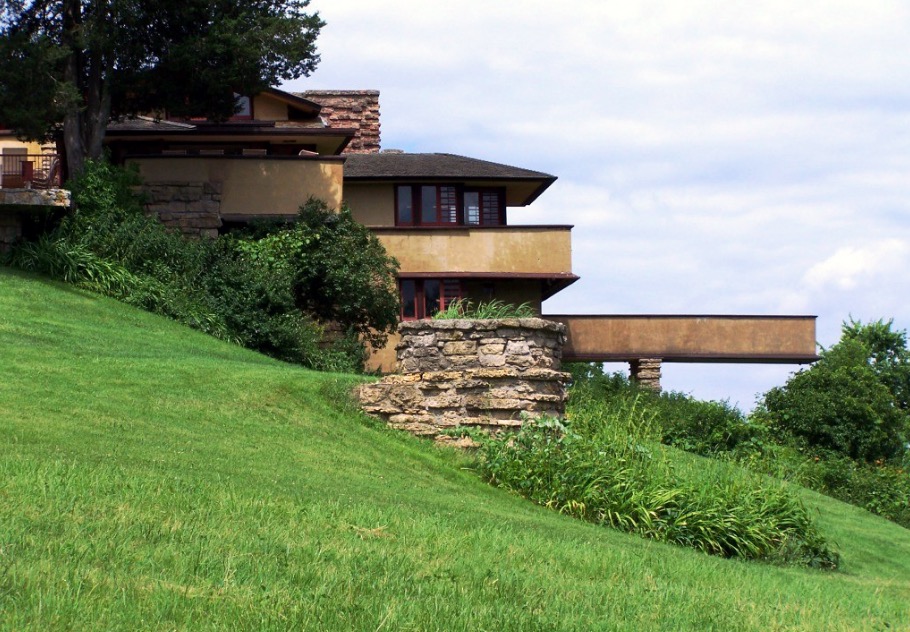
Frank Lloyd Wright’s Taliesin East, entry courtyard

Frank Lloyd Wright and Philip Johnson number among the most well known American architects of the 20th century. Both are remembered for their many commissions by others, for buildings constructed both in the United States and overseas. Notably, each of these men designed a house for himself and each reflects something of the respective architect’s vision for an ideal domestic building. The results differ dramatically and beg for some explanation, especially in the case of Philip Johnson’s Glass House.

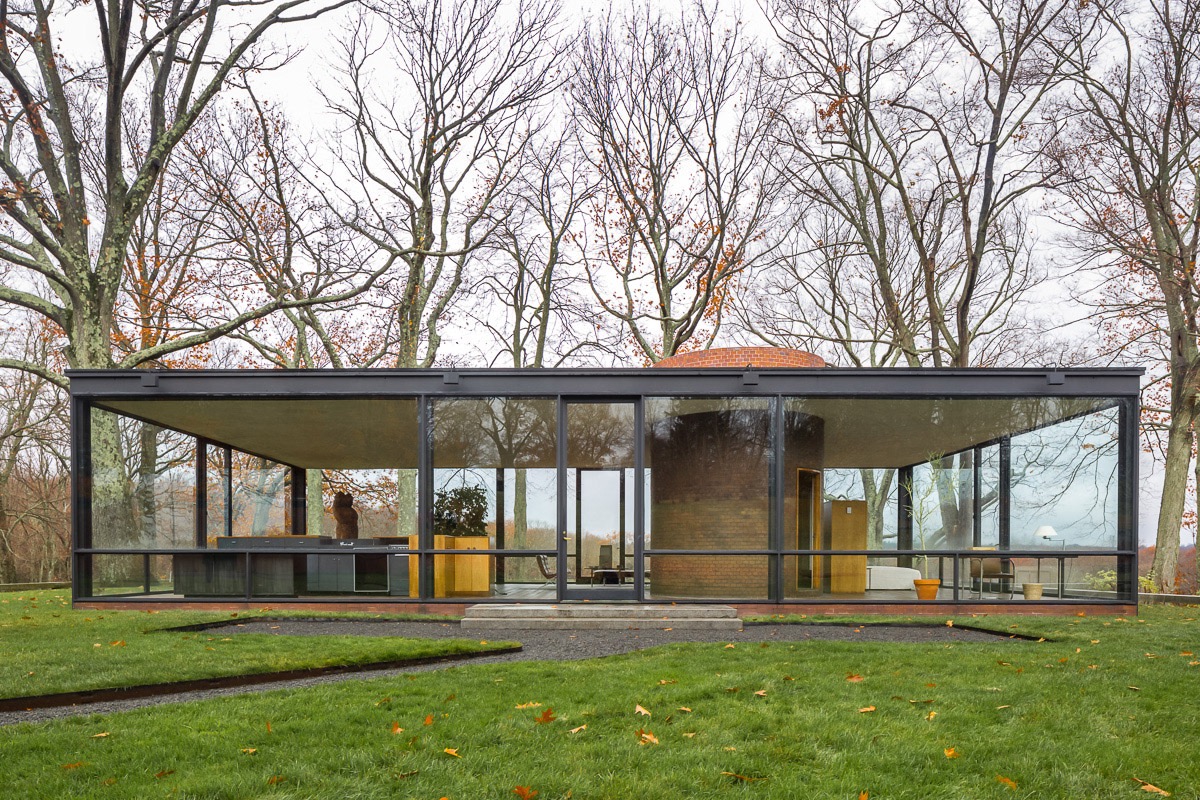
Philip Johnson, Glass House, exterior

To help appreciate the theoretical basis for these vastly differing houses, I find it helpful to draw upon a distinction made by the earthscape artist, Andres Amador (featured in a prior post). Speaking about his temporary compositions ‘sketched’ upon large stretches of beach areas at low tide, Amador refers to some of his works as “geometric” and others as “organic.” The geometric works display a quality readily suggested by the name for them, and reflect Amador’s training in math as an engineer. The organic works arise, he says, from the site, and he suggests that these pieces communicate their form to him. For me, Amador’s distinction can also be referred to as the distinction between pattern that is ‘received,’ as compared with pattern that is ‘imposed.’

Amador’s distinction between the organic patterns that arise from the site, and the geometric patterns that result from conceptual pre-planning, can assist us in perceiving some themes that are implied by the architectural designs produced by Wright and Johnson for their homes. In the case of Wright, he built Taliesin on family property in Spring Green, Wisconsin, in an area where he grew up and with which he had a deep attachment. Like much of his other work, Wright wanted Taliesin to appear as if it was an extension of the materials and features of the site in which it is placed, being an ‘organic’ development of a human habitation within a natural setting. Wright’s intent is evident in the way that the horizontal bands of stucco on the facade, as well as of the limestone in the foundation and walls of the building, parallel and mirror the layers of stone found on the site.

Exterior elevation of the house, as if emerging from the site (photos above and below)

While Philip Johnson’s architectural practice was located in New York City, he planned to build a house for himself and weekend guests in nearby New Canaan, Connecticut. Johnson’s Glass House clearly reflects his indebtedness to the work of Ludwig Mies van der Rohe, and the European modernist movement in architecture generally known as the International Style. Employing Andres Amador’s distinction, the Glass House clearly embodies a geometric conceptual basis, with the result that the building does not so much emerge from the site but instead sits upon it as an imposed human-made form. The carefully clipped and very flat lawn, and the linear walkways serve to emphasize the distinction between the structure and its natural surroundings. This leaves the Glass House appearing to be like a sculptural object that has been placed on a plaza, or like a vase on a smooth table-top, rather than as something arising from within its setting.

The Glass House, exterior view (above), and interior view (below)

Brief attention to the history of these two buildings provides further insight. Wright lived at Taliesin much of his life, while also retreating to Taliesin West in the Arizona desert during the winter months. Over the years, he gathered a sizable community of apprentices who lived and worked with him at both locations. To this day, the architectural fellowship that is part of his legacy maintains both homes and studios. By contrast, though Philip Johnson first lived part-time in the Glass House himself, he soon discovered how it was largely unsuitable for that purpose, other than for entertaining guests in the living and dining areas of the structure. Given the sudden notoriety of the house, the constant presence of unwelcome visitors and architecture-minded prowlers made it problematic for every exterior surface of the house to be comprised of glass. Johnson soon made it a habit to stay in the adjacent bunker-like Brick House, designed for the site as a guest house, when spending time in New Canaan.

Obviously, it is easy to stress the marked differences between these houses designed and built by Wright and Johnson for themselves. Andres Amador’s dual approach to his earthscapes may help provide a reminder of the way that both-and thinking can aid how we consider certain objects of interest. Wright’s organic home and studio, emerging within and receiving inspiration from its site, and Johnson’s temporarily lived-in Glass House, imposed as a geometric sculpture upon its site, share a common distinction. Regardless of functional considerations, each house has its own way of displaying beauty, and both remain among a small list of internationally recognized architectural achievements of historic significance.


Note: A short introductory video about Andres Amador and his work, giving examples from both of the geometric and organic categories, introduced above, has been produced by KQED of San Francisco. It can be found on YouTube ( https://youtu.be/T_tIG5mo1DM?si=0MkjxkTEK48eC-aV ).

Taliesin East has been named a UNESCO World Heritage Site, and the Glass House is a National Historic Landmark.

Andy Warhol visits the Glass House

Nature & Grace, and What We May Learn About Beauty

Found Beauty: a colorful palette in front of a local garden store

I continue to be grateful for things I have learned from my former teaching colleague, Ralph McMichael. Among the insights I have gained from him is one way to sum up some basic understandings that people have of the relationship between Nature and Grace. Whether by these names or not, we all seem to have a concept of this relationship. Nature, an all embracing category, is the common term widely used to refer to what Jews and Christians call Creation. Grace is a term that some use to refer to the presence of the supernatural realm, as it may touch upon or be found in Nature.

There are many ways of thinking about the relationship between these terms, and what they represent. Among them are four basic concepts or models of the interaction between them, which Ralph McMichael often presented in his teaching at the seminary. His articulation of these four ways can be summed up with four words: Compatible; Opposition; Identification; and Fusion. The most common understanding of the interaction between the supernatural realm and the natural world is represented by the first two terms. I will explain.

Many of us were raised in social environments where this interaction was seen as one in which the supernatural, or Grace, only episodically touches aspects of the natural world, or Nature. Based on the first model, some of us tend to see this interaction as involving the compatible yet occasional way that Grace touches Nature. It touches Nature here and there, unpredictably ‘gracing’ the natural realm in which we find ourselves. In this first model, Grace is a friendly presence to and upon those beings or things that it visits, making up for something of value that we seek or yearn for. 

In the second model of the relationship between Nature and Grace, the latter is once again seen as episodic, touching Nature just as unpredictably. But, in this case, Grace – although sometimes also friendly – can appear to be incompatible with some things it touches. In this view, while Grace may be friendly to Nature, aspects of Nature may be unfriendly to Grace, and opposed to it!

Found Beauty: Boat rudder in clear northern water

The third model for understanding the relationship between Nature and Grace might not be as familiar to many of us, and it may represent a reaction to the perceived inadequacy of the first two models. This third view has affinities with what is called pantheism, the view that Nature and Grace are so intertwined that they are indistinguishable. In this view, there is no separation between sacred and profane, or between God and the world, for – despite appearances and sometimes contrary experience – the two ideas or things are really one. Hence, according to this third mode of approaching the question, Nature is Grace.

McMichael referred to the fourth model as the Fusion model, one that he and many ‘catholic-minded’ thinkers commend. In this model, rather than seeing Nature and Grace identified as one entity, Nature is best seen as infused by Grace. With this understanding, we can see Nature and Grace as distinguishable but also as inseparable. Nature is graced. A theological extension of this idea is for us to say that ‘there is no place where God is not.’

In offering McMichael’s four models for understanding the relationship between Nature and Grace, I realize that I have presented a conceptually-dense set of ideas. Yet, I encourage you to consider them – and muse about them – for I believe you will come to recognize how you – like me – often assume one or more of them. Sometimes we think with these four models in overlapping ways, or at other times inconsistently when viewing one set of circumstances followed by another.

Found Beauty: A rainbow breaks through a late evening storm

These four models, because they so fundamentally shape our world-view, continue to play a role in my reflection upon Art, Beauty, and the theme of Transcendence. I invite you to join me in reflecting on how these models for understanding the relationship between Nature and Grace might inform our thinking about Beauty, its presence in the world around us, and how Beauty is a fundamental aspect of our experience of the natural realm in which we find ourselves every day.

Here is one way to apply McMichael’s four models to how we think about Beauty:

  • Beauty graces Nature episodically, in a compatible way.
  • Beauty appears in Nature episodically, and challenges that which is other than beautiful.
  • Nature is identified with Beauty.
  • Nature is infused with Beauty, and thoroughly permeated by it.

If we identify with the fourth view, as presented here, we of course need to do some thinking about those circumstances when we are confronted by an encounter with ugliness, as well as with evil. We must then try to explain our experiences of these latter real aspects of what we encounter. Here, both-and thinking will serve us in a way that either/or thinking will prove unsatisfactory. And, hence, we must be sure to distinguish the Identification model (which tends toward pantheism) from the Fusion model (which can be consistent with traditional theism).

Found Beauty: A quiet early morning at the same marina

Additional note: the photos included in this post were taken in Charlevoix, Michigan, in the summer of 2025

Reinhold Marxhausen and Finding Beauty

Reinhold Marxhausen

I am currently leading an adult learning group on the theme of Art, Beauty, and Transcendence. Some wonderful observations were offered by my fellow learners at our first session. After inviting our participants to introduce themselves and share a recollection of a memorable encounter with Beauty, I provided a discussion prompt: Is Beauty essential, or is it a luxury? We seemed to share a consensus that it is an essential part of our lives. And then a participant said, “I find Beauty everywhere!”

Hearing this, I thought of Reinhold Marxhausen, a remarkable artist and teacher who had a vision for how we all might approach our daily encounter with our ordinary, everyday circumstances. His captivating approach to life impacted many people beyond the classroom and studio – me among them. Here is one way to sum up the vision he shared with others: “Beauty can be found everywhere – you just need to look for it!” So simple is this message that I am sure it has more often been dismissed than pursued as a practice. 

Marxhausen in his studio workshop

Reinhold Marxhausen did not just send folks away to try this on their own; it became his mission to show people how to do it. This is made clear in a video of his appearance on the David Letterman show, with the interviewer doing a great job of giving rein to the artist’s creative spark and communicative abilities. Marxhausen‘s Letterman show appearance can be found on YouTube.

Reinhold Marxhausen on the David Letterman show, March 25, 1986

I continue to be intrigued by what Marxhausen’s abiding belief implies- that Beauty is found, in addition to how we are led to it by others, or more simply that it is something we just designate for ourselves. These are three different ways that we might encounter Beauty as a feature in our lives, if not as something even more profound for how we view our lives and the world.

Readers of my posts in this space will be familiar with the parallel I have discerned between the three principal forms of jurisprudence (or theories about the source of Law, and three main sources for our concept of the Good in our understanding of ethics. Found, received, and or made, are the three terms I use to summarize these three approaches to where Law comes from, as well as for sources of our notion(s) of the Good. In offering this summary, I do not exclude the possibility of other sources for Law and or the Good.

More expansively, according to the first view (1), Law and the Good are entities written into the structure of ‘reality.’ As such, these things are ‘there’ for us to find. Another possibility (2), sees Law and the Good as worthy principles we receive from those who have come before us, as things commended to us by longstanding traditions. We sometimes describe them as things that have stood the test of time. A third possibility (3) is that Law as well as the Good are sets of principles about which we come to agreement, or decide upon and enact for ourselves and others. Hence they are things of our crafting, things that we ‘make,’ as we project our preferences outward upon the world. Formal labels for these three approaches include natural law or Creation order (1), historicism or common law (2), and positivism or civil law (3). 

Here is something I want to stress: we are rarely consistent in how we think, perceive, and understand important aspects of our lives. We should therefore anticipate an overlap between these several conceptual categories for how we think about Law and about ethics.  In other words, a ‘both-and’ approach regarding them may be much more appropriate than seeing them in an ‘either/or’ way.

So, is Beauty amenable to a similar analysis? I think it is. For Beauty is found (1); we also discern Beauty in the company of others and through their guidance (2); and we surely fashion notions about what is beautiful through personal preference and decision-making (3). 

If you believe you have ‘found’ Beauty at some or at many points in your life experience, would you be content to accept the proposition that your encounter with Beauty is actually reducible to the social impact of others upon your perception, and or that it was and is merely the result of personal preference and choice?

Imagining a Voyage

We all imagine taking journeys or voyages, sometimes out of an unfulfilled desire and sometimes with an apprehension about the potential consequences of such ventures. Even those who do undertake to travel over the land or over water usually prepare, even casually, for their upcoming experiences by anticipating certain items likely to be needed or enjoyed while en route, as well as potential challenges or obstacles to be overcome while away. Having recently spent about a month on our old sailboat of modest size, I realize that my efforts to prepare for any needs we might have while docked or sailing led us to be burdened with some unused items. For the best parts of our recent travels were those that had more to do with ‘being’ than any kind of ‘doing’ in which we were engaged, and in relation to which we might have had particular needs for gear or supplies.

Some people believe that the best journeys are those that we undertake through reading, through our enjoyment of the accounts of such travels as recorded by others. I often choose boat and sailing related reading material for my free time, and when preparing for an upcoming trip I find that such reading helps me anticipate and plan for the kind of lake or coastal cruising that I hope to do.

A.J. (“Sandy”) Mackinnon with Jack de Crow

Nonetheless, there is a type of nautical-related reading that I enjoy probably because it challenges my usual approach to trip pre-planning. One example is a book I have come to love reading and re-reading, A.J. Mackinnon’s delightful, The Unlikely Voyage of Jack de Crow. In it, Mackinnon – with engaging humor and self-deprecation – describes how he embarked on a river journey one summer, during a break from teaching at a school in north Wales. He asked to use an old plywood eleven foot Mirror dinghy, and ended up sailing and rowing it all the way to the Black Sea! To say that he embarked upon his voyage under-provisioned would be an understatement. And yet, relying upon his wits and the kindness of strangers, and making use of the floor space of the dinghy to sleep under a cockpit tent fashioned from a tarp, he actually made it – even surviving the incredibly high tides of the Bristol Channel and their strong currents, as well as his subsequent crossing of the unpredictable English Channel.

Cover photo from another edition of Mackinnon’s book

When preparing for our recent trip on our venerable Nimble 24, or when contemplating some modification of it, I often try to remember Larry and Lynn Pardey’s three-fold advice: “Go small, go simple, but go now!” A.J. Mackinnon, without knowing it, followed that advice more fully than many have tried to do, and with astonishing results.

An illustration by Mackinnon from his book

At the same time, I also try to remember what may appear to be some counter-balancing words of advice that I once heard: “There are old sailors, and there are reckless sailors; but there are no old reckless sailors!” And so, while I admire and at times have tried to emulate some aspects of Mackinnon’s approach to his incredible journey, as well as the Pardey’s seasoned counsel, my natural temperament (and perhaps also my additional age) has more often led me to be over-prepared than ill-equipped in terms of gear and supplies.

Mackinnon’s illustration for how he prepared for nights on the boat

There are several qualities that I admire about Mackinnon and his approach to his sailing journey on his little but mighty Jack de Crow. In his account of his adventures, he demonstrates – along with his lively sense of humor – a willingness to make mistakes and not feel defeated by them, courage in the face of multiple situations in which he faced the unknown and the possibility of harm, and that he did not take himself too seriously so as to have been willing to risk derision by others who had more formidable boats and yachting equipment. Continuing to learn from his book, I find that I am doing better about leaving room for how ‘less can be more,’ though my first mate is sure to raise eyebrows at the claim.

Jack de Crow and her skipper arrive in Istanbul harbor

For an entertaining read, allowing you to undertake a fun voyage in your imagination, Mackinnon’s book makes a terrific choice. The cover art, and the drawings within (by Mackinnon) are whimsical and yet accurate, without being overburdened by detail. At the same time, if you are looking for inspiration to undertake some small boat rowing, sailing, and even voyaging, I can think of no better place to start.

God’s Handiwork Inspires Ours

Stones found on a northern Lake Michigan beach

Labor Day is around the corner and some of us may receive and enjoy a day off from work. What we call retirement, a stage in life I am presently enjoying, tends to represent leaving work behind. Yet these and related ideas rest upon a common assumption, that work is different from, and in some ways inimical to, enjoying fulfillment in life.

I find a biblically based theological insight helpful when thinking about work. As with many matters that can be looked at from the perspective of Christian moral theology, our view of work can be enhanced by making reference to four specific reference points. These are, first, what we have learned about God’s purposes in Creation for this or that aspect of our lives; then, what impact sin associated with our Fall has had upon what we are thinking about; third, how God’s ongoing work of Redemption has restored and or transformed the matter presently under consideration; and fourth, to ask what future – if any – does this aspect of our lives have in Christ. 

Work provides a wonderful topic for engaging in this fourfold inquiry. Based on our common way of thinking about work, it may be hard for us to consider the meaning of work from any other vantage point than of attributing its role in our lives to the Fall and to the ongoing effects of human sin. Yet, we can also learn from many who have come before us who have distinguished work from toil. This can help us see how forms of labor, and pejorative associations the word may have for us, are surely due to our proclivity to link such activity with burdensome unpleasant duties.

For what we may overlook is the biblical view of how God has shared stewardship responsibility for aspects of Creation with us, as beings created in God’s image and likeness. This was symbolized by the way that our mythic forebears (Adam and Eve) were given their ‘work’ of naming the animals as a path toward fulfillment. It was not until their expulsion from the Garden that the first human beings are described as prone to acts characteristic of sin. Thereupon, in biblical theology, our heavenly ‘work’ of praise, and of divinely-invited participation in God’s Creation stewardship, ceased to be pleasingly ready pathways toward human fulfillment, and became energy draining and spirit-diminishing activities – such as we tend to find them to be now.

A growing segment of the wider Christian community shows signs of acknowledging how God’s work of Redemption is ongoing, quite aside from its ‘once and for all time’ episodic saving events. The pattern and purpose remains the same – nothing fundamentally new is added, nothing old of lasting value taken away. Preeminent remains God’s abiding purpose for us to become and be God-like in God-intended ways. For, as Athanasius taught us, the Son of God became the Son of Man, so that the children of men and women could become the children of God. Work – not toil nor burdensome labor but creative and fulfilling work – remains a vital part of our holy path toward wholeness.

And to remind us of this abiding truth, the loving Creator has spread around us an uncountable abundance. These are the signs of outpoured and participatory grace, some of them very small, like stepped-upon seashore pebbles and tiny blossoms among hurried-by roadside weeds.

Too quickly we dismiss the significance of our our small acts of selfless giving, not to be counted by us, but adding up to so much more than we imagine in the life-growth of others. This is our holy ‘work,’ overlooked but important stepping stones on our path toward living into the godly fullness with which Christ fills us.

If on our daily course our mind

Be set, to hallow all we find,

New treasures still, of countless price,

God will provide for sacrifice.

Old friends, old scenes, will lovelier be,

As more of heaven in each we see:

Some softening gleam of love and prayer

Shall dawn on every cross and care.

[John Keble, “Morning,” from The Christian Year]

Earl Young’s Boulder Park Charlevoix Houses

Earl Young’s Boulder Manor, built for himself, as seen on a recent day

Summer visitors to Charlevoix encounter at least two things about the area: first, that this part of Michigan is a haven for boat lovers and especially cruisers on the Great Lakes; and, second, that the city of Charlevoix is the home of Earl Young’s so-called ‘mushroom houses.’ The first observation regarding boats and the appealingly clear lake water is easily recognized. The second association with the area takes a bit of discernment, usually gained from seeing brochures or the small electric carts evident in town bearing the label, “Mushroom Houses Tours.”

A pleasant walk around Charlevoix while viewing the many houses that Earl Young designed and built in the community reveals that his approach to home design was not uniform, and that his work avoided that to which the wider community has also not succumbed – becoming a caricature of itself. For he could have approached his design work in such a way as simply to repeat and imitate prior successes, pressing forward as so many architects have done to inaugurate a particular and distinctive style in home design. Instead, Young consistently displayed his overriding commitment to his chosen materials – stone and stone-related products. Therefore, when at the age of 35 in 1924, and in buying a tract of land adjacent to the Lake Michigan shoreline, he built ten houses with enough variation among them that later homes constructed by others are frequently confused with those of his own design. Young gave the tract along with its homes the fitting label of Boulder Park.

The Owl House, named for the arched front windows

This variability in the architectural character of the Boulder Park homes helps us to begin to recognize how the common ascription to Earl Young, of being the mushroom house architect, is in some ways a misnomer for him. A few of his houses nicely justify the label, given their firm rootedness to their sites, their often low or extending rooflines with irregular surfaces, and his heavy use of large stones and boulders in a number of them. Yet, Young was equally comfortable specifying limestone cut in horizontal block slabs and even commercially available brick or block products with which to construct walls with traditional uniformly-spaced layers of mortar. We may not be enamored with the some of the results of his work, but I think most of us can identify with Young’s lifelong intention to remain true to his materials and to the sites in which he set them.

A 1929 limestone cottage in Boulder Park, known for the rolled edges of the eaves

Two neighboring homes in Boulder Park illustrate Young’s consistency of intent, and flexibility with regard to ‘style.’ Boulder Manor, built in 1928 (displayed at the top of this post), sits in close proximity to the Pagoda House, built in 1934, seen below.

The Pagoda House

My favorite among the Boulder Park houses is the home that Young built for himself, called Boulder Manor (top photo). It is constructed with massive pieces of stone and boulders from the area, and features a matching smaller playhouse for his daughters that has a working fireplace.

Rear view of Boulder Manor along with the playhouse for the Young’s daughters

In some ways Earl Young was a bundle of contradictions, an idiosyncratic visionary who was known to tell some clients what they needed in terms of a home, and yet also one who could reside with an out of town family for a considerable period of time so as to get to know how they lived before designing a home for them. He had a consistent love of rough, ‘undressed’ stone to be used as found, and at the same time a willingness to use stone in a very conventional way. Young was famous for wanting to do virtually everything ‘his way,’ often to the consternation of others, including town leaders. And yet, one house of his in Boulder Park was the result of a client convincing him to build a home based on a design plan found in a women’s magazine, the 1933 Enchanted Cottage with its very English-looking windows (seen below).

The Enchanted Cottage

The best introduction to Earl Young’s Charlevoix houses is a widely available book by the photographer, Mike Barton, titled, Mushroom Houses of Charlevoix. Filled with color photographs, and documenting every one of Young’s structures built in his home town, the book provides superb photographs, and better ones than I am able to provide.

Earl Young’s Imprint on Charlevoix

Exterior view of Earl Young’s Weathervane Inn

As a young man from the rural north of Michigan, Earl Young aspired to produce ‘natural houses’ in the spirit of Frank Lloyd Wright, his inspiration and model for what became his own vocation. Young never studied with Wright, but the latter’s design spirit influenced him throughout his life. Though Young’s impact as an architect was essentially local (he designed only one house outside of Charlevoix), the present-day promotion of Charlevoix as a cultural destination is much in his debt for the way this community has come to be known as the home of the “mushroom houses.”

Earl Young

Earl Young studied architecture for one year at the University of Michigan. From the beginning he was impatient with a curriculum shaped by the kind of slavishness to European precedents that FL Wright also criticized. Young then returned to his hometown of Charlevoix to build houses, practice real estate in the family business, and sell insurance. He left the university program with his independent vision and architectural vocation intact, from which he never seemed to waver.

The Weathervane Inn adjacent to the Pine River channel and lift bridge

One recent appraisal of Young’s portfolio of buildings has suggested a neologism with which to describe his work, lithotecture, based on the Greek word for stone. For Earl Young did not simply value the utility of stone; he loved stone, and especially large boulders. He is remembered for having had a remarkable memory for the exact location, size, and texture of examples he had seen, collected, or stored away for future use. His profound appreciation for these materials, and the creative possibilities toward which they might be employed, is much in evidence throughout the older portion of Charlevoix in the many houses and other buildings he built and or designed, as well as in those influenced by them.

One of Earl Young’s Boulders Park homes (more of which are to be featured in a future post)

Earl Young’s impact upon the visual character of Charlevoix might be compared to a rather different example in architecture and in community design, the near-universal adoption of ‘the adobe style’ in Santa Fe, which has become a predominant approach to restoration, renewal, and original architectural creations. In the parallel example of Young’s case, his impact was through his way of being true to context by his use of stone, especially in highly creative ways. So pervasive has become his influence upon the development of Charlevoix that many other and more recent builders have been drawn to imitate Young’s extensive and sometimes whimsical use of locally available natural geologic materials. Given my own experience of living in south Louisiana, where hardly any naturally-occurring stone is to be found, I am struck by the abiding evidence of Young’s legacy as a community-based builder.

Two long-ago initiatives by Earl Young in particular serve to distinguish Charlevoix in the eyes of visitors, the Weathervane Inn, and the waterfront park adjacent to the city marina. Young replaced an aged mill along the edge of the Pine River channel with an attractive inn of his own design and construction, and he convinced town leaders to replace obsolete warehouses along the waterfront with what has become a four acre rolling green expanse of lawn. Both locations have become popular and much used gathering places for visitors as well as for Charlevoix residents.

The terrace overlook above the marina office – modern stonework in the Earl Young style

The marina waterfront as it has been developed in recent years demonstrates Earl Young’s lasting influence upon Charlevoix’s economic and cultural development. Realizing some of the potential latent within Young’s prescient inspiration for the land clearing that enabled the new park, several notable new structures have been built, among them a new marina office and locker rooms, and a dancing or synchronized fountain by its door.

Part of the natural-look landscaping surrounding the marina office

Landscaped around the marina office is a northern Michigan nature garden incorporating a human-made stream flowing between several shaded pools that contain rainbow trout. Also gracing the open green space of the park is a bandshell for weekly summer musical events, where concert-goers overlook the harbor docks and boat slips. Each of these structures, though constructed well after Young’s lifetime, reflects his vision for the beauty of stone laid up in asymmetrical curving walls.

The Earl Young influenced bandshell overlooking the marina and Round Lake harbor

Earl Young’s profound attachment to working with local geological material evinces a lifelong devotion to what can be accomplished through building with massive boulders, each weighing multiples tons. The best place to begin to appreciate this is by a visit to the previously mentioned Weathervane Inn, the earliest of his few public buildings. The massive fireplace assembled from a seeming heap of boulders, has one large stone that weighed 9 tons, so heavy that it caused a dislocation in the foundation prepared for it.

Exterior view of Earl Young’s massive Weathervane fireplace
Interior view of the Weathervane fireplace

In a subsequent post I plan to present and offer a brief reflection upon Earl Young’s Charlevoix residential design and construction projects, most commonly known as his ‘mushroom houses.’ In all of his work, Earl Young showed himself to be something of an unforgettable local genius, whose endearing and wonder-producing legacy of unique work has transformed his community over the decades.

Beautiful Charlevoix

A Charlevoix sunset from the pier where the Pine River channel meets Lake Michigan

When thinking of the beauty of a person, his or her character far outshines any outward physical characteristics a person might have. And when thinking of a beautiful community, we may do more justice to those who live in that area by engaging with some aspects of their daily lives than by focusing more simply upon the sights we associate with where they live.

I have been blessed to have been able to spend a number of weeks over many summers in Charlevoix, Michigan, largely through being able to live on our old boat (featured in my last post). With this piece, I want to highlight what I have found to be so special about this community and its splendid harbor and access to nearby ‘big water.’

Thursday Farmers’ Market along the main avenue above the city marina terrace

My first visit to Charlevoix may have been in around 2004. I had been to Traverse City and had seen its stunning turquoise waters, but Charlevoix was new to me. I was immediately drawn to what I saw of it during a lunch visit. Sitting on the deck of the Weathervane restaurant, I watched boats of all kinds and sizes pass through the raised arms of the drawbridge that otherwise crosses the channel between the town’s natural harbor, called Round Lake, and Lake Michigan.

The Charlevoix lift bridge over the Pine River channel

Many voyagers making passages on the American Great Loop stop in Charlevoix, as do occasional sailors from Europe on summer forays across the Atlantic, who then sail here through the Great Lakes. Even some well-known ‘tall ships’ stop here. The Pride of Baltimore was passing through the harbor on the day we arrived for our visit this year.

The Pride of Baltimore passes through the lift bridge by The Weathervane, out to Lake Michigan (in a prior year)

Visitors from larger cities find in Charlevoix a few of the amenities we associate with grander places. For over a century, Charlevoix has also been the home of two private communities of summer ‘cottages.’ Many of the boats (yachts, really) that we see on the area waters attest to the levels of discretionary income available to folks from Chicago and Detroit who make Charlevoix their summer home. Consequently, boat maintenance and winter storage facilities are substantial local businesses here.

Boats receiving maintenance at our boatyard

Yet, upon arriving in Charlevoix for my first boating visit, and docking at the city marina for a couple of weeks, I was struck by what I learned about the real, year-round community to be found here. The harbor master was a teacher at the high school, and the young people working at the marina and at main street stores were his students as well as local residents. I continue to shop for groceries with folks from town at a store they patronize throughout the year, and buy tools and replacement parts with them at the local hardware store.

A typical older and well-kept home in town

I think what many visitors find so compelling about Charlevoix is how the community has yet to succumb to a condition that has beset many places with some similar attributes. Charlevoix, in my estimation, has resisted becoming a caricature of itself. The tourist-souvenir storefronts do not outnumber shops that maintain a viable year-round business, and local history is esteemed because it remains real to those who live here, rather than offered as a commodity for visitors.

The Charlevoix Public Library, and former community K—12 school

For me, the best example of this is a place we have come to love, the Charlevoix public library, which was once the town’s K—8 school, and which includes a reading room with a fireplace that earlier served as the Kindergarten room! And as long as you are not looking for lake view or waterfront property, an ordinary home in town is still affordable for many people.

The library main reading room, once a school gymn
The former Kindergarten room with its fireplace and bay window

But, of course, sitting as it does on the rocky and wooded shore of northern Lake Michigan, this town and its surrounding fields and forests, along with its tidy and well-kept streets and homes, is a truly beautiful place in the summer. Winter up here lasts a very long time, making the warm months all the more precious. I remember visiting on May 1 years ago, only to find that ice still stretched across the 18 miles of Lake Charlevoix! By that date, it is already full summer in Louisiana.

After some years of regretful absence, I am so happy to be up in beautiful Charlevoix once again.

A postcard aerial view of Charlevoix