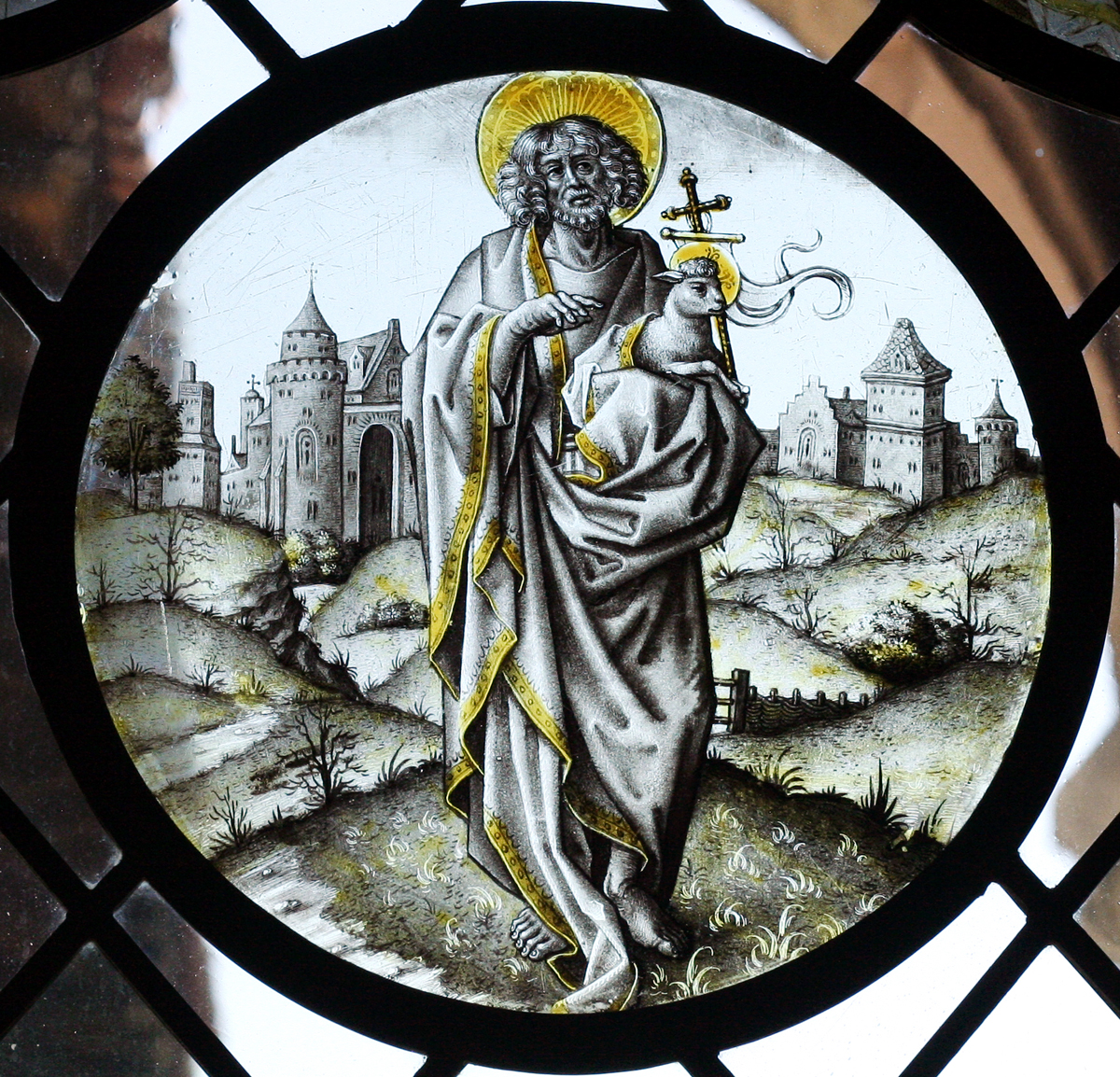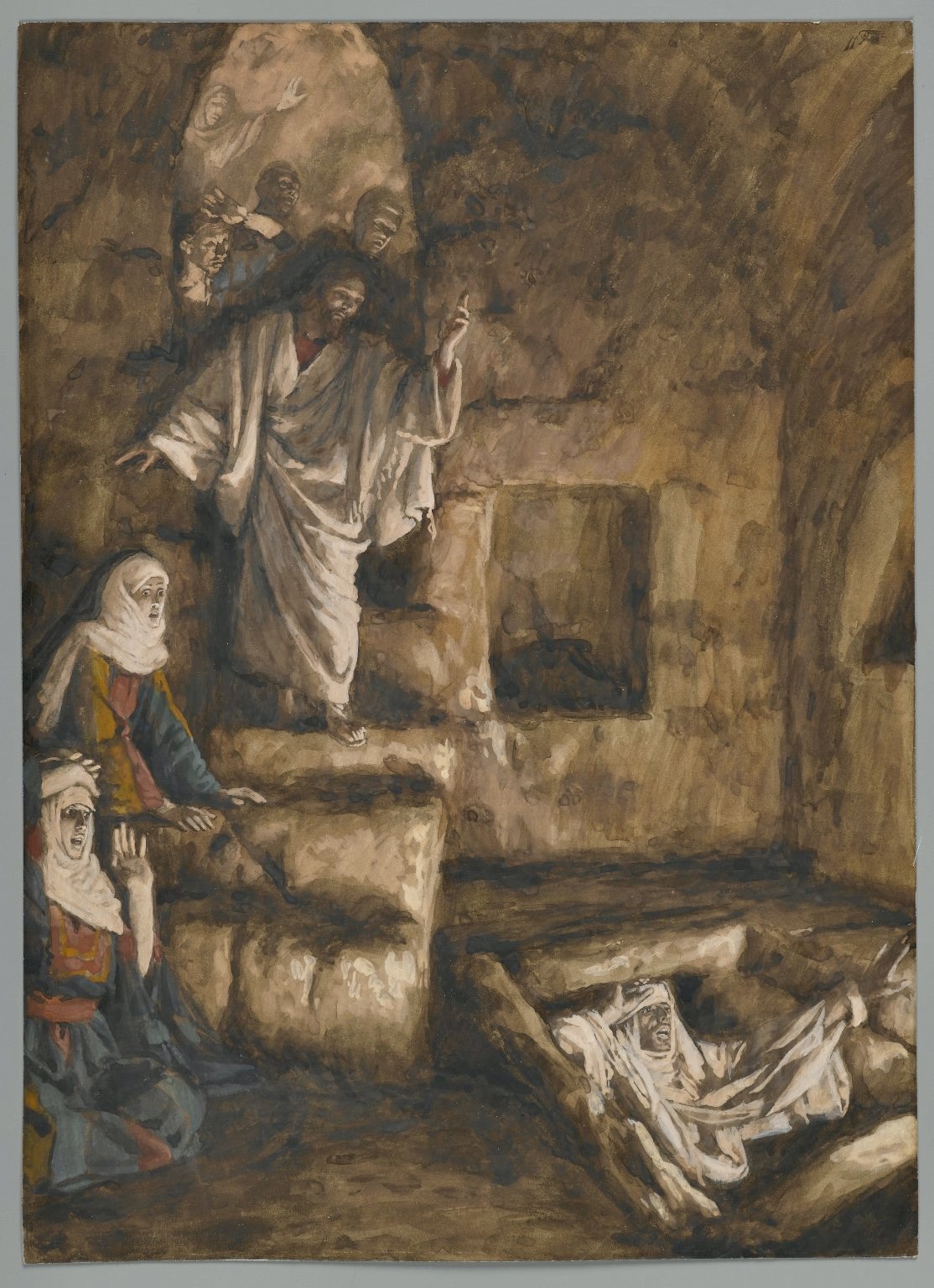
Spirtituality

Wrestling With God

Marc Chagall, Jacob Wrestles with the Angel (and receives a blessing)

Recently, the Lectionary included a familiar reading from Genesis (chapter 32). It describes Jacob’s dilemma concerning his brother, Essau, from whom he is alienated. Alone at night in the wilderness, Jacob lays down on the ground and places his head upon a stone to sleep. In the darkness, Jacob then contends with an angel in what becomes a wrestling match that lasts through much of the night.

In parsing the elements of this deeply symbolic story, we must remember that in much of the Old Testament, angels appear and act as divine representatives. They also function as a literary device where the angelic figure is a stand-in for God. This is why it is appropriate to read this passage as a story about Jacob wrestling with God, as well as the more literal reading of it as an account of his wrestling with an angelic being. In either case, we are right to understand that the story portrays Jacob’s struggle to discern, and then accept, God’s will for him and for his future.

We are told that Jacob is fearful about meeting Esau, who is traveling with a large band of men. For, as we may remember, Jacob has wronged his brother by ‘stealing’ Esau’s birthright blessing, which Esau was to have received from their father, Isaac. As recorded in a well-known earlier story, Jacob had deceived their aged father by masquerading as his twin brother, who was only-minutes-older than him, thus receiving the blessing that Isaac had intended for Esau.

Now, with our modern understanding of psychology, contemporary readers of the nighttime angelic wrestling story may prefer to understand it as simply a symbolic portrayal of Jacob’s wrestling with his conscience. Though partly true, accepting such a univocal reading of the story comes at the expense of a profound dimension of the narrative. For this episode is what students of the Bible call a ‘theophany,’ a story about divine self-revelation, as Jacob himself (as well as the narrator) understood it to be.

So how might we appreciate this story of a nighttime struggle, involving unresolved aspects of a particular person’s history having to do with family relationships, as well as recording a pivotal moment within his long term quest for divine guidance?

I find it helpful to read the story within the following interpretive framework. When we refer to ‘struggling with God,’ I believe that what we often mean is our struggle to accept what we perceive to be (or suspect is) God’s will for us. As such, it has much to do with our understanding of prayer.

Jacob Wrestling With the Angel (attribution uncertain)

As I noted in a recent post, our Prayer Book teaches us that prayer is first of all a matter of responding to God. Responding to God, and responding to our perception of God’s will for us, are not often automatic or straightforward activities. Our natural disposition may be to fall back into thinking of prayer as enacting our desire to bring God’s will into accord with our own wants and hopes. For our prayers may often take this form. Yet, prayer is most holy when prayer is pursued in a way where we give ourselves up to an acceptance of our real need, not our wants. This is to accept our basic need for our wills to be brought into accord with the divine will. When this comes to be our more usual pattern of response to God, we are less likely to find ourselves having the feeling that we are struggling with God, and more likely to experience the peace of living harmoniously with God’s hopes and plans for us.

Alexander Louis Leloir, Jacob Wrestling with the Angel

When the Genesis story refers to Jacob’s having prevailed we will do better than to settle for the conclusion that he has ‘won’ or achieved a goal. Jacob hung on to the angel; he did not let go. And in the process he came to have a limp, the struggle having dislocated aspects of his prior way of being. The limp was therefore less a sign of an injury and more a sign of a deep change within him, and within his mode of engaging the world that lay before him. Jacob could then utter his famous words: “For I have seen God face to face, and yet my life has been delivered.” Encountering God’s awesome and holy presence did not consume him as fire would dry tinder. Instead, Jacob was transformed, and received a new name, Israel.

Responding to God – and God’s will for us – with acceptance, will likely disrupt aspects of our present ways of living. And we may feel that some important parts of our lives, even of ourselves, have been dislocated in the process. But if we cling to God, even through the feeling of struggle, with the aim of coming to be more fully in accord with God, and God’s ways, we will be blessed, just as Jacob was.


Note: among the many symbolic elements in Chagall’s painting, shown at the top, you might see if you can discern elements of the larger context of Jacob’s story, including those related to Joseph, in Genesis.

Nature & Grace, and What We May Learn About Beauty

Found Beauty: a colorful palette in front of a local garden store

I continue to be grateful for things I have learned from my former teaching colleague, Ralph McMichael. Among the insights I have gained from him is one way to sum up some basic understandings that people have of the relationship between Nature and Grace. Whether by these names or not, we all seem to have a concept of this relationship. Nature, an all embracing category, is the common term widely used to refer to what Jews and Christians call Creation. Grace is a term that some use to refer to the presence of the supernatural realm, as it may touch upon or be found in Nature.

There are many ways of thinking about the relationship between these terms, and what they represent. Among them are four basic concepts or models of the interaction between them, which Ralph McMichael often presented in his teaching at the seminary. His articulation of these four ways can be summed up with four words: Compatible; Opposition; Identification; and Fusion. The most common understanding of the interaction between the supernatural realm and the natural world is represented by the first two terms. I will explain.

Many of us were raised in social environments where this interaction was seen as one in which the supernatural, or Grace, only episodically touches aspects of the natural world, or Nature. Based on the first model, some of us tend to see this interaction as involving the compatible yet occasional way that Grace touches Nature. It touches Nature here and there, unpredictably ‘gracing’ the natural realm in which we find ourselves. In this first model, Grace is a friendly presence to and upon those beings or things that it visits, making up for something of value that we seek or yearn for. 

In the second model of the relationship between Nature and Grace, the latter is once again seen as episodic, touching Nature just as unpredictably. But, in this case, Grace – although sometimes also friendly – can appear to be incompatible with some things it touches. In this view, while Grace may be friendly to Nature, aspects of Nature may be unfriendly to Grace, and opposed to it!

Found Beauty: Boat rudder in clear northern water

The third model for understanding the relationship between Nature and Grace might not be as familiar to many of us, and it may represent a reaction to the perceived inadequacy of the first two models. This third view has affinities with what is called pantheism, the view that Nature and Grace are so intertwined that they are indistinguishable. In this view, there is no separation between sacred and profane, or between God and the world, for – despite appearances and sometimes contrary experience – the two ideas or things are really one. Hence, according to this third mode of approaching the question, Nature is Grace.

McMichael referred to the fourth model as the Fusion model, one that he and many ‘catholic-minded’ thinkers commend. In this model, rather than seeing Nature and Grace identified as one entity, Nature is best seen as infused by Grace. With this understanding, we can see Nature and Grace as distinguishable but also as inseparable. Nature is graced. A theological extension of this idea is for us to say that ‘there is no place where God is not.’

In offering McMichael’s four models for understanding the relationship between Nature and Grace, I realize that I have presented a conceptually-dense set of ideas. Yet, I encourage you to consider them – and muse about them – for I believe you will come to recognize how you – like me – often assume one or more of them. Sometimes we think with these four models in overlapping ways, or at other times inconsistently when viewing one set of circumstances followed by another.

Found Beauty: A rainbow breaks through a late evening storm

These four models, because they so fundamentally shape our world-view, continue to play a role in my reflection upon Art, Beauty, and the theme of Transcendence. I invite you to join me in reflecting on how these models for understanding the relationship between Nature and Grace might inform our thinking about Beauty, its presence in the world around us, and how Beauty is a fundamental aspect of our experience of the natural realm in which we find ourselves every day.

Here is one way to apply McMichael’s four models to how we think about Beauty:

  • Beauty graces Nature episodically, in a compatible way.
  • Beauty appears in Nature episodically, and challenges that which is other than beautiful.
  • Nature is identified with Beauty.
  • Nature is infused with Beauty, and thoroughly permeated by it.

If we identify with the fourth view, as presented here, we of course need to do some thinking about those circumstances when we are confronted by an encounter with ugliness, as well as with evil. We must then try to explain our experiences of these latter real aspects of what we encounter. Here, both-and thinking will serve us in a way that either/or thinking will prove unsatisfactory. And, hence, we must be sure to distinguish the Identification model (which tends toward pantheism) from the Fusion model (which can be consistent with traditional theism).

Found Beauty: A quiet early morning at the same marina

Additional note: the photos included in this post were taken in Charlevoix, Michigan, in the summer of 2025

A Church by Errol Barron in Gulfport

St Peter’s by the Sea, Gulfport, MS, designed by Errol Barron

Errol Barron’s work as an artist may be familiar to readers of this website based on some of his evocative New Orleans water color paintings previously featured here. His paintings of that city as well as of Tulane University, where he has taught for many years, provide strong indications that he is more than a skilled painter and draftsman, but also a trained architect. He has taught generations of architectural students at Tulane, and he has practiced his profession to great effect not only in this region but also overseas, with some houses of his located in Greece. Given Barron’s evident sensitivity to historical architecture and design features characteristic of this region, I was surprised to learn about a notable but unexpected feature of his resume. He worked for seven years with Paul Rudolph, architect of the well-known and oft-criticized Boston Government Services Center and a partial inspiration for the movie, The Brutalist.

St Peter’s by the Sea, interior

I was recently delighted to discover the Episcopal church in Gulfport, Mississippi, St. Peter’s by the Sea, and that Errol Barron was its architect. It is a gem of a church, and a very successful design that incorporates traditional ecclesiastical elements associated with European Gothic churches along with features reflecting contemporary liturgical renewal. I have heard people refer to this style of church building as Carpenter Gothic, and as Southern Gothic, and the labels seem to fit well. The worship space exudes an appreciation for traditional forms while harmoniously blending them with a contemporary focus upon light, color, and the greater participation of worshippers in flowing open spaces.

The main altar with the ornamental rood screen

Visitors to the Washington National Cathedral, and similar churches of Gothic-revival style, may recognize the particular heritage that stands behind the floor plan of St Peter by the Sea. At the National Cathedral, and in its medieval forebears (such as London’s Westminster Abbey), an arched stone ‘rood screen’ separates the chancel and choir (beyond the screen) from the nave where the congregation is seated. When, in the 1960’s, the liturgical renewal movement began to influence changes in the worship arrangements of these buildings, a new main altar was often then placed in the nave, on the congregation’s side of the rood screen. Smaller gatherings for weekday services could still occur in the choir side of that screen, while Sunday gatherings for the principal Eucharist would be celebrated in the nave, with the clergy, altar, and liturgical action proximate and visible to the congregation.

A view of the ceiling and woodwork above the choir

Though St Peter’s by the Sea is a comparatively recent building, its design reflects something of the historical sequence described above. Instead of an imposing stone rood screen, shielding the chancel and choir spaces beyond, Barron has designed an ornamental arched screen of light-colored wood that suggests rather than imposes separate areas within the overall space. This allows the evocative blue canopy of the ceiling over the chancel to draw one’s eyes forward, toward the visible clear windows at the liturgical ‘east end’ of that space behind the chapel altar, facing the seashore.

Further, the notably narrow, even sharp-looking, wooden ‘spires’ protruding above where the choir chairs are placed enhance the upward sense of lift in the nave, complemented by the radiant cream and white color scheme above where the congregation sits. Light pours in through clear windows above, while delicately fashioned and dangling wrought iron fixtures provide supplemental illumination for evening services and in poor weather.

A view toward the nave from the choir, through the rood screen

On the Sunday of my recent visit, I was told that the congregation numbered about 145, and I estimate that the nave would comfortably seat about 200 people, though it could probably accommodate more. With the Gothic-inspired longitudinal floorplan, evident when one approaches the exterior of the building, a visitor might expect a rather narrow and linear worship space. Such an initial impression of the likely effect of the interior spatial arrangement is overcome by a number of subtle but effective design choices made by the architect and those who worked with him.

Accompanying the verticality of the large open area above the center of the nave are the seating areas adjoining the side aisles, taking the places of side chapels found in many medieval Gothic churches. The relatively low height of the box pews enhances the sense of horizontal width created by these adjacent seating areas, which provide relatively unobstructed views of the altar and lecterns. I also found the acoustics within the worship space to be well-suited for music as well as for public reading and speaking.

I am drawn to the ethos of historical churches; I am enthused by many examples of modern architecture; and I appreciate the fruits of the liturgical renewal movement. In my experience, a successful blend of these three things is not always found in contemporary buildings designed for worship and intended for the enhancement of congregational life. In his design for St. Peter’s by the Sea, in Gulfport, Mississippi, and in his supervision of its restoration after Hurricane Katrina, Errol Barron has achieved just such of a desirable synthesis.

A representative side window incorporating stained glass window fragments recovered after Hurricane Katrina

Our Prayers and God’s Blessing

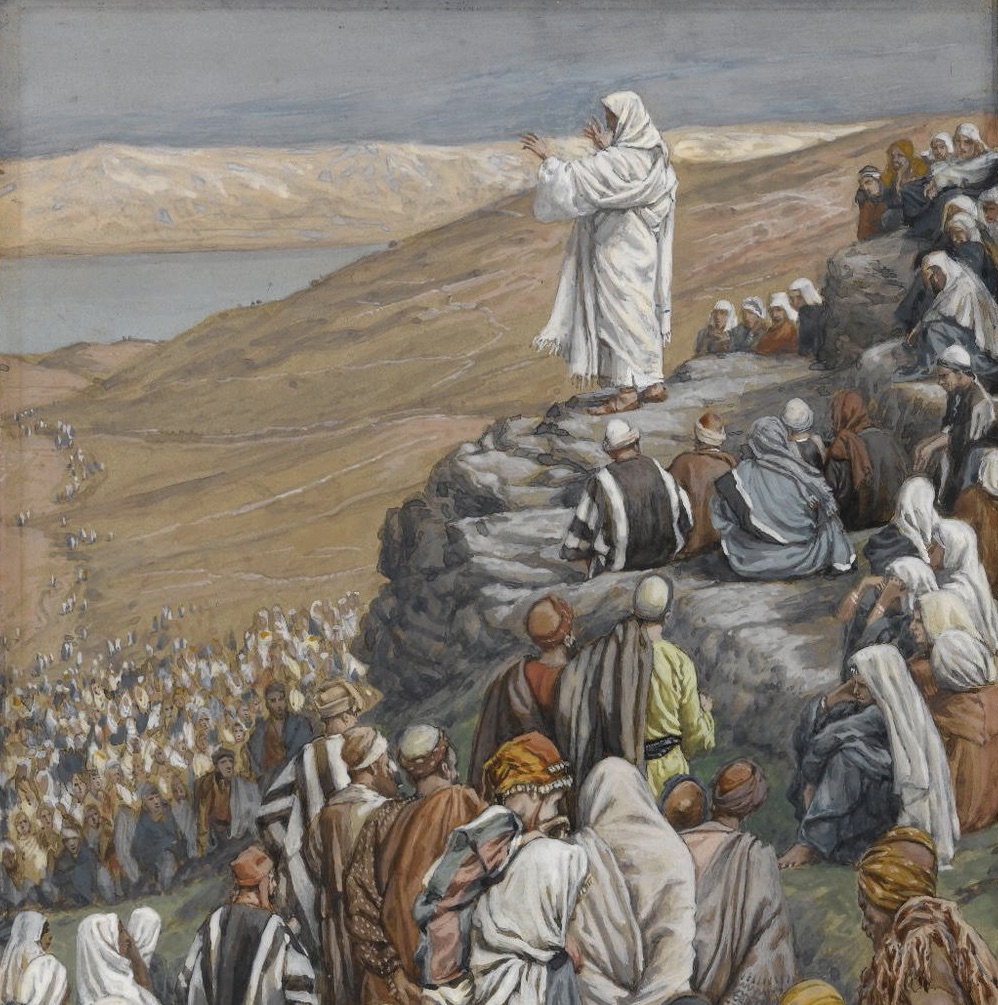
Christ Retreats to the Mountain to Pray, by James Tissot

I have become fond of quoting a particular question and response found in the Catechism included in our Book of Common Prayer. The question is straightforward: “What is prayer?” The first part of the extended answer to this question is also put plainly, and it is instructive. “Prayer is responding to God.”

Consider the significance of those words. If we gained our concept of prayer during childhood, we probably still think about this activity in the same terms – terms which are rather different from the way that the Prayer Book Catechism sets forward its definition. For it seems almost universal that we associate our concept of prayer with ’petition.’ Petition is the formal name for prayers that ask, in which we make our personal requests to God. ‘Intercession’ is what we call the prayers that we offer for other persons and their needs. The frequency with which we might engage in these two forms of prayer may help explain why we are so accustomed to seeking what we call “answers to prayer.” If answers to prayers are sought, it suggests that prayers are posed to God by us unidirectionally, as questions and or as requests.

Yet, our Catechism begins its teaching about prayer by characterizing this activity as one in which we respond to God, rather than one in which we envision God responding to us and to our concerns!

St. James the Less (at prayer), by James Tissot

Putting the matter very simply, the Prayer Book presents prayer as something that is God-centered, God-initiated, and as God-enabled. Such a notion of prayer is fully biblical and properly theological. Yet, we like to be ‘in the driver’s seat.’ Habitually, we think of prayer as something we initiate, and for which we supply the purpose and direction. But if prayer is to be centered upon communion with God, then it ought also to be the other way around, so as to follow the words of Jesus. For he taught us to address “our Father in heaven” by saying “thy will be done.” When we follow his teaching, instead of so often asking God to please do what we want, we are more willing to let God be quietly present and foremost in our consciousness.

The Vision of Zechariah (while at prayer in the Temple), by James Tissot

In a similar way, I think we habitually also misperceive the nature of divine blessing. Two examples of blessing that admittedly are not everyday occurrences, but which sometimes receive mention in discussions about blessing, can help make the point. These examples are provided by occasions when our chaplains are asked to offer prayers for, and pronounce blessings at, the launching of military ships and submarines, or to offer similar words over the participants and their hounds at fox hunts. Such prayers should not be seen as providing sanction for or as necessarily implying divine approval of whatever we ask on such occasions. Blessings in such contexts can instead be understood as words that we offer so that what is prayed for might be in accord with God’s will, rather than as words offered in support of purposes that we prefer and will into effect. Therefore, prayers offered for persons seeking public office, or who serve in that capacity, would best be shaped according to this understanding.

In view of these observations, blessing as a spiritual activity can be defined in the following way. For those who desire a blessing in the context of the church, a bishop or priest might say words of this kind: “May God’s will be furthered in your life, to the end that our Lord’s revealed and known purposes may be brought to their fulfillment in you, and for you.”

Here, the parallel we can discern between engaging in prayer, and offering blessings, provides insight. If prayer begins with responding to God, rather than with inviting God to respond to us, then surely words of blessing pronounced by our clergy are equally contingent upon the revealed direction of God’s purposes rather than those of our own. Therefore, we should always seek to offer prayers and blessings that are in accord with God’s known will, with the aim that our wills and desires might be in harmony with those of our Lord. Prayers and blessings are most genuine when we are most open to letting God be God.

James Tissot, Christ Goes Up Alone onto a Mountain (detail)

Imagining a Voyage

We all imagine taking journeys or voyages, sometimes out of an unfulfilled desire and sometimes with an apprehension about the potential consequences of such ventures. Even those who do undertake to travel over the land or over water usually prepare, even casually, for their upcoming experiences by anticipating certain items likely to be needed or enjoyed while en route, as well as potential challenges or obstacles to be overcome while away. Having recently spent about a month on our old sailboat of modest size, I realize that my efforts to prepare for any needs we might have while docked or sailing led us to be burdened with some unused items. For the best parts of our recent travels were those that had more to do with ‘being’ than any kind of ‘doing’ in which we were engaged, and in relation to which we might have had particular needs for gear or supplies.

Some people believe that the best journeys are those that we undertake through reading, through our enjoyment of the accounts of such travels as recorded by others. I often choose boat and sailing related reading material for my free time, and when preparing for an upcoming trip I find that such reading helps me anticipate and plan for the kind of lake or coastal cruising that I hope to do.

A.J. (“Sandy”) Mackinnon with Jack de Crow

Nonetheless, there is a type of nautical-related reading that I enjoy probably because it challenges my usual approach to trip pre-planning. One example is a book I have come to love reading and re-reading, A.J. Mackinnon’s delightful, The Unlikely Voyage of Jack de Crow. In it, Mackinnon – with engaging humor and self-deprecation – describes how he embarked on a river journey one summer, during a break from teaching at a school in north Wales. He asked to use an old plywood eleven foot Mirror dinghy, and ended up sailing and rowing it all the way to the Black Sea! To say that he embarked upon his voyage under-provisioned would be an understatement. And yet, relying upon his wits and the kindness of strangers, and making use of the floor space of the dinghy to sleep under a cockpit tent fashioned from a tarp, he actually made it – even surviving the incredibly high tides of the Bristol Channel and their strong currents, as well as his subsequent crossing of the unpredictable English Channel.

Cover photo from another edition of Mackinnon’s book

When preparing for our recent trip on our venerable Nimble 24, or when contemplating some modification of it, I often try to remember Larry and Lynn Pardey’s three-fold advice: “Go small, go simple, but go now!” A.J. Mackinnon, without knowing it, followed that advice more fully than many have tried to do, and with astonishing results.

An illustration by Mackinnon from his book

At the same time, I also try to remember what may appear to be some counter-balancing words of advice that I once heard: “There are old sailors, and there are reckless sailors; but there are no old reckless sailors!” And so, while I admire and at times have tried to emulate some aspects of Mackinnon’s approach to his incredible journey, as well as the Pardey’s seasoned counsel, my natural temperament (and perhaps also my additional age) has more often led me to be over-prepared than ill-equipped in terms of gear and supplies.

Mackinnon’s illustration for how he prepared for nights on the boat

There are several qualities that I admire about Mackinnon and his approach to his sailing journey on his little but mighty Jack de Crow. In his account of his adventures, he demonstrates – along with his lively sense of humor – a willingness to make mistakes and not feel defeated by them, courage in the face of multiple situations in which he faced the unknown and the possibility of harm, and that he did not take himself too seriously so as to have been willing to risk derision by others who had more formidable boats and yachting equipment. Continuing to learn from his book, I find that I am doing better about leaving room for how ‘less can be more,’ though my first mate is sure to raise eyebrows at the claim.

Jack de Crow and her skipper arrive in Istanbul harbor

For an entertaining read, allowing you to undertake a fun voyage in your imagination, Mackinnon’s book makes a terrific choice. The cover art, and the drawings within (by Mackinnon) are whimsical and yet accurate, without being overburdened by detail. At the same time, if you are looking for inspiration to undertake some small boat rowing, sailing, and even voyaging, I can think of no better place to start.

The Beauty of Witness

Memorial sculpture commemorating the Martyrs of Memphis

This week, on September 9, we observed a significant date on our personal calendar by celebrating the birthday of one of our sons. September 9 was already a notable date for us beginning some years before his birth, after our move to Memphis in the summer of 1983. During those years, the date became associated with an addition to the Episcopal Church Calendar that has readings appointed for it in our Lectionary. September 9 is designated as the feast of The Martyrs of Memphis: Constance, Thecla, Ruth, Frances, Charles Parsons, and Louis Schuyler.

To those unfamiliar with its history, the official title for this feast day may suggest dramatic images of early Christian saints contending with ferocious animals and or human adversaries in the name of the Faith. Which then raises questions about whether, perhaps, the Memphis in question was the one in ancient Egypt. Yet, the name designation for this day can be instructive for all of us because it may remind us of something we once learned – that the etymological root of the word martyr lies in the ancient Greek word meaning ‘witness.’ Hence, those persons we commemorate on the Church’s Calendar because of their examples of Faith are remembered for being especially compelling witnesses to God’s redemptive mission in Christ, regardless of whether they faced circumstances that might have led to a heroic death.

The Martyrs of Memphis provides an occasion for us to remember the men and women who remained in Memphis to minister to those with whom they faced together the ravages of a severe Yellow Fever epidemic, from which they could have fled to safer places elsewhere. Unknown to them was the fact that this horrible plague was a mosquito-borne infectious virus, and not something arising from ‘swamp vapors’ or bad city air. Among the faithful persons who succumbed to the fever, and who are remembered on the feast day of September 9, are the four women named in the feast’s title who were community members of the Sisters of St. Mary, Father Charles Parsons, the last remaining Episcopal priest in the city, and Father Louis Schuyler, who came as a volunteer from New Jersey to take Parsons’ place and join the Sisters in ministry.

Monument by Harris Sorrelle, in the Memphis Martyrs Park, overlooking the Mississippi River

Words from the collect (or principal prayer) for the feast day of the Martyrs of Memphis capture well why these particular individuals are named among so many others – known and unknown – who shared their faith as well as fate: “We give you thanks and praise, O God of compassion, for the heroic witness of the Martyrs of Memphis, who, in a time of plague and pestilence, were steadfast in their care for the sick and dying, and loved not their own lives, even unto death…”

The generic character of the title for this significant feast day was chosen to help us also remember that the number of those who died in the epidemic, not only in Memphis, but up and down the Mississippi River and beyond, numbered in the thousands. Memphis’s historic Elmwood Cemetery, its oldest, has a particularly moving monument that complements the contemporary riverside sculptural composition by Harris Sorrelle (displayed above). At Elmwood, instead of having an impact upon the use of anonymous and aptly dark-colored figurative silhouettes, as Sorrelle’s sculpture does, the cemetery monument provides just paragraphs of words, stating in plain but moving terms the reality that lies below where cemetery visitors walk (as the following image attests). As the Elmwood monument notes, at least 1,400 Yellow Fever victims are buried in nearby unmarked mass graves.

Martyrs monument in Elmwood Cemetery (clicking the photo will provide an expanded view of it)

The faithful witness of those who died ministering to and with others among the Yellow Fever victims in Memphis in the 1870’s can have the effect of prompting us to reflect on the very different circumstances in which we live, with our advances in medicine, healthcare, and social services. Nevertheless, the COVID crisis of 2020, and its lingering legacy, can also remind us of our mortality, our higher calling to seek godly life in its fulness, and to be faithful companions with and to those less fortunate than ourselves.

A state-provided historical marker that includes use of the word ‘martyr’

Additional note: a tragic-comic aspect of the Yellow Fever’s impact upon Memphis was another pre-scientific belief (in addition to the ‘swamp vapors’ theory regarding its origin) amongst those who remained in the city. It is said that those who seemed to have the lowest mortality rate were corpulent men who smoked cigars, the smoke from which may have warded off the mosquitos responsible for the plague’s transmission.

The Beauty of Hospice Care

Faith Hospice at Trillium Woods

Having worked in a variety of church-related contexts for over four decades, I have become familiar with the importance of having a clear vision of one’s mission. In my experience, people are motivated by inspiring mission statements, and especially when they are enacted with cheerful efficacy. As advocates of Appreciative Inquiry maintain, a focus on what is working well builds energy and promotes a sense of well-being among participants.

As I reflect on the most compelling examples of institutions, facilities, or programs that I have encountered, the hospice movement in healthcare stands out. Whereas medical practice has increasingly become directed towards problem-solving and the alleviation of various conditions, along with our growing interest in future-oriented health maintenance, hospice care tends to be focused on a wholistic approach to the present well-being of a person. And I have found that hospice advocates and caregivers to be among the most positively mission-focused people I have met.

Aside from occasional background reading and some videos on the topic of hospice care, my experience over the years with this life-enhancing approach to being with other people was relatively brief. But then, it was unexpectedly transformed by a full and meaningful month of time spent with my dad, beginning with the discovery of his having a malignant brain tumor and ending with his peaceful death. He died surrounded by his four sons, in a remarkable facility dedicated solely to hospice care.

Arial view of the Trillium Woods location

I am particularly grateful for my dad’s opportunity to have been admitted to the Faith Hospice inpatient care facility at Trillium Woods in Grand Rapids, Michigan. Through my parish ministry, I knew about hospice care being provided at home and in other settings, but I had not had any personal experience with a residential facility built and maintained solely for hospice care. My dad’s move to Trillium Woods happened four days after his admission to hospital ER, on a cold, mid-December day. The hospice became his new temporary home, and we soon discovered how it was an unanticipated but blessed answer to prayer for him as well as for our family.

December is a tender time for families caring for or mourning loved ones, and we found that Faith Hospice staff members were especially sensitive to our emotions as the Christmas holiday season came into its fullness. We were impressed by the generously sized and attractively decorated room they were able to provide for my dad and the other patients, which included a comfortable sitting area, a bed area, and large windows and a door leading onto a beautiful terrace. Equally impressive was the rest of the facility, which had large lounge areas, a dining room and adjacent kitchen, and a well-designed chapel. Being able to have our family Christmas dinner there at the hospice (as well as other meals) was a comfort, and allowed us to focus on my dad and his care, and to be less absorbed with our own daily concerns.

A hospice patient’s room like the one my dad was in

Most significant to us was the dedicated staff, who were sensitive and attentive to each subtle stage in the process of my dad reckoning with and moving toward his impending death. Like them, my dad showed himself to be strong in faith, and fully at peace with seeing his final illness as a facet of God’s merciful Providence. Thankfully, he showed no signs of being in denial about what was happening to him. I attribute this to his decades of ministry as an ordained pastoral counselor, and as one who lived his faith while commending it to others.

The Chapel at Trillium Woods

During the process of my dad’s dying, I marveled at the ministry of Faith Hospice at Trillium Woods, and wondered about how many other such facilities exist around the country and elsewhere. I continue to wonder about this, and imagine that such a place is more often desired than found, being the kind of facility that everyone would want to have available should they need it.

The phrase, “the end of life,” is often used to refer to what hospice care is focused upon. Taken simply and literally, these words refer to the termination point we come to in the course of our physical embodiment. Yet, as I like to remember, our English word ‘end’ does not simply connote a terminus but also a point of fulfillment and the realization of purpose. In my experience of the hospice care that was offered to my dad and our family at Trillium Woods, I encountered a culture of ministry oriented toward lifting our eyes to a broader horizon of meaning for daily life. In this, I found the facility was aptly named as Faith Hospice, for clearly a grounded Christian Faith lay at the heart of the mission enacted on a daily basis at Trillium Woods.

Note: I have no official connection with Faith Hospice at Trillium Woods but only my personal experience of holy care from the folks there. With them, we journeyed through our final month with a family member amidst a loving community. More about this ministry and facility can be found by clicking here.

God’s Handiwork Inspires Ours

Stones found on a northern Lake Michigan beach

Labor Day is around the corner and some of us may receive and enjoy a day off from work. What we call retirement, a stage in life I am presently enjoying, tends to represent leaving work behind. Yet these and related ideas rest upon a common assumption, that work is different from, and in some ways inimical to, enjoying fulfillment in life.

I find a biblically based theological insight helpful when thinking about work. As with many matters that can be looked at from the perspective of Christian moral theology, our view of work can be enhanced by making reference to four specific reference points. These are, first, what we have learned about God’s purposes in Creation for this or that aspect of our lives; then, what impact sin associated with our Fall has had upon what we are thinking about; third, how God’s ongoing work of Redemption has restored and or transformed the matter presently under consideration; and fourth, to ask what future – if any – does this aspect of our lives have in Christ. 

Work provides a wonderful topic for engaging in this fourfold inquiry. Based on our common way of thinking about work, it may be hard for us to consider the meaning of work from any other vantage point than of attributing its role in our lives to the Fall and to the ongoing effects of human sin. Yet, we can also learn from many who have come before us who have distinguished work from toil. This can help us see how forms of labor, and pejorative associations the word may have for us, are surely due to our proclivity to link such activity with burdensome unpleasant duties.

For what we may overlook is the biblical view of how God has shared stewardship responsibility for aspects of Creation with us, as beings created in God’s image and likeness. This was symbolized by the way that our mythic forebears (Adam and Eve) were given their ‘work’ of naming the animals as a path toward fulfillment. It was not until their expulsion from the Garden that the first human beings are described as prone to acts characteristic of sin. Thereupon, in biblical theology, our heavenly ‘work’ of praise, and of divinely-invited participation in God’s Creation stewardship, ceased to be pleasingly ready pathways toward human fulfillment, and became energy draining and spirit-diminishing activities – such as we tend to find them to be now.

A growing segment of the wider Christian community shows signs of acknowledging how God’s work of Redemption is ongoing, quite aside from its ‘once and for all time’ episodic saving events. The pattern and purpose remains the same – nothing fundamentally new is added, nothing old of lasting value taken away. Preeminent remains God’s abiding purpose for us to become and be God-like in God-intended ways. For, as Athanasius taught us, the Son of God became the Son of Man, so that the children of men and women could become the children of God. Work – not toil nor burdensome labor but creative and fulfilling work – remains a vital part of our holy path toward wholeness.

And to remind us of this abiding truth, the loving Creator has spread around us an uncountable abundance. These are the signs of outpoured and participatory grace, some of them very small, like stepped-upon seashore pebbles and tiny blossoms among hurried-by roadside weeds.

Too quickly we dismiss the significance of our our small acts of selfless giving, not to be counted by us, but adding up to so much more than we imagine in the life-growth of others. This is our holy ‘work,’ overlooked but important stepping stones on our path toward living into the godly fullness with which Christ fills us.

If on our daily course our mind

Be set, to hallow all we find,

New treasures still, of countless price,

God will provide for sacrifice.

Old friends, old scenes, will lovelier be,

As more of heaven in each we see:

Some softening gleam of love and prayer

Shall dawn on every cross and care.

[John Keble, “Morning,” from The Christian Year]

What Distinguishing Religion, Science, Magic, and Technology, Might Teach Us About Beauty

A book of essays by Peter Kreeft

Peter Kreeft has written an illuminating essay on the use of indirect communication by CS Lewis and Walker Percy. In it, and in a humorous recording of its content, he explores how both Lewis and Percy present the predicament of the modern person. We live as upside-down persons. And we are not among the first people in history to suspect this. (See St. Augustine, d. 430 AD)

As a way into the heart of his theme, Kreeft invites us to consider a hypothetical challenge posed to a child: take four common objects and sort them into two boxes. The four items are a baseball, a basketball, a baseball bat, and a basketball net. The two most obvious solutions to this challenge, based on the categories of being and doing, nicely set up a thought experiment that Kreeft intends for his audience to engage. He invites us to sort the following four things into two (undefined) categories: Religion, Science, Magic, and Technology. Try it. 

In taking up this simple quiz question, we discover one way that our contemporary thinking habits depart from those of our ancient forebears. Our common assumption that science and technology are sister fields, reliably distinguished by their empirical methodology from both religion and magic, reflects a misunderstanding. For what we may overlook in this supposition of an affinity between science and technology, as well as between the second pair of terms, is how our categorization of these four terms demonstates our understanding of what we consider to be real. And the key variable governing our typical way of sorting these four conceptual categories centers less on what is ‘real,’ and more on the significance of how we conceptualize our encounter with ‘reality.’

A theme that has surfaced from time time in this space, and which plays a large role in structuring my understanding of Beauty, rests upon my appreciation for the distinction between the meaning of the words ‘objective’ and ‘subjective.’ I credit my graduate research in ethics and moral theology for raising my awareness of what these terms can and do mean. With regard to Beauty, and more broadly about what is real versus what is presently actual in our awareness of things, ‘objective’ best refers to the objects of perception, and ‘subjective’ in a corollary way best refers to the subject of perception (I.e., to me, the observer, the knower).

CS Lewis in his Oxford study

Kreeft makes the case that both CS Lewis and Walker Percy shared a conceptual understanding with many philosophers and writers from the pre-modern era. In making the point, Kreeft quotes what he says are the three most illuminating sentences he has ever read about our civilization:

“There is something which unites magic and applied science [i.e., technology] while separating both from the “wisdom” of earlier ages. For the wise men of old, the cardinal problem had been how to conform the soul to reality, and the solution had been knowledge, self-discipline, and virtue. For magic and applied science alike, the problem is how to subdue reality to the wishes of men: the solution is a technique.”

And if we have not guessed where Kreeft is headed with all this, he puts the matter succinctly: “Technology is more like magic than like science.” It follows that he commends thinking of religion as being like science by also involving a search for what is real and true, even if differing in its methodology and content.  

Walker Percy at home in Covington, LA

A challenge related to Kreeft’s theme, regarding how we approach beauty, faces us as modern people. It stems from how – through the influence of our culture – we are inclined to think of art and architecture as being more akin to magic and technology, than to science and religion. For we tend to assume that artists and architects manipulate materials and space to stimulate certain responses from those who interact with their work. And, of course, they do. But is this all that these crafters of beautiful things accomplish? Are they not also among those who seek and make available to others instantiations of what is real, and more particularly of the beauty that is there for us also to perceive and come to know? I believe that they are. 

Artists and architects approach the world in a way that has an affinity with those who work in religion and science, while what they do may seem to be like the work of those who ‘practice’ technology or magic. For like all genuine seekers of Truth, Goodness, and Beauty, scientists (especially theoretical physicists) as well as religionists include dedicated persons who want to know these real aspects of the world that may be apprehended by those who look for them.

I continue to learn by reflecting on these themes.

Note: Kreeft develops at greater length than I have scope here to address the significance of these and related distinctions. He does this in his essay, “Walker Percy’s Lost in the Cosmos: The Abolition of Man in Late Night Comedy Format.” I commend an entertaining recording of Kreeft’s presentation of the essay’s content, which can be found on his website (by clicking this link).

Our Doorway Into God’s Trinitarian Being

William Holman Hunt, The Shadow of Death (1870-73)

When we as Christians pray, we don’t simply pray to God. With faithful assurance, we pray with and through God! As Paul tells us, “When we cry, ‘Abba! Father!’ it is that very Spirit bearing witness with our spirit…” This is because, when we pray “to the Father,” we also pray with and through the Son. We are enabled to pray with and through the Son following our Baptism. For after Baptism, we are assured that we pray in the Holy Spirit. We therefore pray to God not ‘from the outside,’ but ‘from the inside’ of God’s own being and nature!

Well, how can this be? As we can easily discover, every Eucharistic Prayer in The Book of Common Prayer has a common shape. For all of our Eucharistic Prayers are prayed to the Father, through the Son, in the Holy Spirit. This is not an accident. Jesus modeled this in his own life, and particularly at the Last Supper.

When we repeat Jesus’ pattern, offered at that supper, we stand with him around the same table. And by his graceful invitation, we join his prayer to the One he called, ‘Our Father.’ Our prayer with him, to the Father, is in the power of the Spirit, the same Spirit he spoke about at that table. He modeled at that supper what grace means in practice.

Through the grace of the Holy Spirit, Jesus shares with us his own particular intimacy with the Father. Inviting us to stand with him as he prays, he offers the whole world back to the Father-Creator. By this, Jesus – and us with him – fulfills the divinely intended-but-failed stewardship vocation of the mythical Adam and Eve. And so, this is also our vocation, to offer up to our Father all that truly belongs to the Creator. Sharing with Jesus the grace of the Holy Spirit allows us to join him, the Son, in his ongoing Eucharistic vocation.

A good way we can live into the saving implications of God’s Trinitarian nature, is to engage in some creative imagining. Imagine that, in this moment, Jesus reaches out his hands to us. In reaching out his hands, he does not simply extend his greeting. Extending his embrace, he invites us to join him by standing with him, closely at his side. By his invitation, and our acceptance of it, he shares with us his own intimate and particular relationship with our Father.

And with this invitation, he gives us the power of the Spirit, making it a reality in our lives. Because the invitation comes from him, the power of the Spirit he shares with us is God’s grace-filled power. Jesus makes all this actual and true, whether we feel it or not.

This Trinitarian shape of prayer is different from how we usually imagine prayer. Commonly, we think of prayer as our communication to God. When we feel aware of God and close to God, we speak to God of what is good and well and of that for which we feel thankful. And we often ask for help. But, when there seems to be a veil between us and God, we speak to God with lament or we complain, sometimes in anger. This concept and experience of prayer is ‘subjective,’ and therefore narrow. That is, it is a concept of prayer based primarily upon our personal, interior, experience. It reflects our experience of being the subjects of perception and action. Yet, as the Prayer Book Catechism teaches us, prayer is first of all responding to God.

As we learn from Jesus, and by the Holy Spirit, true prayer is not something we do, which we somehow manage to achieve through our faithfulness, devotion, or energy. True prayer is something we allow God to do within us. True prayer is the kind of praying that we find God already making real within us through the indwelling Grace of the Holy Spirit. The Father and the Son and the Holy Spirit are constantly engaged with one another, in what the Eastern Christian tradition calls ‘a dance,’ a perichoresis. Prayer involves being drawn into this dance. Prayer is sharing in the Trinitarian relational being of God. Prayer is participation in the community of fellowship that exists within God’s own being.

The Trinitarian pattern of our lives rests upon the Trinitarian shape of our prayers. We can accept Jesus’ invitation to stand with him. We then experience his own fellowship with the Father, in the grace-filled power of the Holy Spirit. This enables us to live truly. To live truly, is to live to the Father. It is to live with and through the Son. And true prayer is to live in the power of the Holy Spirit.

And so, we seek to live in the way that we pray: to the Father, with and through the Son, in the Holy Spirit.

Note: This post is based on the Western Church’s observance of Trinity Sunday, on June 15, 2025. My title is based on a well-known metaphor found in John’s Gospel. The text here is based on my homily for that occasion, which may be accessed by clicking here.

My goal is to commend the assurance of hope that lies within the Gospel. And while being aware of concerns about the so-called ’scandal of particularity’ associated with Christianity and Judaism, we should be aware that God is free to offer a similarly positive spiritual experience to those of other religious traditions, or of no particular tradition with which they may identify. I hope to address Hunt’s evocative painting, featured above, in a subsequent post.