Nature and Creation

What Distinguishing Religion, Science, Magic, and Technology, Might Teach Us About Beauty

A book of essays by Peter Kreeft

Peter Kreeft has written an illuminating essay on the use of indirect communication by CS Lewis and Walker Percy. In it, and in a humorous recording of its content, he explores how both Lewis and Percy present the predicament of the modern person. We live as upside-down persons. And we are not among the first people in history to suspect this. (See St. Augustine, d. 430 AD)

As a way into the heart of his theme, Kreeft invites us to consider a hypothetical challenge posed to a child: take four common objects and sort them into two boxes. The four items are a baseball, a basketball, a baseball bat, and a basketball net. The two most obvious solutions to this challenge, based on the categories of being and doing, nicely set up a thought experiment that Kreeft intends for his audience to engage. He invites us to sort the following four things into two (undefined) categories: Religion, Science, Magic, and Technology. Try it. 

In taking up this simple quiz question, we discover one way that our contemporary thinking habits depart from those of our ancient forebears. Our common assumption that science and technology are sister fields, reliably distinguished by their empirical methodology from both religion and magic, reflects a misunderstanding. For what we may overlook in this supposition of an affinity between science and technology, as well as between the second pair of terms, is how our categorization of these four terms demonstates our understanding of what we consider to be real. And the key variable governing our typical way of sorting these four conceptual categories centers less on what is ‘real,’ and more on the significance of how we conceptualize our encounter with ‘reality.’

A theme that has surfaced from time time in this space, and which plays a large role in structuring my understanding of Beauty, rests upon my appreciation for the distinction between the meaning of the words ‘objective’ and ‘subjective.’ I credit my graduate research in ethics and moral theology for raising my awareness of what these terms can and do mean. With regard to Beauty, and more broadly about what is real versus what is presently actual in our awareness of things, ‘objective’ best refers to the objects of perception, and ‘subjective’ in a corollary way best refers to the subject of perception (I.e., to me, the observer, the knower).

CS Lewis in his Oxford study

Kreeft makes the case that both CS Lewis and Walker Percy shared a conceptual understanding with many philosophers and writers from the pre-modern era. In making the point, Kreeft quotes what he says are the three most illuminating sentences he has ever read about our civilization:

“There is something which unites magic and applied science [i.e., technology] while separating both from the “wisdom” of earlier ages. For the wise men of old, the cardinal problem had been how to conform the soul to reality, and the solution had been knowledge, self-discipline, and virtue. For magic and applied science alike, the problem is how to subdue reality to the wishes of men: the solution is a technique.”

And if we have not guessed where Kreeft is headed with all this, he puts the matter succinctly: “Technology is more like magic than like science.” It follows that he commends thinking of religion as being like science by also involving a search for what is real and true, even if differing in its methodology and content.  

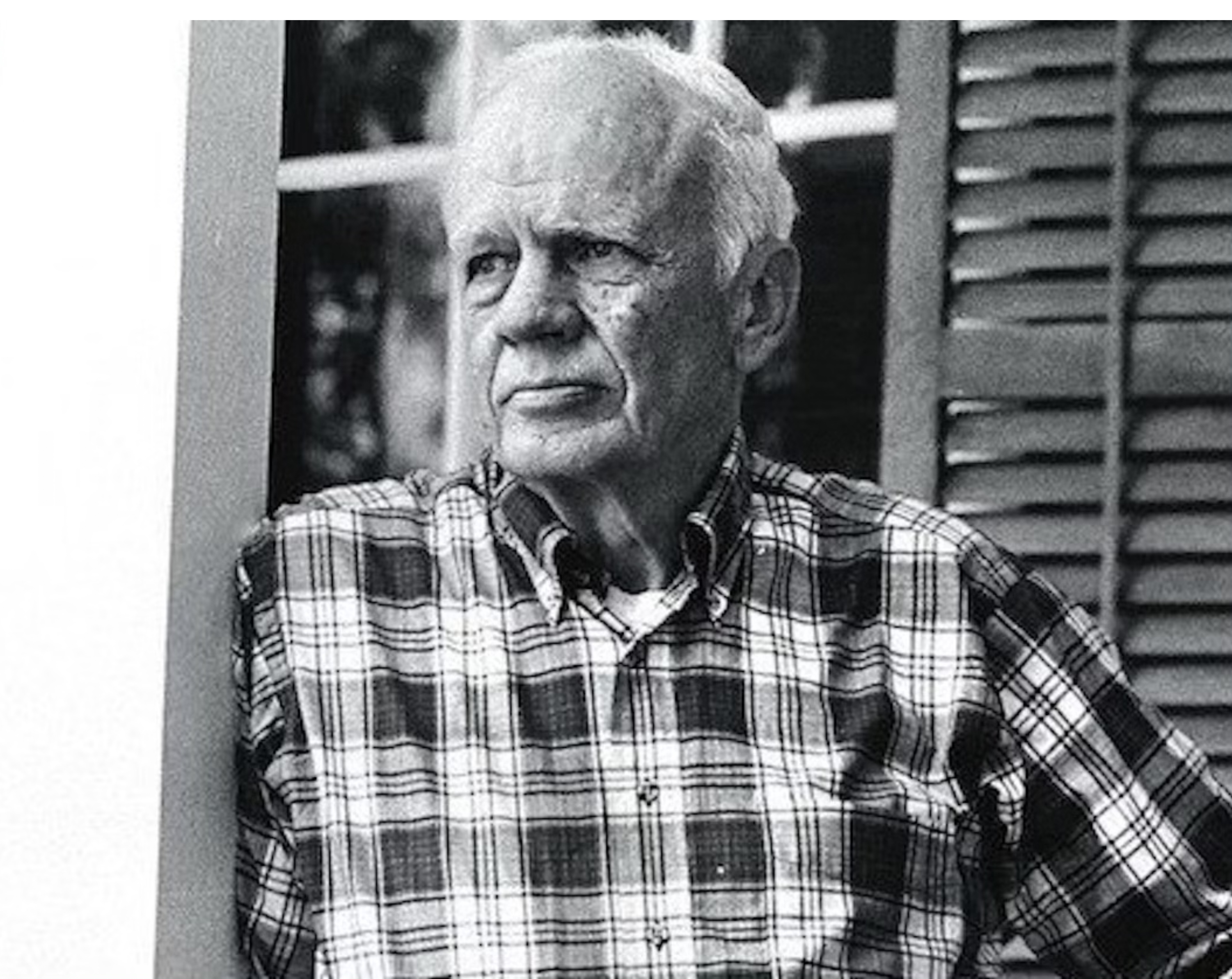
Walker Percy at home in Covington, LA

A challenge related to Kreeft’s theme, regarding how we approach beauty, faces us as modern people. It stems from how – through the influence of our culture – we are inclined to think of art and architecture as being more akin to magic and technology, than to science and religion. For we tend to assume that artists and architects manipulate materials and space to stimulate certain responses from those who interact with their work. And, of course, they do. But is this all that these crafters of beautiful things accomplish? Are they not also among those who seek and make available to others instantiations of what is real, and more particularly of the beauty that is there for us also to perceive and come to know? I believe that they are. 

Artists and architects approach the world in a way that has an affinity with those who work in religion and science, while what they do may seem to be like the work of those who ‘practice’ technology or magic. For like all genuine seekers of Truth, Goodness, and Beauty, scientists (especially theoretical physicists) as well as religionists include dedicated persons who want to know these real aspects of the world that may be apprehended by those who look for them.

I continue to learn by reflecting on these themes.

Note: Kreeft develops at greater length than I have scope here to address the significance of these and related distinctions. He does this in his essay, “Walker Percy’s Lost in the Cosmos: The Abolition of Man in Late Night Comedy Format.” I commend an entertaining recording of Kreeft’s presentation of the essay’s content, which can be found on his website (by clicking this link).

A Tao of Seeing: Reflections Inspired by Feng Shui

Michael Pollan’s writer’s hut, intentionally situated by a boulder on the brow of a hill

Recently, I observed my middle son moving a black plastic pond module around in a small space in his New Orleans courtyard. As he moved the container that would soon have fish in it, he tried situating the vessel in various ways, in relation to a tree, a fence, some potted plants, and an existing low stone wall. He is not a student or practitioner of feng shui, but I believe I was seeing some of those principles at work in his decision-making.

Western readers may have heard of feng shui, the Asian philosophical approach to discerning the unseen forces that affect objects and their balance in nature. It gives attention to the metaphysical or non-material energies thought to be at work upon or within the world around us. We might say that this approach provides a Tao of seeing, or a natural way of perceiving within and around surface phenomena to the underlying dynamisms that are believed to affect what happens in nature.

This notion that there are unseen forces at work in the world is an idea that is receiving something of a revival in Western Christian spirituality. This is noticeable when people refer to a concept attributable to the Celtic tradition, in which it has become common to refer to “thin places. “ These are places where the veil between the material and the ethereal or the heavenly seems temporarily dissolved. Another parallel here between East and West may lie in the quest within Christian spirituality for the goal of harmony and balance between people and the created world.

However, my reflections here constitute an aesthetic rather than a philosophical or historical inquiry. I am interested in the dynamics of movement we perceive in the circumstances that we encounter, and less in the metaphysical forces or energies that may be present within them. At the outset, however, I want acknowledge how a nuanced Asian approach can be an authentic route toward a culturally-informed appreciation of the phenomena we encounter, especially from a historically Asian perspective.

As we look at paintings in the context of Western culture, one factor we discern assesses composition and attends to the way our seeing is drawn from one part of a larger image to another. This dynamic is often an artist-intended aspect of an overall composition. Sight lines in garden design and arrangement provide another example, as does the architectural arrangement of space in buildings.

Attention given by Western designers to feng shui is sometimes criticized as being a superficial application of historically and philosophically nuanced ideas. But I want to give credit to ways in which our sensitivity toward perceiving movement and direction is a genuine factor that is available for analysis and articulation. We notice this when we encounter both two dimensional compositions as well as three dimensional spaces and the objects we find in them. We can always come to know more about what we see.  Because what we see is something that is there, not simply what we believe, or are disposed or inclined to see.

An Asian garden said to be designed according to feng shui principles

Motion, balance between forces, spatial arrangement of objects, and the dynamic relationships that are visible because they exist between and among these variables, continue to grab my interest. Contrasts between colors and textures, as well as between sizes and shapes, play a significant role.  Additionally, the perceived difference between what is natural and things that are humanly fashioned is equally significant, as is our perception of the criteria for what constitutes that which we consider to be natural. These are among the factors that help account for our sensitivity towards and interest in these many observable variables, and our common quest for purpose and meaning in the contexts where we find ourselves.

Motions and balance as we find these factors in Wassily Kandinsky’s painting, Several Circles

Painters, sculptors, and architects, seriously consider these factors within visual and spatial compositions. The painter, Wassily Kandinsky, and the architect, Frank Lloyd Wright, provide two examples of those who also perceived a spiritual dimension within their creative work.

If so, we –  as caring lay observers of the world and of the things and places among which we find ourselves – should give deference to this evident fact. For we can all be thoughtful, as people often are inclined to be, about what we see, touch, and experience when we interact with visual phenomena.

I find myself increasingly sensitive to these aspects of our appreciation for Beauty, and endeavor to be more mindful about them. I am intrigued by possible parallels that may exist between Eastern metaphysical interpretations of visual phenomena and more familiar approaches to what we see that are shaped by Western aesthetics. Especially as these familiar approaches are described and developed within our artistic and architectural best practices.

Leo XIV: The Beauty of Possibility

If reading this by email, please tap the title at the top to open your browser for the best experience. Then, clicking individual pictures will reveal higher resolution images.

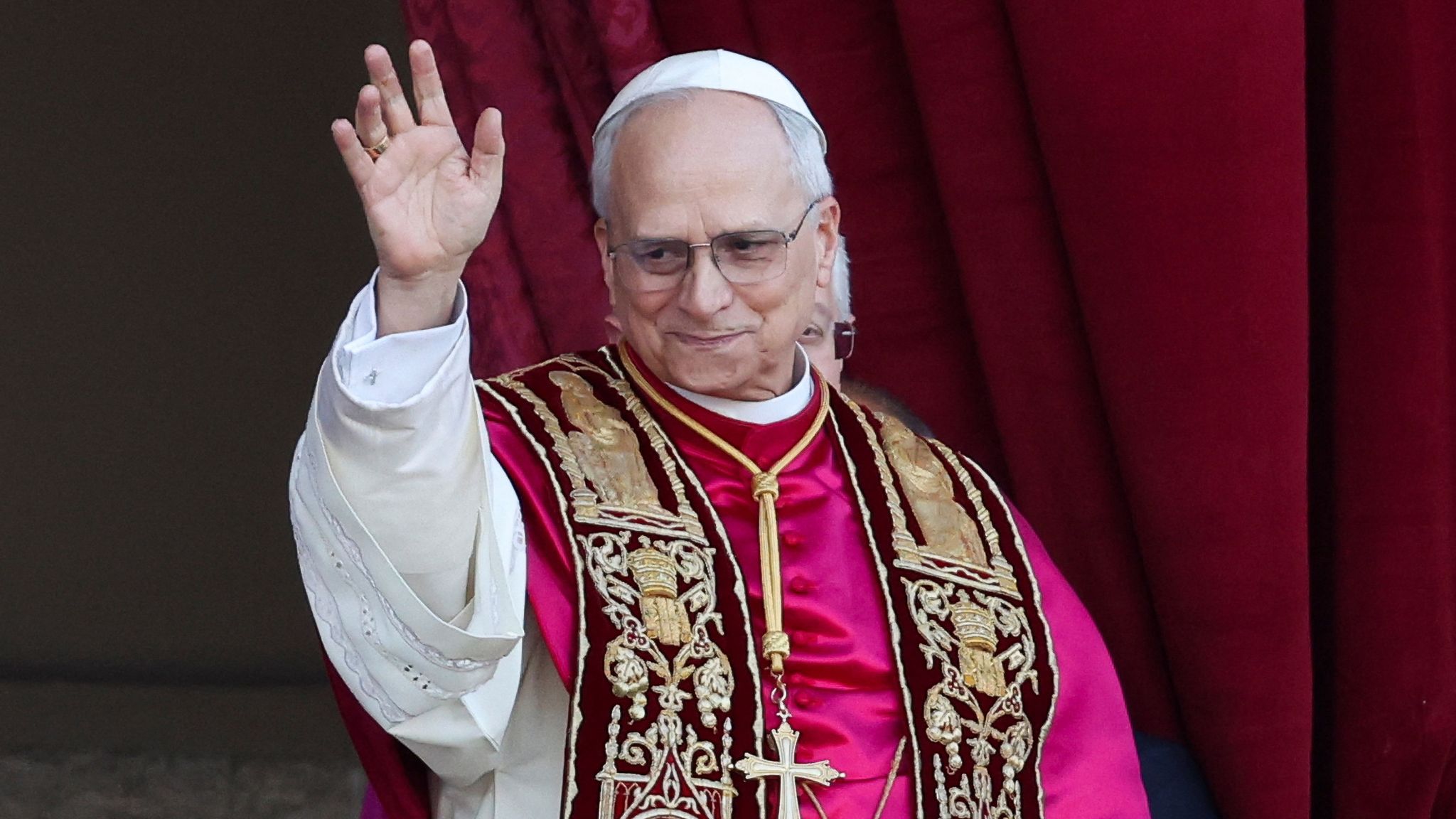
Pope Leo XIV, upon his election

As an Anglican, I join other non-Roman Catholics in hoping and praying that the new Bishop of Rome will live fully into the beautiful opportunity he has been given. His new office brings with it a symbolic role for all Christians, to be a principled unifier and peacemaker. In this era, that will surely be a challenge.

People of good will seek truth where it is to be found. We want all persons to live in harmony with one another, and with the beautiful world in which we find ourselves. We see this spirit of inquiry and discernment exemplified in many Christian leaders, as well as in non-Christian leaders like the Dalai Lama.

At heart, we seek and desire to serve what Christians and Jews hold to be true regarding all human beings. For we believe that all persons were and are created in the image of God, and that despite the woeful effects of our sin, we all still bear that image, however much we may have lost likeness with God. This was the central insight that some Roman Catholic Christian thinkers, along with fellow spiritual travelers from other traditions, brought to the creation of the United Nations Universal Declaration on Human Rights.

Principal documents from the Second Vatican Council display this theme in abundance. These texts continue to inform and guide wise souls who are genuinely concerned about the numerous lingering and emerging problems within the worldwide Church, and in the many societies and cultures where Christians seek to serve Christ in all persons, and respect the dignity of every human being.

Pope Leo has in large measure the same opportunity that we all have. May he have grace to live and serve well, and may we remember the importance of our own often overlooked roles in seeking to do the same. Every day brings new opportunities to seek and serve what is true, especially as we come to know the source of all Beauty, Goodness, and Truth, in Christ.

As St. Richard, the 13th century pre-Reformation Bishop of Chichester (England), taught us to pray: “Dear Lord, of thee three things [we] pray: to see thee more clearly, to love thee more dearly, and to follow thee more nearly, day by day.” (text from The Hymnal 1982, yet familiar to many from the musical, Godspell)

We find the same words as part of a prayer found in the liturgy of the Roman Catholic Church:

MOST merciful Redeemer,
who gavest to thy Bishop Richard a love of learning,
a zeal for souls, and a devotion to the poor:
grant that, encouraged by his example,
and aided by his prayers,
we may know thee more clearly,
love thee more dearly,
and follow thee more nearly,
day by day;
who livest and reignest with the Father
in the unity of the Holy Spirit, ever one God,
world without end. Amen.

A stained glass window commemorating St. Richard of Chichester, found in the church of St. Saviour, Eastbourne, East Sussex, England

Easter Sunday 2025

If reading this by email, please tap the title at the top to open your browser for the best experience. Then, clicking individual pictures will reveal higher resolution images.

Peter Koenig, Christ as Second Moses (The Rainbow Resurrection)


Having six granddaughters, aged twelve down to two years, I’m very familiar with unicorns and rainbows. There is something about little girls and pastel colors that seems universal. So, when I go into the stores these days, and see all the Easter decorations, I think of our granddaughters. Because everything I see on display seems to be a rainbow of pastels, colors, and patterns, which our little girls love.

Well, as we know, our culture has tamed and domesticated Easter. Good Friday with its silence and its dark remembering is a challenge for us. For we seem to have enough darkness and bad news everyday as it is. And Easter Sunday morning provides the antidote we long for. For a few hours, and even for a few days, we can get a lift, a happy bounce, in a way that we hope for.

But deep down, we know that we want more than a brief lift in our mood, a brief enhancement of our sense of well-being. Our hearts truly long for a lasting joy. For we hope that though happiness may be fleeting, blessedness is abiding. And it was blessedness that Jesus was announcing and commending in his Sermon on the Mount. So here is our question this morning: How does the Gospel Good News about the discovery of an empty tomb help us find a sense of blessedness, and, in a way that might be lasting.

This morning I share with you three images by the English painter, Peter Koenig, images which I think can help us on our spiritual journey this Eastertide. This is our Easter journey toward discovering and experiencing a lasting sense of blessedness. For we discover the kind of blessedness that does not overlook the darkness, or pain, or sadness, that may be a real part of our lives. What we celebrate at Easter is not the simple replacement of what has come before, with something new that wipes away the past. We are not celebrating the spiritual equivalent of a vacation from daily life. For then, in a few days or weeks, we would have a sense that ‘we must now return to reality.’ The reality we celebrate today and throughout Eastertide is the reality of Resurrection transformation.

Now, how do we know this? We know this first from the reports of the Disciples – both the women and the men – who saw the Risen Lord. And who recognized him when they saw his healed scars – not absent scars, but healed scars! They were the first witnesses to the transformation that God brings to us in Resurrection Life. And Resurrection Life is God’s great culminating chapter of what we call Salvation History.

So let’s set our spiritual awareness within the sweep of biblical Salvation History. Here, I offer you a simple phrase with which to help identify and to remember the heart of this mystery. “Through the waters of death into a new covenant life with God.”

Left side panel for Christ as Second Moses

I invite you to look at Peter Koenig’s painting, Jesus as a Second Moses (or, The Rainbow Resurrection), along with its two glorious side panels. Here we notice several details, at least one of which will direct our thoughts toward Easter. We readily notice the rainbow, along with the pastel colors at the top and bottom of the central panel. These – of course – suggest the pastel colors we associate with Easter cards and Easter eggs, and other holiday decorations.

But let’s remind ourselves of what that rainbow first represented. In Salvation History, a rainbow came after a forty day period of massive death and destruction. Most of what we would consider to have been ‘life on earth’ was destroyed and lost, most people, and almost all animals and plants. Noah and his family, and the animals on the ark, traveled through the waters of death into a new covenant life with God. That death, however extensive, however gruesome and abhorrent, was and never would be the last word. God’s Word is – and always has been – a word of promise, a word of covenant. Where we aim for good, things often seem to go bad. Yet, God always aims for good, and achieves good.

Next, we should think of Israel, walking between and through the waters of death at the Red Sea. This brought them to Mt. Sinai, and to the great new Covenant between God and Israel, where blood was sprinkled upon the altar of God, and also upon God’s people. They were then led on a forty year journey through the wilderness to the threshold of their Land of Promise.

This was the moment when Joshua and God’s people crossed the Jordan. This water crossing echoed and recalled our forebears’ two prior journeys through the waters of death into a renewed covenant relation with God. Israel’s renewed covenant relation with God upon the west bank of the Jordan, within the Promised Land, signaled their desire to be faithful to God, and to God’s ways, no matter what.

Right side panel for Christ as Second Moses

And yet, the next most significant event embodying this pattern was the baptismal practice of John at the same river Jordan, centuries later, and Jesus’ own Baptism, by John. Of those who came out to John, many if not most of them were Jews by birth and also upbringing. To them, baptism was foreign. For baptism was what Gentile converts did, not Jews! And so, for them to submit to, and receive, John’s Baptism, was a genuine act of living into God’s holy covenants with their ancestors. Yet it was also a submersion into the waters of death ~ death to old ways and old ideas, as well as death to certain prior social and family relations. For John pointed to the renunciation of sin, and a return to God’s ways. It was also the path into a re-newed covenant life with God.

Jesus’ own acceptance of Baptism at the hands of his cousin, John, symbolized something other than a personal need of his. Scripture instead suggests that Jesus, himself, chose to live into this moment. He did so out of his deep identification with all of us, in what would become his world-wide family. Through John’s ministry, and in Jesus’ acceptance of it, Jordan waters once again became a symbol ~ a symbol of going through the waters of death to sin, and acceptance of a renewed or new covenant life with God.

And so, when each of us was or is baptized into Christ, we join all of these faithful people who came before us. In Baptism, with them we cross through the waters of death, into a new covenant life with God.

This may prepare us to acknowledge how we are portrayed in Peter Koenig’s painting. For we are represented by those depicted as standing in the purple shadows, behind the ‘Christ-as-Moses’ figure. We are people who live and walk in darkness until we meet the true light, the Light that comes into the world to enlighten everyone. On what, then do we base our hope? Surely, it is on the hope represented by the fruit of Jesus’ death and Resurrection.

The Son of God embraced the human body, and he became one with it. His body has become the Body we have embraced, and with which we have become one. The Body of his transformation has become the Body of our own transformation. His death and Resurrection was and is our doorway into a new life. This is what this day and our liturgy are all about.

Alleluia! Christ is Risen!


Additional note: here I offer my Easter homily, shared this morning at Grace Church, St. Francisville, LA.

The Beautiful Spirit of my Friend, Renee


I want to share my continuing appreciation for the beautiful spirit of a friend with whom I have been a colleague in life and work for over twenty years, and from whom I have learned much. Renee was first a mentor to me, as someone who exemplified spiritual authenticity while also demonstrating leadership gifts that have come to be recognized in the wider Church and in the corporate world. Renee truly loves people in a genuinely infectious way. It is no surprise, therefore, that she is a natural team leader who is blessed with the gift of inspiring others to become more whole, and to take the pursuit of holiness more seriously.

Renee was raised in the Midwest and the Southwestern desert, but yearned for a wider worldview than what her family and her early educational and social communities seemed to offer. This has led her to pursue a great deal of travel throughout her life, a good bit of it overseas. She has always been a seeker who has moved through life with the humility of an inquisitive learner and perceptive observer. To me, these qualities are fundamental.

I got to know her as a fellow leader at conferences in what she and I humorously might call the ‘early days,’ when she sought to share her vision for mission and ministry with a wider community. I remember her approaching the task of assembling some fifty-plus plastic transparencies to be set upon an overhead projector {remember those?}. And yet, despite these kinds of challenges we commonly faced as conference presenters, her story and personal witness were always compelling. For she quickly made meaningful connections with others in ways that encouraged us to identify with what she had come to see and know, and then as things we could take on to value in our own lives.

Some personal details of Renee’s life-journey fortify my appreciation for who she is, and the person she has been open to becoming. After her childhood and subsequent education, largely shaped by life in middle America, she adventurously responded to a ministry opportunity that took her to a rural area in the Philippines. This was likely a significant growth opportunity as well as an early indication of some emerging directions in her future vision and work. In so many ways, she has had an inclination to approach ideas about what it means to live as a spiritual being who engages with this world in all its complexity, with curiosity and a compelling equanimity. I particularly value her intentional pursuit of aspects of Asian cultural and spiritual life, and her frequent travels to the far side of the Pacific. These pursuits stand out to me given my own childhood and adolescent experience of growing up in Japan.

As a practical example, her decision for many years to risk adopting a pattern of clothing that could by some be labeled as ‘cultural appropriation,’ was yet a sign of her openness to other and non-traditional ways of living and of seeing things. Based on a spiritual principle, she has also often led worship after removing her shoes. For her, these kinds of decisions regarding how she approaches daily life are not an affectation, and call attention to what she is focused upon and to those things in which she finds value, rather than to herself.

Having lived and worked for a period of time in the humid hill country of the Philippines, Renee has also been effective in encouraging church community in the comparatively arid rural areas of Idaho, the azure coastal region of central California, as well as in the rice-growing flat land of southeastern Arkansas. Throughout her life, Renee has been drawn most to the desert, and to the spirituality that can be found in places like where Abraham perceived the nearness of God, outside his tent on a bright starry night, and where Jesus confirmed his vocation while setting aside the alluring possibilities offered by the Enemy. Her regard for the divine Spirit, who is often best found in the desert and in desert-like places, provides insight about the abiding interiority of Renee’s spiritual character.

What particularly marks Renee as a learner and as a teacher is her remarkable capacity for creative but also sincere self-remaking. She has in many ways transcended perceived attitudinal ‘boundaries,’ and has not only grown but has flourished in her life-informed path, to the joy of many others.

I offer this with thanks for my friend, Renee Miller, who embodies a wonderful appreciation for ‘the beauty of holiness.’

Here are some words from Renee that I think capture well her positive view of her life and ministry: “My primary core value is attributing the highest motive to people’s behavior. This helps me stay in the place of unconditional love, and for me, there’s nothing more theological or beautiful than the reality and demonstration of love. It can transform even the ugly and horrific, and if not transform, at least lessen its power.” Surley, these are words that we all want to live by.


Laetitia Jacquetton and the Art of Both-And

If reading this by email, please tap the title at the top to open your browser for the best experience. Then, clicking individual pictures will reveal higher resolution images.


Not so long ago, my friend James brought to my attention the striking glass-based sculptural work of Laetitia Jacquetton. Born in France, Jacquetton has a background in fashion design and a longterm interest in the minimalist qualities present within much of Japanese art and its Mingei (or folk art) tradition.

When I consider what I find compelling about her sculpture, I am reminded of the art of photography. A decisive factor in effective photography, especially black and white photography, is that of contrast. This is a predominant feature in Jacquetton’s work. Though this may seem obvious, perhaps too obvious for comment, I would like briefly to explore the significance of this element of contrast, and what her work might help us to appreciate regarding other spheres within our life experience. For the sculpture of Laetitia Jacquetton may alert us to an expansive question: can dissimilar and even contrasting things – as well as ideas – be brought together into beautiful harmony? And, what might asking this tell us about our concepts of nature and grace?

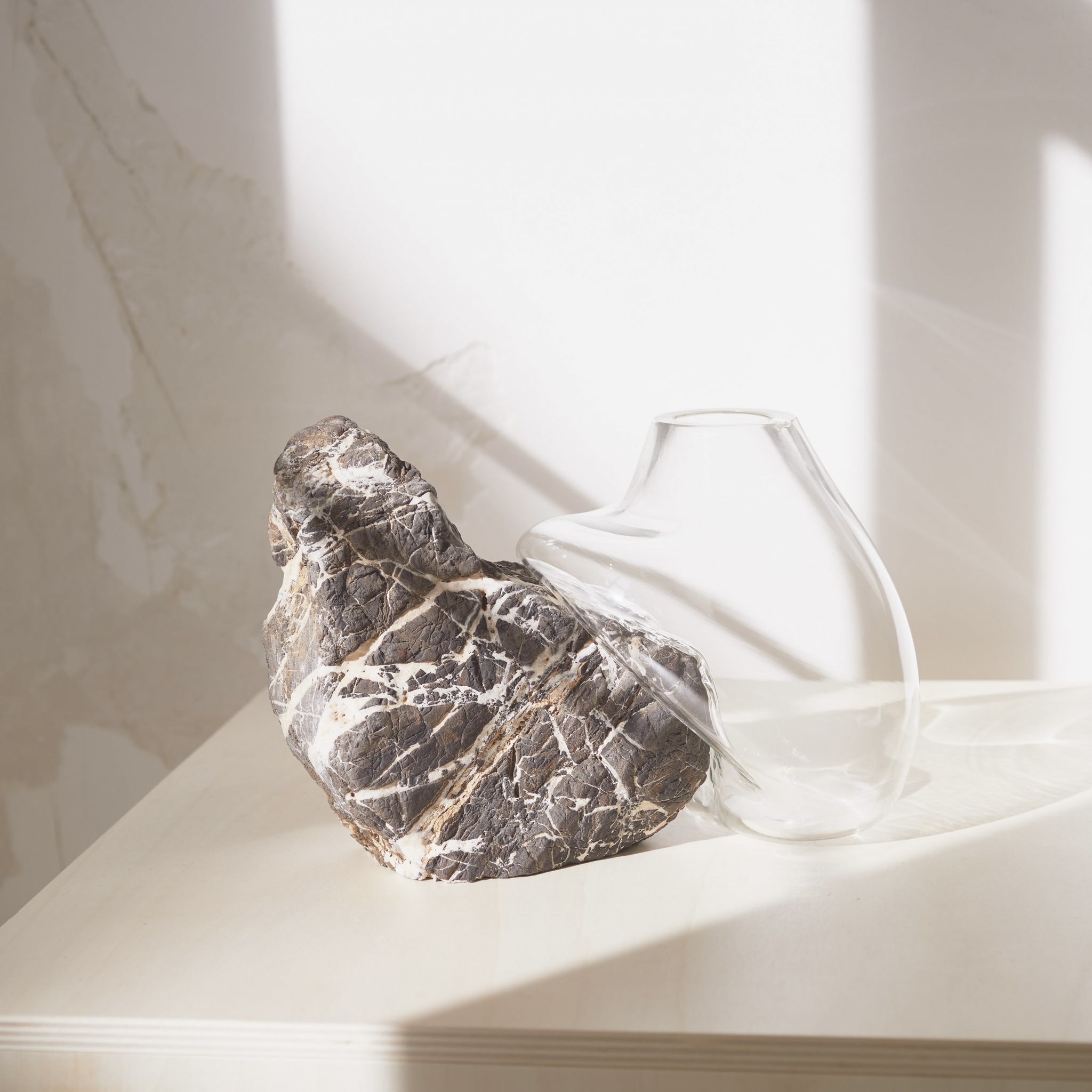
Photos of Jacquetton’s sculptures help acquaint us with how contrast functions in her sculptures. For example, the photo at the top displays an intentional contrast between light and dark, as well as between shiny and matte materials.

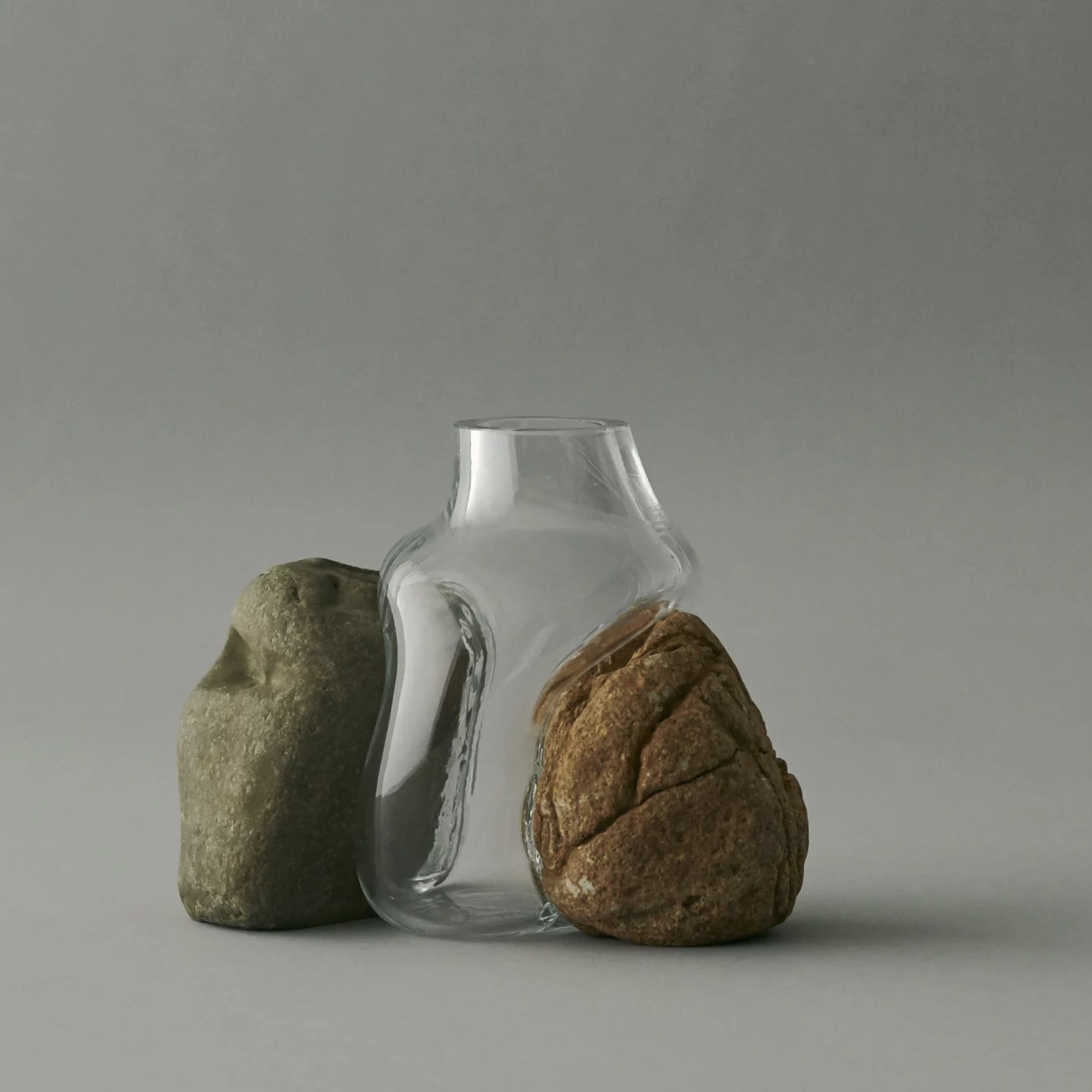
Here, we see a contrast between translucent and opaque materials.

We also see in these photos a further contrast, between smooth and textured materials. This feature, along with those previously noted, stems from the way a fluid and malleable material has been brought into relation with a static and unyielding one. Observing this allows us to infer something about the creative process involved in the production of Jacquetton’s sculptures. The artist has taken a humanly-fashioned form and adapted it to a naturally shaped object, bringing something crafted in the studio to bear upon something found in nature.

Empirically observed contrasts like these may also have a bearing upon our ideas, and how we think about concepts like nature and grace. We may have been taught to view such ideas in terms of a perceived contrast between them, even an antithetical one. Here, when thinking about objects found in relation to others that are crafted, or about nature in relation to our view of grace, we may gain insight by considering some apposite words that Eucharistic celebrants may say before consecrating the bread: “Fruit of the earth and work of human hands, it will become for us the Bread of Life.”

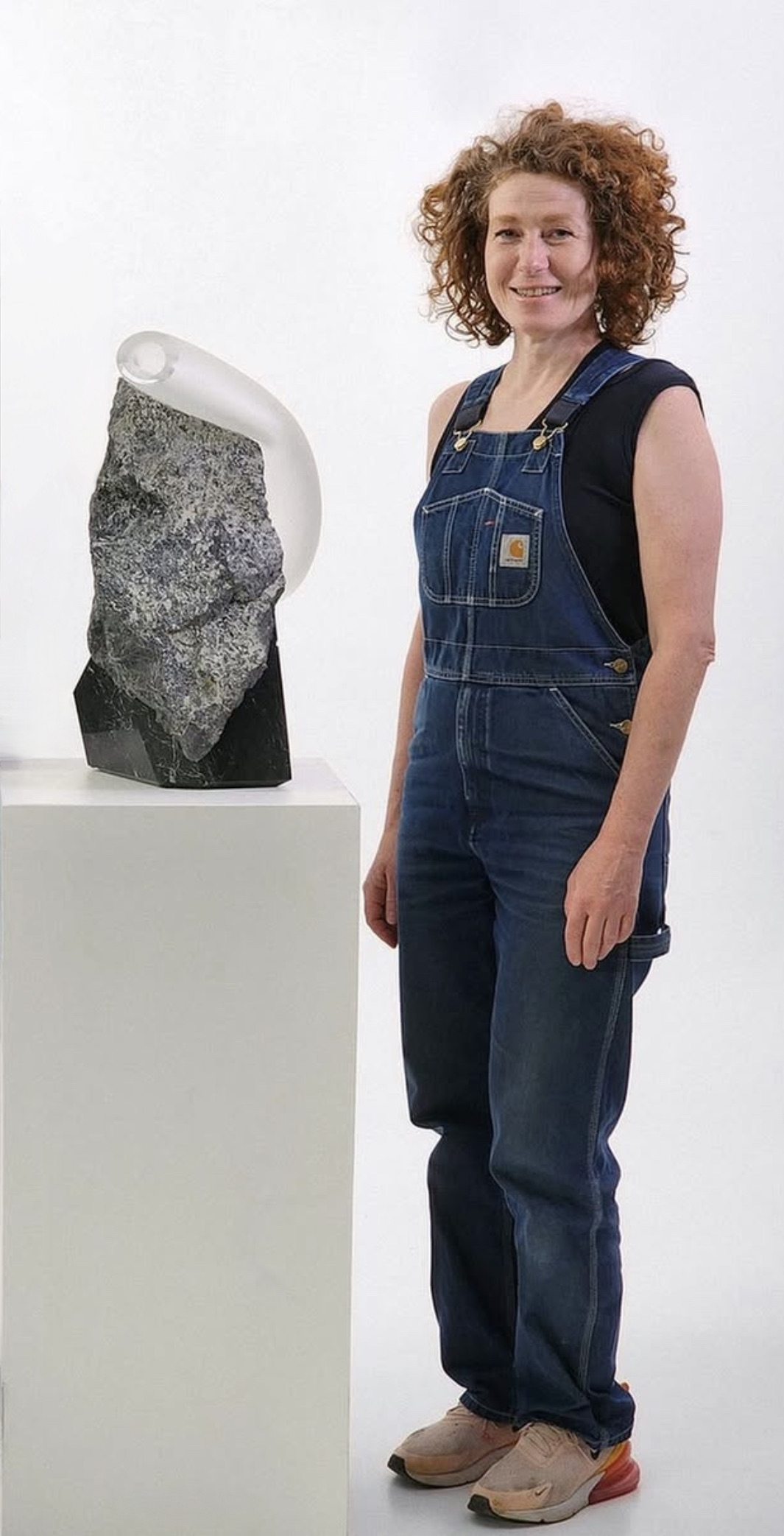
Several contrasts already noted are also evident in photos of Jacquetton’s other works:

Reflecting on these photos that feature contrasts allows us to articulate what is most significant within Jacquetton’s work, her intentional juxtaposition of contrasting elements.

Jacquetton as an artisan, a human agent gifted with a creative vision and developed skills, has juxtaposed dissimilar materials, achieving aesthetically pleasing results. A singular focus upon one or more of the contrasting materials (or the qualities associated with their appearance), could lead us to highlight one aspect of the artwork at the expense of another, in an either/or way. Yet, it is the dynamic conjunction between dissimilar materials that Jacquetton prioritizes in her work. Evident contrast is accompanied by intentional conjunction, leading us to appreciate the interplay of the differences in a both-and manner.

Noticing this, I think once again of the Eucharist, which – like the Incarnation – is another and relatable example of what I am referring to as a ‘dynamic conjunction.’ For the Eucharist makes present together both the natural physical properties of bread, and the supernaturally graced properties of the sacrament.

Nevertheless, we tend to view many aspects of our world, and of our lives within it, in a simplistic and reductionist manner. For me, comparative reference to the influence of Plato and Aristotle helps limit this tendency toward reductionism.

For example, I credit Plato’s influence with an implicit encouragement to view things, and especially their moral value, in relation to a single reference point. According to this approach, something either possesses or manifests this or that quality – let us say beauty, or goodness – or it does not.

I credit to Aristotle’s influence a more nuanced approach, which nurtures a willingness to consider what we see and come to know in relation to several reference points. We are then better able to say (in a both-and way) how this or that object of attention has a particular quality, while also possessing something of a second quality, and how it can be aptly described by referring to other qualities or attributes.

In all this, I do not attribute my reflections to Laetitia Jacquetton, though her compelling sculptures have clearly inspired them.


Additional notes: Thanks to my friend, James Ruiz, for introducing me to Laetitia Jacquetton and her evocative sculptural work. / Regarding my references to Plato and Aristotle, I do not presume to have accurately summarized aspects of their thought, but rather cite what I think are aspects of their dual influences.

I hope readers might perceive how my reflective observations above are related to the paradoxical conjunctions of ideas upon which I reflected in my prior post, regarding how repentance may display beauty, and how painful grief may be accompanied by joyful reassurance.

The Epiphany: Human Power Encounters Divine Authority

If reading this by email, please tap the title at the top to open your browser for the best experience. Then, clicking individual pictures will reveal higher resolution images.

James Tissot, The Magi Journeying (detail)


Instinctively, there is something we all seem to seek. We want to find purpose and meaning, and organizing principles for our lives. This desire is anchored in a larger one: we seek to discern what is real, and true.

But where does our common impulse come from? In what does this impulse consist? I think the best answer to these questions is found at the heart of the Feast of the Epiphany. On Epiphany, we celebrate how God has revealed to the world the real and true meaning and purpose for our lives. Epiphany is all about God revealing to us the divine center of everything. Epiphany highlights God’s self-revealing in the natural world, and preeminently in God’s Incarnation, which the Magi came to discover and then worship.

We are able to recognize that it is in the nature of a Creator to order reality, imbue it with purpose and meaning, and hence to bring order, purpose, and meaning to our lives. A perhaps-unexpected word that captures this broad idea is authority, in that God possesses the authorizing power to create things, and guide them. Specifically, we discern this authorizing power in God’s creation of the universe and in the divine agency shaping ongoing history. For God is the author of all that is real and true.

In human life, authority and power are not always neatly aligned, and we experience trouble when the two are at odds with one another. We see this dialectic between the two at work in the events of Holy Week, in the confrontation between divine authority (in the vocation of Jesus), and worldly power (as exemplified by Pontius Pilate). Less obvious is the way this dialectic is manifest in the events that are commemorated in our celebration of Christmas and the Epiphany of our Lord, especially in connection with the visit of the Magi from the East.

James Tissot, The Magi in the House of Herod

The Magi, also called ‘wise men,’ or ‘kings’ from the East, arrive in Israel having been guided by an authoritative power greater than themselves. Because of their witness to this higher authority and its implied power, the visitors pose a threat to Herod and his courtiers, who exercise earthly authority and its attendant power. This emerges in the interaction between people who are witnesses to divine authority and its power, and others who are possessors of worldly authority and power. The emerging conflict, later seen in the events of Holy Week, arises amidst the challenges surrounding the beauty revealed in what we call the Epiphany, the revealing of divine light to the whole world rather than to just a particular nation or the people of a particular religious tradition.

The Magi from the East, by explaining their quest, prompt Herod to act. He acts viciously and violently through orders given to soldiers under his command. The result is the series of murders we acknowledge every year on December 28, in the ‘red letter day’ we call the Massacre of the Innocents.

James Tissot, the Adoration of the Magi

What are we to make of the Epiphany of God in human form, and the tragic circumstances to which it led? At the heart of Christian belief is the conviction that God became present to us through a human birth. He revealed himself in a human person who embodied two natures, one fully divine, and one fully human, whose natures are distinguishable yet inseparable. Such a person, regardless of appearances, was and is the transcending center or heart of all that is, manifest in human form. He is, therefore, the One who truly possesses divine authority and divine power. Einstein – who was not in any sense a traditional believer – said this: “The most beautiful thing we can experience is the mysterious.” The divine center of reality, manifest and revealed in a human being, is the most mysterious beautiful thing that we can experience.

Here is the wonder of it: in God’s mysterious Providence, the birth of the Messiah would bring death to many (in the Massacre of the Innocents). And – years later – the death of the Messiah would bring the possibility of new birth to all, through the redemption of human being from the power of sin and death.

Yet, it would be some decades later before those who proclaimed Jesus as Messiah, and the embodiment of God, could understand the connection between his birth along with those soon-resulting deaths of the Innocents, and his later death, along with its soon-resulting new births for those who came to believe in him.

Our proper response to all this — indeed our only response to all this can and should be to praise the Holy One of Israel, the one whose death brought new life to all who receive him. He has come to us. Come let us adore him. And let us receive him with renewed hope and joyful hospitality, in all his light-filled glory.

A blessed Epiphanytide to you and your loved ones.


Allan West: Japanese Culture and Art

If reading this by email, please tap the title at the top to open your browser for the best experience. Then, clicking individual pictures will reveal higher resolution images.


In more than one way, Allan West is an unusual artist. His life and work have been deeply imbued by the spiritual aesthetics of Japanese culture and its traditional art of painting. For over forty years, he has dedicated himself to Nihonga, the less and less practiced method of painting using minerals for pigments, mixed with the liquid medium of a glue made from deer protein. This approach to painting has been practiced consistently in Japan, where luminous paintings from the 11th century can still be appreciated for their original beauty. The closest parallel in Western art is egg tempera painting, in which painters in earlier centuries mixed pigment with egg yolks instead of the modern practice of mixing pigments with oil or an acrylic medium.

Allan West was born and grew up in Washington, D.C., and his sojourn in Japan began in a period of mission work there as a member of the Latter Day Saints. Two factors transformed the vector of his life. He came to realize that he had an affinity with Japanese culture, especially with its artistic tradition, and he was struck by the Japanese sensitivity to living in harmony as much as is possible with the natural world.

More particularly, with his memory of pursuing painting from the time of his childhood, he recalls his own experiments with mixing pigments with various liquids to achieve a more fluid paint medium. This predisposed him to accept an observation offered by a viewer of his early work, who told him that his preferred approach to painting had a long tradition in Japan. As a result, West moved to Japan in 1987, with his wife and children, to learn from that tradition. He has lived and worked in Tokyo, ever since.

In a short video introduction to the artist, released by the Prime Minister’s Office in Japan, Allan West shares the following about his life’s work (screenshot above, and link below):

I use the Japanese painting technique to express the beauty and essence of the natural seasons. It has been 40 years since I moved to Japan, attracted by the traditional pigments and techniques of Japanese painting. Japanese natural materials can retain their clear vibrancy for more than a thousand years. I’m proud to inherit the tradition of Japanese painting and its wisdom that cherishes nature’s beauty and harmony with humankind. Through my art I’d like to convey the appeal of Japanese culture to the world.

With these few words, spoken in a soft and nuanced voice in the video, Allan West is saying much. Having returned to Japan with the intent of learning a method or a technique, he had the sensitivity to realize that he needed to learn the Japanese language and let its culture become ingrained within him in order for him to be able to practice Nihonga painting with some degree of integrity. The photo below contains a number of important cues concerning what West has received and learned from the tradition of which he describes himself as an inheritor.

Allan West paints sitting on the floor in a Japanese way, on mats woven from rice-straw. As has been noted, the paints he uses are made up of ground minerals mixed with a glue-like medium of deer protein, paints which he values for their fluid quality. Hence, the surfaces that are to be painted need also to rest upon the floor, to avoid the paint running. Many of the surfaces upon which West works are large in size, like the sometimes wall-sized decorative folding screens for which he has become known. To be able to paint such expansive surfaces in their totality, instead of panel by panel, the artist designed a narrow rolling platform, allowing him to reach any area of a full-sized screen (as in the image above). This photo also displays West’s use of vibrant mineral-based colors as well as metalic foils and powders, such as gold leaf, some of which are found in the glass containers on the shelves behind him.

Allan West’s present Yanaka, Tokyo, studio

Unlike some artists, both Western and Asian, Allan West welcomes visitors to his studio, and actively encourages those who are curious not only to view his art, but to witness his creative process. To this end, his present studio, much modified into a traditional Japanese-looking structure from its prior use as an automotive maintenance facility, has large and welcoming sliding panels and windows, through which those walking by can view him painting. Through providing this access to his creative work, he hopes to promote a sustainable future for Nihonga, and to persuade Japanese visitors in particular that even an American immigrant can appreciate, learn, and become proficient in an ancient Japanese art form.

The following images provide examples of Allan West’s beautiful work:

The following image displays the interior of Allan West’s attractive and welcoming studio and gallery building:


Readers who wish to become more acquainted with Allan West and his work might view the YouTube video mentioned above (the link is here). Allan West’s studio and gallery can also be visited in a virtual way by clicking this link.

The Beauty of Philip Simmons’ Charleston Ironwork

If reading this by email, please tap the title at the top to open your browser for the best experience. Then, clicking individual pictures will reveal higher resolution images.

Gate to the Philip Simmons Memorial Garden, Anson Street, Charleston (featuring a Simmons design)


Philip Simmons, was a blacksmith who spent his life and working career in Charleston, SC, where much of his work is preserved by homeowners, collectors, and a foundation dedicated to honoring his legacy. Along with his lifelong body of ironwork, he has been described as a national treasure. Born in 1912 in the Old South, he received a very limited education and apprenticed himself at an early age to blacksmiths he saw in his Charleston neighborhood. Eight decades of work in a blacksmith’s shop followed as he pursued what some might call a trade craft, and which in his hands was truly an art.

Mary E. Lyons has written a book about Simmons for young persons, which includes some compelling photos of his work. She offers this introduction to the artist: “Philip Simmons began his career as an untrained boy. Now he is called the Dean of Blacksmiths by professional smiths across the country. His memories show that skill and patience take years of work. They also prove that everyone can achieve both. An honored artist, teacher, and businessman, Philip Simmons is the working person’s hero.”

Though the circumstances in which he lived and worked were modest, he is warmly remembered by his home city, and he has been commemorated by a marker at the Fort Sumter and Fort Moultrie National Historical Park (shown above), by the preservation of his home and studio, as well as by a high school named in his honor. Numerous examples of Simmons’ ironwork can be seen on walking tours in Charleston, in the course of which one can enter, through a gate fashioned by Simmons, a memorial garden for named for him maintained by the Garden Club of Charleston.

An egret, one of Simmons’ favorite motifs in his ironwork

In addition to representations of egrets, other images such as palmetto fronds, hearts, fish and serpents, number among those images often featured in Simmons’ ironwork. The artist’s choice of these images reflected his sensitivity to the locale in which he was raised, both Daniel Island where he was born, and then Charleston and its low country and aquatic surroundings.

A major turning point in Simmon’s life’s work came with an unexpected opportunity brought to him when he was 64, an age when many contemplate retirement. He was invited to participate in the 1976 Bicentennial commemorative Festival of American Folklife to take place on the Mall by the Lincoln Memorial in Washington, D.C. Asked to craft a gate onsite during the event, Simmons wondered about the imagery that he might select for the project. Thinking about images that would reflect where he was from, he settled on the moon, stars in the sky, the rolling surface of water, and fish. This combination of images reflected, in his mind, the night sky sparkling upon the waters of the two rivers that form Charleston Harbor. The resulting gate, which has come to be known as the Star and Fish Gate, was purchased by the Smithsonian Institution (image below).

Philip Simmons’ crafting of the Star and Fish Gate in a temporary workshop set up on the Washington Mall, complete with a portable foundry and anvil, attracted a great deal of attention during the festival, and resulted in the artist gaining national attention. Among those taking an interest in Simmons’ work, and then helping bring it to a wider audience, was John Michael Vlach, a professor at George Washington University. Vlach published a biography of Simmons in 1981, which may have helped those at the National Endowment for the Arts to take note of Simmons’ lifetime of achievement in the field of blacksmithing. In 1982, the NEA awarded Simmons with a National Heritage Fellowship, the United States government’s highest honor in the folk and traditional arts. Other honors followed, including the Order of the Palmetto, his home state’s highest honor, as well as induction into the South Carolina Hall of Fame. During his lifetime, he was referred to as “a living national treasure.”

Simmons’ iron work incorporating the medical symbol of a caduceus, and a fish representing an aspect of his home region as well as the Christian faith

In spite of all of the accolades and honors he received later in life, Philip Simmons continued with humility to devote himself to his art, and to teaching younger aspirants and apprentices who wished to become proficient themselves in creating beautiful yet also functional ironwork. Despite the very significant cultural differences between his approach and those of Japanese craftspeople, I find Simmons’ approach to his life’s work characteristic of the best of what is often described as folk art, work that is appreciated for its beauty without necessarily calling attention to the artisan who made it.

Displayed below are images of a number of Simmons’ creations as a blacksmith.

A Simmons gate for St. Philip Episcopal Church, Charleston

The cover of Mary Lyons’ book for young persons, featuring Philip Simmons at work on a piece of scrolled iron


The full title of John Michael Vlach’s book, mentioned above, is: Charleston Blacksmith: The Work of Philip Simmons. The book includes a map of Charleston showing the location of Simmons’ works, as well as brief descriptions of them.

Jason Sparks’ Artistic Adaptation of Tenkara Flies

If reading this by email, please tap the title at the top to open your browser for the best experience. Then, clicking individual pictures will reveal higher resolution images.


I discovered the handiwork of Jason Sparks through the writing of Jason Klass, a Colorado fisherman who has come to fish exclusively using the Japanese approach to fly fishing called Tenkara. Tenkara fishing has at least two distinguishing features, the first having to do with a difference from typical American fly fishing rods. Compared to familiar Western examples, Tenkara rods are very long poles, historically made of bamboo, along with a fixed-length line of roughly the length of the pole, and no fishing reel for the line. The flies used in Tenkara fishing are the second distinguishing feature. Tenkara flies, as in Jason Sparks’ beautiful example (above), generally feature hackle feathers (rooster and or hen) tied to the hook in a way that projects the feather’s barbs forward, toward the eye of the hook. This creates a pulsing motion when the fly is pulled against the current in a stream.

The anatomy of a fish hook. (Sparks prefers barbless hooks to facilitate ‘catch and release’ fishing)

The artistic design work of Jason Sparks, and his adaptation of traditional Tenkara flies, stress an intentional use of natural materials. In order to appreciate the originality of his flies, it’s worth considering examples of traditional Tenkara flies.

A traditional Tenkara fly tied by Dr. Hisao Ishigaki, a recognized authority on Tenkara fishing and fly tying

Traditional Tenkara flies are composed of three basic materials, a hook, thread, and part of a feather. The thread is wrapped around the neck of the hook, creating a base; thread-wraps then secure part of a feather to the hook; the feather is then spun around the shaft of the hook while perpendicular to it, thereby spreading the feather’s barbs. More thread is then wrapped around the shank of the hook, and tied off with a knot.

Almost all fly tyers make use of a vice, as depicted in the photo above, which holds the hook in place while the fly is created. One Japanese authority, Katsutoshi Amano, is famous for tying Tenkara flies without a vice:

Observing these aspects of traditional Tenkara fly design helps us appreciate Jason Sparks’ creativity and aesthetic sensibility, as he creates works of art that actually catch fish. His willingness to work beyond the usual parameters of Tenkara flies can be seen in his choice of hooks. Those employed by the two Japanese masters in the photos above feature straight shanks in the upper part of the hook.

Sparks frequently uses what are commonly called scud or nymph hooks, which have a long and curving shank, where the eye of the hook tilts slightly downward. A similar tilt can be seen in another type of hook he often uses, which has a traditional straight shaft of moderate length, but which also has a wide gap above the hook’s point and a somewhat squared bend between it and the shank. These various features can be seen in photos of Sparks’ flies included below.

In both the photo directly above, as well as the one at the top, we see Sparks’ use of a scud hook, yet with minimal added material on the hook’s shank. While many tyers match fly body materials with the size of the hook, Sparks finds that a hook’s size matters less than the presentation of the material attached to it. Further, by locating that material closer to the middle of the shank, it is easier to attach or replace the fly line (and leader) to the hook’s eye.

With his preference for using natural materials, Sparks likes to tie with silk thread, and he prefers naturally dyed woolen yarn from the Shetland Islands, given its variations of color and textured finish. With a yarn ‘body,’ and the spiky feather barbs wrapped around the hook, Sparks achieves very ‘buggy-looking’ flies:

Two points are worth noting about Jason Sparks’ flies. Though the examples here look large, they are actually not very big, being photographed closely to help us appreciate their detail and composition. His typical hook sizes range from an 8  to a 12 or 14 (in most cases less than an inch, and many considerably smaller). And, second, Sparks often directs the feather barbs both forward and rearward, in contrast to the usual forward tilt of many traditional Tenkara flies. These features can also be seen in the following examples:

Sparks also ties flies that are commonly called nymphs, suggesting the appearance of bugs in their larva stage of development. With these flies, we notice the absence of feathers, and a spare use of other materials such as Sparks’ preferred Scottish yarn:

Despite how much of the hook is exposed in these examples, Sparks contends that they are effective for fishing.

Jason Sparks is obviously a gifted fly tier and has made a significant artistic contribution to this avocation, which for some is also a form of employment. In contrast to the neatness and precision of his finished flies, Sparks’ fly tying desk resembles the workspace of many others who tie flies:


Readers interested in fly tying may wish to look at my prior post, The Beauty of Fly Tying, which may be accessed by clicking here.