Grace

Leo XIV: The Beauty of Possibility

If reading this by email, please tap the title at the top to open your browser for the best experience. Then, clicking individual pictures will reveal higher resolution images.

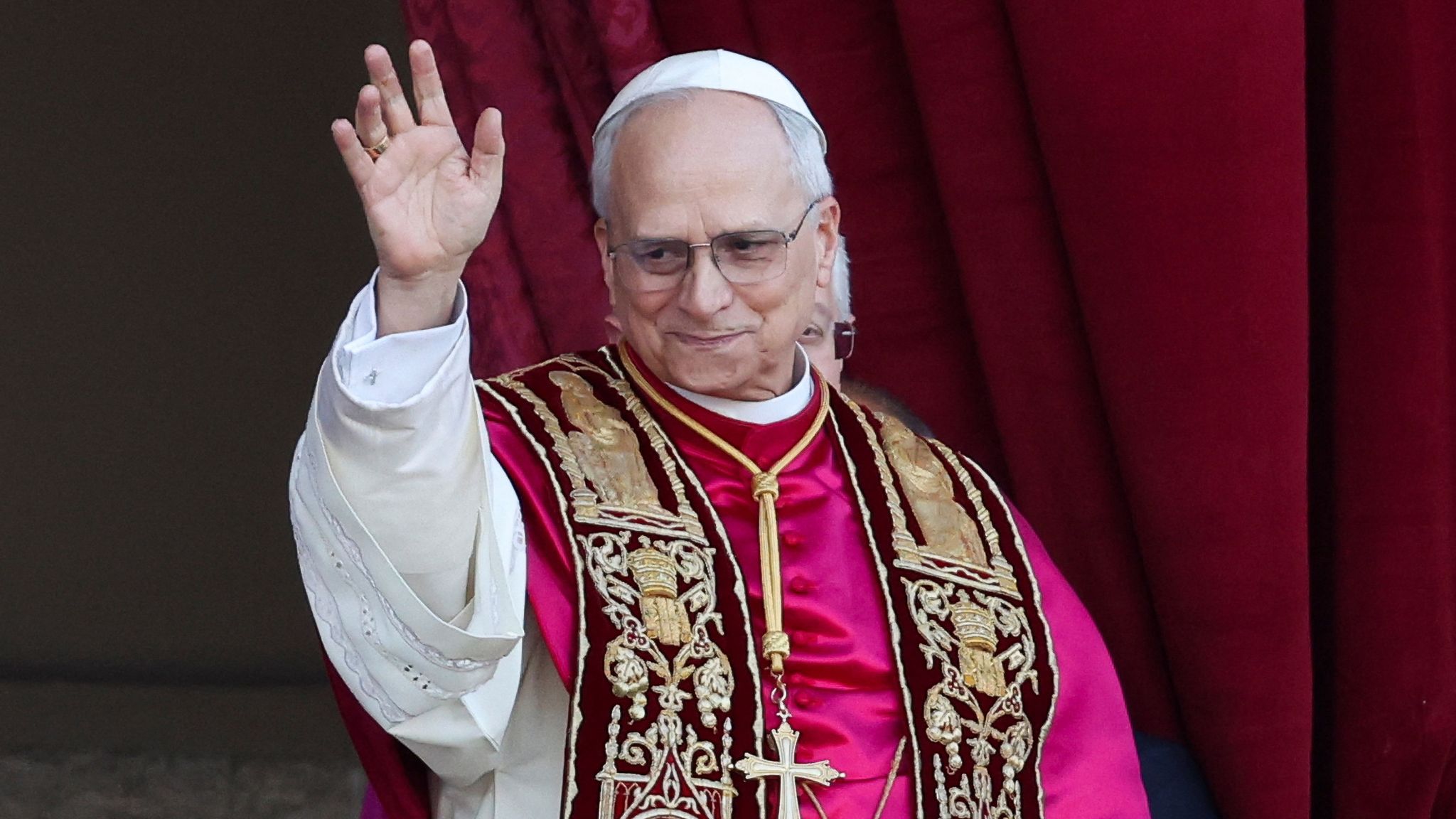
Pope Leo XIV, upon his election

As an Anglican, I join other non-Roman Catholics in hoping and praying that the new Bishop of Rome will live fully into the beautiful opportunity he has been given. His new office brings with it a symbolic role for all Christians, to be a principled unifier and peacemaker. In this era, that will surely be a challenge.

People of good will seek truth where it is to be found. We want all persons to live in harmony with one another, and with the beautiful world in which we find ourselves. We see this spirit of inquiry and discernment exemplified in many Christian leaders, as well as in non-Christian leaders like the Dalai Lama.

At heart, we seek and desire to serve what Christians and Jews hold to be true regarding all human beings. For we believe that all persons were and are created in the image of God, and that despite the woeful effects of our sin, we all still bear that image, however much we may have lost likeness with God. This was the central insight that some Roman Catholic Christian thinkers, along with fellow spiritual travelers from other traditions, brought to the creation of the United Nations Universal Declaration on Human Rights.

Principal documents from the Second Vatican Council display this theme in abundance. These texts continue to inform and guide wise souls who are genuinely concerned about the numerous lingering and emerging problems within the worldwide Church, and in the many societies and cultures where Christians seek to serve Christ in all persons, and respect the dignity of every human being.

Pope Leo has in large measure the same opportunity that we all have. May he have grace to live and serve well, and may we remember the importance of our own often overlooked roles in seeking to do the same. Every day brings new opportunities to seek and serve what is true, especially as we come to know the source of all Beauty, Goodness, and Truth, in Christ.

As St. Richard, the 13th century pre-Reformation Bishop of Chichester (England), taught us to pray: “Dear Lord, of thee three things [we] pray: to see thee more clearly, to love thee more dearly, and to follow thee more nearly, day by day.” (text from The Hymnal 1982, yet familiar to many from the musical, Godspell)

We find the same words as part of a prayer found in the liturgy of the Roman Catholic Church:

MOST merciful Redeemer,
who gavest to thy Bishop Richard a love of learning,
a zeal for souls, and a devotion to the poor:
grant that, encouraged by his example,
and aided by his prayers,
we may know thee more clearly,
love thee more dearly,
and follow thee more nearly,
day by day;
who livest and reignest with the Father
in the unity of the Holy Spirit, ever one God,
world without end. Amen.

A stained glass window commemorating St. Richard of Chichester, found in the church of St. Saviour, Eastbourne, East Sussex, England

Entering The Easter Joy of Our Lord

If reading this by email, please tap the title at the top to open your browser for the best experience. Then, clicking individual pictures will reveal higher resolution images.

Peter Farago, The Resurrection


A prayer appointed for the closing moments of the Good Friday liturgy provides words with which we commit ourselves to God, and pray for the grace of a holy life. We pray this prayer “with all who have departed this world and have died in the peace of Christ.” The liturgy provides this prayer so that, having made our commitment, and request for grace, “we may be accounted worthy to enter into the fullness of the joy of our Lord.”

Through Baptism, through dying and rising again in Christ, we have already entered into the joy of our Lord. This is the joy that our Lord so freely shares with all who are open to receiving it. A notable aspect of the first disciples’ response to encountering the Risen Lord, was joy. He brought joy to those who had despaired, or doubted, or even had given up hope. He brought joy to Peter who had denied him three times. He brings the same joy to us.

To experience the joy of the Lord, we don’t need to wait until we pass beyond this life, through the veil, into what lies before us. What we await is the fullness of joy when, finally, we behold him, unburdened from the cares and allure of this world as these occupy our attention now. In Jesus’ Resurrection, and through our participation in his Risen Life, we see further dimensions of the New Creation that already is.

Through Grace, joy is now ours. Rightly, and by faith, we anticipate entering the fullness of the joy of the Lord. As a Robert Lentz icon of Thomas Aquinas reminds us, joy is more than a feeling; for “joy is the noblest human act.”


The Beauty of Redemption-Based Identity

If reading this by email, please tap the title at the top to open your browser for the best experience. Then, clicking individual pictures will reveal higher resolution images.

Fra Angelico, The Transfiguration, prefiguring the glory of the Risen Christ and the beauty of our redeemed humanity


There is beauty to be found when we base our identity or concept of ourselves upon the Redemption that has been freely shared with us. Yet, we can experience sadness when we rest our self-perception upon our ailments and disorders. Regardless of our feelings, these alternatives represent choices we can make on a daily basis.

We all have an innate disposition to sin, and in various ways we all enact this disposition. But, for Baptized people and all others, this is not ‘the be all and end all’ of who we are made to be. Our end is in Christ, and so our wholeness is in Christ. We may be sinners; we are also among those who have been redeemed and are being transformed by the power of the Resurrection.

Appreciative Inquiry teaches us that what we we focus on grows. This empirical fact can be seen in two readily observable ways. New soccer players, especially the youngest ones, tend to swarm around the soccer ball. And, when on a fast break to try to score a goal, almost inevitably they kick the ball toward the goalie, the apparent impediment on whom their eyes are affixed instead of upon empty areas of the net. Another example lies in how Drivers Ed instruction teaches aspiring drivers to keep their eyes on the road. Why? Because we steer toward what we are looking at, often with sad results when what catches our attention are the flashing lights of an emergency vehicle on the shoulder.

I remember an observant friend remarking about another person known to both of us, regarding how that person was “someone who dotes on his infirmities.” Not a recipe for health in light of our greater awareness about the symbiotic relationship between psychology and physiology.

These insights may have what I hope are obvious spiritual implications. They may lead us to ask, toward what end are we living? Upon what image of our humanity are we most focused?

Raphael, The Transfiguration (detail)

An ironic aspect of the way that we can associate our identity with symptoms or conditions from which we suffer is how we commonly speak about our embodiment. When we say things like, “my leg is killing me,” or “my head feels terrible,” we may unintentionally reinforce a kind of dualism. All too casually, we dismiss such statements as mere figures of speech, and we may wish to consider their further significance. If I say that ‘my leg is killing me,’ then I suggest that in some way ‘my leg’ is not ‘me.’ Because my words imply that ‘it’ is acting upon ‘me.’ In a slightly more abstract way, we make statements like, “my conscience is bothering me.”

When I am inclined to think and speak in this latter way, I suggest by my words that ‘my conscience’ is something other than ‘me,’ and that it has some power of agency over or against me. What we commonly refer to as ‘my conscience’ might better be described as my experience of ‘consciencing’ (an intentional neologism). Or about how I am the kind of being who experiences and engages in acts of conscience. As the older moral tradition recognizes, conscience must not only be followed; conscience can and must be educated.

So, to say that “I am powerless over sin” does not necessarily mean that I am powerless over my disposition to engage in the bad choices and decisions that I tend to make. Like my emotional experience, I may not be able to choose to have the various physiological conditions that I experience. But I can choose how I respond, or how I act in relation to such experiences and conditions. As John Wesley is remembered as having said about the vice of lust, “a bird may land on my head, but I don’t have to make a nest for it with my hair.”

Experientially, I can associate myself with the conditions that may ‘happen to’ me, and with which I may suffer. But conceptually, I can also choose to identify with the reality of the person I have been made to be and become. By grace, we have been made to become icons of Christ, who is the beautiful Icon of God. To seek to become so is to seek to become an icon of the goodness of God as well as of the truth of God, as these have been revealed to us in the face of Christ.

Rembrandt, The Ascension, an image prefiguring our redeemed humanity to keep in mind so that we may, as the Prayer Book’s venerable words put it, “thither thereto ascend.”


Note: The wisdom of our Holy Tradition is reflected in the fact that our Lectionary appoints Gospel readings about the Transfiguration on two occasions every year: on the last Sunday after the Epiphany (or the Sunday before Ash Wednesday and Lent, March 2 this year), and also on August 6, the Feast of the Transfiguration of our Lord. / In addition, readers interested in some of the ideas presented above might consider further material relevant to them in my book, Ethics After Easter, available from libraries and booksellers.

The reflections offered here may assist choosing a theme upon which to focus in preparing for and in keeping a Holy Lent.

Laetitia Jacquetton and the Art of Both-And

If reading this by email, please tap the title at the top to open your browser for the best experience. Then, clicking individual pictures will reveal higher resolution images.


Not so long ago, my friend James brought to my attention the striking glass-based sculptural work of Laetitia Jacquetton. Born in France, Jacquetton has a background in fashion design and a longterm interest in the minimalist qualities present within much of Japanese art and its Mingei (or folk art) tradition.

When I consider what I find compelling about her sculpture, I am reminded of the art of photography. A decisive factor in effective photography, especially black and white photography, is that of contrast. This is a predominant feature in Jacquetton’s work. Though this may seem obvious, perhaps too obvious for comment, I would like briefly to explore the significance of this element of contrast, and what her work might help us to appreciate regarding other spheres within our life experience. For the sculpture of Laetitia Jacquetton may alert us to an expansive question: can dissimilar and even contrasting things – as well as ideas – be brought together into beautiful harmony? And, what might asking this tell us about our concepts of nature and grace?

Photos of Jacquetton’s sculptures help acquaint us with how contrast functions in her sculptures. For example, the photo at the top displays an intentional contrast between light and dark, as well as between shiny and matte materials.

Here, we see a contrast between translucent and opaque materials.

We also see in these photos a further contrast, between smooth and textured materials. This feature, along with those previously noted, stems from the way a fluid and malleable material has been brought into relation with a static and unyielding one. Observing this allows us to infer something about the creative process involved in the production of Jacquetton’s sculptures. The artist has taken a humanly-fashioned form and adapted it to a naturally shaped object, bringing something crafted in the studio to bear upon something found in nature.

Empirically observed contrasts like these may also have a bearing upon our ideas, and how we think about concepts like nature and grace. We may have been taught to view such ideas in terms of a perceived contrast between them, even an antithetical one. Here, when thinking about objects found in relation to others that are crafted, or about nature in relation to our view of grace, we may gain insight by considering some apposite words that Eucharistic celebrants may say before consecrating the bread: “Fruit of the earth and work of human hands, it will become for us the Bread of Life.”

Several contrasts already noted are also evident in photos of Jacquetton’s other works:

Reflecting on these photos that feature contrasts allows us to articulate what is most significant within Jacquetton’s work, her intentional juxtaposition of contrasting elements.

Jacquetton as an artisan, a human agent gifted with a creative vision and developed skills, has juxtaposed dissimilar materials, achieving aesthetically pleasing results. A singular focus upon one or more of the contrasting materials (or the qualities associated with their appearance), could lead us to highlight one aspect of the artwork at the expense of another, in an either/or way. Yet, it is the dynamic conjunction between dissimilar materials that Jacquetton prioritizes in her work. Evident contrast is accompanied by intentional conjunction, leading us to appreciate the interplay of the differences in a both-and manner.

Noticing this, I think once again of the Eucharist, which – like the Incarnation – is another and relatable example of what I am referring to as a ‘dynamic conjunction.’ For the Eucharist makes present together both the natural physical properties of bread, and the supernaturally graced properties of the sacrament.

Nevertheless, we tend to view many aspects of our world, and of our lives within it, in a simplistic and reductionist manner. For me, comparative reference to the influence of Plato and Aristotle helps limit this tendency toward reductionism.

For example, I credit Plato’s influence with an implicit encouragement to view things, and especially their moral value, in relation to a single reference point. According to this approach, something either possesses or manifests this or that quality – let us say beauty, or goodness – or it does not.

I credit to Aristotle’s influence a more nuanced approach, which nurtures a willingness to consider what we see and come to know in relation to several reference points. We are then better able to say (in a both-and way) how this or that object of attention has a particular quality, while also possessing something of a second quality, and how it can be aptly described by referring to other qualities or attributes.

In all this, I do not attribute my reflections to Laetitia Jacquetton, though her compelling sculptures have clearly inspired them.


Additional notes: Thanks to my friend, James Ruiz, for introducing me to Laetitia Jacquetton and her evocative sculptural work. / Regarding my references to Plato and Aristotle, I do not presume to have accurately summarized aspects of their thought, but rather cite what I think are aspects of their dual influences.

I hope readers might perceive how my reflective observations above are related to the paradoxical conjunctions of ideas upon which I reflected in my prior post, regarding how repentance may display beauty, and how painful grief may be accompanied by joyful reassurance.

A Friend’s Beautiful Repentance

If reading this by email, please tap the title at the top to open your browser for the best experience. Then, clicking individual pictures will reveal higher resolution images.

James Tissot, The Pharisee and the Publican


This past week I witnessed a beautiful act of repentance. A new friend shared with several of us that he had done something he clearly regretted. I began to see the shame and grief he was carrying within himself, despite his initial display of upbeat friendliness. I suspect that he had not joined us consciously intending to share details about what he had earlier done. But, after a bit, his sense of accountability to us, as well as his desire to reconnect with us, overcame his reluctance to be candid. His face became dark, and we could see anguish in his facial expression while – embarrassed – he described what had happened. His principal regret, he said, was that he had let himself and his family down, and he was sad that he had let us down, as well.

It was an uncomfortable few minutes, both for him, and for us. But I was struck not only by the pathos of the moment, and of his admission. I was moved by the beauty of his expression of repentance, and especially by his at-first discrete and then winsome smile as he received and responded to our assurances. We told him that he was beginning to make things well by sincerely sharing his recent experience with us.

The moment passed by all too quickly, especially given how profound it had been for several of us.

We had personally witnessed a touching illustration of what I believe Jesus was getting at in his parable found in Luke 18:9-14, often called The Pharisee and the Publican (or Tax Collector). This parable and other related Gospel sayings or stories are often described as providing us with illustrations of God’s love for us, and of what God’s love for us seeks to nurture in and elicit from us. To me, an often missing word in such characterizations of Jesus’ vision and teaching is ‘beautiful.’

I doubt I will ever forget an observation made by a young aspirant to ordained ministry, about her loss of her father following his lengthy terminal illness: “it is a beautiful thing to have someone for whom you mourn.” There is a similarly strange beauty – and ‘strange’ because it is unexpected – to be found in offering, or in being invited to receive from a friend, grief-filled repentance. Otherwise, we are rarely ever so self-disclosing, so without guile and, hence, so vulnerable. Perhaps the beauty we find here in such moments is the reflected beauty of the divine nature, in whose image and likeness we have been created.

But the loving light of that same divine nature also illumines how our created likeness with God is now marred, and often obscured. This is what can keep us holding our hurts within, while foolishly thinking we are somehow different from others.

And then, on an occasion that can be a surprise even to the one who offers a painful admission, the reflected beauty of the divine nature is briefly revealed, shared, and there before us to behold.

When we find ourselves moved to share our pain and grief by our acts of repentance, we may experience a paradox. We may find that, in the embrace and assurances we receive from those with whom we have been candid, we have received something of even dearer value to us. We may find that we have received a beautiful gift, the gift of experiencing having been found by the One who has come to find us.

James Tissot, The Good Shepherd


Additional note: Jesus’ teaching, “blessed are those who mourn,” might best be understood in relation to the grief we can experience accompanying our acts of repentance. Charles Wesley may have had this idea in mind when composing verse 2 of his text for the hymn/poem, “Lo! he comes with clouds descending.”  For we are close to the Father’s heart when our grief is born of sincere repentance.

Every eye shall now behold him, robed in dreadful majesty;
those who set at nought and sold him, pierced, and hailed him to the tree,
deeply wailing, deeply wailing, deeply wailing, shall the true Messiah see.

(Charles Wesley, in the words of Hymn 57 in The Hymnal 1982)

The Epiphany: Human Power Encounters Divine Authority

If reading this by email, please tap the title at the top to open your browser for the best experience. Then, clicking individual pictures will reveal higher resolution images.

James Tissot, The Magi Journeying (detail)


Instinctively, there is something we all seem to seek. We want to find purpose and meaning, and organizing principles for our lives. This desire is anchored in a larger one: we seek to discern what is real, and true.

But where does our common impulse come from? In what does this impulse consist? I think the best answer to these questions is found at the heart of the Feast of the Epiphany. On Epiphany, we celebrate how God has revealed to the world the real and true meaning and purpose for our lives. Epiphany is all about God revealing to us the divine center of everything. Epiphany highlights God’s self-revealing in the natural world, and preeminently in God’s Incarnation, which the Magi came to discover and then worship.

We are able to recognize that it is in the nature of a Creator to order reality, imbue it with purpose and meaning, and hence to bring order, purpose, and meaning to our lives. A perhaps-unexpected word that captures this broad idea is authority, in that God possesses the authorizing power to create things, and guide them. Specifically, we discern this authorizing power in God’s creation of the universe and in the divine agency shaping ongoing history. For God is the author of all that is real and true.

In human life, authority and power are not always neatly aligned, and we experience trouble when the two are at odds with one another. We see this dialectic between the two at work in the events of Holy Week, in the confrontation between divine authority (in the vocation of Jesus), and worldly power (as exemplified by Pontius Pilate). Less obvious is the way this dialectic is manifest in the events that are commemorated in our celebration of Christmas and the Epiphany of our Lord, especially in connection with the visit of the Magi from the East.

James Tissot, The Magi in the House of Herod

The Magi, also called ‘wise men,’ or ‘kings’ from the East, arrive in Israel having been guided by an authoritative power greater than themselves. Because of their witness to this higher authority and its implied power, the visitors pose a threat to Herod and his courtiers, who exercise earthly authority and its attendant power. This emerges in the interaction between people who are witnesses to divine authority and its power, and others who are possessors of worldly authority and power. The emerging conflict, later seen in the events of Holy Week, arises amidst the challenges surrounding the beauty revealed in what we call the Epiphany, the revealing of divine light to the whole world rather than to just a particular nation or the people of a particular religious tradition.

The Magi from the East, by explaining their quest, prompt Herod to act. He acts viciously and violently through orders given to soldiers under his command. The result is the series of murders we acknowledge every year on December 28, in the ‘red letter day’ we call the Massacre of the Innocents.

James Tissot, the Adoration of the Magi

What are we to make of the Epiphany of God in human form, and the tragic circumstances to which it led? At the heart of Christian belief is the conviction that God became present to us through a human birth. He revealed himself in a human person who embodied two natures, one fully divine, and one fully human, whose natures are distinguishable yet inseparable. Such a person, regardless of appearances, was and is the transcending center or heart of all that is, manifest in human form. He is, therefore, the One who truly possesses divine authority and divine power. Einstein – who was not in any sense a traditional believer – said this: “The most beautiful thing we can experience is the mysterious.” The divine center of reality, manifest and revealed in a human being, is the most mysterious beautiful thing that we can experience.

Here is the wonder of it: in God’s mysterious Providence, the birth of the Messiah would bring death to many (in the Massacre of the Innocents). And – years later – the death of the Messiah would bring the possibility of new birth to all, through the redemption of human being from the power of sin and death.

Yet, it would be some decades later before those who proclaimed Jesus as Messiah, and the embodiment of God, could understand the connection between his birth along with those soon-resulting deaths of the Innocents, and his later death, along with its soon-resulting new births for those who came to believe in him.

Our proper response to all this — indeed our only response to all this can and should be to praise the Holy One of Israel, the one whose death brought new life to all who receive him. He has come to us. Come let us adore him. And let us receive him with renewed hope and joyful hospitality, in all his light-filled glory.

A blessed Epiphanytide to you and your loved ones.


An Advent Magnificat

If reading this by email, please tap the title at the top to open your browser for the best experience. Then, clicking individual pictures will reveal higher resolution images.

Jim Janknegt, Joyful Mystery 1


Neither the Bible nor history tell us the precise details about the Annunciation to Mary, such as on what day the Angel appeared, or when Jesus was later born. The Angel’s wondrous appearance could have happened on a drab winter’s day. Yet, by virtue of the Angel’s message, it was also like spring. Our Church calendar and holy tradition reckon that the Annunciation was in March. If it was in the spring, the average high temperature in northern Israel would have been in the 60’s. So it could easily have been a season colored by the appearance of emerging flowers and foliage.

Faithful to the pattern of Scripture, Jim Janknegt seeks to portray something beyond literal circumstances. He has more than flowering plants, trees, and shrubs in mind. The decorated edge of the painting is a border of roses, which evoke the mysteries named in the Rosary, of which this scene is only the first. Inside that border are more flowers, and these also play a symbolic role. For we find lilies on Mary’s dress, suggestive of a later-to-be-revealed Easter, and calla lilies in a vase on the table, traditionally associated with the Annunciation to Mary.

Even more dramatically, flowers cover a large part of the angel, which suggest something transcendent and other-worldly. The Angel has come to speak the Word: the Word of Life, which is also a Word of blessing (look at the Angel’s hand-gesture!). Central in the painting, but depicted in a very subtle background way, is a great tree. Surely, it is the Tree of Life, from Genesis and Revelation, the first and last books of the Bible. Surely, the tree also prefigures that toward which everything in this moment is heading ~ the dead wood of the Cross, which paradoxically became a life-giving tree. Yes, it is springtime! But, this is springtime in salvation history.

So this is what we begin to see in Jim Jangknegt’s painting: his portrayal of the Angel’s Annunciation to Mary is not so much about springtime in the world. Instead, it is about springtime for the world.


Jim Janknegt’s painting, featured here, is used by permission of the artist. The text of this post is based on my homily for Sunday, Advent IV, of this year, which may be accessed by clicking here.

Reconciliation is Always Possible

If reading this by email, please tap the title at the top to open your browser for the best experience. Then, clicking individual pictures will reveal higher resolution images.


A recent LA Times article was titled, “Hello Simon, my old friend…” Those of us who can remember the late 1960’s surely have clear memories of hearing tunes from Simon and Garfunkel’s milestone album, Bookends, and especially of the way their music was featured in the December, 1967, release of the movie, The Graduate. Even those born years later may have in their minds an inescapable link between the names of the two artists, whose cooperative work remains so memorable. Despite their ‘Oh, so beautiful’ recordings, the two broke up their musical partnership in January of 1970, shortly before the release of their best-selling and perhaps providentially titled album, Bridge Over Troubled Water.

Simon and Garfunkel performing in the earlier days of their musical partnership

Many of us who remember hearing their music when it was first released, or who have come to love and appreciate it since those years, don’t realize the extent of their difficult creative relationship as artists. All too soon, they drifted apart, speaking only occasionally with one another, though in subsequent years they did perform together on a few occasions, including at Jazz Fest in New Orleans in the spring of 2010. To his later regret, Art Garfunkel made some unwise and unguarded comments during an interview in 2016, that were hurtful to Paul Simon.

At Jazz Fest, New Orleans, 2010, with Garfunkel singing with a damaged voice adding to the strain in their relationship

Art Garfunkel has now spoken to the press about his regret concerning those prior comments, and shared what he had said to Paul Simon at a recent lunch together: “First time we’d been together in many years. I looked at Paul and said, ‘What happened? Why haven’t we seen each other?’” Garfunkel then shared this: “I cried when he told me how much I had hurt him.” “Looking back,” with obvious regret, he reflected that he had perhaps “wanted to shake up that nice guy image of Simon & Garfunkel.”

An early photo of the duo which may suggest some of the tensions in their partnership

Their reconciliation came at that long overdue lunch, which Garfunkel said, “…was about wanting to make amends before it’s too late.” Having acted upon his desire to reconnect with Simon, Garfunkel offered that “it felt like we were back in a wonderful place. As I think about it now, tears are rolling down my cheeks. I can still feel his hug.”

This recent reconciliation between Paul Simon and Art Garfunkel is heartwarming and a beautiful thing. It can be a source of hope for all of us regardless of who we are, or our place in this often confused and fast-paced world.

Simon and Garfunkel at a reunion concert in Central Park, NYC, in 1981

Reconciliation, especially following upon things we have done to hurt and impair a relationship with another person, is perhaps one of the most difficult things for us to contemplate doing, and then to try and enact. Surely, we can all acknowledge this based on personal experience. Especially when we are aware that this reality has the potential to be a shadow presence at some Thanksgiving gatherings this week, whether among family members or groups of friends.

Achieving reconciliation with another person in this life is never assured, no matter how much we may desire it. And what such a desired result may require is an openness to that hoped-for resolve happening between us, even if the circumstances surrounding that possibility seem remote and uncertain. Yet, though this kind of openness is necessary, it is not in itself sufficient for the desired result. Forgiveness by one or both parties plays a key role in the process. And forgiveness usually requires an acknowledgement rather than a dismissal of what may have happened to cause the breach in the relationship.

This is how and why memories, even of hurts, injury, and injustice, have the potential to be holy, and why forgetting (especially willful forgetting) may limit the extent to which we experience reconciliation. To forgive is an act of will, whether or not feelings of forgiveness arise within us or abide. And once forgiveness is willed, and then expressed, the reconciliation that follows upon openness might -and even may – in time happen.

There are grounds for hope, at least with regard to Simon and Garfunkel. They appear to be planning a series of reunion concerts in 2025. We can look forward to enjoying once again the fruit of this most creative musical collaboration.