Baptism and Baptismal Identity

An Offering for Sunday, March 15, Fourth Sunday in Lent A

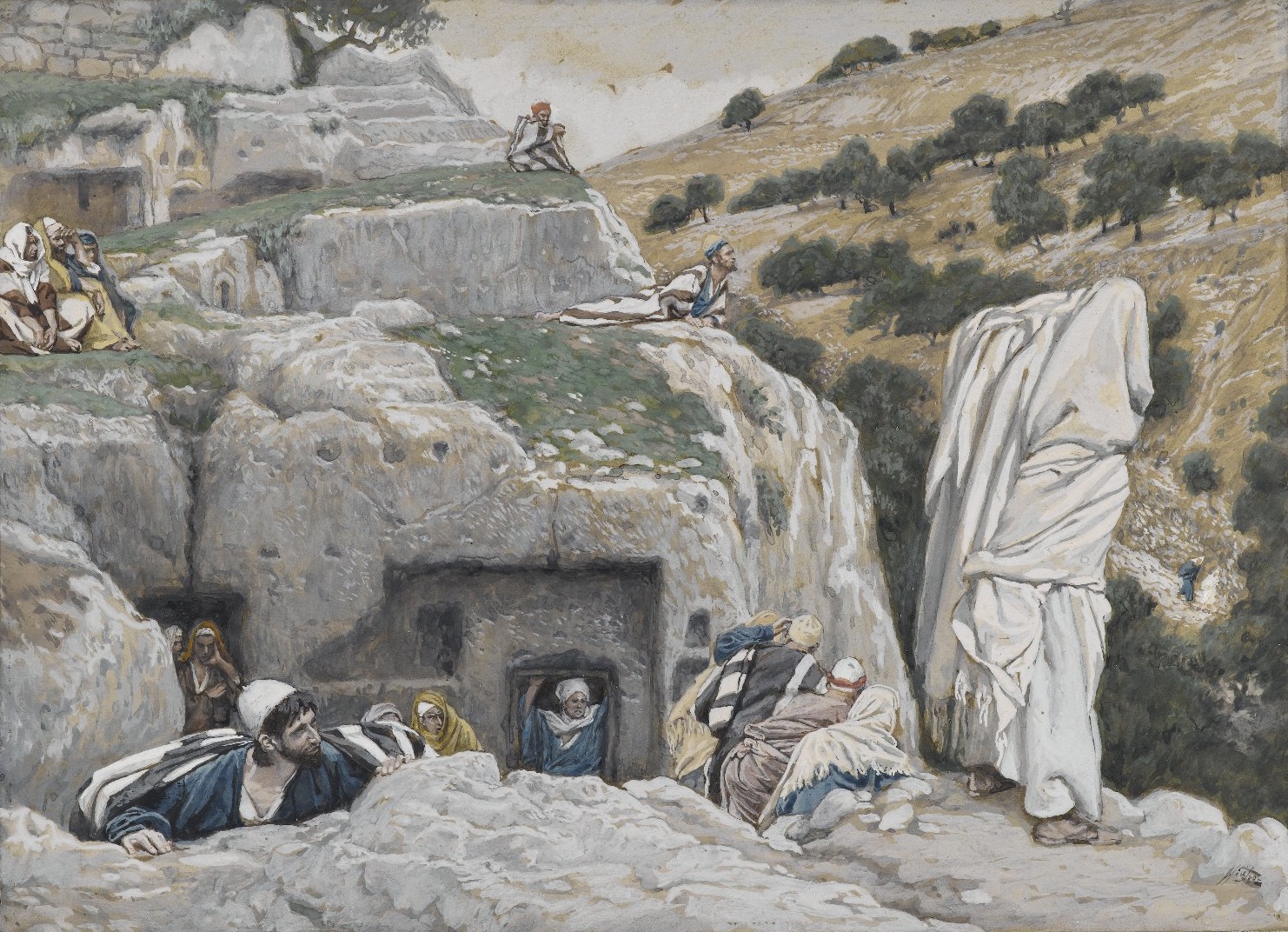
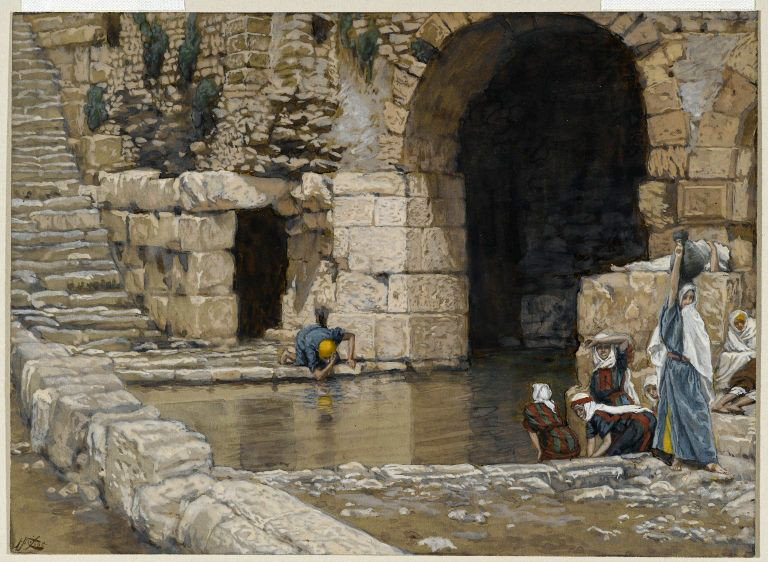
James Tissot, The Blind Man Washes in the Pool of Siloam

Prior homilies or sermons of mine are occasionally downloaded by readers. Noticing this, I anticipate that some of those preparing to preach (or offer a reading) on an upcoming Sunday might benefit from the perspective I have taken regarding the Lectionary readings for a particular day. I am therefore offering (when I can) a prior text that I have used for the occasion. I will try to do this on Sunday evenings or Mondays believing that there might interest in these texts being made available. When I have one prepared, I will also offer an accompanying handout (in pdf format) in case these may also be helpful.

For this coming Sunday, the Fourth Sunday in Lent in Lectionary year A, I offer the following.

The link for it is here. The link to the handout may be found further below.

Here is the link to the handout.

Finding Identity in Who We Are Becoming

A promotional photo for Forrest Gump, a film exploring destiny and chance in relation to personal identity as people move through their lives

We are simultaneously two things that may seem to be in tension: We are who we are and have been, and, we are who we are becoming. The paradoxical conjunction between these statements challenges a prevalent social assumption, that personal identity is in some ways fixed.

Another observation to consider: We can no longer be who we were, years ago, nor who we thought we might someday become. For we are no longer who we were then, and surely not the person who we thought we might want to be as we matured.

But who we are now is the person we are becoming.

A trustworthy maxim from my field of ethics provides a reliable insight: practice shapes character. And character shapes practice. What we do shapes who we are (and who we are becoming), just as who we are shapes what we are likely to do. And a good definition of character is “a disposition to act in particular ways.” Our character is shaped by what we do, and what we do continues to shape our character.

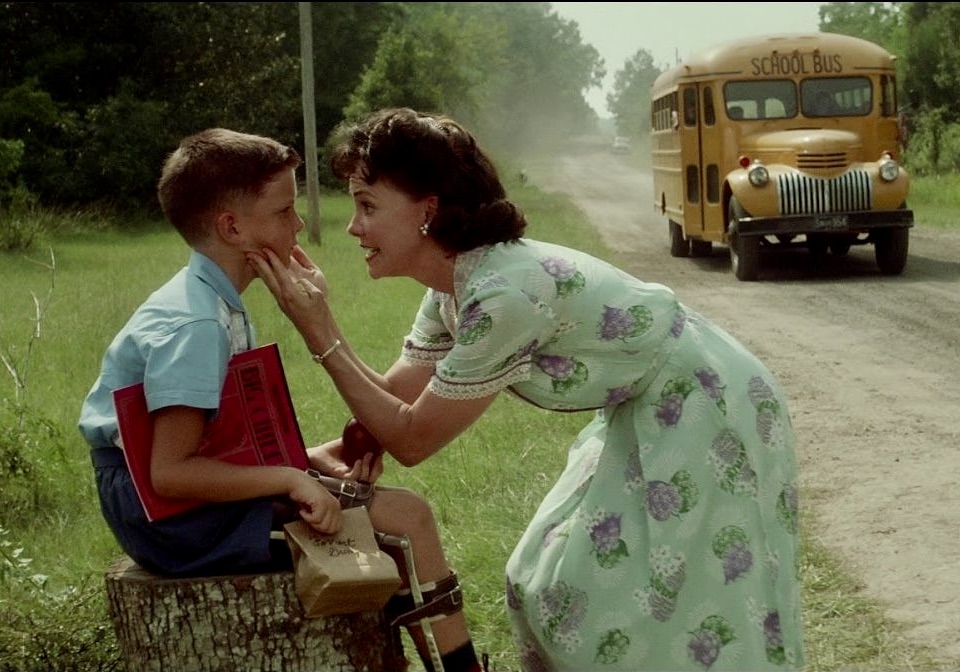
Sally Fields and a youth playing the roles of Forrest Gump and his mama

Or, as Forrest Gump’s mama famously said, “Stupid is as stupid does.”

Whatever truth may be found in another old saying (“character is destiny”), who we are becoming is not in some way predetermined. We are in large part shapers of ourselves, even while we may feel like we are being shaped by events and or by other people. Yet, from the Beginning, God has been the Great Shaper of all things, even of us. As our Redeemer, through Baptism, God changes us and gives us a new life centered on the graced possibility of redemptive transformation.

In formal terms, the ideas I am exploring here involve dialectical relationships, such as we find between act and character, and between us and others. In these relationships, there is always a two-way, dynamic process of interaction between these various entities, whether we are speaking of God, ourselves, others, and or the circumstances in which we find ourselves.

Within all this, we experience a lifelong quest for a better sense of our identity. It is too easy, though often tempting, to try and resolve this quest in terms of external factors, such as who we imagine ourselves to be in the eyes and thoughts of other people. To be directed in our ideas and actions by what we think may be expected of us, or by what other people hope for us, usually comes at the expense of the influence of the Great Shaper, the One who reveals to us our true meaning and the purpose of our life journeys. Our primary dialectical relationship is with our Creator and Redeemer, our grounding guide for who we are meant to be, and become.

For these reasons, it is good to resist the typical kinds of “I am… “ statements so current in popular culture – statements like “I am a Democrat, or a Republican,” or “I am an introvert, or an extrovert.” A more helpful kind of self-definition springs from statements based on what we tend to do. For example, instead of the prior statements, it would help us to say things like, “I tend to vote in the following ways…,” or “I tend to respond to social situations by preferring to…” Consistent with these views, I resist self-definition in similar “I am” terms when it comes to how I measure when using Myers-Briggs related personal inventory instruments. This is, in part, because of their foundation upon Jungian thought, which anticipates how we as human beings have the opportunity to grow and change over time, especially in the direction of our ‘shadow’ strengths or areas of challenge.

I continue to value an insight offered by a former teaching colleague. In a conference he once said, “People don’t actually ‘learn from experience;’ they learn from reflecting on experience.” We experience and do things; we reflect on both, and we learn as we continue to think about what we encounter, and choose to do.” In the process, we are becoming who we are now.

Who am I becoming in relation to what I am doing now? This is a helpful Lenten question in light of our preparation for Easter living.

An Offering for Sunday, March 8, Third Sunday in Lent A

James Tissot, The Woman of Samaria at the Well

Prior homilies or sermons of mine are occasionally downloaded by readers. Noticing this, I anticipate that some of those preparing to preach (or offer a reading) on an upcoming Sunday might benefit from the perspective I have taken regarding the Lectionary readings for a particular day. I am therefore offering (when I can) a prior text that I have used for the occasion. I will try to do this on Sunday evenings or Mondays believing that there might interest in these texts being made available. When I have one prepared, I will also offer an accompanying handout (in pdf format) in case these may also be helpful.

For this coming Sunday, the Third Sunday in Lent in Lectionary year A, I offer the following.

The link for it is here. The link to the handout may be found further below.

Here is the link to the handout.

An Offering for Sunday, March 1, Second Sunday in Lent A

James Tissot, Interview Between Jesus and Nicodemus

Prior homilies or sermons of mine are occasionally downloaded by readers. Noticing this, I anticipate that some of those preparing to preach (or offer a reading) on an upcoming Sunday might benefit from the perspective I have taken regarding the Lectionary readings for a particular day. I am therefore offering (when I can) a prior text that I have used for the occasion. I will try to do this on Sunday evenings or Mondays believing that there might interest in these texts being made available. When I have one prepared, I will also offer an accompanying handout (in pdf format) in case these may also be helpful.

For this coming Sunday, the Second Sunday in Lent in Lectionary year A, I offer the following.

The link for it is here. The link to the handout may be found further below.

Here is the link to the handout.

An Offering for Sunday, February 22, First Sunday in Lent A

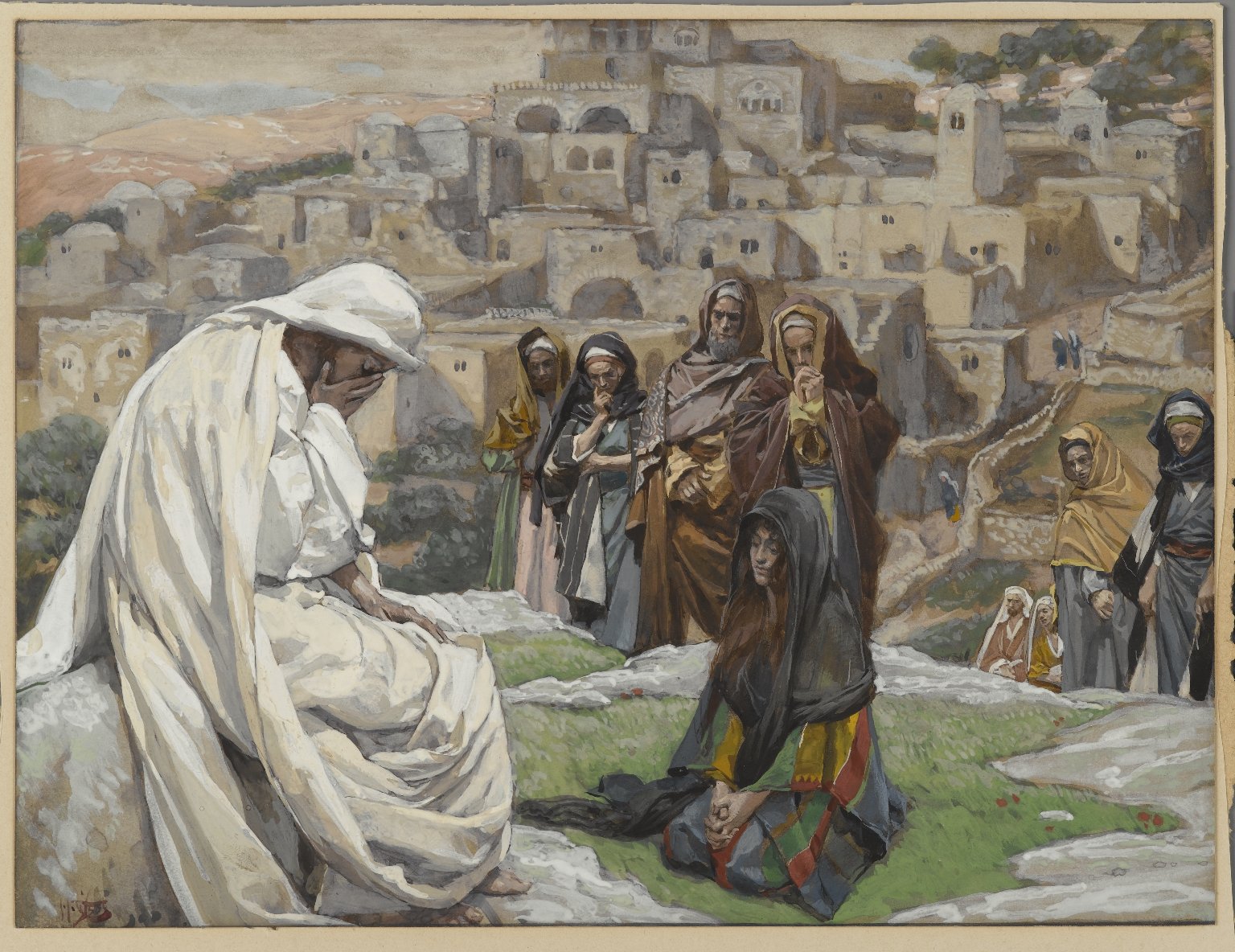
James Tissot, The Second Temptation

A second homily this week, because of Ash Wednesday, in case it may be of interest.

Prior homilies or sermons of mine are occasionally downloaded by readers. Noticing this, I anticipate that some of those preparing to preach (or offer a reading) on an upcoming Sunday might benefit from the perspective I have taken regarding the Lectionary readings for a particular day. I am therefore offering (when I can) a prior text that I have used for the occasion. I will try to do this on Sunday evenings or Mondays believing that there might interest in these texts being made available. When I have one prepared, I will also offer an accompanying handout (in pdf format) in case these may also be helpful.

For this coming Sunday, the First Sunday in Lent in Lectionary year A, I offer the following.

The link for it is here. The link to the handout may be found further below.

Here is the link to the handout.

“… She Is Still Out There…”

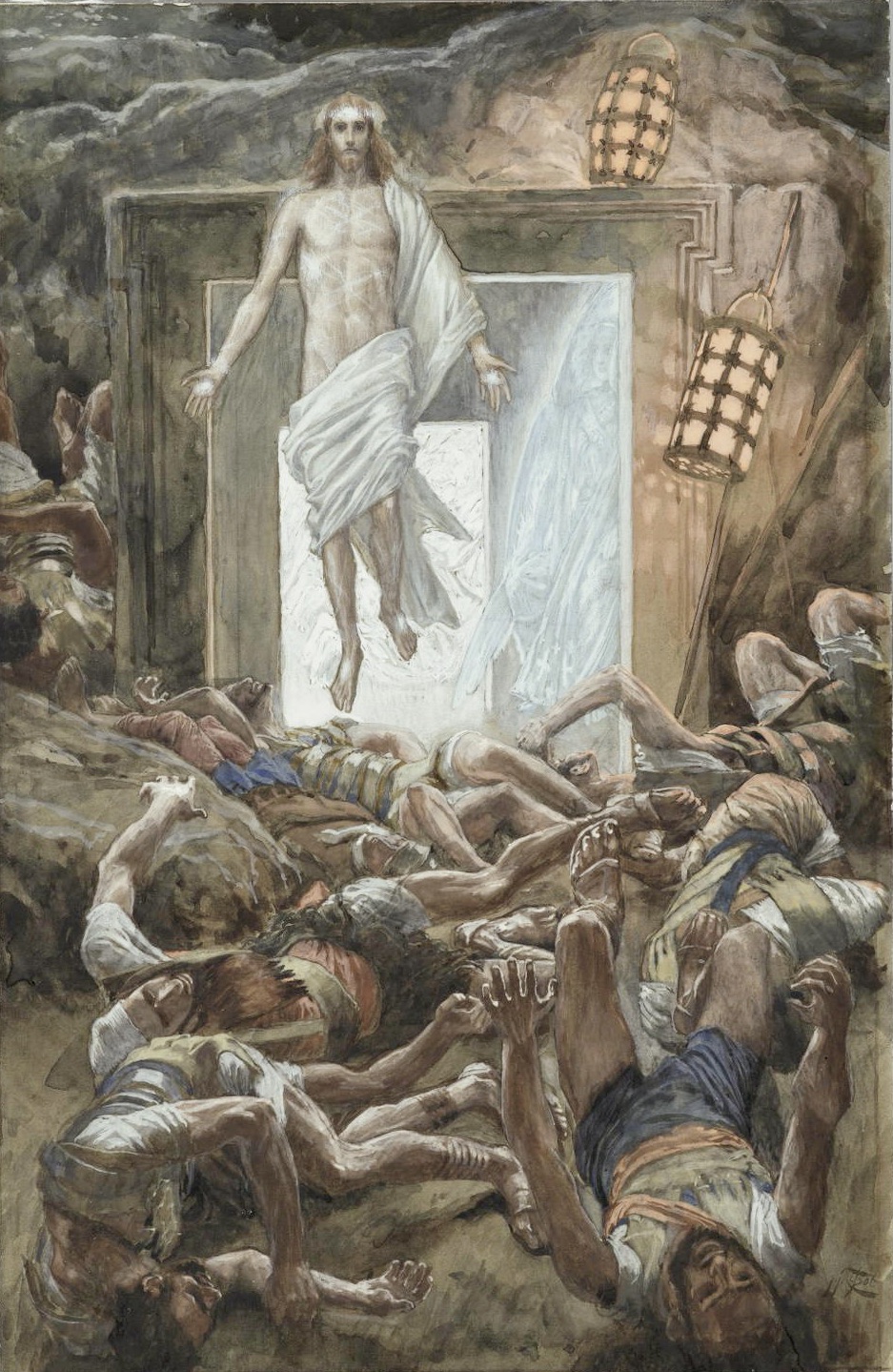
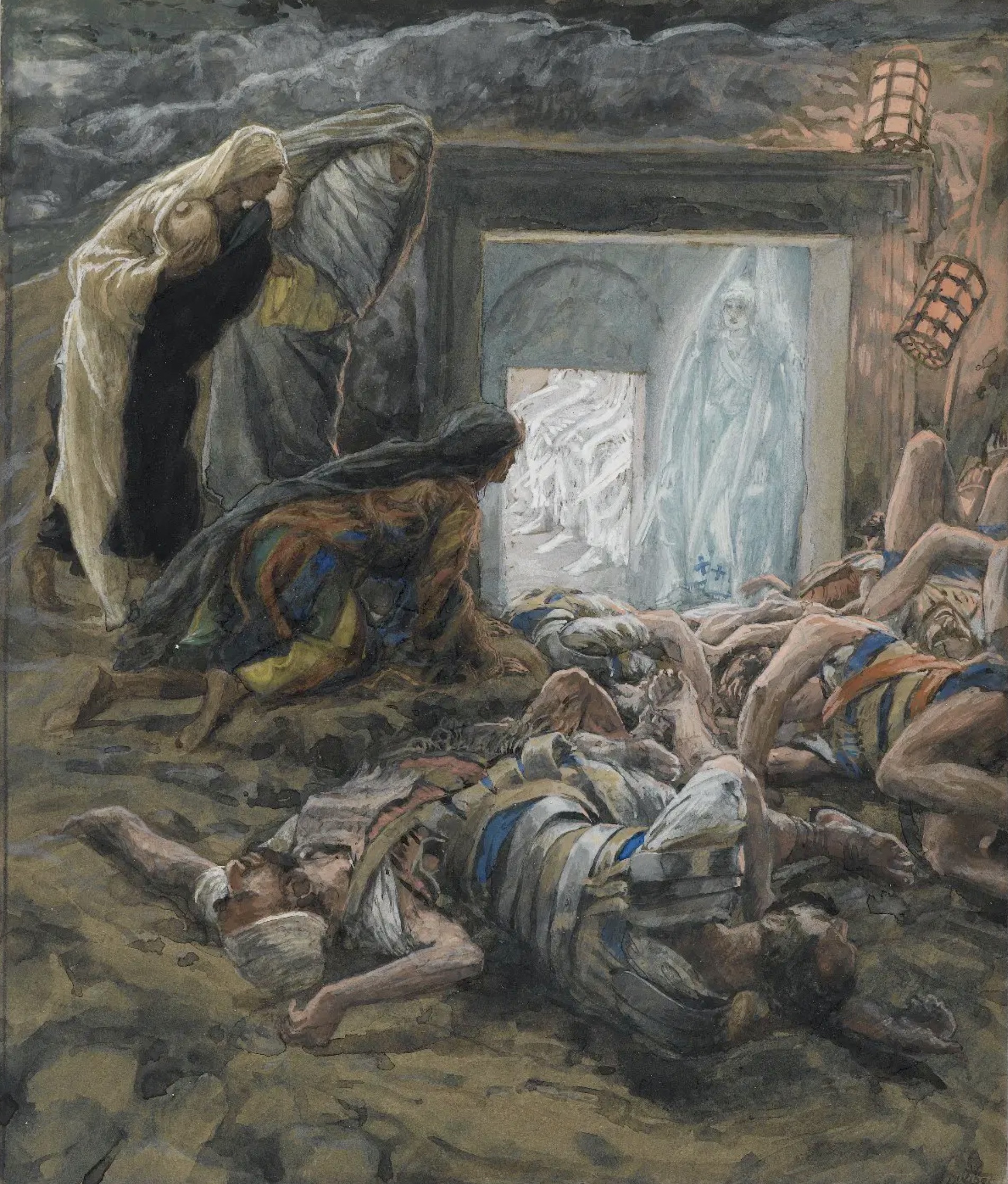
James Tissot, The Resucitation of Lazarus

(Note: At the time of publication, what has happened to Nancy, the mother of Samantha Guthrie, is still unclear.)

The beginning of Lent offers us a stark reminder of our mortality, and of our ’nothingness’ apart from God’s Grace. This may lead some of us to be mindful of the death that we fear, or the deaths of loved ones whom we mourn. Our observance of ‘a holy Lent’ provides a season when we can grow in our assurance of the New Life we are given in and through Christ. This happens through our Baptism into his death and Resurrection. The Easter season that lies ahead has much to say about this, which is one reason we might devote ourselves to particular disciplines of preparation during these Forty Days.

I want to approach this theme in light of the recent widespread publicity given to the abduction of Nancy, the mother of Samantha Guthrie. This tragedy has focused a great deal of attention on some words that she and her siblings have used with reference to their mother: “We believe she is still out there.” This cautious statement has been oft-repeated by law officers and the news media.

We hear these words in the context of learning that Samantha Guthrie has been a member of St. Philip in the Hills Episcopal Church, in Tucson, where a prayer vigil was offered on behalf of her mother. Samantha has also written a book in which she expresses her Christian faith, a fact also evident in some of her recent public communications.

For Christians, our loved ones are always ‘still out there.’ I want to offer some reflection on this phrasing, and explore what the Guthries’ quoted words may mean in terms of Christian belief.

Despite a common notion we sometimes encounter in popular culture, people who die do not become ‘angels.’ Nevertheless, traditional Christian faith teaches us that angels are like us in reflecting a divine attribute, personhood. For we believe in One God in Three Persons (the Father, the Son, and the Holy Spirit). This is the mystery of the holy Trinitarian nature of God, in whose image and likeness all persons have been created. From our knowledge of God, and our experience of ourselves, we know that an integral feature of personhood is being in relationship with other persons.

Yet, unlike angels, we are embodied, and remain embodied regardless of our transformation through the resurrection of the dead at the end of our mortal, physical, lives.

Since the time of the New Testament, Christians have spoken about this transformation into a new form of embodiment by employing various metaphors. In view of this, at our demise, we do not become like a drop of water returning to the sea, or move from a personal identity based on our differentiation from others into an unconscious and undifferentiated state of life. As if – at death – we will somehow be dissolved into a greater realm of ‘Spirit.’

By our Baptism into the death and Resurrection of Jesus, we become named members of His Body, the one Body of Christ. This is the Church in its essence, which comprises the communion of all the Baptized, whether they are ‘on this side of the veil’ or have gone before us to the next life. Thus, though we (as Anglicans) do not pray to saints, we pray with them as the Holy Spirit enables this activity within us. Those presently alive in this life and those who have ‘gone before us’ – are both ‘here’ and ‘there,’ in a shared living stream of ongoing prayer and fellowship.

An oft-neglected article of traditional Christian faith is that of the Ascension of our Lord, directly tied to his Resurrection from the dead. In our faith, Christ did not ‘go up’ alone, but carried with him our human nature. This enabled our own transition – with him – into the next life. When we die, by Grace we move into a greater experience of nearness with our Lord, who is already with us, and in us. Therefore, we do not cease ‘to be’ at death. And we are taught not to fear physical death in view of our belief in the significance of our Baptism into Christ’s death and Resurrection. By virtue of this Ascension-fortified faith, we have assurance about our continuing fellowship with those who have died “in the Lord.”

In view of these fundamental aspects of Christian believing, we can recognize how Nancy Guthrie continues to be among us, and always will be, regardless of what may have happened to her in the recent tragic circumstances now so familiar to us. For as Jesus is quoted as saying, in John 11:25-26, “I am the resurrection and the life. Those who believe in me, even though they die, will live, and everyone who lives and believes in me will never die.”


Note: I present these reflections without implying that my words here have negative implications regarding those who do not share our faith nor our baptismal identity. As for people whose faith (or lack of it) is known to God alone, we need to remind ourselves that, in God’s Providential wisdom, the divine will for those who do not identify as Christian remains a mystery to us.

Living with God as Thou and I

Martin Buber (1878-1965)

I was in college in the 1970’s. Though at first I was an agnostic art student while attending two Lutheran liberal arts colleges, many of my friends and two housemates were religion majors. This was at a time when the curricula for religion majors still included courses in Bible and in fundamental theology. Paul Tillich’s three Systematics volumes were still much read, as were Bonhoeffer and Barth. And Martin Buber’s once better-known book, I and Thou, was often recommended as a reading for various liberal arts majors.

The significance of Buber’s book was something I only came to realize much later, after grappling with Jean Paul Sartre’s rather dark, or as some would say ‘more realistic,’ view of human relationships. Those familiar with Sartre’s play, No Exit, may recall a phrase penned by Sartre, “Hell is other people.”

As I remember it, Sartre had in mind our experience of ourselves as being regarded by other people as an object. For Sartre, we function primarily, and are aware of ourselves, as subjects – subjects who resist being seen as the objects of other person’s perceptions and especially their judgement. Only later did I perceive the paradoxical affinity between the views of Sartre and Buber. For both were sensitive to the experiential problems that arise when people feel they are regarded as objects rather than as fellow-subjects. It is no coincidence that the lifespans of Buber and Sartre overlapped.

Jean Paul Sartre (1905-1980)

How hard it is for us then, spiritually and in religious terms. to be open to a related idea. For we find it difficult to experience and therefore to accept ourselves as being an object of God’s love. To see ourselves in this way is understandably uncomfortable for us, given how our fundamental way of living and of perceiving ourselves is to function as subjects who regard, come to know, and evaluate everything as an object of our perception – even and more especially, other people. And yet, as one of John’s New Testament Letters teaches us, we were first loved by God… before we were aware of it, much less come to believe this as true or live by it.

In view of these observations, we might want to invert Sartre’s rhetorical phrase regarding how our experience with other people can be ‘hellish.’ We might also say that for religious believers and especially Christians, our fellowship with other people may provide us with real experiential glimpses of what has traditionally been meant by ‘heaven.’

Here we can employ another often superficially-used phrase about certain experiences as being moments of ‘heaven on earth.’ With that phrase, we may need to expand our perception of ourselves in this way: Consciously and intentionally we want to live as an object of God’s love, of God’s enduringly positive regard and embrace, within God’s shared Trinitarian-fellowship. To see ourselves and others, as well as then to live, in this way, may require us to cease to think in terms of subject and object in a binary, either/or way. We learn from Buber that with one another we can be “I and Thou.” And each day, when first emerging from sleep, we can begin our morning with prayerfully re-orienting words like these: “Regardless of what I may have dreamed, Thou art, and as a result, I am.”

For as Jesus promised, saying, “Because I live, you also will live. In that day you will know that I am in my Father, and you in me, and I in you.” (John 14:19-20). Every day can be, and is, that day.

Our Baptism recalls Jesus’ Baptism, for both function – in part – as moments of designation. For us, it is the sacramental act when we are told that we have been included among God’s own children, made a part of Christ’s Body, and named for the community by the celebrant. In all these ways, we are the objects of God’s redemptive work through Christ and in the power of the Holy Spirit, by means of the Church. God chooses us before we are ever aware of our choice to respond.

“I recognize Thou, who first knew me before I ever became conscious of myself. Thou first loved me before I ever felt a challenge to love myself.”

The Gift of Joy and Wonder

I have long been captivated by some words offered in our Prayer Book for the newly baptized, that they might receive the gift of joy and wonder in all of God’s works. These 12 Days of Christmas are surely the time of the year when hopes for joy and wonder are most honored by people all over the world.

While we focus on the gift of the long-promised Prince of Peace, and Wonderful Counselor, we also engage in what we might think of as a widespread indulgence in sentimentality. Our celebration of the Promised One can become overwhelmed by the secular accoutrements of ‘the season,’ with various permutations of the legacy of St Nicholas of Myra morphed into an attractive mythic figure we call Santa Claus, or Father Christmas as folks in the U.K. like to call him. His popular name in America, diminutively reduced to Santa or Saint Nick, masks the religious history of his churchly origins as a figure numbered among those on the Calendar and in the Lectionary. Elves in Santa’s fabled workshop take the place of saints and un-named believers whose works of faith are not remembered with specifics, while the lore of the mythic figure who comes to visit children’s’ homes with gifts occupies public attention.

We love reminders like this of the joy to be found at Christmas

Among others who have led parish church congregations, I have done my share of encouraging observance of a traditional Advent, stressing the significance of St Nicholas’ feast day (December 6), and urging retention of Advent hymns and restraint in home and church decorations characteristic of our culture’s ways of anticipating Christmas. For me and others, the 12 Days of Christmas would be our time of celebrating our Lord’s Nativity by lighting trees, sharing gifts, and treating ourselves to special foods, right through the feast days of St Stephen, St. John, Holy Innocents, and The Holy Name, to Twelfth Night and a proper regard for the Magi’s visit on the Epiphany, January 6. Preferring such an emphasis has caused some of us to appear to be in quiet conflict with the patterns of our wider culture. For the world around us has more and more begun its anticipation of Christmas by playing ‘music of the season’ early in November, long before Thanksgiving, while also decorating homes and public spaces with Christmas-related lights, poinsettia, and objects related to our enjoyment of gift-giving and receiving. At the heart of all these outward signs of anticipation is our longing for a recovery and enjoyment of what we celebrate as ‘the most wonderful time of the year.’

My adult children like to gently rib me that I have ‘gone soft’ on Advent. And that I have slowly succumbed to the influence of ‘secular culture’ upon what I think should properly be seen as a religious holiday – as if the two emphases are in some way counterposed, and in tension. With my predilection for retaining our Anglican heritage’s rightly attributed but oft-caricatured principle of taking a “both-and” approach to many aspects of our faith and beliefs, I prefer to think that I have broadened my outlook in my search for forms of a deeper synthesis that lies within ‘reality.’ Perhaps these changes in me are due to having grandchildren who live nearby. Yet, as I remember Oliver O’Donovan encouraging us to perceive, compromise is not always ‘of the Truth,’ but can also be ‘in relation to the Truth.’

Hence, my continued fascination with joy and wonder. Joy and wonder might be two of the best words to describe what we think of, and may remember as, a child’s view of what Christmas is all about. And if there is any substance to the perception that our transition from childhood through adolescence to adulthood is often marked by our loss of genuine engagement in imagination, fantasy, and therefore with wonder, it is surely reflected in our thinking that Christmas is primarily significant for children. And therefore something that we enjoy cheerfully when we participate in social occasions where we temporarily suspend our disbelief in fantasy for the sake of the merriment we can enjoy with others.

Christmas inspires us to seek stories of places filled with wonder

All this has deeper significance. What if the world we live in is truly animated by the Holy Spirit, thoroughly infused with divine Grace and Wisdom, and permeated by a wellspring of joy that is godly? What if our culture’s pattern of anticipating and celebrating Christmas is an example of what Jesus had in mind when he encouraged his adult listeners to become like the children he embraced and held up as an example of Kingdom-participation and life?

As when he placed a child in the midst of them, and said, “Truly, … unless you turn and become like children, you will never enter the kingdom of heaven. Whoever humbles himself like this child is the greatest in the kingdom of heaven.” Has it occurred to us that he may have been speaking first about himself (He who humbled himself to become an infant and then a child)?

Childish and child-like are, of course, not necessarily the same. And by distinguishing the terms, we may begin to recover something. That we don’t necessarily need to pare down features of our cultural approach to Christmas to get our celebration back to being something Jesus might want us to enjoy. But that we could also see our patterns of Christmas celebration as involving the kinds of gatherings and events at which he would have enjoyed himself, identifying with our delight in such moments, and where he would encourage us to embody his spirit of discernment of how God is present and at work in all that is around us.

It is all about him. And he is all about us.


Note: the quoted words of Jesus, above, are from Matthew 18:2-4. Christmas Story (filmed in Finland/Lapland, and A Boy Called Christmas are movies currently streaming.

… always and everywhere …

(An earlier than usual post — for your Thanksgiving Week!)

A lively celebration of the Eucharist, or The Great Thanksgiving, at St. Gregory of Nyssa Episcopal Church, San Francisco

It is right, and a good and joyful thing, always and everywhere to give thanks to you, Father Almighty, Creator of heaven and earth.” So begins the body of one of the Eucharistic Prayers in The Book of Common Prayer, as used in Episcopal Churches for the celebration of Holy Communion. “Always and everywhere” – these words regarding giving thanks remind us of the characteristic posture of the Church, and of all of its members, whether at worship in their parishes or at work or play in the world around them.

When Baptized Christians gather for a celebration of the Lord’s Supper, they remember that “the Lord Jesus on the night when he was betrayed took bread, and when he had given thanks (eucharistesas / εὐχαριστήσας), he broke it, and said, ‘This is my body which is for you. Do this in remembrance of me’ (1 Corinthians 11:23-24).” What we as Christians do in a formal way, when gathered for the Eucharist, enacts our normative way of shaping our whole lives. Which is always and everywhere to offer thanks to God for mercy and grace, and for God’s love poured into our hearts by the Holy Spirit. For we seek to live as we pray: Offering thanks to the Father, through the Son, in the power of the Holy Spirit.

“Give thanks in all circumstances; for this is the will of God in Christ Jesus for you.” Paul shares this counsel in his first letter to the Thessalonians (5:18). These words are sometimes mis-remembered as saying, “for all circumstances.” The difference between the two prepositions, in and for, is significant. In our daily rounds, it is very difficult for most of us to be thankful for adverse circumstances and experiences, and we find it hard to reconcile their occurrence with the oversight of a loving God.

Yet Paul believed in the doctrine that we call Providence. He firmly believed that the evil conditions and events that we experience in this life are not in themselves acts of God, imposed upon us by the divine will. Instead, they are things that are allowed to occur by a God who loves us and who intends our good. This is clearly a mystery to us, on this side of the veil separating us from the eternal.*

Another Eucharist at St Gregory of Nyssa

As we well know, the society in which we live in the United States sets aside one day of the year as a public holiday that is called Thanksgiving Day. Its history lies in a presidential proclamation by Abraham Lincoln. Yet, regardless of the circumstances of its origin, the day is widely celebrated by many who are unfamiliar with its history, and who may identify with traditions, practices, and holidays passed on from other cultures. This is only proper, as giving thanks is a universally human act. The people and circumstances, and the particular reasons for it, may all differ. Yet, the spirit of the act is the same.

I have heard it explained, that the sanctuary candle we see in the sanctuary of some churches is to remind us that God is present. The implication of this explanation might be misconstrued in such a way as to suggest that God’s presence elsewhere might not be as assured. Yet, the explanation can also be understood positively, as saying something like this: “This candle is here to assure us of God’s presence. We keep a candle here lit perpetually to remind us that God is always and everywhere present, even in the darkness or when we are alone elsewhere.”

Celebrating Thanksgiving Day can bring with it a similarly positive understanding. We give thanks formally, as a nation of many peoples, on one day of the civil year as reminder that giving thanks should be natural for us every day of the year. And the thanks we should offer are for the good things we enjoy with those whom we know and love, but also for things, people, and even institutions, about which we may be indifferent or even disapproving.

Gathering for a shared meal in the context of a spirit of thanks

In this spirit, I would like to share a prayer found in The Book of Common Prayer, that is principally used in the closing portion of the rites for Morning and Evening Prayer. It is therefore not specifically designated for use in observance of our national celebration of Thanksgiving Day, though it could be. This is a prayer intended for use everyday, and is a fine one for us to use at our celebrations this week:

Almighty God, Father of all mercies,
we your unworthy servants give you humble thanks
for all your goodness and loving-kindness
to us and to all whom you have made.
We bless you for our creation, preservation,
and all the blessings of this life;
but above all for your immeasurable love
in the redemption of the world by our Lord Jesus Christ;
for the means of grace, and for the hope of glory.
And, we pray, give us such an awareness of your mercies,
that with truly thankful hearts we may show forth your praise, not only with our lips, but in our lives,
by giving up our selves to your service,
and by walking before you
in holiness and righteousness all our days;
through Jesus Christ our Lord,
to whom, with you and the Holy Spirit,
be honor and glory throughout all ages. Amen.


*A note about the distinction offered above, regarding what God allows: Readers may wish to consider the way that Aristotle, and others since, have distinguished various dimensions of the idea of ‘cause,’ or causation (four dimensions have been articulated in the Western tradition). “Efficient cause” is the familiar form of the word cause, as in causing a row of dominos to cascade forward. “Final cause” can be conceptually helpful, especially as we think about God drawing persons and events toward their fulfillment in Christ. In this sense of the word cause, instead of our thinking of God as pushing events forward, some of them good and some perhaps bad in our eyes, God summons, and pulls toward the future, those people and things that may be made whole in Christ (ie, those that are open and willing recipients of his Grace), to their true end.

The Beauty of ‘Something Further’

An interior dome, Etchmiadzin Cathedral, Armenia

{This past week I had the honor of offering a homily at the funeral of my longtime friend, Tom, a neurosurgeon and person of faith. What follows is a portion of my homily.}

People in our culture who have been trained in the sciences and who work in medicine can face a particular challenge. They can find it hard to grapple with the intangible aspects of the spiritual life. Walker Percy is a great example of someone who overcame this apparent divide. For Percy, like Tom, was very smart and educated in the medical arts. Like Tom, Percy came to see something very important: we rely upon science to explain too much of the world. And, if we are honest and sensitive in our inquiry, we come to see how – through science alone – we cannot understand ourselves.

Tom, with his advanced work in surgery and in neurology, knew far more about our brains than most of us will ever know. And yet, he also was quite aware of the limits to such knowledge. He was sensitive to how ‘our minds,’ though inextricably connected to our brains, always somehow transcend what we know about brain function. And therefore, despite our continuing advances in understanding neurophysiology, there remains this ineffable, something further, about what it means to human, this thing that non-specialists like the rest of us, as well as priests and pastors, call our souls.

Walker Percy might have put it in terms like this: We can learn the names and composition of the myriad of chemicals that are a part of human brain function. And therefore, as conscious subjects, we can approach our brains as objects of study. Yet, paradoxically, we, as the subjects of our studies, can never really know ourselves as the objects of our studies. There will always be something beyond, something further and equally real about ourselves, even if not fully measurable. And this ‘something further,’ believers call our souls. For even the most brilliant neurologist, even the most perceptive psychologist, can never really know him or herself, just as I – at least in this life, on this side of the veil – can never really know myself. Only God can. And only God does.

Etchmiadzin Cathedral

Physicians can map how our physical bodies eventually fail us when we get older, and cease to function ably as before. But what our physicians and scientists cannot map – at least not yet – is how our consciousness can survive this breakdown in our physiological function. Yet, somehow we continue in self-awareness, and in our awareness of others, especially that great Other One. And we will probably never be able to map, in terms we understand, how we come to have conscious contact with our Creator and Redeemer. For our conscious contact with God happens through God’s loving embrace of us. This is the embrace into which we have all been received – even if we are not conscious of it, and especially when we have not chosen to refuse it.

Tom consciously chose to recognize and accept this embrace. And he put his trust in it, even if – as an accomplished scientist – he could not explain it. For that, we honor him and his memory, as we continue to have fellowship with him in the Communion of Saints. And as we share with him in our celebration of the Eucharist. For just as our Lord Jesus continues to be present with us, and in us, so all the saints – both Tom and ourselves – and all the faithful departed stand before the throne of the Lamb. In Christ, we are joined together, so that we, too, might also be lost in wonder, thanks, and praise.

Tom knew and believed all this. And that is why we are here today. We can honor Tom for his contributions to the sciences and to the practice of medicine. Here, in this church and in this community of faith, we can join others in honoring what God has done in Tom’s life and work. And more especially, we are here today to honor what God is still doing in Tom’s continuing life. For Tom’s life and consciousness continue, even now, in and through God’s loving Grace and favor. His death is the veil that only appears to separate him from us. It disguises the way he is still really connected with us through his Baptism and ours, into Christ’s death and Resurrection.

Chora Church, Istanbul

Most enduring is this truth. And it is a truth for all of us to embrace: we have continuing fellowship with Tom, through Christ, in the power of the Holy Spirit. Thanks be to God!