Resurrection

The Beauty of ‘Something Further’

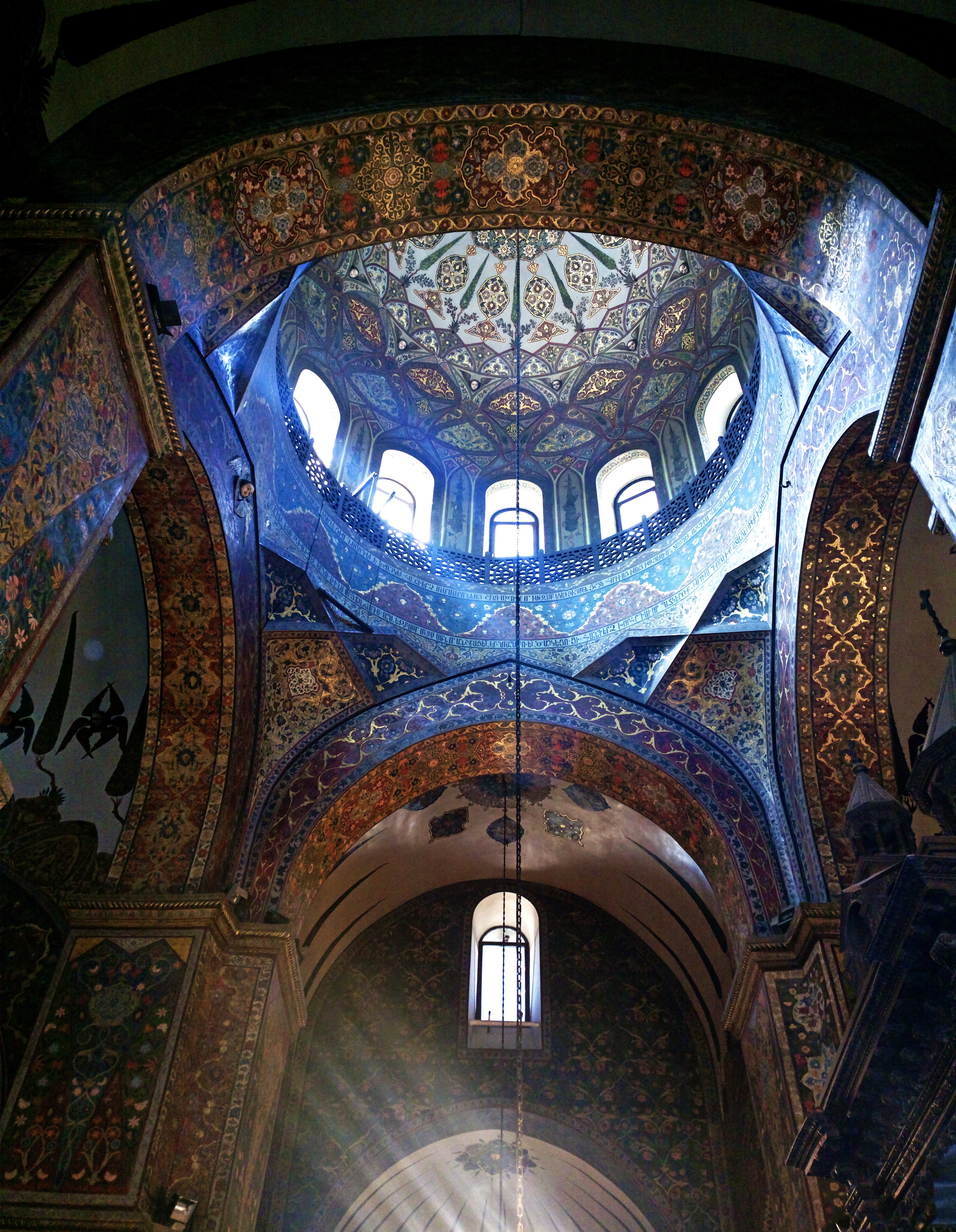
An interior dome, Etchmiadzin Cathedral, Armenia

{This past week I had the honor of offering a homily at the funeral of my longtime friend, Tom, a neurosurgeon and person of faith. What follows is a portion of my homily.}

People in our culture who have been trained in the sciences and who work in medicine can face a particular challenge. They can find it hard to grapple with the intangible aspects of the spiritual life. Walker Percy is a great example of someone who overcame this apparent divide. For Percy, like Tom, was very smart and educated in the medical arts. Like Tom, Percy came to see something very important: we rely upon science to explain too much of the world. And, if we are honest and sensitive in our inquiry, we come to see how – through science alone – we cannot understand ourselves.

Tom, with his advanced work in surgery and in neurology, knew far more about our brains than most of us will ever know. And yet, he also was quite aware of the limits to such knowledge. He was sensitive to how ‘our minds,’ though inextricably connected to our brains, always somehow transcend what we know about brain function. And therefore, despite our continuing advances in understanding neurophysiology, there remains this ineffable, something further, about what it means to human, this thing that non-specialists like the rest of us, as well as priests and pastors, call our souls.

Walker Percy might have put it in terms like this: We can learn the names and composition of the myriad of chemicals that are a part of human brain function. And therefore, as conscious subjects, we can approach our brains as objects of study. Yet, paradoxically, we, as the subjects of our studies, can never really know ourselves as the objects of our studies. There will always be something beyond, something further and equally real about ourselves, even if not fully measurable. And this ‘something further,’ believers call our souls. For even the most brilliant neurologist, even the most perceptive psychologist, can never really know him or herself, just as I – at least in this life, on this side of the veil – can never really know myself. Only God can. And only God does.
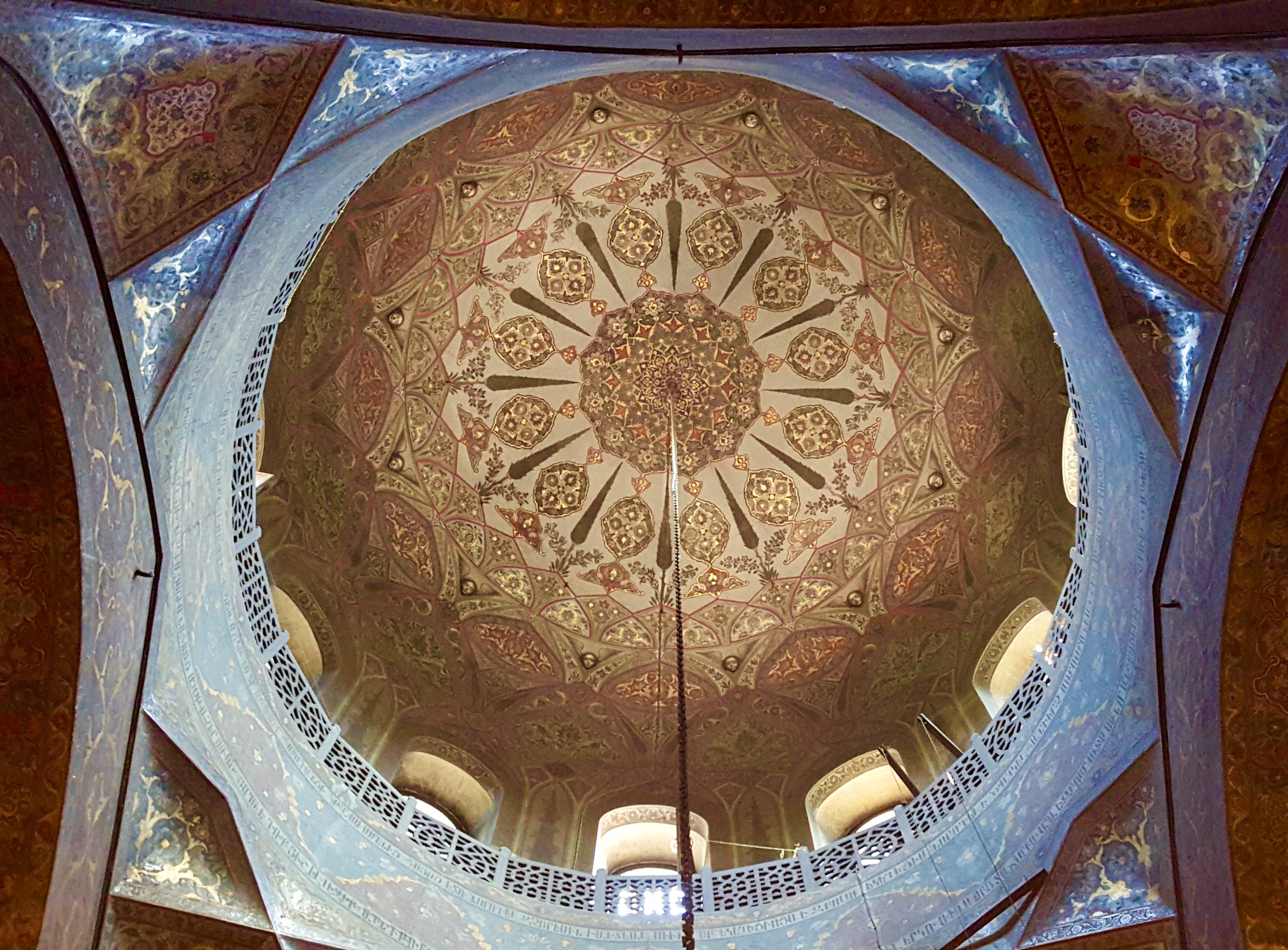
Etchmiadzin Cathedral

Physicians can map how our physical bodies eventually fail us when we get older, and cease to function ably as before. But what our physicians and scientists cannot map – at least not yet – is how our consciousness can survive this breakdown in our physiological function. Yet, somehow we continue in self-awareness, and in our awareness of others, especially that great Other One. And we will probably never be able to map, in terms we understand, how we come to have conscious contact with our Creator and Redeemer. For our conscious contact with God happens through God’s loving embrace of us. This is the embrace into which we have all been received – even if we are not conscious of it, and especially when we have not chosen to refuse it.

Tom consciously chose to recognize and accept this embrace. And he put his trust in it, even if – as an accomplished scientist – he could not explain it. For that, we honor him and his memory, as we continue to have fellowship with him in the Communion of Saints. And as we share with him in our celebration of the Eucharist. For just as our Lord Jesus continues to be present with us, and in us, so all the saints – both Tom and ourselves – and all the faithful departed stand before the throne of the Lamb. In Christ, we are joined together, so that we, too, might also be lost in wonder, thanks, and praise.

Tom knew and believed all this. And that is why we are here today. We can honor Tom for his contributions to the sciences and to the practice of medicine. Here, in this church and in this community of faith, we can join others in honoring what God has done in Tom’s life and work. And more especially, we are here today to honor what God is still doing in Tom’s continuing life. For Tom’s life and consciousness continue, even now, in and through God’s loving Grace and favor. His death is the veil that only appears to separate him from us. It disguises the way he is still really connected with us through his Baptism and ours, into Christ’s death and Resurrection.

Chora Church, Istanbul

Most enduring is this truth. And it is a truth for all of us to embrace: we have continuing fellowship with Tom, through Christ, in the power of the Holy Spirit. Thanks be to God!

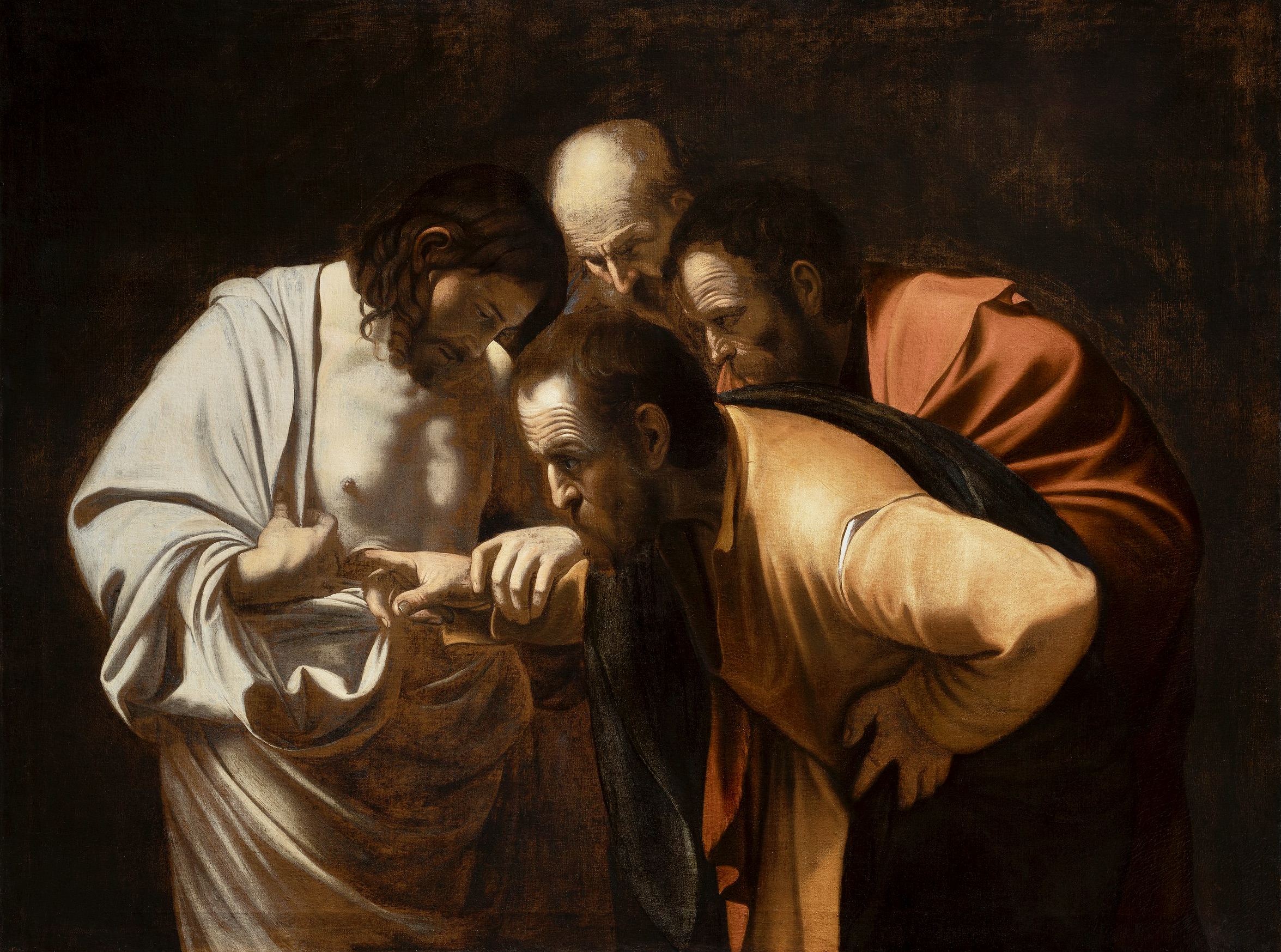
The Believing Eleven

If reading this by email, please tap the title at the top to open your browser for the best experience. Then, clicking individual pictures will reveal higher resolution images.

Peter Paul Rubens, The Rockox Altarpiece, 1613-1615 (center panel)


It is evening on the day of Resurrection-discovery. John tells us that ten of the disciples are hiding behind a secured door out of fear. Judas is deceased, and Thomas is away.

Jesus suddenly appears to the unprepared disciples, and shares with them his peace. He shows them his hands and his side, and then – as a direct consequence of seeing the places on his body associated with his death – the ten disciples rejoice when they see their Lord. In other words, their recognition of him, and that he was somehow alive again, brings them joy by restoring their belief in him.

When hearing this story from John’s Gospel on the second Sunday of Easter, we may be prone to considering it apart from what happens just before it. The disciples, who are hiding out of fear, have already received an eye-witness to the resurrection of Jesus. Mary Magdalene, to whom Jesus revealed himself at the tomb that morning, had come and told the ten the Lord was alive, and that he had appeared to her. Clearly, and prior to Jesus’ unexpected appearance, the ten disciples are still doubting her personal witness. Even after receiving what should have been trusted testimony from Mary Magdalene, a fellow follower of Jesus.

So why – in popular imagination – isn’t this well-known Gospel reading from John 20 commonly referred to as the “doubting disciples” reading? Why should Thomas be singled out, when his joyful recognition of the risen Jesus depended on nothing more or less than what the 10 had needed, and received, before him?

And why have so many painters in the Western tradition privileged Thomas’ purported unbelief in the Risen Lord, rather than depict the earlier reluctance of the ten others to arrive at joyful confidence about the Lord’s astonishing return? Apparently, in many painters’ eyes (especially Caravaggio), more visual drama was to be found in images of a doubter’s hand placed within an open wound.

Caravaggio, Doubting Thomas, 1601 (a famous traditional presentation of the event in John 20)

A further detail to notice, which our familiarity with so many paintings helps to obscure, has to do with how Thomas responds to Jesus. According to John, Jesus appears to the not-yet-believing ten, and – unbidden – shows them his hands and his side. Seeing the traces of his wounds on his risen body brings them joy. Jesus then appears unexpectedly a week later, this time showing himself to the one not present on the prior occasion. And just as he had done previously, Jesus offers Thomas the same opportunity he had provided to the others.

We should therefore not be misled by Thomas’ oft-quoted comment to the other disciples, prior to his own epiphany, about what he needed in order to believe. According to the text, Jesus – upon appearing in the same house a second time – bids Thomas to touch him. Yet, Thomas immediately responds to Jesus’ words without any mention in the Gospel of him having physical contact with the risen Lord’s wounds. Jesus then asks Thomas a rhetorical question, “Have you believed because you have seen me?” Naturally, Thomas’ implied answer is ‘yes.’

For all these reasons, we will do better to find a different and more positive descriptive phrase by which to refer to this well-known passage from John 20. “Jesus meets the disciples according to their needs,” though wordy, would do better.

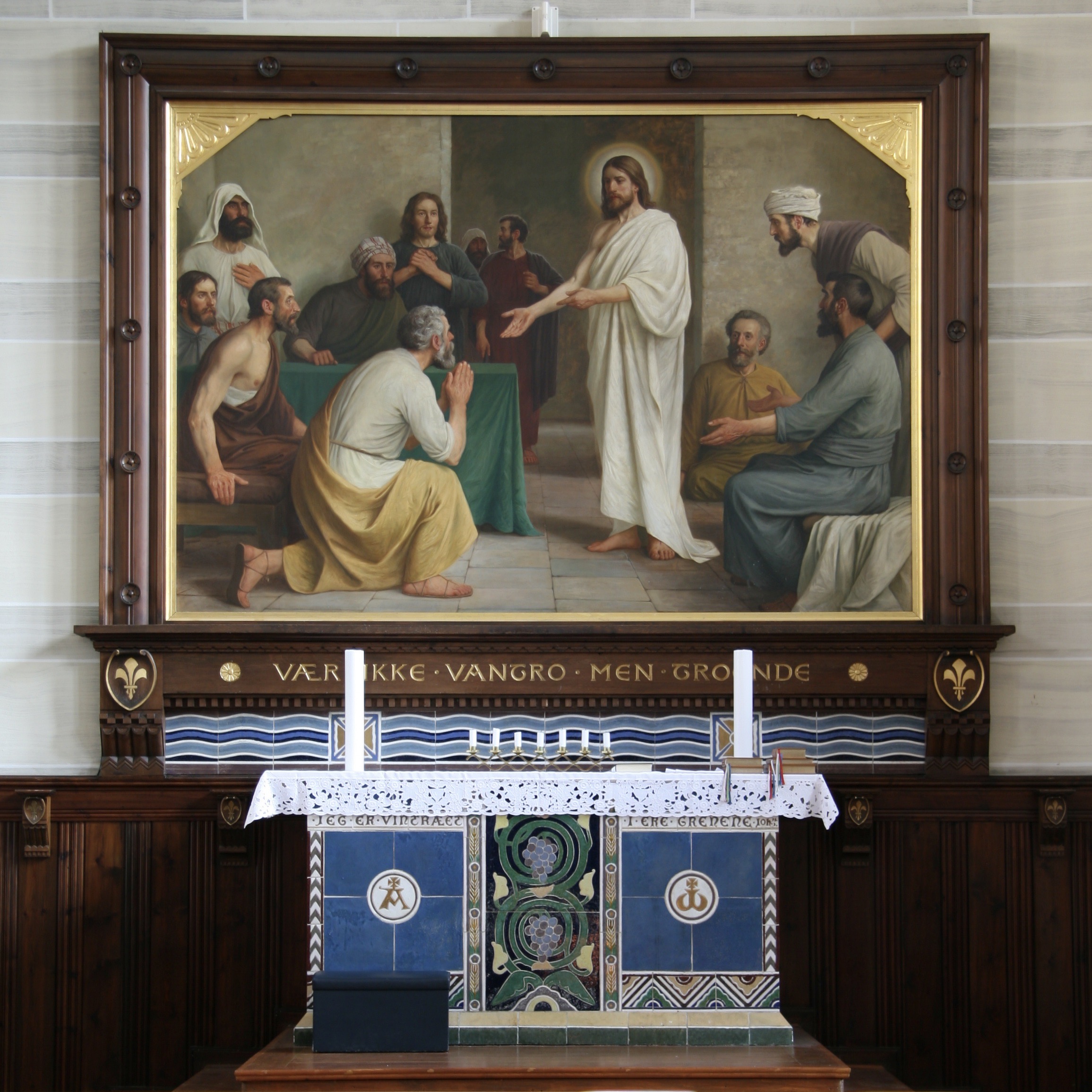
P. Steffensen’s altarpiece painting behind the altar of Zion Lutheran Church, Copenhagen


This post is based on the traditional Gospel reading for the second Sunday of Easter (April 7 in 2024), John 20:19-31. The story within it concludes with these words: “Jesus said to Thomas, ‘Have you believed because you have seen me? Blessed are those who have not seen and yet have believed’.”

Note: The altarpiece paintings by P. Steffensen and Rubens provide an interesting counterpoint to the prevailing tendency of painters to focus on Thomas placing his hand in the side of the Risen Jesus.


Beauty Over the Reality of Chaos

[If reading this by email, please tap the title at the top to open your browser for the best experience.]

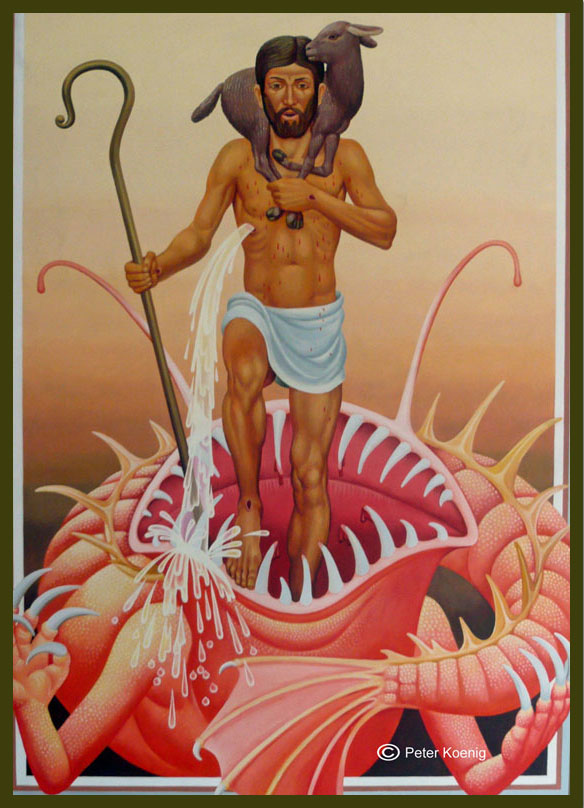
Peter Koenig, Good Shepherd Resurrection


The Resurrection of Jesus is all about grounded hope, and the strength to persevere in the face of adversity. Peter Koenig’s Good Shepherd Resurrection provides a compelling image of its power. The painting builds upon ancient biblical imagery of chaos manifest as a sea monster, and acknowledges how death and resistance to the will of God in the order of Creation pervade the world. The painting is brilliant in its conception, precisely because it is so counter to our culture-bound world of Easter bunnies, daffodils, and pastel-colored candy.

The Resurrection of Jesus is not mainly about hopeful feelings, a positive attitude and self-improvement, even though it can enable these things. His Resurrection is really about the defeat of evil and death, and triumph over pain and suffering. We may not immediately experience that defeat and triumph in our every moment of need. But, we live by Easter faith, and not by Easter feelings.

Peter Koenig risks showing us the Risen Lord stepping out of the mouth of a sea monster. The fresh water from his side recalls the water he made into wine, his crucifixion, and also -much earlier- the water from the rock in the wilderness. All these give us fresh water that fulfills genuine human need, as compared with the inhospitable salt water in which the dragon finds its abode. Every one of us is the lamb, held safely upon his shoulders, as he carries us out of the jaws of death into the new life where he is preeminent.

To me, this is real hope. Precisely because it is hope that deals with where we are now, rather than hope for something that might be, some day, somewhere. Both you and I want the kind of hope that squarely addresses all the things we’ve been worried about this last month. We all want hope that squarely confronts all the things we fear might go wrong in the coming month. And that is the kind of real hope that God brings to us in Jesus’ resurrection.


It pleases me once again to feature Peter Koenig’s painting, Good Shepherd Resurrection. This painting continues to give me confidence and courage. Click here to visit the website where this and other paintings by him may be viewed, or search his name on the internet. To see my Easter homily from which this is adapted, please click here. For background, see Revelation 12 and or do an internet search for biblical texts related to the words dragon, Rahab (i.e., Job 26:12-13 & Isaiah 51:9-10), Leviathan (i.e., Job 3:8, Psalm 74:13-14 & Isaiah 27:1), the deep, etc.

Finding Beauty During Holy Week

James Tissot, The Resurrection


I had the privilege of seeing the original of this image by James Tissot at a recent exhibit of his work in San Francisco. I have known about this painting for some time, but was struck by how relatively small it is (image size approximately 8″ x 12″). Given the size, Tissot’s attention to detail is astonishing, especially when seen alongside his large oil paintings.

Like the one above, Tissot’s biblical paintings were largely done with opaque water color paint (now commonly termed “gouache” paint) and graphite on textured gray paper. This sets the water color paintings apart from his oil paintings in terms of their technical quality and pictorial finish. Nevertheless, they are in some ways more remarkable because Tissot was using the less forgiving medium of water colors instead of oil paints, which provide greater flexibility for painting over unsatisfactory or undesired results.

Choosing a single image for consideration in the context of Holy Week presents a certain challenge. For which of the events that we commemorate this week provides the most suitable reference point for our reflection? Considering this question, and possible answers to it, can help us gain insight about how we understand Holy Week in relation to Easter and more specifically whether we view the Passion (the arrest, trial, torture, and crucifixion) of Jesus as an essential part of the Easter story.

We know that it is not just among Christians, but also among Jews and Muslims, that notable differences concerning belief and practice exist among pious adherents of a shared religious tradition. A significant variable for Christians concerns how -in our prayers, worship and practices this week- we approach the relative significance of the key liturgical ‘moments’ that we commemorate during the ‘Holy Three Days’ (or Paschal Triduum). According to the biblical concept of time, these three days commence at sundown on what we now call Maundy Thursday. And so, the first ‘day’ includes remembrance of the Last Supper, Jesus’ arrest and trial, as well as his Good Friday crucifixion. The second ‘day’ then begins on Good Friday evening, just after when Jesus would have been buried. And the third begins after sundown on Holy Saturday evening, and includes the twenty four hours during which Jesus’ resurrection occurred and his empty tomb was then discovered.

When considering the significance of the events we commemorate at this time of the year, some Christians think primarily in terms of Easter Sunday and what Jesus’ resurrection will mean for them. Many others include in their reflection a spiritual consideration of the events we associate with Maundy Thursday and Good Friday. The broader ‘catholic’ liturgical tradition reflects this wider perspective in the liturgies appointed for Palm Sunday at the beginning of Holy Week. For example, The Book of Common Prayer liturgy for Palm Sunday commemorates Jesus’ journey on a donkey down from the Mount of Olives and his entrance into the Holy City, which leads to his ‘cleansing of the Temple’ and the subsequent conflict this provoked. A central feature of the Palm Sunday liturgy is a reading of the full Passion narrative from one of the first three Gospels. John’s Passion narrative is always read every year on Good Friday. And, on both Palm Sunday and Good Friday, the Passion story often incorporates readers who give voice to individual parts within the narrative.

In light of these observations, and as we prepare to enter the ‘Holy Three Days,’ I invite you to consider Tissot’s painting titled, The Resurrection. As you view and reflect on it, here are some details you may want to take into account:

  • Tissot portrays the moment of Jesus’ resurrection at night (rather than ‘Sunday morning,’ with lanterns partially illuminating the scene
  • Matthew’s Gospel mentions Joseph of Arimathea placing Jesus’ body “in his own new tomb, which he had hewn in the rock;” Tissot adds a dressed stone frame around the tomb entrance
  • though the crucifixion was enacted by Roman soldiers, Matthew suggests that the guard of soldiers sent to the tomb belong to the chief priests and the Pharisees and are primarily local citizens
  • the risen Lord still bears the marks of his torture and execution, though his wounds are transformed into points of light
  • diaphanous angels appear on the righthand side of the tomb opening

These and other observations about this resurrection painting make it relevant to our observance of Holy Week, as well as to Easter. I offer this image and these comments as a way into the mystery of this week.


The image above is James Tissot’s painting, The Resurrection, which with many of his other biblical paintings is part of the collection of the Brooklyn Museum.

Beauty Over Chaos

Peter Koenig_Good Shepherd Resurrection


The Resurrection of Jesus is all about grounded hope, and the strength to persevere in the face of adversity. Peter Koenig’s Good Shepherd Resurrection provides a compelling image of its power. The painting builds upon ancient biblical imagery of chaos manifest as a sea monster, and acknowledges how death, and resistance to the will of God in the order of Creation, pervade the world. The painting is brilliant in its conception, precisely because it is so counter to our culture-bound world of Easter bunnies, daffodils and pastel-colored candy.

The Resurrection of Jesus is not mainly about hopeful feelings, a positive attitude and self-improvement, even though it can enable these things. His Resurrection is really about the defeat of evil and death, and triumph over pain and suffering. We may not immediately experience that defeat and triumph in our every moment of need. But, we live by Easter faith, and not by Easter feelings.

Peter Koenig risks showing us the Risen Lord stepping out of the mouth of a sea monster. The fresh water from his side recalls his crucifixion, and also the water from the rock in the wilderness. Both give us fresh water that fulfills genuine human need, as compared with the inhospitable salt water in which the dragon finds its abode. Every one of us is the lamb, held safely upon his shoulders, as he carries us out of the jaws of death into the new life where he is preeminent.

To me, this is real hope. Precisely because it is hope that deals with where we are now, rather than hope for something that might be, some day, somewhere. Both you and I want the kind of hope that squarely addresses all the things we’ve been worried about this last month. We all want hope that squarely confronts all the things we fear might go wrong in the coming month. And that is the kind of real hope that God brings to us in Jesus’ resurrection.


Peter Koenig, Good Shepherd Resurrection. Click here to visit the website where this and other paintings by him may be viewed. To see my Easter homily from which this is adapted, please click here. For background, see Revelation 12 and or do an internet search for biblical texts related to the words dragon, Rahab (i.e., Job 26:12-13 & Isaiah 51:9-10), Leviathan (i.e., Job 3:8, Psalm 74:13-14 & Isaiah 27:1), the deep, etc.

Another Emmaus Perception

Disciples of Emmaus_11thCentury_CloisterOfSantoDomingoDeSilos_Burgos_Spain


The writer of Psalm 8 asks God, “What are human beings that you are mindful of them, mortals that you care for them?”

The Psalm answers its own question, in part by pointing back to the wisdom of Genesis. God made human beings as the crowning point of a sequential process of creation, and entrusted us with a stewardship role meant to mirror God’s own stewardship of his handiwork. But after the long history of Israel’s defection from the patterns of creation and God’s covenants, many wondered whether the Creator’s original intentions for our role in the world still remained.

We discern the most decisive answer to Psalm 8’s question, in Jesus’ resurrection. This Easter mystery has two dimensions. Clearly, the first centers on Jesus. But we don’t understand the first dimension until we perceive the significance of the second, which concerns us. Through Baptism, God raises us to a shared-life with Jesus, where we dwell in the presence of unqualified truth, pure goodness and absolute beauty.

When Jesus ‘opened the scriptures’ to the two disciples on the road to Emmaus, Luke tells us that, “he interpreted to them the things about himself in all the Scriptures.” The Psalmist’s question was surely one of the texts Jesus connected with himself, and then with them.

Jesus’ resurrection appearances to his followers nurtured a process of recognition that began prior to his death. Earlier, his teaching and his ‘signs’ prompted some to say that God was with Jesus, acting through him in a powerful way.

But after experiencing his resurrection and through having the scriptures opened to them, they perceived something further. Instead of saying that Jesus is from God, their eyes were opened to see that Jesus is God. And whereas, before, they could say that Jesus reveals the lord God, they could now identify Jesus as the lord God. To call him lord was more than to honor him as an esteemed teacher, and more than a pointed contrast with the emperor who used the same title. By beginning to confess Jesus as Lord, they identified him with the God who had revealed himself to Moses.

As the two disciples discerned on the way to Emmaus, in the risen Jesus we meet and are brought into fellowship with the One who was, and is, and is to come.


The above 11th century stone carving, Disciples of Emmaus, is found in the Cloister of Santo Domingo de Silos, in Burgos, Spain. The road to Emmaus story is found in Luke 24:13-35.