Sculpture

The Beauty of Witness

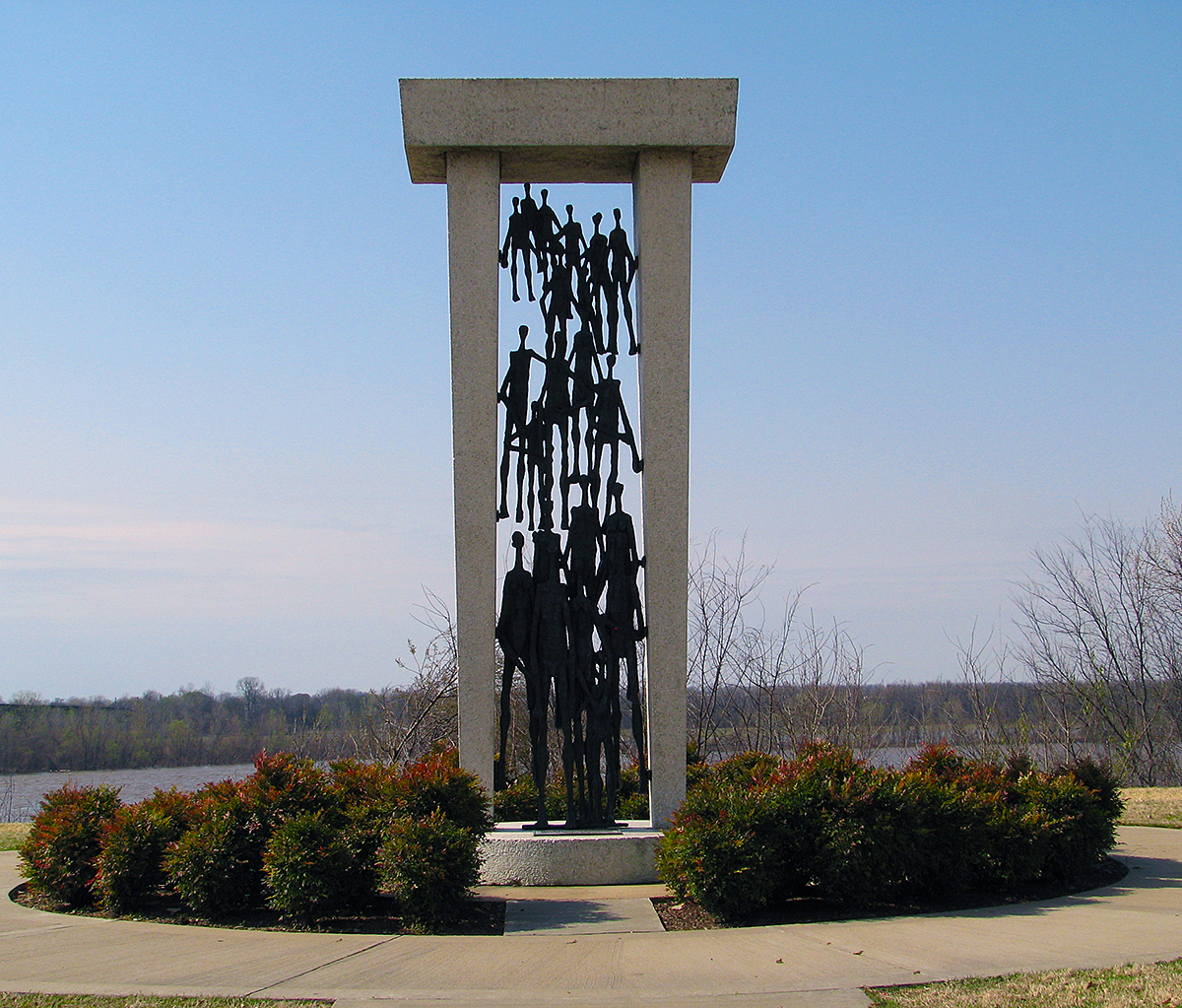
Memorial sculpture commemorating the Martyrs of Memphis

This week, on September 9, we observed a significant date on our personal calendar by celebrating the birthday of one of our sons. September 9 was already a notable date for us beginning some years before his birth, after our move to Memphis in the summer of 1983. During those years, the date became associated with an addition to the Episcopal Church Calendar that has readings appointed for it in our Lectionary. September 9 is designated as the feast of The Martyrs of Memphis: Constance, Thecla, Ruth, Frances, Charles Parsons, and Louis Schuyler.

To those unfamiliar with its history, the official title for this feast day may suggest dramatic images of early Christian saints contending with ferocious animals and or human adversaries in the name of the Faith. Which then raises questions about whether, perhaps, the Memphis in question was the one in ancient Egypt. Yet, the name designation for this day can be instructive for all of us because it may remind us of something we once learned – that the etymological root of the word martyr lies in the ancient Greek word meaning ‘witness.’ Hence, those persons we commemorate on the Church’s Calendar because of their examples of Faith are remembered for being especially compelling witnesses to God’s redemptive mission in Christ, regardless of whether they faced circumstances that might have led to a heroic death.

The Martyrs of Memphis provides an occasion for us to remember the men and women who remained in Memphis to minister to those with whom they faced together the ravages of a severe Yellow Fever epidemic, from which they could have fled to safer places elsewhere. Unknown to them was the fact that this horrible plague was a mosquito-borne infectious virus, and not something arising from ‘swamp vapors’ or bad city air. Among the faithful persons who succumbed to the fever, and who are remembered on the feast day of September 9, are the four women named in the feast’s title who were community members of the Sisters of St. Mary, Father Charles Parsons, the last remaining Episcopal priest in the city, and Father Louis Schuyler, who came as a volunteer from New Jersey to take Parsons’ place and join the Sisters in ministry.

Monument by Harris Sorrelle, in the Memphis Martyrs Park, overlooking the Mississippi River

Words from the collect (or principal prayer) for the feast day of the Martyrs of Memphis capture well why these particular individuals are named among so many others – known and unknown – who shared their faith as well as fate: “We give you thanks and praise, O God of compassion, for the heroic witness of the Martyrs of Memphis, who, in a time of plague and pestilence, were steadfast in their care for the sick and dying, and loved not their own lives, even unto death…”

The generic character of the title for this significant feast day was chosen to help us also remember that the number of those who died in the epidemic, not only in Memphis, but up and down the Mississippi River and beyond, numbered in the thousands. Memphis’s historic Elmwood Cemetery, its oldest, has a particularly moving monument that complements the contemporary riverside sculptural composition by Harris Sorrelle (displayed above). At Elmwood, instead of having an impact upon the use of anonymous and aptly dark-colored figurative silhouettes, as Sorrelle’s sculpture does, the cemetery monument provides just paragraphs of words, stating in plain but moving terms the reality that lies below where cemetery visitors walk (as the following image attests). As the Elmwood monument notes, at least 1,400 Yellow Fever victims are buried in nearby unmarked mass graves.

Martyrs monument in Elmwood Cemetery (clicking the photo will provide an expanded view of it)

The faithful witness of those who died ministering to and with others among the Yellow Fever victims in Memphis in the 1870’s can have the effect of prompting us to reflect on the very different circumstances in which we live, with our advances in medicine, healthcare, and social services. Nevertheless, the COVID crisis of 2020, and its lingering legacy, can also remind us of our mortality, our higher calling to seek godly life in its fulness, and to be faithful companions with and to those less fortunate than ourselves.

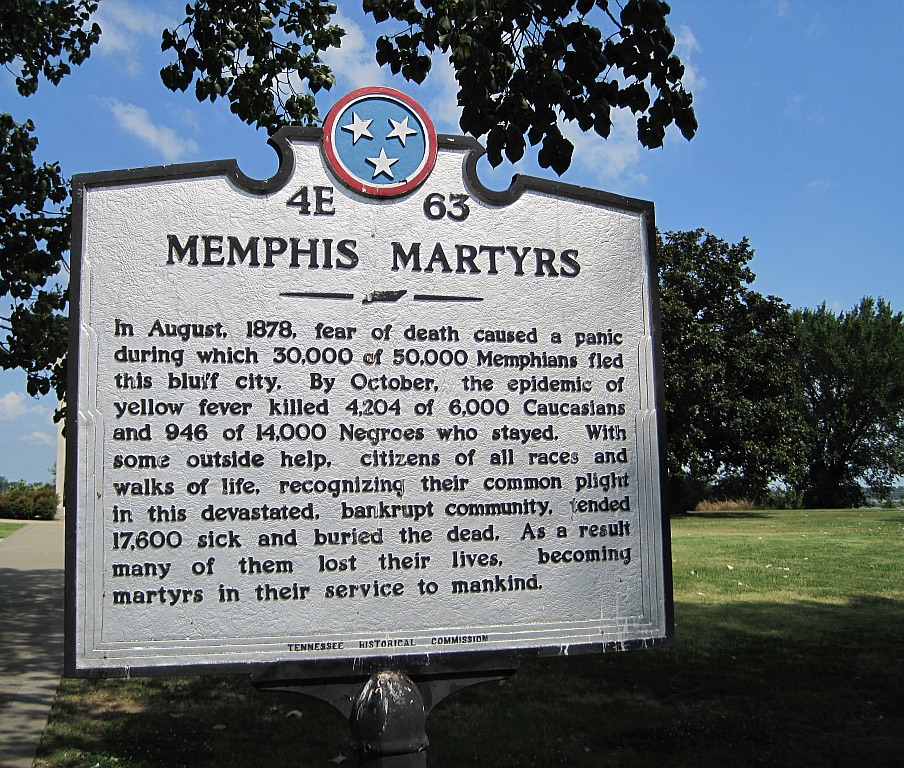
A state-provided historical marker that includes use of the word ‘martyr’

Additional note: a tragic-comic aspect of the Yellow Fever’s impact upon Memphis was another pre-scientific belief (in addition to the ‘swamp vapors’ theory regarding its origin) amongst those who remained in the city. It is said that those who seemed to have the lowest mortality rate were corpulent men who smoked cigars, the smoke from which may have warded off the mosquitos responsible for the plague’s transmission.

A Tao of Seeing: Reflections Inspired by Feng Shui

Michael Pollan’s writer’s hut, intentionally situated by a boulder on the brow of a hill

Recently, I observed my middle son moving a black plastic pond module around in a small space in his New Orleans courtyard. As he moved the container that would soon have fish in it, he tried situating the vessel in various ways, in relation to a tree, a fence, some potted plants, and an existing low stone wall. He is not a student or practitioner of feng shui, but I believe I was seeing some of those principles at work in his decision-making.

Western readers may have heard of feng shui, the Asian philosophical approach to discerning the unseen forces that affect objects and their balance in nature. It gives attention to the metaphysical or non-material energies thought to be at work upon or within the world around us. We might say that this approach provides a Tao of seeing, or a natural way of perceiving within and around surface phenomena to the underlying dynamisms that are believed to affect what happens in nature.

This notion that there are unseen forces at work in the world is an idea that is receiving something of a revival in Western Christian spirituality. This is noticeable when people refer to a concept attributable to the Celtic tradition, in which it has become common to refer to “thin places. “ These are places where the veil between the material and the ethereal or the heavenly seems temporarily dissolved. Another parallel here between East and West may lie in the quest within Christian spirituality for the goal of harmony and balance between people and the created world.

However, my reflections here constitute an aesthetic rather than a philosophical or historical inquiry. I am interested in the dynamics of movement we perceive in the circumstances that we encounter, and less in the metaphysical forces or energies that may be present within them. At the outset, however, I want acknowledge how a nuanced Asian approach can be an authentic route toward a culturally-informed appreciation of the phenomena we encounter, especially from a historically Asian perspective.

As we look at paintings in the context of Western culture, one factor we discern assesses composition and attends to the way our seeing is drawn from one part of a larger image to another. This dynamic is often an artist-intended aspect of an overall composition. Sight lines in garden design and arrangement provide another example, as does the architectural arrangement of space in buildings.

Attention given by Western designers to feng shui is sometimes criticized as being a superficial application of historically and philosophically nuanced ideas. But I want to give credit to ways in which our sensitivity toward perceiving movement and direction is a genuine factor that is available for analysis and articulation. We notice this when we encounter both two dimensional compositions as well as three dimensional spaces and the objects we find in them. We can always come to know more about what we see.  Because what we see is something that is there, not simply what we believe, or are disposed or inclined to see.

An Asian garden said to be designed according to feng shui principles

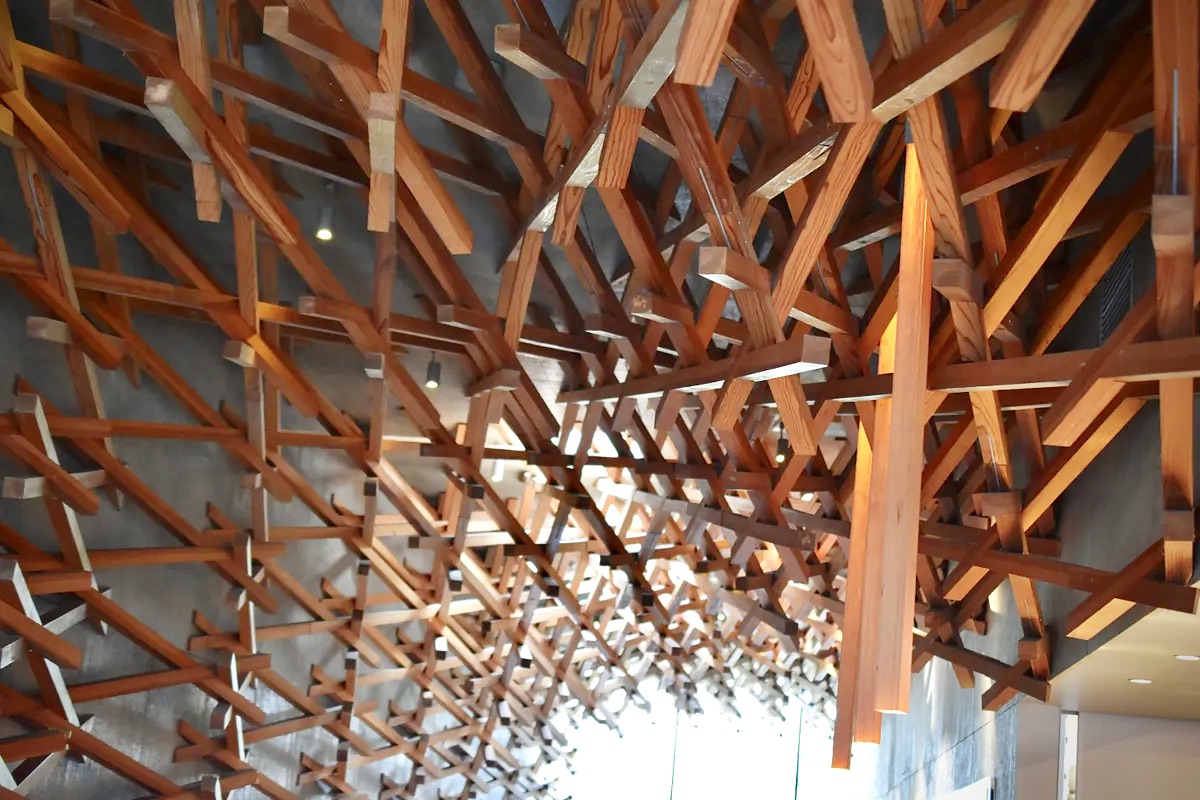
Motion, balance between forces, spatial arrangement of objects, and the dynamic relationships that are visible because they exist between and among these variables, continue to grab my interest. Contrasts between colors and textures, as well as between sizes and shapes, play a significant role.  Additionally, the perceived difference between what is natural and things that are humanly fashioned is equally significant, as is our perception of the criteria for what constitutes that which we consider to be natural. These are among the factors that help account for our sensitivity towards and interest in these many observable variables, and our common quest for purpose and meaning in the contexts where we find ourselves.

Motions and balance as we find these factors in Wassily Kandinsky’s painting, Several Circles

Painters, sculptors, and architects, seriously consider these factors within visual and spatial compositions. The painter, Wassily Kandinsky, and the architect, Frank Lloyd Wright, provide two examples of those who also perceived a spiritual dimension within their creative work.

If so, we –  as caring lay observers of the world and of the things and places among which we find ourselves – should give deference to this evident fact. For we can all be thoughtful, as people often are inclined to be, about what we see, touch, and experience when we interact with visual phenomena.
I find myself increasingly sensitive to these aspects of our appreciation for Beauty, and endeavor to be more mindful about them. I am intrigued by possible parallels that may exist between Eastern metaphysical interpretations of visual phenomena and more familiar approaches to what we see that are shaped by Western aesthetics. Especially as these familiar approaches are described and developed within our artistic and architectural best practices.

The Challenge Posed by Eric Gill

If reading this by email, please tap the title at the top to open your browser for the best experience. Then, clicking individual pictures will reveal higher resolution images.

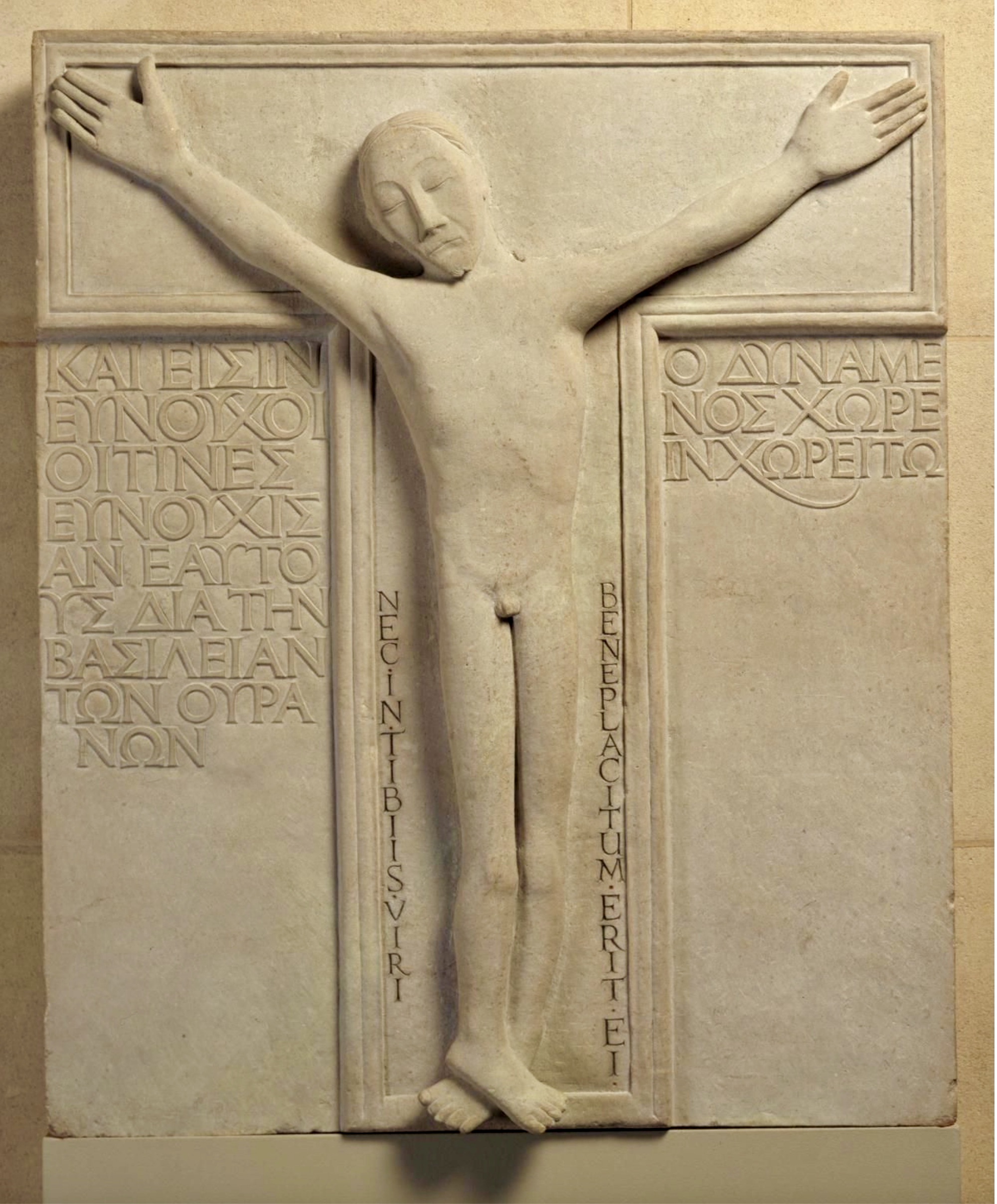
Eric Gill, Christ Crowned


To my mind, some of the most beautiful work in the area of graphic art was created by the British artist and craftsman, Eric Gill. The intractable problem posed by Eric Gill is not a legacy of his artistic output, but of his personal life. Largely unknown to those outside his family until about 50 years after his death, Eric Gill – by admission in his own unpublished writings – had engaged in personal behavior of a kind that most people would find not only abhorrent but, increasingly, as also criminal.

This is related to the larger problem posed by the work of artists, musicians, and architects whose work is seen as having been collaborative with tyrannical regimes (eg., the Third Reich, the Soviet Union). How do we view beauty in art that either depicts or is simply associated in some way with sin or with evil? (This is a matter I have previously tried to understand in relation to Picasso’s great painting, Guernica.)

To cite Scripture to the effect that “all have sinned,” may help us begin to locate the terrain upon which we need to address the problems stemming from Eric Gill’s biography, but it is not in any way to excuse his conduct. Though all sin is bad, and equally problematic in the eyes of God, not all sin is equal in its damaging effect upon others, and upon ourselves. The traditional distinction in moral theology between mortal and venial sins provides one way to try to parse some of these differences, while not excusing any forms or examples of sin, whether in ourselves or among others.

My purpose here is to invite reflection upon how we might appreciate Eric Gill’s religious art, as many did for several generations, without having our view of the merit of his work diminished by our moral evaluation of troubling ethical choices he made, and the lapses from good moral judgment they represent. In other words, and as an amateur student of the arts while also being a retired parish priest and former professor of moral theology, I wish to present some examples of Eric Gill’s art, letting his work speak for itself apart from ethical consideration of his personal life, and without ignoring the problems associated with the latter.

Perhaps my theme here can be summed up in this way: I invite you to benefit from the beauty of what Eric Gill created without asking you to overlook what we have learned about his private life. And I offer this invitation aware that some will not find it possible to accept.

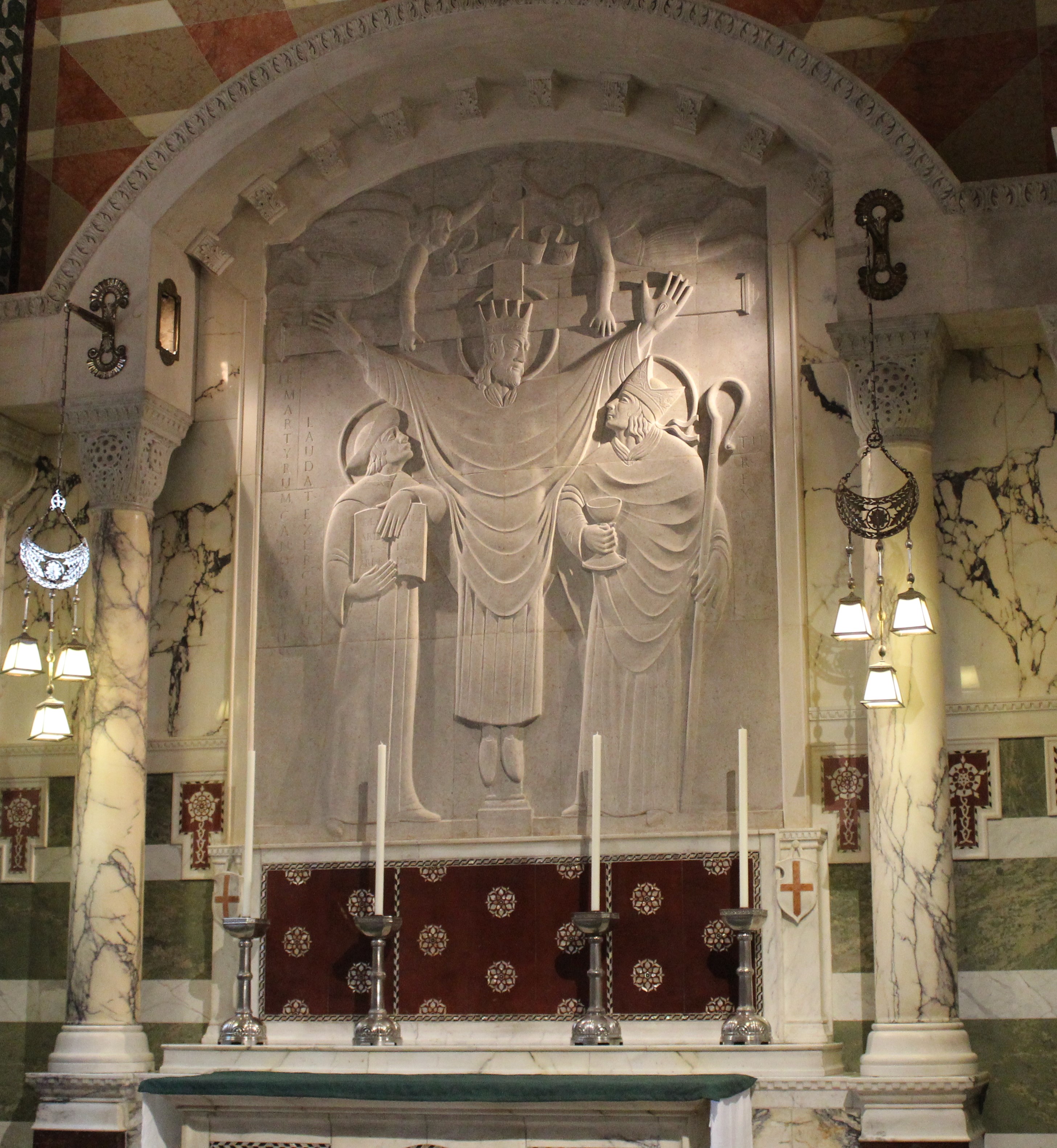
A sculpted carving by Eric Gill above the altar of the Chapel of St George and the English Martyrs, Westminster Cathedral, London
Eric Gill, Crucifixion
Eric Gill, sculpted relief panel from a series of the Stations of the Cross, Westminster Cathedral, London

As we consider some of his art, we should not overlook Eric Gill’s impact, at least indirectly, upon much of the daily life of the population of Great Britain (and elsewhere), in the form of three type faces he created. The most well-known is Gill Sans, named after its designer, and evident at almost every Tube stop in London. An effort to erase his work from the public eye, and replace it with alternatives, would require removing virtually every train station sign in Britain. It could be done. Should it?

Three fonts designed by Eric Gill

To put the problem I have raised here most bluntly, how can we appreciate the beauty in the holy art created by someone who behaved in a way most people would describe as sinful? I do not have a ready answer to this question. Note that, in what I have written above about Gill’s behavior, I have not gone into detail. Would that make a difference? If so, in what way?

And even if we refuse to give any amount of attention to Eric Gill’s artwork, we must still grapple with a timeless question: are there any unforgivable sins? Is anyone, because of his or her behavior, beyond the power of God’s redeeming love? Is it not likely that someone having Gill’s religious inclination also possesses a glimmer of moral awareness such that he or she might be open to repentance when – at the end of life – the person faces the awesome and undiminished light of God’s truth-seeking love?

Here is one thing that we can do: pray for the repose of the soul of Eric Gill, and for God’s Providential mercy.

In beginning to approach the questions I have raised here, I would start with some of the distinctions I shared above. I do not think we can deny this reality – that we, as people who are created in the image and likeness of God, and who have lost that likeness through the Fall and human sin, still bear God’s image however marred it may be by the corruption resulting from our sins. And, that we are still capable while in this life of acts and works of uplifting beauty.

The Kelpies: Canal-Side Art and Engineering

If reading this by email, please tap the title at the top to open your browser for the best experience. Then, clicking individual pictures will reveal higher resolution images.

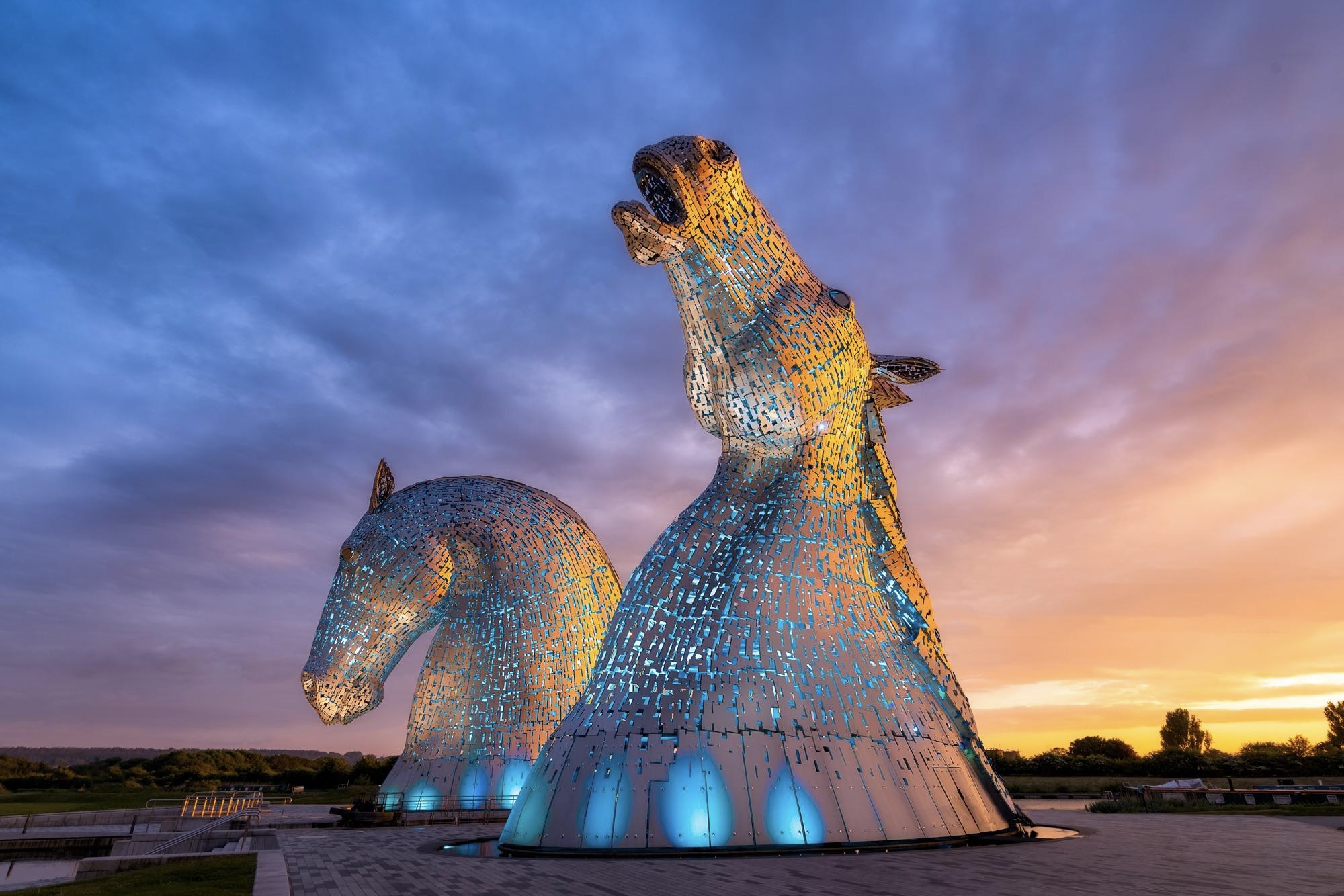
The Kelpies sculptures by Andy Scott

The Kelpies in evening light


If ever there was a reason to take a narrow boat journey, especially in Scotland, an engineering marvel will reward those who travel in that region by such means. Two magnificent large scale sculptures called the Kelpies commemorate the horses that once pulled cargo canal boats along what are still called towpaths. This monument straddling the Firth and Clyde Canal, northwest of Edinburgh, is comprised of twin large scale structures that are said to be the largest equine sculptures in the world. Just under 100’ tall, and each weighing over 300 tons, the structures were built of steel, partly in deference to the historic steel industry in Scotland.

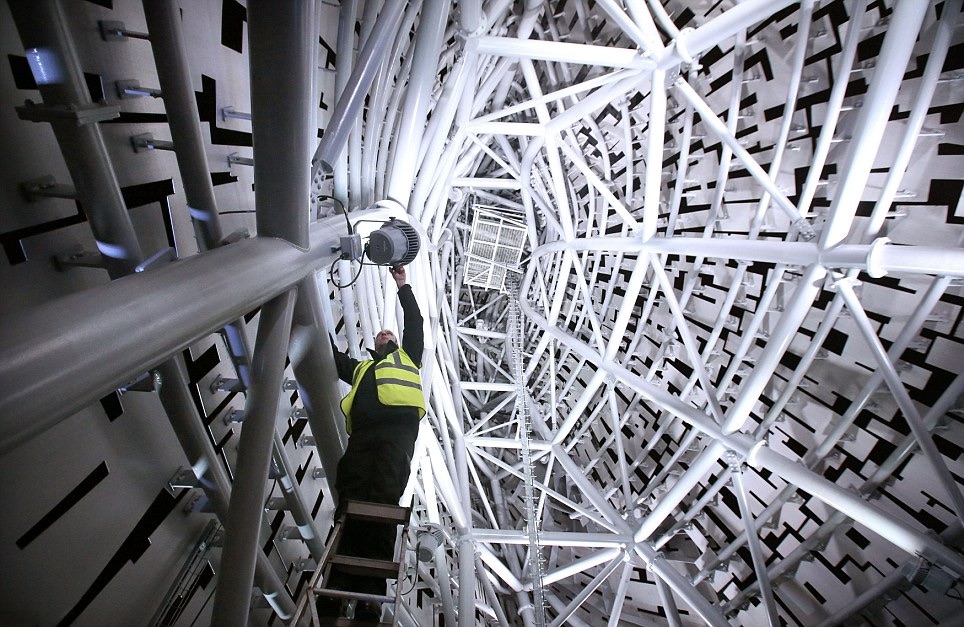
With an interior armature made of construction-steel beams prefabricated elsewhere, the sculptures were assembled on site with the assistance of large cranes and then clad with stainless steel plates. Aside from their resulting durability and their efficient use of materials, the Kelpies’ engineering design permits dramatic interior lighting, especially effective in the evening and early morning hours.

The Kelpies sit adjacent to a newly created canal lock and basin in the Helix Park, and serve as symbolic sentinels in a newly created juncture between the Union Canal and the River Carron.

Boats can be seen on the River Carron in the background

A lighting engineer adjusts an interior light in one of the Kelpies

Stainless steel plates being added to the structural armature

Some people have suggested that the two sculptures are based upon a pair of draft horses of the type that may once have been used on the Firth and Clyde Canal. In my observation, Clydesdale and other draft horses tend to be gentle and of a mild temperament. They are rather stocky in appearance, not only in their bodies but also in their necks and heads. Draft horses are certainly capable of running, and I am sure that some have been known to kick, especially if they have been mistreated. But draft horses can also look as if they embody a spirit of docile resignation to their tasks.

The artist’s design for these Kelpies reminds me not of those lovable working companions, the Clydesdales, but instead look like Arabians or the Mustangs and other wild horses one sees in the American West, spirited, lean, and untamed. I am glad the Kelpies appear this way, as I think they are inspirational, rising up hugely as they do at Helix Park. These horses, especially the one on the right, look as if they have not only been ‘given their head,’ they seem never to have surrendered themselves to our governance. This is only fitting, given the mythological source of the Kelpie name. Kelpies were said to be the spirits of streams that when ridden, might carry their riders down to a tempestuous demise in the depths. As such, we can not only admire their beauty, but these Kelpies can remind us of the canals and those who died building them, the canals’ unromantic industrial past, and those who toiled at canal-side factories in what William Blake – in his poem commonly known as “Jerusalem” – memorably termed Britain’s “dark Satanic Mills.”

Nina Akamu, The American Horse

Another large scale equine sculpture may come to mind when viewing the Scottish Kelpies, inspired by Leonardo da Vinci’s drawing of a large horse monument, designed for the Duke of Milan. A modern day sculpture, based on Leonardo’s drawings, can be found at the Meijer Gardens, in Grand Rapids, Michigan, as well as one cast for the city of Milan. Nina Akamu’s, The American Horse, expresses a similar kind of energetic vitality such as we find in Andy Scott’s great figures along the Firth and Clyde Canal. 24 feet high, Akamu’s strong and vigorous impression of a horse has something of the bone structure and mass of a Clydesdale, and every bit of the spirit that we find in Scott’s two stirring examples.


Charlie Russell’s Vision of the “Old West”

If reading this by email, please tap the title at the top to open your browser for the best experience. Then, clicking individual pictures will reveal higher resolution images.

Charles M Russell, The Fireboat (1918)


One of the most prolific and skillful painters and sculptors who sought to portray the myth and reality of the “Old West,” having witnessed its waning days, was the cowboy-turned-artist, Charlie Russell. He discovered his real vocation after moving to Montana in 1880 to try ranching at the age of 16. Fans of Russell like to repeat the story of how the would-be-artist communicated to absent land owners about the condition of the few surviving cattle after a brutal winter decimated their herd. Instead of a written report, Russell sent a painting of a single bony steer surrounded by prowling coyotes. Titled, Waiting for a Chinook (The Last of the 5,000), the illustration has become one of Russell’s best known images.

From his earliest days, Russell had the gift of being able to capture with drawing and paint the lives of what he would have called ‘Cowboys and Indians’ in ways that others found compelling. By the time of his death, at the age of 61 in 1926, Charlie Russell was one of the most famous artists in America. Despite his abiding interest in the romance of the Old West and its cowboy ethos, Russell was quite knowledgeable about Native American cultural patterns and spent a significant amount of time with the Blackfeet and other regional tribal peoples, making many enduring friendships in the process.

Ever since visiting the C.M. “Charlie” Russell Museum while in middle school, I have wanted to return to Great Falls, Montana, in order to see the splendid collection of his paintings and memorabilia for which that facility provides careful and intelligent stewardship. Recently, I was able to attend the annual CM Russell Museum weekend fundraising gala event that includes an auction of a wide array of Western art, including pieces by the museum’s namesake.

The Charlie and Nancy Russell home


Charlie Russell’s Studio, on the same property as the home


The Russell Museum is located adjacent to the artist’s restored home and log cabin studio, on a quiet street in a residential neighborhood in Great Falls, a relatively small city located on the banks of the upper Missouri River. Little did we know that this event, coinciding with the annual Western Art Week expo, attracts many buyers and patrons, eager to add to their collections. We marveled at the auction of a 1924 watercolor by Russell, Women of America, sold for the astonishing price of $1.6 million! Another watercolor by Russell, the 1904 Mandan Buffalo Hunt, attained an auction price of $750,000. Both of these recently sold works (reproduced here from the catalogue) provide a sense of Russell’s culturally perceptive, action-oriented paintings.

Women in America (1924)


The Mandan Buffalo Hunt (1903)


Of particular interest was a presentation offered by the Crow Nation linguist, Dr. Lanny Real Bird, who helped non-Native American listeners undertand the significance of sign language among Plains tribal peoples, and how it was a skill with which Charlie Russell had become proficient. This under-appreciated aspect of Russell’s skillset can be discerned in a painting by the artist that has become one of my favorites, The Fireboat (seen at the top of this post).

Dr. Lanny Real Bird


Russell’s painting, The Fireboat, was completed in the latter part of his career, and appears to depict a scene along the upper Missouri River near the artist’s home territory. A steamboat (visible in the far lefthand edge of the painting) has attracted the attention of three members of the Blackfeet Nation, who are joined by a fourth in the background. A setting western sun illumines the figures of the mounted Blackfeet warriors, which – along with the steamboat – subliminally suggests the cultural shift occurring on the Western Plains in the last decades of the 19th century, with the gradual eclipse of one nation by another. The middle figure, whose image helps form a visual triangle within the composition, employs a hand signal, presumably after having viewed the riverboat making its way along the river. Not obvious to the uninformed viewer, but aided by a knowledgeable interpreter of Native American signs such as Dr. Lanny Real Bird, we learn that the hand signal in The Fireboat is the one for fire, making Russell’s title for the painting intelligible.

Charlie Russell’s Western paintings may not display the refinement of technique that we might associate with the work of Frederick Remington, but possess a compelling dynamic realism in their nuanced portrayal of real people, accurately observed in their daily lives. It is worth noting that many of Russell’s finest compositions were completed at his and Nancy’s summer cabin at the edge of Glacier National Park. A visit to Great Falls to see the Russell Museum as well as the excellent Lewis and Clark Interpretive Center, just an hour or so from Helena (the state capitol), can enhance a visit to Montana – even in winter – with a significant experience of the artistic and historical spirit of the “Old West.”


The Beauty of Clay at The Bray

If reading this by email, please tap the title at the top to open your browser for the best experience. Then, clicking individual pictures will reveal higher resolution images.

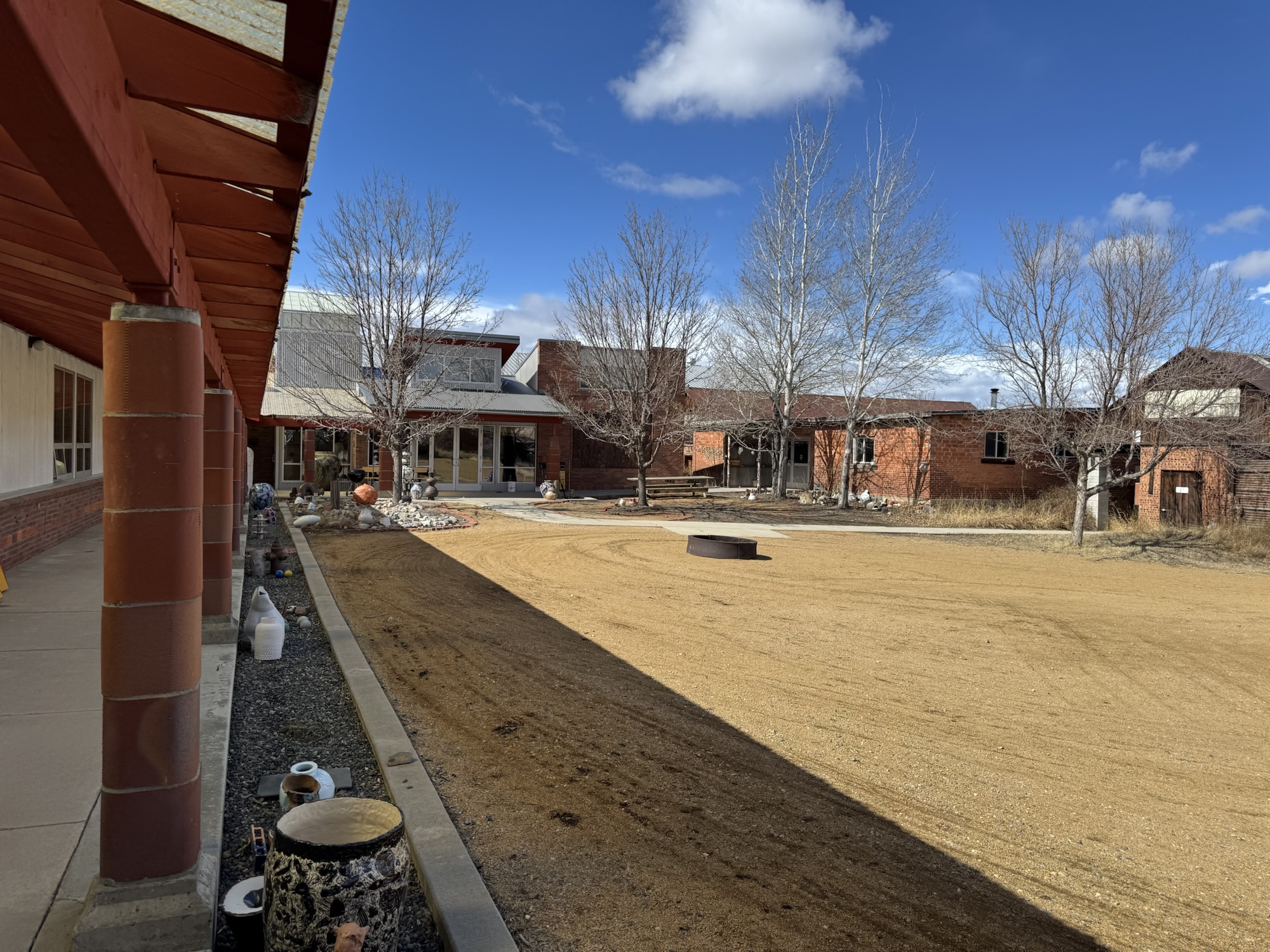
A studio courtyard at the Archie Bray Foundation in Helena, MT

Pottery and the wider field of ceramics represent an historical art form focused on the production of useful objects even when they are prized and collected for their beauty. This wide area of engagement with clay, and with products made from clay, is now fully a part of the Fine Arts curriculum of most college art departments. An evolution in the practice of ceramics from a primary focus upon utility to an unhindered exploration of the possibilities inherent in the medium was surely a logical result of two things. First, there has been a significant increase in the number of practitioners who work with clay out of a sheer love for what can be done with it, and who have pushed beyond traditional parameters of the art. A second factor has been the general influence of the ‘modernist’ trend in the fine arts, encouraging painting, sculpture, and printmaking to transcend representation. This has yielded such recognizable examples as abstract expressionism in painting, and more broadly what has been called ’conceptual art.’ I have touched upon an example of this broad transition in my prior posts featuring the work of David Shaner.

Given my appreciation for Shaner’s work, we visited the Archie Bray Foundation in Helena on a recent trip to western Montana, where he had been a resident artist as well as the Foundation Director. The Bray, as it is now known, will celebrate 75 years of service in 2026 as a non-profit center for the support and promotion of the ceramic arts. It provides studios and technical facilities, as well as residential fellowships, enabling aspiring ceramicists from across our country and beyond to pursue and develop their artwork. Visitors are welcome to come and see the well-equipped studios while engaging with the resident artists, view and purchase examples of work created at the facility, and explore the grounds of the historic brickyard.

Structures from the former Western Clay Company brickyard at The Bray

In its early days, the Archie Bray Foundation was associated with the pursuit of ceramics as an artform influenced by both western and eastern folk art traditions. Particularly influential in this regard was a visit to The Bray by the English potter, Bernard Leach, and Japan’s Shoji Hamada, later designated as a Living National Treasure by the Japanese government. Leach and Hamada’s presence at The Bray in 1952, along with that of the Japanese philosopher and art critic, Soetsu Yanagi, encouraged attention to the aesthetics of the Mingei tradition of Japanese folk art. David Shaner numbered among those receiving significant creative inspiration from this influence.

Soetsu Yanagi, Bernard Leach, and Shoji Hamada, with two early resident potters at The Bray in 1952

The Bray is situated in the foothills of the Rocky Mountains on the western edge of Helena, in a setting incorporating an attractive blend of historic and modern buildings. While visiting this center of creativity, Martha and I met and were able to visit with a young woman named Lexus Giles, from Jackson, Mississippi, whose home is just a few hours north of our own. Her work epitomizes that of many of her fellow artists in residence in her exploration of ideas and forms unique to her own imaginative vision. This reflects The Bray’s laudable encouragement and support for resident artists, for periods up to two years, freely to pursue artistic work reflecting their different backgrounds and particular interests.

Lexus Giles in her studio at The Bray

For Lexus, this means the opportunity to explore aspects of African American culture through experimentation with the tradition of making face jugs or face vessels. Lexus explained this relatively unfamiliar art form as having origins in the Carolinas among enslaved people, who may have had access to clay and a simple means of firing it, and who used the results to mark graves when headstones and the like were impossible for them to acquire.

Face Jugs by Lexus Giles

Face Jug with a ‘church lady’ motif, as noted by the artist

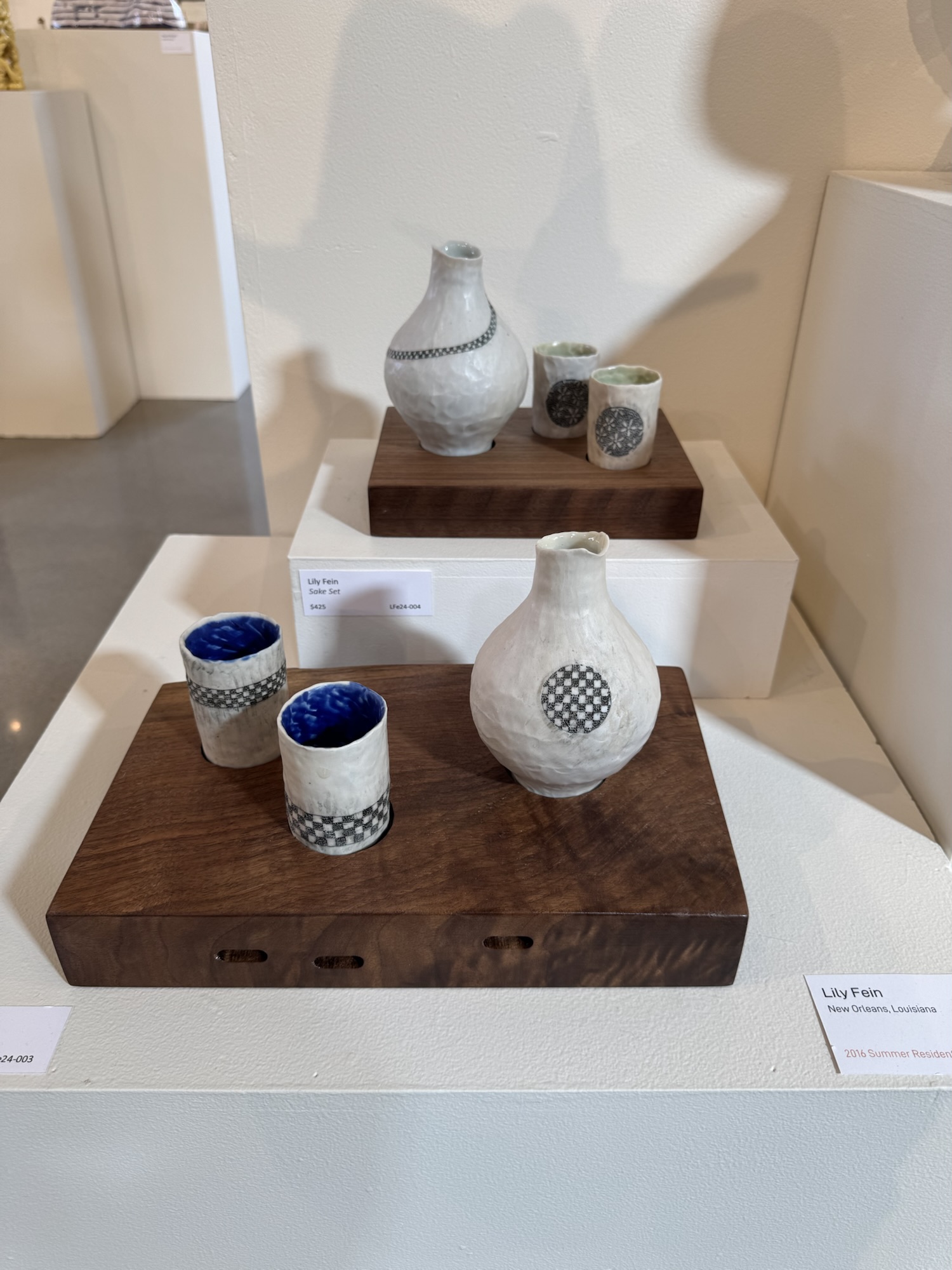
While we met and were able to learn from Lexus Giles about her work, we also appreciated the opportunity to view ceramic creations by other resident artists at The Bray, displayed in a gallery in the administrative building. Some examples are featured in the photos below.

We came away from our visit at The Bray impressed with the quality of the work by the resident artists, and by the positive atmosphere of creativity evident in the studio spaces. Visitors are welcome to the facility and to tour the studios without an appointment, and to walk among the remaining structures within the former brickyard. Back when I was an art student, The Bray is just the sort of place where I would like to have had the opportunity to pursue my interests and develop my skills.


Additional note: Those interested in learning more about Lexus Chiles may wish to see the following brief biography that is posted outside her studio at The Bray.

Once again, in anticipation of this coming Lenten Sunday, I offer a homily I prepared in a prior year, which may be accessed by clicking here.

Le Corbusier’s Villa Savoye: A House as Sculpture?

If reading this by email, please tap the title at the top to open your browser for the best experience. Then, clicking individual pictures will reveal higher resolution images.


Le Corbusier, a pioneering contemporary of Frank Lloyd Wright, articulated part of his architectural philosophy with these words, “the house is a machine for living in.” Wright, by contrast, designed domestic buildings more easily described as desirable homes.

Despite Le Corbusier’s modernist statement regarding his approach to design, his Villa Savoye, completed in 1931, was and is once again a beautiful work of what I would call architectural sculpture. This stunning and now restored project has the distinction of having been France’s first modernist building officially designated as an historical monument.

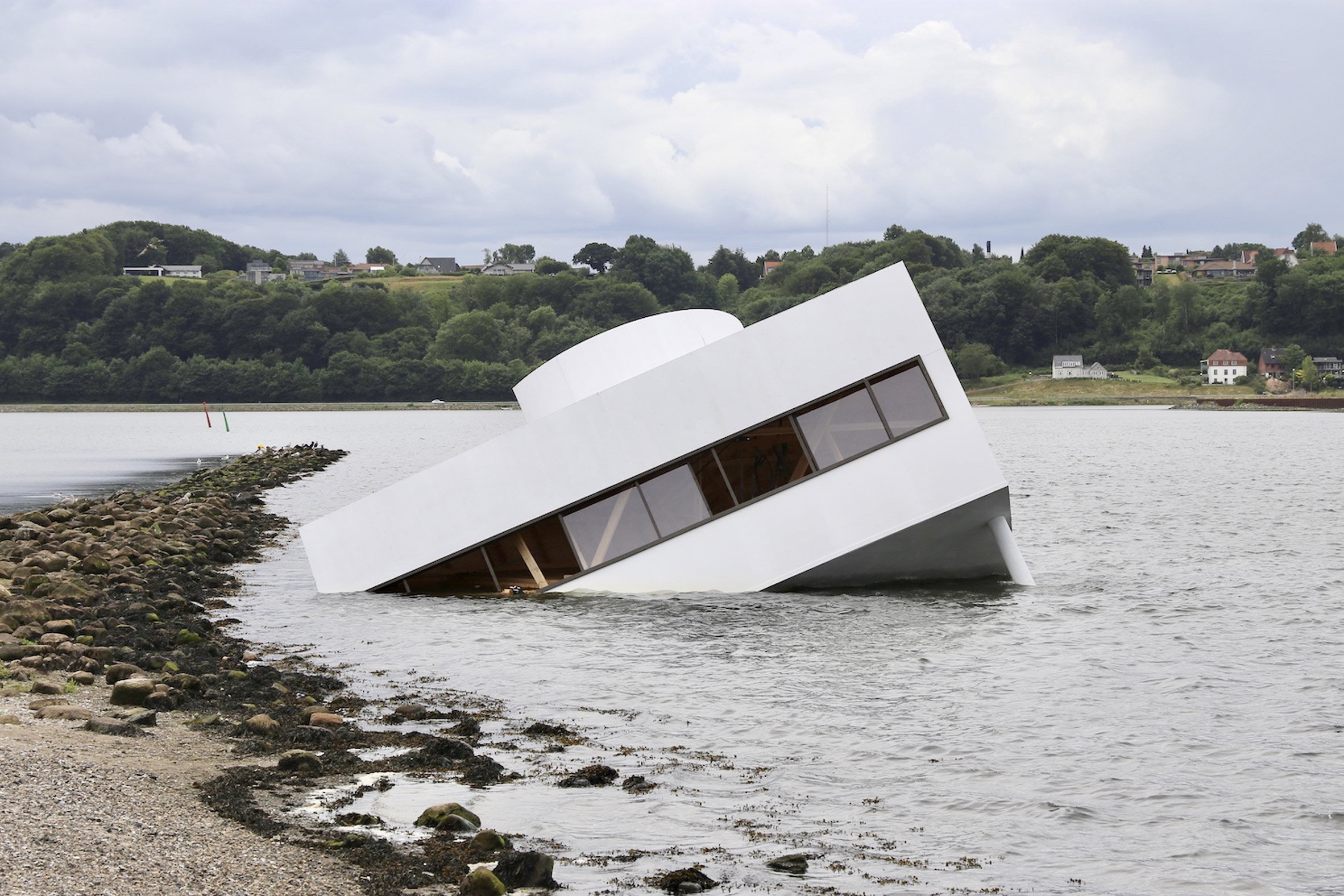
The adjective “iconic” may be overused in contemporary social culture, but the label fits Villa Savoye. So memorable are its lines, curves, and stunning white exterior, that the building has inspired both architectural model kits, as well as two notable tribute structures. The better known of the latter two was an installation by the Danish artist, Asmund Havsteen-Mikkelsen, in a fjord (below).

Another work inspired by Villa Savoye is an almost exact reproduction, but an ‘antipodean shadow’ of the original with its dramatically contrasting black facade (see below). Set in the Southern Hemisphere, it was created as an academic building, a purpose for which Corbu’s design might have been more suitable:

Ashton Ragatt McDougal’s building for the Australian Institute of Aboriginal and Torres Straight Islander Studies, Canberra, Australia

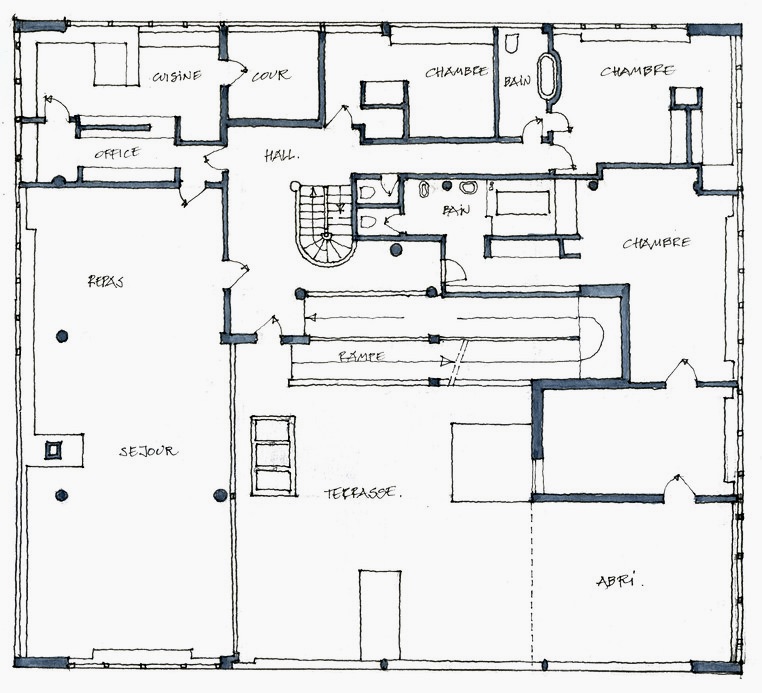
A recent rendering of the plan for the main floor of Villa Savoye

Comparison with Wright’s houses is apt in another sense, for both Le Corbusier and Wright gained well-deserved reputations for prioritizing innovative design features before relying upon time-tested construction methods. One result was that Villa Savoye, like Wright’s famous Wingspread in Wisconsin, suffered from leaks. Leaks throughout the house bedeviled the Villa’s first occupants. While I join others in admiring the formal and visual beauty of Villa Savoye, its practical suitability for a home is questionable.

For me, Villa Savoye’s kitchen focuses the ‘livability’ concern (see photo below). Imagine using this room to prepare aesthetically pleasing meals. This kitchen is not likely to inspire cooking a festive Christmas dinner, looking as it does like an industrial food preparation area. Instead, with the kitchen’s inadequate lighting, I think the expansive windows looking out and away from this part of the building are more likely to attract a cook’s interest.

Yet, Villa Savoye has long been an object of fascination for many architects and members of the public, especially with its marvelous facade where the structure appears to float above the site. In sharp contrast to F.L. Wright’s consistent effort to situate his houses within their locations, employing local materials and integrating the structures with their settings, Le Corbusier set Villa Savoye on the site, just as a classical statue might be set up on a pedestal in the context of a formal garden. All natural landscaping has been cleared well back from the structure, which stands upon the billiard table-like surface of a trimmed lawn.

This deliberate juxtaposition of the building and its setting, where the structure’s design elements contrast so deliberately with the surrounding environment, visually marks the Villa as functioning more like a sculpture rather than as a practical dwelling place. The most successful parts of this house, and perhaps the most beautiful aspects of its design, may actually be those least suited to enhancing actual domesticity. These include the curving walled stairwells and ramped walkways, attractive transition zones through which the residents simply pass.

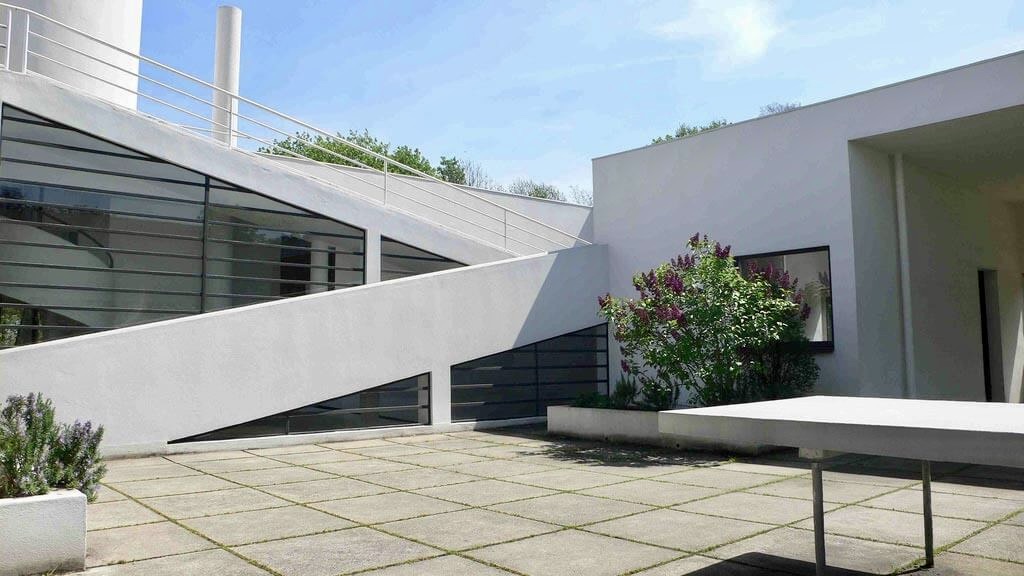
The main floor’s atrium-like terrace, as well as the curving wall elements on the ground and roof levels are immensely appealing to look at. They draw attention to themselves as objects of visual interest as much as they function as places in which to spend time. Yet, it may be ironic that these are primarily exterior parts of the building.

What I have characterized as the sculptural quality of this building is also evident from the vantage point of the principal living area (see below). This living room strikes me as austere rather than as compelling. Despite its modest fireplace, the room might be better imagined as a gallery space – especially for small scale sculptures – than as a room in which to relax with family or friends. As designed, it and the rest of the house may have been theoretically suitable for its location in north central France, but it is hard to imagine the large room, with its original pre-modern windows, being comfortable on a hot day or during the winter without a modern and adequate HVAC system installed (steam radiators are still evident).

Le Corbusier clearly loved and felt at home on the southern rim of France, in the Cote D’azure, and may have seriously misjudged the suitability of this building for the north central region of his country. But there it sits, no longer a home, and now once again an object for all to admire.

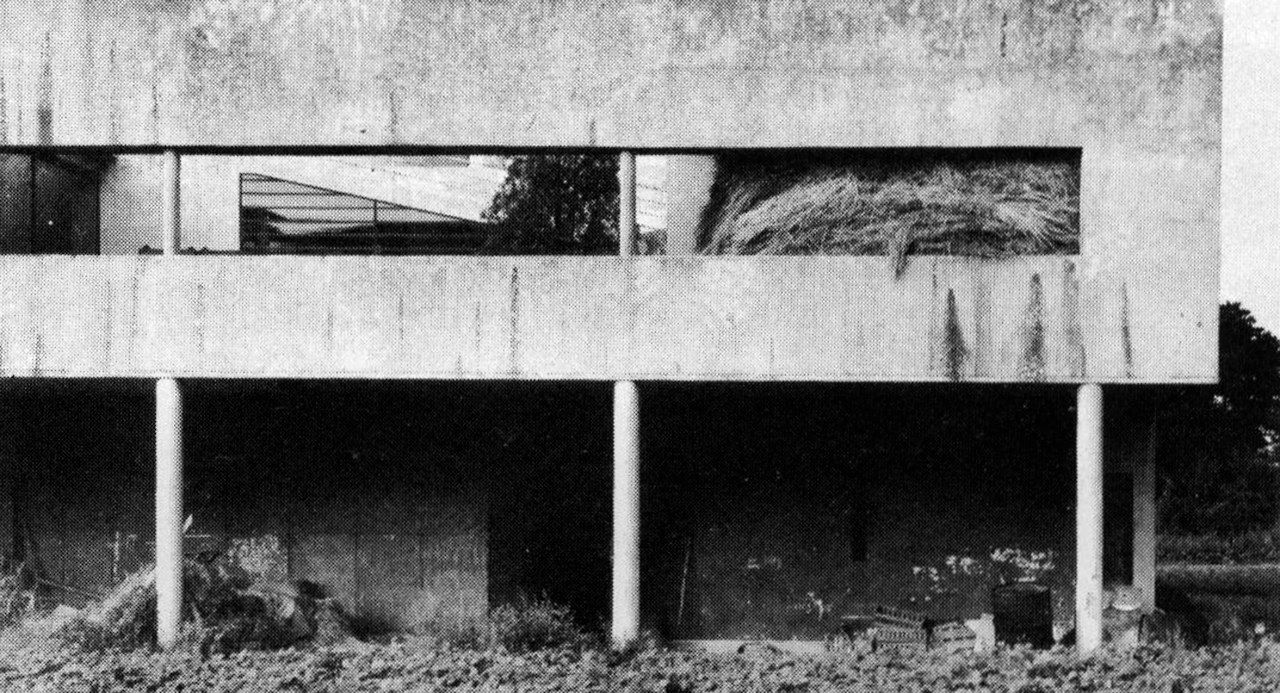
Though I have indicated the likely reasons why I would not want to live in Villa Savoye, I am delighted that the building has been preserved as a focal point for our appreciation of modernist architecture and the International Style. The photos below indicate how near this beautiful place came to demolition after abandonment by its frustrated owners, and its subsequent abuse during the Second World War.


Additional note: Readers who are intrigued by this stunning building may wish to become familiar with some of Le Corbusier’s other notable projects, including his chapel at Ronchamp (featured in a prior blog post), his Marseilles block building, and his theoretical Modular system intended to facilitate human-scale architectural design. The latter may have been inspired by Da Vinci’s Vitruvian Man, reimagined in a metric system of measurement. The following image demonstrates the way in which Le Corbusier’s modernism was in part based on mathematical theory, and how it played a role in his design for Villa Savoye.


Special thanks to my daughter in law, Laure Le Coq Holmgren, for helping me with the French terms for aspects of Villa Savoye’s plan, and for the correct pronunciation of the building’s name.

Laetitia Jacquetton and the Art of Both-And

If reading this by email, please tap the title at the top to open your browser for the best experience. Then, clicking individual pictures will reveal higher resolution images.


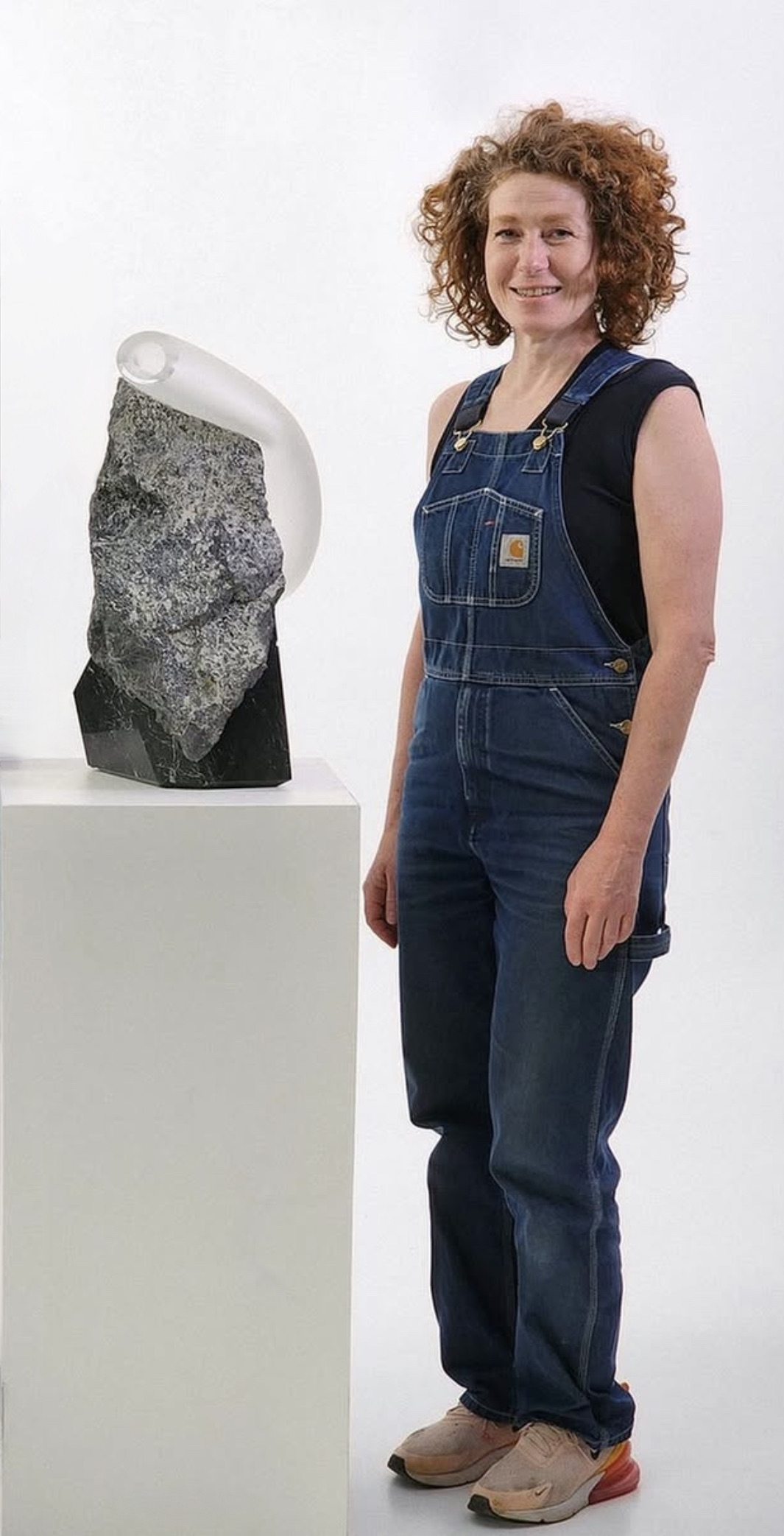
Not so long ago, my friend James brought to my attention the striking glass-based sculptural work of Laetitia Jacquetton. Born in France, Jacquetton has a background in fashion design and a longterm interest in the minimalist qualities present within much of Japanese art and its Mingei (or folk art) tradition.

When I consider what I find compelling about her sculpture, I am reminded of the art of photography. A decisive factor in effective photography, especially black and white photography, is that of contrast. This is a predominant feature in Jacquetton’s work. Though this may seem obvious, perhaps too obvious for comment, I would like briefly to explore the significance of this element of contrast, and what her work might help us to appreciate regarding other spheres within our life experience. For the sculpture of Laetitia Jacquetton may alert us to an expansive question: can dissimilar and even contrasting things – as well as ideas – be brought together into beautiful harmony? And, what might asking this tell us about our concepts of nature and grace?

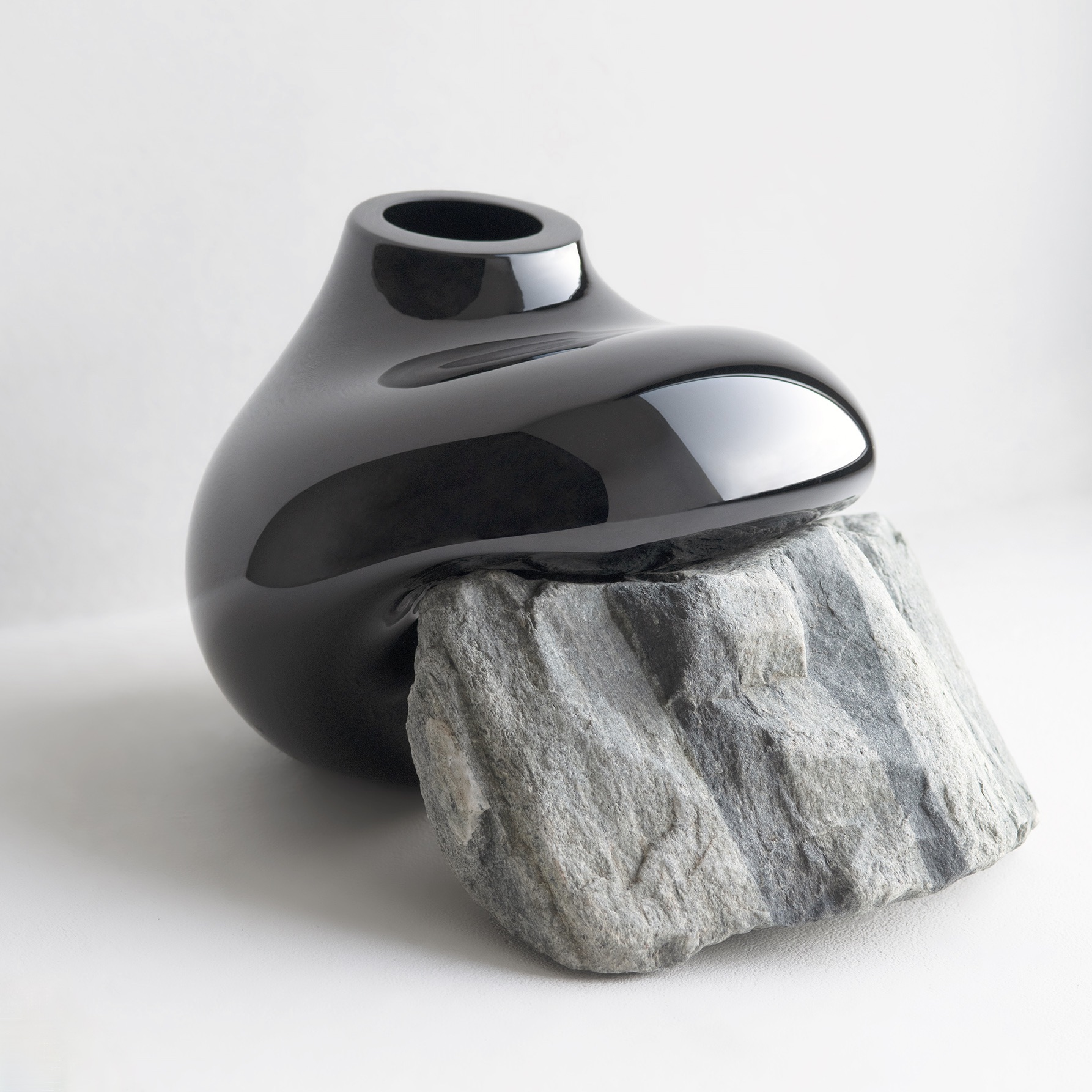
Photos of Jacquetton’s sculptures help acquaint us with how contrast functions in her sculptures. For example, the photo at the top displays an intentional contrast between light and dark, as well as between shiny and matte materials.

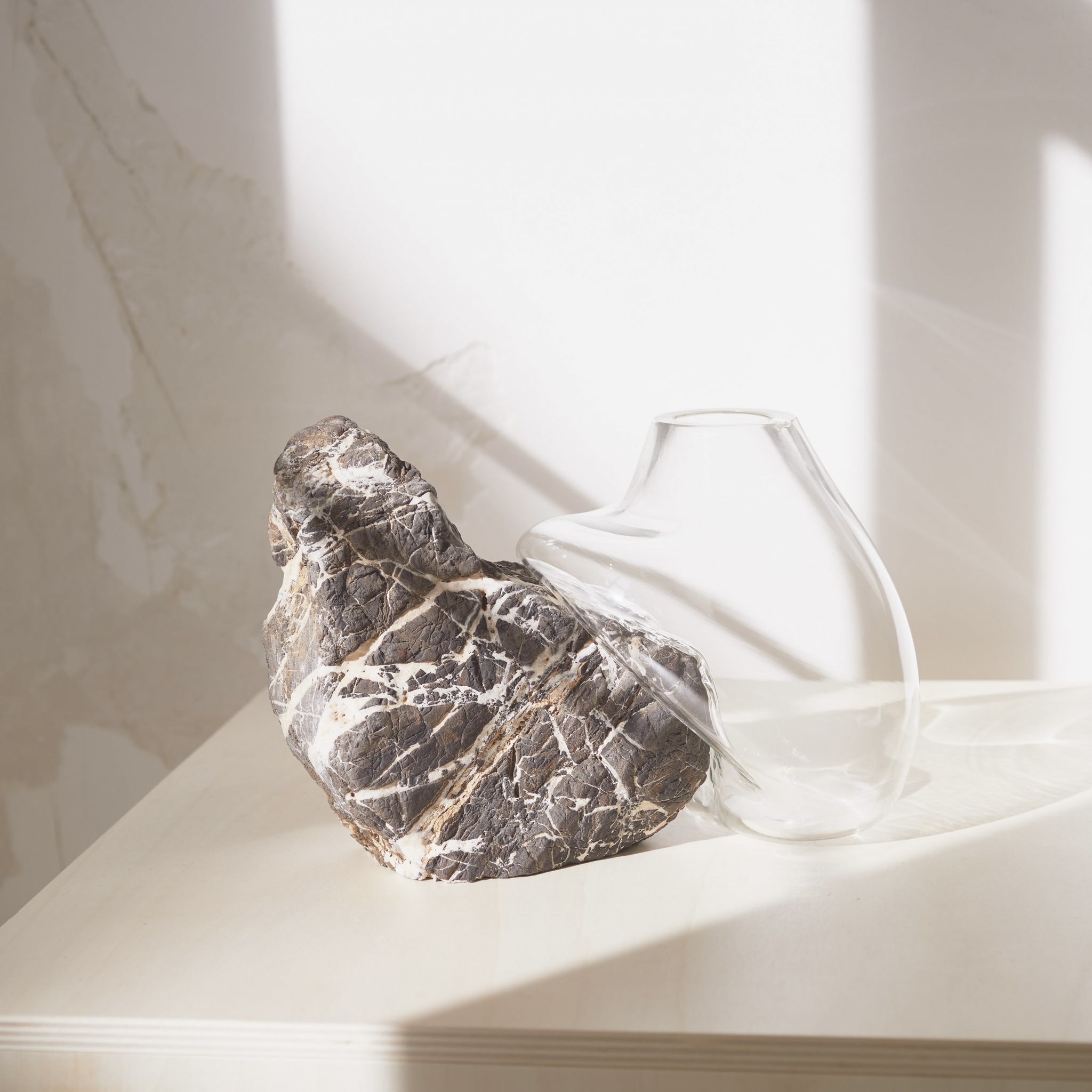
Here, we see a contrast between translucent and opaque materials.

We also see in these photos a further contrast, between smooth and textured materials. This feature, along with those previously noted, stems from the way a fluid and malleable material has been brought into relation with a static and unyielding one. Observing this allows us to infer something about the creative process involved in the production of Jacquetton’s sculptures. The artist has taken a humanly-fashioned form and adapted it to a naturally shaped object, bringing something crafted in the studio to bear upon something found in nature.

Empirically observed contrasts like these may also have a bearing upon our ideas, and how we think about concepts like nature and grace. We may have been taught to view such ideas in terms of a perceived contrast between them, even an antithetical one. Here, when thinking about objects found in relation to others that are crafted, or about nature in relation to our view of grace, we may gain insight by considering some apposite words that Eucharistic celebrants may say before consecrating the bread: “Fruit of the earth and work of human hands, it will become for us the Bread of Life.”

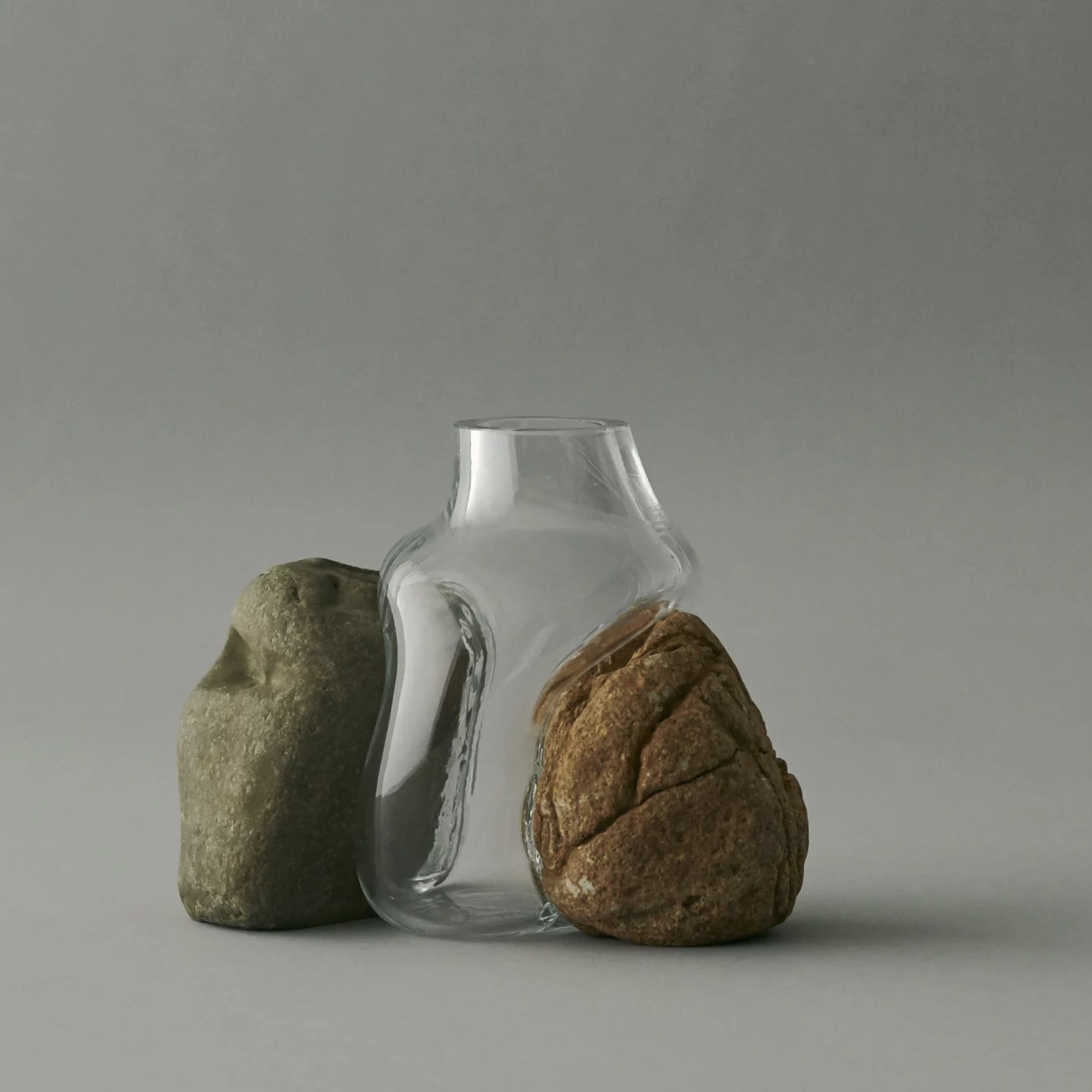
Several contrasts already noted are also evident in photos of Jacquetton’s other works:

Reflecting on these photos that feature contrasts allows us to articulate what is most significant within Jacquetton’s work, her intentional juxtaposition of contrasting elements.

Jacquetton as an artisan, a human agent gifted with a creative vision and developed skills, has juxtaposed dissimilar materials, achieving aesthetically pleasing results. A singular focus upon one or more of the contrasting materials (or the qualities associated with their appearance), could lead us to highlight one aspect of the artwork at the expense of another, in an either/or way. Yet, it is the dynamic conjunction between dissimilar materials that Jacquetton prioritizes in her work. Evident contrast is accompanied by intentional conjunction, leading us to appreciate the interplay of the differences in a both-and manner.

Noticing this, I think once again of the Eucharist, which – like the Incarnation – is another and relatable example of what I am referring to as a ‘dynamic conjunction.’ For the Eucharist makes present together both the natural physical properties of bread, and the supernaturally graced properties of the sacrament.

Nevertheless, we tend to view many aspects of our world, and of our lives within it, in a simplistic and reductionist manner. For me, comparative reference to the influence of Plato and Aristotle helps limit this tendency toward reductionism.

For example, I credit Plato’s influence with an implicit encouragement to view things, and especially their moral value, in relation to a single reference point. According to this approach, something either possesses or manifests this or that quality – let us say beauty, or goodness – or it does not.

I credit to Aristotle’s influence a more nuanced approach, which nurtures a willingness to consider what we see and come to know in relation to several reference points. We are then better able to say (in a both-and way) how this or that object of attention has a particular quality, while also possessing something of a second quality, and how it can be aptly described by referring to other qualities or attributes.

In all this, I do not attribute my reflections to Laetitia Jacquetton, though her compelling sculptures have clearly inspired them.


Additional notes: Thanks to my friend, James Ruiz, for introducing me to Laetitia Jacquetton and her evocative sculptural work. / Regarding my references to Plato and Aristotle, I do not presume to have accurately summarized aspects of their thought, but rather cite what I think are aspects of their dual influences.

I hope readers might perceive how my reflective observations above are related to the paradoxical conjunctions of ideas upon which I reflected in my prior post, regarding how repentance may display beauty, and how painful grief may be accompanied by joyful reassurance.

Calder’s La Grande Vitesse

If reading this by email, please tap the title at the top to open your browser for the best experience. Then, clicking individual pictures will reveal higher resolution images.


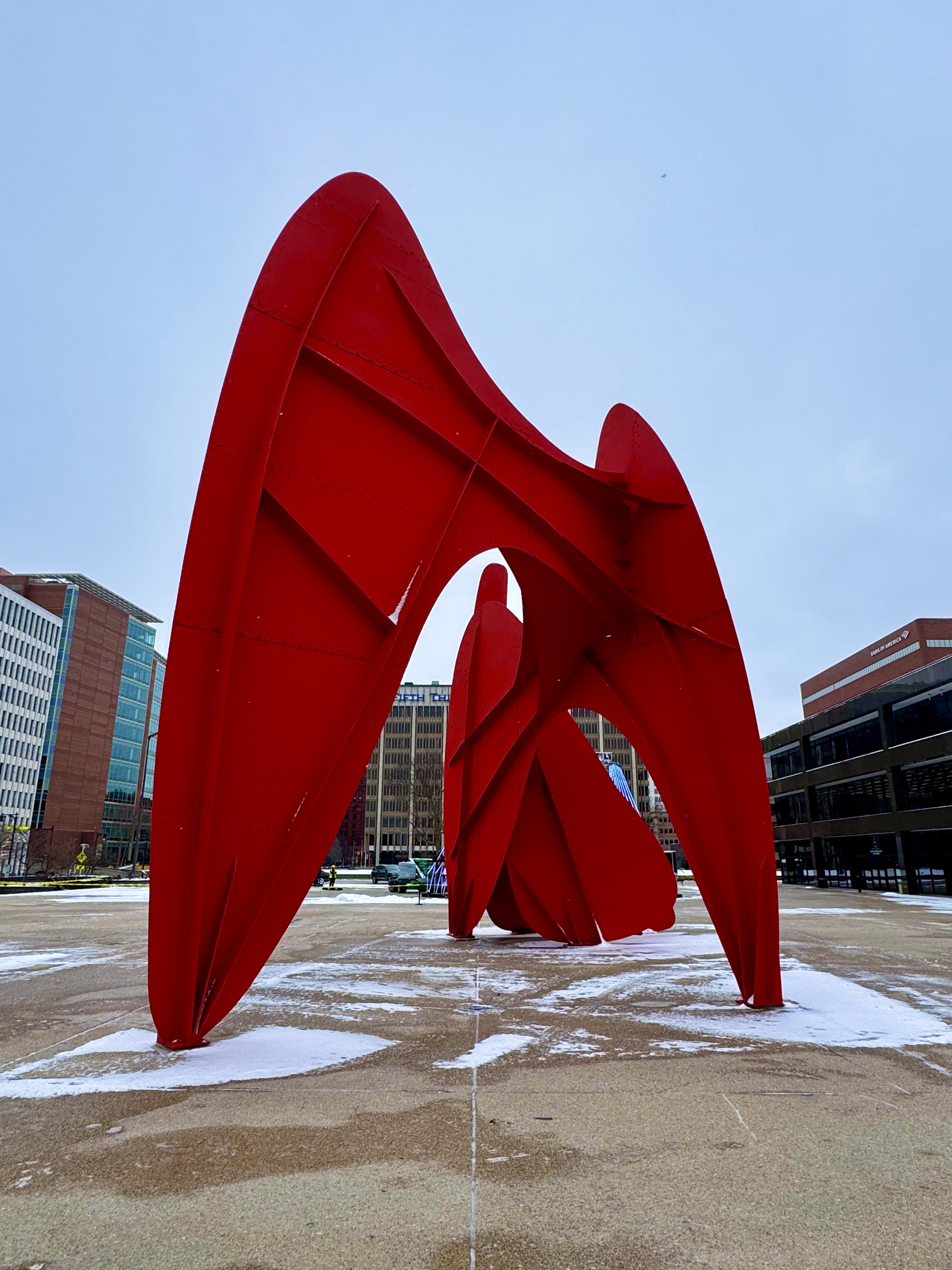
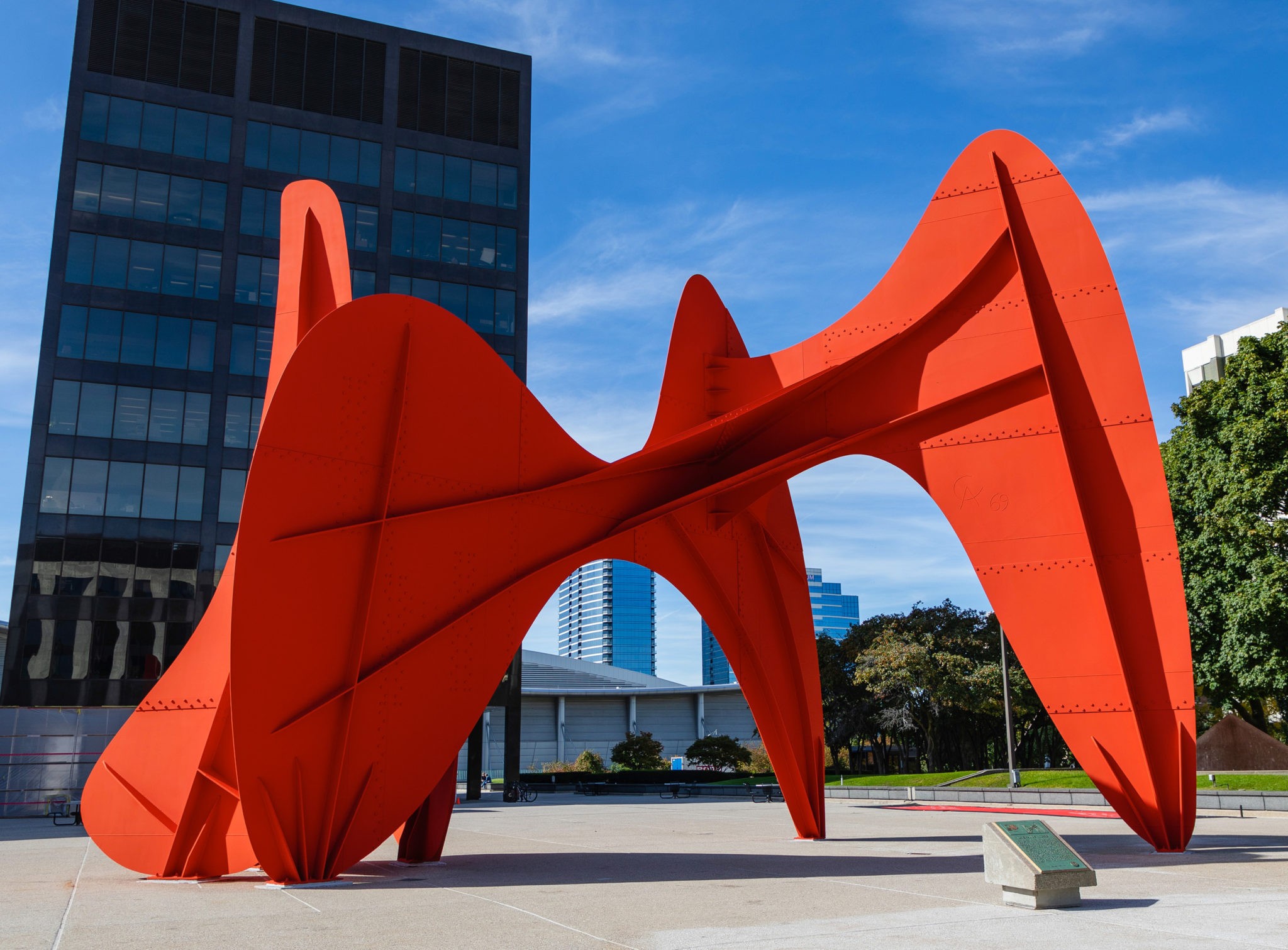
This past weekend, with the temperature in the lower twenties and lake-effect snow in the air, I had a chance to revisit a favorite sculpture, Calder’s La Grande Vitesse. Sitting on a plaza in downtown Grand Rapids, MI, the sculpture is notable for being the product of the first award granted by the National Endowment for the Arts for a work of public art, with the project dedicated in 1969. It is a stirring example of Calder’s large scale ‘stabiles,’ as distinguished from his better-known mobiles. La Grande Vitesse may be his most successful work in the stabile category, a grouping which comprises several monumental compositions of welded and bolted sections of steel, often painted in Calder’s favorite vibrant and warm bright red.

Because it is lyrical and engaging, La Grande Vitesse has the pronounced effect of drawing the viewer in to engage with the artist’s vision for the work, both visually, spatially, and even in a tactile way. Sculpture is by definition three-dimensional, in that works of sculpture comprise shapes and forms, whereas painting and drawing typically involve two-dimensional images, whether representational or abstract.

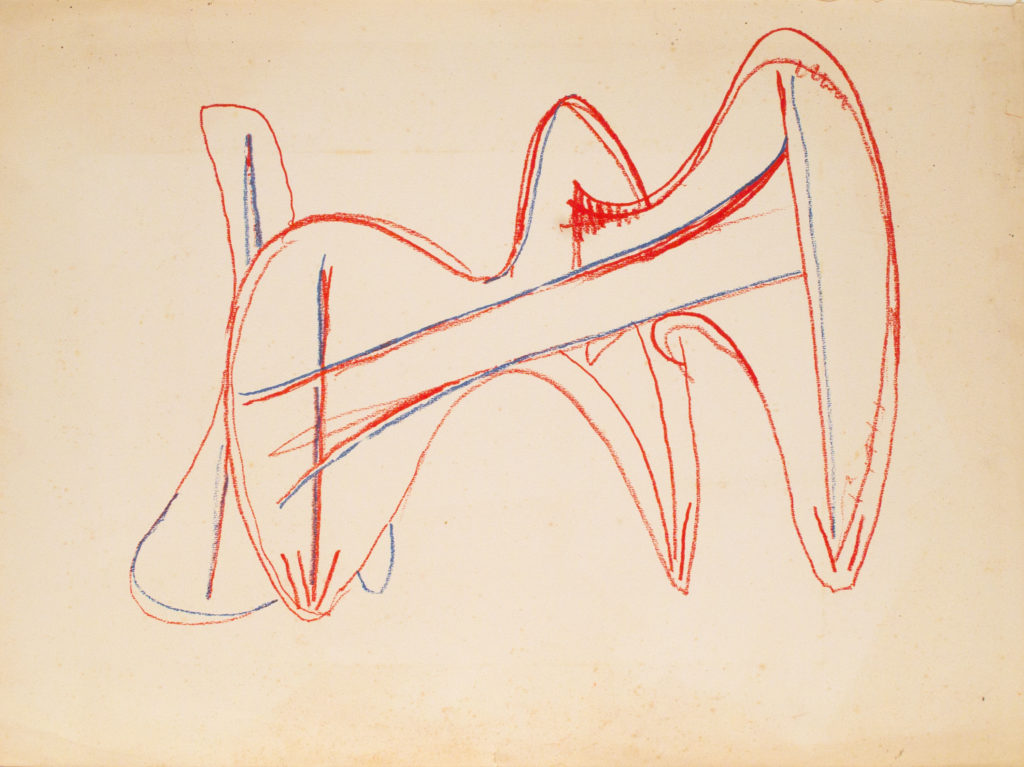
Two concept drawings of what became La Grande Vitesse

Although some painters in the modern era have pushed against the distinction I have just offered (regarding multiple dimensions) by their manipulation of the surfaces of paintings, sculpture remains distinctively in a sphere of its own. You can look at the back of a painting, but you move around (and sometimes through) a work of sculpture – something manifestly true with Calder’s stabiles. Whereas a viewer can encounter a painting through visual apprehension and imagination while standing before it in even a small room, a visitor encountering a sculpture – especially a large one – engages with it as an embodied being, interacting with another object occupying a shared space within a common area.

This helps us notice how the location of a sculpture can make a difference in our appreciation of it. With its stunning color and soaring curved surfaces, Calder’s La Grand Vitesse commands the plaza upon which it rests and would be much diminished if placed in a dark and cramped alley just wide enough to accommodate its size. Therefore, when sculptures are beautiful to behold, stirring in their effect, and well-placed, encountering works of this kind can provide a profound, whole body experience. In this respect, sculpture has an affinity with architecture.

What sets La Grande Vitesse apart from some of Calder’s other large stabiles is the extent of the quality of mystery he created by increasing the number of vantage points required in order to get a sense for the shape of the whole. This, then, extends the time it takes to gain an appreciation for the dynamic interrelation among the sculpture’s parts. Not all examples of sculpture merit the observation that when progressing to each new vantage point, the work appears to be different from one’s prior impression of it.

A second distinguishing aspect of La Grande Vitesse connects its formal title with the name of the city in which it has found a home. Grand Rapids is named for a historic feature of the river it straddles, and the sculpture’s French title can be translated with roughly the same two words. Guides also explain that La Grande Vitesse may properly be rendered as “the great swiftness.” These related names for the art work and its alluvial location fit well with its fluid lines, curves, and protruding fin-shaped panels, which would be at home in a marine environment. For me, the masterful conjunction of the scupture’s multiple curved surfaces accentuates the allure of the work, a sculpture that I find simultaneously uplifting, joyous, and very pleasing to behold.

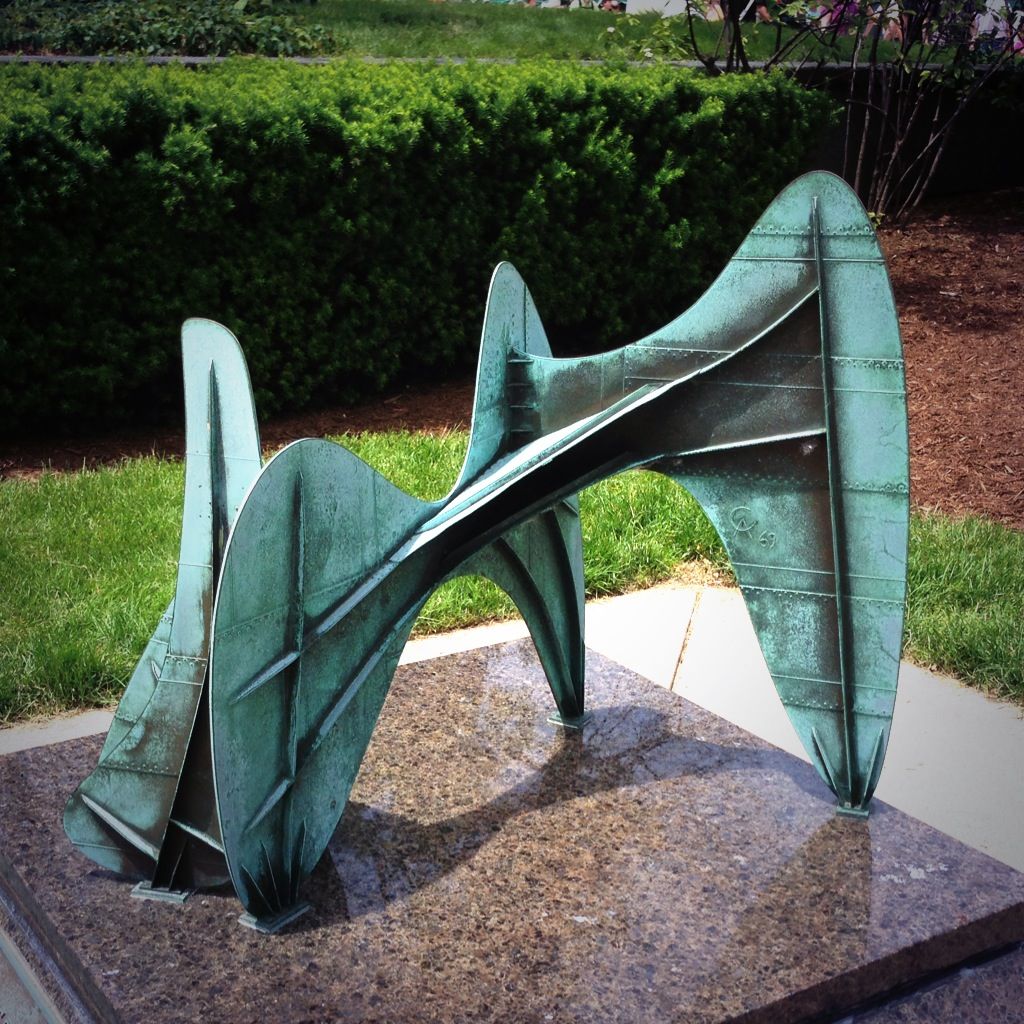
A 1:5 intermediate maquette of La Grande Vitesse bearing Calder’s signature and date

A 1:23 interpretive model for the sight-impaired (placed on the plaza near the sculpture in Grand Rapids)


Additional note: Placed next to civic buildings designed by Skidmore, Owings and Merrill, the Calder commission to produce La Grande Vitesse for the City of Grand Rapids was part of a larger project – as in so many cities during the 1960’s – to transform the heart of an urban area with what was then sometimes euphemistically called a process of ‘renewal.’ The photograph below of the 1969 dedication ceremony is revealing in that much of the area surrounding the sculpture plaza has since been covered by useful but not always beautiful government and commercial buildings, as well as a new medical center connected with Michigan State University, adjacent to extensions of an interstate highway.

The Beauty of Philip Simmons’ Charleston Ironwork

If reading this by email, please tap the title at the top to open your browser for the best experience. Then, clicking individual pictures will reveal higher resolution images.

Gate to the Philip Simmons Memorial Garden, Anson Street, Charleston (featuring a Simmons design)


Philip Simmons, was a blacksmith who spent his life and working career in Charleston, SC, where much of his work is preserved by homeowners, collectors, and a foundation dedicated to honoring his legacy. Along with his lifelong body of ironwork, he has been described as a national treasure. Born in 1912 in the Old South, he received a very limited education and apprenticed himself at an early age to blacksmiths he saw in his Charleston neighborhood. Eight decades of work in a blacksmith’s shop followed as he pursued what some might call a trade craft, and which in his hands was truly an art.

Mary E. Lyons has written a book about Simmons for young persons, which includes some compelling photos of his work. She offers this introduction to the artist: “Philip Simmons began his career as an untrained boy. Now he is called the Dean of Blacksmiths by professional smiths across the country. His memories show that skill and patience take years of work. They also prove that everyone can achieve both. An honored artist, teacher, and businessman, Philip Simmons is the working person’s hero.”

Though the circumstances in which he lived and worked were modest, he is warmly remembered by his home city, and he has been commemorated by a marker at the Fort Sumter and Fort Moultrie National Historical Park (shown above), by the preservation of his home and studio, as well as by a high school named in his honor. Numerous examples of Simmons’ ironwork can be seen on walking tours in Charleston, in the course of which one can enter, through a gate fashioned by Simmons, a memorial garden for named for him maintained by the Garden Club of Charleston.

An egret, one of Simmons’ favorite motifs in his ironwork

In addition to representations of egrets, other images such as palmetto fronds, hearts, fish and serpents, number among those images often featured in Simmons’ ironwork. The artist’s choice of these images reflected his sensitivity to the locale in which he was raised, both Daniel Island where he was born, and then Charleston and its low country and aquatic surroundings.

A major turning point in Simmon’s life’s work came with an unexpected opportunity brought to him when he was 64, an age when many contemplate retirement. He was invited to participate in the 1976 Bicentennial commemorative Festival of American Folklife to take place on the Mall by the Lincoln Memorial in Washington, D.C. Asked to craft a gate onsite during the event, Simmons wondered about the imagery that he might select for the project. Thinking about images that would reflect where he was from, he settled on the moon, stars in the sky, the rolling surface of water, and fish. This combination of images reflected, in his mind, the night sky sparkling upon the waters of the two rivers that form Charleston Harbor. The resulting gate, which has come to be known as the Star and Fish Gate, was purchased by the Smithsonian Institution (image below).

Philip Simmons’ crafting of the Star and Fish Gate in a temporary workshop set up on the Washington Mall, complete with a portable foundry and anvil, attracted a great deal of attention during the festival, and resulted in the artist gaining national attention. Among those taking an interest in Simmons’ work, and then helping bring it to a wider audience, was John Michael Vlach, a professor at George Washington University. Vlach published a biography of Simmons in 1981, which may have helped those at the National Endowment for the Arts to take note of Simmons’ lifetime of achievement in the field of blacksmithing. In 1982, the NEA awarded Simmons with a National Heritage Fellowship, the United States government’s highest honor in the folk and traditional arts. Other honors followed, including the Order of the Palmetto, his home state’s highest honor, as well as induction into the South Carolina Hall of Fame. During his lifetime, he was referred to as “a living national treasure.”

Simmons’ iron work incorporating the medical symbol of a caduceus, and a fish representing an aspect of his home region as well as the Christian faith

In spite of all of the accolades and honors he received later in life, Philip Simmons continued with humility to devote himself to his art, and to teaching younger aspirants and apprentices who wished to become proficient themselves in creating beautiful yet also functional ironwork. Despite the very significant cultural differences between his approach and those of Japanese craftspeople, I find Simmons’ approach to his life’s work characteristic of the best of what is often described as folk art, work that is appreciated for its beauty without necessarily calling attention to the artisan who made it.

Displayed below are images of a number of Simmons’ creations as a blacksmith.

A Simmons gate for St. Philip Episcopal Church, Charleston

The cover of Mary Lyons’ book for young persons, featuring Philip Simmons at work on a piece of scrolled iron


The full title of John Michael Vlach’s book, mentioned above, is: Charleston Blacksmith: The Work of Philip Simmons. The book includes a map of Charleston showing the location of Simmons’ works, as well as brief descriptions of them.