Easter and Eastertide

The Beauty of What God Can Do, and Is Doing

If reading this by email, please tap the title at the top to open your browser for the best experience. Then, clicking individual pictures will reveal higher resolution images.

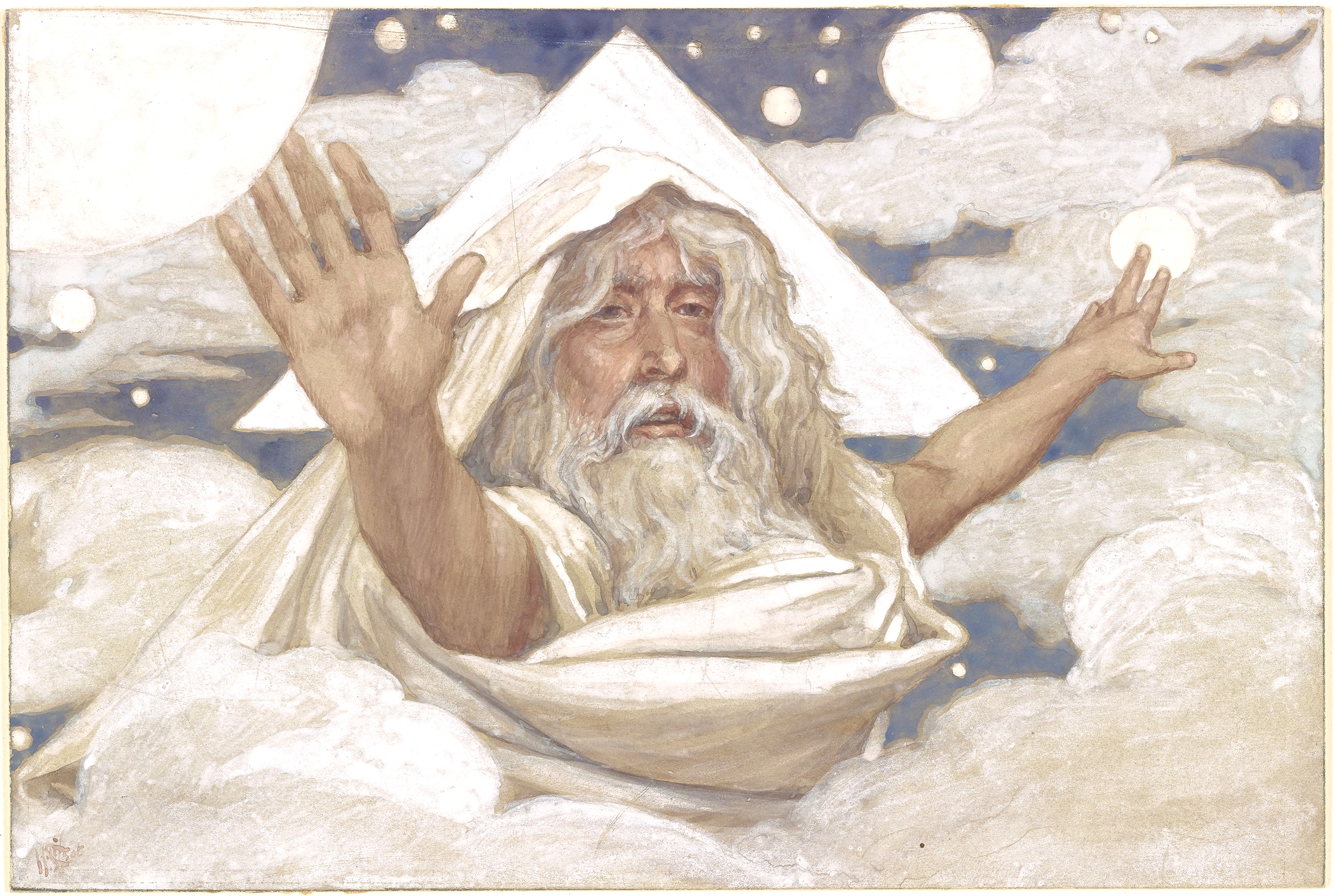
James Tissot, God Creating the World


If you are a Christian, and if you reflect on your formation as a person of faith, consider this question: Do you believe it is reasonable for God’s will to make sense to us? To ask this question opens the door to discovering how our beliefs about God were shaped, as well as our beliefs about God’s providential ordering of the world. Indeed, does God even want us to think about such things, or are we simply to accept and obey the divine will, regardless of whether we find this reasonable.

These questions also bear upon how we reflect upon what happened in Jerusalem 2,000 years ago, events that we consider during this Holy Week.

Broadly speaking, the Catholic tradition of thought – going back at least to Thomas Aquinas – anticipates a discernible overlap between divine rationality and that of created and redeemed human nature. God’s rationality is imprinted upon our powers of reasoning. By contrast, broad strands of the Protestant tradition – with its comparatively elevated concept of the Fall and human sin – have not nurtured and have even discouraged a similar expectation of such an overlap. Accordingly, we cannot expect or believe that our rationality has any real continuity with divine rationality.

One of the two traditions described above has emphasized the self-revealing comprehensibility of God, who intends for us to know, and not simply obey, the divine will. The other tradition has privileged the sense that God was and is wholly other, and therefore God’s ways are incomprehensible, except for small graces. Each of these two traditions has therefore had a different understanding of what it means for us to have been created in the image and likeness of God (see Genesis 1:26, in context).

A related and observable distinction regarding these two broad traditions concerns the relationship between grace and nature, and how this is construed. In the wider Catholic understanding, grace is more often seen as infusing nature, and present everywhere. Whereas a common view often found in Protestant piety anticipates that grace touches nature episodically, and sometimes is antithetical to it, given nature’s and our Fallen state.

James TIssot, God Appears to Noah

Another way we can distinguish the spiritual influence of the two traditions I am sketching here concerns the nature of God and of God’s activity. For example, shaped by a broadly Catholic catechesis, it is believed that there are at least three things that God cannot do: create a rock bigger than God can lift; choose to cease to exist; and, command us to hate ‘him.’ For, in the spirit of that same catechetical tradition, each of these three theoretical possibilities would be irrational, and thus contrary to the divine nature and being, as well as to who and how we were and are made to be.

Most Protestant thinkers and preachers would likely dismiss the first two of these three (im)possible ‘things’ as perhaps irrelevant rhetorical distractions. Yet, the third thing, however disagreeable and unforeseen in light of the New Testament, would probably be conceded as theoretically possible, especially given the historically Protestant stress on divine freedom and the importance of acts of will for personal right-believing. (In other words, though God could, God wouldn’t.)

A result of these differences between the two traditions is that questions about sin, misfortune, and the presence of evil, have tended to be handled differently in Protestant belief and teaching as compared to that shaped by Catholic spirituality. This difference can be noticed when we reflect on and speak about ‘bad things’ that happen to us. Does God cause such misfortune, or, allow it? How we tend to answer this ‘cause’ question can reveal something about the Christian catechesis by which our thinking and beliefs have been shaped. And how we think about this question regarding divine responsibility will benefit from insight going back to Aristotle concerning four different aspects of what the word ’cause’ can mean.

James Tissot, God’s Promises to Abram

Here is a fundamental question that can bring many of the above strands of thought into focus: Do we believe that God always loves us; always seeks intimate fellowship with us; and always seeks to draw us more fully into the merciful embrace of God’s redemptive purposes? Or are our answers to these facets of a fundamental question somewhat qualified? And if qualified, then by what?

Especially in view of our observance of Good Friday this week, I believe that we can answer this question about how God loves us in the affirmative. And we can do this without overlooking or ignoring such NT images as the narrow gate, and the Lord who will ask what we have done for the least of his brothers and sisters.

CS Lewis, among others, reminds us of a way that we can appropriately affirm God’s abiding love for all people. We can illustrate Lewis’ view with the following image: We may weep when we come before Him at the end of our lives. But our tears may be both from sorrow as well as from joy at our redemptive inclusion, despite all that may count against us. As long as, in that moment, we acknowledge Him, and who He really is. For we all will have the opportunity to do so.

Alleluia – Easter comes for everyone. If only we could better see how and why that is true!


Additional note: As an Anglican, I include my own tradition within what I refer to above as the broadly Catholic tradition. My goal with this post is not historical analysis but to provide grounds for reflection regarding two differing – yet sometimes overlapping – ways of approaching some central questions.

Chora Church: A Byzantine Treasure

If reading this by email, please tap the title at the top to open your browser for the best experience. Then, clicking individual pictures will reveal higher resolution images.

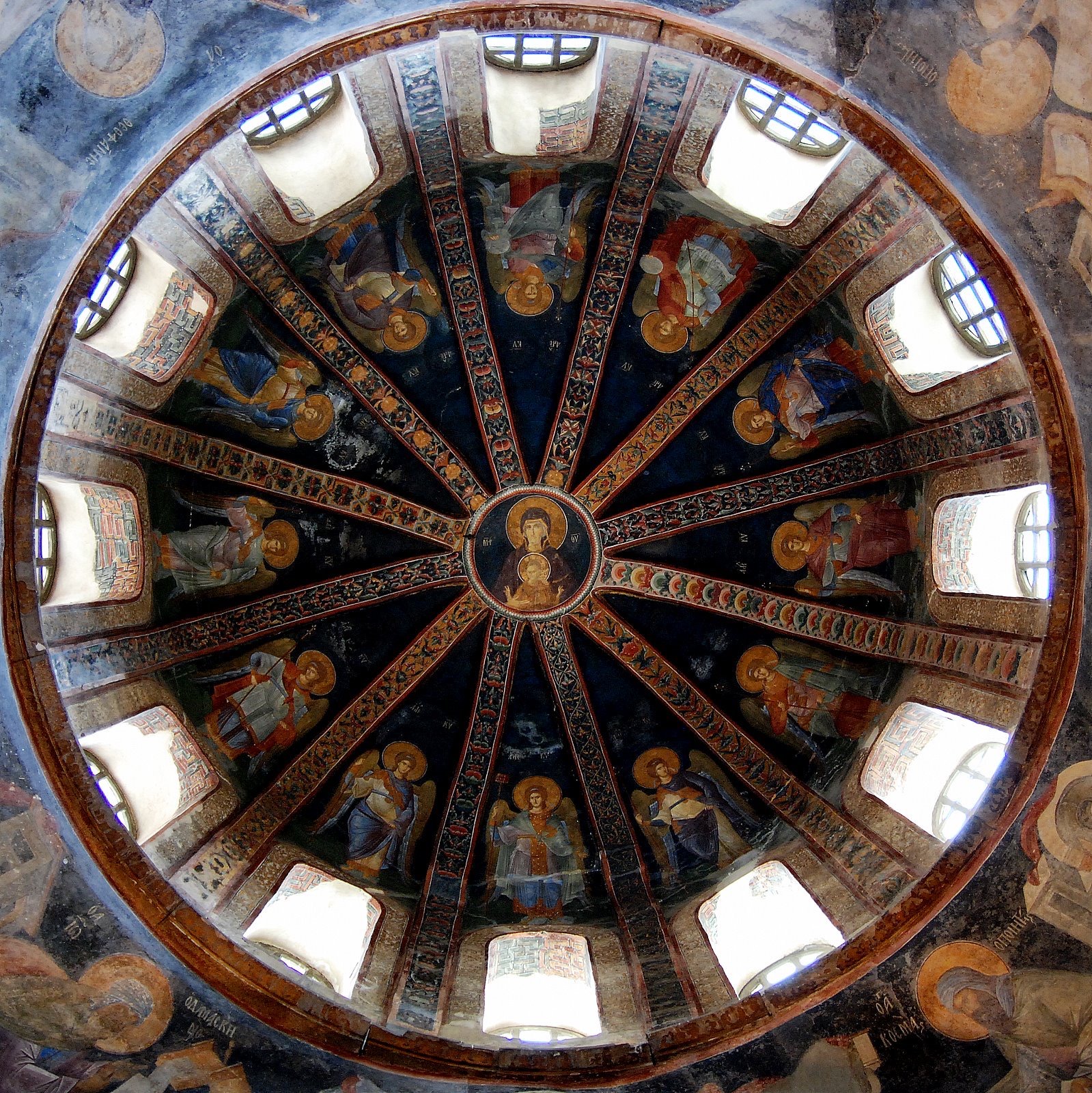
Dome over the Side Church (or parecclesion), Chora Church


We missed being able to visit this remarkable place by a day! Sadly, after staying in Istanbul for four nights, the historic Chora Church that had undergone four years of renovation would not reopen until the day after our departure.

Dating back to the time of Constantine in the early fourth-century, the Chora Church was built as part of a monastary outside the walls that were constructed when Constantinople became the new capitol of the Roman Empire in 330 A.D. Its rural location led to its formal title, Church of the Holy Savior in the Country (or Chorai, in Greek).

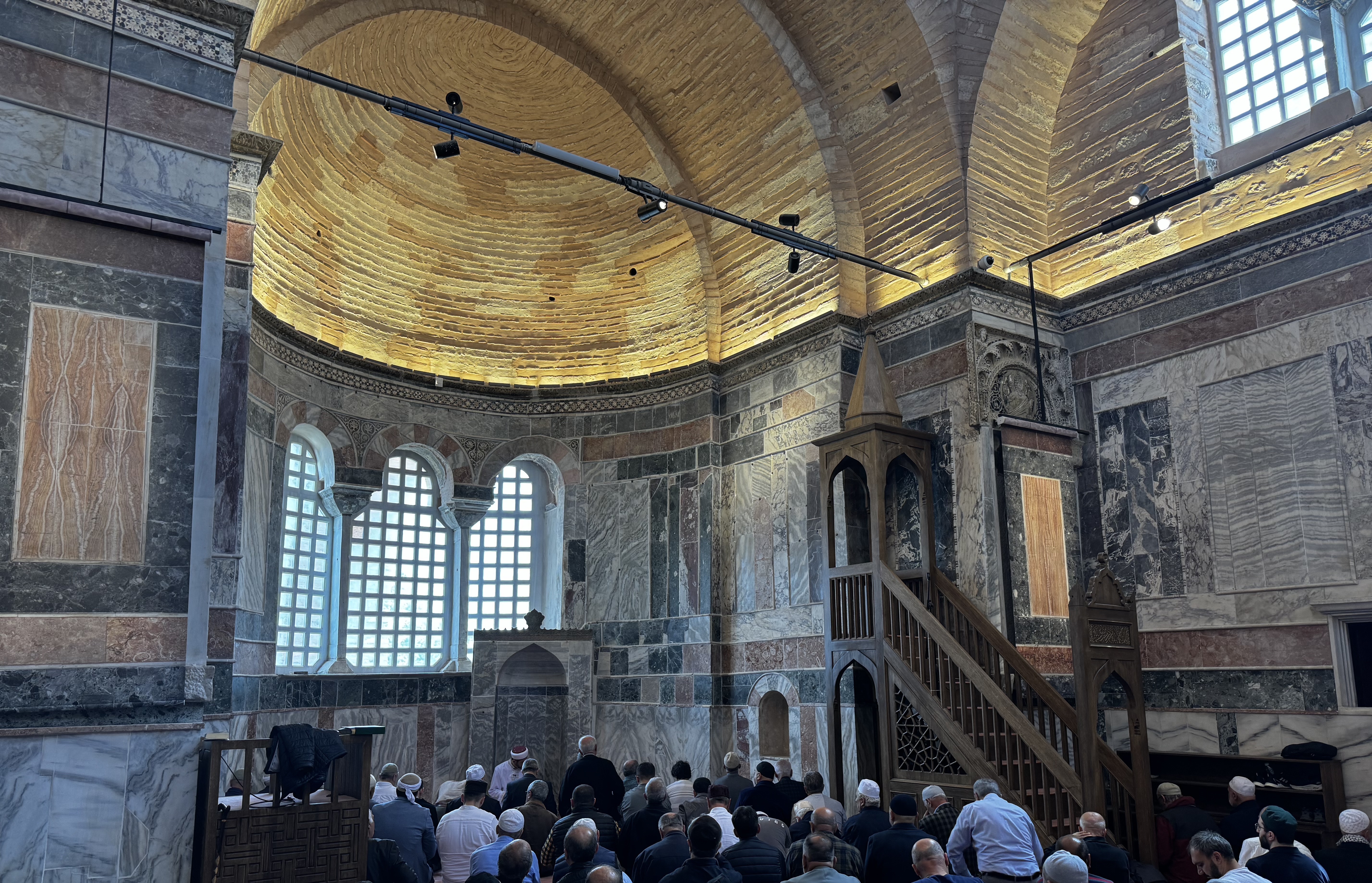
Interior of the original central nave (naos) in use as a mosque, with Christian mosaics and frescoes covered over

Chora, like the later Hagia Sophia, has over its history served as a church, a mosque, a museum, and now once again as a mosque. As I have noted in prior posts, the fact that buildings like Hagia Sophia and Chora have been able to transition from church to mosque without significant structural change helps us perceive how what became normative in mosque architecture had its origins in churches from the early Christian, pre-Islamic era. As a precursor to Hagia Sophia, the original walls of Chora may provide one of the earliest examples of what would develop into the cruciform plan for churches, a design pattern that became predominant in the Christian East. This approach to design for worship spaces is centered on a square, covered by a dome, a departure from the early rectangular basilica plan favored in the western Roman region.

Floor plan of the Chora Church

In the floor plan above, note the subtle Greek Cross pattern of the central nave (or naos) below the large dome. As this plan indicates, the original, late Classical period Chora was significantly expanded during the Byzantine period, between the 11th century and the 14th century.

Section drawings of Chora Church showing the location of some murals and frescoes

In addition to its cruciform plan, and the church’s great antiquity, another feature that distinguishes Chora is its impressive collection of well-preserved Byzantine mosaics and frescoes, largely from the early fourteenth-century.

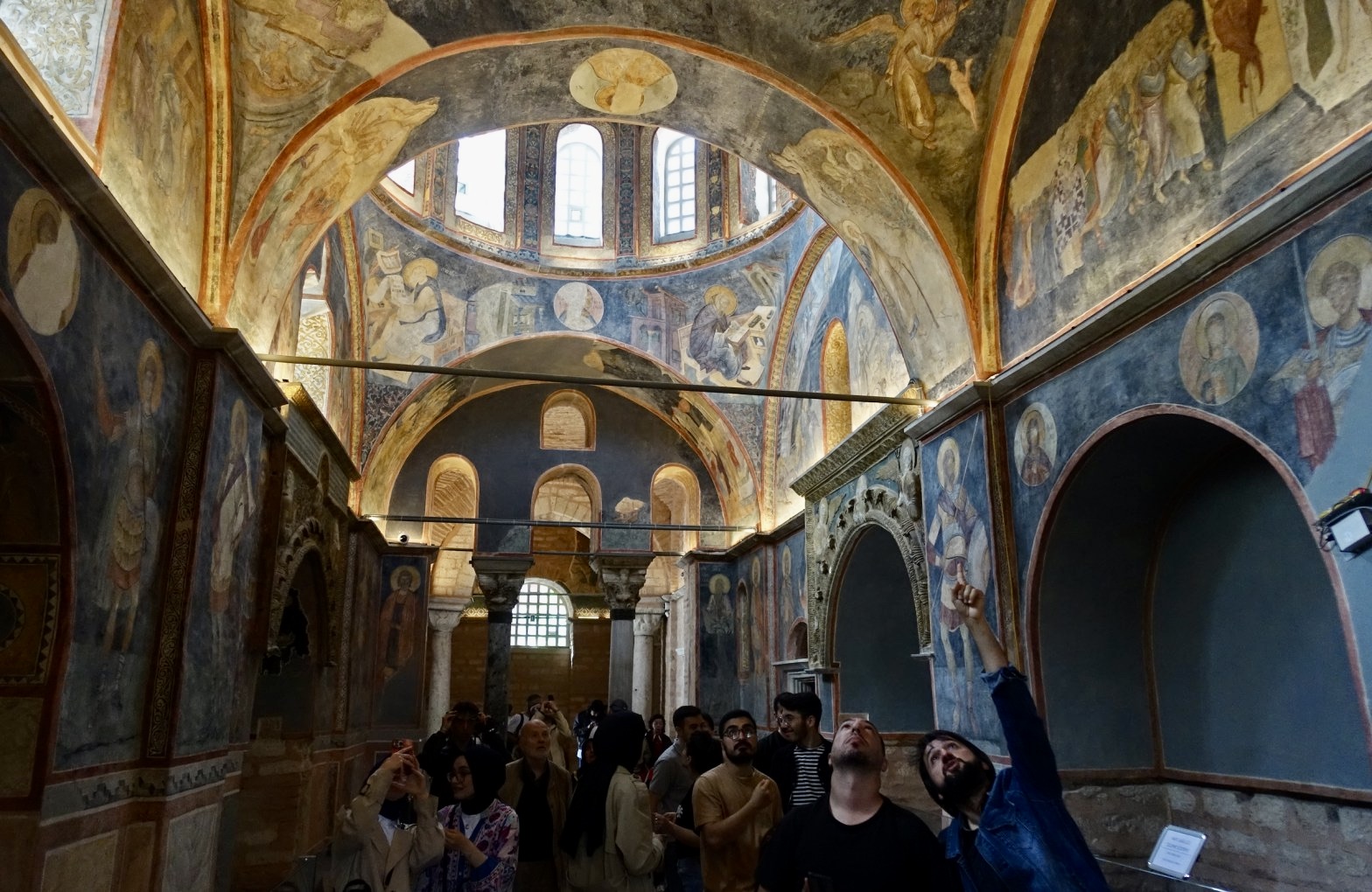
Visitors to Chora admiring the murals in the Byzantine-added “side church”

The bulk of the surviving mosaics and frescoes are located primarily in the side church (or parecclesion). This may be due to the central nave or naos having been used for Islamic worship during a significant portion of the building’s history. One of the many beautiful frescoes depicts a common theme found in works of art from the Christian East, that of the Harrowing of Hell. Images based on this theme depict the Christian belief concerning the first saving actions of the Risen Christ: pulling Adam and Eve out of their tombs and the clutches of the underworld (image below).

A fresco in the Side Church – Anastasis (or Resurrection): The Harrowing of Hell

A beautiful example of the Chora mosaics depicting Joseph and Mary’s enrollment for taxation in Bethlehem

Interior view of the side church

Like the later Hagia Sophia, Chora Church – for a time as a museum and now a mosque – still serves as an edifying spiritual place for Christians and people of other faiths to visit. For Orthodox Christians in the East, Chora’s numerous mosaics and frescoes provide multiple opportunities to (re)engage with biblical stories and with articles of faith in a way that the contemporaneous art in the much larger Arena (or Scrovegni) Chapel in Padua, Italy, provides enrichment for Western, Latin, Christians.

Exterior view of the southeast corner of Chora Church (note the later addition of a ‘flying buttress’)

A 1903 photograph of the west entrance to Chora in the late Ottoman period


Pentecost: The Beauty of Unity Amidst Diversity

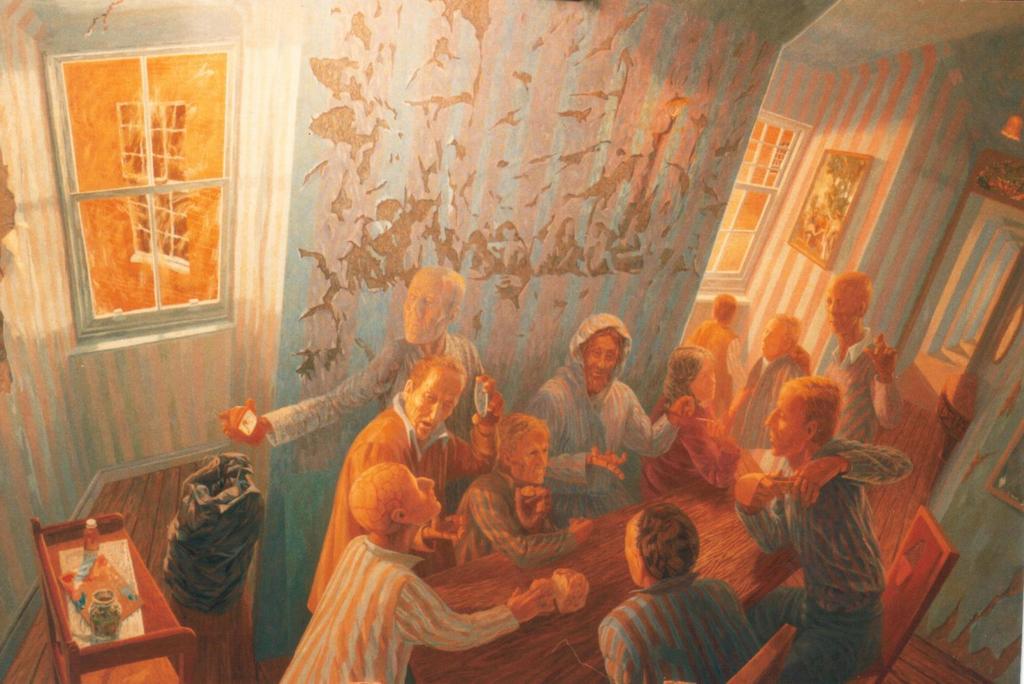
Peter Warden, Pentecost (1985)


Paul’s stirring words to the Ephesians assert an abiding truth: “There is one Body and one Spirit; there is one hope in God’s call to us; One Lord, One Faith, One Baptism, One God and Father of all.” Paul was focused on the God-given and true things that unite us, that hold us together, and which give us life. Yet, in contemporary American culture, everything now seems to center on how we differ from one another. How might we hold both insights together?

Some years ago, I discovered Peter Warden’s wonderful contemporary painting about the post-Resurrection Pentecost event, which reflects the presence of such differences among us as people. Warden’s painting is based on the well-know story from Acts, chapter 2. The painter portrays the disciples together in their upper room retreat. But, in this case, the first Christian community is gathered in a 20th Century Scottish attic! The painting seems to capture the disciples just at the moment when the mighty Spirit-wind and tongues of fire appear. In other words, the disciples – as Warden depicts them – are not yet bound together, and not yet ready for mission.

Though they are in the same room, these disciples show few signs of unity. They react against one another, as much as they may talk together. Notice how this is suggested by the alternating warm/cool color palette that Warden has used. We also want to notice the suggestively peeling wallpaper behind the group. Can you see the pattern that the artist has created with the lower part of the rendering of the wallpaper?

If you look closely, you can see how Warden has used his depiction of that scrappy wallpaper to suggest Leonardo Da Vinci’s famous painting of the last supper. Da Vinci’s painting has also suffered the fate of being on a peeling wall. Peter Warden portrays a group of people with a shared history, who were brought together by Jesus at their earlier supper with him. But now, after his death, they find themselves regressing, regressing to their before-knowing-Jesus identities, and falling back upon their differences from one another.

Yet, as the painting’s title suggests, in just this moment God’s Holy Spirit finds them. Just as, through the Church, God’s Spirit finds us. When God’s Spirit finds us, we are grafted into the Body of Christ. In the process, we come to perceive who we really are. For we receive a new baptismal identity in Christ.

Our new identity builds upon and transforms the uniqueness of our natural, biological-identity. Our baptismal-identity emphasizes a new way of seeing ourselves in relation to others. Now, we also celebrate what we share and have in common, rather than simply emphasize our practical awareness regarding how we are unique and different from others.

Through hearing and reading Scripture, and in our fellowship with others in Jesus’ beloved community, we learn something very important. It has to do with this matter of our identity. We learn that the “Who am I?” question cannot rightly be answered apart from the “Who are we?” question. And, in turn, the “Who are we?” question cannot rightly be answered apart from another question: “Who are we made to be?” Once we ask, “Who are we made to be?”, we are on the threshold of discovering, perhaps for the first time in our lives, who we are meant to be and become, both as individuals, and in community.

Here is the truth of the great feast of Pentecost: God’s Spirit has come down! God’s Spirit has come down upon, and within, people who are sometimes alienated, and who often fall short of God’s mission. Preoccupied with ourselves and our own pursuits, we are gifted with the experience of transformation. We are drawn into relationship. As we are, we find meaning and we find purpose. We discover who we are, as we discern what we are called to be and do together. The mission of God brings both mercy and meaning. In it, we discover a shared life in God’s Spirit-shaped Kingdom.

John Nava, Pentecost, 2012


The quote from Ephesians is from the Book of Common Prayer Baptismal Rite adaptation of Ephesians 4:4-6. I have featured Peter Warden’s Pentecost painting once before, though without reflective comment, in a post offering Family Devotions during Covid, on May 30, 2020.

Further note: last week I was fortunate to walk down the same central street in ancient Ephesus upon which Paul surely often walked, while – according to Acts – he was there for two years. In writing the words quoted above, Paul was likely responding to the Ephesians’ devotion to the fertility mother goddess, Artemis, and the great temple they had built in dedication to her.

Pointing Toward Perception

If reading this by email, please tap the title at the top to open your browser for the best experience. Then, clicking individual pictures will reveal higher resolution images.


We live in a world filled with “data.” Disconnected bits of information, especially in great quantity, overwhelm our ability to see and to think. Accumulating additional data or more information does not produce knowledge. Knowledge has to do with seeing the connections between bits of information. When we see the connections, we begin to see a picture, we begin to hear a story, and we gain understanding as well as wisdom.

The unrecognized fellow traveler on the road to Emmaus asks the two disciples, ‘what are all these things you are talking about?’ The answer he receives from them amounts to information. But his question is pointed toward understanding, especially in relation to ‘the big picture. He is challenging them to discover something bigger. He is really asking something like this: ‘All these things’ that have happened… What do they have to do with what God has been up to, all along?”

Here is a basic Christian truth that we find in the Emmaus Road story: Things take on meaning in relation to the risen Jesus. It happens when we see events in our lives in relation to him. It happens also with things like bread and wine as we gather at table. And it happens with people like you and me as we gather in community.

Jesus helps our perception on the road to Emmaus, and reveals something even more profound at the inn. This ‘inn,’ unlike the one where he was born, has many rooms, many mansions. When we see things like past events and the bread in relation to him, we discern more about what they were or are, and what they yet can become. When we see ourselves in relation to him, we better discern who we really are, and who we are called to be.

Prayerfully, we can look around, between things, and within. We can look for the connections. When we do, we see and discern. We see more because we see more wholly. Then we see the holy.


The above painting, Supper at Emmaus (1958), is by Ceri Richards, and is used by permission from the Trustees of the Methodist Modern Art Collection (UK). The penciled notation at the base of this guache painting on paper suggests that it was intended as a study for an altarpiece painting for the chapel of St. Edmund Hall (or College), at Oxford, England. The Emmaus story can be found in Luke 24:13-35, and it is a traditional Eastertide Gospel reading.

This post is adapted from one first published in 2014.

The Believing Eleven

If reading this by email, please tap the title at the top to open your browser for the best experience. Then, clicking individual pictures will reveal higher resolution images.

Peter Paul Rubens, The Rockox Altarpiece, 1613-1615 (center panel)


It is evening on the day of Resurrection-discovery. John tells us that ten of the disciples are hiding behind a secured door out of fear. Judas is deceased, and Thomas is away.

Jesus suddenly appears to the unprepared disciples, and shares with them his peace. He shows them his hands and his side, and then – as a direct consequence of seeing the places on his body associated with his death – the ten disciples rejoice when they see their Lord. In other words, their recognition of him, and that he was somehow alive again, brings them joy by restoring their belief in him.

When hearing this story from John’s Gospel on the second Sunday of Easter, we may be prone to considering it apart from what happens just before it. The disciples, who are hiding out of fear, have already received an eye-witness to the resurrection of Jesus. Mary Magdalene, to whom Jesus revealed himself at the tomb that morning, had come and told the ten the Lord was alive, and that he had appeared to her. Clearly, and prior to Jesus’ unexpected appearance, the ten disciples are still doubting her personal witness. Even after receiving what should have been trusted testimony from Mary Magdalene, a fellow follower of Jesus.

So why – in popular imagination – isn’t this well-known Gospel reading from John 20 commonly referred to as the “doubting disciples” reading? Why should Thomas be singled out, when his joyful recognition of the risen Jesus depended on nothing more or less than what the 10 had needed, and received, before him?

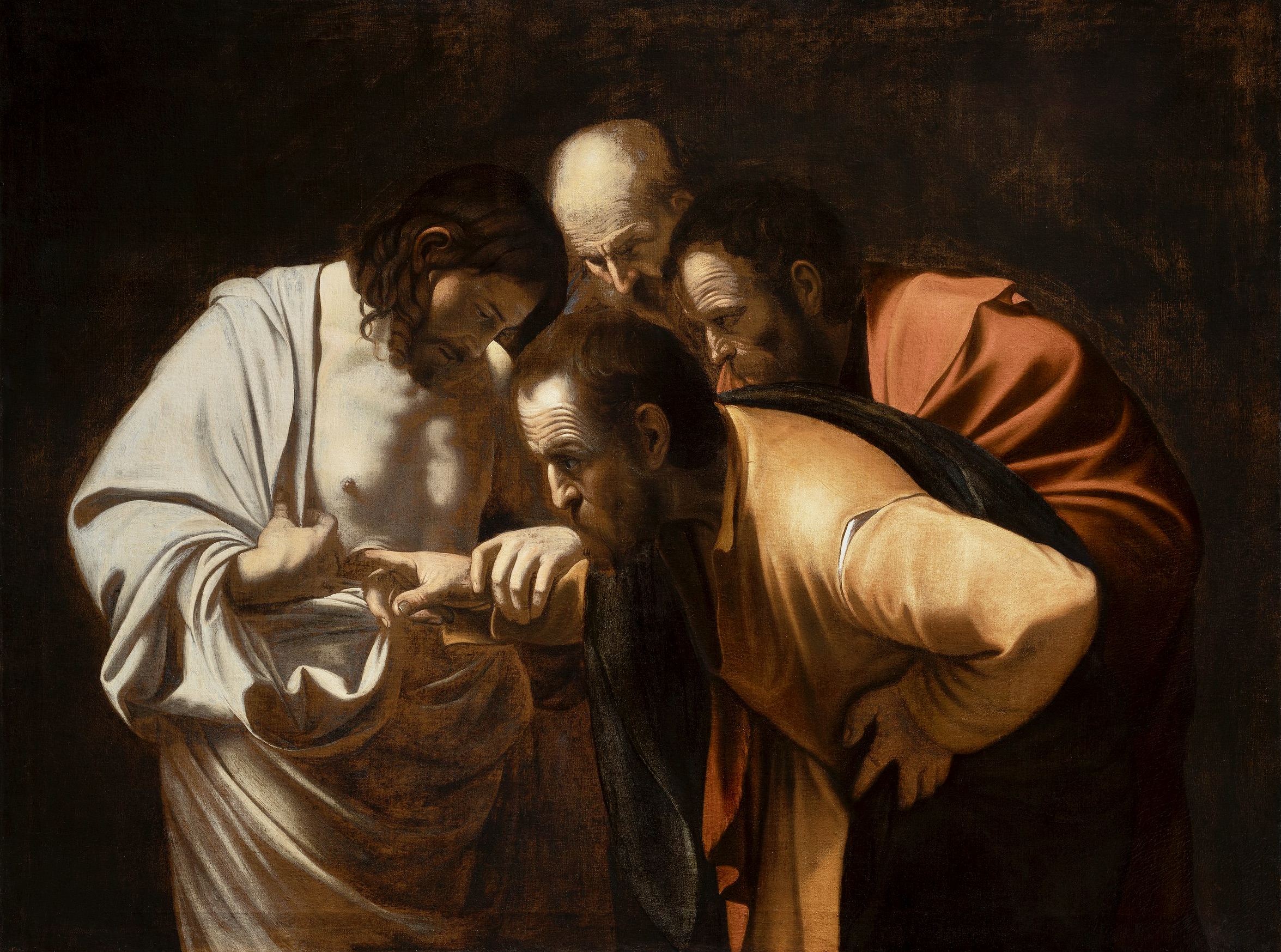
And why have so many painters in the Western tradition privileged Thomas’ purported unbelief in the Risen Lord, rather than depict the earlier reluctance of the ten others to arrive at joyful confidence about the Lord’s astonishing return? Apparently, in many painters’ eyes (especially Caravaggio), more visual drama was to be found in images of a doubter’s hand placed within an open wound.

Caravaggio, Doubting Thomas, 1601 (a famous traditional presentation of the event in John 20)

A further detail to notice, which our familiarity with so many paintings helps to obscure, has to do with how Thomas responds to Jesus. According to John, Jesus appears to the not-yet-believing ten, and – unbidden – shows them his hands and his side. Seeing the traces of his wounds on his risen body brings them joy. Jesus then appears unexpectedly a week later, this time showing himself to the one not present on the prior occasion. And just as he had done previously, Jesus offers Thomas the same opportunity he had provided to the others.

We should therefore not be misled by Thomas’ oft-quoted comment to the other disciples, prior to his own epiphany, about what he needed in order to believe. According to the text, Jesus – upon appearing in the same house a second time – bids Thomas to touch him. Yet, Thomas immediately responds to Jesus’ words without any mention in the Gospel of him having physical contact with the risen Lord’s wounds. Jesus then asks Thomas a rhetorical question, “Have you believed because you have seen me?” Naturally, Thomas’ implied answer is ‘yes.’

For all these reasons, we will do better to find a different and more positive descriptive phrase by which to refer to this well-known passage from John 20. “Jesus meets the disciples according to their needs,” though wordy, would do better.

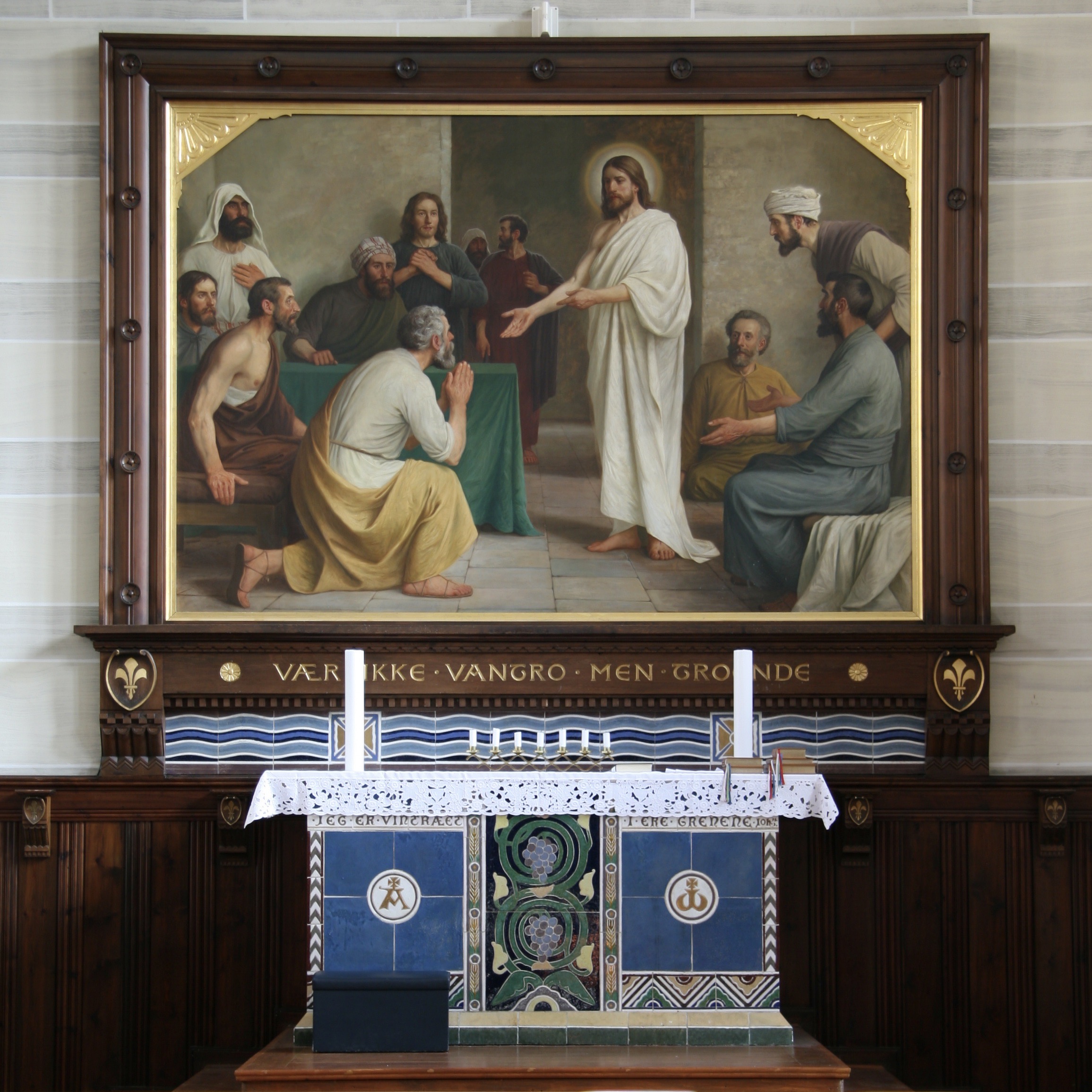
P. Steffensen’s altarpiece painting behind the altar of Zion Lutheran Church, Copenhagen


This post is based on the traditional Gospel reading for the second Sunday of Easter (April 7 in 2024), John 20:19-31. The story within it concludes with these words: “Jesus said to Thomas, ‘Have you believed because you have seen me? Blessed are those who have not seen and yet have believed’.”

Note: The altarpiece paintings by P. Steffensen and Rubens provide an interesting counterpoint to the prevailing tendency of painters to focus on Thomas placing his hand in the side of the Risen Jesus.


I Will Take You To Myself

If reading this by email, please tap the title at the top to open your browser for the best experience. Then, clicking individual pictures will reveal higher resolution images.

Fra Angelico, Noli me tangere


In the intimacy of his physical embodiment, the disciples and the holy women want to hold on to Jesus. It is the only way they have known him.

Mary is then found by the One she is looking for, in the garden by the tomb, on what becomes the Resurrection-discovery morning.

”Don’t try to cling to me,” he tells her, for he has not yet ascended to where he promises to take us.

We want to hang onto to how we have best known him. He promises to hold us to himself in what will be an even greater intimacy.

It is just beginning. Alleluia!


Jesus said to her, “Do not cling to me, for I have not yet ascended to the Father; but go to my brothers and say to them, ‘I am ascending to my Father and your Father, to my God and your God.’” (John 20:17)

“And if I go and prepare a place for you, I will come again and will take you to myself, that where I am you may be also.” (John 14:3)

Once and For All

If reading this by email, please tap the title at the top to open your browser for the best experience. Then, clicking individual pictures will reveal higher resolution images.

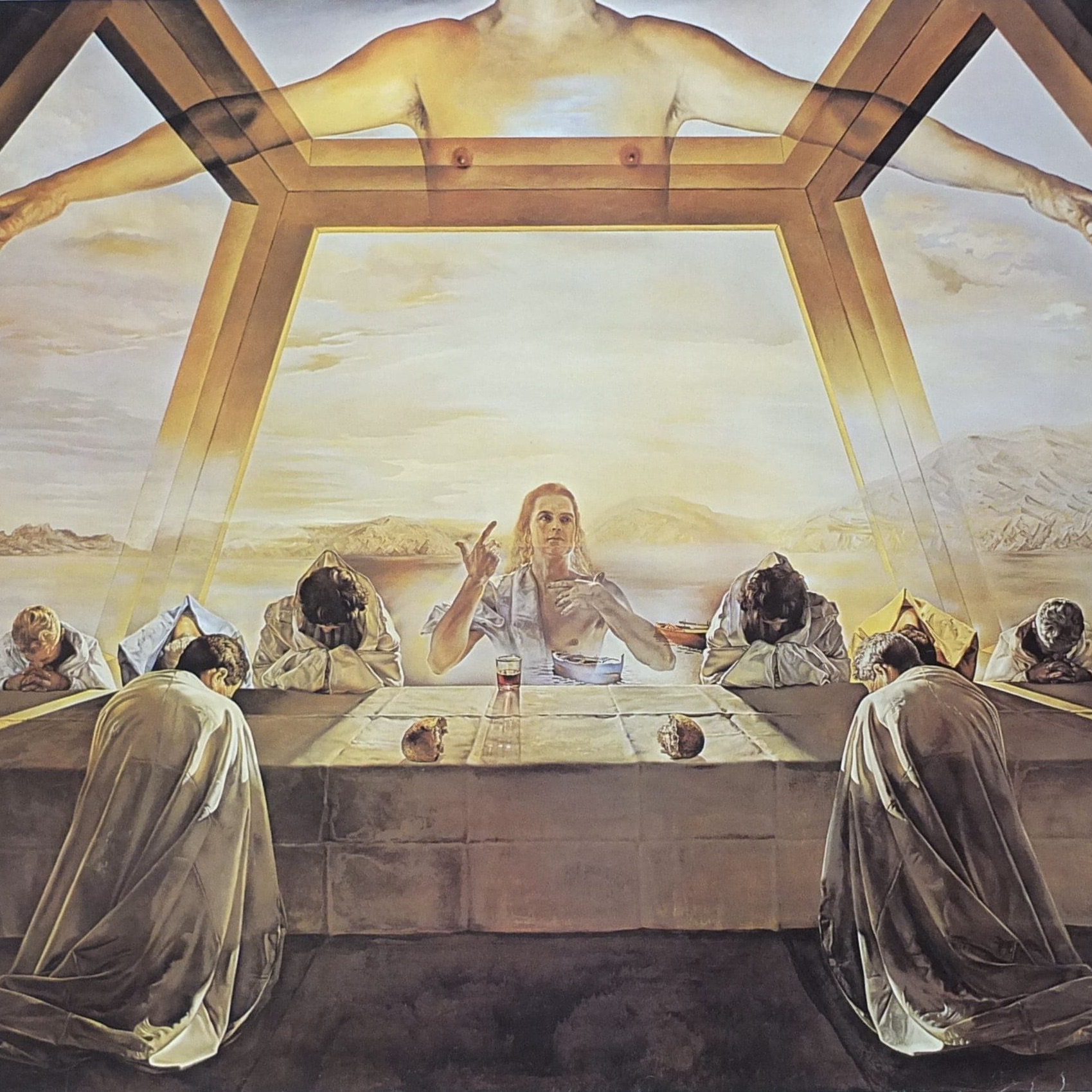
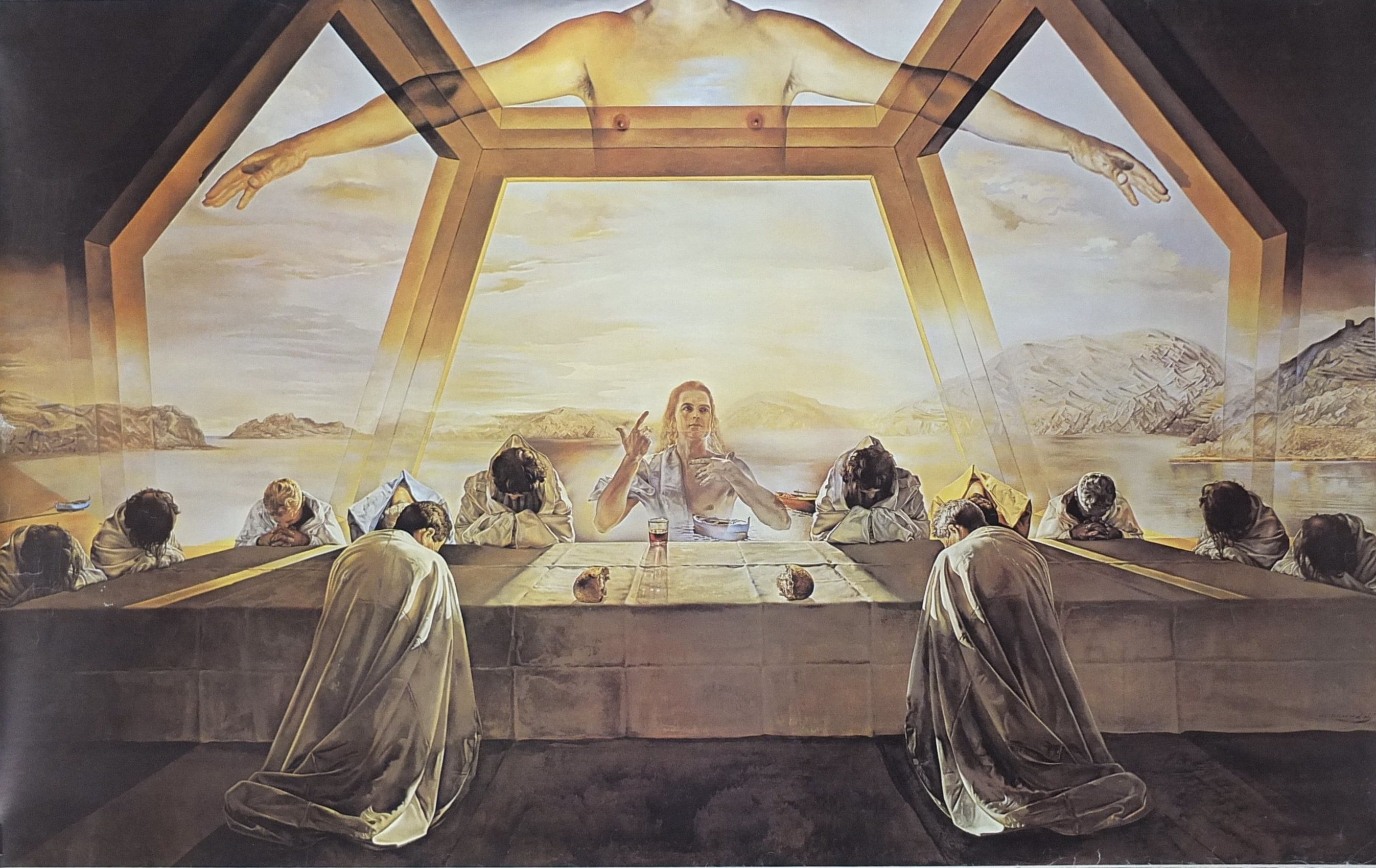
Salvador Dali, The Sacrament of the Last Supper (detail)


With his life, and in his death, Jesus offered himself. In accepting crucifixion, he offered himself and the whole Creation to the Father, in the Holy Spirit. He did this once and for all. Yet, in every Eucharist, and for all who remember him on any day, he continues to make present and real in our experience what he did, once and for all.

He acted, once and for all. Yet – and this is the paradox – he still acts for all… for all time, for all places and things, and for all people. What he is still doing now does not in any way signal an incompleteness to what he did then. For he continues to offer the gift of including us in what he did then, when he did what he did, once and for all.

So what does it mean for him to include us now, in what he did then? That is the question for the holy three days of our Paschal Triduum, which begins on Maundy Thursday evening.

One way into the many answers to our question can be found in Salvador Dali’s painting, The Sacrament of the Last Supper. It is not a painting of, or about, the Last Supper. Instead, this is a painting inspired by the Last Supper, and by what it came to mean in the broader context of all that happened during those three days. For the painting is about the sacrament in which the Risen One now makes present the result of what happened on the Cross, in the Resurrection, and with the descent of the Holy Spirit.

The Book of Common Prayer service for Good Friday is in fact not a Eucharist, just as the Last Supper in that Upper Room was not a Eucharist. The Last Supper prefigured the Eucharist, but could not have been one. For Jesus had not yet died, nor yet Risen from the Tomb, and the Spirit had not yet descended at Pentecost. And neither are the sacramental services on Good Friday intended to be Eucharistic celebrations. For in the wisdom and tradition of the Church we do not celebrate the Eucharist on this most holy day, though we may receive the fruit of it, and all its benefits, when Communion is offered to us.

Instead, all our focus is upon Him, who died and rose again for us, once and for all.

These are some of the reasons why Dali paints the disciples as recognizable, physical, and historically-anchored, people. And why he yet paints our Lord as present in his mystical risen glory.

We gather in his name and in his presence on particular occasions, in particular places, at particular times. Yet he is now present at and on all occasions, in all places, and at all times. We – who are rooted in time and place – receive him who transcends and yet is present within all times and places. Grace infuses nature. The timeless One imbues time with glory.

The Sacrament of the Last Supper (full image)

On the cross, Jesus lifted up the whole Creation to his – and now our – Father, once and for all. Just as he lifted up our human nature in his Ascension, which in a sense then became our Ascension. And yet, he continues to lift up the whole Creation – including us, and including all the uncertain and unfinished aspects of our lives. So, the One who is the source of all purpose and meaning continues to bring meaning and purpose to us, and to all that we lay before him, here and now. Time and again, he brings completeness and wholeness to all that is lacking, so that we might live more fully in his glorious fulfillment of what it means to be human. For all this, we offer our deepest thanks and praise.

May these ‘holy three days’ (Maundy Thursday evening — Easter Eve) in the Church’s Christian observance of Passover be a time of blessing for us and our loved ones.


This post is adapted from my (2024) homily for Good Friday, which may be accessed by clicking here.

Note: blog settings have been changed to provide more opportunity to offer comments, using the link below.


Thankful for a Holy Place

[If reading this by email, please tap the title at the top to open your browser for the best experience. Then, clicking individual pictures will reveal higher resolution images.


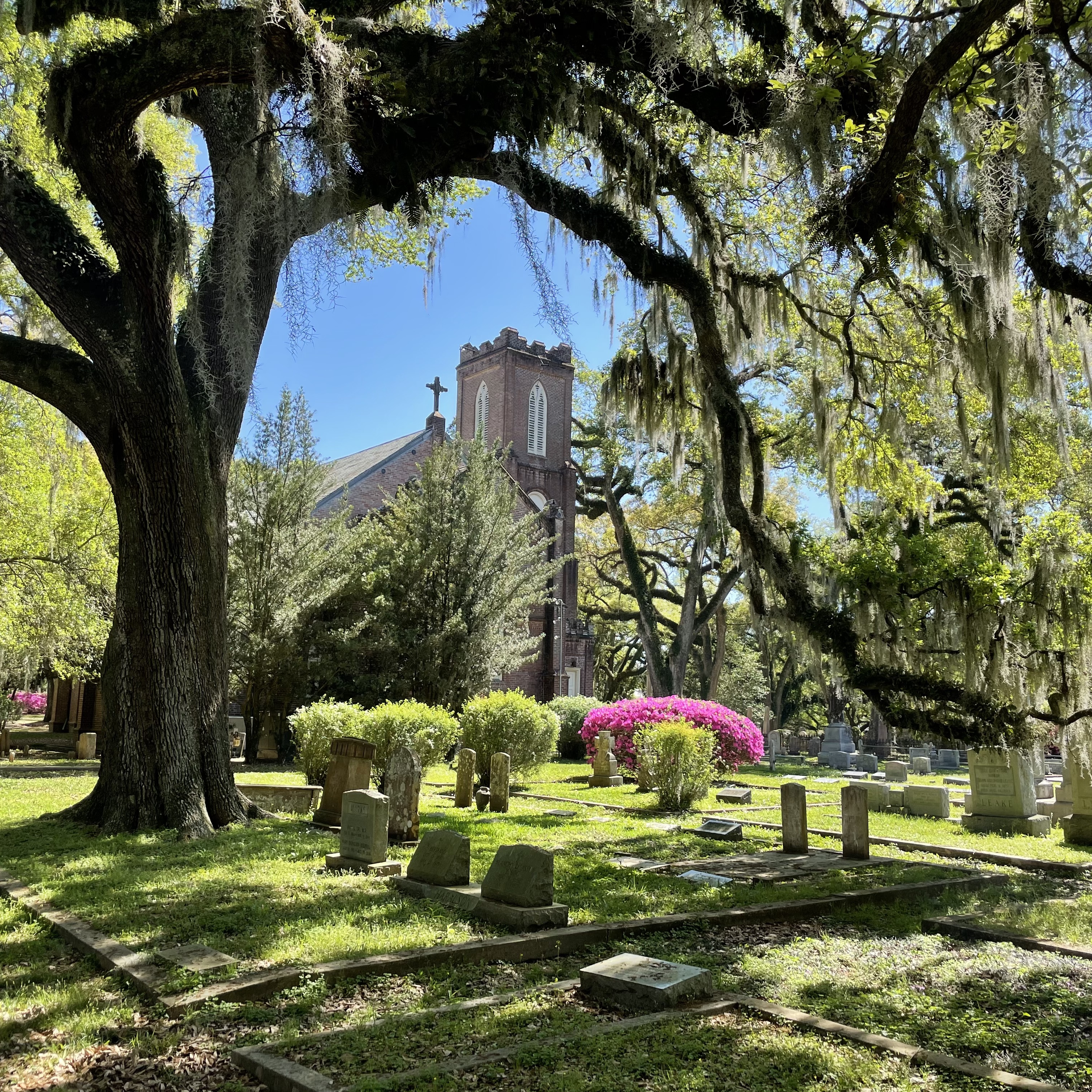
One of my joys in retirement is once again to live near and be able to serve occasionally at Grace Church in St. Francisville, Louisiana. For many years it has been a ‘home away from home,’ not least because our three sons and their families live not far from it, and because many dear friends are members of the congregation and in the community.

Like so many, we are gathering this week with family as we celebrate Thanksgiving. High on our list of things for which we give thanks is having five of our granddaughters living within about a ten minute walk from our house, and our sixth granddaughter and her brother just a couple of hours away in New Orleans.

Among our grandchildren is one whose remains lie under one of the stones in our beautiful and historic cemetery. It is an especially meaningful place for us to stop and linger in the quiet, especially at holiday times like this. When in late 2007 I was called away to serve elsewhere, the blessed folks of Grace provided us with a burial plot in the rector’s portion of the cemetery. We give thanks for it as one of the most touching gifts we have ever received.

Some may have a hard time imagining how a cemetery, a place associated with death, could be replete with signs of life. And yet, it is. These evident signs of life transcend the presence of the church building and its related Christian symbols, like the crosses and inscriptions found on the monuments. I marvel at the live oaks with their long draping limbs, and how they stay green year-long, often supporting gangly strands of gray-green Spanish moss. More subtle are the fuzzy growths on the upper surfaces of those limbs, which appear to be a blend of moss and ivy. Their common name is resurrection fern, which in dry spells has an ochre color, but which then miraculously transforms into a deep green after an overnight rain.

My former church office looks out upon the cemetery ground in which are buried the remains of dear Lucy, a deacon our parish sponsored for ordination. Every time I walk the paths between alternating old and newer stones, I am mindful of her resting place and those of other friends and acquaintances, with whom we share in the communion of saints. Now, we also go there to visit ‘one of our own,’ in that most personal sense of the phrase. Some day, under one of these magnificent oaks, my remains, as well as Martha’s, will lie next to those of our granddaughter.

To muse upon these things during Thanksgiving week may strike some as dark and sad. Yet, a walk among the remembrance stones of this holy place reminds me of the life-giving texts we encounter every year on All Saints, and in our Eastertide lectionary readings. For, in one way or another, we are all called to visit that rocky ‘garden’ tomb, to find it empty and ponder its significance. There is undeniable beauty in the stories about what then became a holy place.

The beauty of the good news concerning that empty tomb is so much more than a wonder-story about a lucky man whose experience might inspire us. A man who, despite the worst that this world can do to a ‘good’ person, somehow managed to escape into something better. The Gospel story is also the ground for our hope, our hope for ourselves and our loved ones. Can that empty tomb then help us recognize how, in similar places reminiscent of death, we can find signs of new life? Yes. For our cemeteries are places where we seek to remember and honor our loved ones, with whom – in Christ – we are still connected. Here, in these places of burial, we can give thanks that through God’s love we are destined for more than we can now see or imagine.


The photo above depicts the cemetery of Grace Episcopal Church in St. Francisville, Louisiana. The church was founded in 1827, and the present building was completed by 1860. Three years later it was damaged by cannon fire from Union gunboats on the nearby Mississippi River, whose sailors were using our church tower to target the Courthouse across the street. (photo by Stephen Holmgren)

Transfigured By Beauty

[If reading this by email, please tap the title at the top to open your browser for the best experience. Then, clicking individual pictures will reveal higher resolution images.]

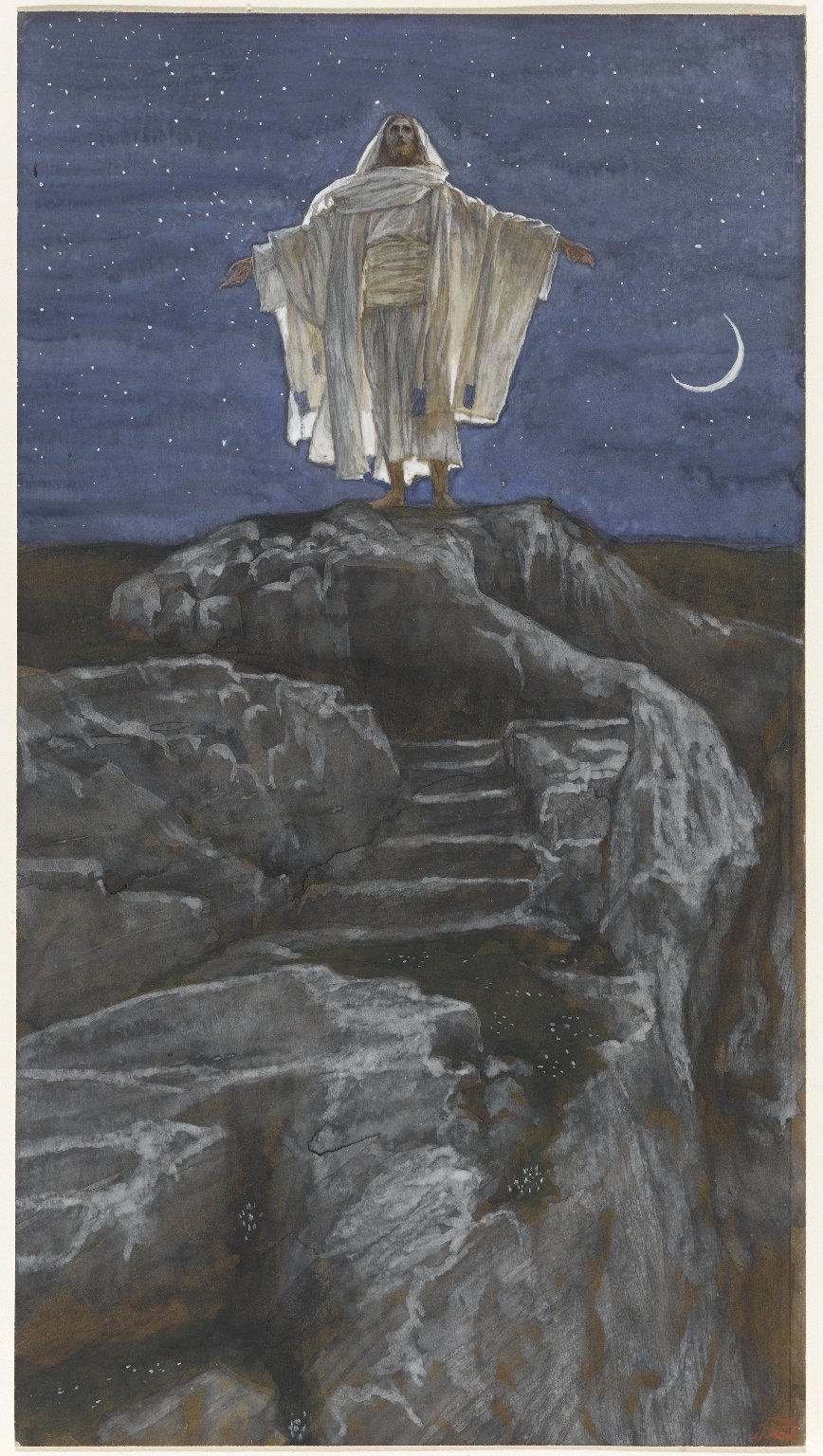
James Tissot, Jesus Goes Up Alone Onto A Mountain To Pray


In a painting whose title refers to one of Jesus’ common practices, James Tissot portrays him as caught up in prayer, an involvement he widely encouraged his followers to pursue. Regarding prayer, the Catechism in The Book of Common Prayer may surprise us. To the question, what is prayer, we find an answer which begins with these words: “Prayer is responding to God…” Jesus modeled a life wholly centered on responding to God, in heart and mind, in soul and body. On one occasion, he appeared transformed while at prayer. Over time, his followers discerned how God was fully present within him.

The story of his Transfiguration on a high mountain, reported in the first three Gospels and commemorated this past Sunday, provides a narrative demonstration of this truth. What Tissot depicts regarding Jesus when alone at prayer was later revealed semi-publicly on that mountain in the company of Peter, James, and John, as well as with the heavenly apparitions of Moses and Elijah. It was then fully revealed in Jesus’ Resurrection appearances.

Exodus 24 provides the background for this, and tells us something astonishing: “Moses and Aaron, Nadab and Abihu, and seventy of the elders of Israel went up {Mt. Sinai}, and they saw the God of Israel.” In Exodus 34, we learn that when Moses came down from the summit, “the skin of his face shone because he had been talking with God. When Aaron and all the Israelites saw Moses… they were afraid to come near him.” The text suggests that Moses then started putting a veil over his face for the sake of those who were unused to, or unprepared for, the glory and power of God’s immediate presence.

Paul, in 2 Corinthians, extends and also alters this idea of the veil. Instead of it being a means to protect people from a direct encounter with divine glory, the veil has become in Paul’s letter a kind of impediment. When our hearts and minds are not open to God, nor sensitive to God’s power, we become hardened. We become hardened in such a way that our hearts and minds are veiled, preventing us from perceiving God’s glory.

But Christ has set aside this veil. As a result, “all of us, with unveiled faces, {see} the glory of the Lord as though reflected in a mirror (2 Cor. 3:18).” And weare being transformed into the same image from one degree of glory to another, for this comes from the Lord, the Spirit.” Through prayer, we also are transformed.

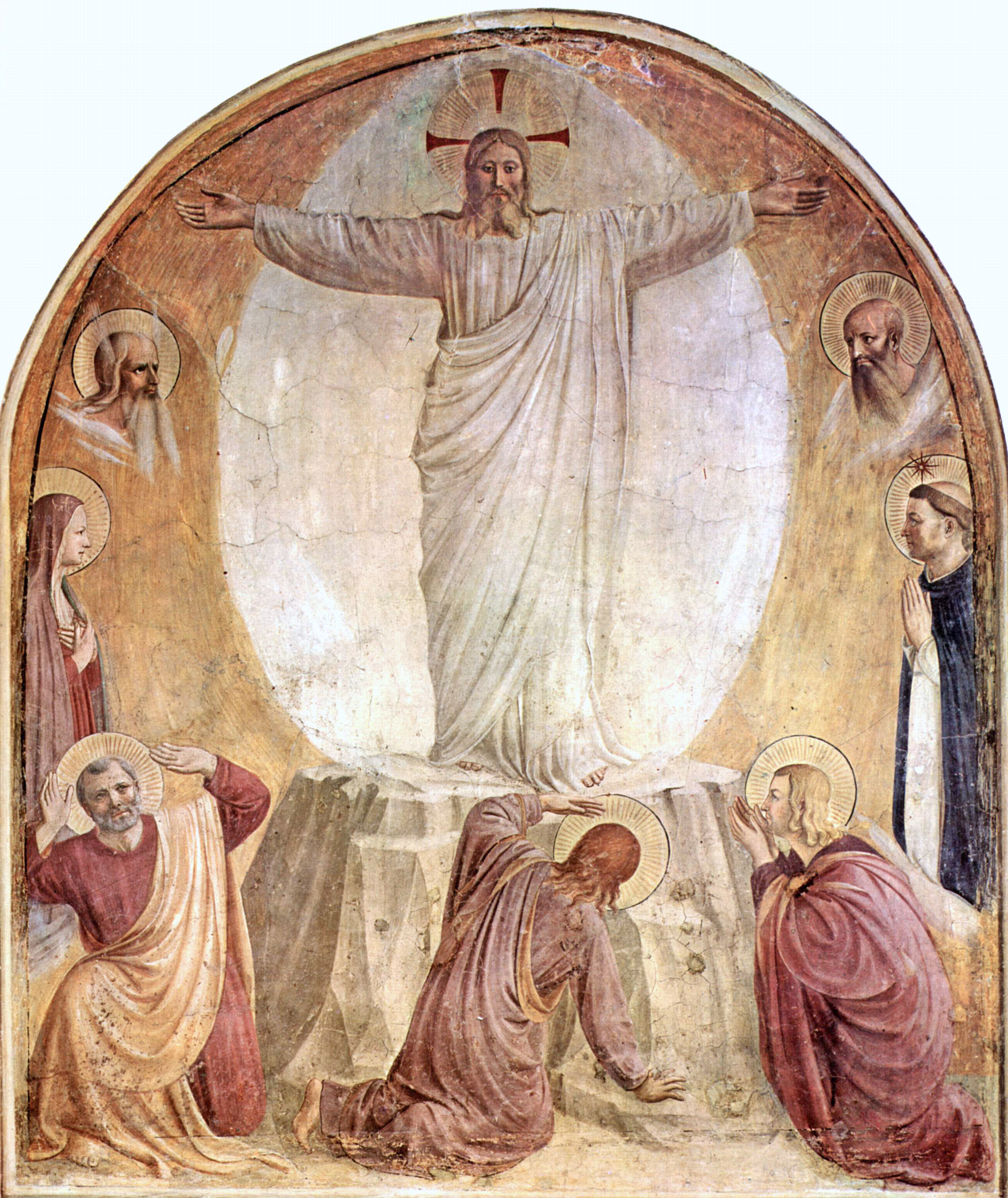
Fra Angelico, The Transfiguration (San Marco, Florence)

The Transfiguration of Jesus is all about the unveiling of God’s glory. Jesus takes Peter, John and James up with him on a mountain to pray. While he is praying, the appearance of his face changes, as does his clothing. In contrast with the Exodus and Pauline images of light shining on a surface, Luke presents God’s glory as coming from within Jesus. In other words, he radiates God’s glory rather than reflecting it. Luke tells us that Moses and Elijah, who appear with him, appear in his glory. This may mean that Jesus has shared his glory with them in a way that prefigures what he will share with all of his followers after his Resurrection.

This should lead us to ask a good question: If we feel like there is a veil between us and the divine presence, where does this veil lie? Does God ‘hide’ behind a veil, either to protect us, or challenge us? Or is the veil within ourselves, formed by our spiritual blindness and our lack of openness to how the Holy Spirit imparts glory? Paul suggests that our experience may be like that of the earlier Israelites, for whom hard-heartedness caused them to be blind to the bright light of God’s glorious presence, whether in Moses’ face or when reading and hearing the Law. Hard-heartedness can be equally blinding for us, veiling the glory that is all around us.

And where, according to Paul, do we find this glory? We find it in the faces of everyone who has been open to God’s transforming Spirit. In other words, we can find it in each other, as well as in ourselves. For this reason it can be like looking into a mirror, as the glory that we will perceive in others is the same glory that they can perceive within us.

The Mystery of Pentecost

[If reading this by email, please tap the title at the top to open your browser for the best experience.]

Giotto, Pentecost (Scrovegni (or Arena) Chapel, Padua)


Once again we turn to Giotto, who helps put a ‘human face’ on a supernaturally-charged event. As we observed with his fresco depicting the Ascension of Jesus, Giotto’s Pentecost painting evidences the influence of medieval and Eastern Orthodox iconography (e.g., the gold-leaf halos). Yet, his work distinctively moved away from a primary absorption with portraying aspects of the eternal so as to display an appreciation for daily human life and activity. One mark of this is his employment of architectural perspective in his composition of the scene. In addition, each of the faces in this Scrovegni Chapel fresco are recognizably distinct from one another, with some of them reflecting a genuine regard for individual personality and temperament.

Here we can also notice Giotto’s attention to the biblical text. This scene portraying the gift of the Holy Spirit follow’s Luke rather than John. In John’s Gospel, on the evening of the day of the discovery of his Resurrection – the Risen Jesus enters the private room where the disciples are hiding fearfully behind a locked door. He breathes on them his Holy Spirit and implies that his Ascension has already occurred.

Luke, as Giotto faithfully portrays, describes the disciples being gathered together 50 days after the Resurrection on the Jewish feast of Pentecost. As Luke reports in the last two verses of his Gospel, after witnessing Jesus’ Ascension the disciples “worshiped him and returned to Jerusalem with great joy, and were continually in the temple blessing God.” Luke then commences his second book, Acts, with a parallel account of Jesus’ Ascension, and the selection process of Matthias as a replacement for the traitor, Judas. Having returned joyfully to Jerusalem, the disciples have been visiting the Temple daily, where they blessed and worshipped God in a public setting.

Luke’s Pentecost assembly differs markedly from John’s account of the fearful disciples on the afternoon of the first day of the new week, forty nine days before. For on Pentecost, into their midst and visibly upon their heads, came the Holy Spirit filling each of them with its power and presence.

Many visitors to Jerusalem for the great feast became aware of what had occurred, and were perplexed, marveling at the unexpected spectacle of how each of them heard the men from the north country speak in their own separate and distinct languages. The legacy of the tower of Babel had been overcome.

Peter quickly helped account for what was happening in light of Scriptures familiar to those gathered, which were fulfilled in and through Jesus’ death and resurrection. God was now doing a new thing, yet something promised long before.

How contrary to the spirit of Jesus’ ‘high priestly prayer, in John 17, and to the witness to the power and presence of the Holy Spirit at Pentecost, is our frequent experience of the Church throughout the world in our present day. Despite moving words centered on unity and a commonality of mission that we hear and recite in the baptismal rite, we are more often confronted with evidence of difference and division among Christians of varying denominations and cultural backgrounds. Perhaps it is because we let our own concepts of our mission and ministries take precedence over our awareness of and belief in the primacy of Christ’s continuing mission and ministry.

And so, we forget to marvel at what came about through the embodied presence of God. A divinely appointed and inspired country rabbi, who had recruited 12 unlikely followers, met persecution and a tragic death at the hands of a corrupt earthly empire. Yet, in the power of the Holy Spirit, over the course of a few centuries he transformed a sizable portion of the known world into the New Israel, his beloved community and family.