Christmas

Learning from Mary’s Attentive Openness


Perhaps people living at the time of our Lord’s first coming were in some important ways like us. They may have been just as prone to orienting their security and sense of wellbeing around material concerns, while being generally indifferent to the spiritual life. Yet, in this season of Advent when many sing “O come, O come Emmanuel,” it is easy to imagine the people of Roman-occupied Palestine crying out with longing for the God of Israel to draw near in power. Even so, God chose an out of the way place in which to appear among us, incarnate in human form. Paradoxically, for this and other reasons, the arrival of the Holy One was largely overlooked. At least until his person and message provoked enough reactivity to cause the authorities to have to deal with him. Otherwise, the periodic waves of public attention that he received were most often inspired by the miraculous works of mercy attributed to him. While he encountered significant examples of deference to the revealed Law among his contemporaries, lived-adherence to God’s hope-shaping promises appeared to be rare.

This is why the Lectionary features a particular aspect of the Christian Gospel story at this time of the year. It does this by presenting some notable counter-examples to what may have been – in the first century – a widespread indifference to or loss of confidence in God’s promises. We learn about Zechariah, the father of the ‘forerunner,’ John the Baptizer, and about Elizabeth, John’s mother, who was a cousin of Mary and another woman that would bear a promised child. These three stand out for having been open in heart and mind to the heavenly glory that God was about to reveal in the midst of the lives of his wayward children.

In particular we remember the spirit of attentiveness that we find displayed in a third aspect of Mary’s response to God’s call through the Angel Gabriel. God’s call often challenges us to live in a different way; or to try and be a different person, especially in our relationships with our family, our friends, and those with whom we work. Receiving this call, we can react at first in fear at what this call will mean in practice. We can also respond with uncertainty, wondering about our worthiness or suitability for what God may have in mind for us. We have reflected on these themes in the last two web posts on this site.

But we can also see that —in faith— we are able to go into the heart of our fear, and find God’s power. Receiving God’s grace, we may move beyond relying on our own strength, and resist depending upon our estimate of our own abilities and worthiness for what God may have in mind. And we can choose to respond to God’s gracious invitation to participate in the Spirit’s redeeming work, just as Mary did, by saying, “Yes!” As John Lennon so simply captured the spirit of it, in the words of his famous song, “Let it be!” As Mary said to God through the Angel, “Behold the handmaid of the Lord; let it be unto me according to thy Word.”

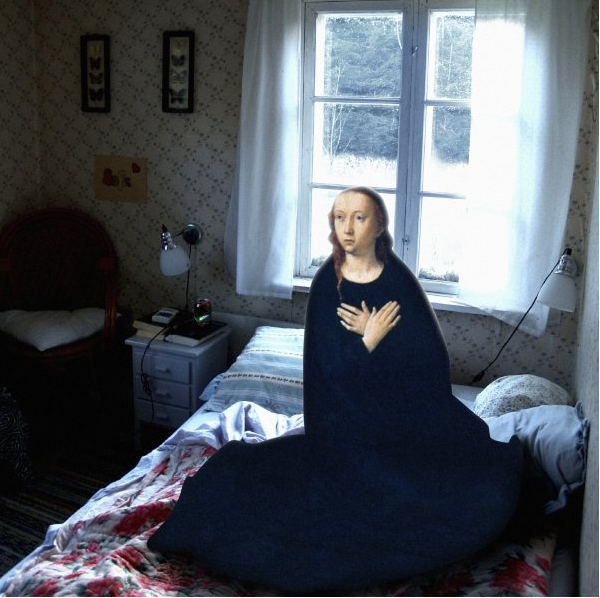
This is the spirit of Mary’s response to the message of the angel as portrayed in the third image I am sharing with you this Advent ~ Trygve Skogrand’s photo-collage, pictured above. The artist has skillfully placed a traditional painted figure onto a contemporary scene, juxtaposing an image of something old within a contemporary setting. We see a simplicity and spirit of humility in Mary’s posture, as she kneels in her plain gown. In the plain ‘bed-sit’ room in which she prays, we notice her uplifted eyes. They are now focused on the divine source of the message she is receiving.

Attentiveness is key to meaningful perception, just as we find in the Gospel reading for the third Sunday in Advent. John the Baptizer sends his disciples to Jesus with what should be our most persistent question ~ “Are you the One?” ‘Are you the One for whom we are looking, and whom we are awaiting?’ Notice Jesus’ response: “Go and tell John what you hear and see…” For they only hear and see if they are attentive. This is one reason why the Church sets aside this season of Advent ~ to encourage our attentiveness, so that we can hear and see, and then accept God’s Word to and for us.

“Let it be as God would have it.” Let things be as God wills. Let God be God! Perhaps nothing will be so hard in our lives, as to say those words in faith and in humility. Our pride objects. Our desire to be at the center of reality intrudes. But to say, “Let it be…,” in faith and in humility, is to return to the grace of the Garden of Creation. And it is also to begin to live forward into the fullness of the Kingdom, manifest in the New Jerusalem, as God will have things be.


The image above is a detail of Trygve Skogrand’s photo-collage, Bedsit Annunciation (one of my favorite artistic renderings of the Annunciation). This post is based on my homily for the Third Sunday of Advent, December 15, 2019, which can be accessed by clicking here.

Being Open to God’s Word of Hope


We may remember some pivotal moments from within the sweep of the Old Testament: God’s call to Moses from within the burning bush; God’s call to Isaiah in the Temple; and God’s later call to Jeremiah. In each of these encounters, a divine invitation accompanied by a word of hope comes to those whom God calls to be prophets. When this happens, they react in a similar way. Each of them responds with fear, just like the reaction we saw last week in Simone Martini’s Annunciation painting of Mary’s encounter with the Angel Gabriel. In these call passages, we also hear about Moses, Isaiah, and Jeremiah responding in a related way: each of them is overwhelmed by a sense of unworthiness at being called to serve the Lord. For in our hearts and our minds, we as God’s people do not always hear or receive what the Lord intends to be a word of hope as a hopeful message. And when challenged to participate in God’s ongoing mission, we fear our inadequacy in being able to respond positively.

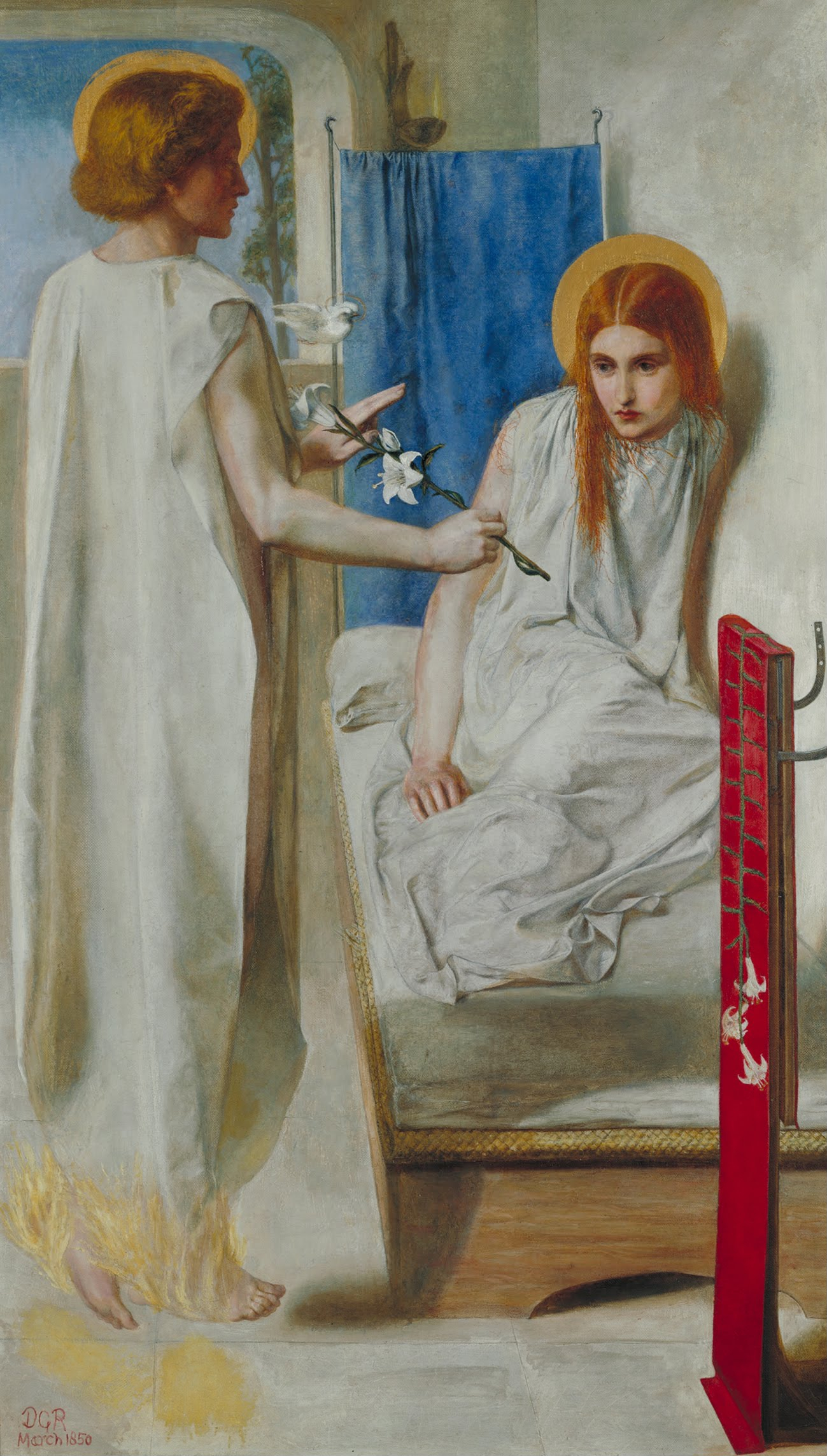
During this season of Advent I am once again reflecting on four Annunciation paintings. Here, I invite you to consider Dante Gabriel Rossetti’s depiction of the angel’s visitation to Mary, calling her to be a servant in God’s ongoing work of redemption. Observe how Rossetti portrays Mary’s response to the angel, and its contrast with Simone Martini’s painting (included below). In Martini’s Annunciation, we see an image portraying fear – Mary clutching the top of her cloak turning away from the angel and yet not able to take her eyes off the divine messenger. In Rossetti’s Annunciation (above), we see Mary looking in a different direction. Her gaze is off into the middle distance, and we can tell that she is not looking at anything in particular, ‘out there.’ Instead, she is looking within.

Here, we can make a common mistake, based on the self-absorption that is so much a part of the fallen humanity we share. For the angel’s announcement amounted to something even more dismaying than the news that Mary would bear a son as a result of this visitation rather than through the circumstances of a conventional marriage. That alone would cause confused wonder about how much this unexpected development would alter her life. But what we usually overlook is how she was being invited to become a feature in someone else’s story! As things emerged, the challenge of this momentary encounter did not so much concern how the coming of this child might alter her life, in part by diminishing her reputation. But rather, the real challenge came later as something else became clear. The coming of this child became the story for even more astonishing reasons. Mary then had to reckon with how her life and its circumstances would be significant for this child and the message of his story.

As the Annunciation helps us to perceive, when encountering the holiness, righteousness, and purity of God, we may experience not only fear about change that might lie ahead. Very likely we will also feel a sense of our own unworthiness. Perceiving the glory of God, we will become more aware of what within us falls short of God’s glory. When the Spirit invites us to experience a process of transformation back toward God’s own likeness, we are called to face and then set aside all that stands in the way of this positive change. In the Gospels we learn how God’s Word came through John the Baptizer’s ministry as a call to repent. We hear the same call to turn toward renewal in our own day. And – in the process – we learn how Mary and then the Baptizer responded. The story is not about us. It is about the Coming One.

Notice what Rossetti depicts in the angel’s hand. When inviting Mary to bear the Word of God for the sake of the world, the angel holds lilies. Lilies are a sign of the resurrection. We also see the prominent red sash that Mary may have been stitching. It bears an image of the same lilies, along with a vine that may recall the ‘Tree of Jesse’ motif (inspired by Isaiah 11). But here they are set against a red background – a sign of the passion that lies ahead. This suggests the path of suffering which the ‘Son of Man’ must walk so that we might experience the restoration and transformation of our fallen nature into his greater likeness.


 The image at the top is a detail of Dante Gabriel Rossetti’s painting, The Annunciation. This post is an adaptation of a post I first published in 2019, and is based on my homily for the second Sunday of Advent, December 8, 2019, which can be accessed by clicking here. Simone Martini’s Annunciation, referenced in the text above, is shown below.

The Beauty of Hospice Care

Faith Hospice at Trillium Woods

Having worked in a variety of church-related contexts for over four decades, I have become familiar with the importance of having a clear vision of one’s mission. In my experience, people are motivated by inspiring mission statements, and especially when they are enacted with cheerful efficacy. As advocates of Appreciative Inquiry maintain, a focus on what is working well builds energy and promotes a sense of well-being among participants.

As I reflect on the most compelling examples of institutions, facilities, or programs that I have encountered, the hospice movement in healthcare stands out. Whereas medical practice has increasingly become directed towards problem-solving and the alleviation of various conditions, along with our growing interest in future-oriented health maintenance, hospice care tends to be focused on a wholistic approach to the present well-being of a person. And I have found that hospice advocates and caregivers to be among the most positively mission-focused people I have met.

Aside from occasional background reading and some videos on the topic of hospice care, my experience over the years with this life-enhancing approach to being with other people was relatively brief. But then, it was unexpectedly transformed by a full and meaningful month of time spent with my dad, beginning with the discovery of his having a malignant brain tumor and ending with his peaceful death. He died surrounded by his four sons, in a remarkable facility dedicated solely to hospice care.

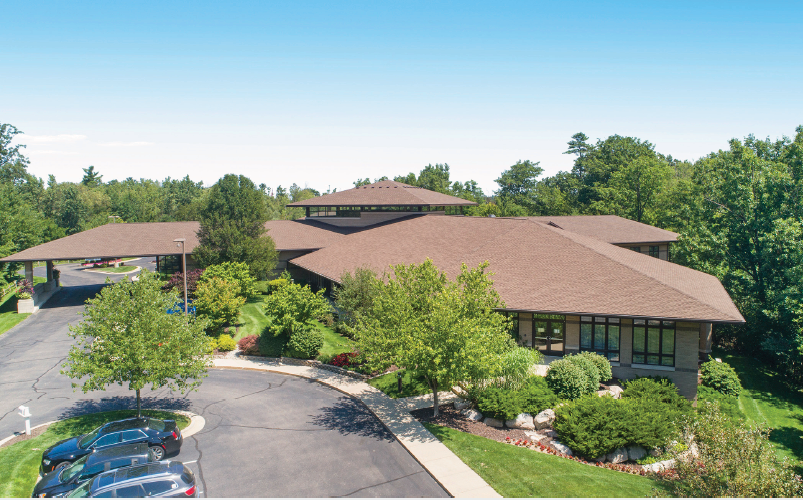
Arial view of the Trillium Woods location

I am particularly grateful for my dad’s opportunity to have been admitted to the Faith Hospice inpatient care facility at Trillium Woods in Grand Rapids, Michigan. Through my parish ministry, I knew about hospice care being provided at home and in other settings, but I had not had any personal experience with a residential facility built and maintained solely for hospice care. My dad’s move to Trillium Woods happened four days after his admission to hospital ER, on a cold, mid-December day. The hospice became his new temporary home, and we soon discovered how it was an unanticipated but blessed answer to prayer for him as well as for our family.

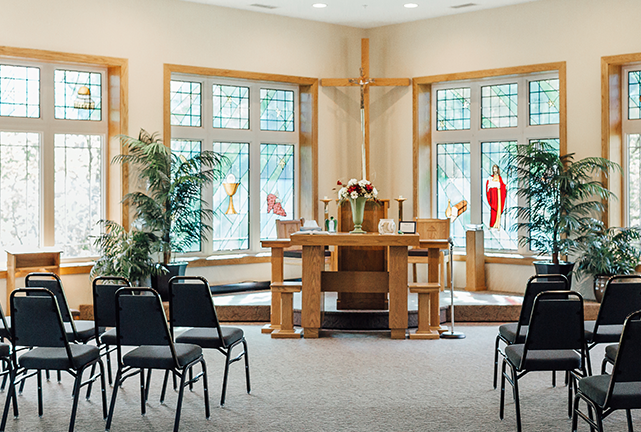
December is a tender time for families caring for or mourning loved ones, and we found that Faith Hospice staff members were especially sensitive to our emotions as the Christmas holiday season came into its fullness. We were impressed by the generously sized and attractively decorated room they were able to provide for my dad and the other patients, which included a comfortable sitting area, a bed area, and large windows and a door leading onto a beautiful terrace. Equally impressive was the rest of the facility, which had large lounge areas, a dining room and adjacent kitchen, and a well-designed chapel. Being able to have our family Christmas dinner there at the hospice (as well as other meals) was a comfort, and allowed us to focus on my dad and his care, and to be less absorbed with our own daily concerns.

A hospice patient’s room like the one my dad was in

Most significant to us was the dedicated staff, who were sensitive and attentive to each subtle stage in the process of my dad reckoning with and moving toward his impending death. Like them, my dad showed himself to be strong in faith, and fully at peace with seeing his final illness as a facet of God’s merciful Providence. Thankfully, he showed no signs of being in denial about what was happening to him. I attribute this to his decades of ministry as an ordained pastoral counselor, and as one who lived his faith while commending it to others.

The Chapel at Trillium Woods

During the process of my dad’s dying, I marveled at the ministry of Faith Hospice at Trillium Woods, and wondered about how many other such facilities exist around the country and elsewhere. I continue to wonder about this, and imagine that such a place is more often desired than found, being the kind of facility that everyone would want to have available should they need it.

The phrase, “the end of life,” is often used to refer to what hospice care is focused upon. Taken simply and literally, these words refer to the termination point we come to in the course of our physical embodiment. Yet, as I like to remember, our English word ‘end’ does not simply connote a terminus but also a point of fulfillment and the realization of purpose. In my experience of the hospice care that was offered to my dad and our family at Trillium Woods, I encountered a culture of ministry oriented toward lifting our eyes to a broader horizon of meaning for daily life. In this, I found the facility was aptly named as Faith Hospice, for clearly a grounded Christian Faith lay at the heart of the mission enacted on a daily basis at Trillium Woods.

Note: I have no official connection with Faith Hospice at Trillium Woods but only my personal experience of holy care from the folks there. With them, we journeyed through our final month with a family member amidst a loving community. More about this ministry and facility can be found by clicking here.

The Epiphany: Human Power Encounters Divine Authority

If reading this by email, please tap the title at the top to open your browser for the best experience. Then, clicking individual pictures will reveal higher resolution images.

James Tissot, The Magi Journeying (detail)


Instinctively, there is something we all seem to seek. We want to find purpose and meaning, and organizing principles for our lives. This desire is anchored in a larger one: we seek to discern what is real, and true.

But where does our common impulse come from? In what does this impulse consist? I think the best answer to these questions is found at the heart of the Feast of the Epiphany. On Epiphany, we celebrate how God has revealed to the world the real and true meaning and purpose for our lives. Epiphany is all about God revealing to us the divine center of everything. Epiphany highlights God’s self-revealing in the natural world, and preeminently in God’s Incarnation, which the Magi came to discover and then worship.

We are able to recognize that it is in the nature of a Creator to order reality, imbue it with purpose and meaning, and hence to bring order, purpose, and meaning to our lives. A perhaps-unexpected word that captures this broad idea is authority, in that God possesses the authorizing power to create things, and guide them. Specifically, we discern this authorizing power in God’s creation of the universe and in the divine agency shaping ongoing history. For God is the author of all that is real and true.

In human life, authority and power are not always neatly aligned, and we experience trouble when the two are at odds with one another. We see this dialectic between the two at work in the events of Holy Week, in the confrontation between divine authority (in the vocation of Jesus), and worldly power (as exemplified by Pontius Pilate). Less obvious is the way this dialectic is manifest in the events that are commemorated in our celebration of Christmas and the Epiphany of our Lord, especially in connection with the visit of the Magi from the East.

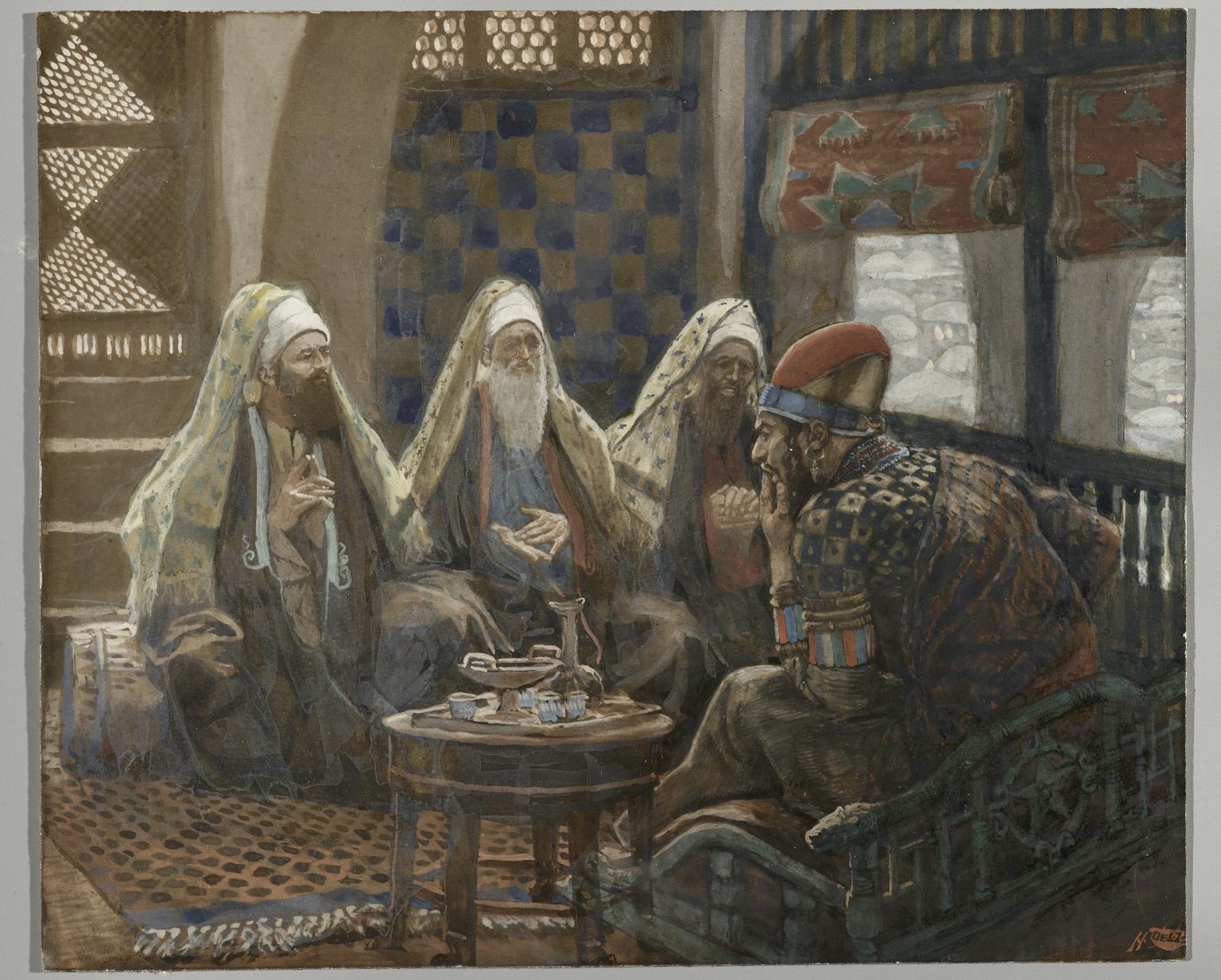
James Tissot, The Magi in the House of Herod

The Magi, also called ‘wise men,’ or ‘kings’ from the East, arrive in Israel having been guided by an authoritative power greater than themselves. Because of their witness to this higher authority and its implied power, the visitors pose a threat to Herod and his courtiers, who exercise earthly authority and its attendant power. This emerges in the interaction between people who are witnesses to divine authority and its power, and others who are possessors of worldly authority and power. The emerging conflict, later seen in the events of Holy Week, arises amidst the challenges surrounding the beauty revealed in what we call the Epiphany, the revealing of divine light to the whole world rather than to just a particular nation or the people of a particular religious tradition.

The Magi from the East, by explaining their quest, prompt Herod to act. He acts viciously and violently through orders given to soldiers under his command. The result is the series of murders we acknowledge every year on December 28, in the ‘red letter day’ we call the Massacre of the Innocents.

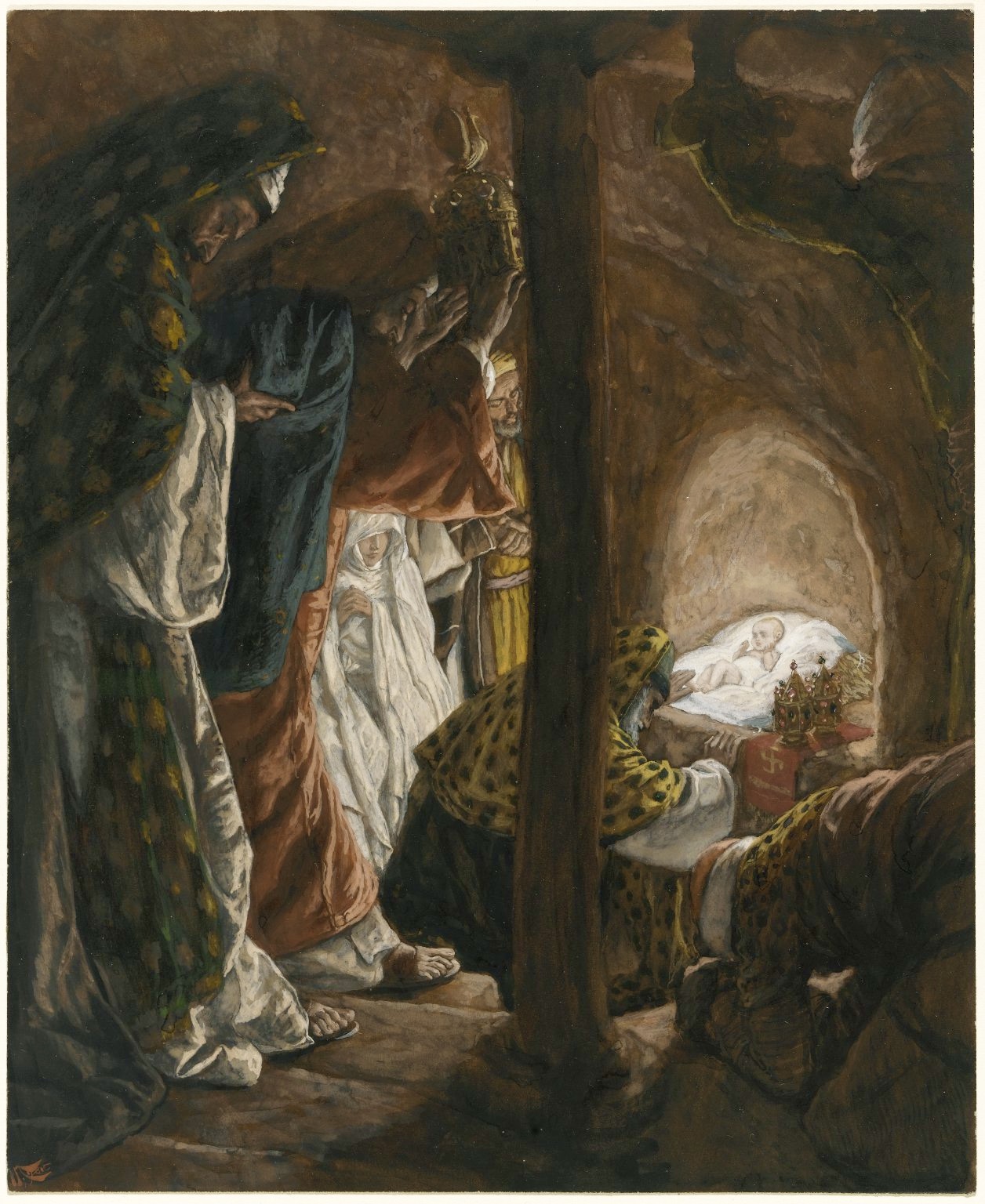
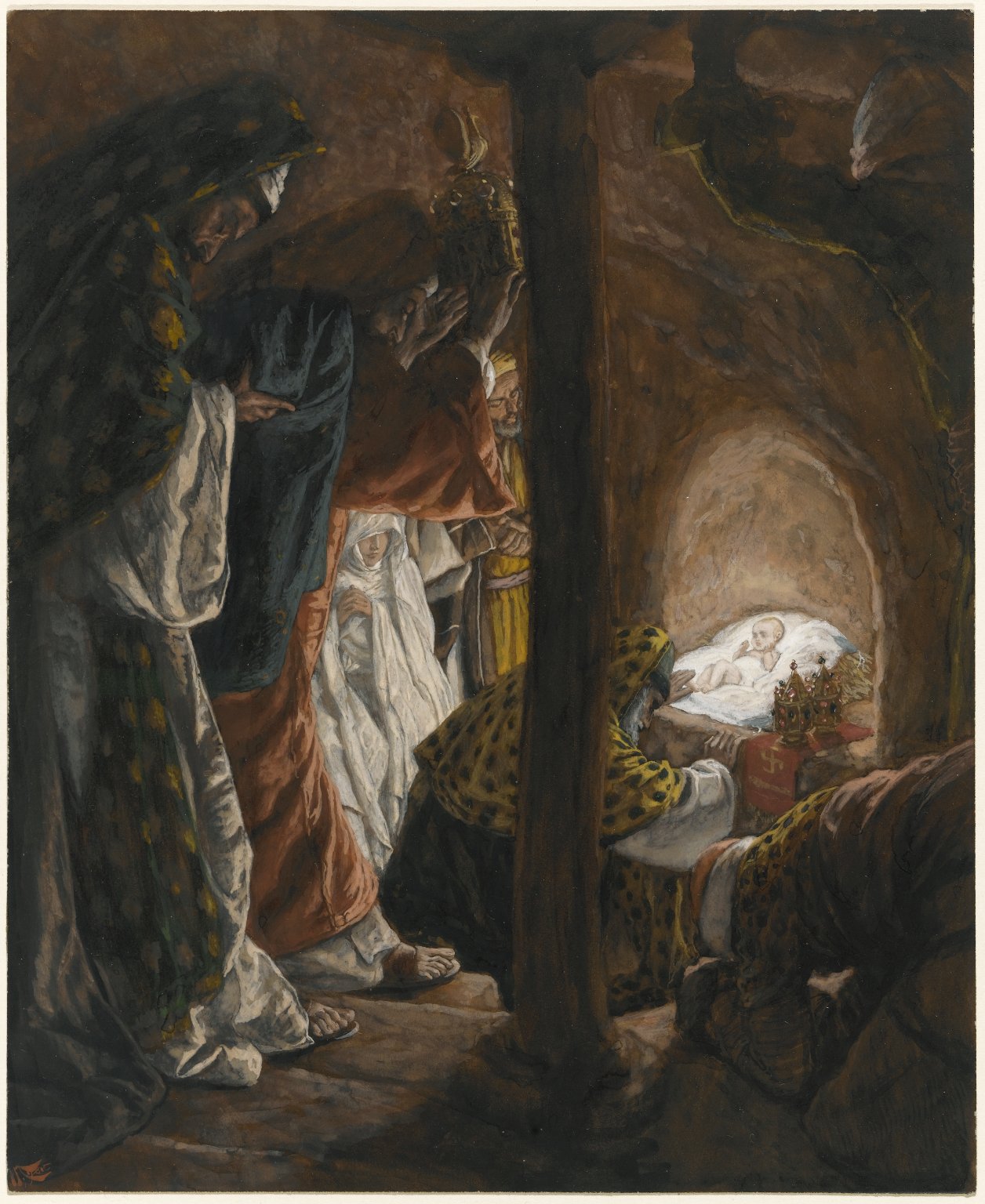
James Tissot, the Adoration of the Magi

What are we to make of the Epiphany of God in human form, and the tragic circumstances to which it led? At the heart of Christian belief is the conviction that God became present to us through a human birth. He revealed himself in a human person who embodied two natures, one fully divine, and one fully human, whose natures are distinguishable yet inseparable. Such a person, regardless of appearances, was and is the transcending center or heart of all that is, manifest in human form. He is, therefore, the One who truly possesses divine authority and divine power. Einstein – who was not in any sense a traditional believer – said this: “The most beautiful thing we can experience is the mysterious.” The divine center of reality, manifest and revealed in a human being, is the most mysterious beautiful thing that we can experience.

Here is the wonder of it: in God’s mysterious Providence, the birth of the Messiah would bring death to many (in the Massacre of the Innocents). And – years later – the death of the Messiah would bring the possibility of new birth to all, through the redemption of human being from the power of sin and death.

Yet, it would be some decades later before those who proclaimed Jesus as Messiah, and the embodiment of God, could understand the connection between his birth along with those soon-resulting deaths of the Innocents, and his later death, along with its soon-resulting new births for those who came to believe in him.

Our proper response to all this — indeed our only response to all this can and should be to praise the Holy One of Israel, the one whose death brought new life to all who receive him. He has come to us. Come let us adore him. And let us receive him with renewed hope and joyful hospitality, in all his light-filled glory.

A blessed Epiphanytide to you and your loved ones.


The Arrival of the Messiah in James Tissot’s Art

If reading this by email, please tap the title at the top to open your browser for the best experience. Then, clicking individual pictures will reveal higher resolution images.

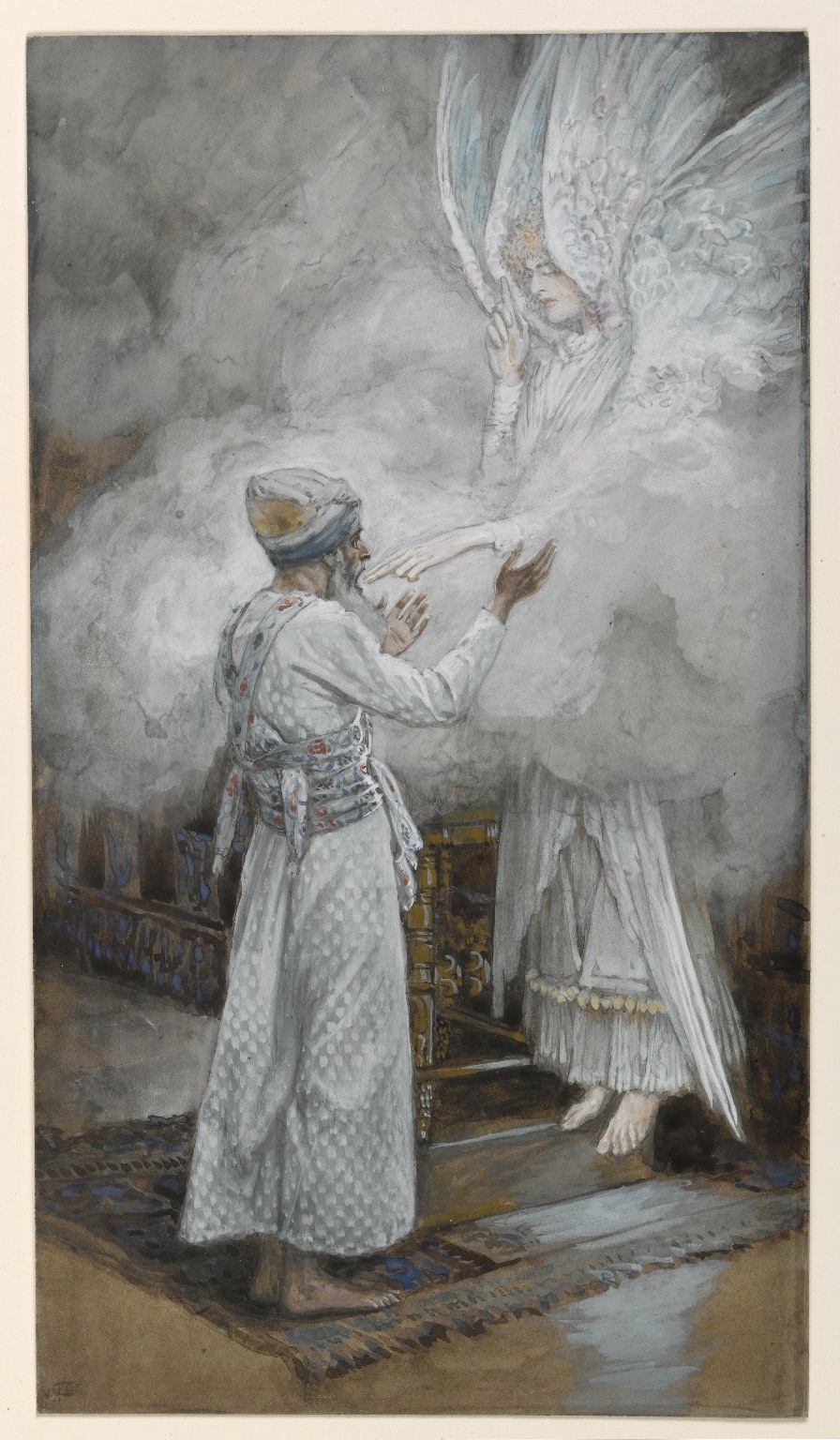
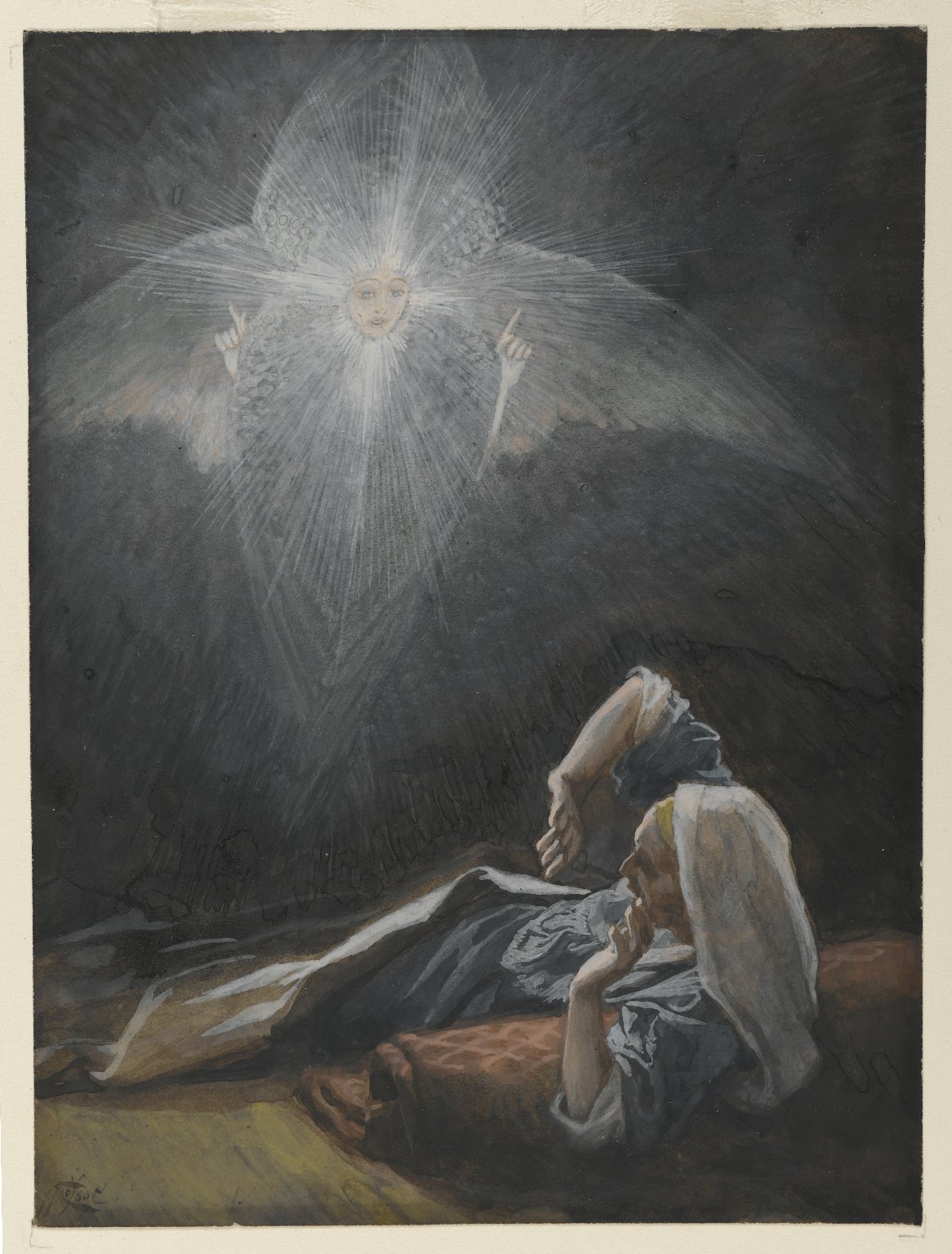
James Tissot, The Vision of Zechariah, with which Luke begins the great story (Luke 1). The priest, Zechariah receives an epiphany, telling him that he and Elizabeth will have a son, to be named John, later known as ‘the Baptizer.’


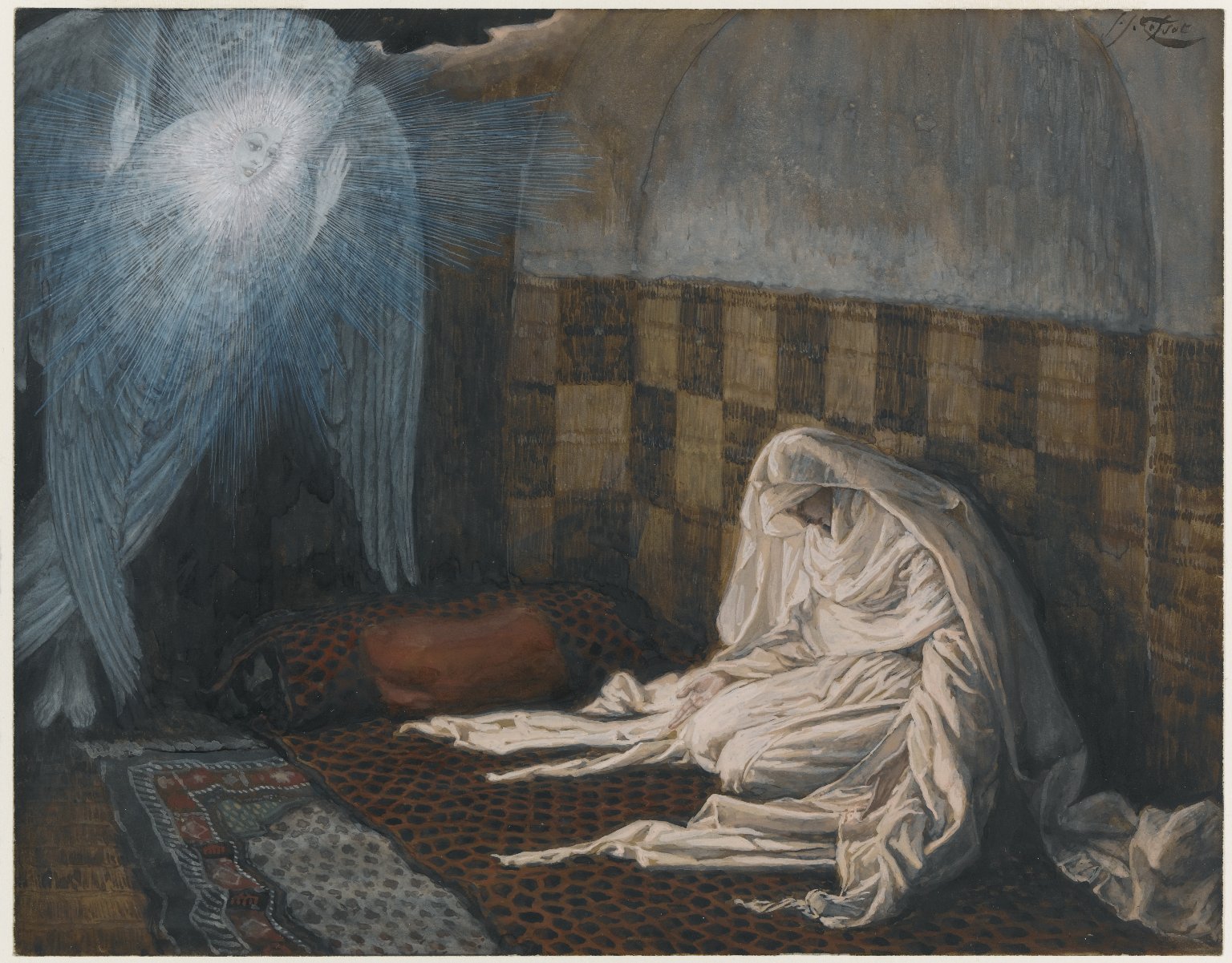
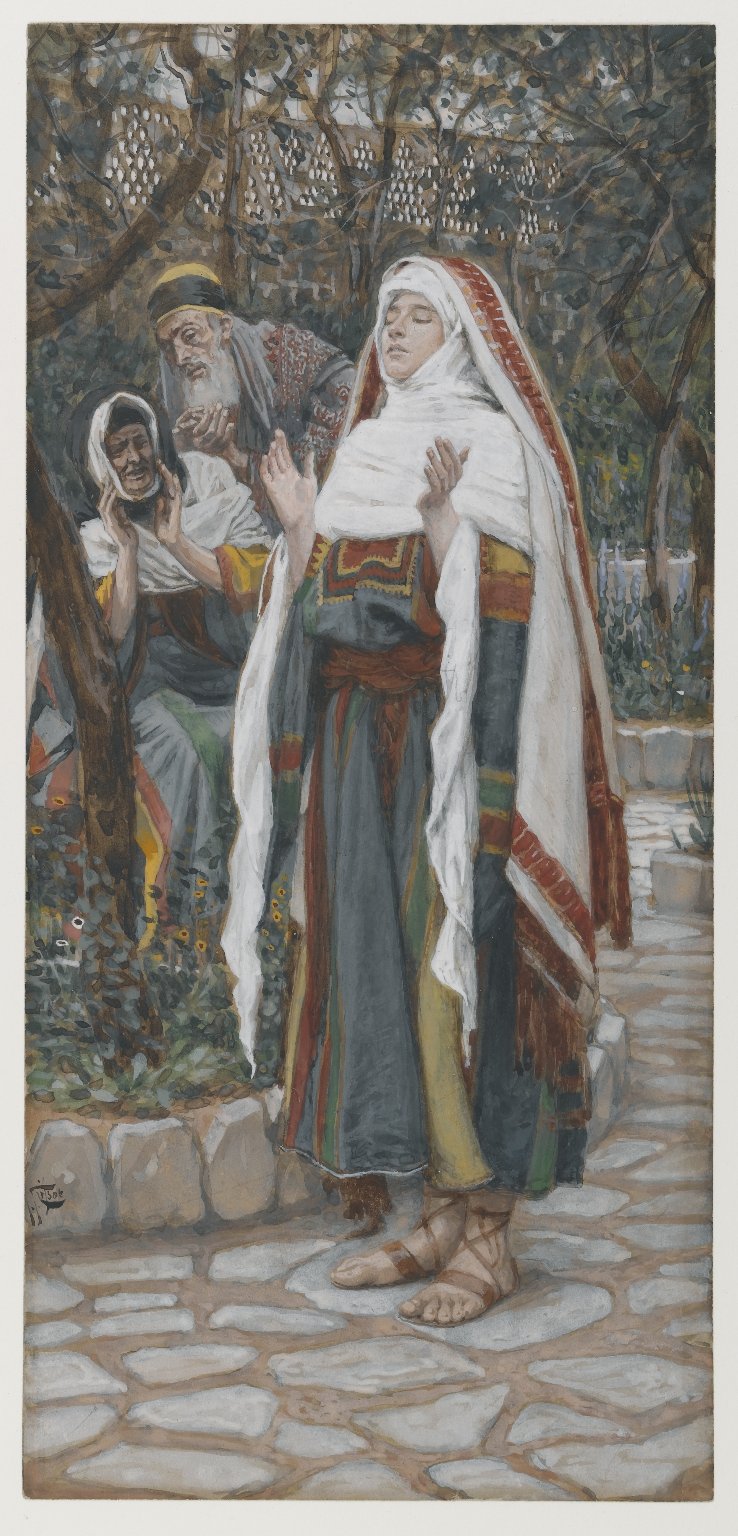
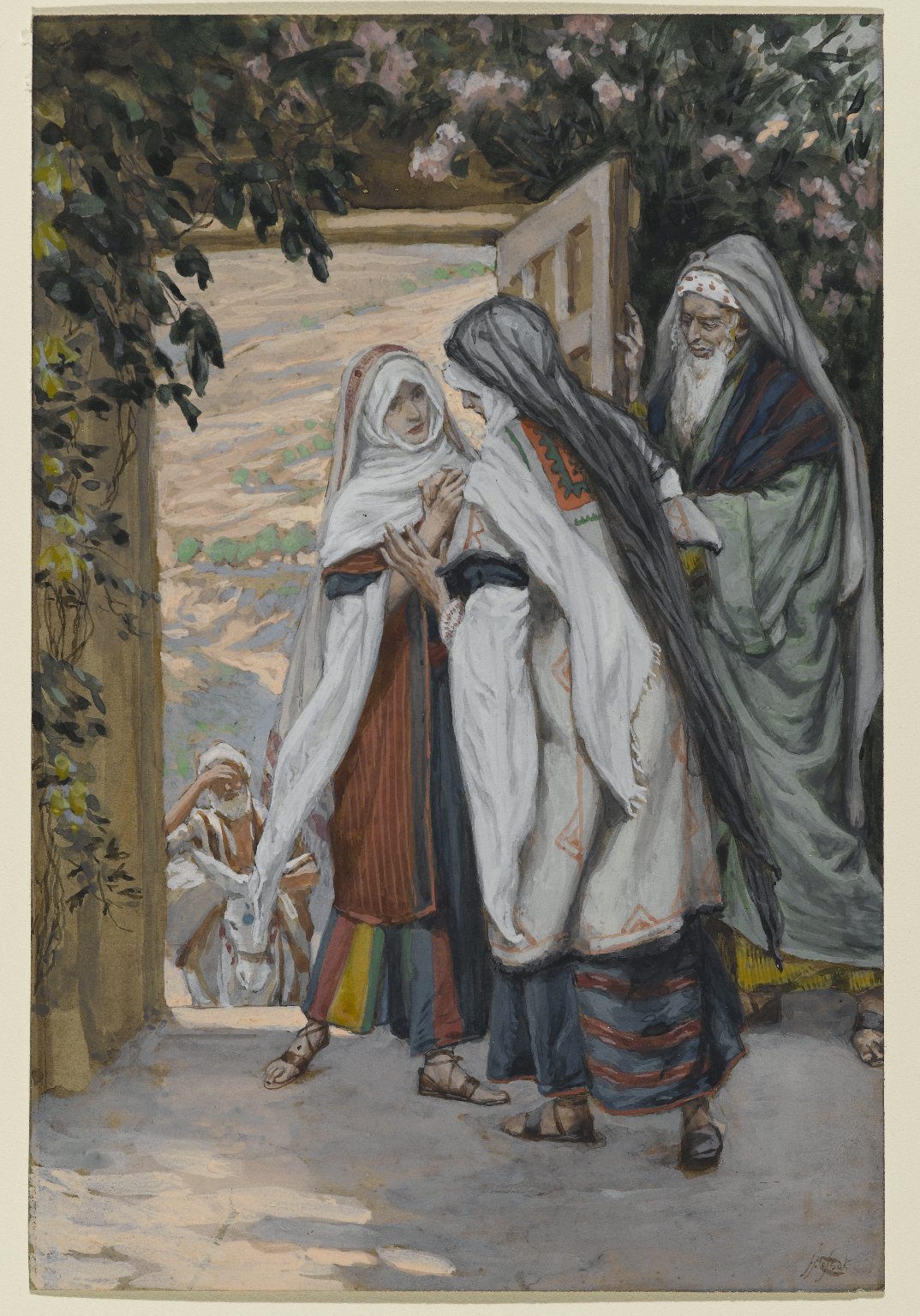
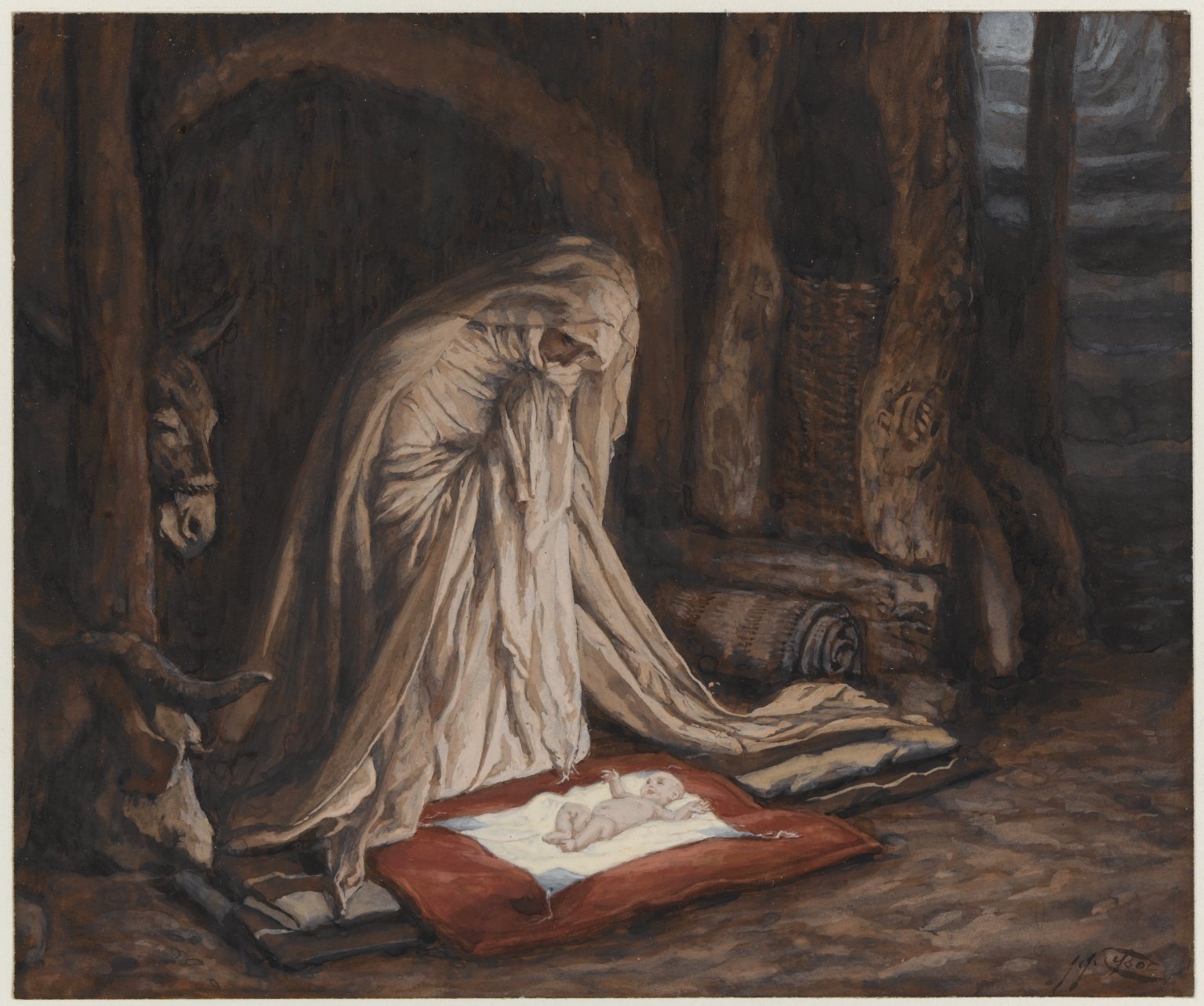
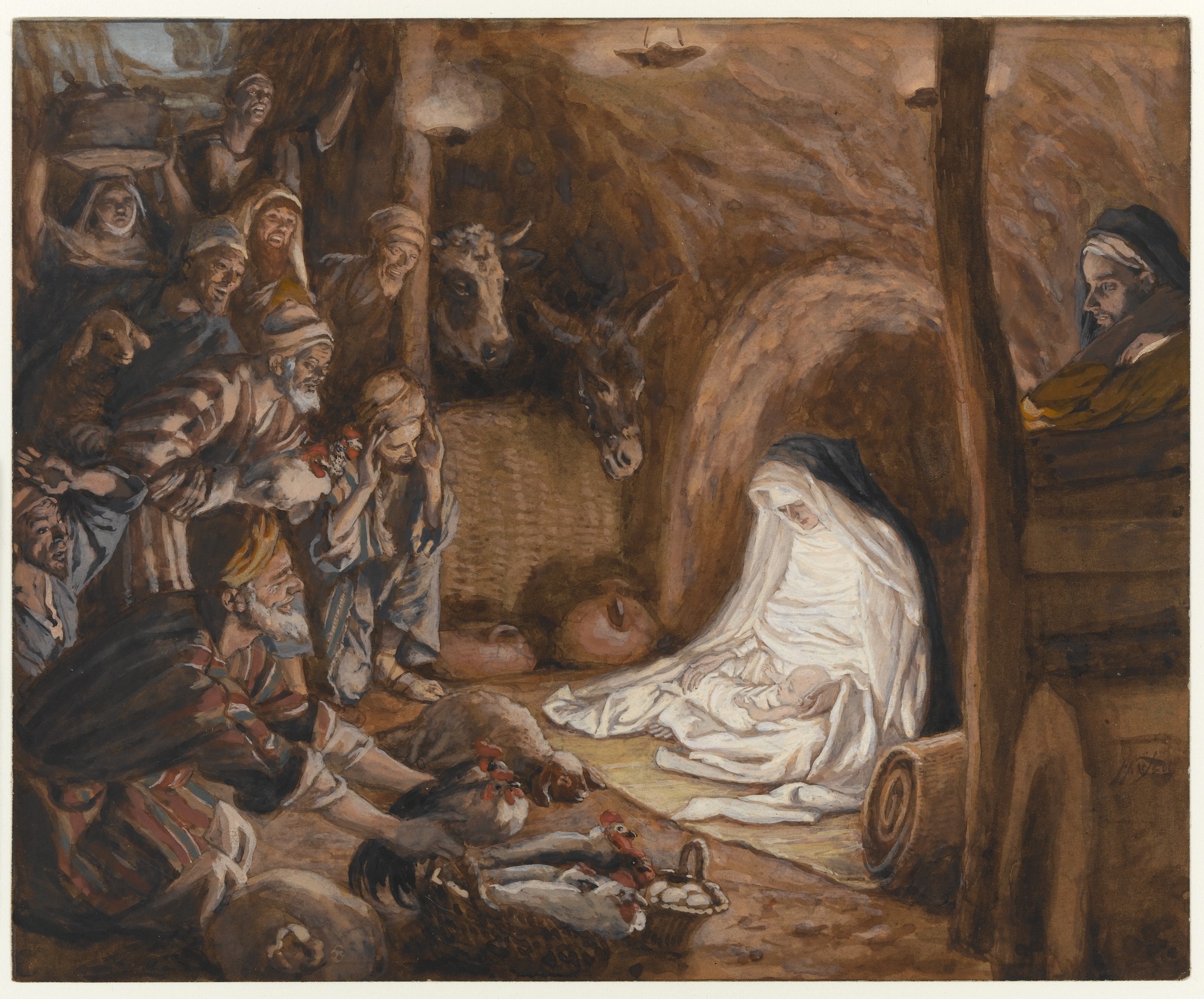
With this post for Christmas, I share with you a series of paintings by James Tissot on the theme of the Nativity of Jesus. Readers of this blog will know of my high regard for this artist’s life and work. I am pleased to share this collection of Tissot’s paintings related to the great events we celebrate for twelve days in the Church’s calendar year.

The paintings featured here, and many others, later became the illustrations in Tissot’s four volume, The Life of Our Lord Jesus Christ, published in English in 1897-8. The originals of these paintings were purchased by the Brooklyn Museum in 1900, and examples from this collection are periodically on display, both there and elsewhere.

May you and your loved ones have a holy and blessed Twelve Days!

The Betrothal of the Holy Virgin and St. Joseph (mentioned in Matthew 1 & Luke 1)

The Annunciation to Mary (Luke 1)

The Magnificat (Luke 1)

The Vision of St. Joseph (telling him of the coming child, and that he is to receive Mary as his wife / Matthew 1)

The Visitation (of Mary to her cousin, Elizabeth, the expectant mother of John, who would become the Baptizer / Luke 1)

St. Joseph Seeks Lodging at Bethlehem (Luke 1)

The Birth of Our Lord Jesus Christ (Luke 1)

The Adoration of the Shepherds (Luke 2)

The Adoration of the Magi (Matthew 2)

The Flight Into Egypt (Matthew 2)

The Massacre of the Innocents (Matthew 2)

The Sojourn in Egypt (Matthew 2)

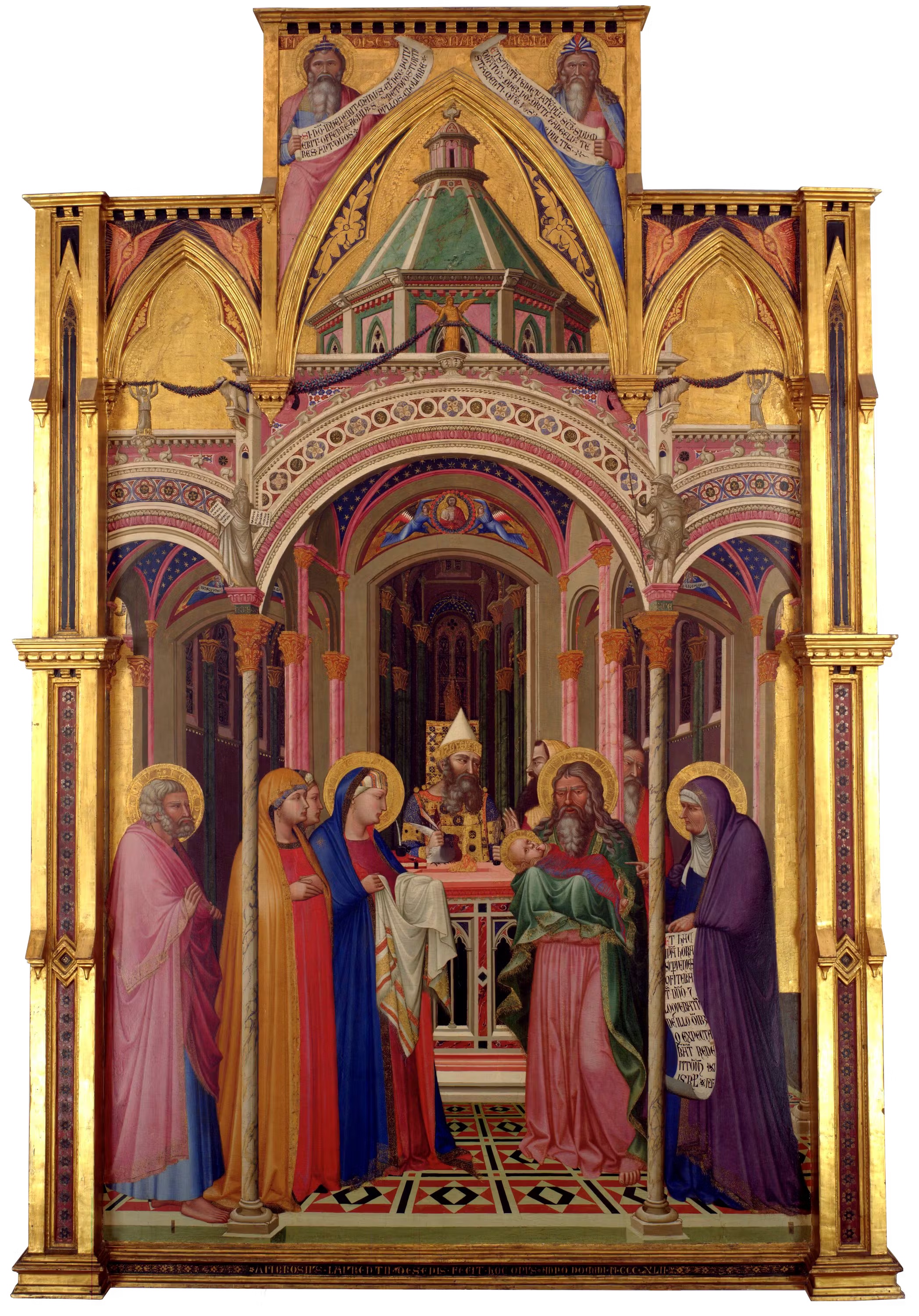
The Presentation in the Temple (Luke 2)

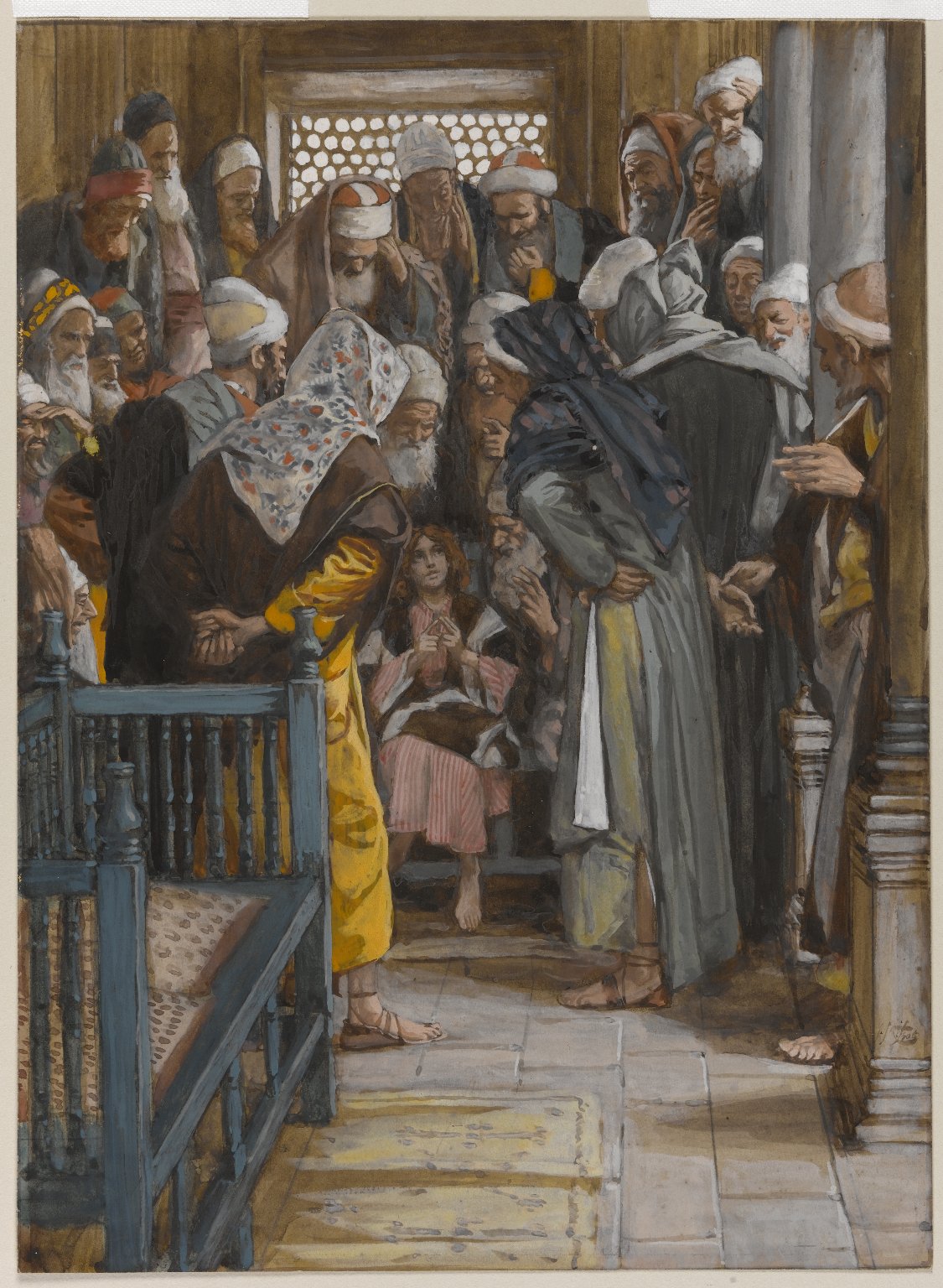
Jesus Among the Doctors (the boy, Jesus, at age 12, visiting the Temple in Jerusalem with his parents / Luke 2)


Note: the titles attached to the images above are those that are provided by the Brooklyn Museum

An Advent Magnificat

If reading this by email, please tap the title at the top to open your browser for the best experience. Then, clicking individual pictures will reveal higher resolution images.

Jim Janknegt, Joyful Mystery 1


Neither the Bible nor history tell us the precise details about the Annunciation to Mary, such as on what day the Angel appeared, or when Jesus was later born. The Angel’s wondrous appearance could have happened on a drab winter’s day. Yet, by virtue of the Angel’s message, it was also like spring. Our Church calendar and holy tradition reckon that the Annunciation was in March. If it was in the spring, the average high temperature in northern Israel would have been in the 60’s. So it could easily have been a season colored by the appearance of emerging flowers and foliage.

Faithful to the pattern of Scripture, Jim Janknegt seeks to portray something beyond literal circumstances. He has more than flowering plants, trees, and shrubs in mind. The decorated edge of the painting is a border of roses, which evoke the mysteries named in the Rosary, of which this scene is only the first. Inside that border are more flowers, and these also play a symbolic role. For we find lilies on Mary’s dress, suggestive of a later-to-be-revealed Easter, and calla lilies in a vase on the table, traditionally associated with the Annunciation to Mary.

Even more dramatically, flowers cover a large part of the angel, which suggest something transcendent and other-worldly. The Angel has come to speak the Word: the Word of Life, which is also a Word of blessing (look at the Angel’s hand-gesture!). Central in the painting, but depicted in a very subtle background way, is a great tree. Surely, it is the Tree of Life, from Genesis and Revelation, the first and last books of the Bible. Surely, the tree also prefigures that toward which everything in this moment is heading ~ the dead wood of the Cross, which paradoxically became a life-giving tree. Yes, it is springtime! But, this is springtime in salvation history.

So this is what we begin to see in Jim Jangknegt’s painting: his portrayal of the Angel’s Annunciation to Mary is not so much about springtime in the world. Instead, it is about springtime for the world.


Jim Janknegt’s painting, featured here, is used by permission of the artist. The text of this post is based on my homily for Sunday, Advent IV, of this year, which may be accessed by clicking here.

Comfort Ye My People

[If reading this by email, please tap the title at the top to open your browser for the best experience. Then, clicking individual pictures will reveal higher resolution images.

Marc Chagall, Memorial Window, All Saints Church, Tudeley, Tonbridge, UK


As a priest and from recent personal experience, I know how these weeks are a tender time for many of us. Especially for those who have lost loved ones at this time of year. Finding consolation and hope after losing the tangible nearness of a beloved family member or friend is hard at any time. Faced with such a loss or its memory around Christmas, how do we find comfort and reassurance in this season? Are “the hopes and fears of all the years” really met in Him, even now?

I find help with questions like these in what may seem an unlikely place: a beautiful window by an artist whose upbringing was shaped by Hasidic Judaism, placed over the altar of an Anglican church (shown above). It was designed by Marc Chagall for All Saints Church, Tudeley, in England.

Chagall was commissioned by a grieving couple to design this window as a memorial for their adult daughter who drowned in the sea. She is portrayed below the waves in the lower portion of the window, with what appears to be her grieving mother near her feet. We find here an unexpected coupling of images that frequently appear in Chagall’s work. Seeing his depiction of a crucified man juxtaposed with that of a mother and child surprises many Christians when they learn of Chagall’s Judaism.

The imagery in Chagall’s window may seem like an unusual choice for this holiday time. Yet, it fits. Though he often painted crucifixion images in his work, the artist had in mind the suffering of Jews through the centuries, and especially in his own time. In a similar way, he thought the portrayal of a mother and child, so familiar in Christian iconography, was a universal image within human experience. Chagall believed that the Christian conscience could be touched by familiar images from the Gospels, but which were also deeply resonant for Jews based on Hebrew Bible antecedents.

This is why I think that Chagall’s art might speak to us in this season. After all, the one whose birth we celebrate at this troubled time in the world awakens hope in us, hope for new life through the renewal of our shared humanity. Our Christmas hymns touch upon this theme. And, of course, the child born to Mary and Joseph was destined – as was prophesied – for the fall and rise of many (Luke 2:33-35).

Christian artists through the centuries have been captivated by many aspects of our Lord’s Nativity. Countless examples of their work have sought to express our impression of the circumstances of Jesus’ birth, and its significance for the world, not just for his immediate family. It is noteworthy how often depictions of the Annunciation, and of the Nativity contain noticeable hints of his later saving death, and resurrection. The inclusion of discernible palm fronds, passion flowers and of lilies in these works provide common examples of these visual hints of a veiled significance yet to be revealed.

Sadao Watanabe, Nativity Christmas card, with palms, lilies, and passion flowers

Both literally and conceptually, what we celebrate at Christmas is easier to ‘grasp’ than what we celebrate at Easter. We are more prepared for the presence of the Word made flesh in a manger than we are for the absence of the Word, said to be risen and ascended from an empty tomb. The comforting appeal of the Virgin Mary holding her newborn son in a stable contrasts with the mystery of another Mary later reaching out to try and hold the risen Jesus in a garden.

This Holy Child brought us the possibility of new life by overcoming the power of death. We celebrate his birth precisely because his death and resurrection provide the pathway to our own new birth. He was born and died as one of us. And so, in him, we die and rise again to the new life he shares with the world.

Mild he lays his glory by,
born that we no more may die,
born to raise us from the earth,
born to give us second birth.
Risen with healing in his wings,
Light and life to all he brings,
hail, the Sun of Righteousness!
hail, the heaven-born Prince of Peace!

Hark! the herald angels sing,
glory to the newborn King!


The hymn text is by Charles Wesley (Hark! the herald angels sing, verse 3).

Advent Annunciations: Anne, Mother of Mary

[If reading this by email, please tap the title at the top to open your browser for the best experience. Then, clicking individual pictures will reveal higher resolution images.

Giotto, The Annunciation to St. Anne, Scrovegni Chapel, Padua


Without seeing the title of this fresco at the stunningly beautiful Scrovegni Chapel, in Padua, Italy, we might assume that it portrays the angel’s annunciation to the Virgin Mary. The parallels with traditional Annunciation iconography are readily evident. Yet Giotto also executed a series of panels there devoted to the life of St. Anne, Mary’s mother, who is shown in the fresco, above.

As with so many Marian annunciations, the scene is domestic, with Anne here suggested as having been occupied at home with her maid, preparing thread for stitching. Just as familiar paintings of Mary often show her at prayer, Giotto portrays Anne upon her knees with her hands clasped. But unlike familiar Marian parallels we do not see a devotional book open next to Anne. Just as later happens to her daughter, we see this grandmother-to-be of Jesus met by an angelic visitor who discloses an unexpected new role for her. Unlike her daughter Mary’s experience, Anne’s encounter with God’s Word to her is not recorded in canonical Scripture.

Interior of the Scrovegni Chapel

The frescos in the Scrovegni Chapel contain an interesting mix of images, with some portraying events in their presumed original historical context (such as the Nativity scenes), and others (like the annunciation to Anne) in buildings and settings more characteristic of Giotto’s own time and place, including the architecture of the chapel housing them. While he paints them this way, Giotto’s choices regarding imagery suggest that he seeks to be faithful to the supposition that Mary’s family came from an ordinary background. After all, Mary’s parents, named Anne and Joachim according to tradition, later allowed her to marry Joseph, a local builder; she was not betrothed to nobility. The painter, therefore, shows some restraint in his rendering of the context of Anne’s visitation. This simplicity in approach may also be due as much to Giotto’s early place in the historical development of European painting as it does his personal temperament.

In this remarkably large series of Scrovegni frescos, we can see that Giotto has discovered and effectively employs the technical skill of linear perspective. With some care, he depicts the stonework of Anne’s home and that of many other buildings as sculpturally ornamented. But rather than display undue deference to the known wealth and social position of his patron, he allows the particularity of the angel’s visitation to be what sets Anne apart from her contemporaries rather than the finery of her home’s appointments. An emerging humanism in painting is evident in Giotto’s artistic style, and he presents Anne as a distinctly recognizable person rather than as a merely symbolic religious figure. Though she appears to be a woman of some means, she is depicted as someone who could have been the neighbor or relative of many people of his community.

Here is one theme we find in Giotto’s fresco of Anne’s annunciation. All it takes to play a part in God’s unfolding plan of redemption for the world is an open heart and a spirit of willingness to say yes. What part we are to play, and its significance to and for others is, in the end, up to God – and probably not something to which we should give much thought. At least not in the way that we hope or imagine our personal skills and accomplishments might be thought of by others. Saving the whole world, even small parts of it, is God’s work and not our own.

And so, the key is what God might decide to do in and through us (while inviting our help), rather than what we might decide to do for God (while perhaps asking for divine help).

The mystery of this season of Advent centers upon how we are drawn into what God ‘has been up to’ for a very long time. In a season of growing astronomical darkness we are invited to seek the most significant source of light, the light of Christ. And at a time when the world around us seems more colored by signs of decay and dissolution, He in whom all things hold together comes anew to embrace us, and ever hold us fast. It may not be through an angel, but surely the One born among us calls all of us to share His love for the world.


Advent Annunciations: Joseph

[If reading this by email, please tap the title at the top to open your browser for the best experience. Then, clicking individual pictures will reveal higher resolution images.

James Tissot, The Anxiety of Saint Joseph


I often turn to Annunciation scenes during Advent. This may seem curious since we celebrate the Feast of the Annunciation on March 25, nine months before Christmas Day. Yet, the season of Advent marks the beginning of a new church year, which may signal a time for other new beginnings.

The Annunciation to Mary was of course unique. Yet, it is also symbolic of God’s self-disclosure and God’s loving communication of hopes and wishes to every one of us. God becomes present to us, and in us, so that we might begin a new life, and begin it again. “Always, we begin again” is a saying oft-attributed to St. Benedict. It can become true for every mindful believer.

For obvious reasons, the Annunciation to Mary has received an overwhelming amount of attention in the history of art. Less frequently explored for its artistic potential is God’s self-disclosure through an Angel to Joseph, in a dream, even though it is with this Joseph story that Matthew launches his extended narrative. Mary gave birth to Jesus, whereas Joseph is remembered for having had a less prominent role in the circumstances of our Lord’s arrival. Joseph then largely disappears from the Gospel narrative. Perhaps because God’s revelation came to him in a dream while asleep as compared with Mary’s conscious, apparently daytime reception of the angelic visitation, Joseph’s receipt of an annunciation has been easier to overlook.

Yet, Joseph must have played a more-than-passing role in the coming of the Messiah. He did this by his willing marriage to Mary, and by initially providing a safe deliverance for his family from the wicked Herod, to and from Egypt. Undoubtedly, he gave Jesus significant mentoring, though Scripture leaves any details about that for us to imagine. Communities certainly have a part in the formation and education of children and youth, often in unrecognized and unrewarded ways. But why do we so easily overlook what was surely Joseph’s pivotal role in helping the young Jesus learn so much about Scripture, and in acquainting the youth with the material for so many of his later parables?

If these things may be inferred from the Gospels regarding Joseph’s significant role in the circumstances of the birth and early life of Jesus, we should reflect on what may have accompanied Joseph’s readiness to act upon the angel’s annunciation to him. As he positively responded to the angel’s words, he is likely to have considered what heeding those words might entail.

James Tissot’s painting, titled The Anxiety of Joseph, suggests that Joseph’s acceptance of his calling may have involved thoughtful deliberation. Indeed, Joseph may have sincerely weighed in his mind the degree of hazard that might arise from acting in accord with God’s revealed will, especially when such action might defy religious and social convention. That he, like Mary, in effect said yes to his angelic instructions, and followed through affirmatively, does not necessarily mean he did so without hesitation.

Most of us are called by God to accept unheralded and easy-to-overlook roles in God’s still unfolding plan of redemption for the world. Inspiration regarding our calling might even come to us in a dream, making us more prone to discount its potential significance, or too quickly assess its likely merit and value in a misguided and worldly way. After all, who are we to think that we could have an impact upon the world in relation to God’s sovereign purposes?

It is often said that Mary is the ‘mother’ of the Church. Perhaps Joseph, in a similar way, can be said to be the ‘father’ of all believers, especially those like you and me.


The Beauty of John’s Revelation

[If reading this by email, please tap the title at the top to open your browser for the best experience. Then, clicking individual pictures will reveal higher resolution images.

Christ Pantocrator ceiling mosaic from the Hagia Sophia, Istanbul


Advent beckons! Or does it? Isn’t something profoundly new lying just around the corner? Or shall we simply drift into another season of the old and familiar that might or might not live up to our expectations?

This calendar year, with a full week between Thanksgiving weekend and Advent Sunday, we have an ample opportunity to ponder questions like these. If such have recently occurred to you – or seem relevant now – I have a suggestion. It is prompted by a question recently put to me. What book or devotional might I recommend for Advent? My suggestion for Advent reading is John’s Revelation! It is the last book of the Bible, but arguably the first book for a new era, as we begin a new church year. And Revelation makes for unexpectedly good reading during these days of increasing darkness, at least as daylight hours are typically reckoned.

The best way that I know for begining to appreciate John’s Revelation, and read it for personal enrichment, is to engage it guided by Eugene Peterson, translator of The Message version of the Bible. Peterson helps us by making the texts of Scripture accessible and familiar-sounding. He is especially helpful in steering us around or away from what is ironically a rather modern and limited way of reading the biblical text. With him, we can avoid a literalism overlaid by misguided assumptions regarding prophecy and history. For Revelation does not contain a code to be deciphered but a message of love to be received, however strange John’s language and imagery may strike us at first.

John’s Revelation is metaphorical poetry that speaks truth, rather than something like a roadmap conveying predicted facts about what lies ahead. And so, it is not about how or when ‘the End’ will come, as if John’s book was and is about the terminus or stopping point of history and of all that we know. Instead, and in a rather more profound way, we might with John begin to see something new: how the end or point of fulfillment for all of history and of God’s purposes have in some sense already arrived!

In these weeks of shortened daylight hours and increasing chill, the prospect of reading Revelation may seem antithetical to a hopeful anticipation of Christmas. Cheerful music, warm lighting on dark and cold evenings, and holiday treats on the table, are all attractive and good things for us to enjoy at this time of the year.

But if we have any sense that there is something wrong with the present state of our world, whether with things near or far away, ignoring or being in denial about such are not our only alternatives when it comes to how we might approach each new day. A new phase in salvation history has dawned, and does not simply lie ahead in an undefinable future that is beyond our grasp. Yet begining to see this new phase in God’s ongoing work of Redemption may take the work of imagination, a praying imagination as Peterson puts it, in order to see the real beauty that now surrounds us, and which can be found within.

The beauty of the face of ‘the coming One’ is already here to be seen. We don’t have to travel back in history to a stable in Bethlehem, nor do we need to try and peer ahead to some kind of future cosmic crisis to see his arrival. For he is here with everyone. And he can be seen in the faces of those who through their Baptism bear the intimacy of his beautiful presence.


Eugene Peterson’s book on John’s Revelation, Reversed Thunder: The Revelation of John & the Praying Imagination, is in print and available from book sellers. I am pleased that Amazon has announced the future release of a Kindle (ebook) as well as an audio version from Audible.