Uncategorized

The Beauty of a Brother’s Skills

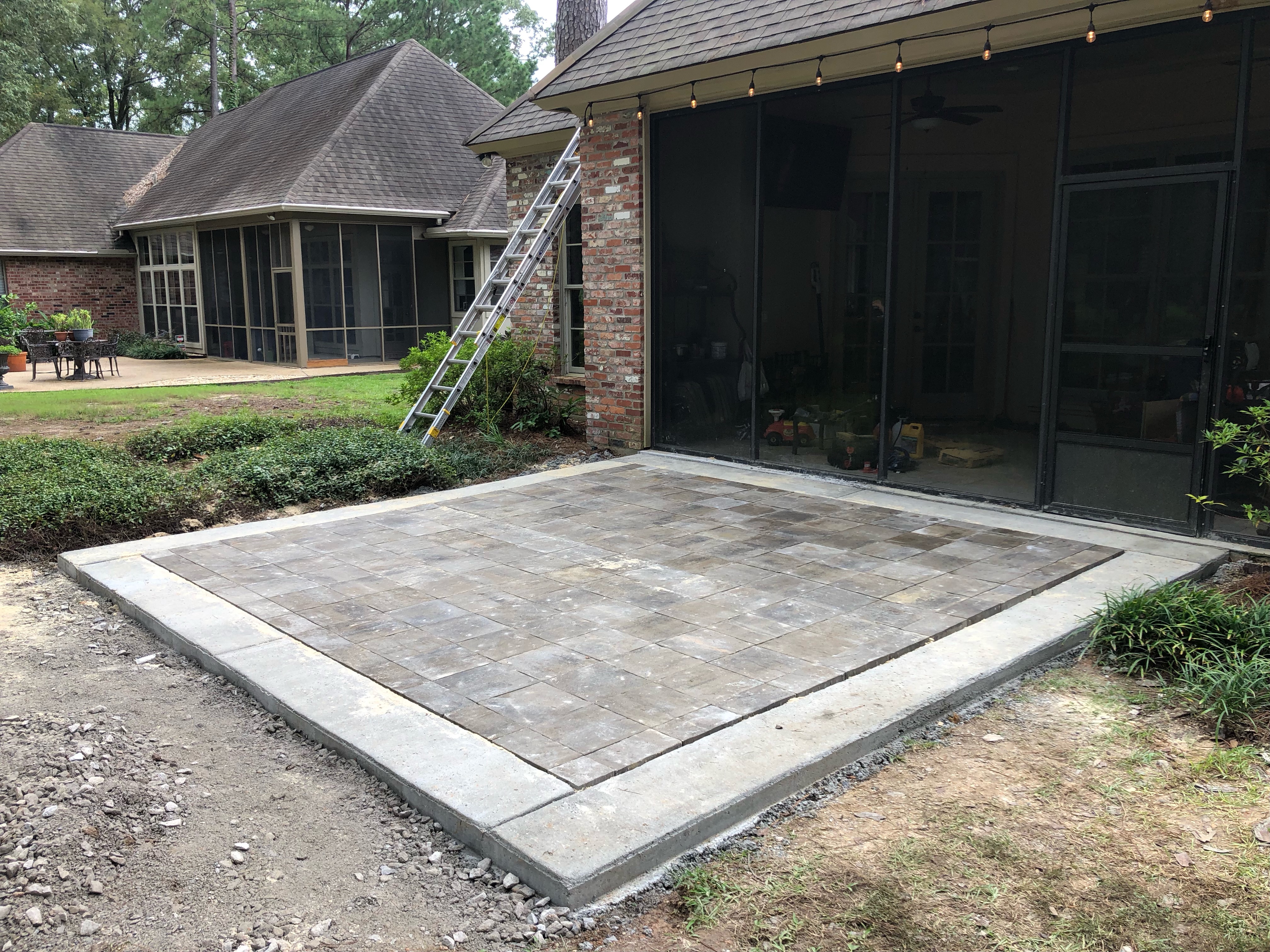
Before: a patio needing to be replaced!


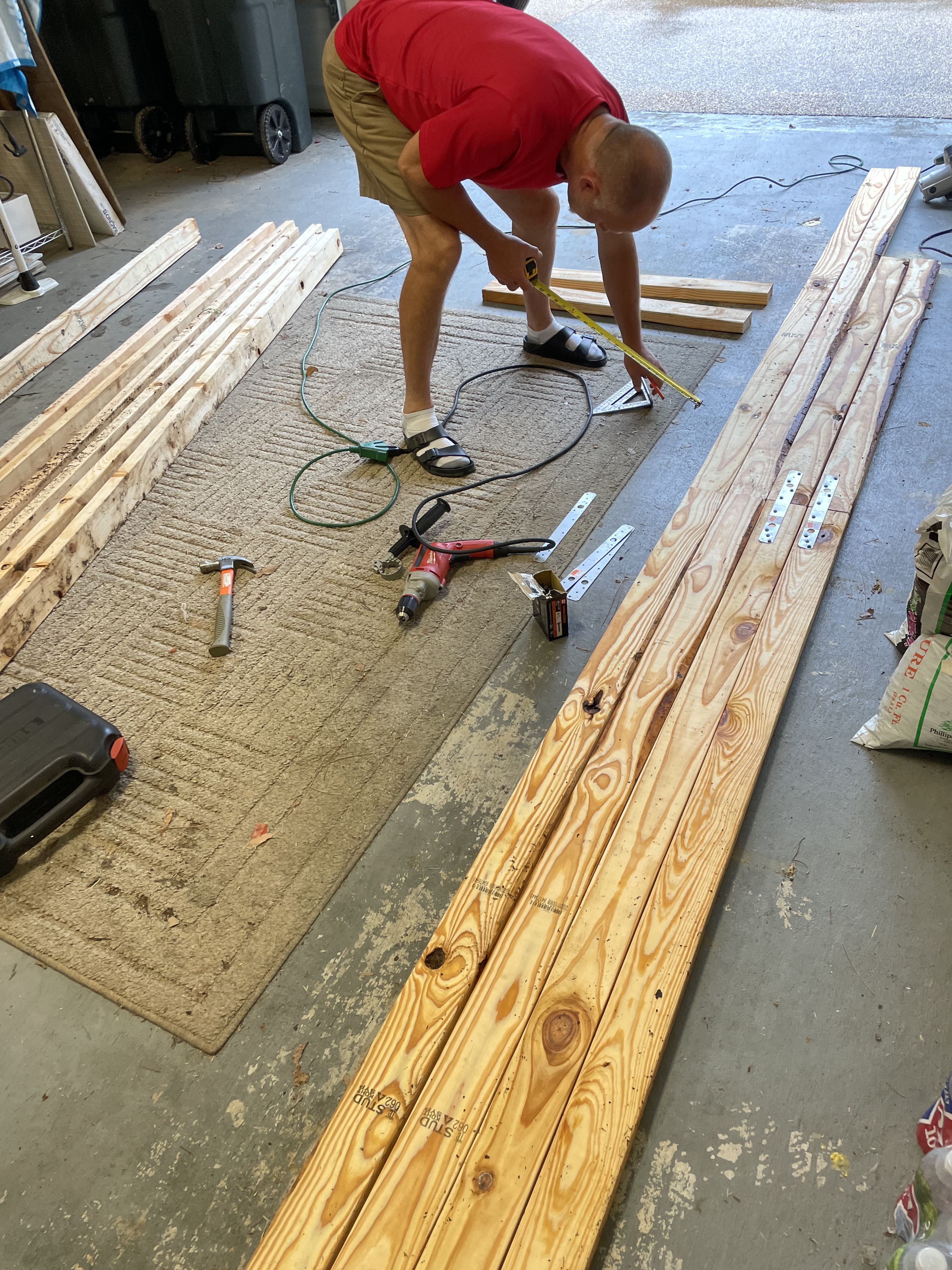
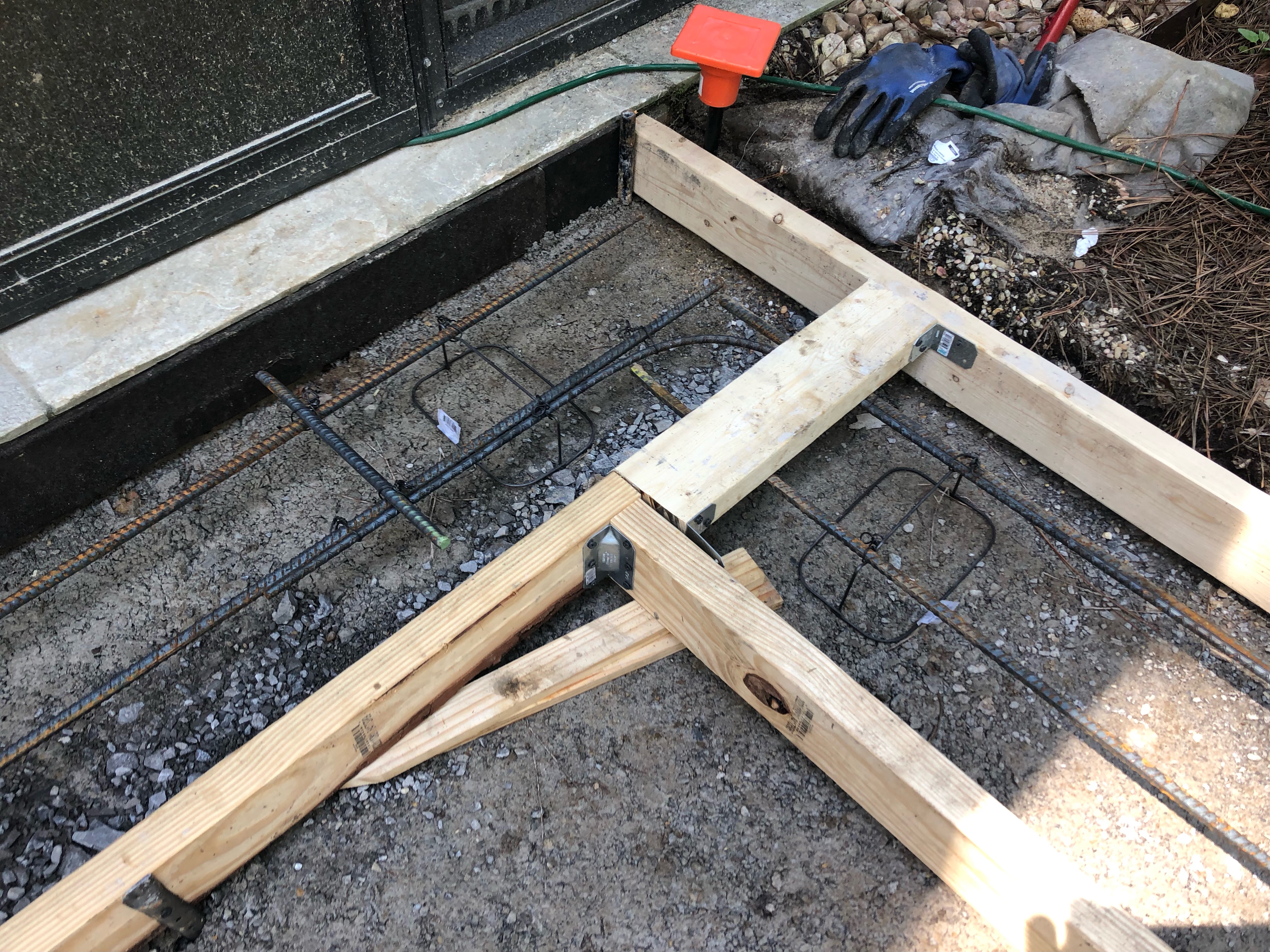
Having planned to be away to be with her sister for a week, my wife suggested that I might invite one of my brothers to visit during this time. Greg lives in the far Northwest on Puget Sound, and is an adept self-taught home landscaper as well as builder. The opportunity for a visit coincided with an opportunity to address a need. We have a patio that has become compromised by tree roots as well as a lack of a durable foundation.

Attracted by the beauty of a new patio, but daunted by the prospect of achieving it, I wondered. But Greg not only came for a good visit, he brought his cement finishing tools with him. Ok – game on! If you have been fortunate to have one or more siblings like I have, you may appreciate how wonderful it is to have someone with whom you have grown up be a continuing part of your journey toward wholeness.

This week I would like to share with you the beauty of my own experience of having a sibling who is more skilled at doing some things that I only imagine, and wish I could do myself. Yes, sibling relationships may sometimes be complicated. But there are certain treasures to be found in those relationships that friendships with others can fall short of discerning or attaining.

The former patio flagstones and pea gravel removed

What I marvel at is my brother’s ability to conceive of the broad parameters of a project, from the initial stage outward to the desired result. A couple of outings to nearby large-box hardware and supply stores provided me/us with needed tools, materials, and a slight boost in confidence (for me). We all want dream results, while most of us don’t really want to pay for them!

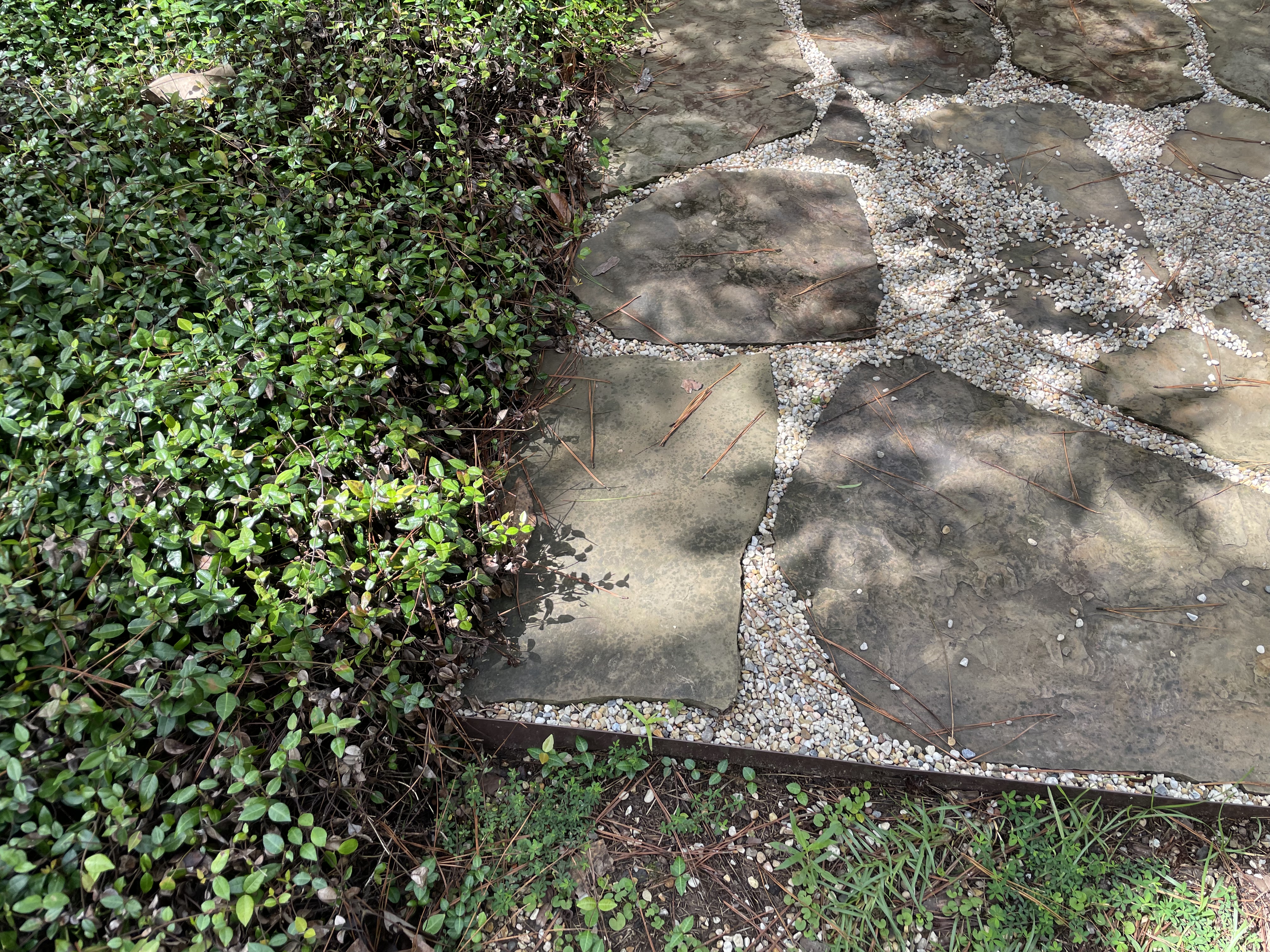
But the real boost in confidence came with the next step. A good friend of one of my sons recommended a vendor for varieties of landscape stone. This was somewhat unexpected in our part of south Louisiana, where all the soil that exists is essentially alluvial, and where no natural or native stone is generally found. Here, we live upon the deposit of thousands if not millions of years of transposed and deposited soils from Montana (via the Missouri), Minnesota (via the Mississippi), the states between them, along to the rivers’ combined outlet in the Gulf of Mexico, just south of us. And so, we found these attractive paving stones (below) in the discount area of a local vendor, where large pallets of multi-sized pavers had been picked through, and where – perhaps- enough leftover pieces for our smaller project might be found. They were!

Some of the new ‘pavers’ adjacent to the removed flagstone

Having priced the general market for such stones, we had found a deal. But beyond that welcome result, I find myself most grateful for my brother’s discernment about which blocks on the ‘discount’ pallets were worth obtaining, and those which might not meet our expectations for final appearance quality.

The project continues despite frequent and heavy Louisiana summer rains!

The Beauty of a Mini Canal Boat

Beulah, based on Philip Thiel’s design, Escargot


For many of us the words “beauty” and “boats” naturally go together. A compelling example comes from the work of former Seattle-based architect and boat designer, Philip Thiel. He produced an elegantly simple and shortened canal boat design called Escargot that can be built in a standard garage by a person with average carpentry skills. Just over 18′ long, and 6′ wide, the resulting boat is trailerable, and reasonably economical to build. Multiple versions with unique variations have been constructed, as the photos here display.

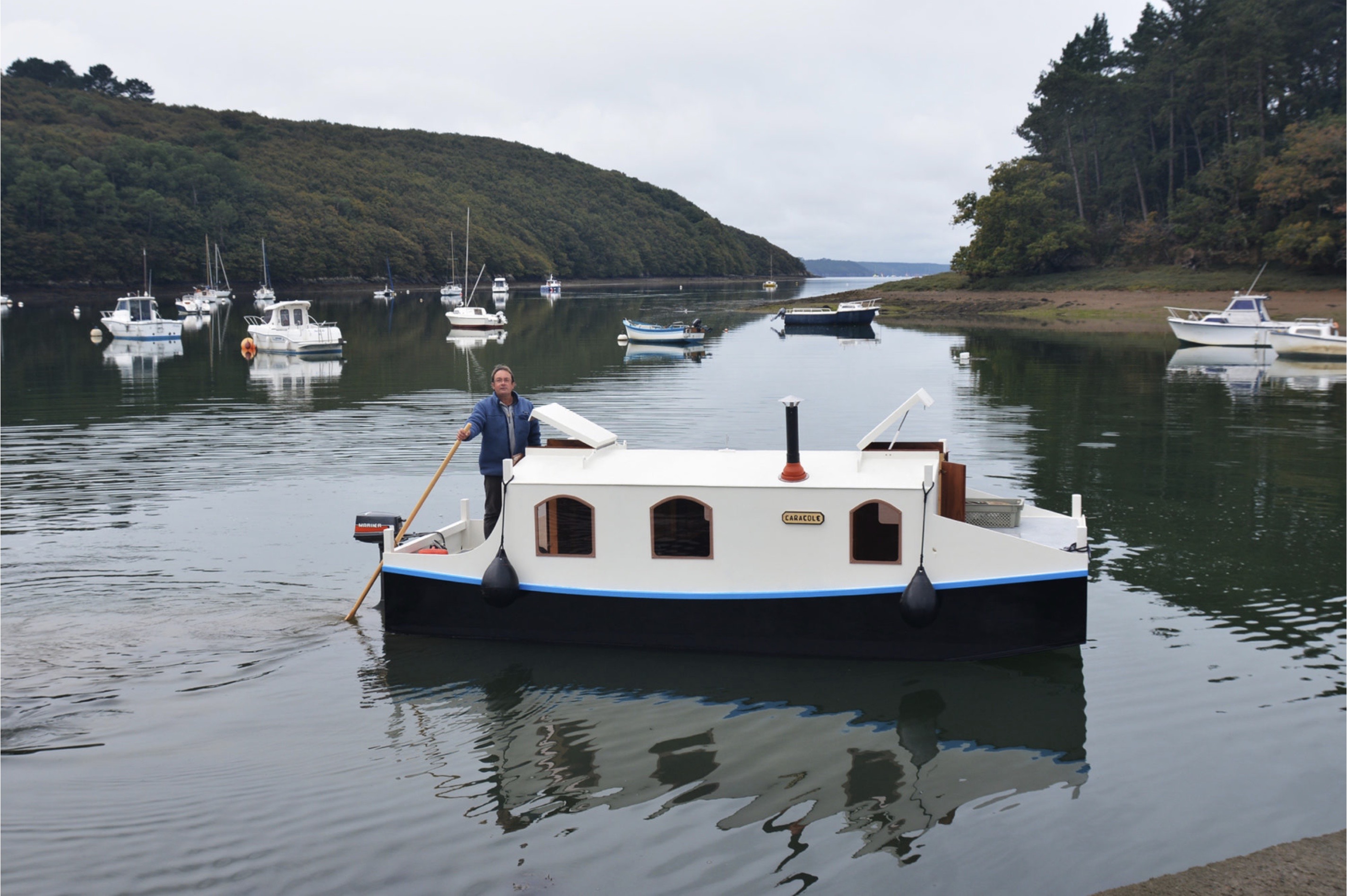
I have long admired the simplicity of Escargot’s design as well as its evident functionality. I am equally appreciative of Escargot’s sister designs, in particular the larger Joli Boat. Below is a French adaptation of Escargot, named Caracole. She is shown under propulsion by a sculling oar.

Above are the basic plan details for Escargot, built with sheets of 4′ x 8′ plywood and standard lumber such as 2 x 4’s.

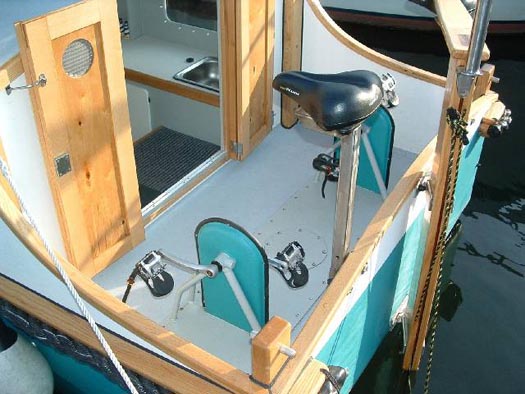
It is the shallow draft and relative compactness of the Escargot design that permits boaters manually to propel her, whether by oars and paddles, and or by pedal-powered propellers, and into more intimate waters. The cockpit of a European pedal-propelled Escargot is pictured below.

Beulah (above) features an elegant modification of the interior plan with a raised roof to create greater headroom. As compared with that unique approach to the interior, below are two more traditional interpretations of Thiel’s plan for living arrangements.


Study plans for Escargot, as well as full working drawings, can be obtained from The Wooden Boat Store website ( https://www.woodenboatstore.com/products/phil-thiels-escargot-study-plan-digital).

Hokusai and Mt Fuji


Hokusai (1760-1849), Fine Wind, Clear Morning (or Red Fuji), as it may appear at sunrise


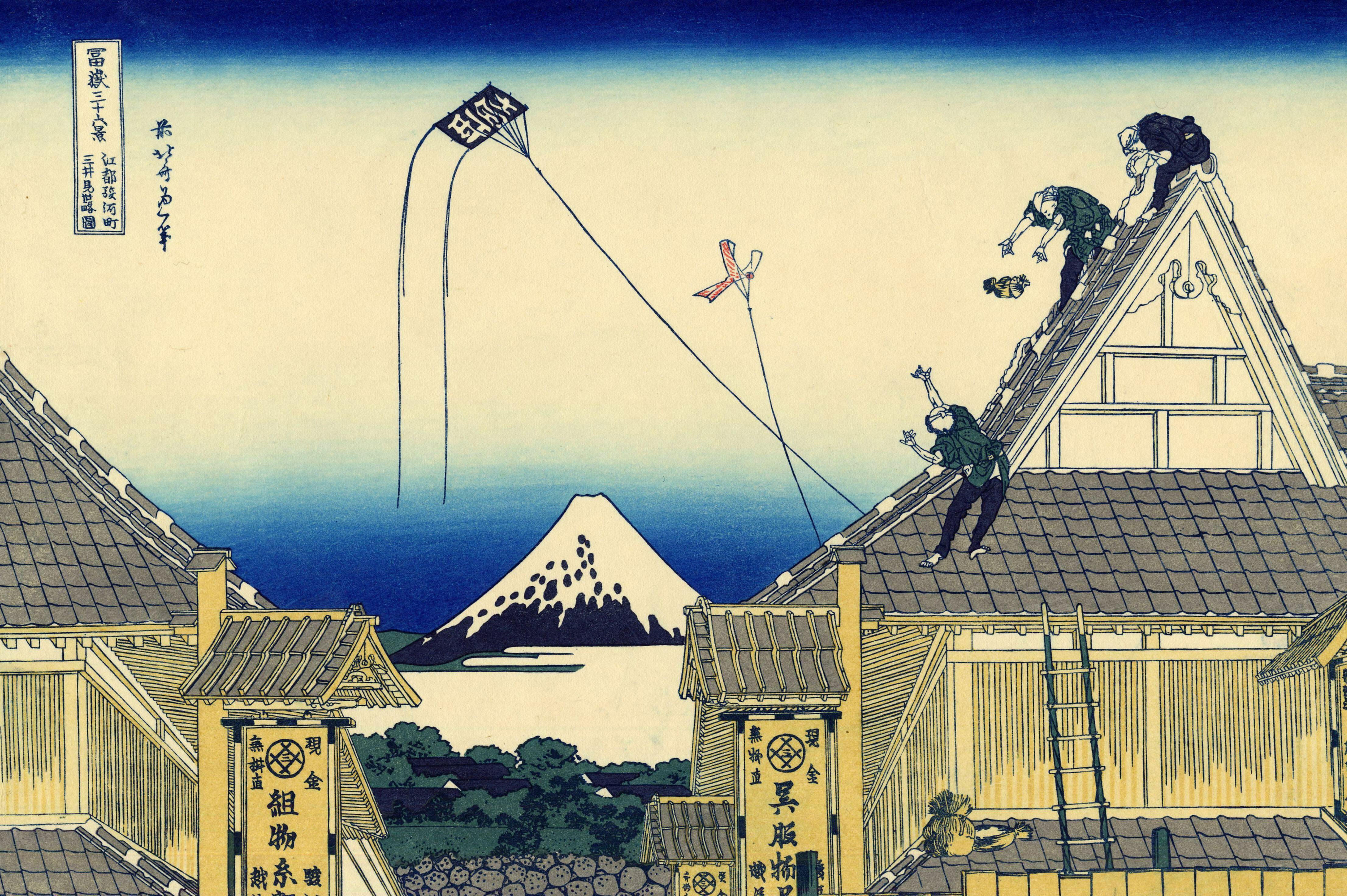
One of the most well known Japanese wood block print artists, Hokusai, has left a large legacy of much admired prints almost as well-known in the West as in Japan. He was a master of the medium and could produce some incredibly detailed images. Hokusai may be best known for his series of prints, Thirty Six Views of Mount Fuji, several of which I am featuring here. Having grown up in Japan, in Tokyo and Yokohama, seeing Fuji-San, as the Japanese refer to the (inactive) volcano, was a frequent and pleasing sight in good weather.

Among his Mount Fuji series, Hokusai’s image of The Great Wave off Kanagawa (below) is perhaps his most famous.

What strikes me about many of Hokusai’s prints was his willingness to produce a graphic simplicity that now looks distinctly modern, especially when depicting Fuji, even though many of his prints are 200+ years old. Unlike his Red Fuji (top image) he often decided to portray the mountain in a diminished scale or in a secondary way relative to the wider context depicted in some of his prints.

Here, above, is an example featuring a graphically simple rendering of the volcano. It is titled The Inume Pass, from the same Mount Fuji series. The image below is another from the set, once again illustrating his juxtaposition of attention to sometimes complex visual details alongside an appealing, almost flat or two dimensional simplicity when depicting Fuji. Hokusai’s portrayal of the contrast between white snow cover and the dark volcanic rock of the mountain is just how I remember it, with the dappled overlap between its upper and lower regions.

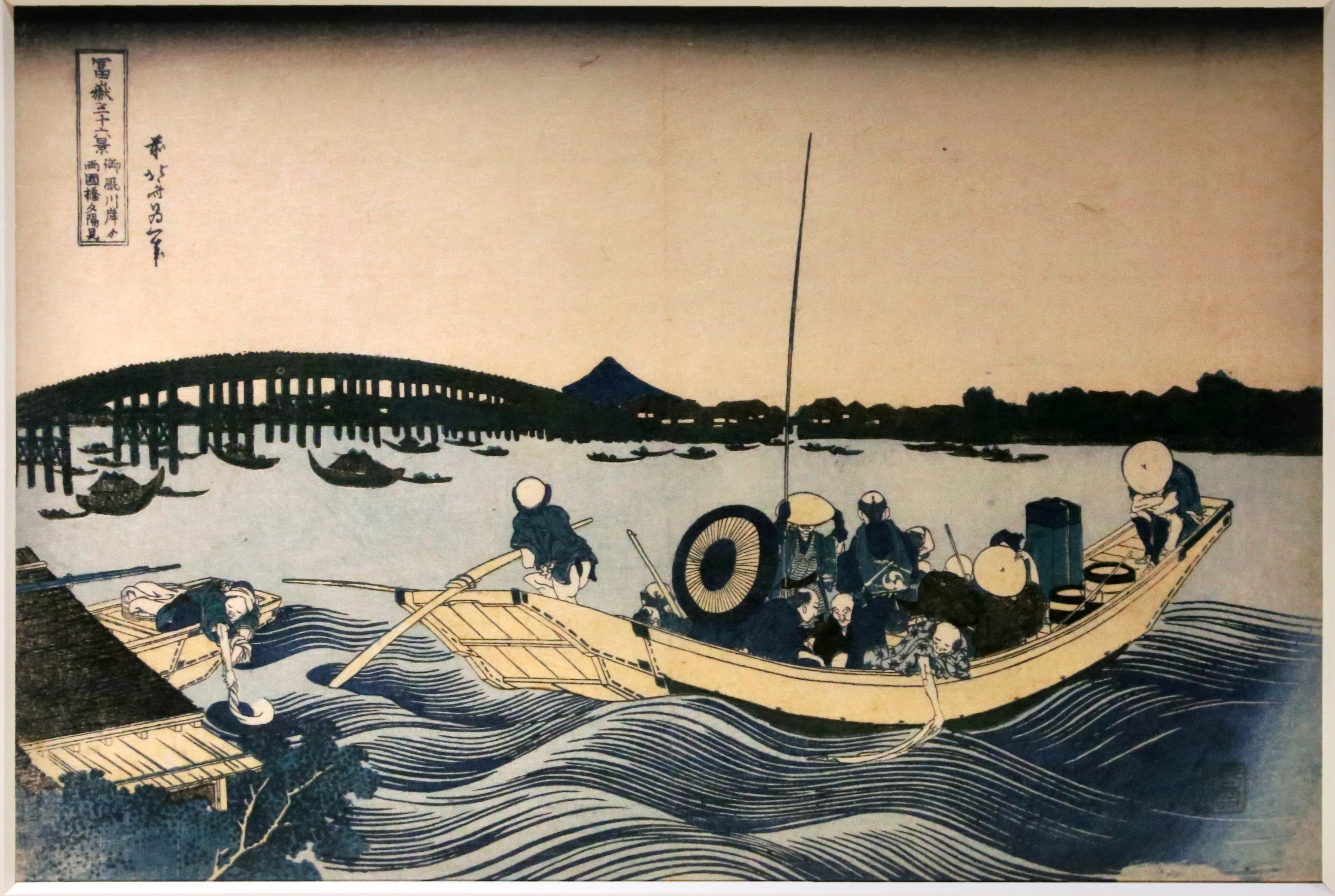
One of my favorite prints captures what appears to be an evening view of men in a boat (below), afloat above wind or current-stirred waves, with a great arching bridge and Mount Fuji again standing serenely in the distant background. With the sun having set in the west, the foreground of the mountain is in shadow – in this, the land of the rising sun.


More on Contrast and Continuity

The School of Athens, and The Disputation of the Holy Sacrament, by Raphael


Prompted by an article by William Least Heat-Moon, I reflect once again on two interrelated frescoes by Raphael. On his sometime-ago trip to the Yucatan, Least Heat-Moon was accompanied by his Mayan translator, Berto. There, the author encountered a destroyed Mayan temple. Regarding the temple’s relation to a later Christian cathedral occupying the same site, he quotes his translator.

“Many stones come from a Mayan temple that was long ago on this hill,” [said Berto, who] regretted this destruction. Yet to him, the broken stones imparted an additional dimension to the church because ancient Mayas usually did not destroy an earlier structure, instead building over it to layer meaning and power.

What an insight regarding contrast and continuity.

With that in mind, consider how visitors entering the Vatican Raphael room do so facing the fresco in the lower of the two images above. They behold a painting depicting an altar in a church space, surrounded by the Holy Trinity and famous saints and biblical figures. Turning around in that same space, visitors see the fresco in the upper image. It depicts great persons from the classical world, with Plato and Aristotle in the middle. Tour guides typically present these two paintings, which face each other, in terms of the contrast between them, saying things like: “Here, on this wall, we have the best minds of the pagan world. But, on the opposite wall, we see great saints of the Bible and the Church.”

We can look at these two interrelated paintings in another way. We might also see the continuity between them, even if the content of the two paintings seems rather different. For example, notice how the two frescos are composed with the same elements: similar colors and textures; the same arch over each image; and that the two spaces in which the figures walk or sit may be in the same building. And how the perspective or vanishing point in each painting mirrors that of the other.

Further, visitors who enter this room walk forward in the same direction as do Plato and Aristotle, who therefore share company with their contemporary pilgrims. Together, they and their later newcomers walk forward, approaching an altar surrounded by many saints! As a result, Raphael’s two paintings provide a splendid reflection on the theme of continuity.

Perceiving points of continuity between pre-Christian cultures and central themes in Scripture and in Western Christian theology has historically been more typical of the broader Catholic tradition, which includes not only Roman Catholics but also Anglican as well as some Reformed theologians, poets, and hymn writers. A contrasting parallel is provided by a historic tendency among many Protestant writers, preachers, and theologians, who have stressed a discontinuity not only between a Christian and a pagan view of the world, but often a perceived antithesis between them. This may caution us about making an ‘either/or‘ of what some may perceive as being a ‘both-and.’

Some who commend Celtic spirituality offer a compelling observation about Christian holy places in Ireland. Celtic crosses can often be found in or among pre-Christian places of worship. To the extent that this is so, we discern an openness to perceiving continuity. That is, a continuity between a place previously associated with a pre-Christian form of religion, and a later Christian willingness to pray and worship at the same location. Here, we should note a significant distinction.

Continuity does not imply sameness nor equivalence. There may be similar elements between what was before and what may come after. Such similarities do not obviate the potential newness and difference of what arrives later. Yes, the ‘new’ may bring change by covering over and even by replacing what came before, an approach typically characterizing contrast and discontinuity. Yet, the ‘new’ may bring change positively, by building upon what came before while also including and transforming it. No finer example of this exists than the Pantheon in Rome, also known as Basilica of St. Mary and the Martyrs.

All this has implications not only for the Christian transformation of places but also for how we view the baptismal transformation of people.


The images above are of two of Raphael’s paintings, traditionally titled The School of Athens, and The Disputation of the Holy Sacrament. My prior blog post on these paintings may be found here: https://towardbeauty.org/2019/09/28/the-beauty-of-contrast-and-continuity/ . That post is based on my homily for Sunday, September 22, 2019, which can be accessed by clicking here.

Frank Lloyd Wright’s Guggenheim Museum


The Guggenheim Museum, 5th Avenue, NYC (1959)


What a wonder it is, sitting there so apparently out of sync with its neighboring buildings. Instead, Frank Lloyd Wright’s Guggenheim Museum seems to reach out toward the great park across the avenue. Critics sometimes lament the museum’s apparent disconnect with its context. Yet, others – I among them – rejoice at that discontinuity, given its so many linear, box-like surrounding buildings. When commissioned to add a companion tower adjacent to Wright’s spiral masterpiece, rather than compete with it, Gwathmey Siegel & Associates produced an astute counterpoint in a large rectangular structure with a neutral limestone facade. The tower beautifully keeps our focus on the lyrical curving form of the original museum, as well as expresses continuity with nearby buildings.

Like many, I find when visiting this building a remarkable refreshment of spirit, and experience within it an enhanced sense of life. For the museum provides a context fitting our inclination toward what is spiritual, not merely to what is material. As with the earlier precedents of Wright’s Unity Temple, Oak Park, and the Johnson Wax headquarters, Racine, it surely has to do with Wright’s attention to natural illumination from skylights. Whether or not one walks from the top level down at the Guggenheim, as Wright envisioned, or from the ground level up, the visitor’s eyes are drawn up within the swirling interior space to the light above, gracing the whole through the great oculus of the circular skylight.

An evident facet of this highly sculptural building stems from its late 1950’s time of construction – how the exterior walls of the concrete spiral ramps reveal a degree of unevenness in their outward surfaces (top photo). This was and is a humanly made building, reflecting our highest aspirations in terms of design while also some of the limits of our historic craftwork with materials.

Wright’s Guggenheim Museum is appropriately ranked among examples of world-class architecture. Both lauded and criticized at the time of its opening, it has taken decades to be matched by the work of another master of the medium, Frank Gehry, architect of the Bilbao Guggenheim in Spain. Like Wright, he could envision and then design structures exploring the plasticity of modern materials and building methods. It is well to recall that Wright was in his 70’s when he began to create the plan for the Guggenheim (in 1943), and near his 92nd birthday when it was completed in 1959, delayed by the postwar recession.

Guggenheim Museum, Interior View (note the red Calder mobile)

Paul Horgan, while reflecting on the buildings of John Gaw Meem, offered words I find so fitting to Wright’s achievement on Fifth Avenue. “As one of the only great arts to offer physical shelter not only to [our] works but also to [our] spirit, architecture can convey directly the sense of an enclosing confirmation of [our human] desire to believe in a sustaining power beyond [ourselves].” With the Guggenheim, Wright not only achieved a magnificent context for the display of art, but also created what has become “a temple for the human spirit” (a phrase used in the terms of his commission).
This building does not stand alone. An amazing aspect of Wright’s architectural career is not only that he had the visionary imagination to conceive of so many remarkable structures, the audacity to commend them to potential clients, and the providential support for his proposals from so many well-funded benefactors.

With the Guggenheim, beauty ‘incarnate’ is embodied in construction materials and in a form that transcends what we typically expect now in architecture. Here we encounter a building that nurtures aspiration for what may be next in life. It may even prompt an unexpected experience of hope and joy for what it means to be human.


Meem and Territorial Revival Style

La Quinta, Interior Courtyard and Pool, 1938

La Quinta, Exterior

John Gaw Meem’s appreciation for and promotion of the Spanish Pueblo Revival approach to architectural design is closely associated with what many call the Santa Fe Style. Yet, as early as the late 1920’s, Meem is also credited with initiating another style, Territorial Revival, which also became prevalent in the city and region. While continuing to use wall surfaces and color tones suggestive of adobe, Meem and his associates began to introduce into their building designs some Greek Revival features that date back to the late 18th and 19th centuries. As we see in the photos of La Quinta, above, among these features are a return to an evident employment of symmetry, the specification for lintels above windows and doorways, and often with triangular pediments. Also, instead of untreated wood or dark stained columns we find Meem choosing whitewashed uprights matching a similar choice for window trim as well as for the doors.

A good example of Meem’s transition to this Territorial Revival style can be seen in the details of the porch area of  the 1928 Conkey Residence (below). Though painted a teal color, the windows have received their triangular pediments, and we see ornamental detailing on the shutters as well is in the scrollwork forming a porch rail. These features, as well as those noted above, characterize a move away from his more imitative Pueblo style and indicate a preference, likely influenced by some clients, to incorporate architectural elements suggesting an increased formality and an evident dialogue with earlier and classically inspired design.

Meem’s first public building employing this style was the Federal Emergency Recovery Act building (below, 1934), funded by the Depression era Works Project Administration. Similar to the slightly later La Quinta, we notice the brick cornice aligning the top edges of the exterior walls, similar to interior crown molding, which also echoes an aspect of classically inspired design.

Federal Emergency Recovery Act Building, 1934

Meem’s approach to architecture, with both his Spanish Pueblo Revival and his Territorial Revival styles, might suggest an anti-modernist rejection of contemporary European inspired design principles in favor of an adherence to an evident regionalism. Yet, Meem contended that his architectural work effectively blended aspects of modern architecture with a sensitivity to both local history and contextually appropriate materials. Even when working with concrete for the Colorado Springs Art Center, perhaps his most International School-looking building (which evokes European modernism / featured in a prior post), Meem sought out a formula for the poured mix that would render the color of the walls a warm cream tone instead of a cool gray.

Santa Fe County Courthouse (1939)

Meem’s Santa Fe County Courthouse (depicted above) reflects an interesting hybrid between the Spanish Pueblo Revival and the emerging Territorial Revival styles. There are marked outward similarities between this structure and his earlier pueblo style buildings and yet also some rather divergent details. This view of the building’s courtyard entrance (recently restored) reflects a creative blend of influences, including historic pueblo buildings, a Spanish design sensibility, and yet also a nod to modernism, most evident in the massing of structural forms as well as in the turquoise clad windows punctuating the walls of the side wings.

John Gaw Meem’s Churches


Cristo Rey Church, Santa Fe (exterior / front entrance)


John Gaw Meem, some of whose public works I featured last week, was the son of an Episcopal priest and professor who also served as a missionary in Brazil. When discerning his vocation as an architect, Meem was drawn to projects involving the design and construction of new churches as well as the preservation and renovation of historical examples. With his churches, he most clearly demonstrated his early commitment to Spanish Pueblo Revival architectural design. Numerous examples exist, but here I would like to focus on a few key projects that well represent his approach.

A memorable instance is his Cristo Rey (Roman Catholic) church (1940). The solid massive forms of the asymmetrical towers abutting the entrance portal contrast nicely with the detailed attention to pattern and ornament in the woodwork between them. This is evident both on the door as well as in the porch and the corbeled beam above it, which in turn supports the vigas (or exposed beam ends).

Cristo Rey Church, Santa Fe (interior)

The interior of the church is just as evocative, which provided a new context for an historic altar reredos of carved stone. Not only does this 20th century building complement the centuries older altarpiece, Meem’s attention to lighting is particularly effective. A skylight or window above helps illuminate the textured form of the stone carving, while also drawing attention to the area upon which the liturgy is focussed.

Below are two churches Meem designed for the wider region around Santa Fe and to the west of Albuquerque, at roughly the same time.

Saint Anne and Santo Tomas churches, thanks to Stanford Lehmberg’s, Churches for the Southwest

With these two examples, we see very similar features to what we find in Cristo Rey, albeit in more rural circumstances. Cristo Rey, and Santo Tomas in particular, display an homage to the exterior form of the historic church at Ranchos de Taos, NM (depicted immediately below), memorable from a painting by Georgia O’Keeffe and the photography of Ansel Adams.

San Francisco de Asís Mission Church, Taos, NM (late 18th century)

An especially notable and earliest example of Meem’s exploration of the the recovery of a Spanish Pueblo approach to church architecture is his Taylor Memorial Chapel, at La Floret, Colorado Springs (below).

First designed in 1929, the building incorporates a beautiful painted and sculptural reredos, as well as decorative tile surrounding the doorways, by Eugenie Shonnard. Despite some early-recognized construction issues related to the stucco used on the exterior, the chapel remains a well-used venue today as part of a conference and retreat center.

At about the same time as Meem’s project for Cristo Rey in Santa Fe, he was commissioned to design a new church for the First Presbyterian congregation of that same city. Once again showing his appreciation for the outward form of the Ranchos de Taos church, Meem produced a plan for a building that also remains in active use, with some renovations.

First Presbyterian Church, Santa Fe (exterior and interior views / 1939)

This congregation’s commission of Meem for their new building was as much a testament to Meem’s reputation as an architect as it was a marked preference for a prevailing local style increasingly adopted in the wider community. It is remarkable to see a Presbyterian Church within the Reformed tradition of Christianity adopt and be comfortable with worship in a church whose architecture is so obviously indebted to the aesthetics of 17th century and later Spanish Roman Catholic design, and so heavily influenced by regional pueblo architecture.

The Architectural Vision of John Gaw Meem

Renovation and Extension of the La Fonda Hotel, Santa Fe (1927)


John Gaw Meem is generally credited with having led the recovery and promotion of an historically Spanish-Pueblo Revival approach to building design in the central district of Santa Fe, NM, as well as in its environs. Warm tones in beiges and browns adorning the surfaces; soft rounded edges and corners characteristic of adobe buildings; a general preference for asymmetry; slightly upward sloping walls with accompanying exterior buttresses; and protruding beam-ends of the flat roof supporting logs evident also in the interior ceilings; all these and more are features of this recognizable ‘style.’

Yet, speaking of ‘style’ may create a misapphrension. Whereas more recent contractors and builders may imitate some of the above mentioned features in homes now quickly built for mass consumption, John Gaw Meem pursued an informed appreciation for the structural character and integrity of his region’s most important historical buildings. He as diligently applied himself to the practice of historical preservation as he did to his own genuinely creative work, where he typically disciplined his architectural vocabulary so as to remain faithful to the traditional features he so intentionally studied.

Depicted above is the result of his design for a renovation and extension of the historic La Fonda Hotel in Santa Fe, a project that seems to owe as much to the historic Taos Pueblo as it does to modern needs and sensibilities. Set side by side with the above, we can consider Meem’s great achievement with the main library for the University of New Mexico, in Albuquerque, a sizable institution for which Meem designed and / or oversaw the planning of some 25 buildings after being named campus architect in 1933.

Zimmerman library, exterior main entrance (1936)

Zimmerman Library, interior courtyard

Zimmerman Library, interior view

Here we find two distinguished buildings, the La Fonda Hotel extension and the UNM Zimmerman Library, separated by less than a decade in terms of their design and construction, which both exhibit Meem’s sensitive appreciation for the legacy of Spanish-Pueblo architecture, as well as its adoption by the diverse immigrant culture of the Southwest.

Like the writer, Walker Percy, John Gaw Meem came to discern his vocation in the context of receiving care for tuberculosis in a sanitarium. For Percy, it happened in upstate New York, whereas Meem found himself and his guiding vision in Santa Fe. From small beginnings involving private commissions for houses, Meem expanded the range of his work to also include commercial buildings, historically-informed designs for new churches as well as the restoration of historic examples, and structures providing for the functional needs of public eduction that were equally attentive to humane and aesthetic considerations relevant to a learning community.

One of Meem’s highly regarded projects for a public building was his Colorado Springs Fine Arts Center (1934), a building reflecting the European modernist influence of his era as well as echoes of design ideas implicit in his obviously pueblo-adobe inspired buildings. This project clearly demonstrates how Meem’s high regard for historic precedents did not inhibit his ability to work more freely in a contemporary way, adapting chosen materials and design principles to emerging requirements.

Here (below) is a photo of Meem standing on a balcony of the original theatre of the Colorado Springs Fine Arts Center.

In the future, I look forward to offering a post related to some of  Meem’s designs for homes, as well as one featuring his evocative contributions for Santa Fe area church architecture.

Evidence of his influence: the Meem Library at St. John’s College, Santa Fe, by David Perrigo, inspired by and in honor of JG Meem

On Donkeys and Horses


I would like to return to a quote from Psalm 147:10, the wider significance of which may not be apparent. In my most recent post, I reflected on the contrast between the Psalmist’s assertion concerning God’s lack of delight in the strength of a horse, and God’s probable appreciation for the beauty of the same.

But what lies behind that stark observation by the Psalmist? The answer may be found in many images from within the Bible, and can most readily be seen in the dramatic story of Jesus’ entry into Jerusalem.

As James Tissot vividly portrays the moment, Jesus enters Jerusalem to acclaim and praise, riding on a donkey rather than a horse. At that time, many armed and horse-mounted Roman soldiers entered and left this city as they did to and from many others across the Empire. But not the Prince of Peace, who arrived without earthly weapons upon a humble beast of burden.

This is in keeping with a significant body of biblical imagery where horses are associated with military and / or government power. A most dramatic example is found in the story of the Israelites escaping from Egypt, pursued by “the chariots of Pharaoh and his army.” Exodus, in a passage often termed ‘The Song of Moses,’ gives voice to Israel’s joyful recollection about the event: “I will sing to the Lord, for he is lofty and uplifted; the horse and its rider has he hurled into the sea.”

Jesus’ entry into Jerusalem on a donkey is not only a historical recollection; it also provides a legendary association with the unique physical markings of that animal. Donkeys have two perpendicular stripes on their backs, one running from the neck to the tail, and the other forming a cross as it runs down over the shoulders.

Hence, the poetic observation that the one who entered Jerusalem riding on a cross was lifted above it on a cross. The one who refused to enter the city posing as a challenge to military authority, was himself subject to its power and in its most brutal form. So, the one who arrived possessing spiritual authority chose not to act with worldly power. He was then subject to a military power whose authority was compromised.

As I have previously suggested, horses have provided an image of beauty through a long history of their portrayal in various art forms. Yet, those magnificent animals have an even longer history of association with military might and conquest, and the subjugation of peoples less prepared to defend themselves. Consider how the historically recent introduction of the horse transformed the lives of native American peoples and their community relations with others. Yet, the humble donkey (or burro or ass), more diminutive in stature, and which so readily bears our burdens, has a beauty of its own. Though sometimes less deferential to human guidance than many horses, a donkey’s physical presence is less likely to be intimidating despite its demonstrable strength and endurance.

The Beauty of an Appaloosa Horse

While composing a prior post on the beauty of a horse, I was reminded of a portion of the Pslams – “{The Lord’s} delight is not in the strength of the horse (PS 147:10).” Yet, God must surely delight in the beauty of a horse, a possibility that may have occurred to some of us during the recent Triple Crown racing season and / or through admiring Dega’s renditions of race horses. Perhaps the Lord especially delights in the breed of horses known as Appaloosa’s.

Traveling back and forth between Japan and my parents’ birth home area of Minneapolis, we met a family on one of the voyages across the Pacific who had a ranch in Montana. Among the many wonderful discoveries during multiple visits there was the beauty of the Appaloosa. A ‘spotted backside’ might not at all be desirable among humans and some other living beings, but in my view this common Appaloosa trait provides one of the most compelling amalgams of both solid color and random patterning that I know of in the animal world.

Most closely associated with the Nez Perce nation among indigenous American peoples, the breed initially suffered along with the decline of the community propagating its existence in the latter 19th century. Yet, despite that sad history, and perhaps because of its compelling beauty, the Appaloosa breed of horses has since thrived.

Our friends’ ranch had numerous Appaloosas, but three that I remember fondly, and for differing reasons. One, named Lonesome, a striking looking horse, had Thoroughbred blood lineage and was tall and slim, with a reputation for being occasionally arbitrary as was another more dramatically colored one named Blue. Leo, like Lonesome, was mostly spotted all over but, when first seen with his more compact and robust physique, could be identified as having an American Quarter Horse lineage.

My favorite, the one with whom I became most familiar, was Marble, a mare of not-readily-evident Appaloosa lineage, among which some are almost white and others appear almost black. Marble looked like a common brown Morgan horse, except for one distinctive detail – she had one blue eye, like one sees in some Australian shepherd dogs. Unlike the sometimes mercurial Lonesome, and the sometimes stubborn Leo, Marble would let me bridle her in the pasture, lead her into the stable next to the tack room, and saddle her without much difficulty.

An Appaloosa gelding, with a Morgan-coloring like “Marble” (note the slight brindle pattern)

The patterned coat commonly associated with Appaloosa horses may be an acquired taste, much like variegated plants among gardeners. I find horses of this background stunning to look at, and I especially appreciate how they have often been portrayed in Western art, such as in the paintings of Charles M. Russel (whose expressive Western-themed paintings I hope to feature in a future blog). It tells us something about the aesthetic sensibility of the Nez Perce that they they would have pursued breeding and cultivating the bloodline of these horses, not only for their utilitarian value but also for their sheer beauty.