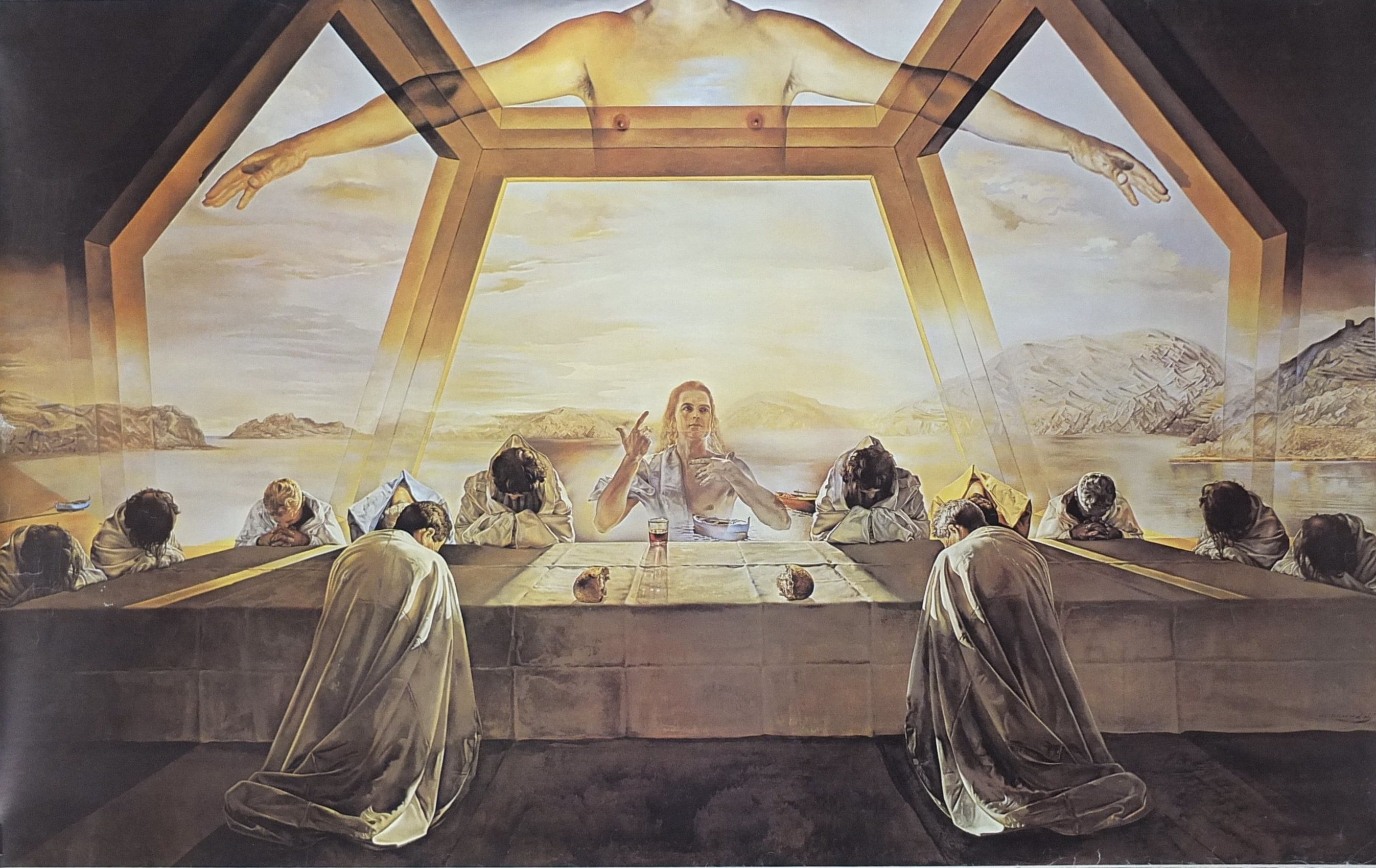
Spirtituality

The Beauty of Gandhi’s Example

If reading this by email, please tap the title at the top to open your browser for the best experience. Then, clicking individual pictures will reveal higher resolution images.


Mahatma Gandhi remains one of the most revered and idolized figures in modern history. And yet, also, one of the least imitated. His life and thought provide a compelling example that may not be well understood. Asked about this, he might have said, “It’s all rather simple,” and summarize his life’s work with a Kantian principle derived from Jesus: treat one another as you would have them treat you.

“Simple” is sometimes another word for “naive.” In Gandhi’s case, it is otherwise. His journey through life, well-depicted in Richard Attenborough’s fine film, taught Gandhi many things and led him to a wise integrity few others seem to have attained. He learned much through arduous experiences. Gandhi’s uniqueness may lie in how he synthesized his learning with the result that he achieved greater maturity and a resoluteness of character. His personal growth involved a practiced disposition toward honesty, reasoned adherence to principles, and a profound simplicity of manner in life choices.

Gandhi in conversation with his friend, and India’s first Prime Minister, Jawaharlal Nehru

For many, Gandhi’s life story brings to mind the word ‘pacifism.’ More nuanced is the label, ‘non-violence.’ Yet both terms need further qualification. Pacifism and a non-violent response to aggression often reflect a belief that violence (and therefore war) is not governed by reason, and therefore cannot be disciplined or limited by principled reflection and deliberation. Hence, according to this view, no matter how destructive violence may be, responding in kind – even if proportionately – always compounds the evil.

Gandhi’s approach to the evil he apprehended and experienced was indeed reasoned and principled. It was shaped around a resolve that active, non-violent resistance must be distinguished from passive non-resistance, precisely because the former can provide a compelling witness to reasoned propositions. In this sense, Gandhi’s non-violent resistance serves as an active approach in antithesis to a passive, non-violent, approach of non-resistance.

Gandhi – demonstrating active resistance – deliberately harvesting salt in violation of British dominion law

James Douglass’ book, Gandhi and the Unspeakable, helps us understand Gandhi’s adherence to the concept of satyagraha, or truth-force. For Gandhi, this principle nullifies the pursuit of social and political ends through violence. Identified by Thomas Merton in an essay on Gandhi, satyagraha is conceived of as a universal, rather than individual, feature of what it means to be human, articulated in the words, “truth is the inner law of our being.”

This truth-force is manifest in substantive rather than sentimental love. It can be discerned and honored within oneself, while it can – and must be – discerned and honored within others, especially as one confronts evil in human relations. Because this is so, one who seeks to enact this principle can honor all others with trust. Even – counterintuitively – to honor one’s opponents and sworn enemies, because one’s trust becomes anchored in our shared humanity rather than in a calculation of the probable harm that may result from engagement with those others.

Giving primacy to this principle provides the courage to believe that we can die to all that puts us against one another, and therefore the courage to face the death that others may plan for us. Merton and Douglass find this truth-force embodied in the person of Jesus, and with Gandhi, see it as a powerful example of what can profoundly transform human social and political relations. As Douglass explains, Gandhi knew his assassins, and even invited the man who eventually killed him to live with him following that same man’s earlier attempt on Gandhi’s life.

Perceptive hearers of this past Sunday’s Gospel reading from John might wonder what Gandhi would make of Jesus’ actions in the Temple. John tells us that Jesus made “a whip of cords” and drove out those selling animals, or exchanging Roman coins for money acceptable as offerings in Israel’s house of worship. The ambiguity of John’s account makes clear that Jesus at least threatened violence even if he did not resort to it. For his whip was directed not simply to scattering the animals of those selling them, but also against the money changers. Readers may note that some actions of Jesus in the Gospels may have been intended less to model ethical conduct for his followers, and instead to give evidence of his providential and messianic role in history. Much may be inferred from this brief “Temple-cleansing” story.

Given how our culture encourages us to see life in an either/or way, we may be surprised to discern how much the Hindu Gandhi seems to have learned from reading the Gospels. We may also be surprised by how Gandhi’s beautifully lived example – regardless of his personal strengths or failings – may help us discern what the Gospels have yet to teach us.


The reference to the Gospel reading is from John 2:13-22, which helpfully can be compared to its Gospel parallels. James Douglass, with his personal history as a religious scholar of spiritual approaches to questions related to conflict, violence and war-making, brings an informed and insightful perspective to the study of Gandhi, as he did earlier to the wide-ranging circumstances leading to the deaths of Martin Luther King, Jr., Malcom X, and John F. Kennedy.

Note: blog settings have been changed to provide more opportunity to offer comments, using the link below.

Helen Nearing and Beautiful Stone Walls

If reading this by email, please tap the title at the top to open your browser for the best experience. Then, clicking individual pictures will reveal higher resolution images.


With the visionary but also impractical exuberance of youth, I graduated from high school imagining I would build my own house somewhere in New England. My design ideas were shaped by Frank Lloyd Wright while my notion of ‘responsible living’ was largely influenced by Henry David Thoreau as well as Helen and Scott Nearing. While already loving Wright’s architecture, my high school English teacher, Nick Fleck, opened a compelling new world for me through reading and learning about Thoreau and the Nearings. I identified with these mentors and the values they shared regarding building homes for themselves, and of living in harmony with the land.

Through books and articles, I then discovered an unexpected complementarity between the Nearings’ approach to home building in Vermont and Maine, and Frank Lloyd Wright’s method of construction at Taliesin West in Arizona. In what some call slipform masonary construction, builders first erect wooden forms. Between them, stones and cement are poured and allowed to set, creating walls and support pillars for the resulting structures. This method allows for considerable design flexibility while also being very economical, especially when field stone is readily available.

The Nearing’s stone house in Vermont

With the Nearings, the results reflected European and early American traditional influences in their desire to achieve an economical simplicity that was harmonious with the terrain upon which it was situated. For Wright, the plasticity of the method allowed for the creation of non-traditional walls and roof supports of varying angles and sizes. Just as concerned as the Nearings with what he called “an organic architecture” accessible to the common person, FLW – like them – sought to create a home and work environment rooted within a site while employing locally or regionally found materials when feasible. Whether or not the Nearings ever met Wright, they were clearly kindred spirits. In their most well-known book, Living the Good Life, they quote Wright in the chapter relating their stated “principles of architecture.”

Helen Nearing (facing viewer) in the gardens outside the later ‘home made of stone’ in Maine

Drawing from FLW’s writing, the Nearings articulated four general rules that should bear upon the design of domestic architecture. “Form and function should unite in the structure…; buildings should be adapted to their environments…; local materials are better adapted than any other…; {and} the style of a domestic establishment should express the {residents} and be an expression of themselves…” Clearly, the Nearings were more successful honoring that fourth principle than Wright generally was with respect to the wishes and temperament of his clients!

Helen and Scott Nearing identified several reasons for their choice to build their homes and outbuildings with stone. Stone buildings look natural in their setting; these found materials provide a variety of muted but attractive colors; sturctures made of stone are durable, practical, and economical to maintain; and buildings of this kind are less vulnerable to fire, while retaining coolness in the summer and warmth during the winter. For the Nearings, a decision to benefit from all these advantages of working with local stone was made more easy by their desire and willingness to build the structures themselves, thereby saving the financial cost of labor along with a reduction in the cost of materials.

Scott and Helen Nearing at work on a wall

Given their preference for this building material, the Nearings shared an advantage also enjoyed by Wright in Arizona – plentiful local stone with which to work. Many New England fields and forests are strewn with pieces of rock. People in Louisiana who enjoy landscaping, wish they could take for granted finding stone in such abundance. By contrast, the Vermont homesteader wishing to put up some simple but immensely practical buildings, from tool sheds to houses, can begin with a wheel barrow and a pair of gloves. Two other items are needed: cement mix in adequate quantities, and wooden forms within which the walls are to be fashioned. Happy to work without mechanized tools, the Nearings used a wheelbarrow to gather the stone, mix the cement, and transport both to where they were needed.

Two photos of Taliesin apprentices at work building slipform walls

Another point of continuity between the Nearings’ and Wright in their approach to how we might best live was the way in which they attracted large numbers of young visitors and students. With both FLW and the Nearings, those who came and stayed sought to learn about the life and work of their mentors not merely in a intellectual way, but share in it holistically. The Nearings and Wright, in their different spheres of concern, nurtured communities of fellowship and learning. This helped them influence generations of young people who, led by the example of their teachers, lived into a deepened appreciation for significant principles to which one might commit a life.

The finished result of slipform construction at Taliesin West

Helen Nearing in front of a wall she built with Scott


For more about Nick Fleck and his influence upon me and many others, please see my prior post, “The Beauty of Asking ‘Why?’” Helen and Scott Nearing’s farm in Maine is preserved as a living legacy, and is maintained as The Good Life Center (https://goodlife.org/about/).

Here is a link to my earlier post featuring some house design ideas I imagined building for myself, “The Beauty of FL Wright’s Influence” (https://towardbeauty.org/2023/02/15/the-beauty-of-fl-wrights-influence/).

Note: blog settings have been changed to provide more opportunity to offer comments, using the link below.

The Beauty of Asking “Why?”

If reading this by email, please tap the title at the top to open your browser for the best experience. Then, clicking individual pictures will reveal higher resolution images.

Back cover photo from Natural Sustenance: Selected Poems, by Nick Fleck


“Why?” It all started in a seemingly innocuous way. “What do you want from this course,” he asked. A brave one among us ventured the answer that some of us were thinking, but were not honest enough to say: “an ‘A’.” Our English teacher, Nick Fleck, responded to my classmate in a neutral way, with a further question, “Why?” Our fellow aspirant to higher grades began to offer pretty typical answers, unoriginal and unsurprising. “I want a high GPA. (Why?)… I want to get into a good college. (Why?)… I want to get into a ranked law school. (Why?)… I want a good job at a high powered law firm. (Why?)…”

Gradually the pauses before our classmate’s answers became longer. And while his responses still sounded plausible, they seemed less and less assured. That first class session set the tone for the rest of term, as over time Nick prodded all of us to articulate answers to questions like these. And nudged us toward answers that were more and more our own, and less dependent on our peers, our parents’ expectations, and our perceptions of the uncertain world outside our rural New England prep school.

Why? The question at first provides an invitation to share acquired knowledge, display settled opinions, and voice aspirations. But the question can also be unsettling, especially when we begin to run out of platitudes and ‘safe’ answers that don’t require self examination or being open to adopt a different perspective.

I can’t fully explain why, out of a class of some 350 or so fellow graduates, I was one of only 3 or 4 who did not go directly on to college. But Nick Fleck’s persistence in challenging us to think for ourselves played a big part in it. Temperamentally, I was and am a self-learner, which disposed me toward pursuing that risky path (“…in a blind career…,” as in a line from a poem Nick had us read). Naive self-confidence also bolstered my willingness to undertake a journey on what appeared to be a largely untested road. I wanted to be an architect and to make art, and those whom I most admired had embarked upon their careers in earlier times by this same route through apprenticeship and self-study.

Having been so consistently asked why, I made the question my own and began asking it in a self-referential way. Why did I want so strongly to embrace and try to create what was beautiful? Why was this important to me… and to others apparently walking the same path? Why was I then beginning to wonder whether this was good and, if so, to what end? And why then was I going on to ponder what was good for its own sake as compared to things of passing significance?

Within a year, after living in New York City seeking non-existent apprentice drafting positions during the ‘oil crisis,’ I returned hesitantly to formal schooling. My college art studies were interrupted by another sideline, driving a forklift in a warehouse freezer for six months as a Teamster. Then, surely to my parents’ relief, asking why led me on a more traditional path, from art history to classics and medieval studies, during which I experienced an unanticipated spiritual conversion. All the while I was living with the same question: why?

Nick Fleck was not a religious man in any sense that I could discern, though he was clearly attuned to the ethical principles exemplified in Thoreau’s writing, and latent in poems he would have us read. I think it greatly surprised him when, returning for our 25th reunion, I gave him credit for setting me on the path that led to my conversion, ordination, theological studies, seminary teaching, and parochial work – experiences not readily familiar to him. But he was the one who persistently asked why, and who invited us to own the question for ourselves.

This week I realize that Nick’s great question was at the heart of the Disciples’ questions when Jesus predicted his forthcoming suffering and death. Nick’s question is simple, and perfect for Lenten reflection.


I was happy to see an article in the Greenfield Recorder noting how Nick Fleck had founded the Northfield (Mass.) Bird Club and was still active in leading bird walks. I trust that he continues to write and share his poetry, and help open new worlds to young persons. He helped us to discover the power latent in the word, “why,” especially when posed as a question.

The recent movie, The Holdovers, was partly filmed at my school, Northfield Mt. Hermon, and is set in exactly the time period I was there. During those years, I was in the chapel depicted within the movie a couple of times each week for required assembly gatherings. Seeing my school again during my 50th graduation anniversary year has obviously brought back memories.

A recent gathering in Northfield Mt. Hermon’s Memorial Chapel.


Note: blog settings have been changed to provide more opportunity to offer comments, using the link below.

Rousseau and Wilderness: Redemption in Nature?

If reading this by email, please tap the title at the top to open your browser for the best experience. Then, clicking individual pictures will reveal higher resolution images.

Henri Rousseau, The Dream (detail), 1910


What does it mean for God’s grace to be present in nature? Or God’s mission of Redemption to be at work in what Christians view as a fallen Creation? The Gospel for this coming Sunday, with Jesus tempted in the wilderness, might prompt us to think about such things. An unexpected way to do this is to juxtapose Mark’s surprisingly brief ‘temptation narrative’ with Rousseau’s jungle-like images of a state of nature.

How shall we understand Mark’s account of Jesus’ being tested in an inhospitable place? And how does Rousseau conceive of the natural state of what Christians think of as Creation? A painting by Rousseau helps set the scene:

The Sleeping Gypsy, 1907

In light of it, we can consider the two verses that Mark devotes to Jesus’ temptation:

The Spirit immediately drove him out into the wilderness. And he was in the wilderness forty days, being tempted by Satan. And he was with the wild animals, and the angels were ministering to him.

Only two verses are accorded by Mark to this rather pivotal event, to which Matthew devotes 11, and to which Luke gives 12. The way that Matthew and Luke refer to the wilderness of the temptation suggests that it is a hostile context for Jesus’ encounter with the Tempter. In both of these longer Gospel texts, three principal temptations are identified, which occur following Jesus’ forty days of fasting. The three were: to feed himself, to become a wonder-worker, and to receive the adulation of the world’s kingdoms. Matthew adds that Jesus received the ministration of angels following – rather than during – his period of trial.

Whereas Matthew and Luke present the wilderness as an unpromising environment for Jesus’ challenging encounter with his adversary, Mark’s spare account of the event and its setting allows for a rather different reading. We can pose the matter in the form of two questions shaped by Matthew and Luke’s narratives.

Does Mark present the wilderness temptation of Jesus as being in a difficult place due to the presence of the Tempter and because it is filled with prowling and potentially dangerous wild beasts?

Man Attacked by a Jaguar, 1910

Or, does Jesus’ desert encounter in Mark represent not so much the threatening last gasps of a rebellious and dying world, but the first breaths of a life-giving new one, just now coming to be?

The Waterfall, 1910

Rousseau’s painting of the sleeping woman and the nearby lion, above, provides an image of harmonious coexistence in a place shared by a human being and the proverbial king of beasts (an ‘alpha predator’). In other words, Rousseau – in some of his paintings – portrays an ideal image of the original state of nature, the biblical Eden, before nature became ‘red in tooth and claw.’

A Woman Walking in an Exotic Forest, 1905

If so, then Mark’s statements that Jesus “was with the wild animals,” and also that “the angels were ministering to him,” may reflect what Christians have come to think of as ‘the peaceable Kingdom’ and ‘the New Creation.’ Which then suggests that – in Mark – the wilderness was good place despite the presence of the Tempter.

I am drawn to how Rousseau depicts the natural beauty of what we often describe as ‘wild nature,’ portraying it in both inviting and in cautionary ways. He paints it as a context of harmonious interrelation between human beings and animals in a shared environment. He also paints it as being a context where animals are a threat to one another and to humankind. Rousseau’s painting of Eve hints at both possibilities, where she is charmed by the serpent:

Eve, 1907

In the painting below, which complements his image above, another ‘Eve’ charms the serpent. Rousseau fills the beautiful canvas with a limited color palette, largely green, expressing the same dimension of ambiguity. A woman plays a flute while a serpent is draped upon her shoulders and others hang from the trees or rise up from the ground:

The Snake Charmer (detail), 1907

Looking at Rousseau’s many jungle-like ‘exotic landscapes,’ one notices the evocative presence of mystery. The viewer does not immediately know what lurks in the shadows, beneath and behind dense and dark foliage, in scenes often featuring bright flowers or fruit in the foreground. And upon discerning animals and also humans among all the growing things in the thicket between the trees, we can’t be sure whether what we encounter is friend or foe.

Jaguar Attacking a Horse, 1910

Exotic Landscape, 1910

In these and other scenes, Rousseau portrays an invitingly beautiful world, but one that is not without the possibility of misadventure and harm. I may not want to live in some of these scenes. But I find joy living with their beauty. For they help me appreciate a new way of reading and thinking about Mark’s brief account of Jesus’ temptation ‘in the wilderness.’ Jesus possibly could have repeated the great mistake made by Adam in the old Eden. But in not doing so, ’the second Adam’ became the door to a new Eden, and our ‘ark’ to the New Creation.


Note: blog settings have been changed to provide more opportunity to offer comments, using the link below.

Finding Beauty in Remembering

If reading this by email, please tap the title at the top to open your browser for the best experience. Then, clicking individual pictures will reveal higher resolution images.

The grave of Hamilton Sawyer, U.S.C.T. (a Civil War casualty)


I found an unanticipated beauty in a wintry place a short drive from my home. Port Hudson National Cemetery is easy to overlook, though one of many created by the Federal government during the Civil War to provide for proper burial of the Union dead. It helps us remember those who lost their lives during a prolonged siege along the Mississippi River in 1863.

Among several thousand headstones, some include the initials, U.S.C.T. Wondering about them, I discovered they signify membership in a former United States Colored Troops regiment. Hamilton Sawyer (died 2 Feb 1864), and Samuel Daniels (died 19 Jan 1864), were two of many young men about whom history seems to have preserved only these bare facts. And yet, as a nation we remember them. Away from home and family at the time of their deaths, they surrendered their lives to help secure freedoms already declared, yet far from actualized in the lives of so many. Obviously, no contemporary visitor to the cemetery could have known either of these men. But we can – if we choose to – remember their names, and for what they died. The beauty of remembering lies in how we make present what we value.

Not everyone appreciates the beauty we find in a National Cemetery. Though these burial grounds were created and are maintained to honor those who have served in our nation’s military, these settings do not celebrate armed conflict. Instead, they venerate the commitment of many fellow Americans to serve our country and its founding principles, and commemorate their willingness to put the interests of the wider community before those of self. Most of us can recognize this commitment and willingness, even if we are not all moved to prioritize these things among our choices.

Praiseworthy themes often characterize eulogies offered at funerals. On such occasions, people usually identify and highlight the admirable traits of those who have died, whose lives we seek to honor through acts of remembrance. When done well, eulogies provide portraits of people’s lives conveying an appreciation for ways that certain moral principles and spiritual values have been lived out by them. These occasions would be drab and shallow if they merely recalled how a person consistently obeyed civil laws or always observed proper manners and social etiquette. By contrast, we touch upon beauty as we seek to remember people when they were at their best. For as Irenaeus put it, “The glory of God is the human person fully alive.” This is how we desire to be remembered.

Because of this holy desire, we choose patterns for Christian burial that anchor our remembrance of persons in the body of Christ, in the Eucharistic context of God’s redemptive work. Eucharistic remembering is both holy and thankful remembering. As such, we include an appropriate Gospel reading, and offer reflection upon it. Making connections between enduring Gospel truths and how they have become actual in the dear but transitory aspects of a deceased person’s life, is most fitting. For the sake of those gathered, the focus of a funeral homily will then best be upon what the Resurrection of our Lord has made real for all people.

To honor someone in this liturgical way upon his or her death is genuine remembering, and reflects our natural and common desire to respect a person’s unique memory. In the proverbial Anglican “both-and” way, we can keep a focus on the Resurrection, as we also express our regard for the deceased. We do this by centering our liturgical observance upon the Gospel, while focusing our intentional gathering before and after the funeral liturgy upon the person being remembered. For these different but interrelated aspects of the day belong together.

Here is something else to notice. There is a discernible symmetry between the way different baptismal candidates wear similar white robes, the way that variously styled caskets are covered at separate events by the same pall, and the way our burial liturgies – sacred and secular – ‘clothe’ our departed with the same words, on occasion after occasion. We find a pattern similar to these examples at our National Cemeteries, in how formerly high ranking officers and the lowest ranking enlisted men and women all have essentially the same headstones. In life and in death, we are – in the end – all one. Remembering the people whom the stones commemorate, even those we did not know, makes bigger our appreciation for the beauty of God’s world, and our own place within it.

To remember, and be remembered, can be holy acts. In remembering – even with regret-tinged memories – we reflect our desire for things to become whole, and brought to their fulfillment by God.


Historical note regarding Port Hudson:

From the above information plaque: “In May 1963, Union Gen. Nathaniel Banks landed 30,000 soldiers at Bayou Sara north of Port Hudson {at St. Francisville}. A force of 7,500 men commanded by Confederate Gen. Franklin Gardner held the Mississippi River stronghold. General Banks’ May 27 assault on Port Hudson failed and nearly 2,000 soldiers died. Among them were 600 men from two black regiments–the 1st and 3rd Louisiana Native Guards.* The Port Hudson engagement was among the first opportunities for black soldiers to fight in the Civil War. Their determination proved to the North that they could and would ably serve the Union Cause.”

“Among those buried {at Port Hudson} are 256 men who served in the United States Colored Troops (USCT).”

*Additional note from an informative Wikipedia article: “The 1st Louisiana Native Guard was one of the first all-black regiments in the Union Army. Based in New Orleans, Louisiana, it played a prominent role in the Siege of Port Hudson. Its members included a minority of free men of color from New Orleans; most were African-American former slaves who had escaped to join the Union cause and gain freedom.”

Port Hudson National Cemetery on a summer day

Note: blog settings have been changed to provide more opportunity to offer comments, using the link below.

Comfort Ye My People

[If reading this by email, please tap the title at the top to open your browser for the best experience. Then, clicking individual pictures will reveal higher resolution images.

Marc Chagall, Memorial Window, All Saints Church, Tudeley, Tonbridge, UK


As a priest and from recent personal experience, I know how these weeks are a tender time for many of us. Especially for those who have lost loved ones at this time of year. Finding consolation and hope after losing the tangible nearness of a beloved family member or friend is hard at any time. Faced with such a loss or its memory around Christmas, how do we find comfort and reassurance in this season? Are “the hopes and fears of all the years” really met in Him, even now?

I find help with questions like these in what may seem an unlikely place: a beautiful window by an artist whose upbringing was shaped by Hasidic Judaism, placed over the altar of an Anglican church (shown above). It was designed by Marc Chagall for All Saints Church, Tudeley, in England.

Chagall was commissioned by a grieving couple to design this window as a memorial for their adult daughter who drowned in the sea. She is portrayed below the waves in the lower portion of the window, with what appears to be her grieving mother near her feet. We find here an unexpected coupling of images that frequently appear in Chagall’s work. Seeing his depiction of a crucified man juxtaposed with that of a mother and child surprises many Christians when they learn of Chagall’s Judaism.

The imagery in Chagall’s window may seem like an unusual choice for this holiday time. Yet, it fits. Though he often painted crucifixion images in his work, the artist had in mind the suffering of Jews through the centuries, and especially in his own time. In a similar way, he thought the portrayal of a mother and child, so familiar in Christian iconography, was a universal image within human experience. Chagall believed that the Christian conscience could be touched by familiar images from the Gospels, but which were also deeply resonant for Jews based on Hebrew Bible antecedents.

This is why I think that Chagall’s art might speak to us in this season. After all, the one whose birth we celebrate at this troubled time in the world awakens hope in us, hope for new life through the renewal of our shared humanity. Our Christmas hymns touch upon this theme. And, of course, the child born to Mary and Joseph was destined – as was prophesied – for the fall and rise of many (Luke 2:33-35).

Christian artists through the centuries have been captivated by many aspects of our Lord’s Nativity. Countless examples of their work have sought to express our impression of the circumstances of Jesus’ birth, and its significance for the world, not just for his immediate family. It is noteworthy how often depictions of the Annunciation, and of the Nativity contain noticeable hints of his later saving death, and resurrection. The inclusion of discernible palm fronds, passion flowers and of lilies in these works provide common examples of these visual hints of a veiled significance yet to be revealed.

Sadao Watanabe, Nativity Christmas card, with palms, lilies, and passion flowers

Both literally and conceptually, what we celebrate at Christmas is easier to ‘grasp’ than what we celebrate at Easter. We are more prepared for the presence of the Word made flesh in a manger than we are for the absence of the Word, said to be risen and ascended from an empty tomb. The comforting appeal of the Virgin Mary holding her newborn son in a stable contrasts with the mystery of another Mary later reaching out to try and hold the risen Jesus in a garden.

This Holy Child brought us the possibility of new life by overcoming the power of death. We celebrate his birth precisely because his death and resurrection provide the pathway to our own new birth. He was born and died as one of us. And so, in him, we die and rise again to the new life he shares with the world.

Mild he lays his glory by,
born that we no more may die,
born to raise us from the earth,
born to give us second birth.
Risen with healing in his wings,
Light and life to all he brings,
hail, the Sun of Righteousness!
hail, the heaven-born Prince of Peace!

Hark! the herald angels sing,
glory to the newborn King!


The hymn text is by Charles Wesley (Hark! the herald angels sing, verse 3).

Advent Annunciations: Elijah

[If reading this by email, please tap the title at the top to open your browser for the best experience. Then, clicking individual pictures will reveal higher resolution images.

Marc Chagall, Elijah Touched by an Angel


Surely God’s annunciation to Elijah would have come early in his ministry, or before he embarked upon his calling. To our surprise, God’s personal self-revealing to Elijah happens after – rather than before – a series of dramatic events at which Elijah acted powerfully in the Lord’s name.

The presence of the Lord within the prophet’s words and action had already made a powerful impression upon others. After meeting a personal representative sent out by the wicked Ahab to find him, Elijah confronted the king himself. Then followed Elijah’s contest with the prophets of Baal on Mt Carmel, when God mightily came down in fire upon the sacrifice Elijah had prepared.

Marc Chagall, Elijah on Mt. Carmel

It is only after these things, and after Ahab’s wife, Jezebel, threatened to kill Elijah within 24 hours, that he reacts with notable fear and doubt! He flees into the wilderness where he asks the Lord that he might die. Elijah is twice visited by an angel, who bids him to eat and drink what has been provided. Strengthened, Elijah proceeds – apparently on his own initiative – to “Horeb, the mount of God” (called Sinai in Exodus). He travels 40 days and nights to encounter God personally.

Retreating to the safety of a cave, Elijah is confronted by God in a way that prompts him to face his own fears. God says to him, “What are you doing here, Elijah?” The question contains an ambiguity regarding the words doing and here. For why is Elijah not doing what God has already commissioned him to do, which is prophetically to tell the truth in God’s name? And why is Elijah here, in this remote place after a flight of forty days?

James Tissot, Elijah in the Wilderness at Mt Horeb

Elijah answers God, saying, “I have been very jealous for the Lord… For the people of Israel have forsaken your covenant, thrown down your altars, and killed your prophets with the sword, and I, even I only, am left, and they seek my life…” All to which he has devoted himself, all for which he had worked, appears to have been for nought. What would be the point of going any further on his vocational path, or of continuing to live?

God answers his forlorn prophet in a remarkable way. God says to him ,“Go out and stand on the mount before the Lord.”

And behold, the Lord passed by, and a great and strong wind tore the mountains and broke in pieces the rocks before the Lord, but the Lord was not in the wind. And after the wind an earthquake, but the Lord was not in the earthquake. And after the earthquake a fire, but the Lord was not in the fire. And after the fire the sound of a low whisper. And when Elijah heard it, he wrapped his face in his cloak and went out and stood at the entrance of the cave.

Marc Chagall, Elijah’s Vision

God has spoken in a low whisper. Not in the hurricane with which God has just terrified the prophet. Nor in the calamity of a seismic disturbance. And not in a raging wildfire. God has revealed himself to Elijah in stillness and silence. Only then does God send him on to his mission.

To a people whose lives are troubled by extraordinary events and personal crises – us – God often chooses to reveal self in a similar fashion. Unlike Elijah, we have been given assurance that God is not only abidingly with us. As baptized people, God is in us, always. With so much drama around us, why should we expect God to reveal self, and God’s hopes for us, in some dramatic way? But to hear God as God often prefers to speak to us, we may need to find moments and places of quiet amidst all the noise in our lives. Advent helps us prepare to hear the gentle and quiet whisper of God’s voice.

How silently, how silently,
the wondrous gift is giv’n!
So God imparts to human hearts
the blessings of His heav’n.
No ear may hear His coming,
but in this world of sin,
where meek souls will receive Him still,
the dear Christ enters in.


Elijah (later seen as forerunner of the Messiah) and his cycle of stories can be found in 1 Kings 17:1 — 2 Kings 2:12. The episode on Mt. Horeb is found in 1 Kings 19. The hymn, O little town of Bethlehem (verse 3), is by Phillips Brooks.

Note: blog settings have been changed to provide more opportunity to offer comments, using the link below.

Advent Annunciations: Joseph

[If reading this by email, please tap the title at the top to open your browser for the best experience. Then, clicking individual pictures will reveal higher resolution images.

James Tissot, The Anxiety of Saint Joseph


I often turn to Annunciation scenes during Advent. This may seem curious since we celebrate the Feast of the Annunciation on March 25, nine months before Christmas Day. Yet, the season of Advent marks the beginning of a new church year, which may signal a time for other new beginnings.

The Annunciation to Mary was of course unique. Yet, it is also symbolic of God’s self-disclosure and God’s loving communication of hopes and wishes to every one of us. God becomes present to us, and in us, so that we might begin a new life, and begin it again. “Always, we begin again” is a saying oft-attributed to St. Benedict. It can become true for every mindful believer.

For obvious reasons, the Annunciation to Mary has received an overwhelming amount of attention in the history of art. Less frequently explored for its artistic potential is God’s self-disclosure through an Angel to Joseph, in a dream, even though it is with this Joseph story that Matthew launches his extended narrative. Mary gave birth to Jesus, whereas Joseph is remembered for having had a less prominent role in the circumstances of our Lord’s arrival. Joseph then largely disappears from the Gospel narrative. Perhaps because God’s revelation came to him in a dream while asleep as compared with Mary’s conscious, apparently daytime reception of the angelic visitation, Joseph’s receipt of an annunciation has been easier to overlook.

Yet, Joseph must have played a more-than-passing role in the coming of the Messiah. He did this by his willing marriage to Mary, and by initially providing a safe deliverance for his family from the wicked Herod, to and from Egypt. Undoubtedly, he gave Jesus significant mentoring, though Scripture leaves any details about that for us to imagine. Communities certainly have a part in the formation and education of children and youth, often in unrecognized and unrewarded ways. But why do we so easily overlook what was surely Joseph’s pivotal role in helping the young Jesus learn so much about Scripture, and in acquainting the youth with the material for so many of his later parables?

If these things may be inferred from the Gospels regarding Joseph’s significant role in the circumstances of the birth and early life of Jesus, we should reflect on what may have accompanied Joseph’s readiness to act upon the angel’s annunciation to him. As he positively responded to the angel’s words, he is likely to have considered what heeding those words might entail.

James Tissot’s painting, titled The Anxiety of Joseph, suggests that Joseph’s acceptance of his calling may have involved thoughtful deliberation. Indeed, Joseph may have sincerely weighed in his mind the degree of hazard that might arise from acting in accord with God’s revealed will, especially when such action might defy religious and social convention. That he, like Mary, in effect said yes to his angelic instructions, and followed through affirmatively, does not necessarily mean he did so without hesitation.

Most of us are called by God to accept unheralded and easy-to-overlook roles in God’s still unfolding plan of redemption for the world. Inspiration regarding our calling might even come to us in a dream, making us more prone to discount its potential significance, or too quickly assess its likely merit and value in a misguided and worldly way. After all, who are we to think that we could have an impact upon the world in relation to God’s sovereign purposes?

It is often said that Mary is the ‘mother’ of the Church. Perhaps Joseph, in a similar way, can be said to be the ‘father’ of all believers, especially those like you and me.


The Beauty of John’s Revelation

[If reading this by email, please tap the title at the top to open your browser for the best experience. Then, clicking individual pictures will reveal higher resolution images.

Christ Pantocrator ceiling mosaic from the Hagia Sophia, Istanbul


Advent beckons! Or does it? Isn’t something profoundly new lying just around the corner? Or shall we simply drift into another season of the old and familiar that might or might not live up to our expectations?

This calendar year, with a full week between Thanksgiving weekend and Advent Sunday, we have an ample opportunity to ponder questions like these. If such have recently occurred to you – or seem relevant now – I have a suggestion. It is prompted by a question recently put to me. What book or devotional might I recommend for Advent? My suggestion for Advent reading is John’s Revelation! It is the last book of the Bible, but arguably the first book for a new era, as we begin a new church year. And Revelation makes for unexpectedly good reading during these days of increasing darkness, at least as daylight hours are typically reckoned.

The best way that I know for begining to appreciate John’s Revelation, and read it for personal enrichment, is to engage it guided by Eugene Peterson, translator of The Message version of the Bible. Peterson helps us by making the texts of Scripture accessible and familiar-sounding. He is especially helpful in steering us around or away from what is ironically a rather modern and limited way of reading the biblical text. With him, we can avoid a literalism overlaid by misguided assumptions regarding prophecy and history. For Revelation does not contain a code to be deciphered but a message of love to be received, however strange John’s language and imagery may strike us at first.

John’s Revelation is metaphorical poetry that speaks truth, rather than something like a roadmap conveying predicted facts about what lies ahead. And so, it is not about how or when ‘the End’ will come, as if John’s book was and is about the terminus or stopping point of history and of all that we know. Instead, and in a rather more profound way, we might with John begin to see something new: how the end or point of fulfillment for all of history and of God’s purposes have in some sense already arrived!

In these weeks of shortened daylight hours and increasing chill, the prospect of reading Revelation may seem antithetical to a hopeful anticipation of Christmas. Cheerful music, warm lighting on dark and cold evenings, and holiday treats on the table, are all attractive and good things for us to enjoy at this time of the year.

But if we have any sense that there is something wrong with the present state of our world, whether with things near or far away, ignoring or being in denial about such are not our only alternatives when it comes to how we might approach each new day. A new phase in salvation history has dawned, and does not simply lie ahead in an undefinable future that is beyond our grasp. Yet begining to see this new phase in God’s ongoing work of Redemption may take the work of imagination, a praying imagination as Peterson puts it, in order to see the real beauty that now surrounds us, and which can be found within.

The beauty of the face of ‘the coming One’ is already here to be seen. We don’t have to travel back in history to a stable in Bethlehem, nor do we need to try and peer ahead to some kind of future cosmic crisis to see his arrival. For he is here with everyone. And he can be seen in the faces of those who through their Baptism bear the intimacy of his beautiful presence.


Eugene Peterson’s book on John’s Revelation, Reversed Thunder: The Revelation of John & the Praying Imagination, is in print and available from book sellers. I am pleased that Amazon has announced the future release of a Kindle (ebook) as well as an audio version from Audible.


Thankful for a Holy Place

[If reading this by email, please tap the title at the top to open your browser for the best experience. Then, clicking individual pictures will reveal higher resolution images.


One of my joys in retirement is once again to live near and be able to serve occasionally at Grace Church in St. Francisville, Louisiana. For many years it has been a ‘home away from home,’ not least because our three sons and their families live not far from it, and because many dear friends are members of the congregation and in the community.

Like so many, we are gathering this week with family as we celebrate Thanksgiving. High on our list of things for which we give thanks is having five of our granddaughters living within about a ten minute walk from our house, and our sixth granddaughter and her brother just a couple of hours away in New Orleans.

Among our grandchildren is one whose remains lie under one of the stones in our beautiful and historic cemetery. It is an especially meaningful place for us to stop and linger in the quiet, especially at holiday times like this. When in late 2007 I was called away to serve elsewhere, the blessed folks of Grace provided us with a burial plot in the rector’s portion of the cemetery. We give thanks for it as one of the most touching gifts we have ever received.

Some may have a hard time imagining how a cemetery, a place associated with death, could be replete with signs of life. And yet, it is. These evident signs of life transcend the presence of the church building and its related Christian symbols, like the crosses and inscriptions found on the monuments. I marvel at the live oaks with their long draping limbs, and how they stay green year-long, often supporting gangly strands of gray-green Spanish moss. More subtle are the fuzzy growths on the upper surfaces of those limbs, which appear to be a blend of moss and ivy. Their common name is resurrection fern, which in dry spells has an ochre color, but which then miraculously transforms into a deep green after an overnight rain.

My former church office looks out upon the cemetery ground in which are buried the remains of dear Lucy, a deacon our parish sponsored for ordination. Every time I walk the paths between alternating old and newer stones, I am mindful of her resting place and those of other friends and acquaintances, with whom we share in the communion of saints. Now, we also go there to visit ‘one of our own,’ in that most personal sense of the phrase. Some day, under one of these magnificent oaks, my remains, as well as Martha’s, will lie next to those of our granddaughter.

To muse upon these things during Thanksgiving week may strike some as dark and sad. Yet, a walk among the remembrance stones of this holy place reminds me of the life-giving texts we encounter every year on All Saints, and in our Eastertide lectionary readings. For, in one way or another, we are all called to visit that rocky ‘garden’ tomb, to find it empty and ponder its significance. There is undeniable beauty in the stories about what then became a holy place.

The beauty of the good news concerning that empty tomb is so much more than a wonder-story about a lucky man whose experience might inspire us. A man who, despite the worst that this world can do to a ‘good’ person, somehow managed to escape into something better. The Gospel story is also the ground for our hope, our hope for ourselves and our loved ones. Can that empty tomb then help us recognize how, in similar places reminiscent of death, we can find signs of new life? Yes. For our cemeteries are places where we seek to remember and honor our loved ones, with whom – in Christ – we are still connected. Here, in these places of burial, we can give thanks that through God’s love we are destined for more than we can now see or imagine.


The photo above depicts the cemetery of Grace Episcopal Church in St. Francisville, Louisiana. The church was founded in 1827, and the present building was completed by 1860. Three years later it was damaged by cannon fire from Union gunboats on the nearby Mississippi River, whose sailors were using our church tower to target the Courthouse across the street. (photo by Stephen Holmgren)