Nature and Creation

Rousseau and Wilderness: Redemption in Nature?

If reading this by email, please tap the title at the top to open your browser for the best experience. Then, clicking individual pictures will reveal higher resolution images.

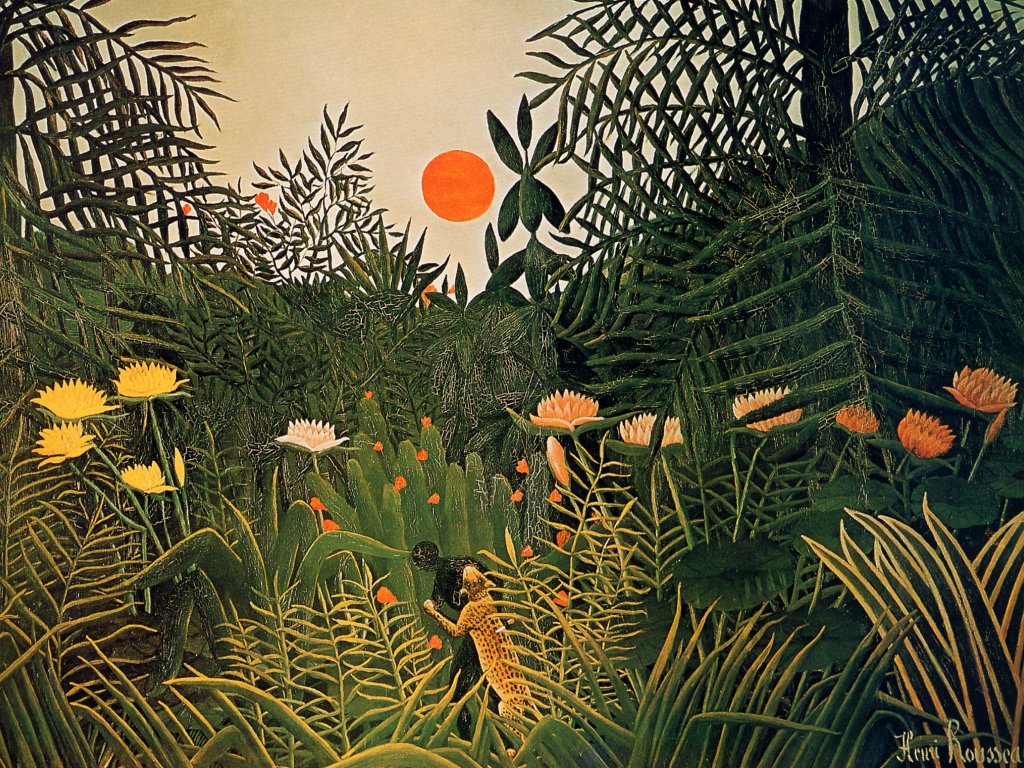
Henri Rousseau, The Dream (detail), 1910


What does it mean for God’s grace to be present in nature? Or God’s mission of Redemption to be at work in what Christians view as a fallen Creation? The Gospel for this coming Sunday, with Jesus tempted in the wilderness, might prompt us to think about such things. An unexpected way to do this is to juxtapose Mark’s surprisingly brief ‘temptation narrative’ with Rousseau’s jungle-like images of a state of nature.

How shall we understand Mark’s account of Jesus’ being tested in an inhospitable place? And how does Rousseau conceive of the natural state of what Christians think of as Creation? A painting by Rousseau helps set the scene:

The Sleeping Gypsy, 1907

In light of it, we can consider the two verses that Mark devotes to Jesus’ temptation:

The Spirit immediately drove him out into the wilderness. And he was in the wilderness forty days, being tempted by Satan. And he was with the wild animals, and the angels were ministering to him.

Only two verses are accorded by Mark to this rather pivotal event, to which Matthew devotes 11, and to which Luke gives 12. The way that Matthew and Luke refer to the wilderness of the temptation suggests that it is a hostile context for Jesus’ encounter with the Tempter. In both of these longer Gospel texts, three principal temptations are identified, which occur following Jesus’ forty days of fasting. The three were: to feed himself, to become a wonder-worker, and to receive the adulation of the world’s kingdoms. Matthew adds that Jesus received the ministration of angels following – rather than during – his period of trial.

Whereas Matthew and Luke present the wilderness as an unpromising environment for Jesus’ challenging encounter with his adversary, Mark’s spare account of the event and its setting allows for a rather different reading. We can pose the matter in the form of two questions shaped by Matthew and Luke’s narratives.

Does Mark present the wilderness temptation of Jesus as being in a difficult place due to the presence of the Tempter and because it is filled with prowling and potentially dangerous wild beasts?

Man Attacked by a Jaguar, 1910

Or, does Jesus’ desert encounter in Mark represent not so much the threatening last gasps of a rebellious and dying world, but the first breaths of a life-giving new one, just now coming to be?

The Waterfall, 1910

Rousseau’s painting of the sleeping woman and the nearby lion, above, provides an image of harmonious coexistence in a place shared by a human being and the proverbial king of beasts (an ‘alpha predator’). In other words, Rousseau – in some of his paintings – portrays an ideal image of the original state of nature, the biblical Eden, before nature became ‘red in tooth and claw.’

A Woman Walking in an Exotic Forest, 1905

If so, then Mark’s statements that Jesus “was with the wild animals,” and also that “the angels were ministering to him,” may reflect what Christians have come to think of as ‘the peaceable Kingdom’ and ‘the New Creation.’ Which then suggests that – in Mark – the wilderness was good place despite the presence of the Tempter.

I am drawn to how Rousseau depicts the natural beauty of what we often describe as ‘wild nature,’ portraying it in both inviting and in cautionary ways. He paints it as a context of harmonious interrelation between human beings and animals in a shared environment. He also paints it as being a context where animals are a threat to one another and to humankind. Rousseau’s painting of Eve hints at both possibilities, where she is charmed by the serpent:

Eve, 1907

In the painting below, which complements his image above, another ‘Eve’ charms the serpent. Rousseau fills the beautiful canvas with a limited color palette, largely green, expressing the same dimension of ambiguity. A woman plays a flute while a serpent is draped upon her shoulders and others hang from the trees or rise up from the ground:

The Snake Charmer (detail), 1907

Looking at Rousseau’s many jungle-like ‘exotic landscapes,’ one notices the evocative presence of mystery. The viewer does not immediately know what lurks in the shadows, beneath and behind dense and dark foliage, in scenes often featuring bright flowers or fruit in the foreground. And upon discerning animals and also humans among all the growing things in the thicket between the trees, we can’t be sure whether what we encounter is friend or foe.

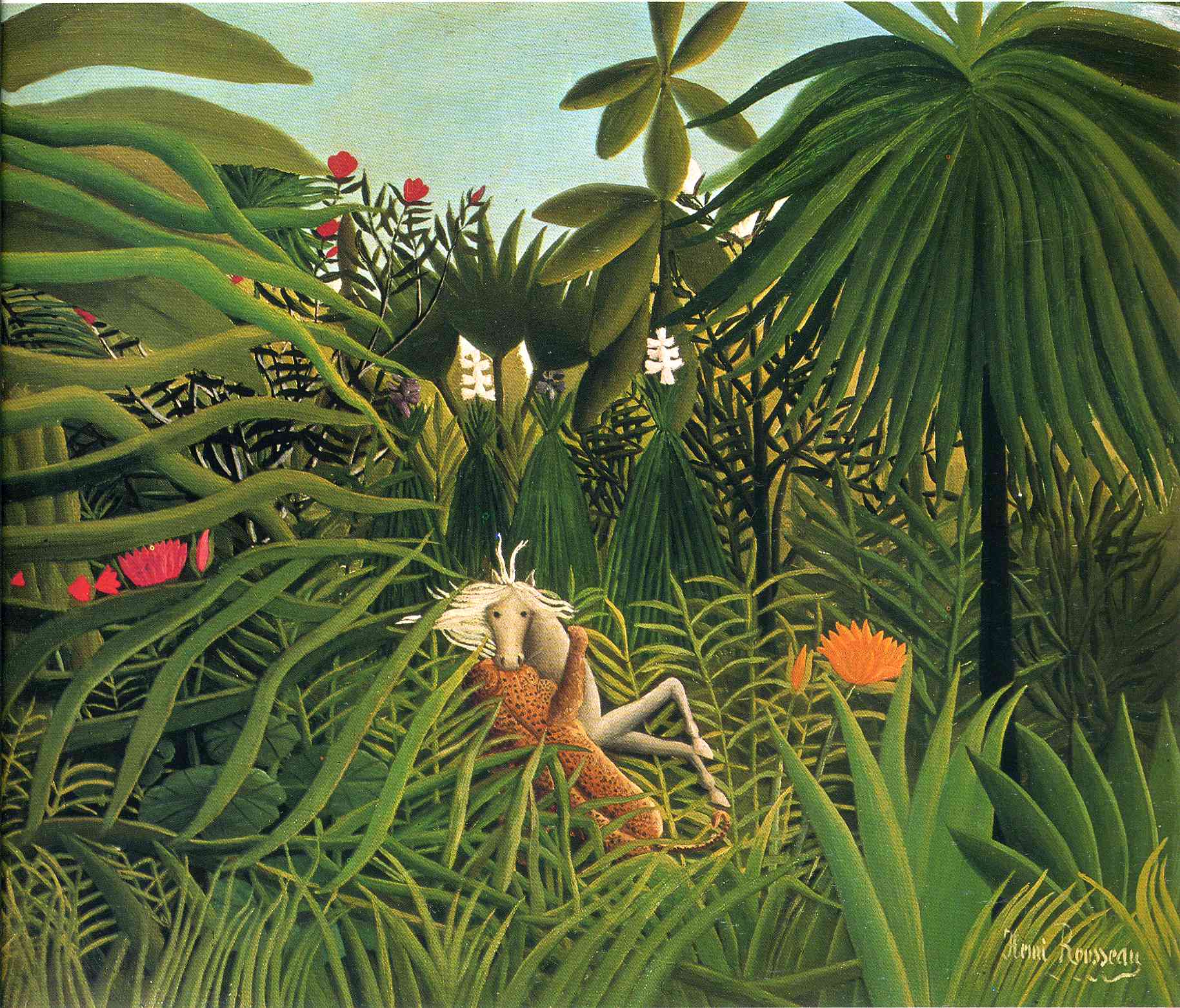
Jaguar Attacking a Horse, 1910

Exotic Landscape, 1910

In these and other scenes, Rousseau portrays an invitingly beautiful world, but one that is not without the possibility of misadventure and harm. I may not want to live in some of these scenes. But I find joy living with their beauty. For they help me appreciate a new way of reading and thinking about Mark’s brief account of Jesus’ temptation ‘in the wilderness.’ Jesus possibly could have repeated the great mistake made by Adam in the old Eden. But in not doing so, ’the second Adam’ became the door to a new Eden, and our ‘ark’ to the New Creation.


Note: blog settings have been changed to provide more opportunity to offer comments, using the link below.

The Beauty of a Small Boat

If reading this by email, please tap the title at the top to open your browser for the best experience. Then, clicking individual pictures will reveal higher resolution images.

A West Wight Potter 15 rigged with a second jib sail


Having recently featured a ‘tiny house’ on wheels, I find myself thinking about the beauty of small boats. Among examples, I love the West Wight Potter 15 (or P15). Originally designed and built in 1960 by Stanley Smith on the Isle of Wight, P15’s are found all over the world. Though not designed for ‘blue water’ navigating, some have been sailed across the ocean. In 1972, John Van Ruth sailed an early version of the boat from Mexico to Hawaii!

In a prior post, I shared how I discovered this venerable boat design through an article by Anne Westlund, in Small Craft Advisor, documenting her cruise on Lake Powell.

Anne Westlund’s Pea Pod, along with a friend’s P15, on Lake Powell

I was captivated by Westlund’s account of how someone could enjoy a week or more on and in the confines of a 15’ boat. Remarkably, Anne has spent whole summers on Pea Pod, her P15. The West Wight Potter has been described as having the buoyancy of a cork and the roominess of a pup tent. Undaunted by its potential size limitations, many value them, perhaps inspired by the famed ocean sailors, Lin and Larry Pardey, who said, “Go Small, Go Simple, but Go Now.” Though no longer manufactured, used P15’s easily can be found because so many have been built and remain in good condition due to their sound design and construction. Should replacement parts be needed, they are readily available and economical compared to components of larger and more elaborate boats.

Stanley Smith with his brother, with an early West Wight Potter like the one he bravely sailed from England to Sweden

A P15 fits in a garage and can be towed behind just about any vehicle. Two adults can sleep comfortably in the boat, and many P15’s are equipped with a battery, navigation and cabin lights, and other amenities including limited stowage space. Approached as if preparing for a backpacking trip (and with some of the same supplies), a weeklong cruise on a Potter is realistic, especially if going solo. The experience may be of a minimalist kind, but small boat sailing can provide for more time on the water with less maintenance. Sailing one may call for greater agility and balance (small boats can be ’tippy’), and calmer sea conditions. Small boat sailing may also be more physically tiring due to confined quarters and a more frequent need for sail and tiller adjustment.

My P15, Zoe, at the end of a glorious day of small boat sailing

For those who don’t mind getting dressed while sitting down, a safe and dry boat like a P15 is a great choice for sheltered waters and coastal sailing. I have cruised on Lake Charlevoix in northern Michigan for two weeks on Zoe, and 4-5 day trips on her in Arkansas. Water-tight dry bags for clothing and gear, and a cooler – on deck – expand the possibilities for longer cruises. During spells of bad weather and for leisurely evenings, I set up an awning over the cockpit with a large tarp and bungee cords. It’s good to have shore facilities nearby for restrooms and other necessities. Yet, a porta-potty (for use under the awning-cover) can be stowed aft in the cockpit. An occasional onshore meal and visits to a public library have also enhanced my times away on a small boat.

Sailing provides a good metaphor for our spiritual lives, as many have noted. When sailing, we don’t have any choice about the weather, but we can choose how we engage it. A motor is helpful getting into a marina in the evening, or out of trouble if a storm comes up. Yet, the beauty of sailing – especially in a small boat – lies in creatively engaging the wind to maintain a course and get somewhere. Small boat sailing is more susceptible to sudden changes in wind and wave conditions, as well as varying water currents. But this kind of sailing may be more energizing because of a greater need for the sailor to interact with these conditions, especially when they are challenging.

If we find peace in being close to the water and feeling the wind, a small boat is a wonderful thing to sail. For beauty can be found almost anywhere in God’s good Creation. Especially if we are open to it.


Additional note: My earlier post featuring the WWP15 can be found by clicking here. If you become enamored with the WWP15 as I have been, I recommend Dave Bacon’s book, The Gentle Art of Pottering: Sailing the P15.  A quote from Jack London: “Barring captains and mates of big ships, the small-boat sailor is the real sailor. He knows – he must know – how to make the wind carry his craft from one given point to another… it is by means of small-boat sailing that the real sailor is best schooled.”

Especially in a small boat, never go out without proper safety equipment. As Captain Ron said, “if it’s going to happen, it’s going to happen out there!”


Blog note: settings have been changed to provide more opportunity to offer comments, using the link below.

Why Beauty?

[If reading this by email, please tap the title at the top to open your browser for the best experience. Then, clicking individual pictures will reveal higher resolution images.


For some time I have had a copy of Elaine Scarry’s insightful little book based on two lectures she gave at Yale. I am drawn to the images chosen by the cover designer, which align with my proclivity to find in nature beauty in both pattern and variation of form and color. Also appealing is the compact scope of the work in relation to the immensity of the topic, which is addressed in just over a hundred pages. No overly weighty tome here that might contradict a principle I recently quoted in relation to a Japanese garden – beauty not explained allows the viewer to remain in a state of wonder.

And yet, it is precisely wonder inspired by beauty – by the beauty manifest in beautiful things – that has over the course of my life caught my attention. Thoughtful reflection about such wonder has led me on a journey from absorption with beauty itself, toward grappling with questions like, “why beauty?,” and “what about the time and attention I am giving to it?”

Asking such questions led me to consider what goodness might be all about, especially in relation to beauty, an area of reflection I still cannot let go of. Pursuing these inquiries then suggested a possible third dimension in my consideration of seemingly interrelated ideas, in which I began to ask intentionally about truth. Religious conversion from the agnosticism of my art student days followed not long after. Yet, all this started with sustained reflection on my ongoing encounter with beauty.

My exploration of these primary categorical ideas of beauty, goodness and truth, the so-called transcendentals, has yielded an abiding insight. These ideas have to do with what is there, there in the sense of something that you and I apprehend through our experience, but whose origin is not reducible to our experience.

In other words, beauty, goodness, and truth, aren’t just ‘in here,’ as I might say to myself, pointing to my head. Beauty, goodness, and truth, are not simply a product of our thoughts or imagination, even though they have a notable effect upon our thinking and conscious experience. No, they have this effect upon us because they are there for you and for me to encounter in the world around us. And so, they are not attributable solely to the processes and generative power of our conscious awareness.

At some point we come to perceive that beauty has a reality that is independent of us. Beauty is a real property of some or even of many objects of our experiential perception. Beauty is therefore not dismissible as being only a feature of our subjective apprehension of those objects, nor is it a projection of ourselves upon them. Because beauty is there, in the world, the beauty we encounter summons a response from within us.

This principle underlies Elaine Scarry’s first main point in her reflections on beauty. As she puts it, “beauty brings copies of itself into being… beauty prompts a copy of itself.” This is true not only in the more obvious sense in how a painter or a poet seeks to render sensual experience and perception in pigments or in words. It also happens when we return again and again in our minds to images and sensations prompted by what we have seen, heard, and felt. Repetitively we return to what we have encountered, to the thing or things we want to continue to be present to us and within our ongoing experience.


I will reflect on Elaine Scarry’s book again in a future post. The cover design for it, shown above, is by Tracy Baldwin, based on an illustration from J. Gilbert Pearson’s Birds in America, Vol. 2, from a drawing by Henry Turston.

What can we learn from the Mosque-Cathedral?

[If reading this by email, please tap the title at the top to open your browser for the best experience. Then, clicking individual pictures will reveal higher resolution images.]

Interior view of the Mosque-Cathedral


In my prior post on the Mosque-Cathedral of Cordoba, Spain, I reflected on the shaping effect of both Christianity and Islam on this building over the centuries, and how – side by side – the influence of both religious traditions are still evident today. In this second post, I offer further reflection on the way we might think about the points of contact between these two traditions as we find them in this place of significance to adherents of each.

In the well cared-for beauty of this Mosque-Cathedral of Cordoba, we discern interwoven architectural forms that reflect overlapping historical periods, which were shaped by differing cultures and faiths. I think inspiration can be found here as we – like so many others – face a challenge. This is the challenge of seeking to retain an appropriate confidence and peace about our own faith and traditions while genuinely respecting and appreciating those of others. Obviously, what this building first represents to the people of at least two traditions is prayer. Sensitive to that fact, we may be moved by the beauty of this place to pray that a greater openness to what is positive and of enduring significance in the world-views of other peoples and cultures – wherever we and they live – might be more evident across nations today.

Though relying on communication with the divine presence may appear passive to some, it is no small thing to entrust such prayers to God’s Providence. But we can also act toward this end in other ways. If circumstances permit, we can try to engage with one another in conversation. We could do this, perhaps most successfully, based on things that may be universal rather than upon what might be particular to individuals and their communities. Among things generally considered as universal are the three primary so-called “transcendentals:” beauty, goodness, and truth. For even as we have divergent notions about what constitutes compelling examples of them, in principle we can still agree about the value that these three abstract but also foundational concepts have for all people.

Of course, achieving in practice a consensus regarding truth (religious or otherwise) may be impossible, and agreement regarding goodness nearly as difficult. In seeking a greater harmony between differing viewpoints, we might therefore explore with one another what we find to be beautiful, in nature, in the arts, and in each others’ cultures and traditions.

Conversation based on the realm of beauty is more likely to be open-ended and less likely to be personally judgmental. Such conversations might even help us see glimpses of this transcendental within one another, if only briefly. For we have all been made in the image and likeness of the Creator, who has made of one blood all the peoples of the earth.

For Jews and Christians, Genesis 1:26-28 provides us with the source of our concept of the imago dei, our theological understanding that all human beings are made in the image of God. Christians go further in believing that God made all things through Christ, in their original state of goodness (John 1 & Colossians 1). These beliefs undergird our confident faith statement that God has made of one blood all people regardless of how much or how little we seem to have in common. These beliefs also provide the ground for what can become a shared source of hope.


A Desecrated Beauty

[If reading this by email, please tap the title at the top to open your browser for the best experience. Then, clicking individual pictures will reveal higher resolution images.]

An encounter with beauty may provide a gateway to what is holy. For beauty often embodies and expresses something sacred. When this is so, a violation or desecration of beauty can strike us as having the character of evil.

When apparent destruction befell Notre Dame cathedral in Paris, or earlier upon the Golden Spruce tree in the Queen Charlotte Islands, British Columbia, people learning about these events were shocked and in mourning. In the case of Notre Dame, a devastating fire accidentally accompanied repair work on the building. But with the Golden Spruce, a  willful human act destroyed a spiritually significant tree.

The several hundred year old Golden Spruce became widely known based on news reports of its loss, and through a subsequent book by John Vaillant. An extremely rare genetic mutation occurred in one of a very large species of trees common to the Pacific Northwest, the Sitka spruce. Vaillant tells the story of this beautiful tree, which was known as Kiidk’yaas to the First Nation Haida people. The Golden Spruce was revered through a mythical spiritual story retold over countless generations in Haida oral tradition.

The author draws us in to the significance of this particular tree for the Haida and for many others, including the person who figures principally in his narrative, Grant Hadwin. He was a forester and logger who developed a reputation for having extraordinary skills as a woodsman who possessed seemingly superhuman physical strength and endurance. Paradoxically for someone whose livelihood depended upon employment by forest product companies, Hadwin over time developed an increasing antipathy toward the detrimental effects of commercial logging and the forest clear-cutting with which he and the industry were associated. Over time he became known as a radical environmental activist, whose views may have been inspired by some remarkable spiritual experiences.

Vaillant lays the groundwork for his story about the Golden Spruce by offering a compelling introduction to the ecosystem of the Pacific Northwest coast and its islands. The reader comes to appreciate the unique habitat within which early European explorers and traders found the huge trees of the old growth forests. These trees include Douglass Fir, Western Red Cedar, and the Sitka Spruce, which in diminishing numbers are still seen today. The reader also learns about the history and culture of the Haida, and the detrimental impact caused first by Sea Otter pelt traders, and then by foresters, upon what became British Columbia, its islands, lands and first peoples. Given this background, one might expect that Grant Hadwin would somehow be the hero of the story, given his abilities, integrity, and emerging commitments.

The central irony of the narrative centers on Hadwin’s concern about the rapacious devastation of the old growth forests by commercial interests and their professional employees, who generally approach the land’s natural endowments as resources to be exploited, quickly and extensively. Yet, Hadwin himself targeted the Golden Spruce, seeing it as a corporate ‘pet,’ falsely preserved by a company in a park-like artificial island of nature, surrounded by lands violated by those who had no care for them. In the process, Hadwin – through an apparent combination of correctable ignorance and oversight – seemed surprised and defensive when he learned about the Golden Spruce’s significance for the Haida, on whose lands it had long stood.

In this book, the author accomplishes several things that taken together may seem incongruous. We gain a regard for the immense scale of the old growth forests of the Pacific Northwest, the towering size of their tall trees, and the hundreds or even thousand years over which some of them have grown undisturbed. We become aware of the astonishing danger and rate of mortality associated with tree felling, while coming to admire something of loggers’ courage and tenacity. And our righteous anger is stirred by the corporate appropriation of natural resources for commercial benefit at the expense of the cultural and spiritual significance of forests. For forests number among special places that have long reminded people of our higher values, and are a context where we can rediscover deeper purpose and meaning for our lives.

Vaillant  leaves us with another unresolved sense of paradox. It is prompted by the knowledge we gain of how the Haida, long feared as brutal victimizers and enslavers of other First Nation peoples, themselves became victims of hostile social, economic and geographical forces. Against this backdrop, we learn how a well-liked man, who was regarded as having extraordinary skills and integrity, and who might once have been defended by the Haida, perpetrated a bewildering act of environmental desecration and came to be seen by them as an enemy of their spiritual history and culture.

Kiidk’yaas, the Golden Spruce may be gone. The transcending beauty it had, and which it still represents, will last.

A sapling from Kiidk’yaas

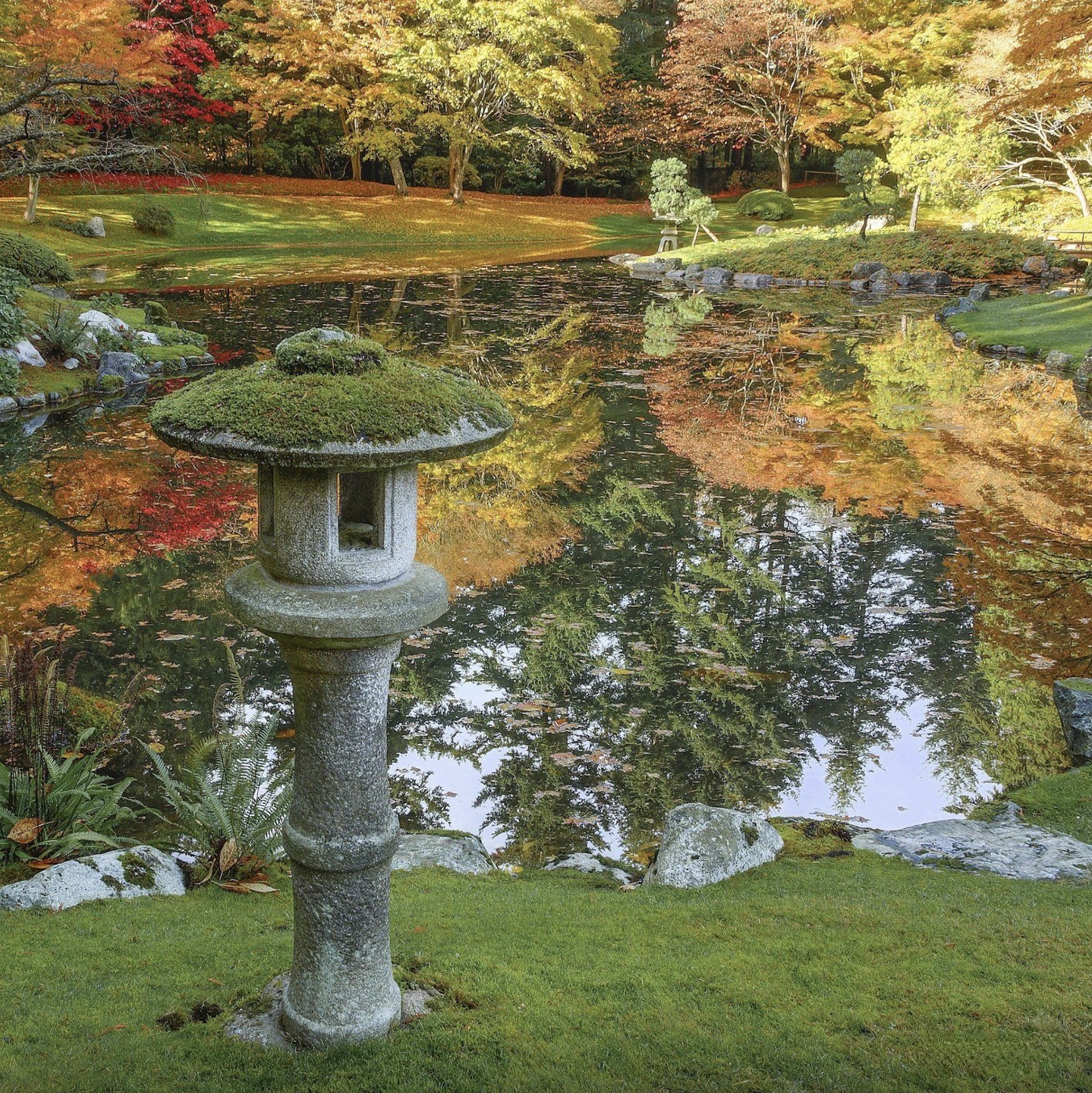
A Beautiful Garden: Nitobe Memorial (Part II)

[If reading this by email, please tap the title at the top to open your browser for the best experience. Then, clicking individual pictures will reveal higher resolution images.]


In Part I, I closed with this observation: one does not visit a Japanese garden in the way one might go to a park, as a context to pursue some activity like an exercise walk, but as a place to experience simply being.

Here we encounter a paradox, perhaps one of many associated with traditional Japanese gardens. At first, for many Western visitors, the elements within such a garden, and their arrangement, catch the eye and draw one in further to an encounter with what is seen there. Yet, what is seen within a Japanese garden exists less to provide an object of attention, and more to facilitate and enhance how one sees. A journey around the garden therefore encourages a journey within. The “spirit that informs [the] spaces” found in “a garden created and maintained in the Japanese tradition,” to which the UBC website alludes, is a spirit or quality of experience to be nurtured within the viewer who encounters this intangible element of the garden.

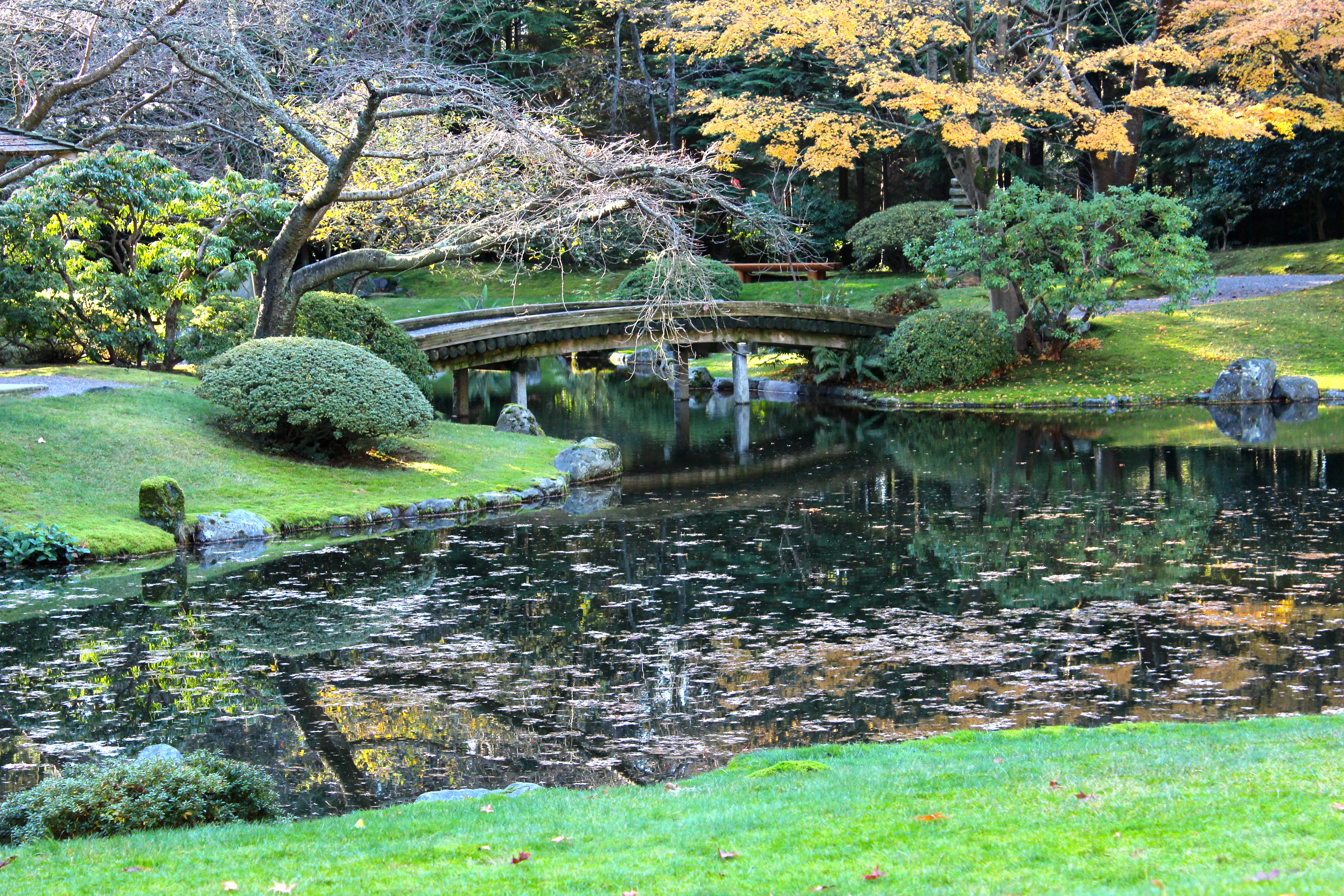
A carefully arranged sense of space therefore forms a prominent feature of traditional Japanese gardens, where plantings and structural objects both near and further away are placed deliberately. Except for the surrounding walls, there are no straight lines in a Japanese garden, and formal symmetry is strenuously avoided. Plantings and objects are more often placed singly or in three’s, given how two points often suggest a line and three suggest a circle. The spatial interrelationship between such things as large stones, trees, and water features is not accidental, and for the Japanese has a spiritual as well as visual significance.

In Japanese garden design, each particular feature, whether alive and growing or humanly made, has a distinct significance and is purposely chosen for its location. Perception of this is enhanced when a visitor becomes aware of how the elements of a garden’s composition are selected with an appreciation for seasonal viewing, such as at the annual cherry blossom time. Throughout the year plantings in the garden draw attention to themselves through an occasional heightened display of color, or by contributing to a muted harmony of differing tones and textures. On successive visits, a familiar place somehow can seem different.

Plants, shrubs, and trees in Japanese gardens are cut and trimmed so as to appear manicured  just as European topiary is studiously tended, albeit with very different results. Whereas gardeners in the Southern U.S. might allow azaleas to grow unevenly to avoid looking like a hedge, ornamental shrubs such as holly and cedar, and the branches of evergreens, are painstakingly shaped by the Japanese-trained gardener, often into softly rounded forms. These provide contrast to the smooth sculptural shapes of tree trunks, while also standing out against the flat reflective surface of ponds.

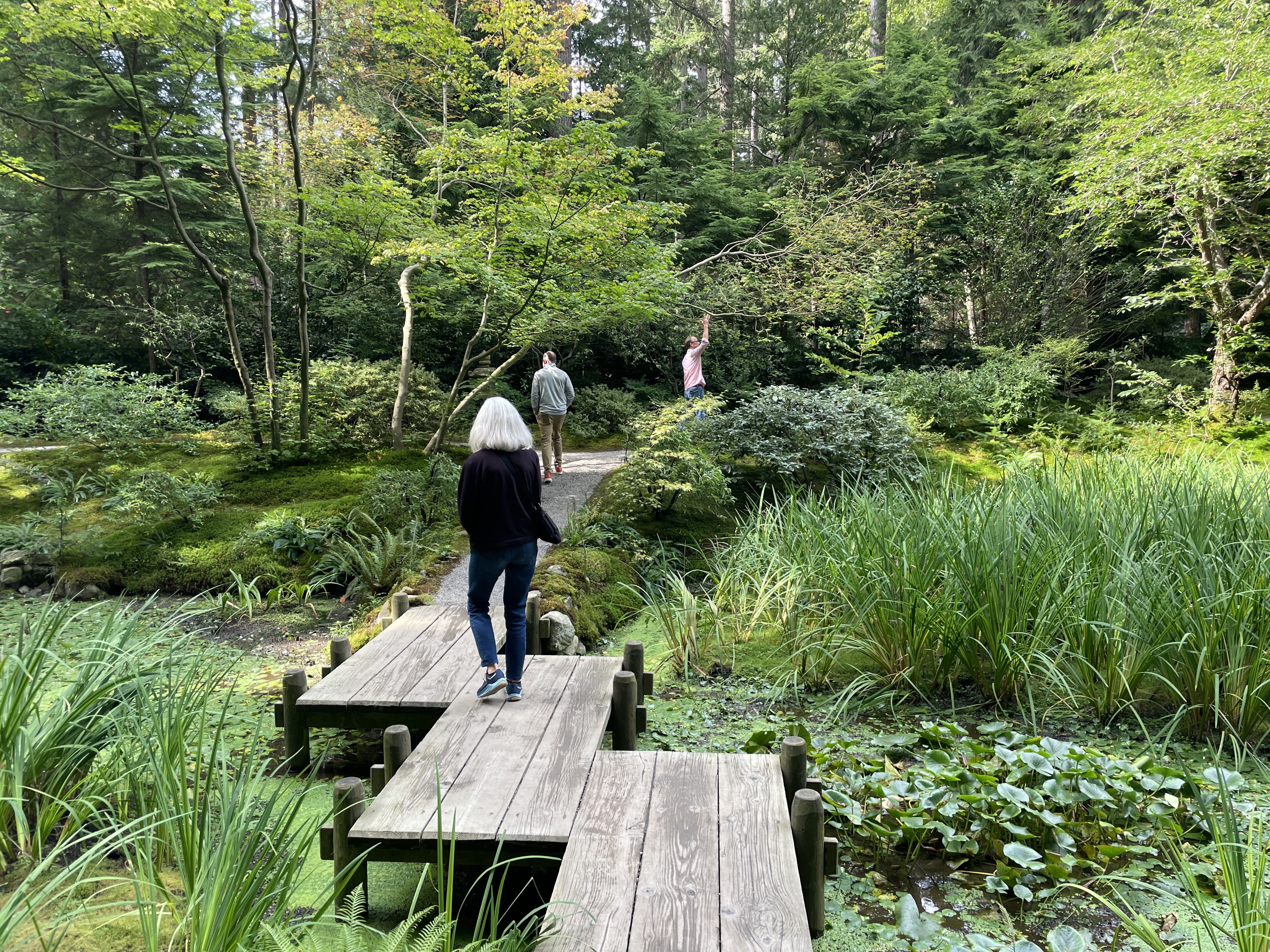
Traditional Japanese gardens usually contains a pathway, a design element not unique to such gardens, though its treatment in this context draws attention to itself. For the pathway through the garden can be just as important as what is viewed from it, so that the experience of the journey becomes in some sense its destination. Even in a relatively compact space, a consideration important in Japan, a pathway in a garden can make a small area seem much larger than it is, as the visitor is prompted to slow down and live into the present moment.

Padding along the soft pea gravel between areas of green covered by multiple textures from soft moss to tall bladed plant spikes, one gains glimpses and then temporarily loses sight of what lies ahead. Views include garden features such as a teahouse awaiting encounter, or a low-arching bridge from which Koi might be observed below the still water’s surface.

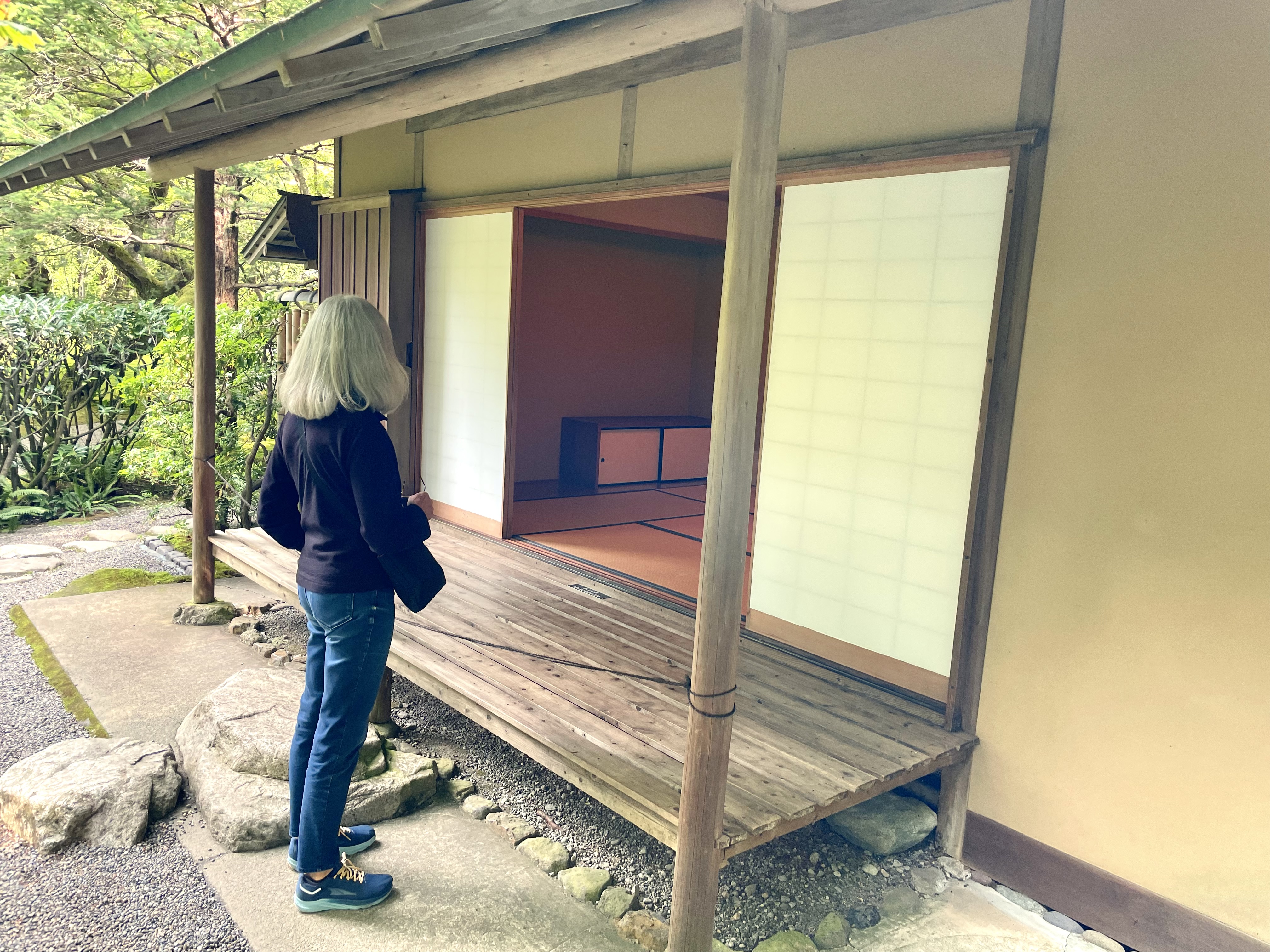
The UBC website says that “Nitobe Memorial Garden is considered one of the most authentic Japanese gardens outside of Japan.” A testament to this perception was provided by Emperor Akihito during a visit there. He said that, while in this garden, “I am in Japan.” Enhancing this sense of being in Japan is the presence of a traditional Japanese house in which opportunities to experience the ‘tea ceremony’ are seasonally available.


A Beautiful Garden: Nitobe Memorial (Part I)

[If reading this by email, please tap the title at the top to open your browser for the best experience. Then, clicking individual pictures will reveal higher resolution images.]


The Nitobe Memorial Garden on the grounds of the University of British Columbia (UBC) is readily recognizable as a traditional Japanese garden. Like other gardens of this type, it provides an experience of tranquility. Even in an urban area such as Vancouver, Nitobe Garden offers a quiet refuge from daily life concerns and tensions that visitors might carry with them.

An interpretive guide to “understanding Japanese Gardens,” found on the UBC Botanical Garden website, asserts the following:

… it is almost impossible to clearly state what defines a Japanese garden. Many Japanese resist classifying and categorizing the various features of Japanese gardens.

The website attributes this reluctance to the idea that beauty “not explained allows the viewer to remain in a state of wonder.” This worthy observation applies as much to modern abstract painting as it does to historic patterns of landscape arrangement. Yet, in this and in the next post, I will articulate characteristics that enable us to distinguish a traditional Japanese garden from, for example, a casual English cottage garden or a formal French garden.

The UBC website acknowledges how “most visitors can tell when they have entered a garden created and maintained in the Japanese tradition,” crediting this perception to people who “are sensing the Japanese spirit that informs these spaces.” This may be due to how various strands within Japan’s cultural history have coalesced to form a recognizable ‘style’ manifest in its gardens. Among the results of such a melding process, we can identify and describe several features in the Nitobe Garden that are common to other well-known Japanese gardens.

We can begin by observing how gardens and parks found in the East and in the West have a number of shared attributes. Among them, most gardens and parks around the world feature a scheme for the arrangement of their various parts even if it is not readily evident to visitors. Many such places appear to promote and preserve a ‘natural’ quality among the things growing in them, even in formal gardens. Some gardens and parks accentuate this natural element, perhaps in deliberate contrast to surrounding urban areas. This fosters an impression that the plants, shrubs, and trees have grown where they are of their own accord, and in their own way, regardless of any horticultural tending they have received. Especially in the West, ‘nature’ and that which is ‘natural’ are seen as what does not readily bear the imprint of human interaction, and as emerging more from its roots than from our planning.

Western gardens and parks may have gates, but often their entrance designs accentuate pubic access, providing a continuity of experience for visitors who may have potted plants or flowers where they live and work. In this sense, these garden and park entranceways draw people in from what is less into what is more. In the process, visitors are likely to encounter familiar though markedly larger and more extensively planted shrubs and trees, many of which do not appear to have been shaped or altered by human hands.

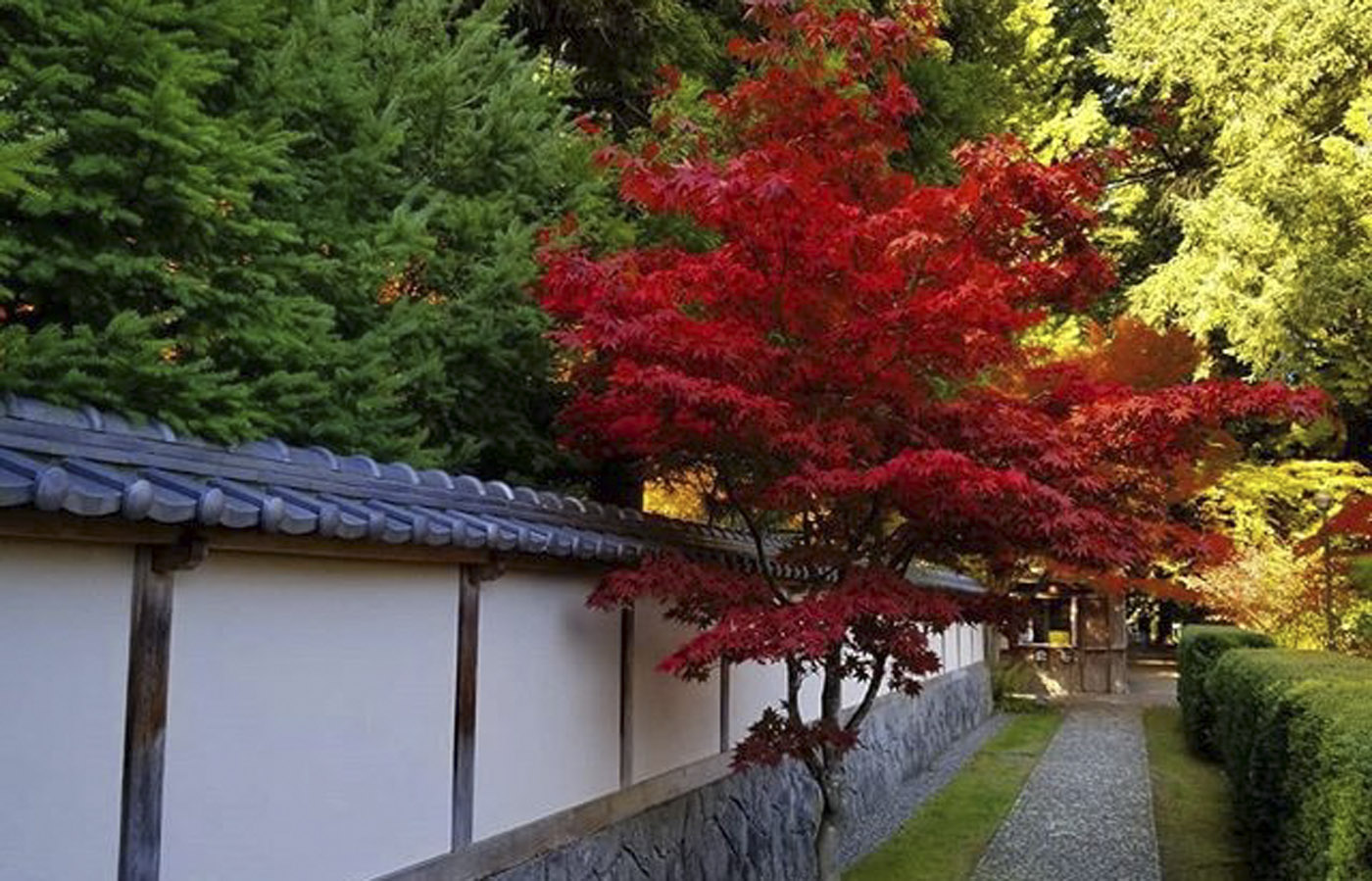
Formal gardens both East and West usually have marked boundaries and even barriers between what is within and that which is outside. Traditional Japanese gardens are typically surrounded by view-blocking walls topped by a ceramic tile parapet. These indicate a formal boundary between the transient outside world of energy-charged daily activity and the stillness available within, where visitors are subtly bidden to release their grasp upon time and their surroundings.

Imposing entrance gates mark a portal to a different realm lying beyond, as much as they appear to provide a barrier protecting what is within. Though these gates and the walls around a Japanese garden may serve to keep out intruders and foraging animals, they exist primarily for the sake of those who enter and take time there. For one does not visit a Japanese garden in the way one might go to a park, as a context to pursue some activity like an exercise walk, but as a place to experience simply being.

In the next post we will continue to explore what is identifiably distinctive about traditional Japanese gardens like the Nitobe Memorial.


The Curve of Time: A Beautiful Book

[If reading this by email, please tap the title at the top to open your browser for the best experience. Then, clicking individual pictures will reveal higher resolution images.]


I discovered M. Wylie Blanchet’s cruising memoir, The Curve of Time, at Village Books in Fairhaven, Washington, not far from the Canadian border. Evidently considered a classic by readers in Canada, I had not known about her book despite having long been an active boater and avid reader about seafaring. With an evocative water color painting as a cover image, a forward by the Seattle-based writer Timothy Egan, and with the copy in my hand being the 50th Anniversary Edition in hard cover, I was intrigued and bought it.

As the dust jacket blurb indicates, Wylie Blanchet set off on numerous summer cruises with her five children on the same boat from which her husband had earlier been lost in 1926, and presumed to have drowned. 25 feet in length, 6.5 feet in width, and with a relatively small enclosed interior, Blanchet along with her children bravely explored the sometimes forbidding but always mysterious waters along the coast of British Columbia and its adjoining and deep inland sea.

Wylie (a.k.a., Capi) in the wheelhouse of Caprice, and with her family one summer

Those British Columbia waters are famous for the very strong tides running in and out of narrow fiord-like inlets bordered by tall trees and sheer rocky walls that rise up several thousand feet. The walls above the water’s surface are generally paralleled far down below by their unseen foundations. ‘Capi’ Blanchet notes how often her marine charts indicated depths exceeding 100 fathoms in these waters  (600 feet), with the final distance downward marked as unknown. Among other challenges, such depths make anchoring nearly impossible except when a boat is secured to the shore.

Caprice, against a rocky shoreline

With one set of clothes per family member along with a bathing suit, spare but adequate cooking equipment and tableware, minimal sleeping accommodations both within and on deck, and the crew possessing a seemingly boundless sense of curiosity and desire to learn, the Blanchet’s explored hundreds of miles of what at the time were largely unpopulated and untamed seascapes and surrounding terrain. Capi Blanchet’s well-told stories about her family’s adventures during their summer cruises provide the material for her fetching book.

For those who have traveled to or lived in the Pacific Northwest, the author’s prose brings alive the look and feel, and even the smell of the moist coastal air found in that region. It may bring to mind books like I Heard the Owl Call My Name, and Snow Falling on Cedars, novels that also effectively describe aspects of that alluring part of the world. Yet, like those others, Blanchet’s book hardly prompts a romantic longing to explore waters and lands that, as she presents them, are full of potential danger because of their wildness (bears, a cougar) and unpredictable weather.

Readers interested in doing some ‘voyaging’ with Capi Blanchet through reading A Curve in Time will observe how she records experiences from the late 1920’s and 1930’s, and published her memories of them in 1961. She demonstrates sensitivity and concern about our encroachment upon the communities of people who originally inhabited the land, and upon areas of great natural beauty. Her perspective and writing may perhaps best be seen as helping – along with many others – to lay an early foundation for our contemporary approach to ‘the environment’ (a term whose present use would have been unfamiliar to her), and our raised sensitivity about the cultures of First Nations peoples.

Having read Blanchet’s compelling book, I am now curious to read Following the Curve of Time: The Legendary M. Wylie Blanchet, a biography by Cathy Converse. Though often demurring from drawing attention to herself in The Curve of Time, Blanchet clearly was a formidable woman possessed of great practical intelligence and a captivating sense of adventure. Retracing her voyaging would be challenging enough for many experienced boaters, but exploring those same waters in a boat the size of her’s, with its dependent large crew and minimal accoutrements, may suggest caution to other equally capable navigators.

M. Wylie (‘Capi’) Blanchet around the time of her marriage

For first time visitors to the Seattle area who are not embarking upon an Alaskan cruise, I heartily recommend even a short round trip on one of the Washington State Ferries. Having commuted daily to college for a year on the ferry between Vashon Island and Tacoma, and having regularly taken the ferry to Seattle on weekends, I remember how a 20-30 minute ‘voyage’ across parts of Puget Sound can help one experience in an economical and time-sensitive way a genuine bit of the maritime Pacific Northwest – the kind of waters that Capi Blanchet explored nearly 100 years ago.


Chihuly’s Glass Installations

[If reading this by email, please tap the title at the top to open your browser for the best experience. Then, clicking individual pictures will reveal higher resolution images.]

Marine Blue and Citron Tower, by Dale Chihuly, installed in 2021 at Taliesin West, Arizona


The making of art glass, especially when glassblowing, begins with glass melted in a furnace heated to over 2,000 degrees f. by gas-powered flames. As the artist works with the material, additional quantities of glass shards are typically added to the furnace. The added glass may be clear or colored, especially when recycled glass is employed, and other ingredients can be added to achieve a desired hue or tint.

Once, when my glassblowing instructor was scooping shards of recycled material into the flames, he accidentally lost grip of the metal scoop, which fell into the molten glass. To his delight, this produced a most beautiful and unexpected yellow color in the subsequently formed glass objects. Of particular note in Chihuly’s work is the conjunction of multiple colors, and the agate-like striations involving both colored and clear portions of glass.


At the most basic level, glassblowing involves attaching a glob of molten glass to the end of a tube-like metal pipe, which is then spun while air is introduced into it. At first this creates a globe-shaped object. Spinning the material fixed to the pipe can have an effect like that of a spinning pottery wheel upon wet clay. In both cases, the material can be formed into a symmetrical mass. But it can also be spun out of shape into a mess.

Whereas hands are used in ceramics to do the primary shaping, with molten glass a number of tools are employed to achieve various effects. These include assorted molds which Chihuly and his assistants may use to produce the rippled edges in some of his finished pieces like those depicted below. Wooden paddles, tweezers, cutting shears, and a variety of other tools are used in the process of shaping the very hot glassware while it is being formed, sometimes pulling and stretching it, at other times changing its orientation by causing parts of a piece to turn in on themselves. All the while the glassware artist must periodically reintroduce the work in progress into the open end of the furnace, or apply a torch to its surface, so as to keep the material hot and malleable.

Lower image: A portion of Chihuly’s Persian Ceiling, lit from above

In recent years, Chihuly has become known for his sometimes massive installations of glass. These often involve a seemingly uncountable number of objects linked together by an upright frame, suspended from a rack, or cradled from below. Viewers might encounter these installations indoors where they are displayed as a chandelier might be hung, or placed in an outdoor setting.


With his artistic exploration of the possibilities inherent in the manipulation of molten glass, and by pushing the parameters of what conceivably may be accomplished through working with this medium, Chihuly has created a huge portfolio of truly remarkable work. Of note is the way that so many of his pieces simultaneously have a sophistication that appeals to specialists and collectors, while at the same time being works of art that bring delight and wonder to children as well as to those who may not credit themselves with being aesthetically aware or sensitive. Dale Chihuly has effectively devoted his career to helping others encounter and perceive beauty in new and unexpected ways.

Another Chihuly installation, Fire Amber Herons, at Frank Lloyd Wrights’ Taliesin West

The Beauty of a New Dog

[If reading this by email, please tap the title at the top to open your browser for the best experience. Then, clicking individual pictures will reveal higher resolution images.]

Tissot at 8 weeks, and a self-portrait by his namesake (it was the eyes!)


After experiencing some health issues this past spring I decided it was time for us to consider getting a new dog. Our rat terrier mix, Puddums (or Pudsie), died a few years ago at the happy age of 17. We still think of her affectionately and have missed canine company after moving back South in retirement.

Our oldest son with Pudsie

As Spring began to warm up south Louisiana, we thought it might be nice to have a similar addition to our household if we could find another puppy like Pudsie had been. A local shelter had a litter of rat terrier-mix puppies ready for adoption and the little guy in the photo at the top seemed just right.

His name is Tissot (pronounced ‘Tea-so’), named after a favorite Franco-British painter whose work I have often featured here. Now about 5 months old, he has lived mostly during the daytime on our screened porch. It has proved to be a good place for him to figure out that ‘elimination’ best occurs outside rather than on the floor. With the wave of Southern summer heat we have been experiencing recently, he enjoys cooler afternoons and nights in my study.

He still possesses some of his very sharp ‘baby teeth’ and is a tenacious chewer, even at the expense of some stucco on the porch! Various versions of a well-known brand of hard rubber toys have proved the most resilient to the onslaught of his teeth. We joke about him being perhaps a cross between a fox and a whippet, given his long back and tail, as well as his alertness to anything that moves and his remarkable speed relative to his small size. One thing not so small are his ears, which may have a correspondingly high sensitivity. To my surprise, my playing a small scale of three or four notes on a new recorder prompted him to respond with a mournful howl!

His uncertain lineage may include a retriever of some kind. For he never seems to tire of fetching a thrown ball, and he loves to walk with a stick in his mouth. His high energy level has proved good for me in that we take a brisk two and a quarter mile walk five to six mornings a week through the woods and by a wide creek. As a result, I am in better shape. But our walks leave me hot and tired, and him ready for more. I like to think of him as my ‘therapy dog,’ except that I sometimes wonder if he is not the one who might need therapy! Especially when he is turning in fast, tight circles in his often successful attempt to grab the white tip of his long tail. Yet, he will not be a puppy for ever.

A wise friend who is a retired neurosurgeon said something recently that has stayed with me. We were visiting together while his dog was seeking our company and attention. He said that dogs may be the only animal made by our Creator whose primary aim in life is to please us. No matter how independently-minded some dogs can be (Tissot may have some Jack Russell terrier in him), my friend’s comment rings true in my experience. Caring well for a dog, even a smaller one, is not inexpensive and may involve a considerable time commitment. But it is hard to put a price on all-around better health and the pleasure of canine companionship.

A painting (The Hammock) by Tissot’s namesake from the artist’s society painting days