James Tissot

Our Prayers and God’s Blessing

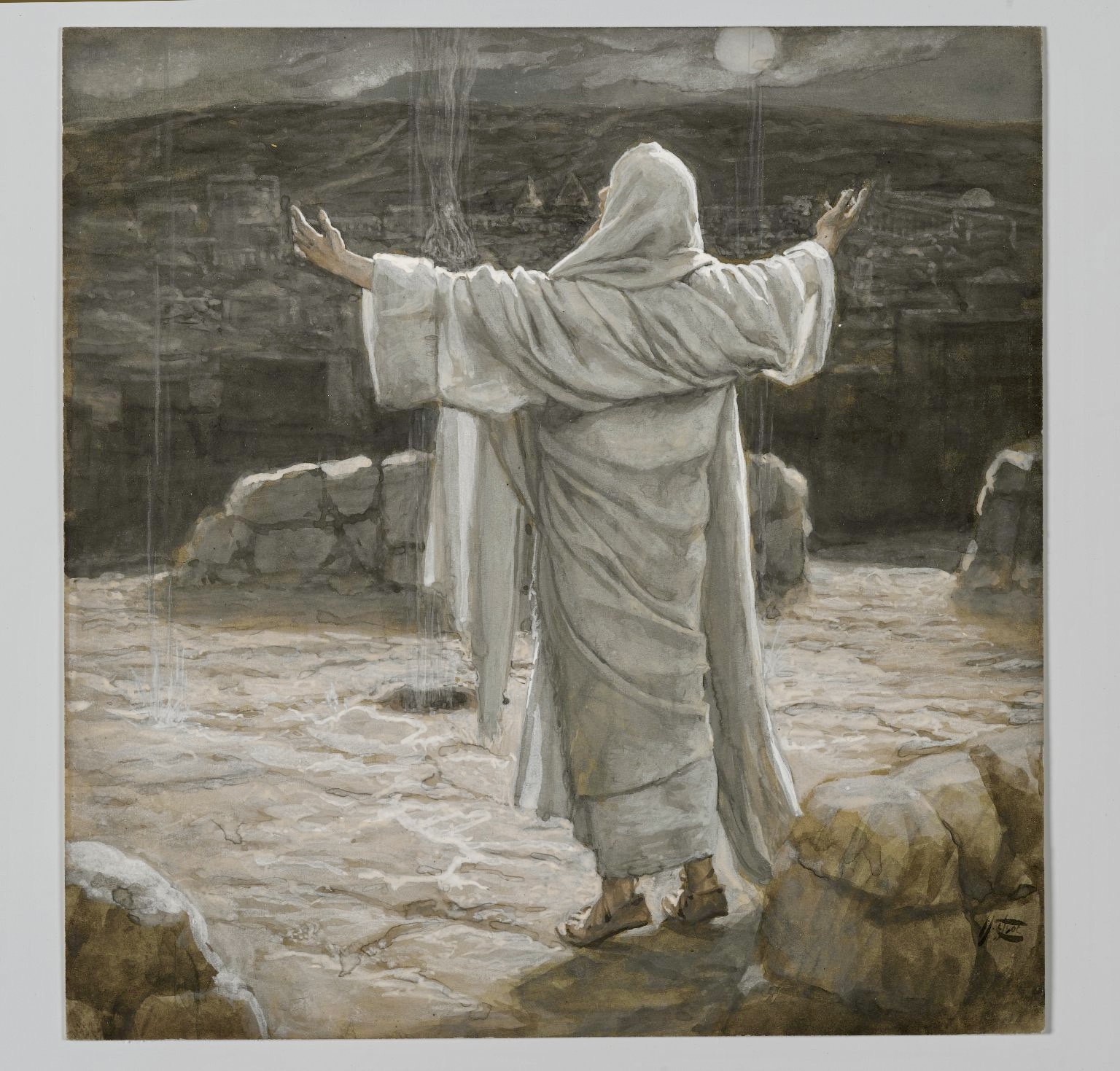
Christ Retreats to the Mountain to Pray, by James Tissot

I have become fond of quoting a particular question and response found in the Catechism included in our Book of Common Prayer. The question is straightforward: “What is prayer?” The first part of the extended answer to this question is also put plainly, and it is instructive. “Prayer is responding to God.”

Consider the significance of those words. If we gained our concept of prayer during childhood, we probably still think about this activity in the same terms – terms which are rather different from the way that the Prayer Book Catechism sets forward its definition. For it seems almost universal that we associate our concept of prayer with ’petition.’ Petition is the formal name for prayers that ask, in which we make our personal requests to God. ‘Intercession’ is what we call the prayers that we offer for other persons and their needs. The frequency with which we might engage in these two forms of prayer may help explain why we are so accustomed to seeking what we call “answers to prayer.” If answers to prayers are sought, it suggests that prayers are posed to God by us unidirectionally, as questions and or as requests.

Yet, our Catechism begins its teaching about prayer by characterizing this activity as one in which we respond to God, rather than one in which we envision God responding to us and to our concerns!

St. James the Less (at prayer), by James Tissot

Putting the matter very simply, the Prayer Book presents prayer as something that is God-centered, God-initiated, and as God-enabled. Such a notion of prayer is fully biblical and properly theological. Yet, we like to be ‘in the driver’s seat.’ Habitually, we think of prayer as something we initiate, and for which we supply the purpose and direction. But if prayer is to be centered upon communion with God, then it ought also to be the other way around, so as to follow the words of Jesus. For he taught us to address “our Father in heaven” by saying “thy will be done.” When we follow his teaching, instead of so often asking God to please do what we want, we are more willing to let God be quietly present and foremost in our consciousness.

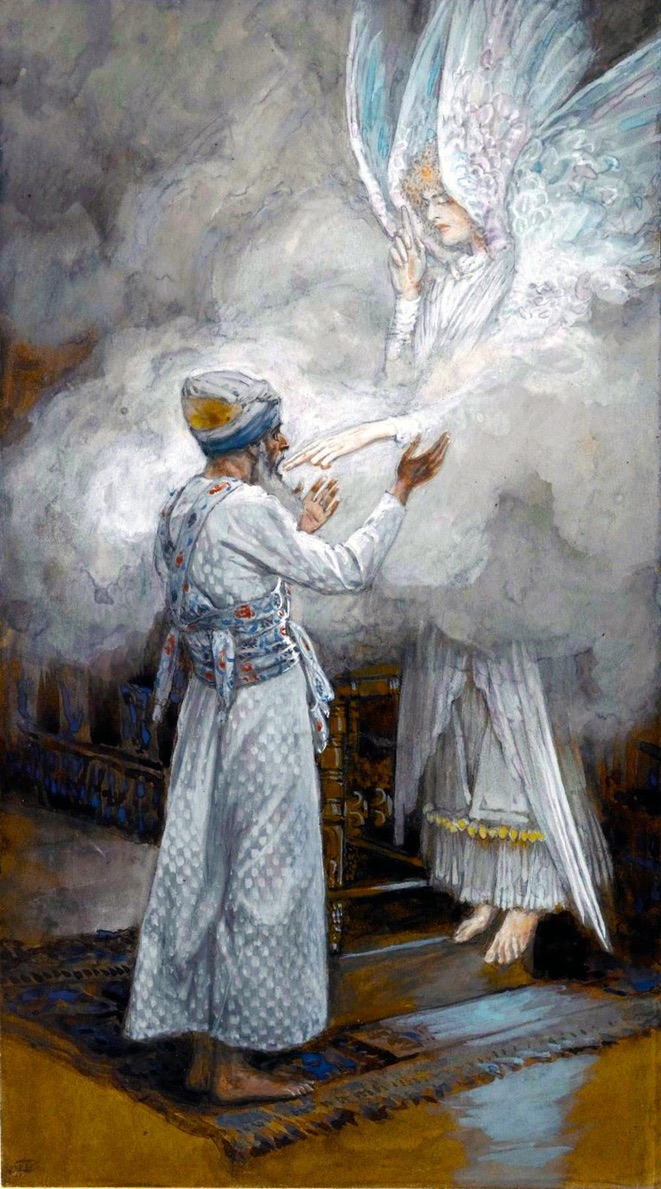
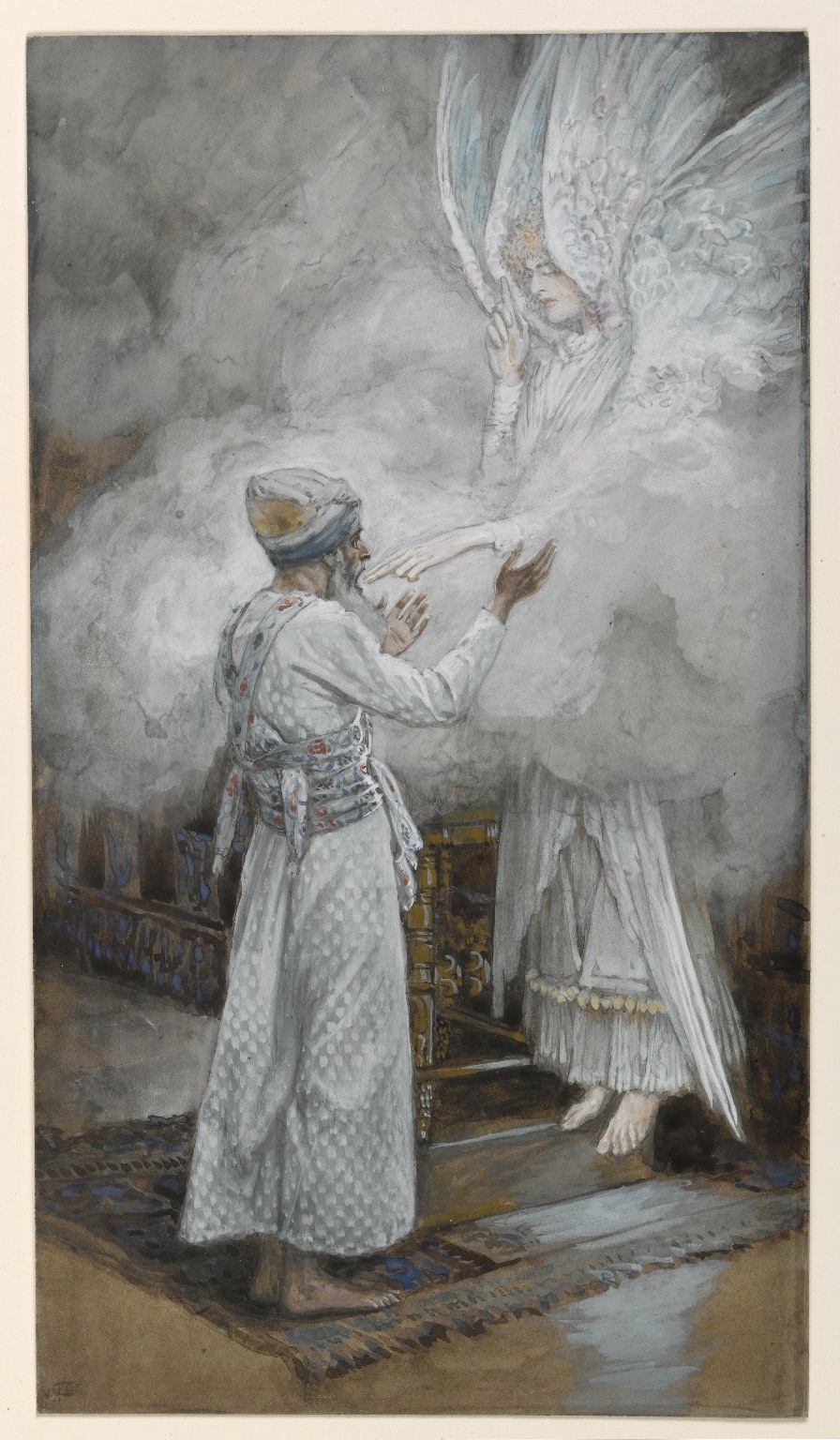
The Vision of Zechariah (while at prayer in the Temple), by James Tissot

In a similar way, I think we habitually also misperceive the nature of divine blessing. Two examples of blessing that admittedly are not everyday occurrences, but which sometimes receive mention in discussions about blessing, can help make the point. These examples are provided by occasions when our chaplains are asked to offer prayers for, and pronounce blessings at, the launching of military ships and submarines, or to offer similar words over the participants and their hounds at fox hunts. Such prayers should not be seen as providing sanction for or as necessarily implying divine approval of whatever we ask on such occasions. Blessings in such contexts can instead be understood as words that we offer so that what is prayed for might be in accord with God’s will, rather than as words offered in support of purposes that we prefer and will into effect. Therefore, prayers offered for persons seeking public office, or who serve in that capacity, would best be shaped according to this understanding.

In view of these observations, blessing as a spiritual activity can be defined in the following way. For those who desire a blessing in the context of the church, a bishop or priest might say words of this kind: “May God’s will be furthered in your life, to the end that our Lord’s revealed and known purposes may be brought to their fulfillment in you, and for you.”

Here, the parallel we can discern between engaging in prayer, and offering blessings, provides insight. If prayer begins with responding to God, rather than with inviting God to respond to us, then surely words of blessing pronounced by our clergy are equally contingent upon the revealed direction of God’s purposes rather than those of our own. Therefore, we should always seek to offer prayers and blessings that are in accord with God’s known will, with the aim that our wills and desires might be in harmony with those of our Lord. Prayers and blessings are most genuine when we are most open to letting God be God.

James Tissot, Christ Goes Up Alone onto a Mountain (detail)

The Beauty of What God Can Do, and Is Doing

If reading this by email, please tap the title at the top to open your browser for the best experience. Then, clicking individual pictures will reveal higher resolution images.

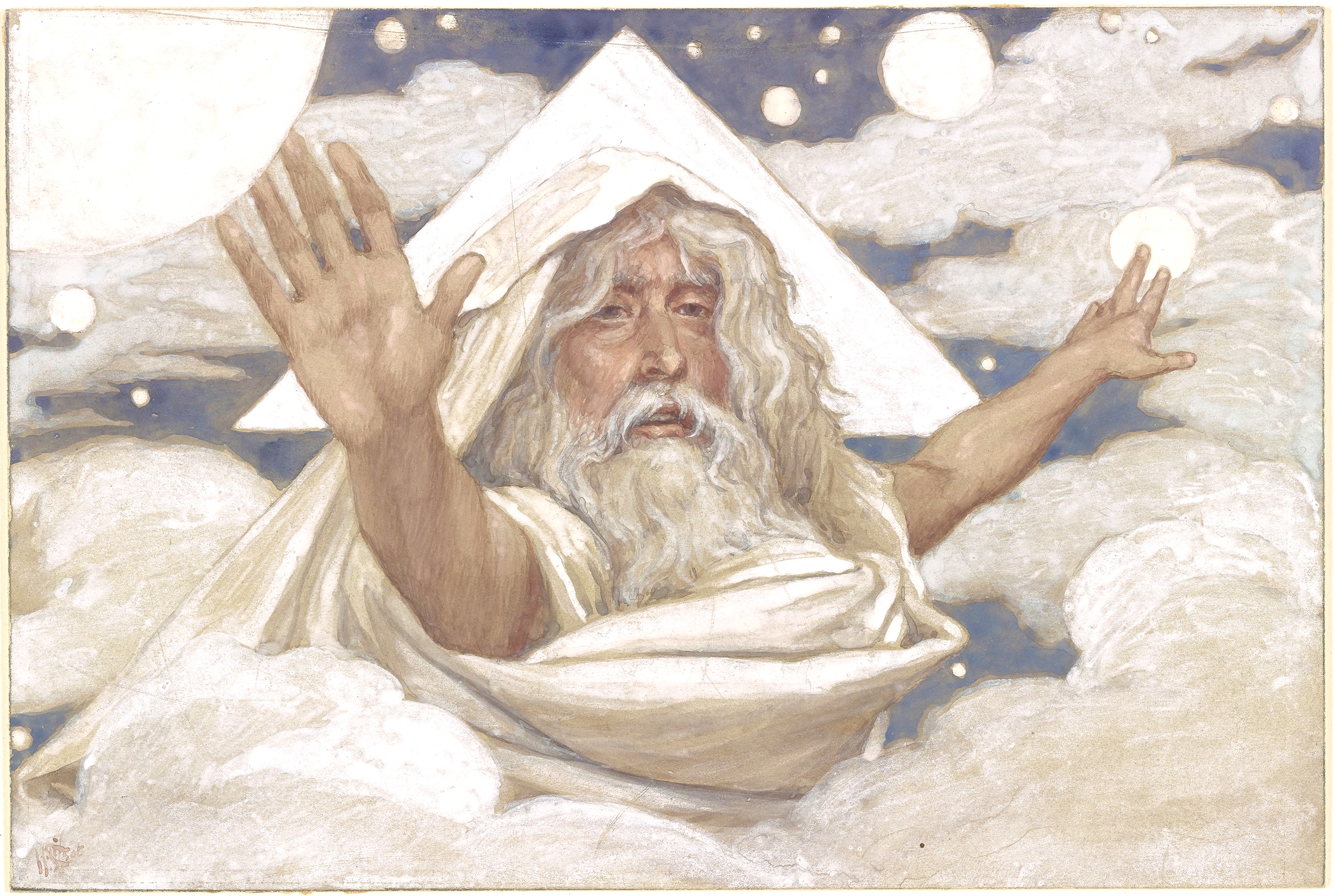
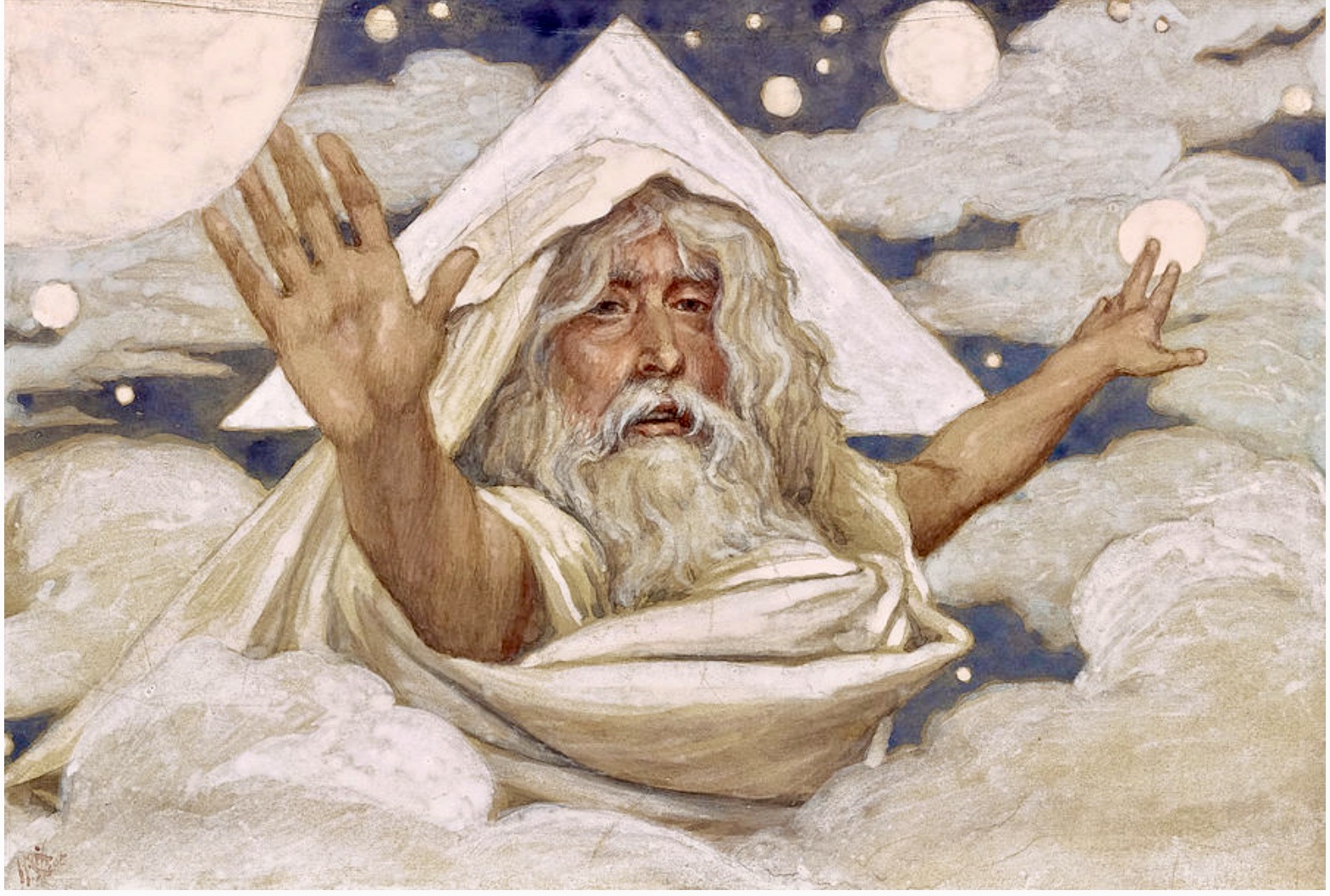
James Tissot, God Creating the World


If you are a Christian, and if you reflect on your formation as a person of faith, consider this question: Do you believe it is reasonable for God’s will to make sense to us? To ask this question opens the door to discovering how our beliefs about God were shaped, as well as our beliefs about God’s providential ordering of the world. Indeed, does God even want us to think about such things, or are we simply to accept and obey the divine will, regardless of whether we find this reasonable.

These questions also bear upon how we reflect upon what happened in Jerusalem 2,000 years ago, events that we consider during this Holy Week.

Broadly speaking, the Catholic tradition of thought – going back at least to Thomas Aquinas – anticipates a discernible overlap between divine rationality and that of created and redeemed human nature. God’s rationality is imprinted upon our powers of reasoning. By contrast, broad strands of the Protestant tradition – with its comparatively elevated concept of the Fall and human sin – have not nurtured and have even discouraged a similar expectation of such an overlap. Accordingly, we cannot expect or believe that our rationality has any real continuity with divine rationality.

One of the two traditions described above has emphasized the self-revealing comprehensibility of God, who intends for us to know, and not simply obey, the divine will. The other tradition has privileged the sense that God was and is wholly other, and therefore God’s ways are incomprehensible, except for small graces. Each of these two traditions has therefore had a different understanding of what it means for us to have been created in the image and likeness of God (see Genesis 1:26, in context).

A related and observable distinction regarding these two broad traditions concerns the relationship between grace and nature, and how this is construed. In the wider Catholic understanding, grace is more often seen as infusing nature, and present everywhere. Whereas a common view often found in Protestant piety anticipates that grace touches nature episodically, and sometimes is antithetical to it, given nature’s and our Fallen state.

James TIssot, God Appears to Noah

Another way we can distinguish the spiritual influence of the two traditions I am sketching here concerns the nature of God and of God’s activity. For example, shaped by a broadly Catholic catechesis, it is believed that there are at least three things that God cannot do: create a rock bigger than God can lift; choose to cease to exist; and, command us to hate ‘him.’ For, in the spirit of that same catechetical tradition, each of these three theoretical possibilities would be irrational, and thus contrary to the divine nature and being, as well as to who and how we were and are made to be.

Most Protestant thinkers and preachers would likely dismiss the first two of these three (im)possible ‘things’ as perhaps irrelevant rhetorical distractions. Yet, the third thing, however disagreeable and unforeseen in light of the New Testament, would probably be conceded as theoretically possible, especially given the historically Protestant stress on divine freedom and the importance of acts of will for personal right-believing. (In other words, though God could, God wouldn’t.)

A result of these differences between the two traditions is that questions about sin, misfortune, and the presence of evil, have tended to be handled differently in Protestant belief and teaching as compared to that shaped by Catholic spirituality. This difference can be noticed when we reflect on and speak about ‘bad things’ that happen to us. Does God cause such misfortune, or, allow it? How we tend to answer this ‘cause’ question can reveal something about the Christian catechesis by which our thinking and beliefs have been shaped. And how we think about this question regarding divine responsibility will benefit from insight going back to Aristotle concerning four different aspects of what the word ’cause’ can mean.

James Tissot, God’s Promises to Abram

Here is a fundamental question that can bring many of the above strands of thought into focus: Do we believe that God always loves us; always seeks intimate fellowship with us; and always seeks to draw us more fully into the merciful embrace of God’s redemptive purposes? Or are our answers to these facets of a fundamental question somewhat qualified? And if qualified, then by what?

Especially in view of our observance of Good Friday this week, I believe that we can answer this question about how God loves us in the affirmative. And we can do this without overlooking or ignoring such NT images as the narrow gate, and the Lord who will ask what we have done for the least of his brothers and sisters.

CS Lewis, among others, reminds us of a way that we can appropriately affirm God’s abiding love for all people. We can illustrate Lewis’ view with the following image: We may weep when we come before Him at the end of our lives. But our tears may be both from sorrow as well as from joy at our redemptive inclusion, despite all that may count against us. As long as, in that moment, we acknowledge Him, and who He really is. For we all will have the opportunity to do so.

Alleluia – Easter comes for everyone. If only we could better see how and why that is true!


Additional note: As an Anglican, I include my own tradition within what I refer to above as the broadly Catholic tradition. My goal with this post is not historical analysis but to provide grounds for reflection regarding two differing – yet sometimes overlapping – ways of approaching some central questions.

Can Beauty be Found in Judgment?

If reading this by email, please tap the title at the top to open your browser for the best experience. Then, clicking individual pictures will reveal higher resolution images.

James Tissot, Jesus Looking Through the Lattice (detail). This may remind us to ask, in whose sight do we live?


One of the most widely quoted, but perhaps least understood, sayings of Jesus amounts to the admonition, do not judge. A common way these words are understood can be summed up in the instruction, do not judge others lest you, yourself, become judged (see Matthew 7:1 and Luke 6:37).

Did Jesus mean to forbid all forms of judgment?

A good way to appreciate Jesus’ teaching in this regard is to make a distinction between judging persons, and judging a person’s actions. For example, trying to appropriate his teaching on this matter may require us to make judgments about what actions would constitute faithful obedience to his words, and those which are proscribed by him. In order to follow his teaching, I may need to ask myself, would this or that act of mine (whether merely in thought, or in my spoken words and or actions) constitute an example of what he meant to forbid?

At the same time, and if following through with the above distinction, I need to consider a further question. If Jesus did have the above distinction in mind, what more precisely was he concerned to have us try to avoid doing?

When interpreting Jesus’ words on this subject, New Testament scholars tend to focus on the inherent problem of our presumption of a divine prerogative. This is evident in our predilection to be the ones who determine which actions, behaviors, and or attitudes, are characteristic of the things that will impede our (and more especially other persons’) enjoyment of eternal fellowship with our Father in heaven. According to this understanding, we are not to make judgements like these: “That person, as a result of his words or actions, is as good as ‘gone to hell!’” Or, “that person is beyond redeeming, and is no longer worthy of my attention or positive regard.”

James Tissot, Woe Unto to You, Scribes and Pharisees

On the other hand, and as I seek to think, live, and love, as a graced participant in the life of Kingdom fellowship, I need to make distinctions about what kinds of thoughts, words, and actions are characteristic of Kingdom life. To do this requires making judgments – judgments about thoughts, words, and actions, rather than about people. And Jesus, as quoted in John 7:24, appears to encourage making right judgements. Though in this context in John’s Gospel, he is asking for right judgement to be made about himself, about who he is; his encouragement to do so rests upon his hearers making such judgements based on their (or our) experience of having engaged in similar acts of prudential reasoning.

James Tissot, The Soul of the Good Thief (a reminder of the Good End toward which we are able to live)

Making good or right judgments about what is characteristic of Kingdom life, and about choices or actions within it, can not only be helpful, even crucial, but also a thing of Beauty. Seeking first the Kingdom of God, and God’s righteousness would seem not only to permit such judgments, it may require making them. Indeed, how else are we to know what patterns of life, and specific types of action, fulfill Jesus’ teaching in the Sermon on the Mount? For we are able to make judgements about what kinds of thoughts or actions, and what kinds of disciplines or practices, can help us grow further into the holiness of Christ, our living icon of a beautifully redeemed humanity.

James Tissot, The Sermon of the Beatitudes (detail)

One key to understanding this implication of Jesus’ teaching about the value of right judement is provided by considering a number of Biblical and Prayer Book texts regarding the connection between our participation in the Beauty of the Lord, and our grace-enabled growth into divine righteousness. I hope to develop this idea in a subsequent post. For the moment, I will restate a maxim I like to remember: We are called to live as we prayto the Father, through the Son, in the Holy Spirit. This helps us to “see thee more clearly, love thee more dearly, follow thee more nearly, day by day.”


The closing words in the last paragraph above are a quote from St. Richard of Chichester, as found in hymn 654, The Hymnal 1982, and are familiar to many of us from a song featured in the musical, Godspell.

A Friend’s Beautiful Repentance

If reading this by email, please tap the title at the top to open your browser for the best experience. Then, clicking individual pictures will reveal higher resolution images.

James Tissot, The Pharisee and the Publican


This past week I witnessed a beautiful act of repentance. A new friend shared with several of us that he had done something he clearly regretted. I began to see the shame and grief he was carrying within himself, despite his initial display of upbeat friendliness. I suspect that he had not joined us consciously intending to share details about what he had earlier done. But, after a bit, his sense of accountability to us, as well as his desire to reconnect with us, overcame his reluctance to be candid. His face became dark, and we could see anguish in his facial expression while – embarrassed – he described what had happened. His principal regret, he said, was that he had let himself and his family down, and he was sad that he had let us down, as well.

It was an uncomfortable few minutes, both for him, and for us. But I was struck not only by the pathos of the moment, and of his admission. I was moved by the beauty of his expression of repentance, and especially by his at-first discrete and then winsome smile as he received and responded to our assurances. We told him that he was beginning to make things well by sincerely sharing his recent experience with us.

The moment passed by all too quickly, especially given how profound it had been for several of us.

We had personally witnessed a touching illustration of what I believe Jesus was getting at in his parable found in Luke 18:9-14, often called The Pharisee and the Publican (or Tax Collector). This parable and other related Gospel sayings or stories are often described as providing us with illustrations of God’s love for us, and of what God’s love for us seeks to nurture in and elicit from us. To me, an often missing word in such characterizations of Jesus’ vision and teaching is ‘beautiful.’

I doubt I will ever forget an observation made by a young aspirant to ordained ministry, about her loss of her father following his lengthy terminal illness: “it is a beautiful thing to have someone for whom you mourn.” There is a similarly strange beauty – and ‘strange’ because it is unexpected – to be found in offering, or in being invited to receive from a friend, grief-filled repentance. Otherwise, we are rarely ever so self-disclosing, so without guile and, hence, so vulnerable. Perhaps the beauty we find here in such moments is the reflected beauty of the divine nature, in whose image and likeness we have been created.

But the loving light of that same divine nature also illumines how our created likeness with God is now marred, and often obscured. This is what can keep us holding our hurts within, while foolishly thinking we are somehow different from others.

And then, on an occasion that can be a surprise even to the one who offers a painful admission, the reflected beauty of the divine nature is briefly revealed, shared, and there before us to behold.

When we find ourselves moved to share our pain and grief by our acts of repentance, we may experience a paradox. We may find that, in the embrace and assurances we receive from those with whom we have been candid, we have received something of even dearer value to us. We may find that we have received a beautiful gift, the gift of experiencing having been found by the One who has come to find us.

James Tissot, The Good Shepherd


Additional note: Jesus’ teaching, “blessed are those who mourn,” might best be understood in relation to the grief we can experience accompanying our acts of repentance. Charles Wesley may have had this idea in mind when composing verse 2 of his text for the hymn/poem, “Lo! he comes with clouds descending.”  For we are close to the Father’s heart when our grief is born of sincere repentance.

Every eye shall now behold him, robed in dreadful majesty;
those who set at nought and sold him, pierced, and hailed him to the tree,
deeply wailing, deeply wailing, deeply wailing, shall the true Messiah see.

(Charles Wesley, in the words of Hymn 57 in The Hymnal 1982)

The Epiphany: Human Power Encounters Divine Authority

If reading this by email, please tap the title at the top to open your browser for the best experience. Then, clicking individual pictures will reveal higher resolution images.

James Tissot, The Magi Journeying (detail)


Instinctively, there is something we all seem to seek. We want to find purpose and meaning, and organizing principles for our lives. This desire is anchored in a larger one: we seek to discern what is real, and true.

But where does our common impulse come from? In what does this impulse consist? I think the best answer to these questions is found at the heart of the Feast of the Epiphany. On Epiphany, we celebrate how God has revealed to the world the real and true meaning and purpose for our lives. Epiphany is all about God revealing to us the divine center of everything. Epiphany highlights God’s self-revealing in the natural world, and preeminently in God’s Incarnation, which the Magi came to discover and then worship.

We are able to recognize that it is in the nature of a Creator to order reality, imbue it with purpose and meaning, and hence to bring order, purpose, and meaning to our lives. A perhaps-unexpected word that captures this broad idea is authority, in that God possesses the authorizing power to create things, and guide them. Specifically, we discern this authorizing power in God’s creation of the universe and in the divine agency shaping ongoing history. For God is the author of all that is real and true.

In human life, authority and power are not always neatly aligned, and we experience trouble when the two are at odds with one another. We see this dialectic between the two at work in the events of Holy Week, in the confrontation between divine authority (in the vocation of Jesus), and worldly power (as exemplified by Pontius Pilate). Less obvious is the way this dialectic is manifest in the events that are commemorated in our celebration of Christmas and the Epiphany of our Lord, especially in connection with the visit of the Magi from the East.

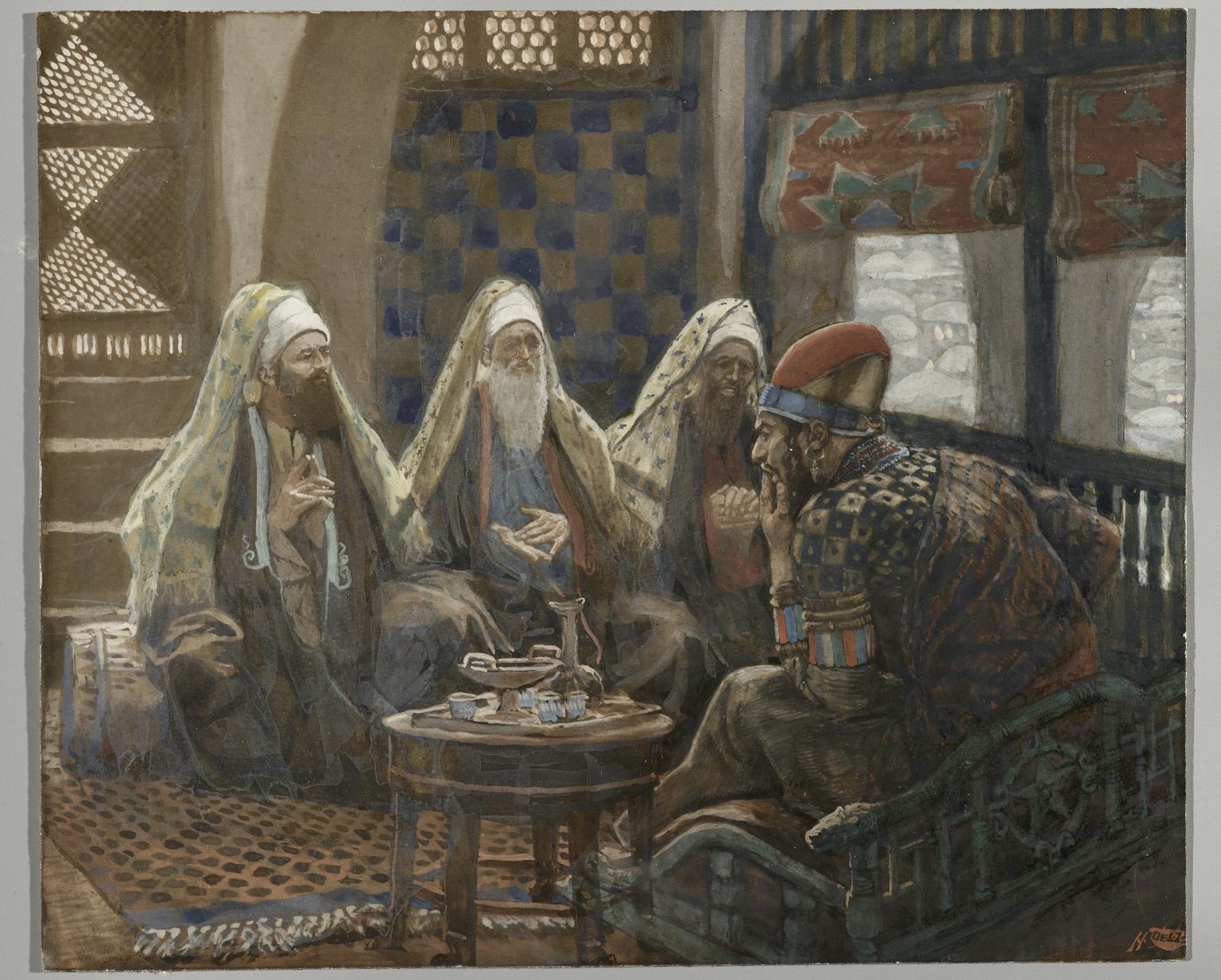
James Tissot, The Magi in the House of Herod

The Magi, also called ‘wise men,’ or ‘kings’ from the East, arrive in Israel having been guided by an authoritative power greater than themselves. Because of their witness to this higher authority and its implied power, the visitors pose a threat to Herod and his courtiers, who exercise earthly authority and its attendant power. This emerges in the interaction between people who are witnesses to divine authority and its power, and others who are possessors of worldly authority and power. The emerging conflict, later seen in the events of Holy Week, arises amidst the challenges surrounding the beauty revealed in what we call the Epiphany, the revealing of divine light to the whole world rather than to just a particular nation or the people of a particular religious tradition.

The Magi from the East, by explaining their quest, prompt Herod to act. He acts viciously and violently through orders given to soldiers under his command. The result is the series of murders we acknowledge every year on December 28, in the ‘red letter day’ we call the Massacre of the Innocents.

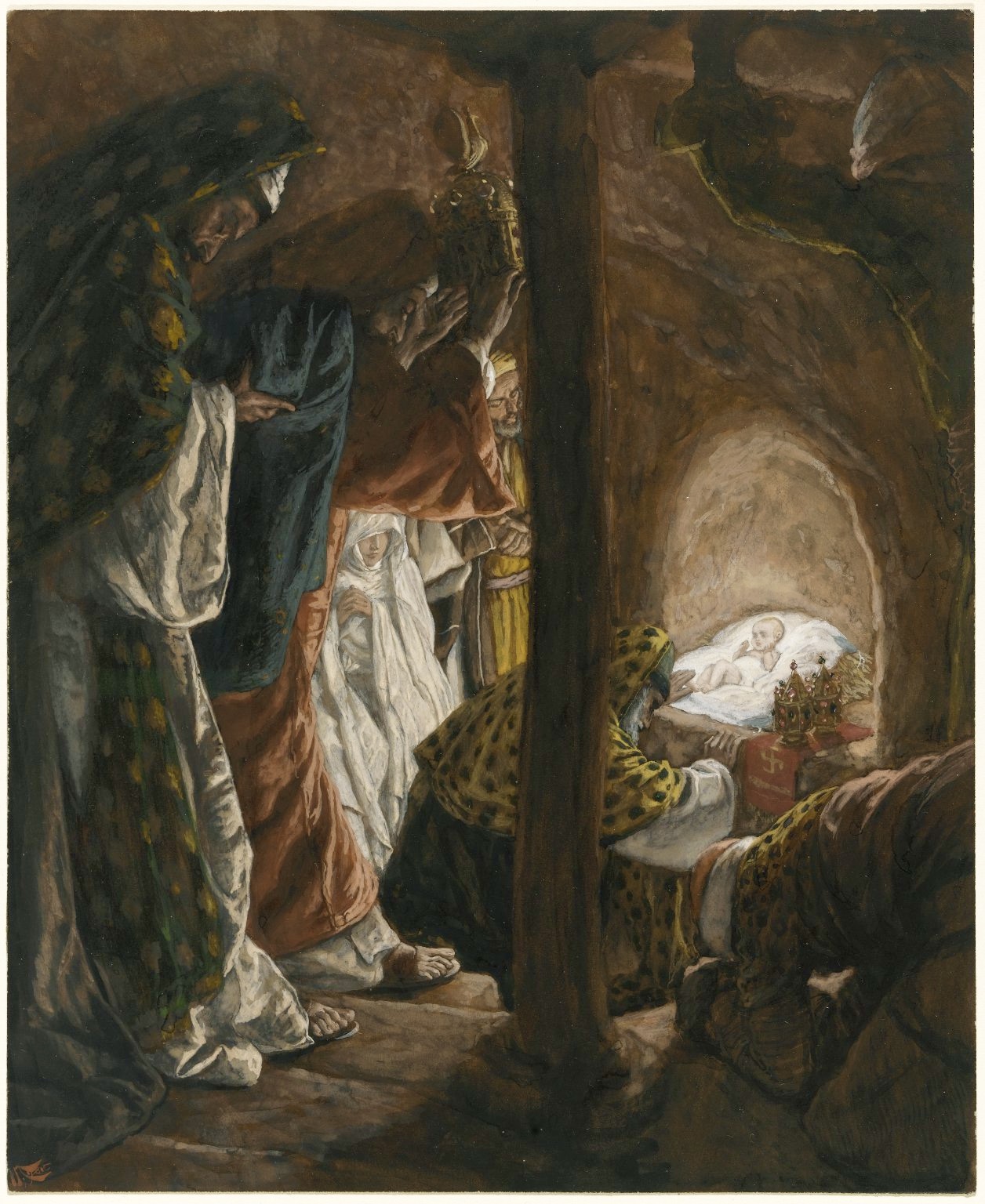
James Tissot, the Adoration of the Magi

What are we to make of the Epiphany of God in human form, and the tragic circumstances to which it led? At the heart of Christian belief is the conviction that God became present to us through a human birth. He revealed himself in a human person who embodied two natures, one fully divine, and one fully human, whose natures are distinguishable yet inseparable. Such a person, regardless of appearances, was and is the transcending center or heart of all that is, manifest in human form. He is, therefore, the One who truly possesses divine authority and divine power. Einstein – who was not in any sense a traditional believer – said this: “The most beautiful thing we can experience is the mysterious.” The divine center of reality, manifest and revealed in a human being, is the most mysterious beautiful thing that we can experience.

Here is the wonder of it: in God’s mysterious Providence, the birth of the Messiah would bring death to many (in the Massacre of the Innocents). And – years later – the death of the Messiah would bring the possibility of new birth to all, through the redemption of human being from the power of sin and death.

Yet, it would be some decades later before those who proclaimed Jesus as Messiah, and the embodiment of God, could understand the connection between his birth along with those soon-resulting deaths of the Innocents, and his later death, along with its soon-resulting new births for those who came to believe in him.

Our proper response to all this — indeed our only response to all this can and should be to praise the Holy One of Israel, the one whose death brought new life to all who receive him. He has come to us. Come let us adore him. And let us receive him with renewed hope and joyful hospitality, in all his light-filled glory.

A blessed Epiphanytide to you and your loved ones.


The Arrival of the Messiah in James Tissot’s Art

If reading this by email, please tap the title at the top to open your browser for the best experience. Then, clicking individual pictures will reveal higher resolution images.

James Tissot, The Vision of Zechariah, with which Luke begins the great story (Luke 1). The priest, Zechariah receives an epiphany, telling him that he and Elizabeth will have a son, to be named John, later known as ‘the Baptizer.’


With this post for Christmas, I share with you a series of paintings by James Tissot on the theme of the Nativity of Jesus. Readers of this blog will know of my high regard for this artist’s life and work. I am pleased to share this collection of Tissot’s paintings related to the great events we celebrate for twelve days in the Church’s calendar year.

The paintings featured here, and many others, later became the illustrations in Tissot’s four volume, The Life of Our Lord Jesus Christ, published in English in 1897-8. The originals of these paintings were purchased by the Brooklyn Museum in 1900, and examples from this collection are periodically on display, both there and elsewhere.

May you and your loved ones have a holy and blessed Twelve Days!

The Betrothal of the Holy Virgin and St. Joseph (mentioned in Matthew 1 & Luke 1)

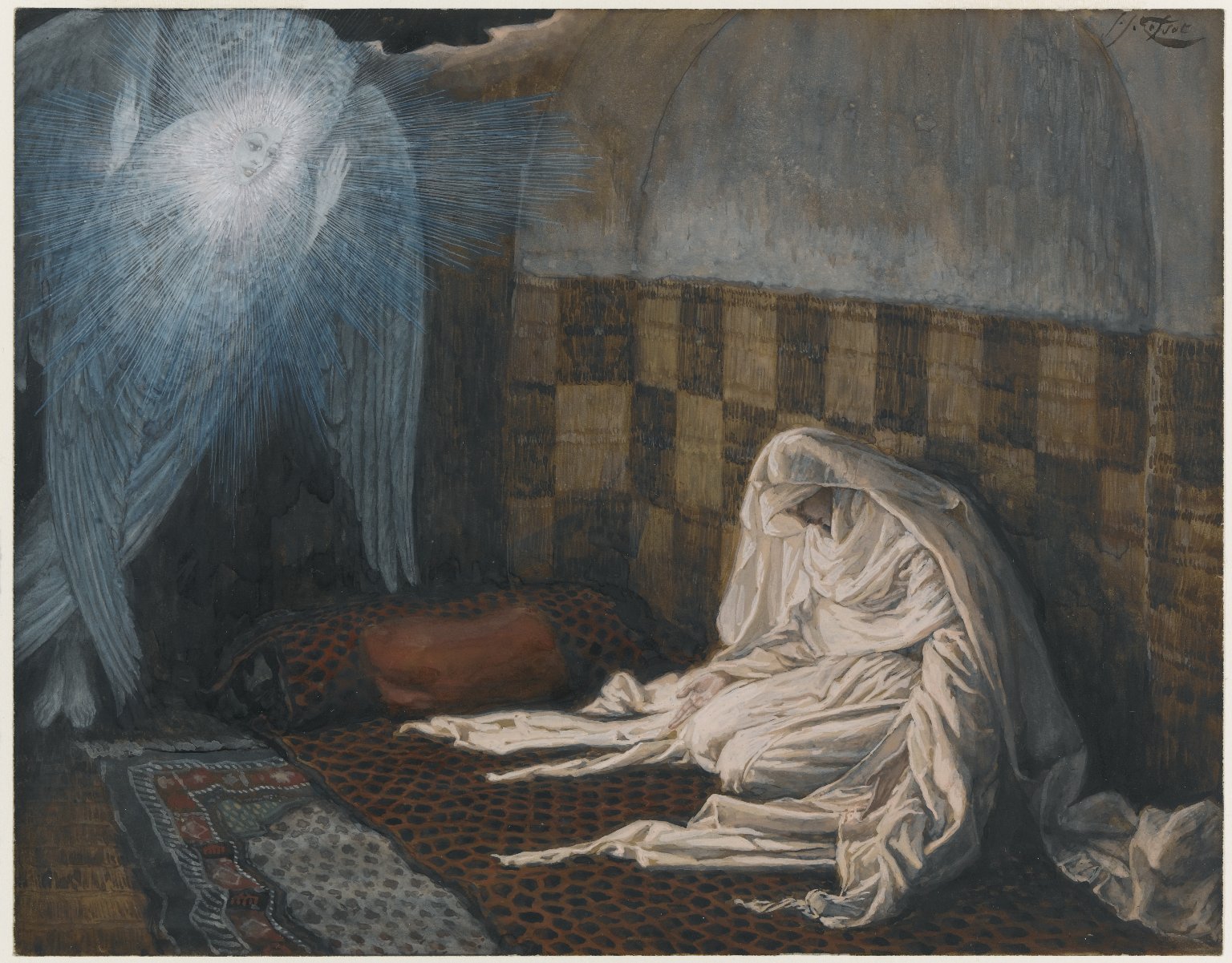
The Annunciation to Mary (Luke 1)

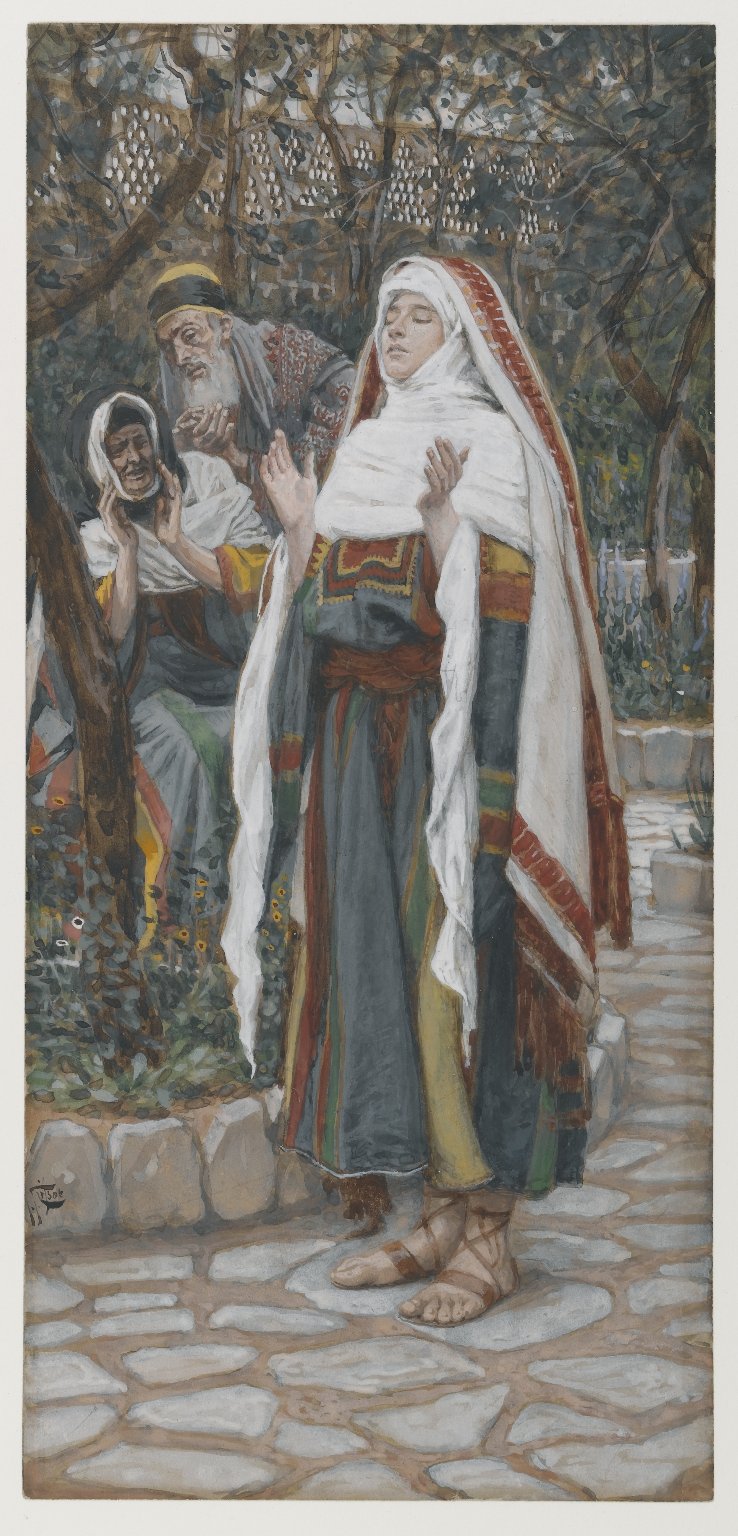
The Magnificat (Luke 1)

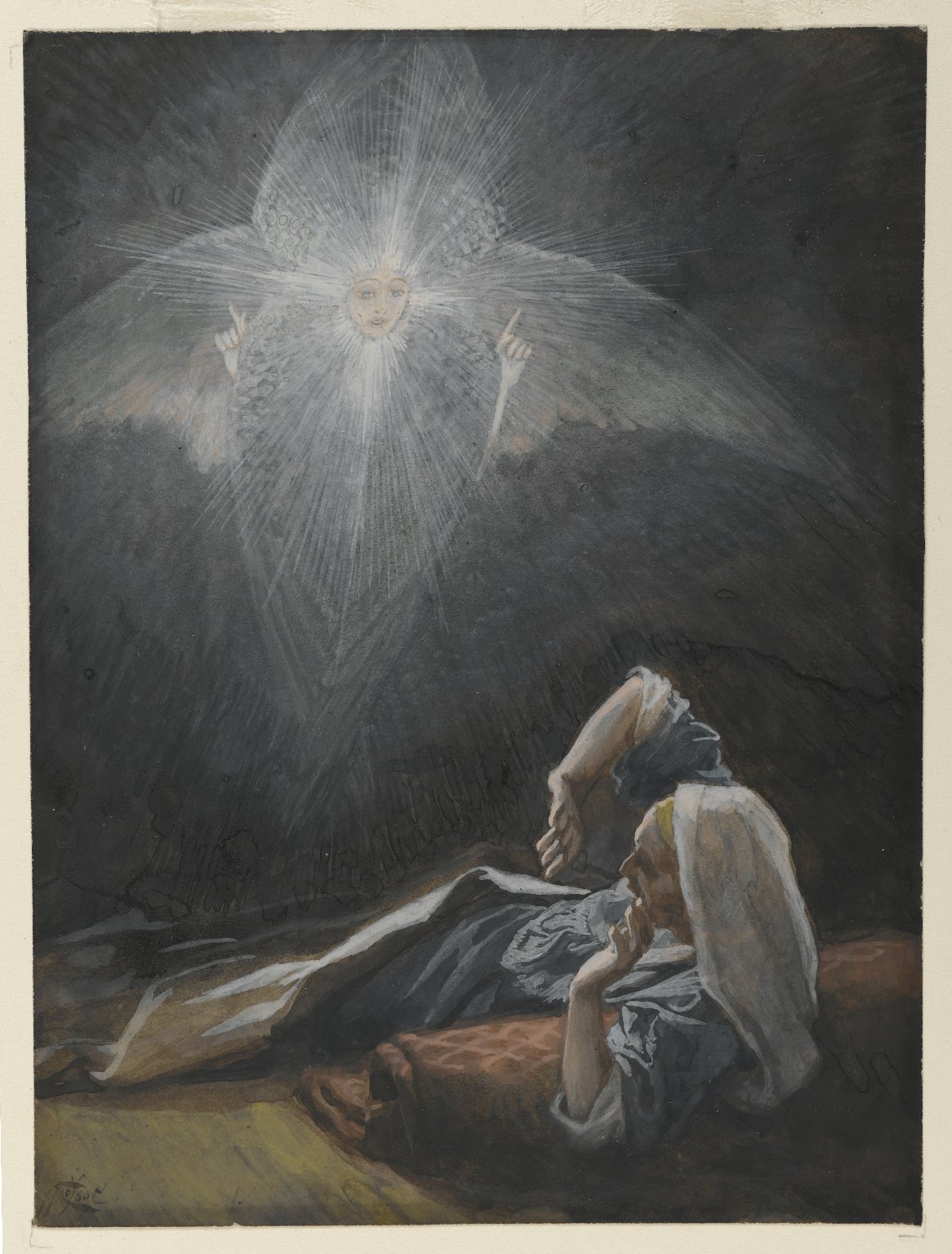
The Vision of St. Joseph (telling him of the coming child, and that he is to receive Mary as his wife / Matthew 1)

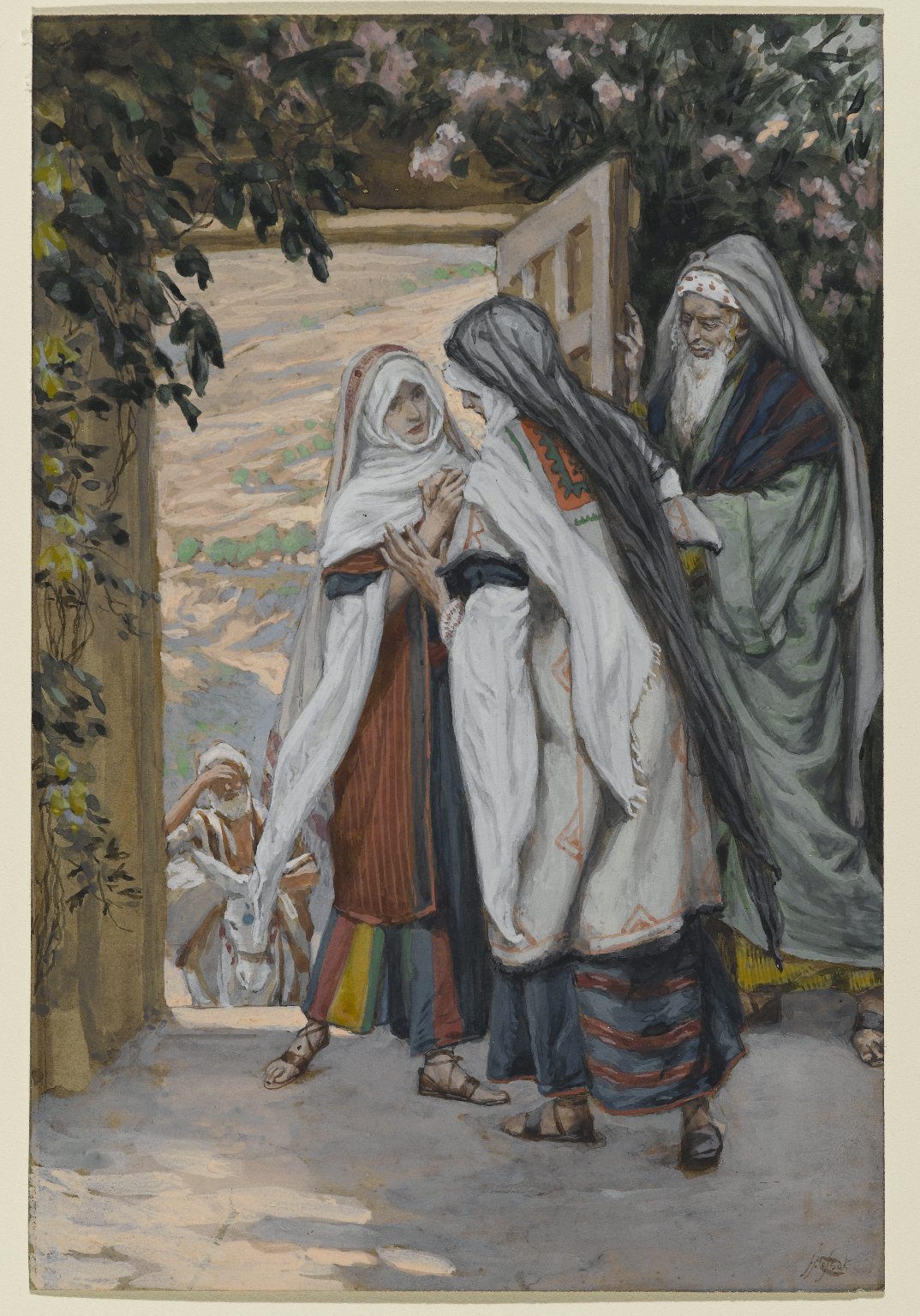
The Visitation (of Mary to her cousin, Elizabeth, the expectant mother of John, who would become the Baptizer / Luke 1)

St. Joseph Seeks Lodging at Bethlehem (Luke 1)

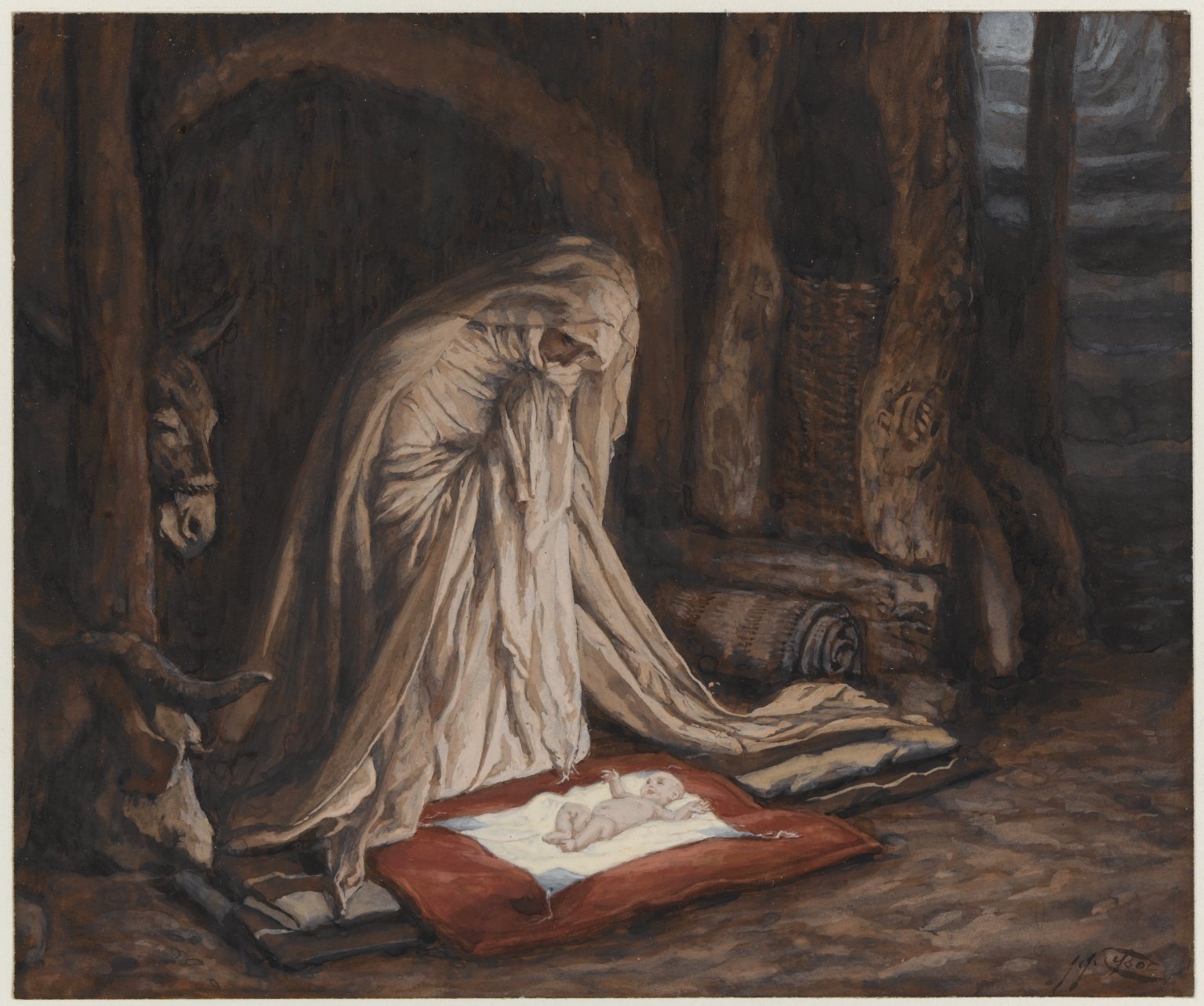
The Birth of Our Lord Jesus Christ (Luke 1)

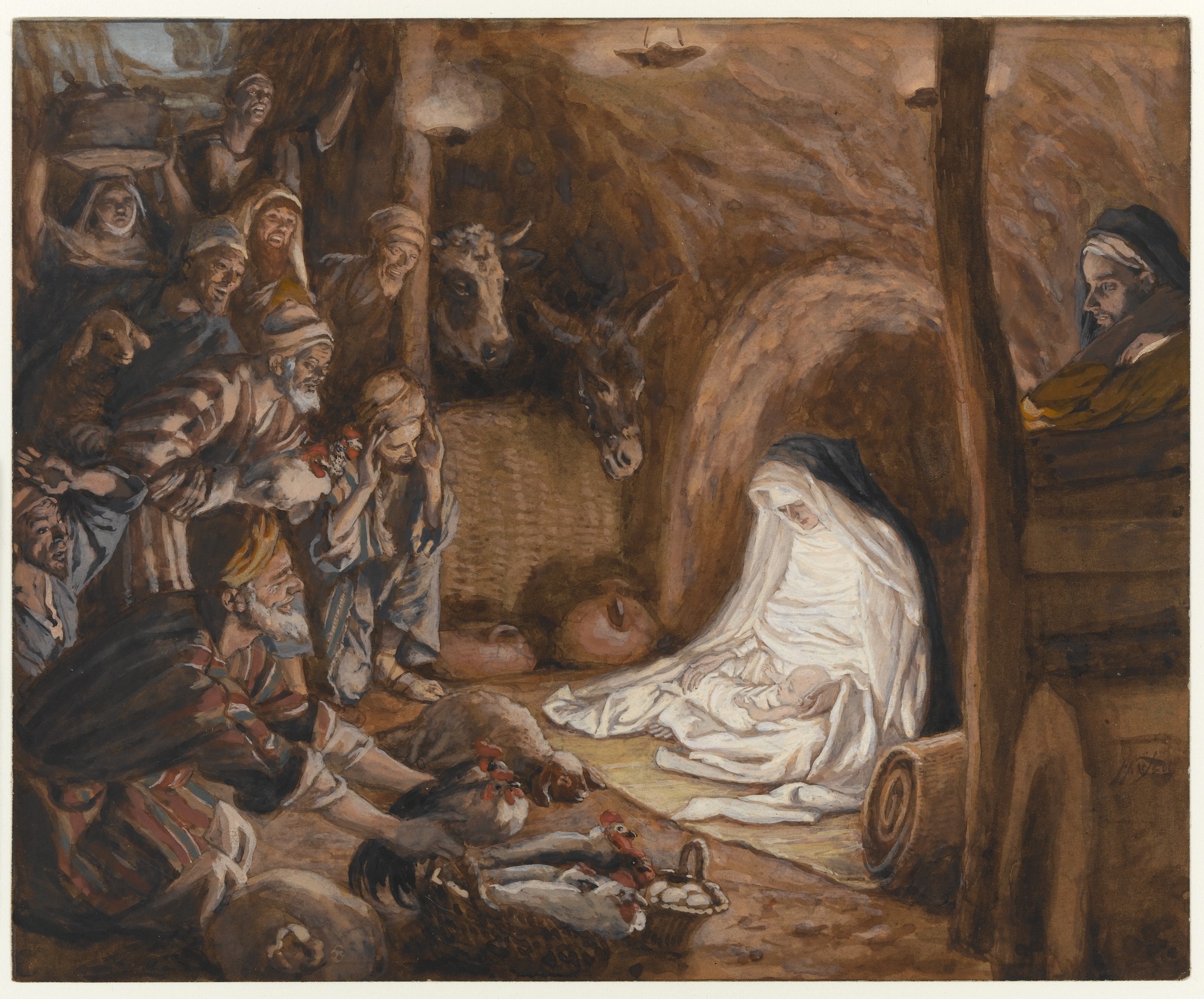
The Adoration of the Shepherds (Luke 2)

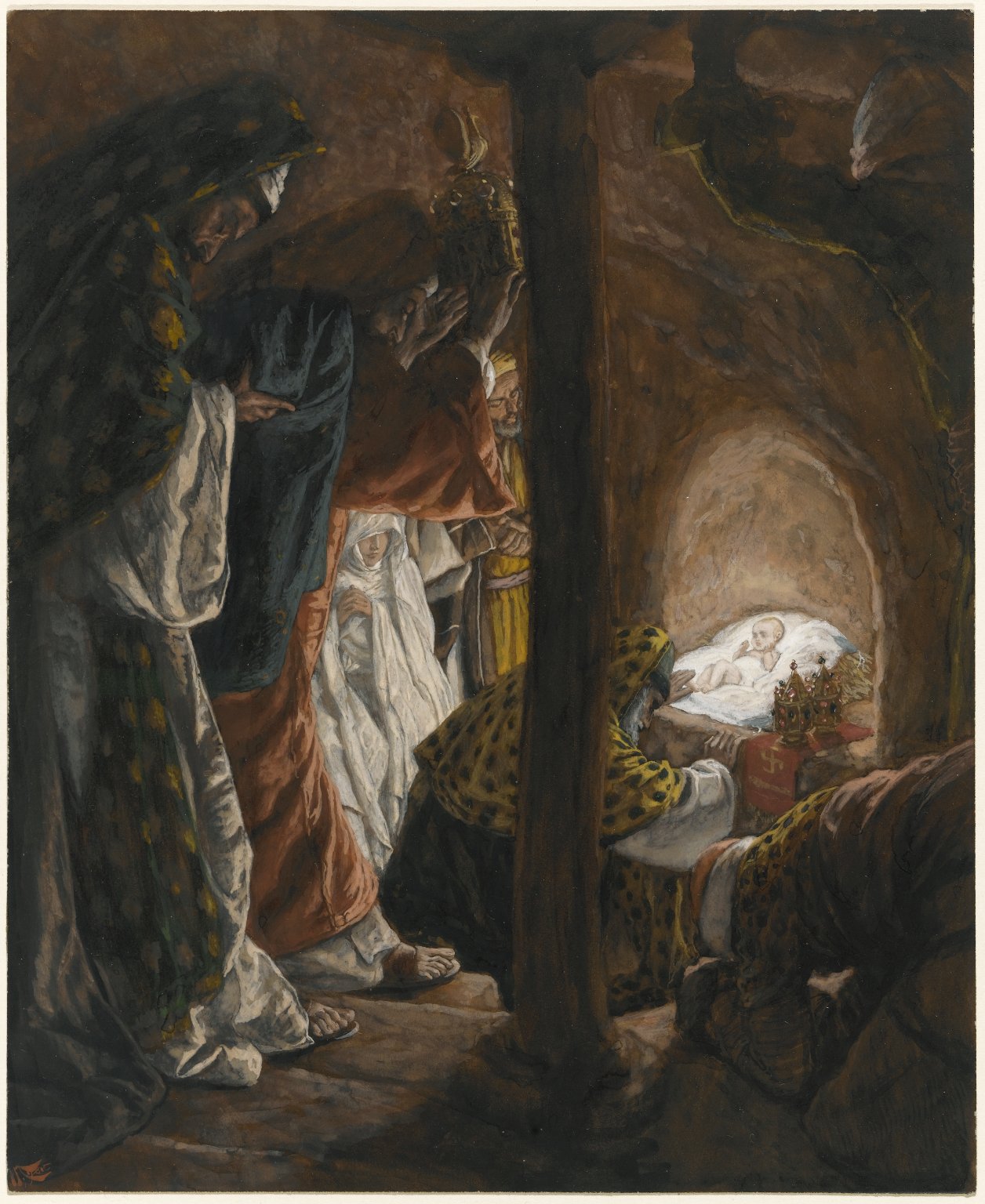
The Adoration of the Magi (Matthew 2)

The Flight Into Egypt (Matthew 2)

The Massacre of the Innocents (Matthew 2)

The Sojourn in Egypt (Matthew 2)

The Presentation in the Temple (Luke 2)

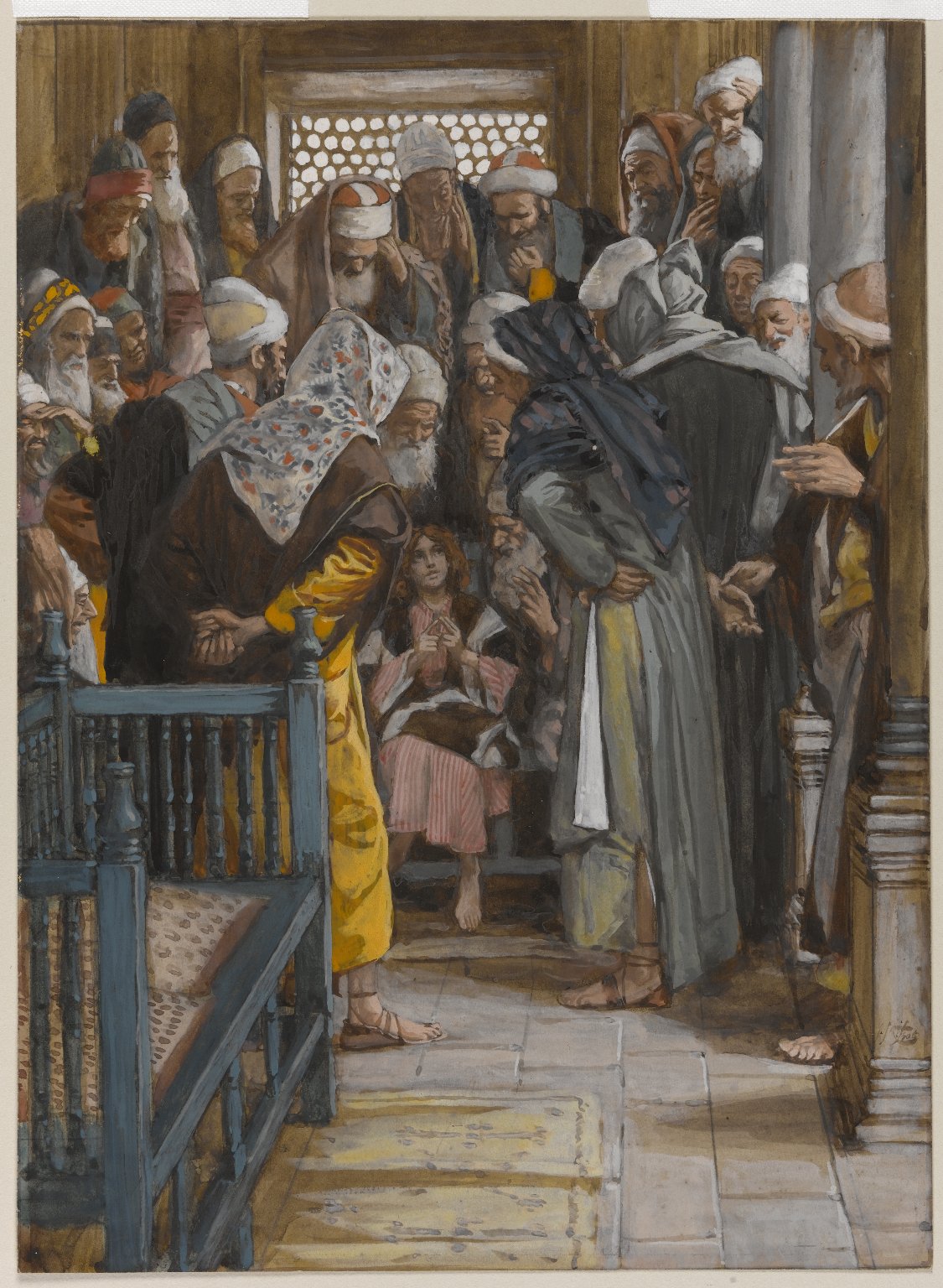
Jesus Among the Doctors (the boy, Jesus, at age 12, visiting the Temple in Jerusalem with his parents / Luke 2)


Note: the titles attached to the images above are those that are provided by the Brooklyn Museum

Fully Alive: The Beauty of Human Nature

A photo of a print given to us years ago


Those familiar with my writing and ministry may not be surprised by how I choose to address the theme of beauty in relation to the human nature we all share.

My response is captured in a quote with words I have long loved and have frequently cited. The quote is from the second century Christian theologian and Bishop of Lyons (in present-day France), Irenaeus. “The glory of God is the human person fully alive.” To which he added, “and to be alive consists in beholding God.”

What an audacious statement! I believe that the fundamental insight here, latent within Irenaeus’s words, stems from the Gospel of John, with whose author Irenaeus likely had a personal connection. That would have been through Polycarp, Bishop of Smyrna (presently, Izmir, Turkey), the city where Ireaneaus was born. One writer has described Irenaeus as the spiritual grandson of the apostle John.

Another calligraphy print, this one featured on the website of Holy Cross Monastery

What does it mean for any one of us to be ‘fully alive’? I believe that the Gospel writer, John, would respond by echoing words from Paul, whose letters frequently employ the phrase, “in Christ.” Through Baptism, we come to be in Christ. Through Baptism, we are re-born in Christ; we live in Christ – and he in us – and we will leave this mortal life in Christ. Indeed, in John’s  compelling witness to Jesus’ teaching, we are told that those who believe in Jesus have already died, and now, will never die! All of the Gospel readings appointed for funerals in The Book of Common Prayer are from John. This is the Gospel that is so centered upon the themes of God’s incarnation within our shared human nature, giving us God-given light, and eternal life.

Words found in the daily pattern for Morning and Evening Prayer, as well as in the Eucharistic pattern used on most Sundays in Episcopal Churches, help amplify this point but in a subtle way. These several patterns for corporate and individual prayer include forms for confession. Using these forms, and after we acknowledge our sin, we pray that we may delight in God’s will , and walk in God’s ways. In the absolution that follows, we hear these remarkable words:

Almighty God, have mercy on you, forgive you all your sins through our Lord Jesus Christ, strengthen you in all goodness, and by the power of the Holy Spirit keep you in eternal life.

In words that may be easy to overlook, we pray that by Holy Spirit power, God will “keep us in eternal life”! Being fully alive involves delighting in God’s will, walking in God’s ways, and being kept by God in eternal life.

Christians believe that the beauty of our human nature was and is found in the Gospel Jesus, and as the Risen Christ comes to be found in us. Our human nature, created in the image and likeness of God, and transformed to become an icon of Christ, is therefore all about the fulfillment of our divinely-given and imbued potential. When by grace we see it happen in people’s lives, it is a beautiful thing to behold.

Yet, human nature, being still what it is, prompts us to look for beauty in outward terms when we view others, as well as ourselves. Jesus, as the Gospels imply, always looked for beauty within – the kind of beauty it was his vocation to share and re-enable in us. This is what we should be looking for, both within ourselves and in others.

The archetypal biblical example of the glory of God beautifully manifest in human nature is found in the Gospel Transfiguration stories. James Tissot, one of my favorite painters, offers us glimpses of Jesus manifesting this same glory on several occasions, a glory that was otherwise often hidden within him.

James Tissot, Jesus Goes Up Onto A Mountain to Pray

Tissot, Jesus Being Ministered to by the Angels

Paul’s remarkable words to the Corinthians bring these themes together nicely. For we want to be among those who are:

seeing the light of the gospel of the glory of Christ, who is the image of God… For God, who said, “Let light shine out of darkness,” has shone in our hearts to give the light of the knowledge of the glory of God in the face of Jesus Christ.”

And, by God’s generous grace, the same may be seen in our faces, as well.


Note: Kenneth Kirk, the esteemed 20th century Bishop of Oxford, and former Regius Professor of Moral Theology at the historic university in that city, titled one of his still-used books (The Vision of God) based on the Irenaeus quote, featured above. Kirk presents Irenaeus’ words in this (now dated) way: “The glory of God is a living man, and the life of man is the vision of God.”

Advent Annunciations: Elijah

[If reading this by email, please tap the title at the top to open your browser for the best experience. Then, clicking individual pictures will reveal higher resolution images.

Marc Chagall, Elijah Touched by an Angel


Surely God’s annunciation to Elijah would have come early in his ministry, or before he embarked upon his calling. To our surprise, God’s personal self-revealing to Elijah happens after – rather than before – a series of dramatic events at which Elijah acted powerfully in the Lord’s name.

The presence of the Lord within the prophet’s words and action had already made a powerful impression upon others. After meeting a personal representative sent out by the wicked Ahab to find him, Elijah confronted the king himself. Then followed Elijah’s contest with the prophets of Baal on Mt Carmel, when God mightily came down in fire upon the sacrifice Elijah had prepared.

Marc Chagall, Elijah on Mt. Carmel

It is only after these things, and after Ahab’s wife, Jezebel, threatened to kill Elijah within 24 hours, that he reacts with notable fear and doubt! He flees into the wilderness where he asks the Lord that he might die. Elijah is twice visited by an angel, who bids him to eat and drink what has been provided. Strengthened, Elijah proceeds – apparently on his own initiative – to “Horeb, the mount of God” (called Sinai in Exodus). He travels 40 days and nights to encounter God personally.

Retreating to the safety of a cave, Elijah is confronted by God in a way that prompts him to face his own fears. God says to him, “What are you doing here, Elijah?” The question contains an ambiguity regarding the words doing and here. For why is Elijah not doing what God has already commissioned him to do, which is prophetically to tell the truth in God’s name? And why is Elijah here, in this remote place after a flight of forty days?

James Tissot, Elijah in the Wilderness at Mt Horeb

Elijah answers God, saying, “I have been very jealous for the Lord… For the people of Israel have forsaken your covenant, thrown down your altars, and killed your prophets with the sword, and I, even I only, am left, and they seek my life…” All to which he has devoted himself, all for which he had worked, appears to have been for nought. What would be the point of going any further on his vocational path, or of continuing to live?

God answers his forlorn prophet in a remarkable way. God says to him ,“Go out and stand on the mount before the Lord.”

And behold, the Lord passed by, and a great and strong wind tore the mountains and broke in pieces the rocks before the Lord, but the Lord was not in the wind. And after the wind an earthquake, but the Lord was not in the earthquake. And after the earthquake a fire, but the Lord was not in the fire. And after the fire the sound of a low whisper. And when Elijah heard it, he wrapped his face in his cloak and went out and stood at the entrance of the cave.

Marc Chagall, Elijah’s Vision

God has spoken in a low whisper. Not in the hurricane with which God has just terrified the prophet. Nor in the calamity of a seismic disturbance. And not in a raging wildfire. God has revealed himself to Elijah in stillness and silence. Only then does God send him on to his mission.

To a people whose lives are troubled by extraordinary events and personal crises – us – God often chooses to reveal self in a similar fashion. Unlike Elijah, we have been given assurance that God is not only abidingly with us. As baptized people, God is in us, always. With so much drama around us, why should we expect God to reveal self, and God’s hopes for us, in some dramatic way? But to hear God as God often prefers to speak to us, we may need to find moments and places of quiet amidst all the noise in our lives. Advent helps us prepare to hear the gentle and quiet whisper of God’s voice.

How silently, how silently,
the wondrous gift is giv’n!
So God imparts to human hearts
the blessings of His heav’n.
No ear may hear His coming,
but in this world of sin,
where meek souls will receive Him still,
the dear Christ enters in.


Elijah (later seen as forerunner of the Messiah) and his cycle of stories can be found in 1 Kings 17:1 — 2 Kings 2:12. The episode on Mt. Horeb is found in 1 Kings 19. The hymn, O little town of Bethlehem (verse 3), is by Phillips Brooks.

Note: blog settings have been changed to provide more opportunity to offer comments, using the link below.

Advent Annunciations: Joseph

[If reading this by email, please tap the title at the top to open your browser for the best experience. Then, clicking individual pictures will reveal higher resolution images.

James Tissot, The Anxiety of Saint Joseph


I often turn to Annunciation scenes during Advent. This may seem curious since we celebrate the Feast of the Annunciation on March 25, nine months before Christmas Day. Yet, the season of Advent marks the beginning of a new church year, which may signal a time for other new beginnings.

The Annunciation to Mary was of course unique. Yet, it is also symbolic of God’s self-disclosure and God’s loving communication of hopes and wishes to every one of us. God becomes present to us, and in us, so that we might begin a new life, and begin it again. “Always, we begin again” is a saying oft-attributed to St. Benedict. It can become true for every mindful believer.

For obvious reasons, the Annunciation to Mary has received an overwhelming amount of attention in the history of art. Less frequently explored for its artistic potential is God’s self-disclosure through an Angel to Joseph, in a dream, even though it is with this Joseph story that Matthew launches his extended narrative. Mary gave birth to Jesus, whereas Joseph is remembered for having had a less prominent role in the circumstances of our Lord’s arrival. Joseph then largely disappears from the Gospel narrative. Perhaps because God’s revelation came to him in a dream while asleep as compared with Mary’s conscious, apparently daytime reception of the angelic visitation, Joseph’s receipt of an annunciation has been easier to overlook.

Yet, Joseph must have played a more-than-passing role in the coming of the Messiah. He did this by his willing marriage to Mary, and by initially providing a safe deliverance for his family from the wicked Herod, to and from Egypt. Undoubtedly, he gave Jesus significant mentoring, though Scripture leaves any details about that for us to imagine. Communities certainly have a part in the formation and education of children and youth, often in unrecognized and unrewarded ways. But why do we so easily overlook what was surely Joseph’s pivotal role in helping the young Jesus learn so much about Scripture, and in acquainting the youth with the material for so many of his later parables?

If these things may be inferred from the Gospels regarding Joseph’s significant role in the circumstances of the birth and early life of Jesus, we should reflect on what may have accompanied Joseph’s readiness to act upon the angel’s annunciation to him. As he positively responded to the angel’s words, he is likely to have considered what heeding those words might entail.

James Tissot’s painting, titled The Anxiety of Joseph, suggests that Joseph’s acceptance of his calling may have involved thoughtful deliberation. Indeed, Joseph may have sincerely weighed in his mind the degree of hazard that might arise from acting in accord with God’s revealed will, especially when such action might defy religious and social convention. That he, like Mary, in effect said yes to his angelic instructions, and followed through affirmatively, does not necessarily mean he did so without hesitation.

Most of us are called by God to accept unheralded and easy-to-overlook roles in God’s still unfolding plan of redemption for the world. Inspiration regarding our calling might even come to us in a dream, making us more prone to discount its potential significance, or too quickly assess its likely merit and value in a misguided and worldly way. After all, who are we to think that we could have an impact upon the world in relation to God’s sovereign purposes?

It is often said that Mary is the ‘mother’ of the Church. Perhaps Joseph, in a similar way, can be said to be the ‘father’ of all believers, especially those like you and me.


The Beauty of a New Dog

[If reading this by email, please tap the title at the top to open your browser for the best experience. Then, clicking individual pictures will reveal higher resolution images.]

Tissot at 8 weeks, and a self-portrait by his namesake (it was the eyes!)


After experiencing some health issues this past spring I decided it was time for us to consider getting a new dog. Our rat terrier mix, Puddums (or Pudsie), died a few years ago at the happy age of 17. We still think of her affectionately and have missed canine company after moving back South in retirement.

Our oldest son with Pudsie

As Spring began to warm up south Louisiana, we thought it might be nice to have a similar addition to our household if we could find another puppy like Pudsie had been. A local shelter had a litter of rat terrier-mix puppies ready for adoption and the little guy in the photo at the top seemed just right.

His name is Tissot (pronounced ‘Tea-so’), named after a favorite Franco-British painter whose work I have often featured here. Now about 5 months old, he has lived mostly during the daytime on our screened porch. It has proved to be a good place for him to figure out that ‘elimination’ best occurs outside rather than on the floor. With the wave of Southern summer heat we have been experiencing recently, he enjoys cooler afternoons and nights in my study.

He still possesses some of his very sharp ‘baby teeth’ and is a tenacious chewer, even at the expense of some stucco on the porch! Various versions of a well-known brand of hard rubber toys have proved the most resilient to the onslaught of his teeth. We joke about him being perhaps a cross between a fox and a whippet, given his long back and tail, as well as his alertness to anything that moves and his remarkable speed relative to his small size. One thing not so small are his ears, which may have a correspondingly high sensitivity. To my surprise, my playing a small scale of three or four notes on a new recorder prompted him to respond with a mournful howl!

His uncertain lineage may include a retriever of some kind. For he never seems to tire of fetching a thrown ball, and he loves to walk with a stick in his mouth. His high energy level has proved good for me in that we take a brisk two and a quarter mile walk five to six mornings a week through the woods and by a wide creek. As a result, I am in better shape. But our walks leave me hot and tired, and him ready for more. I like to think of him as my ‘therapy dog,’ except that I sometimes wonder if he is not the one who might need therapy! Especially when he is turning in fast, tight circles in his often successful attempt to grab the white tip of his long tail. Yet, he will not be a puppy for ever.

A wise friend who is a retired neurosurgeon said something recently that has stayed with me. We were visiting together while his dog was seeking our company and attention. He said that dogs may be the only animal made by our Creator whose primary aim in life is to please us. No matter how independently-minded some dogs can be (Tissot may have some Jack Russell terrier in him), my friend’s comment rings true in my experience. Caring well for a dog, even a smaller one, is not inexpensive and may involve a considerable time commitment. But it is hard to put a price on all-around better health and the pleasure of canine companionship.

A painting (The Hammock) by Tissot’s namesake from the artist’s society painting days