Gardens

Two Architects Build Houses for Themselves

Frank Lloyd Wright’s Taliesin East, entry courtyard

Frank Lloyd Wright and Philip Johnson number among the most well known American architects of the 20th century. Both are remembered for their many commissions by others, for buildings constructed both in the United States and overseas. Notably, each of these men designed a house for himself and each reflects something of the respective architect’s vision for an ideal domestic building. The results differ dramatically and beg for some explanation, especially in the case of Philip Johnson’s Glass House.
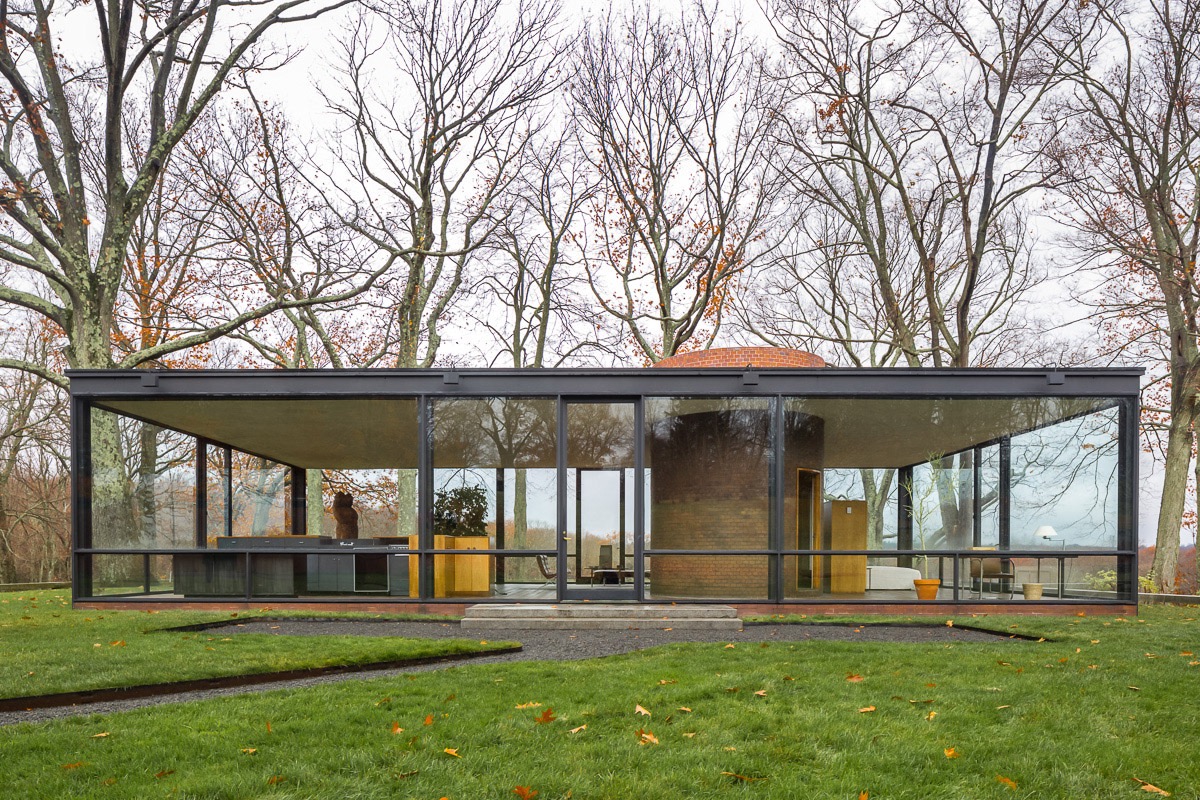
Philip Johnson, Glass House, exterior

To help appreciate the theoretical basis for these vastly differing houses, I find it helpful to draw upon a distinction made by the earthscape artist, Andres Amador (featured in a prior post). Speaking about his temporary compositions ‘sketched’ upon large stretches of beach areas at low tide, Amador refers to some of his works as “geometric” and others as “organic.” The geometric works display a quality readily suggested by the name for them, and reflect Amador’s training in math as an engineer. The organic works arise, he says, from the site, and he suggests that these pieces communicate their form to him. For me, Amador’s distinction can also be referred to as the distinction between pattern that is ‘received,’ as compared with pattern that is ‘imposed.’

Amador’s distinction between the organic patterns that arise from the site, and the geometric patterns that result from conceptual pre-planning, can assist us in perceiving some themes that are implied by the architectural designs produced by Wright and Johnson for their homes. In the case of Wright, he built Taliesin on family property in Spring Green, Wisconsin, in an area where he grew up and with which he had a deep attachment. Like much of his other work, Wright wanted Taliesin to appear as if it was an extension of the materials and features of the site in which it is placed, being an ‘organic’ development of a human habitation within a natural setting. Wright’s intent is evident in the way that the horizontal bands of stucco on the facade, as well as of the limestone in the foundation and walls of the building, parallel and mirror the layers of stone found on the site.
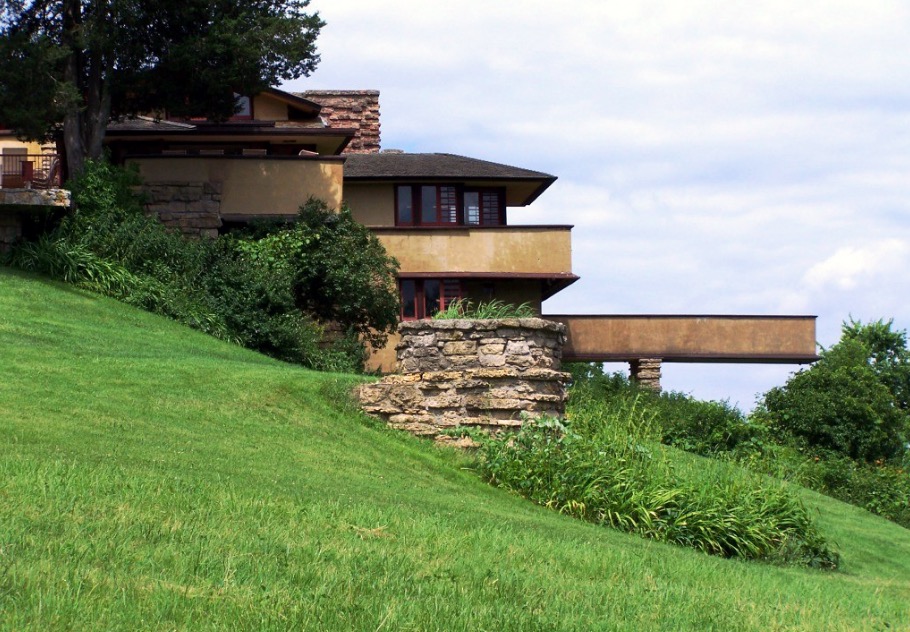
Exterior elevation of the house, as if emerging from the site (photos above and below)

While Philip Johnson’s architectural practice was located in New York City, he planned to build a house for himself and weekend guests in nearby New Canaan, Connecticut. Johnson’s Glass House clearly reflects his indebtedness to the work of Ludwig Mies van der Rohe, and the European modernist movement in architecture generally known as the International Style. Employing Andres Amador’s distinction, the Glass House clearly embodies a geometric conceptual basis, with the result that the building does not so much emerge from the site but instead sits upon it as an imposed human-made form. The carefully clipped and very flat lawn, and the linear walkways serve to emphasize the distinction between the structure and its natural surroundings. This leaves the Glass House appearing to be like a sculptural object that has been placed on a plaza, or like a vase on a smooth table-top, rather than as something arising from within its setting.

The Glass House, exterior view (above), and interior view (below)

Brief attention to the history of these two buildings provides further insight. Wright lived at Taliesin much of his life, while also retreating to Taliesin West in the Arizona desert during the winter months. Over the years, he gathered a sizable community of apprentices who lived and worked with him at both locations. To this day, the architectural fellowship that is part of his legacy maintains both homes and studios. By contrast, though Philip Johnson first lived part-time in the Glass House himself, he soon discovered how it was largely unsuitable for that purpose, other than for entertaining guests in the living and dining areas of the structure. Given the sudden notoriety of the house, the constant presence of unwelcome visitors and architecture-minded prowlers made it problematic for every exterior surface of the house to be comprised of glass. Johnson soon made it a habit to stay in the adjacent bunker-like Brick House, designed for the site as a guest house, when spending time in New Canaan.

Obviously, it is easy to stress the marked differences between these houses designed and built by Wright and Johnson for themselves. Andres Amador’s dual approach to his earthscapes may help provide a reminder of the way that both-and thinking can aid how we consider certain objects of interest. Wright’s organic home and studio, emerging within and receiving inspiration from its site, and Johnson’s temporarily lived-in Glass House, imposed as a geometric sculpture upon its site, share a common distinction. Regardless of functional considerations, each house has its own way of displaying beauty, and both remain among a small list of internationally recognized architectural achievements of historic significance.


Note: A short introductory video about Andres Amador and his work, giving examples from both of the geometric and organic categories, introduced above, has been produced by KQED of San Francisco. It can be found on YouTube ( https://youtu.be/T_tIG5mo1DM?si=0MkjxkTEK48eC-aV ).

Taliesin East has been named a UNESCO World Heritage Site, and the Glass House is a National Historic Landmark.

Andy Warhol visits the Glass House

Earl Young’s Boulder Park Charlevoix Houses

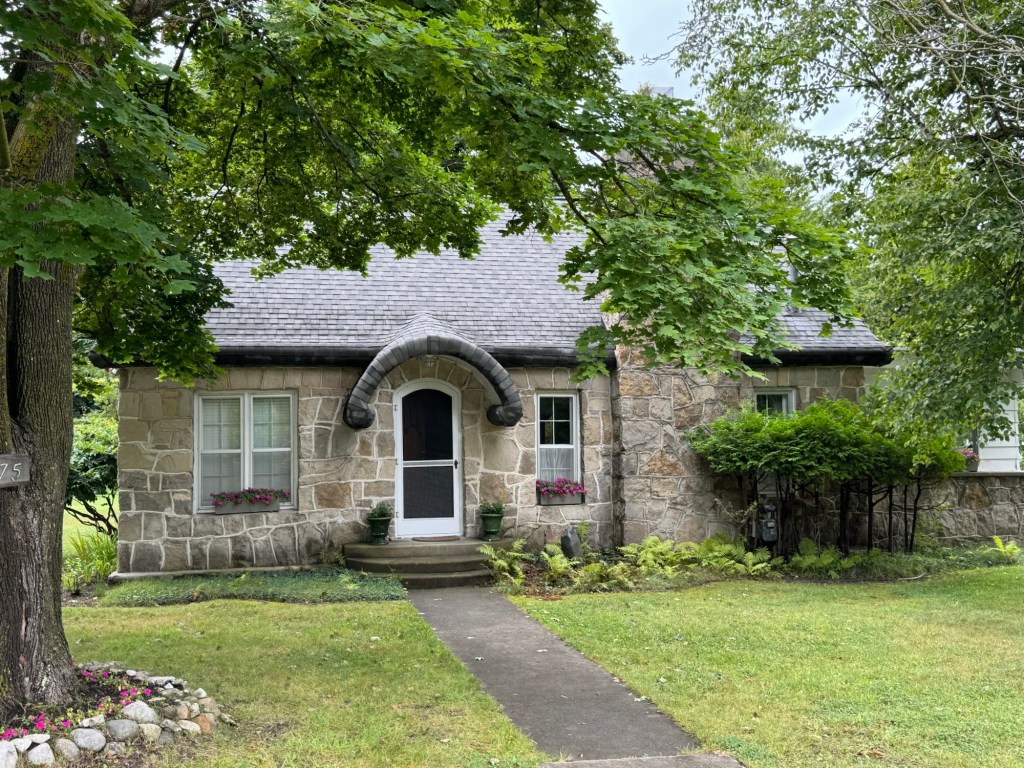
Earl Young’s Boulder Manor, built for himself, as seen on a recent day

Summer visitors to Charlevoix encounter at least two things about the area: first, that this part of Michigan is a haven for boat lovers and especially cruisers on the Great Lakes; and, second, that the city of Charlevoix is the home of Earl Young’s so-called ‘mushroom houses.’ The first observation regarding boats and the appealingly clear lake water is easily recognized. The second association with the area takes a bit of discernment, usually gained from seeing brochures or the small electric carts evident in town bearing the label, “Mushroom Houses Tours.”

A pleasant walk around Charlevoix while viewing the many houses that Earl Young designed and built in the community reveals that his approach to home design was not uniform, and that his work avoided that to which the wider community has also not succumbed – becoming a caricature of itself. For he could have approached his design work in such a way as simply to repeat and imitate prior successes, pressing forward as so many architects have done to inaugurate a particular and distinctive style in home design. Instead, Young consistently displayed his overriding commitment to his chosen materials – stone and stone-related products. Therefore, when at the age of 35 in 1924, and in buying a tract of land adjacent to the Lake Michigan shoreline, he built ten houses with enough variation among them that later homes constructed by others are frequently confused with those of his own design. Young gave the tract along with its homes the fitting label of Boulder Park.
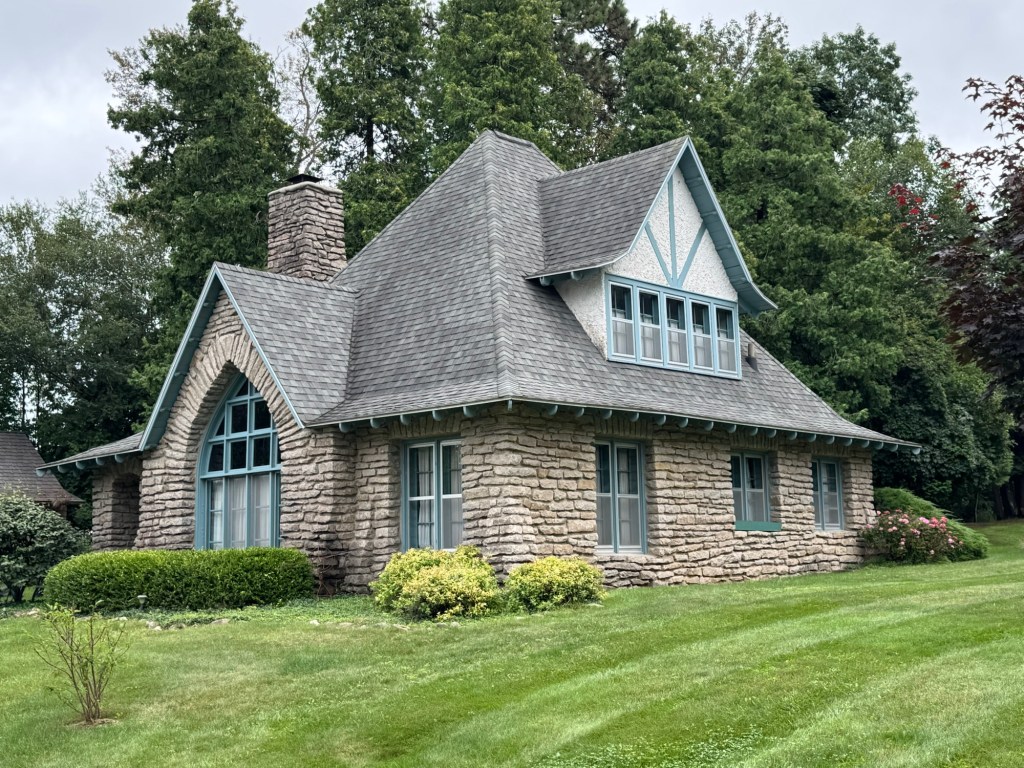
The Owl House, named for the arched front windows

This variability in the architectural character of the Boulder Park homes helps us to begin to recognize how the common ascription to Earl Young, of being the mushroom house architect, is in some ways a misnomer for him. A few of his houses nicely justify the label, given their firm rootedness to their sites, their often low or extending rooflines with irregular surfaces, and his heavy use of large stones and boulders in a number of them. Yet, Young was equally comfortable specifying limestone cut in horizontal block slabs and even commercially available brick or block products with which to construct walls with traditional uniformly-spaced layers of mortar. We may not be enamored with the some of the results of his work, but I think most of us can identify with Young’s lifelong intention to remain true to his materials and to the sites in which he set them.

A 1929 limestone cottage in Boulder Park, known for the rolled edges of the eaves

Two neighboring homes in Boulder Park illustrate Young’s consistency of intent, and flexibility with regard to ‘style.’ Boulder Manor, built in 1928 (displayed at the top of this post), sits in close proximity to the Pagoda House, built in 1934, seen below.

The Pagoda House

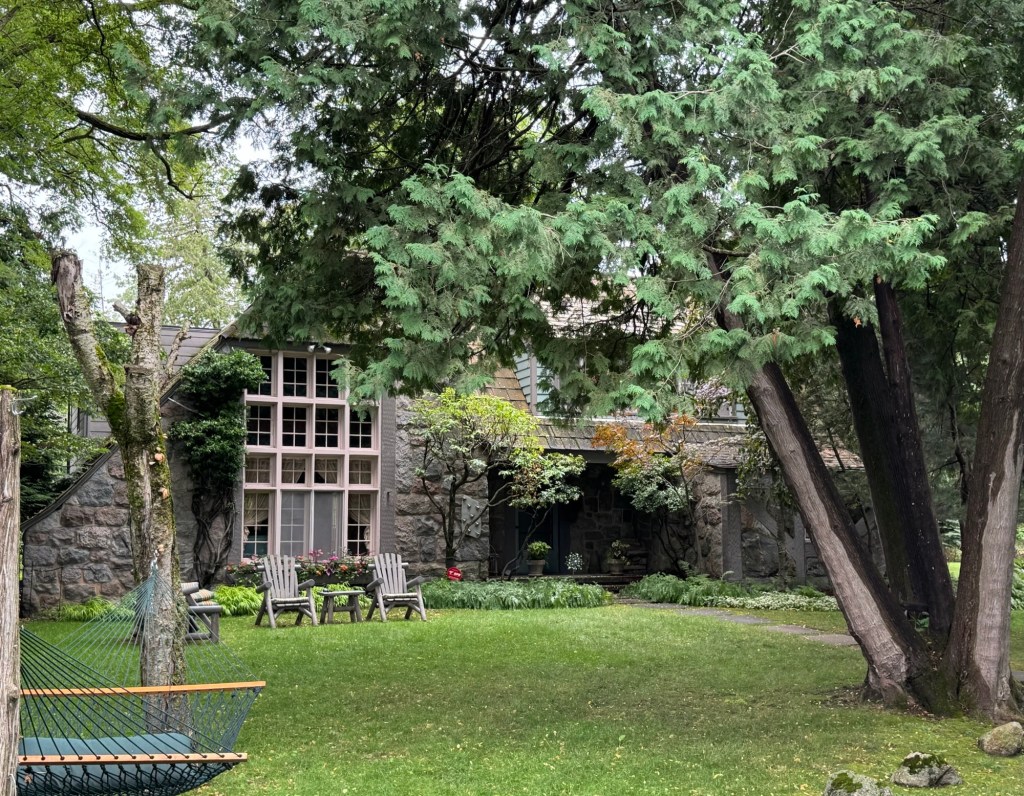
My favorite among the Boulder Park houses is the home that Young built for himself, called Boulder Manor (top photo). It is constructed with massive pieces of stone and boulders from the area, and features a matching smaller playhouse for his daughters that has a working fireplace.

Rear view of Boulder Manor along with the playhouse for the Young’s daughters

In some ways Earl Young was a bundle of contradictions, an idiosyncratic visionary who was known to tell some clients what they needed in terms of a home, and yet also one who could reside with an out of town family for a considerable period of time so as to get to know how they lived before designing a home for them. He had a consistent love of rough, ‘undressed’ stone to be used as found, and at the same time a willingness to use stone in a very conventional way. Young was famous for wanting to do virtually everything ‘his way,’ often to the consternation of others, including town leaders. And yet, one house of his in Boulder Park was the result of a client convincing him to build a home based on a design plan found in a women’s magazine, the 1933 Enchanted Cottage with its very English-looking windows (seen below).

The Enchanted Cottage

The best introduction to Earl Young’s Charlevoix houses is a widely available book by the photographer, Mike Barton, titled, Mushroom Houses of Charlevoix. Filled with color photographs, and documenting every one of Young’s structures built in his home town, the book provides superb photographs, and better ones than I am able to provide.

A Tao of Seeing: Reflections Inspired by Feng Shui

Michael Pollan’s writer’s hut, intentionally situated by a boulder on the brow of a hill

Recently, I observed my middle son moving a black plastic pond module around in a small space in his New Orleans courtyard. As he moved the container that would soon have fish in it, he tried situating the vessel in various ways, in relation to a tree, a fence, some potted plants, and an existing low stone wall. He is not a student or practitioner of feng shui, but I believe I was seeing some of those principles at work in his decision-making.

Western readers may have heard of feng shui, the Asian philosophical approach to discerning the unseen forces that affect objects and their balance in nature. It gives attention to the metaphysical or non-material energies thought to be at work upon or within the world around us. We might say that this approach provides a Tao of seeing, or a natural way of perceiving within and around surface phenomena to the underlying dynamisms that are believed to affect what happens in nature.

This notion that there are unseen forces at work in the world is an idea that is receiving something of a revival in Western Christian spirituality. This is noticeable when people refer to a concept attributable to the Celtic tradition, in which it has become common to refer to “thin places. “ These are places where the veil between the material and the ethereal or the heavenly seems temporarily dissolved. Another parallel here between East and West may lie in the quest within Christian spirituality for the goal of harmony and balance between people and the created world.

However, my reflections here constitute an aesthetic rather than a philosophical or historical inquiry. I am interested in the dynamics of movement we perceive in the circumstances that we encounter, and less in the metaphysical forces or energies that may be present within them. At the outset, however, I want acknowledge how a nuanced Asian approach can be an authentic route toward a culturally-informed appreciation of the phenomena we encounter, especially from a historically Asian perspective.

As we look at paintings in the context of Western culture, one factor we discern assesses composition and attends to the way our seeing is drawn from one part of a larger image to another. This dynamic is often an artist-intended aspect of an overall composition. Sight lines in garden design and arrangement provide another example, as does the architectural arrangement of space in buildings.

Attention given by Western designers to feng shui is sometimes criticized as being a superficial application of historically and philosophically nuanced ideas. But I want to give credit to ways in which our sensitivity toward perceiving movement and direction is a genuine factor that is available for analysis and articulation. We notice this when we encounter both two dimensional compositions as well as three dimensional spaces and the objects we find in them. We can always come to know more about what we see.  Because what we see is something that is there, not simply what we believe, or are disposed or inclined to see.

An Asian garden said to be designed according to feng shui principles

Motion, balance between forces, spatial arrangement of objects, and the dynamic relationships that are visible because they exist between and among these variables, continue to grab my interest. Contrasts between colors and textures, as well as between sizes and shapes, play a significant role.  Additionally, the perceived difference between what is natural and things that are humanly fashioned is equally significant, as is our perception of the criteria for what constitutes that which we consider to be natural. These are among the factors that help account for our sensitivity towards and interest in these many observable variables, and our common quest for purpose and meaning in the contexts where we find ourselves.

Motions and balance as we find these factors in Wassily Kandinsky’s painting, Several Circles

Painters, sculptors, and architects, seriously consider these factors within visual and spatial compositions. The painter, Wassily Kandinsky, and the architect, Frank Lloyd Wright, provide two examples of those who also perceived a spiritual dimension within their creative work.

If so, we –  as caring lay observers of the world and of the things and places among which we find ourselves – should give deference to this evident fact. For we can all be thoughtful, as people often are inclined to be, about what we see, touch, and experience when we interact with visual phenomena.

I find myself increasingly sensitive to these aspects of our appreciation for Beauty, and endeavor to be more mindful about them. I am intrigued by possible parallels that may exist between Eastern metaphysical interpretations of visual phenomena and more familiar approaches to what we see that are shaped by Western aesthetics. Especially as these familiar approaches are described and developed within our artistic and architectural best practices.

Japanese Thatched Roof Farm and Country Houses

If reading this by email, please tap the title at the top to open your browser for the best experience. Then, clicking individual pictures will reveal higher resolution images.


Those who watched the Winter Olympics broadcast from Nagano, Japan, may have gained some familiarity with a region sometimes referred to as the Japanese Alps. While living in Japan, my parents developed a deep interest in Japanese folk art (Mingei). Through this, they became acquainted with Sanshiro Ikeda, a recognized authority on Mingei, who built craft furniture. Through our trips to Nagano-ken (or prefecture), we visited Ikeda’s small furniture factory and the country farm house he had restored, and in which he lived. Through these visits, we became familiar with Matsumoto, its beautiful many hundred year old castle, and the surrounding Nagano countryside. My strongest memory, though, is of Ikeda’s restored traditional farmhouse, and those like it in the area.

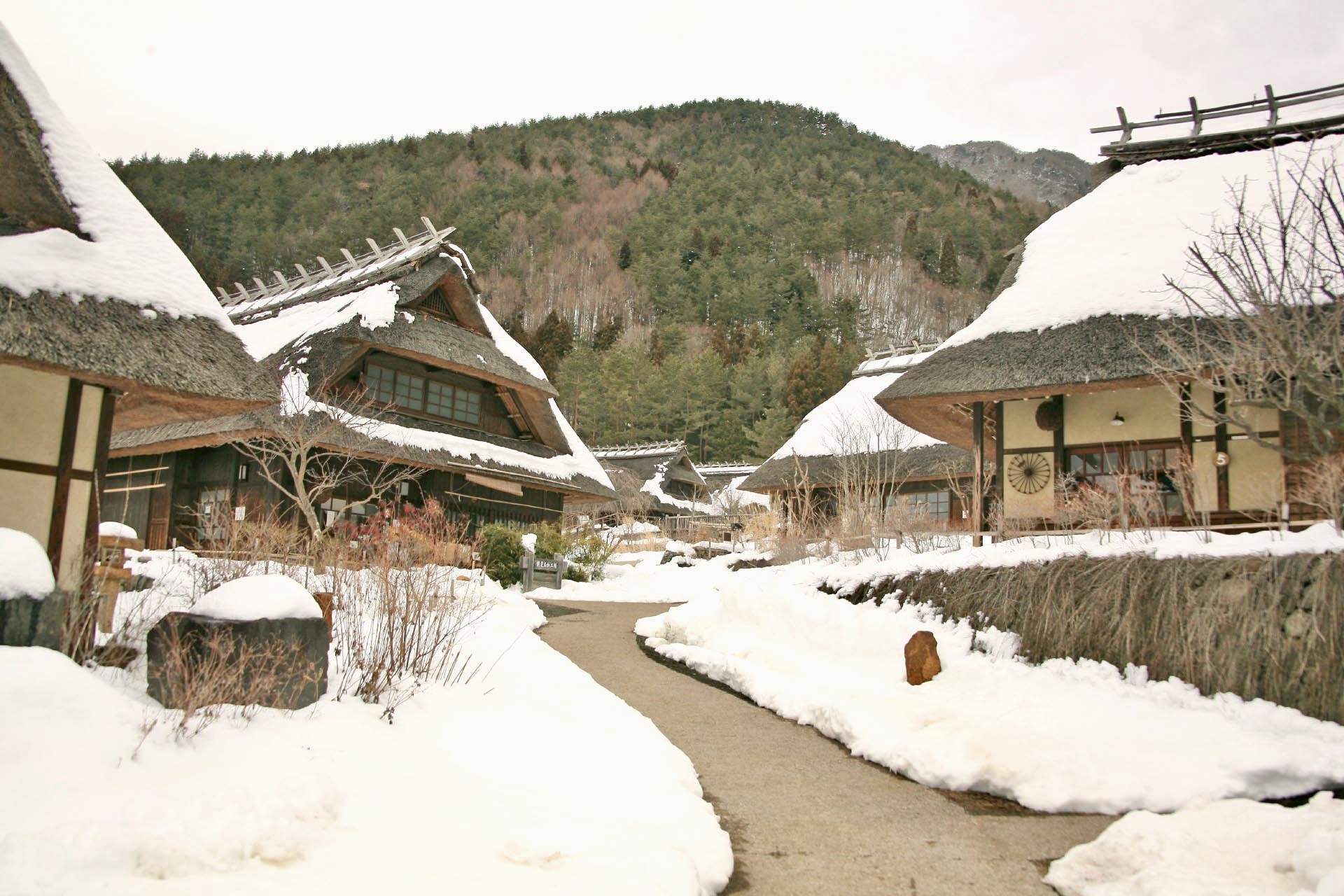
The choice of Nagano prefecture as a location for the Winter Olympics was based on the fact that that region regularly receives a good deal of snow. As a consequence, the historic pattern for the design of farm and country houses involves very steep roofs which are quite often thatched. The combination of these two characteristics in the resulting roofs renders them amenable to heavy snow loads, which also help provide additional insulation against the seasonal cold weather.

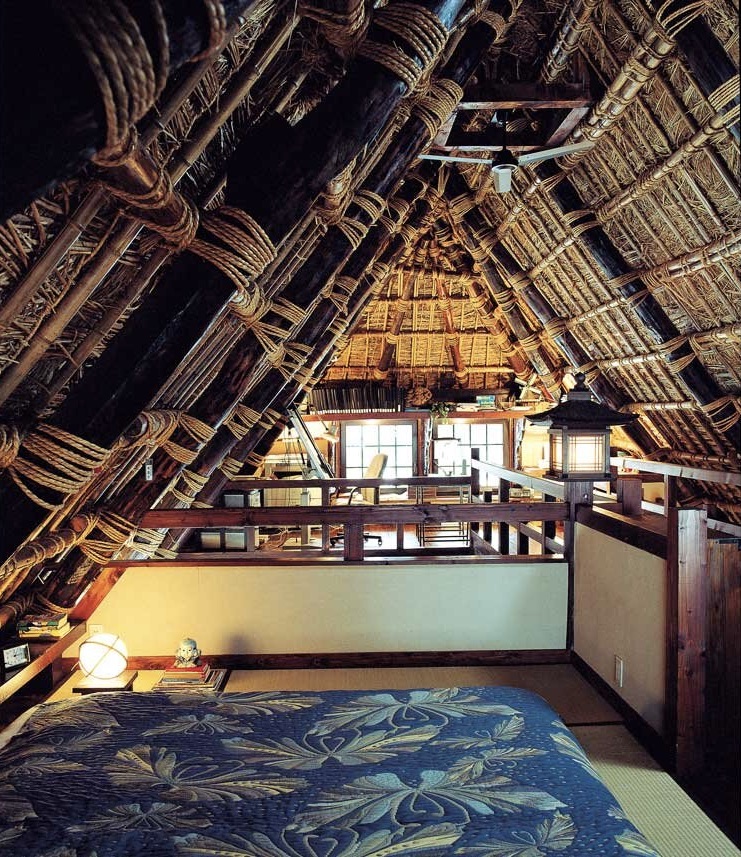
These farm and country houses are typically built from wooden posts and beams, with plaster or stucco walls, and wooden plank floors if not otherwise covered with tatami mats made of straw and rice husks. The equivalent of what we refer to as rafters, and the lath cross pieces or straps supporting the thatched roof material, are typically beams made from tree branches or thick and thin pieces of bamboo, lashed together with rope, something that surely would not pass building codes for contemporary construction.

Traditional house with beams lashed together (above) and stucco walls above sliding shoji (lattice door and window panels), seen in the lower photo.

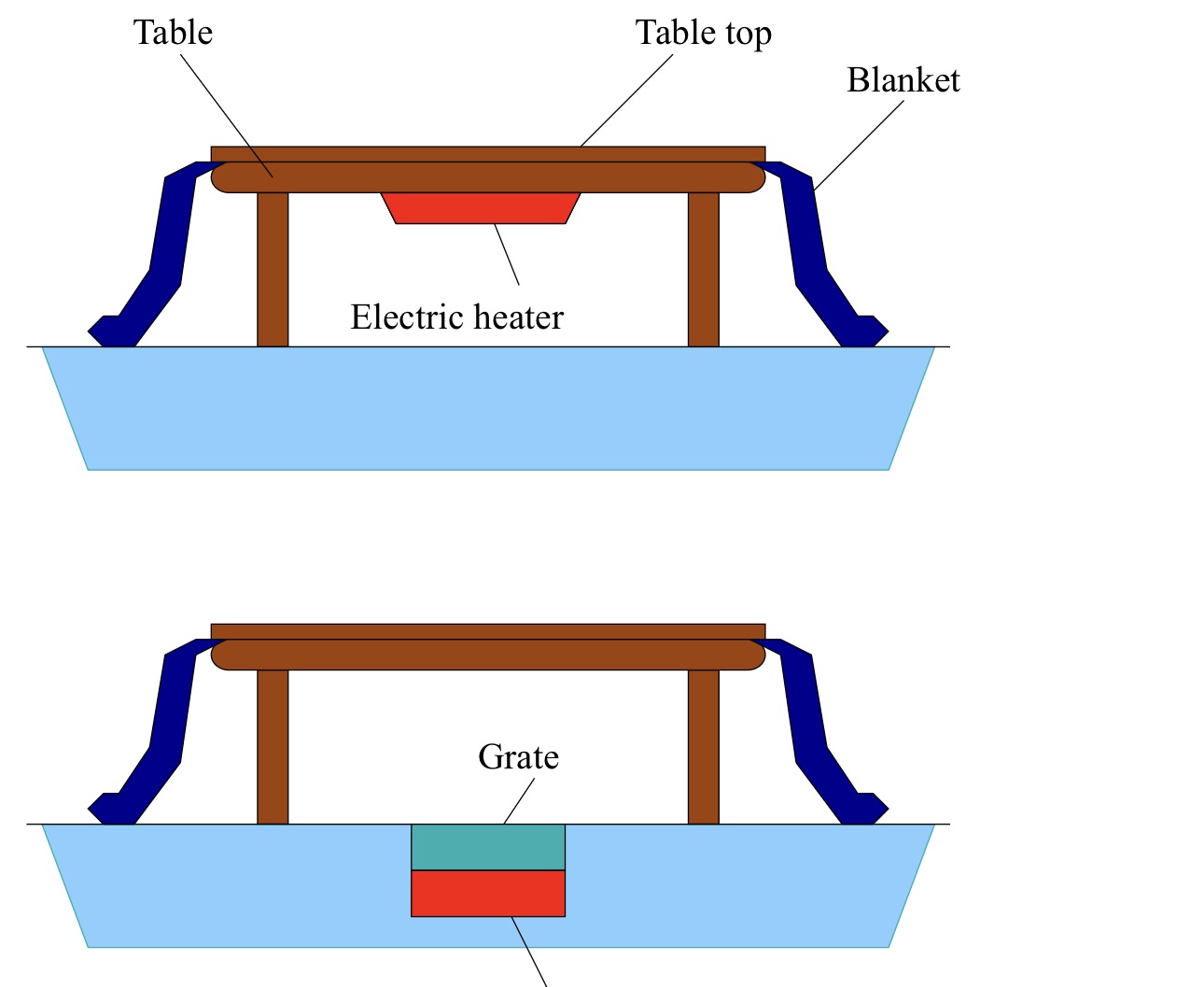
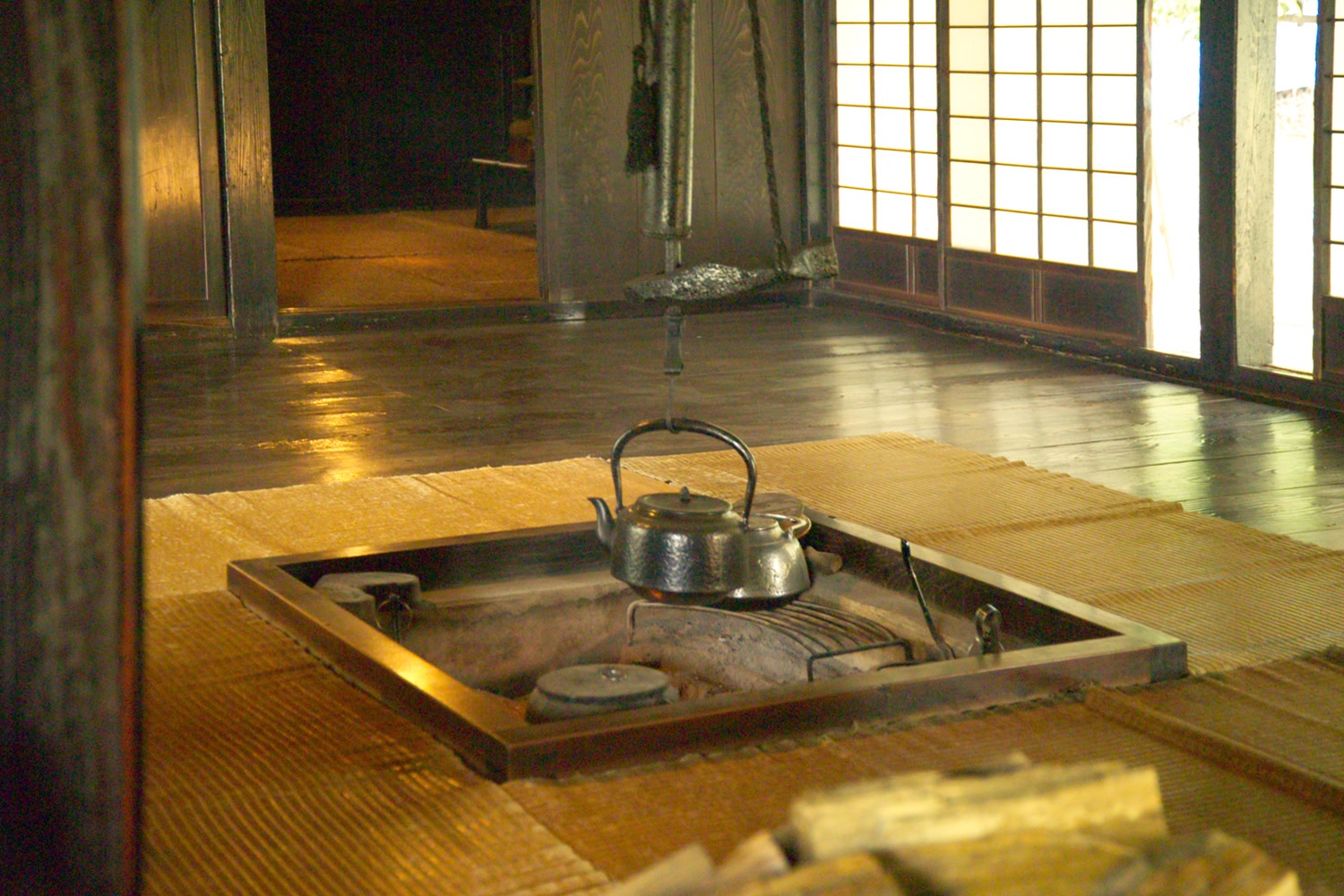
Instead of any form of central heating, generally unknown in Japan until modern times, many of the rooms on the ground floor would have a footwell in the floor, at the base of which traditionally there would have been a small charcoal brazier (charcoal kotatsu). Those in the room sitting on the floor, with their legs dangling in the footwell, managed to stay warm with the benefit of a small table over their thighs and knees, above the footwell, along with a lap blanket suspended from the low table.

A kotatsu blanket (with table top removed)

Kotatsu design (traditional charcoal and contemporary electronic patterns)

A similar but very shallow well-like indentation in the floor provided a place for cooking at the floor level.

Quite often these houses would feature one or two successively smaller floors above the ground floor in a way that will recall Western A-frame ski lodge houses. Typically, the sleeping areas would be on the upper floors with futon beds laid out on the tatami mats, thick quilts provided, and pillows stuffed with uncooked rice grains.

Interior of a traditional farmhouse showing a futon (or Japanese mattress), and a quilt covering, set above tatami mats.

Below, I am including a selection of photos of various examples of traditional Japanese country houses and related buildings, which demonstrate the consistency with which this approach to domestic architecture was adopted and practiced through the centuries. The first three photos show what appear to be contemporary structures built in the historic farmhouse style (followed by photos of historic structures).

The following photos feature historic structures.

The same village area (as in the photo above it) on a winter’s evening

The well-preserved historic examples of Japanese farm and country houses in the photos above, as well as the contemporary reproductions employing this historically-informed approach to domestic architecture, attest to the heightened appreciation that Japanese people have for their ancient culture. It may be that, as in some other parts of the world, the highly advanced technological developments characterizing the urban areas where most of their people now live, has nurtured a deep and latent regard for aspects of their nation’s social, artistic, and spiritual heritage.


Appreciating Chrysanthemums in Japan

If reading this by email, please tap the title at the top to open your browser for the best experience. Then, clicking individual pictures will reveal higher resolution images.

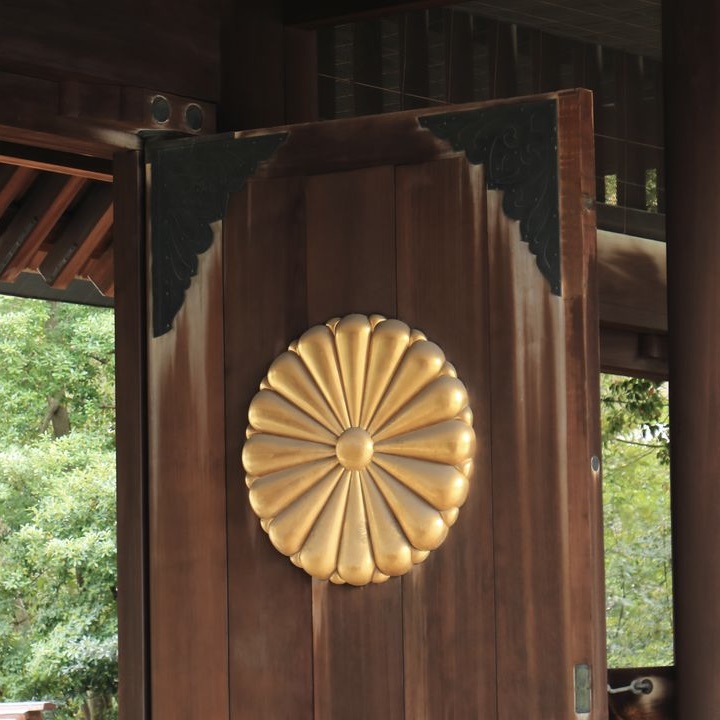
Ichimonji Kiku variety chrysanthemum – the basis for the Japanese Imperial Crest

The chrysanthemum-based Japanese Imperial Crest, Yasukini Shrine, Tokyo, and on Japanese passports


Every year, in November, the residents of Tokyo are treated to the Kiku MatSuri flower show, the annual chrysanthemum exhibition featuring a most stunning display of flowering plants propagated by some of Japan’s most skilled gardeners and horticulturalists. Kiku is the Japanese common name for chrysanthemum (originally native to China), and matsuri is the Japanese word for festival. Geographically about 30 degrees north of the equator, Japan’s climate has some affinity with that of Louisiana, with hot humid summers, and occasional frosts and even a rare snow shower in Tokyo. Chrysanthemums appear to grow well in both regions.

A photo of the 1914 Kiku Matsuri (note how the gentleman wears a western hat with Japanese clothing and wooden sandals {geta})

In our country at this relatively same time of the year, we are used to seeing large containers of chrysanthemums, covered with abundant blossoms, offered for sale in displays outside large box stores and nurseries. Yet, they tend to be small blossomed plants, differing from one another usually only in terms of color. At the Kiku Matsuri festivals, many varieties of mums, some of them exotic-looking, are beautifully arranged for viewing in a very formal and traditional setting. Yushima Shrine in Tokyo often serves as a location for these displays.

Kiku Matsuri displays of mums outside Yushima Shrine, Tokyo (above and below)

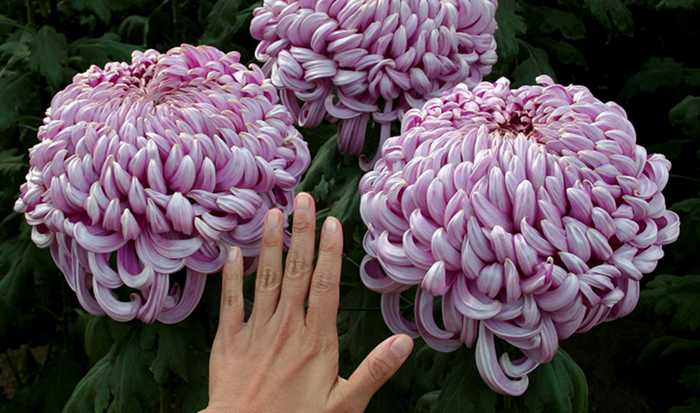
I have strong and clear memories of walking around these remarkable chrysanthemum arrangements with my parents and brothers, and being astonished at the multi-blossomed plants with a wide spread of blooms, extending upwards from a single or a few stems.  One version of this practice is known as Sanbon-Jitate, which features three large blossoms grown from a single stem. Each of the blossoms is symbolic, and represent the heavens, the earth, and humankind (as in the image below). Yet, clearly, all of the chrysanthemums on display at these annual festivals are in one way or another carefully and labor-intensively grown.

Atsumoto Kiku variety of mums (above), grown and featured in Sanbon-Jitate arrangements

The above bonsai, featuring miniature blossoms, provides another example of labor-intensively grown chrysanthemums

The Atsumoto Kiku variety of chrysanthemum (featured further above, and in the photos below) is a classic Japanese form of the plant, with its dense and thick blooms. This variety is propagated in many colors, among which the most beautiful may be the two colored Tomoenishiki variety.

Other examples of the Astumoto Kiku variety are shown below.

Another very attractive variety of Japanese kiku (or mums) is the Kudamono Kiku, known in English by the common name, spider mum, shown in the images seen below.

The propagation and cultivation of chrysanthemums in Japan by skilled gardeners reflects the highly refined aesthetic vision possessed and valued by many of the nations artisans, and by the wider society in which they live and practice their craft. The delicacy and exquisite beauty of many of these flowers, and yet the transitory nature of their flowering, speak to a cultural appreciation for what can be apprehended and enjoyed in the present moment, much like the way in which Japanese people (and foreign visitors) will in great numbers visit shrines, temples, and castle parks in the springtime to view the cherry blossoms.

Seeing these photos reminds me of the diligent care with which many Japanese gardeners, artists, and craftsmen engage in a lifelong pursuit of aesthetic perfection in a single area of practice, whether it is in propagating new forms and elaborate displays of chrysanthemums, throwing clay pots, writing in caligraphy, or seeking to make the most beautiful and durable sword. Though in each case individuals pursue the practice, it always seems to be in the context of a guild or society of fellow practitioners, and always with a significant degree of community awareness of the importance of this or that art for the wider society in which the practice of it is engaged.

Small and edible chrysanthemum blossoms added as a garnish to sashimi (traditional Japanese raw fish)


The Beauty of Bonsai

If reading this by email, please tap the title at the top to open your browser for the best experience. Then, clicking individual pictures will reveal higher resolution images.


A local plant and garden center recently offered an introductory workshop on Bonsai, the Japanese and originally Chinese art of propagating and arranging miniature versions of living plants and trees. Upon registration for this workshop (and for a relatively modest fee), participants would be provided with a starter plant, a container for the project, and the basic tools and materials with which to begin their own Bonsai arrangement. With my childhood in Japan, and my interest in the arts, I jumped at the opportunity to learn some basic principles of Bonsai, an art which I have admired for many years. Nevertheless, I have been largely ignorant of the mechanics of this aesthetically-pleasing horticultural practice. Attending the workshop, I was not disappointed by the learning opportunity offered.

Upon going to our assigned places after arriving, each of us found a potted portulacaria afra, a succulent commonly called dwarf jade plant or elephant bush (photo below). We also found a glazed ceramic container, plant medium, and basic tools with which to create our first attempt at a genuine Bonsai arrangement. My potted starter plant was in a 6” plastic pot, about 18” – 24” in height, and root-bound in its container.

An example of portulacaria afra

Our first step in the process was to prepare the pot or container to receive the plant. I learned that the most useful plant containers have two drain holes, as well as two very small holes for upright wires. The photo below shows my pot after attaching the wires and screens.

Wires secure small mesh screens over drain holes, while a longer U-shaped wire emerges from below, to help secure the plant

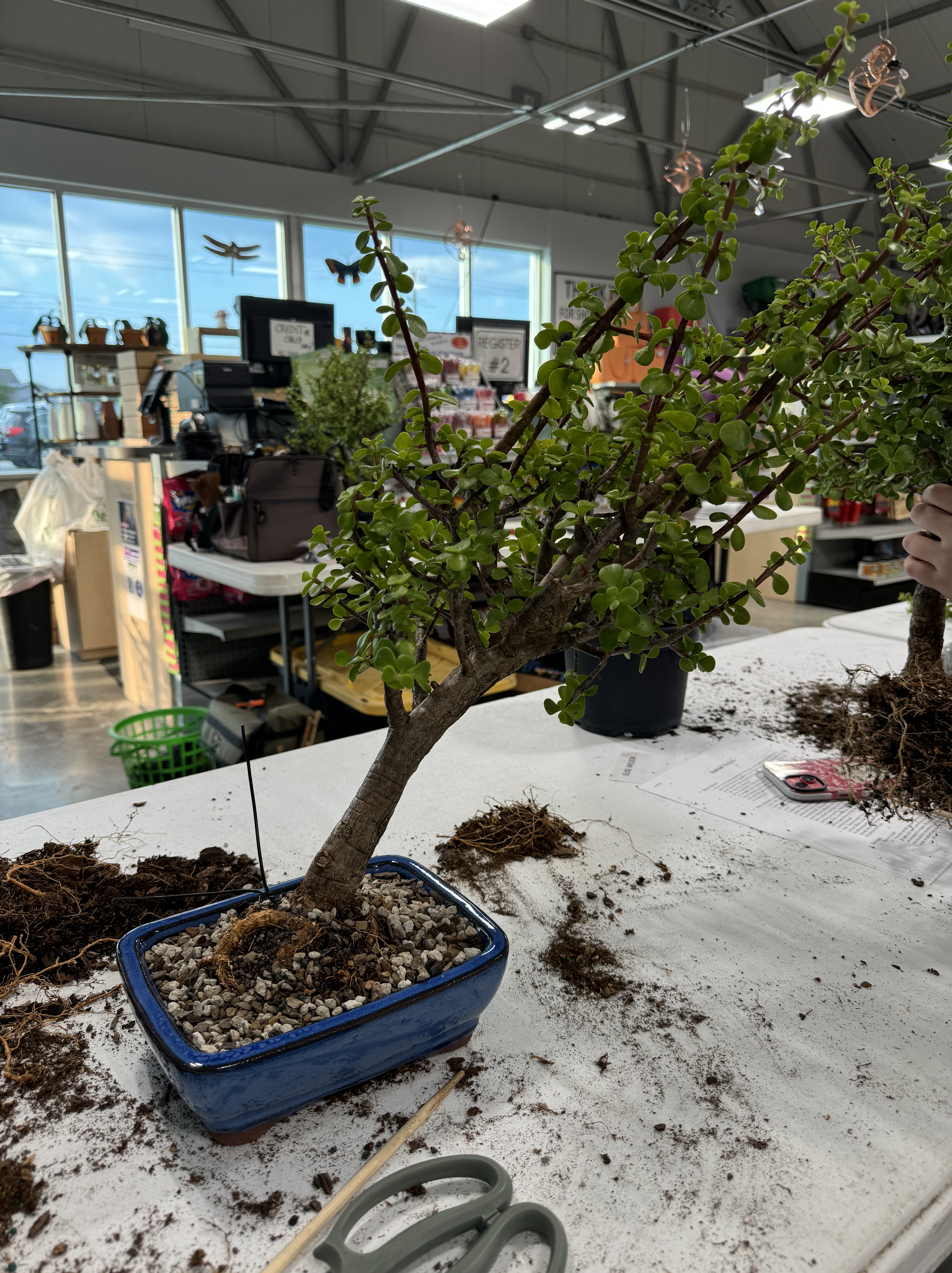
Our next step was to remove the plant from its plastic pot, and determine where the upper primary roots lay. We were then asked to remove almost all of the former potting soil material (identified as pine bark mulch), and then to anticipate trimming the roots. Here, I found my first challenge. As an amateur gardener, disturbing the roots of a plant – much less removing the planting medium in which it has been nurtured – hit me as strongly counter-intuitive. Yet, this was actively encouraged.

A participant’s plant after removal of most of the original planting medium, before cutting extraneous roots

After initial preparation of the plant, we had our third challenge. This was to cut and shape the remaining exposed roots in such a way that the plant might sit well in the provided pot. The overall natural shape of the plant provided a starting point. But an aesthetic judgment was also needed for how this particular plant would best sit in this particular container. Here, I was beginning to discern how at first seemingly mysterious Bonsai practices become compelling to so many people. There appeared to be at least thirty or more participants in this workshop, on a Tuesday evening before the 4th of July!

So, how might my particular plant best fit in my provided pot?

How I situated my plant in the pot, secured by the upright wires

My plant before I trimmed the upper stems

Then came the most challenging aspect of Bonsai for me as a beginner. How should I trim the top of the plant, and to what extent should I prune back the stems and leaves? The main lesson I received here was this: do not be afraid of pruning!

Indeed, with the art of Bonsai, and apparently according to recognized horticultural principles, the more we prune our Bonsai plants, we will find a real diminishment in the size of the leaves as the organism grows!

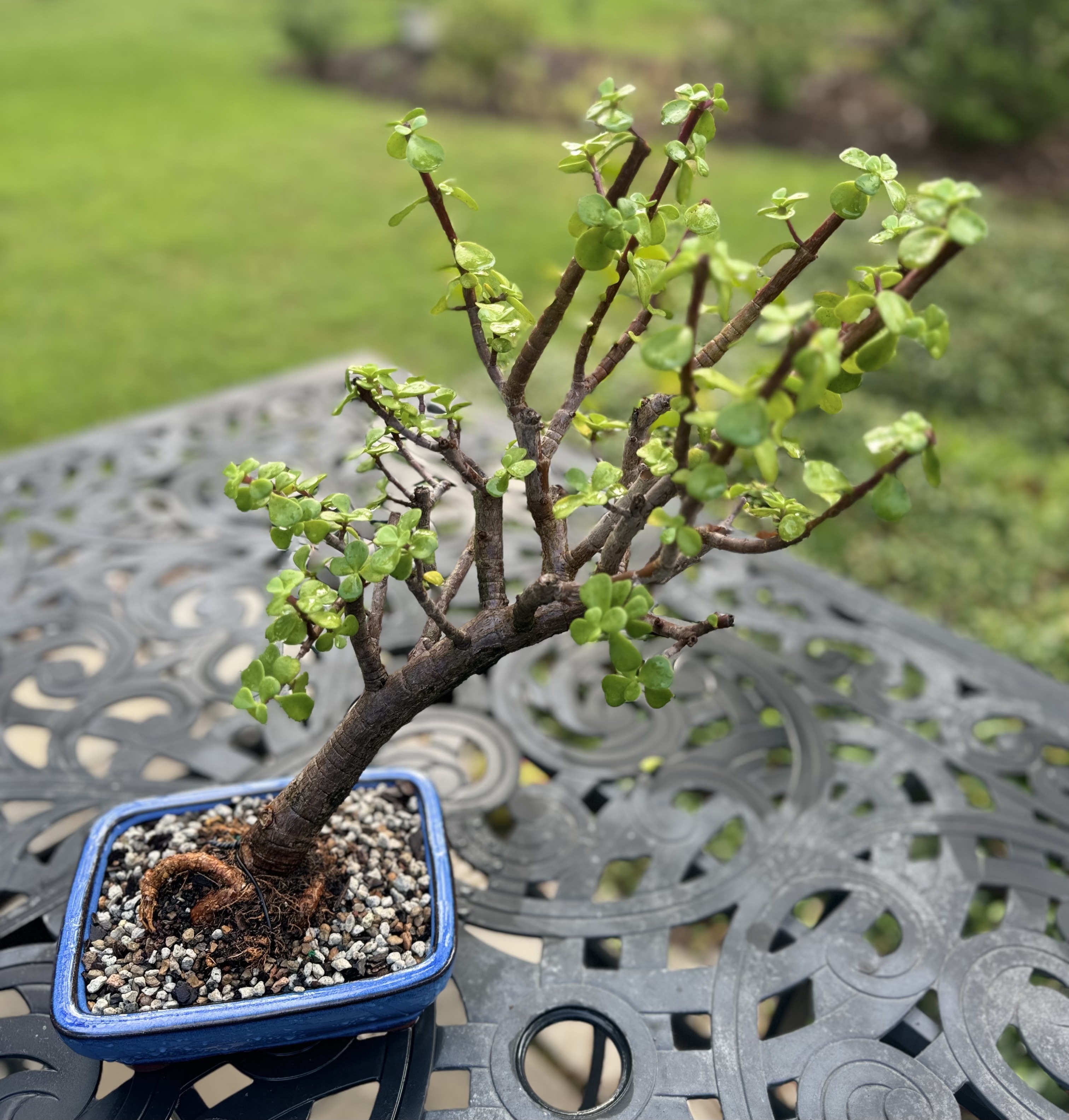
Here, below, is a photo of my Bonsai plant project at home, after some significant pruning.

The ‘windswept’ natural posture of the potted plant appealed to me, and I want to accentuate this by continuing to allow for the lean of the plant (to the right, in this photo), while counter-balancing this lean by promoting growth toward the opposite direction. As my recent mentors stressed, pruning will be everything!

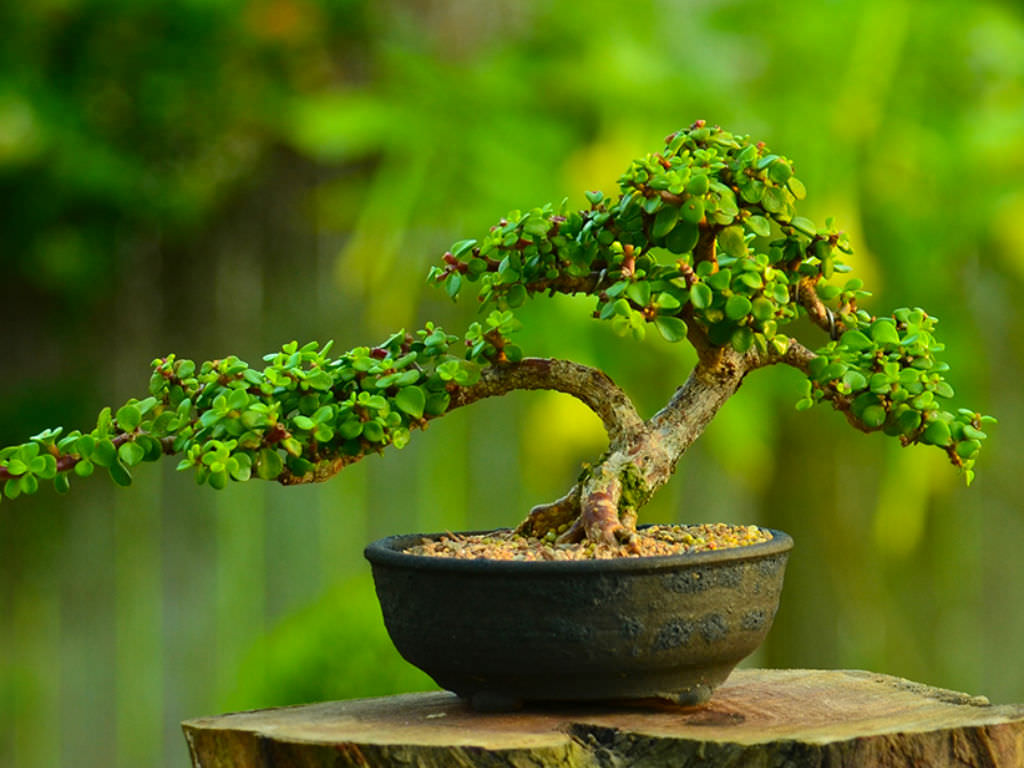
What my portulacaria afra might look like some day


Note: as mysterious as this art-form may seem to Westerners, it is accessible to beginners in terms of method, materials, and technique. Ask your local plant and garden store about it!

Geoffrey Jellicoe: Finding and Creating Beauty in the World

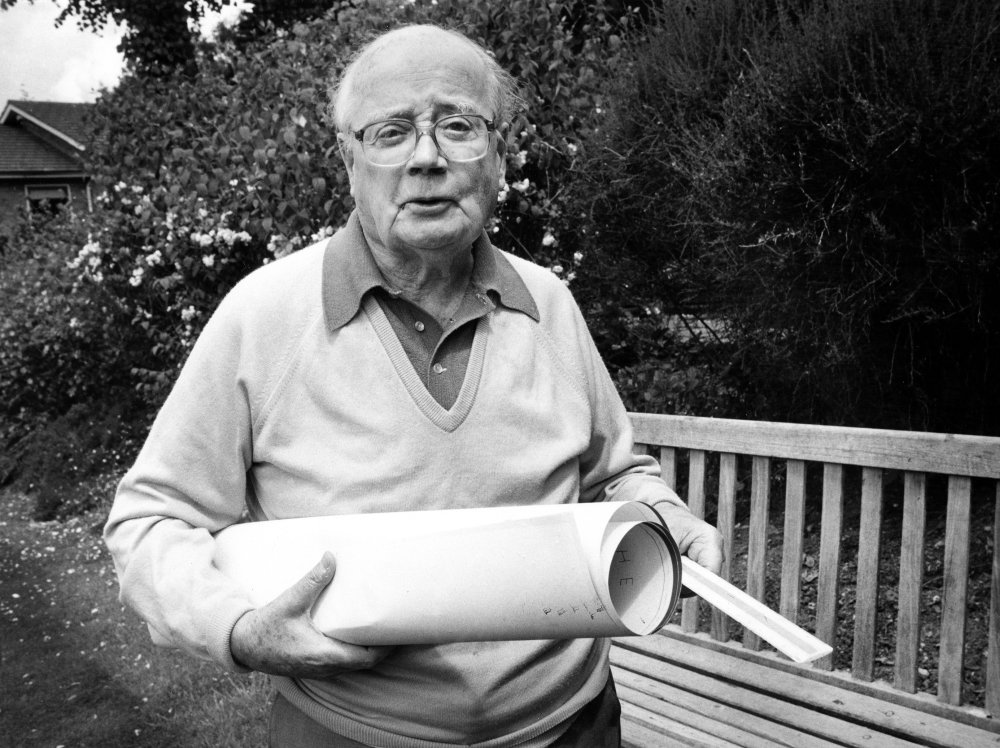
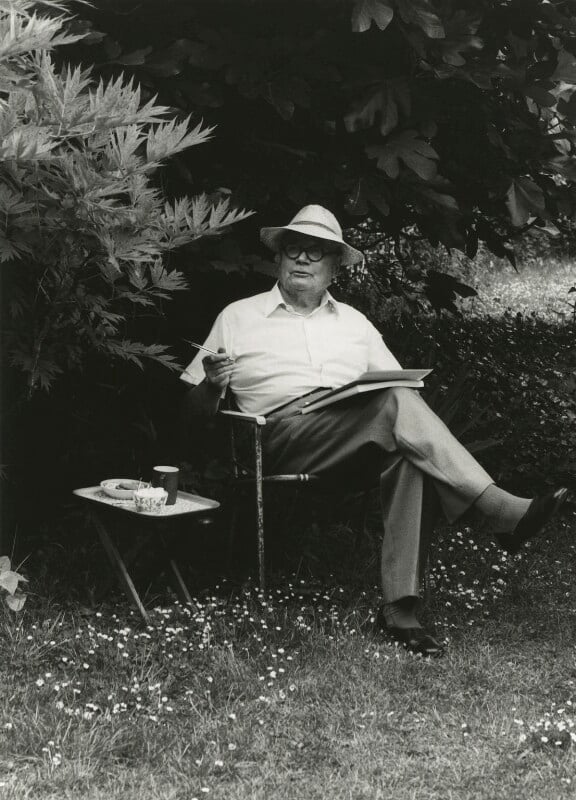
Sir Geoffrey Jellicoe at his London home shortly before his 90th birthday


Discerning beauty always presents an opportunity to experience joy. As many find, though, creating representations of beauty, as a chosen task, can be difficult.

Alive in my memory are images of areas of New York City and decaying areas of urban New England, during my high school years in the early 1970’s. I remember asking myself, as an aspiring architect and artist, how might I meet the challenge of creating examples of beauty in the world as we presently find it? Well, after some years, I discovered the life and work of Geoffrey Jellicoe, which provide an example of one way of answering questions that stay with me.

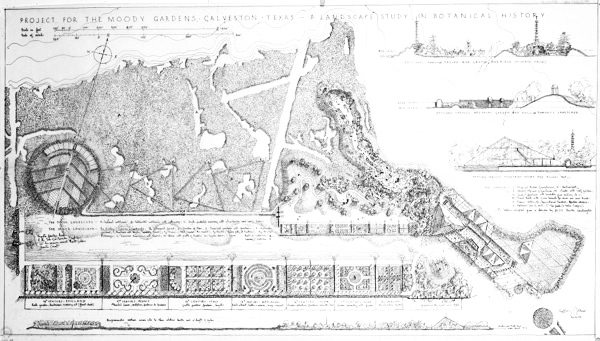
Late in his life, at a time when many seek the solace of retirement from actively pursuing such questions, Geoffrey Jellicoe took on a significant challenge. How might 150 acres of a seemingly forlorn stretch of a barrier island, adjacent to an urban area that has long surrendered to the declining effects of industrialization, be redeemed and transformed into a place for renewal by a humanistic vision of what might yet be?

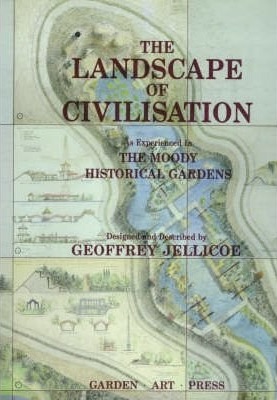
Jellicoe, at the age of 80, and to the surprise of some, accepted the opportunity to submit a proposal for what might become the Moody Gardens. In the process, he embraced the idea of working with a hundred-plus acres of neglected sea marsh and dune land on Galveston Island. This site even included a need to take into account an existing but under-used local airport. Nevertheless, the esteemed landscape architect, Jellicoe, envisioned a large facility centered on the nurture of human flourishing by designing what he hoped would become a significant botanical garden. Its plan would be dedicated to re-creating documented historic human efforts to re-shape areas of the world through the practices of horticulture and landscape architecture.

The Texas-based Moody Foundation, a philanthropic organization committed to education, health, and community development, found in Jellicoe the person they believed was best equipped to provide a master plan for what might become Moody Gardens, in the vicinity of Houston. And he brought to this challenge a lifetime of learning and accomplished work, which fitted him well to address this auspicious opportunity.

Encountering Moody Gardens as it has come to be, a vibrant, attractive, and an apparently successful facility, we may be mislead about Jellicoe’s orginal concept for the project. In presenting itself now as a tourist destination with resort-like amenities, Jellicoe’s early proposals for the Gardens seem fanciful if not also highly visionary. Yet, there may be significant things we can learn from his initial plans, and the concepts he sought to embody in his hoped-for realization of the project.

I can suggest a few of these potential learnings by posing some rhetorical questions – questions that I hope to address in future posts.

  • What is ‘our human nature,’ that we hope or believe we all share? What environments are most suited for nurturing the flourishing of our human nature?
  • What is Nature, and what humanly-created environments are most true to Nature? What things or places do we consider to be ‘natural’?
  • Why does it require human effort, financial capital, and institutional resources to facilitate, maintain, and preserve ‘natural’ environments? (Consider here the scope of the funding for the National Park Service, and the United States Forest Service.)
  • And, why is concern about the natural world- the ‘environment’ – properly a matter for serious theological reflection, and one especially related to our regard for Beauty? Why do our concerns about the natural world have theological significance?

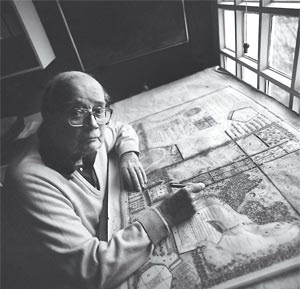
Geoffrey Jellicoe at work in his garden

Memorial Day: Finding Beauty in Remembering

For this Memorial Day, I am re-posting part of a piece first published in January.

The grave of Hamilton Sawyer, U.S.C.T. (a Civil War casualty)


A few months ago, I found an unanticipated beauty in a wintry place a short drive from my home. Port Hudson National Cemetery is easy to overlook, though one of many created by the Federal government during the Civil War to provide for proper burial of the Union dead. It helps us remember those who lost their lives during a prolonged siege along the Mississippi River in 1863.

Among several thousand headstones, some include the initials, U.S.C.T. Wondering about them, I discovered they signify membership in a former United States Colored Troops regiment. Hamilton Sawyer (died 2 Feb 1864), and Samuel Daniels (died 19 Jan 1864), were two of many young men about whom history seems to have preserved only these bare facts. And yet, as a nation we remember them. Away from home and family at the time of their deaths, they surrendered their lives to help secure freedoms already declared, yet far from actualized in the lives of so many. Obviously, no contemporary visitor to the cemetery could have known either of these men. But we can – if we choose to – remember their names, and for what they died. The beauty of remembering lies in how we make present what we value.

Not everyone appreciates the beauty we find in a National Cemetery. Though these burial grounds were created and are maintained to honor those who have served in our nation’s military, these settings do not celebrate armed conflict. Instead, they venerate the commitment of many fellow Americans to serve our country and its founding principles, and commemorate their willingness to put the interests of the wider community before those of self. Most of us can recognize this commitment and willingness, even if we are not all moved to prioritize these things among our choices.

Praiseworthy themes often characterize eulogies offered at funerals. On such occasions, people usually identify and highlight the admirable traits of those who have died, whose lives we seek to honor through acts of remembrance. When done well, eulogies provide portraits of people’s lives conveying an appreciation for ways that certain moral principles and spiritual values have been lived out by them. These occasions would be drab and shallow if they merely recalled how a person consistently obeyed civil laws or always observed proper manners and social etiquette. By contrast, we touch upon beauty as we seek to remember people when they were at their best. For as Irenaeus put it, “The glory of God is the human person fully alive.” This is how we desire to be remembered.

Here is something to notice. There is a discernible symmetry between the way different baptismal candidates wear similar white robes, the way that variously styled caskets are covered at separate events by the same pall, and the way our burial liturgies – sacred and secular – ‘clothe’ our departed with the same words, on occasion after occasion. We find a pattern similar to these examples at our National Cemeteries, in how formerly high ranking officers and the lowest ranking enlisted men and women all have essentially the same headstones. In life and in death, we are – in the end – all one. Remembering the people whom the stones commemorate, even those we did not know, makes bigger our appreciation for the beauty of God’s world, and our own place within it.

To remember, and be remembered, can be holy acts. In remembering – even with regret-tinged memories – we reflect our desire for things to become whole, and brought to their fulfillment by God.


Historical note regarding Port Hudson:

From the above information plaque: “In May 1963, Union Gen. Nathaniel Banks landed 30,000 soldiers at Bayou Sara north of Port Hudson {at St. Francisville}. A force of 7,500 men commanded by Confederate Gen. Franklin Gardner held the Mississippi River stronghold. General Banks’ May 27 assault on Port Hudson failed and nearly 2,000 soldiers died. Among them were 600 men from two black regiments–the 1st and 3rd Louisiana Native Guards.* The Port Hudson engagement was among the first opportunities for black soldiers to fight in the Civil War. Their determination proved to the North that they could and would ably serve the Union Cause.”

“Among those buried {at Port Hudson} are 256 men who served in the United States Colored Troops (USCT).”

*Additional note from an informative Wikipedia article: “The 1st Louisiana Native Guard was one of the first all-black regiments in the Union Army. Based in New Orleans, Louisiana, it played a prominent role in the Siege of Port Hudson. Its members included a minority of free men of color from New Orleans; most were African-American former slaves who had escaped to join the Union cause and gain freedom.”

Port Hudson National Cemetery on a summer day

Note: blog settings have been changed to provide more opportunity to offer comments, using the link below.

Helen Nearing and Beautiful Stone Walls

If reading this by email, please tap the title at the top to open your browser for the best experience. Then, clicking individual pictures will reveal higher resolution images.


With the visionary but also impractical exuberance of youth, I graduated from high school imagining I would build my own house somewhere in New England. My design ideas were shaped by Frank Lloyd Wright while my notion of ‘responsible living’ was largely influenced by Henry David Thoreau as well as Helen and Scott Nearing. While already loving Wright’s architecture, my high school English teacher, Nick Fleck, opened a compelling new world for me through reading and learning about Thoreau and the Nearings. I identified with these mentors and the values they shared regarding building homes for themselves, and of living in harmony with the land.

Through books and articles, I then discovered an unexpected complementarity between the Nearings’ approach to home building in Vermont and Maine, and Frank Lloyd Wright’s method of construction at Taliesin West in Arizona. In what some call slipform masonary construction, builders first erect wooden forms. Between them, stones and cement are poured and allowed to set, creating walls and support pillars for the resulting structures. This method allows for considerable design flexibility while also being very economical, especially when field stone is readily available.

The Nearing’s stone house in Vermont

With the Nearings, the results reflected European and early American traditional influences in their desire to achieve an economical simplicity that was harmonious with the terrain upon which it was situated. For Wright, the plasticity of the method allowed for the creation of non-traditional walls and roof supports of varying angles and sizes. Just as concerned as the Nearings with what he called “an organic architecture” accessible to the common person, FLW – like them – sought to create a home and work environment rooted within a site while employing locally or regionally found materials when feasible. Whether or not the Nearings ever met Wright, they were clearly kindred spirits. In their most well-known book, Living the Good Life, they quote Wright in the chapter relating their stated “principles of architecture.”

Helen Nearing (facing viewer) in the gardens outside the later ‘home made of stone’ in Maine

Drawing from FLW’s writing, the Nearings articulated four general rules that should bear upon the design of domestic architecture. “Form and function should unite in the structure…; buildings should be adapted to their environments…; local materials are better adapted than any other…; {and} the style of a domestic establishment should express the {residents} and be an expression of themselves…” Clearly, the Nearings were more successful honoring that fourth principle than Wright generally was with respect to the wishes and temperament of his clients!

Helen and Scott Nearing identified several reasons for their choice to build their homes and outbuildings with stone. Stone buildings look natural in their setting; these found materials provide a variety of muted but attractive colors; sturctures made of stone are durable, practical, and economical to maintain; and buildings of this kind are less vulnerable to fire, while retaining coolness in the summer and warmth during the winter. For the Nearings, a decision to benefit from all these advantages of working with local stone was made more easy by their desire and willingness to build the structures themselves, thereby saving the financial cost of labor along with a reduction in the cost of materials.

Scott and Helen Nearing at work on a wall

Given their preference for this building material, the Nearings shared an advantage also enjoyed by Wright in Arizona – plentiful local stone with which to work. Many New England fields and forests are strewn with pieces of rock. People in Louisiana who enjoy landscaping, wish they could take for granted finding stone in such abundance. By contrast, the Vermont homesteader wishing to put up some simple but immensely practical buildings, from tool sheds to houses, can begin with a wheel barrow and a pair of gloves. Two other items are needed: cement mix in adequate quantities, and wooden forms within which the walls are to be fashioned. Happy to work without mechanized tools, the Nearings used a wheelbarrow to gather the stone, mix the cement, and transport both to where they were needed.

Two photos of Taliesin apprentices at work building slipform walls

Another point of continuity between the Nearings’ and Wright in their approach to how we might best live was the way in which they attracted large numbers of young visitors and students. With both FLW and the Nearings, those who came and stayed sought to learn about the life and work of their mentors not merely in a intellectual way, but share in it holistically. The Nearings and Wright, in their different spheres of concern, nurtured communities of fellowship and learning. This helped them influence generations of young people who, led by the example of their teachers, lived into a deepened appreciation for significant principles to which one might commit a life.

The finished result of slipform construction at Taliesin West

Helen Nearing in front of a wall she built with Scott


For more about Nick Fleck and his influence upon me and many others, please see my prior post, “The Beauty of Asking ‘Why?’” Helen and Scott Nearing’s farm in Maine is preserved as a living legacy, and is maintained as The Good Life Center (https://goodlife.org/about/).

Here is a link to my earlier post featuring some house design ideas I imagined building for myself, “The Beauty of FL Wright’s Influence” (https://towardbeauty.org/2023/02/15/the-beauty-of-fl-wrights-influence/).

Note: blog settings have been changed to provide more opportunity to offer comments, using the link below.

Rousseau and Wilderness: Redemption in Nature?

If reading this by email, please tap the title at the top to open your browser for the best experience. Then, clicking individual pictures will reveal higher resolution images.

Henri Rousseau, The Dream (detail), 1910


What does it mean for God’s grace to be present in nature? Or God’s mission of Redemption to be at work in what Christians view as a fallen Creation? The Gospel for this coming Sunday, with Jesus tempted in the wilderness, might prompt us to think about such things. An unexpected way to do this is to juxtapose Mark’s surprisingly brief ‘temptation narrative’ with Rousseau’s jungle-like images of a state of nature.

How shall we understand Mark’s account of Jesus’ being tested in an inhospitable place? And how does Rousseau conceive of the natural state of what Christians think of as Creation? A painting by Rousseau helps set the scene:

The Sleeping Gypsy, 1907

In light of it, we can consider the two verses that Mark devotes to Jesus’ temptation:

The Spirit immediately drove him out into the wilderness. And he was in the wilderness forty days, being tempted by Satan. And he was with the wild animals, and the angels were ministering to him.

Only two verses are accorded by Mark to this rather pivotal event, to which Matthew devotes 11, and to which Luke gives 12. The way that Matthew and Luke refer to the wilderness of the temptation suggests that it is a hostile context for Jesus’ encounter with the Tempter. In both of these longer Gospel texts, three principal temptations are identified, which occur following Jesus’ forty days of fasting. The three were: to feed himself, to become a wonder-worker, and to receive the adulation of the world’s kingdoms. Matthew adds that Jesus received the ministration of angels following – rather than during – his period of trial.

Whereas Matthew and Luke present the wilderness as an unpromising environment for Jesus’ challenging encounter with his adversary, Mark’s spare account of the event and its setting allows for a rather different reading. We can pose the matter in the form of two questions shaped by Matthew and Luke’s narratives.

Does Mark present the wilderness temptation of Jesus as being in a difficult place due to the presence of the Tempter and because it is filled with prowling and potentially dangerous wild beasts?

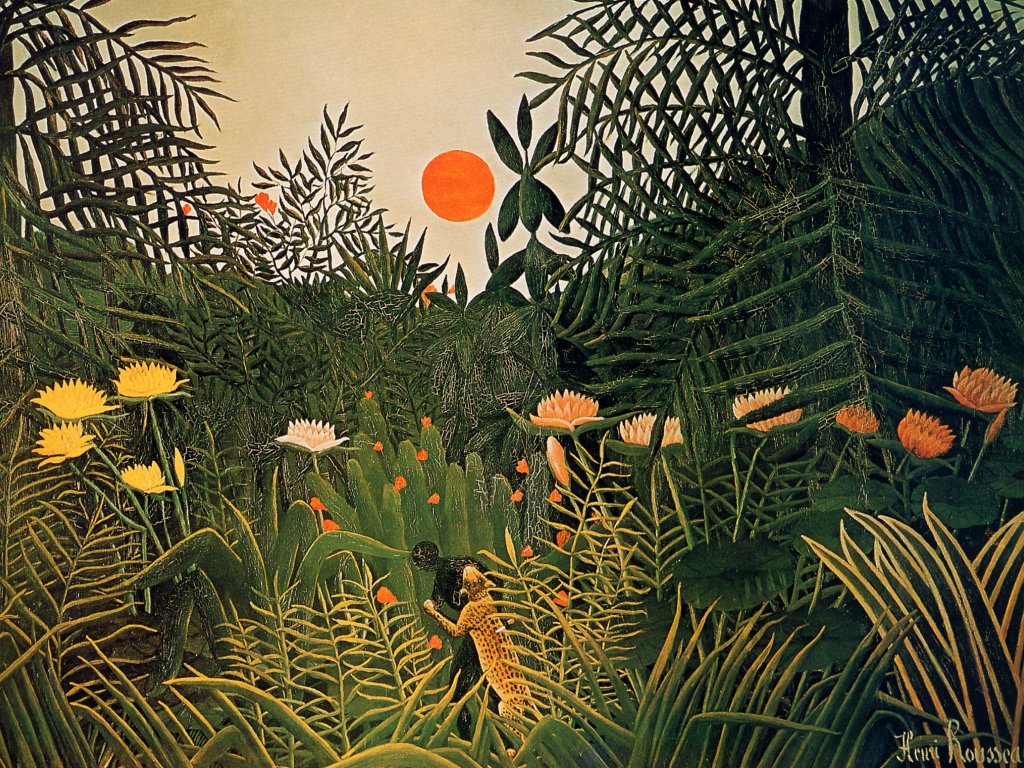
Man Attacked by a Jaguar, 1910

Or, does Jesus’ desert encounter in Mark represent not so much the threatening last gasps of a rebellious and dying world, but the first breaths of a life-giving new one, just now coming to be?

The Waterfall, 1910

Rousseau’s painting of the sleeping woman and the nearby lion, above, provides an image of harmonious coexistence in a place shared by a human being and the proverbial king of beasts (an ‘alpha predator’). In other words, Rousseau – in some of his paintings – portrays an ideal image of the original state of nature, the biblical Eden, before nature became ‘red in tooth and claw.’

A Woman Walking in an Exotic Forest, 1905

If so, then Mark’s statements that Jesus “was with the wild animals,” and also that “the angels were ministering to him,” may reflect what Christians have come to think of as ‘the peaceable Kingdom’ and ‘the New Creation.’ Which then suggests that – in Mark – the wilderness was good place despite the presence of the Tempter.

I am drawn to how Rousseau depicts the natural beauty of what we often describe as ‘wild nature,’ portraying it in both inviting and in cautionary ways. He paints it as a context of harmonious interrelation between human beings and animals in a shared environment. He also paints it as being a context where animals are a threat to one another and to humankind. Rousseau’s painting of Eve hints at both possibilities, where she is charmed by the serpent:

Eve, 1907

In the painting below, which complements his image above, another ‘Eve’ charms the serpent. Rousseau fills the beautiful canvas with a limited color palette, largely green, expressing the same dimension of ambiguity. A woman plays a flute while a serpent is draped upon her shoulders and others hang from the trees or rise up from the ground:

The Snake Charmer (detail), 1907

Looking at Rousseau’s many jungle-like ‘exotic landscapes,’ one notices the evocative presence of mystery. The viewer does not immediately know what lurks in the shadows, beneath and behind dense and dark foliage, in scenes often featuring bright flowers or fruit in the foreground. And upon discerning animals and also humans among all the growing things in the thicket between the trees, we can’t be sure whether what we encounter is friend or foe.

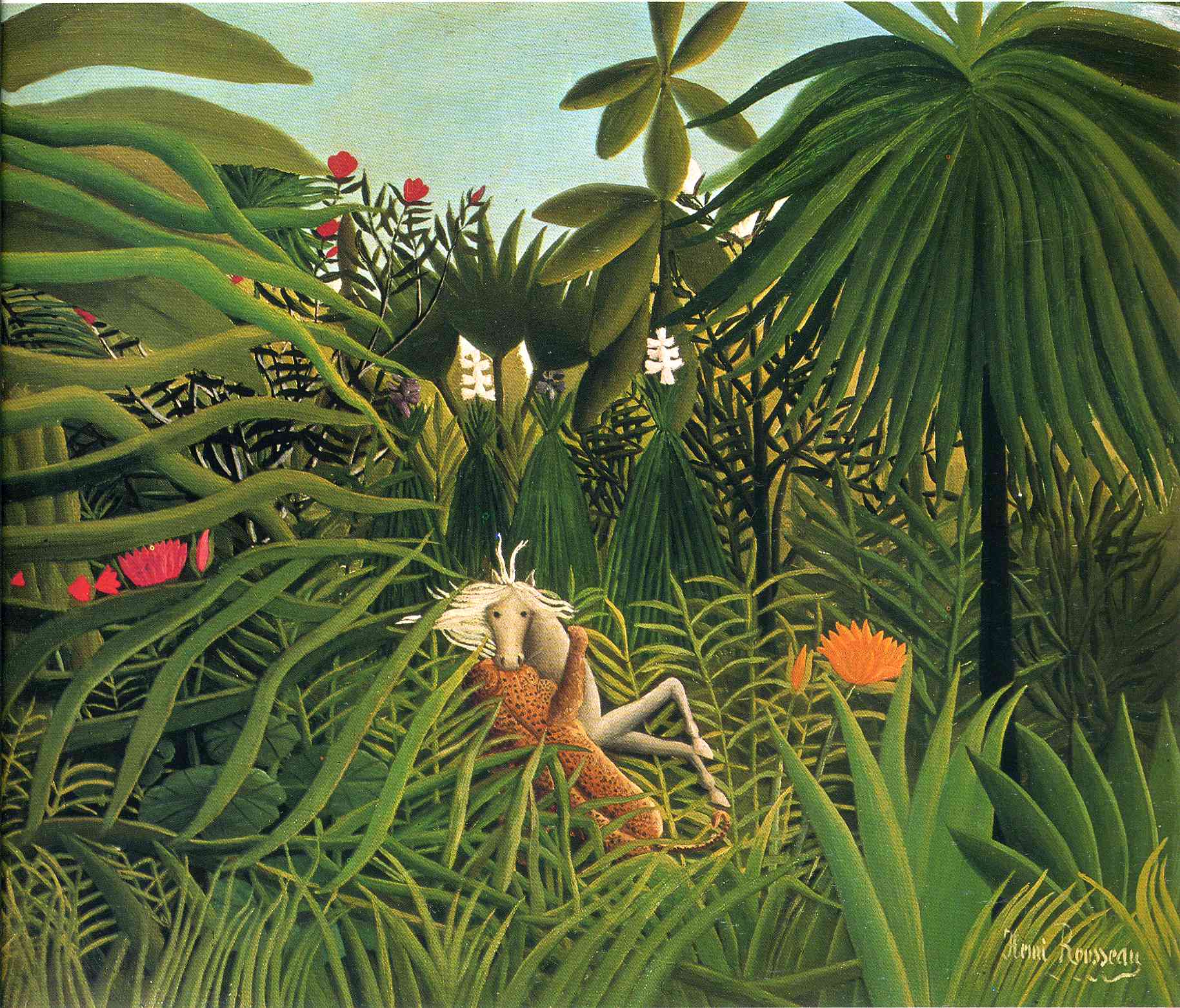
Jaguar Attacking a Horse, 1910

Exotic Landscape, 1910

In these and other scenes, Rousseau portrays an invitingly beautiful world, but one that is not without the possibility of misadventure and harm. I may not want to live in some of these scenes. But I find joy living with their beauty. For they help me appreciate a new way of reading and thinking about Mark’s brief account of Jesus’ temptation ‘in the wilderness.’ Jesus possibly could have repeated the great mistake made by Adam in the old Eden. But in not doing so, ’the second Adam’ became the door to a new Eden, and our ‘ark’ to the New Creation.


Note: blog settings have been changed to provide more opportunity to offer comments, using the link below.