Biblical Interpretation

Good Friday 2025

If reading this by email, please tap the title at the top to open your browser for the best experience. Then, clicking individual pictures will reveal higher resolution images.

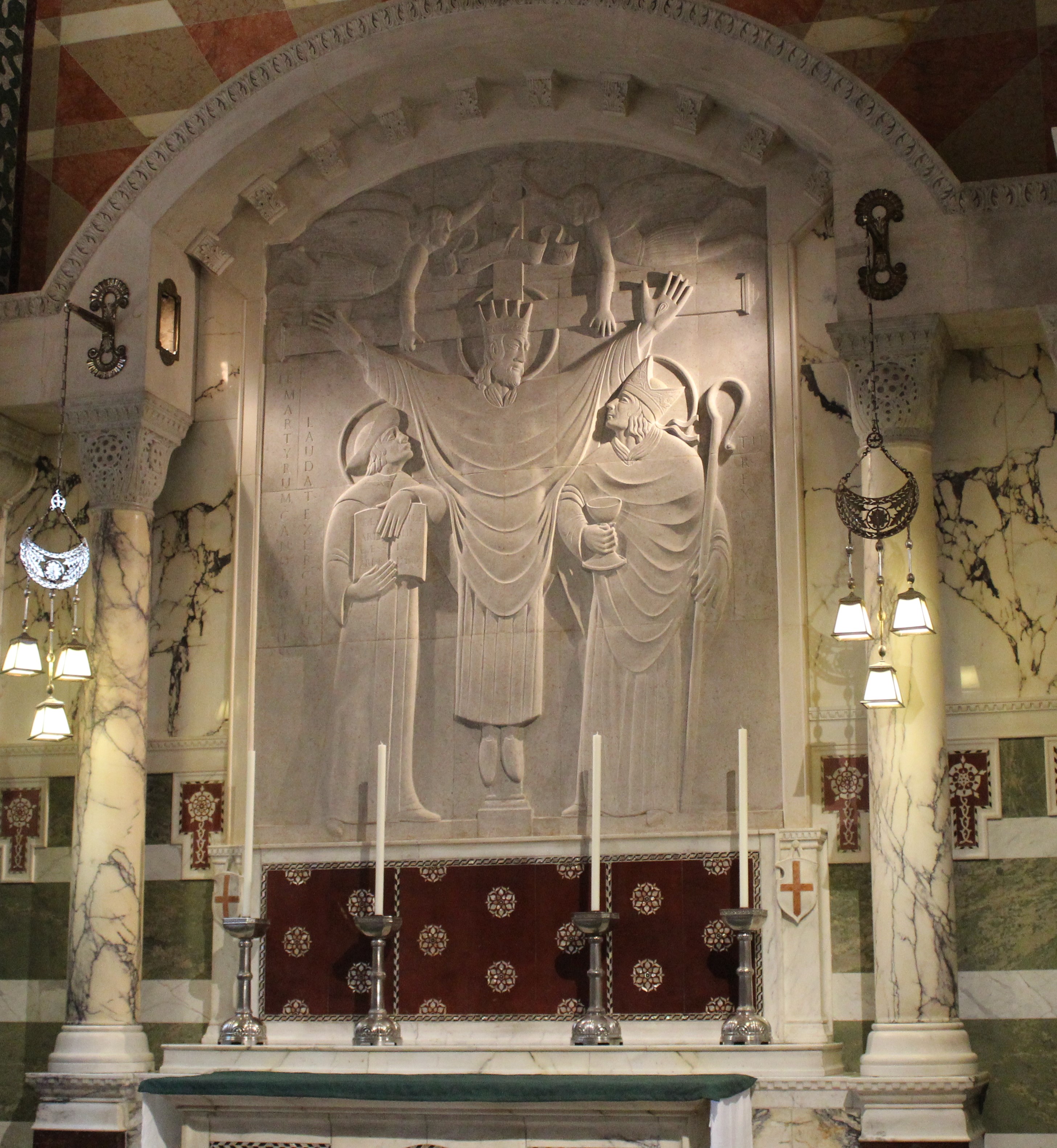
Stanley Spencer, The Cruicifixion (1958)


(I am offering here my Good Friday homily for this year, based on one previously shared)

In the passion reading we have just heard, we are reminded of the dark spectacle of what human cruelty can accomplish. With Jesus, it was a vain attempt to obliterate the most beautiful human being who ever lived. Thank God, we have no photographs of the horrifying things that were done to him, but only paintings. But consider this paradox: the beauty of art has provided a way for us to a reflect on one of the darkest examples of human violence.

Paintings of our Lord’s Passion seem divided into two broad groups. There are those concerned to portray the grim reality of Roman execution. And, there are those inclined to explore and express the inner redemptive significance of what happened.

At the center of any portrayal of the Crucifixion of Jesus is an inescapable fact ~ it was an act of political and judicial violence, where the forces of earthly injustice pretended to act in the name of human truth. The corollary to this is how Jesus’ subsequent Resurrection restored heavenly justice in the name of divine truth. Paintings of Jesus’ Crucifixion, and those of his Resurrection, usually give attention to his wounded body, even though his wounds then appear transformed on the Third Day. After all, this is one way the disciples recognize him after his death. How the death-marked body of Jesus looked after his resurrection, also provides a preview of his appearance at the end of time.

Charles Wesley’s Advent hymn, “Lo! he comes, with clouds descending” offers words that also apply to Good Friday.

“Every eye shall now behold him,
robed in dreadful majesty;
those who set at nought and sold him,
pierced and nailed him to the tree,
deeply wailing, deeply wailing…
shall the true Messiah see.

Those dear tokens of his passion
still his dazzling body bears,
cause of endless exultation
to his ransomed worshippers;
with what rapture, with what rapture
gaze we on those glorious scars!”

It is natural to imagine how the people directly responsible for Jesus’ death, from Judas and the high priests, to Herod and Pilate, might be overcome with grief at the triumphal Second Coming of the Lord. Those who pierced him might feel themselves pierced by awakened guilt and remorse. Indeed, for every one of us, seeing the fruit of our mischief and misdeeds can provoke us to tears.

But I think Wesley was getting at more than repentance and contrition. Surely, seeing the full beauty of the glory of our Lord, with his wounds transfigured, will also summon our tears — but with tears of joy. Wesley, prayerfully and with sensitivity, has given voice to the profound power of beauty. Especially when it is discerned in the most unexpected of places – in the face and body of the crucified One. Love… the most profound love beyond human imagining, is manifest in the face and gestures of the crucified messiah. For he reaches out his hands even to forgive those who have tortured and sought to kill him. This is the most beautiful thing we could ever see.

As we pray in a Morning Prayer collect, “Lord Jesus Christ, you stretched out your arms of love on the hard wood of the cross that everyone might come within the reach of your saving embrace…”

Perceiving all this helps us make sense of the paradox at the heart of Jesus’ Crucifixion. For, in it, we perceive the dramatic juxtaposition of serenity with antagonism, of beauty with its dark opposite, and of moral good with apparent evil. We can see this in two paintings I have included with your worship bulletin: Hieronymus Bosch’ painting of Christ Carrying the Cross, and Stanley Spencer’s 1958 painting, The Crucifixion. Looking at them, I encourage you to join me in asking an awkward question: with which person or persons in these paintings do we identify?

Hieronymus Bosch, Christ Carrying the Cross

Though some 500 years apart, both painters portray the tranquil appearance of the peaceful heart of Jesus, even in the face of vicious hostility. And like Bosch, Spencer helps us see what the beautiful One in our midst sometimes provokes. Especially when the shining light of his presence exposes the dark shadows within and around us. For his light sometimes prompts fierce anger and envy, as well as a callous indifference to cruelty and suffering. Things of which we are all capable. And we are likely to have much invested in denying this ugly truth. Strangely, when confronted face to face with the divine opposite of our perversity, we will either fight the light that we encounter, or surrender to it. The Passion narratives give us examples of those who resisted and even fought against the Light of the World. For we sometimes fight against the disturbing possibility that Jesus will conquer our pervasive ungodliness. And so, consciously or not, we try to do away with his godliness.

An encounter with true beauty can be unsettling and troubling, especially if we have already settled for so much less. We may often hope for the triumph of good over evil, that beauty will overcome darkness, and serenity will displace antagonism. But we cannot find it within ourselves to do more than hope. We cannot achieve the redemptive resolution for which we haltingly reach out with our feeble hands and hearts.

It is not an accident that the figure of Jesus in Stanley Spencer’s painting visually recedes in the foreground, while those who oppose and crucify him grab our interest and attention. Spencer, after mastering traditional realism, adopted what he called a neo-primitive style. He was a gifted colorist, and highly proficient with composition. And so, as Spencer has rendered him, Jesus’ skin tone and color roughly match that of the wood of the cross, as well as the clothing of the man with the hammer swung over his head. Spencer’s rendering of the Lord’s skin tone and color also match much of the sky and the ground below… including the tunic of Mary Magdalene, prostrate at the foot of the cross. This forms a compelling visual symbol. For Jesus totally identified with us, in his Incarnation, and in his Crucifixion. His crucifixion symbolizes his complete joining with us, and with our world of wrenching hurts and suffering.

In fact —as we see in Spencer’s composition and coloring— it is precisely because Jesus blended in so well with everyday life, that those who opposed him could literally gain the upper hand, ultimately with hammers and nails. (For he did not call down an army of angels to help him, as he could have.) But this is the marvel of the incarnation of our God in Jesus. The fullness of divinity thoroughly became joined with our fallen humanity. As the Gospels attest, this joining was so complete that many did not notice or have regard for his divinity. When we do notice his total identification with us, when we come face to face with the truth it represents, we have either one or the other of two reactions. We throw ourselves down in humility before him. Or, we seek to throw him down, to humble him before us.

These paradoxes are brought to their greatest prominence when, as he predicted, he is lifted up. His lifting up is his glorification, and the glorification of God within him. Yet his lifting up is on a cross, and in the agony of a humiliating public execution. Here we see the ‘strange beauty’ of our Lord — a beauty for which churches and museums better prepare us than do our malls and most TV shows.

So, let us “behold the fair beauty of the Lord, and … seek him in his temple.” We will find him! We will find him in the “temple” that he promised to raise in three days.


Additional note: Those interested in further reflection on some of the Holy Week themes raised here might wish to read my prior post, “What God Can Do, and Is Doing.”

The Beauty of What God Can Do, and Is Doing

If reading this by email, please tap the title at the top to open your browser for the best experience. Then, clicking individual pictures will reveal higher resolution images.

James Tissot, God Creating the World


If you are a Christian, and if you reflect on your formation as a person of faith, consider this question: Do you believe it is reasonable for God’s will to make sense to us? To ask this question opens the door to discovering how our beliefs about God were shaped, as well as our beliefs about God’s providential ordering of the world. Indeed, does God even want us to think about such things, or are we simply to accept and obey the divine will, regardless of whether we find this reasonable.

These questions also bear upon how we reflect upon what happened in Jerusalem 2,000 years ago, events that we consider during this Holy Week.

Broadly speaking, the Catholic tradition of thought – going back at least to Thomas Aquinas – anticipates a discernible overlap between divine rationality and that of created and redeemed human nature. God’s rationality is imprinted upon our powers of reasoning. By contrast, broad strands of the Protestant tradition – with its comparatively elevated concept of the Fall and human sin – have not nurtured and have even discouraged a similar expectation of such an overlap. Accordingly, we cannot expect or believe that our rationality has any real continuity with divine rationality.

One of the two traditions described above has emphasized the self-revealing comprehensibility of God, who intends for us to know, and not simply obey, the divine will. The other tradition has privileged the sense that God was and is wholly other, and therefore God’s ways are incomprehensible, except for small graces. Each of these two traditions has therefore had a different understanding of what it means for us to have been created in the image and likeness of God (see Genesis 1:26, in context).

A related and observable distinction regarding these two broad traditions concerns the relationship between grace and nature, and how this is construed. In the wider Catholic understanding, grace is more often seen as infusing nature, and present everywhere. Whereas a common view often found in Protestant piety anticipates that grace touches nature episodically, and sometimes is antithetical to it, given nature’s and our Fallen state.

James TIssot, God Appears to Noah

Another way we can distinguish the spiritual influence of the two traditions I am sketching here concerns the nature of God and of God’s activity. For example, shaped by a broadly Catholic catechesis, it is believed that there are at least three things that God cannot do: create a rock bigger than God can lift; choose to cease to exist; and, command us to hate ‘him.’ For, in the spirit of that same catechetical tradition, each of these three theoretical possibilities would be irrational, and thus contrary to the divine nature and being, as well as to who and how we were and are made to be.

Most Protestant thinkers and preachers would likely dismiss the first two of these three (im)possible ‘things’ as perhaps irrelevant rhetorical distractions. Yet, the third thing, however disagreeable and unforeseen in light of the New Testament, would probably be conceded as theoretically possible, especially given the historically Protestant stress on divine freedom and the importance of acts of will for personal right-believing. (In other words, though God could, God wouldn’t.)

A result of these differences between the two traditions is that questions about sin, misfortune, and the presence of evil, have tended to be handled differently in Protestant belief and teaching as compared to that shaped by Catholic spirituality. This difference can be noticed when we reflect on and speak about ‘bad things’ that happen to us. Does God cause such misfortune, or, allow it? How we tend to answer this ‘cause’ question can reveal something about the Christian catechesis by which our thinking and beliefs have been shaped. And how we think about this question regarding divine responsibility will benefit from insight going back to Aristotle concerning four different aspects of what the word ’cause’ can mean.

James Tissot, God’s Promises to Abram

Here is a fundamental question that can bring many of the above strands of thought into focus: Do we believe that God always loves us; always seeks intimate fellowship with us; and always seeks to draw us more fully into the merciful embrace of God’s redemptive purposes? Or are our answers to these facets of a fundamental question somewhat qualified? And if qualified, then by what?

Especially in view of our observance of Good Friday this week, I believe that we can answer this question about how God loves us in the affirmative. And we can do this without overlooking or ignoring such NT images as the narrow gate, and the Lord who will ask what we have done for the least of his brothers and sisters.

CS Lewis, among others, reminds us of a way that we can appropriately affirm God’s abiding love for all people. We can illustrate Lewis’ view with the following image: We may weep when we come before Him at the end of our lives. But our tears may be both from sorrow as well as from joy at our redemptive inclusion, despite all that may count against us. As long as, in that moment, we acknowledge Him, and who He really is. For we all will have the opportunity to do so.

Alleluia – Easter comes for everyone. If only we could better see how and why that is true!


Additional note: As an Anglican, I include my own tradition within what I refer to above as the broadly Catholic tradition. My goal with this post is not historical analysis but to provide grounds for reflection regarding two differing – yet sometimes overlapping – ways of approaching some central questions.

Beauty in the Face of Jesus

If reading this by email, please tap the title at the top to open your browser for the best experience. Then, clicking individual pictures will reveal higher resolution images.

William Holman Hunt, The Light of the World (detail)


Since the earliest centuries of the Christian era, believers have found encouraging meaning in paintings of the imagined face of Jesus. Since no such images exist from his lifetime (as far as we know), but only written depictions of Jesus’ character as displayed in his words and actions, later artists have literally drawn upon acts of imagination in how best to present him. In so many of these paintings of Jesus, we find abiding images that convey an abiding love.

Salvator Mundi, attributed to Leonardo da Vinci

More than a few in our great Tradition have had an aversion to the making of these images, believing that such efforts to depict Jesus risk engaging in or promoting idolatry, a concern that is not difficult to appreciate. Yet painters, particularly in the Christian East, have believed that, in view of our Lord’s Incarnation, paintings of Jesus and of holy events in which he was involved are not only appropriate, they can be divinely inspired windows into eternity.

Christ Pantocrator, an icon in St. Catherine’s Monastery, Sinai, Egypt

Modern Evangelicalism has played a parallel role to this in the belief that compelling contemporary images of a beautiful and winsome Jesus can aid the faithful by stirring devotion in Bible reading, prayer, and in daily living.

Warner Sallman’s 1940, Head of Christ, reprinted in many Protestant Bibles and devotionals

The face of Jesus, by R. Hook, a 1964 painting widely popular in the Jesus Movement of the 1970’s and among Evangelicals

How do we picture Jesus? Although though we may appropriately demur from referring to God by using personal pronouns or with gender-based associations, when hearing the Gospel reading on Sundays, or while reading devotional books, images of Jesus inevitably arise in our conscious awareness generated by acts of imagination.

Here we receive encouragement from C.S. Lewis, J.R. Tolkien, and other spiritually inclined writers, who have helped us recover confidence in the idea that the power of imagination can be a redeemed vehicle for conceiving holy images, both of biblical scenes and also of allegorical parallels based upon them.

Hieronymus Bosch, Christ Carrying the Cross (detail)

The popular pious suggestion that we ask ourselves, “what would Jesus do, or say about this matter,” can therefore be a helpful spiritual exercise, especially if pursued reverently and with a scripturally informed process of deliberate thought.

Christ and the Rich Young Ruler, Heinrich Hoffman

In my prior post, I shared detail of a compelling image of Jesus by the 19th century painter, Heinrich Hoffman. I love this painting, expressing the artist’s rendering of Jesus’ encounter with the so-called rich young ruler. Hoffman portrays well the love Jesus had for and showed to the man who asked him how he could enter the Kingdom of Heaven. The painter depicts how Jesus loved him and, we believe, continued to love him, both before and after this man turned away in discontent and confusion.

As we grow in our familiarity with images of Jesus, we can become sensitive to the way that Western art has tended to portray our Lord’s humanity, influenced by the European artistic tradition, which has not overlooked Jesus’ Semitic background. Nevertheless, how artists and others portray Jesus finds in him reflections of themselves, which is true to his known desire to identify with who we are. It has become more common in recent years for artists to portray Jesus in the form and appearance of other cultures, and the iconographic paintings of Brother Robert Lentz (some of which I have featured before) provide a good example. Among them is his image of Jesus set within the context of Japanese Buddhist spirituality, seen in the following image.

Turning again and again to such images can be most helpful to us in our spiritual journeys, especially when we choose well-conceived and well-executed paintings, drawings, or sculptures, that express to us facets of divine beauty, as well as the goodness and truth of God, found in the face of Jesus.


Note: Jaroslav Pelikan’s book, The Illustrated Jesus Through the Centuries, provides a ready and helpful way of finding images that can accompany our journey through Lent toward Easter living. Once again, I would like to thank Kathy Kane for my copy of this beautiful book.

In anticipation of this coming Sunday, Lent 2, Year C, I offer here a copy of a homily from a prior year, which may be accessed by clicking here.
The Beauty of Redemption-Based Identity

If reading this by email, please tap the title at the top to open your browser for the best experience. Then, clicking individual pictures will reveal higher resolution images.

Fra Angelico, The Transfiguration, prefiguring the glory of the Risen Christ and the beauty of our redeemed humanity


There is beauty to be found when we base our identity or concept of ourselves upon the Redemption that has been freely shared with us. Yet, we can experience sadness when we rest our self-perception upon our ailments and disorders. Regardless of our feelings, these alternatives represent choices we can make on a daily basis.

We all have an innate disposition to sin, and in various ways we all enact this disposition. But, for Baptized people and all others, this is not ‘the be all and end all’ of who we are made to be. Our end is in Christ, and so our wholeness is in Christ. We may be sinners; we are also among those who have been redeemed and are being transformed by the power of the Resurrection.

Appreciative Inquiry teaches us that what we we focus on grows. This empirical fact can be seen in two readily observable ways. New soccer players, especially the youngest ones, tend to swarm around the soccer ball. And, when on a fast break to try to score a goal, almost inevitably they kick the ball toward the goalie, the apparent impediment on whom their eyes are affixed instead of upon empty areas of the net. Another example lies in how Drivers Ed instruction teaches aspiring drivers to keep their eyes on the road. Why? Because we steer toward what we are looking at, often with sad results when what catches our attention are the flashing lights of an emergency vehicle on the shoulder.

I remember an observant friend remarking about another person known to both of us, regarding how that person was “someone who dotes on his infirmities.” Not a recipe for health in light of our greater awareness about the symbiotic relationship between psychology and physiology.

These insights may have what I hope are obvious spiritual implications. They may lead us to ask, toward what end are we living? Upon what image of our humanity are we most focused?

Raphael, The Transfiguration (detail)

An ironic aspect of the way that we can associate our identity with symptoms or conditions from which we suffer is how we commonly speak about our embodiment. When we say things like, “my leg is killing me,” or “my head feels terrible,” we may unintentionally reinforce a kind of dualism. All too casually, we dismiss such statements as mere figures of speech, and we may wish to consider their further significance. If I say that ‘my leg is killing me,’ then I suggest that in some way ‘my leg’ is not ‘me.’ Because my words imply that ‘it’ is acting upon ‘me.’ In a slightly more abstract way, we make statements like, “my conscience is bothering me.”

When I am inclined to think and speak in this latter way, I suggest by my words that ‘my conscience’ is something other than ‘me,’ and that it has some power of agency over or against me. What we commonly refer to as ‘my conscience’ might better be described as my experience of ‘consciencing’ (an intentional neologism). Or about how I am the kind of being who experiences and engages in acts of conscience. As the older moral tradition recognizes, conscience must not only be followed; conscience can and must be educated.

So, to say that “I am powerless over sin” does not necessarily mean that I am powerless over my disposition to engage in the bad choices and decisions that I tend to make. Like my emotional experience, I may not be able to choose to have the various physiological conditions that I experience. But I can choose how I respond, or how I act in relation to such experiences and conditions. As John Wesley is remembered as having said about the vice of lust, “a bird may land on my head, but I don’t have to make a nest for it with my hair.”

Experientially, I can associate myself with the conditions that may ‘happen to’ me, and with which I may suffer. But conceptually, I can also choose to identify with the reality of the person I have been made to be and become. By grace, we have been made to become icons of Christ, who is the beautiful Icon of God. To seek to become so is to seek to become an icon of the goodness of God as well as of the truth of God, as these have been revealed to us in the face of Christ.

Rembrandt, The Ascension, an image prefiguring our redeemed humanity to keep in mind so that we may, as the Prayer Book’s venerable words put it, “thither thereto ascend.”


Note: The wisdom of our Holy Tradition is reflected in the fact that our Lectionary appoints Gospel readings about the Transfiguration on two occasions every year: on the last Sunday after the Epiphany (or the Sunday before Ash Wednesday and Lent, March 2 this year), and also on August 6, the Feast of the Transfiguration of our Lord. / In addition, readers interested in some of the ideas presented above might consider further material relevant to them in my book, Ethics After Easter, available from libraries and booksellers.

The reflections offered here may assist choosing a theme upon which to focus in preparing for and in keeping a Holy Lent.

Can Beauty be Found in Judgment?

If reading this by email, please tap the title at the top to open your browser for the best experience. Then, clicking individual pictures will reveal higher resolution images.

James Tissot, Jesus Looking Through the Lattice (detail). This may remind us to ask, in whose sight do we live?


One of the most widely quoted, but perhaps least understood, sayings of Jesus amounts to the admonition, do not judge. A common way these words are understood can be summed up in the instruction, do not judge others lest you, yourself, become judged (see Matthew 7:1 and Luke 6:37).

Did Jesus mean to forbid all forms of judgment?

A good way to appreciate Jesus’ teaching in this regard is to make a distinction between judging persons, and judging a person’s actions. For example, trying to appropriate his teaching on this matter may require us to make judgments about what actions would constitute faithful obedience to his words, and those which are proscribed by him. In order to follow his teaching, I may need to ask myself, would this or that act of mine (whether merely in thought, or in my spoken words and or actions) constitute an example of what he meant to forbid?

At the same time, and if following through with the above distinction, I need to consider a further question. If Jesus did have the above distinction in mind, what more precisely was he concerned to have us try to avoid doing?

When interpreting Jesus’ words on this subject, New Testament scholars tend to focus on the inherent problem of our presumption of a divine prerogative. This is evident in our predilection to be the ones who determine which actions, behaviors, and or attitudes, are characteristic of the things that will impede our (and more especially other persons’) enjoyment of eternal fellowship with our Father in heaven. According to this understanding, we are not to make judgements like these: “That person, as a result of his words or actions, is as good as ‘gone to hell!’” Or, “that person is beyond redeeming, and is no longer worthy of my attention or positive regard.”

James Tissot, Woe Unto to You, Scribes and Pharisees

On the other hand, and as I seek to think, live, and love, as a graced participant in the life of Kingdom fellowship, I need to make distinctions about what kinds of thoughts, words, and actions are characteristic of Kingdom life. To do this requires making judgments – judgments about thoughts, words, and actions, rather than about people. And Jesus, as quoted in John 7:24, appears to encourage making right judgements. Though in this context in John’s Gospel, he is asking for right judgement to be made about himself, about who he is; his encouragement to do so rests upon his hearers making such judgements based on their (or our) experience of having engaged in similar acts of prudential reasoning.

James Tissot, The Soul of the Good Thief (a reminder of the Good End toward which we are able to live)

Making good or right judgments about what is characteristic of Kingdom life, and about choices or actions within it, can not only be helpful, even crucial, but also a thing of Beauty. Seeking first the Kingdom of God, and God’s righteousness would seem not only to permit such judgments, it may require making them. Indeed, how else are we to know what patterns of life, and specific types of action, fulfill Jesus’ teaching in the Sermon on the Mount? For we are able to make judgements about what kinds of thoughts or actions, and what kinds of disciplines or practices, can help us grow further into the holiness of Christ, our living icon of a beautifully redeemed humanity.

James Tissot, The Sermon of the Beatitudes (detail)

One key to understanding this implication of Jesus’ teaching about the value of right judement is provided by considering a number of Biblical and Prayer Book texts regarding the connection between our participation in the Beauty of the Lord, and our grace-enabled growth into divine righteousness. I hope to develop this idea in a subsequent post. For the moment, I will restate a maxim I like to remember: We are called to live as we prayto the Father, through the Son, in the Holy Spirit. This helps us to “see thee more clearly, love thee more dearly, follow thee more nearly, day by day.”


The closing words in the last paragraph above are a quote from St. Richard of Chichester, as found in hymn 654, The Hymnal 1982, and are familiar to many of us from a song featured in the musical, Godspell.

Laetitia Jacquetton and the Art of Both-And

If reading this by email, please tap the title at the top to open your browser for the best experience. Then, clicking individual pictures will reveal higher resolution images.


Not so long ago, my friend James brought to my attention the striking glass-based sculptural work of Laetitia Jacquetton. Born in France, Jacquetton has a background in fashion design and a longterm interest in the minimalist qualities present within much of Japanese art and its Mingei (or folk art) tradition.

When I consider what I find compelling about her sculpture, I am reminded of the art of photography. A decisive factor in effective photography, especially black and white photography, is that of contrast. This is a predominant feature in Jacquetton’s work. Though this may seem obvious, perhaps too obvious for comment, I would like briefly to explore the significance of this element of contrast, and what her work might help us to appreciate regarding other spheres within our life experience. For the sculpture of Laetitia Jacquetton may alert us to an expansive question: can dissimilar and even contrasting things – as well as ideas – be brought together into beautiful harmony? And, what might asking this tell us about our concepts of nature and grace?

Photos of Jacquetton’s sculptures help acquaint us with how contrast functions in her sculptures. For example, the photo at the top displays an intentional contrast between light and dark, as well as between shiny and matte materials.

Here, we see a contrast between translucent and opaque materials.

We also see in these photos a further contrast, between smooth and textured materials. This feature, along with those previously noted, stems from the way a fluid and malleable material has been brought into relation with a static and unyielding one. Observing this allows us to infer something about the creative process involved in the production of Jacquetton’s sculptures. The artist has taken a humanly-fashioned form and adapted it to a naturally shaped object, bringing something crafted in the studio to bear upon something found in nature.

Empirically observed contrasts like these may also have a bearing upon our ideas, and how we think about concepts like nature and grace. We may have been taught to view such ideas in terms of a perceived contrast between them, even an antithetical one. Here, when thinking about objects found in relation to others that are crafted, or about nature in relation to our view of grace, we may gain insight by considering some apposite words that Eucharistic celebrants may say before consecrating the bread: “Fruit of the earth and work of human hands, it will become for us the Bread of Life.”

Several contrasts already noted are also evident in photos of Jacquetton’s other works:

Reflecting on these photos that feature contrasts allows us to articulate what is most significant within Jacquetton’s work, her intentional juxtaposition of contrasting elements.

Jacquetton as an artisan, a human agent gifted with a creative vision and developed skills, has juxtaposed dissimilar materials, achieving aesthetically pleasing results. A singular focus upon one or more of the contrasting materials (or the qualities associated with their appearance), could lead us to highlight one aspect of the artwork at the expense of another, in an either/or way. Yet, it is the dynamic conjunction between dissimilar materials that Jacquetton prioritizes in her work. Evident contrast is accompanied by intentional conjunction, leading us to appreciate the interplay of the differences in a both-and manner.

Noticing this, I think once again of the Eucharist, which – like the Incarnation – is another and relatable example of what I am referring to as a ‘dynamic conjunction.’ For the Eucharist makes present together both the natural physical properties of bread, and the supernaturally graced properties of the sacrament.

Nevertheless, we tend to view many aspects of our world, and of our lives within it, in a simplistic and reductionist manner. For me, comparative reference to the influence of Plato and Aristotle helps limit this tendency toward reductionism.

For example, I credit Plato’s influence with an implicit encouragement to view things, and especially their moral value, in relation to a single reference point. According to this approach, something either possesses or manifests this or that quality – let us say beauty, or goodness – or it does not.

I credit to Aristotle’s influence a more nuanced approach, which nurtures a willingness to consider what we see and come to know in relation to several reference points. We are then better able to say (in a both-and way) how this or that object of attention has a particular quality, while also possessing something of a second quality, and how it can be aptly described by referring to other qualities or attributes.

In all this, I do not attribute my reflections to Laetitia Jacquetton, though her compelling sculptures have clearly inspired them.


Additional notes: Thanks to my friend, James Ruiz, for introducing me to Laetitia Jacquetton and her evocative sculptural work. / Regarding my references to Plato and Aristotle, I do not presume to have accurately summarized aspects of their thought, but rather cite what I think are aspects of their dual influences.

I hope readers might perceive how my reflective observations above are related to the paradoxical conjunctions of ideas upon which I reflected in my prior post, regarding how repentance may display beauty, and how painful grief may be accompanied by joyful reassurance.

The Epiphany: Human Power Encounters Divine Authority

If reading this by email, please tap the title at the top to open your browser for the best experience. Then, clicking individual pictures will reveal higher resolution images.

James Tissot, The Magi Journeying (detail)


Instinctively, there is something we all seem to seek. We want to find purpose and meaning, and organizing principles for our lives. This desire is anchored in a larger one: we seek to discern what is real, and true.

But where does our common impulse come from? In what does this impulse consist? I think the best answer to these questions is found at the heart of the Feast of the Epiphany. On Epiphany, we celebrate how God has revealed to the world the real and true meaning and purpose for our lives. Epiphany is all about God revealing to us the divine center of everything. Epiphany highlights God’s self-revealing in the natural world, and preeminently in God’s Incarnation, which the Magi came to discover and then worship.

We are able to recognize that it is in the nature of a Creator to order reality, imbue it with purpose and meaning, and hence to bring order, purpose, and meaning to our lives. A perhaps-unexpected word that captures this broad idea is authority, in that God possesses the authorizing power to create things, and guide them. Specifically, we discern this authorizing power in God’s creation of the universe and in the divine agency shaping ongoing history. For God is the author of all that is real and true.

In human life, authority and power are not always neatly aligned, and we experience trouble when the two are at odds with one another. We see this dialectic between the two at work in the events of Holy Week, in the confrontation between divine authority (in the vocation of Jesus), and worldly power (as exemplified by Pontius Pilate). Less obvious is the way this dialectic is manifest in the events that are commemorated in our celebration of Christmas and the Epiphany of our Lord, especially in connection with the visit of the Magi from the East.

James Tissot, The Magi in the House of Herod

The Magi, also called ‘wise men,’ or ‘kings’ from the East, arrive in Israel having been guided by an authoritative power greater than themselves. Because of their witness to this higher authority and its implied power, the visitors pose a threat to Herod and his courtiers, who exercise earthly authority and its attendant power. This emerges in the interaction between people who are witnesses to divine authority and its power, and others who are possessors of worldly authority and power. The emerging conflict, later seen in the events of Holy Week, arises amidst the challenges surrounding the beauty revealed in what we call the Epiphany, the revealing of divine light to the whole world rather than to just a particular nation or the people of a particular religious tradition.

The Magi from the East, by explaining their quest, prompt Herod to act. He acts viciously and violently through orders given to soldiers under his command. The result is the series of murders we acknowledge every year on December 28, in the ‘red letter day’ we call the Massacre of the Innocents.

James Tissot, the Adoration of the Magi

What are we to make of the Epiphany of God in human form, and the tragic circumstances to which it led? At the heart of Christian belief is the conviction that God became present to us through a human birth. He revealed himself in a human person who embodied two natures, one fully divine, and one fully human, whose natures are distinguishable yet inseparable. Such a person, regardless of appearances, was and is the transcending center or heart of all that is, manifest in human form. He is, therefore, the One who truly possesses divine authority and divine power. Einstein – who was not in any sense a traditional believer – said this: “The most beautiful thing we can experience is the mysterious.” The divine center of reality, manifest and revealed in a human being, is the most mysterious beautiful thing that we can experience.

Here is the wonder of it: in God’s mysterious Providence, the birth of the Messiah would bring death to many (in the Massacre of the Innocents). And – years later – the death of the Messiah would bring the possibility of new birth to all, through the redemption of human being from the power of sin and death.

Yet, it would be some decades later before those who proclaimed Jesus as Messiah, and the embodiment of God, could understand the connection between his birth along with those soon-resulting deaths of the Innocents, and his later death, along with its soon-resulting new births for those who came to believe in him.

Our proper response to all this — indeed our only response to all this can and should be to praise the Holy One of Israel, the one whose death brought new life to all who receive him. He has come to us. Come let us adore him. And let us receive him with renewed hope and joyful hospitality, in all his light-filled glory.

A blessed Epiphanytide to you and your loved ones.


The Arrival of the Messiah in James Tissot’s Art

If reading this by email, please tap the title at the top to open your browser for the best experience. Then, clicking individual pictures will reveal higher resolution images.

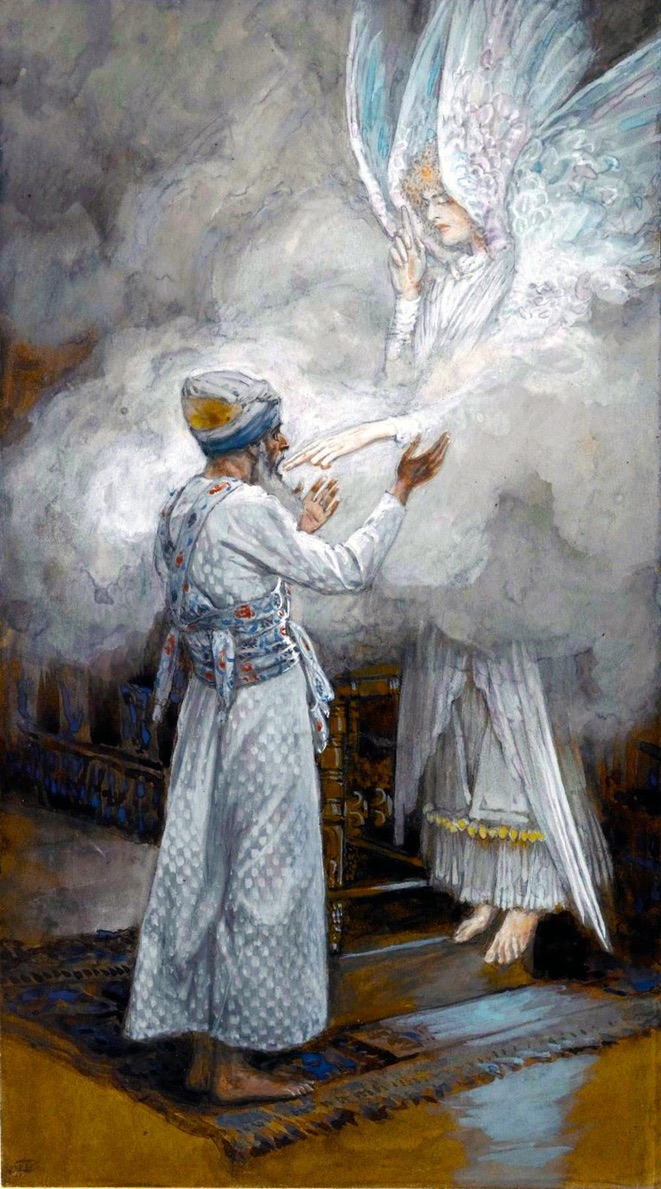
James Tissot, The Vision of Zechariah, with which Luke begins the great story (Luke 1). The priest, Zechariah receives an epiphany, telling him that he and Elizabeth will have a son, to be named John, later known as ‘the Baptizer.’


With this post for Christmas, I share with you a series of paintings by James Tissot on the theme of the Nativity of Jesus. Readers of this blog will know of my high regard for this artist’s life and work. I am pleased to share this collection of Tissot’s paintings related to the great events we celebrate for twelve days in the Church’s calendar year.

The paintings featured here, and many others, later became the illustrations in Tissot’s four volume, The Life of Our Lord Jesus Christ, published in English in 1897-8. The originals of these paintings were purchased by the Brooklyn Museum in 1900, and examples from this collection are periodically on display, both there and elsewhere.

May you and your loved ones have a holy and blessed Twelve Days!

The Betrothal of the Holy Virgin and St. Joseph (mentioned in Matthew 1 & Luke 1)

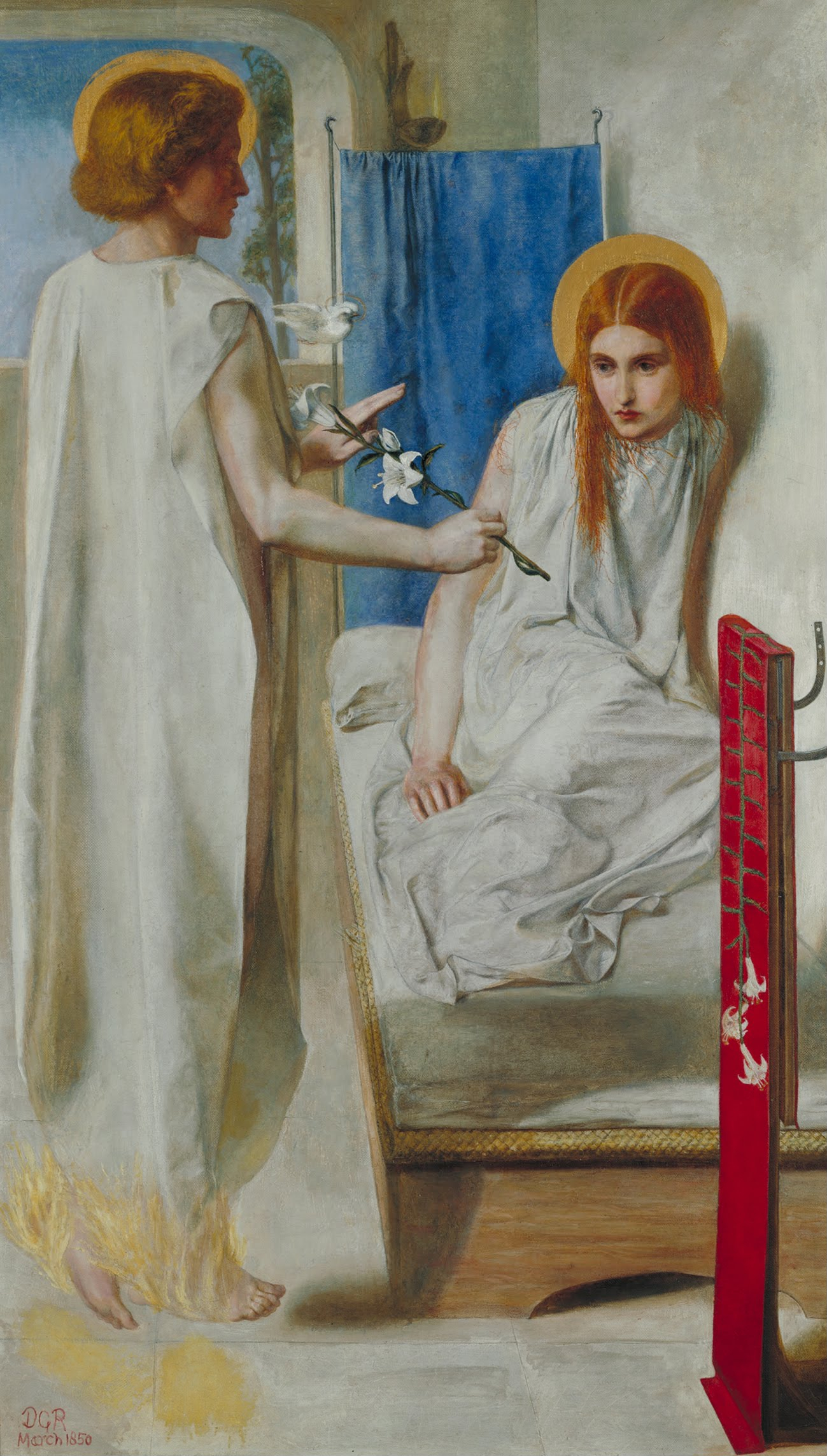
The Annunciation to Mary (Luke 1)

The Magnificat (Luke 1)

The Vision of St. Joseph (telling him of the coming child, and that he is to receive Mary as his wife / Matthew 1)

The Visitation (of Mary to her cousin, Elizabeth, the expectant mother of John, who would become the Baptizer / Luke 1)

St. Joseph Seeks Lodging at Bethlehem (Luke 1)

The Birth of Our Lord Jesus Christ (Luke 1)

The Adoration of the Shepherds (Luke 2)

The Adoration of the Magi (Matthew 2)

The Flight Into Egypt (Matthew 2)

The Massacre of the Innocents (Matthew 2)

The Sojourn in Egypt (Matthew 2)

The Presentation in the Temple (Luke 2)

Jesus Among the Doctors (the boy, Jesus, at age 12, visiting the Temple in Jerusalem with his parents / Luke 2)


Note: the titles attached to the images above are those that are provided by the Brooklyn Museum

An Advent Magnificat

If reading this by email, please tap the title at the top to open your browser for the best experience. Then, clicking individual pictures will reveal higher resolution images.

Jim Janknegt, Joyful Mystery 1


Neither the Bible nor history tell us the precise details about the Annunciation to Mary, such as on what day the Angel appeared, or when Jesus was later born. The Angel’s wondrous appearance could have happened on a drab winter’s day. Yet, by virtue of the Angel’s message, it was also like spring. Our Church calendar and holy tradition reckon that the Annunciation was in March. If it was in the spring, the average high temperature in northern Israel would have been in the 60’s. So it could easily have been a season colored by the appearance of emerging flowers and foliage.

Faithful to the pattern of Scripture, Jim Janknegt seeks to portray something beyond literal circumstances. He has more than flowering plants, trees, and shrubs in mind. The decorated edge of the painting is a border of roses, which evoke the mysteries named in the Rosary, of which this scene is only the first. Inside that border are more flowers, and these also play a symbolic role. For we find lilies on Mary’s dress, suggestive of a later-to-be-revealed Easter, and calla lilies in a vase on the table, traditionally associated with the Annunciation to Mary.

Even more dramatically, flowers cover a large part of the angel, which suggest something transcendent and other-worldly. The Angel has come to speak the Word: the Word of Life, which is also a Word of blessing (look at the Angel’s hand-gesture!). Central in the painting, but depicted in a very subtle background way, is a great tree. Surely, it is the Tree of Life, from Genesis and Revelation, the first and last books of the Bible. Surely, the tree also prefigures that toward which everything in this moment is heading ~ the dead wood of the Cross, which paradoxically became a life-giving tree. Yes, it is springtime! But, this is springtime in salvation history.

So this is what we begin to see in Jim Jangknegt’s painting: his portrayal of the Angel’s Annunciation to Mary is not so much about springtime in the world. Instead, it is about springtime for the world.


Jim Janknegt’s painting, featured here, is used by permission of the artist. The text of this post is based on my homily for Sunday, Advent IV, of this year, which may be accessed by clicking here.

The Elusive Biblical Idea of Ransom

If reading this by email, please tap the title at the top to open your browser for the best experience. Then, clicking individual pictures will reveal higher resolution images.


In late 1987, two American college students were exploring the jungles of Columbia. After obtaining a canoe, they embarked upon the Putumayo River and strayed into territory held by a Marxist rebel army. Formally known as FARC, these guerrilla soldiers abducted the students and held them captive for ten months in various jungle camps.

At first, the FARC guerrillas thought the two men were CIA agents, though the students corrected this. But then their captors came to see them as hostages having economic value. Soon, their parents hired an American explorer, who found the hostages and their captors. After four months of negotiations, conducted by a Roman Catholic Bishop, the students were released and taken to the American Embassy in Bogata.

Release for the young explorers surely came about through the payment of money, probably a lot of it. Ransom is a way to describe this kind of payment, where something valuable is exchanged for the freedom of captives. John Everett Millais’ painting (above), The Ransom, depicts a father handing over of fistful of jewelry and a bag of coins to some men who have taken his daughters hostage. Revolutionaries, terrorists, and criminals have long used ransom as an efficient means of fund-raising, especially when their captives come from wealthy families or are politically well-connected.

Clearly, when payments are made to captors, the purpose is not to honor or reward the hostage-takers. Instead, these payments reflect an abiding concern for those who are held-captive, awaiting redemption.

This concept of ransom is deeply rooted in our Judeo-Christian tradition, and it shapes how we understand redemption. Think of the beloved Advent hymn, which begins this way: “O come, O come, Emmanuel, and ransom captive Israel…” In the Old Testament, in many passages like Psalm 49; Isaiah 35, 43, and 51; Jeremiah 31; and Hosea 13, we hear about how God’s promises inspire hope for the possibility of ransom from the power of death.

These insights help us understand Jesus’ words about ransom in Mark’s Gospel (in 10:45; parallel in Mt. 20:28). After predicting his suffering and death three times, Jesus tells the oblivious disciples that “the Son of Man came not to be served but to serve, and to give his life as a ransom for many.”

Yet, instead of a ransom-based understanding of Jesus’ sacrifice and death, many Christians think of Jesus’ saving work in a largely legal or juridical way. In this view, our sin involves a degree of corruption and guilt so bad that it’s beyond what we can make right. And so, human captivity to sin means that ‘a penalty must be paid, and punishment meted out.’ By this reckoning, only a ‘sinless one’ could pay the uncountable price, and bear the penalty for all. Therefore, Christ as a substitute for us, paid the price and endured the punishment so that we, ourselves, don’t have to, even though we are the ones who deserve it. Yet, according to this very common theory, the ‘price’ was paid to God, to satisfy God’s justice!

This legal or ‘punishment-substitution’ understanding of Jesus’ death did not become widespread for at least a thousand years after his crucifixion. Instead, during the first millennium, a different concept of Jesus’ mission was preeminent. It springs from the ransom words in Mark, as well as from 1st Timothy 2:5, where Paul writes, “…there is … one mediator between God and human kind, Christ Jesus… who gave himself [as] a ransom for all.”

According to this ransom view, ever since Creation, we have placed ourselves in the hands of Satan, by refusing to ‘delight in God’s will or walk in God’s ways.’ In effect, we have strayed into ‘the jungles of sin,’ and have allowed ourselves to be taken hostage by the Devil. We are held captive by our sin, and by our inclination to follow our own will. Like the two student hostages, we might have ‘paid’ our way to freedom ~ if we and they had had the means to do so. But we did not.

And so, showing his great love for us, Jesus offered himself to the Devil, as a ransom for our freedom. Jesus allowed the Devil to take him, as someone of even greater value than all of us. For Satan received as a ransom the sinless One, God’s own son. C.S. Lewis employs a similar ransom metaphor in The Lion, the Witch, and the Wardrobe. In this biblically-derived approach, the ‘price to be paid’ was a concession to the power of an enemy, and compensation for a loss, rather than (as in the later and more prevalent legal view) a payment to satisfy God’s sense of justice.

An image of Aslan’s self-sacrifice, from a film version of The Lion, the Witch, and the Wardrobe


This post is adapted from some material previously published in this space, with some additional imagery. It is based on my homily for Sunday, Oct. 20, 2024, which may be accessed by clicking here.