Advent

Learning from Mary’s Attentive Openness


Perhaps people living at the time of our Lord’s first coming were in some important ways like us. They may have been just as prone to orienting their security and sense of wellbeing around material concerns, while being generally indifferent to the spiritual life. Yet, in this season of Advent when many sing “O come, O come Emmanuel,” it is easy to imagine the people of Roman-occupied Palestine crying out with longing for the God of Israel to draw near in power. Even so, God chose an out of the way place in which to appear among us, incarnate in human form. Paradoxically, for this and other reasons, the arrival of the Holy One was largely overlooked. At least until his person and message provoked enough reactivity to cause the authorities to have to deal with him. Otherwise, the periodic waves of public attention that he received were most often inspired by the miraculous works of mercy attributed to him. While he encountered significant examples of deference to the revealed Law among his contemporaries, lived-adherence to God’s hope-shaping promises appeared to be rare.

This is why the Lectionary features a particular aspect of the Christian Gospel story at this time of the year. It does this by presenting some notable counter-examples to what may have been – in the first century – a widespread indifference to or loss of confidence in God’s promises. We learn about Zechariah, the father of the ‘forerunner,’ John the Baptizer, and about Elizabeth, John’s mother, who was a cousin of Mary and another woman that would bear a promised child. These three stand out for having been open in heart and mind to the heavenly glory that God was about to reveal in the midst of the lives of his wayward children.

In particular we remember the spirit of attentiveness that we find displayed in a third aspect of Mary’s response to God’s call through the Angel Gabriel. God’s call often challenges us to live in a different way; or to try and be a different person, especially in our relationships with our family, our friends, and those with whom we work. Receiving this call, we can react at first in fear at what this call will mean in practice. We can also respond with uncertainty, wondering about our worthiness or suitability for what God may have in mind for us. We have reflected on these themes in the last two web posts on this site.

But we can also see that —in faith— we are able to go into the heart of our fear, and find God’s power. Receiving God’s grace, we may move beyond relying on our own strength, and resist depending upon our estimate of our own abilities and worthiness for what God may have in mind. And we can choose to respond to God’s gracious invitation to participate in the Spirit’s redeeming work, just as Mary did, by saying, “Yes!” As John Lennon so simply captured the spirit of it, in the words of his famous song, “Let it be!” As Mary said to God through the Angel, “Behold the handmaid of the Lord; let it be unto me according to thy Word.”

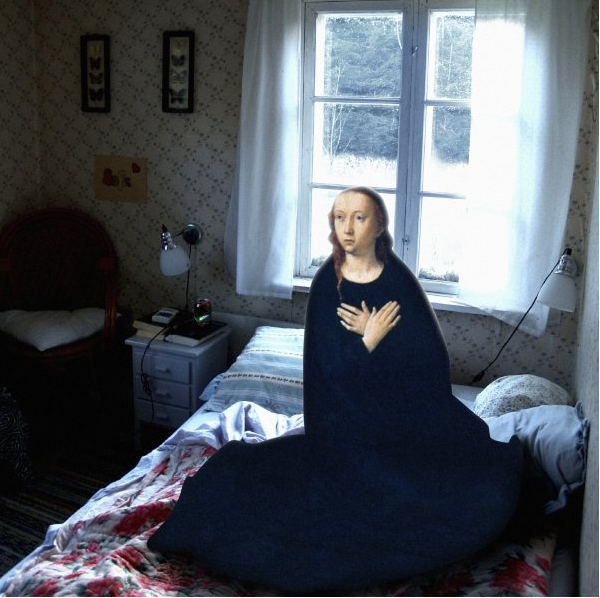
This is the spirit of Mary’s response to the message of the angel as portrayed in the third image I am sharing with you this Advent ~ Trygve Skogrand’s photo-collage, pictured above. The artist has skillfully placed a traditional painted figure onto a contemporary scene, juxtaposing an image of something old within a contemporary setting. We see a simplicity and spirit of humility in Mary’s posture, as she kneels in her plain gown. In the plain ‘bed-sit’ room in which she prays, we notice her uplifted eyes. They are now focused on the divine source of the message she is receiving.

Attentiveness is key to meaningful perception, just as we find in the Gospel reading for the third Sunday in Advent. John the Baptizer sends his disciples to Jesus with what should be our most persistent question ~ “Are you the One?” ‘Are you the One for whom we are looking, and whom we are awaiting?’ Notice Jesus’ response: “Go and tell John what you hear and see…” For they only hear and see if they are attentive. This is one reason why the Church sets aside this season of Advent ~ to encourage our attentiveness, so that we can hear and see, and then accept God’s Word to and for us.

“Let it be as God would have it.” Let things be as God wills. Let God be God! Perhaps nothing will be so hard in our lives, as to say those words in faith and in humility. Our pride objects. Our desire to be at the center of reality intrudes. But to say, “Let it be…,” in faith and in humility, is to return to the grace of the Garden of Creation. And it is also to begin to live forward into the fullness of the Kingdom, manifest in the New Jerusalem, as God will have things be.


The image above is a detail of Trygve Skogrand’s photo-collage, Bedsit Annunciation (one of my favorite artistic renderings of the Annunciation). This post is based on my homily for the Third Sunday of Advent, December 15, 2019, which can be accessed by clicking here.
Being Open to God’s Word of Hope


We may remember some pivotal moments from within the sweep of the Old Testament: God’s call to Moses from within the burning bush; God’s call to Isaiah in the Temple; and God’s later call to Jeremiah. In each of these encounters, a divine invitation accompanied by a word of hope comes to those whom God calls to be prophets. When this happens, they react in a similar way. Each of them responds with fear, just like the reaction we saw last week in Simone Martini’s Annunciation painting of Mary’s encounter with the Angel Gabriel. In these call passages, we also hear about Moses, Isaiah, and Jeremiah responding in a related way: each of them is overwhelmed by a sense of unworthiness at being called to serve the Lord. For in our hearts and our minds, we as God’s people do not always hear or receive what the Lord intends to be a word of hope as a hopeful message. And when challenged to participate in God’s ongoing mission, we fear our inadequacy in being able to respond positively.

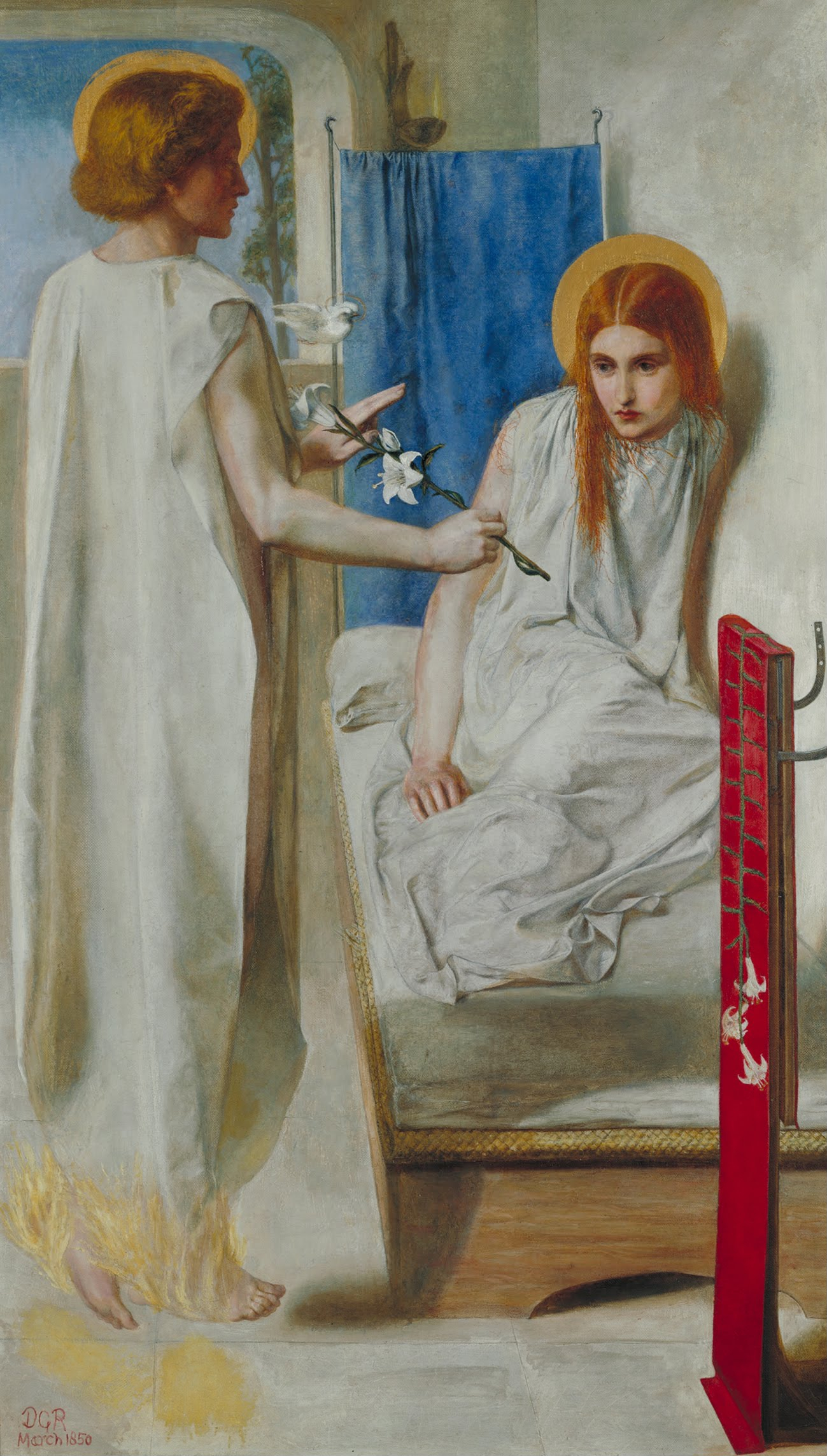
During this season of Advent I am once again reflecting on four Annunciation paintings. Here, I invite you to consider Dante Gabriel Rossetti’s depiction of the angel’s visitation to Mary, calling her to be a servant in God’s ongoing work of redemption. Observe how Rossetti portrays Mary’s response to the angel, and its contrast with Simone Martini’s painting (included below). In Martini’s Annunciation, we see an image portraying fear – Mary clutching the top of her cloak turning away from the angel and yet not able to take her eyes off the divine messenger. In Rossetti’s Annunciation (above), we see Mary looking in a different direction. Her gaze is off into the middle distance, and we can tell that she is not looking at anything in particular, ‘out there.’ Instead, she is looking within.

Here, we can make a common mistake, based on the self-absorption that is so much a part of the fallen humanity we share. For the angel’s announcement amounted to something even more dismaying than the news that Mary would bear a son as a result of this visitation rather than through the circumstances of a conventional marriage. That alone would cause confused wonder about how much this unexpected development would alter her life. But what we usually overlook is how she was being invited to become a feature in someone else’s story! As things emerged, the challenge of this momentary encounter did not so much concern how the coming of this child might alter her life, in part by diminishing her reputation. But rather, the real challenge came later as something else became clear. The coming of this child became the story for even more astonishing reasons. Mary then had to reckon with how her life and its circumstances would be significant for this child and the message of his story.

As the Annunciation helps us to perceive, when encountering the holiness, righteousness, and purity of God, we may experience not only fear about change that might lie ahead. Very likely we will also feel a sense of our own unworthiness. Perceiving the glory of God, we will become more aware of what within us falls short of God’s glory. When the Spirit invites us to experience a process of transformation back toward God’s own likeness, we are called to face and then set aside all that stands in the way of this positive change. In the Gospels we learn how God’s Word came through John the Baptizer’s ministry as a call to repent. We hear the same call to turn toward renewal in our own day. And – in the process – we learn how Mary and then the Baptizer responded. The story is not about us. It is about the Coming One.

Notice what Rossetti depicts in the angel’s hand. When inviting Mary to bear the Word of God for the sake of the world, the angel holds lilies. Lilies are a sign of the resurrection. We also see the prominent red sash that Mary may have been stitching. It bears an image of the same lilies, along with a vine that may recall the ‘Tree of Jesse’ motif (inspired by Isaiah 11). But here they are set against a red background – a sign of the passion that lies ahead. This suggests the path of suffering which the ‘Son of Man’ must walk so that we might experience the restoration and transformation of our fallen nature into his greater likeness.


 The image at the top is a detail of Dante Gabriel Rossetti’s painting, The Annunciation. This post is an adaptation of a post I first published in 2019, and is based on my homily for the second Sunday of Advent, December 8, 2019, which can be accessed by clicking here. Simone Martini’s Annunciation, referenced in the text above, is shown below.
Fearing an Unexpected Holy Invitation

Advent can be a providential season for reflecting on how the Holy Spirit invites us to go to a new place for the sake of God’s Kingdom. There is no question that this can happen at least spiritually, whether we hear the call or not. The real question, when it does happen, is how we will respond to God’s holy invitation.

This is the season when we focus especially on how God’s Kingdom enters the world in a new way. We look back to the earthly kingdom of Israel, and her difficulty fulfilling her spiritual vocation. We also look back to the promised first coming of the Messiah, who was to bring God’s Kingdom into the world with power. During Advent, we also look forward, to the Messiah’s coming again in glory. But here is a crucial fact about the first coming of the Messiah: Without Mary’s acceptance of God’s overture, there would have been no Jesus of Nazareth. In order for God’s great “YES” to us in Jesus to become manifest, Mary had to say “yes” to God.

As Luke tells the story, God’s call to Mary embodies God’s holiness and righteousness. In like manner, our encounter with God’s presence and holy invitation causes everything in us that is less than godly to undergo judgment. The bright light of God’s glory illumines all the dark corners of the world ~ and all the dark corners in our lives. The purity of God shows up all that is less than pure.

Our reaction to all this may involve at least one thing: fear! God’s call comes to us as Good News. And yet, we experience God’s call for us to become new persons, and do new things, as a fearful invitation. For me, it has involved a call to consider moving away from one beloved church and congregation to what I could only hope would be another. For both you and for me, it may be a call to go and speak to someone with whom we have a disagreement, or to reconcile with someone whom we have failed to forgive. When God calls us to new life, by inviting us to do something challenging, our first reaction is often fear. We think of all the things we are afraid might happen: like losing the security of a familiar home and community; or setting aside our own pride and sense of right; and opening ourselves in vulnerability to being hurt by another person.

In the above detail of Simone Martini’s Annunciation, we see what may have been Mary’s first response to the presence of the holy angel. Gabriel comes to her sharing God’s good news about a child she will bear, who will bring salvation for the world. And in Martini’s image of the event, Mary draws back in fear at the message, frightened about what it might mean for her and her life. We all know the end of the story, how it all turned out for good. But in that moment, as may happen for us, God’s call surely had a frightening aspect to it. Because a change to something always means a change from something else, from where we started.

Martini’s painting reminds me of spiritual advice I received years ago ~ spiritual advice that gave me the courage to leave a tenured faculty position at one of our seminaries and return to parish ministry. The prospect of this change, for which I had a sense of call, was frightening. And the good advice I received was this: When you go toward the heart of your fear in faith, God will meet you there with power.

We know that this is what Mary did. For she moved beyond her reaction to the seeming strangeness of the angel’s greeting, not knowing what it would mean for her. She then opened herself to embrace the angel’s message and all that it would entail for her ~ and for the world.


It was my CREDO Institute team leader and colleague, (The Rev. Dr.) Bob Hansel, who offered the wonderful spiritual advice that I share above. I continue to benefit from it. The image at the top is a detail of Simone Martini’s painting, The Annunciation (a painting I have shared before). This post is adapted from one that first appeared here in 2019, and is based on my homily for the first Sunday of Advent, December 1, 2019, which can be accessed by clicking here.

The Arrival of the Messiah in James Tissot’s Art

If reading this by email, please tap the title at the top to open your browser for the best experience. Then, clicking individual pictures will reveal higher resolution images.

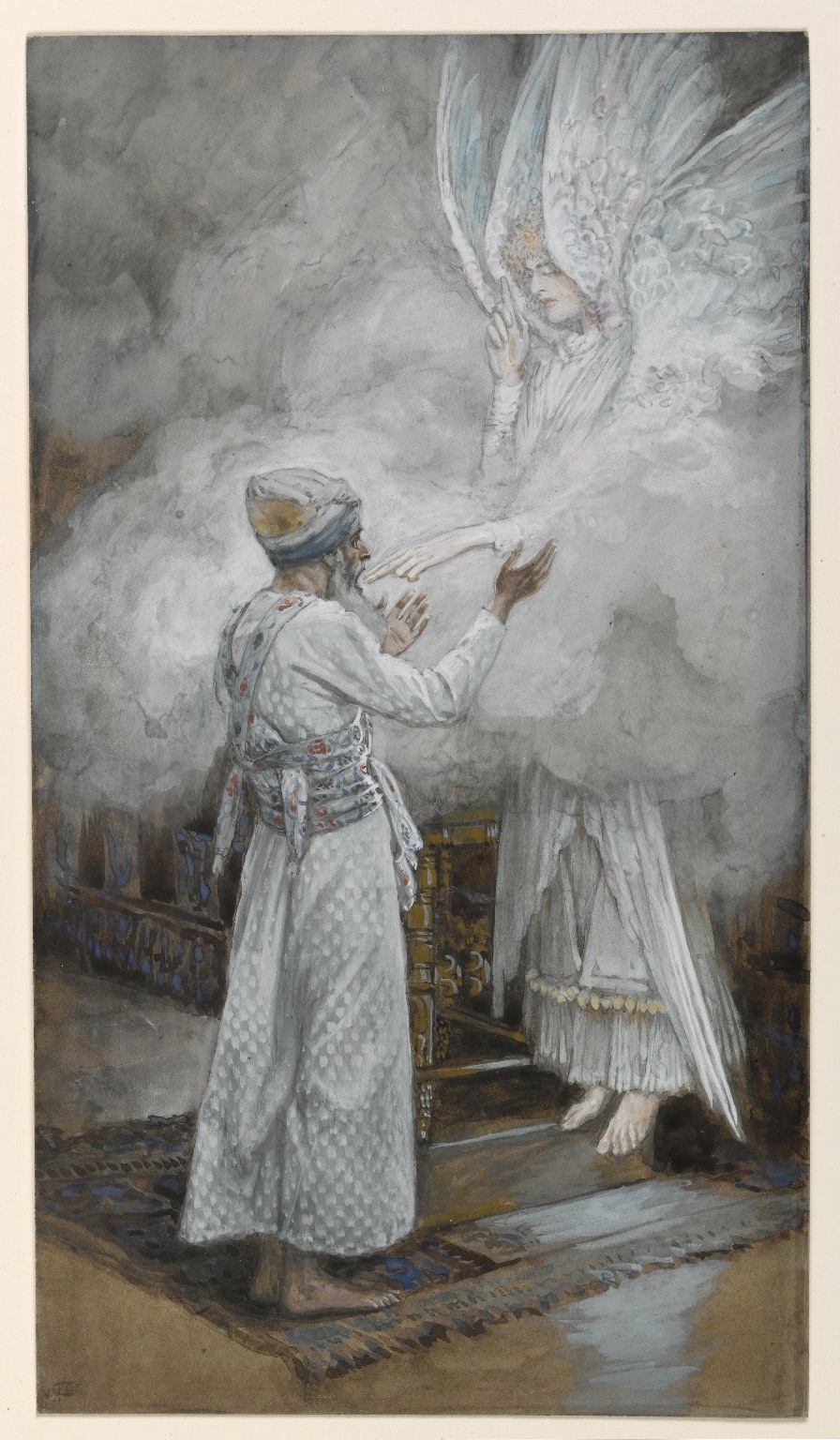
James Tissot, The Vision of Zechariah, with which Luke begins the great story (Luke 1). The priest, Zechariah receives an epiphany, telling him that he and Elizabeth will have a son, to be named John, later known as ‘the Baptizer.’


With this post for Christmas, I share with you a series of paintings by James Tissot on the theme of the Nativity of Jesus. Readers of this blog will know of my high regard for this artist’s life and work. I am pleased to share this collection of Tissot’s paintings related to the great events we celebrate for twelve days in the Church’s calendar year.

The paintings featured here, and many others, later became the illustrations in Tissot’s four volume, The Life of Our Lord Jesus Christ, published in English in 1897-8. The originals of these paintings were purchased by the Brooklyn Museum in 1900, and examples from this collection are periodically on display, both there and elsewhere.

May you and your loved ones have a holy and blessed Twelve Days!

The Betrothal of the Holy Virgin and St. Joseph (mentioned in Matthew 1 & Luke 1)

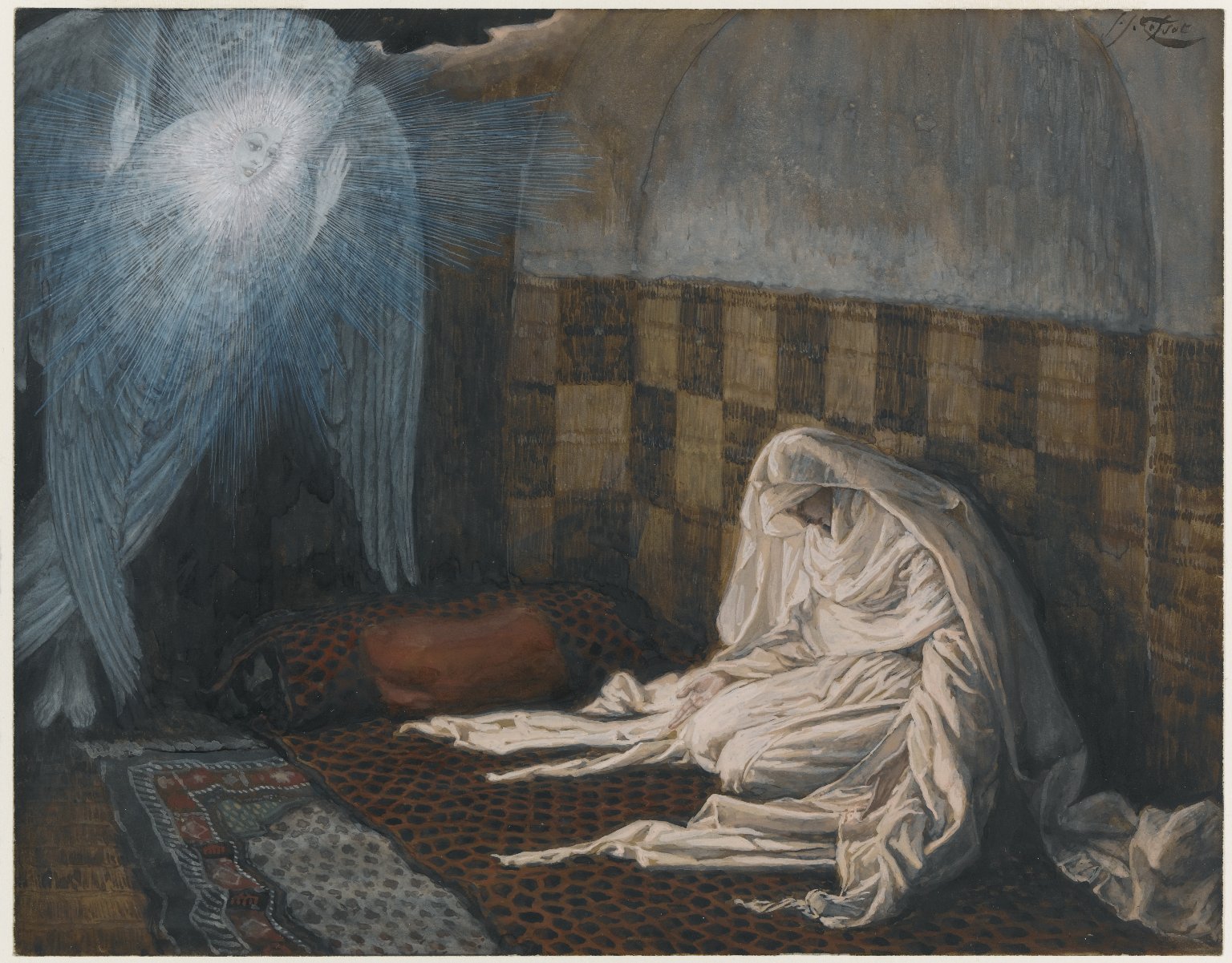
The Annunciation to Mary (Luke 1)

The Magnificat (Luke 1)

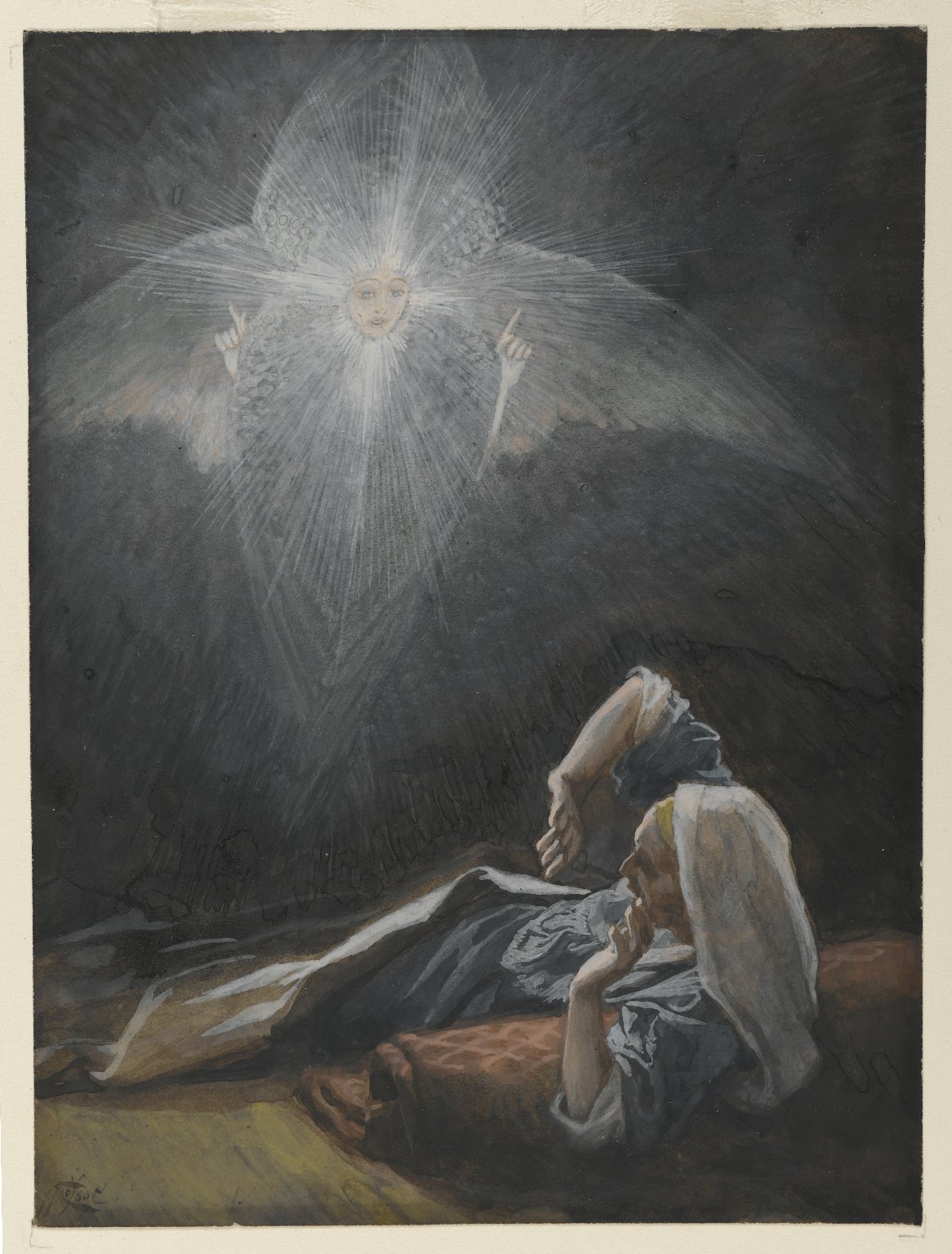
The Vision of St. Joseph (telling him of the coming child, and that he is to receive Mary as his wife / Matthew 1)

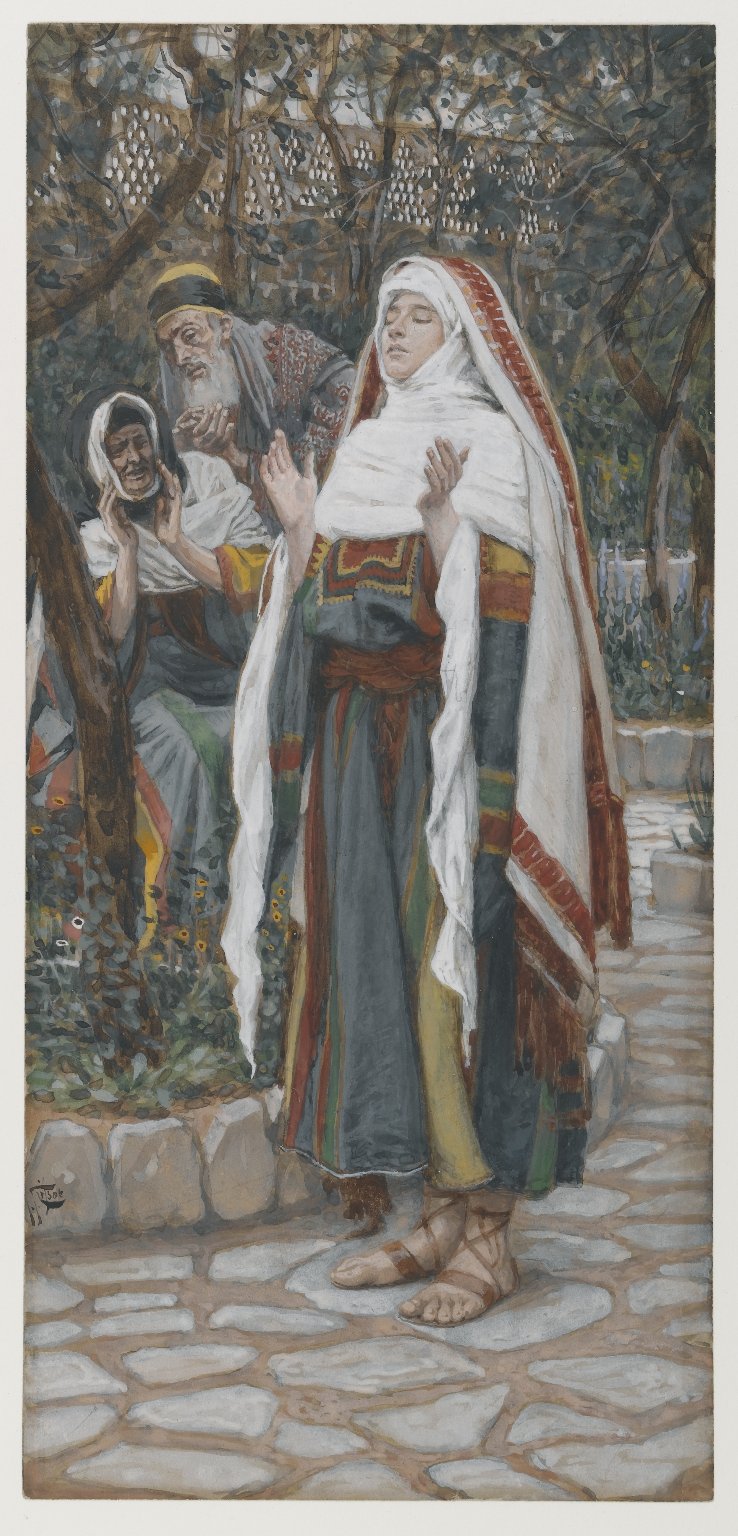
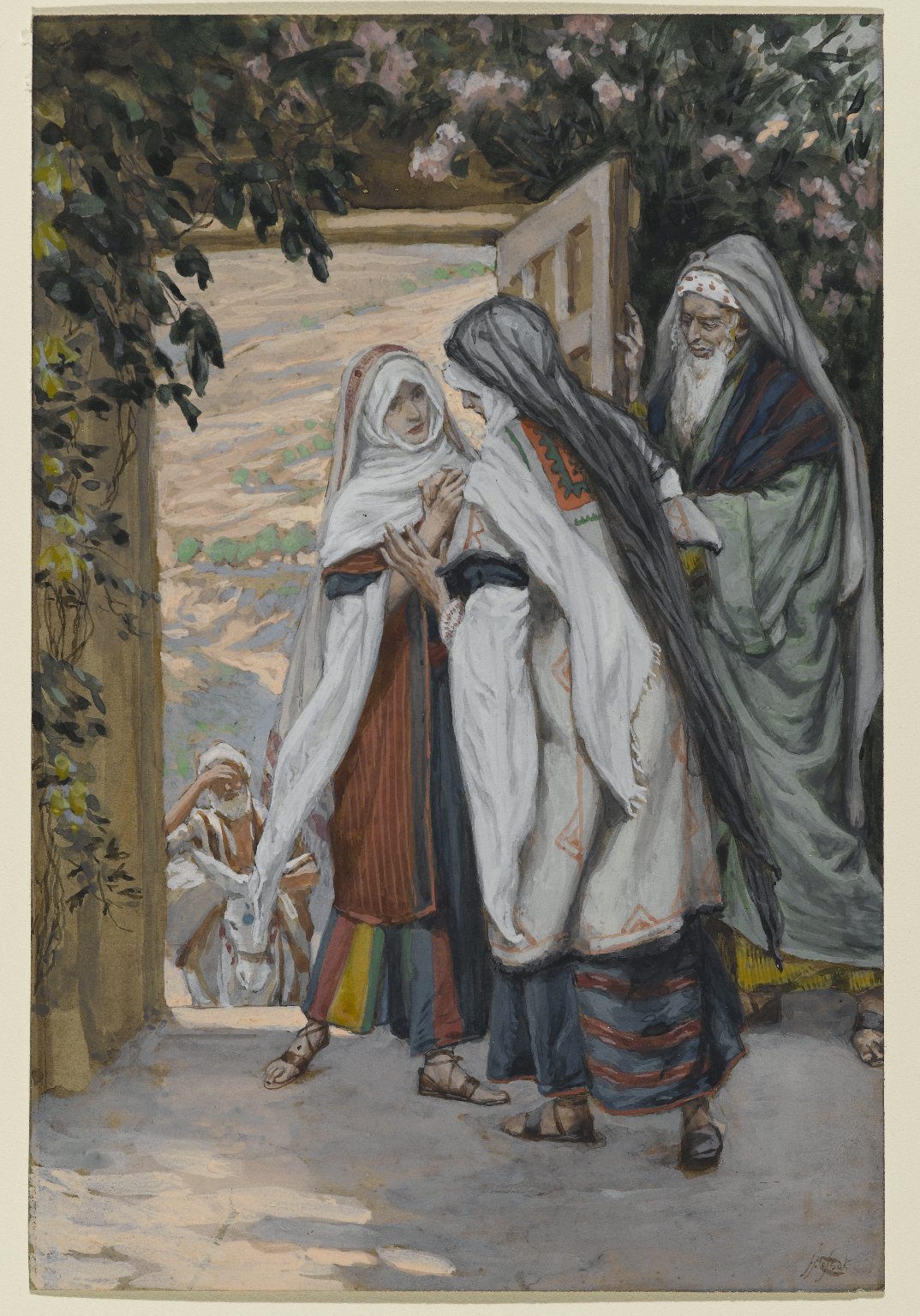
The Visitation (of Mary to her cousin, Elizabeth, the expectant mother of John, who would become the Baptizer / Luke 1)

St. Joseph Seeks Lodging at Bethlehem (Luke 1)

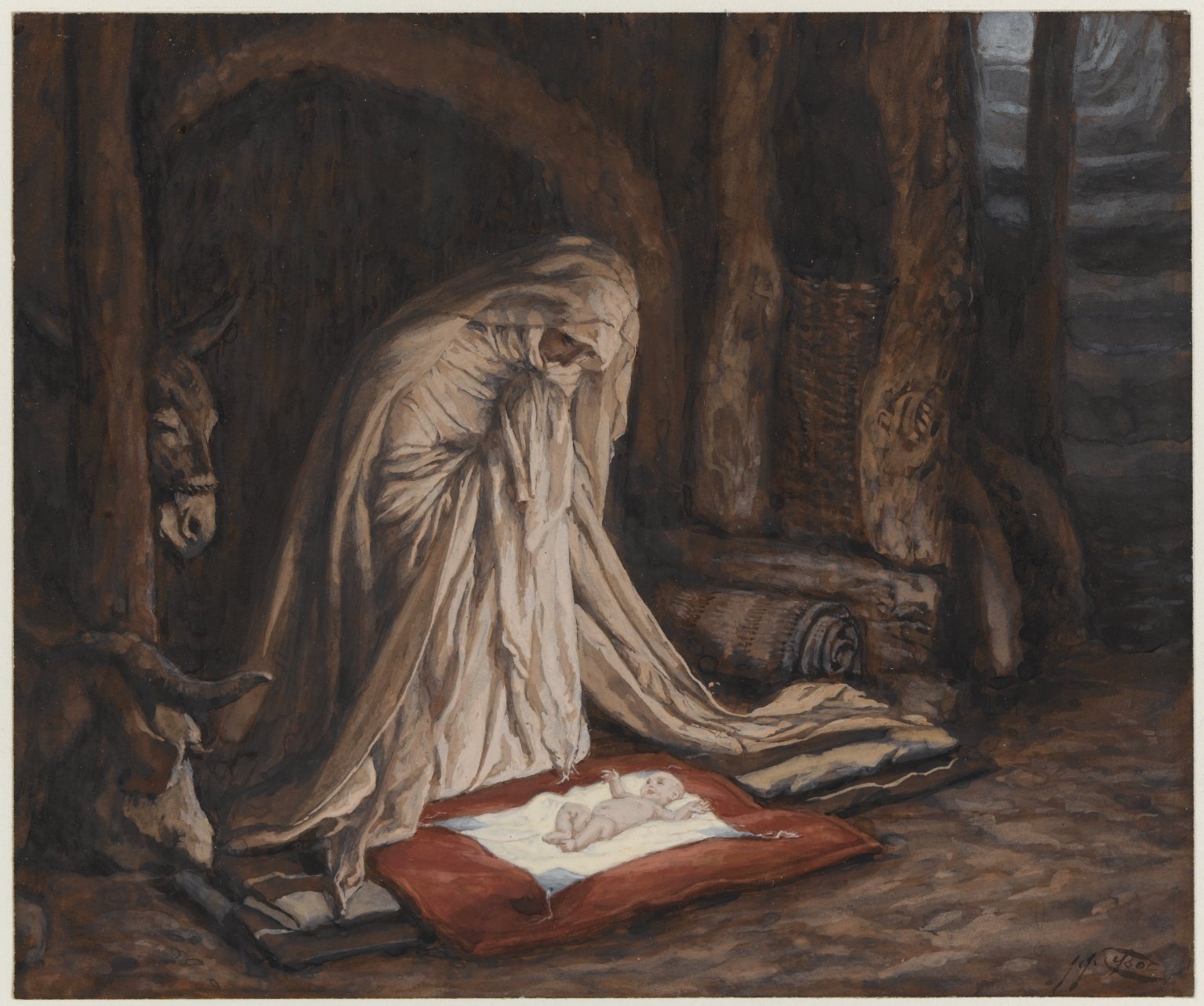
The Birth of Our Lord Jesus Christ (Luke 1)

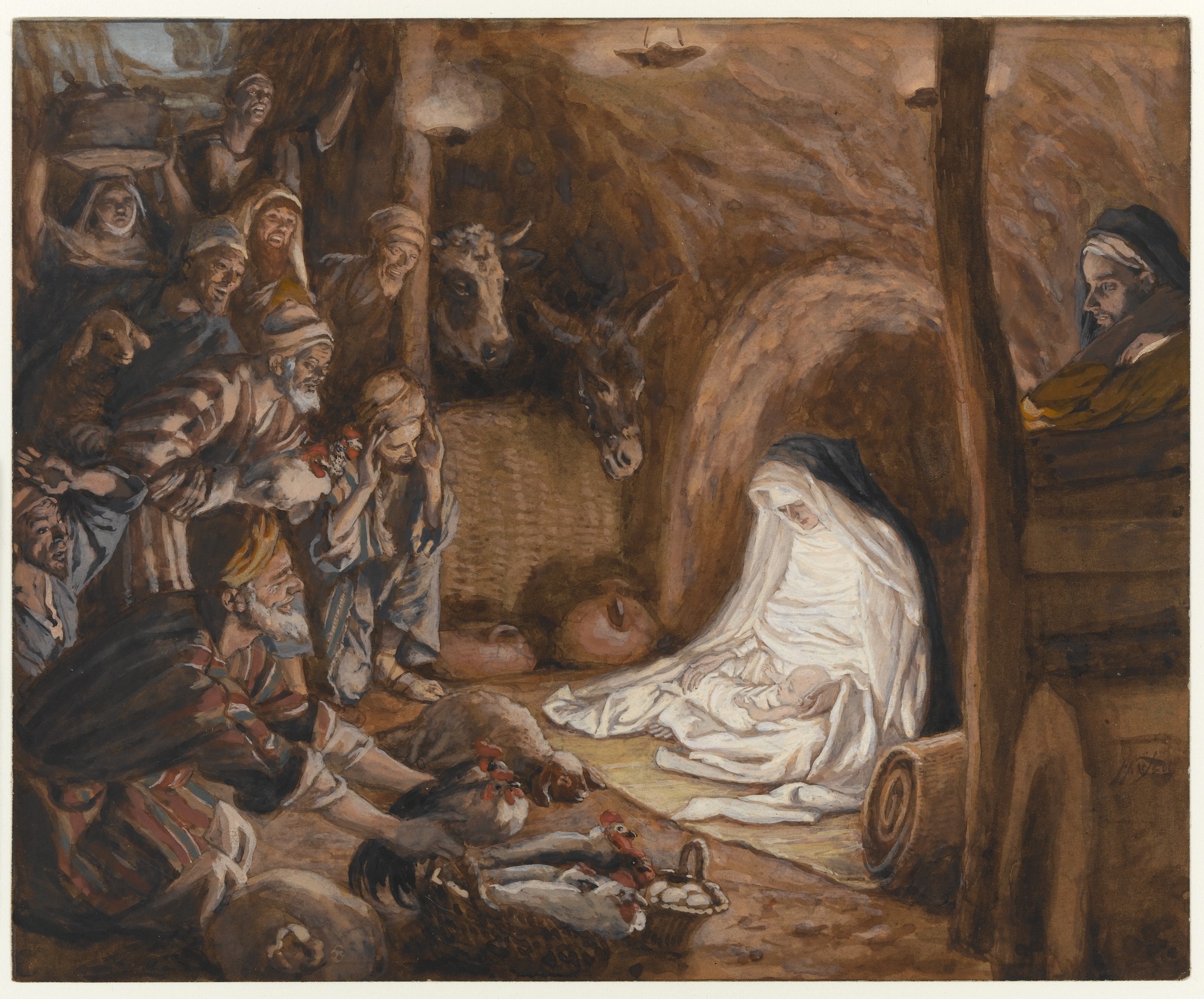
The Adoration of the Shepherds (Luke 2)

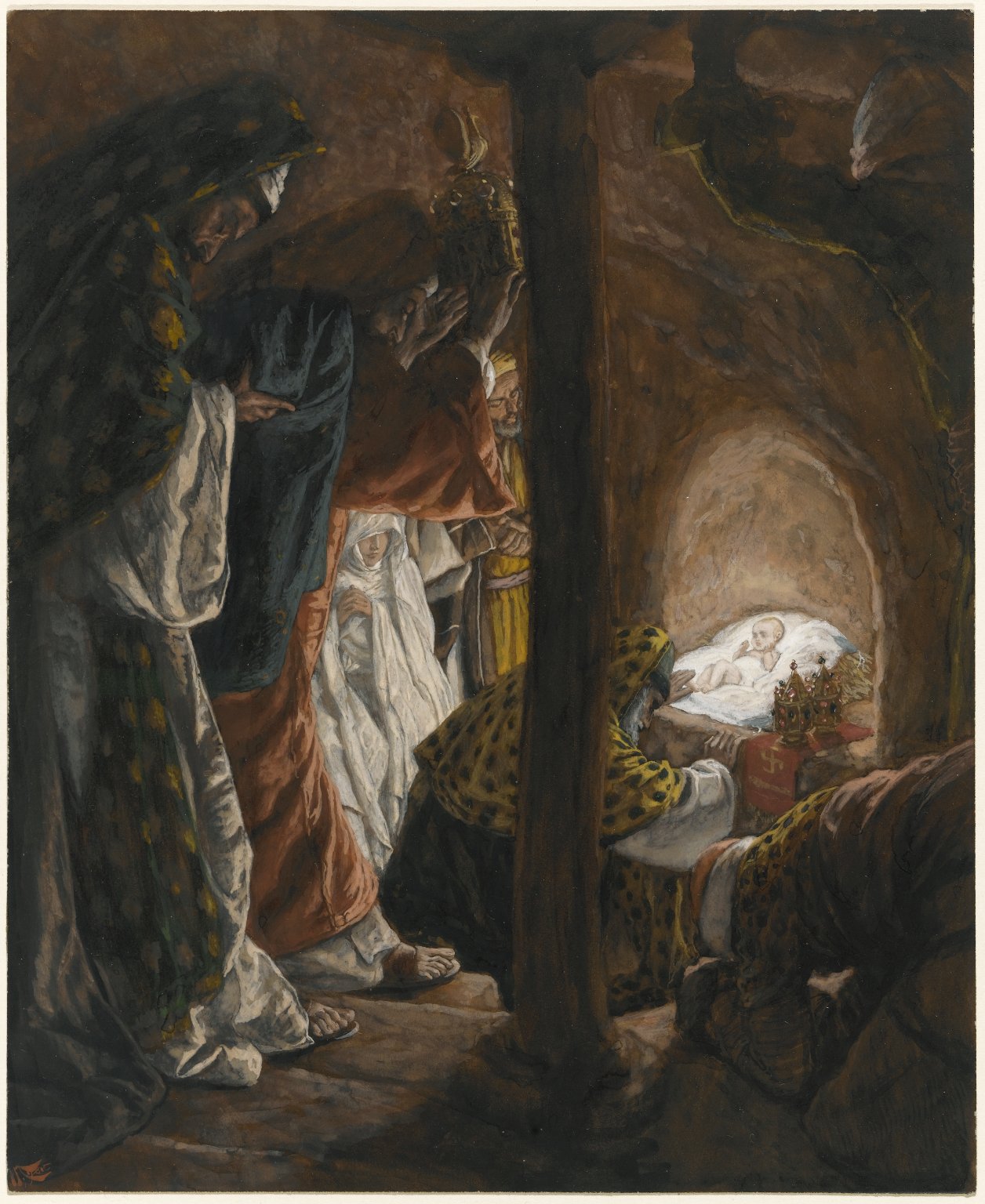
The Adoration of the Magi (Matthew 2)

The Flight Into Egypt (Matthew 2)

The Massacre of the Innocents (Matthew 2)

The Sojourn in Egypt (Matthew 2)

The Presentation in the Temple (Luke 2)

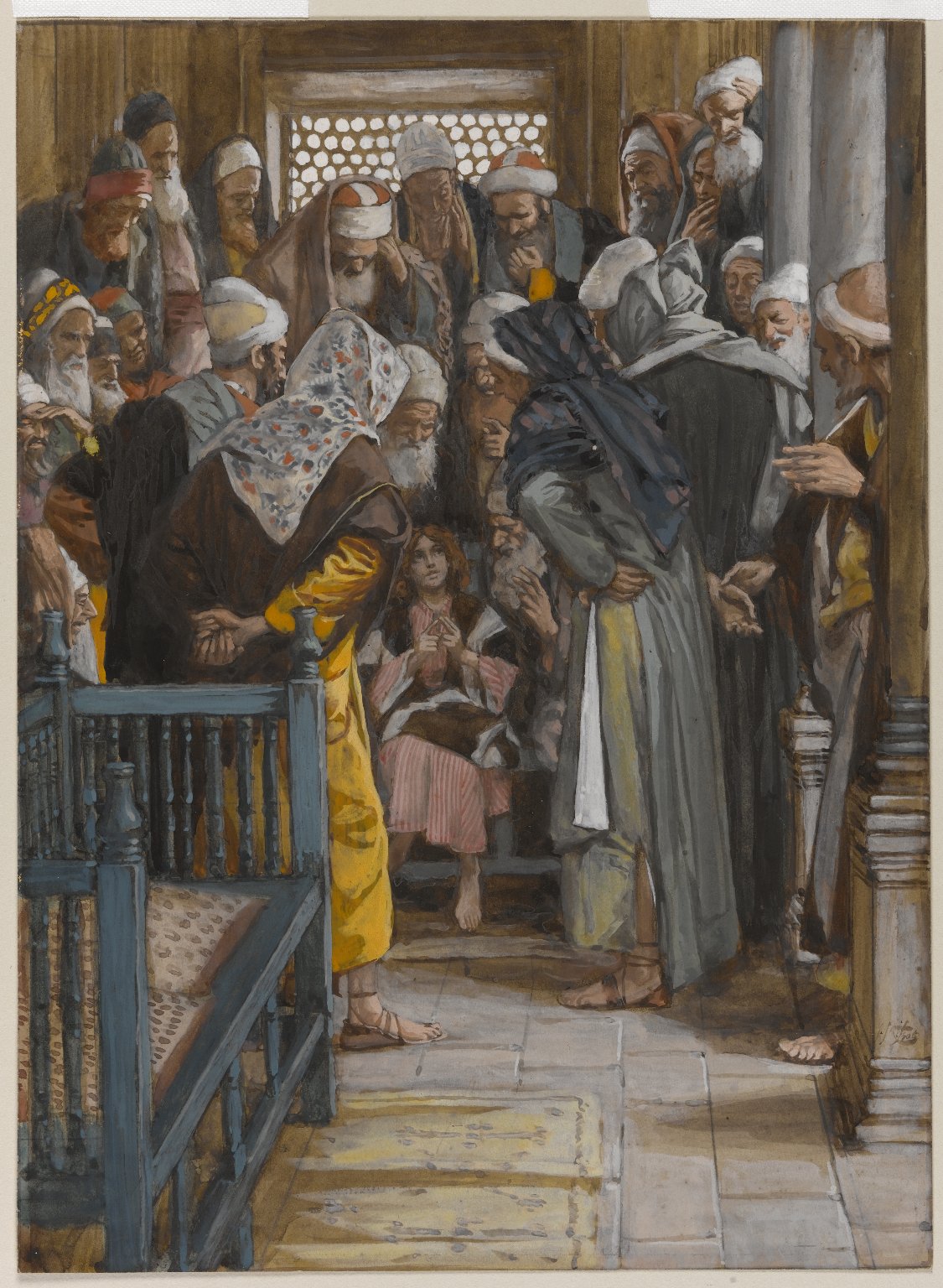
Jesus Among the Doctors (the boy, Jesus, at age 12, visiting the Temple in Jerusalem with his parents / Luke 2)


Note: the titles attached to the images above are those that are provided by the Brooklyn Museum

An Advent Magnificat

If reading this by email, please tap the title at the top to open your browser for the best experience. Then, clicking individual pictures will reveal higher resolution images.

Jim Janknegt, Joyful Mystery 1


Neither the Bible nor history tell us the precise details about the Annunciation to Mary, such as on what day the Angel appeared, or when Jesus was later born. The Angel’s wondrous appearance could have happened on a drab winter’s day. Yet, by virtue of the Angel’s message, it was also like spring. Our Church calendar and holy tradition reckon that the Annunciation was in March. If it was in the spring, the average high temperature in northern Israel would have been in the 60’s. So it could easily have been a season colored by the appearance of emerging flowers and foliage.

Faithful to the pattern of Scripture, Jim Janknegt seeks to portray something beyond literal circumstances. He has more than flowering plants, trees, and shrubs in mind. The decorated edge of the painting is a border of roses, which evoke the mysteries named in the Rosary, of which this scene is only the first. Inside that border are more flowers, and these also play a symbolic role. For we find lilies on Mary’s dress, suggestive of a later-to-be-revealed Easter, and calla lilies in a vase on the table, traditionally associated with the Annunciation to Mary.

Even more dramatically, flowers cover a large part of the angel, which suggest something transcendent and other-worldly. The Angel has come to speak the Word: the Word of Life, which is also a Word of blessing (look at the Angel’s hand-gesture!). Central in the painting, but depicted in a very subtle background way, is a great tree. Surely, it is the Tree of Life, from Genesis and Revelation, the first and last books of the Bible. Surely, the tree also prefigures that toward which everything in this moment is heading ~ the dead wood of the Cross, which paradoxically became a life-giving tree. Yes, it is springtime! But, this is springtime in salvation history.

So this is what we begin to see in Jim Jangknegt’s painting: his portrayal of the Angel’s Annunciation to Mary is not so much about springtime in the world. Instead, it is about springtime for the world.


Jim Janknegt’s painting, featured here, is used by permission of the artist. The text of this post is based on my homily for Sunday, Advent IV, of this year, which may be accessed by clicking here.
Advent Annunciations: Elijah

[If reading this by email, please tap the title at the top to open your browser for the best experience. Then, clicking individual pictures will reveal higher resolution images.

Marc Chagall, Elijah Touched by an Angel


Surely God’s annunciation to Elijah would have come early in his ministry, or before he embarked upon his calling. To our surprise, God’s personal self-revealing to Elijah happens after – rather than before – a series of dramatic events at which Elijah acted powerfully in the Lord’s name.

The presence of the Lord within the prophet’s words and action had already made a powerful impression upon others. After meeting a personal representative sent out by the wicked Ahab to find him, Elijah confronted the king himself. Then followed Elijah’s contest with the prophets of Baal on Mt Carmel, when God mightily came down in fire upon the sacrifice Elijah had prepared.

Marc Chagall, Elijah on Mt. Carmel

It is only after these things, and after Ahab’s wife, Jezebel, threatened to kill Elijah within 24 hours, that he reacts with notable fear and doubt! He flees into the wilderness where he asks the Lord that he might die. Elijah is twice visited by an angel, who bids him to eat and drink what has been provided. Strengthened, Elijah proceeds – apparently on his own initiative – to “Horeb, the mount of God” (called Sinai in Exodus). He travels 40 days and nights to encounter God personally.

Retreating to the safety of a cave, Elijah is confronted by God in a way that prompts him to face his own fears. God says to him, “What are you doing here, Elijah?” The question contains an ambiguity regarding the words doing and here. For why is Elijah not doing what God has already commissioned him to do, which is prophetically to tell the truth in God’s name? And why is Elijah here, in this remote place after a flight of forty days?

James Tissot, Elijah in the Wilderness at Mt Horeb

Elijah answers God, saying, “I have been very jealous for the Lord… For the people of Israel have forsaken your covenant, thrown down your altars, and killed your prophets with the sword, and I, even I only, am left, and they seek my life…” All to which he has devoted himself, all for which he had worked, appears to have been for nought. What would be the point of going any further on his vocational path, or of continuing to live?

God answers his forlorn prophet in a remarkable way. God says to him ,“Go out and stand on the mount before the Lord.”

And behold, the Lord passed by, and a great and strong wind tore the mountains and broke in pieces the rocks before the Lord, but the Lord was not in the wind. And after the wind an earthquake, but the Lord was not in the earthquake. And after the earthquake a fire, but the Lord was not in the fire. And after the fire the sound of a low whisper. And when Elijah heard it, he wrapped his face in his cloak and went out and stood at the entrance of the cave.

Marc Chagall, Elijah’s Vision

God has spoken in a low whisper. Not in the hurricane with which God has just terrified the prophet. Nor in the calamity of a seismic disturbance. And not in a raging wildfire. God has revealed himself to Elijah in stillness and silence. Only then does God send him on to his mission.

To a people whose lives are troubled by extraordinary events and personal crises – us – God often chooses to reveal self in a similar fashion. Unlike Elijah, we have been given assurance that God is not only abidingly with us. As baptized people, God is in us, always. With so much drama around us, why should we expect God to reveal self, and God’s hopes for us, in some dramatic way? But to hear God as God often prefers to speak to us, we may need to find moments and places of quiet amidst all the noise in our lives. Advent helps us prepare to hear the gentle and quiet whisper of God’s voice.

How silently, how silently,
the wondrous gift is giv’n!
So God imparts to human hearts
the blessings of His heav’n.
No ear may hear His coming,
but in this world of sin,
where meek souls will receive Him still,
the dear Christ enters in.


Elijah (later seen as forerunner of the Messiah) and his cycle of stories can be found in 1 Kings 17:1 — 2 Kings 2:12. The episode on Mt. Horeb is found in 1 Kings 19. The hymn, O little town of Bethlehem (verse 3), is by Phillips Brooks.

Note: blog settings have been changed to provide more opportunity to offer comments, using the link below.

Advent Annunciations: Anne, Mother of Mary

[If reading this by email, please tap the title at the top to open your browser for the best experience. Then, clicking individual pictures will reveal higher resolution images.

Giotto, The Annunciation to St. Anne, Scrovegni Chapel, Padua


Without seeing the title of this fresco at the stunningly beautiful Scrovegni Chapel, in Padua, Italy, we might assume that it portrays the angel’s annunciation to the Virgin Mary. The parallels with traditional Annunciation iconography are readily evident. Yet Giotto also executed a series of panels there devoted to the life of St. Anne, Mary’s mother, who is shown in the fresco, above.

As with so many Marian annunciations, the scene is domestic, with Anne here suggested as having been occupied at home with her maid, preparing thread for stitching. Just as familiar paintings of Mary often show her at prayer, Giotto portrays Anne upon her knees with her hands clasped. But unlike familiar Marian parallels we do not see a devotional book open next to Anne. Just as later happens to her daughter, we see this grandmother-to-be of Jesus met by an angelic visitor who discloses an unexpected new role for her. Unlike her daughter Mary’s experience, Anne’s encounter with God’s Word to her is not recorded in canonical Scripture.

Interior of the Scrovegni Chapel

The frescos in the Scrovegni Chapel contain an interesting mix of images, with some portraying events in their presumed original historical context (such as the Nativity scenes), and others (like the annunciation to Anne) in buildings and settings more characteristic of Giotto’s own time and place, including the architecture of the chapel housing them. While he paints them this way, Giotto’s choices regarding imagery suggest that he seeks to be faithful to the supposition that Mary’s family came from an ordinary background. After all, Mary’s parents, named Anne and Joachim according to tradition, later allowed her to marry Joseph, a local builder; she was not betrothed to nobility. The painter, therefore, shows some restraint in his rendering of the context of Anne’s visitation. This simplicity in approach may also be due as much to Giotto’s early place in the historical development of European painting as it does his personal temperament.

In this remarkably large series of Scrovegni frescos, we can see that Giotto has discovered and effectively employs the technical skill of linear perspective. With some care, he depicts the stonework of Anne’s home and that of many other buildings as sculpturally ornamented. But rather than display undue deference to the known wealth and social position of his patron, he allows the particularity of the angel’s visitation to be what sets Anne apart from her contemporaries rather than the finery of her home’s appointments. An emerging humanism in painting is evident in Giotto’s artistic style, and he presents Anne as a distinctly recognizable person rather than as a merely symbolic religious figure. Though she appears to be a woman of some means, she is depicted as someone who could have been the neighbor or relative of many people of his community.

Here is one theme we find in Giotto’s fresco of Anne’s annunciation. All it takes to play a part in God’s unfolding plan of redemption for the world is an open heart and a spirit of willingness to say yes. What part we are to play, and its significance to and for others is, in the end, up to God – and probably not something to which we should give much thought. At least not in the way that we hope or imagine our personal skills and accomplishments might be thought of by others. Saving the whole world, even small parts of it, is God’s work and not our own.

And so, the key is what God might decide to do in and through us (while inviting our help), rather than what we might decide to do for God (while perhaps asking for divine help).

The mystery of this season of Advent centers upon how we are drawn into what God ‘has been up to’ for a very long time. In a season of growing astronomical darkness we are invited to seek the most significant source of light, the light of Christ. And at a time when the world around us seems more colored by signs of decay and dissolution, He in whom all things hold together comes anew to embrace us, and ever hold us fast. It may not be through an angel, but surely the One born among us calls all of us to share His love for the world.


Advent Annunciations: Joseph

[If reading this by email, please tap the title at the top to open your browser for the best experience. Then, clicking individual pictures will reveal higher resolution images.

James Tissot, The Anxiety of Saint Joseph


I often turn to Annunciation scenes during Advent. This may seem curious since we celebrate the Feast of the Annunciation on March 25, nine months before Christmas Day. Yet, the season of Advent marks the beginning of a new church year, which may signal a time for other new beginnings.

The Annunciation to Mary was of course unique. Yet, it is also symbolic of God’s self-disclosure and God’s loving communication of hopes and wishes to every one of us. God becomes present to us, and in us, so that we might begin a new life, and begin it again. “Always, we begin again” is a saying oft-attributed to St. Benedict. It can become true for every mindful believer.

For obvious reasons, the Annunciation to Mary has received an overwhelming amount of attention in the history of art. Less frequently explored for its artistic potential is God’s self-disclosure through an Angel to Joseph, in a dream, even though it is with this Joseph story that Matthew launches his extended narrative. Mary gave birth to Jesus, whereas Joseph is remembered for having had a less prominent role in the circumstances of our Lord’s arrival. Joseph then largely disappears from the Gospel narrative. Perhaps because God’s revelation came to him in a dream while asleep as compared with Mary’s conscious, apparently daytime reception of the angelic visitation, Joseph’s receipt of an annunciation has been easier to overlook.

Yet, Joseph must have played a more-than-passing role in the coming of the Messiah. He did this by his willing marriage to Mary, and by initially providing a safe deliverance for his family from the wicked Herod, to and from Egypt. Undoubtedly, he gave Jesus significant mentoring, though Scripture leaves any details about that for us to imagine. Communities certainly have a part in the formation and education of children and youth, often in unrecognized and unrewarded ways. But why do we so easily overlook what was surely Joseph’s pivotal role in helping the young Jesus learn so much about Scripture, and in acquainting the youth with the material for so many of his later parables?

If these things may be inferred from the Gospels regarding Joseph’s significant role in the circumstances of the birth and early life of Jesus, we should reflect on what may have accompanied Joseph’s readiness to act upon the angel’s annunciation to him. As he positively responded to the angel’s words, he is likely to have considered what heeding those words might entail.

James Tissot’s painting, titled The Anxiety of Joseph, suggests that Joseph’s acceptance of his calling may have involved thoughtful deliberation. Indeed, Joseph may have sincerely weighed in his mind the degree of hazard that might arise from acting in accord with God’s revealed will, especially when such action might defy religious and social convention. That he, like Mary, in effect said yes to his angelic instructions, and followed through affirmatively, does not necessarily mean he did so without hesitation.

Most of us are called by God to accept unheralded and easy-to-overlook roles in God’s still unfolding plan of redemption for the world. Inspiration regarding our calling might even come to us in a dream, making us more prone to discount its potential significance, or too quickly assess its likely merit and value in a misguided and worldly way. After all, who are we to think that we could have an impact upon the world in relation to God’s sovereign purposes?

It is often said that Mary is the ‘mother’ of the Church. Perhaps Joseph, in a similar way, can be said to be the ‘father’ of all believers, especially those like you and me.


The Beauty of John’s Revelation

[If reading this by email, please tap the title at the top to open your browser for the best experience. Then, clicking individual pictures will reveal higher resolution images.

Christ Pantocrator ceiling mosaic from the Hagia Sophia, Istanbul


Advent beckons! Or does it? Isn’t something profoundly new lying just around the corner? Or shall we simply drift into another season of the old and familiar that might or might not live up to our expectations?

This calendar year, with a full week between Thanksgiving weekend and Advent Sunday, we have an ample opportunity to ponder questions like these. If such have recently occurred to you – or seem relevant now – I have a suggestion. It is prompted by a question recently put to me. What book or devotional might I recommend for Advent? My suggestion for Advent reading is John’s Revelation! It is the last book of the Bible, but arguably the first book for a new era, as we begin a new church year. And Revelation makes for unexpectedly good reading during these days of increasing darkness, at least as daylight hours are typically reckoned.

The best way that I know for begining to appreciate John’s Revelation, and read it for personal enrichment, is to engage it guided by Eugene Peterson, translator of The Message version of the Bible. Peterson helps us by making the texts of Scripture accessible and familiar-sounding. He is especially helpful in steering us around or away from what is ironically a rather modern and limited way of reading the biblical text. With him, we can avoid a literalism overlaid by misguided assumptions regarding prophecy and history. For Revelation does not contain a code to be deciphered but a message of love to be received, however strange John’s language and imagery may strike us at first.

John’s Revelation is metaphorical poetry that speaks truth, rather than something like a roadmap conveying predicted facts about what lies ahead. And so, it is not about how or when ‘the End’ will come, as if John’s book was and is about the terminus or stopping point of history and of all that we know. Instead, and in a rather more profound way, we might with John begin to see something new: how the end or point of fulfillment for all of history and of God’s purposes have in some sense already arrived!

In these weeks of shortened daylight hours and increasing chill, the prospect of reading Revelation may seem antithetical to a hopeful anticipation of Christmas. Cheerful music, warm lighting on dark and cold evenings, and holiday treats on the table, are all attractive and good things for us to enjoy at this time of the year.

But if we have any sense that there is something wrong with the present state of our world, whether with things near or far away, ignoring or being in denial about such are not our only alternatives when it comes to how we might approach each new day. A new phase in salvation history has dawned, and does not simply lie ahead in an undefinable future that is beyond our grasp. Yet begining to see this new phase in God’s ongoing work of Redemption may take the work of imagination, a praying imagination as Peterson puts it, in order to see the real beauty that now surrounds us, and which can be found within.

The beauty of the face of ‘the coming One’ is already here to be seen. We don’t have to travel back in history to a stable in Bethlehem, nor do we need to try and peer ahead to some kind of future cosmic crisis to see his arrival. For he is here with everyone. And he can be seen in the faces of those who through their Baptism bear the intimacy of his beautiful presence.


Eugene Peterson’s book on John’s Revelation, Reversed Thunder: The Revelation of John & the Praying Imagination, is in print and available from book sellers. I am pleased that Amazon has announced the future release of a Kindle (ebook) as well as an audio version from Audible.


The Beauty of Now


Rembrandt’s paintings are so often moving, and speak well of the Dutch genius who created them. When many of his contemporaries sought to portray people and events with greater realism, even if with much feeling, Rembrandt often put the ‘feeling’ side of his work first.

Rembrandt shows his sensitivity to an aspect of the anticipated birth of John the Baptizer. John’s parents were old and despaired about ever having a son who might carry on their name. The artist depicts the aged priest, Zachariah, leaning on a young attendant upon hearing that Mary has arrived. He portrays Elizabeth as also showing her years as she greets her relative with warm regard. Though Mary bears within her womb the holy child of God, she appears humbled in the presence of Elizabeth, perhaps awed at how the grace of God could touch both of their lives in such an unexpected way. Light shines on the two of them, just as it should, given the way that Luke highlights this holy aspect of their shared story. Thankfulness and quiet joy suffuse the scene like the warm light at its center.

Waiting and anticipation are themes we associate with the beautiful season of Advent. In one sense, these two words suggest we already know what we are anticipating, for what we are awaiting. By contrast, Luke’s story about the Visitation suggests a variation on those themes. “Expect the un-expected,” it seems to say, to us who live a multitude of centuries later. And this is especially hard for us to do, in a culture that is so dependent upon the precise measurement of time, and upon the predictability of events in the natural order of things.

Let’s notice this about Elizabeth and Mary, and about John the Baptist who is not yet born. Luke portrays them as living in the moment, as living in God’s time rather than simply in human calendar time. When Elizabeth hears Mary’s voice, John leaps in her womb. Luke then says that Elizabeth is filled with the Holy Spirit, and she exclaims with a loud cry, “Blessed are you among women, Mary, and blessed is the fruit of your womb.” Neither John nor Jesus are yet born, and so neither mother has yet received the assurance and peace that will come from seeing them safely delivered. And yet, in this moment, both women are filled with joy ~ joy about the fulfillment of God’s promises!

Elizabeth’s son, John, and Mary’s son, Jesus, would never be closer to the two women. And, in Luke’s telling, their quiet joy reflects their awareness of this, that now, in this moment, God is truly present, imparting grace and fulfilling promises. The same is true for us.


Rembrandt van Rijn: The Visitation (1640), Detroit Institute of Arts {many images online}

See Luke 1:41-42: “When Elizabeth heard Mary’s greeting, the child leapt in her womb. And Elizabeth was filled with the Holy Spirit and exclaimed with a loud cry, ‘Blessed are you among women, and blessed is the fruit of your womb.” Context: Luke 1:39-56. This Gospel reading is appointed for the 4th Sunday in Advent, Year C, which features the Visitation of Mary to her relative, Elizabeth.