James Tissot

An Offering for Sunday, March 15, Fourth Sunday in Lent A

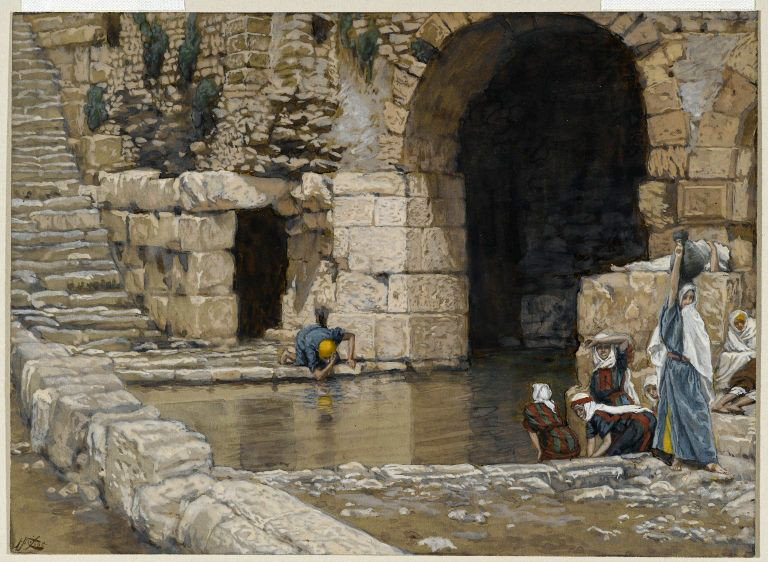
James Tissot, The Blind Man Washes in the Pool of Siloam

Prior homilies or sermons of mine are occasionally downloaded by readers. Noticing this, I anticipate that some of those preparing to preach (or offer a reading) on an upcoming Sunday might benefit from the perspective I have taken regarding the Lectionary readings for a particular day. I am therefore offering (when I can) a prior text that I have used for the occasion. I will try to do this on Sunday evenings or Mondays believing that there might interest in these texts being made available. When I have one prepared, I will also offer an accompanying handout (in pdf format) in case these may also be helpful.

For this coming Sunday, the Fourth Sunday in Lent in Lectionary year A, I offer the following.

The link for it is here. The link to the handout may be found further below.

Here is the link to the handout.

An Offering for Sunday, March 8, Third Sunday in Lent A

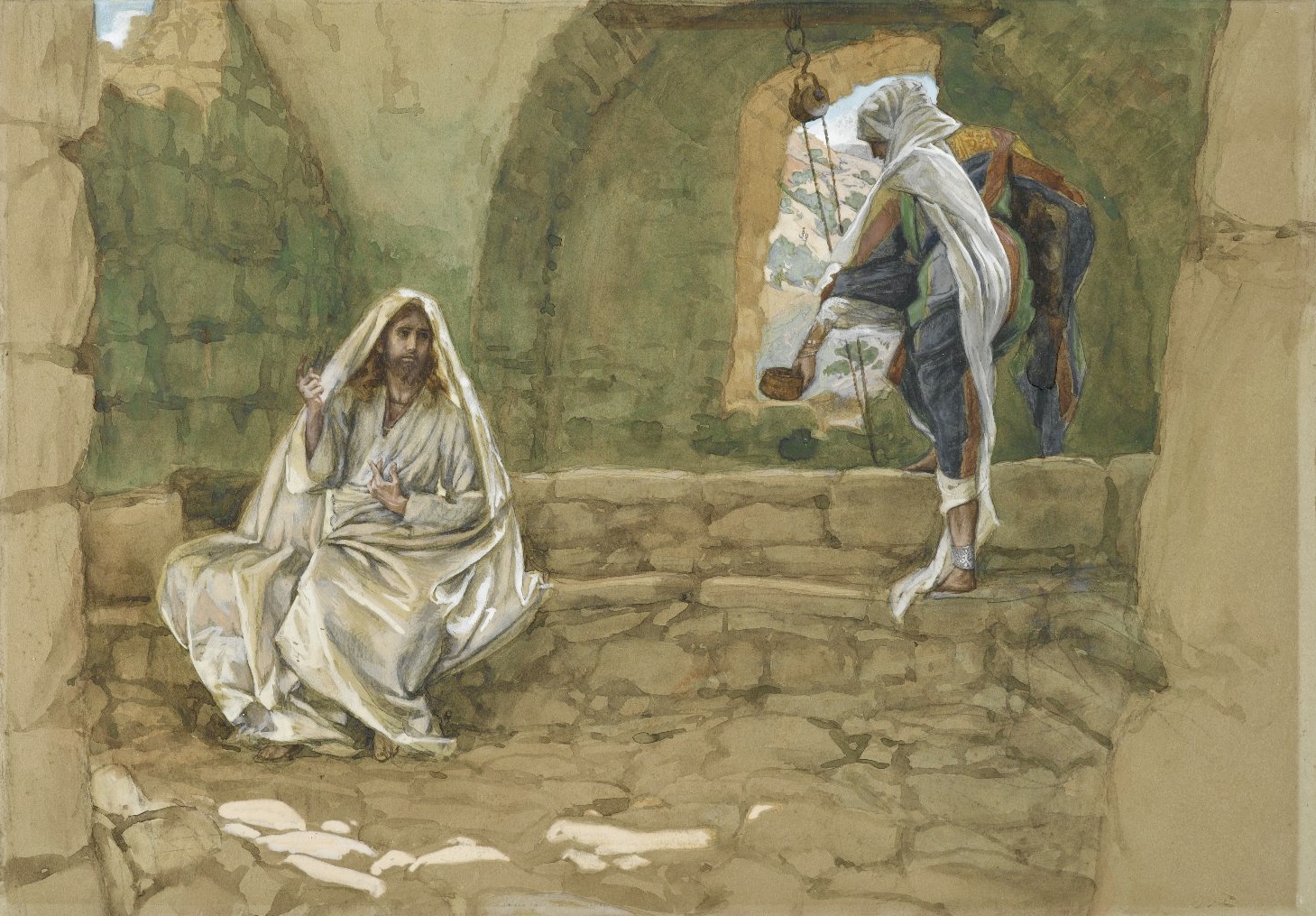
James Tissot, The Woman of Samaria at the Well

Prior homilies or sermons of mine are occasionally downloaded by readers. Noticing this, I anticipate that some of those preparing to preach (or offer a reading) on an upcoming Sunday might benefit from the perspective I have taken regarding the Lectionary readings for a particular day. I am therefore offering (when I can) a prior text that I have used for the occasion. I will try to do this on Sunday evenings or Mondays believing that there might interest in these texts being made available. When I have one prepared, I will also offer an accompanying handout (in pdf format) in case these may also be helpful.

For this coming Sunday, the Third Sunday in Lent in Lectionary year A, I offer the following.

The link for it is here. The link to the handout may be found further below.

Here is the link to the handout.

An Offering for Sunday, March 1, Second Sunday in Lent A

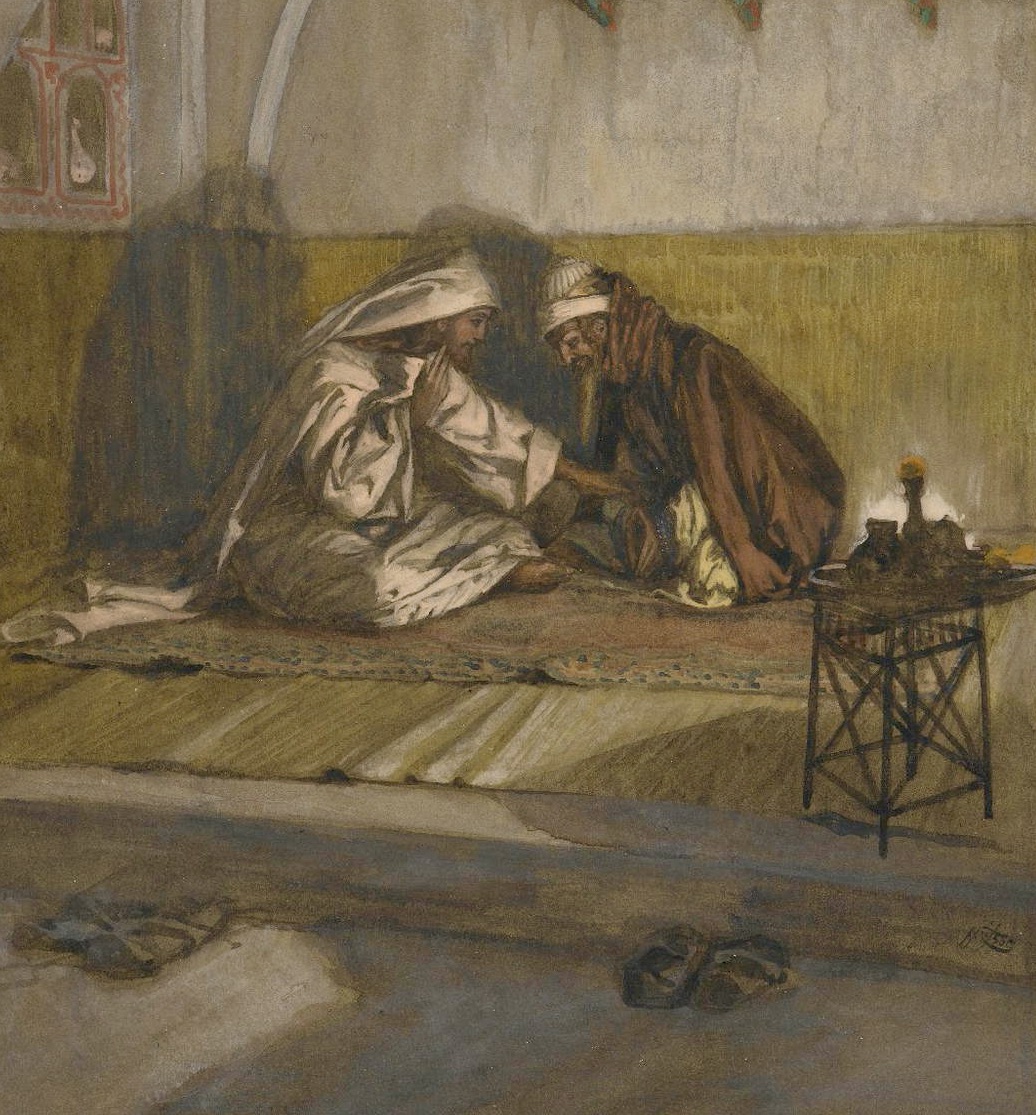
James Tissot, Interview Between Jesus and Nicodemus

Prior homilies or sermons of mine are occasionally downloaded by readers. Noticing this, I anticipate that some of those preparing to preach (or offer a reading) on an upcoming Sunday might benefit from the perspective I have taken regarding the Lectionary readings for a particular day. I am therefore offering (when I can) a prior text that I have used for the occasion. I will try to do this on Sunday evenings or Mondays believing that there might interest in these texts being made available. When I have one prepared, I will also offer an accompanying handout (in pdf format) in case these may also be helpful.

For this coming Sunday, the Second Sunday in Lent in Lectionary year A, I offer the following.

The link for it is here. The link to the handout may be found further below.

Here is the link to the handout.

An Offering for Sunday, February 22, First Sunday in Lent A

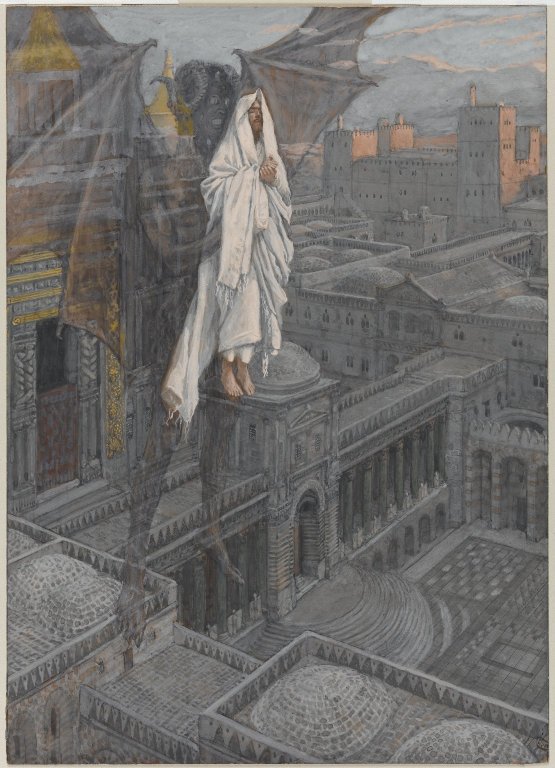
James Tissot, The Second Temptation

A second homily this week, because of Ash Wednesday, in case it may be of interest.

Prior homilies or sermons of mine are occasionally downloaded by readers. Noticing this, I anticipate that some of those preparing to preach (or offer a reading) on an upcoming Sunday might benefit from the perspective I have taken regarding the Lectionary readings for a particular day. I am therefore offering (when I can) a prior text that I have used for the occasion. I will try to do this on Sunday evenings or Mondays believing that there might interest in these texts being made available. When I have one prepared, I will also offer an accompanying handout (in pdf format) in case these may also be helpful.

For this coming Sunday, the First Sunday in Lent in Lectionary year A, I offer the following.

The link for it is here. The link to the handout may be found further below.

Here is the link to the handout.

Our Prayers and God’s Blessing

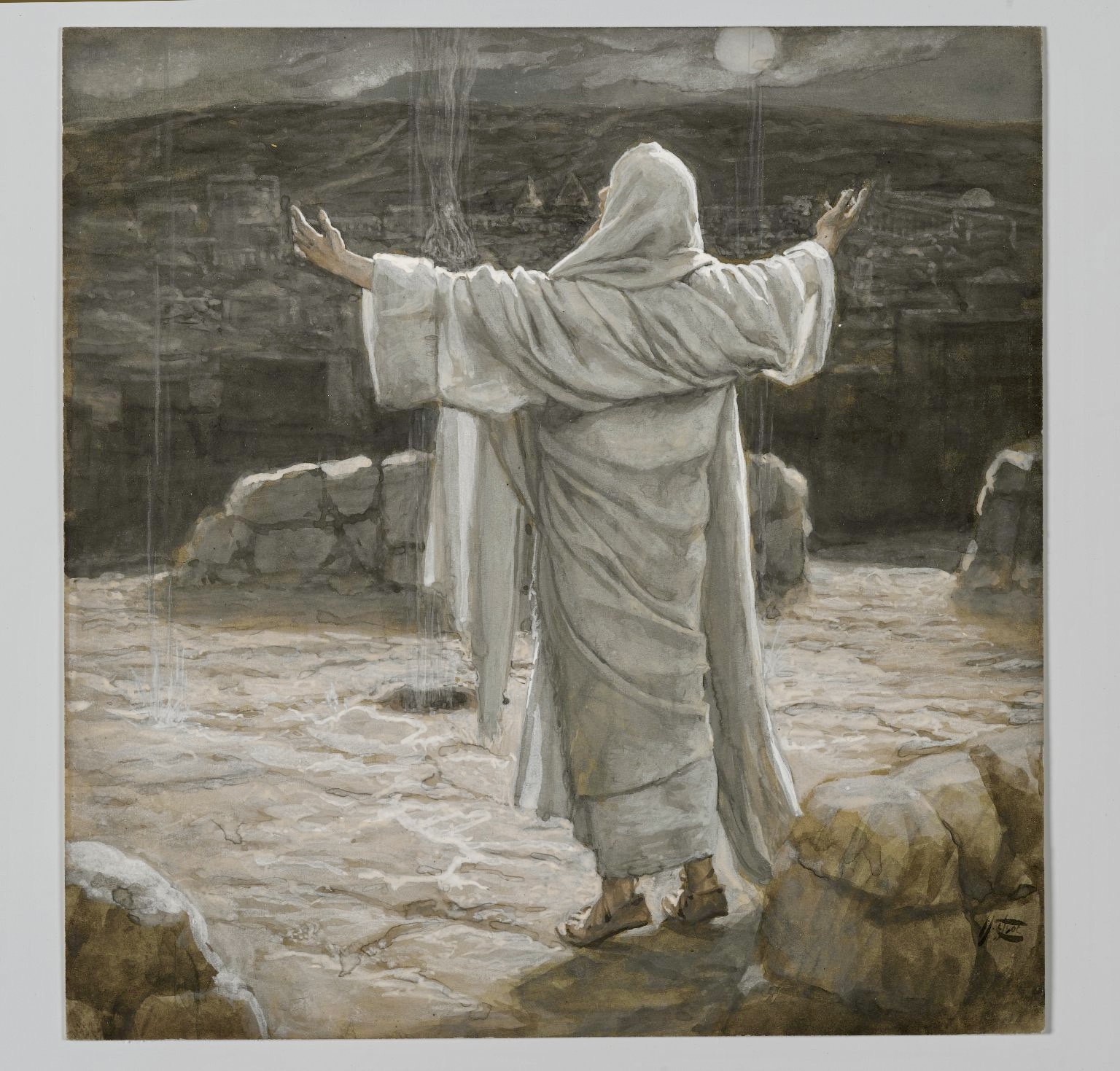
Christ Retreats to the Mountain to Pray, by James Tissot

I have become fond of quoting a particular question and response found in the Catechism included in our Book of Common Prayer. The question is straightforward: “What is prayer?” The first part of the extended answer to this question is also put plainly, and it is instructive. “Prayer is responding to God.”

Consider the significance of those words. If we gained our concept of prayer during childhood, we probably still think about this activity in the same terms – terms which are rather different from the way that the Prayer Book Catechism sets forward its definition. For it seems almost universal that we associate our concept of prayer with ’petition.’ Petition is the formal name for prayers that ask, in which we make our personal requests to God. ‘Intercession’ is what we call the prayers that we offer for other persons and their needs. The frequency with which we might engage in these two forms of prayer may help explain why we are so accustomed to seeking what we call “answers to prayer.” If answers to prayers are sought, it suggests that prayers are posed to God by us unidirectionally, as questions and or as requests.

Yet, our Catechism begins its teaching about prayer by characterizing this activity as one in which we respond to God, rather than one in which we envision God responding to us and to our concerns!

St. James the Less (at prayer), by James Tissot

Putting the matter very simply, the Prayer Book presents prayer as something that is God-centered, God-initiated, and as God-enabled. Such a notion of prayer is fully biblical and properly theological. Yet, we like to be ‘in the driver’s seat.’ Habitually, we think of prayer as something we initiate, and for which we supply the purpose and direction. But if prayer is to be centered upon communion with God, then it ought also to be the other way around, so as to follow the words of Jesus. For he taught us to address “our Father in heaven” by saying “thy will be done.” When we follow his teaching, instead of so often asking God to please do what we want, we are more willing to let God be quietly present and foremost in our consciousness.

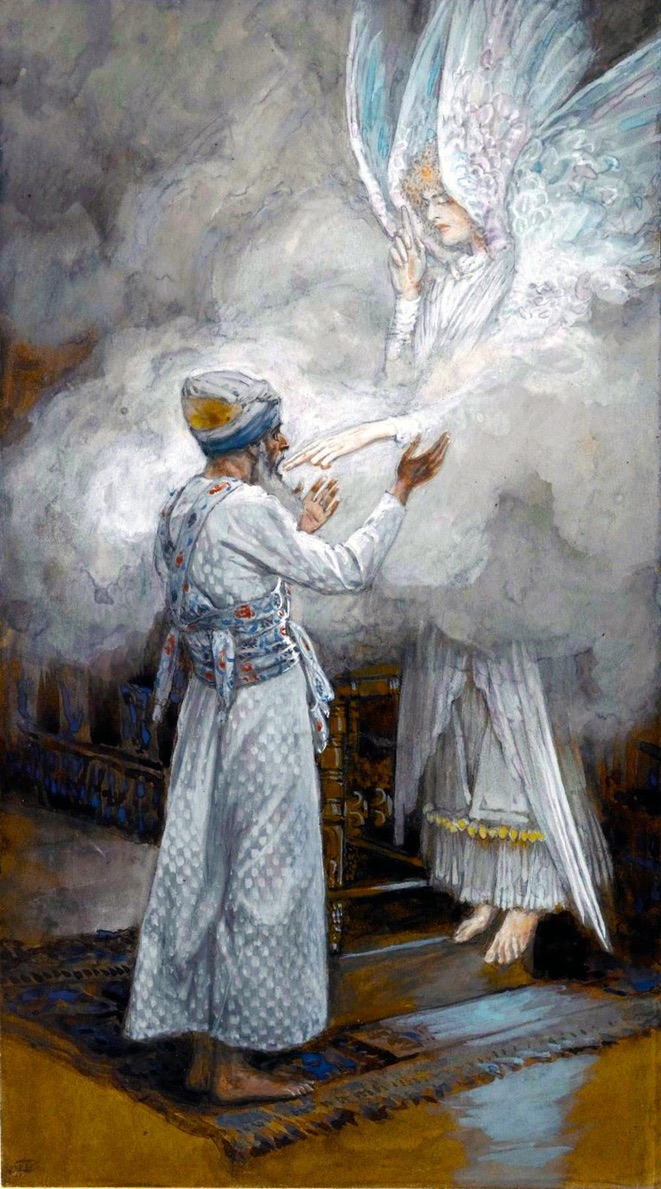
The Vision of Zechariah (while at prayer in the Temple), by James Tissot

In a similar way, I think we habitually also misperceive the nature of divine blessing. Two examples of blessing that admittedly are not everyday occurrences, but which sometimes receive mention in discussions about blessing, can help make the point. These examples are provided by occasions when our chaplains are asked to offer prayers for, and pronounce blessings at, the launching of military ships and submarines, or to offer similar words over the participants and their hounds at fox hunts. Such prayers should not be seen as providing sanction for or as necessarily implying divine approval of whatever we ask on such occasions. Blessings in such contexts can instead be understood as words that we offer so that what is prayed for might be in accord with God’s will, rather than as words offered in support of purposes that we prefer and will into effect. Therefore, prayers offered for persons seeking public office, or who serve in that capacity, would best be shaped according to this understanding.

In view of these observations, blessing as a spiritual activity can be defined in the following way. For those who desire a blessing in the context of the church, a bishop or priest might say words of this kind: “May God’s will be furthered in your life, to the end that our Lord’s revealed and known purposes may be brought to their fulfillment in you, and for you.”

Here, the parallel we can discern between engaging in prayer, and offering blessings, provides insight. If prayer begins with responding to God, rather than with inviting God to respond to us, then surely words of blessing pronounced by our clergy are equally contingent upon the revealed direction of God’s purposes rather than those of our own. Therefore, we should always seek to offer prayers and blessings that are in accord with God’s known will, with the aim that our wills and desires might be in harmony with those of our Lord. Prayers and blessings are most genuine when we are most open to letting God be God.

James Tissot, Christ Goes Up Alone onto a Mountain (detail)

Entry Into Jerusalem

[If reading this by email, please tap the title at the top to open your browser for the best experience.]

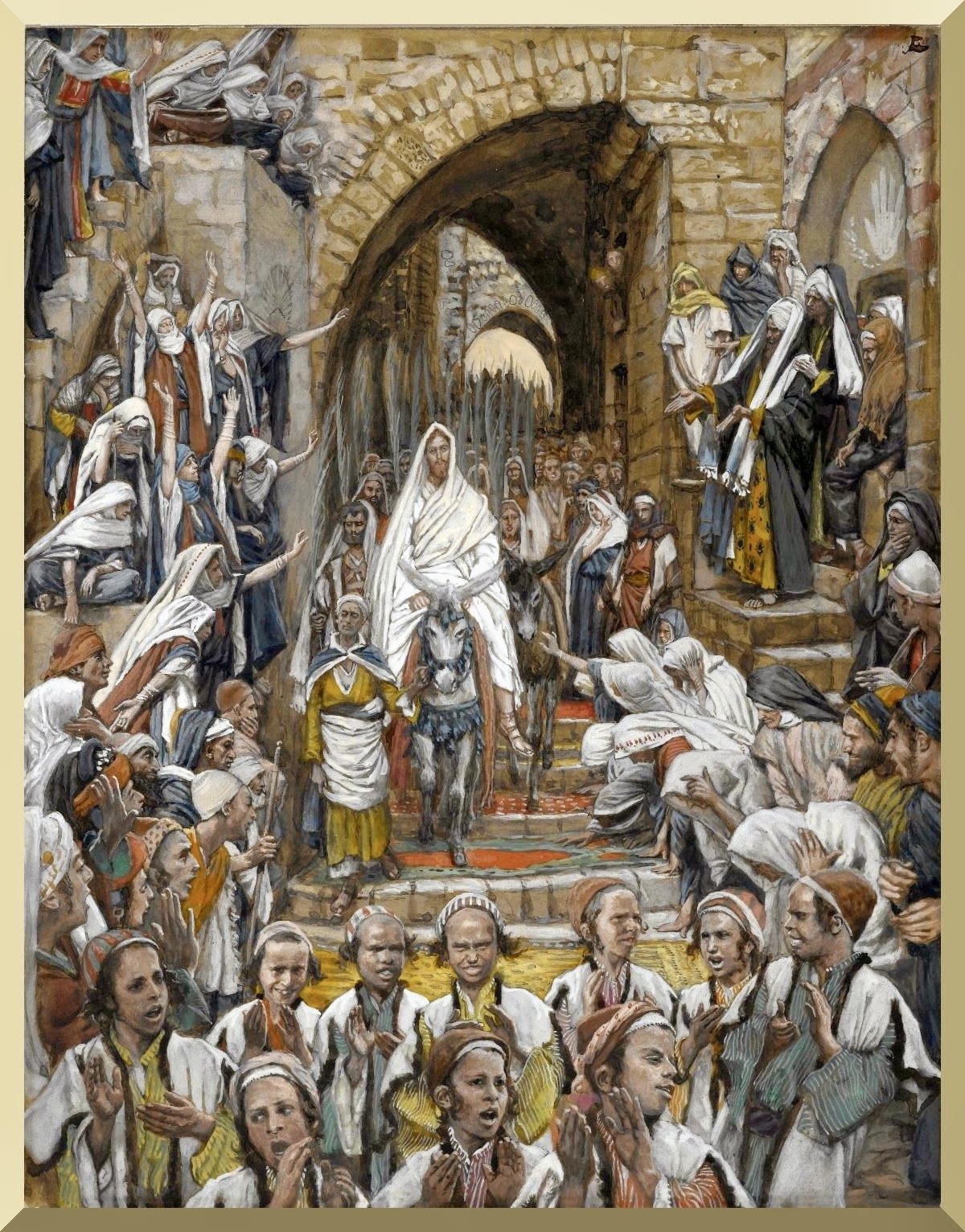
James Tissot, The Procession in the Streets of Jerusalem


This coming Sunday will be Palm Sunday in the Church’s western calendar, when we commemorate Jesus’ triumphal entry into Jerusalem. The day will also mark the beginning of our observance of Holy Week and the Passion of our Lord.

In James Tissot’s painting (above), look at the crowd of excited people he portrays, who await and greet Jesus’ entry into the Holy City. Two things are obvious about the arrival of this rabbi from the north in Jerusalem. We notice the huge and enthusiastic crowd. And, we notice the object of their attention, Jesus, who is riding on a donkey. At first, we naturally assume an affinity between the crowd and Jesus. The crowd is joyful about Jesus precisely because he is the answer to their questions, and the apparent solution to their concerns. Who he is seems to fit neatly with who they are, and with where they want to go. After all, who wouldn’t be happy when long-nurtured hopes and expectations are about to be fulfilled.

As Matthew describes the scene, the crowd responds to Jesus’ arrival in two ways, both of which evoke historic precedent. We learn from 2 Kings about the followers of Jehu. When they learn he has been anointed king, they spread their cloaks for him to walk on. And in 2 Maccabees, we learn how Judas Maccabaeus was greeted upon arriving in Jerusalem, after defeating Israel’s enemies. The people honored him by waving palm branches in the air. To clinch the point, Matthew want us to know that when Jesus arrived in Jerusalem, the crowd’s dramatic response was a fulfillment of God’s word through the prophets: “”Tell the daughter of Zion, look, your king is coming to you, humble, and mounted on a donkey, and on a colt, the foal of a donkey.”

In other words, as Matthew describes Jesus’ arrival in the city, the crowd’s greeting of him suggested a similar hope, that he might vanquish the repressive powers causing God’s people to suffer. This Nazarene might be the one to make God’s Kingdom present in their time. These observations can help us appreciate how Jesus was greeted when he entered Jerusalem, and how he was viewed soon after. For, like so many leaders in history, he was the object of an immense amount of hopeful projection. And yet, he did not arrive as a warrior on a horse.

Look again at this crowd in Tissot’s wonderful painting of Jesus’ arrival. How many in this crowd are looking directly at him? And of those, how many actually see him, and for who he is rather than for what he represents among their pre-existing desires? Look at how many in the crowd are carried away by the moment. They are excited by imagined possibilities, rather than by the Kingdom concretely at hand. This situation is not merely of historical interest, nor is it primarily about other people, living at another time. Jesus’ arrival in Jerusalem is also about us. His arrival invites us to consider our own hopes and expectations as we greet Him with palms and walk along beside him this Holy Week.


This image is from James Tissot’s painting, The Entry Into the City. I am indebted to N.T. Wright for the specific references to earlier biblical precedents regarding the way Jesus was greeted upon his arrival in Jerusalem.

Personal and Family Devotions for Easter 5, Sunday May 10

James Tissot, The Last Supper

For this Fifth Sunday (during the Great 50 Days) of Easter, I am happy once again to share with you a format for personal and family devotions.

I invite you to read these readings, and pray these prayers tomorrow. The format is especially suitable for sharing with others. I am sure that many of you are already staying in touch with family, friends and loved ones, with the help of an app like Zoom for web-based internet group meetings. Feel free to share the link to the devotions with others

The painting above and in the Devotions document is by James Tissot. The image corresponds to the context of the reading from John’s Gospel for this day.

You can access the Personal and Family Devotions document that I have prepared for tomorrow, Sunday, May 10, 2020, by clicking here.

Finding Beauty During Holy Week

James Tissot, The Resurrection


I had the privilege of seeing the original of this image by James Tissot at a recent exhibit of his work in San Francisco. I have known about this painting for some time, but was struck by how relatively small it is (image size approximately 8″ x 12″). Given the size, Tissot’s attention to detail is astonishing, especially when seen alongside his large oil paintings.

Like the one above, Tissot’s biblical paintings were largely done with opaque water color paint (now commonly termed “gouache” paint) and graphite on textured gray paper. This sets the water color paintings apart from his oil paintings in terms of their technical quality and pictorial finish. Nevertheless, they are in some ways more remarkable because Tissot was using the less forgiving medium of water colors instead of oil paints, which provide greater flexibility for painting over unsatisfactory or undesired results.

Choosing a single image for consideration in the context of Holy Week presents a certain challenge. For which of the events that we commemorate this week provides the most suitable reference point for our reflection? Considering this question, and possible answers to it, can help us gain insight about how we understand Holy Week in relation to Easter and more specifically whether we view the Passion (the arrest, trial, torture, and crucifixion) of Jesus as an essential part of the Easter story.

We know that it is not just among Christians, but also among Jews and Muslims, that notable differences concerning belief and practice exist among pious adherents of a shared religious tradition. A significant variable for Christians concerns how -in our prayers, worship and practices this week- we approach the relative significance of the key liturgical ‘moments’ that we commemorate during the ‘Holy Three Days’ (or Paschal Triduum). According to the biblical concept of time, these three days commence at sundown on what we now call Maundy Thursday. And so, the first ‘day’ includes remembrance of the Last Supper, Jesus’ arrest and trial, as well as his Good Friday crucifixion. The second ‘day’ then begins on Good Friday evening, just after when Jesus would have been buried. And the third begins after sundown on Holy Saturday evening, and includes the twenty four hours during which Jesus’ resurrection occurred and his empty tomb was then discovered.

When considering the significance of the events we commemorate at this time of the year, some Christians think primarily in terms of Easter Sunday and what Jesus’ resurrection will mean for them. Many others include in their reflection a spiritual consideration of the events we associate with Maundy Thursday and Good Friday. The broader ‘catholic’ liturgical tradition reflects this wider perspective in the liturgies appointed for Palm Sunday at the beginning of Holy Week. For example, The Book of Common Prayer liturgy for Palm Sunday commemorates Jesus’ journey on a donkey down from the Mount of Olives and his entrance into the Holy City, which leads to his ‘cleansing of the Temple’ and the subsequent conflict this provoked. A central feature of the Palm Sunday liturgy is a reading of the full Passion narrative from one of the first three Gospels. John’s Passion narrative is always read every year on Good Friday. And, on both Palm Sunday and Good Friday, the Passion story often incorporates readers who give voice to individual parts within the narrative.

In light of these observations, and as we prepare to enter the ‘Holy Three Days,’ I invite you to consider Tissot’s painting titled, The Resurrection. As you view and reflect on it, here are some details you may want to take into account:

  • Tissot portrays the moment of Jesus’ resurrection at night (rather than ‘Sunday morning,’ with lanterns partially illuminating the scene
  • Matthew’s Gospel mentions Joseph of Arimathea placing Jesus’ body “in his own new tomb, which he had hewn in the rock;” Tissot adds a dressed stone frame around the tomb entrance
  • though the crucifixion was enacted by Roman soldiers, Matthew suggests that the guard of soldiers sent to the tomb belong to the chief priests and the Pharisees and are primarily local citizens
  • the risen Lord still bears the marks of his torture and execution, though his wounds are transformed into points of light
  • diaphanous angels appear on the righthand side of the tomb opening

These and other observations about this resurrection painting make it relevant to our observance of Holy Week, as well as to Easter. I offer this image and these comments as a way into the mystery of this week.


The image above is James Tissot’s painting, The Resurrection, which with many of his other biblical paintings is part of the collection of the Brooklyn Museum.

Subject and Object

(James Tissot’s painting, Jesus Looking through a Lattice)

I continue to be fascinated by the distinction between subject and object. That is, between being the subject of the act of seeing, and being the object of someone else’s attention.

Typically, we act as if God and divine revelation are objects of our attention. Notice the way that we often speak about how people ‘seek God’ with the hope of ‘finding’ the divine presence. And yet, of course, God is not ‘lost;’ only we are! So, I think what we really seek is the experience of being ‘found,’ not only by someone who becomes a friend or a lover but most especially by God.

As Jesus’ parable of the lost sheep and his portrayal of the father in the story of the prodigal remind us, God seeks us. We can trace this idea back to the first chapters of Genesis where God seeks our primeval forebear by asking, “where art thou?”(KJV) From the beginning of Creation, we have been the object of God’s subjectivity long before we became personally conscious of it.

In two evocative paintings, James Tissot visually explores this inversion of perspective. These and many of his other 19th century watercolors curiously anticipate modern theatrical approaches to creating ‘scenes.’ His skill in this regard is most dramatically evident in his painting, What Our Savior Saw from the Cross (below). Portraying what we often think of as the decisive moment in salvation history, Tissot doesn’t show us Jesus as he suffers on our behalf. Instead, Tissot depicts the Lord’s loving regard for others who suffer because of their love for him. He who is so often the object of our devotional regard is represented as the subject of God’s attentive concern for us.

Much more subtle, yet equally significant I think, is his delightful painting, Jesus Looking through a Lattice (image at the top). I believe that this apparently whimsical image by Tissot actually embodies a profound spiritual and theological insight. For why does Tissot portray Jesus as looking at us, the viewers of this painting, peering at us through a lattice? Taking the image both literally and figuratively, has Jesus gone in to an inner chamber where he awaits us to join him? Or, have we gone out into the garden of our own pursuits while yet remaining within his view? Is he being coy, ‘spying’ on us (as we might say)? Or are we the ones who prefer to be somewhat hidden? Though both are possible, our usual instincts lead us to assume the former. Even though we are always the objects of divine loving regard, whether we are aware of it or not.

May we continue to experience the joy of being found by God.


The images above are by James Tissot ~ Jesus Looking through a Lattice, and What our Lord Saw from the Cross. Both water color paintings are featured in the exhibit, “James Tissot: Fashion and Faith,” at the Legion of Honor Museum in San Francisco. After February 9, 2020 the exhibit moves to Paris.

The Beauty of Prayer


In Luke’s Gospel, Jesus journeys toward Jerusalem. On the way, he senses the looming adversity it harbors for him and his disciples. To strengthen his followers, he tells them a little story with a simple point. We shouldn’t let the details distract us from Luke’s introduction to it. He plainly states the purpose of Jesus’ story. “Jesus told his disciples a parable about their need to pray always and not to lose heart.”

Unless we are careful, we are likely to assume that Jesus wants us to see prayer as boiling down to persuasion! But the point of his story is not for us to try to persuade God about the rightness of our needs! The point is for us to be as persevering in prayer as was the woman who kept pestering the unjust judge. We are to persevere in prayer precisely so that God can persuade us about the rightness of God’s will. Jesus commends the example of the woman’s persistence, not her insistence on getting her way. Discerning that God wants us to be attentive and faithful, we then see that our relationship with God is the real issue, not our needs. If even an unjust judge will respond to persistence, how much more will our righteous God vindicate Israel’s faithful, who seek him?

Just as children do with their parents, we usually take our relationship with our Father in heaven for granted. At the same time we are absorbed with our needs and wants. Yet, we can also choose to be intentional about our relationship with God, and trust God’s Providence for our needs. Well, this is hard to do!

Here we can connect with Jacob’s experience, as recorded in Genesis 32. Jacob’s life has been greatly disrupted. He is filled with unease about meeting his brother Esau, whom he has wronged. Jacob worries for himself and his future, about his kids and his possessions. He wrestles with anxiety. During a dark night, he discovers he is wrestling with more than worry – he is wrestling with God! And so, he is also wrestling with himself.

This is the key: wrestling with God is usually the result of resisting God, and of resisting God’s will. Wrestling with God can leave us with the spiritual equivalent of a limp. As with Jacob, this ‘limp’ results from our stubbornness and hard-heartedness. In spite of this, God truly wants everyone to receive divine blessing, whether it’s Jacob and Esau, or all of us. But, sometimes, and maybe even often, we get in the way!

At the very least, as Jacob discovered, prayer is about hanging on to God, no matter what… ~ even while we are asking God questions, and even while we are contending with God’s will for us. It really is ok to tell God we are angry or sad, or disappointed or depressed. And it really is ok to tell God that we blame God for these things! The point is to tell God, instead of telling our friends or Facebook. By asking God, or honestly telling God, we engage with the Spirit’s presence. Then, like Jacob, we are in the best position to receive a divine blessing. It helps us see that prayer has little to do with changing God’s will. Instead, prayer has everything to do with God changing our will. For God always seeks to change our will so that it comes into accord with God’s great love for us.


The image above is of James Tissot’s painting, Jacob Wrestles With an Angel. This post is based on my homily for Sunday, October 20, 2019, which can be accessed by clicking hereOther homilies of mine may be accessed by clicking here. The Revised Common Lectionary, which specifies the readings for Sundays and other Holy Days, can be accessed by clicking here.