Frank Lloyd Wright

Two Architects Build Houses for Themselves

Frank Lloyd Wright’s Taliesin East, entry courtyard

Frank Lloyd Wright and Philip Johnson number among the most well known American architects of the 20th century. Both are remembered for their many commissions by others, for buildings constructed both in the United States and overseas. Notably, each of these men designed a house for himself and each reflects something of the respective architect’s vision for an ideal domestic building. The results differ dramatically and beg for some explanation, especially in the case of Philip Johnson’s Glass House.
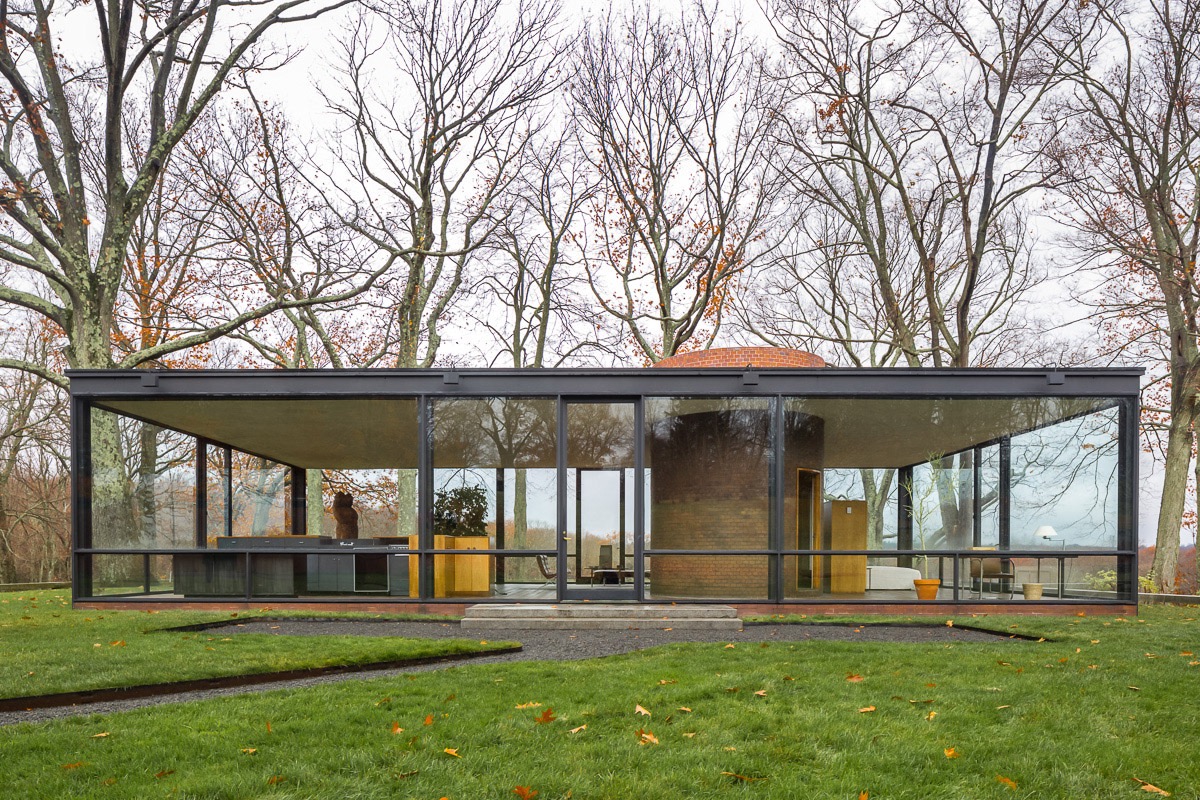
Philip Johnson, Glass House, exterior

To help appreciate the theoretical basis for these vastly differing houses, I find it helpful to draw upon a distinction made by the earthscape artist, Andres Amador (featured in a prior post). Speaking about his temporary compositions ‘sketched’ upon large stretches of beach areas at low tide, Amador refers to some of his works as “geometric” and others as “organic.” The geometric works display a quality readily suggested by the name for them, and reflect Amador’s training in math as an engineer. The organic works arise, he says, from the site, and he suggests that these pieces communicate their form to him. For me, Amador’s distinction can also be referred to as the distinction between pattern that is ‘received,’ as compared with pattern that is ‘imposed.’

Amador’s distinction between the organic patterns that arise from the site, and the geometric patterns that result from conceptual pre-planning, can assist us in perceiving some themes that are implied by the architectural designs produced by Wright and Johnson for their homes. In the case of Wright, he built Taliesin on family property in Spring Green, Wisconsin, in an area where he grew up and with which he had a deep attachment. Like much of his other work, Wright wanted Taliesin to appear as if it was an extension of the materials and features of the site in which it is placed, being an ‘organic’ development of a human habitation within a natural setting. Wright’s intent is evident in the way that the horizontal bands of stucco on the facade, as well as of the limestone in the foundation and walls of the building, parallel and mirror the layers of stone found on the site.
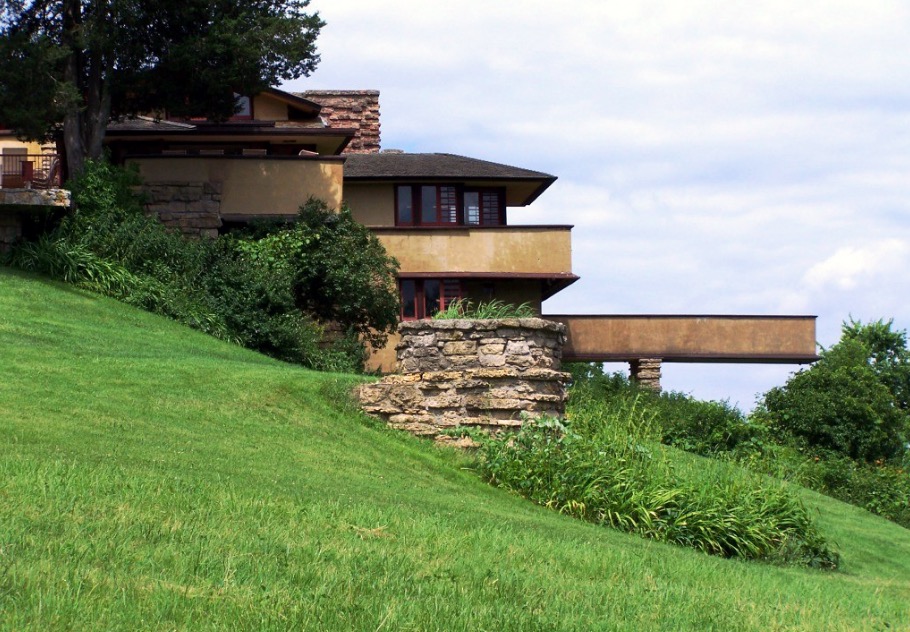
Exterior elevation of the house, as if emerging from the site (photos above and below)

While Philip Johnson’s architectural practice was located in New York City, he planned to build a house for himself and weekend guests in nearby New Canaan, Connecticut. Johnson’s Glass House clearly reflects his indebtedness to the work of Ludwig Mies van der Rohe, and the European modernist movement in architecture generally known as the International Style. Employing Andres Amador’s distinction, the Glass House clearly embodies a geometric conceptual basis, with the result that the building does not so much emerge from the site but instead sits upon it as an imposed human-made form. The carefully clipped and very flat lawn, and the linear walkways serve to emphasize the distinction between the structure and its natural surroundings. This leaves the Glass House appearing to be like a sculptural object that has been placed on a plaza, or like a vase on a smooth table-top, rather than as something arising from within its setting.

The Glass House, exterior view (above), and interior view (below)

Brief attention to the history of these two buildings provides further insight. Wright lived at Taliesin much of his life, while also retreating to Taliesin West in the Arizona desert during the winter months. Over the years, he gathered a sizable community of apprentices who lived and worked with him at both locations. To this day, the architectural fellowship that is part of his legacy maintains both homes and studios. By contrast, though Philip Johnson first lived part-time in the Glass House himself, he soon discovered how it was largely unsuitable for that purpose, other than for entertaining guests in the living and dining areas of the structure. Given the sudden notoriety of the house, the constant presence of unwelcome visitors and architecture-minded prowlers made it problematic for every exterior surface of the house to be comprised of glass. Johnson soon made it a habit to stay in the adjacent bunker-like Brick House, designed for the site as a guest house, when spending time in New Canaan.

Obviously, it is easy to stress the marked differences between these houses designed and built by Wright and Johnson for themselves. Andres Amador’s dual approach to his earthscapes may help provide a reminder of the way that both-and thinking can aid how we consider certain objects of interest. Wright’s organic home and studio, emerging within and receiving inspiration from its site, and Johnson’s temporarily lived-in Glass House, imposed as a geometric sculpture upon its site, share a common distinction. Regardless of functional considerations, each house has its own way of displaying beauty, and both remain among a small list of internationally recognized architectural achievements of historic significance.


Note: A short introductory video about Andres Amador and his work, giving examples from both of the geometric and organic categories, introduced above, has been produced by KQED of San Francisco. It can be found on YouTube ( https://youtu.be/T_tIG5mo1DM?si=0MkjxkTEK48eC-aV ).

Taliesin East has been named a UNESCO World Heritage Site, and the Glass House is a National Historic Landmark.

Andy Warhol visits the Glass House

Earl Young’s Imprint on Charlevoix

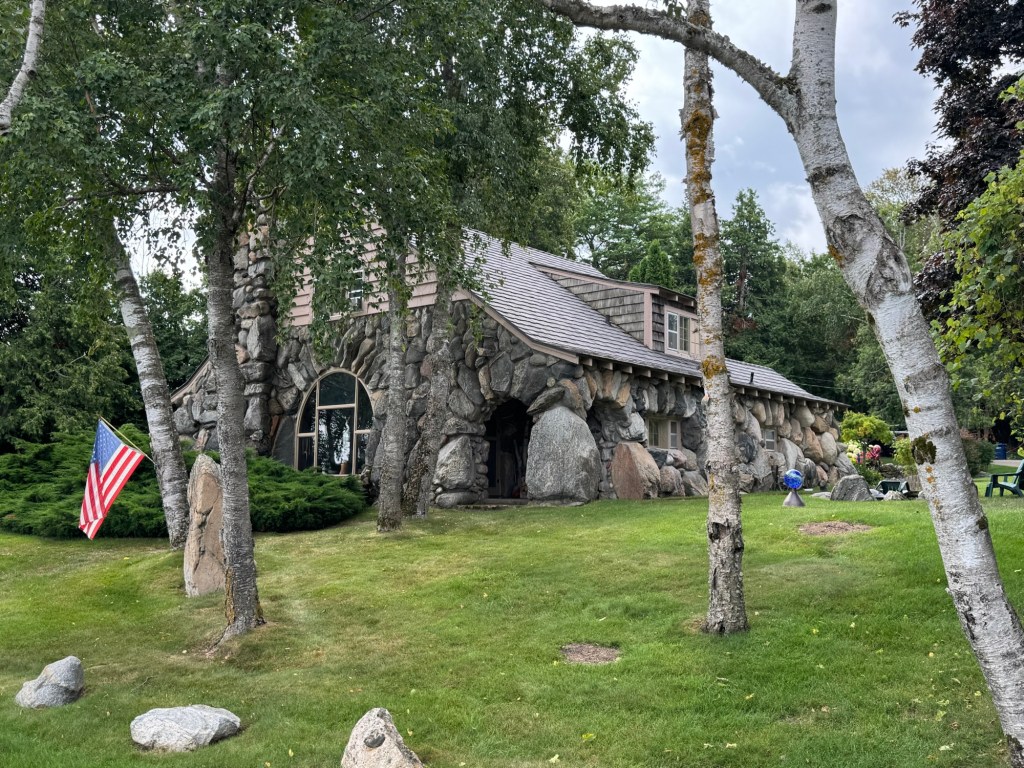
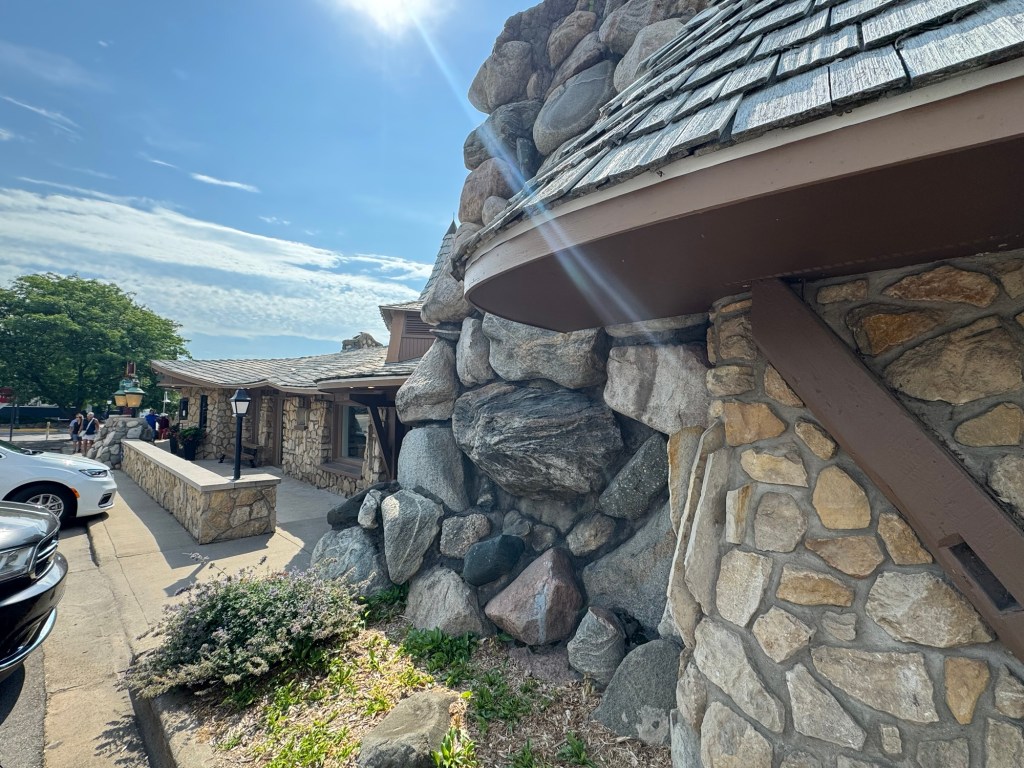
Exterior view of Earl Young’s Weathervane Inn

As a young man from the rural north of Michigan, Earl Young aspired to produce ‘natural houses’ in the spirit of Frank Lloyd Wright, his inspiration and model for what became his own vocation. Young never studied with Wright, but the latter’s design spirit influenced him throughout his life. Though Young’s impact as an architect was essentially local (he designed only one house outside of Charlevoix), the present-day promotion of Charlevoix as a cultural destination is much in his debt for the way this community has come to be known as the home of the “mushroom houses.”

Earl Young

Earl Young studied architecture for one year at the University of Michigan. From the beginning he was impatient with a curriculum shaped by the kind of slavishness to European precedents that FL Wright also criticized. Young then returned to his hometown of Charlevoix to build houses, practice real estate in the family business, and sell insurance. He left the university program with his independent vision and architectural vocation intact, from which he never seemed to waver.

The Weathervane Inn adjacent to the Pine River channel and lift bridge

One recent appraisal of Young’s portfolio of buildings has suggested a neologism with which to describe his work, lithotecture, based on the Greek word for stone. For Earl Young did not simply value the utility of stone; he loved stone, and especially large boulders. He is remembered for having had a remarkable memory for the exact location, size, and texture of examples he had seen, collected, or stored away for future use. His profound appreciation for these materials, and the creative possibilities toward which they might be employed, is much in evidence throughout the older portion of Charlevoix in the many houses and other buildings he built and or designed, as well as in those influenced by them.

One of Earl Young’s Boulders Park homes (more of which are to be featured in a future post)

Earl Young’s impact upon the visual character of Charlevoix might be compared to a rather different example in architecture and in community design, the near-universal adoption of ‘the adobe style’ in Santa Fe, which has become a predominant approach to restoration, renewal, and original architectural creations. In the parallel example of Young’s case, his impact was through his way of being true to context by his use of stone, especially in highly creative ways. So pervasive has become his influence upon the development of Charlevoix that many other and more recent builders have been drawn to imitate Young’s extensive and sometimes whimsical use of locally available natural geologic materials. Given my own experience of living in south Louisiana, where hardly any naturally-occurring stone is to be found, I am struck by the abiding evidence of Young’s legacy as a community-based builder.

Two long-ago initiatives by Earl Young in particular serve to distinguish Charlevoix in the eyes of visitors, the Weathervane Inn, and the waterfront park adjacent to the city marina. Young replaced an aged mill along the edge of the Pine River channel with an attractive inn of his own design and construction, and he convinced town leaders to replace obsolete warehouses along the waterfront with what has become a four acre rolling green expanse of lawn. Both locations have become popular and much used gathering places for visitors as well as for Charlevoix residents.

The terrace overlook above the marina office – modern stonework in the Earl Young style

The marina waterfront as it has been developed in recent years demonstrates Earl Young’s lasting influence upon Charlevoix’s economic and cultural development. Realizing some of the potential latent within Young’s prescient inspiration for the land clearing that enabled the new park, several notable new structures have been built, among them a new marina office and locker rooms, and a dancing or synchronized fountain by its door.

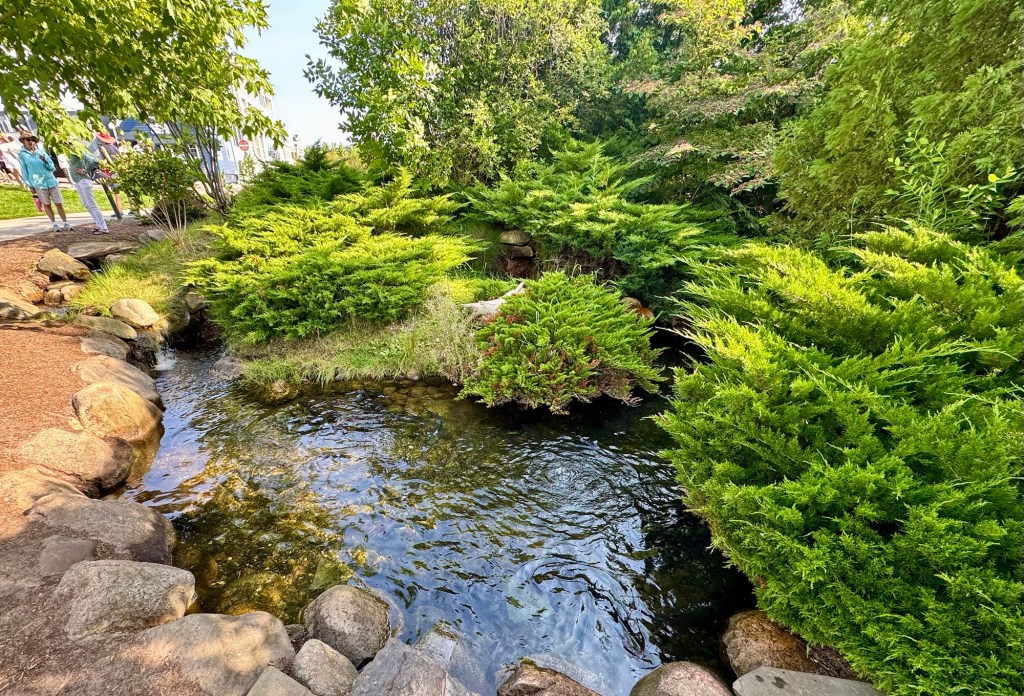
Part of the natural-look landscaping surrounding the marina office

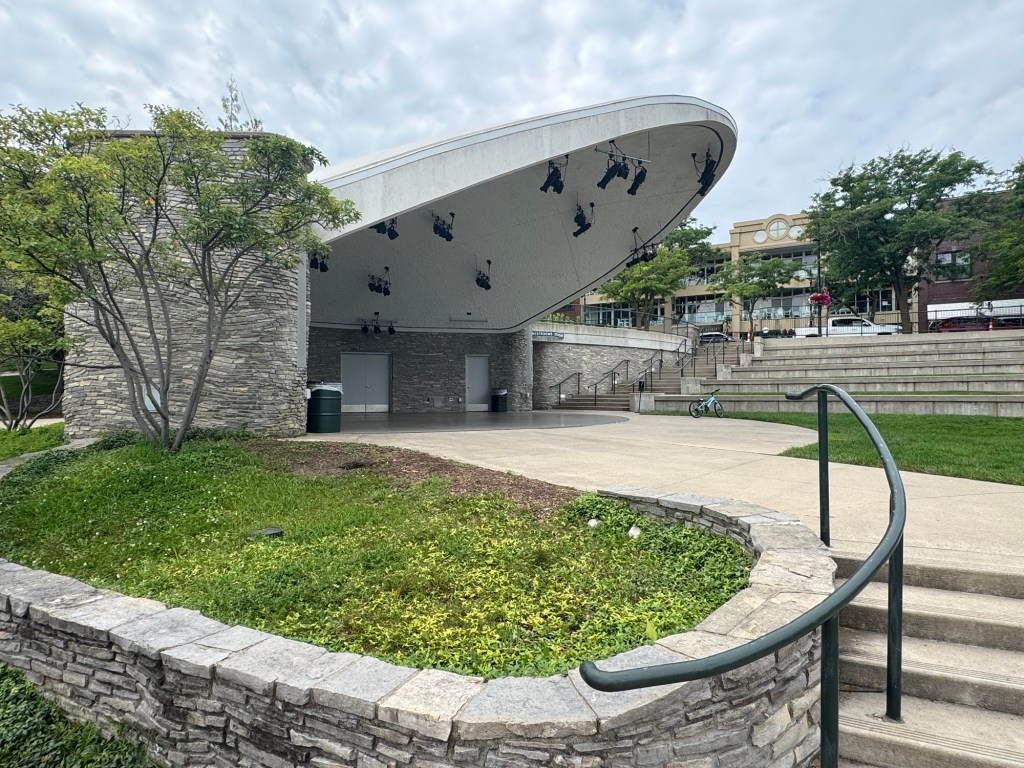
Landscaped around the marina office is a northern Michigan nature garden incorporating a human-made stream flowing between several shaded pools that contain rainbow trout. Also gracing the open green space of the park is a bandshell for weekly summer musical events, where concert-goers overlook the harbor docks and boat slips. Each of these structures, though constructed well after Young’s lifetime, reflects his vision for the beauty of stone laid up in asymmetrical curving walls.

The Earl Young influenced bandshell overlooking the marina and Round Lake harbor

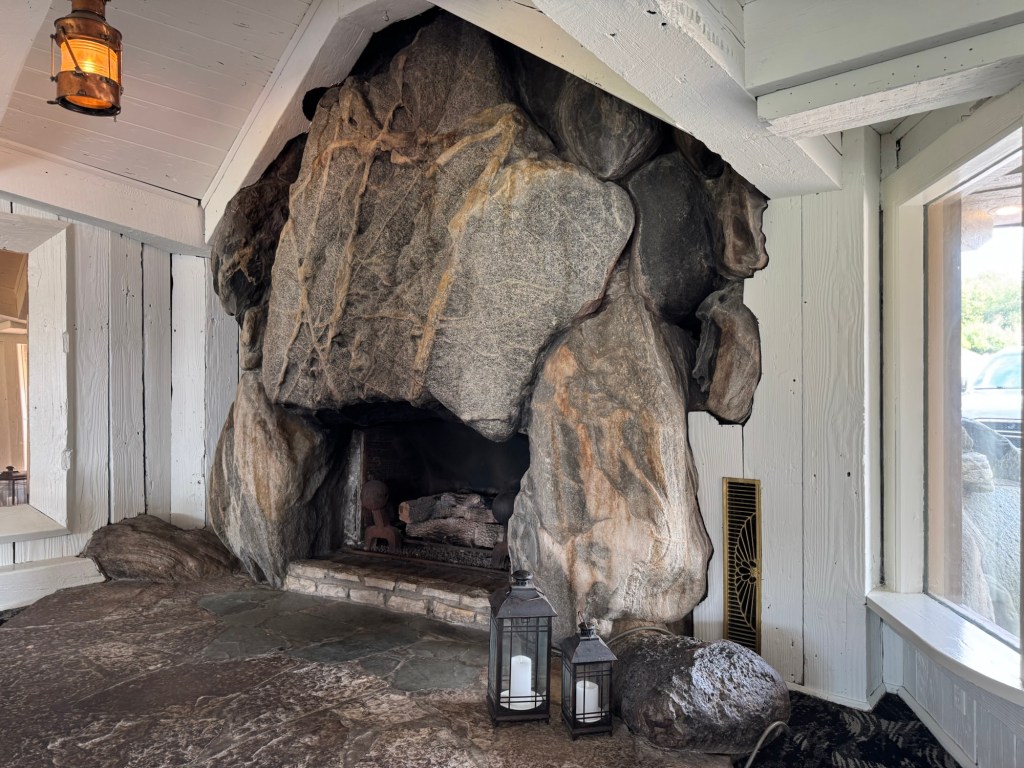
Earl Young’s profound attachment to working with local geological material evinces a lifelong devotion to what can be accomplished through building with massive boulders, each weighing multiples tons. The best place to begin to appreciate this is by a visit to the previously mentioned Weathervane Inn, the earliest of his few public buildings. The massive fireplace assembled from a seeming heap of boulders, has one large stone that weighed 9 tons, so heavy that it caused a dislocation in the foundation prepared for it.

Exterior view of Earl Young’s massive Weathervane fireplace
Interior view of the Weathervane fireplace

In a subsequent post I plan to present and offer a brief reflection upon Earl Young’s Charlevoix residential design and construction projects, most commonly known as his ‘mushroom houses.’ In all of his work, Earl Young showed himself to be something of an unforgettable local genius, whose endearing and wonder-producing legacy of unique work has transformed his community over the decades.

A Tao of Seeing: Reflections Inspired by Feng Shui

Michael Pollan’s writer’s hut, intentionally situated by a boulder on the brow of a hill

Recently, I observed my middle son moving a black plastic pond module around in a small space in his New Orleans courtyard. As he moved the container that would soon have fish in it, he tried situating the vessel in various ways, in relation to a tree, a fence, some potted plants, and an existing low stone wall. He is not a student or practitioner of feng shui, but I believe I was seeing some of those principles at work in his decision-making.

Western readers may have heard of feng shui, the Asian philosophical approach to discerning the unseen forces that affect objects and their balance in nature. It gives attention to the metaphysical or non-material energies thought to be at work upon or within the world around us. We might say that this approach provides a Tao of seeing, or a natural way of perceiving within and around surface phenomena to the underlying dynamisms that are believed to affect what happens in nature.

This notion that there are unseen forces at work in the world is an idea that is receiving something of a revival in Western Christian spirituality. This is noticeable when people refer to a concept attributable to the Celtic tradition, in which it has become common to refer to “thin places. “ These are places where the veil between the material and the ethereal or the heavenly seems temporarily dissolved. Another parallel here between East and West may lie in the quest within Christian spirituality for the goal of harmony and balance between people and the created world.

However, my reflections here constitute an aesthetic rather than a philosophical or historical inquiry. I am interested in the dynamics of movement we perceive in the circumstances that we encounter, and less in the metaphysical forces or energies that may be present within them. At the outset, however, I want acknowledge how a nuanced Asian approach can be an authentic route toward a culturally-informed appreciation of the phenomena we encounter, especially from a historically Asian perspective.

As we look at paintings in the context of Western culture, one factor we discern assesses composition and attends to the way our seeing is drawn from one part of a larger image to another. This dynamic is often an artist-intended aspect of an overall composition. Sight lines in garden design and arrangement provide another example, as does the architectural arrangement of space in buildings.

Attention given by Western designers to feng shui is sometimes criticized as being a superficial application of historically and philosophically nuanced ideas. But I want to give credit to ways in which our sensitivity toward perceiving movement and direction is a genuine factor that is available for analysis and articulation. We notice this when we encounter both two dimensional compositions as well as three dimensional spaces and the objects we find in them. We can always come to know more about what we see.  Because what we see is something that is there, not simply what we believe, or are disposed or inclined to see.

An Asian garden said to be designed according to feng shui principles

Motion, balance between forces, spatial arrangement of objects, and the dynamic relationships that are visible because they exist between and among these variables, continue to grab my interest. Contrasts between colors and textures, as well as between sizes and shapes, play a significant role.  Additionally, the perceived difference between what is natural and things that are humanly fashioned is equally significant, as is our perception of the criteria for what constitutes that which we consider to be natural. These are among the factors that help account for our sensitivity towards and interest in these many observable variables, and our common quest for purpose and meaning in the contexts where we find ourselves.

Motions and balance as we find these factors in Wassily Kandinsky’s painting, Several Circles

Painters, sculptors, and architects, seriously consider these factors within visual and spatial compositions. The painter, Wassily Kandinsky, and the architect, Frank Lloyd Wright, provide two examples of those who also perceived a spiritual dimension within their creative work.
If so, we –  as caring lay observers of the world and of the things and places among which we find ourselves – should give deference to this evident fact. For we can all be thoughtful, as people often are inclined to be, about what we see, touch, and experience when we interact with visual phenomena.

I find myself increasingly sensitive to these aspects of our appreciation for Beauty, and endeavor to be more mindful about them. I am intrigued by possible parallels that may exist between Eastern metaphysical interpretations of visual phenomena and more familiar approaches to what we see that are shaped by Western aesthetics. Especially as these familiar approaches are described and developed within our artistic and architectural best practices.

The Beauty of Psalm 139

[If reading this by email, please tap the title at the top to open your browser for the best experience.]


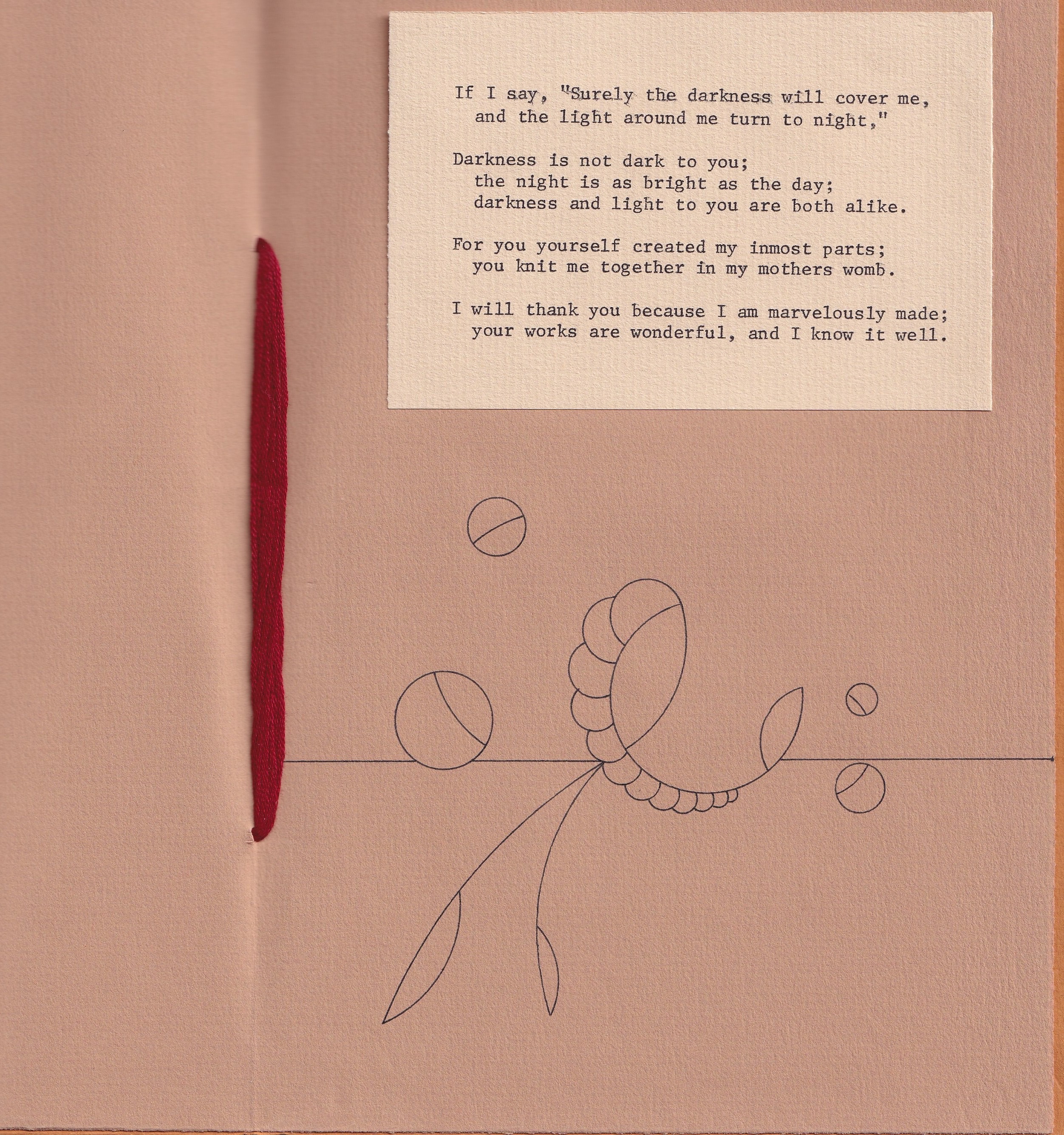
Frank Lloyd Wright is known primarily for the huge scope of his architectural work, and perhaps secondarily for the furnishings he designed for his buildings, which include everything from furniture to lamps to tableware. Less well-known are Wright’s graphic designs which were materialized in tapestries, wall panels, carpets, and in stained glass windows.

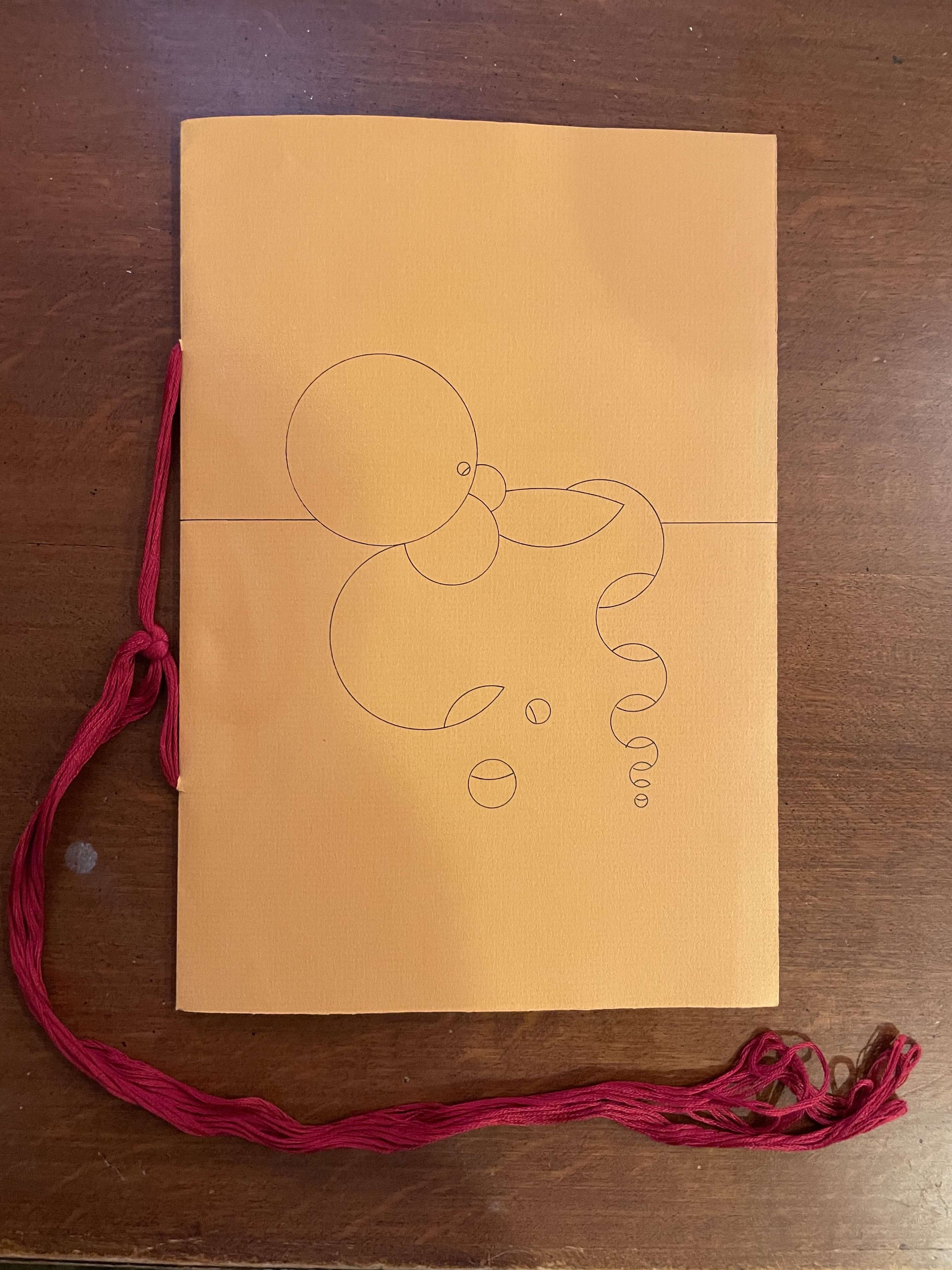
Just as I was strongly influenced by Wright’s architectural work when I aspired to follow him into the practice of his vocation, my design vision was just as impacted by his graphic work. In my case, this influence was not manifest in plans for such things as tapestries or windows, but in designs for paper products such as cards and stationary, and for handmade pamphlets. Among these were one featuring text from Psalm 139 (:1-17), and another text from the Song of Songs.
Above and below are some images of the little Psalm 139 pamphlet I created in the autumn of 1977 using a circle template, a rapidograph pen, an old-fashioned typewriter, and charcoal paper, along with a binding of stranded thread.


The above images are copyright, © Stephen Holmgren 2023. This post is based on a little pamphlet featuring Psalm 139:1-17, which I made while staying at the Pension Colorado in central Florence during the fall semester of 1977 while on a study abroad program through St Olaf College, in my sophomore year. I also acknowledge the probable influence of Alexander Calder’s mobiles.

The Beauty of FL Wright’s Influence

[If reading this by email, please tap the title at the top to open your browser for the best experience.]

The Solar Radicycle (1969 ~), second iteration, south facing, with a studio on the north side


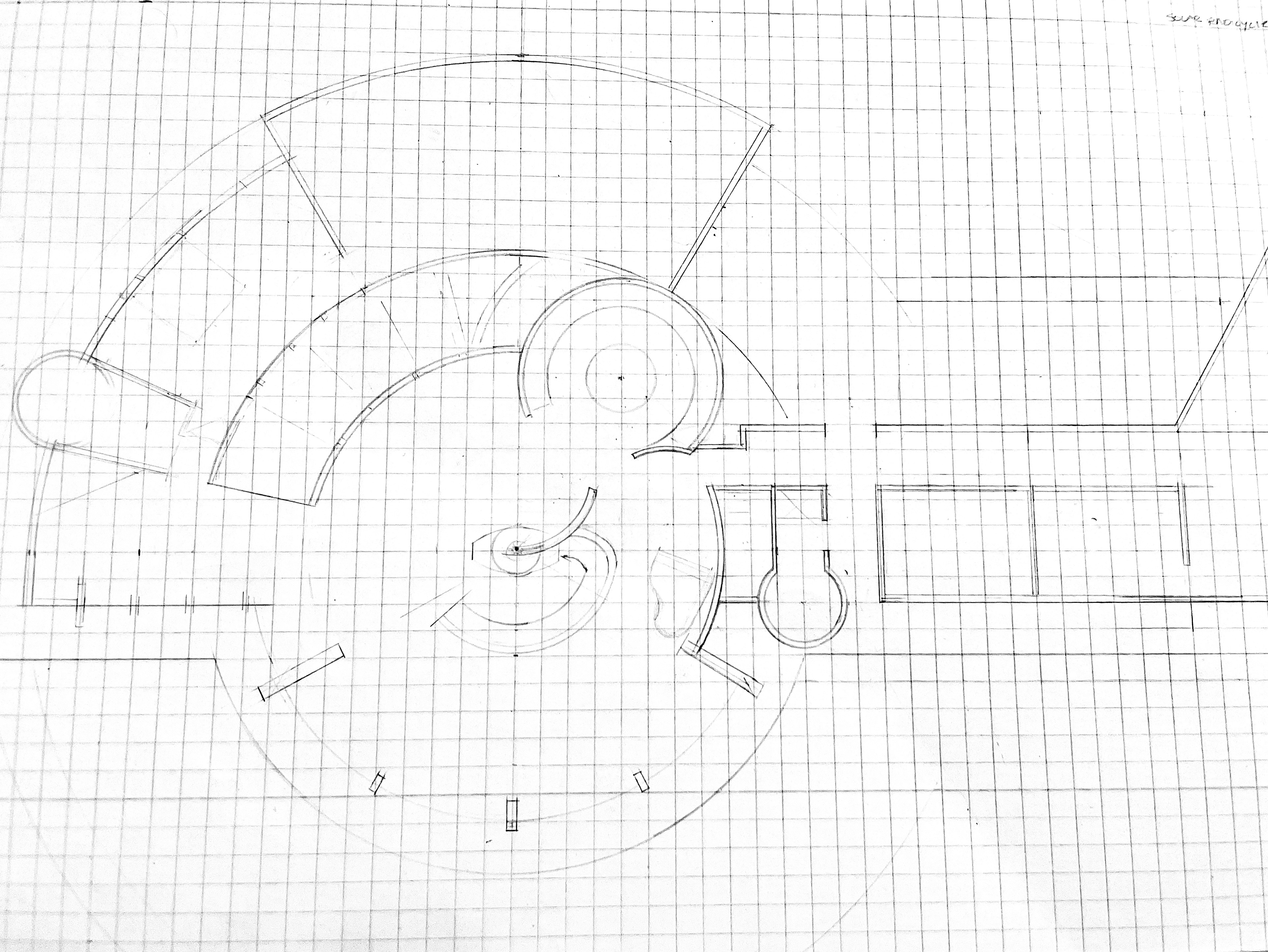
As I have shared before, I once aspired to become an architect, a vocation toward which I may still be temperamentally disposed, though way too late to consider as a second career. Here, I want to take another risk. Having previously shared a drawing from my exploration of shell forms, from when in my youth I sought to develop as an artist, I would like to offer a glimpse of my very early architectural aspirations.

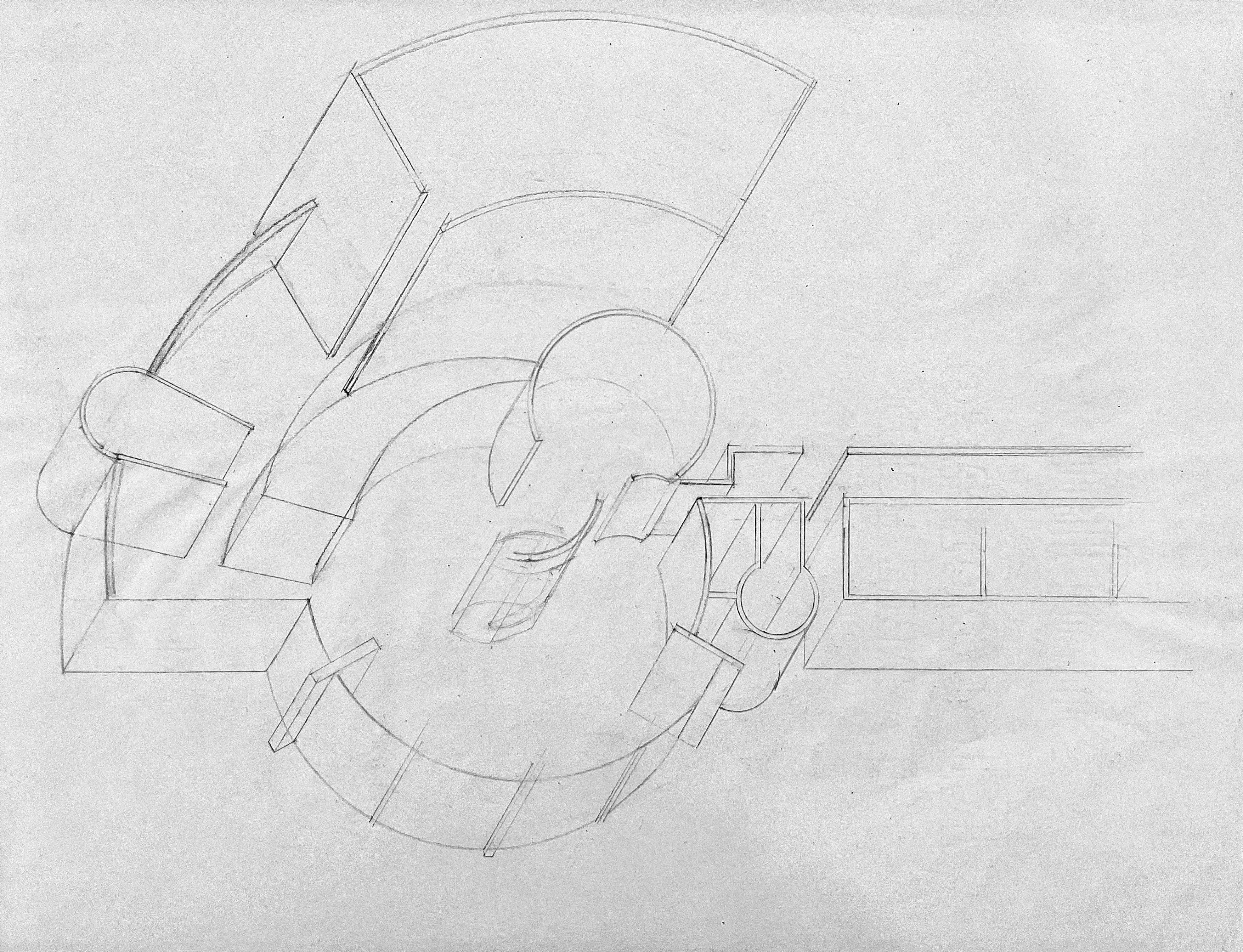
The drawings I feature above and below very obviously reflect the impact upon me by the work of Frank Lloyd Wright. The plan above, which I titled the Solar Radicycle, is one that I first conceived in late middle school or in early high school, but then later elaborated. With its reliance upon circular patterns, it is clearly influenced both in name and design by Wright’s second Herbert and Katherine Jacobs house (1944), the 1950 Wilber C. Pearce house, and related designs (the David Wright house, among them).

While in eighth and ninth grade I memorized FLW construction design and building facts in the way that some of my peers memorized baseball card details. Among such were significant aspects of Wright’s remarkable achievement with the columns of the Johnson Wax company building (Racine, WI), and the unexpected and astonishing test-endurance of those structural features.

I have searched in vain for my colored study drawings from the 1970’s of the exterior elevation for the Solar Radicycle plan, showing the proposed domed roof over the central living area. Yet, the isometric drawing of the building (below) may help give an idea of its intended eventual shape.

An isometric view of the Solar Radicycle plan (not showing roofs)

The word ‘solar’ explains itself; the suffix ‘cycle’ implies something circular; and the prefix ‘radi’ comes from the common words radical and radish, and implies ‘of the root.’ Naively, I had the hope to build this house somewhere in rural Vermont or New Hampshire upon my graduation from high school in Massachusetts. Obviously, I was a romantic dreamer. And, of course, it did not happen. But I had thought through a number of key details, neglecting those of financing. Here I was a true follower of Frank Lloyd Wright!

The first iteration of the above design was more simple, with a focus upon the central living, kitchen and dining areas. The first or inner ring of the design depicted above will reflect this. The second, outer ring of structure in the plan, reflects the later iteration, involving a re-conceived master bedroom location, along with the addition of a den, and also a large studio.

I envisioned the walls as being embedded in surrounding earth berms, and using either local stone and or limestone for the vertical structure. I thought that the roofs, both the T-shaped slabs over the bedroom wings and studio, as well as a large dome over the living area – and small domes (or possibly sky-lights) over the  kitchen and restrooms – might be cast in pre-stressed concrete. Here again, I may have been too slavishly an FLW follower in not fully considering the roof-leak potential for those roof slabs and the seams between them, especially in New England winters and springs. I might have had a beautiful house, if I could have pulled it off, while yet having to deal with raindrops seeping down and falling onto the side bedrooms.

I am proud of the overall design, but fully acknowledge how this was an adolescent flight of fantasy! Below are a couple of representative examples – among many – of very obviously FL Wright-influenced designs for houses and plans for other structures that I produced in the mid to latter 1970s, just out of high school, while contemplating a vocation in architecture.

To this day, the possibility of what my original plan might have been hovers at the edge of my mind. In God’s Providence, architecture was not to be my professional vocation, though I am so glad for all that my interest in it has brought to me.


Among a huge abundance of books about FLW, a very helpful guide is The Architecture of Frank Lloyd Wright: A Complete Guide (color photo illustrated), by William Allin Storrer, which includes locations maps for all the buildings included.

Frank Lloyd Wright’s Guggenheim Museum


The Guggenheim Museum, 5th Avenue, NYC (1959)


What a wonder it is, sitting there so apparently out of sync with its neighboring buildings. Instead, Frank Lloyd Wright’s Guggenheim Museum seems to reach out toward the great park across the avenue. Critics sometimes lament the museum’s apparent disconnect with its context. Yet, others – I among them – rejoice at that discontinuity, given its so many linear, box-like surrounding buildings. When commissioned to add a companion tower adjacent to Wright’s spiral masterpiece, rather than compete with it, Gwathmey Siegel & Associates produced an astute counterpoint in a large rectangular structure with a neutral limestone facade. The tower beautifully keeps our focus on the lyrical curving form of the original museum, as well as expresses continuity with nearby buildings.

Like many, I find when visiting this building a remarkable refreshment of spirit, and experience within it an enhanced sense of life. For the museum provides a context fitting our inclination toward what is spiritual, not merely to what is material. As with the earlier precedents of Wright’s Unity Temple, Oak Park, and the Johnson Wax headquarters, Racine, it surely has to do with Wright’s attention to natural illumination from skylights. Whether or not one walks from the top level down at the Guggenheim, as Wright envisioned, or from the ground level up, the visitor’s eyes are drawn up within the swirling interior space to the light above, gracing the whole through the great oculus of the circular skylight.

An evident facet of this highly sculptural building stems from its late 1950’s time of construction – how the exterior walls of the concrete spiral ramps reveal a degree of unevenness in their outward surfaces (top photo). This was and is a humanly made building, reflecting our highest aspirations in terms of design while also some of the limits of our historic craftwork with materials.

Wright’s Guggenheim Museum is appropriately ranked among examples of world-class architecture. Both lauded and criticized at the time of its opening, it has taken decades to be matched by the work of another master of the medium, Frank Gehry, architect of the Bilbao Guggenheim in Spain. Like Wright, he could envision and then design structures exploring the plasticity of modern materials and building methods. It is well to recall that Wright was in his 70’s when he began to create the plan for the Guggenheim (in 1943), and near his 92nd birthday when it was completed in 1959, delayed by the postwar recession.

Guggenheim Museum, Interior View (note the red Calder mobile)

Paul Horgan, while reflecting on the buildings of John Gaw Meem, offered words I find so fitting to Wright’s achievement on Fifth Avenue. “As one of the only great arts to offer physical shelter not only to [our] works but also to [our] spirit, architecture can convey directly the sense of an enclosing confirmation of [our human] desire to believe in a sustaining power beyond [ourselves].” With the Guggenheim, Wright not only achieved a magnificent context for the display of art, but also created what has become “a temple for the human spirit” (a phrase used in the terms of his commission).

This building does not stand alone. An amazing aspect of Wright’s architectural career is not only that he had the visionary imagination to conceive of so many remarkable structures, the audacity to commend them to potential clients, and the providential support for his proposals from so many well-funded benefactors.

With the Guggenheim, beauty ‘incarnate’ is embodied in construction materials and in a form that transcends what we typically expect now in architecture. Here we encounter a building that nurtures aspiration for what may be next in life. It may even prompt an unexpected experience of hope and joy for what it means to be human.


The Beauty of The Sagrada Familia

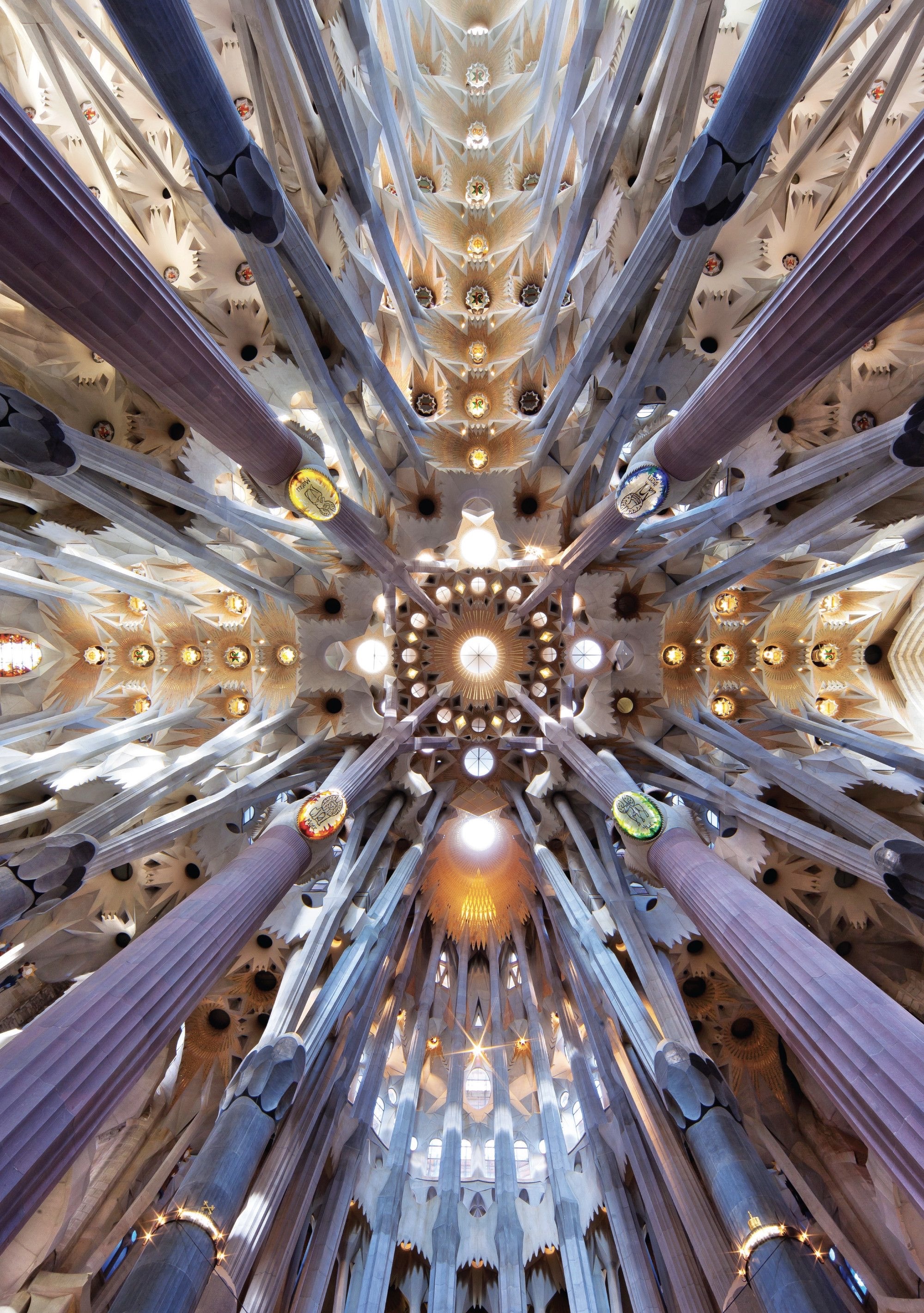
Interior view of Antonio Gaudi’s The Sagrada Familia, in Barcelona, Spain


Antonio Gaudi (1852-1926) designed the now famous basilica of The Sagrada Familia, Barcelona, Spain, to which he gave himself fully for the last 43 yeas of his life. The basilica remains unfinished. Although we most often associate structures like gothic cathedrals with the 12th through the 14th centuries, Gaudi’s visionary work has assured us that there will be a 21st century future for them.

The genius of Antonio Gaudi’s vision for The Sagrada Familia lies in his wedding of a modern understanding of mathematics with a timeless appreciation for the power of light, color, and the shapes and rhythms of the natural world around us. As much an engineer as a visionary architect, Gaudi shared with Frank Lloyd Wright an intuitive appreciation for how the mathematical and geometrically describable structure of trees, seashells, beehive combs, and other aspects of the natural world could inform the architectural integrity of a building. And, like his medieval predecessors, Gaudi recognized the continuity between what we learn from the Book of Nature and what we learn from the Book of Scripture. How paradoxical it is that one of the most modern cathedral-sized churches in Europe may also be strongly traditional, and historically rooted.

Being aware of the etymology of words often associated with the architecture of Frank Lloyd Wright helped me to understand his work and that of Gaudi. Wright used the word ‘organic’ in the title of one  of his influential books. Another word, ‘radical,’ is also often used to describe his apparent departure from traditional architectural design. Yet, here is the curious thing. When we hear the word ‘radical,’ we think a departure from tradition is being signaled. But dictionary definitions of that word alert us to what it really means. Radical means, in one way or another, of the root. Radical therefore means less a departure from tradition than it does a rediscovery or re-appropriation of it.

To speak of Gaudi’s radical vision for The Sagrada Familia can be a way to discover the organic character of its nature-inspired design. For the ‘roots’ of this building lie in Creation, both in terms of the multiplicity of form, and yet also in consistency and uniformity of structure, and in the extensive and subtly evocative use of color – not simply in the windows, but on the columns and walls.

Moved by the visions of St. John, as recorded in Revelation, Gaudi perceived the Church – both as the community of the Body of Christ and also as a physical structure enabling our assembly for liturgy – as having come down from heaven, so that the divine presence would now be tangibly among us. The words of Revelation 21:1-6 appear to have been at the heart of Gaudi’s vision for his new church, which seems to express the promise of “a new heaven and a new earth,” and be an embodiment of “the holy city, the new Jerusalem, coming down out of heaven from God.”

As at least one observer notes, while diligently preparing the design for The Sagrada Familia, Gaudi shaped a building. In the process, God shaped Gaudi. Te Deum laudamus! May our encounter with the result of Gaudi’s work have the same effect upon us.

Sagrada Familia basilica still under construction in Barcelona.


For deeper insight concerning the design and structure of Sagrada Familia, see the video, The Gaudi Code, with this link: { https://www.youtube.com/watch?v=w3e8sckgWqQ } For a further and deeper exploration of Gaudi and his approach to Sagrada Familia, read The Sagrada Familia: The Astonishing Story of Gaudi’s Unfinished Masterpiece, by Gijs van Hensbergen. Also very helpful is the visual guide book, The Basilica of the Sagrada Familia: A Temple Converted into a Universal Work of Art.


The Beauty of the Imperial Hotel

The preserved but relocated lobby of Frank Lloyd Wright’s Tokyo Imperial Hotel (1923)


Having grown up in Tokyo and Yokohama, Japan, with parents attentive to the arts, I remember visiting the Imperial Hotel on several occasions. It was a favorite place for my parents in the 1960’s, to go for dinner and dancing given the fine hotel orchestra. In connection with family visits there, I first became aware of some legendary aspects of Frank Lloyd Wright’s reputation as an architect, and his penchant for self-promotion. As one wag has said, ‘he was by his own admission the world’s greatest architect!’ And yet, with some artists and architects, pride sometimes reflects aspects of correct perception.

The Imperial Hotel project for Wright came at a particularly fortunate time, following a series of misadventures and personal tragedies. Offered the opportunity to design what would become the second Tokyo Imperial Hotel, replacing the largely wooden original in 1917, Wright embraced the project and designed a building that might provide a hybrid between Eastern and Western aesthetics. Having first visited Japan in 1905, he was becoming known as an emerging connoisseur of Japanese woodblock prints.

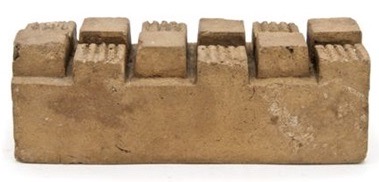
Among the features of Wright’s remarkable Imperial Hotel, which continue to evoke interest to this day, were the textured bricks Wright designed to provide pattern and a distinctive character to the exterior and interior surfaces of the building. Through my parents’ friendship with some former hotel staff, I have one of these bricks.

Here is an example:

The most notable feature of the hotel was Wright’s ingenious response to the challenge of designing a large project in an area quite vulnerable to earthquakes. With more than 60′ of spongy material between the ground surface, and any subterranean rock upon which to anchor a foundation, in a city adjacent to a large bay and the sea, Wright settled upon a unique solution. Just as an experienced restaurant waiter might carry a selection of plates and dishes upon a large tray, Wright proposed to ‘float’ his hotel upon a huge concrete slab. Astonishingly, on the very day of its opening, September 1, 1923, the great Kanto earthquake struck Tokyo, destroying much of the city, accompanied by extensive fires. Wright’s hotel survived largely intact, establishing the genius of his design, and his providential provision of large water features around the property helped not only to save the hotel, but other buildings in the area.

Here is an early, color-retouched, view of the site:

Sadly, Wright’s Imperial Hotel was demolished in 1968. This amazing structure had withstood the Kanto earthquake as well as the later fire-bombing of Tokyo in World War II. Despite its incredible beauty and innovative engineering, it could not compete with hotels built to more modern standards of efficient design and construction, with its by-then antiquated plumbing and electrical infrastructure, as well as its dated room sizes and land-use configuration. Here is a view of the interior of the original lobby area. Walking through this space as a child was nothing short of inspiring:

And here is a view of the original lounge bar, preserved within the later Imperial Hotel as I remembering seeing it about 20 years ago:

Very happily, the entrance court and lobby of the hotel, as depicted in the upper photo, was preserved and rebuilt at the Meiji Mura Architectural Museum, in Nagoya, Japan. I hope some day once again to visit what remains of this beloved building.


Note: in my view, one of Lego’s finest architectural reproduction kits is that of FL Wright’s Tokyo Imperial Hotel entrance and lobby. I enjoyed assembling it helped by my Lego-savvy grandson, James, using a set involving about 1,000 plastic bricks remarkably similar to those Frank Lloyd Wright designed about 100 years ago.  {PS – bought the kit, used status, on ebay / no commercial connection implied here}

A Canopy of Light


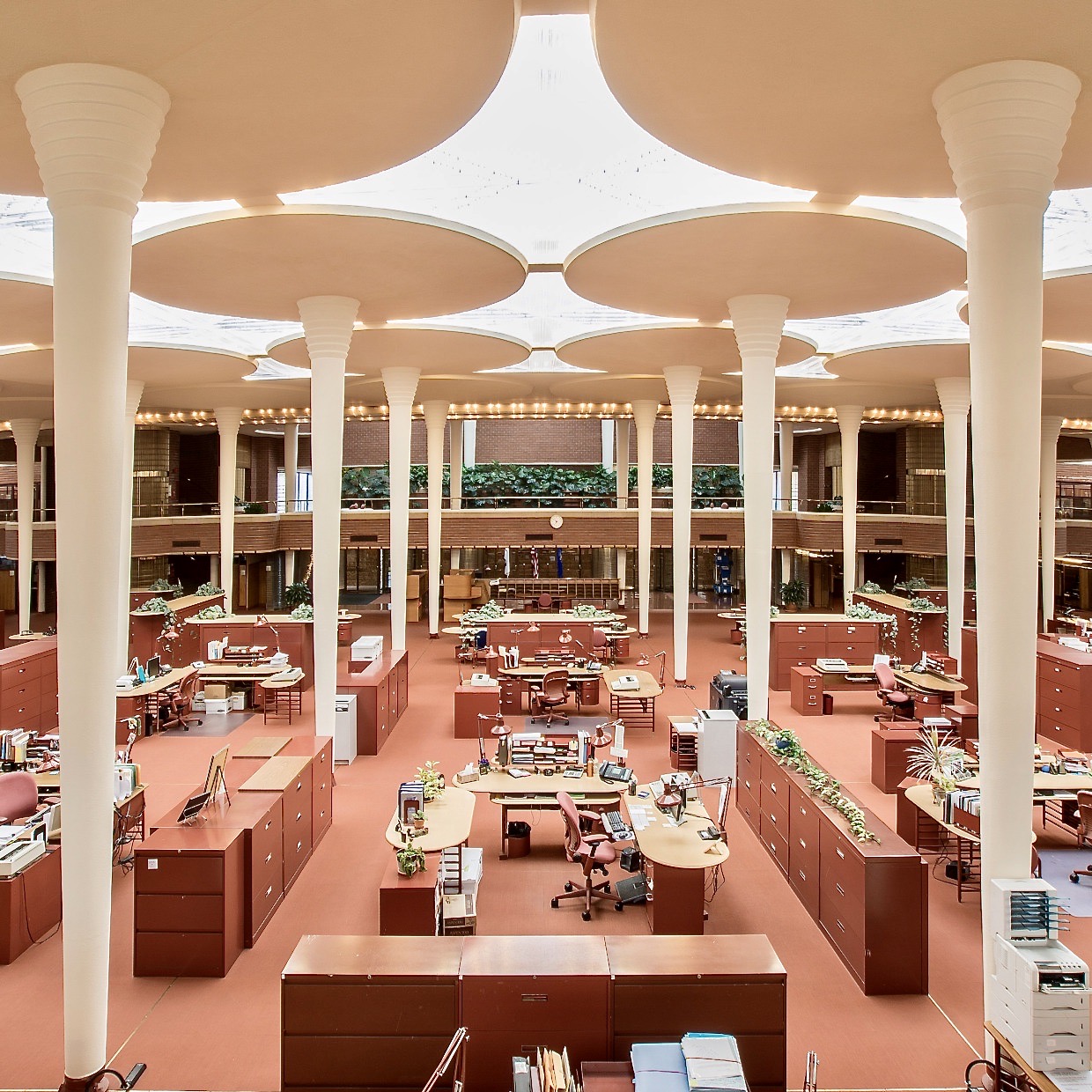
In his visually stunning documentary on Frank Lloyd Wright, a Welsh architect named Jonathan Adams visits some of Wright’s finest buildings. Upon entering the ‘great workroom’ of the S C Johnson (Wax) Company headquarters building, he gives voice to what is surely a very common response to that amazing space – ‘this may be the most beautiful room in America.’

Among the several features of this sublime interior that evoke praise are the lithe columns supporting the large expanse of pyrex glass tubing, the warmly colored horizontal flow of the brick balconies and walkways, and the architect’s complementary attention to the color of the furniture and carpeting, the originals of which were all designed by Wright. As we see in so many of his buildings, ‘Cherokee’ (or iron oxide) red as well as limestone-reminiscent cream and ochre are primary features of his color palette.

Wright had in mind the vertical strength of tree trunks when designing the columns, and the large disc shaped platforms at their top combine to suggest a canopy of trees between which filtered daylight descends. At the same time, he also spoke of the columns as being like lily pads rising to the surface of a pond, to receive the nourishing light above. Although both of these metaphorical references seem apt to me, the interior of this expansive space is evocative of the great gothic medieval cathedrals and their clerestory windows, especially in connection with Wright’s profound sensitivity to the power of natural light. The priority he gave to natural light, as well as to its spiritual significance, is evident in his design for one of his earliest public buildings, Unity Temple, in Oak Park, Illinois. How wonderful it is that Wright can help us celebrate the experientially redemptive abundance of light, even on a dark winter day.

In a prior blog post I referred to how our engagement with the appearance of, and the spaces within, a building can have the effect of uplifting our souls and of enlarging our view of the world. By this, I was reflecting on how encountering great works of architecture can enrich our sense of community, as well as our regard for the pursuit of beauty, goodness, truth and other recognized virtues. Primary among these is joy.

Our contemporary sense of the word joy is often limited to a feeling that happens to us. But, as Thomas Aquinas is remembered to have observed long ago, “joy is the noblest human act.” Yes, we can feel joy. But we can also rejoice at the presence of sublime beauty, whether divinely created or humanly made. As a prayer to God for the newly baptized puts it, “Give them… the gift of joy and wonder in all your works.”

Virtues like beauty and goodness can also be described as ‘natural authorities.’ This is because they help make our responses to these qualities in things and people, and our subsequent actions, intelligible. For example, we enter and behold a profoundly beautiful space like the ‘great workroom’ at the Johnson Wax building. Our encounter with its beauty ‘authorizes’ or makes intelligible our response to it as we experience and express joy and wonder. Our encounter with this beauty can also prompt an appreciative regard for how our lives in community can be enhanced. Here, the experience of human-created beauty evokes our joyful apprehension of the beauty of our Creator, and of our Creator’s handiwork all around us as well as within us. Most appropriately, we rejoice at what we behold.


Notes: The SC Johnson company headquarters building in Racine, Wisconsin (1936-39), is typically referred to by its original common designation, the Johnson Wax building and tower. The company welcomes visitors and offers tours. The F.L. Wright-designed furniture that is seen on these tours was manufactured by the Steelcase company in Grand Rapids, MI. Wright’s Unity Temple dates back to 1905-08 and is still in use for congregational worship today. The prayer for the newly baptized is found on p. 308 of The Book of Common Prayer. Oliver O’Donovan’s book, Resurrection and Moral Order, is the source for my use of the concept of ‘natural authorities.’

The Beauty of ‘Wright’

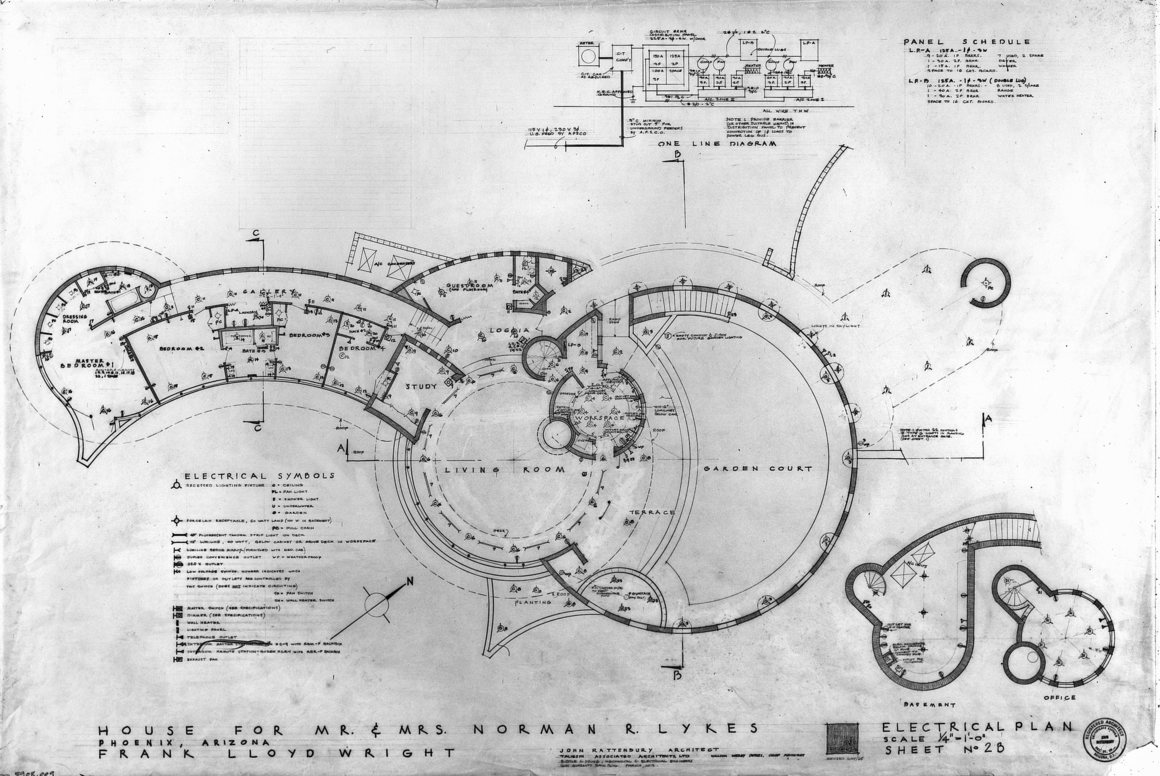
Exterior and plan of the Lykes house in Phoenix

Before my conversion to following a greater ‘master,’ I have been devoted since at least 8th grade to the alluring architectural vision expressed in the work of Frank Lloyd Wright. In Wright’s buildings, drawings, and writings, I have found a compelling, nature-shaped understanding of how we might best engage the challenge of inhabiting this world. As expressed by Wright, flourishing as a human being means consciously living in accord with the order and beauty of what believers refer to as Creation. In connection with this vision, FLW may have been the first to use the phrase, ‘an organic architecture.’

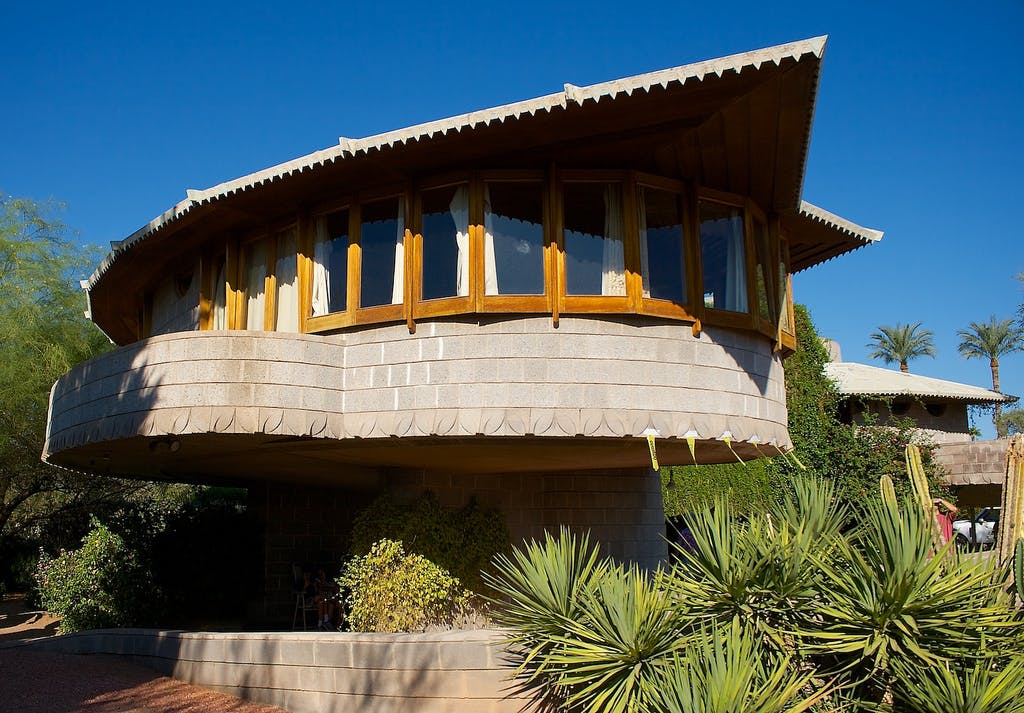
Exterior and interior of David Wright house, also in Phoenix

An old adage reminds us that imitation is the sincerest form of flattery, and imitate Wright I did. In my desire to become an architect through the traditional route of apprenticeship leading to licensing, I began developing basic drafting skills in junior high and designing house after house. All the while, Wright’s life and work became my principal reference point. Just as many of my schoolmates memorized the career statistics of favorite baseball or football players, I could quote a parallel set of statistics related to Wright’s major projects, such as the height, diameter and weight-bearing capacity of the columns in his internationally recognized Johnson Wax building in Racine. Perhaps it was the influence of having visited his Imperial Hotel in Tokyo while growing up in Japan, as well as having a compatible aesthetic temperament. Yet, whatever the source, from my earliest appreciation for Wright’s buildings to this day, I have simply loved his architectural work. To me, Wright’s vision almost always seems ‘right.’

I state this fully aware of the perceived and actual shortcomings of many of ‘the master’s’ most well-known buildings. A favorite story is attributed to Mr. S.C. Johnson, owner of the company building mentioned above as well as of a stunning large estate home designed for him by Wright, “Wingspread.” Apparently, at a dinner hosted by Johnson for several distinguished guests, the roof over the dining room began to leak (a notorious feature of some of Wright’s structures), causing a drip onto the host’s head. Johnson is remembered for having telephoned the architect at that moment, complaining about the leak. Wright responded by saying, “well, Sam, move your chair!”

The realization of Wright’s stunning architectural vision, expressed in such things as curved walls, daring roof lines, and dramatically extended cantilevered terraces, often relied upon the patronage and funding provided by wealthy clients. Throughout history, great artists have depended upon the same. But we should not overlook Wright’s committed pursuit of the opportunity to design and build beautiful-yet-affordable homes for clients with ‘ordinary’ incomes (e.g., the “Usonian” houses). Not only do we find many of these homes preserved and valued in our communities, but the design principles evident within them have influenced countless examples of contractor-designed homes of lesser architectural interest.

The pursuit of human flourishing within the beauty and order of God’s Creation is a wonderful thing to behold. As Irenaeus put it centuries ago, ‘the glory of God is the human person fully alive.’ And the human person is most fully alive when flourishing within the beauty of God’s handiwork, and within our creative tributes to it.