Beauty

Reinhold Marxhausen and Finding Beauty

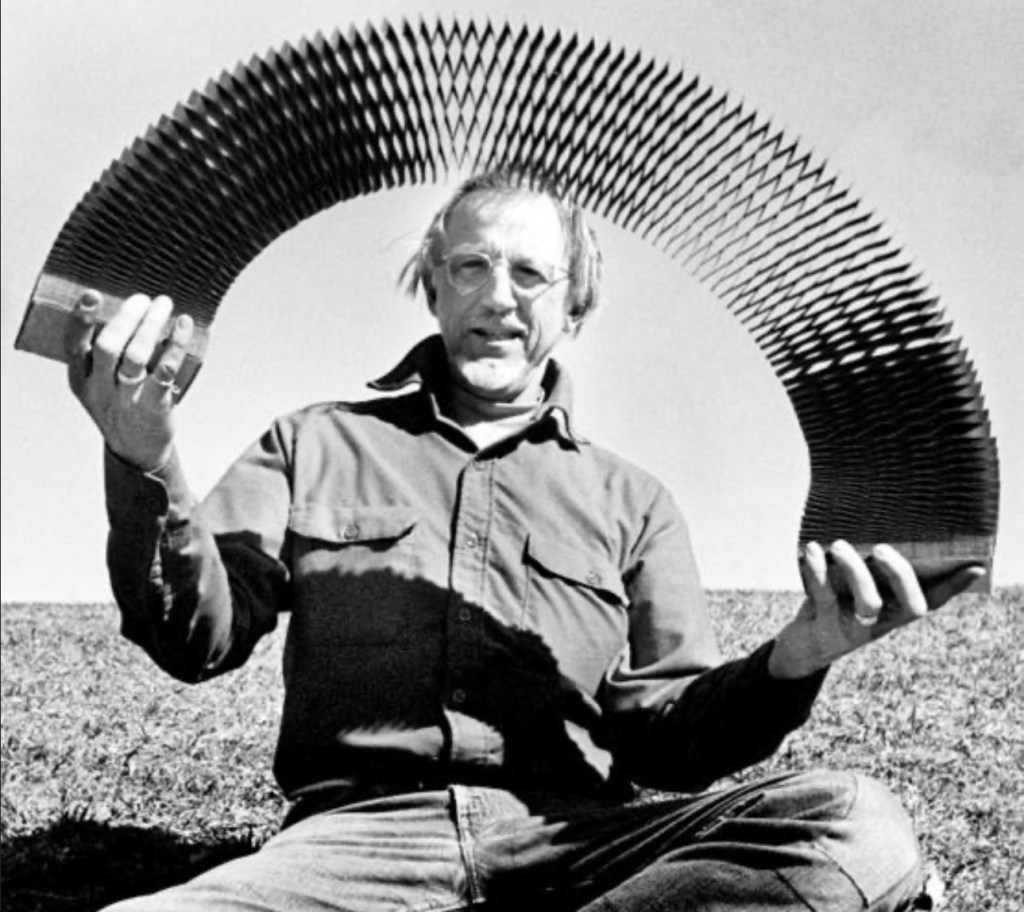
Reinhold Marxhausen

I am currently leading an adult learning group on the theme of Art, Beauty, and Transcendence. Some wonderful observations were offered by my fellow learners at our first session. After inviting our participants to introduce themselves and share a recollection of a memorable encounter with Beauty, I provided a discussion prompt: Is Beauty essential, or is it a luxury? We seemed to share a consensus that it is an essential part of our lives. And then a participant said, “I find Beauty everywhere!”

Hearing this, I thought of Reinhold Marxhausen, a remarkable artist and teacher who had a vision for how we all might approach our daily encounter with our ordinary, everyday circumstances. His captivating approach to life impacted many people beyond the classroom and studio – me among them. Here is one way to sum up the vision he shared with others: “Beauty can be found everywhere – you just need to look for it!” So simple is this message that I am sure it has more often been dismissed than pursued as a practice. 

Marxhausen in his studio workshop

Reinhold Marxhausen did not just send folks away to try this on their own; it became his mission to show people how to do it. This is made clear in a video of his appearance on the David Letterman show, with the interviewer doing a great job of giving rein to the artist’s creative spark and communicative abilities. Marxhausen‘s Letterman show appearance can be found on YouTube.

Reinhold Marxhausen on the David Letterman show, March 25, 1986

I continue to be intrigued by what Marxhausen’s abiding belief implies- that Beauty is found, in addition to how we are led to it by others, or more simply that it is something we just designate for ourselves. These are three different ways that we might encounter Beauty as a feature in our lives, if not as something even more profound for how we view our lives and the world.

Readers of my posts in this space will be familiar with the parallel I have discerned between the three principal forms of jurisprudence (or theories about the source of Law, and three main sources for our concept of the Good in our understanding of ethics. Found, received, and or made, are the three terms I use to summarize these three approaches to where Law comes from, as well as for sources of our notion(s) of the Good. In offering this summary, I do not exclude the possibility of other sources for Law and or the Good.

More expansively, according to the first view (1), Law and the Good are entities written into the structure of ‘reality.’ As such, these things are ‘there’ for us to find. Another possibility (2), sees Law and the Good as worthy principles we receive from those who have come before us, as things commended to us by longstanding traditions. We sometimes describe them as things that have stood the test of time. A third possibility (3) is that Law as well as the Good are sets of principles about which we come to agreement, or decide upon and enact for ourselves and others. Hence they are things of our crafting, things that we ‘make,’ as we project our preferences outward upon the world. Formal labels for these three approaches include natural law or Creation order (1), historicism or common law (2), and positivism or civil law (3). 

Here is something I want to stress: we are rarely consistent in how we think, perceive, and understand important aspects of our lives. We should therefore anticipate an overlap between these several conceptual categories for how we think about Law and about ethics.  In other words, a ‘both-and’ approach regarding them may be much more appropriate than seeing them in an ‘either/or’ way.

So, is Beauty amenable to a similar analysis? I think it is. For Beauty is found (1); we also discern Beauty in the company of others and through their guidance (2); and we surely fashion notions about what is beautiful through personal preference and decision-making (3). 

If you believe you have ‘found’ Beauty at some or at many points in your life experience, would you be content to accept the proposition that your encounter with Beauty is actually reducible to the social impact of others upon your perception, and or that it was and is merely the result of personal preference and choice?

The Beauty of Hospice Care

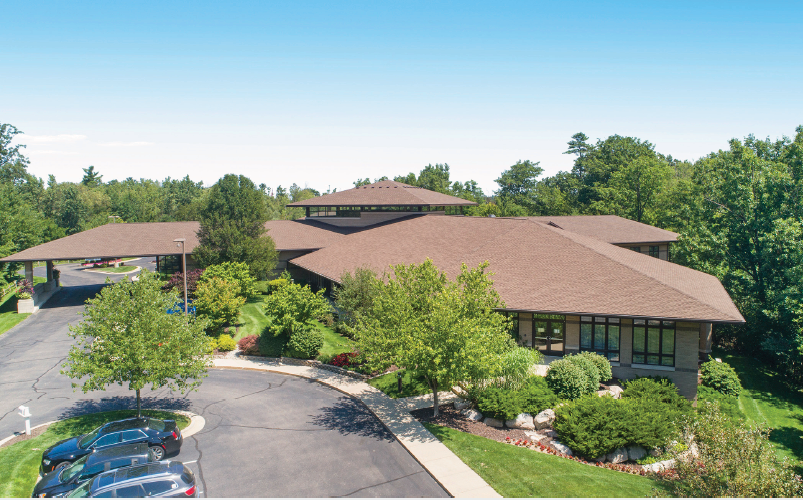
Faith Hospice at Trillium Woods

Having worked in a variety of church-related contexts for over four decades, I have become familiar with the importance of having a clear vision of one’s mission. In my experience, people are motivated by inspiring mission statements, and especially when they are enacted with cheerful efficacy. As advocates of Appreciative Inquiry maintain, a focus on what is working well builds energy and promotes a sense of well-being among participants.

As I reflect on the most compelling examples of institutions, facilities, or programs that I have encountered, the hospice movement in healthcare stands out. Whereas medical practice has increasingly become directed towards problem-solving and the alleviation of various conditions, along with our growing interest in future-oriented health maintenance, hospice care tends to be focused on a wholistic approach to the present well-being of a person. And I have found that hospice advocates and caregivers to be among the most positively mission-focused people I have met.

Aside from occasional background reading and some videos on the topic of hospice care, my experience over the years with this life-enhancing approach to being with other people was relatively brief. But then, it was unexpectedly transformed by a full and meaningful month of time spent with my dad, beginning with the discovery of his having a malignant brain tumor and ending with his peaceful death. He died surrounded by his four sons, in a remarkable facility dedicated solely to hospice care.

Arial view of the Trillium Woods location

I am particularly grateful for my dad’s opportunity to have been admitted to the Faith Hospice inpatient care facility at Trillium Woods in Grand Rapids, Michigan. Through my parish ministry, I knew about hospice care being provided at home and in other settings, but I had not had any personal experience with a residential facility built and maintained solely for hospice care. My dad’s move to Trillium Woods happened four days after his admission to hospital ER, on a cold, mid-December day. The hospice became his new temporary home, and we soon discovered how it was an unanticipated but blessed answer to prayer for him as well as for our family.

December is a tender time for families caring for or mourning loved ones, and we found that Faith Hospice staff members were especially sensitive to our emotions as the Christmas holiday season came into its fullness. We were impressed by the generously sized and attractively decorated room they were able to provide for my dad and the other patients, which included a comfortable sitting area, a bed area, and large windows and a door leading onto a beautiful terrace. Equally impressive was the rest of the facility, which had large lounge areas, a dining room and adjacent kitchen, and a well-designed chapel. Being able to have our family Christmas dinner there at the hospice (as well as other meals) was a comfort, and allowed us to focus on my dad and his care, and to be less absorbed with our own daily concerns.

A hospice patient’s room like the one my dad was in

Most significant to us was the dedicated staff, who were sensitive and attentive to each subtle stage in the process of my dad reckoning with and moving toward his impending death. Like them, my dad showed himself to be strong in faith, and fully at peace with seeing his final illness as a facet of God’s merciful Providence. Thankfully, he showed no signs of being in denial about what was happening to him. I attribute this to his decades of ministry as an ordained pastoral counselor, and as one who lived his faith while commending it to others.

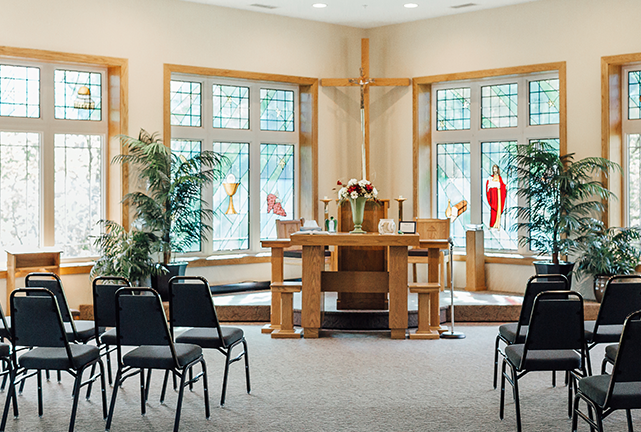
The Chapel at Trillium Woods

During the process of my dad’s dying, I marveled at the ministry of Faith Hospice at Trillium Woods, and wondered about how many other such facilities exist around the country and elsewhere. I continue to wonder about this, and imagine that such a place is more often desired than found, being the kind of facility that everyone would want to have available should they need it.

The phrase, “the end of life,” is often used to refer to what hospice care is focused upon. Taken simply and literally, these words refer to the termination point we come to in the course of our physical embodiment. Yet, as I like to remember, our English word ‘end’ does not simply connote a terminus but also a point of fulfillment and the realization of purpose. In my experience of the hospice care that was offered to my dad and our family at Trillium Woods, I encountered a culture of ministry oriented toward lifting our eyes to a broader horizon of meaning for daily life. In this, I found the facility was aptly named as Faith Hospice, for clearly a grounded Christian Faith lay at the heart of the mission enacted on a daily basis at Trillium Woods.

Note: I have no official connection with Faith Hospice at Trillium Woods but only my personal experience of holy care from the folks there. With them, we journeyed through our final month with a family member amidst a loving community. More about this ministry and facility can be found by clicking here.

Beauty & “The God of Wes Anderson”

This is a reprint of a review article by Germẚn Saucedo, titled “The God of Wes Anderson.” It is reprinted here with permission from the author, and from the publisher of the journal, First Things, where it first appeared.

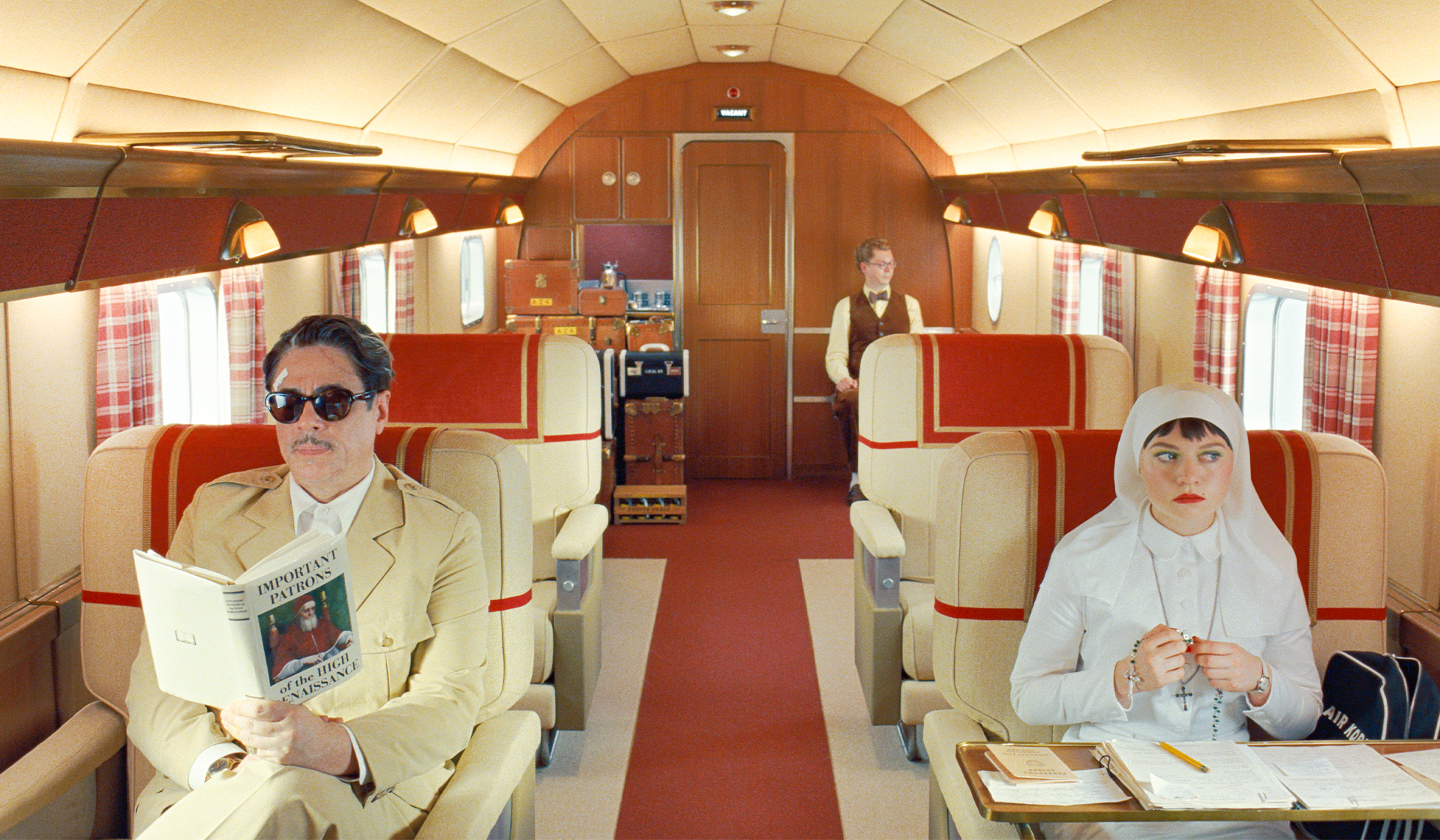
A scene from Wes Anderson’s new film, The Phoenician Scheme

The God of Francis Thompson is a stubborn God. In his seminal poem “The Hound of Heaven,” a soul is on the run from God: “I fled Him, down the nights and down the days; / I fled Him, down the arches of the years.” The “hound” is persistent, however, and is always pursuing with “unhurrying chase, / And unperturbèd pace, / Deliberate speed, majestic instancy.” Who is this God whose love for us is so passionate and resolute, who will forgive even the gravest of sins and chase us to the ends of the world?

The God of Francis Thompson is the God that operates in Wes Anderson’s latest feature, The Phoenician Scheme. The film follows Anatole “Zsa-Zsa” Korda (Benicio del Toro), an industrialist and morally bankrupt magnate in the style of J. Paul Getty or Aristotle Onassis who, after surviving yet another mysterious assassination attempt, decides to call upon his estranged daughter Liesl (Mia Threapleton), a novice “sister of the cloth.” He intends not only to bequeath his vast fortune to her, but also to enlist her in completing the “most important project of [his] lifetime,” the “Korda Land and Sea Phoenician Infrastructure Scheme.”

Many films have been accused of being “God-haunted,” hinting at the presence of God through the subtleties of the plot or the visuals. The Phoenician Scheme is more than “God-haunted”; he is very much present in the film. He is, in fact, played by Bill Murray. After a plane crash at the beginning of the movie, Korda briefly finds himself in heaven. There, he runs into his grandmother, who fails to recognize the man he has become. Time and time again, as assassins seek to end his life, Korda finds himself at the pearly gates. Each time, he is found lacking.

In the Confessions, St. Augustine famously recounts his youthful desire for the Lord to “Give me chastity and continence, but not yet.” While amusing, this sentiment is spiritually disordered. Many of us live lives apart from God, hoping we can outmaneuver him at the last second, “lest he come suddenly and find you asleep.” Similarly, Korda realizes that he has delayed repentance and conversion until the last minute.

The “hound” is never far away, however. He manifests himself through Liesl who, despite practically being abandoned by Korda, has managed to become a pious nun. While reluctant to enter her father’s world of opulence and luxury, she nevertheless decides to play the role Korda has set for her, seeing potential spiritual fruits from the venture, and quickly begins the work of saving Korda’s soul. She easily forgives his past injustices toward her, brings love to the lives of Korda’s nine neglected sons, and attempts to humanize his enterprise. Liesl also attempts to evangelize the children’s tutor and her father’s new administrative assistant, Bjørn.

Korda’s journey to save his infrastructure project brings him ever closer to God. Liesl’s influence and example, as well as a confrontation with his past (and some amount of self-interest), leads him—along with his nine sons—to be baptized into the Catholic Church. In a defining act of selflessness, Korda gives up his fortune to cover the funding deficit of his major project and save it.

Wes Anderson’s films are often dismissed as mere aesthetic exercises, lacking narrative substance. His protagonists are usually “bourgeois with bourgeois problems,” while his visuals are frequently labeled as “twee” and “quirky.” Unlike the realism of directors like Ermanno Olmi, whose slow and contemplative style focused on the material reality of the lower classes, Anderson’s work is often seen as overly stylized and detached from reality.

But this surface-level reading could not be further from the truth. For Anderson, it seems, beauty is reality. To borrow Keats’s famous verse, “Beauty is truth, truth beauty”; and it is through beauty that God makes himself known to us. When Liesl attempts to exit her father’s opulent world and take her vows as a nun, her mother superior declines, pointing to her love of lavishness—including a bejeweled pipe and diamond-encrusted rosary gifted by Korda, which Anderson commissioned from Dunhill and Cartier—as evidence of her lack of religious vocation. But she does not scold her for loving beautiful things. In fact, she comforts Liesl by saying that God glorifies himself with the lavish and palatial, as not everyone was meant to live in poverty.

In a Q&A at a New York screening of the film, Wes Anderson reflected briefly on the ability of rich magnates to do good, especially in today’s world. The artist has a similar potential. In Thompson’s poem, the “hound” claims that “[N]one but I makes much of naught.” While our riches and our art may amount to nothing, once offered up to God, they can become instruments of his love and mercy. God will never stop his pursuit of us in part because he, unlike the world, knows our full potential. Korda—like us—is thrown lifeline after lifeline, which can only be taken on God’s terms, not ours.

Unlike Korda, we should not wait for brushes with death and brief visits to the pearly gates to turn around and deliver the “hound” from his incessant chase. Every moment is an opportunity to do so. The curious and wonderful thing about the God of Francis Thompson, the God of Wes Anderson, is that he’s real, and he is always seeking us.

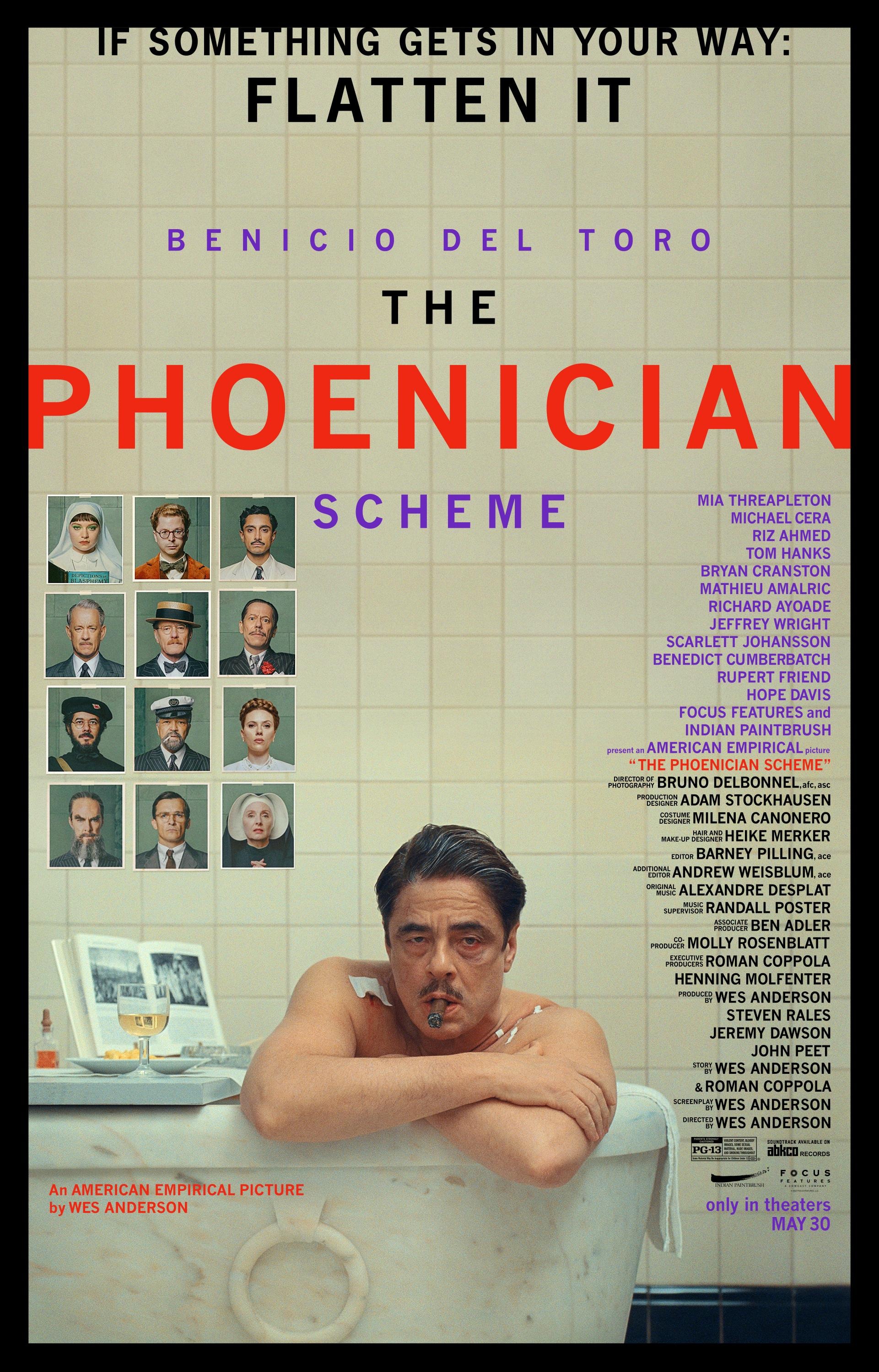
A promotional poster for Anderson’s new film

Note: Germẚn Saucedo serves as a Junior Fellow at First Things. I requested permission to reprint his review article because it seems so fitting to the material I explore on this website. I am grateful for this fine piece. I particularly appreciate Saucedo’s statement, based on a quote from Keats: “For Anderson, it seems, beauty is reality… and it is through beauty that God makes himself known to us.”

A Tao of Seeing: Reflections Inspired by Feng Shui

Michael Pollan’s writer’s hut, intentionally situated by a boulder on the brow of a hill

Recently, I observed my middle son moving a black plastic pond module around in a small space in his New Orleans courtyard. As he moved the container that would soon have fish in it, he tried situating the vessel in various ways, in relation to a tree, a fence, some potted plants, and an existing low stone wall. He is not a student or practitioner of feng shui, but I believe I was seeing some of those principles at work in his decision-making.

Western readers may have heard of feng shui, the Asian philosophical approach to discerning the unseen forces that affect objects and their balance in nature. It gives attention to the metaphysical or non-material energies thought to be at work upon or within the world around us. We might say that this approach provides a Tao of seeing, or a natural way of perceiving within and around surface phenomena to the underlying dynamisms that are believed to affect what happens in nature.

This notion that there are unseen forces at work in the world is an idea that is receiving something of a revival in Western Christian spirituality. This is noticeable when people refer to a concept attributable to the Celtic tradition, in which it has become common to refer to “thin places. “ These are places where the veil between the material and the ethereal or the heavenly seems temporarily dissolved. Another parallel here between East and West may lie in the quest within Christian spirituality for the goal of harmony and balance between people and the created world.

However, my reflections here constitute an aesthetic rather than a philosophical or historical inquiry. I am interested in the dynamics of movement we perceive in the circumstances that we encounter, and less in the metaphysical forces or energies that may be present within them. At the outset, however, I want acknowledge how a nuanced Asian approach can be an authentic route toward a culturally-informed appreciation of the phenomena we encounter, especially from a historically Asian perspective.

As we look at paintings in the context of Western culture, one factor we discern assesses composition and attends to the way our seeing is drawn from one part of a larger image to another. This dynamic is often an artist-intended aspect of an overall composition. Sight lines in garden design and arrangement provide another example, as does the architectural arrangement of space in buildings.

Attention given by Western designers to feng shui is sometimes criticized as being a superficial application of historically and philosophically nuanced ideas. But I want to give credit to ways in which our sensitivity toward perceiving movement and direction is a genuine factor that is available for analysis and articulation. We notice this when we encounter both two dimensional compositions as well as three dimensional spaces and the objects we find in them. We can always come to know more about what we see.  Because what we see is something that is there, not simply what we believe, or are disposed or inclined to see.

An Asian garden said to be designed according to feng shui principles

Motion, balance between forces, spatial arrangement of objects, and the dynamic relationships that are visible because they exist between and among these variables, continue to grab my interest. Contrasts between colors and textures, as well as between sizes and shapes, play a significant role.  Additionally, the perceived difference between what is natural and things that are humanly fashioned is equally significant, as is our perception of the criteria for what constitutes that which we consider to be natural. These are among the factors that help account for our sensitivity towards and interest in these many observable variables, and our common quest for purpose and meaning in the contexts where we find ourselves.

Motions and balance as we find these factors in Wassily Kandinsky’s painting, Several Circles

Painters, sculptors, and architects, seriously consider these factors within visual and spatial compositions. The painter, Wassily Kandinsky, and the architect, Frank Lloyd Wright, provide two examples of those who also perceived a spiritual dimension within their creative work.

If so, we –  as caring lay observers of the world and of the things and places among which we find ourselves – should give deference to this evident fact. For we can all be thoughtful, as people often are inclined to be, about what we see, touch, and experience when we interact with visual phenomena.

I find myself increasingly sensitive to these aspects of our appreciation for Beauty, and endeavor to be more mindful about them. I am intrigued by possible parallels that may exist between Eastern metaphysical interpretations of visual phenomena and more familiar approaches to what we see that are shaped by Western aesthetics. Especially as these familiar approaches are described and developed within our artistic and architectural best practices.

Pointing Toward Perception

If reading this by email, please tap the title at the top to open your browser for the best experience. Then, clicking individual pictures will reveal higher resolution images.


We live in a world filled with “data.” Disconnected bits of information, especially in great quantity, overwhelm our ability to see and to think. Accumulating additional data or more information does not produce knowledge. Knowledge has to do with seeing the connections between bits of information. When we see the connections, we begin to see a picture, we begin to hear a story, and we gain understanding as well as wisdom.

The unrecognized fellow traveler on the road to Emmaus asks the two disciples, ‘what are all these things you are talking about?’ The answer he receives from them amounts to information. But his question is pointed toward understanding, especially in relation to ‘the big picture. He is challenging them to discover something bigger. He is really asking something like this: ‘All these things’ that have happened… What do they have to do with what God has been up to, all along?”

Here is a basic Christian truth that we find in the Emmaus Road story: Things take on meaning in relation to the risen Jesus. It happens when we see events in our lives in relation to him. It happens also with things like bread and wine as we gather at table. And it happens with people like you and me as we gather in community.

Jesus helps our perception on the road to Emmaus, and reveals something even more profound at the inn. This ‘inn,’ unlike the one where he was born, has many rooms, many mansions. When we see things like past events and the bread in relation to him, we discern more about what they were or are, and what they yet can become. When we see ourselves in relation to him, we better discern who we really are, and who we are called to be.

Prayerfully, we can look around, between things, and within. We can look for the connections. When we do, we see and discern. We see more because we see more wholly. Then we see the holy.


The above painting, Supper at Emmaus (1958), is by Ceri Richards, and is used by permission from the Trustees of the Methodist Modern Art Collection (UK). The penciled notation at the base of this guache painting on paper suggests that it was intended as a study for an altarpiece painting for the chapel of St. Edmund Hall (or College), at Oxford, England. The Emmaus story can be found in Luke 24:13-35, and it is a traditional Eastertide Gospel reading.

This post is adapted from one first published in 2014.

Resurrection Finds Us

[If reading this by email, please tap the title at the top to open your browser for the best experience.]

Stanley Spencer, Resurrection, Tidying (1945)


Stanley Spencer’s church cemetery visitors find themselves surprised by being found! They experience being found through a resurrection encounter with those who have gone before.

The resurrection of Jesus is not usually something we go looking for. The risen Jesus comes and finds us. This is the pattern we see in so many of the stories of Jesus’s first resurrection appearances to his friends and followers. The disciples and others don’t go looking for him except at first, when they go to the tomb. And even then, they are seeking Jesus’ mortal remains rather than his risen presence. He comes and finds them, just as he finds us, often in the context of fellowship. And like them, we are always surprised.

We don’t find the resurrection just as we don’t find God. Neither God nor the risen Jesus are lost, even if we may be. And so, we are found by both, and then we find ourselves as persons who have been found. This is instructive, for it corresponds with our apprehension of and encounter with beauty, which we also misleadingly credit ourselves with ‘finding.’ Really, beauty finds us. For our perception and recognition of beauty depends not on a ‘power’ that we possess to pursue and attain it, but rather on our ability to receive and recognize what is, and what is given. The same is true in our apprehension of and encounter with the grace of the resurrection.

Motivated by our sense of need, we seek to find something or someone to fill the hole at the center of our lives. Though it is a challenge for many of us, being open to being found by the Risen Lord not only meets our need, but can fill us with great joy.

Alleluia. Christ is Risen!


Stanley Spencer’s, Resurrection, Tidying, is one of a large series of paintings based on the theme of Resurrection, which span the years of his mature work.

Beauty in Parallel Revisited

golden_gate_bridge_pillar-smaller-copy

Perhaps the only thing more memorable than driving over the Golden Gate Bridge may be to pass under it on an ocean-going ship. I was lucky enough to have that experience five times before I was a teenager.

Many of us assume the name for this bridge is related to its warm color. But the name comes from the ocean straight over which it stands, and not from the Gold Rush. Rather than mimicking gold, the bridge’s official color—“International Orange”—was chosen to contrast with fog. A story is told about when that color was first applied. Painters dabbed splotches of it on the heads of curious seagulls. Pretty soon, Bay Area birdwatchers reported a new bird species, which was called the California Red-Headed seagull!

Until 1964, the Golden Gate Bridge had the longest main span in the world. Yet, its basic design isn’t unique. We know this from other suspension bridges, which are found all over the world. Bridges of this kind have two main towers, steadied in place by their suspension cables, which are anchored in the ground. From their anchor points, these substantial cables ascend to the top of the towers, and then gently descend again to the center of the bridge. From that low point, they again soar up, to the top of the opposite tower. The slightly arched roadway across is literally suspended from these main cables, by small support cables that hang from them. Here, in the beauty of this simple design, we find a helpful spiritual and liturgical metaphor.

Reflect for a moment about two significant Sundays in the church year. One is the last Sunday after Epiphany, or Transfiguration Sunday, which we observed 10 days ago. The other is Easter Day, which lies ahead. Transfiguration Sunday is the last Sunday before this season of Lent, and Easter Day is the first Sunday after Lent. Both Sundays are as important with regard to our identity as they are to that of Jesus. For in his Transfiguration and in his Resurrection, Jesus does not simply reveal who he really is. He also reveals the fulfillment of our vocation to be fully human, in him.

Imagine these two Sundays on the Church calendar as being like the two towers of the Golden Gate Bridge. Transfiguration Sunday, coming just before Lent, is like the south tower of the Golden Gate bridge, on the busy urban, San Francisco, side of the straight. And, Easter Sunday is like the north tower of that bridge, on the less familiar and historically rural side of that navigational channel. The season of Lent stretches between these two Sundays like the main span of that bridge, taking us from what we think we know to that which may yet to be disclosed to us.

Here is the crucial part ~ every year we need to make this liturgical crossing, from our sharing in the vision of the Transfiguration, to our participation in the joy of Easter Resurrection. And like the great towers of a suspension bridge, Transfiguration Sunday and Easter Sunday uphold us all the way across our Lenten journey over what sometimes may seem like dark, cold, and turbulent waters around us.


This posting is a revised version of a post I first published in 2017, and is based on my recent homily for the Last Sunday after the Epiphany, which explores the parallel between the revelation of glory that we see in the Transfiguration, and the glory we see in the Resurrection (click here for a link to it).

The Beauty of ‘Nothing’ (as we observe Ash Wednesday)

photos_ashes-05


This past Sunday, using the metaphor of the twin towers of a suspension bridge, I invited our local congregation to explore a pairing of two Sundays in the calendar, Transfiguration Sunday and Easter Sunday. These are the interrelated Sundays immediately before and after Lent. Ash Wednesday and the beginning of Lent present us with a similar opportunity. Here, we can explore the relationship between Ash Wednesday and Easter Sunday. With this second comparison between liturgical days, instead of noticing a parallel, we can observe an evident paradox.

On Easter Sunday, we face an unusual challenge. We must take the finding of an absence, and discern within it a presence. Something that was known, seen and touched, became as if it was nothing. And so, we are challenged to see how an empty tomb could at the same time be full of meaning. Even though Mary Magdalene and the disciples found nothing in the tomb, they came away with the conviction that something profound was there.

Consider, then, this remarkable contrast. In the metaphors at the heart of the Ash Wednesday liturgy, we observe inverse phenomena. What would Ash Wednesday be without ashes? Ashes constitute a biblical image with a long and vivid history. And our tactile liturgical use of this common material plays a central role in our services on the first day of Lent. Yet, this liturgical presence of ashes is meant to represent an absence. A dish full of ashes in my hand represents something larger, which is empty. Something (the sign of the cross) is marked with ash on parishioners’ foreheads, and it symbolizes the starkness of nothing, or, literally, no thing.

So, the Sunday of joyful resurrection presence provides the reverse of the Wednesday of regrettable absence. Though it wouldn’t sound as good, Ash Wednesday could instead be called, “Absence Wednesday,” “Empty Wednesday,” or “Nothing Wednesday.” This is because the ashes at the heart of the liturgy for this day symbolize an absence, an emptiness, or a ‘nothing.’ I don’t mean that the ashes are empty of meaning. It’s just that what they represent is literally nothing. Ashes represent nothing of value, nothing of worth. And that is what makes them special! We put ashes on our foreheads to remind us that, on our own and relying on ourselves, we are nothing of value, nothing of worth. No matter how hard we try, we don’t give meaning and value to ourselves. Only God does that.

Our lives can sometimes feel like they are full of “nothings,” as if all that we do only amounts to ashes or dust. All too quickly, we forget that dust and ashes are the building blocks of God’s creation of human beings. They are the building blocks of God’s Kingdom. When we think about something we have done, and are tempted to say, “O, it’s really nothing at all,” let’s remember what God can do with ‘nothing’.


This posting is a slightly altered republication of a post from March 2017. It is based on a homily for Ash Wednesday that I have frequently offered, the most recent text of which can be found by clicking here.

Attending to Beauty


It is easy to recognize how beauty can be understood as ‘being in the eye of the beholder.’ As such, we think of it as a feature of our ‘subjective’ perception and experience. So, a concept of beauty may be ‘in here‘ (between my ears) as a component of my consciousness. Yet, beauty may also be important to me because it is first ‘out there‘ as an object of my subjective experience. For beauty is ‘there’ to behold, in the world around us, and is not simply something we project outwardly upon the face of Creation.

One way to discern this is to reflect upon art that is representative, especially landscape paintings the beauty of which grabs our attention. As with Monet’s painting, The Magpie (above), we view and are affected by an artist’s rendering of something he or she observes in nature. At first, an aspect of Creation captures the painter’s awareness. The painter then offers what she or he sees, for us to appreciate. Something which was ‘there’ for the artist is also ‘there’ for us, even if it appears differently as a result of its representation. This is beauty that we recognize, rather than merely something we imagine and or synthesize.

Within our broader cultural tradition, beauty can be thought of as the first of the three so-called ‘transcendentals’ ~ beauty, goodness, and truth. These three, considered in this sequence, are associated with the thought of the Danish philosopher, Soren Kierkegaard.

In common human experience, many of us are at first most attentive to the phenomena of beauty, to things in our perception that summon our positive regard and give us pleasure. As we mature, the concept of goodness —especially as manifest in human acts— also arouses our interest and our concern.

Attentive reflection upon beauty and goodness can lead us to ask significant questions about them. Such as, where do they come from, and why are they part of the world? Why are they important to us? Asking such questions may then lead us to pursue the concept of truth, and to begin to appreciate this third transcendental in relation to the other two. Indeed, in a way that is parallel to the Christian concept of the inter-relationship between the members of the Holy Trinity, our appreciation for beauty, goodness and truth gains depth when we consider them in relation to one another.

Sensing that beauty is real, and something with which the order of Creation is imbued, becomes a doorway to appreciating the reality of goodness and truth. This reality is not dependent upon our acts of perception and imagination. Scripture provides support for this, and for recognizing how beauty exists as an aspect of Creation and as a quality of the Creator. With the Psalmist, we can pray these words: “One thing I asked of the LORD, that will I seek after: to live in the house of the LORD all the days of my life, to behold the beauty of the LORD… (Ps. 27:4).” Or, “Out of Zion, the perfection of beauty, God shines forth (Ps. 50:2).” Or with Isaiah, “You shall be a crown of beauty in the hand of the Lord… (Is. 62:3).” These words are fulfilled as we live in Christ.

In Morning Prayer, we say, “Worship the Lord in the beauty of holiness: Come let us adore him (based on Psalm 96:9, KJV).” We do so because “honor and and majesty are before him; strength and beauty are his sanctuary (Ps. 96:6).”

Attending to beauty in ‘the book of nature’ is like attending to the revelation we find in ‘the book of Scripture. Both have the same ‘author,’ and there is much ‘there’ for us to find and discern in each.


The image above is of Claude Monet’s painting, The Magpie. A thoughtful reflection upon its significance, in connection with a quote by Henry David Thoreau, can be found in Christophe Andre’s book, Looking at Mindfulness: 25 Ways to Live in the Moment Through Art.

The Beauty and Danger of Anticipation

Art_James Tissot_The Procession in the Streets of Jerusalem


Look at this crowd: in James Tissot’s painting, excited people await and greet Jesus’ entry into Jerusalem. Two things are obvious about his arrival in the city. We notice the huge and enthusiastic crowd. And, we notice the object of their attention, Jesus riding on a donkey. At first, we naturally assume an affinity between these two things. The crowd is joyful about Jesus precisely because he is the answer to their questions, and the apparent solution to their concerns. Who he is seems to fit neatly with who they are, and with where they want to go. After all, who wouldn’t be happy when long-nurtured hopes and expectations are about to be fulfilled.

As Matthew describes the scene, the crowd responds to Jesus’ arrival in two ways, both of which evoke historic precedent. We learn from 2 Kings about the followers of Jehu ~ when they learn he has been anointed king, they spread their cloaks for him to walk on.1 And in 2 Maccabees, we learn how Judas Maccabaeus was greeted upon arriving in Jerusalem, after defeating Israel’s enemies. The people honored him by waving palm branches in the air. To clinch the point, Matthew want us to know this: that when Jesus arrived in Jerusalem, the crowd’s dramatic response was a fulfillment of God’s word through the prophet Zechariah: “”Tell the daughter of Zion, Look, your king is coming to you, humble, and mounted on a donkey, and on a colt, the foal of a donkey.” 
And the people shouted, “Hosanna to the Son of David!”

In other words, as Matthew describes Jesus’ arrival in the city, the crowd’s greeting of him suggested a similar hope, that he might vanquish the repressive powers causing God’s people to suffer. This Nazarene might be the one to make God’s Kingdom present in their time. These observations can help us appreciate how Jesus was greeted when he arrived in Jerusalem, and how he was viewed soon after. For, like many leaders in history, he was the object of an immense amount of hopeful projection.

Consider again at the crowd in Tissot’s wonderful painting of Jesus’ arrival. How many of them are looking directly at him? And of those, how many actually see him, and for who he is rather than for what he represents among their pre- existing desires? Notice how many in the crowd are carried away by the moment. They are excited by imagined possibilities, rather than by the Kingdom concretely at hand. This situation is not merely of historical interest, nor is it primarily about other people, living at another time. Jesus’ arrival in Jerusalem is also about us, and about why we are drawn to worship during Holy Week. For his arrival invites us to consider our intentions this week, as we greet with palms our Lord’s arrival. And it prompts us to consider how we might best walk with him through the rest of the week.


This image is from James Tissot’s painting, The Procession in the Streets of Jerusalem. I am indebted to N.T. Wright regarding the specific references to earlier biblical precedents for the way Jesus was greeted upon his arrival in Jerusalem. This reflection is based on my sermon for Palm Sunday, which may be accessed by clicking here.