Liturgy

Beauty in Parallel Revisited

golden_gate_bridge_pillar-smaller-copy

Perhaps the only thing more memorable than driving over the Golden Gate Bridge may be to pass under it on an ocean-going ship. I was lucky enough to have that experience five times before I was a teenager.

Many of us assume the name for this bridge is related to its warm color. But the name comes from the ocean straight over which it stands, and not from the Gold Rush. Rather than mimicking gold, the bridge’s official color—“International Orange”—was chosen to contrast with fog. A story is told about when that color was first applied. Painters dabbed splotches of it on the heads of curious seagulls. Pretty soon, Bay Area birdwatchers reported a new bird species, which was called the California Red-Headed seagull!

Until 1964, the Golden Gate Bridge had the longest main span in the world. Yet, its basic design isn’t unique. We know this from other suspension bridges, which are found all over the world. Bridges of this kind have two main towers, steadied in place by their suspension cables, which are anchored in the ground. From their anchor points, these substantial cables ascend to the top of the towers, and then gently descend again to the center of the bridge. From that low point, they again soar up, to the top of the opposite tower. The slightly arched roadway across is literally suspended from these main cables, by small support cables that hang from them. Here, in the beauty of this simple design, we find a helpful spiritual and liturgical metaphor.

Reflect for a moment about two significant Sundays in the church year. One is the last Sunday after Epiphany, or Transfiguration Sunday, which we observed 10 days ago. The other is Easter Day, which lies ahead. Transfiguration Sunday is the last Sunday before this season of Lent, and Easter Day is the first Sunday after Lent. Both Sundays are as important with regard to our identity as they are to that of Jesus. For in his Transfiguration and in his Resurrection, Jesus does not simply reveal who he really is. He also reveals the fulfillment of our vocation to be fully human, in him.

Imagine these two Sundays on the Church calendar as being like the two towers of the Golden Gate Bridge. Transfiguration Sunday, coming just before Lent, is like the south tower of the Golden Gate bridge, on the busy urban, San Francisco, side of the straight. And, Easter Sunday is like the north tower of that bridge, on the less familiar and historically rural side of that navigational channel. The season of Lent stretches between these two Sundays like the main span of that bridge, taking us from what we think we know to that which may yet to be disclosed to us.

Here is the crucial part ~ every year we need to make this liturgical crossing, from our sharing in the vision of the Transfiguration, to our participation in the joy of Easter Resurrection. And like the great towers of a suspension bridge, Transfiguration Sunday and Easter Sunday uphold us all the way across our Lenten journey over what sometimes may seem like dark, cold, and turbulent waters around us.


This posting is a revised version of a post I first published in 2017, and is based on my recent homily for the Last Sunday after the Epiphany, which explores the parallel between the revelation of glory that we see in the Transfiguration, and the glory we see in the Resurrection (click here for a link to it).

The Beauty of ‘Nothing’ (as we observe Ash Wednesday)

photos_ashes-05


This past Sunday, using the metaphor of the twin towers of a suspension bridge, I invited our local congregation to explore a pairing of two Sundays in the calendar, Transfiguration Sunday and Easter Sunday. These are the interrelated Sundays immediately before and after Lent. Ash Wednesday and the beginning of Lent present us with a similar opportunity. Here, we can explore the relationship between Ash Wednesday and Easter Sunday. With this second comparison between liturgical days, instead of noticing a parallel, we can observe an evident paradox.

On Easter Sunday, we face an unusual challenge. We must take the finding of an absence, and discern within it a presence. Something that was known, seen and touched, became as if it was nothing. And so, we are challenged to see how an empty tomb could at the same time be full of meaning. Even though Mary Magdalene and the disciples found nothing in the tomb, they came away with the conviction that something profound was there.

Consider, then, this remarkable contrast. In the metaphors at the heart of the Ash Wednesday liturgy, we observe inverse phenomena. What would Ash Wednesday be without ashes? Ashes constitute a biblical image with a long and vivid history. And our tactile liturgical use of this common material plays a central role in our services on the first day of Lent. Yet, this liturgical presence of ashes is meant to represent an absence. A dish full of ashes in my hand represents something larger, which is empty. Something (the sign of the cross) is marked with ash on parishioners’ foreheads, and it symbolizes the starkness of nothing, or, literally, no thing.

So, the Sunday of joyful resurrection presence provides the reverse of the Wednesday of regrettable absence. Though it wouldn’t sound as good, Ash Wednesday could instead be called, “Absence Wednesday,” “Empty Wednesday,” or “Nothing Wednesday.” This is because the ashes at the heart of the liturgy for this day symbolize an absence, an emptiness, or a ‘nothing.’ I don’t mean that the ashes are empty of meaning. It’s just that what they represent is literally nothing. Ashes represent nothing of value, nothing of worth. And that is what makes them special! We put ashes on our foreheads to remind us that, on our own and relying on ourselves, we are nothing of value, nothing of worth. No matter how hard we try, we don’t give meaning and value to ourselves. Only God does that.

Our lives can sometimes feel like they are full of “nothings,” as if all that we do only amounts to ashes or dust. All too quickly, we forget that dust and ashes are the building blocks of God’s creation of human beings. They are the building blocks of God’s Kingdom. When we think about something we have done, and are tempted to say, “O, it’s really nothing at all,” let’s remember what God can do with ‘nothing’.


This posting is a slightly altered republication of a post from March 2017. It is based on a homily for Ash Wednesday that I have frequently offered, the most recent text of which can be found by clicking here.

Mardi Gras!

[If reading this by email, please tap the title at the top to open your browser for the best experience.]


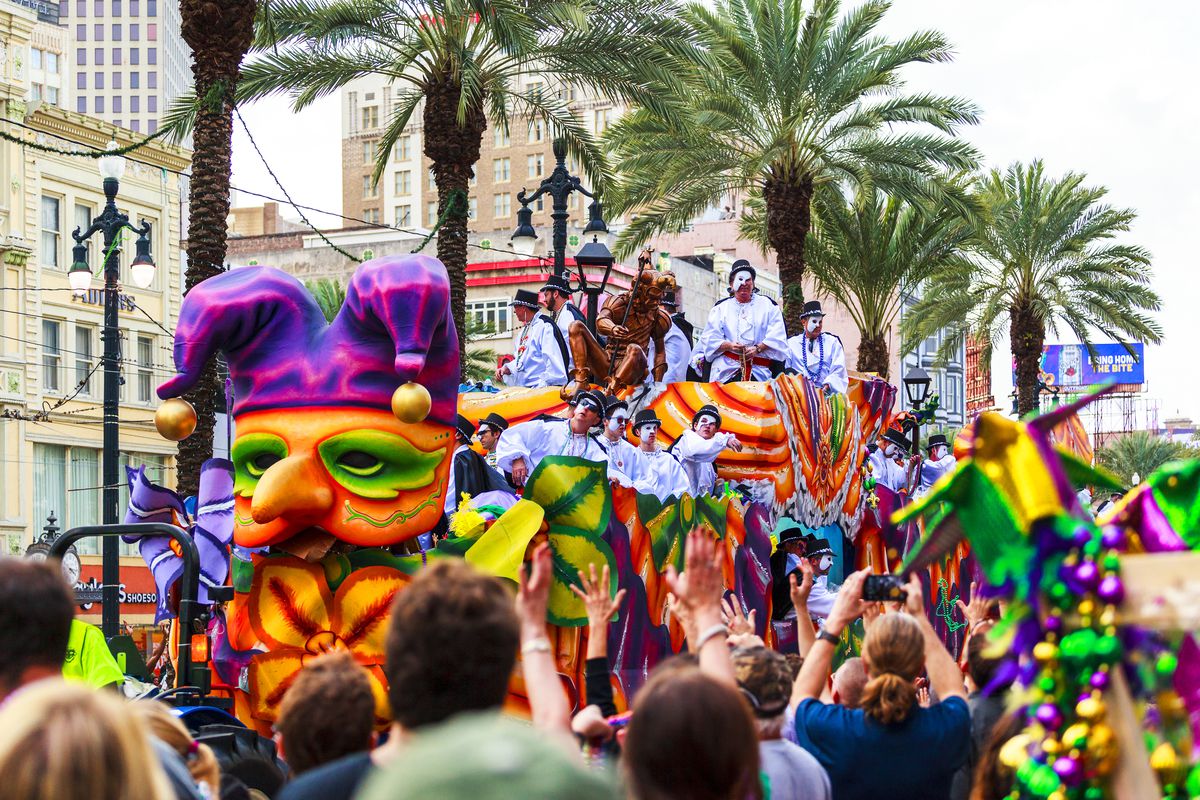
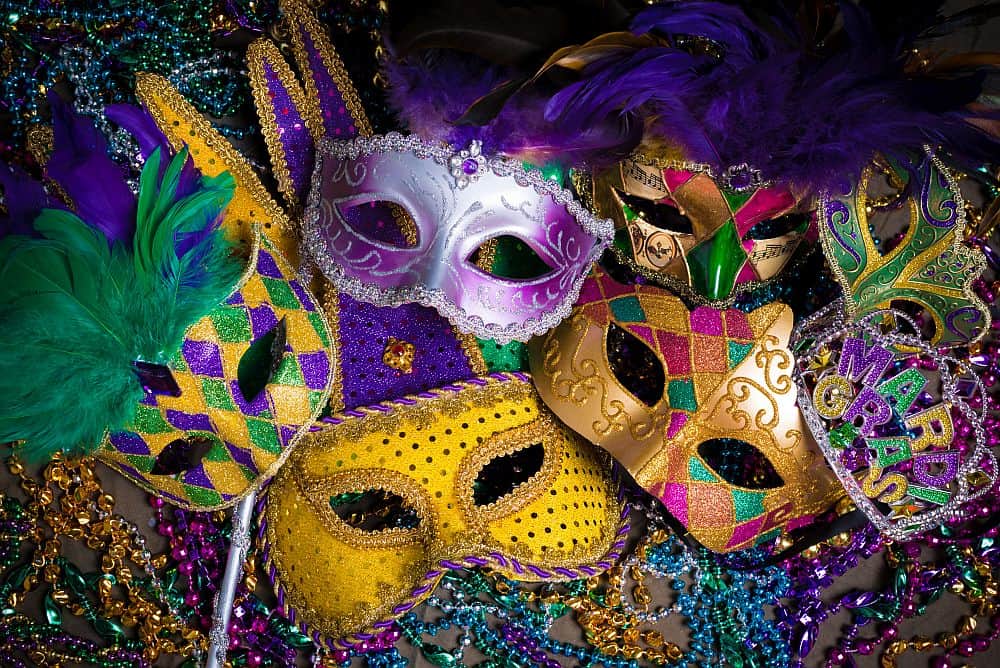
The season has arrived, along with its festivities: the parades, good food and drinks, and parties in the streets. In these weeks between the feast of the Epiphany (always the first day after the 12th Day of Christmas), and the day before Ash Wednesday, a good bit of south Louisiana and nearby areas of the Gulf Coast (such as Mobile, AL) celebrate this happy carnival season of Mardi Gras.

The French words, Mardi Gras, literally mean ‘Fat Tuesday,’ the culminating day of these weeks of fun. But Mardi Gras as a title tends to be applied to the course of several weeks during which the parades occur, but also when formal balls and other social events are scheduled. And though these events are enjoyed and appreciated by folks who live in and around places like New Orleans, the schools close for a long weekend and many head off for skiing vacations out West. While the Crescent City, its streets, and hotels, are filled with visitors from equally distant places, often from the North.

Three main colors associated with Mardi Gras are much evident in float and parade costumes, home and business decorations, and especially in the profusion of plastic beads seen and thrown everywhere. They are gold, green, and purple. I am convinced that the source of these three colors derives from the broader, church-based, liturgical observances during and on either side of these weeks. Traditionally, on the feast of the Epiphany, inaugurating this season, liturgical churches such as Roman Catholic and Episcopal use gold for vestments and altar coverings. This seems likely due to the symbolism of the gold gift(s) presented to the newborn King upon the visit of the Magi (or ‘Wise Men’).

On most Sundays following the Epiphany during these weeks, the traditional color for vestments and altar fabrics is green, perhaps because these Sundays are usually described as occurring during “Ordinary Time,” the same practice that happens during summer Sundays. The third color, purple, I think derives from the traditional color for Ash Wednesday and the season of Lent, which directly follow Mardi Gras.

Not so long ago the radio waves were filled songs like, “It’s the most wonderful time of the year,” songs evoking images of Christmas lights and trees, and snowy landscapes. Though surely to a different tune, and accompanied by very different imagery, the same words could well be sung here now in south Louisiana!

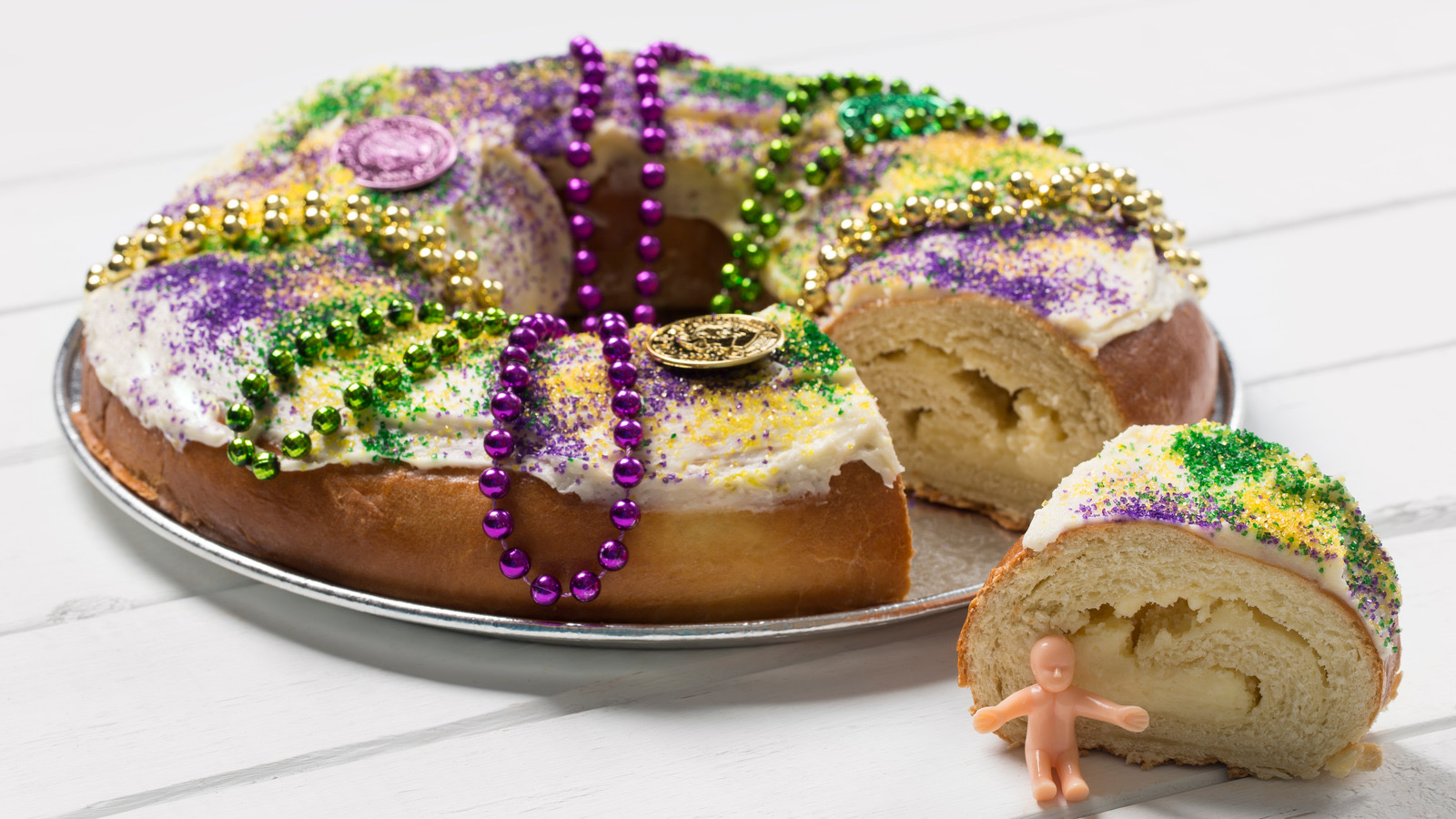
PS: I should have included King Cakes in the first published version of this blog.

During this Mardi Gras season, King Cakes are ubiquitous, especially in workplaces and offices, in teachers’ lounges and similar contexts, and at so many party gatherings. Note the presence of the frosting and beads in the three colors noted above, as well as the gold coins. Most commonly, these cakes have baked into them a little baby, of course symbolic of the one the Epiphany Magi came to worship, who would be proclaimed as King.

The Holy Name

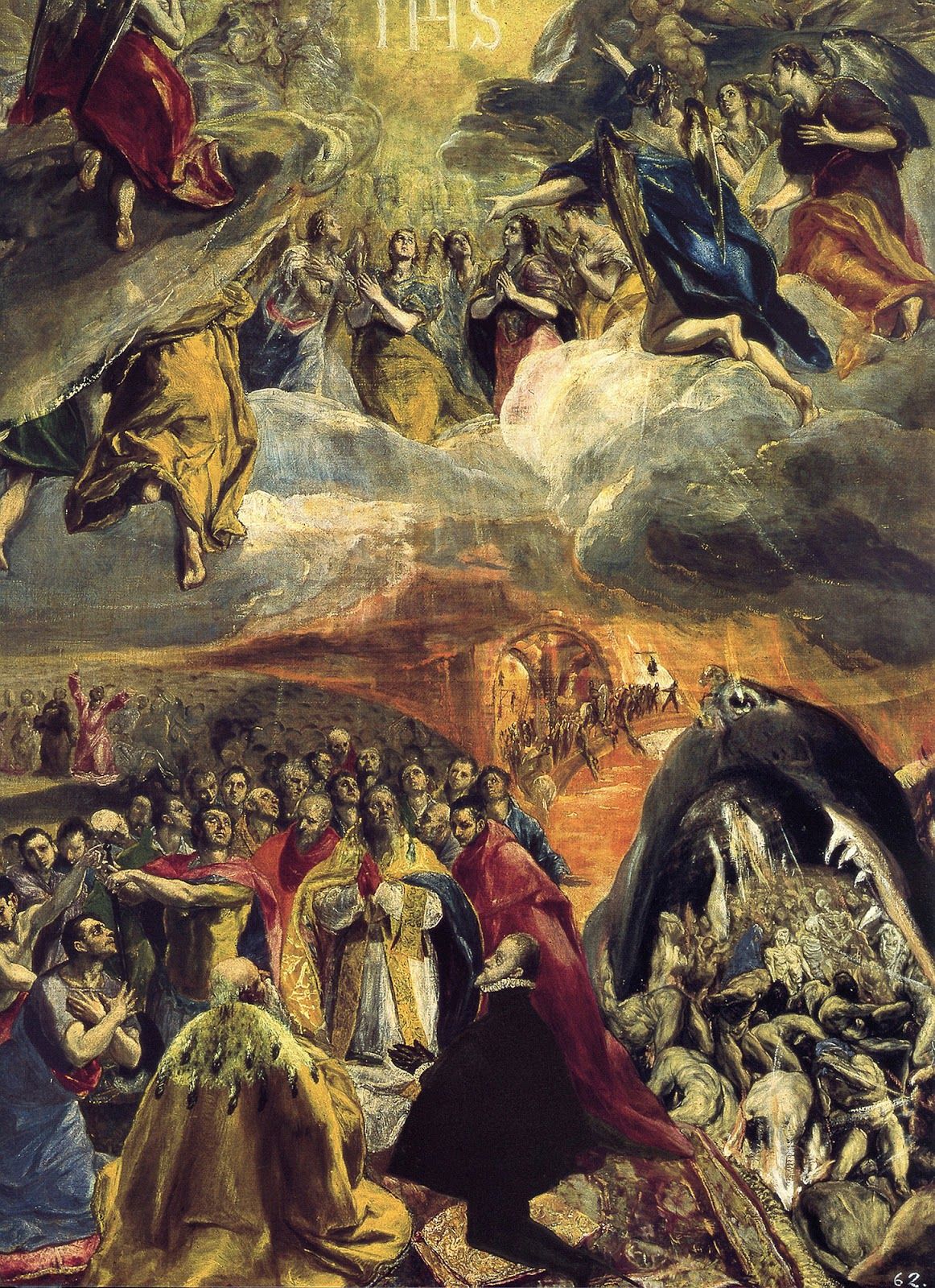
El Greco, Adoration of the Holy Name of Jesus (1579)


Today is the Feast of the Holy Name, otherwise commonly known as New Year’s Day. The traditional name for this day on the Church’s calendar refers to the event of Jesus’ circumcision and his naming on the 8th day. Most of us are well familiar with his name, but not necessarily with its origin.

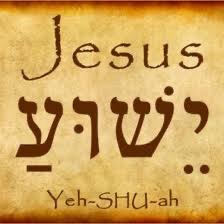
As we recently noted with regard to Alexander Ivanov’s painting of the Annunciation to Joseph, when the angel appeared to the latter in a dream, Joseph was instructed to anticipate the birth of this holy child, and to name him Jesus. The following image helps us appreciate why:

Jesus is an anglicized form of the name we know from the Old Testament as “Joshua,” or from the Hebrew as “Yehshuah.” And why would this divinely promised child be named in this way? Because Joshua was God’s faithful servant who led God’s people across the Jordan River into the Promised Land.

El Greco’s painting depicted above may not be immediately clear in its connection with this feast day. The letters, IHS, at the very top of the painting represent a Latin transliteration of the first letters of Jesus’ name in Greek. Figures in heaven, joined by the angels, are shown in adoration of the divinely revealed name, and its salvific significance. Human figures, including Philip II of Spain, a Pope, and other notables, are depicted in the foreground, who gather in prayerful regard for the same. Paradoxically, to the side of this pious gathering we find the yawing jaws of hell, in an image that may owe something to Hieronymus Bosch, portraying the suffering and demise of those who refuse to acknowledge that same name, and the saving reality it represents.


I think of and pray for my nephew, Joshua (‘Yeshuah’), and his family on this day.

The Beauty of Mosie Burks


One of the most beautiful women in America is someone you may never have heard of. By saying this, I am referring to a concept of beauty that transcends the contemporary, much too usual, sense of beauty that is shaped by outward appearance. What I have in mind here is a deeper sense of that word, one that is anchored in goodness and truth, and in a personal and vibrant faith.

Mosie Burkes reminds me of my Swedish-descended grandmother. On the face of it, that seems like a ridiculous statement. Yet, to my knowledge both women have shared the same deep faith, while having very different cultural ways of expressing that truth. For sure, there is a world of difference between Mosie, an African-American Church of Christ woman born of sharecropping parents in pre-Civil Rights rural Mississippi, and my own forbear, Lydia, who grew up in an 1890’s immigrant family in Minneapolis in a Swedish Baptist church. Yet, both women are faith-shaping for me, but in varying ways. There is a truism that can help me and others parse this: if we have grown up as persons of faith, a grandmother often has been a significant part of the picture. And, for many, Mosie Burks may be that substitute grandmother.

Paradoxically, it may be my Swedish great-grandfather who perhaps also accounts for my appreciation for Mosie Burks. He left Sweden in the 1890’s to come to America as a dissident Baptist – not only from the Anglican Communion-friendly Church of Sweden, but from his own fellow Baptists. Why? Because, as best as we can discern, his proclivity toward Pentecostal experience. After founding a Swedish language newspaper in Minneapolis, and in pursuing local ministry, he then engaged in missions to South America.

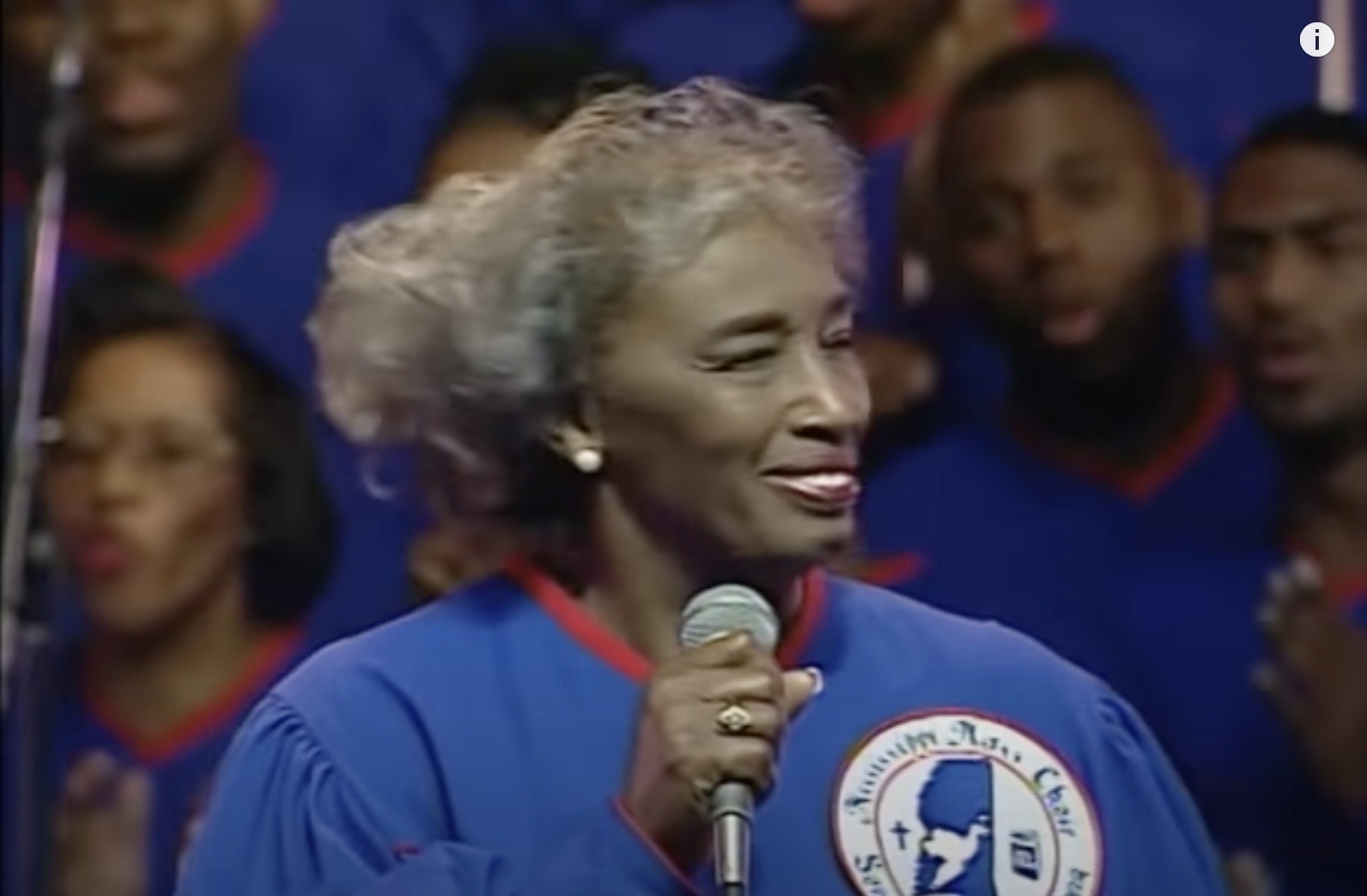
As much as my own spiritual and liturgical instincts run in an old-fashioned Anglican direction (“Let all mortal flesh keep silence…”), preferring reflective and mystical forms of worship, I am stopped in my tracks by Mosie Burks and her singing with the Mississippi Mass Choir. When I watch her sing, along with that magnificent choir, I have the sense that the spirit of my great grandfather rises up within me. Yet, I do not want to deny the universal appeal of her talent and that of the ministry of her choir. YouTube even has a comment, in French, from a self-identifying Muslim, who adores Mosie’s singing.

I think that the power of Mosie Burks’ singing with the Mississippi Mass Choir has a lot to do with her unrestrained and unselfconscious authenticity. In several of her videos we see moments where, ‘slain by the Spirit,’ Bernini’s Baroque sculpture, ‘St Theresa in Ecstasy,’ becomes transposed through a music video into contemporary Jackson, MS.

As she gives herself to her music – and this is a key point – Mosie unconsciously embodies in her voice and movement the heartfelt significance of the words she shares with us.

Wouldn’t we – self-restrained as we usually are – want to give ourselves to Jesus in such a self-revealing way? Well, as a descendent of far-northern European immigrants to America, I know my usual answer to that question! And this is why – for me – Mosie’s approach to singing the Gospel and in demonstrating her faith is so compelling. Watching her sing, with such power, finds me saying to myself, I want to go to her church!

God bless you, Mosie Burks!


Look for Mosie Burks and the Mississippi Mass Choir on YouTube. The images above are stills taken from music videos available through that medium.  I especially recommend among her repertoire these: “When I Rose this Morning;” “I’m Not Tired Yet;” and “They Got the Word.” Some of her videos were recorded when she was in her 80’s!

Being Within God’s Loving Regard


Today, Nov. 2, is commemorated by many as All Soul’s Day, or All Faithful Departed. I am reminded of how some years ago a friend suggested that I watch the Disney Pixar film, Coco. He commended it because the movie connects directly with the celebration of the great feast of All Saints on Nov. 1. Coco also bears upon our observance of All Soul’s Day and All Hallow’s Eve (or Halloween). The movie is set in a traditional Mexican village on the eve of All Saints. In Latin America, and especially in Mexican culture, this feast is traditionally called Día de Muertos, or the Day of the Dead. At the heart of the film and at the center of All Saints is a reality, the reality – through Baptism – of our continuing fellowship and communion with those who have died and gone before us. This is why, in the revised Lectionary, the Scripture readings for All Saints are among those also designated for funerals.

Coco draws us into recognizing how myths, whether ancient or modern, powerfully present truths we already know. We find this, of course, in the opening chapters of Genesis. But we also find how myths play a role in our secular culture. We are enchanted by narrative, and charmed by stunning visual imagery. And we are touched when we are reminded by how family and community relationships shape us. Yet, to refer to biblical and other stories as involving myth, we need to be very clear that the power of myth depends upon the power of truth. {In effect, not all myths are ‘real;’ not all news conveys ‘truth‘}. And so, because human connections are real in our life experience, we are moved by representations of them in ancient Scriptures, as well as in modern literature and the visual arts. What is true, has always been true.

And what surely has always been true for the peoples of the world is this: we do not want to be alone. We do not want to be separated from our families and our friends. And if either family or friends, or both, have been hurtful to us, we still yearn for ideal examples of them —especially when hopeful images of these relationships give us strength to hold our current experience to account.

So, if we don’t want to be separated from our families and friends, we also yearn for a connection with our heritage. We value the history of our family and our many forebears, as well as of our communities. Coco, the movie, plays upon this wonderful aspect of our human experience.

And yet, while commending Coco, I do not think we should accept uncritically every aspect of this delightful film’s story. For Coco contains a notable divergence from traditional Judaism and Christianity. The movie portrays —as being central to the observance of the Day of the Dead— a particular belief. It is this ~ that, if we are not remembered by others, we cease to exist. Yet, as faithful Christians and Jews believe, we are always known and remembered by God, even if our family or our community forgets us! Even if we cease to exist for them, we never cease to exist in God’s loving regard for us.

This day, All Souls or All Faithful Departed, is particularly focused on the idea that, even if we should be forgotten by others, we are never forgotten by God.


An earlier form of this post was first published in November, 2018. The image above was an image found on the internet related to promotion of the movie, Coco.

Beauty Springeth Out of Naught

The Queen’s coffin is borne into St. George’s Chapel, Windsor


Once again, to my delight, the Robert Bridges’ text, “All my hope on God is founded,” set to Herbert Howells’ tune, Michael, was a musical selection for the Committal Service for the late Queen, this time as part of a liturgy in the more intimate setting of  St George’s Chapel, Windsor. This is a hymn tune and text that might deepen your spiritual life. It certainly has had this effect upon me.

One of the striking lines in Bridges’ remarkable hymn text, sung by the whole congregation at the Queen’s Service of Committal, is this: “God’s great goodness aye endureth, deep his wisdom, passing thought: splendour, light, and life attend him, beauty springeth out of naught.”

That line wonderfully honors the biblical account in Genesis of God’s creation of the vastly beautiful universe out of nothing, as well as the glory of the Lord’s resurrection after crucifixion from an empty tomb. It provides an encouraging reminder that even when we feel most empty, or when circumstances seem most unpromising, God brings light in the darkness, and creates beauty where ugliness seems to prevail.

Bridges’ compelling hymn text complements all that has been said in honor of the late Queen’s reliance upon her faith, her life of duty and service, and self-sacrifice. Indeed, the role of faith in her life, and her unhesitating devotion to it, are the kinds of attributes that later lead those who propose additions to the Church’s calendar to consider someone like Elizabeth II for such a fitting remembrance.

For all her hope on God was founded, and she exemplified the beauty of a well-lived public life. She might well have protested that it was an apparent ‘beauty sprung out of naught,’ but the recent fortnight of observances and demonstrations of respect show that most think and believe otherwise.This fits with how -as a sincere Christian- she truly believed that Grace provides where human limitations fall short.

Here is the full text of the hymn. Verse 2 was omitted at the Queen’s Committal service, perhaps out of sensitivity regarding her solemn commitment to upholding the institution of the monarchy. But I very much doubt that the Queen had any hesitation about the generic point of those words.

All my hope on God is founded;
he doth still my trust renew.
Me through change and chance he guideth,
only good and only true.
God unknown,
he alone
calls my heart to be his own.

Human pride and earthly glory,
sword and crown betray his trust;
what with care and toil he buildeth,
tower and temple, fall to dust.
But God’s power,
hour by hour,
is my temple and my tower.

God’s great goodness aye endureth,
deep his wisdom, passing thought:
splendour, light, and life attend him,
beauty springeth out of naught.
Evermore
from his store
new-born worlds rise and adore.

Daily doth th’ Almighty giver
bounteous gifts on us bestow;
his desire our soul delighteth,
pleasure leads us where we go.
Love doth stand
at his hand;
joy doth wait on his command.

Still from earth to God eternal
sacrifice of praise be done,
high above all praises praising
for the gift of Christ his Son.
Christ doth call
one and all:
ye who follow shall not fall.

Based on its inclusion in the September 9 Service of Remembrance (along with an anthem setting by Howells), and it having been featured again at the September 19 Committal service, this hymn was surely one of the Queen’s favorites. For we are told that she selected all the music and other liturgical and ceremonial details for these recent services. With its lyrical melody, and its positive and faith-stirring text, so fitting to the Queen and her life, “All my hope on God is founded” is another treasure among works offered for Anglican worship and liturgy.


The photos above are screen capture images from the Royal Family’s YouTube channel recording of the Committal Service for Her Majesty The Queen.

The Truth Within Beauty


There is something remarkable about traditional English and Anglican choral music. We hear it in the sustained notes sung without vibrato, and the full throated melodical willingness almost to shout out the most stirring words in beloved anthems.

For me, this was most movingly displayed in the recent Service of Prayer and Reflection on the Queen’s Life, broadcast from St Paul’s Cathedral, London, following the televised address by the new King Charles.

The beautifully lyrical Herbert Howells tune, Michael, set for the processional hymn, was a most appropriate way to begin this liturgy remembering Elizabeth. Especially with its text, so meaningful for the occasion (“All my hope on God is founded…”). And then, to my further wonder, the first anthem was also a stirring setting by Howells, and sung in the most inspiring way by the cathedral choristers.

Having lived almost six years in England, all of it at Oxford, with the opportunity to hear Evensong sung by equally gifted choirs on a daily basis during term, has surely disposed me to a particular bias. English Anglicans can do liturgy and ceremony in the most superior and yet also spiritually evocative way, especially when it is non-politicized. We have much to learn from them on this side of ‘the pond.’

Perhaps it is first a willingness – by some of the most reticent people I have lived and worked with – to reach for and grasp at transcendence. And then, to express that desire and its fulfillment in worship, in a way that is so compelling for many. Witness two thousand seats filled on short notice in a first come, first served way for the Prayer and Reflection service for Queen Elizabeth. Many of those among the congregation appeared moved by the experience though it was also apparent that not all were familiar with Anglican hymns or forms of worship.

I would suggest that it was, and will remain, in large part the capacity of music – and music well-composed and well-prepared – which draws people into the power of beauty, and which also creates experiences of transcendence and of truth. Yet it is also the power of the word, both in the form of the words of the liturgies as well as in the Word as presented in Scripture. Well-chosen and well-presented biblical and liturgical texts, as well as those prepared for proclamation, allow people unfamiliar with the Christian faith and its customary practices to find themselves stirred. For this preparation and these practices invite others to be curious about the transcendent motivation behind and accounting for these remarkable occasions of public worship.

I have no doubt that the Queen’s upcoming funeral will provide no less of such an experience.


The above photos are screen captures of images from the UK’s Sky News streaming rebroadcast of the Service of Prayer and Reflection on the Queen’s Life, from St. Paul’s Cathedral, London (https://www.youtube.com/watch?v=KgOridFp7Do). Here is a link to the full text of that service (C ofE_Anglican_service_of_prayer_and_reflection_1)

I offer this with grateful thanks for the music ministry of John Hamersma, Mary Hamersma Baas, and Benita Woltersdorf-Fredlund, whose ministries have not only enriched my life and those of many others, but also have changed and affirmed our lives forward in a most positive way.

The Beauty of Kingdom Potential


What has Jim Janknegt depicted with his painting? Right away, we can see that he portrays the Kingdom mustard seed parable in Mark’s Gospel. With his focus on this parable, we should remember that the Gospels include two kinds of mustard seed teaching. One is in Jesus’ parable ~ about the huge potential of what God can do with apparently small bits of the Kingdom. Jesus’ other teaching is about the tremendous potential of what we might accomplish through personal believing, especially given how personal faith can otherwise be deficient or defective.

To help recognize this difference, between Jesus’ Kingdom parable and his other teaching referring to the size of our personal believing, consider what we see in Janknegt’s painting. In the foreground we see things we usually think of as being big ~ like big cities, their large buildings and the businesses they house. Dwarfing them is a great tree, which may represent the ‘Tree of Life.’ Like the small mustard seed, the great tree that it becomes represents what the Spirit is doing with God’s Kingdom.

Notice the community for which the great tree provides a place of habitation ~ a community characterized by many birds, including both a beautiful peacock and a spoonbill, an owl and a descending dove. In traditional mythology, birds represent communication between the realm of the sky and the realm of the land, or between the heavenly sphere and that of the earth. The Tree of Life provides a context for this communication, and for the Kingdom community that God’s Spirit nurtures between the two.

If we ever worry or despair about the smallness of our faith, we should remember Jesus’ emphasis upon the huge potential of God’s Kingdom power. The seed of this Kingdom potential is planted within us at our Baptism.


This post is based on my homily for Sunday, June 17, 2018. Jim Janknegt’s painting, Worlds Smallest Seed, is used here with his permission. {Editorial note: I preached on this Gospel reading, and referenced Janknegt’s evocative painting again on Sunday, Jun 16, 2024. Here is a link to my reflections on the same Gospel reading.}

The Arms of Love

Today we commemorate Charles Henry Brent, who in 1902 was called from a slum parish in Boston to serve as Missionary Bishop of the Philippines, arriving on the same ship as William Howard Taft, the territorial Governor and future President. Brent’s missionary vision was evident in his sustained commitment to minister to those at the margins, his work toward ecumenical unity among churches, and his pastoral oversight as a bishop. A much loved prayer written by Brent is now one of the prayers for mission in the Book of Common Prayer:

Lord Jesus Christ, you stretched out your arms of love on the hard wood of the cross that everyone might come within the reach of your saving embrace: So clothe us in your Spirit that we, reaching forth our hands in love, may bring those who do not know you to the knowledge and love of you; for the honor of your Name. (BCP:101)

Through our small hands, his great arms of love still reach out to embrace the world, and touch everything within it. Through our hands those arms of love transform our work and our play, so that small activities and projects become part of his greater and divine work of love.

Not just through the hands of the priest who reaches out to hold a baby at the font, but also through the hands of a neonatal nurse who tends a newborn in the hospital; the hands of a teacher who writes a supportive comment on a young students worksheet, and a parent who tucks a child into bed at night.

The Lord of glory stretches out arms of love through the hands of painters who help us see light, the hands of poets who put down patterns of words to help us perceive what is true, and the hands of musicians who express harmonies rooted in a beauty more profound than we can create by ourselves.

I hope you see glimpses of those great arms of love at work through your hands.

(Shown above is John Singer Sargent’s bronze casting of a plaster study he did (around 1900) in preparation for his mural series at the Boston Public Library. Both the Hirshorn Museum in Washington and the Tate in London have examples.)