Early Church

… always and everywhere …

(An earlier than usual post — for your Thanksgiving Week!)

A lively celebration of the Eucharist, or The Great Thanksgiving, at St. Gregory of Nyssa Episcopal Church, San Francisco

It is right, and a good and joyful thing, always and everywhere to give thanks to you, Father Almighty, Creator of heaven and earth.” So begins the body of one of the Eucharistic Prayers in The Book of Common Prayer, as used in Episcopal Churches for the celebration of Holy Communion. “Always and everywhere” – these words regarding giving thanks remind us of the characteristic posture of the Church, and of all of its members, whether at worship in their parishes or at work or play in the world around them.

When Baptized Christians gather for a celebration of the Lord’s Supper, they remember that “the Lord Jesus on the night when he was betrayed took bread, and when he had given thanks (eucharistesas / εὐχαριστήσας), he broke it, and said, ‘This is my body which is for you. Do this in remembrance of me’ (1 Corinthians 11:23-24).” What we as Christians do in a formal way, when gathered for the Eucharist, enacts our normative way of shaping our whole lives. Which is always and everywhere to offer thanks to God for mercy and grace, and for God’s love poured into our hearts by the Holy Spirit. For we seek to live as we pray: Offering thanks to the Father, through the Son, in the power of the Holy Spirit.

“Give thanks in all circumstances; for this is the will of God in Christ Jesus for you.” Paul shares this counsel in his first letter to the Thessalonians (5:18). These words are sometimes mis-remembered as saying, “for all circumstances.” The difference between the two prepositions, in and for, is significant. In our daily rounds, it is very difficult for most of us to be thankful for adverse circumstances and experiences, and we find it hard to reconcile their occurrence with the oversight of a loving God.

Yet Paul believed in the doctrine that we call Providence. He firmly believed that the evil conditions and events that we experience in this life are not in themselves acts of God, imposed upon us by the divine will. Instead, they are things that are allowed to occur by a God who loves us and who intends our good. This is clearly a mystery to us, on this side of the veil separating us from the eternal.*
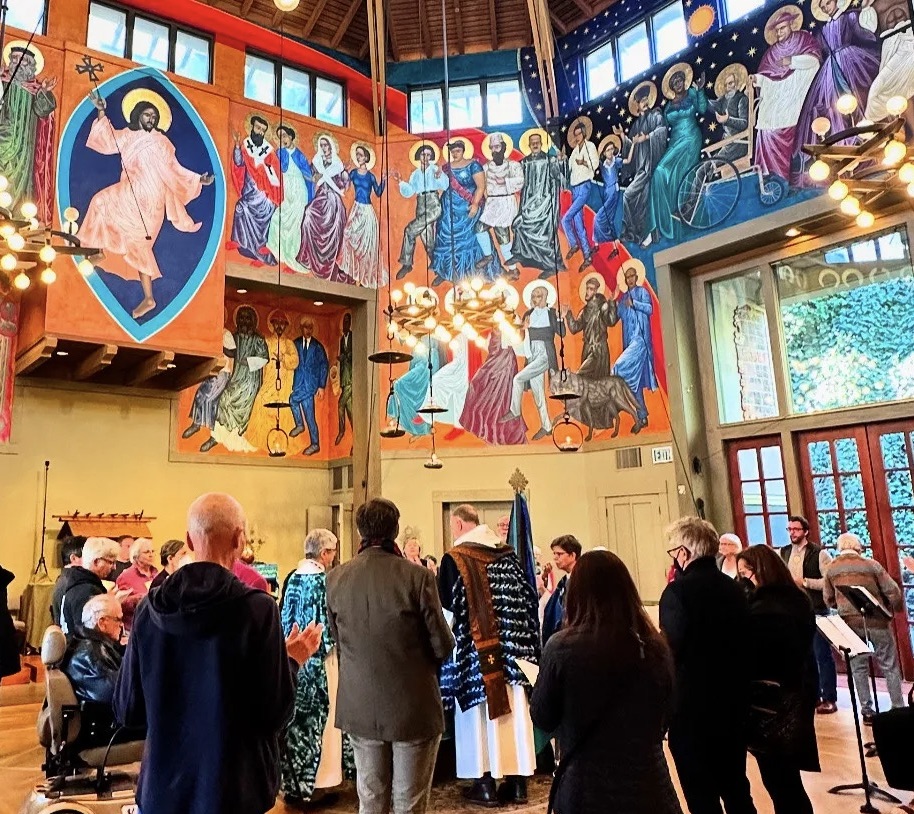
Another Eucharist at St Gregory of Nyssa

As we well know, the society in which we live in the United States sets aside one day of the year as a public holiday that is called Thanksgiving Day. Its history lies in a presidential proclamation by Abraham Lincoln. Yet, regardless of the circumstances of its origin, the day is widely celebrated by many who are unfamiliar with its history, and who may identify with traditions, practices, and holidays passed on from other cultures. This is only proper, as giving thanks is a universally human act. The people and circumstances, and the particular reasons for it, may all differ. Yet, the spirit of the act is the same.

I have heard it explained, that the sanctuary candle we see in the sanctuary of some churches is to remind us that God is present. The implication of this explanation might be misconstrued in such a way as to suggest that God’s presence elsewhere might not be as assured. Yet, the explanation can also be understood positively, as saying something like this: “This candle is here to assure us of God’s presence. We keep a candle here lit perpetually to remind us that God is always and everywhere present, even in the darkness or when we are alone elsewhere.”

Celebrating Thanksgiving Day can bring with it a similarly positive understanding. We give thanks formally, as a nation of many peoples, on one day of the civil year as reminder that giving thanks should be natural for us every day of the year. And the thanks we should offer are for the good things we enjoy with those whom we know and love, but also for things, people, and even institutions, about which we may be indifferent or even disapproving.

Gathering for a shared meal in the context of a spirit of thanks

In this spirit, I would like to share a prayer found in The Book of Common Prayer, that is principally used in the closing portion of the rites for Morning and Evening Prayer. It is therefore not specifically designated for use in observance of our national celebration of Thanksgiving Day, though it could be. This is a prayer intended for use everyday, and is a fine one for us to use at our celebrations this week:

Almighty God, Father of all mercies,
we your unworthy servants give you humble thanks
for all your goodness and loving-kindness
to us and to all whom you have made.
We bless you for our creation, preservation,
and all the blessings of this life;
but above all for your immeasurable love
in the redemption of the world by our Lord Jesus Christ;
for the means of grace, and for the hope of glory.
And, we pray, give us such an awareness of your mercies,
that with truly thankful hearts we may show forth your praise, not only with our lips, but in our lives,
by giving up our selves to your service,
and by walking before you
in holiness and righteousness all our days;
through Jesus Christ our Lord,
to whom, with you and the Holy Spirit,
be honor and glory throughout all ages. Amen.


*A note about the distinction offered above, regarding what God allows: Readers may wish to consider the way that Aristotle, and others since, have distinguished various dimensions of the idea of ‘cause,’ or causation (four dimensions have been articulated in the Western tradition). “Efficient cause” is the familiar form of the word cause, as in causing a row of dominos to cascade forward. “Final cause” can be conceptually helpful, especially as we think about God drawing persons and events toward their fulfillment in Christ. In this sense of the word cause, instead of our thinking of God as pushing events forward, some of them good and some perhaps bad in our eyes, God summons, and pulls toward the future, those people and things that may be made whole in Christ (ie, those that are open and willing recipients of his Grace), to their true end.

What Distinguishing Religion, Science, Magic, and Technology, Might Teach Us About Beauty

A book of essays by Peter Kreeft

Peter Kreeft has written an illuminating essay on the use of indirect communication by CS Lewis and Walker Percy. In it, and in a humorous recording of its content, he explores how both Lewis and Percy present the predicament of the modern person. We live as upside-down persons. And we are not among the first people in history to suspect this. (See St. Augustine, d. 430 AD)

As a way into the heart of his theme, Kreeft invites us to consider a hypothetical challenge posed to a child: take four common objects and sort them into two boxes. The four items are a baseball, a basketball, a baseball bat, and a basketball net. The two most obvious solutions to this challenge, based on the categories of being and doing, nicely set up a thought experiment that Kreeft intends for his audience to engage. He invites us to sort the following four things into two (undefined) categories: Religion, Science, Magic, and Technology. Try it. 

In taking up this simple quiz question, we discover one way that our contemporary thinking habits depart from those of our ancient forebears. Our common assumption that science and technology are sister fields, reliably distinguished by their empirical methodology from both religion and magic, reflects a misunderstanding. For what we may overlook in this supposition of an affinity between science and technology, as well as between the second pair of terms, is how our categorization of these four terms demonstates our understanding of what we consider to be real. And the key variable governing our typical way of sorting these four conceptual categories centers less on what is ‘real,’ and more on the significance of how we conceptualize our encounter with ‘reality.’

A theme that has surfaced from time time in this space, and which plays a large role in structuring my understanding of Beauty, rests upon my appreciation for the distinction between the meaning of the words ‘objective’ and ‘subjective.’ I credit my graduate research in ethics and moral theology for raising my awareness of what these terms can and do mean. With regard to Beauty, and more broadly about what is real versus what is presently actual in our awareness of things, ‘objective’ best refers to the objects of perception, and ‘subjective’ in a corollary way best refers to the subject of perception (I.e., to me, the observer, the knower).

CS Lewis in his Oxford study

Kreeft makes the case that both CS Lewis and Walker Percy shared a conceptual understanding with many philosophers and writers from the pre-modern era. In making the point, Kreeft quotes what he says are the three most illuminating sentences he has ever read about our civilization:

“There is something which unites magic and applied science [i.e., technology] while separating both from the “wisdom” of earlier ages. For the wise men of old, the cardinal problem had been how to conform the soul to reality, and the solution had been knowledge, self-discipline, and virtue. For magic and applied science alike, the problem is how to subdue reality to the wishes of men: the solution is a technique.”

And if we have not guessed where Kreeft is headed with all this, he puts the matter succinctly: “Technology is more like magic than like science.” It follows that he commends thinking of religion as being like science by also involving a search for what is real and true, even if differing in its methodology and content.  

Walker Percy at home in Covington, LA

A challenge related to Kreeft’s theme, regarding how we approach beauty, faces us as modern people. It stems from how – through the influence of our culture – we are inclined to think of art and architecture as being more akin to magic and technology, than to science and religion. For we tend to assume that artists and architects manipulate materials and space to stimulate certain responses from those who interact with their work. And, of course, they do. But is this all that these crafters of beautiful things accomplish? Are they not also among those who seek and make available to others instantiations of what is real, and more particularly of the beauty that is there for us also to perceive and come to know? I believe that they are. 

Artists and architects approach the world in a way that has an affinity with those who work in religion and science, while what they do may seem to be like the work of those who ‘practice’ technology or magic. For like all genuine seekers of Truth, Goodness, and Beauty, scientists (especially theoretical physicists) as well as religionists include dedicated persons who want to know these real aspects of the world that may be apprehended by those who look for them.

I continue to learn by reflecting on these themes.

Note: Kreeft develops at greater length than I have scope here to address the significance of these and related distinctions. He does this in his essay, “Walker Percy’s Lost in the Cosmos: The Abolition of Man in Late Night Comedy Format.” I commend an entertaining recording of Kreeft’s presentation of the essay’s content, which can be found on his website (by clicking this link).

The Elusive Biblical Idea of Ransom

If reading this by email, please tap the title at the top to open your browser for the best experience. Then, clicking individual pictures will reveal higher resolution images.


In late 1987, two American college students were exploring the jungles of Columbia. After obtaining a canoe, they embarked upon the Putumayo River and strayed into territory held by a Marxist rebel army. Formally known as FARC, these guerrilla soldiers abducted the students and held them captive for ten months in various jungle camps.

At first, the FARC guerrillas thought the two men were CIA agents, though the students corrected this. But then their captors came to see them as hostages having economic value. Soon, their parents hired an American explorer, who found the hostages and their captors. After four months of negotiations, conducted by a Roman Catholic Bishop, the students were released and taken to the American Embassy in Bogata.

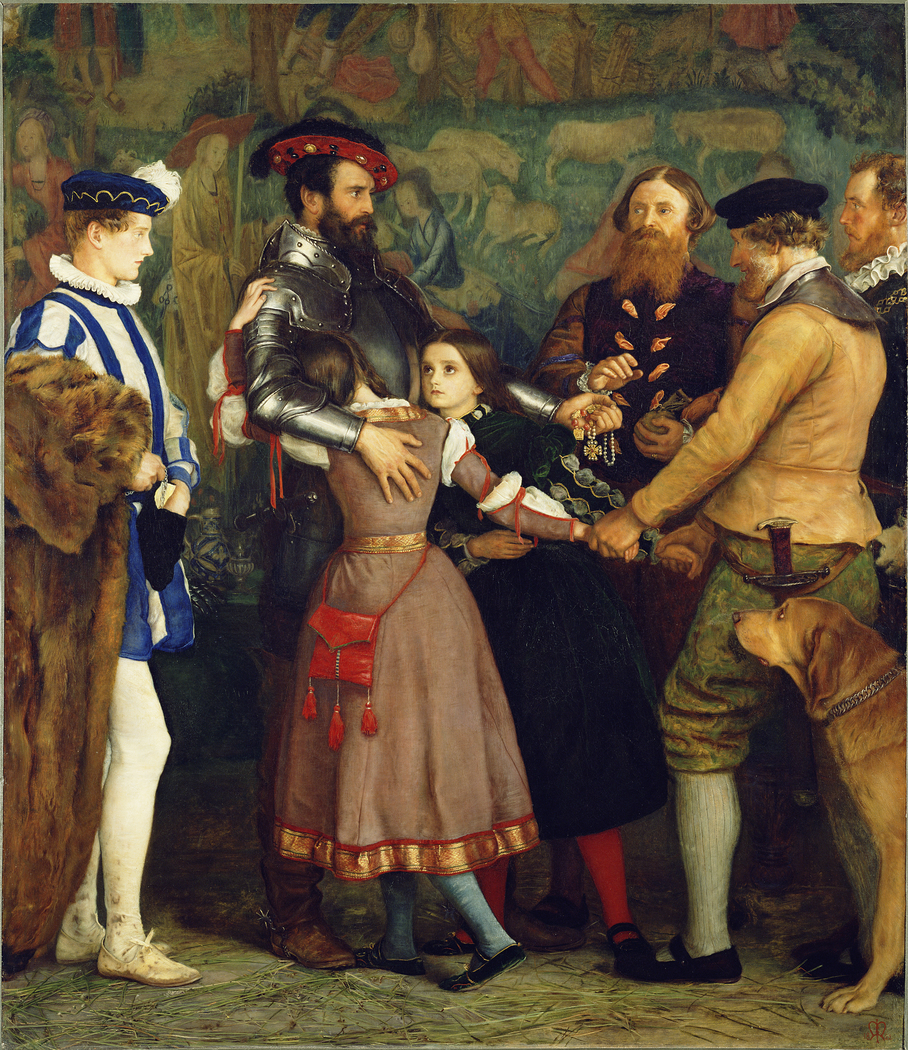
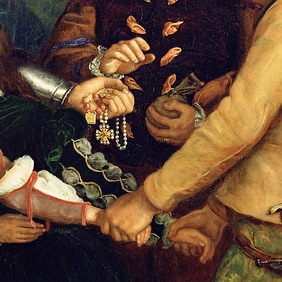
Release for the young explorers surely came about through the payment of money, probably a lot of it. Ransom is a way to describe this kind of payment, where something valuable is exchanged for the freedom of captives. John Everett Millais’ painting (above), The Ransom, depicts a father handing over of fistful of jewelry and a bag of coins to some men who have taken his daughters hostage. Revolutionaries, terrorists, and criminals have long used ransom as an efficient means of fund-raising, especially when their captives come from wealthy families or are politically well-connected.

Clearly, when payments are made to captors, the purpose is not to honor or reward the hostage-takers. Instead, these payments reflect an abiding concern for those who are held-captive, awaiting redemption.

This concept of ransom is deeply rooted in our Judeo-Christian tradition, and it shapes how we understand redemption. Think of the beloved Advent hymn, which begins this way: “O come, O come, Emmanuel, and ransom captive Israel…” In the Old Testament, in many passages like Psalm 49; Isaiah 35, 43, and 51; Jeremiah 31; and Hosea 13, we hear about how God’s promises inspire hope for the possibility of ransom from the power of death.

These insights help us understand Jesus’ words about ransom in Mark’s Gospel (in 10:45; parallel in Mt. 20:28). After predicting his suffering and death three times, Jesus tells the oblivious disciples that “the Son of Man came not to be served but to serve, and to give his life as a ransom for many.”

Yet, instead of a ransom-based understanding of Jesus’ sacrifice and death, many Christians think of Jesus’ saving work in a largely legal or juridical way. In this view, our sin involves a degree of corruption and guilt so bad that it’s beyond what we can make right. And so, human captivity to sin means that ‘a penalty must be paid, and punishment meted out.’ By this reckoning, only a ‘sinless one’ could pay the uncountable price, and bear the penalty for all. Therefore, Christ as a substitute for us, paid the price and endured the punishment so that we, ourselves, don’t have to, even though we are the ones who deserve it. Yet, according to this very common theory, the ‘price’ was paid to God, to satisfy God’s justice!

This legal or ‘punishment-substitution’ understanding of Jesus’ death did not become widespread for at least a thousand years after his crucifixion. Instead, during the first millennium, a different concept of Jesus’ mission was preeminent. It springs from the ransom words in Mark, as well as from 1st Timothy 2:5, where Paul writes, “…there is … one mediator between God and human kind, Christ Jesus… who gave himself [as] a ransom for all.”

According to this ransom view, ever since Creation, we have placed ourselves in the hands of Satan, by refusing to ‘delight in God’s will or walk in God’s ways.’ In effect, we have strayed into ‘the jungles of sin,’ and have allowed ourselves to be taken hostage by the Devil. We are held captive by our sin, and by our inclination to follow our own will. Like the two student hostages, we might have ‘paid’ our way to freedom ~ if we and they had had the means to do so. But we did not.

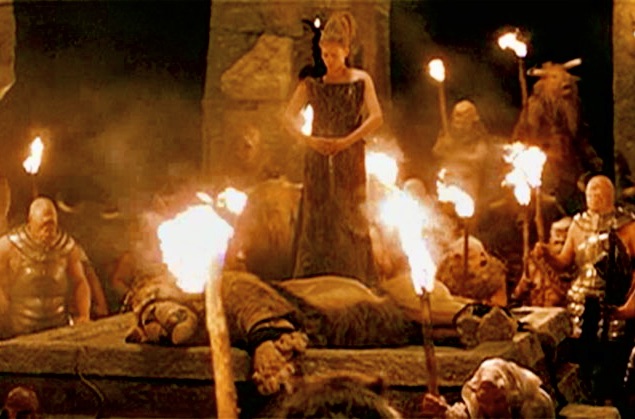
And so, showing his great love for us, Jesus offered himself to the Devil, as a ransom for our freedom. Jesus allowed the Devil to take him, as someone of even greater value than all of us. For Satan received as a ransom the sinless One, God’s own son. C.S. Lewis employs a similar ransom metaphor in The Lion, the Witch, and the Wardrobe. In this biblically-derived approach, the ‘price to be paid’ was a concession to the power of an enemy, and compensation for a loss, rather than (as in the later and more prevalent legal view) a payment to satisfy God’s sense of justice.

An image of Aslan’s self-sacrifice, from a film version of The Lion, the Witch, and the Wardrobe


This post is adapted from some material previously published in this space, with some additional imagery. It is based on my homily for Sunday, Oct. 20, 2024, which may be accessed by clicking here.

Chora Church: A Byzantine Treasure

If reading this by email, please tap the title at the top to open your browser for the best experience. Then, clicking individual pictures will reveal higher resolution images.

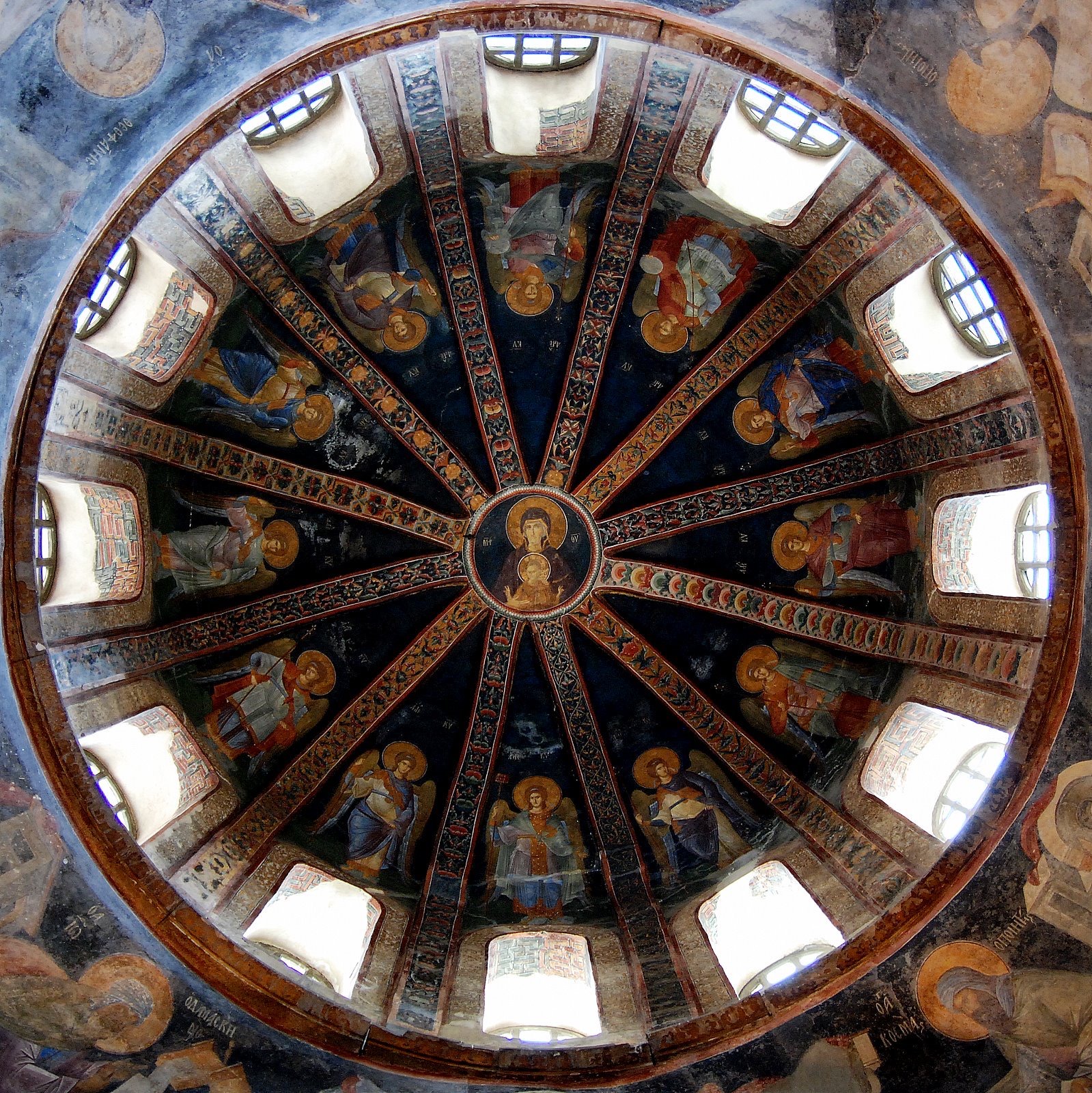
Dome over the Side Church (or parecclesion), Chora Church


We missed being able to visit this remarkable place by a day! Sadly, after staying in Istanbul for four nights, the historic Chora Church that had undergone four years of renovation would not reopen until the day after our departure.

Dating back to the time of Constantine in the early fourth-century, the Chora Church was built as part of a monastary outside the walls that were constructed when Constantinople became the new capitol of the Roman Empire in 330 A.D. Its rural location led to its formal title, Church of the Holy Savior in the Country (or Chorai, in Greek).

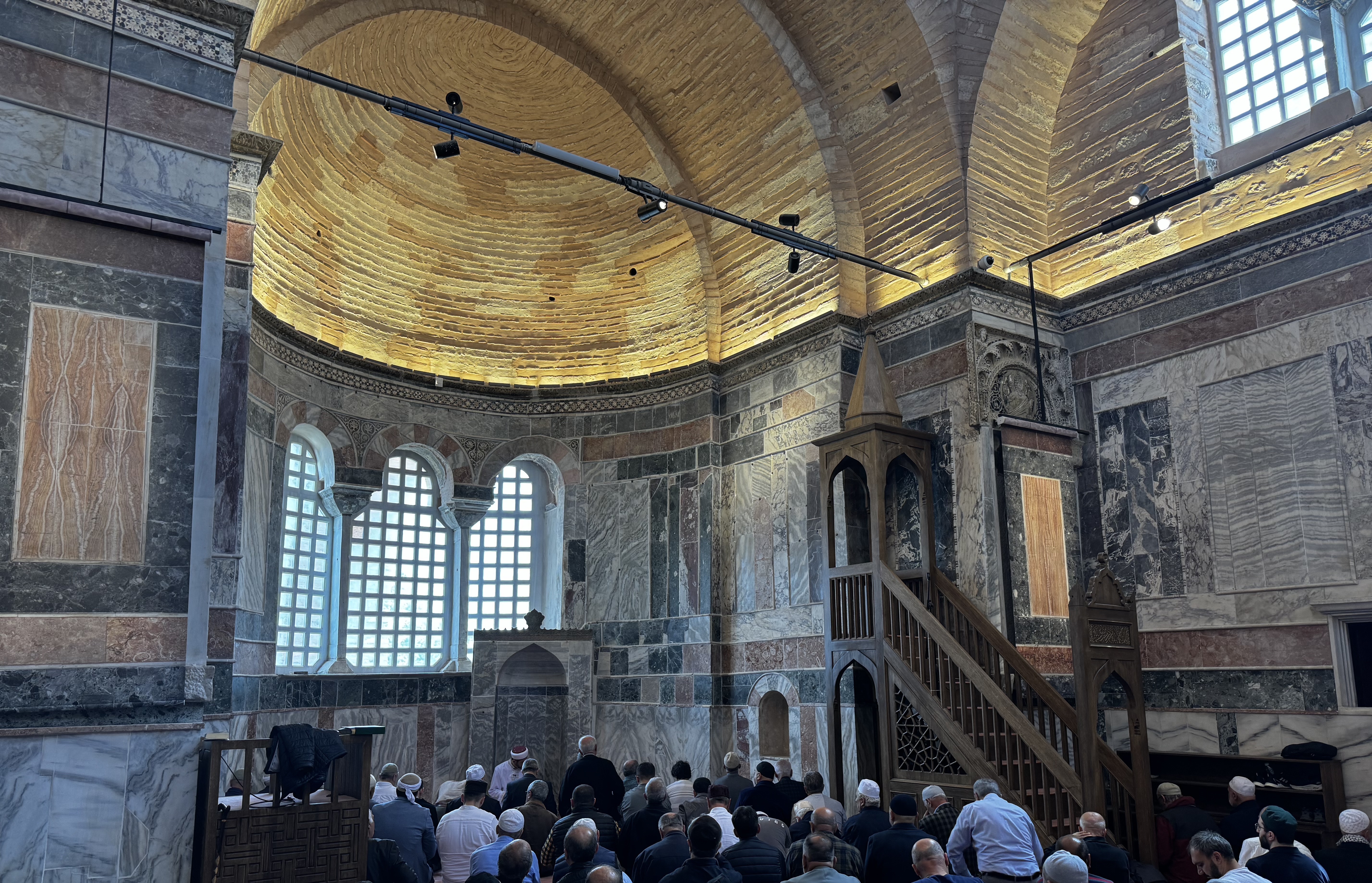
Interior of the original central nave (naos) in use as a mosque, with Christian mosaics and frescoes covered over

Chora, like the later Hagia Sophia, has over its history served as a church, a mosque, a museum, and now once again as a mosque. As I have noted in prior posts, the fact that buildings like Hagia Sophia and Chora have been able to transition from church to mosque without significant structural change helps us perceive how what became normative in mosque architecture had its origins in churches from the early Christian, pre-Islamic era. As a precursor to Hagia Sophia, the original walls of Chora may provide one of the earliest examples of what would develop into the cruciform plan for churches, a design pattern that became predominant in the Christian East. This approach to design for worship spaces is centered on a square, covered by a dome, a departure from the early rectangular basilica plan favored in the western Roman region.

Floor plan of the Chora Church

In the floor plan above, note the subtle Greek Cross pattern of the central nave (or naos) below the large dome. As this plan indicates, the original, late Classical period Chora was significantly expanded during the Byzantine period, between the 11th century and the 14th century.

Section drawings of Chora Church showing the location of some murals and frescoes

In addition to its cruciform plan, and the church’s great antiquity, another feature that distinguishes Chora is its impressive collection of well-preserved Byzantine mosaics and frescoes, largely from the early fourteenth-century.

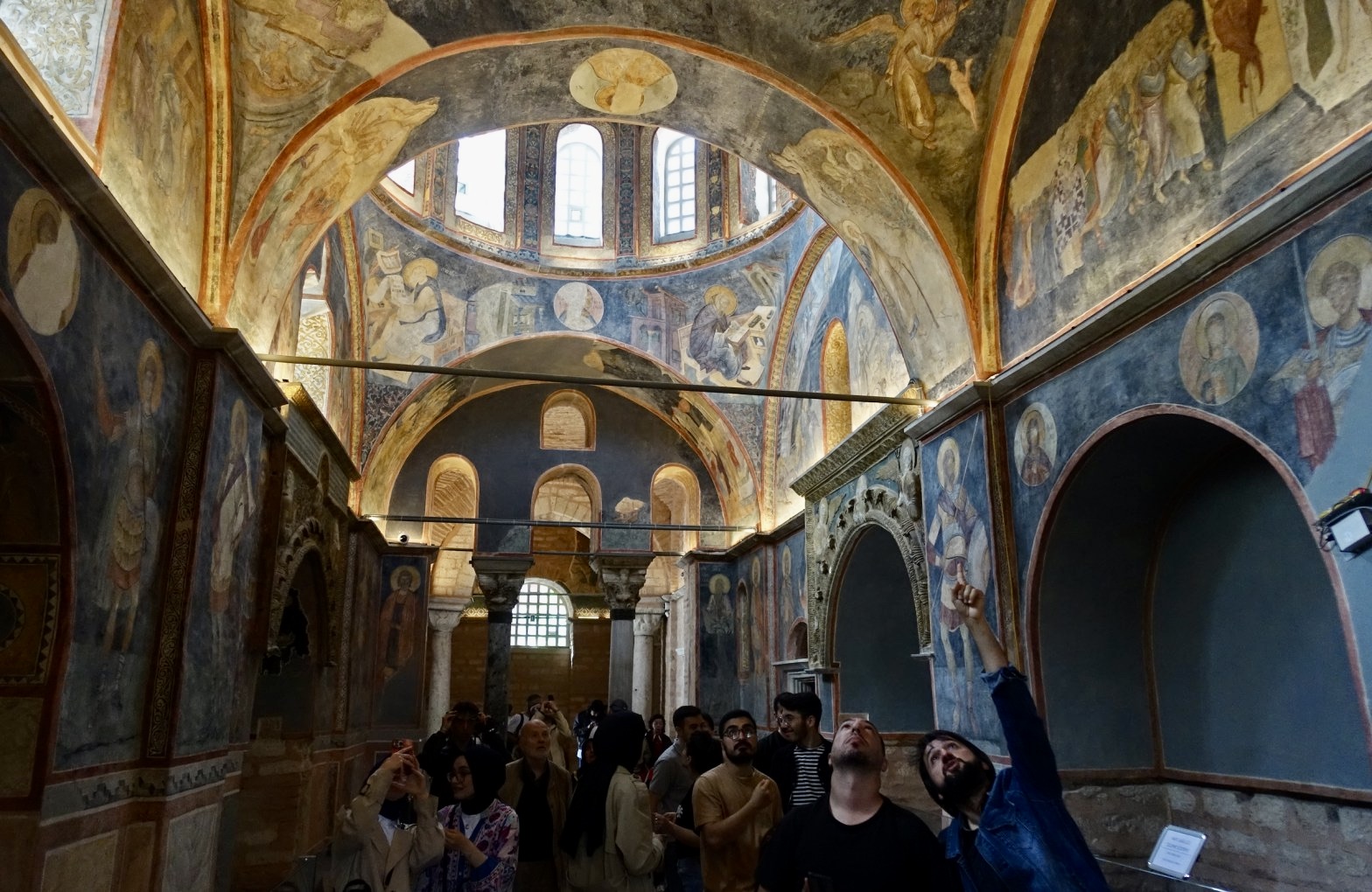
Visitors to Chora admiring the murals in the Byzantine-added “side church”

The bulk of the surviving mosaics and frescoes are located primarily in the side church (or parecclesion). This may be due to the central nave or naos having been used for Islamic worship during a significant portion of the building’s history. One of the many beautiful frescoes depicts a common theme found in works of art from the Christian East, that of the Harrowing of Hell. Images based on this theme depict the Christian belief concerning the first saving actions of the Risen Christ: pulling Adam and Eve out of their tombs and the clutches of the underworld (image below).

A fresco in the Side Church – Anastasis (or Resurrection): The Harrowing of Hell

A beautiful example of the Chora mosaics depicting Joseph and Mary’s enrollment for taxation in Bethlehem

Interior view of the side church

Like the later Hagia Sophia, Chora Church – for a time as a museum and now a mosque – still serves as an edifying spiritual place for Christians and people of other faiths to visit. For Orthodox Christians in the East, Chora’s numerous mosaics and frescoes provide multiple opportunities to (re)engage with biblical stories and with articles of faith in a way that the contemporaneous art in the much larger Arena (or Scrovegni) Chapel in Padua, Italy, provides enrichment for Western, Latin, Christians.

Exterior view of the southeast corner of Chora Church (note the later addition of a ‘flying buttress’)

A 1903 photograph of the west entrance to Chora in the late Ottoman period


Fully Alive: The Beauty of Human Nature

A photo of a print given to us years ago


Those familiar with my writing and ministry may not be surprised by how I choose to address the theme of beauty in relation to the human nature we all share.

My response is captured in a quote with words I have long loved and have frequently cited. The quote is from the second century Christian theologian and Bishop of Lyons (in present-day France), Irenaeus. “The glory of God is the human person fully alive.” To which he added, “and to be alive consists in beholding God.”

What an audacious statement! I believe that the fundamental insight here, latent within Irenaeus’s words, stems from the Gospel of John, with whose author Irenaeus likely had a personal connection. That would have been through Polycarp, Bishop of Smyrna (presently, Izmir, Turkey), the city where Ireaneaus was born. One writer has described Irenaeus as the spiritual grandson of the apostle John.

Another calligraphy print, this one featured on the website of Holy Cross Monastery

What does it mean for any one of us to be ‘fully alive’? I believe that the Gospel writer, John, would respond by echoing words from Paul, whose letters frequently employ the phrase, “in Christ.” Through Baptism, we come to be in Christ. Through Baptism, we are re-born in Christ; we live in Christ – and he in us – and we will leave this mortal life in Christ. Indeed, in John’s  compelling witness to Jesus’ teaching, we are told that those who believe in Jesus have already died, and now, will never die! All of the Gospel readings appointed for funerals in The Book of Common Prayer are from John. This is the Gospel that is so centered upon the themes of God’s incarnation within our shared human nature, giving us God-given light, and eternal life.

Words found in the daily pattern for Morning and Evening Prayer, as well as in the Eucharistic pattern used on most Sundays in Episcopal Churches, help amplify this point but in a subtle way. These several patterns for corporate and individual prayer include forms for confession. Using these forms, and after we acknowledge our sin, we pray that we may delight in God’s will , and walk in God’s ways. In the absolution that follows, we hear these remarkable words:

Almighty God, have mercy on you, forgive you all your sins through our Lord Jesus Christ, strengthen you in all goodness, and by the power of the Holy Spirit keep you in eternal life.

In words that may be easy to overlook, we pray that by Holy Spirit power, God will “keep us in eternal life”! Being fully alive involves delighting in God’s will, walking in God’s ways, and being kept by God in eternal life.

Christians believe that the beauty of our human nature was and is found in the Gospel Jesus, and as the Risen Christ comes to be found in us. Our human nature, created in the image and likeness of God, and transformed to become an icon of Christ, is therefore all about the fulfillment of our divinely-given and imbued potential. When by grace we see it happen in people’s lives, it is a beautiful thing to behold.

Yet, human nature, being still what it is, prompts us to look for beauty in outward terms when we view others, as well as ourselves. Jesus, as the Gospels imply, always looked for beauty within – the kind of beauty it was his vocation to share and re-enable in us. This is what we should be looking for, both within ourselves and in others.

The archetypal biblical example of the glory of God beautifully manifest in human nature is found in the Gospel Transfiguration stories. James Tissot, one of my favorite painters, offers us glimpses of Jesus manifesting this same glory on several occasions, a glory that was otherwise often hidden within him.

James Tissot, Jesus Goes Up Onto A Mountain to Pray

Tissot, Jesus Being Ministered to by the Angels

Paul’s remarkable words to the Corinthians bring these themes together nicely. For we want to be among those who are:

seeing the light of the gospel of the glory of Christ, who is the image of God… For God, who said, “Let light shine out of darkness,” has shone in our hearts to give the light of the knowledge of the glory of God in the face of Jesus Christ.”

And, by God’s generous grace, the same may be seen in our faces, as well.


Note: Kenneth Kirk, the esteemed 20th century Bishop of Oxford, and former Regius Professor of Moral Theology at the historic university in that city, titled one of his still-used books (The Vision of God) based on the Irenaeus quote, featured above. Kirk presents Irenaeus’ words in this (now dated) way: “The glory of God is a living man, and the life of man is the vision of God.”