history

Two Architects Build Houses for Themselves

Frank Lloyd Wright’s Taliesin East, entry courtyard

Frank Lloyd Wright and Philip Johnson number among the most well known American architects of the 20th century. Both are remembered for their many commissions by others, for buildings constructed both in the United States and overseas. Notably, each of these men designed a house for himself and each reflects something of the respective architect’s vision for an ideal domestic building. The results differ dramatically and beg for some explanation, especially in the case of Philip Johnson’s Glass House.
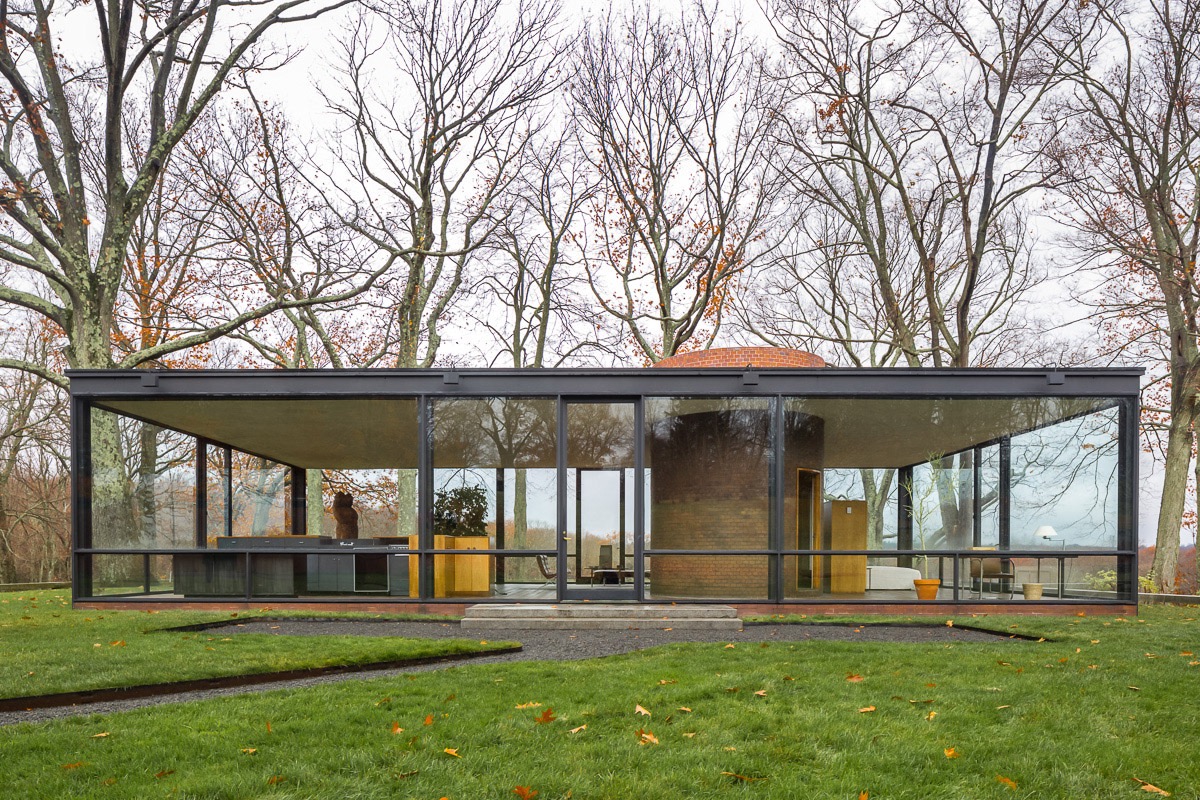
Philip Johnson, Glass House, exterior

To help appreciate the theoretical basis for these vastly differing houses, I find it helpful to draw upon a distinction made by the earthscape artist, Andres Amador (featured in a prior post). Speaking about his temporary compositions ‘sketched’ upon large stretches of beach areas at low tide, Amador refers to some of his works as “geometric” and others as “organic.” The geometric works display a quality readily suggested by the name for them, and reflect Amador’s training in math as an engineer. The organic works arise, he says, from the site, and he suggests that these pieces communicate their form to him. For me, Amador’s distinction can also be referred to as the distinction between pattern that is ‘received,’ as compared with pattern that is ‘imposed.’

Amador’s distinction between the organic patterns that arise from the site, and the geometric patterns that result from conceptual pre-planning, can assist us in perceiving some themes that are implied by the architectural designs produced by Wright and Johnson for their homes. In the case of Wright, he built Taliesin on family property in Spring Green, Wisconsin, in an area where he grew up and with which he had a deep attachment. Like much of his other work, Wright wanted Taliesin to appear as if it was an extension of the materials and features of the site in which it is placed, being an ‘organic’ development of a human habitation within a natural setting. Wright’s intent is evident in the way that the horizontal bands of stucco on the facade, as well as of the limestone in the foundation and walls of the building, parallel and mirror the layers of stone found on the site.
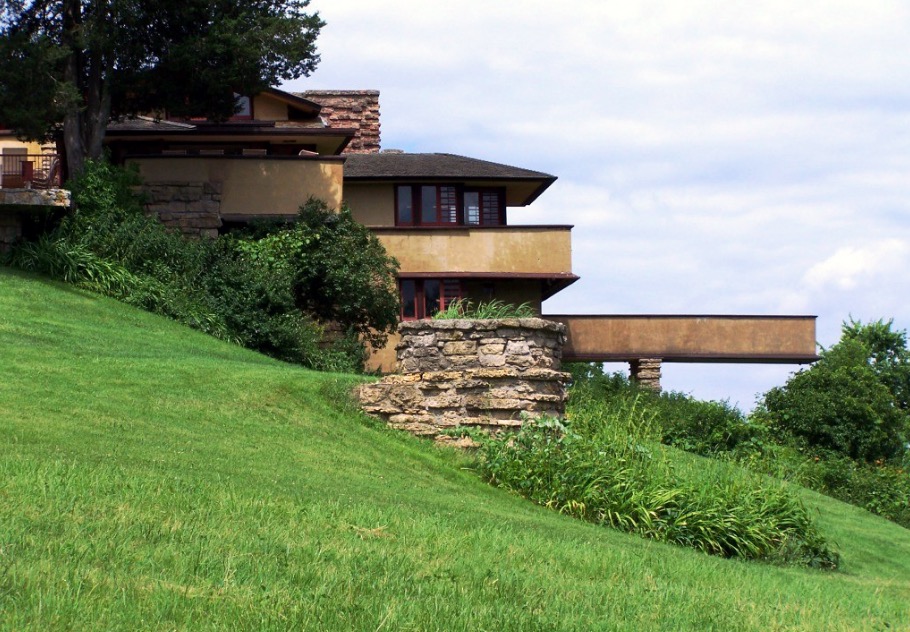
Exterior elevation of the house, as if emerging from the site (photos above and below)

While Philip Johnson’s architectural practice was located in New York City, he planned to build a house for himself and weekend guests in nearby New Canaan, Connecticut. Johnson’s Glass House clearly reflects his indebtedness to the work of Ludwig Mies van der Rohe, and the European modernist movement in architecture generally known as the International Style. Employing Andres Amador’s distinction, the Glass House clearly embodies a geometric conceptual basis, with the result that the building does not so much emerge from the site but instead sits upon it as an imposed human-made form. The carefully clipped and very flat lawn, and the linear walkways serve to emphasize the distinction between the structure and its natural surroundings. This leaves the Glass House appearing to be like a sculptural object that has been placed on a plaza, or like a vase on a smooth table-top, rather than as something arising from within its setting.

The Glass House, exterior view (above), and interior view (below)

Brief attention to the history of these two buildings provides further insight. Wright lived at Taliesin much of his life, while also retreating to Taliesin West in the Arizona desert during the winter months. Over the years, he gathered a sizable community of apprentices who lived and worked with him at both locations. To this day, the architectural fellowship that is part of his legacy maintains both homes and studios. By contrast, though Philip Johnson first lived part-time in the Glass House himself, he soon discovered how it was largely unsuitable for that purpose, other than for entertaining guests in the living and dining areas of the structure. Given the sudden notoriety of the house, the constant presence of unwelcome visitors and architecture-minded prowlers made it problematic for every exterior surface of the house to be comprised of glass. Johnson soon made it a habit to stay in the adjacent bunker-like Brick House, designed for the site as a guest house, when spending time in New Canaan.

Obviously, it is easy to stress the marked differences between these houses designed and built by Wright and Johnson for themselves. Andres Amador’s dual approach to his earthscapes may help provide a reminder of the way that both-and thinking can aid how we consider certain objects of interest. Wright’s organic home and studio, emerging within and receiving inspiration from its site, and Johnson’s temporarily lived-in Glass House, imposed as a geometric sculpture upon its site, share a common distinction. Regardless of functional considerations, each house has its own way of displaying beauty, and both remain among a small list of internationally recognized architectural achievements of historic significance.


Note: A short introductory video about Andres Amador and his work, giving examples from both of the geometric and organic categories, introduced above, has been produced by KQED of San Francisco. It can be found on YouTube ( https://youtu.be/T_tIG5mo1DM?si=0MkjxkTEK48eC-aV ).

Taliesin East has been named a UNESCO World Heritage Site, and the Glass House is a National Historic Landmark.

Andy Warhol visits the Glass House

A Church by Errol Barron in Gulfport

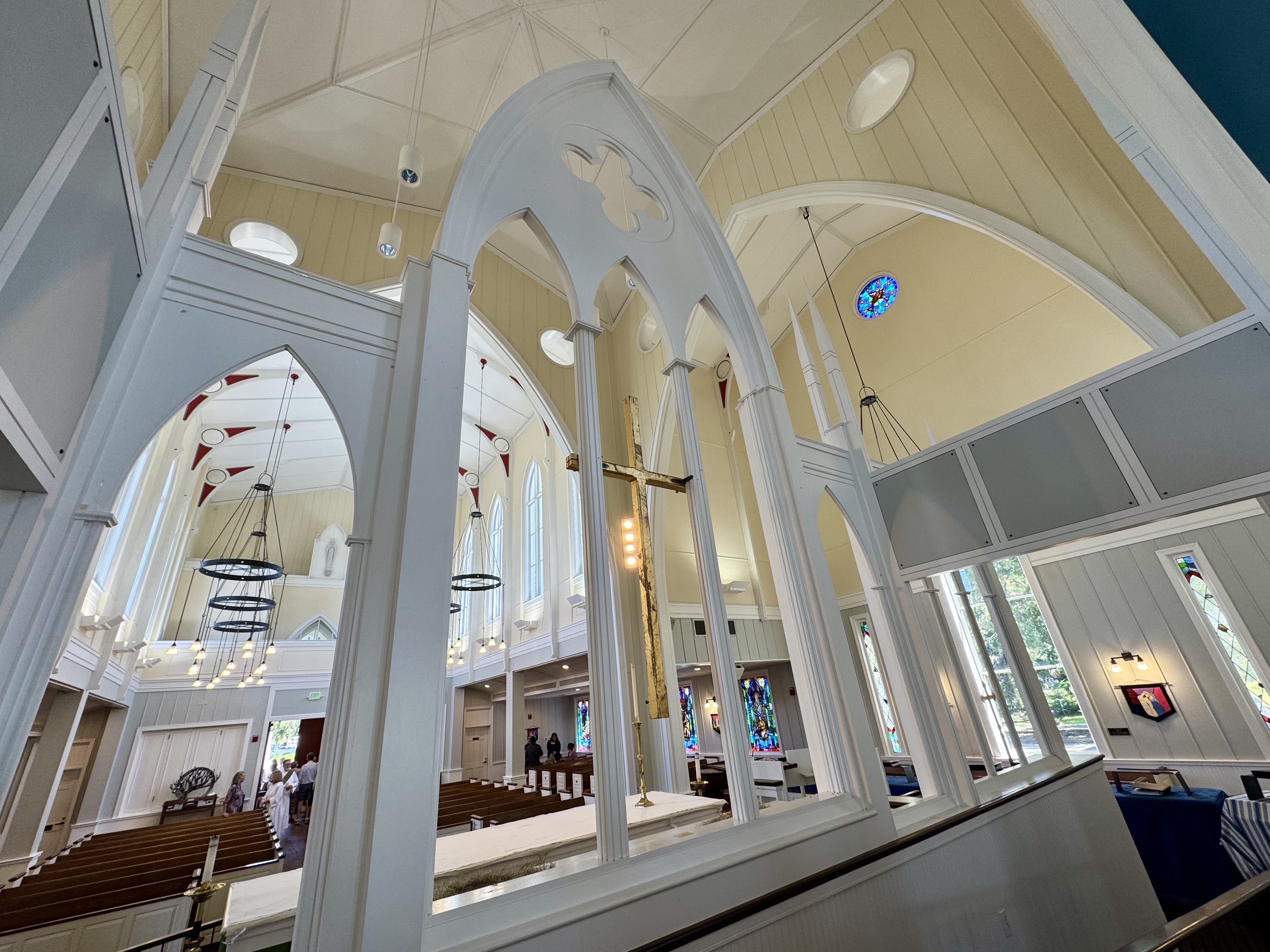
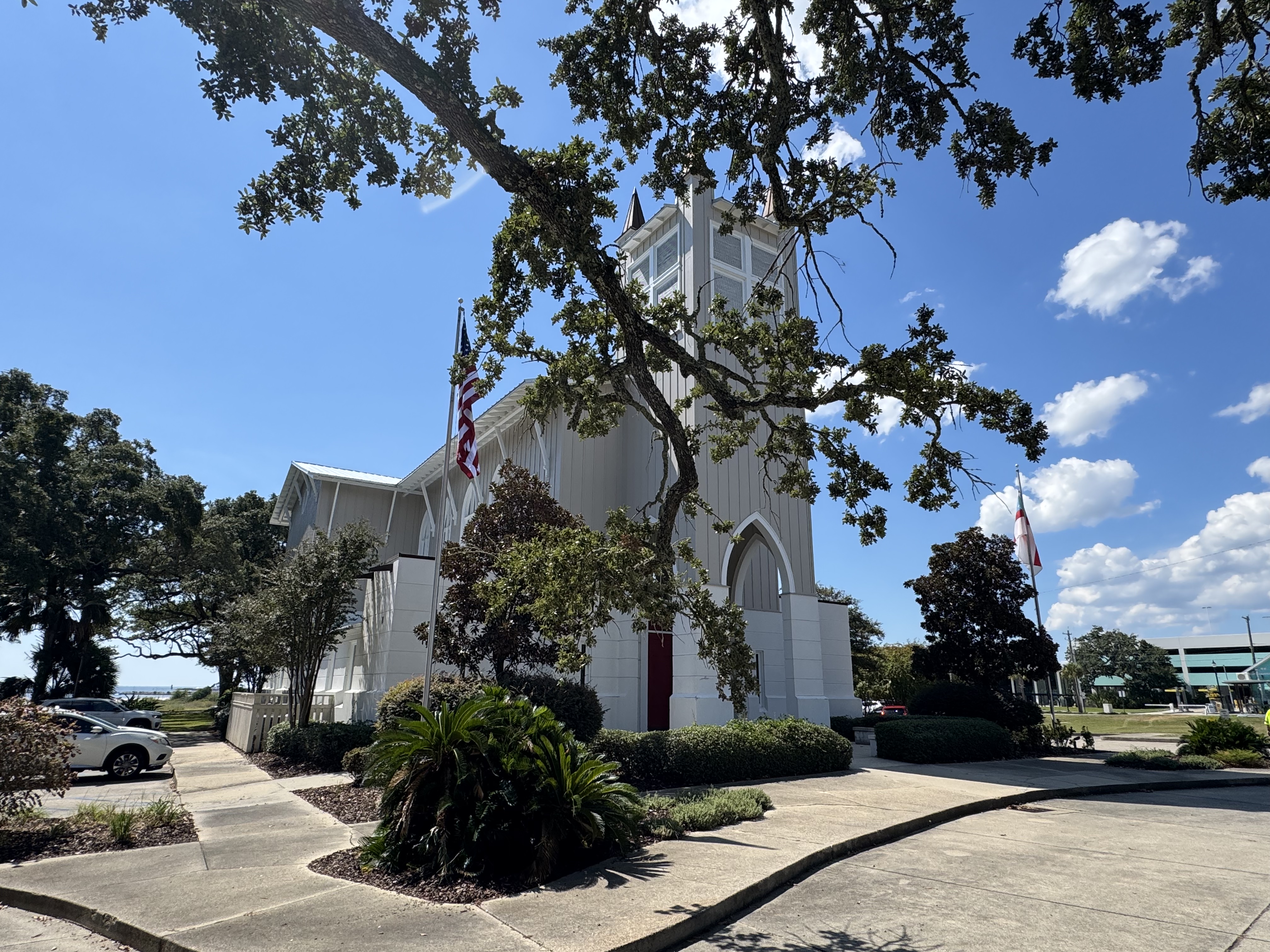
St Peter’s by the Sea, Gulfport, MS, designed by Errol Barron

Errol Barron’s work as an artist may be familiar to readers of this website based on some of his evocative New Orleans water color paintings previously featured here. His paintings of that city as well as of Tulane University, where he has taught for many years, provide strong indications that he is more than a skilled painter and draftsman, but also a trained architect. He has taught generations of architectural students at Tulane, and he has practiced his profession to great effect not only in this region but also overseas, with some houses of his located in Greece. Given Barron’s evident sensitivity to historical architecture and design features characteristic of this region, I was surprised to learn about a notable but unexpected feature of his resume. He worked for seven years with Paul Rudolph, architect of the well-known and oft-criticized Boston Government Services Center and a partial inspiration for the movie, The Brutalist.

St Peter’s by the Sea, interior

I was recently delighted to discover the Episcopal church in Gulfport, Mississippi, St. Peter’s by the Sea, and that Errol Barron was its architect. It is a gem of a church, and a very successful design that incorporates traditional ecclesiastical elements associated with European Gothic churches along with features reflecting contemporary liturgical renewal. I have heard people refer to this style of church building as Carpenter Gothic, and as Southern Gothic, and the labels seem to fit well. The worship space exudes an appreciation for traditional forms while harmoniously blending them with a contemporary focus upon light, color, and the greater participation of worshippers in flowing open spaces.

The main altar with the ornamental rood screen

Visitors to the Washington National Cathedral, and similar churches of Gothic-revival style, may recognize the particular heritage that stands behind the floor plan of St Peter by the Sea. At the National Cathedral, and in its medieval forebears (such as London’s Westminster Abbey), an arched stone ‘rood screen’ separates the chancel and choir (beyond the screen) from the nave where the congregation is seated. When, in the 1960’s, the liturgical renewal movement began to influence changes in the worship arrangements of these buildings, a new main altar was often then placed in the nave, on the congregation’s side of the rood screen. Smaller gatherings for weekday services could still occur in the choir side of that screen, while Sunday gatherings for the principal Eucharist would be celebrated in the nave, with the clergy, altar, and liturgical action proximate and visible to the congregation.

A view of the ceiling and woodwork above the choir

Though St Peter’s by the Sea is a comparatively recent building, its design reflects something of the historical sequence described above. Instead of an imposing stone rood screen, shielding the chancel and choir spaces beyond, Barron has designed an ornamental arched screen of light-colored wood that suggests rather than imposes separate areas within the overall space. This allows the evocative blue canopy of the ceiling over the chancel to draw one’s eyes forward, toward the visible clear windows at the liturgical ‘east end’ of that space behind the chapel altar, facing the seashore.

Further, the notably narrow, even sharp-looking, wooden ‘spires’ protruding above where the choir chairs are placed enhance the upward sense of lift in the nave, complemented by the radiant cream and white color scheme above where the congregation sits. Light pours in through clear windows above, while delicately fashioned and dangling wrought iron fixtures provide supplemental illumination for evening services and in poor weather.

A view toward the nave from the choir, through the rood screen

On the Sunday of my recent visit, I was told that the congregation numbered about 145, and I estimate that the nave would comfortably seat about 200 people, though it could probably accommodate more. With the Gothic-inspired longitudinal floorplan, evident when one approaches the exterior of the building, a visitor might expect a rather narrow and linear worship space. Such an initial impression of the likely effect of the interior spatial arrangement is overcome by a number of subtle but effective design choices made by the architect and those who worked with him.

Accompanying the verticality of the large open area above the center of the nave are the seating areas adjoining the side aisles, taking the places of side chapels found in many medieval Gothic churches. The relatively low height of the box pews enhances the sense of horizontal width created by these adjacent seating areas, which provide relatively unobstructed views of the altar and lecterns. I also found the acoustics within the worship space to be well-suited for music as well as for public reading and speaking.

I am drawn to the ethos of historical churches; I am enthused by many examples of modern architecture; and I appreciate the fruits of the liturgical renewal movement. In my experience, a successful blend of these three things is not always found in contemporary buildings designed for worship and intended for the enhancement of congregational life. In his design for St. Peter’s by the Sea, in Gulfport, Mississippi, and in his supervision of its restoration after Hurricane Katrina, Errol Barron has achieved just such of a desirable synthesis.

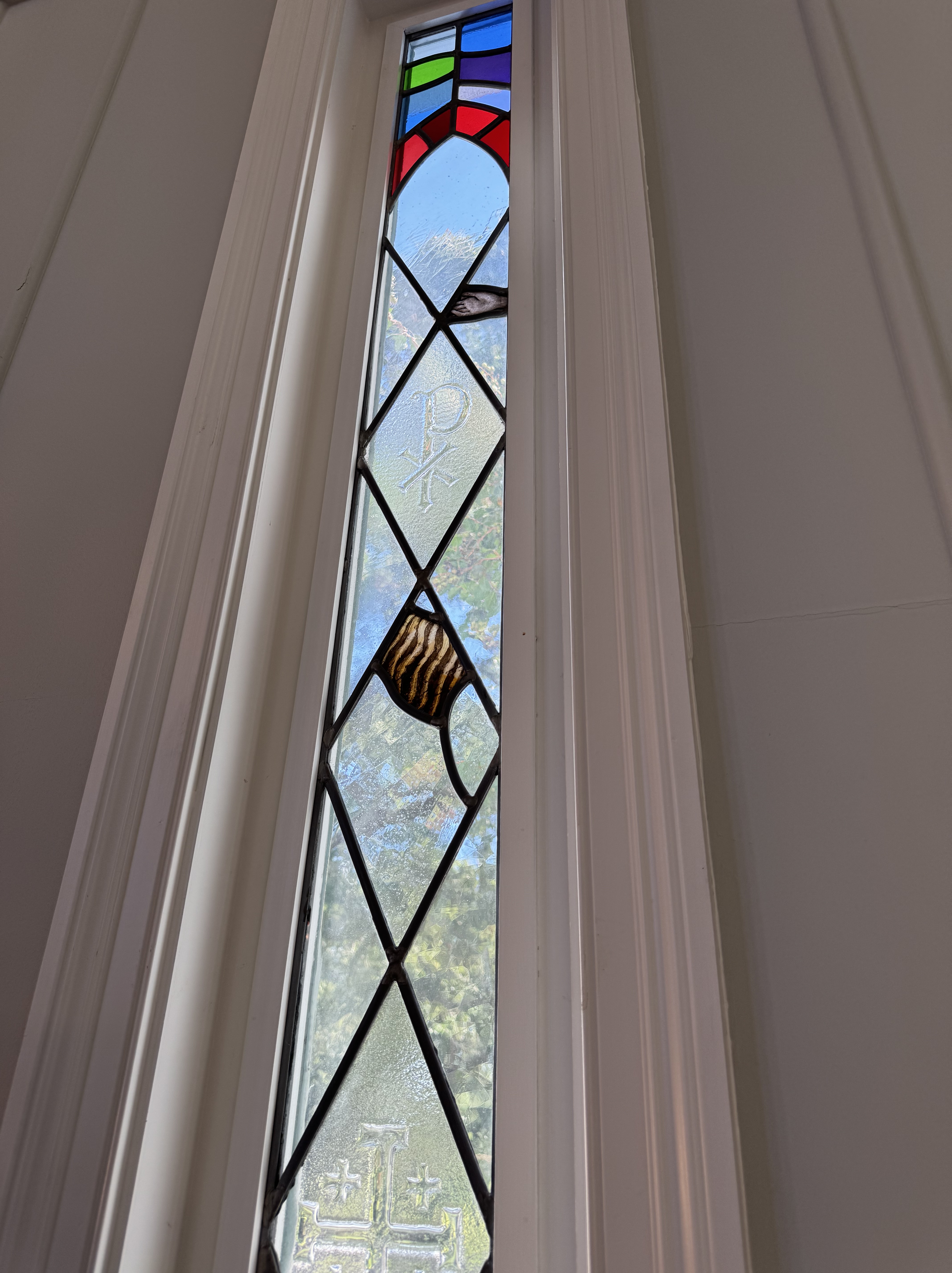
A representative side window incorporating stained glass window fragments recovered after Hurricane Katrina

Imagining a Voyage

We all imagine taking journeys or voyages, sometimes out of an unfulfilled desire and sometimes with an apprehension about the potential consequences of such ventures. Even those who do undertake to travel over the land or over water usually prepare, even casually, for their upcoming experiences by anticipating certain items likely to be needed or enjoyed while en route, as well as potential challenges or obstacles to be overcome while away. Having recently spent about a month on our old sailboat of modest size, I realize that my efforts to prepare for any needs we might have while docked or sailing led us to be burdened with some unused items. For the best parts of our recent travels were those that had more to do with ‘being’ than any kind of ‘doing’ in which we were engaged, and in relation to which we might have had particular needs for gear or supplies.

Some people believe that the best journeys are those that we undertake through reading, through our enjoyment of the accounts of such travels as recorded by others. I often choose boat and sailing related reading material for my free time, and when preparing for an upcoming trip I find that such reading helps me anticipate and plan for the kind of lake or coastal cruising that I hope to do.

A.J. (“Sandy”) Mackinnon with Jack de Crow

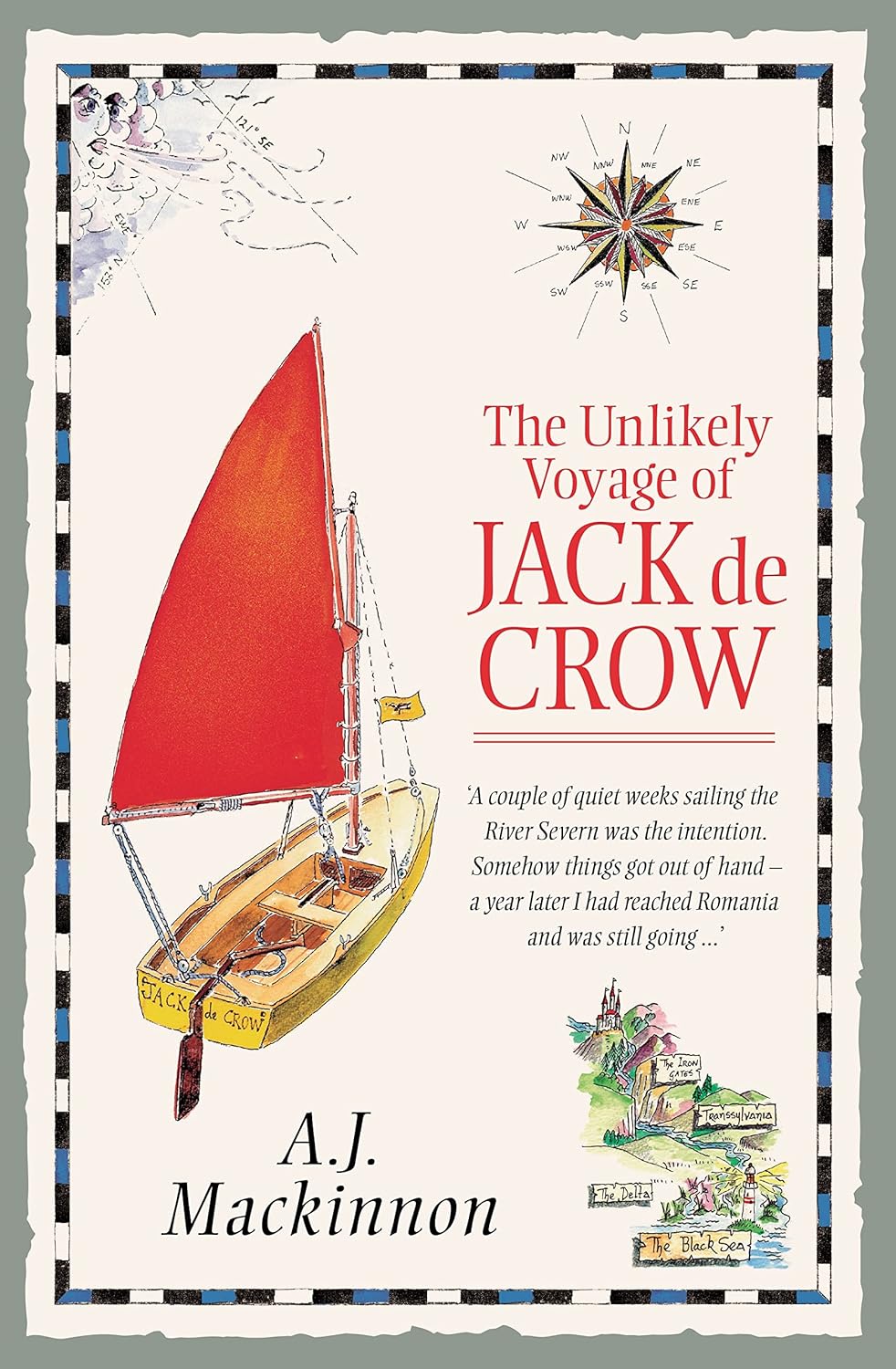
Nonetheless, there is a type of nautical-related reading that I enjoy probably because it challenges my usual approach to trip pre-planning. One example is a book I have come to love reading and re-reading, A.J. Mackinnon’s delightful, The Unlikely Voyage of Jack de Crow. In it, Mackinnon – with engaging humor and self-deprecation – describes how he embarked on a river journey one summer, during a break from teaching at a school in north Wales. He asked to use an old plywood eleven foot Mirror dinghy, and ended up sailing and rowing it all the way to the Black Sea! To say that he embarked upon his voyage under-provisioned would be an understatement. And yet, relying upon his wits and the kindness of strangers, and making use of the floor space of the dinghy to sleep under a cockpit tent fashioned from a tarp, he actually made it – even surviving the incredibly high tides of the Bristol Channel and their strong currents, as well as his subsequent crossing of the unpredictable English Channel.

Cover photo from another edition of Mackinnon’s book

When preparing for our recent trip on our venerable Nimble 24, or when contemplating some modification of it, I often try to remember Larry and Lynn Pardey’s three-fold advice: “Go small, go simple, but go now!” A.J. Mackinnon, without knowing it, followed that advice more fully than many have tried to do, and with astonishing results.

An illustration by Mackinnon from his book

At the same time, I also try to remember what may appear to be some counter-balancing words of advice that I once heard: “There are old sailors, and there are reckless sailors; but there are no old reckless sailors!” And so, while I admire and at times have tried to emulate some aspects of Mackinnon’s approach to his incredible journey, as well as the Pardey’s seasoned counsel, my natural temperament (and perhaps also my additional age) has more often led me to be over-prepared than ill-equipped in terms of gear and supplies.

Mackinnon’s illustration for how he prepared for nights on the boat

There are several qualities that I admire about Mackinnon and his approach to his sailing journey on his little but mighty Jack de Crow. In his account of his adventures, he demonstrates – along with his lively sense of humor – a willingness to make mistakes and not feel defeated by them, courage in the face of multiple situations in which he faced the unknown and the possibility of harm, and that he did not take himself too seriously so as to have been willing to risk derision by others who had more formidable boats and yachting equipment. Continuing to learn from his book, I find that I am doing better about leaving room for how ‘less can be more,’ though my first mate is sure to raise eyebrows at the claim.

Jack de Crow and her skipper arrive in Istanbul harbor

For an entertaining read, allowing you to undertake a fun voyage in your imagination, Mackinnon’s book makes a terrific choice. The cover art, and the drawings within (by Mackinnon) are whimsical and yet accurate, without being overburdened by detail. At the same time, if you are looking for inspiration to undertake some small boat rowing, sailing, and even voyaging, I can think of no better place to start.

The Beauty of Japanese Woodworking Tools

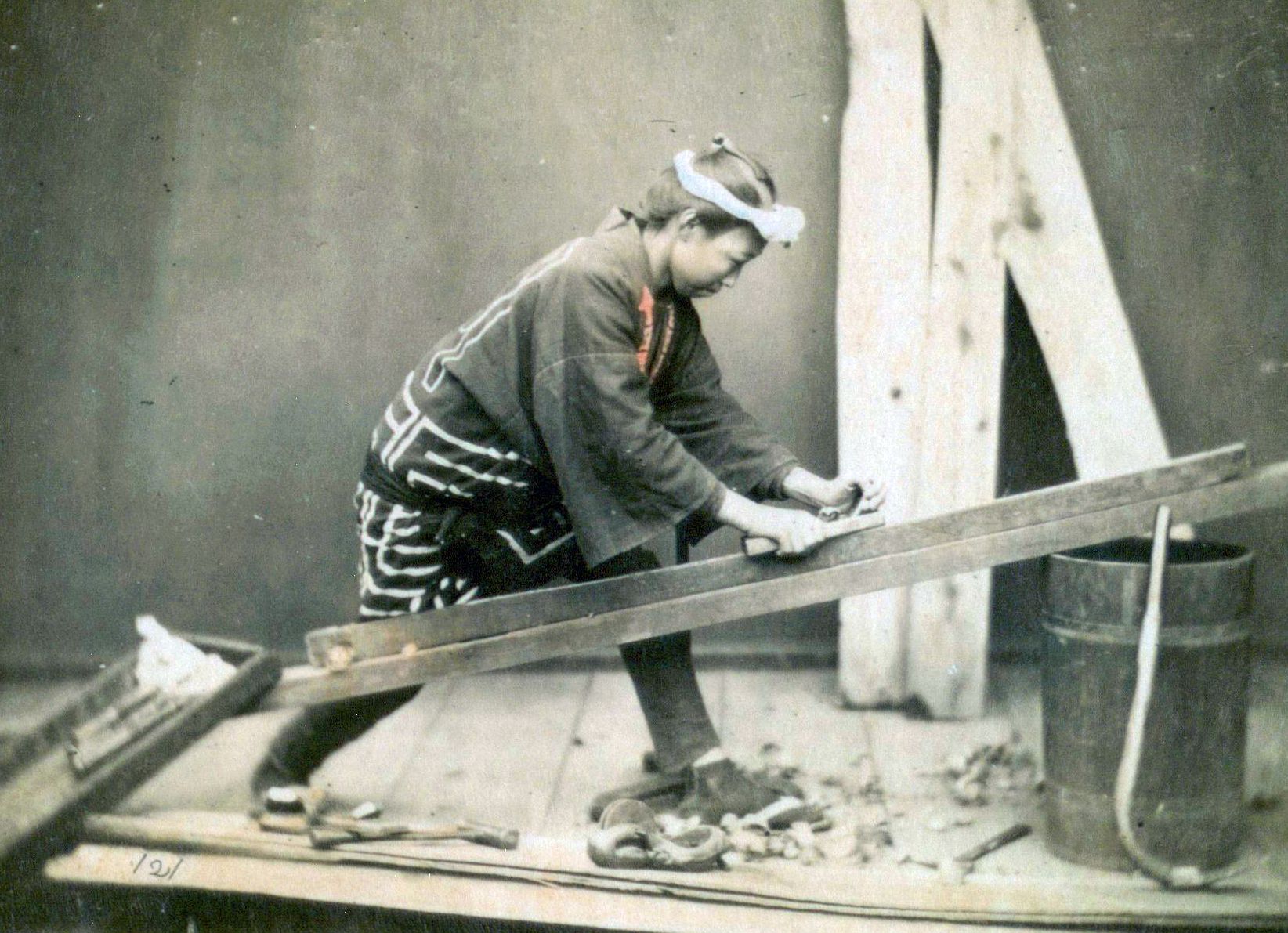
A vintage photo of a Japanese carpenter employing a smoothing plane

I was once asked a rhetorical question that has stayed with me: have you ever tried to push a rope? If this thought-question is new to you, I invite you to consider what we can learn from it. Obviously, it has to do with attempting something futile, which most of us have done more than once. Even when such efforts yield frustrating results, we often try again. Our impulse to repeat the act can be instructive, especially if we reflect on the process. A fellow teaching-team member once offered a counter-intuitive claim, that nobody ever learns from experience! He then quickly added that we only learn when we reflect on experience.

Thinking about actions that we choose to undertake actually benefits from consciously exploring why we might do them in the supposedly wrong way. For such thinking may yield valuable insight. Solving puzzles and brain-teasers is often helped by taking just such an obverse approach.

Learning to use a few Japanese tools while growing up in that country helped me begin to appreciate how undertaking a task or project in an apparently contrary way can be beneficial. When I was in 5th grade, our Yokohama International School added a ‘shop class’ to help us learn to use some basic carpentry tools. Each of us was given a canvas bag containing two particular tools (along with some chisels): one looked like a saw, and the second, a block of wood that had a metal blade inserted in it. 

I had seen a hand saw before, at my grandfather’s house, and he had shown me how to use it. “Pull the saw back gently on the line,” he said, “in order to start the cut, and then push the handle forward in a deliberate manner.” It worked, and with mixed results, I began to fashion a V-shaped bow for a simple boat out of an ordinary 2 x 4.

A common American hand saw

Here, in my new carpentry bag was a saw, but it had sharp teeth on both edges of the blade. Yet, it looked wrong! For there was no hand grip – just a long handle resembling a broomstick. I then discovered the magic of my new tool. It was a Japanese hand saw, and I soon discerned the merits of its design. Pulled – not pushed – for its cutting stroke, it yielded a straight cut more often than my grandfather’s American model. 

A Japanese Ryoba saw

Why? Because when pulling the saw while cutting, the saw’s thin blade is much less likely to warp, keeping true to the desired cutting line on the wood. (Something we can learn from pulling a rope!) It takes a little practice to make the switch when sawing, but it can make a big difference.

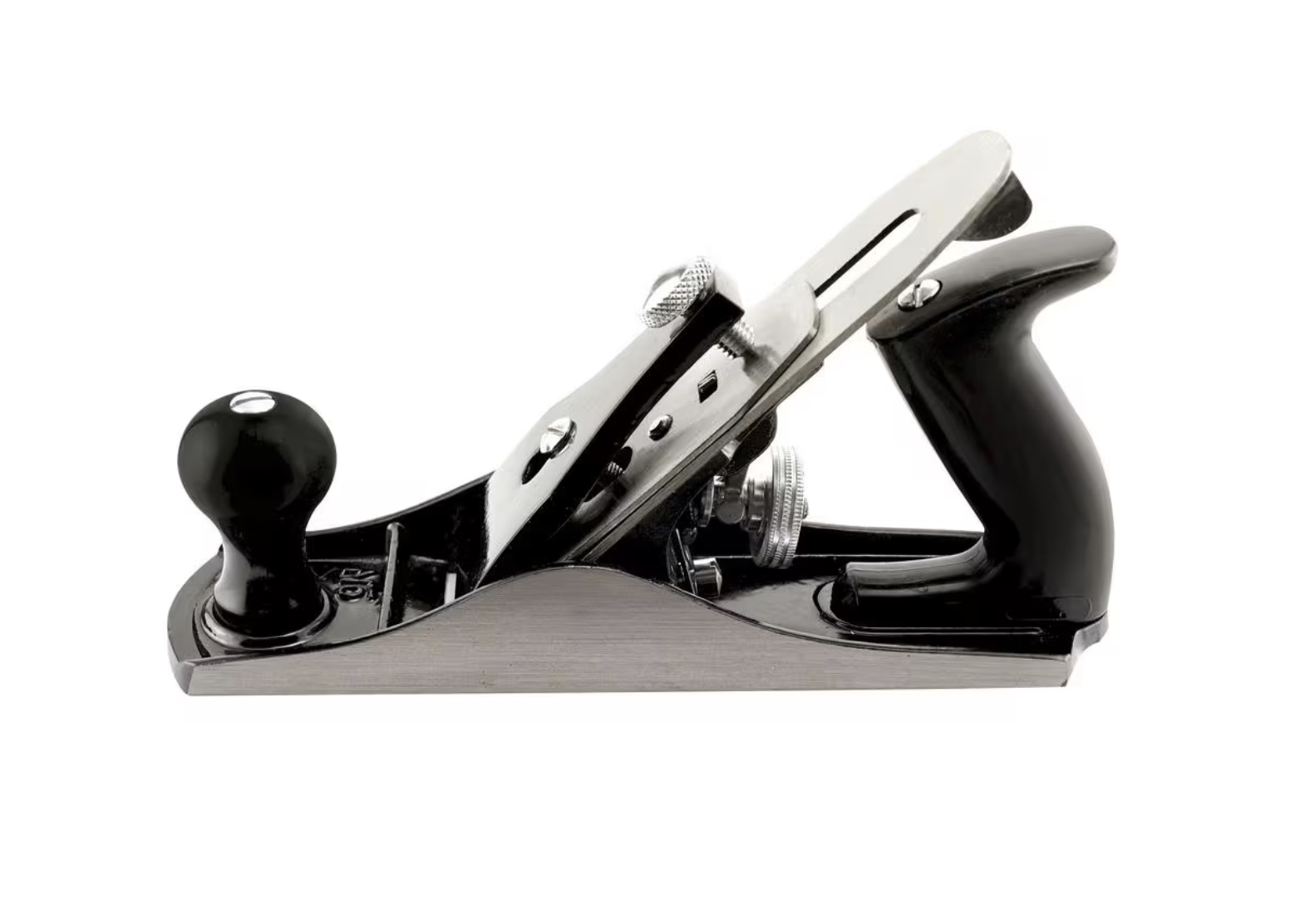
Working with a smoothing plane was entirely new to me. A plane is a traditional tool employed by carpenters and boat builders to take thin shavings off the surface of a piece of wood, both to remove unwanted material as well as to smooth an otherwise rough or uneven surface.

A common American smoothing or bench plane

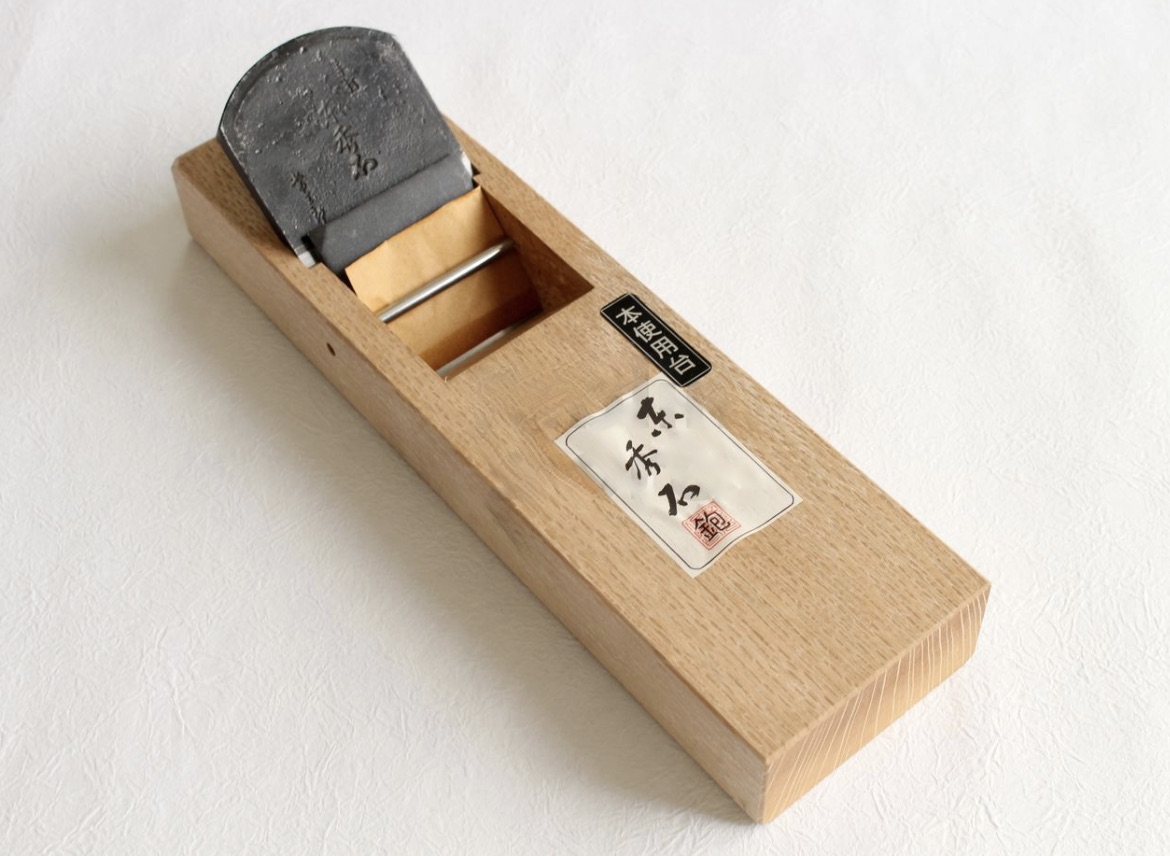
My first use of a plane came with my new set of Japanese tools. The way this plane worked was consistent with how one uses a Japanese handsaw. While planing the surface of a piece of wood, you pull the plane rather than push it (as one does with the American model). Like the Japanese saw, the Japanese smoothing plane yields good results by giving the user a greater sense of control over the process, especially given how pressure, when applied to a plane (as with a saw), can affect its performance.

A Japanese Kanna smoothing plane

Just as the Japanese, the British, and many others, appear to drive ‘on the wrong side of the road,’ Japanese carpenters use familiar tools in the opposite direction from what we expect. I can’t comment on the benefits to the Japanese from driving on the left. But having come to appreciate the beauty within the function of Japanese pull saws and smoothing planes, it is hard for me to appreciate using their American counterparts. Traditional Japanese woodworking tools are also beautiful to behold and to handle.

I am happy to have discovered that traditional Japanese-style tools are now increasingly common in America. I recently bought a pull saw, albeit with a plastic rather than a bamboo handle, at a local store, at an affordable price.

I wish I still had my first set of Japanese tools! For I now realize that they helped me begin to learn a basic insight later articulated by my doctoral supervisor about my professional field of ethics: ethics is ‘how to think about how to act,’ an insight so applicable to much in life.

(Note: I have no commercial connection with any of the products featured in this post, nor do I receive any compensation from them.)