adventure

Remembering Stuart Levine in Charlevoix

Stuart Levine, about 2010, heading out to fish

* I first published a version of this piece in 2020, and I would like to share once again what this friendship meant to me.

For me, getting to know Stuart began with seeing a boat, an old boat. From when I first visited the northern Michigan harbor town of Charlevoix in about 2005, I noticed and was attentive to a classic fishing boat. It was a lapstrake wooden-hulled motor boat from the late 1950’s, painted in a beautiful dark forest green. Yet, I was also attentive to the easy skill and confident style of the boat’s captain, an older man whose approach to open water I admired and wished to emulate. During my increasingly frequent summer visits to Charlevoix, I took note of this boat and its persistent captain, who obviously knew what he was doing when going in and out every day to fish on Lake Michigan.

After about seven or eight years of seeing him and his boat each summer, and having taken photographs of them during many of those years, I finally met Stuart. One morning, early in the summer of 2013, I saw that venerable boat in my marina. The next afternoon I saw it again, while her captain was tying her up, having come in from another fishing trip. Plucking up my courage, I walked over and introduced myself. I told him of my admiration for his boat and for what I had inferred from my limited observation about his daily practice. As it turned out, both Stuart and I loved old boats. And, serendipitously, Stuart and I hit it off. We were weekly correspondents, and fellow summer boaters from then on.

As time has shown me, I had encountered and begun to be acquainted with a person of remarkable ability, sensitivity, and enhanced intuition. From first knowing him, Stuart seemed to look beyond the apparent limitations of the present moment, attend to what might be hoped for, and reflect on how the future could really be different. As I came to see, Stuart’s approach to life was nothing like the proverbial person who ‘sees things through rose-colored lenses.’ Stuart’s optimism was grounded in a belief that a different and more positive future results from actually choosing to live in a different way now, not just from believing or hoping differently.

A great example of this aspect of his character took place one summer. Standing with him on the Charlevoix dock while he was stowing his fishing gear after an outing, I asked about all the fishing tackle and gear he left on the boat, openly visible to anyone who might come by. Stuart told me about a valuable fishing rod that he had once left on the boat in a similar way. Upon discovering the rod’s disappearance the next day, he wrote a letter to the editor of the local newspaper, describing the theft but saying that he would not change his usual trusting practice. He wanted to spend his summers in a community where people modeled trust, rather than self-protective fear.

I am reminded of an episode in a video by the former National Geographic photographer, Dewitt Jones (Celebrate What’s Right With the World). On assignment, Jones visits a living national treasure of the UK, a woman who was an acclaimed weaver up in the northern Hebrides Islands. Jones asks her, what do you think about when you weave? She responds by first saying, “I wonder if I will run out of thread!” Jones admits to being surprised by this. But then, she says, “When I weave, I weave…”

Stuart lit up when I told him this story, and he then said, “When I fish, I fish.” He told me that his delight was in the process, more than in the results. His comment then struck me, as it still does, as absolutely authentic to him. Even though this was a man whom the Michigan DNR highly regarded for having documented every lake trout he had caught and released for decades!

At a marina cookout in 2019, Stuart and I talked about the evolving challenge of evaluating college and graduate students in this current era. With several other boaters attentive to his comments, Stuart talked about his commitment to trusting his students. As always, he spoke positively about how placing trust in others encourages them to live into our imputed and projected hope for them. He often reflected on this principle with me, hoping to commend it. After all, it is founded (among other places) in Aristotle and in the Hebrew Scriptures. For what we practice, and live into, shapes who we are becoming. Stuart exemplified this insight.

And yet, at that cookout, as a less-wise and less-experienced former academic, I responded by describing my disappointing prior service on a national examination board. As he invariably would in such conversations, Stuart challenged my apparently less-than-positive view of such processes. He did this in a way that was shaped by his long life experience of having served as a reflective scholar. By his comments in conversations like this, he would disclose how he was both intellectually curious as well as spiritually sensitive. In this way, he showed how he was often a mentor not only for young intellects but also for older souls.

Stuart reminded me of some my favorite teachers. He did this by how he modeled a particular virtue. It was his disposition to value good questions over what often seem to be important answers. For me, Stuart was an excellent example of one who always encourages others to wonder, and then ask, “But, what is the question?” For when we come to appreciate the horizon of a beautiful question, we are then more open to discovering meaningful answers to which it may give rise. Stuart displayed an abiding curiosity about finding good questions. And this led him to discerning an ever-expanding body of insightful answers.

In one other important respect I would like to offer a tribute to Stuart. From time to time he would share with me words of respectful remembrance he had shaped in his effort to honor former colleagues, friends and students. His approach to this sometimes difficult task was compelling. For Stuart embodied a desire to recognize and express appreciation for the gifts, strengths and achievements of others, as a kind of spiritual practice in itself.

May Bard College and other teaching institutions always be blessed to have persons like Stuart Levine among their faculty and in their administrative staffs. And may we all be blessed to have a friend like him.


I first offered this tribute in memory of Professor Dr. Stuart Levine six years ago, who died on May 1, 2020. He was formerly a Dean and Professor of Psychology for many years at Bard College, Annandale on the Hudson, New York. Stuart’s cultural and spiritual roots were within Judaism, and Bard College’s early history was associated with The Episcopal Church, within which I was ordained as a deacon and priest.
Some Rebuild Classic Wooden Boats

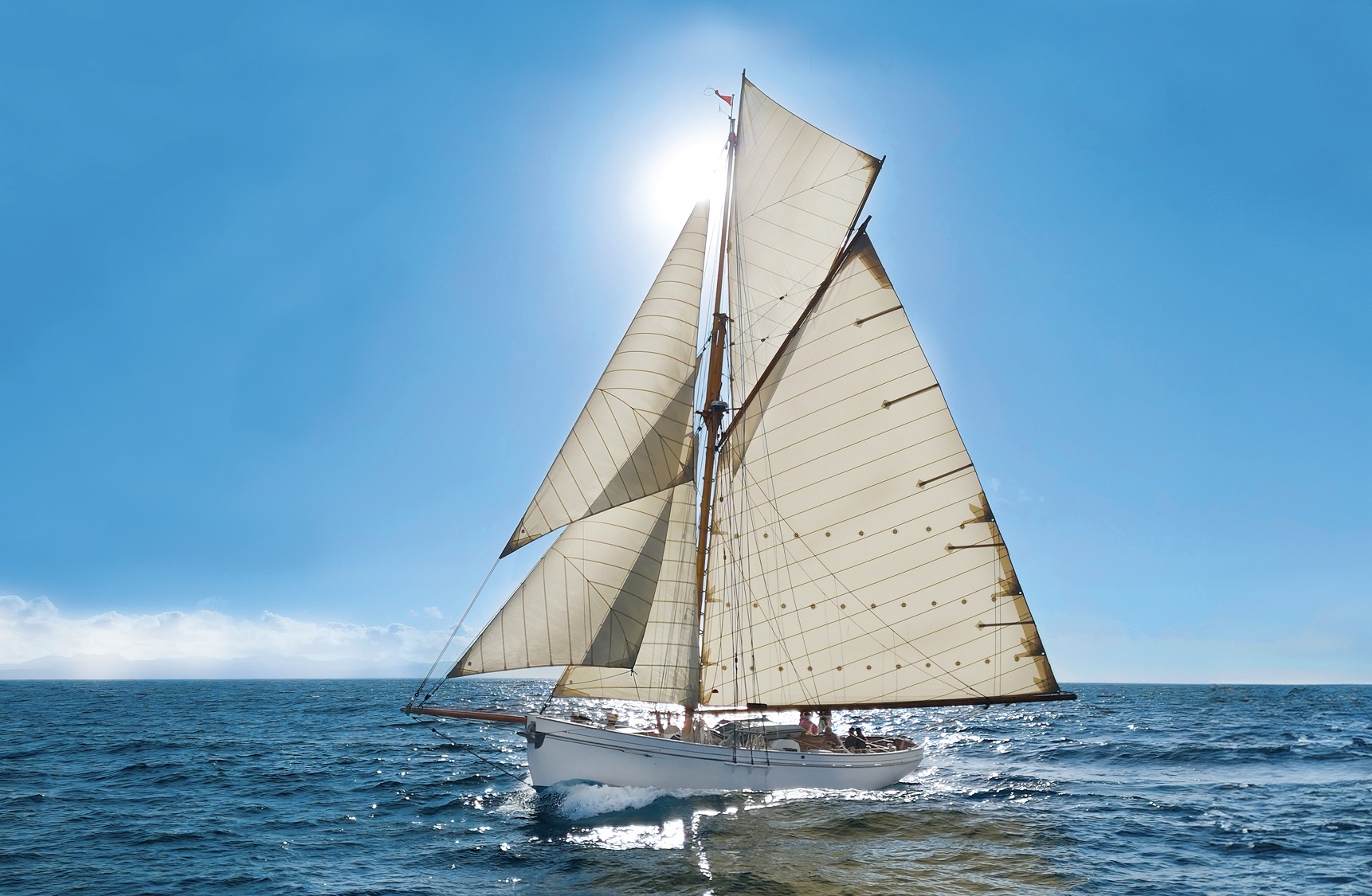
Tally Ho in her glory, with her full suit of sails

My brother, who shares my love of boats, introduced me to the YouTube video channel based on Tally Ho, a classic wooden sailboat rebuilt by a young man named Leo Goolden. Watching Leo’s videos led me to those made by Nicholas Verrochi, about his preservation work on the Argonaut II. Through further viewing, I found videos made by the boatwright, Barry Collins, and then Joshua Alexander’s series titled A Boat in the Woods.

Several noteworthy things connect these particular examples of folks who love boats. Most appear to be in their 30’s or younger; they have pursued restoring or re-building traditional wooden boats; and they have gravitated around or have connections with the boat community at Port Townsend, Washington. Together, they display what is perhaps the simplest definition of vocation: doing what you cannot not do. And then, applying yourself to it as fully as you can. This may be the most elemental way that we gain God-awareness in our lives.

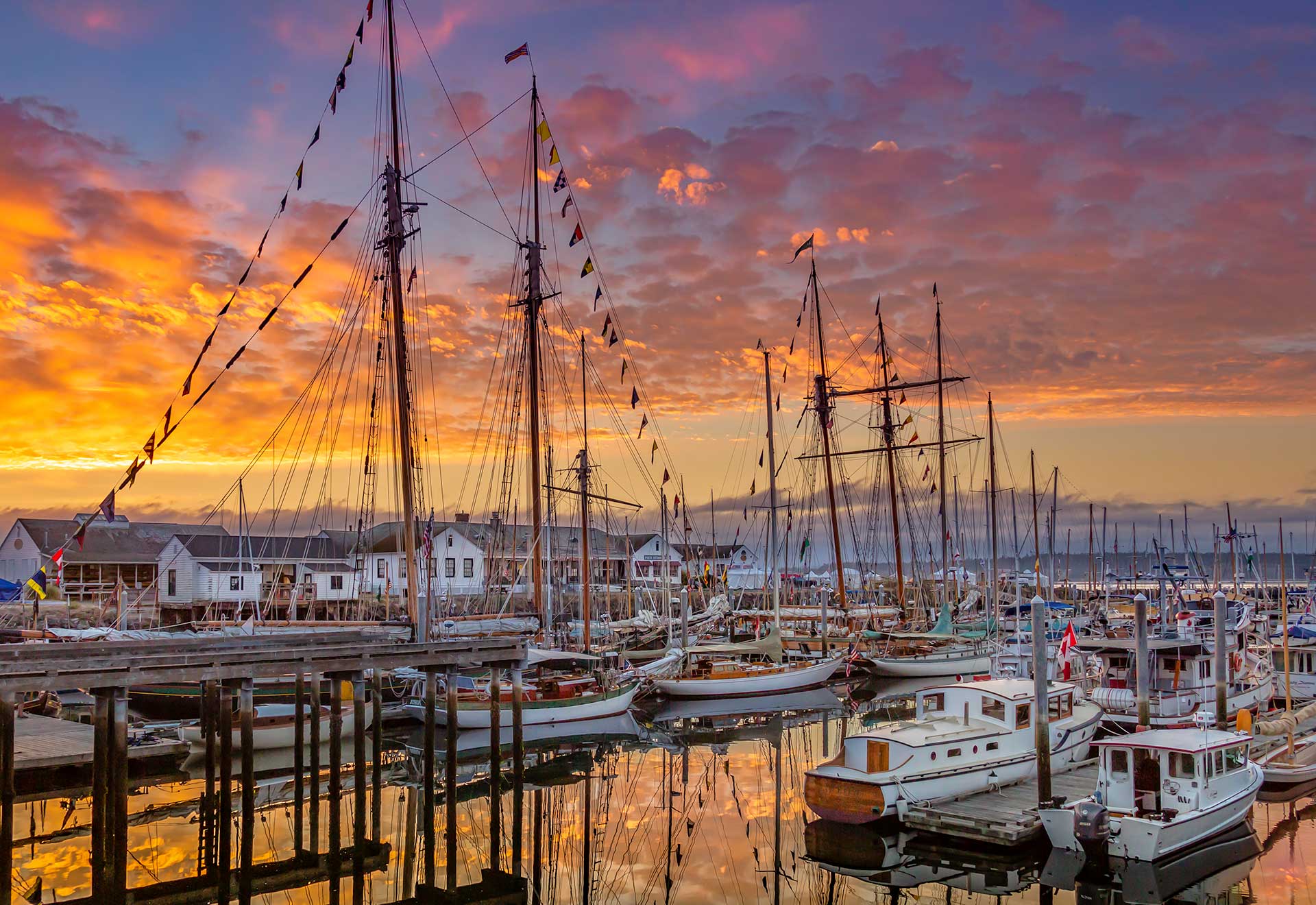
A photo capturing the Port Townsend Wooden Boat Festival

As long as there have been young dreamers and old hulls, there have been romantic attachments to wooden boats. This may especially be true in our technological era, run by electronics operating on industrial mechanisms composed of synthetic materials. The art of building wooden boats, well associated with the “age of sail,” has experienced something of a renaissance. Evidence for this includes nationally-known boatbuilding schools offering project workshops, and companies that produce wooden kits with pre-cut materials, attractive to aspiring boat builders. Wooden Boat and Small Boats Monthly are two examples of popular publications that provide knowledge about boats of this kind, as well as basic instruction concerning building techniques employing traditional tools.

There is an observable confluence of energy and enthusiasm amongst the particular group of folks I am featuring here, with their common interest in restoring examples of wooden boats, along with their shared rediscovery of fulfilling patterns of life on vessels not permanently moored in a single location. Their videos offer continuing education regarding the restoration and maintenance of old boats, as well as an introduction to facets of essential ‘boat craft.’

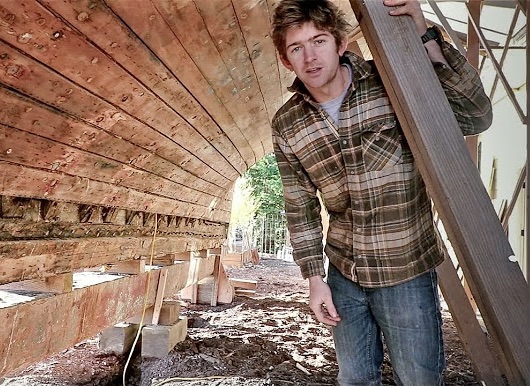
Leo Goolden under the hull of Tally Ho during her reconstruction

Tally Ho! Leo Goolden is a very likable young man with the skills of a master shipwright who possesses a keen eye for craftsmanship in work, materials, and ship hardware. It is impossible not to fall in love with the restored Tally Ho (launched in 1910), presently making her way into the Caribbean Sea, having transited from British Columbia. Leo’s well-filmed videos, along with their explanatory power and evocative musical selections, provide evidence of his successful fundraising. Every feature of this 48’ gaff-rigged cutter attests to the ‘quality-first’ orientation of a purist who knows what he is doing, and who is open to learning about the ‘best next options.’ Those who dream about sailing the perfect wooden boat will love following Tally Ho and her continuing adventures.

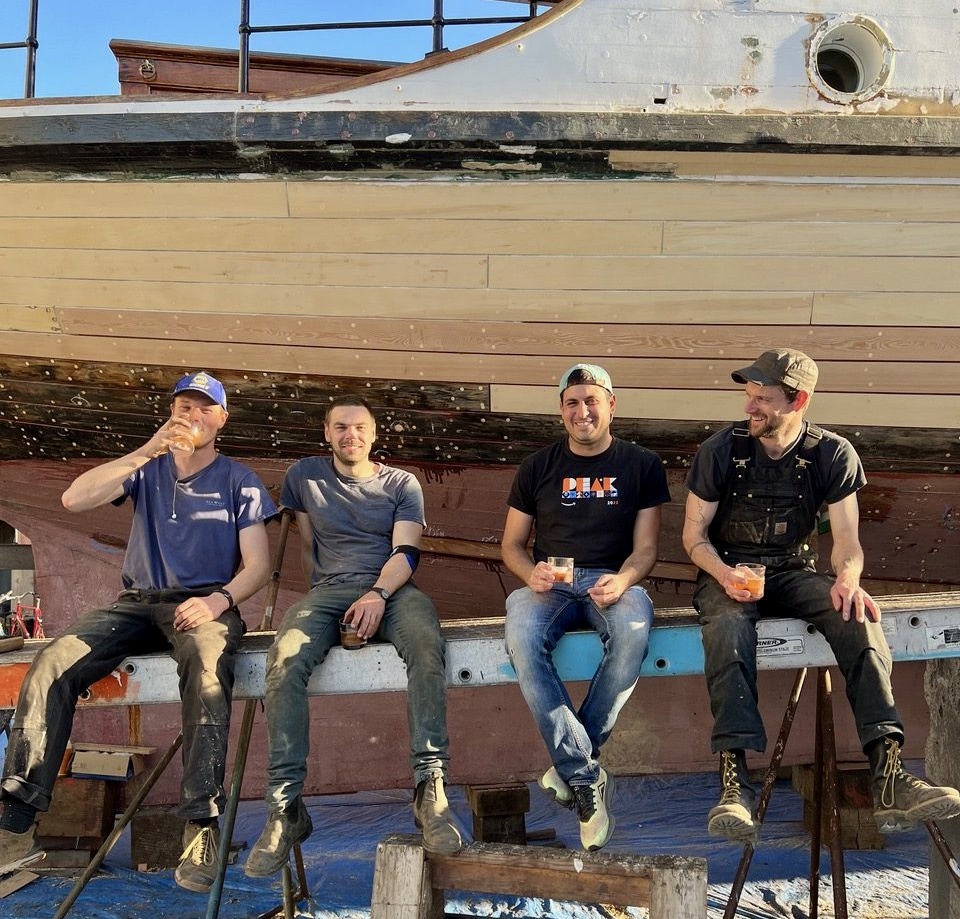
Nicholas Verrochio and his boatwright assistants
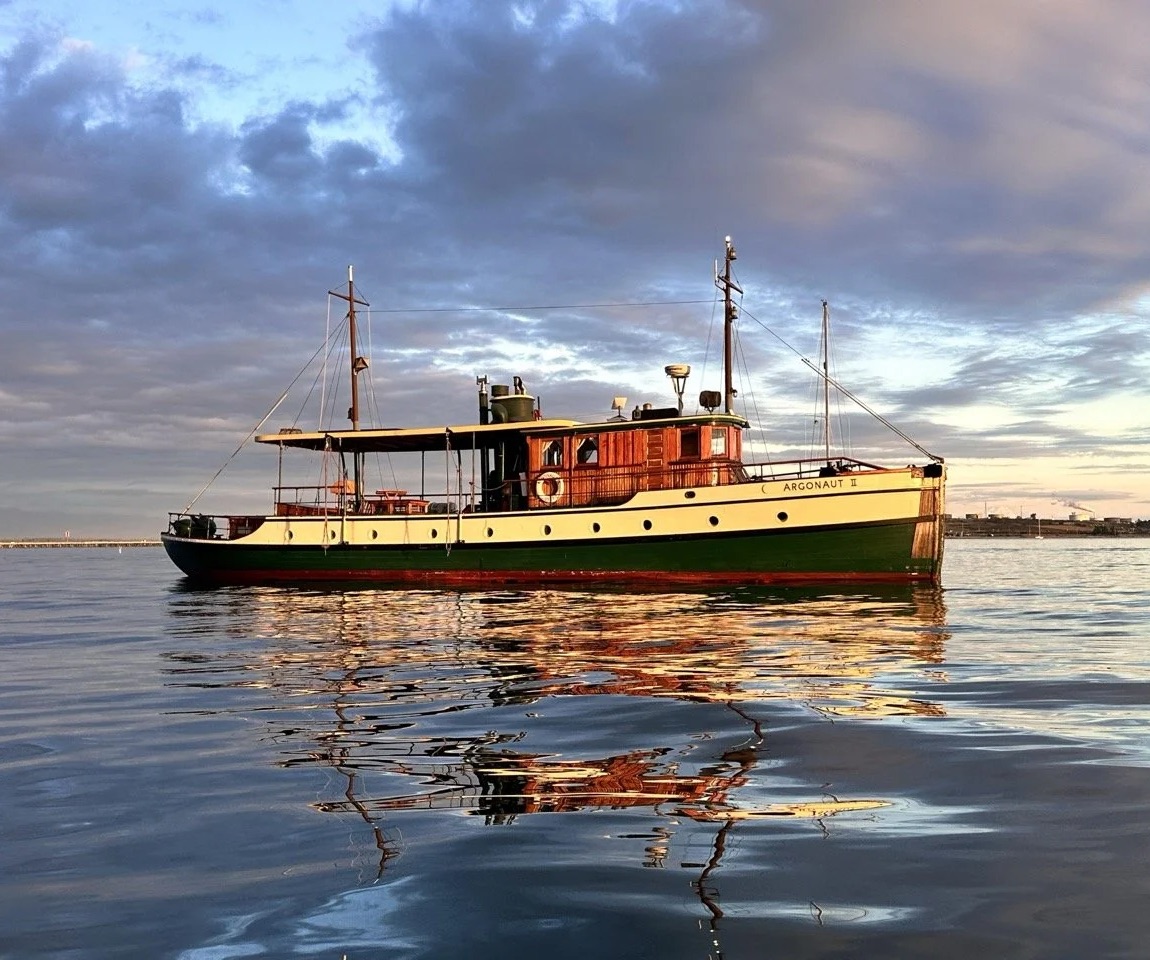
Argonaut II at sunset on her home waters

Nicholas Verrochio and a team of marine carpenters are presently rebuilding signficant portions of the hull of Argonaut II, a beautiful 73’ motor cruiser originally launched in 1922 for a lumber tycoon, and subsequently used by the United Church of Christ for decades as a floating missionary post stationed in the Georgia Straight. Nicholas has evident gifts for both hospitality and the stewardship of history, and sees his work on Argonaut II as having a mission to share discovery experiences on the water in the comfort of a historic and well-preserved yacht. Watching his videos, including those displaying the meals he prepares, inspires pleasant thoughts of chartering his boat.

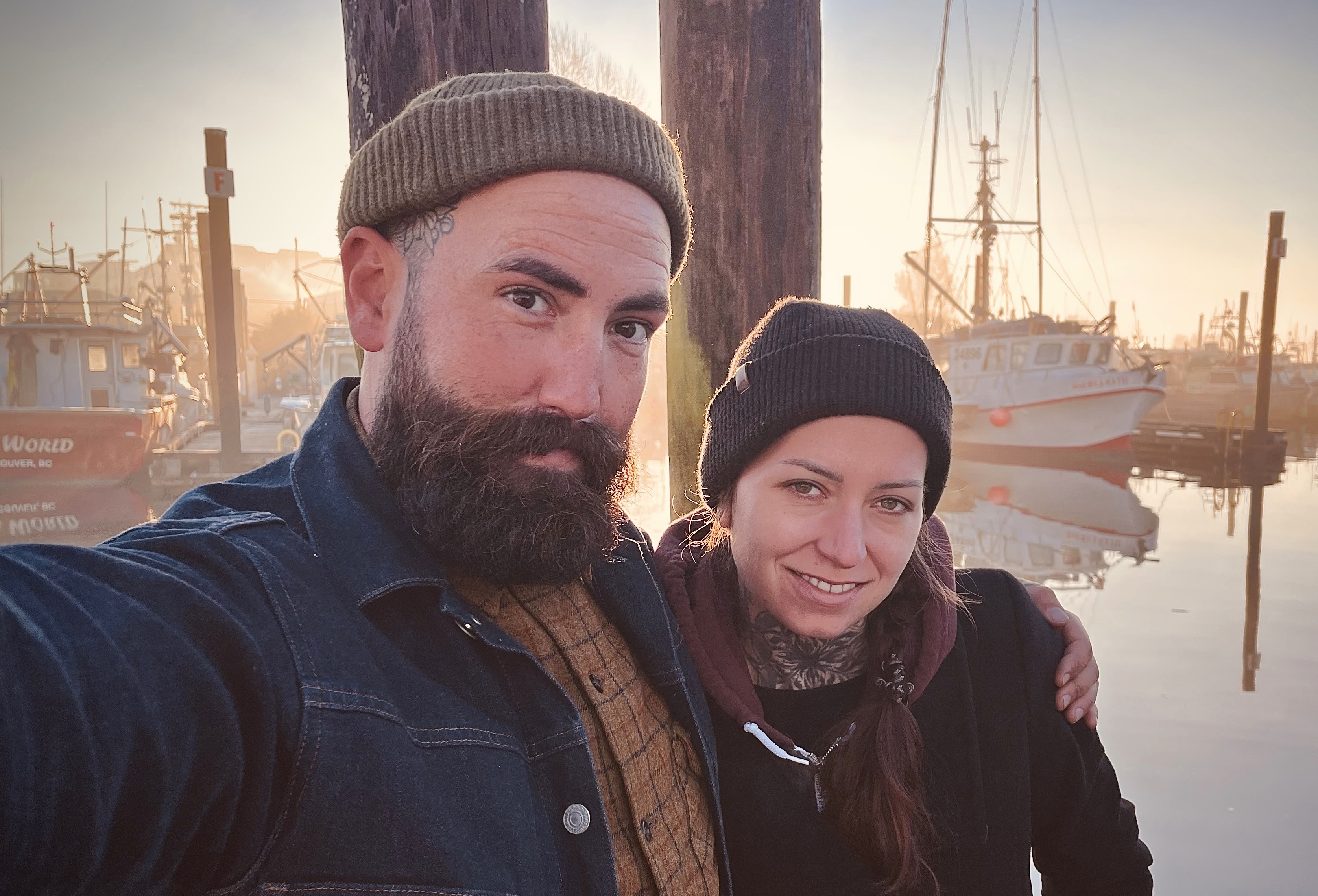
Sailor Barry and Hailly, who share stewardship of Thunder Child
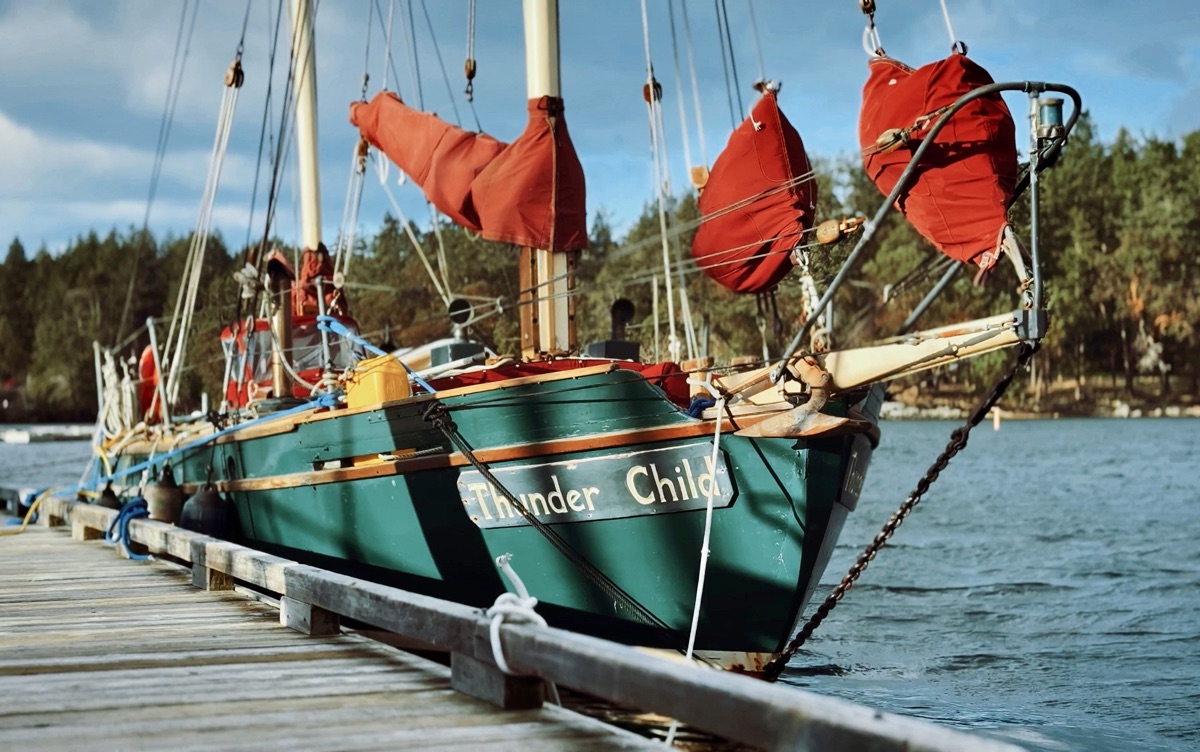
Thunder Child at her dock

Sailor Barry’s videos tell us as much about how tending to boats has been ‘life work’ for him as it has been about being a shipwright. His path has been strongly shaped by hard work on the sea, and he seems to have a natural affinity with marine carpentry and mechanical matters. Watching him at work, we learn how his abiding application of himself to boats and woodworking have had an attractive healing power for him. He and his sailing partner, Hailly, have done wonders with transforming Thunder Child, their 1971 William Atkin 36’ gaff-rigged ketch, purchased from a couple who had owned and sailed it for 49 years.

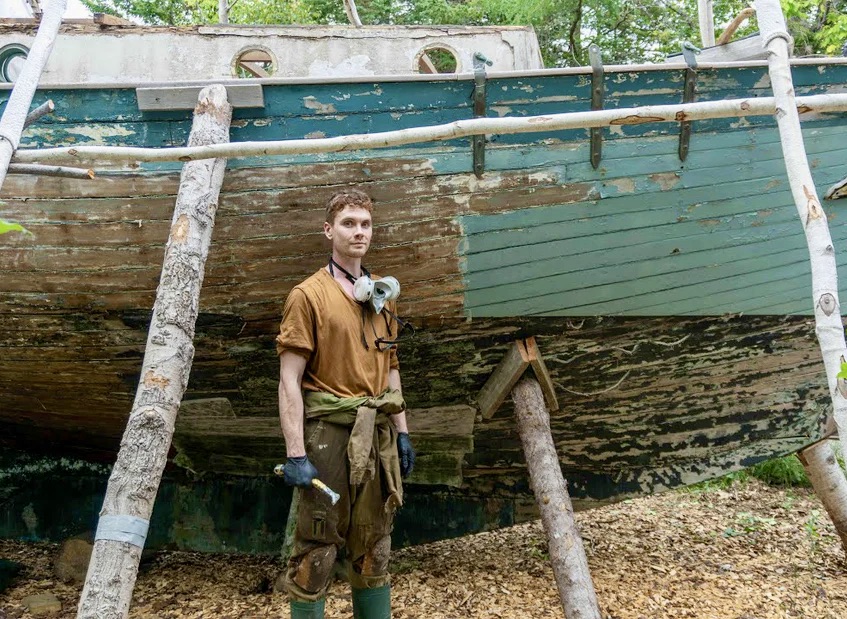
Joshua Alexander working on the hull of his as yet unnamed boat in a Nova Scotian forest

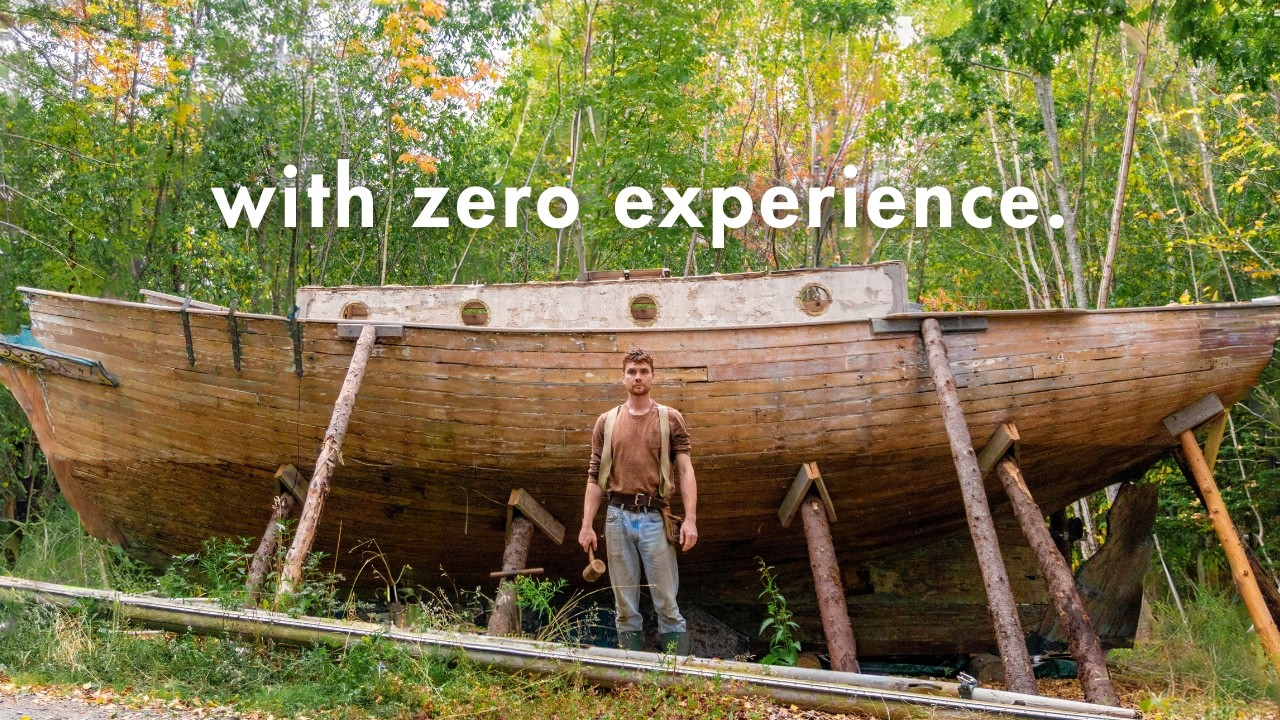
Joshua Alexander’s videos effectively document his ongoing campaign to make seaworthy a forlorn 40’ boat built in 1966 in Yokohama, Japan. He had the hulk moved to a friend’s wooded property where he built a tented structure in which to live while working on her. With very limited resources and alone except for a curious owl, he demonstrates the vision, dedication, and woodworking knowledge to see through this immense project. His droll, emotionless voice-over narration, which does not overlook his recurring setbacks, is strangely compelling, conjuring up images of a 19th century New England sea captain reincarnated as a youth in the woods of contemporary Nova Scotia. Yet, until recently, Joshua has never sailed a boat! For those who love ‘underdogs,’ Joshua and his boat present us with a paradoxical conjunction between our high hopes for him, and a project that faces immense challenges.

A still image from Joshua Alexander’s A Boat in the Woods series

Additional Note: YouTube provides an accessible way to become more familiar with these boat builders and their projects. Their videos can be found linked to the following YouTube channel names (in the order in which I have presented them, above): Sampson Boat Co (for Tally Ho); Argonaut II; SailorBarry; and A Boat in the Woods.

Imagining a Voyage

We all imagine taking journeys or voyages, sometimes out of an unfulfilled desire and sometimes with an apprehension about the potential consequences of such ventures. Even those who do undertake to travel over the land or over water usually prepare, even casually, for their upcoming experiences by anticipating certain items likely to be needed or enjoyed while en route, as well as potential challenges or obstacles to be overcome while away. Having recently spent about a month on our old sailboat of modest size, I realize that my efforts to prepare for any needs we might have while docked or sailing led us to be burdened with some unused items. For the best parts of our recent travels were those that had more to do with ‘being’ than any kind of ‘doing’ in which we were engaged, and in relation to which we might have had particular needs for gear or supplies.

Some people believe that the best journeys are those that we undertake through reading, through our enjoyment of the accounts of such travels as recorded by others. I often choose boat and sailing related reading material for my free time, and when preparing for an upcoming trip I find that such reading helps me anticipate and plan for the kind of lake or coastal cruising that I hope to do.

A.J. (“Sandy”) Mackinnon with Jack de Crow

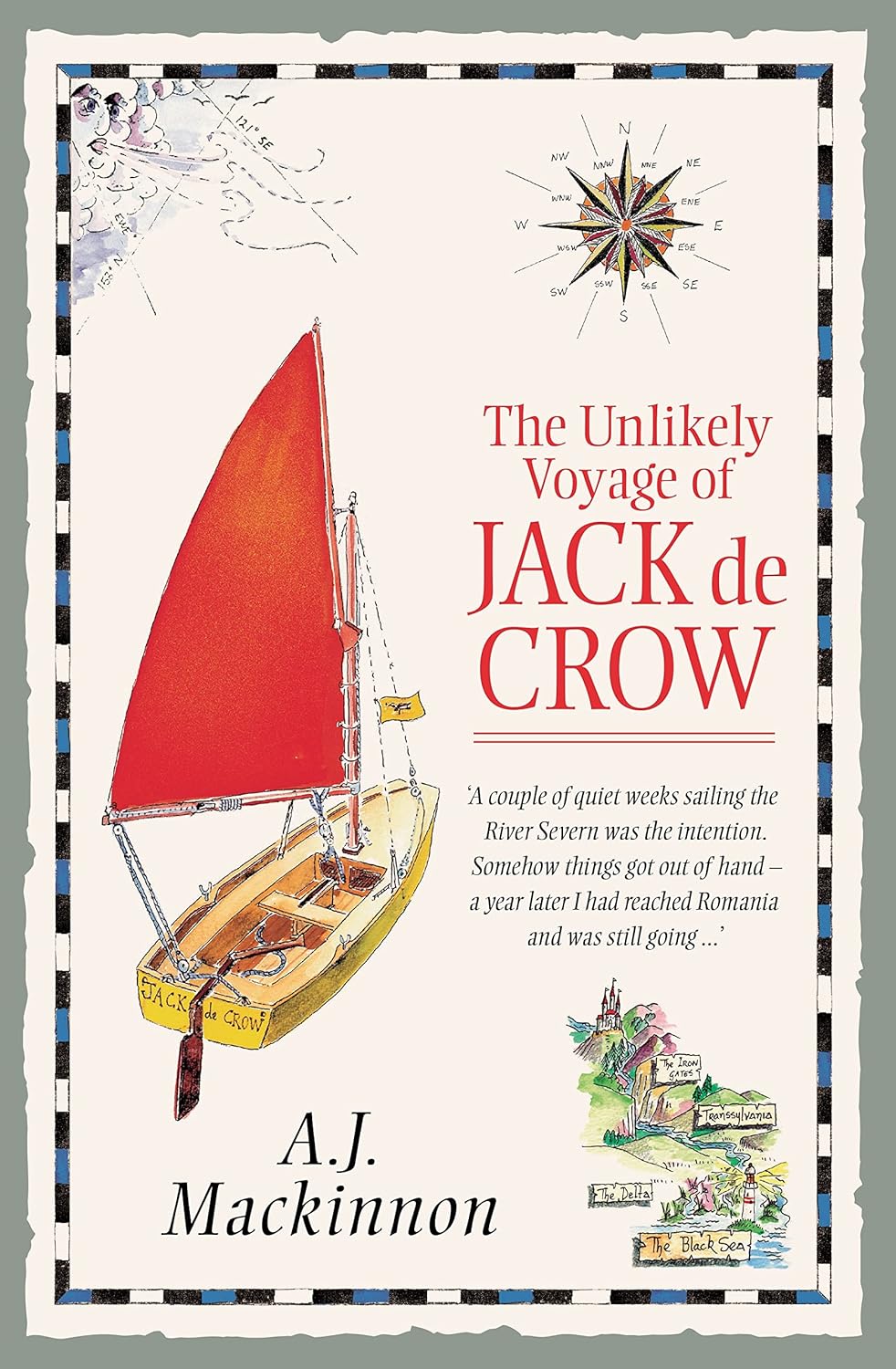
Nonetheless, there is a type of nautical-related reading that I enjoy probably because it challenges my usual approach to trip pre-planning. One example is a book I have come to love reading and re-reading, A.J. Mackinnon’s delightful, The Unlikely Voyage of Jack de Crow. In it, Mackinnon – with engaging humor and self-deprecation – describes how he embarked on a river journey one summer, during a break from teaching at a school in north Wales. He asked to use an old plywood eleven foot Mirror dinghy, and ended up sailing and rowing it all the way to the Black Sea! To say that he embarked upon his voyage under-provisioned would be an understatement. And yet, relying upon his wits and the kindness of strangers, and making use of the floor space of the dinghy to sleep under a cockpit tent fashioned from a tarp, he actually made it – even surviving the incredibly high tides of the Bristol Channel and their strong currents, as well as his subsequent crossing of the unpredictable English Channel.

Cover photo from another edition of Mackinnon’s book

When preparing for our recent trip on our venerable Nimble 24, or when contemplating some modification of it, I often try to remember Larry and Lynn Pardey’s three-fold advice: “Go small, go simple, but go now!” A.J. Mackinnon, without knowing it, followed that advice more fully than many have tried to do, and with astonishing results.

An illustration by Mackinnon from his book

At the same time, I also try to remember what may appear to be some counter-balancing words of advice that I once heard: “There are old sailors, and there are reckless sailors; but there are no old reckless sailors!” And so, while I admire and at times have tried to emulate some aspects of Mackinnon’s approach to his incredible journey, as well as the Pardey’s seasoned counsel, my natural temperament (and perhaps also my additional age) has more often led me to be over-prepared than ill-equipped in terms of gear and supplies.

Mackinnon’s illustration for how he prepared for nights on the boat

There are several qualities that I admire about Mackinnon and his approach to his sailing journey on his little but mighty Jack de Crow. In his account of his adventures, he demonstrates – along with his lively sense of humor – a willingness to make mistakes and not feel defeated by them, courage in the face of multiple situations in which he faced the unknown and the possibility of harm, and that he did not take himself too seriously so as to have been willing to risk derision by others who had more formidable boats and yachting equipment. Continuing to learn from his book, I find that I am doing better about leaving room for how ‘less can be more,’ though my first mate is sure to raise eyebrows at the claim.

Jack de Crow and her skipper arrive in Istanbul harbor

For an entertaining read, allowing you to undertake a fun voyage in your imagination, Mackinnon’s book makes a terrific choice. The cover art, and the drawings within (by Mackinnon) are whimsical and yet accurate, without being overburdened by detail. At the same time, if you are looking for inspiration to undertake some small boat rowing, sailing, and even voyaging, I can think of no better place to start.

M/S Juno: A Floating Beauty

If reading this by email, please tap the title at the top to open your browser for the best experience. Then, clicking individual pictures will reveal higher resolution images.

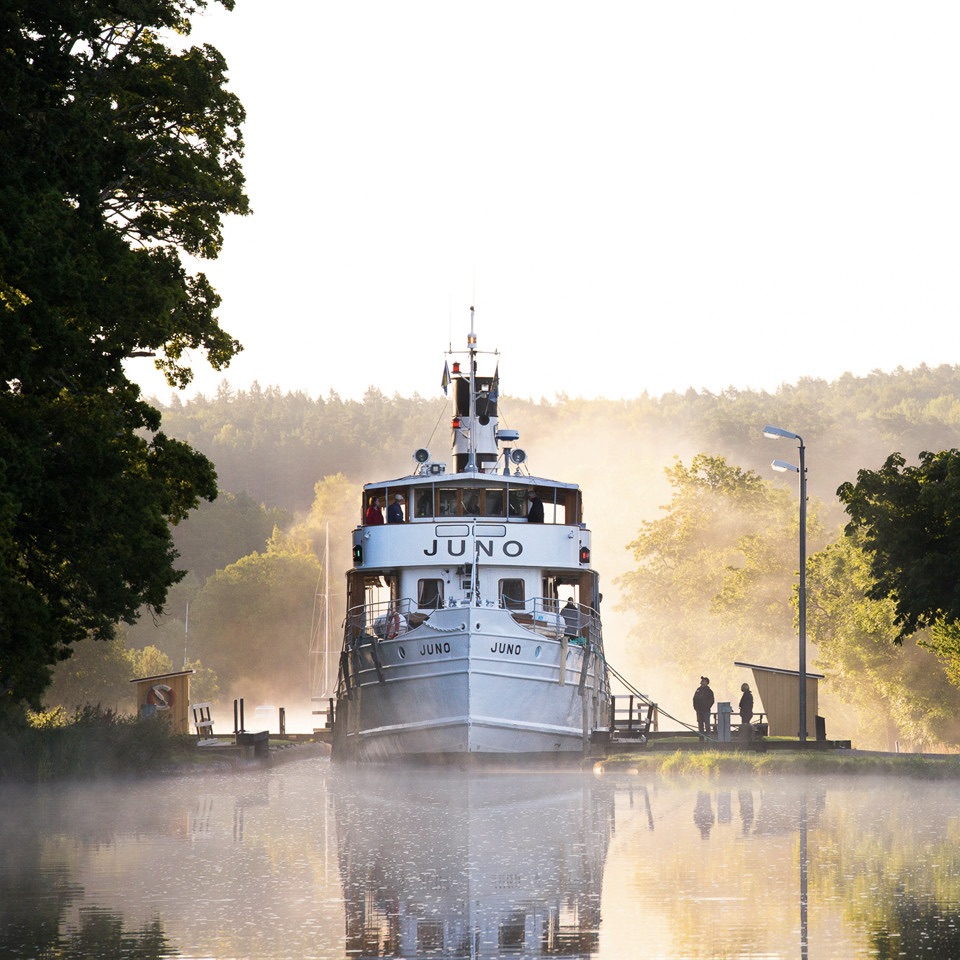
The M/S Juno on her inland voyage


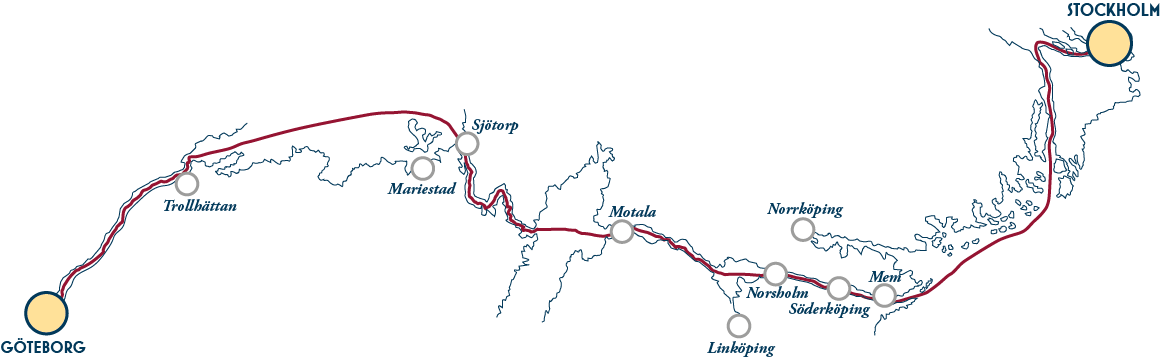
Did you know that it’s possible to book a safe and enjoyable overnight passage on a small ship that was launched over 150 years ago, in 1874? The M/S Juno, built for and still ‘sailing’ on largely inland waters in Sweden, is the oldest registered passenger-accommodating ship in the world. At about 100 feet in length, and with only 24 cabins, she is tiny compared to the grand vessels now being launched for the cruise industry. Not well-suited for ocean crossings, the Juno is perfect for her comparatively short runs between the Swedish ports of Gothenburg and Stockholm. Her usual route takes her from salt water through inland canals and lakes, and then through salt water again to the Stockholm archipeligo of islands and the Baltic Sea.

Originally, the Juno’s superstructure containing her bridge, lounge and dining room, as well as some cabins, was significantly smaller when the little ship served to convey freight as well as travelers. But these days, after a century and a half of service, her mission continues as a passenger vessel. Her age and small size, as well as her historic purpose, account for the fact that modern day voyagers need to be prepared for limited amenities such as shared restrooms.

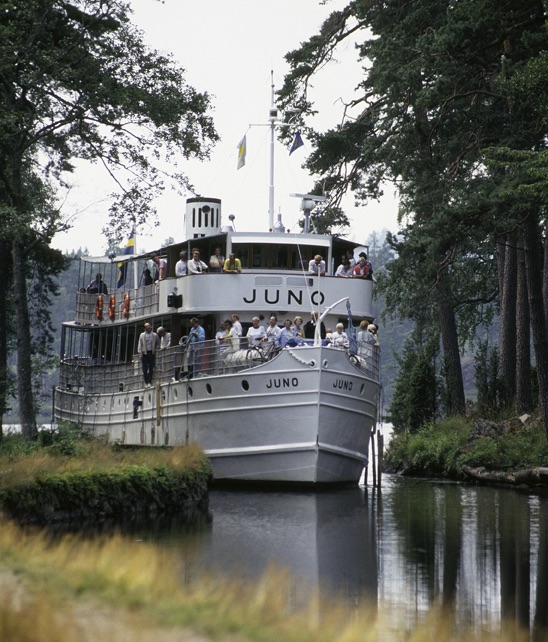
Juno transits one of many locks along her route

Her principal route takes her through canals and locks, as well as inland lakes, up and over the lower Swedish peninsula, with the highest point on the journey reaching a remarkable 300 feet above sea level.

An upper level cabin on the Juno
Juno’s dining salon

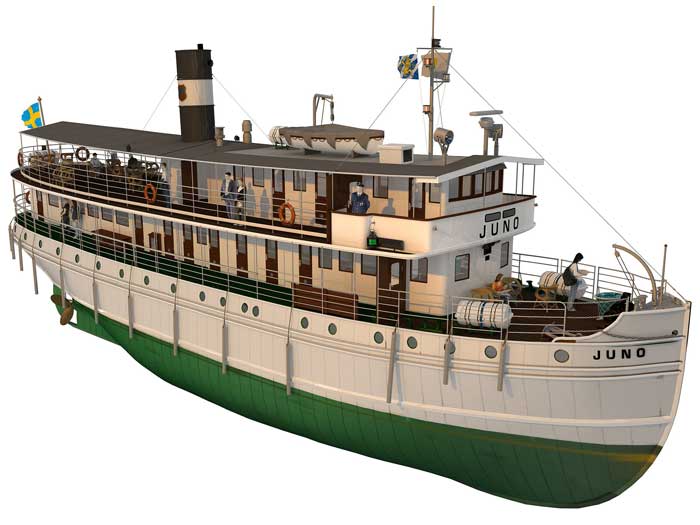
I love Juno’s diminutive size and her classic lines that feature an upturned stern. Her bow line, with a vertical sheer that is now being rediscovered in boat design, is particularly appealing to me, being the skipper of a vintage 24 foot sailboat displaying a similar profile. I would enjoy a berth in one of Juno’s small cabins, resembling as they do old time railway carriage compartments. I think that Martha and I would appreciate the intimacy of sailing with a relatively small number of fellow passengers as well as the proximity of the up-country scenery along the route.

Juno’s upper level stern deck
A vintage photo of Juno taken before the lengthening of her superstructure

My great-grandfather, August Anders Holmgren, hailed from the northern seaside city of Sunsvall on the Baltic coast of Sweden. He emigrated to America in 1893, sailing most likely from Gothenburg, via Liverpool, to Montreal, and then by train to the Midwest just as many other Swedes had done before him. Perhaps my great-grandfather reached his ocean-going ship in Gothenburg via the Juno or one of her sister ships, sleeping on the floor of the dining room as many deck passengers did in the era when the Juno was still in freight service.

Juno’s route through Sweden

Given this personal history, I am sure that a short voyage on the Juno would prove to be a particularly nostalgic experience for me. My family connections with coastal Sweden, and my own experience of having crossed the Pacific Ocean five times by ship, help me to appreciate why I am so drawn to the Juno and the opportunity – some day, I hope – to sail on her.

A replica of Juno displaying her hull

Background note: I remember my surprise at encountering Cracker Bay, a 150 foot long private yacht (50% longer than Juno) with three decks above her water line, which one summer cruised into Round Harbor, Charlevoix, MI, from the Great Lakes. That year, as a vessel registered in the Cayman Islands, Cracker Bay was ‘manned’ by a family with young children and a crew of four or five. She took on $20,000 worth of gasoline supplied by a tanker truck parked near the fuel dock at which small craft like mine received a comparatively few gallons at a time. One of the children on Cracker Bay rode a bike over to the dock where my 15′ West Wight Potter was berthed, on which I was cruising for a couple of weeks. He marveled at the diminutive size of my boat, saying he wished he had one just like her!

Cracker Bay, with accommodations for up to 12 passengers, at Charlevoix, MI, in 2010