General Revelation

God’s Handiwork Inspires Ours

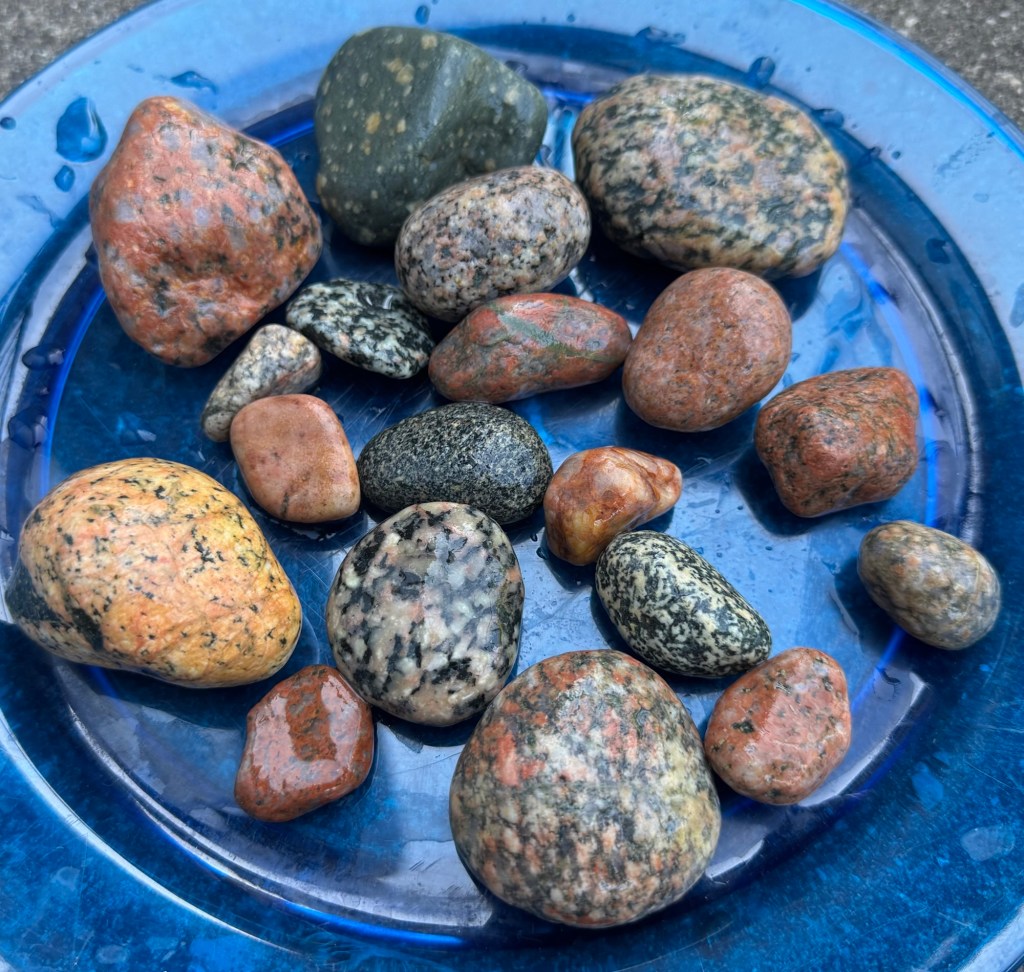
Stones found on a northern Lake Michigan beach

Labor Day is around the corner and some of us may receive and enjoy a day off from work. What we call retirement, a stage in life I am presently enjoying, tends to represent leaving work behind. Yet these and related ideas rest upon a common assumption, that work is different from, and in some ways inimical to, enjoying fulfillment in life.

I find a biblically based theological insight helpful when thinking about work. As with many matters that can be looked at from the perspective of Christian moral theology, our view of work can be enhanced by making reference to four specific reference points. These are, first, what we have learned about God’s purposes in Creation for this or that aspect of our lives; then, what impact sin associated with our Fall has had upon what we are thinking about; third, how God’s ongoing work of Redemption has restored and or transformed the matter presently under consideration; and fourth, to ask what future – if any – does this aspect of our lives have in Christ. 

Work provides a wonderful topic for engaging in this fourfold inquiry. Based on our common way of thinking about work, it may be hard for us to consider the meaning of work from any other vantage point than of attributing its role in our lives to the Fall and to the ongoing effects of human sin. Yet, we can also learn from many who have come before us who have distinguished work from toil. This can help us see how forms of labor, and pejorative associations the word may have for us, are surely due to our proclivity to link such activity with burdensome unpleasant duties.

For what we may overlook is the biblical view of how God has shared stewardship responsibility for aspects of Creation with us, as beings created in God’s image and likeness. This was symbolized by the way that our mythic forebears (Adam and Eve) were given their ‘work’ of naming the animals as a path toward fulfillment. It was not until their expulsion from the Garden that the first human beings are described as prone to acts characteristic of sin. Thereupon, in biblical theology, our heavenly ‘work’ of praise, and of divinely-invited participation in God’s Creation stewardship, ceased to be pleasingly ready pathways toward human fulfillment, and became energy draining and spirit-diminishing activities – such as we tend to find them to be now.

A growing segment of the wider Christian community shows signs of acknowledging how God’s work of Redemption is ongoing, quite aside from its ‘once and for all time’ episodic saving events. The pattern and purpose remains the same – nothing fundamentally new is added, nothing old of lasting value taken away. Preeminent remains God’s abiding purpose for us to become and be God-like in God-intended ways. For, as Athanasius taught us, the Son of God became the Son of Man, so that the children of men and women could become the children of God. Work – not toil nor burdensome labor but creative and fulfilling work – remains a vital part of our holy path toward wholeness.

And to remind us of this abiding truth, the loving Creator has spread around us an uncountable abundance. These are the signs of outpoured and participatory grace, some of them very small, like stepped-upon seashore pebbles and tiny blossoms among hurried-by roadside weeds.

Too quickly we dismiss the significance of our our small acts of selfless giving, not to be counted by us, but adding up to so much more than we imagine in the life-growth of others. This is our holy ‘work,’ overlooked but important stepping stones on our path toward living into the godly fullness with which Christ fills us.

If on our daily course our mind

Be set, to hallow all we find,

New treasures still, of countless price,

God will provide for sacrifice.

Old friends, old scenes, will lovelier be,

As more of heaven in each we see:

Some softening gleam of love and prayer

Shall dawn on every cross and care.

[John Keble, “Morning,” from The Christian Year]

The Mystic Rumi’s Burial Place

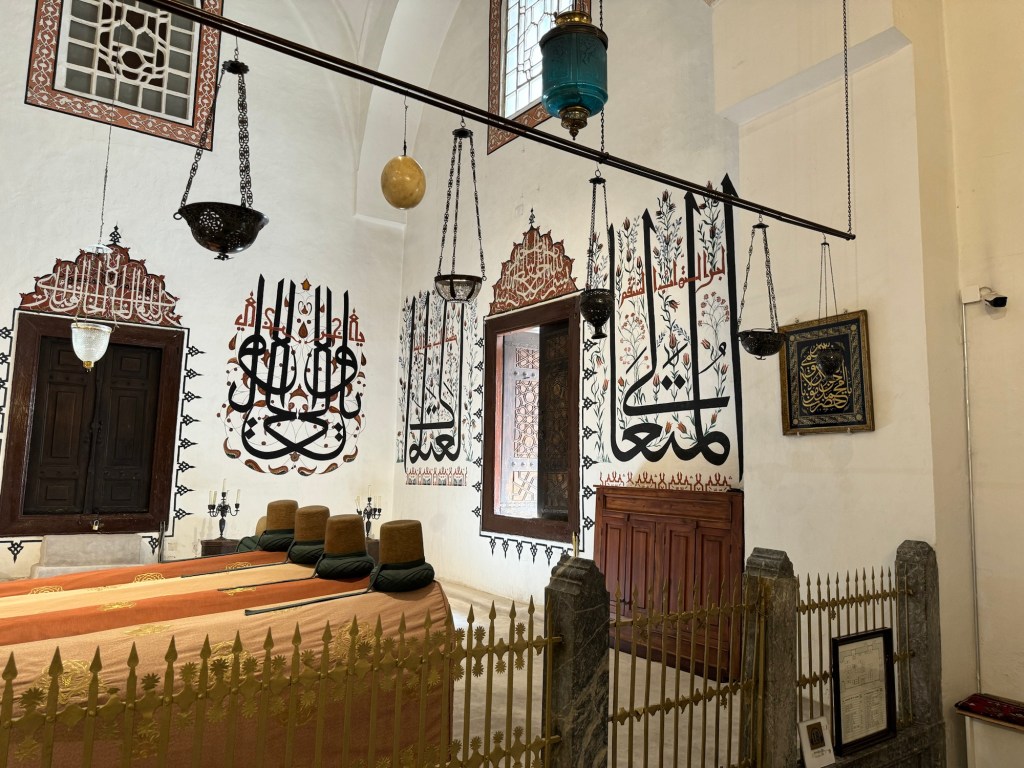
The burial place of the mystical Sufi poet, Rumi, in Konya, Turkey

Here are some photos from a recent visit to the mausoleum of the mystic Sufi poet, known in the West as Rumi. It is a very holy place for many who visit there.

The honorary coffin cover, sitting far above the entombed remains of the mystic Rumi
A Persian style multi-faceted dome in the same building
An interior view showing some of the remarkable calligraphy on the wall surfaces
A broader interior view
An original 13th century silver door
A replica small space in the courtyard adjacent to the mausoleum

Epiphany-Sensitive Landscape Artists

[If reading this by email, please tap the title at the top to open your browser for the best experience.]

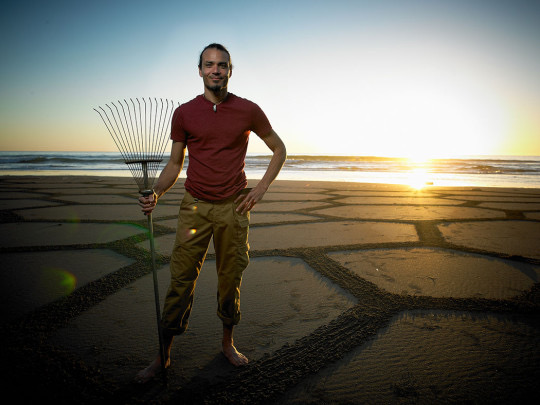
Andres Amador

Christo, after the death of his wife, Jeanne-Claude

On the Sundays following the feast of the Epiphany (January 6), the western Church historically has focussed on God’s self-disclosure through nature. We find this theme expressed in the Epiphany Day Gospel featuring the visit of the Magi, or Wise Men, from the East. They followed the appearance of a star in the sky to find our Savior at his birthplace. Note how this contrasts with stories about guidance provided by the messages of angels, whether in dreams or as on occasions of personal divine revelation.

One of my favorite examples of this theme can be found in some verses by the Anglican priest, theologian, and poet, John Keble, for a Sunday in this Epiphany-tide:

When souls of highest birth
Waste their impassioned might on dreams of earth,
He opens Nature’s book,
And on His glorious Gospel bids them look,
Till, by such chords as rule the choirs above,
Their lawless cries are tuned to hymns of perfect love.

In my next two posts on this blog I will feature the landscape-based artwork of Andres Amador, as well as that of Christo and his late wife and collaborator, Jeanne-Claude. Amador is known for his ephemeral raked sand projects, and Christo with Jeanne-Claude are remembered mainly for their draped or wrapped fabric installations. Though the work of these three has taken very different forms, they have demonstrated a common and notable commitment to environmental sensitivity despite the fact that their projects have involved only temporary alterations of various landscapes or structures.

Among agnostic, secular, and even atheistic artists, many seem to recognize the power of the sublime in Nature. But also notice how even the pious John Keble – with his high sense of the authority of Scripture – was willing to describe the natural world around us as God’s “Glorious Gospel,” and as “Nature’s book,” written by the divine Author of Creation.

I have no basis for evaluating whether there is any theological grounding for Amador’s, or Christo and Jeanne-Claude’s world-views. Partly because such is not suggested nor asked for. Yet, I find the work of these three artists not only aesthetically pleasing, but also as theologically significant.

Why? Because God is either everywhere present in reality, however we conceive of it, and whether we are conscious of it, or God is not. I am convinced of the ‘yes’ answer. And so, for me, God is surely the source of the Beauty everywhere present in the cosmos. For traditional believers, there is no place where God is not.

Beauty can be found in this observation itself. There may be a transcendent source for the abundant beauty we enjoy in the world, and in people around us. But if there is, it does not require us to acknowledge it. The beauty we find everywhere – God’s beauty, I say – stands for itself. Remarkable!


Once again, I wish to credit my friend and former colleague, the Rev. Ralph McMichael, Ph.D., for his succinct and helpful delineation of ways of understanding the relation between nature and grace, in his teaching and writing. In this regard, his essay, significant to me within the book he edited, Creation and Liturgy: Studies in Honor of H. Boone Porter, continues to be very helpful. He is also the author of The Eucharistic Faith, a first volume of a new Eucharist-based systematic theology.

Creation as Revelation

1024px-NautilusCutawayLogarithmicSpiral-cc license


“Ever since the creation of the world God’s eternal power and divine nature, invisible though they are, have been understood and seen through the things he has made.” Writing to the Romans, Paul suggests that all people have an opportunity to learn about God through our experience of the world. Visible beauty speaks of invisible mystery. Some call this common grace, and others refer to general revelation.

We learn about God in other ways that complement the ‘special’ revelation given to Israel and in Christ. This ‘general’ revelation from God through nature provides true knowledge even if it is not saving knowledge. Saving knowledge comes to us solely through special revelation. Therefore, to say that all can learn from God through his Creation does not imply that all will be saved. Only that all may experience delight and wonder from him.

“The heavens declare the glory of God, and the firmament shows his handiwork.” Psalm 19 celebrates how the beautiful ordering of the world reflects our Creator and speaks of his purposes. We find this ancient insight at the heart of a modern prayer:

“Almighty and everlasting God, you made the universe with all its marvelous order, its atoms, worlds, and galaxies, and the infinite complexity of living creatures: Grant that, as we probe the mysteries of your creation, we may come to know you more truly, and more surely fulfill our role in your eternal purpose…”

When Paul visited Athens and spoke to civic leaders at the Areopagus, he built his message on a similar assumption. Having found an altar dedicated “to an unknown God,” Paul revealed to his listeners the identity of the deity whose existence they had implicitly acknowledged. According to Paul, the Creator had fashioned the world in such a way that all people “would search for God and perhaps grope for him and find him.” Though the Athenians did not yet know the God of Creation by name, they had already encountered him.

Regardless of their inclination or efforts to discern deity, Paul tells the Athenians that God “is not far from each one of us. For ‘In him we live and move and have our being’.” Remarkably, within this statement, Paul quotes one of their poets to make a theological observation, and in the process identifies himself with his listeners.

The God in whom we all live reveals his divinity in the beauty and patterns of creation.


See Romans 1:19-20, Psalm 19, and Acts 17:16-34, which is the first reading appointed for the 6th Sunday of Easter, Year A. The Prayer is found in The Book of Common Prayer, page 827. (Note: Beginning the week of May 25, I may post less frequently during the summer.)

The nautilus photograph is from Wikimedia Commons. For more on the logarithmic spiral discerned in the nautilus shell, and reflection on how the spiral may be diagramed in relation to the golden ratio proportion, see the web page <http://www.goldennumber.net/nautilus-spiral-golden-ratio/&gt; by Gary Meisner.