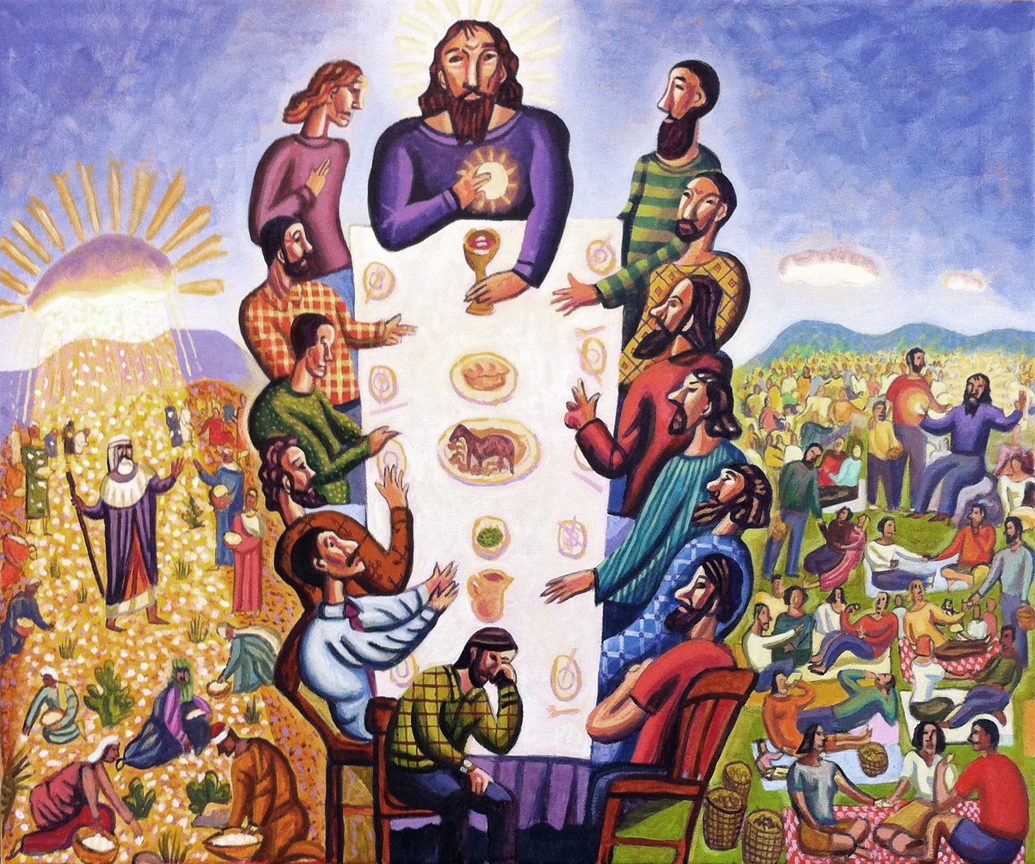
Eucharist

God’s Handiwork Inspires Ours

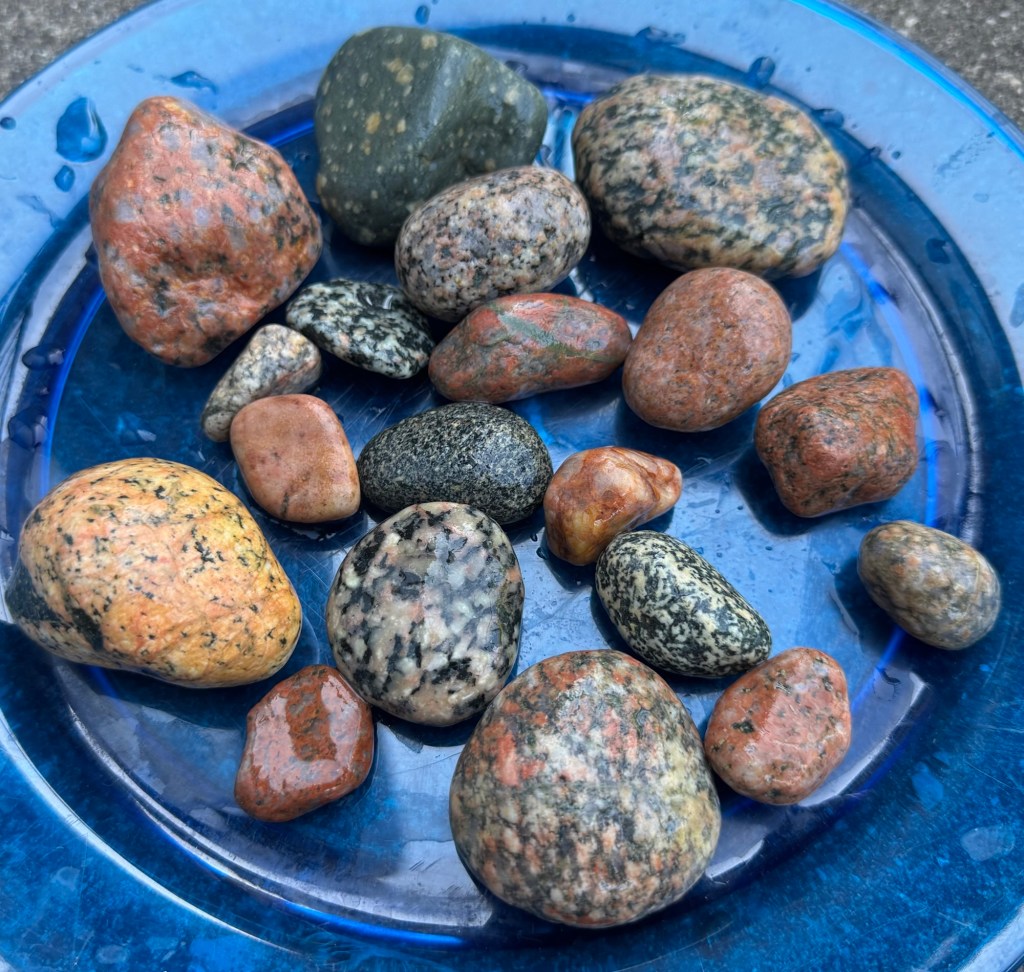
Stones found on a northern Lake Michigan beach

Labor Day is around the corner and some of us may receive and enjoy a day off from work. What we call retirement, a stage in life I am presently enjoying, tends to represent leaving work behind. Yet these and related ideas rest upon a common assumption, that work is different from, and in some ways inimical to, enjoying fulfillment in life.

I find a biblically based theological insight helpful when thinking about work. As with many matters that can be looked at from the perspective of Christian moral theology, our view of work can be enhanced by making reference to four specific reference points. These are, first, what we have learned about God’s purposes in Creation for this or that aspect of our lives; then, what impact sin associated with our Fall has had upon what we are thinking about; third, how God’s ongoing work of Redemption has restored and or transformed the matter presently under consideration; and fourth, to ask what future – if any – does this aspect of our lives have in Christ. 

Work provides a wonderful topic for engaging in this fourfold inquiry. Based on our common way of thinking about work, it may be hard for us to consider the meaning of work from any other vantage point than of attributing its role in our lives to the Fall and to the ongoing effects of human sin. Yet, we can also learn from many who have come before us who have distinguished work from toil. This can help us see how forms of labor, and pejorative associations the word may have for us, are surely due to our proclivity to link such activity with burdensome unpleasant duties.

For what we may overlook is the biblical view of how God has shared stewardship responsibility for aspects of Creation with us, as beings created in God’s image and likeness. This was symbolized by the way that our mythic forebears (Adam and Eve) were given their ‘work’ of naming the animals as a path toward fulfillment. It was not until their expulsion from the Garden that the first human beings are described as prone to acts characteristic of sin. Thereupon, in biblical theology, our heavenly ‘work’ of praise, and of divinely-invited participation in God’s Creation stewardship, ceased to be pleasingly ready pathways toward human fulfillment, and became energy draining and spirit-diminishing activities – such as we tend to find them to be now.

A growing segment of the wider Christian community shows signs of acknowledging how God’s work of Redemption is ongoing, quite aside from its ‘once and for all time’ episodic saving events. The pattern and purpose remains the same – nothing fundamentally new is added, nothing old of lasting value taken away. Preeminent remains God’s abiding purpose for us to become and be God-like in God-intended ways. For, as Athanasius taught us, the Son of God became the Son of Man, so that the children of men and women could become the children of God. Work – not toil nor burdensome labor but creative and fulfilling work – remains a vital part of our holy path toward wholeness.

And to remind us of this abiding truth, the loving Creator has spread around us an uncountable abundance. These are the signs of outpoured and participatory grace, some of them very small, like stepped-upon seashore pebbles and tiny blossoms among hurried-by roadside weeds.

Too quickly we dismiss the significance of our our small acts of selfless giving, not to be counted by us, but adding up to so much more than we imagine in the life-growth of others. This is our holy ‘work,’ overlooked but important stepping stones on our path toward living into the godly fullness with which Christ fills us.

If on our daily course our mind

Be set, to hallow all we find,

New treasures still, of countless price,

God will provide for sacrifice.

Old friends, old scenes, will lovelier be,

As more of heaven in each we see:

Some softening gleam of love and prayer

Shall dawn on every cross and care.

[John Keble, “Morning,” from The Christian Year]

Our Doorway Into God’s Trinitarian Being

William Holman Hunt, The Shadow of Death (1870-73)

When we as Christians pray, we don’t simply pray to God. With faithful assurance, we pray with and through God! As Paul tells us, “When we cry, ‘Abba! Father!’ it is that very Spirit bearing witness with our spirit…” This is because, when we pray “to the Father,” we also pray with and through the Son. We are enabled to pray with and through the Son following our Baptism. For after Baptism, we are assured that we pray in the Holy Spirit. We therefore pray to God not ‘from the outside,’ but ‘from the inside’ of God’s own being and nature!

Well, how can this be? As we can easily discover, every Eucharistic Prayer in The Book of Common Prayer has a common shape. For all of our Eucharistic Prayers are prayed to the Father, through the Son, in the Holy Spirit. This is not an accident. Jesus modeled this in his own life, and particularly at the Last Supper.

When we repeat Jesus’ pattern, offered at that supper, we stand with him around the same table. And by his graceful invitation, we join his prayer to the One he called, ‘Our Father.’ Our prayer with him, to the Father, is in the power of the Spirit, the same Spirit he spoke about at that table. He modeled at that supper what grace means in practice.

Through the grace of the Holy Spirit, Jesus shares with us his own particular intimacy with the Father. Inviting us to stand with him as he prays, he offers the whole world back to the Father-Creator. By this, Jesus – and us with him – fulfills the divinely intended-but-failed stewardship vocation of the mythical Adam and Eve. And so, this is also our vocation, to offer up to our Father all that truly belongs to the Creator. Sharing with Jesus the grace of the Holy Spirit allows us to join him, the Son, in his ongoing Eucharistic vocation.

A good way we can live into the saving implications of God’s Trinitarian nature, is to engage in some creative imagining. Imagine that, in this moment, Jesus reaches out his hands to us. In reaching out his hands, he does not simply extend his greeting. Extending his embrace, he invites us to join him by standing with him, closely at his side. By his invitation, and our acceptance of it, he shares with us his own intimate and particular relationship with our Father.

And with this invitation, he gives us the power of the Spirit, making it a reality in our lives. Because the invitation comes from him, the power of the Spirit he shares with us is God’s grace-filled power. Jesus makes all this actual and true, whether we feel it or not.

This Trinitarian shape of prayer is different from how we usually imagine prayer. Commonly, we think of prayer as our communication to God. When we feel aware of God and close to God, we speak to God of what is good and well and of that for which we feel thankful. And we often ask for help. But, when there seems to be a veil between us and God, we speak to God with lament or we complain, sometimes in anger. This concept and experience of prayer is ‘subjective,’ and therefore narrow. That is, it is a concept of prayer based primarily upon our personal, interior, experience. It reflects our experience of being the subjects of perception and action. Yet, as the Prayer Book Catechism teaches us, prayer is first of all responding to God.

As we learn from Jesus, and by the Holy Spirit, true prayer is not something we do, which we somehow manage to achieve through our faithfulness, devotion, or energy. True prayer is something we allow God to do within us. True prayer is the kind of praying that we find God already making real within us through the indwelling Grace of the Holy Spirit. The Father and the Son and the Holy Spirit are constantly engaged with one another, in what the Eastern Christian tradition calls ‘a dance,’ a perichoresis. Prayer involves being drawn into this dance. Prayer is sharing in the Trinitarian relational being of God. Prayer is participation in the community of fellowship that exists within God’s own being.

The Trinitarian pattern of our lives rests upon the Trinitarian shape of our prayers. We can accept Jesus’ invitation to stand with him. We then experience his own fellowship with the Father, in the grace-filled power of the Holy Spirit. This enables us to live truly. To live truly, is to live to the Father. It is to live with and through the Son. And true prayer is to live in the power of the Holy Spirit.

And so, we seek to live in the way that we pray: to the Father, with and through the Son, in the Holy Spirit.

Note: This post is based on the Western Church’s observance of Trinity Sunday, on June 15, 2025. My title is based on a well-known metaphor found in John’s Gospel. The text here is based on my homily for that occasion, which may be accessed by clicking here.

My goal is to commend the assurance of hope that lies within the Gospel. And while being aware of concerns about the so-called ’scandal of particularity’ associated with Christianity and Judaism, we should be aware that God is free to offer a similarly positive spiritual experience to those of other religious traditions, or of no particular tradition with which they may identify. I hope to address Hunt’s evocative painting, featured above, in a subsequent post.

The Beauty of a Beach

An 1890’s photo of visitors on the northern Gulf coast


After almost 40 years as a member of the clergy, I have recently done something that might have worried me when first ordained: I gathered with members of my wider family for an Easter weekend at the beach. We had Easter family devotions, but I was not ‘in church.’ And yet…

For Anglicans, and others in the broader Catholic tradition, nature and the supernatural are not seen as being antithetical, poised to combat one another in an adversarial way. We see nature as ‘graced;’ a view significantly different from one that confuses nature with Grace and or with the divine. We acknowledge the reality and power of sin, and our consequential human separation from God. Therefore, we fully appreciate the Grace of the Holy Spirit in offering us the opportunity for redemption without price or penalty (except for the need to renounce our pride).

A frequently used opening sentence for Daily Morning Prayer is this versicle and response: “The earth is the Lord’s for he made it: Come, let us adore him.”

And much loved are the opening words of Psalm 19: “The heavens declare the glory of God, and the firmament shows his handiwork.”

Having grown up near the sea in Japan, and having crossed the Pacific Ocean five times by ship over those years (14 days each way), I have a strong sense of affinity with coasts, salt water, and ocean passages.

At the age of 21, I spent much of Lent camping and fasting as a solitary on the south shore of the Greek island of Crete. I traveled there by bus, from London to Athens, and then by ferry to Crete, the cheapest way I could find. It was between terms at Oxford, and I limited my reading to the New Testament and the recorded sayings of the Desert Fathers. The beach on the Mediterranean Sea was my place of rest, reflection, and refreshment. I am sure that many others find being on the beach the most alluring experience of the sea.

Why is finding peace on a beach such a common experience? Here are some briefly stated reasons why this might be:

⁃getting away from routine, stress, etc
⁃getting away to beautiful surroundings and relative quiet, accompanied by relaxed interchange with people outside of daily business interactions
⁃the seductive rhythm of the lapping waves, whether small or large
⁃often an onshore breeze, due to water and air temperature disparity
⁃the opportunity to just sit, doze, and or walk slowly on the sand

And yet, the paradox of our often-sought experience of being on a beautiful beach lies in its contrast with our biblical forebears’ pronounced ambivalence about the sea, and their sometimes downright fear and disparagement of it. For the Israelites, the sea was a context that evoked community memories of the flight from Egypt and the deliverance at the Red Sea, an experience relived symbolically in the later Jordan crossing into the promised land. Much Old Testament imagery, some of it memorably recorded in the Psalms and also in Jonah, shaped New Testament appreciation for Jesus’ ministry when he calmed waves and storms on the Sea of Galilea.

All this is not to provide justification for the idea that we can be just as close to God on the golf course or at the beach as we can be at church. Instead, we should treasure experiences of the beauty of the sea, and opportunities to encounter them. But we should even more treasure celebrating the Eucharist in church, not as a duty, but as a joyful re-experience of God’s unification of the natural with the supernatural.

For many people, times by the sea evoke a sense of wonder about purpose and meaning in life; they rekindle a sense of possibility in relationships; and provide opportunities to reimagine the future. Surely the Grace of the Holy Spirit is in all this.


I would like to credit my friend and former colleague, the Rev. Dr. Ralph McMichael, for his succinct and helpful delineation of ways of understanding the relation between nature and grace in his teaching and writing. In this regard, his essay in the book he edited, Creation and Liturgy: Studies in Honor of H. Boone Porter, is helpful. He is also the author of The Eucharistic Faith.

The Beauty of Meals Together


There’s just something appealing about eating outdoors. And people everywhere seem to recognize this.

So it’s no surprise that some of the most memorable scenes in the Bible involve meals outdoors. These stories provide us with images of people receiving nourishment together, and experiencing fellowship with one another. Yet, these significant occasions stand out because they center on encounters with God. Sitting down with others at a feast is a potent Scriptural image, which connects our life in this world to our life in the next. This is why Christians gather around a table every Sunday. For Jesus said, “I tell you, many will come from east and west and will eat with Abraham and Isaac and Jacob in the kingdom of heaven…” And so, both the Last Supper, and ordinary meals, prefigure God’s heavenly banquet. We gather for meal, which we then perceive to be a holy occasion ~ an occasion of fellowship with others in God’s presence. When we gather in this way, we see glimpses of God’s expansive Kingdom.

One of the most evocative of such occasions is found in Exodus 24, in a passage that is often overlooked. After the people of Israel cross the Red Sea, in their Passover escape from Egyptian slavery, Moses gathers them at the foot of Mt Sinai. There, he reads to them from the book of the Covenant. After reading, he sprinkles the blood of the Covenant upon the altar and upon the people. To quote from Exodus, then Moses “Aaron, Nadab, and Abihu, and seventy of the elders of Israel went up (the mountain), and they saw the God of Israel… God did not lay his hand on the chief… people of Israel; [and so] they beheld God, and they ate and drank” in God’s presence, at the top of a mountain. A shared meal in God’s presence involves seeing the Lord.

Writing his Gospel over a thousand years later, John surely had this scene in mind. Drawn by the signs of healing Jesus was doing, a large crowd follows him into a ‘deserted place.’ (Recall how often God reveals self in ‘deserted places.’) With the Passover auspiciously near, Jesus goes up a mountain with his disciples, and sits near the top. In this scene, the bread of life, the bread of heaven, comes down into the midst of God’s people in two ways: in Jesus, and in what they eat. The gathered people eat and drink with one another in God’s presence. And they feast upon the unexpected abundance of divine gifts, for which Jesus has offered thanks. Stunned by the power of his new miraculous sign, the people say, “This is indeed the prophet who is to come into the world.”


This post is based on my homily for Sunday, July 29, 2018, which can be accessed by clicking here. The image above is by James Tissot, and is titled, The Miracle of the Loaves and Fishes. The meal outdoors story from John is found in chapter 6 of his Gospel. (Other Sunday homilies of mine can be accessed by clicking here.)

Literal, Figurative and Mystical Beauty


How we move and act, when we celebrate and receive communion, communicates something just as important as the words we use in the same context. Our actions communicate that we take seriously Jesus’ words in John’s Gospel. For Jesus says, “…my flesh is food indeed, and my blood is drink indeed. He who eats my flesh and drinks my blood abides in me, and I in him.” By how we move and act in our Eucharist together, we show that we know his words are true. Our actions display our belief that we have life in him – that we now share his own life with our Father in heaven.

Along with many Christians we know that bread and wine consecrated in the Eucharist become the Body and Blood of Jesus Christ. This links us, as Anglicans, with Lutherans, the Eastern Orthodox, as well as Roman Catholics. For we all recognize that what we receive in our hands and through our lips is no longer simply bread and wine, even if they may still taste like bread and wine. Something happens in the course of the Eucharistic Prayer. And it happens when we pray in obedience to Jesus’ command, “do this in remembrance of me.” What happens is a real change in the bread and wine, so that they become the risen body and blood of our Lord. And this is the key. For the real change in the bread and the wine happens so that there then can be a real change in us.

We need to notice what many of Jesus’ first followers did not understand. His words are multi-layered, and have at least three meanings: Jesus’ words first have literal meaning; his words also have figurative meaning; and third, his words have mystical meaning. With his words, Jesus tells us he is giving himself to us, and that he is giving himself for us. Jim Janknegt’s painting, The Bread of Life, reproduced above, beautifully captures all three meanings.

Jesus’ words to us are at first literal, in the sense that he really means for us to eat and drink, and that what we eat and drink will really be him.

But Jesus’ words, in addition to being literal, are also figurative or metaphorical. For Jesus was not speaking of his earthly physical body and blood when he literally meant for us to eat and drink him. He was referring to his yet-to-be-revealed, risen, heavenly body. Because – as it soon became apparent – he did not leave his earthly, physical body behind for us to partake of. And so, he means for us literally to eat and drink his heavenly body and blood.

And, in addition to being literal and figurative, Jesus’ words are also mystical. When we literally eat and drink his heavenly body and blood, we abide in him – we live in him and he lives in us. When we eat and drink his risen body and blood, we have eternal life with him in God. And we will live forever in the fullness of life, in a state of blessed flourishing. Having refused Satan’s temptation, Jesus does not turn stones into bread to feed himself; he turns himself into bread to feed the world.


This post is based on my homily for Sunday, August 19, 2018, which be accessed by clicking here. Jim Janknegt’s painting, The Bread of Life, is reproduced here with his permission. His many paintings can be seen on his website, which can be accessed by clicking here.

The Beauty of the Bread of Life


Several biblical images related to the bread of heaven are beautifully illustrated by Peter Koenig in a painting titled, For the Year of the Eucharist.

On the left arm of the cross Koenig depicts Elijah asleep, while Queen Jezebel plots his death. After lying down to sleep an angel awakens him with a gift of bread, providing sustenance for his journey. Restored, he then goes on to holy Mt. Sinai, a place associated with seeing God, and the gift of the Covenant.

At the center of the cross we see Jesus, who is the bread come down from heaven, sharing the bread of life with his friends.

On the right arm we see Jesus as the true vine, and his Father as the vinedresser.

And below we see how we are the ‘ark’ of the Church, and that we are fed with the bread of life. These few references, chosen by Koenig from among so many in the Bible, remind us of the significance of bread as a gift from God, for the life of the world.

These insights help us appreciate how, as we learn from 1st Samuel, God replaces Saul with David as the King of Israel. The Lord tells the prophet Samuel to go to Bethlehem, where Samuel anoints David as God’s chosen king. The name Bethlehem means ‘the house of bread.’ Of course, this same ‘house of bread’ later becomes the birthplace of Jesus.

Jesus says, “I am the bread of life… I am the living bread that came down from heaven. Whoever eats of this bread will live forever; and the bread that I will give for the life of the world is my flesh.” We know that mortals ate the bread of angels in ancient times. Yet, Jesus says that they “ate manna in the wilderness, and … died.” Unlike our spiritual ancestors, when we eat the bread of life today we shall live forever. We eat the bread of life when we gather to give thanks, in the Eucharist. And we partake of the true Vine. In every Eucharist, we join our Lord by offering ourselves, our souls and bodies, to his and our Father, for the life of the world.


This post is based on my homily for Sunday, August 12, 2018, which can be accessed by clicking here. The painting above, by Peter Koenig, is titled, For The Year of the Eucharist, and is reproduced here with the artist’s permission. Please visit the website for the Church of St. Edmund’s, Kettering, England, where this painting and others by him are displayed and available for viewing. Please click here for a link to it, and for further information concerning his fine paintings.