Theological Reflection

A Friend’s Beautiful Repentance

If reading this by email, please tap the title at the top to open your browser for the best experience. Then, clicking individual pictures will reveal higher resolution images.

James Tissot, The Pharisee and the Publican


This past week I witnessed a beautiful act of repentance. A new friend shared with several of us that he had done something he clearly regretted. I began to see the shame and grief he was carrying within himself, despite his initial display of upbeat friendliness. I suspect that he had not joined us consciously intending to share details about what he had earlier done. But, after a bit, his sense of accountability to us, as well as his desire to reconnect with us, overcame his reluctance to be candid. His face became dark, and we could see anguish in his facial expression while – embarrassed – he described what had happened. His principal regret, he said, was that he had let himself and his family down, and he was sad that he had let us down, as well.

It was an uncomfortable few minutes, both for him, and for us. But I was struck not only by the pathos of the moment, and of his admission. I was moved by the beauty of his expression of repentance, and especially by his at-first discrete and then winsome smile as he received and responded to our assurances. We told him that he was beginning to make things well by sincerely sharing his recent experience with us.

The moment passed by all too quickly, especially given how profound it had been for several of us.

We had personally witnessed a touching illustration of what I believe Jesus was getting at in his parable found in Luke 18:9-14, often called The Pharisee and the Publican (or Tax Collector). This parable and other related Gospel sayings or stories are often described as providing us with illustrations of God’s love for us, and of what God’s love for us seeks to nurture in and elicit from us. To me, an often missing word in such characterizations of Jesus’ vision and teaching is ‘beautiful.’

I doubt I will ever forget an observation made by a young aspirant to ordained ministry, about her loss of her father following his lengthy terminal illness: “it is a beautiful thing to have someone for whom you mourn.” There is a similarly strange beauty – and ‘strange’ because it is unexpected – to be found in offering, or in being invited to receive from a friend, grief-filled repentance. Otherwise, we are rarely ever so self-disclosing, so without guile and, hence, so vulnerable. Perhaps the beauty we find here in such moments is the reflected beauty of the divine nature, in whose image and likeness we have been created.

But the loving light of that same divine nature also illumines how our created likeness with God is now marred, and often obscured. This is what can keep us holding our hurts within, while foolishly thinking we are somehow different from others.

And then, on an occasion that can be a surprise even to the one who offers a painful admission, the reflected beauty of the divine nature is briefly revealed, shared, and there before us to behold.

When we find ourselves moved to share our pain and grief by our acts of repentance, we may experience a paradox. We may find that, in the embrace and assurances we receive from those with whom we have been candid, we have received something of even dearer value to us. We may find that we have received a beautiful gift, the gift of experiencing having been found by the One who has come to find us.

James Tissot, The Good Shepherd


Additional note: Jesus’ teaching, “blessed are those who mourn,” might best be understood in relation to the grief we can experience accompanying our acts of repentance. Charles Wesley may have had this idea in mind when composing verse 2 of his text for the hymn/poem, “Lo! he comes with clouds descending.”  For we are close to the Father’s heart when our grief is born of sincere repentance.

Every eye shall now behold him, robed in dreadful majesty;
those who set at nought and sold him, pierced, and hailed him to the tree,
deeply wailing, deeply wailing, deeply wailing, shall the true Messiah see.

(Charles Wesley, in the words of Hymn 57 in The Hymnal 1982)

The Epiphany: Human Power Encounters Divine Authority

If reading this by email, please tap the title at the top to open your browser for the best experience. Then, clicking individual pictures will reveal higher resolution images.

James Tissot, The Magi Journeying (detail)


Instinctively, there is something we all seem to seek. We want to find purpose and meaning, and organizing principles for our lives. This desire is anchored in a larger one: we seek to discern what is real, and true.

But where does our common impulse come from? In what does this impulse consist? I think the best answer to these questions is found at the heart of the Feast of the Epiphany. On Epiphany, we celebrate how God has revealed to the world the real and true meaning and purpose for our lives. Epiphany is all about God revealing to us the divine center of everything. Epiphany highlights God’s self-revealing in the natural world, and preeminently in God’s Incarnation, which the Magi came to discover and then worship.

We are able to recognize that it is in the nature of a Creator to order reality, imbue it with purpose and meaning, and hence to bring order, purpose, and meaning to our lives. A perhaps-unexpected word that captures this broad idea is authority, in that God possesses the authorizing power to create things, and guide them. Specifically, we discern this authorizing power in God’s creation of the universe and in the divine agency shaping ongoing history. For God is the author of all that is real and true.

In human life, authority and power are not always neatly aligned, and we experience trouble when the two are at odds with one another. We see this dialectic between the two at work in the events of Holy Week, in the confrontation between divine authority (in the vocation of Jesus), and worldly power (as exemplified by Pontius Pilate). Less obvious is the way this dialectic is manifest in the events that are commemorated in our celebration of Christmas and the Epiphany of our Lord, especially in connection with the visit of the Magi from the East.

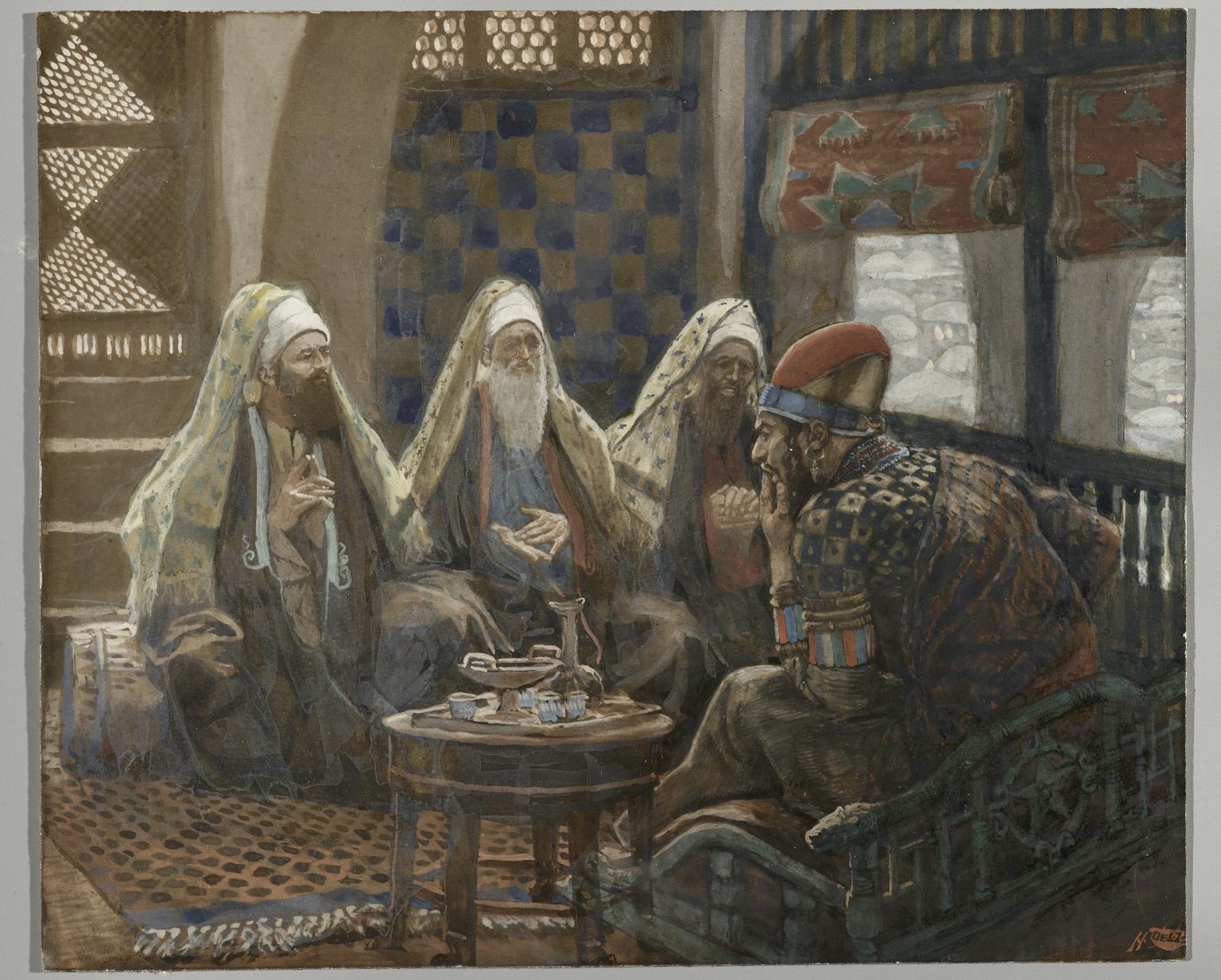
James Tissot, The Magi in the House of Herod

The Magi, also called ‘wise men,’ or ‘kings’ from the East, arrive in Israel having been guided by an authoritative power greater than themselves. Because of their witness to this higher authority and its implied power, the visitors pose a threat to Herod and his courtiers, who exercise earthly authority and its attendant power. This emerges in the interaction between people who are witnesses to divine authority and its power, and others who are possessors of worldly authority and power. The emerging conflict, later seen in the events of Holy Week, arises amidst the challenges surrounding the beauty revealed in what we call the Epiphany, the revealing of divine light to the whole world rather than to just a particular nation or the people of a particular religious tradition.

The Magi from the East, by explaining their quest, prompt Herod to act. He acts viciously and violently through orders given to soldiers under his command. The result is the series of murders we acknowledge every year on December 28, in the ‘red letter day’ we call the Massacre of the Innocents.

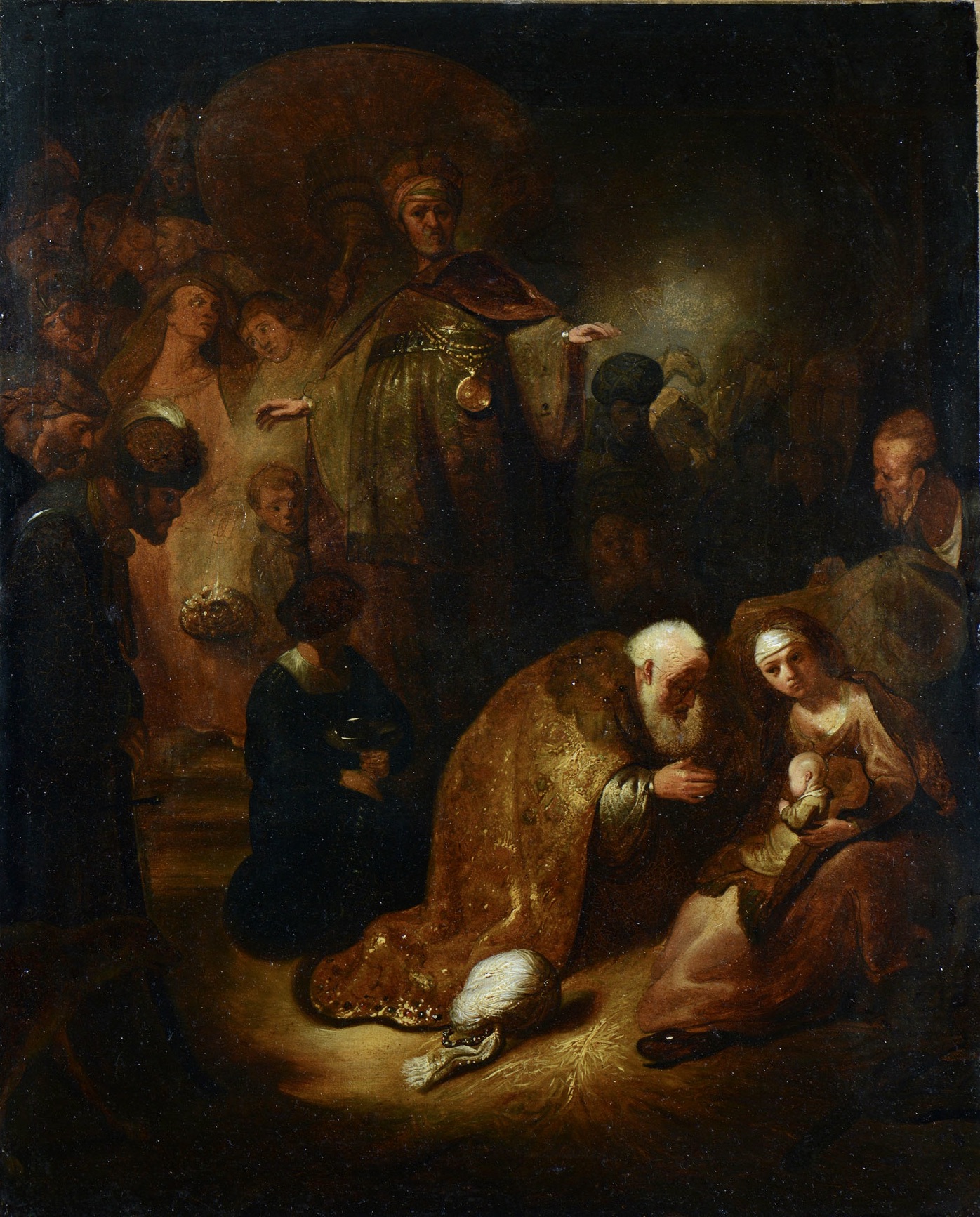
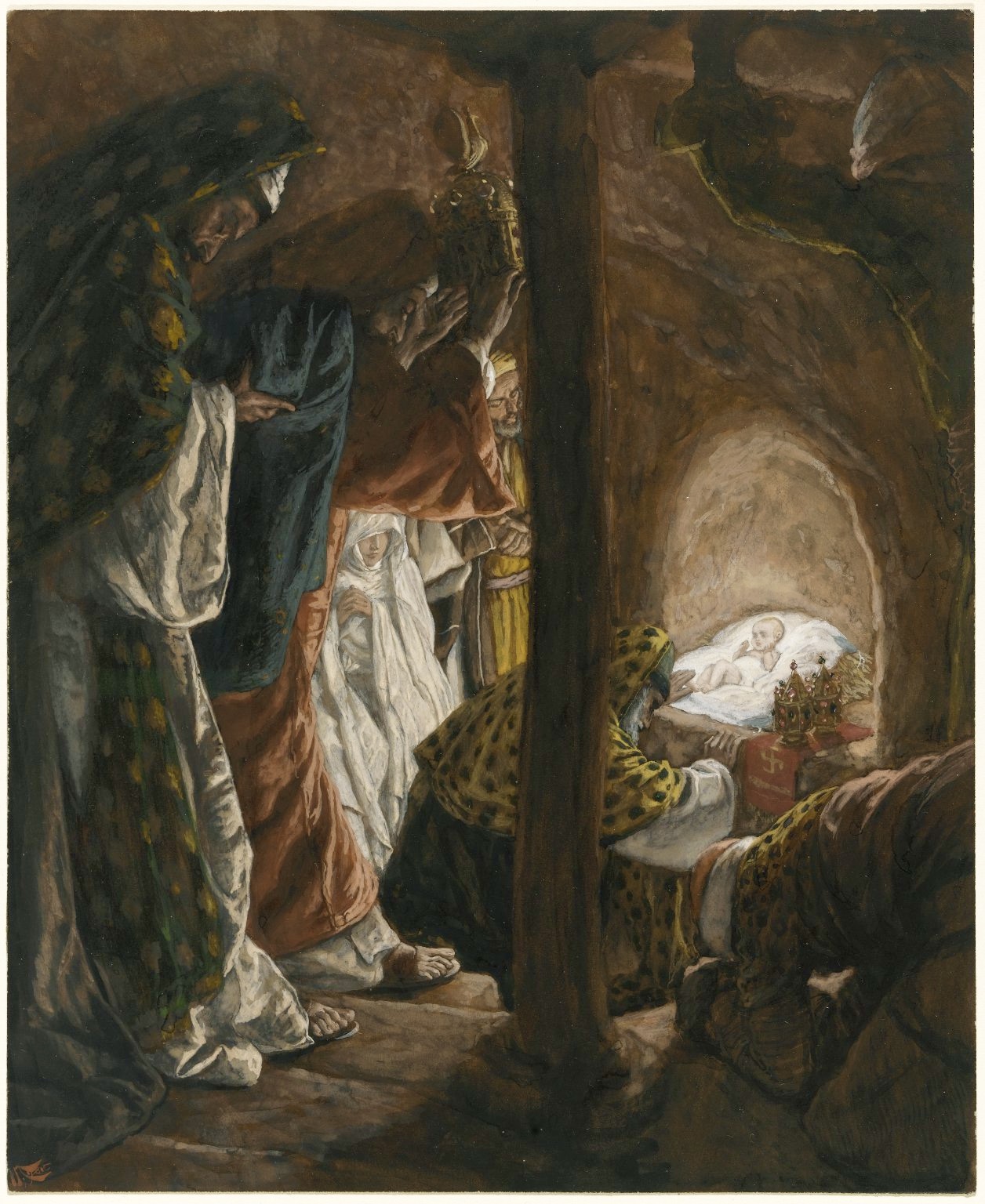
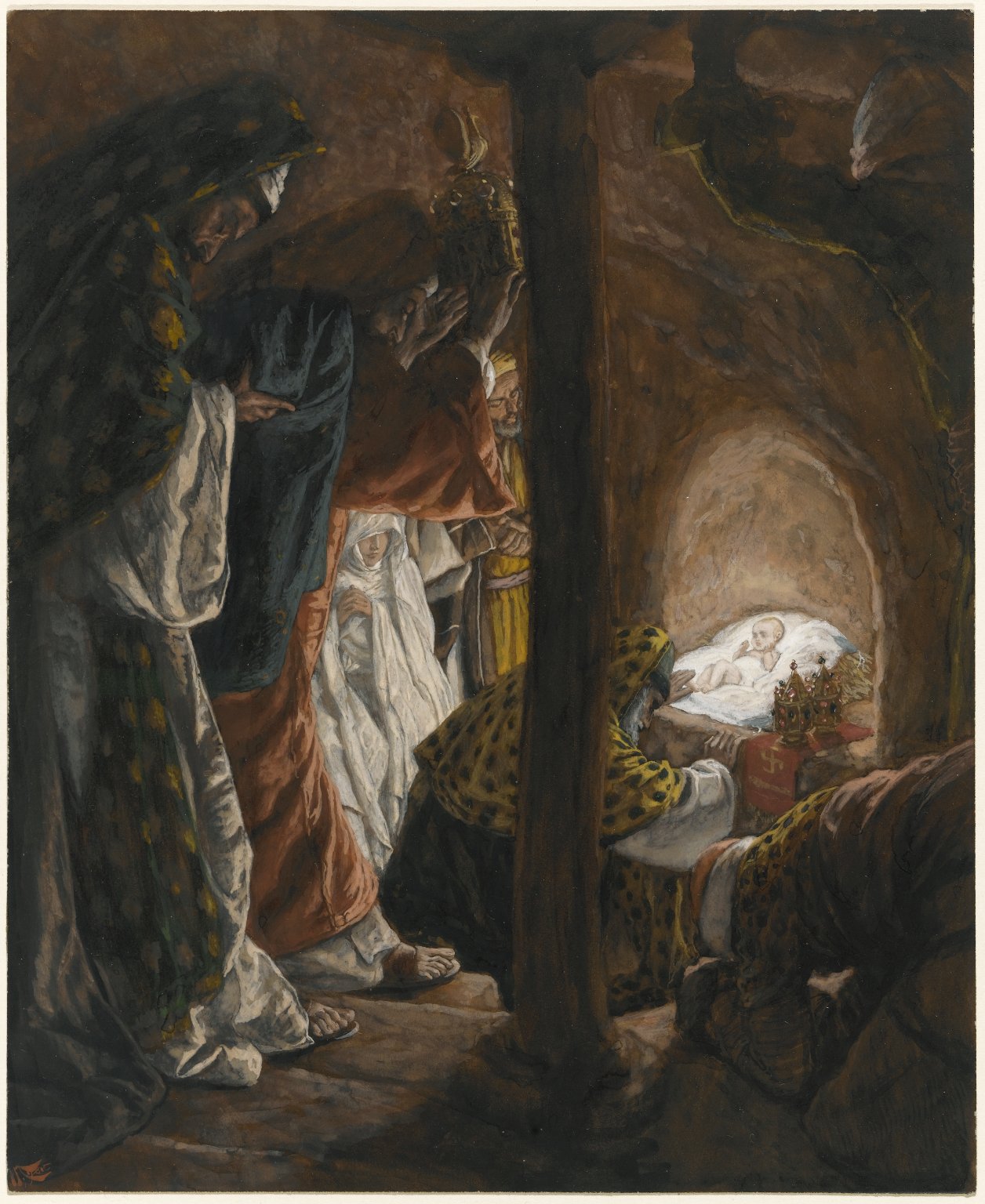
James Tissot, the Adoration of the Magi

What are we to make of the Epiphany of God in human form, and the tragic circumstances to which it led? At the heart of Christian belief is the conviction that God became present to us through a human birth. He revealed himself in a human person who embodied two natures, one fully divine, and one fully human, whose natures are distinguishable yet inseparable. Such a person, regardless of appearances, was and is the transcending center or heart of all that is, manifest in human form. He is, therefore, the One who truly possesses divine authority and divine power. Einstein – who was not in any sense a traditional believer – said this: “The most beautiful thing we can experience is the mysterious.” The divine center of reality, manifest and revealed in a human being, is the most mysterious beautiful thing that we can experience.

Here is the wonder of it: in God’s mysterious Providence, the birth of the Messiah would bring death to many (in the Massacre of the Innocents). And – years later – the death of the Messiah would bring the possibility of new birth to all, through the redemption of human being from the power of sin and death.

Yet, it would be some decades later before those who proclaimed Jesus as Messiah, and the embodiment of God, could understand the connection between his birth along with those soon-resulting deaths of the Innocents, and his later death, along with its soon-resulting new births for those who came to believe in him.

Our proper response to all this — indeed our only response to all this can and should be to praise the Holy One of Israel, the one whose death brought new life to all who receive him. He has come to us. Come let us adore him. And let us receive him with renewed hope and joyful hospitality, in all his light-filled glory.

A blessed Epiphanytide to you and your loved ones.


The Arrival of the Messiah in James Tissot’s Art

If reading this by email, please tap the title at the top to open your browser for the best experience. Then, clicking individual pictures will reveal higher resolution images.

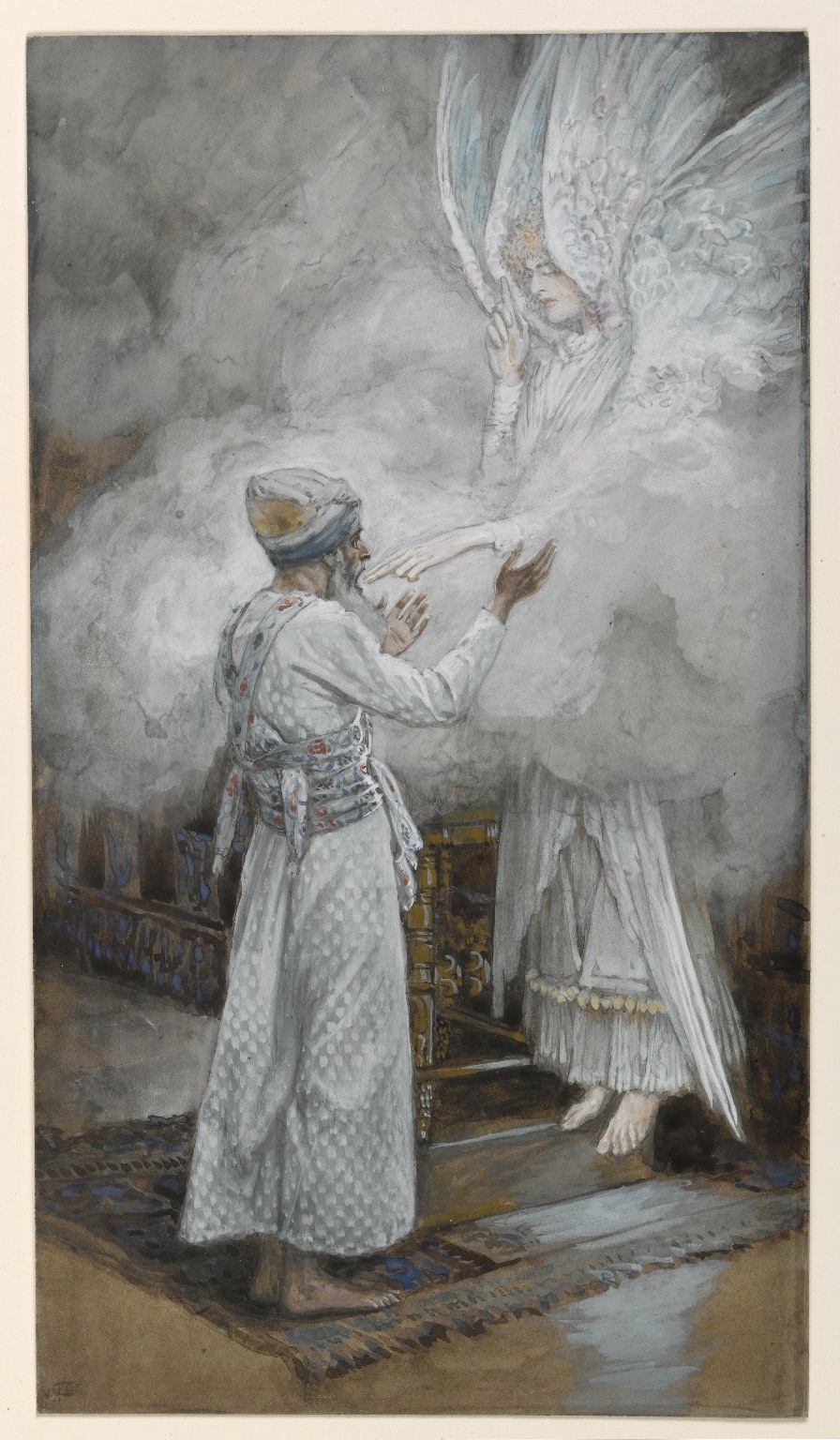
James Tissot, The Vision of Zechariah, with which Luke begins the great story (Luke 1). The priest, Zechariah receives an epiphany, telling him that he and Elizabeth will have a son, to be named John, later known as ‘the Baptizer.’


With this post for Christmas, I share with you a series of paintings by James Tissot on the theme of the Nativity of Jesus. Readers of this blog will know of my high regard for this artist’s life and work. I am pleased to share this collection of Tissot’s paintings related to the great events we celebrate for twelve days in the Church’s calendar year.

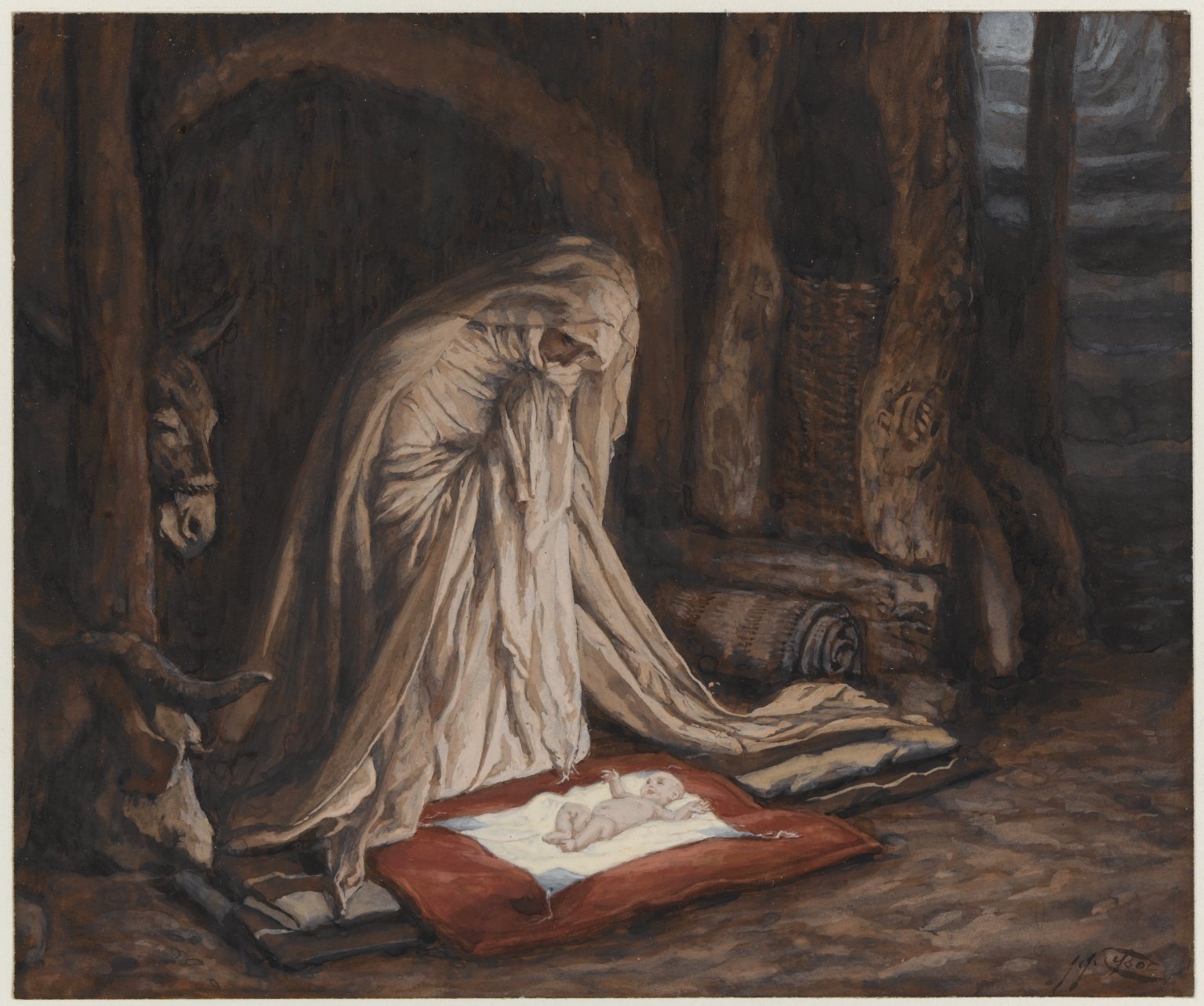
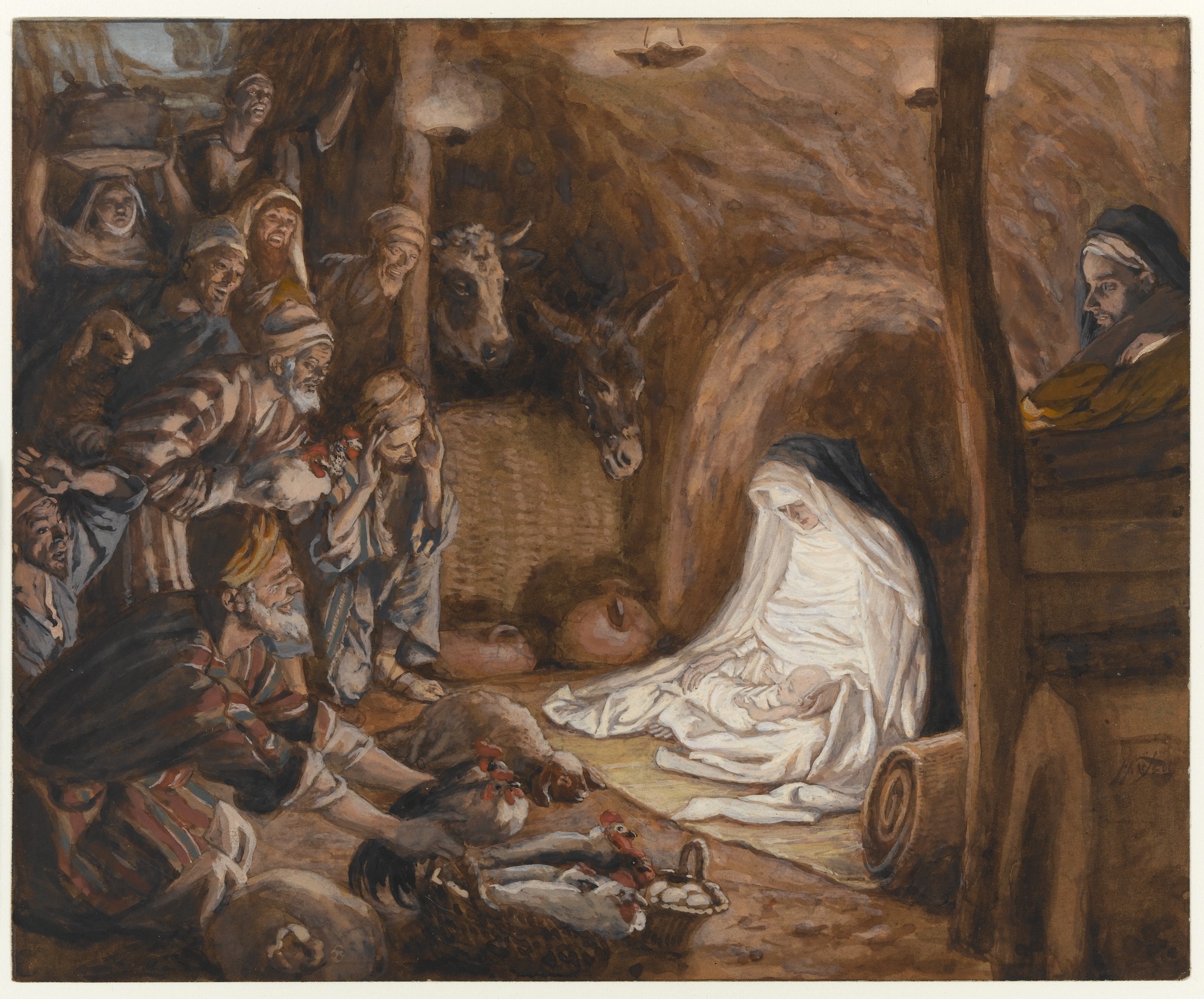
The paintings featured here, and many others, later became the illustrations in Tissot’s four volume, The Life of Our Lord Jesus Christ, published in English in 1897-8. The originals of these paintings were purchased by the Brooklyn Museum in 1900, and examples from this collection are periodically on display, both there and elsewhere.

May you and your loved ones have a holy and blessed Twelve Days!

The Betrothal of the Holy Virgin and St. Joseph (mentioned in Matthew 1 & Luke 1)

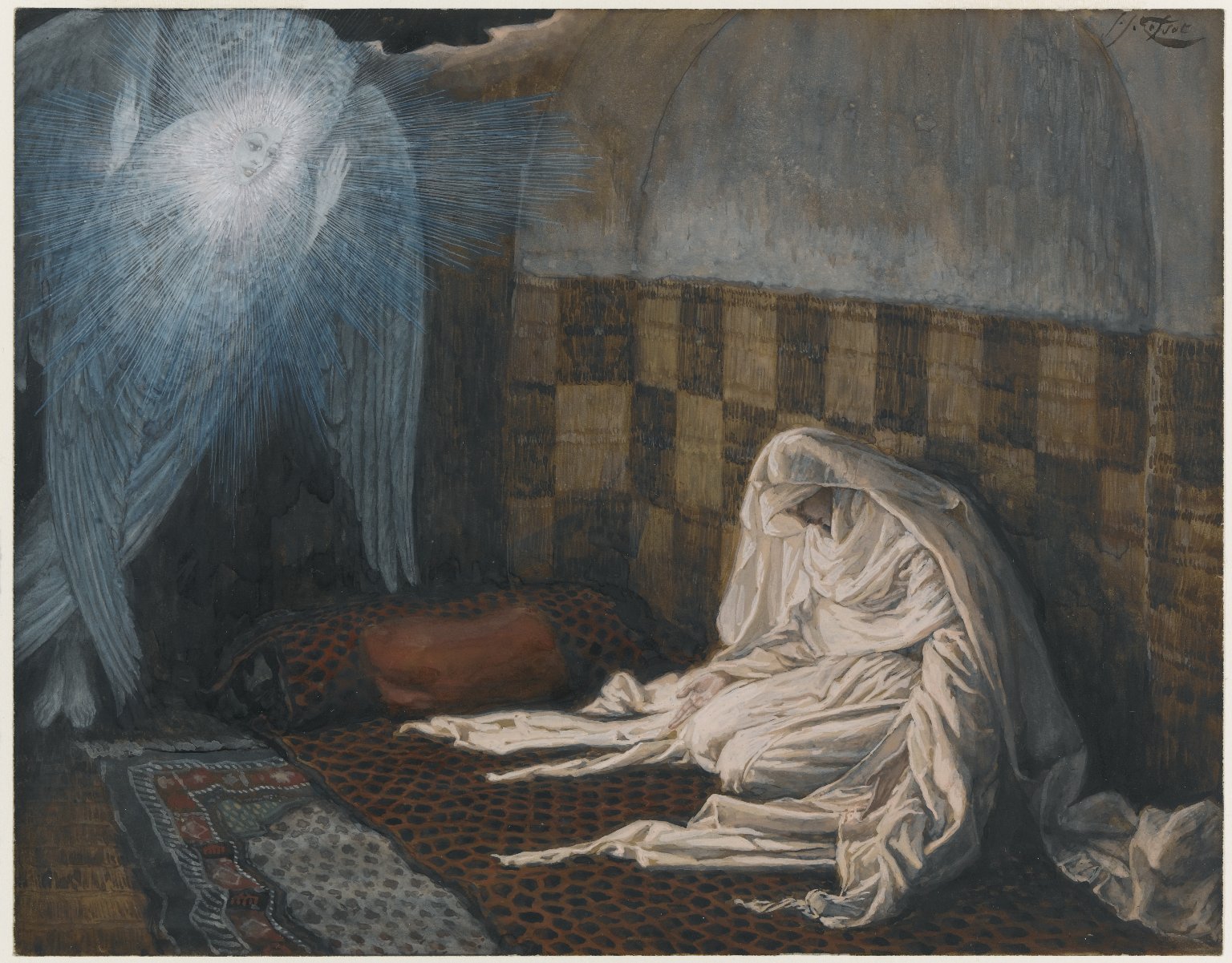
The Annunciation to Mary (Luke 1)

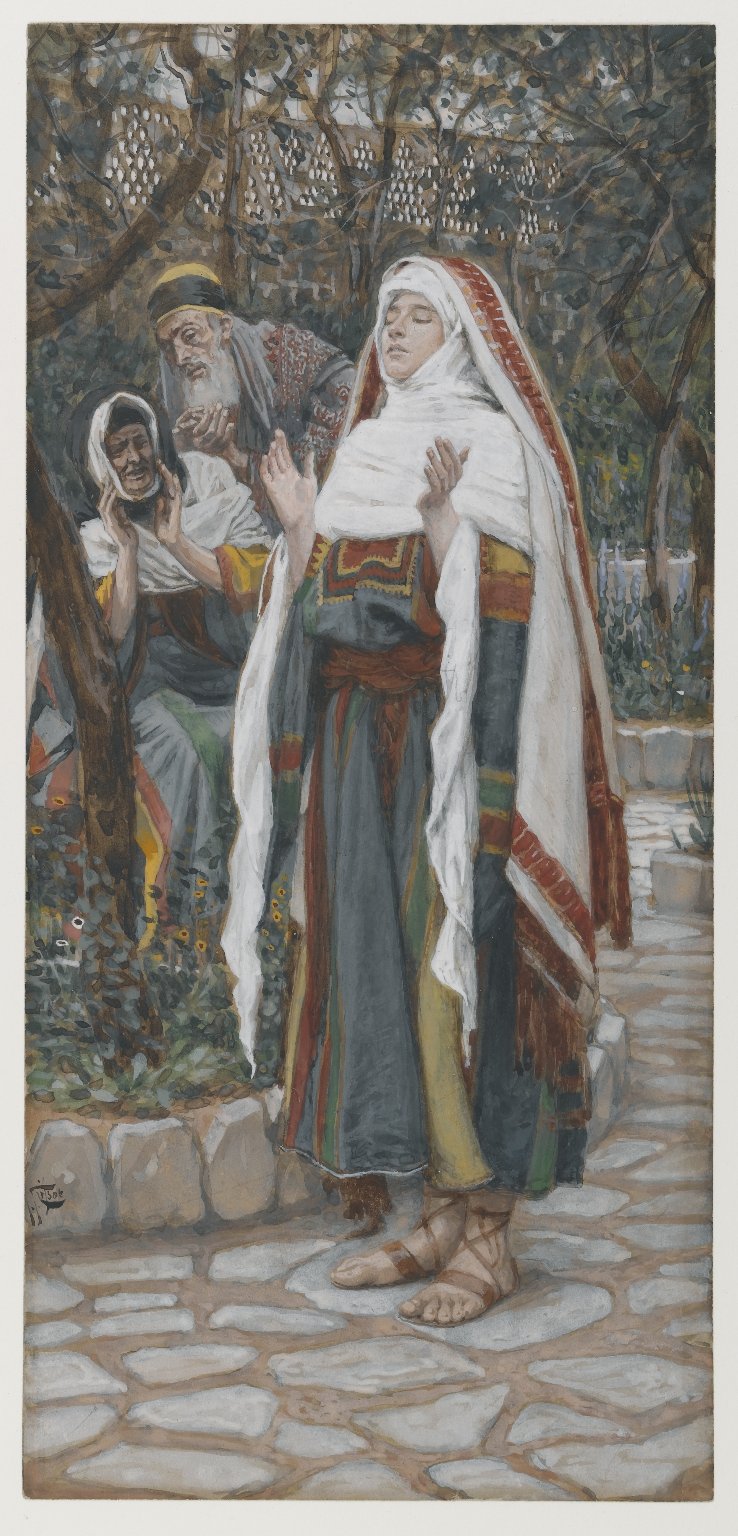
The Magnificat (Luke 1)

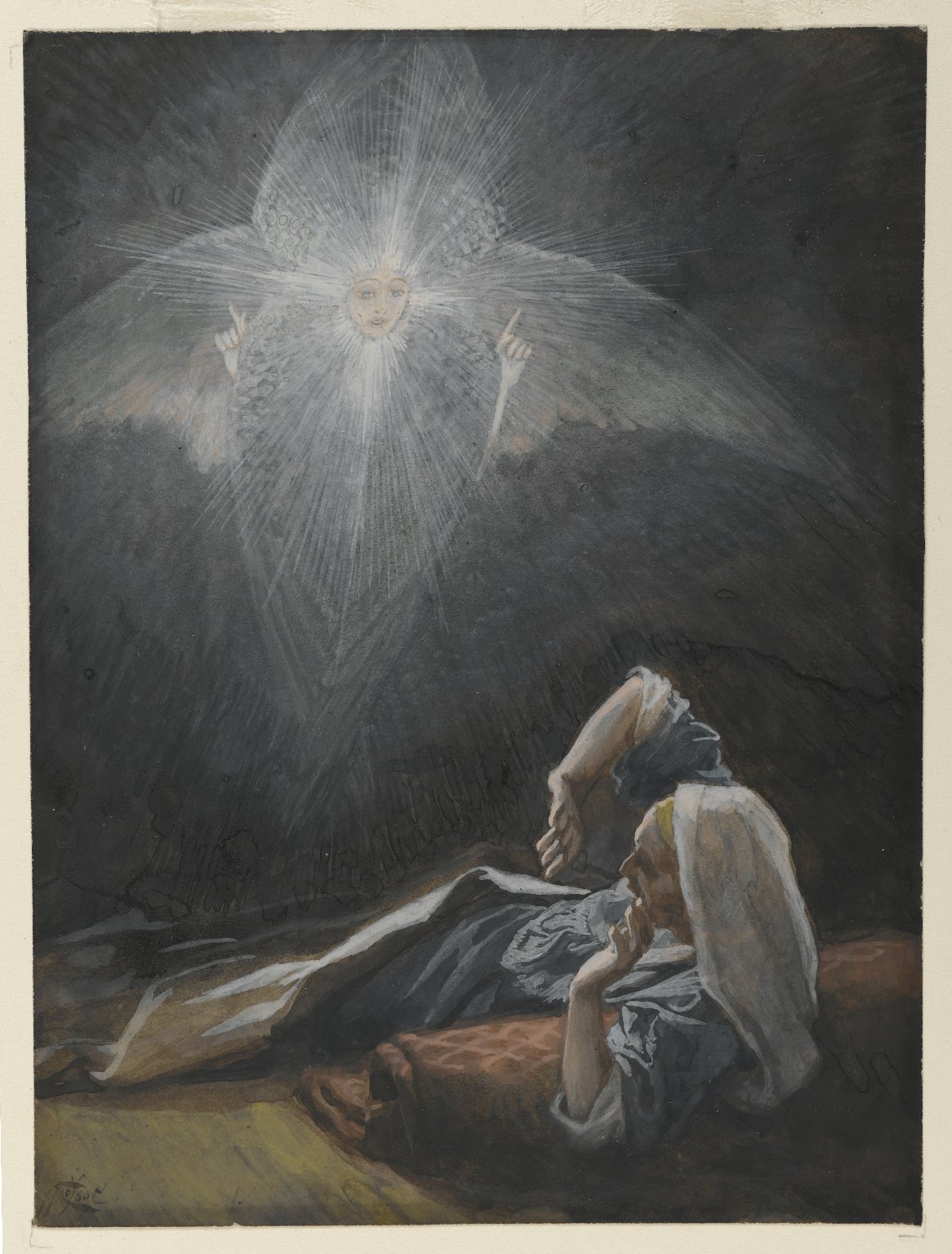
The Vision of St. Joseph (telling him of the coming child, and that he is to receive Mary as his wife / Matthew 1)

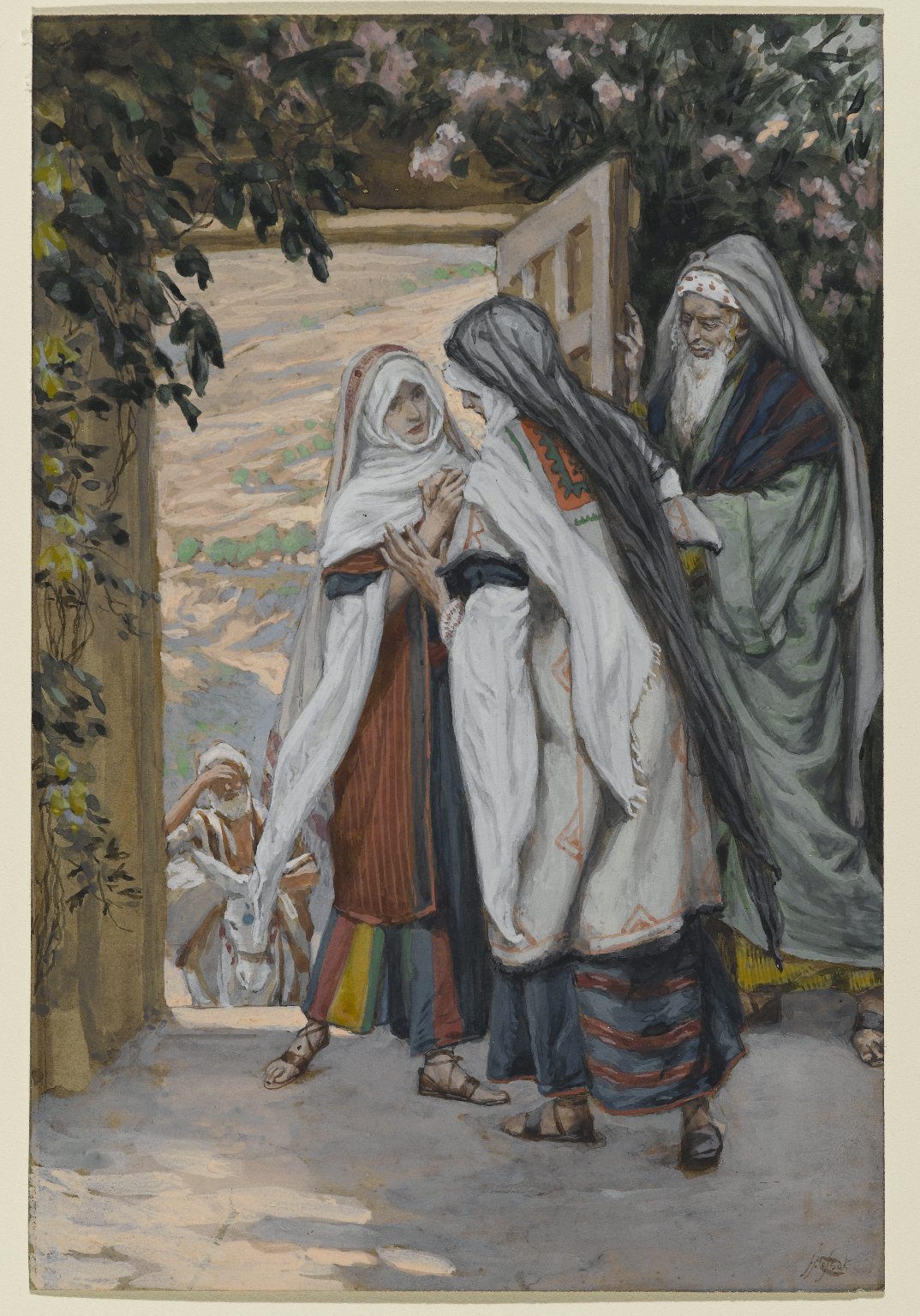
The Visitation (of Mary to her cousin, Elizabeth, the expectant mother of John, who would become the Baptizer / Luke 1)

St. Joseph Seeks Lodging at Bethlehem (Luke 1)

The Birth of Our Lord Jesus Christ (Luke 1)

The Adoration of the Shepherds (Luke 2)

The Adoration of the Magi (Matthew 2)

The Flight Into Egypt (Matthew 2)

The Massacre of the Innocents (Matthew 2)

The Sojourn in Egypt (Matthew 2)

The Presentation in the Temple (Luke 2)

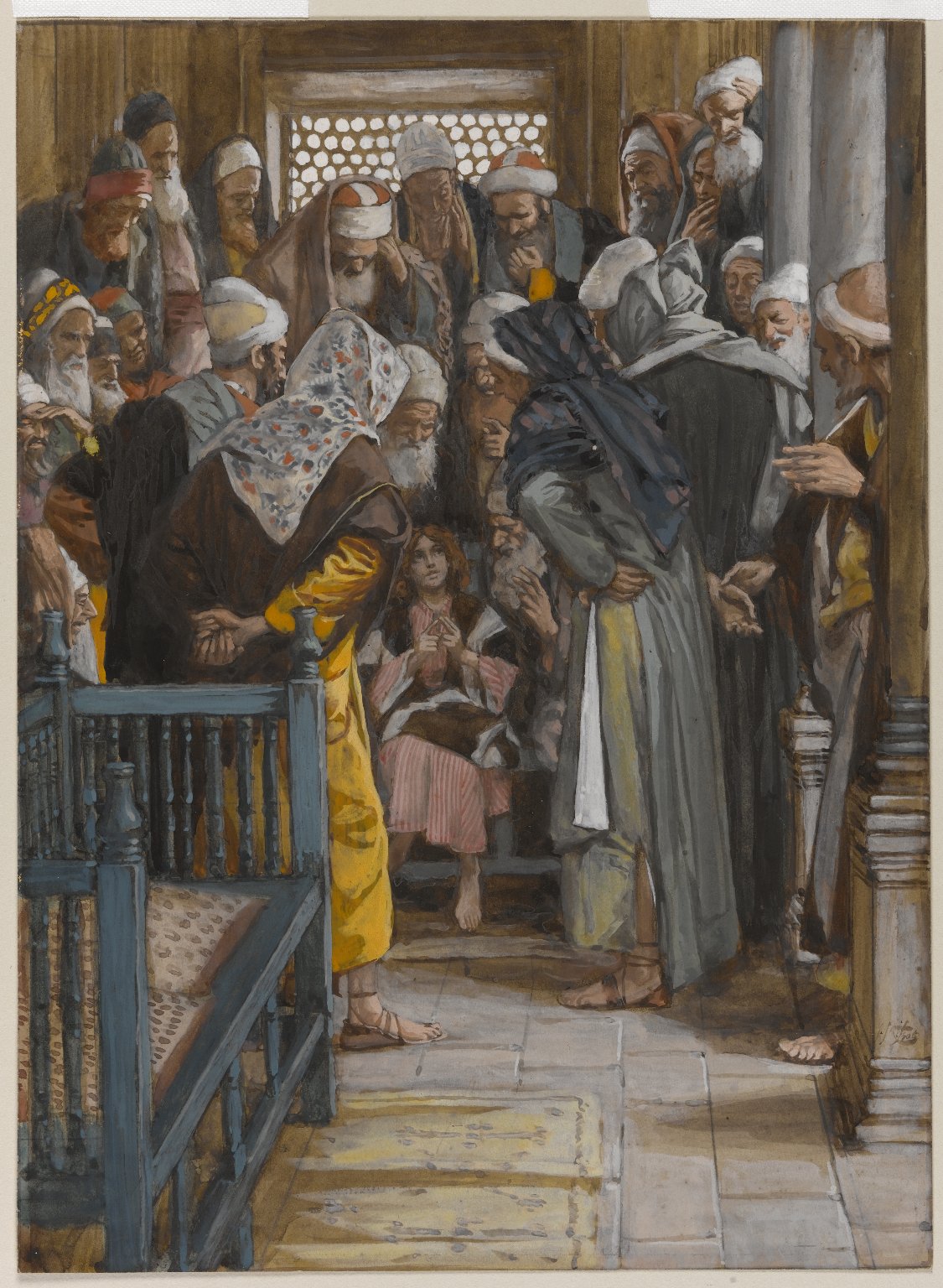
Jesus Among the Doctors (the boy, Jesus, at age 12, visiting the Temple in Jerusalem with his parents / Luke 2)


Note: the titles attached to the images above are those that are provided by the Brooklyn Museum

An Advent Magnificat

If reading this by email, please tap the title at the top to open your browser for the best experience. Then, clicking individual pictures will reveal higher resolution images.

Jim Janknegt, Joyful Mystery 1


Neither the Bible nor history tell us the precise details about the Annunciation to Mary, such as on what day the Angel appeared, or when Jesus was later born. The Angel’s wondrous appearance could have happened on a drab winter’s day. Yet, by virtue of the Angel’s message, it was also like spring. Our Church calendar and holy tradition reckon that the Annunciation was in March. If it was in the spring, the average high temperature in northern Israel would have been in the 60’s. So it could easily have been a season colored by the appearance of emerging flowers and foliage.

Faithful to the pattern of Scripture, Jim Janknegt seeks to portray something beyond literal circumstances. He has more than flowering plants, trees, and shrubs in mind. The decorated edge of the painting is a border of roses, which evoke the mysteries named in the Rosary, of which this scene is only the first. Inside that border are more flowers, and these also play a symbolic role. For we find lilies on Mary’s dress, suggestive of a later-to-be-revealed Easter, and calla lilies in a vase on the table, traditionally associated with the Annunciation to Mary.

Even more dramatically, flowers cover a large part of the angel, which suggest something transcendent and other-worldly. The Angel has come to speak the Word: the Word of Life, which is also a Word of blessing (look at the Angel’s hand-gesture!). Central in the painting, but depicted in a very subtle background way, is a great tree. Surely, it is the Tree of Life, from Genesis and Revelation, the first and last books of the Bible. Surely, the tree also prefigures that toward which everything in this moment is heading ~ the dead wood of the Cross, which paradoxically became a life-giving tree. Yes, it is springtime! But, this is springtime in salvation history.

So this is what we begin to see in Jim Jangknegt’s painting: his portrayal of the Angel’s Annunciation to Mary is not so much about springtime in the world. Instead, it is about springtime for the world.


Jim Janknegt’s painting, featured here, is used by permission of the artist. The text of this post is based on my homily for Sunday, Advent IV, of this year, which may be accessed by clicking here.

Reconciliation is Always Possible

If reading this by email, please tap the title at the top to open your browser for the best experience. Then, clicking individual pictures will reveal higher resolution images.


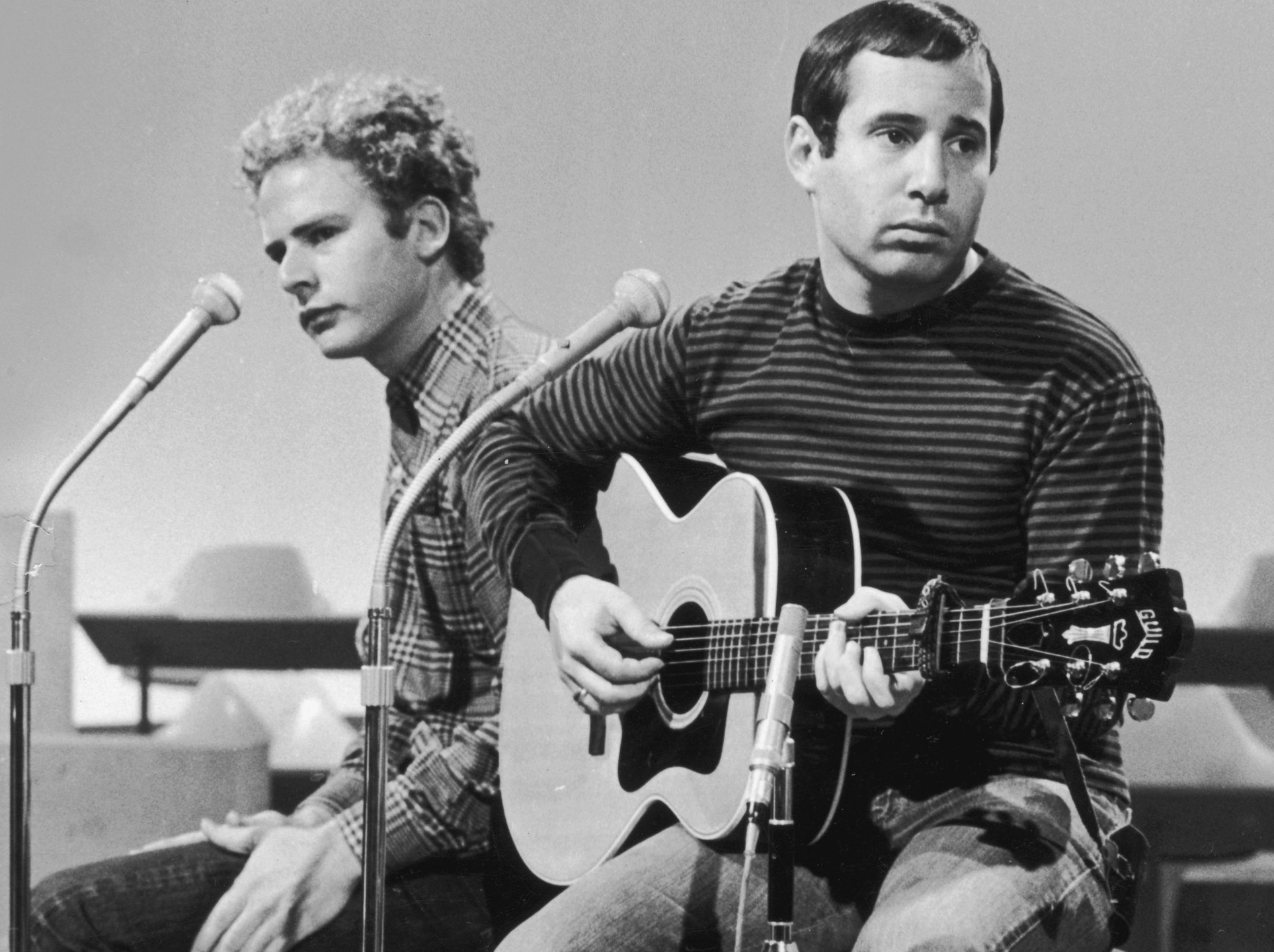
A recent LA Times article was titled, “Hello Simon, my old friend…” Those of us who can remember the late 1960’s surely have clear memories of hearing tunes from Simon and Garfunkel’s milestone album, Bookends, and especially of the way their music was featured in the December, 1967, release of the movie, The Graduate. Even those born years later may have in their minds an inescapable link between the names of the two artists, whose cooperative work remains so memorable. Despite their ‘Oh, so beautiful’ recordings, the two broke up their musical partnership in January of 1970, shortly before the release of their best-selling and perhaps providentially titled album, Bridge Over Troubled Water.

Simon and Garfunkel performing in the earlier days of their musical partnership

Many of us who remember hearing their music when it was first released, or who have come to love and appreciate it since those years, don’t realize the extent of their difficult creative relationship as artists. All too soon, they drifted apart, speaking only occasionally with one another, though in subsequent years they did perform together on a few occasions, including at Jazz Fest in New Orleans in the spring of 2010. To his later regret, Art Garfunkel made some unwise and unguarded comments during an interview in 2016, that were hurtful to Paul Simon.

At Jazz Fest, New Orleans, 2010, with Garfunkel singing with a damaged voice adding to the strain in their relationship

Art Garfunkel has now spoken to the press about his regret concerning those prior comments, and shared what he had said to Paul Simon at a recent lunch together: “First time we’d been together in many years. I looked at Paul and said, ‘What happened? Why haven’t we seen each other?’” Garfunkel then shared this: “I cried when he told me how much I had hurt him.” “Looking back,” with obvious regret, he reflected that he had perhaps “wanted to shake up that nice guy image of Simon & Garfunkel.”

An early photo of the duo which may suggest some of the tensions in their partnership

Their reconciliation came at that long overdue lunch, which Garfunkel said, “…was about wanting to make amends before it’s too late.” Having acted upon his desire to reconnect with Simon, Garfunkel offered that “it felt like we were back in a wonderful place. As I think about it now, tears are rolling down my cheeks. I can still feel his hug.”

This recent reconciliation between Paul Simon and Art Garfunkel is heartwarming and a beautiful thing. It can be a source of hope for all of us regardless of who we are, or our place in this often confused and fast-paced world.

Simon and Garfunkel at a reunion concert in Central Park, NYC, in 1981

Reconciliation, especially following upon things we have done to hurt and impair a relationship with another person, is perhaps one of the most difficult things for us to contemplate doing, and then to try and enact. Surely, we can all acknowledge this based on personal experience. Especially when we are aware that this reality has the potential to be a shadow presence at some Thanksgiving gatherings this week, whether among family members or groups of friends.

Achieving reconciliation with another person in this life is never assured, no matter how much we may desire it. And what such a desired result may require is an openness to that hoped-for resolve happening between us, even if the circumstances surrounding that possibility seem remote and uncertain. Yet, though this kind of openness is necessary, it is not in itself sufficient for the desired result. Forgiveness by one or both parties plays a key role in the process. And forgiveness usually requires an acknowledgement rather than a dismissal of what may have happened to cause the breach in the relationship.

This is how and why memories, even of hurts, injury, and injustice, have the potential to be holy, and why forgetting (especially willful forgetting) may limit the extent to which we experience reconciliation. To forgive is an act of will, whether or not feelings of forgiveness arise within us or abide. And once forgiveness is willed, and then expressed, the reconciliation that follows upon openness might -and even may – in time happen.

There are grounds for hope, at least with regard to Simon and Garfunkel. They appear to be planning a series of reunion concerts in 2025. We can look forward to enjoying once again the fruit of this most creative musical collaboration.


The Elusive Biblical Idea of Ransom

If reading this by email, please tap the title at the top to open your browser for the best experience. Then, clicking individual pictures will reveal higher resolution images.


In late 1987, two American college students were exploring the jungles of Columbia. After obtaining a canoe, they embarked upon the Putumayo River and strayed into territory held by a Marxist rebel army. Formally known as FARC, these guerrilla soldiers abducted the students and held them captive for ten months in various jungle camps.

At first, the FARC guerrillas thought the two men were CIA agents, though the students corrected this. But then their captors came to see them as hostages having economic value. Soon, their parents hired an American explorer, who found the hostages and their captors. After four months of negotiations, conducted by a Roman Catholic Bishop, the students were released and taken to the American Embassy in Bogata.

Release for the young explorers surely came about through the payment of money, probably a lot of it. Ransom is a way to describe this kind of payment, where something valuable is exchanged for the freedom of captives. John Everett Millais’ painting (above), The Ransom, depicts a father handing over of fistful of jewelry and a bag of coins to some men who have taken his daughters hostage. Revolutionaries, terrorists, and criminals have long used ransom as an efficient means of fund-raising, especially when their captives come from wealthy families or are politically well-connected.

Clearly, when payments are made to captors, the purpose is not to honor or reward the hostage-takers. Instead, these payments reflect an abiding concern for those who are held-captive, awaiting redemption.

This concept of ransom is deeply rooted in our Judeo-Christian tradition, and it shapes how we understand redemption. Think of the beloved Advent hymn, which begins this way: “O come, O come, Emmanuel, and ransom captive Israel…” In the Old Testament, in many passages like Psalm 49; Isaiah 35, 43, and 51; Jeremiah 31; and Hosea 13, we hear about how God’s promises inspire hope for the possibility of ransom from the power of death.

These insights help us understand Jesus’ words about ransom in Mark’s Gospel (in 10:45; parallel in Mt. 20:28). After predicting his suffering and death three times, Jesus tells the oblivious disciples that “the Son of Man came not to be served but to serve, and to give his life as a ransom for many.”

Yet, instead of a ransom-based understanding of Jesus’ sacrifice and death, many Christians think of Jesus’ saving work in a largely legal or juridical way. In this view, our sin involves a degree of corruption and guilt so bad that it’s beyond what we can make right. And so, human captivity to sin means that ‘a penalty must be paid, and punishment meted out.’ By this reckoning, only a ‘sinless one’ could pay the uncountable price, and bear the penalty for all. Therefore, Christ as a substitute for us, paid the price and endured the punishment so that we, ourselves, don’t have to, even though we are the ones who deserve it. Yet, according to this very common theory, the ‘price’ was paid to God, to satisfy God’s justice!

This legal or ‘punishment-substitution’ understanding of Jesus’ death did not become widespread for at least a thousand years after his crucifixion. Instead, during the first millennium, a different concept of Jesus’ mission was preeminent. It springs from the ransom words in Mark, as well as from 1st Timothy 2:5, where Paul writes, “…there is … one mediator between God and human kind, Christ Jesus… who gave himself [as] a ransom for all.”

According to this ransom view, ever since Creation, we have placed ourselves in the hands of Satan, by refusing to ‘delight in God’s will or walk in God’s ways.’ In effect, we have strayed into ‘the jungles of sin,’ and have allowed ourselves to be taken hostage by the Devil. We are held captive by our sin, and by our inclination to follow our own will. Like the two student hostages, we might have ‘paid’ our way to freedom ~ if we and they had had the means to do so. But we did not.

And so, showing his great love for us, Jesus offered himself to the Devil, as a ransom for our freedom. Jesus allowed the Devil to take him, as someone of even greater value than all of us. For Satan received as a ransom the sinless One, God’s own son. C.S. Lewis employs a similar ransom metaphor in The Lion, the Witch, and the Wardrobe. In this biblically-derived approach, the ‘price to be paid’ was a concession to the power of an enemy, and compensation for a loss, rather than (as in the later and more prevalent legal view) a payment to satisfy God’s sense of justice.

An image of Aslan’s self-sacrifice, from a film version of The Lion, the Witch, and the Wardrobe


This post is adapted from some material previously published in this space, with some additional imagery. It is based on my homily for Sunday, Oct. 20, 2024, which may be accessed by clicking here.

Encountered Beauty: Nighthawks in a Dark Sky

If reading this by email, please tap the title at the top to open your browser for the best experience. Then, clicking individual pictures will reveal higher resolution images.


I have clear memories of a particular time of day in a town where I lived for two short periods of time, Northfield, Minnesota. In middle school, and then during college, I would frequently walk over the Water Street bridge spanning the Cannon River, by the old dam and historic Malt-O-Meal mill. On summer evenings and nights, I remember almost always hearing the distinctive nasal or buzzing be-zeet, be-zeet sound of birds calling to one another in the sky above. When I first observed them, I wondered what kind of birds these were, and about their surprising nocturnal behavior as compared with other birds more familiar to me. Based on the white patches on the underside of their wings, visible from the reflected glow of the lights in the town center below, I was able to identify them as Common Nighthawks, based on Roger Tory Peterson’s well-known book, Field Guide to the Birds.

Seeming to fly far above me, I was curious about their size, imagining them to be rather large. I then learned that their size and weight puts them somewhere between a common robin and a crow, suggesting that they do not fly as high as I had first imagined. Nighthawks are insect-eaters, which accounts for why they are so evident on summer nights, amidst the target rich environment of flying bugs swarming over city lights.

With their long wings, these birds engage in bat-like flapping as well as in gliding, and I remember them flying closely together as they went about their nocturnal feeding. The American Bird Conservancy website describes them in this way: “the Common Nighthawk’s erratic, acrobatic flight style gives the bird its folk name, ‘bullbat’.” Memorable in this regard is the way that they make occasional dives toward the ground. Some observers report that these dives cause the wind under their wings to make a booming or a whooshing sound, though I don’t remember hearing it.

I was intrigued to learn that, given their relative size, these birds will roost and nest on such apparently vulnerable locations as the ground, elevated tree limbs, ledges, and even gravel rooftops. Among things I appreciate about Nighthawks is how their mottled coloring, with blends of light and dark feathers, has adapted them well to survive in a variety of environments, and helps to protect them from predators like hawks and falcons. Of course, there are those incongruous white wing patches, which may be an evolutionary bow to some needs parallel to survival, both the attraction of a mate and the procreation of offspring.

The shape and size of Nighthawks’ comparatively long wings aid not only their feeding activity while flying, but also the extraordinarily long annual migration they make between their breeding grounds in North America to their winter habitats in South America. In fact, they are believed to have one of the longest migration patterns of all North American birds.

To me, Nighthawks are an unexpected kind of bird to find in a town center or in a city, given their dimensions and surprising willingness to live and reproduce in proximity to the commercial activity we associate with such areas. I am always delighted when I recognize their sounds above me on a summer evening, as I look up to see them wheeling about in the darkness, with their white wing patches flashing here and there.

In the natural world around us, with all its dynamic interrelationships, these amazing birds are our fellow creatures. In relation to them, as well as to other examples of what traditionally have been termed flora and fauna, we are called to engage in God-like stewardship. We all seem to have our favorite species in nature that we want to protect and care for. Needless to say, Nighthawks are high on my list.


The Nighthawk page from my grandfather’s copy of Peterson’s Field Guide to the Birds


Fully Alive: The Beauty of Human Nature

A photo of a print given to us years ago


Those familiar with my writing and ministry may not be surprised by how I choose to address the theme of beauty in relation to the human nature we all share.

My response is captured in a quote with words I have long loved and have frequently cited. The quote is from the second century Christian theologian and Bishop of Lyons (in present-day France), Irenaeus. “The glory of God is the human person fully alive.” To which he added, “and to be alive consists in beholding God.”

What an audacious statement! I believe that the fundamental insight here, latent within Irenaeus’s words, stems from the Gospel of John, with whose author Irenaeus likely had a personal connection. That would have been through Polycarp, Bishop of Smyrna (presently, Izmir, Turkey), the city where Ireaneaus was born. One writer has described Irenaeus as the spiritual grandson of the apostle John.

Another calligraphy print, this one featured on the website of Holy Cross Monastery

What does it mean for any one of us to be ‘fully alive’? I believe that the Gospel writer, John, would respond by echoing words from Paul, whose letters frequently employ the phrase, “in Christ.” Through Baptism, we come to be in Christ. Through Baptism, we are re-born in Christ; we live in Christ – and he in us – and we will leave this mortal life in Christ. Indeed, in John’s  compelling witness to Jesus’ teaching, we are told that those who believe in Jesus have already died, and now, will never die! All of the Gospel readings appointed for funerals in The Book of Common Prayer are from John. This is the Gospel that is so centered upon the themes of God’s incarnation within our shared human nature, giving us God-given light, and eternal life.

Words found in the daily pattern for Morning and Evening Prayer, as well as in the Eucharistic pattern used on most Sundays in Episcopal Churches, help amplify this point but in a subtle way. These several patterns for corporate and individual prayer include forms for confession. Using these forms, and after we acknowledge our sin, we pray that we may delight in God’s will , and walk in God’s ways. In the absolution that follows, we hear these remarkable words:

Almighty God, have mercy on you, forgive you all your sins through our Lord Jesus Christ, strengthen you in all goodness, and by the power of the Holy Spirit keep you in eternal life.

In words that may be easy to overlook, we pray that by Holy Spirit power, God will “keep us in eternal life”! Being fully alive involves delighting in God’s will, walking in God’s ways, and being kept by God in eternal life.

Christians believe that the beauty of our human nature was and is found in the Gospel Jesus, and as the Risen Christ comes to be found in us. Our human nature, created in the image and likeness of God, and transformed to become an icon of Christ, is therefore all about the fulfillment of our divinely-given and imbued potential. When by grace we see it happen in people’s lives, it is a beautiful thing to behold.

Yet, human nature, being still what it is, prompts us to look for beauty in outward terms when we view others, as well as ourselves. Jesus, as the Gospels imply, always looked for beauty within – the kind of beauty it was his vocation to share and re-enable in us. This is what we should be looking for, both within ourselves and in others.

The archetypal biblical example of the glory of God beautifully manifest in human nature is found in the Gospel Transfiguration stories. James Tissot, one of my favorite painters, offers us glimpses of Jesus manifesting this same glory on several occasions, a glory that was otherwise often hidden within him.

James Tissot, Jesus Goes Up Onto A Mountain to Pray

Tissot, Jesus Being Ministered to by the Angels

Paul’s remarkable words to the Corinthians bring these themes together nicely. For we want to be among those who are:

seeing the light of the gospel of the glory of Christ, who is the image of God… For God, who said, “Let light shine out of darkness,” has shone in our hearts to give the light of the knowledge of the glory of God in the face of Jesus Christ.”

And, by God’s generous grace, the same may be seen in our faces, as well.


Note: Kenneth Kirk, the esteemed 20th century Bishop of Oxford, and former Regius Professor of Moral Theology at the historic university in that city, titled one of his still-used books (The Vision of God) based on the Irenaeus quote, featured above. Kirk presents Irenaeus’ words in this (now dated) way: “The glory of God is a living man, and the life of man is the vision of God.”

Beauty, Transcendence, and Personal Transparency


In preparing to offer an autumn class through an LSU seniors learning forum, I have been reflecting on the general themes that animate this blog website — art, beauty, and transcendence. The link between art and transcendence is intriguing, and for many of us, it is something we experience. Yet, the alluring and knowable significance of beauty – linked here with art and transcendence – is harder for us to get at. Relying upon a famous historical quote that some will recognize, I will paraphrase the matter this way: I can’t define Beauty; but I know it when I see it!

Readers of this blog will have noticed my prior exploration of what may be a common sequence or pattern in life experience. Through it, we move from encounters with Beauty, on to reflection about what may be Good. This then can lead to a search for, and reflection upon, what is True. These three facets of this transitional sequence, Beauty, Goodness, and Truth, are also referred to as the “Three Transcendentals.” They have  been portrayed in art history as the Three Graces, in the form of three young women appearing together as in a dance.

We may infer something from this common association between Beauty, Goodness, and Truth, in relation to the further category of that which is transcendent. The three so-called ‘Transcendentals’ at least verbally have something to do with our human interest in the compelling category of transcendence. [Note: transcendental and transcendence obviously come from the same root word.] For our experiential encounter with some objects and or events can lead us to describe them as having been memorably beautiful, very good, and or compellingly true. Why? Because when remembering these encounters as occasions in which we glimpsed, sensed, and or apprehended something real and beyond sense experience, we have had an engagement with what we may best describe as having a ‘transcendental’ quality.

One way to help account for the above is to recognize that we are ‘spiritual’ beings, and not merely animate beings whose significance can be explained solely in terms of bio-physical data and analysis. To help get at the questions we are exploring, we can refer to the long-recognized brain-mind question. Does human conscious experience terminate with brain function? That is the blunt way to put a matter that can be so much more suggestive and evocative. Our human experience – here and now, in our conscious awareness – clearly depends upon brain function. But what if it also transcends brain function?

Here, we can fall back upon a basic principle of received Christian doctrine: we are embodied. In life beyond, if it is granted to us, the New Testament tells us that we will remain ‘embodied,’ though not in the same form as we are now. So, if brain function demonstrably ceases upon physical death, and if consciousness may transcend the cessation of brain function, what might we make of this?

My reflections on these ideas have led me to a further perception, which may call for additional consideration. When we have encounters with objects, experiences, and or events, that we describe as highly beautiful, movingly good, and or compellingly true, we have experiences of not only what is here and now, but also of what may be transcendent. In having such experiences, we often feel more true to our selves, to who we are, and to whom we hope to become. And the world feels more real and true in an expanded way. In the process, we may become more transparent to ourselves.
Stemming from such experiences, I find that I am also more open to being transparent with others. How? Sensing I have encountered something truly beautiful, genuinely good, and or fundamentally true, I feel more alive, and more in touch with the way the world really is. These experiences leave me more sure about my perceptions of what I have sensed. I then find I am more confident about these experiences, and more willing to share them – and myself – with others.

Experiencing Beauty, apprehending Goodness, and discerning Truth, may therefore open the doors of communication we yearn to have with others.


My thanks to a longtime friend, Chip Prehn, and to my brother, Greg, for the above photos. The first three come from Sassafras Farm, during haying season in Virginia, and the latter photo was taken while my brother was recently completing his fourth Camino de Santiago.

Hagia Sophia’s Wondrous Dome

If reading this by email, please tap the title at the top to open your browser for the best experience. Then, clicking individual pictures will reveal higher resolution images.
Note the triangular semi-spherical panels (with angel images) on either side of the central arch


The dome over the center of Hagia Sophia has since its construction been an object of fascination, as much for its design as for its size. To stand within the space it covers is awe-inspiring. Though not unprecedented in form, the support structure for this massive dome sets the building apart. The architectural challenge the church’s designers overcame arose from a desire to set a circular dome over a square structure, especially if and when the walls of that structure would feature sizable arches.

In a traditional four-cornered room, and one in which arches (spanning the side walls) converge at the corners, a vertical line from floor to ceiling defines the juncture point of any two walls. A circular dome set on top of such a four-cornered structure would rest upon the walls, but upon the walls’ center points, above the arches. Most likely resting, therefore, upon the weakest points of those arched walls. Yet, the dome would not receive direct support at the building’s corners, usually the building’s strongest points, because the perimeter of the dome’s base would sit away from the square corners.

The genius of Hagia Sophia’s immense dome was the incorporation of what are formally termed “pendentives.” This architectural feature can be seen in the photo at the top, in the triangle-shaped, semi-spherical corner panels that allow the four corner columns to support the essential load-bearing portions of the dome’s base. It is illustrated in the diagram below (with the letter “a” representing the pendentives).

An illustration of a dome resting above pedentives

Readers of my prior post, upon the Greek Cross plan for Hagia Sophia, will observe how this mosque-cathedral has a basilica or rectangular shape at the upper level, while yet featuring a Greek Cross-shaped floor plan (see below). This is due the absence of half or semi-domes extending from the north and south sides of the building as they observably do on both the west and east ends.

Hagia Sophia floor plan, showing semi-domes (indicated by dotted lines) over the east and west ends of the Greek Cross floor plan, on either side of the central dome
Instead of the presence of half or semi-domes below the great arches on the upper level of the north and south sides of Hagia Sophia we find what are called “tympanaum.” These are wall screens that are punctuated by windows (see below).
A view of the tympanaum (or wall screen) below the dome on the south side of Hagia Sophia’s prayer space
Subsequent mosque designs, such as the breathtaking Süleymaniye Mosque in Istanbul (see below), took the same design concept forward while emphasizing the overall square shape of the Greek Cross.

These are some of the ways in which Hagia Sophia’s design set the stage for later mosque architecture. Later mosque plans tended to incorporate half or semi-domes on all four sides of the central, full-dome covered portion of the prayer space. In turn, these plans, as well as those of their predecessors, continue to influence the design of Christian churches in ways that can enhance the whole congregation’s participation in liturgy. (For more on this point, please see my prior post, “The Beauty of Hagia Sophia, and the Greek Cross”).