Spirtituality

The Beauty of Bonsai

If reading this by email, please tap the title at the top to open your browser for the best experience. Then, clicking individual pictures will reveal higher resolution images.
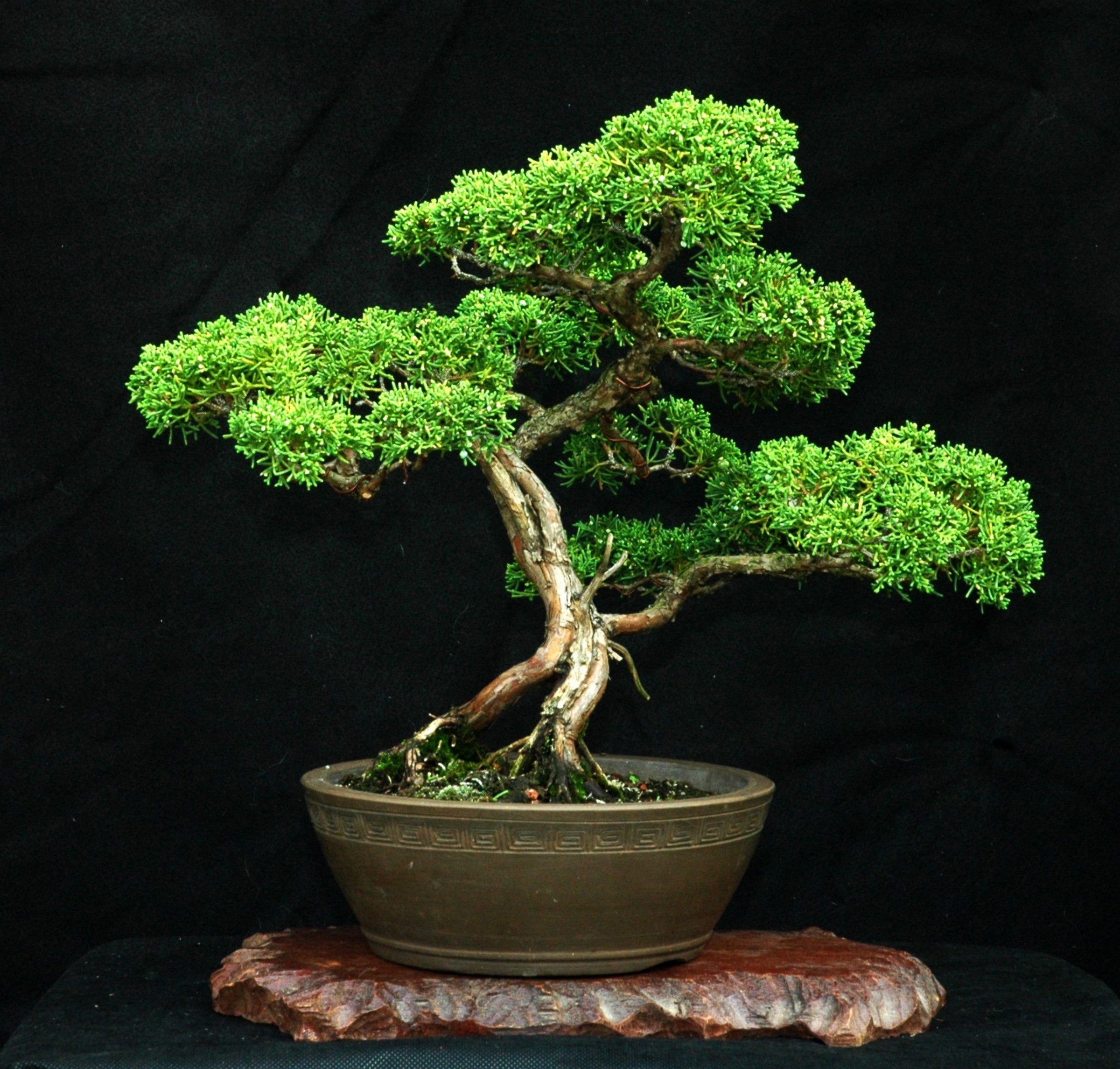
 

A local plant and garden center recently offered an introductory workshop on Bonsai, the Japanese and originally Chinese art of propagating and arranging miniature versions of living plants and trees. Upon registration for this workshop (and for a relatively modest fee), participants would be provided with a starter plant, a container for the project, and the basic tools and materials with which to begin their own Bonsai arrangement. With my childhood in Japan, and my interest in the arts, I jumped at the opportunity to learn some basic principles of Bonsai, an art which I have admired for many years. Nevertheless, I have been largely ignorant of the mechanics of this aesthetically-pleasing horticultural practice. Attending the workshop, I was not disappointed by the learning opportunity offered.

Upon going to our assigned places after arriving, each of us found a potted portulacaria afra, a succulent commonly called dwarf jade plant or elephant bush (photo below). We also found a glazed ceramic container, plant medium, and basic tools with which to create our first attempt at a genuine Bonsai arrangement. My potted starter plant was in a 6” plastic pot, about 18” – 24” in height, and root-bound in its container.

An example of portulacaria afra

Our first step in the process was to prepare the pot or container to receive the plant. I learned that the most useful plant containers have two drain holes, as well as two very small holes for upright wires. The photo below shows my pot after attaching the wires and screens.

Wires secure small mesh screens over drain holes, while a longer U-shaped wire emerges from below, to help secure the plant

Our next step was to remove the plant from its plastic pot, and determine where the upper primary roots lay. We were then asked to remove almost all of the former potting soil material (identified as pine bark mulch), and then to anticipate trimming the roots. Here, I found my first challenge. As an amateur gardener, disturbing the roots of a plant – much less removing the planting medium in which it has been nurtured – hit me as strongly counter-intuitive. Yet, this was actively encouraged.

A participant’s plant after removal of most of the original planting medium, before cutting extraneous roots

After initial preparation of the plant, we had our third challenge. This was to cut and shape the remaining exposed roots in such a way that the plant might sit well in the provided pot. The overall natural shape of the plant provided a starting point. But an aesthetic judgment was also needed for how this particular plant would best sit in this particular container. Here, I was beginning to discern how at first seemingly mysterious Bonsai practices become compelling to so many people. There appeared to be at least thirty or more participants in this workshop, on a Tuesday evening before the 4th of July!

So, how might my particular plant best fit in my provided pot?

How I situated my plant in the pot, secured by the upright wires
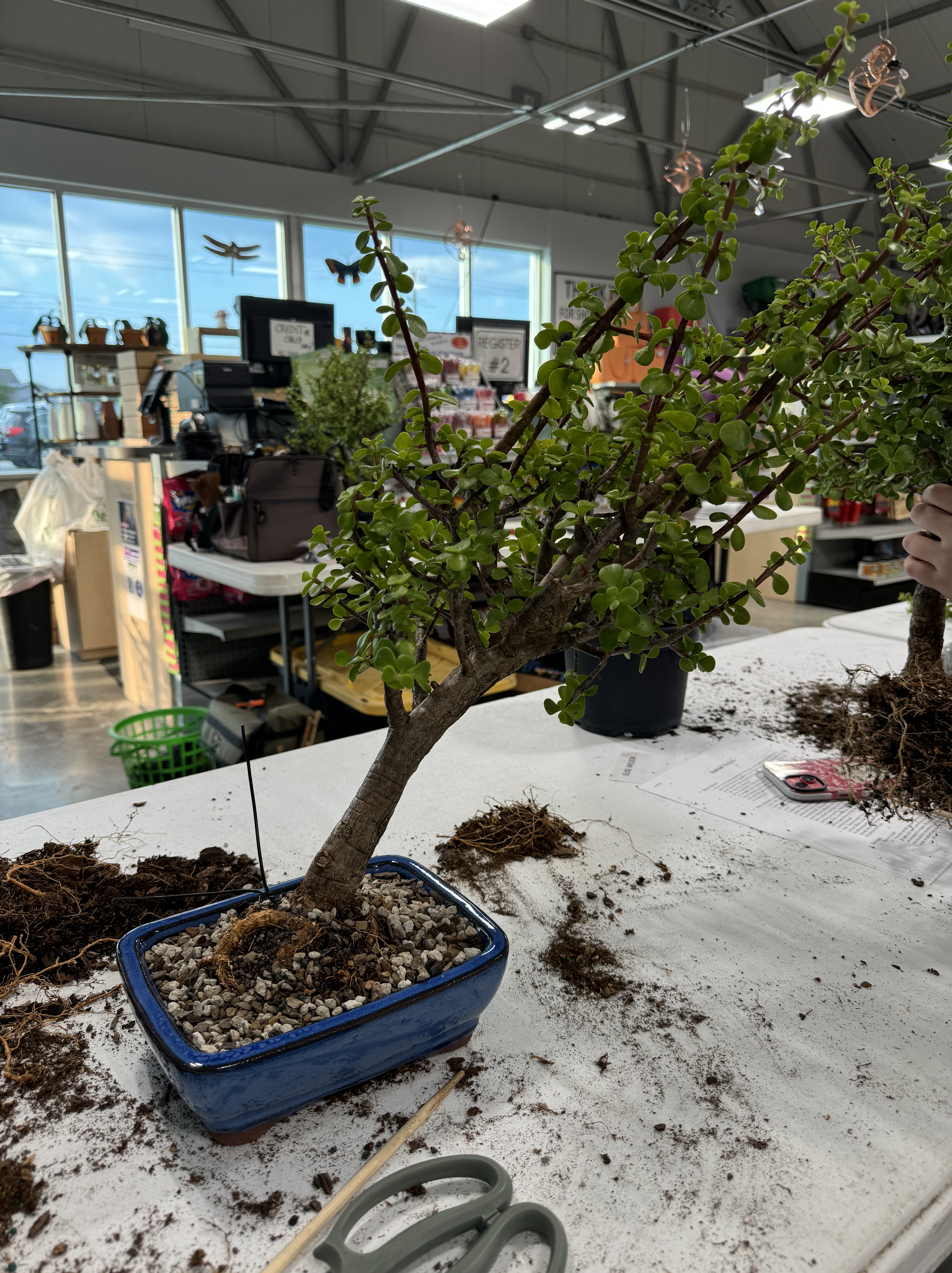
My plant before I trimmed the upper stems

Then came the most challenging aspect of Bonsai for me as a beginner. How should I trim the top of the plant, and to what extent should I prune back the stems and leaves? The main lesson I received here was this: do not be afraid of pruning!

Indeed, with the art of Bonsai, and apparently according to recognized horticultural principles, the more we prune our Bonsai plants, we will find a real diminishment in the size of the leaves as the organism grows!

Here, below, is a photo of my Bonsai plant project at home, after some significant pruning.
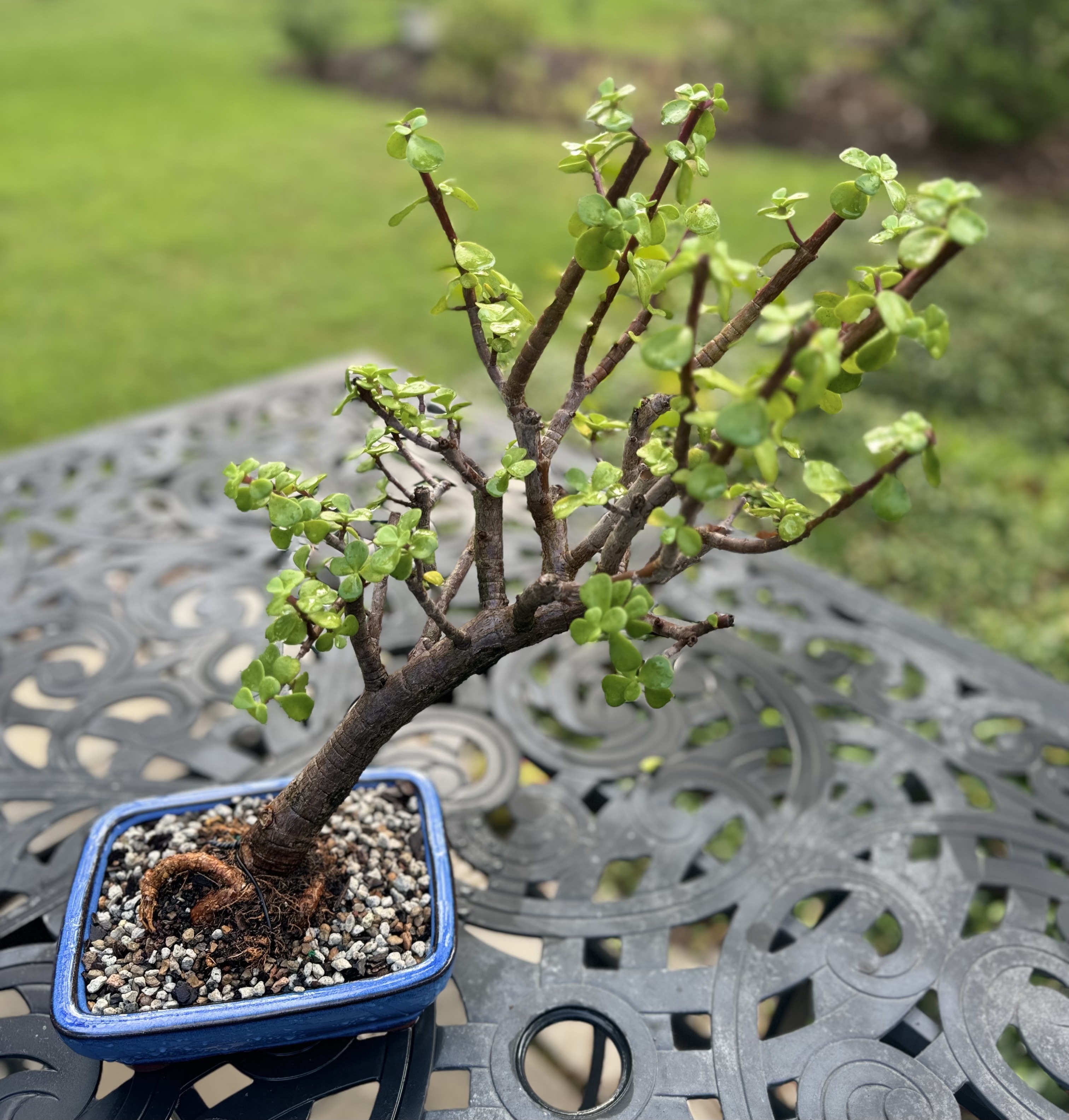
The ‘windswept’ natural posture of the potted plant appealed to me, and I want to accentuate this by continuing to allow for the lean of the plant (to the right, in this photo), while counter-balancing this lean by promoting growth toward the opposite direction. As my recent mentors stressed, pruning will be everything!
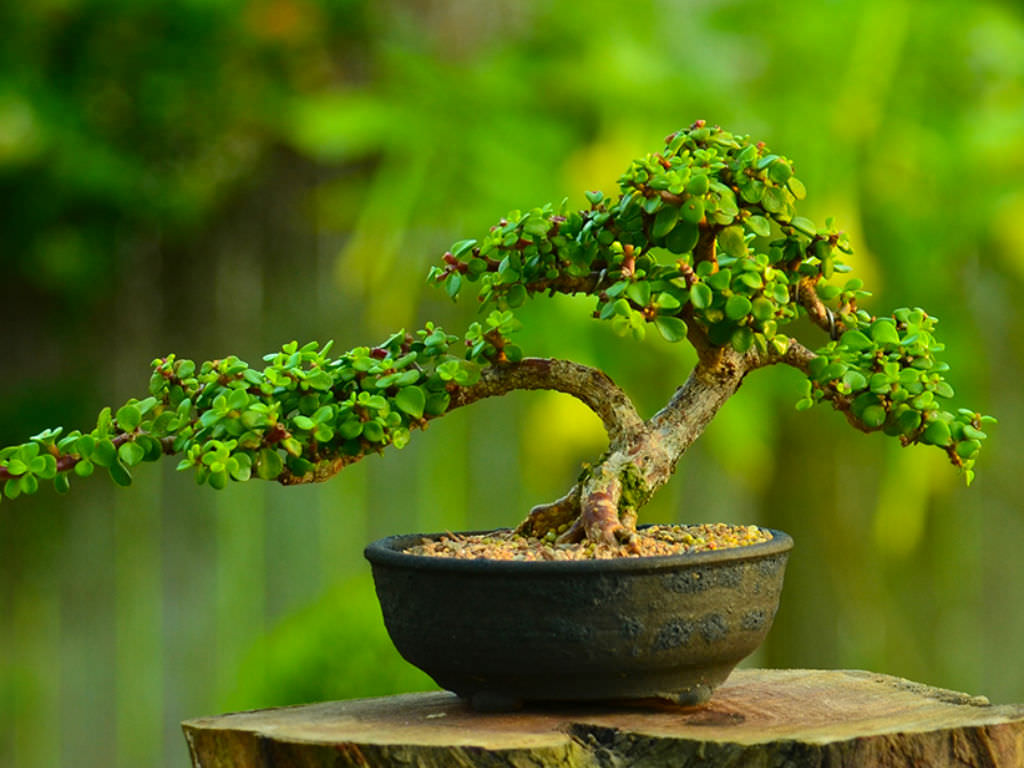
What my portulacaria afra might look like some day


Note: as mysterious as this art-form may seem to Westerners, it is accessible to beginners in terms of method, materials, and technique. Ask your local plant and garden store about it!

Fully Alive: The Beauty of Human Nature

A photo of a print given to us years ago


Those familiar with my writing and ministry may not be surprised by how I choose to address the theme of beauty in relation to the human nature we all share.

My response is captured in a quote with words I have long loved and have frequently cited. The quote is from the second century Christian theologian and Bishop of Lyons (in present-day France), Irenaeus. “The glory of God is the human person fully alive.” To which he added, “and to be alive consists in beholding God.”

What an audacious statement! I believe that the fundamental insight here, latent within Irenaeus’s words, stems from the Gospel of John, with whose author Irenaeus likely had a personal connection. That would have been through Polycarp, Bishop of Smyrna (presently, Izmir, Turkey), the city where Ireaneaus was born. One writer has described Irenaeus as the spiritual grandson of the apostle John.

Another calligraphy print, this one featured on the website of Holy Cross Monastery

What does it mean for any one of us to be ‘fully alive’? I believe that the Gospel writer, John, would respond by echoing words from Paul, whose letters frequently employ the phrase, “in Christ.” Through Baptism, we come to be in Christ. Through Baptism, we are re-born in Christ; we live in Christ – and he in us – and we will leave this mortal life in Christ. Indeed, in John’s  compelling witness to Jesus’ teaching, we are told that those who believe in Jesus have already died, and now, will never die! All of the Gospel readings appointed for funerals in The Book of Common Prayer are from John. This is the Gospel that is so centered upon the themes of God’s incarnation within our shared human nature, giving us God-given light, and eternal life.

Words found in the daily pattern for Morning and Evening Prayer, as well as in the Eucharistic pattern used on most Sundays in Episcopal Churches, help amplify this point but in a subtle way. These several patterns for corporate and individual prayer include forms for confession. Using these forms, and after we acknowledge our sin, we pray that we may delight in God’s will , and walk in God’s ways. In the absolution that follows, we hear these remarkable words:

Almighty God, have mercy on you, forgive you all your sins through our Lord Jesus Christ, strengthen you in all goodness, and by the power of the Holy Spirit keep you in eternal life.

In words that may be easy to overlook, we pray that by Holy Spirit power, God will “keep us in eternal life”! Being fully alive involves delighting in God’s will, walking in God’s ways, and being kept by God in eternal life.

Christians believe that the beauty of our human nature was and is found in the Gospel Jesus, and as the Risen Christ comes to be found in us. Our human nature, created in the image and likeness of God, and transformed to become an icon of Christ, is therefore all about the fulfillment of our divinely-given and imbued potential. When by grace we see it happen in people’s lives, it is a beautiful thing to behold.

Yet, human nature, being still what it is, prompts us to look for beauty in outward terms when we view others, as well as ourselves. Jesus, as the Gospels imply, always looked for beauty within – the kind of beauty it was his vocation to share and re-enable in us. This is what we should be looking for, both within ourselves and in others.

The archetypal biblical example of the glory of God beautifully manifest in human nature is found in the Gospel Transfiguration stories. James Tissot, one of my favorite painters, offers us glimpses of Jesus manifesting this same glory on several occasions, a glory that was otherwise often hidden within him.

James Tissot, Jesus Goes Up Onto A Mountain to Pray

Tissot, Jesus Being Ministered to by the Angels

Paul’s remarkable words to the Corinthians bring these themes together nicely. For we want to be among those who are:

seeing the light of the gospel of the glory of Christ, who is the image of God… For God, who said, “Let light shine out of darkness,” has shone in our hearts to give the light of the knowledge of the glory of God in the face of Jesus Christ.”

And, by God’s generous grace, the same may be seen in our faces, as well.


Note: Kenneth Kirk, the esteemed 20th century Bishop of Oxford, and former Regius Professor of Moral Theology at the historic university in that city, titled one of his still-used books (The Vision of God) based on the Irenaeus quote, featured above. Kirk presents Irenaeus’ words in this (now dated) way: “The glory of God is a living man, and the life of man is the vision of God.”

Beauty, Transcendence, and Personal Transparency


In preparing to offer an autumn class through an LSU seniors learning forum, I have been reflecting on the general themes that animate this blog website — art, beauty, and transcendence. The link between art and transcendence is intriguing, and for many of us, it is something we experience. Yet, the alluring and knowable significance of beauty – linked here with art and transcendence – is harder for us to get at. Relying upon a famous historical quote that some will recognize, I will paraphrase the matter this way: I can’t define Beauty; but I know it when I see it!

Readers of this blog will have noticed my prior exploration of what may be a common sequence or pattern in life experience. Through it, we move from encounters with Beauty, on to reflection about what may be Good. This then can lead to a search for, and reflection upon, what is True. These three facets of this transitional sequence, Beauty, Goodness, and Truth, are also referred to as the “Three Transcendentals.” They have  been portrayed in art history as the Three Graces, in the form of three young women appearing together as in a dance.

We may infer something from this common association between Beauty, Goodness, and Truth, in relation to the further category of that which is transcendent. The three so-called ‘Transcendentals’ at least verbally have something to do with our human interest in the compelling category of transcendence. [Note: transcendental and transcendence obviously come from the same root word.] For our experiential encounter with some objects and or events can lead us to describe them as having been memorably beautiful, very good, and or compellingly true. Why? Because when remembering these encounters as occasions in which we glimpsed, sensed, and or apprehended something real and beyond sense experience, we have had an engagement with what we may best describe as having a ‘transcendental’ quality.

One way to help account for the above is to recognize that we are ‘spiritual’ beings, and not merely animate beings whose significance can be explained solely in terms of bio-physical data and analysis. To help get at the questions we are exploring, we can refer to the long-recognized brain-mind question. Does human conscious experience terminate with brain function? That is the blunt way to put a matter that can be so much more suggestive and evocative. Our human experience – here and now, in our conscious awareness – clearly depends upon brain function. But what if it also transcends brain function?

Here, we can fall back upon a basic principle of received Christian doctrine: we are embodied. In life beyond, if it is granted to us, the New Testament tells us that we will remain ‘embodied,’ though not in the same form as we are now. So, if brain function demonstrably ceases upon physical death, and if consciousness may transcend the cessation of brain function, what might we make of this?

My reflections on these ideas have led me to a further perception, which may call for additional consideration. When we have encounters with objects, experiences, and or events, that we describe as highly beautiful, movingly good, and or compellingly true, we have experiences of not only what is here and now, but also of what may be transcendent. In having such experiences, we often feel more true to our selves, to who we are, and to whom we hope to become. And the world feels more real and true in an expanded way. In the process, we may become more transparent to ourselves.

Stemming from such experiences, I find that I am also more open to being transparent with others. How? Sensing I have encountered something truly beautiful, genuinely good, and or fundamentally true, I feel more alive, and more in touch with the way the world really is. These experiences leave me more sure about my perceptions of what I have sensed. I then find I am more confident about these experiences, and more willing to share them – and myself – with others.

Experiencing Beauty, apprehending Goodness, and discerning Truth, may therefore open the doors of communication we yearn to have with others.


My thanks to a longtime friend, Chip Prehn, and to my brother, Greg, for the above photos. The first three come from Sassafras Farm, during haying season in Virginia, and the latter photo was taken while my brother was recently completing his fourth Camino de Santiago.

A Beautiful Place Where I Went to School

A view from the campus farm across the Connecticut River valley


In the fall of 1971, I was truly fortunate to be able to head off to Northfield Mt. Hermon School for my sophomore year of high school. After growing up mostly in Japan, and returning to the States for a couple of years, I was ready for a new challenge. I was yearning for an educational opportunity that would build upon my earlier experience at the Yokohama International School. When I arrived at Northfield Mt. Hermon (NMH) as a scholarship student, this inviting place opened the world for me, and changed my life.

Rooflines of a dorm, faculty house, and the student center in early evening light

Recently, I attended the 50th reunion of my NMH high school graduation class, which numbered about 365 in May of 1974. After graduating from this wonderful place for learning and formation, many of us at our reunion had not seen one another in fifty years! Anticipating being with school friends after such a length of time was a bit unsettling for me, given my awareness that – like others, as I came to see – I was not the same person I was when we last saw each other. I soon felt more at ease when greeted graciously by fellow members of my class and by our school hosts.

Two of the remodeled “Cottages” that serve as dorms

A theme periodically voiced during our weekend together was how troubling were the years in which we were students at NMH. The Vietnam War was still a concern; our President was in political if not legal trouble; the society around us was deeply divided and appeared to be coming apart; and large numbers of our fellow citizens seemed either unaware of or uncaring about the precarious state of the air, water, and food supply in the world around us. [In some ways, the world has not changed!]

Being the largest class in NMH’s history, at such a time, provided another challenge. Could we – from our multiple and differing backgrounds – find or make a community built of more than passing relationships upon arriving at a place that was – for some of us – far from home? To my astonishment, my first roommate was a former Yokohama classmate with whom I had last attended 7th grade, halfway around the world. And yet, I also remember my surprise at how I felt when observing the sudden absence of everyone from campus on graduation afternoon, many of whom I would not see again until our recent weekend together.

A wonderfully large green space at the center of campus

Here are a few things that distinguished my (and our) experience at NMH during those years, which are strong features of our school. The legacy of our founder, the 19th century evangelist, D.L. Moody, continues to be manifest in a strong emphasis upon spiritual and ethical values that have the power to transform both individuals and the world in which we live. Moody’s own commitment, to address not only the spiritual needs but also the social and educational needs of marginalized youth, remains central to our school’s mission. For we as alumni are rightly proud that among the first NMH students after our 1879 founding were 16 Indigenous Americans and a freed African-American from a formerly enslaved family.

The new science building

These themes are evident in our school’s mission statement, in words regarding an education that seeks to form the head, the heart, and the hands, of all those who share life together in the beautiful surroundings of the Connecticut River Valley. Fundamental to this commitment is the requirement for every student to have a work job, 3 – 5 hours per week, participating in dish crew, cleaning dorms or classrooms, or working on the school farm. These work jobs save the school a considerable amount of money that is directed toward the substantial scholarship funds that enable many students from a modest financial background to be at NMH.

Again and again during our reunion weekend I found myself saying to Martha, “I was so lucky to go here!”

Our Head of School, Brian Hargrove, speaking to us at the Alumni Convocation, in the chapel also featured in the recent film, The Holdovers

A welcome sign in the nearby historic town of Northfield, Massachusetts


Note: NMH provided a fitting setting for the movie, The Holdovers, and for many of its memorable scenes. The film was set in the time period when my fellow classmates and I were in attendance at NMH. One fellow alumnus at the Reunion was celebrating the 75th anniversary of his graduation!

Memorial Day: Finding Beauty in Remembering

For this Memorial Day, I am re-posting part of a piece first published in January.

The grave of Hamilton Sawyer, U.S.C.T. (a Civil War casualty)


A few months ago, I found an unanticipated beauty in a wintry place a short drive from my home. Port Hudson National Cemetery is easy to overlook, though one of many created by the Federal government during the Civil War to provide for proper burial of the Union dead. It helps us remember those who lost their lives during a prolonged siege along the Mississippi River in 1863.

Among several thousand headstones, some include the initials, U.S.C.T. Wondering about them, I discovered they signify membership in a former United States Colored Troops regiment. Hamilton Sawyer (died 2 Feb 1864), and Samuel Daniels (died 19 Jan 1864), were two of many young men about whom history seems to have preserved only these bare facts. And yet, as a nation we remember them. Away from home and family at the time of their deaths, they surrendered their lives to help secure freedoms already declared, yet far from actualized in the lives of so many. Obviously, no contemporary visitor to the cemetery could have known either of these men. But we can – if we choose to – remember their names, and for what they died. The beauty of remembering lies in how we make present what we value.

Not everyone appreciates the beauty we find in a National Cemetery. Though these burial grounds were created and are maintained to honor those who have served in our nation’s military, these settings do not celebrate armed conflict. Instead, they venerate the commitment of many fellow Americans to serve our country and its founding principles, and commemorate their willingness to put the interests of the wider community before those of self. Most of us can recognize this commitment and willingness, even if we are not all moved to prioritize these things among our choices.

Praiseworthy themes often characterize eulogies offered at funerals. On such occasions, people usually identify and highlight the admirable traits of those who have died, whose lives we seek to honor through acts of remembrance. When done well, eulogies provide portraits of people’s lives conveying an appreciation for ways that certain moral principles and spiritual values have been lived out by them. These occasions would be drab and shallow if they merely recalled how a person consistently obeyed civil laws or always observed proper manners and social etiquette. By contrast, we touch upon beauty as we seek to remember people when they were at their best. For as Irenaeus put it, “The glory of God is the human person fully alive.” This is how we desire to be remembered.

Here is something to notice. There is a discernible symmetry between the way different baptismal candidates wear similar white robes, the way that variously styled caskets are covered at separate events by the same pall, and the way our burial liturgies – sacred and secular – ‘clothe’ our departed with the same words, on occasion after occasion. We find a pattern similar to these examples at our National Cemeteries, in how formerly high ranking officers and the lowest ranking enlisted men and women all have essentially the same headstones. In life and in death, we are – in the end – all one. Remembering the people whom the stones commemorate, even those we did not know, makes bigger our appreciation for the beauty of God’s world, and our own place within it.

To remember, and be remembered, can be holy acts. In remembering – even with regret-tinged memories – we reflect our desire for things to become whole, and brought to their fulfillment by God.


Historical note regarding Port Hudson:

From the above information plaque: “In May 1963, Union Gen. Nathaniel Banks landed 30,000 soldiers at Bayou Sara north of Port Hudson {at St. Francisville}. A force of 7,500 men commanded by Confederate Gen. Franklin Gardner held the Mississippi River stronghold. General Banks’ May 27 assault on Port Hudson failed and nearly 2,000 soldiers died. Among them were 600 men from two black regiments–the 1st and 3rd Louisiana Native Guards.* The Port Hudson engagement was among the first opportunities for black soldiers to fight in the Civil War. Their determination proved to the North that they could and would ably serve the Union Cause.”

“Among those buried {at Port Hudson} are 256 men who served in the United States Colored Troops (USCT).”

*Additional note from an informative Wikipedia article: “The 1st Louisiana Native Guard was one of the first all-black regiments in the Union Army. Based in New Orleans, Louisiana, it played a prominent role in the Siege of Port Hudson. Its members included a minority of free men of color from New Orleans; most were African-American former slaves who had escaped to join the Union cause and gain freedom.”

Port Hudson National Cemetery on a summer day

Note: blog settings have been changed to provide more opportunity to offer comments, using the link below.

Pentecost: The Beauty of Unity Amidst Diversity

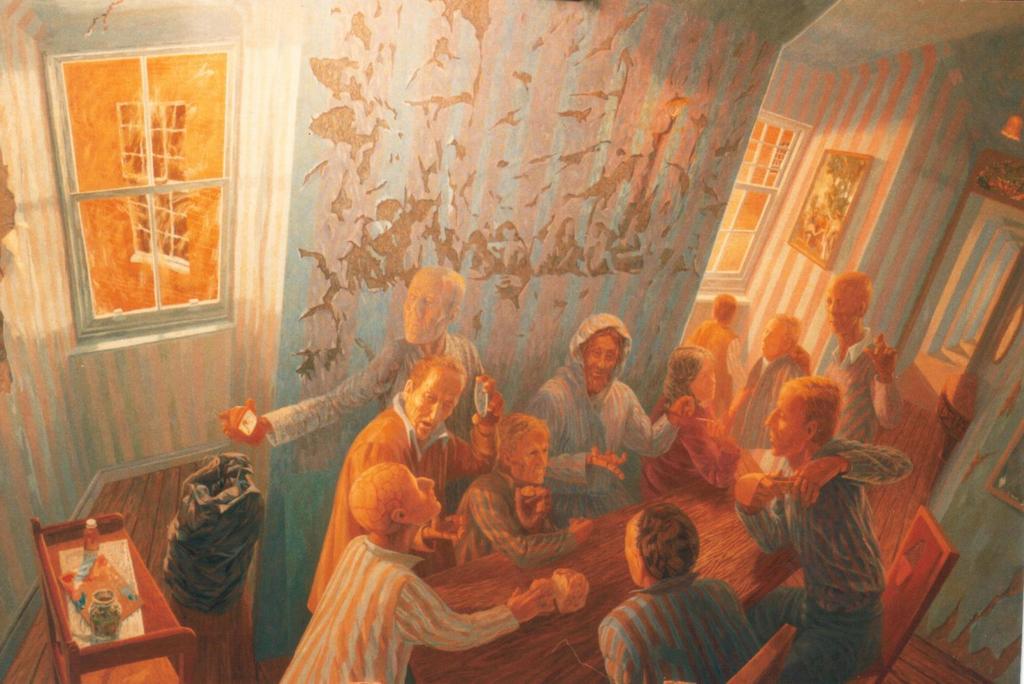
Peter Warden, Pentecost (1985)


Paul’s stirring words to the Ephesians assert an abiding truth: “There is one Body and one Spirit; there is one hope in God’s call to us; One Lord, One Faith, One Baptism, One God and Father of all.” Paul was focused on the God-given and true things that unite us, that hold us together, and which give us life. Yet, in contemporary American culture, everything now seems to center on how we differ from one another. How might we hold both insights together?

Some years ago, I discovered Peter Warden’s wonderful contemporary painting about the post-Resurrection Pentecost event, which reflects the presence of such differences among us as people. Warden’s painting is based on the well-know story from Acts, chapter 2. The painter portrays the disciples together in their upper room retreat. But, in this case, the first Christian community is gathered in a 20th Century Scottish attic! The painting seems to capture the disciples just at the moment when the mighty Spirit-wind and tongues of fire appear. In other words, the disciples – as Warden depicts them – are not yet bound together, and not yet ready for mission.

Though they are in the same room, these disciples show few signs of unity. They react against one another, as much as they may talk together. Notice how this is suggested by the alternating warm/cool color palette that Warden has used. We also want to notice the suggestively peeling wallpaper behind the group. Can you see the pattern that the artist has created with the lower part of the rendering of the wallpaper?

If you look closely, you can see how Warden has used his depiction of that scrappy wallpaper to suggest Leonardo Da Vinci’s famous painting of the last supper. Da Vinci’s painting has also suffered the fate of being on a peeling wall. Peter Warden portrays a group of people with a shared history, who were brought together by Jesus at their earlier supper with him. But now, after his death, they find themselves regressing, regressing to their before-knowing-Jesus identities, and falling back upon their differences from one another.

Yet, as the painting’s title suggests, in just this moment God’s Holy Spirit finds them. Just as, through the Church, God’s Spirit finds us. When God’s Spirit finds us, we are grafted into the Body of Christ. In the process, we come to perceive who we really are. For we receive a new baptismal identity in Christ.

Our new identity builds upon and transforms the uniqueness of our natural, biological-identity. Our baptismal-identity emphasizes a new way of seeing ourselves in relation to others. Now, we also celebrate what we share and have in common, rather than simply emphasize our practical awareness regarding how we are unique and different from others.

Through hearing and reading Scripture, and in our fellowship with others in Jesus’ beloved community, we learn something very important. It has to do with this matter of our identity. We learn that the “Who am I?” question cannot rightly be answered apart from the “Who are we?” question. And, in turn, the “Who are we?” question cannot rightly be answered apart from another question: “Who are we made to be?” Once we ask, “Who are we made to be?”, we are on the threshold of discovering, perhaps for the first time in our lives, who we are meant to be and become, both as individuals, and in community.

Here is the truth of the great feast of Pentecost: God’s Spirit has come down! God’s Spirit has come down upon, and within, people who are sometimes alienated, and who often fall short of God’s mission. Preoccupied with ourselves and our own pursuits, we are gifted with the experience of transformation. We are drawn into relationship. As we are, we find meaning and we find purpose. We discover who we are, as we discern what we are called to be and do together. The mission of God brings both mercy and meaning. In it, we discover a shared life in God’s Spirit-shaped Kingdom.

John Nava, Pentecost, 2012


The quote from Ephesians is from the Book of Common Prayer Baptismal Rite adaptation of Ephesians 4:4-6. I have featured Peter Warden’s Pentecost painting once before, though without reflective comment, in a post offering Family Devotions during Covid, on May 30, 2020.

Further note: last week I was fortunate to walk down the same central street in ancient Ephesus upon which Paul surely often walked, while – according to Acts – he was there for two years. In writing the words quoted above, Paul was likely responding to the Ephesians’ devotion to the fertility mother goddess, Artemis, and the great temple they had built in dedication to her.

The Mystic Rumi’s Burial Place

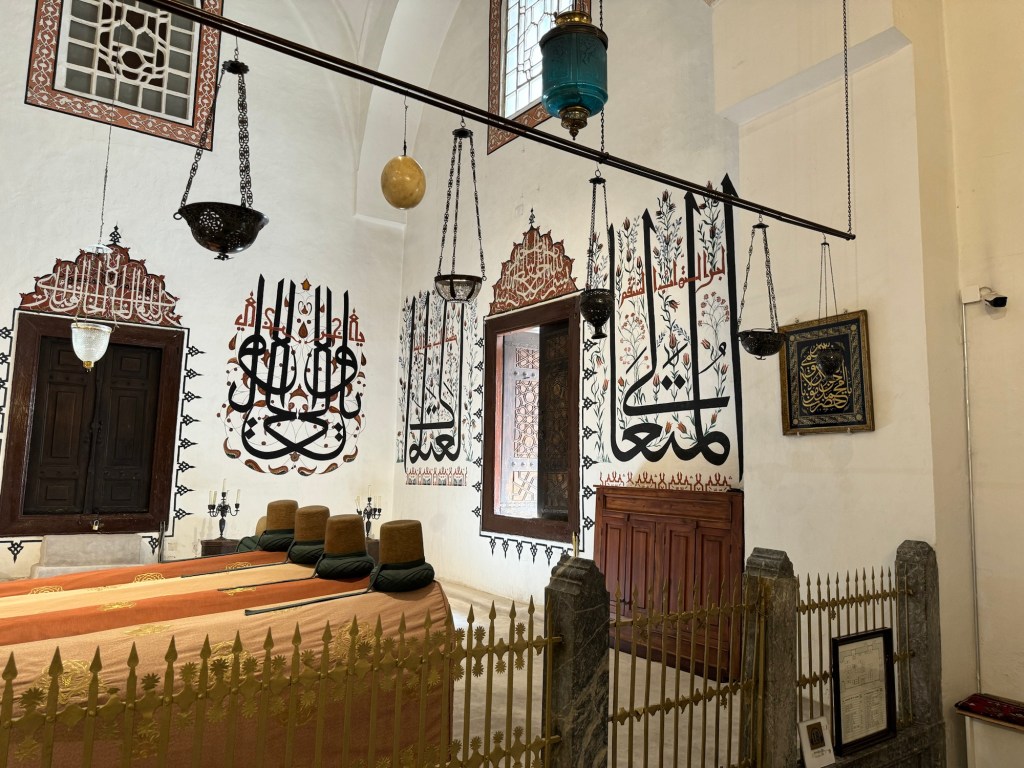
The burial place of the mystical Sufi poet, Rumi, in Konya, Turkey

Here are some photos from a recent visit to the mausoleum of the mystic Sufi poet, known in the West as Rumi. It is a very holy place for many who visit there.

The honorary coffin cover, sitting far above the entombed remains of the mystic Rumi
A Persian style multi-faceted dome in the same building
An interior view showing some of the remarkable calligraphy on the wall surfaces
A broader interior view
An original 13th century silver door
A replica small space in the courtyard adjacent to the mausoleum

Justice Embodies Beauty

If reading this by email, please tap the title at the top to open your browser for the best experience. Then, clicking individual pictures will reveal higher resolution images.


Among the over-used and under-defined words prevalent in everyday conversation is that of ‘justice.’

There are at least three facets of justice long recognized in the western ethical tradition. The formal names for them are distributive, commutative, and social justice. It is important to distinguish them because the word justice is often used as if its meaning is confined to merely one or another of what are at least three of its facets.

Distributive justice can be simply defined as fairness in terms of results or outcomes. In a game of Monopoly, but also in processes or in policies of a more serious kind, the winner is generally determined by who has the most at the end of play. In current conversations where the concept of “equity” is invoked, distributive justice is often the reference point for evaluations of fairness as to social outcomes.

A second aspect of a Monopoly game then comes into consideration. In the way the game was played, did all players follow the same rules, especially in achieving the results they attained? This is what is meant by commutative justice.

The third commonly recognized facet of justice is social justice. With a game of Monopoly, the concept can be expressed in the form of a further question. Were all those who wanted to play the game provided a fair opportunity to participate?

As may be apparent here, these three facets of justice can be, and often are, interrelated. Indeed, the beauty that can be found in the idea of justice often appears when these several facets, among possible others, receive appropriate attention.

Clearly, beauty is never a merely visual phenomenon, recognizing that we find it in ideas expressed in poems, and in observations made by philosophers. The beauty I find in the concept of justice lies in the multifaceted nature of the idea, and in how it can bring enrichment to human relationships and communities.

One example can help make the point. In terms of the relationship between communities and individuals, justice is often expressed in terms of what communities owe to individuals, especially so that the needs of the latter are not overlooked or denied by the former. Yet defined merely in this mono-directional way diminishes the concept of justice when what individuals may owe to communities does not receive comparable consideration. There is beauty to be found in a two-way symmetry of respect and positive regard between individuals and their communities.

Justice along with beauty are significant aspects of human flourishing, given how both contribute to our wellbeing as people made in the image and likeness of God. We find beauty when we discern what appears to be a ‘right relation’ between or among parts or aspects of a work of art or architecture, as well as among members of a community. Thinking carefully about such perceptions of right relation can enhance our comprehension of beauty in daily life and work, and our practice of the virtue of justice in our social affiliations.

The Eastertide “vine and the branches” Gospel reading can deepen our appreciation for this fundamental dimension of justice conceived of as right relation. The ‘right relation’ of the branches to the vine is predicated on the revealed, and literally embodied, right relation between the True Vine and its branches, and their living connection in him.

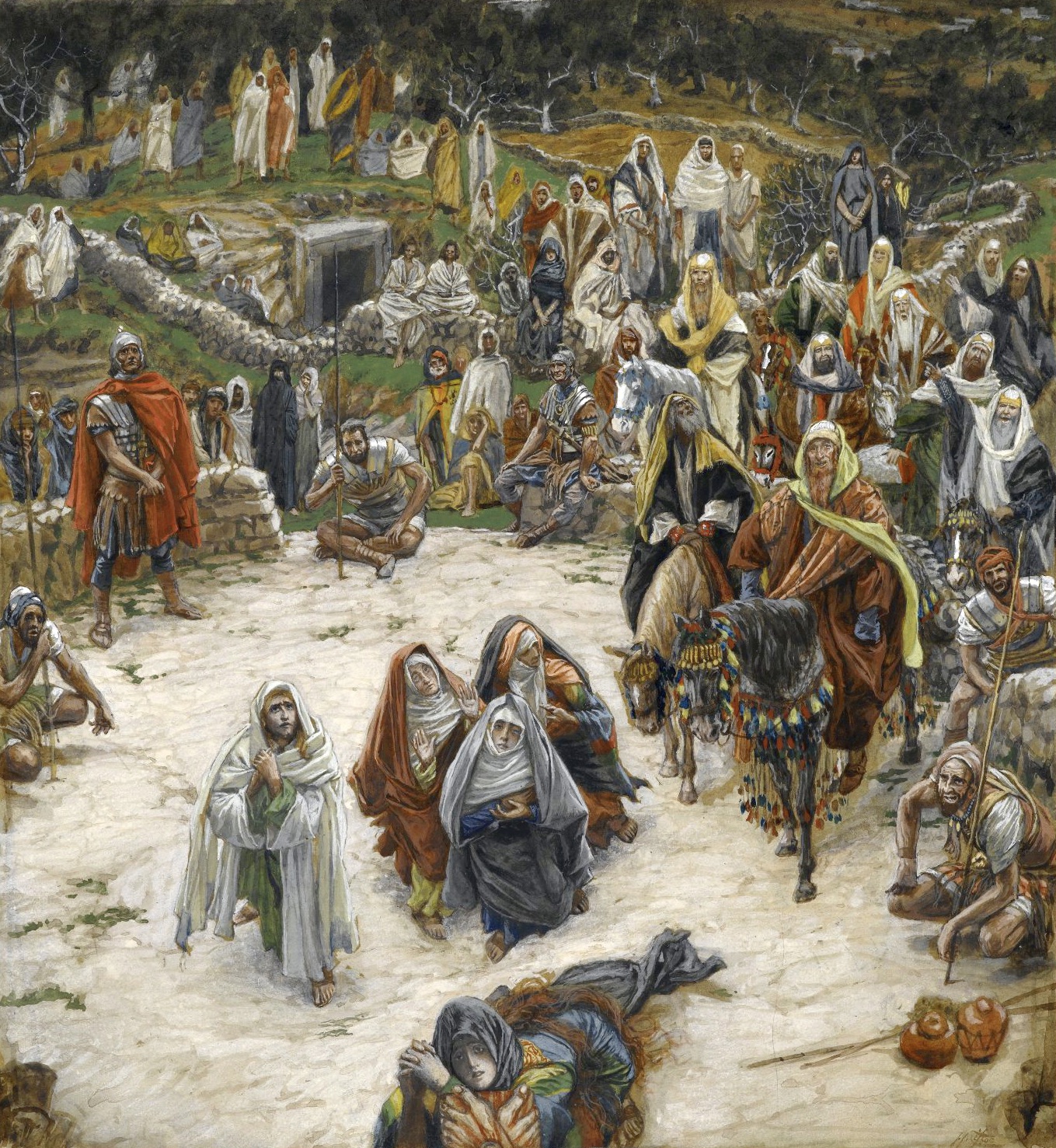
James Tissot, What Our Lord Saw from the Cross

We should not overlook how metaphors based on justice play a significant role in the Bible, especially in the New Testament, regarding our relationship with God. Self-justification often forms an unattractive feature of our relationship with others. Yet, it has no appropriate role in our relationship with God. We may try to secure right relation with others through self-justification, but only God makes us right with God. Since our practice of the virtue of justice has no role in securing our standing before God, we can only seek in humility to reflect our gratitude for God’s generous and unmerited favor.

Paraphrasing Paul, we have been made ambassadors of the one who embodied the beauty of reconciliation, or of graced right relation.

Contradiction, and the Beauty of Paradox and Metaphor

If reading this by email, please tap the title at the top to open your browser for the best experience. Then, clicking individual pictures will reveal higher resolution images.


An observation, a statement, or even a casual comment, may strike us as involving what we call a contradiction. A contradiction involves at least two mutually exclusive claims. Something cannot be both true and false, we like to think.

Yet, with things like photos, we can observe that they may be both light and dark, or both clear and fuzzy looking. Or regarding a poem, we might say it is both meaningful as well as obscure in its meaning. Claims regarding contradiction therefore call for precision, and awareness of context.

One way of viewing objects of attention, and the appearance of contradiction, is to say these things involve paradox. A picture or a description of it , or a picture’s characterization, may also be termed as paradoxical.

Then there are metaphors, which can be beautiful. Especially when – with unanticipated insight – they juxtapose ideas that otherwise would seem to form unlikely pairings. Such metaphors can help us to perceive how apparently contradictory statements, observations, or claims, can each be true.

Not all metaphors do this. But metaphors help our perception and understanding. For this reason, metaphors play a significant role in the Bible, and not in just in the scriptures holy to the Judeo-Christian tradition.

From pastoral experience, I know that various selections from the Bible can strike readers and hearers as involving contradiction. Moving beyond a simple conclusion – that what has been read or heard is contradictory – can be a challenge, and this calls for intentionality. For beauty is not always immediately discerned. The challenge lies in learning to perceive how the same reading may involve paradox as well as metaphor, and that these aspects of the text are intended to be illuminative.

One of the divinely intended purposes of the Bible is to help us perceive, to perceive more than we do now, and therefore to perceive more wholly. The primary purpose of the Bible – and of, we may charitably assume, the sacred scriptures of any religious tradition – is to help us perceive what is holy.

Robert Lentz, The Holy Trinity (featuring Creation, and astronomical images)

These insights may therefore be just as important for Christians as they read the scriptures of other peoples, as they are for when we read the Bible.

For there is one God, who in love shares self and wisdom with the whole cosmos.

Here is a relevant paradox. God may in love share self and wisdom with all the peoples of the world. Yet, it may be that God does not share self in the same way with all people, nor the same wisdom. If this is so, then the reason why ultimately lies in the inscrutable wisdom of God. Yet, possible reasons for why God does or does not share self and wisdom in the same way with different people are suggested in our own scriptures.

Perceiving this, we are moved to listen and read the Bible, and especially our lectionary readings from it, attentively and with a well-founded expectation of spiritual fulfillment.


The Beauty of Faithful and Determined Courage

If reading this by email, please tap the title at the top to open your browser for the best experience. Then, clicking individual pictures will reveal higher resolution images.


Remarkably, Violet Jessop survived life-threatening illnesses during her childhood, having contracted both typhoid and tuberculosis. This was in a time of pre-modern medicine, when – in her weakened condition – both diseases (and others) could easily have taken her life. Then, as a young woman, she lost her mother to illness. Becoming her family’s primary income earner, she followed in her mother’s steps by serving as what was then called a stewardess on ocean liners. This position combined the roles of nurse and personal attendant, most likely assisting with the health and other needs of passengers traveling in First Class.

This choice of employment in a relatively modest role led to her unexpectedly remembered place in history. She survived not only the sinking of the fated Titanic (1912), but also the demise of the Titanic’s sister ship, the Britannic, in 1916. The Britannic was serving as a hospital ship when it struck a mine in the Aegean Sea. Before the sinking of those two ships, she had earlier survived the feared near-sinking of the eldest nautical sibling of the Titanic, the Olympic. In 1911, the Olympic accidentally struck the British warship, HMS Hawke, and was significantly damaged.

Many of us, if we had faced her circumstances following her rescue from the Olympic, might have reevaluated our occupational choices and instead sought a similar role to her ship-borne duties but one safely on land. Jessop, as we learn, chose otherwise. Upon the completion of repairs to the Olympic, she returned to her role on that ship, where she served until she was transferred to the Titanic the following year.

The Olympic (left) and the Titanic in Belfast on March 2, 1912

Courage, self-possession, duty to her family’s needs, and a continued desire to serve others, clearly numbered among Violet Jessop’s attributes. Perhaps easy to overlook, in this time of our social history, is another feature of Jessop’s character, her abiding religious faith and practice. Courage (or Fortitude), and Faith, are two of the virtues commended in the Christian tradition, and both were a practiced part of Violet Jessop’s spiritual life. Earlier on the morning of the Britannic’s sinking, while following her regular pattern, Jessop had attended mass on the ship in the company of medical staff and other caregivers.

The Britannic seen while serving as a hospital ship during World War I

Upon the Britannic’s encounter with a German mine, causing it to sink in less than an hour, Jessop’s lifeboat was pulled toward the still-turning propellers and into their direct path, crushing the boat and killing some of its occupants. She suffered a skull fracture, and was cared for by doctors with whom she had earlier been present at morning worship.

The size and kind of propellers that nearly took Jessop’s life

In spite of all this – including surviving three disasters at sea – Violet Jessop continued to work on ships for the rest of her career, and died in England at the age of 83.

In the life and experiences of Violet Jessop, we find a beautiful example of a congruence between her Baptismal vocation – one shared by all who have found new life through the font – and her chosen occupation in its serial settings upon the waves. In her later years, Jessop told a friend what had helped her survive and get beyond the multiple challenges she had faced. She summed it up by saying, “[It was] just the will to live. And a huge chunk of faith in divine intervention.”