Books

Reflections Inspired by Tiny Houses

A 14′ Tiny House inspired by Japanese Aesthetics (from the Baluchan website)

As earlier posts of mine attest, I have been interested for some time in the Tiny House movement, which has now become a widespread phenomenon. Whole Tiny House communities are being developed, and Tiny House construction designs have been proposed as an alternative approach to addressing homelessness. Reflecting on this movement, and the broad appeal examples of Tiny Houses seem to have, I have given some thought to what this development in small scale architecture may represent, and to what it may tell us about how we want to live.

I can see an impulse similar to the pursuit and enjoyment of living in a Tiny House in some attractive parallels, which also represent a quest for discerning a simpler way to live. Quite aside from a specific focus on contemporary examples of Tiny Houses, many people appear to have an interest in reading books like Thoreau’s Walden, or those by John Muir. I continue to meet folks who like the idea of having a small boat in which one can actually ’cruise,’ even on local lakes. And still others seem to share my fascination with living environments inspired by Japanese aesthetics.

An interior shot of the Baluchan Bonzai 14′ Tiny House

If these musings seem familiar, learning more about the Tiny House movement is worth pursuing. Here are some observations I have made in the course of my own reflections on the current popularity of this movement: 

First, the appeal of Tiny Houses has much to do with the process of rediscovering, and learning more about the beauty of living simply. And therefore, about more than managing to accept being without some things, but actually doing well with less. Marie Kondo’s videos and published writing have attracted a good deal of attention regarding the desirability of organizing our household belongings, and paring down what we have toward living with what we truly love.

Viewing and reflecting on examples of Tiny Houses can aid one’s discernment regarding needs vs wants. Most of us have probably considered this distinction from time to time, and have likely also experienced some frustration with our halting efforts to enact our reflection upon it. We know we have wants, which often masquerade as needs, while we may not sufficiently consider the potential value to us of having wants that are correlated with our needs. After all, a premise of this post rests on a paradox: the assumption that I not only want to live more simply, but that I may also need to!

The kitchen space between the bathroom and the small main living area

Here, briefly noted, are some potential benefits that may come from spending time in a Tiny House:

  • Living off the grid becomes a much more realistic goal when choosing to live in a Tiny House. Tiny Houses also allow for mobility in relation to one’s surroundings, even if it is not a frequently exercised opportunity. Changes in one’s locale can lead to learning opportunities.
  • Those who build their own or who choose to do maintenance work on a Tiny House are more likely to learn how to use, and use more ably, simple and hand-powered tools.
  • Tiny Houses are well suited as places in which we can experience solitude as a positive aspect of our lives, while also providing an excellent context for significant times spent with others. 
  • Living or spending time in a Tiny House may allow us to have increased time for personal reflection, and an opportunity further to discern our vocation, in addition to our more usual absorption with occupational concerns.
  • Tiny Houses therefore have the potential to be places in which we read more, and spend less time consuming social media or watching videos. While every living place for which we have some care requires time and attention, the theory behind choosing a Tiny House as a place to live assumes that we can devote more time to actually living, rather than preparing to live. Reading makes the world bigger and our lives richer.

For much of the above, and as a bothand rather than an either/or starting point, I commend considering adding a form of a ‘Tiny House’ to your present circumstances rather than making a radical change from them. Experimenting with what can be done with less, while also still retaining one’s present home, can be instructive. This can be accomplished by, for example, purchasing a used but well-equipped small RV. We have recently seen some interesting examples on the road, and ones that could fit in a standard home garage.

For us, it has been our 1988 24 ft trailerable sailboat that has provided this kind of learning opportunity. With its relatively small cabin (about half the length of the boat), comfortable berths (or bunks), a camping stove, cooler, portable toilet, and cockpit which serves as a small ‘back porch,’ we can meet most of our daily needs for a week or more at a time. The slip for our boat is under $200/ month, including electricity and water connections, if needed (ie, if the boat is not yet off-the-grid-ready, though our boat is now thus equipped). DAYSTAR has become our floating ‘tiny house’ or ‘cottage.’

Ably and effectively inhabiting this principle of beautiful simplicity is turning out to be a lifelong project for me, and I believe this is also true for others. I am a neophyte in the process. Perhaps my readers have some similar experience with this ongoing process!

The Elusive Biblical Idea of Ransom

If reading this by email, please tap the title at the top to open your browser for the best experience. Then, clicking individual pictures will reveal higher resolution images.


In late 1987, two American college students were exploring the jungles of Columbia. After obtaining a canoe, they embarked upon the Putumayo River and strayed into territory held by a Marxist rebel army. Formally known as FARC, these guerrilla soldiers abducted the students and held them captive for ten months in various jungle camps.

At first, the FARC guerrillas thought the two men were CIA agents, though the students corrected this. But then their captors came to see them as hostages having economic value. Soon, their parents hired an American explorer, who found the hostages and their captors. After four months of negotiations, conducted by a Roman Catholic Bishop, the students were released and taken to the American Embassy in Bogata.

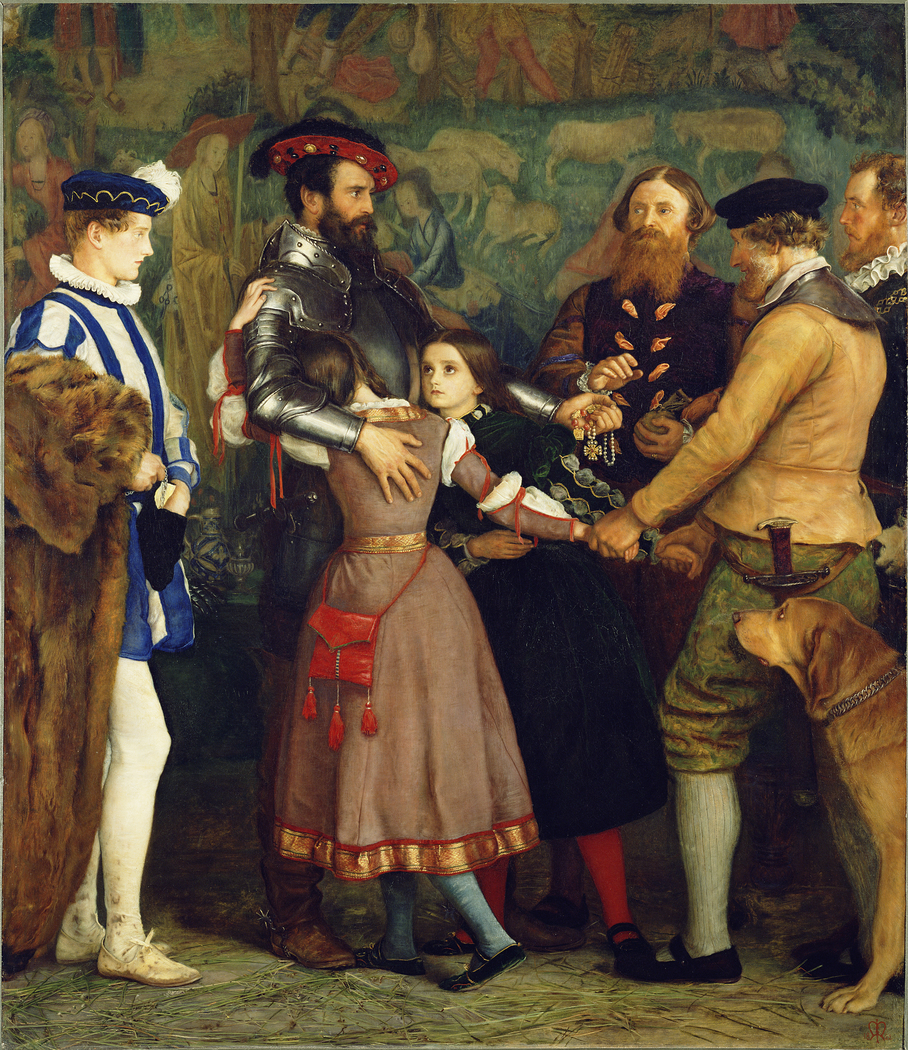
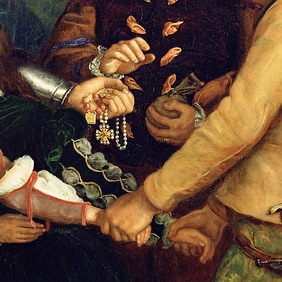
Release for the young explorers surely came about through the payment of money, probably a lot of it. Ransom is a way to describe this kind of payment, where something valuable is exchanged for the freedom of captives. John Everett Millais’ painting (above), The Ransom, depicts a father handing over of fistful of jewelry and a bag of coins to some men who have taken his daughters hostage. Revolutionaries, terrorists, and criminals have long used ransom as an efficient means of fund-raising, especially when their captives come from wealthy families or are politically well-connected.

Clearly, when payments are made to captors, the purpose is not to honor or reward the hostage-takers. Instead, these payments reflect an abiding concern for those who are held-captive, awaiting redemption.

This concept of ransom is deeply rooted in our Judeo-Christian tradition, and it shapes how we understand redemption. Think of the beloved Advent hymn, which begins this way: “O come, O come, Emmanuel, and ransom captive Israel…” In the Old Testament, in many passages like Psalm 49; Isaiah 35, 43, and 51; Jeremiah 31; and Hosea 13, we hear about how God’s promises inspire hope for the possibility of ransom from the power of death.

These insights help us understand Jesus’ words about ransom in Mark’s Gospel (in 10:45; parallel in Mt. 20:28). After predicting his suffering and death three times, Jesus tells the oblivious disciples that “the Son of Man came not to be served but to serve, and to give his life as a ransom for many.”

Yet, instead of a ransom-based understanding of Jesus’ sacrifice and death, many Christians think of Jesus’ saving work in a largely legal or juridical way. In this view, our sin involves a degree of corruption and guilt so bad that it’s beyond what we can make right. And so, human captivity to sin means that ‘a penalty must be paid, and punishment meted out.’ By this reckoning, only a ‘sinless one’ could pay the uncountable price, and bear the penalty for all. Therefore, Christ as a substitute for us, paid the price and endured the punishment so that we, ourselves, don’t have to, even though we are the ones who deserve it. Yet, according to this very common theory, the ‘price’ was paid to God, to satisfy God’s justice!

This legal or ‘punishment-substitution’ understanding of Jesus’ death did not become widespread for at least a thousand years after his crucifixion. Instead, during the first millennium, a different concept of Jesus’ mission was preeminent. It springs from the ransom words in Mark, as well as from 1st Timothy 2:5, where Paul writes, “…there is … one mediator between God and human kind, Christ Jesus… who gave himself [as] a ransom for all.”

According to this ransom view, ever since Creation, we have placed ourselves in the hands of Satan, by refusing to ‘delight in God’s will or walk in God’s ways.’ In effect, we have strayed into ‘the jungles of sin,’ and have allowed ourselves to be taken hostage by the Devil. We are held captive by our sin, and by our inclination to follow our own will. Like the two student hostages, we might have ‘paid’ our way to freedom ~ if we and they had had the means to do so. But we did not.

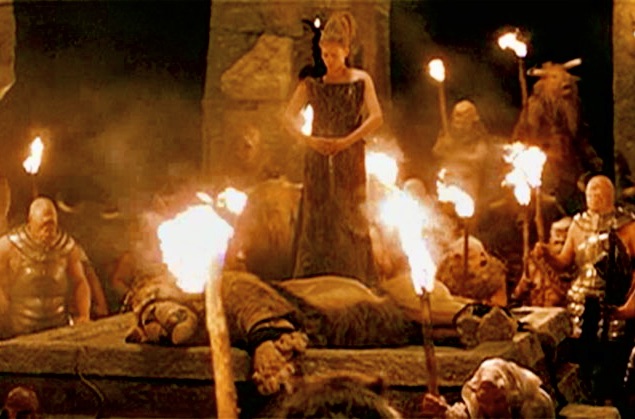
And so, showing his great love for us, Jesus offered himself to the Devil, as a ransom for our freedom. Jesus allowed the Devil to take him, as someone of even greater value than all of us. For Satan received as a ransom the sinless One, God’s own son. C.S. Lewis employs a similar ransom metaphor in The Lion, the Witch, and the Wardrobe. In this biblically-derived approach, the ‘price to be paid’ was a concession to the power of an enemy, and compensation for a loss, rather than (as in the later and more prevalent legal view) a payment to satisfy God’s sense of justice.

An image of Aslan’s self-sacrifice, from a film version of The Lion, the Witch, and the Wardrobe


This post is adapted from some material previously published in this space, with some additional imagery. It is based on my homily for Sunday, Oct. 20, 2024, which may be accessed by clicking here.

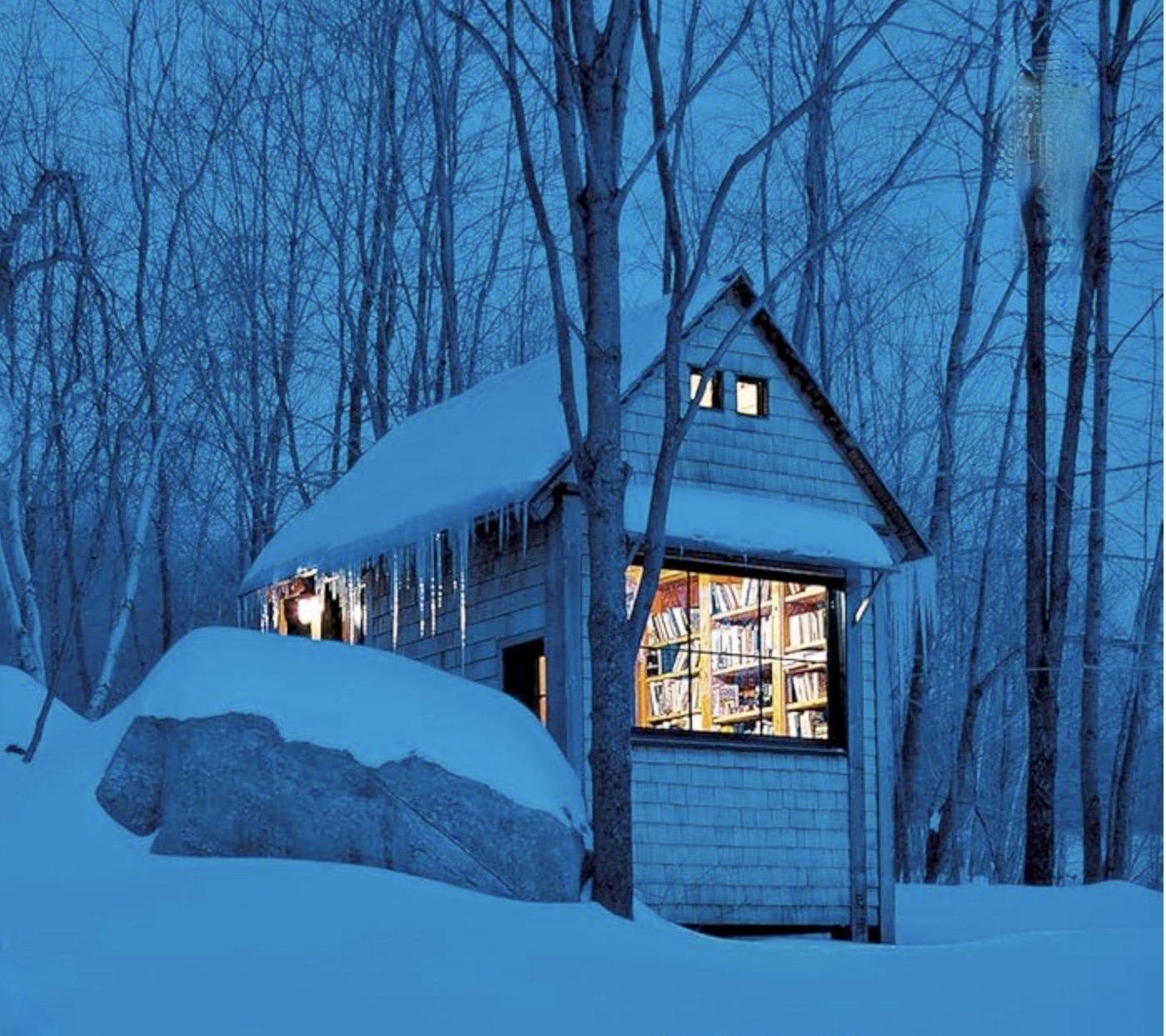
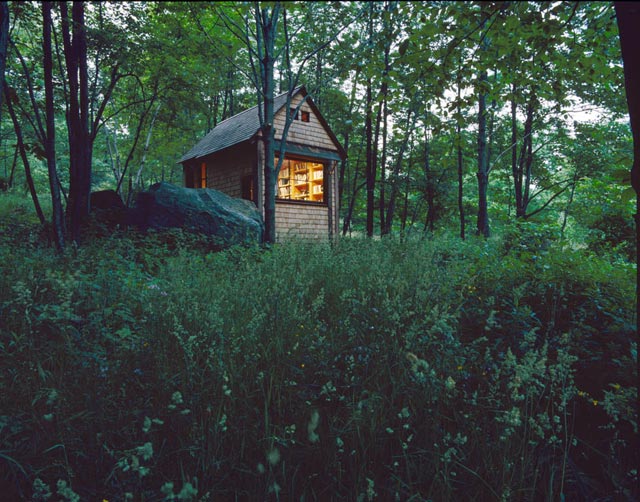
From Dream to Reality: Michael Pollan and His Writing House

If reading this by email, please tap the title at the top to open your browser for the best experience. Then, clicking individual pictures will reveal higher resolution images.


In an updated preface to his book, A Place of My Own: the Architecture of Daydreams, Michael Pollan laments how some readers approach his book expecting something like a “how to” guide to building their own writer’s hut or shack. Though he does provide a wealth of detail concerning the construction methods he used, the book’s richness lies in its thoughtful engagement with the idea of human shelter and its function in architecture. Of particular note is the attention he gives to the French writer, Gaston Bachelard, whose book, The Poetics of Space, prompts a good deal of reflection by Pollan. The author quotes Bachelard with words that obviously inspired the subtitle of A Place of My Own: “I should say: the house shelters daydreaming, the house protects the dreamer, the house allows one to dream in peace.”

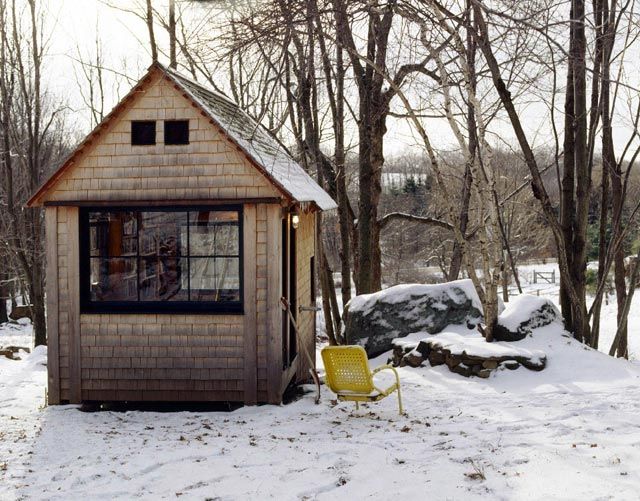
Michael Pollan dreams of building and inhabiting what we might call his own writer’s studio in the woods behind his Connecticut home. As he muses about its possibilities, he considers potential designs in dialogue with his chosen site for the small building. From a book by the English geographer, Jay Appleton, he gleans the insight that ideal human shelters provide two dialectically interconnected values, ‘prospect’ and ‘refuge.’ A shelter conducive for human flourishing provides both the opportunity to view and appreciate one’s surroundings while at the same time providing a secure resting place. Achieving these twin goals becomes one of Pollan’s priorities for his little writing hut.

At the same time, while embarking upon this project to build his place for writing, he acknowledges that the endeavor also provides the occasion for him to examine the idea of architecture, and its contemporary role in Western society. He discovers – through a gift subscription to Progressive Architecture magazine – that the field has increasingly become focused on the exploration and expression of ideas, leaving behind a principal focus upon providing beautiful yet practically useful spaces and structures for human habitation and work.

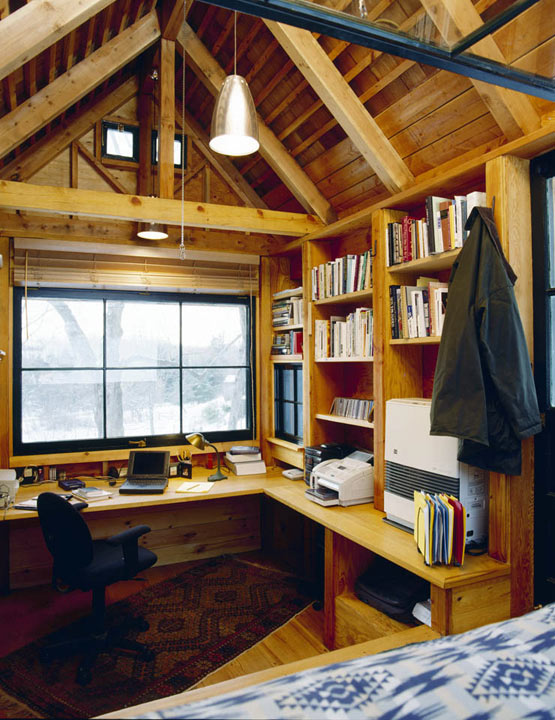
The interior of Michael Pollan’s writing house (note the daybed in the foreground)

Pollan realizes that what he wants to build is not something that points to something else, or to a set of ideas and concepts (as is the case with some contemporary practitioners in the field of design). Instead, he wants a structure that he can use for everyday work, for reading, and as a place where occasionally he can have a nap. With his aversion to the little building becoming an artistic statement rather than something truly useful, Pollan’s book reminds me of a principal theme in Tom Wolfe’s splendid little book, From Bauhaus to Our House.

Especially in the first two chapters, Michael Pollan offers a set of thought provoking and historically informed reflections on the nature and purpose of architecture, which are shaped in a writerly way. As much as I was drawn to the concrete aspects of his project – as in his account of his search for the ideal design of the window through which he would look while writing – I found his engagement with the theoretical aspects of the project to be very compelling. A good example of the latter is his reflection on our conscious experience of form and pattern in buildings, and our unconscious experience of the spaces we encounter and through which we move. Other examples include the role of feng shui in his selection of a site for his project, as well his explanation of the function of the Golden Section (or Divine Proportion, 1/1.618) in deciding the parameters of the rectangle for his floor plan.

Most of all, I appreciate Pollan’s delineation of the difference between the 20th century modernist or International Style approach to architecture, which abstractly stressed universality of form and consistent design elements regardless of a building’s context, with the architecture of someone like Frank Lloyd Wright, who focused on the connection between his buildings and their location within their chosen sites and his intentional employment of local materials. Pollan offers an insightful two-columned table to illustrate the difference between the two, with the first (stressing universality) labeled, “There,” and the second (stressing locality) labeled, “Here.”

All in all, he has given us a finely written book.


The Beauty of Asking “Why?”

If reading this by email, please tap the title at the top to open your browser for the best experience. Then, clicking individual pictures will reveal higher resolution images.

Back cover photo from Natural Sustenance: Selected Poems, by Nick Fleck


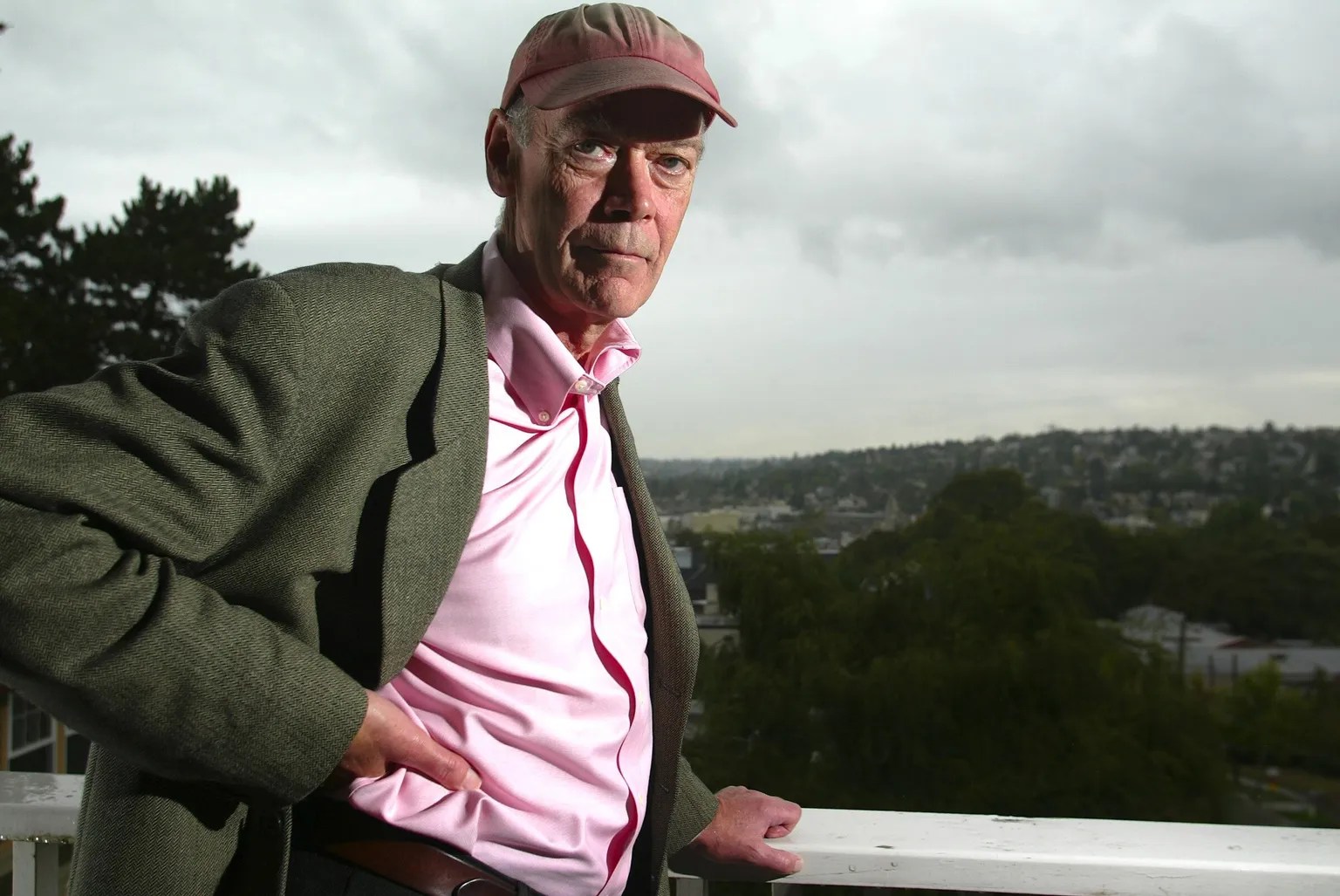
“Why?” It all started in a seemingly innocuous way. “What do you want from this course,” he asked. A brave one among us ventured the answer that some of us were thinking, but were not honest enough to say: “an ‘A’.” Our English teacher, Nick Fleck, responded to my classmate in a neutral way, with a further question, “Why?” Our fellow aspirant to higher grades began to offer pretty typical answers, unoriginal and unsurprising. “I want a high GPA. (Why?)… I want to get into a good college. (Why?)… I want to get into a ranked law school. (Why?)… I want a good job at a high powered law firm. (Why?)…”

Gradually the pauses before our classmate’s answers became longer. And while his responses still sounded plausible, they seemed less and less assured. That first class session set the tone for the rest of term, as over time Nick prodded all of us to articulate answers to questions like these. And nudged us toward answers that were more and more our own, and less dependent on our peers, our parents’ expectations, and our perceptions of the uncertain world outside our rural New England prep school.

Why? The question at first provides an invitation to share acquired knowledge, display settled opinions, and voice aspirations. But the question can also be unsettling, especially when we begin to run out of platitudes and ‘safe’ answers that don’t require self examination or being open to adopt a different perspective.

I can’t fully explain why, out of a class of some 350 or so fellow graduates, I was one of only 3 or 4 who did not go directly on to college. But Nick Fleck’s persistence in challenging us to think for ourselves played a big part in it. Temperamentally, I was and am a self-learner, which disposed me toward pursuing that risky path (“…in a blind career…,” as in a line from a poem Nick had us read). Naive self-confidence also bolstered my willingness to undertake a journey on what appeared to be a largely untested road. I wanted to be an architect and to make art, and those whom I most admired had embarked upon their careers in earlier times by this same route through apprenticeship and self-study.

Having been so consistently asked why, I made the question my own and began asking it in a self-referential way. Why did I want so strongly to embrace and try to create what was beautiful? Why was this important to me… and to others apparently walking the same path? Why was I then beginning to wonder whether this was good and, if so, to what end? And why then was I going on to ponder what was good for its own sake as compared to things of passing significance?

Within a year, after living in New York City seeking non-existent apprentice drafting positions during the ‘oil crisis,’ I returned hesitantly to formal schooling. My college art studies were interrupted by another sideline, driving a forklift in a warehouse freezer for six months as a Teamster. Then, surely to my parents’ relief, asking why led me on a more traditional path, from art history to classics and medieval studies, during which I experienced an unanticipated spiritual conversion. All the while I was living with the same question: why?

Nick Fleck was not a religious man in any sense that I could discern, though he was clearly attuned to the ethical principles exemplified in Thoreau’s writing, and latent in poems he would have us read. I think it greatly surprised him when, returning for our 25th reunion, I gave him credit for setting me on the path that led to my conversion, ordination, theological studies, seminary teaching, and parochial work – experiences not readily familiar to him. But he was the one who persistently asked why, and who invited us to own the question for ourselves.

This week I realize that Nick’s great question was at the heart of the Disciples’ questions when Jesus predicted his forthcoming suffering and death. Nick’s question is simple, and perfect for Lenten reflection.


I was happy to see an article in the Greenfield Recorder noting how Nick Fleck had founded the Northfield (Mass.) Bird Club and was still active in leading bird walks. I trust that he continues to write and share his poetry, and help open new worlds to young persons. He helped us to discover the power latent in the word, “why,” especially when posed as a question.

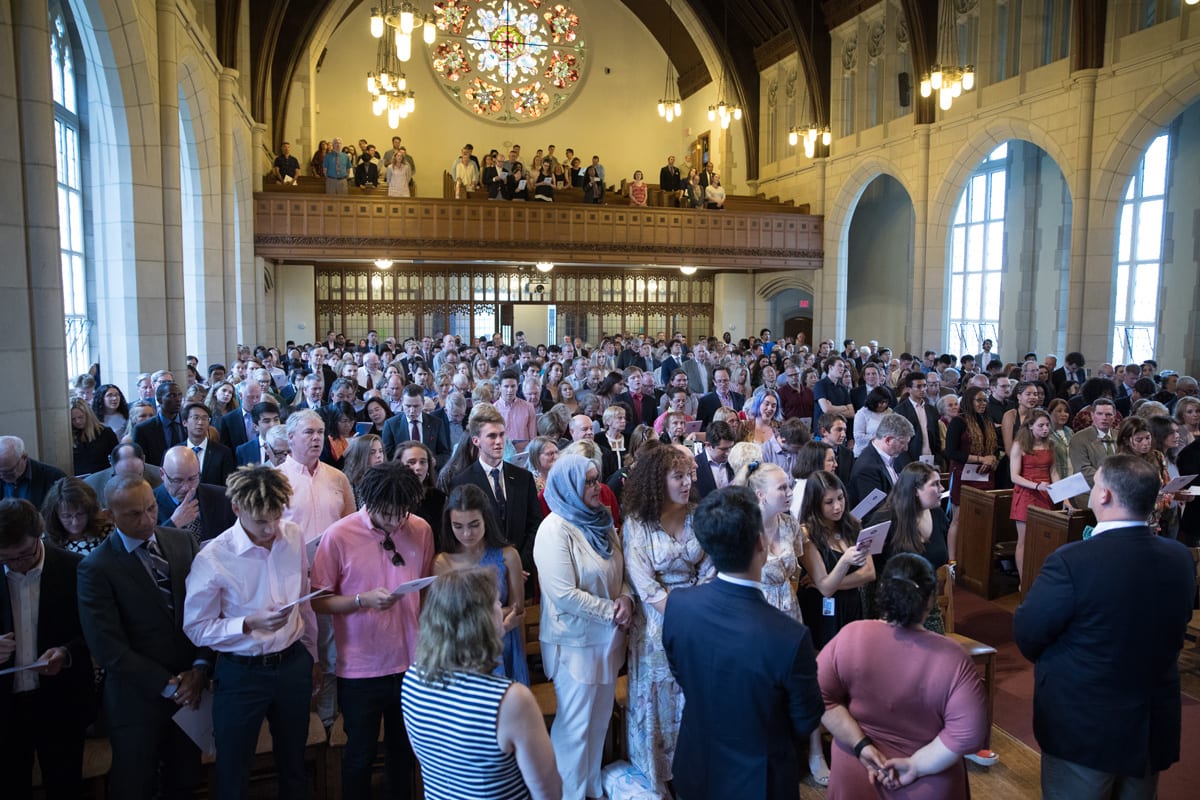
The recent movie, The Holdovers, was partly filmed at my school, Northfield Mt. Hermon, and is set in exactly the time period I was there. During those years, I was in the chapel depicted within the movie a couple of times each week for required assembly gatherings. Seeing my school again during my 50th graduation anniversary year has obviously brought back memories.

A recent gathering in Northfield Mt. Hermon’s Memorial Chapel.


Note: blog settings have been changed to provide more opportunity to offer comments, using the link below.

A Desecrated Beauty

[If reading this by email, please tap the title at the top to open your browser for the best experience. Then, clicking individual pictures will reveal higher resolution images.]

An encounter with beauty may provide a gateway to what is holy. For beauty often embodies and expresses something sacred. When this is so, a violation or desecration of beauty can strike us as having the character of evil.

When apparent destruction befell Notre Dame cathedral in Paris, or earlier upon the Golden Spruce tree in the Queen Charlotte Islands, British Columbia, people learning about these events were shocked and in mourning. In the case of Notre Dame, a devastating fire accidentally accompanied repair work on the building. But with the Golden Spruce, a  willful human act destroyed a spiritually significant tree.

The several hundred year old Golden Spruce became widely known based on news reports of its loss, and through a subsequent book by John Vaillant. An extremely rare genetic mutation occurred in one of a very large species of trees common to the Pacific Northwest, the Sitka spruce. Vaillant tells the story of this beautiful tree, which was known as Kiidk’yaas to the First Nation Haida people. The Golden Spruce was revered through a mythical spiritual story retold over countless generations in Haida oral tradition.

The author draws us in to the significance of this particular tree for the Haida and for many others, including the person who figures principally in his narrative, Grant Hadwin. He was a forester and logger who developed a reputation for having extraordinary skills as a woodsman who possessed seemingly superhuman physical strength and endurance. Paradoxically for someone whose livelihood depended upon employment by forest product companies, Hadwin over time developed an increasing antipathy toward the detrimental effects of commercial logging and the forest clear-cutting with which he and the industry were associated. Over time he became known as a radical environmental activist, whose views may have been inspired by some remarkable spiritual experiences.

Vaillant lays the groundwork for his story about the Golden Spruce by offering a compelling introduction to the ecosystem of the Pacific Northwest coast and its islands. The reader comes to appreciate the unique habitat within which early European explorers and traders found the huge trees of the old growth forests. These trees include Douglass Fir, Western Red Cedar, and the Sitka Spruce, which in diminishing numbers are still seen today. The reader also learns about the history and culture of the Haida, and the detrimental impact caused first by Sea Otter pelt traders, and then by foresters, upon what became British Columbia, its islands, lands and first peoples. Given this background, one might expect that Grant Hadwin would somehow be the hero of the story, given his abilities, integrity, and emerging commitments.

The central irony of the narrative centers on Hadwin’s concern about the rapacious devastation of the old growth forests by commercial interests and their professional employees, who generally approach the land’s natural endowments as resources to be exploited, quickly and extensively. Yet, Hadwin himself targeted the Golden Spruce, seeing it as a corporate ‘pet,’ falsely preserved by a company in a park-like artificial island of nature, surrounded by lands violated by those who had no care for them. In the process, Hadwin – through an apparent combination of correctable ignorance and oversight – seemed surprised and defensive when he learned about the Golden Spruce’s significance for the Haida, on whose lands it had long stood.

In this book, the author accomplishes several things that taken together may seem incongruous. We gain a regard for the immense scale of the old growth forests of the Pacific Northwest, the towering size of their tall trees, and the hundreds or even thousand years over which some of them have grown undisturbed. We become aware of the astonishing danger and rate of mortality associated with tree felling, while coming to admire something of loggers’ courage and tenacity. And our righteous anger is stirred by the corporate appropriation of natural resources for commercial benefit at the expense of the cultural and spiritual significance of forests. For forests number among special places that have long reminded people of our higher values, and are a context where we can rediscover deeper purpose and meaning for our lives.

Vaillant  leaves us with another unresolved sense of paradox. It is prompted by the knowledge we gain of how the Haida, long feared as brutal victimizers and enslavers of other First Nation peoples, themselves became victims of hostile social, economic and geographical forces. Against this backdrop, we learn how a well-liked man, who was regarded as having extraordinary skills and integrity, and who might once have been defended by the Haida, perpetrated a bewildering act of environmental desecration and came to be seen by them as an enemy of their spiritual history and culture.

Kiidk’yaas, the Golden Spruce may be gone. The transcending beauty it had, and which it still represents, will last.

A sapling from Kiidk’yaas

The Curve of Time: A Beautiful Book

[If reading this by email, please tap the title at the top to open your browser for the best experience. Then, clicking individual pictures will reveal higher resolution images.]


I discovered M. Wylie Blanchet’s cruising memoir, The Curve of Time, at Village Books in Fairhaven, Washington, not far from the Canadian border. Evidently considered a classic by readers in Canada, I had not known about her book despite having long been an active boater and avid reader about seafaring. With an evocative water color painting as a cover image, a forward by the Seattle-based writer Timothy Egan, and with the copy in my hand being the 50th Anniversary Edition in hard cover, I was intrigued and bought it.

As the dust jacket blurb indicates, Wylie Blanchet set off on numerous summer cruises with her five children on the same boat from which her husband had earlier been lost in 1926, and presumed to have drowned. 25 feet in length, 6.5 feet in width, and with a relatively small enclosed interior, Blanchet along with her children bravely explored the sometimes forbidding but always mysterious waters along the coast of British Columbia and its adjoining and deep inland sea.

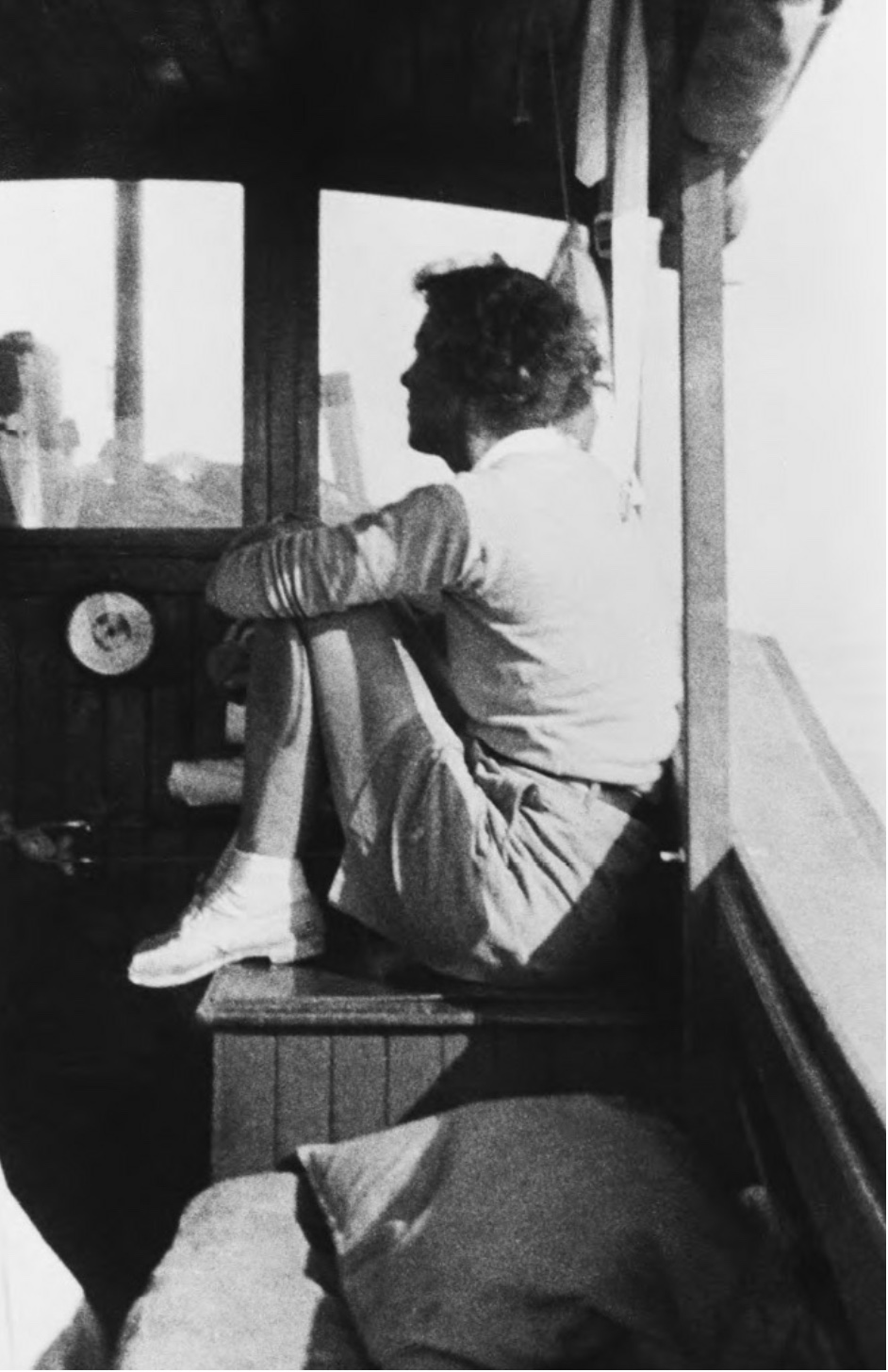
Wylie (a.k.a., Capi) in the wheelhouse of Caprice, and with her family one summer

Those British Columbia waters are famous for the very strong tides running in and out of narrow fiord-like inlets bordered by tall trees and sheer rocky walls that rise up several thousand feet. The walls above the water’s surface are generally paralleled far down below by their unseen foundations. ‘Capi’ Blanchet notes how often her marine charts indicated depths exceeding 100 fathoms in these waters  (600 feet), with the final distance downward marked as unknown. Among other challenges, such depths make anchoring nearly impossible except when a boat is secured to the shore.

Caprice, against a rocky shoreline

With one set of clothes per family member along with a bathing suit, spare but adequate cooking equipment and tableware, minimal sleeping accommodations both within and on deck, and the crew possessing a seemingly boundless sense of curiosity and desire to learn, the Blanchet’s explored hundreds of miles of what at the time were largely unpopulated and untamed seascapes and surrounding terrain. Capi Blanchet’s well-told stories about her family’s adventures during their summer cruises provide the material for her fetching book.

For those who have traveled to or lived in the Pacific Northwest, the author’s prose brings alive the look and feel, and even the smell of the moist coastal air found in that region. It may bring to mind books like I Heard the Owl Call My Name, and Snow Falling on Cedars, novels that also effectively describe aspects of that alluring part of the world. Yet, like those others, Blanchet’s book hardly prompts a romantic longing to explore waters and lands that, as she presents them, are full of potential danger because of their wildness (bears, a cougar) and unpredictable weather.

Readers interested in doing some ‘voyaging’ with Capi Blanchet through reading A Curve in Time will observe how she records experiences from the late 1920’s and 1930’s, and published her memories of them in 1961. She demonstrates sensitivity and concern about our encroachment upon the communities of people who originally inhabited the land, and upon areas of great natural beauty. Her perspective and writing may perhaps best be seen as helping – along with many others – to lay an early foundation for our contemporary approach to ‘the environment’ (a term whose present use would have been unfamiliar to her), and our raised sensitivity about the cultures of First Nations peoples.

Having read Blanchet’s compelling book, I am now curious to read Following the Curve of Time: The Legendary M. Wylie Blanchet, a biography by Cathy Converse. Though often demurring from drawing attention to herself in The Curve of Time, Blanchet clearly was a formidable woman possessed of great practical intelligence and a captivating sense of adventure. Retracing her voyaging would be challenging enough for many experienced boaters, but exploring those same waters in a boat the size of her’s, with its dependent large crew and minimal accoutrements, may suggest caution to other equally capable navigators.

M. Wylie (‘Capi’) Blanchet around the time of her marriage

For first time visitors to the Seattle area who are not embarking upon an Alaskan cruise, I heartily recommend even a short round trip on one of the Washington State Ferries. Having commuted daily to college for a year on the ferry between Vashon Island and Tacoma, and having regularly taken the ferry to Seattle on weekends, I remember how a 20-30 minute ‘voyage’ across parts of Puget Sound can help one experience in an economical and time-sensitive way a genuine bit of the maritime Pacific Northwest – the kind of waters that Capi Blanchet explored nearly 100 years ago.