If reading this by email, please tap the title at the top to open your browser for the best experience. Then, clicking individual pictures will reveal higher resolution images.
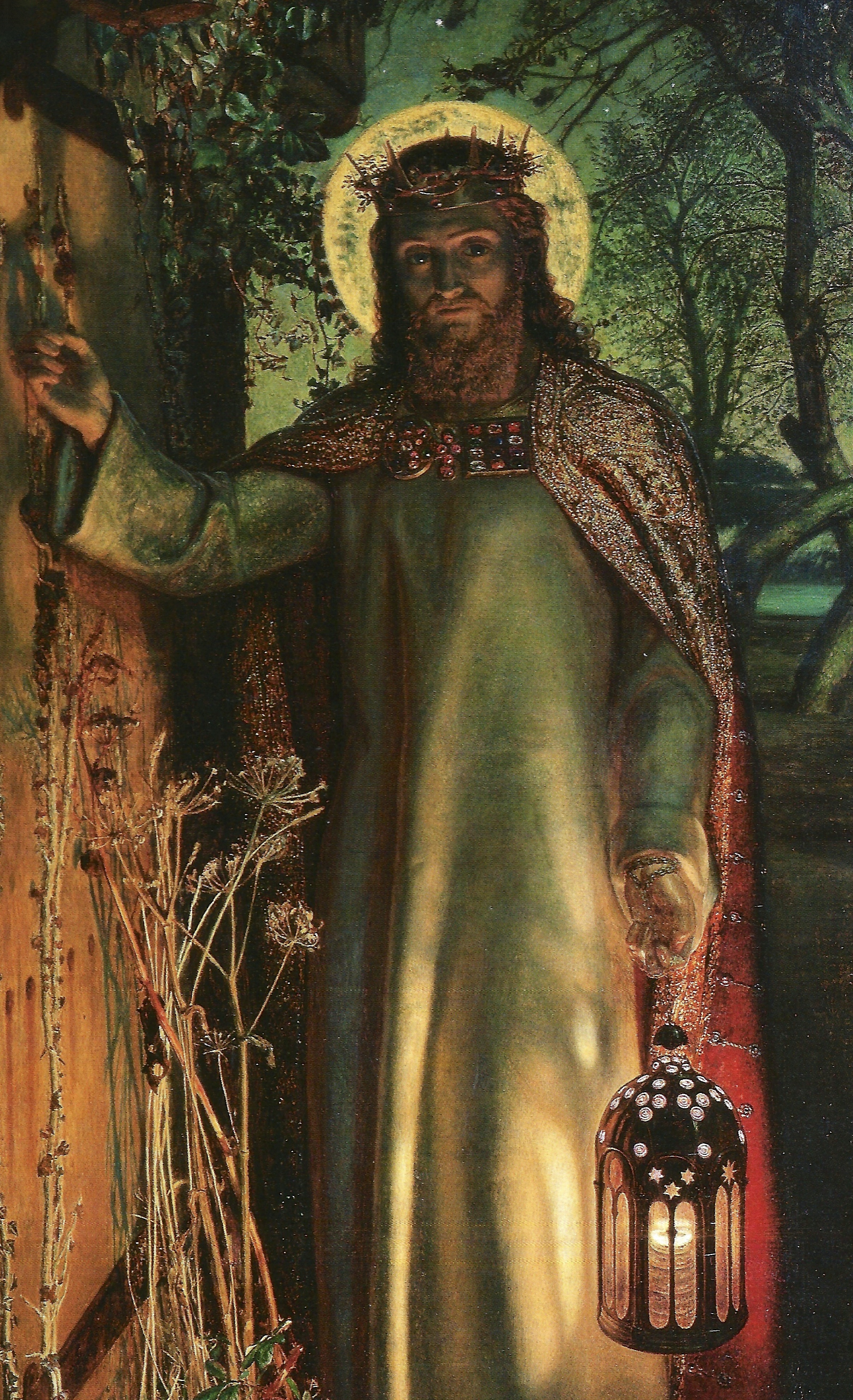
William Holman Hunt, The Light of the World (detail)
Since the earliest centuries of the Christian era, believers have found encouraging meaning in paintings of the imagined face of Jesus. Since no such images exist from his lifetime (as far as we know), but only written depictions of Jesus’ character as displayed in his words and actions, later artists have literally drawn upon acts of imagination in how best to present him. In so many of these paintings of Jesus, we find abiding images that convey an abiding love.

Salvator Mundi, attributed to Leonardo da Vinci
More than a few in our great Tradition have had an aversion to the making of these images, believing that such efforts to depict Jesus risk engaging in or promoting idolatry, a concern that is not difficult to appreciate. Yet painters, particularly in the Christian East, have believed that, in view of our Lord’s Incarnation, paintings of Jesus and of holy events in which he was involved are not only appropriate, they can be divinely inspired windows into eternity.
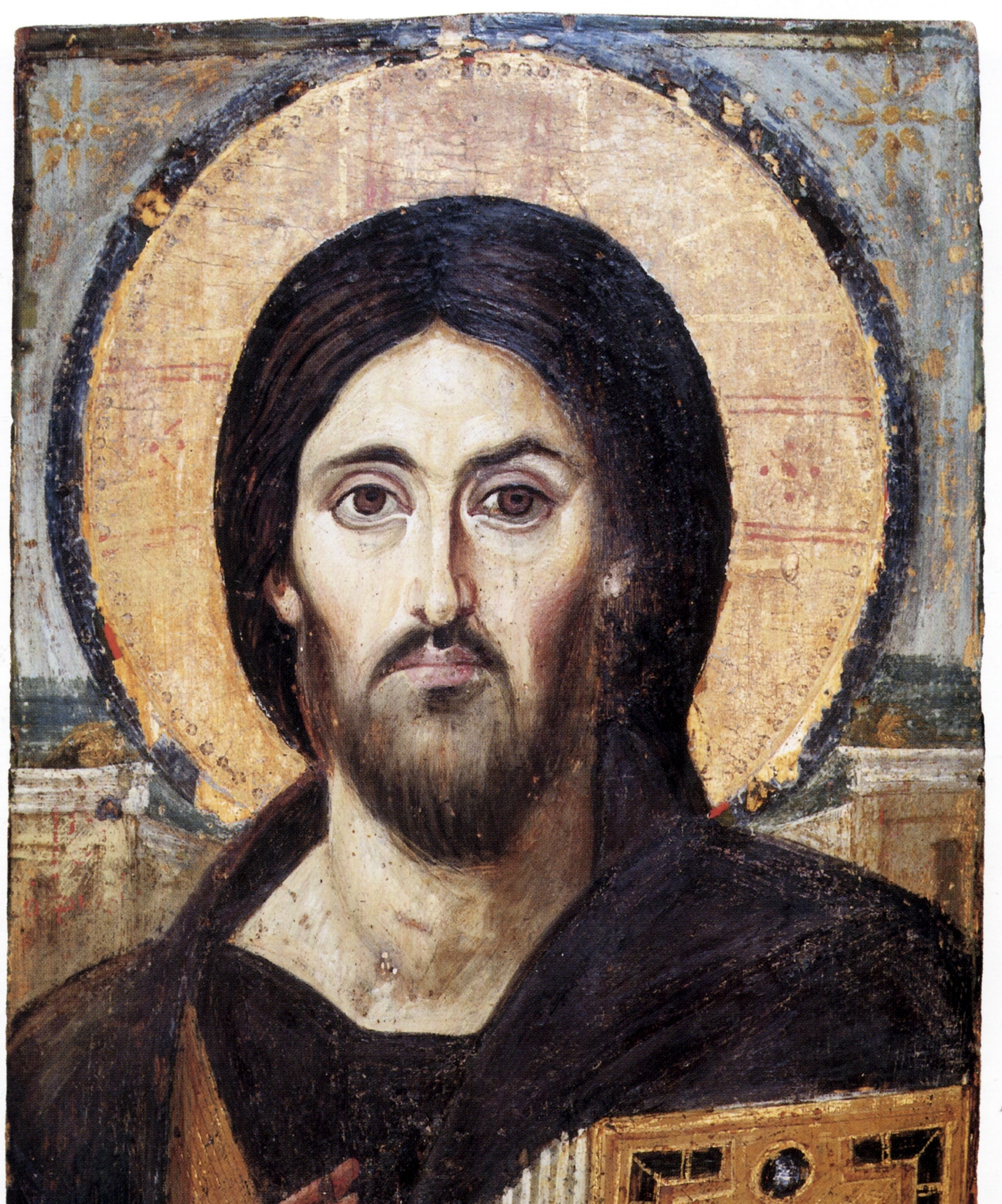
Christ Pantocrator, an icon in St. Catherine’s Monastery, Sinai, Egypt
Modern Evangelicalism has played a parallel role to this in the belief that compelling contemporary images of a beautiful and winsome Jesus can aid the faithful by stirring devotion in Bible reading, prayer, and in daily living.
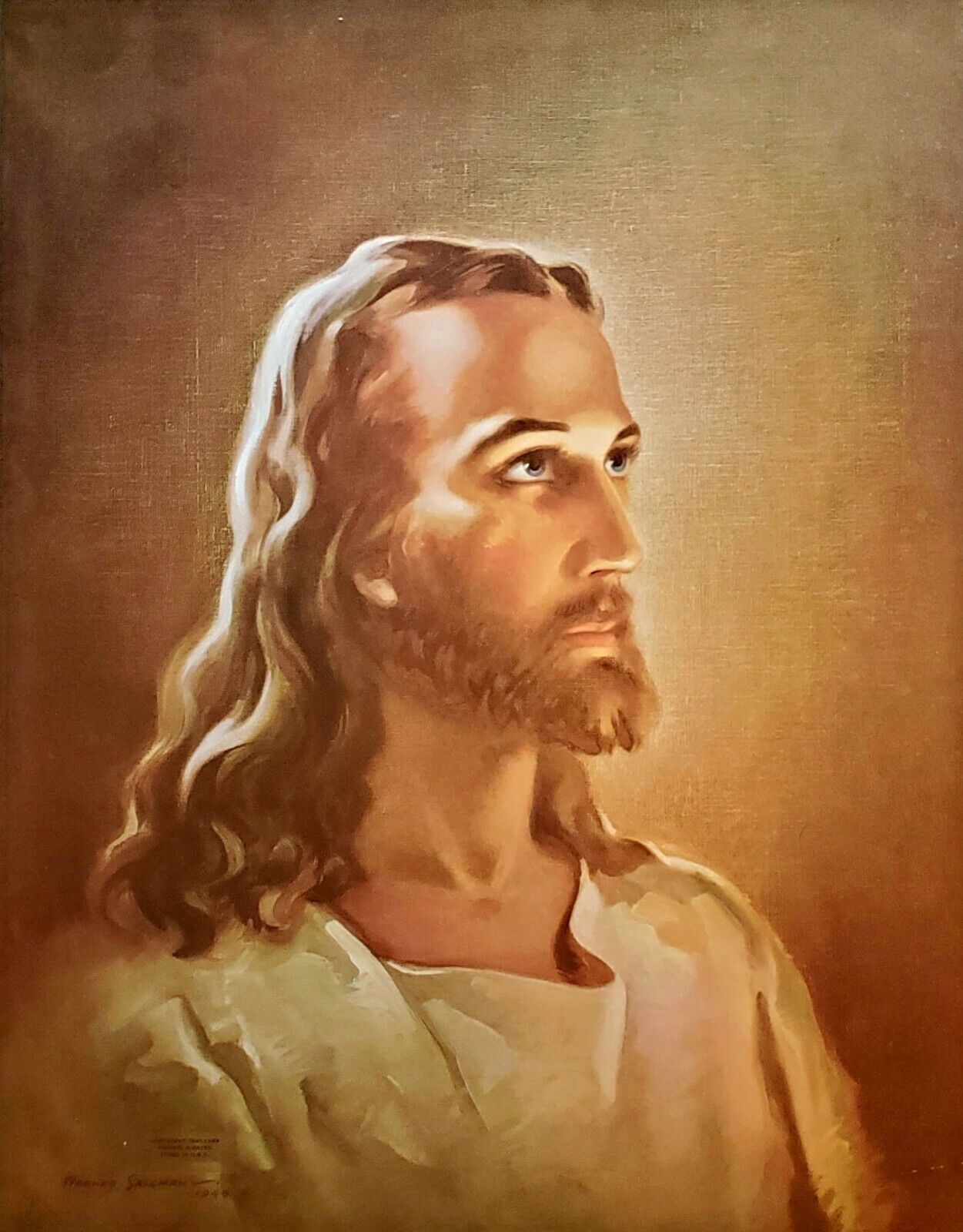
Warner Sallman’s 1940, Head of Christ, reprinted in many Protestant Bibles and devotionals

The face of Jesus, by R. Hook, a 1964 painting widely popular in the Jesus Movement of the 1970’s and among Evangelicals
How do we picture Jesus? Although though we may appropriately demur from referring to God by using personal pronouns or with gender-based associations, when hearing the Gospel reading on Sundays, or while reading devotional books, images of Jesus inevitably arise in our conscious awareness generated by acts of imagination.
Here we receive encouragement from C.S. Lewis, J.R. Tolkien, and other spiritually inclined writers, who have helped us recover confidence in the idea that the power of imagination can be a redeemed vehicle for conceiving holy images, both of biblical scenes and also of allegorical parallels based upon them.
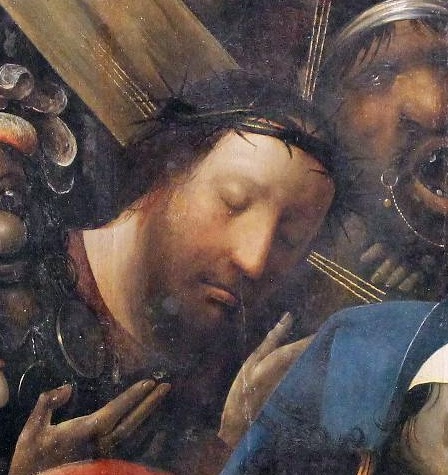
Hieronymus Bosch, Christ Carrying the Cross (detail)
The popular pious suggestion that we ask ourselves, “what would Jesus do, or say about this matter,” can therefore be a helpful spiritual exercise, especially if pursued reverently and with a scripturally informed process of deliberate thought.
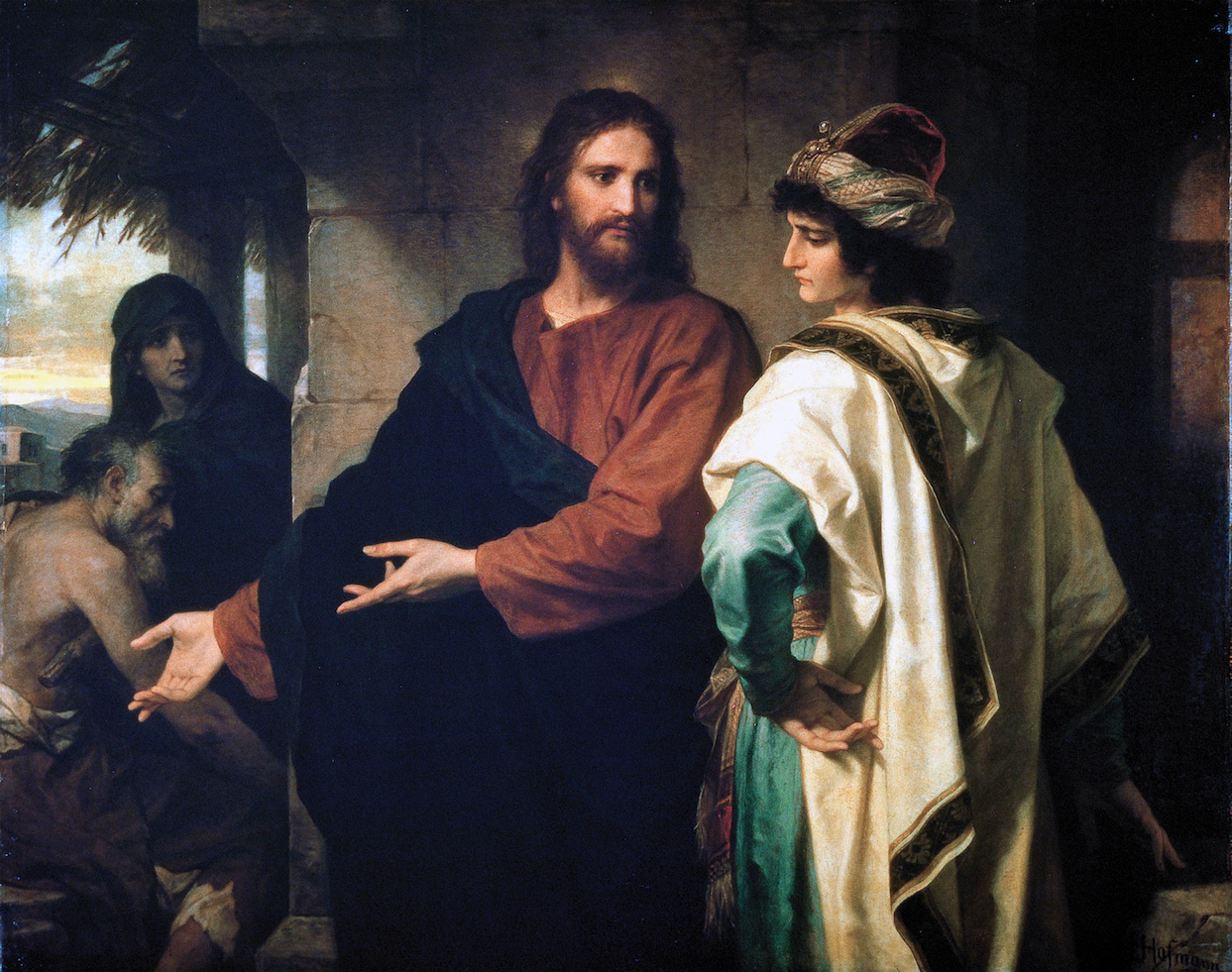
Christ and the Rich Young Ruler, Heinrich Hoffman
In my prior post, I shared detail of a compelling image of Jesus by the 19th century painter, Heinrich Hoffman. I love this painting, expressing the artist’s rendering of Jesus’ encounter with the so-called rich young ruler. Hoffman portrays well the love Jesus had for and showed to the man who asked him how he could enter the Kingdom of Heaven. The painter depicts how Jesus loved him and, we believe, continued to love him, both before and after this man turned away in discontent and confusion.
As we grow in our familiarity with images of Jesus, we can become sensitive to the way that Western art has tended to portray our Lord’s humanity, influenced by the European artistic tradition, which has not overlooked Jesus’ Semitic background. Nevertheless, how artists and others portray Jesus finds in him reflections of themselves, which is true to his known desire to identify with who we are. It has become more common in recent years for artists to portray Jesus in the form and appearance of other cultures, and the iconographic paintings of Brother Robert Lentz (some of which I have featured before) provide a good example. Among them is his image of Jesus set within the context of Japanese Buddhist spirituality, seen in the following image.

Turning again and again to such images can be most helpful to us in our spiritual journeys, especially when we choose well-conceived and well-executed paintings, drawings, or sculptures, that express to us facets of divine beauty, as well as the goodness and truth of God, found in the face of Jesus.
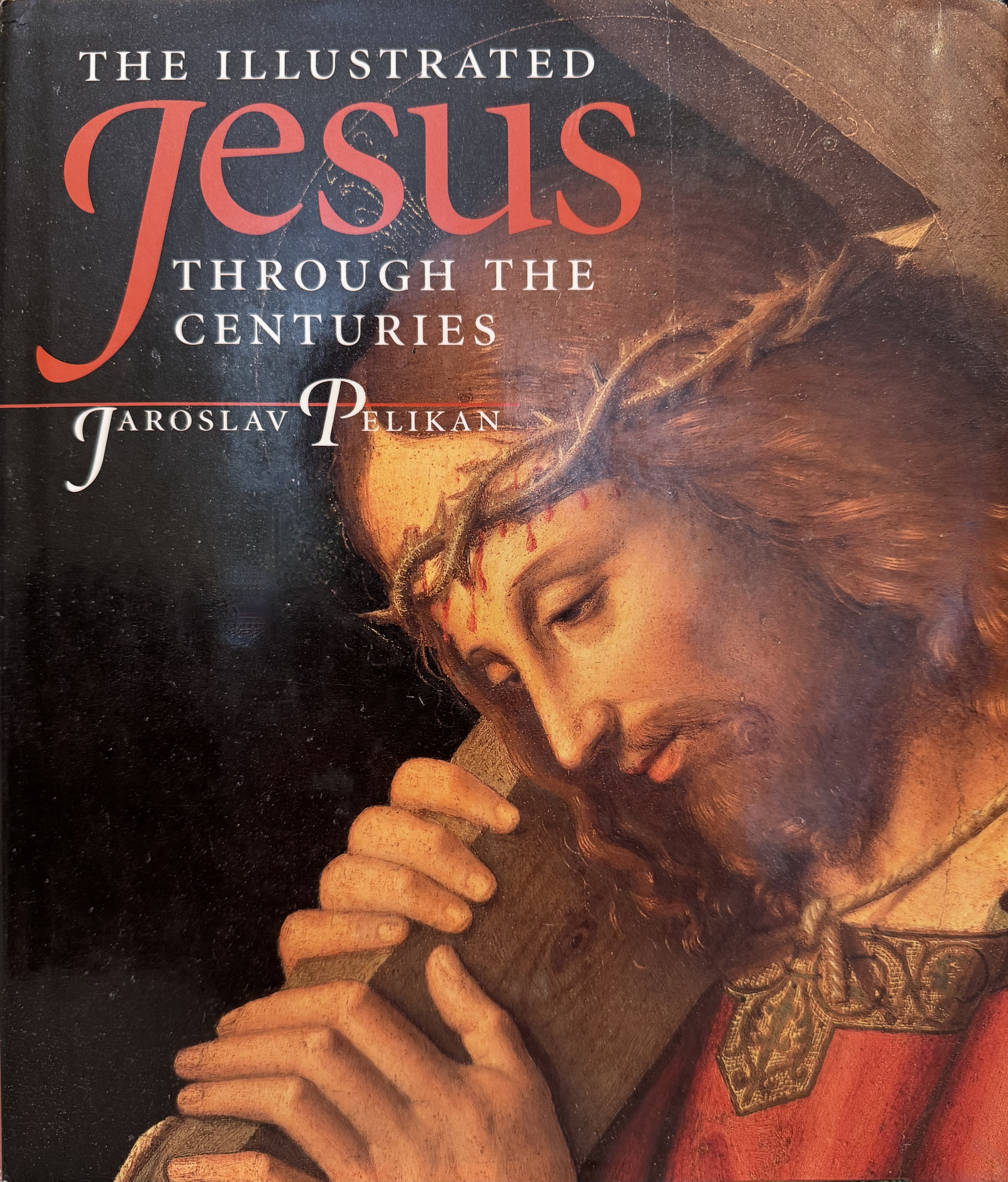
Note: Jaroslav Pelikan’s book, The Illustrated Jesus Through the Centuries, provides a ready and helpful way of finding images that can accompany our journey through Lent toward Easter living. Once again, I would like to thank Kathy Kane for my copy of this beautiful book.
In anticipation of this coming Sunday, Lent 2, Year C, I offer here a copy of a homily from a prior year, which may be accessed by clicking here.



















 Toward Beauty