Author: Stephen Holmgren

I have been an Episcopal priest for thirty eight years, having served in parishes and in academia. My interests include art and theology, liturgy and spirituality, and I love to go sailing whenever I can.

Allan West: Japanese Culture and Art

If reading this by email, please tap the title at the top to open your browser for the best experience. Then, clicking individual pictures will reveal higher resolution images.


In more than one way, Allan West is an unusual artist. His life and work have been deeply imbued by the spiritual aesthetics of Japanese culture and its traditional art of painting. For over forty years, he has dedicated himself to Nihonga, the less and less practiced method of painting using minerals for pigments, mixed with the liquid medium of a glue made from deer protein. This approach to painting has been practiced consistently in Japan, where luminous paintings from the 11th century can still be appreciated for their original beauty. The closest parallel in Western art is egg tempera painting, in which painters in earlier centuries mixed pigment with egg yolks instead of the modern practice of mixing pigments with oil or an acrylic medium.

Allan West was born and grew up in Washington, D.C., and his sojourn in Japan began in a period of mission work there as a member of the Latter Day Saints. Two factors transformed the vector of his life. He came to realize that he had an affinity with Japanese culture, especially with its artistic tradition, and he was struck by the Japanese sensitivity to living in harmony as much as is possible with the natural world.

More particularly, with his memory of pursuing painting from the time of his childhood, he recalls his own experiments with mixing pigments with various liquids to achieve a more fluid paint medium. This predisposed him to accept an observation offered by a viewer of his early work, who told him that his preferred approach to painting had a long tradition in Japan. As a result, West moved to Japan in 1987, with his wife and children, to learn from that tradition. He has lived and worked in Tokyo, ever since.

In a short video introduction to the artist, released by the Prime Minister’s Office in Japan, Allan West shares the following about his life’s work (screenshot above, and link below):

I use the Japanese painting technique to express the beauty and essence of the natural seasons. It has been 40 years since I moved to Japan, attracted by the traditional pigments and techniques of Japanese painting. Japanese natural materials can retain their clear vibrancy for more than a thousand years. I’m proud to inherit the tradition of Japanese painting and its wisdom that cherishes nature’s beauty and harmony with humankind. Through my art I’d like to convey the appeal of Japanese culture to the world.

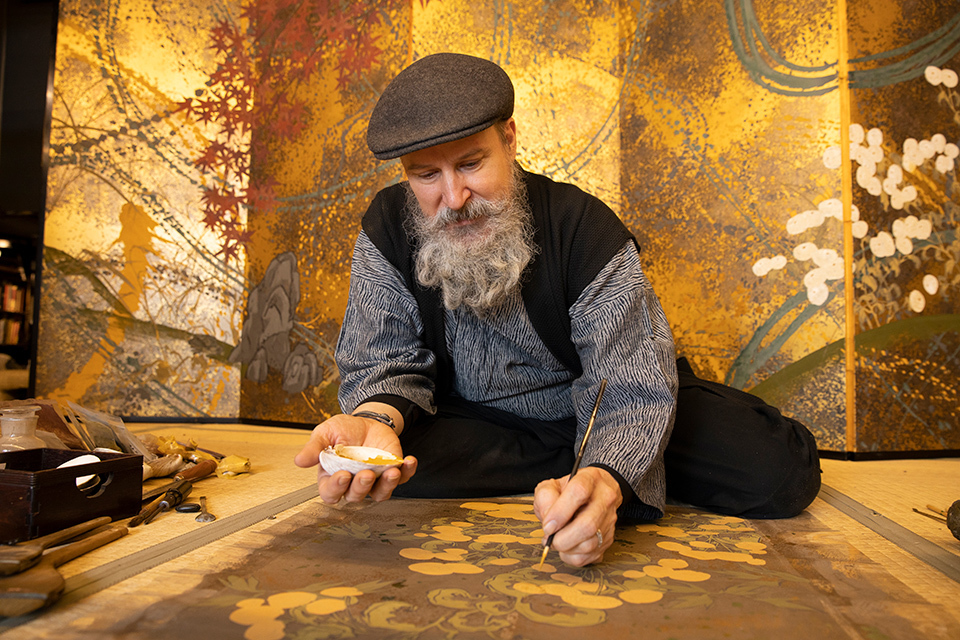
With these few words, spoken in a soft and nuanced voice in the video, Allan West is saying much. Having returned to Japan with the intent of learning a method or a technique, he had the sensitivity to realize that he needed to learn the Japanese language and let its culture become ingrained within him in order for him to be able to practice Nihonga painting with some degree of integrity. The photo below contains a number of important cues concerning what West has received and learned from the tradition of which he describes himself as an inheritor.

Allan West paints sitting on the floor in a Japanese way, on mats woven from rice-straw. As has been noted, the paints he uses are made up of ground minerals mixed with a glue-like medium of deer protein, paints which he values for their fluid quality. Hence, the surfaces that are to be painted need also to rest upon the floor, to avoid the paint running. Many of the surfaces upon which West works are large in size, like the sometimes wall-sized decorative folding screens for which he has become known. To be able to paint such expansive surfaces in their totality, instead of panel by panel, the artist designed a narrow rolling platform, allowing him to reach any area of a full-sized screen (as in the image above). This photo also displays West’s use of vibrant mineral-based colors as well as metalic foils and powders, such as gold leaf, some of which are found in the glass containers on the shelves behind him.

Allan West’s present Yanaka, Tokyo, studio

Unlike some artists, both Western and Asian, Allan West welcomes visitors to his studio, and actively encourages those who are curious not only to view his art, but to witness his creative process. To this end, his present studio, much modified into a traditional Japanese-looking structure from its prior use as an automotive maintenance facility, has large and welcoming sliding panels and windows, through which those walking by can view him painting. Through providing this access to his creative work, he hopes to promote a sustainable future for Nihonga, and to persuade Japanese visitors in particular that even an American immigrant can appreciate, learn, and become proficient in an ancient Japanese art form.

The following images provide examples of Allan West’s beautiful work:

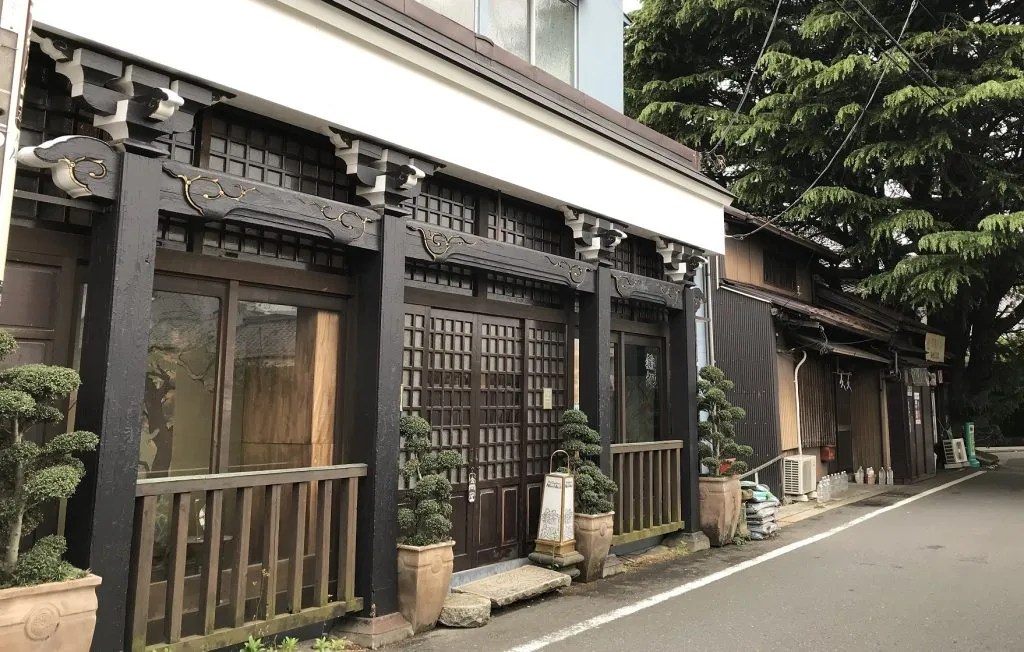
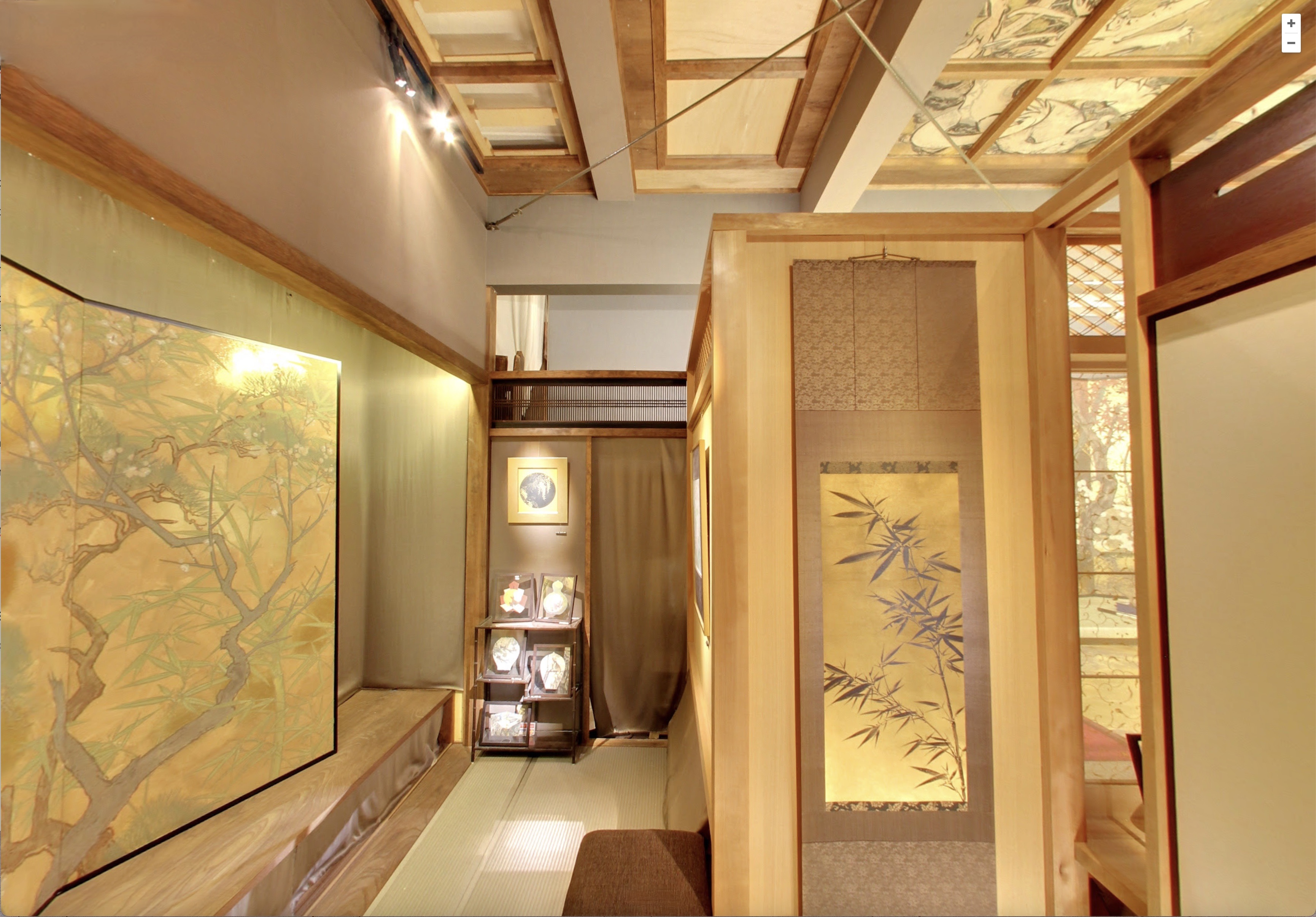
The following image displays the interior of Allan West’s attractive and welcoming studio and gallery building:


Readers who wish to become more acquainted with Allan West and his work might view the YouTube video mentioned above (the link is here). Allan West’s studio and gallery can also be visited in a virtual way by clicking this link.

The Beauty of Philip Simmons’ Charleston Ironwork

If reading this by email, please tap the title at the top to open your browser for the best experience. Then, clicking individual pictures will reveal higher resolution images.

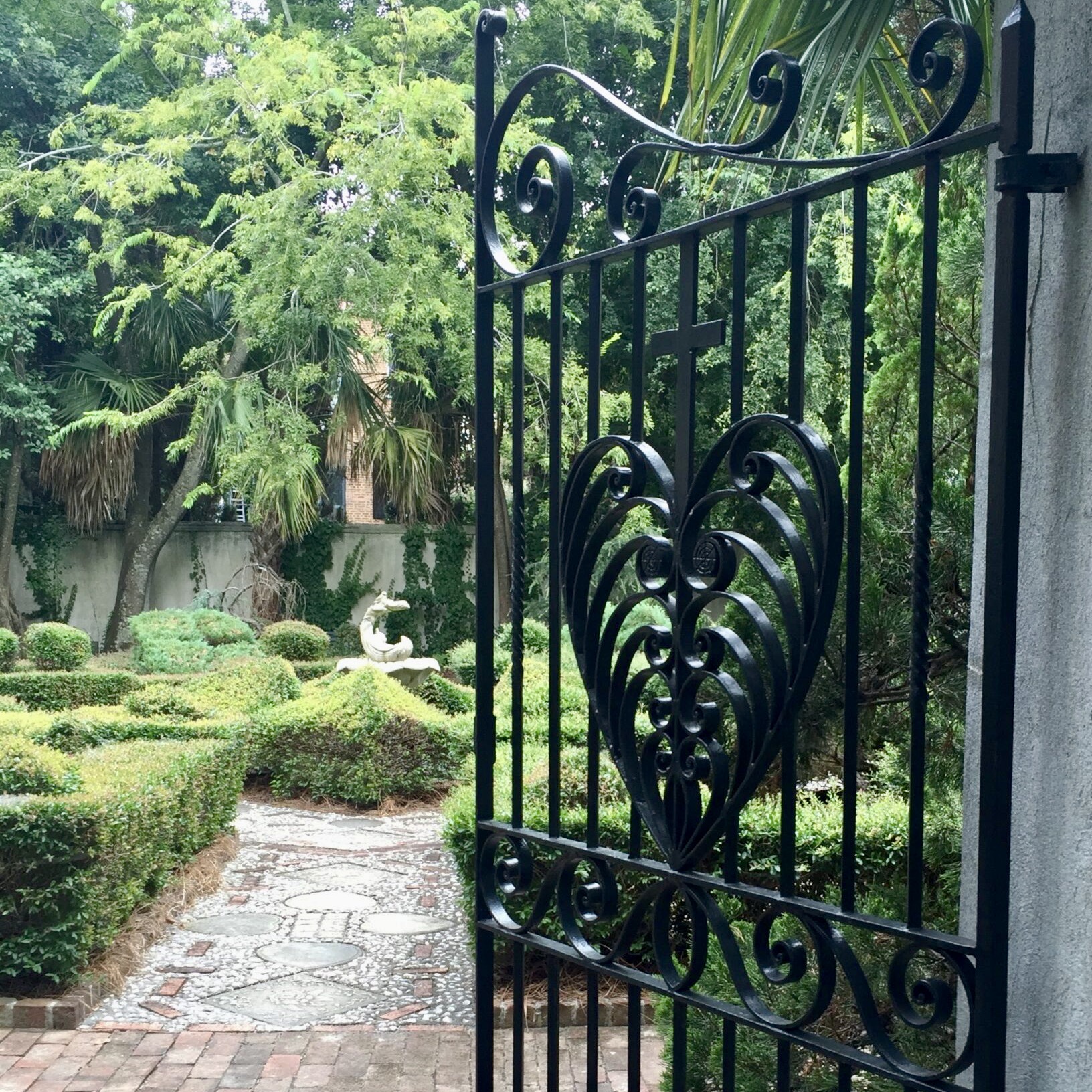
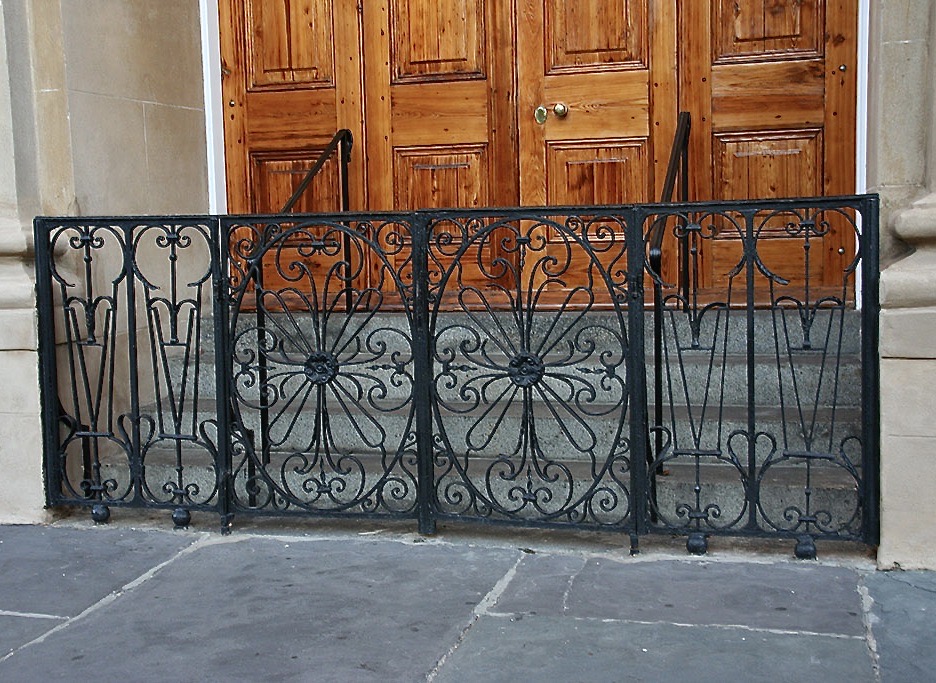
Gate to the Philip Simmons Memorial Garden, Anson Street, Charleston (featuring a Simmons design)


Philip Simmons, was a blacksmith who spent his life and working career in Charleston, SC, where much of his work is preserved by homeowners, collectors, and a foundation dedicated to honoring his legacy. Along with his lifelong body of ironwork, he has been described as a national treasure. Born in 1912 in the Old South, he received a very limited education and apprenticed himself at an early age to blacksmiths he saw in his Charleston neighborhood. Eight decades of work in a blacksmith’s shop followed as he pursued what some might call a trade craft, and which in his hands was truly an art.

Mary E. Lyons has written a book about Simmons for young persons, which includes some compelling photos of his work. She offers this introduction to the artist: “Philip Simmons began his career as an untrained boy. Now he is called the Dean of Blacksmiths by professional smiths across the country. His memories show that skill and patience take years of work. They also prove that everyone can achieve both. An honored artist, teacher, and businessman, Philip Simmons is the working person’s hero.”

Though the circumstances in which he lived and worked were modest, he is warmly remembered by his home city, and he has been commemorated by a marker at the Fort Sumter and Fort Moultrie National Historical Park (shown above), by the preservation of his home and studio, as well as by a high school named in his honor. Numerous examples of Simmons’ ironwork can be seen on walking tours in Charleston, in the course of which one can enter, through a gate fashioned by Simmons, a memorial garden for named for him maintained by the Garden Club of Charleston.

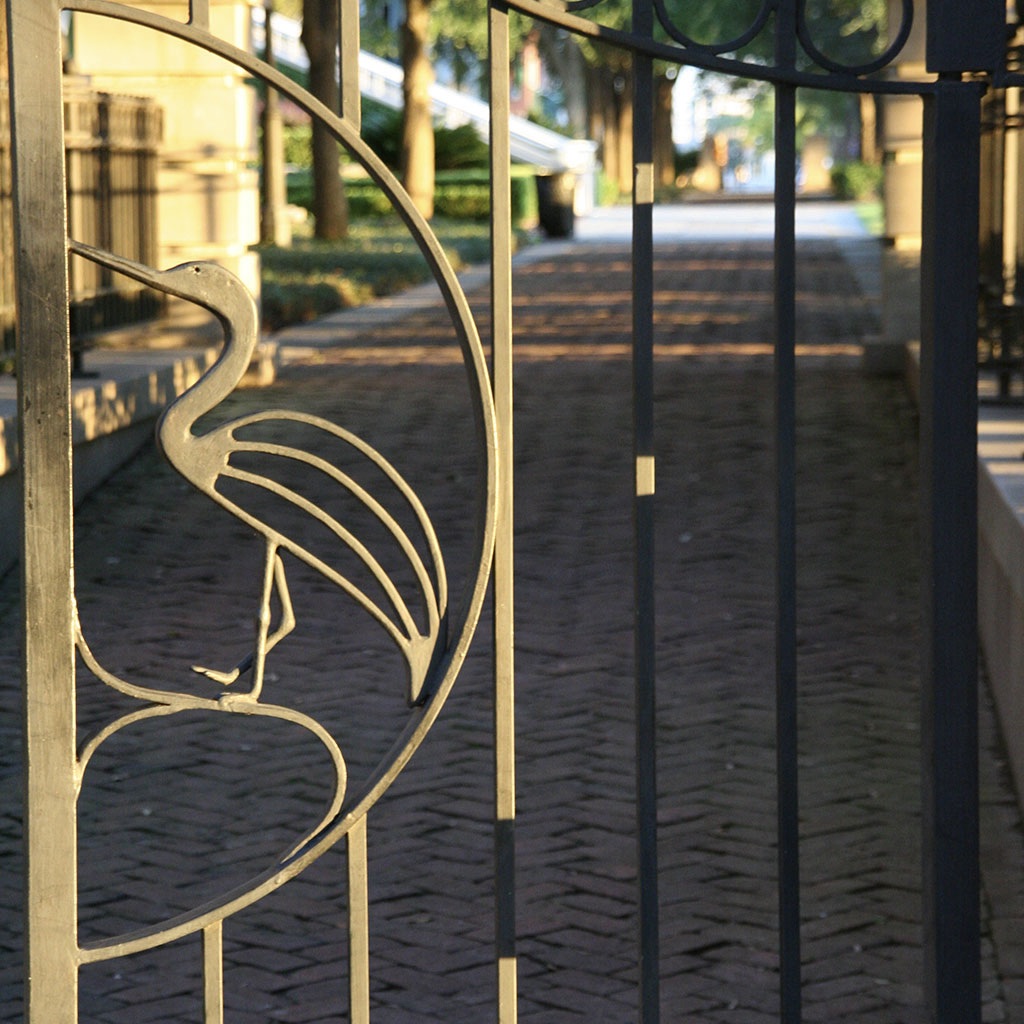
An egret, one of Simmons’ favorite motifs in his ironwork

In addition to representations of egrets, other images such as palmetto fronds, hearts, fish and serpents, number among those images often featured in Simmons’ ironwork. The artist’s choice of these images reflected his sensitivity to the locale in which he was raised, both Daniel Island where he was born, and then Charleston and its low country and aquatic surroundings.

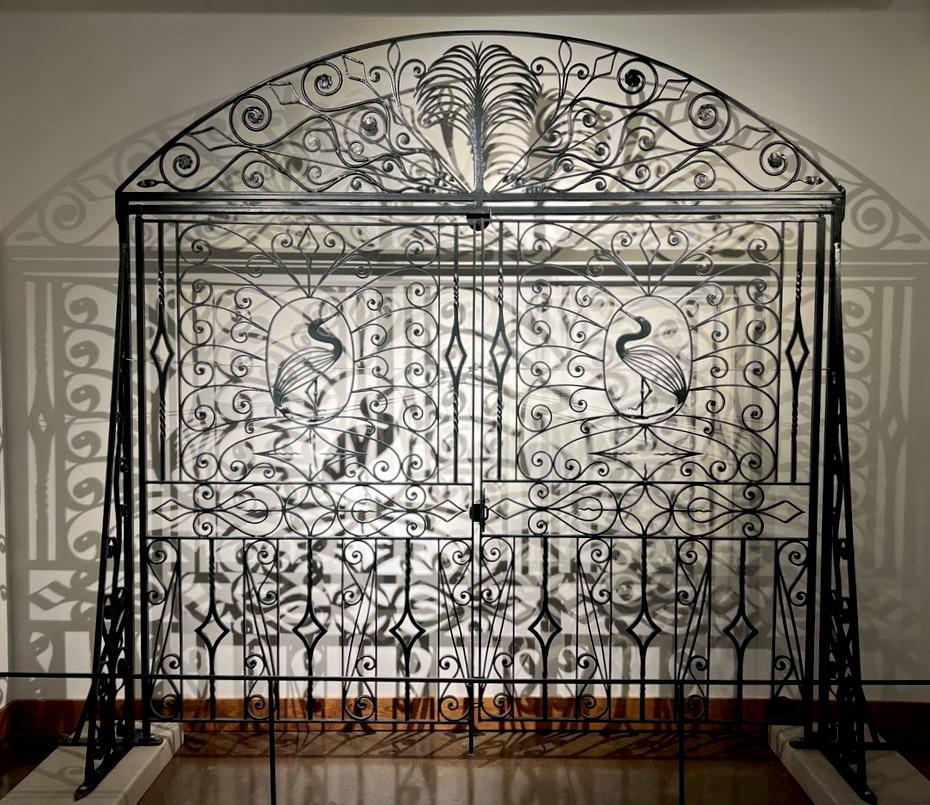
A major turning point in Simmon’s life’s work came with an unexpected opportunity brought to him when he was 64, an age when many contemplate retirement. He was invited to participate in the 1976 Bicentennial commemorative Festival of American Folklife to take place on the Mall by the Lincoln Memorial in Washington, D.C. Asked to craft a gate onsite during the event, Simmons wondered about the imagery that he might select for the project. Thinking about images that would reflect where he was from, he settled on the moon, stars in the sky, the rolling surface of water, and fish. This combination of images reflected, in his mind, the night sky sparkling upon the waters of the two rivers that form Charleston Harbor. The resulting gate, which has come to be known as the Star and Fish Gate, was purchased by the Smithsonian Institution (image below).

Philip Simmons’ crafting of the Star and Fish Gate in a temporary workshop set up on the Washington Mall, complete with a portable foundry and anvil, attracted a great deal of attention during the festival, and resulted in the artist gaining national attention. Among those taking an interest in Simmons’ work, and then helping bring it to a wider audience, was John Michael Vlach, a professor at George Washington University. Vlach published a biography of Simmons in 1981, which may have helped those at the National Endowment for the Arts to take note of Simmons’ lifetime of achievement in the field of blacksmithing. In 1982, the NEA awarded Simmons with a National Heritage Fellowship, the United States government’s highest honor in the folk and traditional arts. Other honors followed, including the Order of the Palmetto, his home state’s highest honor, as well as induction into the South Carolina Hall of Fame. During his lifetime, he was referred to as “a living national treasure.”

Simmons’ iron work incorporating the medical symbol of a caduceus, and a fish representing an aspect of his home region as well as the Christian faith

In spite of all of the accolades and honors he received later in life, Philip Simmons continued with humility to devote himself to his art, and to teaching younger aspirants and apprentices who wished to become proficient themselves in creating beautiful yet also functional ironwork. Despite the very significant cultural differences between his approach and those of Japanese craftspeople, I find Simmons’ approach to his life’s work characteristic of the best of what is often described as folk art, work that is appreciated for its beauty without necessarily calling attention to the artisan who made it.

Displayed below are images of a number of Simmons’ creations as a blacksmith.

A Simmons gate for St. Philip Episcopal Church, Charleston

The cover of Mary Lyons’ book for young persons, featuring Philip Simmons at work on a piece of scrolled iron


The full title of John Michael Vlach’s book, mentioned above, is: Charleston Blacksmith: The Work of Philip Simmons. The book includes a map of Charleston showing the location of Simmons’ works, as well as brief descriptions of them.

The New Is Now

If reading this by email, please tap the title at the top to open your browser for the best experience. Then, clicking individual pictures will reveal higher resolution images.


Advent is here! Once again, I am mindful of the opportunity this brief ‘season’ provides for spiritual reflection and growth. Of course, this is an opportunity that is easy to miss or overlook, given how busy most of us tend to be as we prepare for Christmas and the New Year.

As I did last year, I commend once again Eugene Peterson as an Advent companion. This time, in addition to his fine book on John’s Revelation, Reversed Thunder: The Revelation of John and the Praying Imagination, I am recommending his shorter book on the letters to the seven churches that are found in Revelation. It is titled, This Hallelujah Banquet: How the End of What We Were Reveals Who We Can Be.

Those who attend or who have been shaped by the experience of worship in a liturgical church may be aware of the paradox presented to us by the current Church season. Whereas the culture around us anticipates the “end” of the year, liturgical calendars mark this week as the beginning of a new one. This month includes the darkest day in the northern hemisphere and the start of a period of colder months for many. Yet, it is also our time for celebrating the light that has come into the darkness and, with the solstice, the beginning of a new series of months leading up to the day with the longest hours of daylight.

Peterson’s The Hallelujah Banquet begins with a quote from T.S. Eliot’s “Little Gidding,” in his Four Quartets:

What we call the beginning is often the end
And to make an end is to make a beginning.
The end is where we start from.

Part of the paradox we may experience at this time of the year is prompted by our ambiguous use of the English word, end. With this word, we speak both of the termination of something, as well as its point of fulfillment. Perceiving this helps make sense of how an ‘end’ can be a place from which we also start. What is the end of the human person, a philosopher might ask. To which that same thinker might respond, the end of the human person is to be happy, and live in peaceful coexistence with others. Perceiving our ‘true end’ can help us not only to keep in mind where we are headed, but can better help us get there.

If adding another book to our reading list is more than we can imagine doing at the moment, I have a suggestion for an Advent thought project – a project that might lead a person to write three or four tight paragraphs by the end of this new month. Consider composing, and then writing, your own obituary! After first thinking of any accomplishments or points of satisfaction that may lie in our past, such an exercise will likely involve some musing on how we are not meeting, or may have fallen short of, previously identified hopes and goals. In writing our own obituary, we can do this: identify and now begin to live toward what we hope honestly can be said about us, and about how we have used our time, energies, and resources, along with others.

The central question in such an exercise is not so much about how I wish to be remembered, and is more about toward what end I now wish to live.

No matter what, whether we do some intentional reading and/or writing, or not, I encourage noticing and then remembering a feature found in both John’s Gospel and in John’s Revelation. It is the use of the present tense. In John, Jesus says, “… whoever believes has eternal life.” Has, not will have. And in the Revelation, God declares, “Behold, I make all things new…” I make, not I will make. For as God says, at the conclusion of that last book in the Bible, “… I am the Alpha and Omega, the beginning and the end.”

One compelling theme in Peterson’s, This Hallelujah Banquet, is this focus on the present reality of God’s transforming work in the world, and in our lives. Of course, we might object with words to this effect: “but how can this be real, since I don’t see or feel like it is happening!” Yet, in time, the eyes of faith come to see the light in the darkness, and how the end can also be a beginning.


The quote from John’s Gospel is from 6:47, and the quotes from Revelation are from 21:5-6

Reconciliation is Always Possible

If reading this by email, please tap the title at the top to open your browser for the best experience. Then, clicking individual pictures will reveal higher resolution images.


A recent LA Times article was titled, “Hello Simon, my old friend…” Those of us who can remember the late 1960’s surely have clear memories of hearing tunes from Simon and Garfunkel’s milestone album, Bookends, and especially of the way their music was featured in the December, 1967, release of the movie, The Graduate. Even those born years later may have in their minds an inescapable link between the names of the two artists, whose cooperative work remains so memorable. Despite their ‘Oh, so beautiful’ recordings, the two broke up their musical partnership in January of 1970, shortly before the release of their best-selling and perhaps providentially titled album, Bridge Over Troubled Water.

Simon and Garfunkel performing in the earlier days of their musical partnership

Many of us who remember hearing their music when it was first released, or who have come to love and appreciate it since those years, don’t realize the extent of their difficult creative relationship as artists. All too soon, they drifted apart, speaking only occasionally with one another, though in subsequent years they did perform together on a few occasions, including at Jazz Fest in New Orleans in the spring of 2010. To his later regret, Art Garfunkel made some unwise and unguarded comments during an interview in 2016, that were hurtful to Paul Simon.

At Jazz Fest, New Orleans, 2010, with Garfunkel singing with a damaged voice adding to the strain in their relationship

Art Garfunkel has now spoken to the press about his regret concerning those prior comments, and shared what he had said to Paul Simon at a recent lunch together: “First time we’d been together in many years. I looked at Paul and said, ‘What happened? Why haven’t we seen each other?’” Garfunkel then shared this: “I cried when he told me how much I had hurt him.” “Looking back,” with obvious regret, he reflected that he had perhaps “wanted to shake up that nice guy image of Simon & Garfunkel.”

An early photo of the duo which may suggest some of the tensions in their partnership

Their reconciliation came at that long overdue lunch, which Garfunkel said, “…was about wanting to make amends before it’s too late.” Having acted upon his desire to reconnect with Simon, Garfunkel offered that “it felt like we were back in a wonderful place. As I think about it now, tears are rolling down my cheeks. I can still feel his hug.”

This recent reconciliation between Paul Simon and Art Garfunkel is heartwarming and a beautiful thing. It can be a source of hope for all of us regardless of who we are, or our place in this often confused and fast-paced world.

Simon and Garfunkel at a reunion concert in Central Park, NYC, in 1981

Reconciliation, especially following upon things we have done to hurt and impair a relationship with another person, is perhaps one of the most difficult things for us to contemplate doing, and then to try and enact. Surely, we can all acknowledge this based on personal experience. Especially when we are aware that this reality has the potential to be a shadow presence at some Thanksgiving gatherings this week, whether among family members or groups of friends.

Achieving reconciliation with another person in this life is never assured, no matter how much we may desire it. And what such a desired result may require is an openness to that hoped-for resolve happening between us, even if the circumstances surrounding that possibility seem remote and uncertain. Yet, though this kind of openness is necessary, it is not in itself sufficient for the desired result. Forgiveness by one or both parties plays a key role in the process. And forgiveness usually requires an acknowledgement rather than a dismissal of what may have happened to cause the breach in the relationship.

This is how and why memories, even of hurts, injury, and injustice, have the potential to be holy, and why forgetting (especially willful forgetting) may limit the extent to which we experience reconciliation. To forgive is an act of will, whether or not feelings of forgiveness arise within us or abide. And once forgiveness is willed, and then expressed, the reconciliation that follows upon openness might -and even may – in time happen.

There are grounds for hope, at least with regard to Simon and Garfunkel. They appear to be planning a series of reunion concerts in 2025. We can look forward to enjoying once again the fruit of this most creative musical collaboration.


The Stirring Choral Music of Michael John Trotta

If reading this by email, please tap the title at the top to open your browser for the best experience. Then, clicking individual pictures will reveal higher resolution images.

Michael John Trotta introducing his choral work, “Requiem,” in a YouTube video


Recently, I had the providential opportunity to meet Baton Rouge resident, and LSU School of Music doctoral recipient, Michael John Trotta. Only later did I learn of his impressive and internationally recognized accomplishments. Four albums incorporating recordings of his musical work can be found on Spotify, among them his stirring and evocative setting for the traditional Latin Requiem. Through subsequent messaging with him, I learned of the recording session that he directed this year of his “Requiem,” with the London Symphony Orchestra and the London Voices. It is a beautiful work of music, all the more meaningful for him and subsequent listeners in that the recording was made in support of the charity, Hospice UK.

A recent screenshot from Spotify featuring the music of Michael John Trotta

Michael John Trotta writes passionate and lyrical sacred music – a series of words not everyone will string together. Reflecting on his music, I am aware of my inclination to find verbal analogies rooted in the visual arts. And so, parallel to how some painters, sensitive to the role of light in our perception of color, seek to mix several colors to achieve a particular hue, Trotta’s choral music strikes me as an effort to express a wide and full spectrum of harmonious sound.

My initial perception of his compositions, that he presents sacred music that is passionate and lyrical, may also be akin to my use of the word beauty in connection with the paintings of Jackson Pollack. In both cases, I may be expressing an unexpected conjunction of ideas that can, I believe, properly belong together. Trotta’s musical works inspire me to write about them in this way.

Those who love to hear large groups of voices singing in harmonic patterns, especially of examples from Renaissance and early English vocal music, as well as modern compositions influenced by them, may find a similar pleasure in hearing his work. For me, this is due to how Trotta’s original choral music and his arrangements provide a moving and also meditative listening experience.

Trotta conducting the London Symphony Orchestra and London Voices while recording his “Requiem”

As an amateur listener, I find that Trotta’s compositions and arrangements are evocative of traditional art forms without sounding imitative. Composed in creative dialogue with musical history, his work retains what we might call a traditional ‘vocabulary.’ This may have parallels with what we can discern in various works by contemporary practitioners of other art forms. Parallel examples of an engagement with traditional elements in an artistic field may include composition and subject matter in painting; ornament or the lack of it and the use of certain structural elements in architecture; as well as selected harmonic patterns and chord sequences in music.

Nigel Short leading the ensemble, Tenebrae, accompanied by organ, while recording “Requiem” in the parish Church of St. John the Evangelist, Islington, North London

Michael John Trotta’s music helps support my renewed sense of confidence that contemporary artists and composers, as well as writers, can utilize and work creatively with inherited forms of expression and yet present new, fresh and compelling compositions. Trotta may epitomize the wisdom expressed by Jesus in another context, that “every scribe {or composer} who has been trained for the kingdom of heaven is like a master of a house, who brings out of his treasure what is new and what is old (Mt. 13:52).”

Michael John Trotta, in Carnegie Hall, conducting the premier of his compositional setting for the traditional Septem Verba Ultima (The Seven Last Words {of Christ})

The pieces that Trotta has composed and or arranged are not only musically harmonious, but also spiritually congruent with what we know about the grace-filled peace and presence of God. Michael John Trotta’s approach to the art of music can broaden our appreciation not only for beauty expressed in the past, but also for beauty as it may be presented anew today. I am very encouraged by my new experience of historically informed music that Trotta’s compositional work has opened for me.

A performance of Michael John Trotta’s” Requiem,” Sunday, April 21, 2024 at Tabernacle Presbyterian Church in Indianapolis, Indiana


Since first posting this piece I have corrected a couple of the details mentioned in two of the photo captions.

The Western Art of Tom Gilleon

If reading this by email, please tap the title at the top to open your browser for the best experience. Then, clicking individual pictures will reveal higher resolution images.


With the Western art of Tom Gilleon, we find another example of a skilled painter trained in the practice of traditional representational painting, whose work has morphed over the years to incorporate some features of Modern Art that are commonly associated with post-World War II American painting and printmaking. Viewers familiar with Gilleon’s paintings will notice his repetitive motif of portraying tipis on the prairie, rendered in multiple ways with varying color combinations. Yet, and in a way reminiscent of Andy Warhol’s numerous print series, the compositional elements of many of Gilleon’s paintings are often the same.

One potential criticism of so-called Modern Art, heard less frequently now, is that many viewers find examples of the genre to be simplistic, perhaps lacking in creativity, and potentially the product of less talented artists. I have addressed that observation before, especially with reference to the work of Jackson Pollock as well as James M. Whistler. In my view, elements of image composition, color choice, and the placement of the colors selected within a given work of art, as well as how color is applied, represent choices made by painters the sophistication of which is easy to overlook. In the case of Tom Gilleon, the artist’s bone fides as a skilled painter can easily be established. Note the following examples of his more traditional representational work.

The image shown immediately above, based on the mesa visible from Gilleon’s studio, provides a reference point for observing the range of his interests as a painter. The same view, featuring much less detail, can be seen in his image below.

While fully capable of portraying a Native American tipi encampment with sensitivity to its geographical and historical contexts, Gilleon over time has come to focus his work less strictly on the representation of scenes he has observed, and has moved toward an exploration of particular elements within those scenes. This has allowed him to focus more directly upon picture composition and the exploration of color. This broadening of his work as an artist can be seen in a number of images shown below. First, we observe two images that are more clearly dependent on physical observation of – or extrapolation from – specific contexts on particular occasions.

In the above two paintings, we can appreciate the artist’s skillful attention to such details as the nature of the weather, varying daylight conditions and the way they are reflected on the surface of water, and how he portrays features of the physical terrain such as a mountainside in evening light, or a mountain range obscured by a rain shower. But then, we can go on to enjoy the artist’s greater attention to the tipis themselves, and to how a common compositional element that is repeated with little variation over the course of a number of images, can give rise to a marvelous series of explorations of differing light conditions. These explorations include renderings of the effects of light both within and around the tipis that he portrays, as well as its effect upon the surfaces of those structures and the terrain in which they sit.

The latter image, so much like the ones shown above it with regard to image composition, as well as attention to color and light, is of interest because of the very subtle shift evident in the directional location of the tipi’s entrance, and the lone bare pole in the far righthand side of the painting. In this same image, the artist has felt free to move away from reproducing a historically accurate representation of various ways that particular Native American communities would apply decoration to the tipi’s surface, so as to be in a better position to attend to the abstract components of color and light in themselves.

At the outset, I alluded to Gilleon’s incorporation of aspects of painting commonly associated with the work of Abstract Expressionists as well as those whose work became associated with the label, Pop Art. The following images provide good examples of Gilleon’s willingness and ability to work beyond the parameters of more traditional landscape and portrait painting.

The artist (below) in his studio, with his view of the flat-topped mesa in the distance

The artist’s studio on his Montana ranch, with a tipi in the foreground

J Louis and the Fusion of Genres in Painting

If reading this by email, please tap the title at the top to open your browser for the best experience. Then, clicking individual pictures will reveal higher resolution images.

J Louis, “Vision in Pinks”


On a recent visit to Charleston, S.C., while walking to the Gibbes Art Museum to attend a family wedding celebration, I stopped in at the neighboring Principle Gallery. There, I discovered the remarkably skillful paintings of J Louis, who is only 32. He is a highly gifted painter and draftsman (i.e., he can draw really well), who was trained at SCAD, the Savannah College of Art and Design. The Principle Gallery is featuring his work this month following the opening of his show on November 1.

J Louis clearly has a fascination with women and the many forms of a woman’s beauty. Yet, unlike the work of various other artists who share his interest in the female form, nudes seem to be rare among Louis’ works. He has the eye of a fashion photographer, though one with a paradoxically greater interest in the faces and hands of his models than he does in their clothing.

Indeed, the vesture worn by his various models is usually rendered in flat swathes of paint, sometimes muted and sometimes vibrant with color. Louis’ way of portraying that clothing tends to diminish its representational significance, so that it functions somewhat like the background of his paintings. By taking this approach, the artist has the opportunity to further explore and express his regard for other visual aspects of the women who have posed for him.

J Louis at work on a commissioned painting

All of the paintings in the current show feature his characteristic images of elegantly beautiful women, with some of the paintings playful, others mysterious, and many alluring in their sensual presentation of eyes, faces, and hands. As a result, he portrays these women as being more than attractive models, and as people who in some way he has come to know as real persons who have distinct personalities. His depiction of his models therefore includes, but also transcends, careful attention to their appearance, with his skill in displaying an apparent sensitivity to and respect for these women’s character and temperament.

I was struck right away by two aspects of many of Louis’ paintings: his gift for capturing facial expression and the wonder of human eyes, along with his ability to render the power of a gaze; and his adeptness in producing abstract color fields of great beauty. These are two features not generally found together, in my experience. Several of Louis’ paintings bring to mind an unexpected fusion, such as we might find between – for example – Gerhard Richter’s early photo-realist images, and Richter’s more recent abstract paintings. For these reasons, the following image by Louis, titled “Flag,” stood out to me in particular.

More specifically, a number of Louis’ paintings appear to be the result of a merging between two highly differing approaches to painting, on one hand an abstract expressionist’s use of the process of squeegee spreading and melding paint colors, and on the other, the highly refined representative work of a painter whose images rival those produced by an art-oriented photographer.

This juxtaposition of differing approaches to visual compostion, figurative representation, as well as color field and pattern exploration, reminds me of some of the paintings of Gustav Klimt, as if he had been painting in the 1950’s. Several of the various qualities that I have highlighted here, and found in Louis’ paintings, may be discerned in the images of Louis’ paintings shown below.

Sensitive depiction of the human face, dramatic pictorial composition, an eye for vibrant color, and a pattern of setting in tension images of three dimensional figures side by side with visually flat fields of contrasting paint, distinguish J Louis’s large and, in my view, highly successful paintings.

The artist in his New York studio (below)

Jason Sparks’ Artistic Adaptation of Tenkara Flies

If reading this by email, please tap the title at the top to open your browser for the best experience. Then, clicking individual pictures will reveal higher resolution images.


I discovered the handiwork of Jason Sparks through the writing of Jason Klass, a Colorado fisherman who has come to fish exclusively using the Japanese approach to fly fishing called Tenkara. Tenkara fishing has at least two distinguishing features, the first having to do with a difference from typical American fly fishing rods. Compared to familiar Western examples, Tenkara rods are very long poles, historically made of bamboo, along with a fixed-length line of roughly the length of the pole, and no fishing reel for the line. The flies used in Tenkara fishing are the second distinguishing feature. Tenkara flies, as in Jason Sparks’ beautiful example (above), generally feature hackle feathers (rooster and or hen) tied to the hook in a way that projects the feather’s barbs forward, toward the eye of the hook. This creates a pulsing motion when the fly is pulled against the current in a stream.

The anatomy of a fish hook. (Sparks prefers barbless hooks to facilitate ‘catch and release’ fishing)

The artistic design work of Jason Sparks, and his adaptation of traditional Tenkara flies, stress an intentional use of natural materials. In order to appreciate the originality of his flies, it’s worth considering examples of traditional Tenkara flies.

A traditional Tenkara fly tied by Dr. Hisao Ishigaki, a recognized authority on Tenkara fishing and fly tying

Traditional Tenkara flies are composed of three basic materials, a hook, thread, and part of a feather. The thread is wrapped around the neck of the hook, creating a base; thread-wraps then secure part of a feather to the hook; the feather is then spun around the shaft of the hook while perpendicular to it, thereby spreading the feather’s barbs. More thread is then wrapped around the shank of the hook, and tied off with a knot.

Almost all fly tyers make use of a vice, as depicted in the photo above, which holds the hook in place while the fly is created. One Japanese authority, Katsutoshi Amano, is famous for tying Tenkara flies without a vice:

Observing these aspects of traditional Tenkara fly design helps us appreciate Jason Sparks’ creativity and aesthetic sensibility, as he creates works of art that actually catch fish. His willingness to work beyond the usual parameters of Tenkara flies can be seen in his choice of hooks. Those employed by the two Japanese masters in the photos above feature straight shanks in the upper part of the hook.

Sparks frequently uses what are commonly called scud or nymph hooks, which have a long and curving shank, where the eye of the hook tilts slightly downward. A similar tilt can be seen in another type of hook he often uses, which has a traditional straight shaft of moderate length, but which also has a wide gap above the hook’s point and a somewhat squared bend between it and the shank. These various features can be seen in photos of Sparks’ flies included below.

In both the photo directly above, as well as the one at the top, we see Sparks’ use of a scud hook, yet with minimal added material on the hook’s shank. While many tyers match fly body materials with the size of the hook, Sparks finds that a hook’s size matters less than the presentation of the material attached to it. Further, by locating that material closer to the middle of the shank, it is easier to attach or replace the fly line (and leader) to the hook’s eye.

With his preference for using natural materials, Sparks likes to tie with silk thread, and he prefers naturally dyed woolen yarn from the Shetland Islands, given its variations of color and textured finish. With a yarn ‘body,’ and the spiky feather barbs wrapped around the hook, Sparks achieves very ‘buggy-looking’ flies:

Two points are worth noting about Jason Sparks’ flies. Though the examples here look large, they are actually not very big, being photographed closely to help us appreciate their detail and composition. His typical hook sizes range from an 8  to a 12 or 14 (in most cases less than an inch, and many considerably smaller). And, second, Sparks often directs the feather barbs both forward and rearward, in contrast to the usual forward tilt of many traditional Tenkara flies. These features can also be seen in the following examples:

Sparks also ties flies that are commonly called nymphs, suggesting the appearance of bugs in their larva stage of development. With these flies, we notice the absence of feathers, and a spare use of other materials such as Sparks’ preferred Scottish yarn:

Despite how much of the hook is exposed in these examples, Sparks contends that they are effective for fishing.

Jason Sparks is obviously a gifted fly tier and has made a significant artistic contribution to this avocation, which for some is also a form of employment. In contrast to the neatness and precision of his finished flies, Sparks’ fly tying desk resembles the workspace of many others who tie flies:


Readers interested in fly tying may wish to look at my prior post, The Beauty of Fly Tying, which may be accessed by clicking here.

The Elusive Biblical Idea of Ransom

If reading this by email, please tap the title at the top to open your browser for the best experience. Then, clicking individual pictures will reveal higher resolution images.


In late 1987, two American college students were exploring the jungles of Columbia. After obtaining a canoe, they embarked upon the Putumayo River and strayed into territory held by a Marxist rebel army. Formally known as FARC, these guerrilla soldiers abducted the students and held them captive for ten months in various jungle camps.

At first, the FARC guerrillas thought the two men were CIA agents, though the students corrected this. But then their captors came to see them as hostages having economic value. Soon, their parents hired an American explorer, who found the hostages and their captors. After four months of negotiations, conducted by a Roman Catholic Bishop, the students were released and taken to the American Embassy in Bogata.

Release for the young explorers surely came about through the payment of money, probably a lot of it. Ransom is a way to describe this kind of payment, where something valuable is exchanged for the freedom of captives. John Everett Millais’ painting (above), The Ransom, depicts a father handing over of fistful of jewelry and a bag of coins to some men who have taken his daughters hostage. Revolutionaries, terrorists, and criminals have long used ransom as an efficient means of fund-raising, especially when their captives come from wealthy families or are politically well-connected.

Clearly, when payments are made to captors, the purpose is not to honor or reward the hostage-takers. Instead, these payments reflect an abiding concern for those who are held-captive, awaiting redemption.

This concept of ransom is deeply rooted in our Judeo-Christian tradition, and it shapes how we understand redemption. Think of the beloved Advent hymn, which begins this way: “O come, O come, Emmanuel, and ransom captive Israel…” In the Old Testament, in many passages like Psalm 49; Isaiah 35, 43, and 51; Jeremiah 31; and Hosea 13, we hear about how God’s promises inspire hope for the possibility of ransom from the power of death.

These insights help us understand Jesus’ words about ransom in Mark’s Gospel (in 10:45; parallel in Mt. 20:28). After predicting his suffering and death three times, Jesus tells the oblivious disciples that “the Son of Man came not to be served but to serve, and to give his life as a ransom for many.”

Yet, instead of a ransom-based understanding of Jesus’ sacrifice and death, many Christians think of Jesus’ saving work in a largely legal or juridical way. In this view, our sin involves a degree of corruption and guilt so bad that it’s beyond what we can make right. And so, human captivity to sin means that ‘a penalty must be paid, and punishment meted out.’ By this reckoning, only a ‘sinless one’ could pay the uncountable price, and bear the penalty for all. Therefore, Christ as a substitute for us, paid the price and endured the punishment so that we, ourselves, don’t have to, even though we are the ones who deserve it. Yet, according to this very common theory, the ‘price’ was paid to God, to satisfy God’s justice!
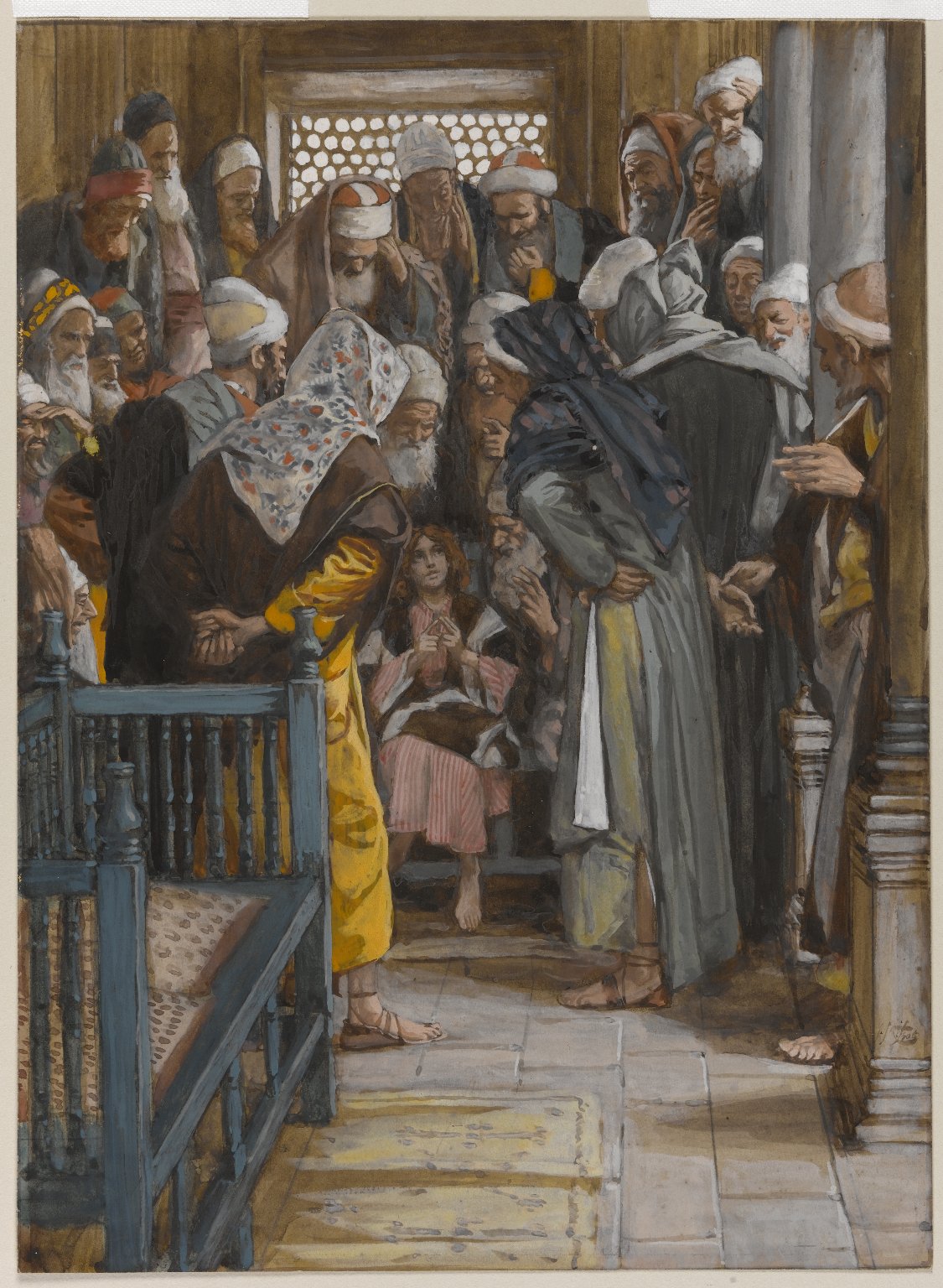
This legal or ‘punishment-substitution’ understanding of Jesus’ death did not become widespread for at least a thousand years after his crucifixion. Instead, during the first millennium, a different concept of Jesus’ mission was preeminent. It springs from the ransom words in Mark, as well as from 1st Timothy 2:5, where Paul writes, “…there is … one mediator between God and human kind, Christ Jesus… who gave himself [as] a ransom for all.”

According to this ransom view, ever since Creation, we have placed ourselves in the hands of Satan, by refusing to ‘delight in God’s will or walk in God’s ways.’ In effect, we have strayed into ‘the jungles of sin,’ and have allowed ourselves to be taken hostage by the Devil. We are held captive by our sin, and by our inclination to follow our own will. Like the two student hostages, we might have ‘paid’ our way to freedom ~ if we and they had had the means to do so. But we did not.
And so, showing his great love for us, Jesus offered himself to the Devil, as a ransom for our freedom. Jesus allowed the Devil to take him, as someone of even greater value than all of us. For Satan received as a ransom the sinless One, God’s own son. C.S. Lewis employs a similar ransom metaphor in The Lion, the Witch, and the Wardrobe. In this biblically-derived approach, the ‘price to be paid’ was a concession to the power of an enemy, and compensation for a loss, rather than (as in the later and more prevalent legal view) a payment to satisfy God’s sense of justice.

An image of Aslan’s self-sacrifice, from a film version of The Lion, the Witch, and the Wardrobe


This post is adapted from some material previously published in this space, with some additional imagery. It is based on my homily for Sunday, Oct. 20, 2024, which may be accessed by clicking here.

Japanese Thatched Roof Farm and Country Houses

If reading this by email, please tap the title at the top to open your browser for the best experience. Then, clicking individual pictures will reveal higher resolution images.


Those who watched the Winter Olympics broadcast from Nagano, Japan, may have gained some familiarity with a region sometimes referred to as the Japanese Alps. While living in Japan, my parents developed a deep interest in Japanese folk art (Mingei). Through this, they became acquainted with Sanshiro Ikeda, a recognized authority on Mingei, who built craft furniture. Through our trips to Nagano-ken (or prefecture), we visited Ikeda’s small furniture factory and the country farm house he had restored, and in which he lived. Through these visits, we became familiar with Matsumoto, its beautiful many hundred year old castle, and the surrounding Nagano countryside. My strongest memory, though, is of Ikeda’s restored traditional farmhouse, and those like it in the area.

The choice of Nagano prefecture as a location for the Winter Olympics was based on the fact that that region regularly receives a good deal of snow. As a consequence, the historic pattern for the design of farm and country houses involves very steep roofs which are quite often thatched. The combination of these two characteristics in the resulting roofs renders them amenable to heavy snow loads, which also help provide additional insulation against the seasonal cold weather.

These farm and country houses are typically built from wooden posts and beams, with plaster or stucco walls, and wooden plank floors if not otherwise covered with tatami mats made of straw and rice husks. The equivalent of what we refer to as rafters, and the lath cross pieces or straps supporting the thatched roof material, are typically beams made from tree branches or thick and thin pieces of bamboo, lashed together with rope, something that surely would not pass building codes for contemporary construction.

Traditional house with beams lashed together (above) and stucco walls above sliding shoji (lattice door and window panels), seen in the lower photo.

Instead of any form of central heating, generally unknown in Japan until modern times, many of the rooms on the ground floor would have a footwell in the floor, at the base of which traditionally there would have been a small charcoal brazier (charcoal kotatsu). Those in the room sitting on the floor, with their legs dangling in the footwell, managed to stay warm with the benefit of a small table over their thighs and knees, above the footwell, along with a lap blanket suspended from the low table.

A kotatsu blanket (with table top removed)

Kotatsu design (traditional charcoal and contemporary electronic patterns)

A similar but very shallow well-like indentation in the floor provided a place for cooking at the floor level.

Quite often these houses would feature one or two successively smaller floors above the ground floor in a way that will recall Western A-frame ski lodge houses. Typically, the sleeping areas would be on the upper floors with futon beds laid out on the tatami mats, thick quilts provided, and pillows stuffed with uncooked rice grains.

Interior of a traditional farmhouse showing a futon (or Japanese mattress), and a quilt covering, set above tatami mats.

Below, I am including a selection of photos of various examples of traditional Japanese country houses and related buildings, which demonstrate the consistency with which this approach to domestic architecture was adopted and practiced through the centuries. The first three photos show what appear to be contemporary structures built in the historic farmhouse style (followed by photos of historic structures).

The following photos feature historic structures.

The same village area (as in the photo above it) on a winter’s evening

The well-preserved historic examples of Japanese farm and country houses in the photos above, as well as the contemporary reproductions employing this historically-informed approach to domestic architecture, attest to the heightened appreciation that Japanese people have for their ancient culture. It may be that, as in some other parts of the world, the highly advanced technological developments characterizing the urban areas where most of their people now live, has nurtured a deep and latent regard for aspects of their nation’s social, artistic, and spiritual heritage.