Author: Stephen Holmgren

I have been an Episcopal priest for thirty eight years, having served in parishes and in academia. My interests include art and theology, liturgy and spirituality, and I love to go sailing whenever I can.

Vivian Maier, Who Saw Beauty in People on the Street

If reading this by email, please tap the title at the top to open your browser for the best experience. Then, clicking individual pictures will reveal higher resolution images.

A classic self-portrait by Vivian Maier


Vivian Maier (1926-2009), whose artistic works were until recently largely unknown, is now credited with being among the most significant street photographers of the 20th-century. Her main way of supporting herself was as a nanny in New York City. But clearly, her vocation was to see the people around her in a sensitive and insightful way, and document her encounters with them through the art of photography. As a perceptive observer, she captured them ‘as they were.’

My hunch is that her much-appreciated work as a caregiver for children, in the context of their families, positively reflected an inborn gift for discernment about other people as she apprehended the beauty she found within them. This may have provided her with a greater sense of tolerance and comfort with how others could appear, some of whom she photographed in states of disarray, plagued by the challenges of poverty and or illness, as well as those who seemed to be among the elite and socially inaccessible.

Vivian Maijer took thousands of photographs in the years before our new era of digital photography, and she never had a sizable proportion of her images developed into stored negatives. Traditional cameras in her era allowed light to pass through their lenses so as to impact chemically-coated light-reactive rolls of plastic film. These rolls of film then required either commercial processing, or the equivalent in private ‘dark rooms,’ where the light-sensitive film could be transformed into a stable medium. It is worth noting that, in its earlier days, photography was dismissed as being a lesser (or not even an) art. Yet, photography, as Maier’s work exemplifies, has the power to communicate great beauty, inspire goodness, and convey significant truths.

She was nevertheless unassertive with regard to what may have been seen as her ‘hobby’. She seems to have had confidence in her talent, and in the reasonable validity of her expenditures on cameras and film (a lot of film!), as well as the costs of developing the film she chose to have processed. And yet, we can only wonder why she did not seek out public recognition of her talents and work in a more encompassing way.

A compelling example of Maijer’s work

Three variables mark Vivian Maier’s accomplishments in photographic proficiency:

First, she was adept at capturing compelling and memorable images of people whose face and expression, and or posture, caught her interest.

Second, she became very proficient in producing images in black and white that have a significant light value contrast between those two reference points (light and dark). She also appears to have become adroit in manipulating the technical features of cameras such as shutter speed and aperture. For example, and taking into account the speed at which various film types absorb light, a quick shutter speed is often required when capturing people and objects in motion, to avoid a resulting blurred image. At the same time, when the shutter speed is fast, the aperture or degree to which the shutter is set to open in terms of size, not only affects how much light is let in but, interestingly, also affects how far objects in the distance remain in focus. Her attainment of these skills allowed her to be in greater control of depth of field, something important when taking photographs of people in public settings.

These first two variables involve skills that can be learned through practice. The third significant variable is picture composition, an inherited gift as much as it may be something that can be taught. Whether or not it can be learned through study, I believe that she had it naturally.

The following are some of the most significant images I have found in the available online archive of Vivian Maier’s oeuvre or life’s work.

There are, to be sure, photos of men (as below), but her most compelling images, I believe, are those involving women from a complex variety of what are now called ‘social locations,’ in New York City.

I find the following artistic self-portrait both visually compelling as well as insightful about herself.

What a remarkable ‘amateur’ photographer was Vivian Maijer!


Finding Beauty in the Most Unexpected Places

If reading this by email, please tap the title at the top to open your browser for the best experience. Then, clicking individual pictures will reveal higher resolution images.

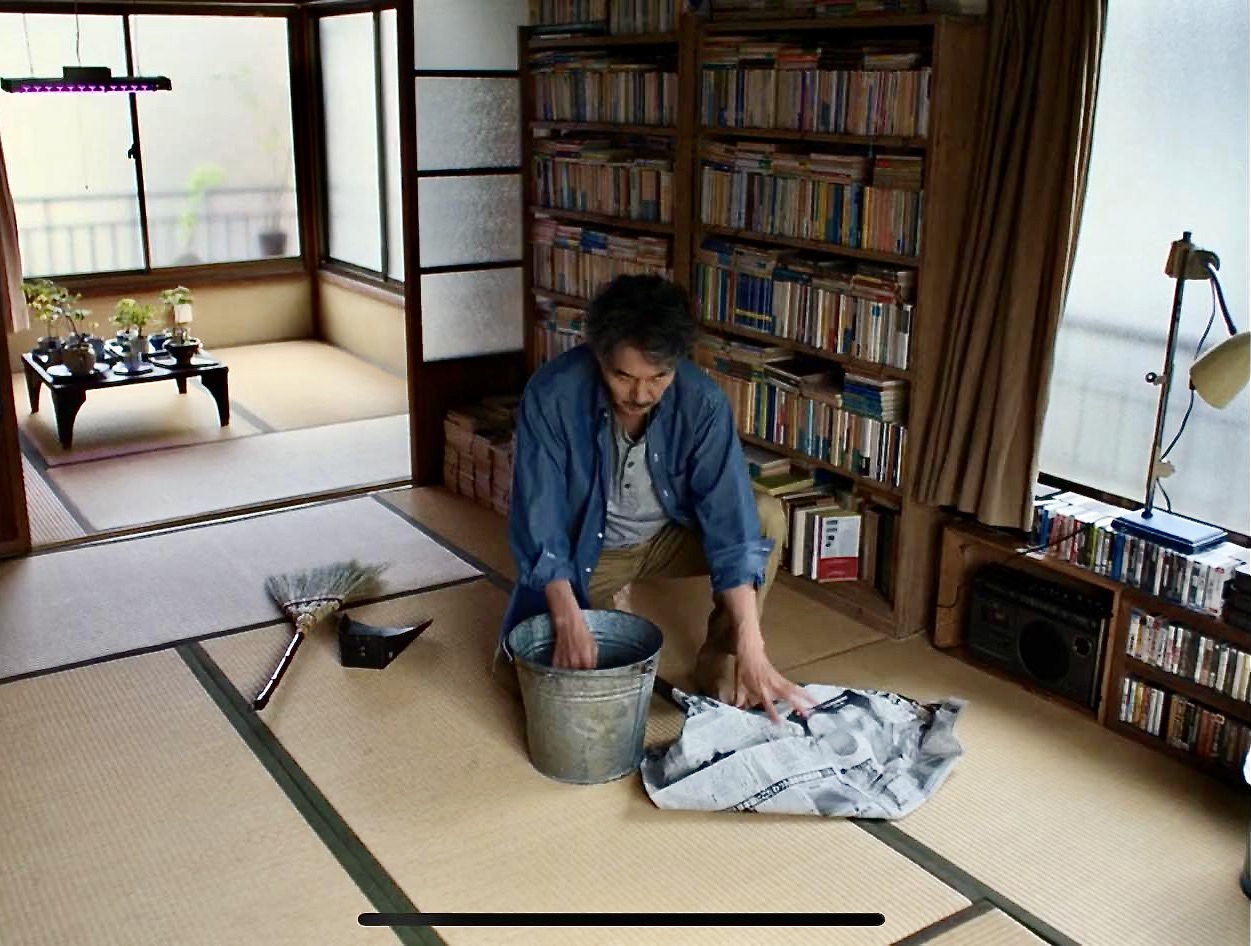
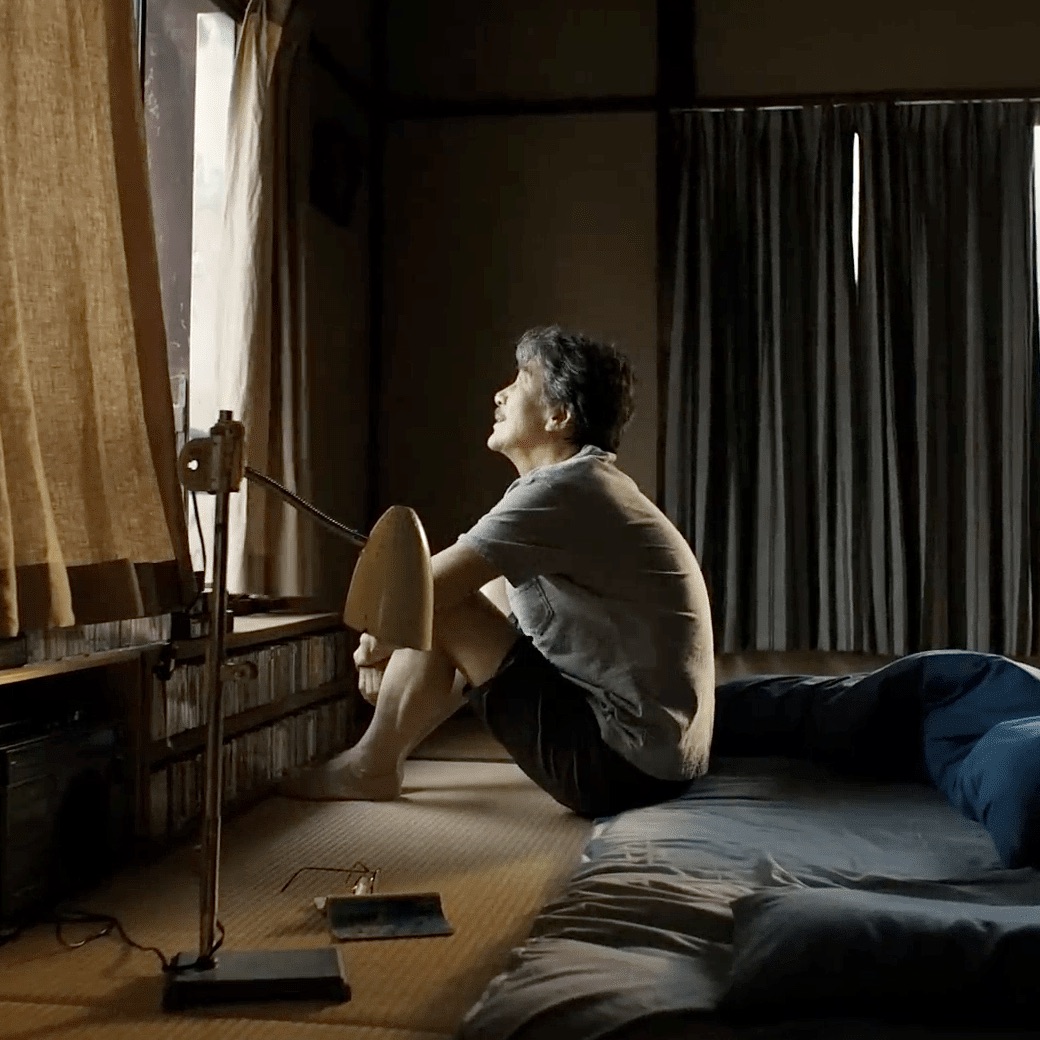
Actor Koji Yakusho portraying Hirayama looking upwards, in the film Perfect Days


An improbable premise underlies the remarkable film, Perfect Days, and it is displayed in two principal ways. A Tokyo public toilet cleaner has a positive attitude, even a cheerful spirit, as he approaches his daily routine of attending to places where other people leave their waste. And yet, the primary places where this man is lucky to work are the architecturally significant public toilets commissioned and built for the 2020 Tokyo Olympics. The film portrays these places well. Some have suggested that the architectural features of these structures may have inspired the movie’s production. Nevertheless, the film is centered upon one man’s approach to how he lives every day.

He is a man about whom we know only his surname, and we learn more about his daily routine than we do about his inner life. The latter, his interests and perhaps aspirations, are suggested by the books he reads and the music to which he listens while driving. Many scenes depict him at his work. But the film does this in ways that do not romanticize his occupation, while he is shown cleaning and polishing toilet bowls and seats, as well as sinks and other aspects of plumbing. The film skillfully negotiates the ambiguous terrain lying between a heroic portrayal of an apparently righteous man, and a sentimental celebration of an unreal figure.

A montage of some of the public toilets featured in Perfect Days

The approach to life epitomized by Hirayama in the film is one of contentment. He models someone who accepts the limitations presented by the contexts in which many of us live, and he displays an openness to unexpected moments of discovered and quiet beauty. The film is not overtly spiritual. Yet, these qualities may represent – to some Western viewers like me – compelling reflections of Japanese culture as it has been shaped by Buddhism.

Hirayama at work on a hobby, Bonsai

In addition to the overt paradoxes at the heart of the film – a happy toilet cleaner and beautiful public toilets – the film subtly presents other aspects of Japanese society that Western visitors might notice. In what may surprise many who are not of Japanese heritage, regarding a very private culture where people typically meet one another in commercial establishments rather than in personal dwelling places, public baths with full nudity are common. I experienced occasional visits to public baths in my youth, growing up in Japan.

Hirayama in the neighborhood bath house

And within the context of this very private culture, some Tokyo public restrooms were created with transparent glass walls, appearing to risk users to full disclosure (the glass walls magically become opaque when the doors are locked).

Three motifs or tropes in the film are memorable. Hirayama is portrayed as always looking up to the sky when emerging from his home in the morning on his way to work, and is also seen gazing upwards (as in the photo at the top of this post). This suggests that he unconsciously senses a connection with something bigger than himself, and this may be the source of his frequently displayed habit of smiling at others.

Another motif, surely related to the first, is the employment of black and white sequences that portray flickering images, usually of dappled sunlight glimpsed through tree limbs, which Hirayama captures with his old-fashioned film camera. Most often, he seems to take these photos during his lunch breaks in a local park. In relation to these images, the movie highlights the Japanese word, and concept, of komorebi, which in a single word expresses the idea of sunshine filtering through the leaves of trees overhead.

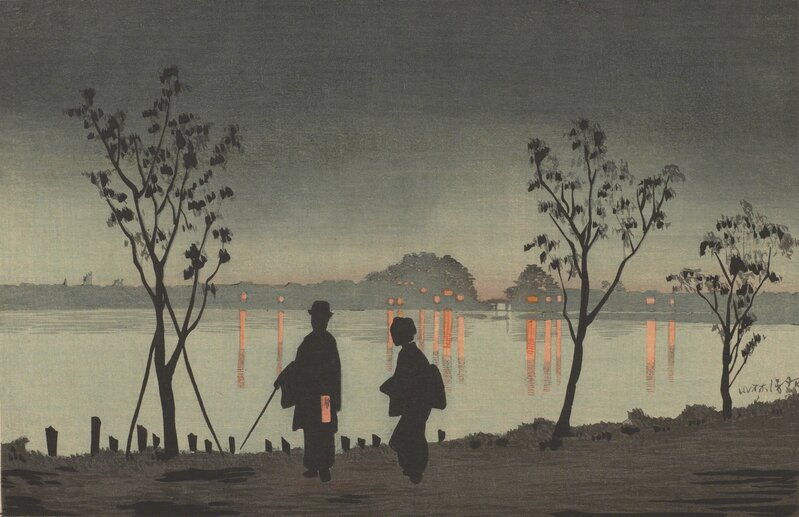
The third is the employment by the movie makers of the Sumida River in Tokyo, long celebrated in Japanese art, over which we see Hirayama cross while walking, driving, or biking. The river appears to symbolize a form of divide between the part of the city where his small apartment is located, and the more elegant commercial district where he usually works.

My favorite image of Tokyo’s Sumida River in art, a woodblock print by Kobayashi, Kiyochika ({1847-1915} name in traditional Japanese order)

These juxtapositions in Perfect Days of contrasting details, color versus black and white, and interior privacy and public life, along with the harmony in which they are presented, distinguish this film. To me, it is remarkable that this movie was made by a Western filmmaker, regardless of the assistance provided by Japanese colleagues. A studied sensitivity to what I know about Japanese culture is evident in the film’s portrayal of this fictional character in improbable circumstances, as it invites us to discover – along with Hirayama – beauty in the most unexpected places.

Hirayama, gazing upwards, holding his old-fashioned film camera


Chora Church: A Byzantine Treasure

If reading this by email, please tap the title at the top to open your browser for the best experience. Then, clicking individual pictures will reveal higher resolution images.

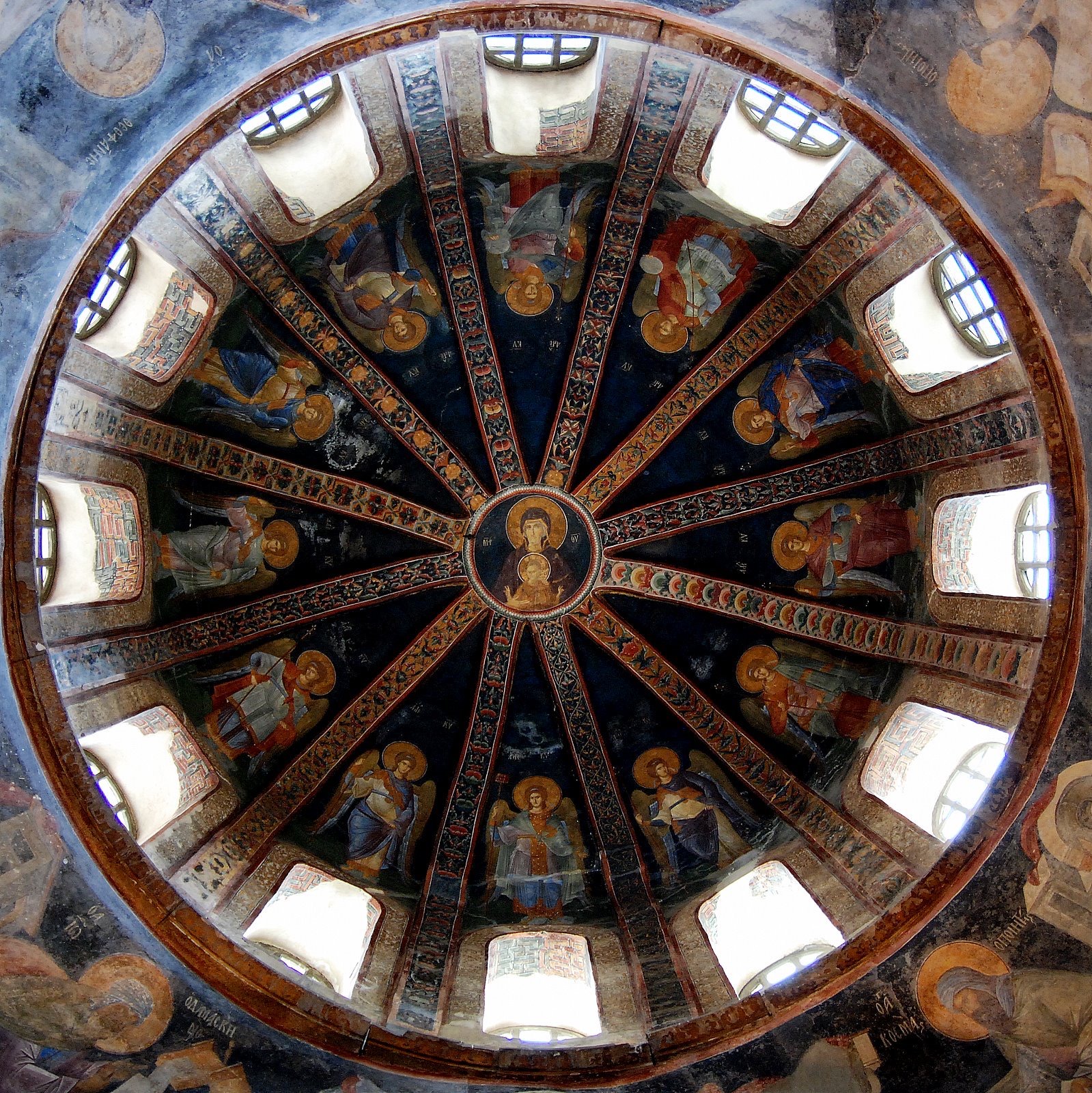
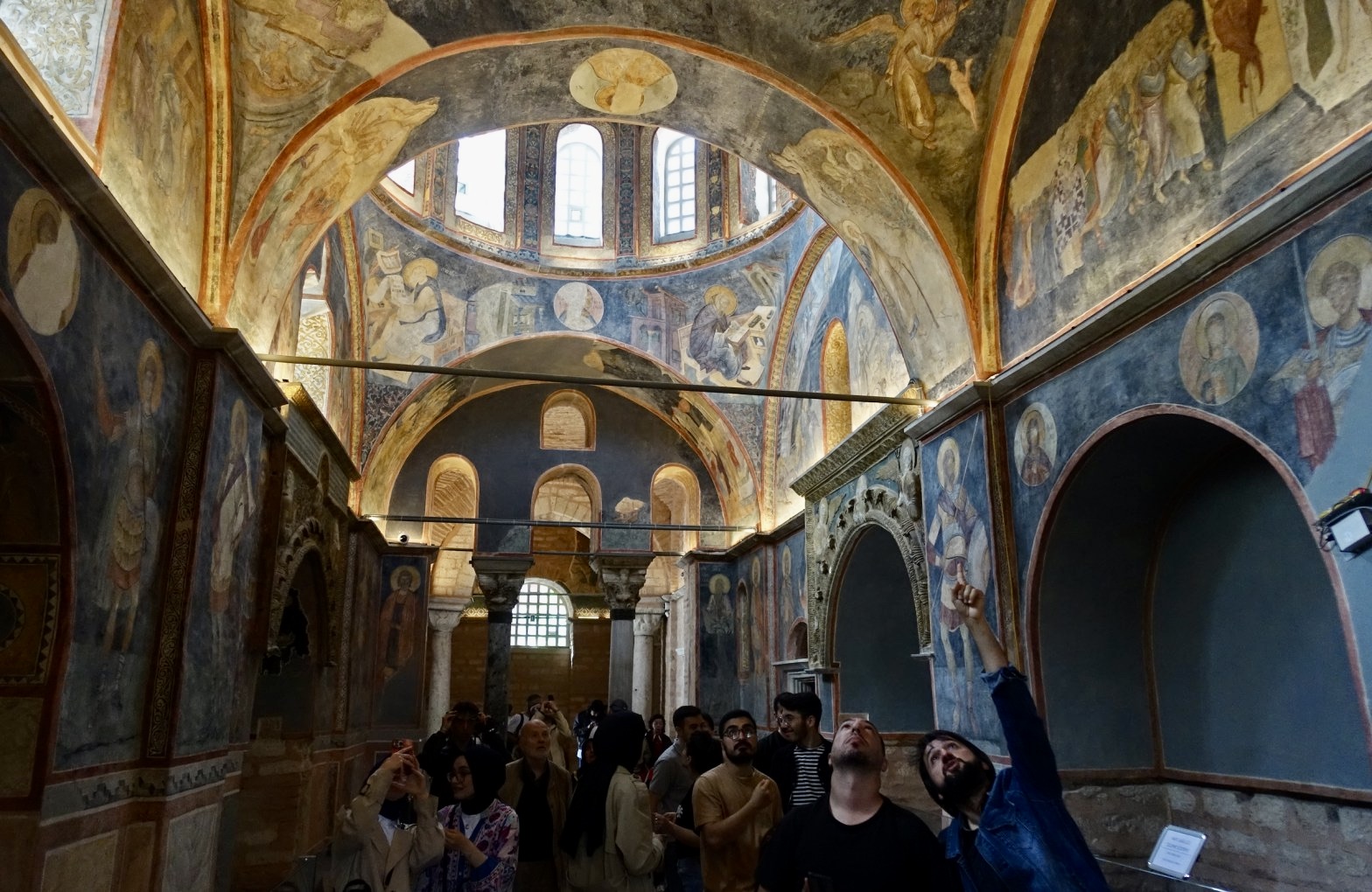
Dome over the Side Church (or parecclesion), Chora Church


We missed being able to visit this remarkable place by a day! Sadly, after staying in Istanbul for four nights, the historic Chora Church that had undergone four years of renovation would not reopen until the day after our departure.

Dating back to the time of Constantine in the early fourth-century, the Chora Church was built as part of a monastary outside the walls that were constructed when Constantinople became the new capitol of the Roman Empire in 330 A.D. Its rural location led to its formal title, Church of the Holy Savior in the Country (or Chorai, in Greek).

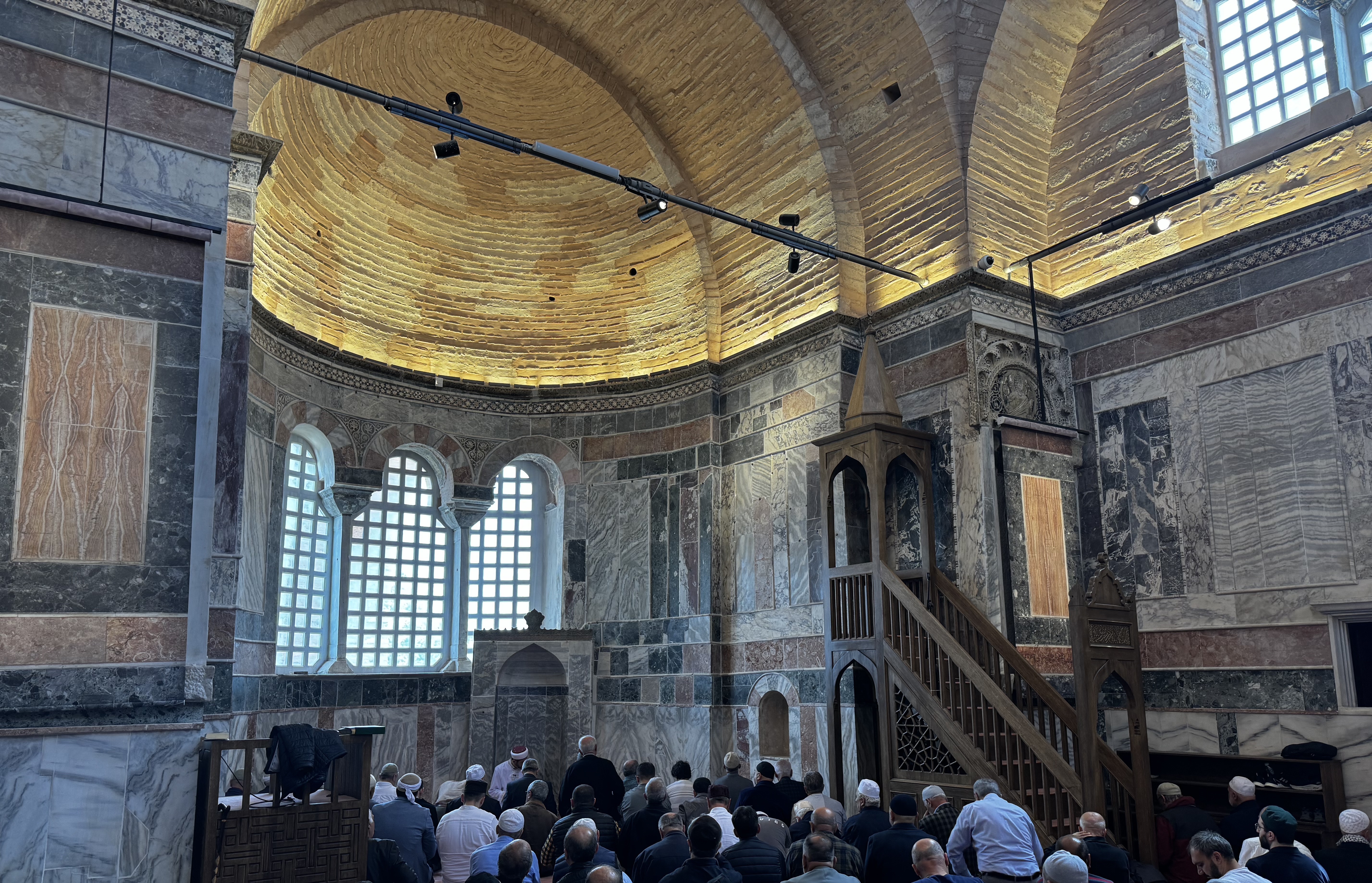
Interior of the original central nave (naos) in use as a mosque, with Christian mosaics and frescoes covered over

Chora, like the later Hagia Sophia, has over its history served as a church, a mosque, a museum, and now once again as a mosque. As I have noted in prior posts, the fact that buildings like Hagia Sophia and Chora have been able to transition from church to mosque without significant structural change helps us perceive how what became normative in mosque architecture had its origins in churches from the early Christian, pre-Islamic era. As a precursor to Hagia Sophia, the original walls of Chora may provide one of the earliest examples of what would develop into the cruciform plan for churches, a design pattern that became predominant in the Christian East. This approach to design for worship spaces is centered on a square, covered by a dome, a departure from the early rectangular basilica plan favored in the western Roman region.

Floor plan of the Chora Church

In the floor plan above, note the subtle Greek Cross pattern of the central nave (or naos) below the large dome. As this plan indicates, the original, late Classical period Chora was significantly expanded during the Byzantine period, between the 11th century and the 14th century.

Section drawings of Chora Church showing the location of some murals and frescoes

In addition to its cruciform plan, and the church’s great antiquity, another feature that distinguishes Chora is its impressive collection of well-preserved Byzantine mosaics and frescoes, largely from the early fourteenth-century.

Visitors to Chora admiring the murals in the Byzantine-added “side church”

The bulk of the surviving mosaics and frescoes are located primarily in the side church (or parecclesion). This may be due to the central nave or naos having been used for Islamic worship during a significant portion of the building’s history. One of the many beautiful frescoes depicts a common theme found in works of art from the Christian East, that of the Harrowing of Hell. Images based on this theme depict the Christian belief concerning the first saving actions of the Risen Christ: pulling Adam and Eve out of their tombs and the clutches of the underworld (image below).

A fresco in the Side Church – Anastasis (or Resurrection): The Harrowing of Hell

A beautiful example of the Chora mosaics depicting Joseph and Mary’s enrollment for taxation in Bethlehem

Interior view of the side church

Like the later Hagia Sophia, Chora Church – for a time as a museum and now a mosque – still serves as an edifying spiritual place for Christians and people of other faiths to visit. For Orthodox Christians in the East, Chora’s numerous mosaics and frescoes provide multiple opportunities to (re)engage with biblical stories and with articles of faith in a way that the contemporaneous art in the much larger Arena (or Scrovegni) Chapel in Padua, Italy, provides enrichment for Western, Latin, Christians.

Exterior view of the southeast corner of Chora Church (note the later addition of a ‘flying buttress’)

A 1903 photograph of the west entrance to Chora in the late Ottoman period


The Beauty of Bonsai

If reading this by email, please tap the title at the top to open your browser for the best experience. Then, clicking individual pictures will reveal higher resolution images.


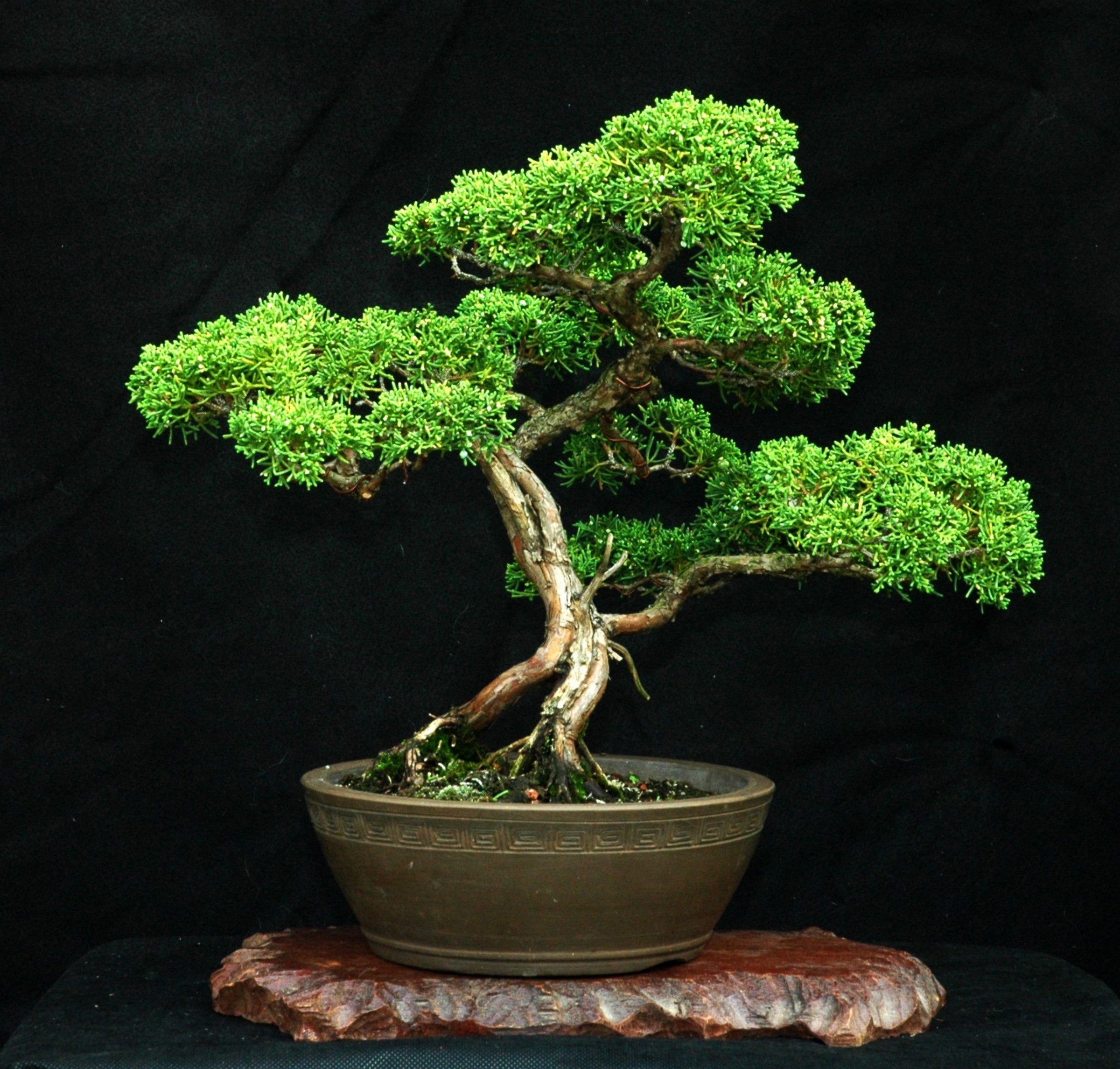
A local plant and garden center recently offered an introductory workshop on Bonsai, the Japanese and originally Chinese art of propagating and arranging miniature versions of living plants and trees. Upon registration for this workshop (and for a relatively modest fee), participants would be provided with a starter plant, a container for the project, and the basic tools and materials with which to begin their own Bonsai arrangement. With my childhood in Japan, and my interest in the arts, I jumped at the opportunity to learn some basic principles of Bonsai, an art which I have admired for many years. Nevertheless, I have been largely ignorant of the mechanics of this aesthetically-pleasing horticultural practice. Attending the workshop, I was not disappointed by the learning opportunity offered.

Upon going to our assigned places after arriving, each of us found a potted portulacaria afra, a succulent commonly called dwarf jade plant or elephant bush (photo below). We also found a glazed ceramic container, plant medium, and basic tools with which to create our first attempt at a genuine Bonsai arrangement. My potted starter plant was in a 6” plastic pot, about 18” – 24” in height, and root-bound in its container.

An example of portulacaria afra

Our first step in the process was to prepare the pot or container to receive the plant. I learned that the most useful plant containers have two drain holes, as well as two very small holes for upright wires. The photo below shows my pot after attaching the wires and screens.

Wires secure small mesh screens over drain holes, while a longer U-shaped wire emerges from below, to help secure the plant

Our next step was to remove the plant from its plastic pot, and determine where the upper primary roots lay. We were then asked to remove almost all of the former potting soil material (identified as pine bark mulch), and then to anticipate trimming the roots. Here, I found my first challenge. As an amateur gardener, disturbing the roots of a plant – much less removing the planting medium in which it has been nurtured – hit me as strongly counter-intuitive. Yet, this was actively encouraged.

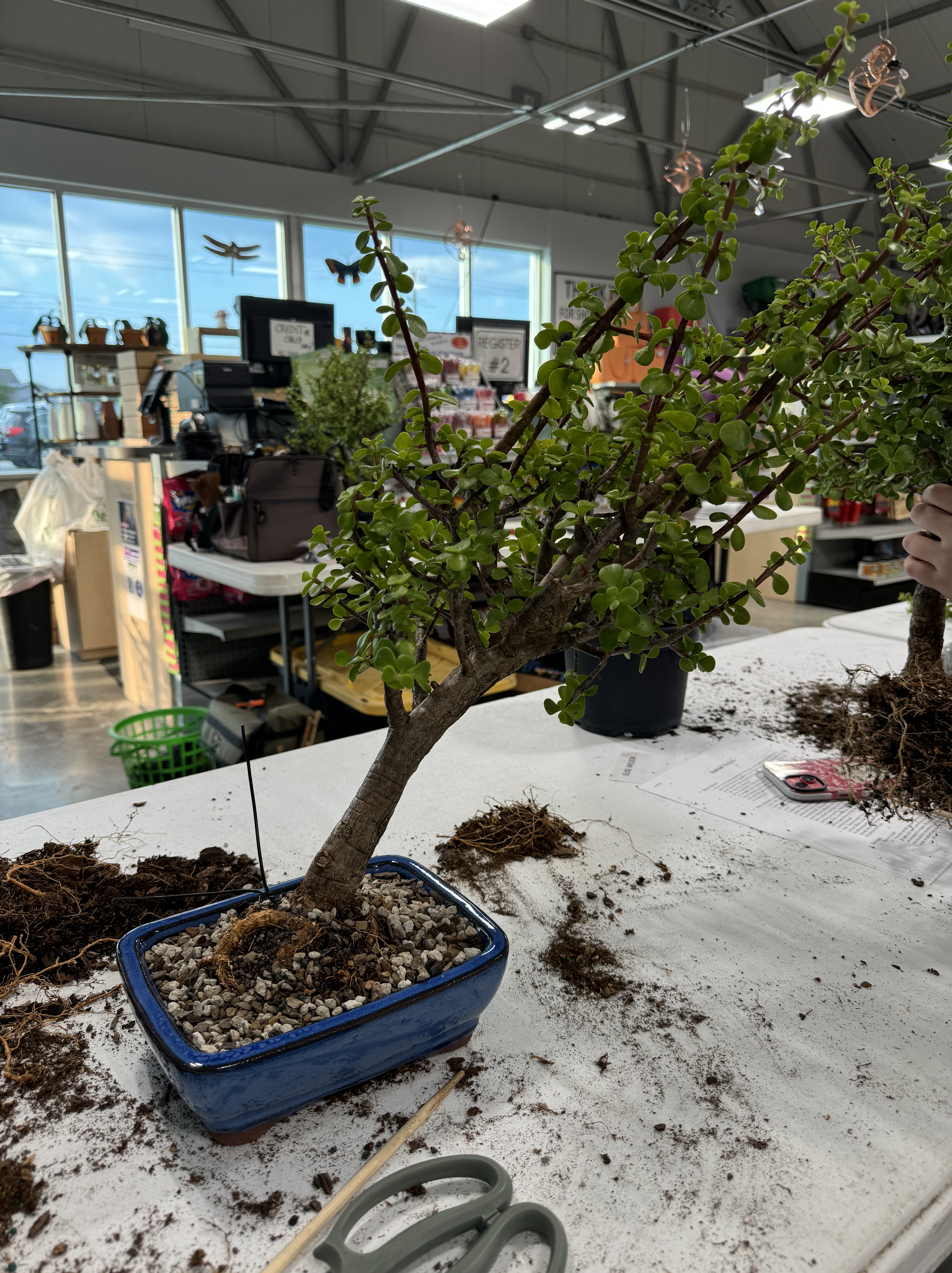
A participant’s plant after removal of most of the original planting medium, before cutting extraneous roots

After initial preparation of the plant, we had our third challenge. This was to cut and shape the remaining exposed roots in such a way that the plant might sit well in the provided pot. The overall natural shape of the plant provided a starting point. But an aesthetic judgment was also needed for how this particular plant would best sit in this particular container. Here, I was beginning to discern how at first seemingly mysterious Bonsai practices become compelling to so many people. There appeared to be at least thirty or more participants in this workshop, on a Tuesday evening before the 4th of July!

So, how might my particular plant best fit in my provided pot?

How I situated my plant in the pot, secured by the upright wires

My plant before I trimmed the upper stems

Then came the most challenging aspect of Bonsai for me as a beginner. How should I trim the top of the plant, and to what extent should I prune back the stems and leaves? The main lesson I received here was this: do not be afraid of pruning!

Indeed, with the art of Bonsai, and apparently according to recognized horticultural principles, the more we prune our Bonsai plants, we will find a real diminishment in the size of the leaves as the organism grows!

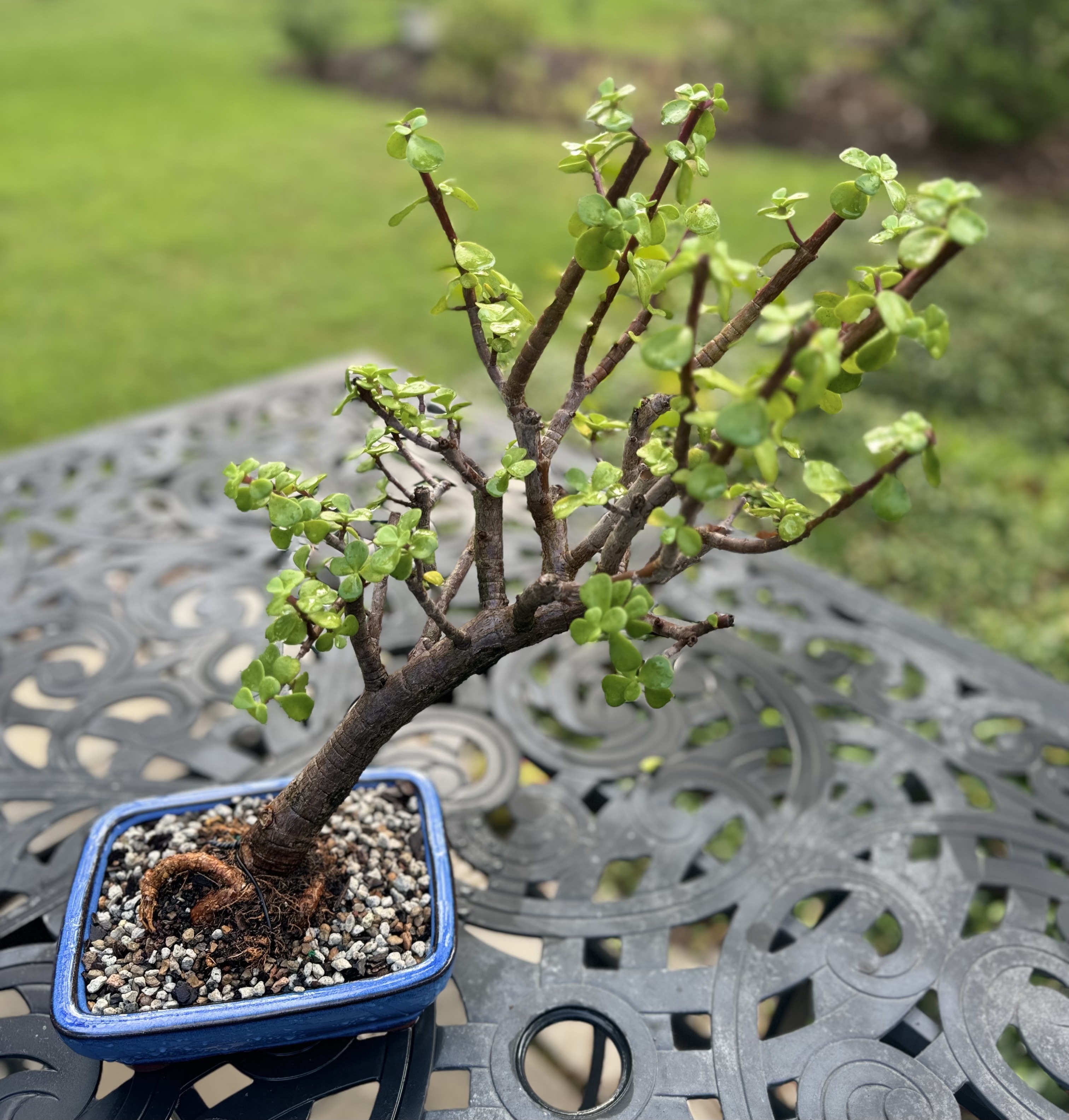
Here, below, is a photo of my Bonsai plant project at home, after some significant pruning.

The ‘windswept’ natural posture of the potted plant appealed to me, and I want to accentuate this by continuing to allow for the lean of the plant (to the right, in this photo), while counter-balancing this lean by promoting growth toward the opposite direction. As my recent mentors stressed, pruning will be everything!

What my portulacaria afra might look like some day


Note: as mysterious as this art-form may seem to Westerners, it is accessible to beginners in terms of method, materials, and technique. Ask your local plant and garden store about it!

Fully Alive: The Beauty of Human Nature

A photo of a print given to us years ago


Those familiar with my writing and ministry may not be surprised by how I choose to address the theme of beauty in relation to the human nature we all share.

My response is captured in a quote with words I have long loved and have frequently cited. The quote is from the second century Christian theologian and Bishop of Lyons (in present-day France), Irenaeus. “The glory of God is the human person fully alive.” To which he added, “and to be alive consists in beholding God.”

What an audacious statement! I believe that the fundamental insight here, latent within Irenaeus’s words, stems from the Gospel of John, with whose author Irenaeus likely had a personal connection. That would have been through Polycarp, Bishop of Smyrna (presently, Izmir, Turkey), the city where Ireaneaus was born. One writer has described Irenaeus as the spiritual grandson of the apostle John.

Another calligraphy print, this one featured on the website of Holy Cross Monastery

What does it mean for any one of us to be ‘fully alive’? I believe that the Gospel writer, John, would respond by echoing words from Paul, whose letters frequently employ the phrase, “in Christ.” Through Baptism, we come to be in Christ. Through Baptism, we are re-born in Christ; we live in Christ – and he in us – and we will leave this mortal life in Christ. Indeed, in John’s  compelling witness to Jesus’ teaching, we are told that those who believe in Jesus have already died, and now, will never die! All of the Gospel readings appointed for funerals in The Book of Common Prayer are from John. This is the Gospel that is so centered upon the themes of God’s incarnation within our shared human nature, giving us God-given light, and eternal life.

Words found in the daily pattern for Morning and Evening Prayer, as well as in the Eucharistic pattern used on most Sundays in Episcopal Churches, help amplify this point but in a subtle way. These several patterns for corporate and individual prayer include forms for confession. Using these forms, and after we acknowledge our sin, we pray that we may delight in God’s will , and walk in God’s ways. In the absolution that follows, we hear these remarkable words:

Almighty God, have mercy on you, forgive you all your sins through our Lord Jesus Christ, strengthen you in all goodness, and by the power of the Holy Spirit keep you in eternal life.

In words that may be easy to overlook, we pray that by Holy Spirit power, God will “keep us in eternal life”! Being fully alive involves delighting in God’s will, walking in God’s ways, and being kept by God in eternal life.

Christians believe that the beauty of our human nature was and is found in the Gospel Jesus, and as the Risen Christ comes to be found in us. Our human nature, created in the image and likeness of God, and transformed to become an icon of Christ, is therefore all about the fulfillment of our divinely-given and imbued potential. When by grace we see it happen in people’s lives, it is a beautiful thing to behold.

Yet, human nature, being still what it is, prompts us to look for beauty in outward terms when we view others, as well as ourselves. Jesus, as the Gospels imply, always looked for beauty within – the kind of beauty it was his vocation to share and re-enable in us. This is what we should be looking for, both within ourselves and in others.

The archetypal biblical example of the glory of God beautifully manifest in human nature is found in the Gospel Transfiguration stories. James Tissot, one of my favorite painters, offers us glimpses of Jesus manifesting this same glory on several occasions, a glory that was otherwise often hidden within him.

James Tissot, Jesus Goes Up Onto A Mountain to Pray

Tissot, Jesus Being Ministered to by the Angels

Paul’s remarkable words to the Corinthians bring these themes together nicely. For we want to be among those who are:

seeing the light of the gospel of the glory of Christ, who is the image of God… For God, who said, “Let light shine out of darkness,” has shone in our hearts to give the light of the knowledge of the glory of God in the face of Jesus Christ.”

And, by God’s generous grace, the same may be seen in our faces, as well.


Note: Kenneth Kirk, the esteemed 20th century Bishop of Oxford, and former Regius Professor of Moral Theology at the historic university in that city, titled one of his still-used books (The Vision of God) based on the Irenaeus quote, featured above. Kirk presents Irenaeus’ words in this (now dated) way: “The glory of God is a living man, and the life of man is the vision of God.”

Geoffrey Jellicoe: Finding and Creating Beauty in the World

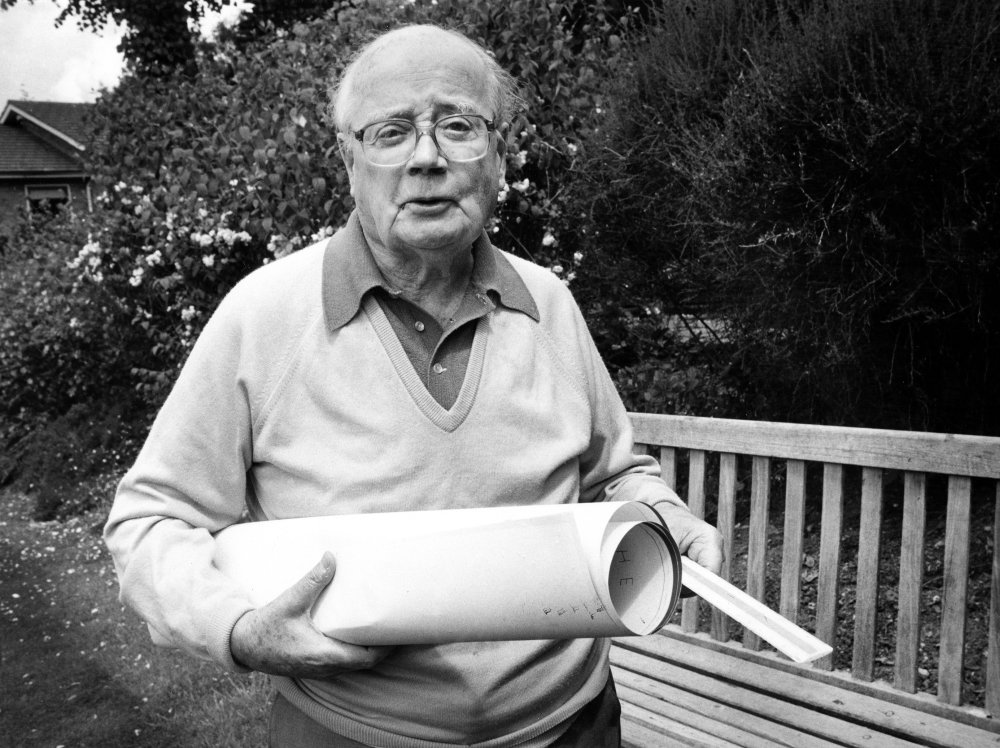
Sir Geoffrey Jellicoe at his London home shortly before his 90th birthday


Discerning beauty always presents an opportunity to experience joy. As many find, though, creating representations of beauty, as a chosen task, can be difficult.

Alive in my memory are images of areas of New York City and decaying areas of urban New England, during my high school years in the early 1970’s. I remember asking myself, as an aspiring architect and artist, how might I meet the challenge of creating examples of beauty in the world as we presently find it? Well, after some years, I discovered the life and work of Geoffrey Jellicoe, which provide an example of one way of answering questions that stay with me.

Late in his life, at a time when many seek the solace of retirement from actively pursuing such questions, Geoffrey Jellicoe took on a significant challenge. How might 150 acres of a seemingly forlorn stretch of a barrier island, adjacent to an urban area that has long surrendered to the declining effects of industrialization, be redeemed and transformed into a place for renewal by a humanistic vision of what might yet be?

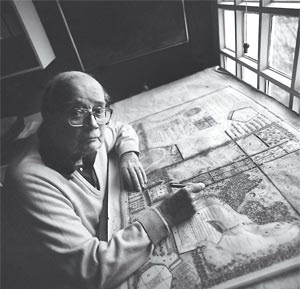
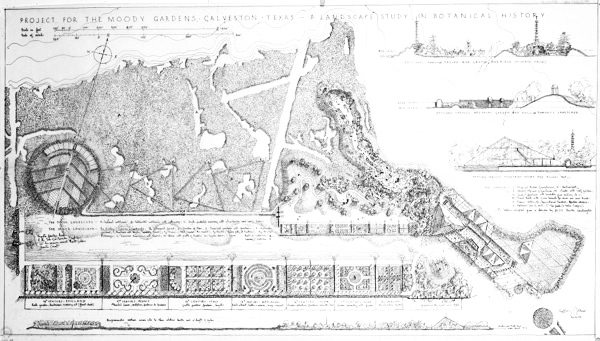
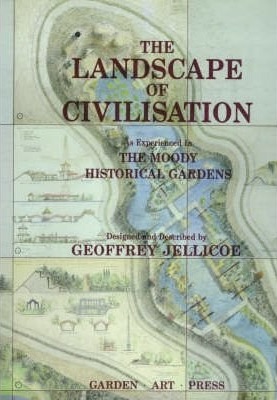
Jellicoe, at the age of 80, and to the surprise of some, accepted the opportunity to submit a proposal for what might become the Moody Gardens. In the process, he embraced the idea of working with a hundred-plus acres of neglected sea marsh and dune land on Galveston Island. This site even included a need to take into account an existing but under-used local airport. Nevertheless, the esteemed landscape architect, Jellicoe, envisioned a large facility centered on the nurture of human flourishing by designing what he hoped would become a significant botanical garden. Its plan would be dedicated to re-creating documented historic human efforts to re-shape areas of the world through the practices of horticulture and landscape architecture.

The Texas-based Moody Foundation, a philanthropic organization committed to education, health, and community development, found in Jellicoe the person they believed was best equipped to provide a master plan for what might become Moody Gardens, in the vicinity of Houston. And he brought to this challenge a lifetime of learning and accomplished work, which fitted him well to address this auspicious opportunity.

Encountering Moody Gardens as it has come to be, a vibrant, attractive, and an apparently successful facility, we may be mislead about Jellicoe’s orginal concept for the project. In presenting itself now as a tourist destination with resort-like amenities, Jellicoe’s early proposals for the Gardens seem fanciful if not also highly visionary. Yet, there may be significant things we can learn from his initial plans, and the concepts he sought to embody in his hoped-for realization of the project.

I can suggest a few of these potential learnings by posing some rhetorical questions – questions that I hope to address in future posts.

  • What is ‘our human nature,’ that we hope or believe we all share? What environments are most suited for nurturing the flourishing of our human nature?
  • What is Nature, and what humanly-created environments are most true to Nature? What things or places do we consider to be ‘natural’?
  • Why does it require human effort, financial capital, and institutional resources to facilitate, maintain, and preserve ‘natural’ environments? (Consider here the scope of the funding for the National Park Service, and the United States Forest Service.)
  • And, why is concern about the natural world- the ‘environment’ – properly a matter for serious theological reflection, and one especially related to our regard for Beauty? Why do our concerns about the natural world have theological significance?

Geoffrey Jellicoe at work in his garden

Beauty, Transcendence, and Personal Transparency


In preparing to offer an autumn class through an LSU seniors learning forum, I have been reflecting on the general themes that animate this blog website — art, beauty, and transcendence. The link between art and transcendence is intriguing, and for many of us, it is something we experience. Yet, the alluring and knowable significance of beauty – linked here with art and transcendence – is harder for us to get at. Relying upon a famous historical quote that some will recognize, I will paraphrase the matter this way: I can’t define Beauty; but I know it when I see it!

Readers of this blog will have noticed my prior exploration of what may be a common sequence or pattern in life experience. Through it, we move from encounters with Beauty, on to reflection about what may be Good. This then can lead to a search for, and reflection upon, what is True. These three facets of this transitional sequence, Beauty, Goodness, and Truth, are also referred to as the “Three Transcendentals.” They have  been portrayed in art history as the Three Graces, in the form of three young women appearing together as in a dance.

We may infer something from this common association between Beauty, Goodness, and Truth, in relation to the further category of that which is transcendent. The three so-called ‘Transcendentals’ at least verbally have something to do with our human interest in the compelling category of transcendence. [Note: transcendental and transcendence obviously come from the same root word.] For our experiential encounter with some objects and or events can lead us to describe them as having been memorably beautiful, very good, and or compellingly true. Why? Because when remembering these encounters as occasions in which we glimpsed, sensed, and or apprehended something real and beyond sense experience, we have had an engagement with what we may best describe as having a ‘transcendental’ quality.

One way to help account for the above is to recognize that we are ‘spiritual’ beings, and not merely animate beings whose significance can be explained solely in terms of bio-physical data and analysis. To help get at the questions we are exploring, we can refer to the long-recognized brain-mind question. Does human conscious experience terminate with brain function? That is the blunt way to put a matter that can be so much more suggestive and evocative. Our human experience – here and now, in our conscious awareness – clearly depends upon brain function. But what if it also transcends brain function?

Here, we can fall back upon a basic principle of received Christian doctrine: we are embodied. In life beyond, if it is granted to us, the New Testament tells us that we will remain ‘embodied,’ though not in the same form as we are now. So, if brain function demonstrably ceases upon physical death, and if consciousness may transcend the cessation of brain function, what might we make of this?

My reflections on these ideas have led me to a further perception, which may call for additional consideration. When we have encounters with objects, experiences, and or events, that we describe as highly beautiful, movingly good, and or compellingly true, we have experiences of not only what is here and now, but also of what may be transcendent. In having such experiences, we often feel more true to our selves, to who we are, and to whom we hope to become. And the world feels more real and true in an expanded way. In the process, we may become more transparent to ourselves.

Stemming from such experiences, I find that I am also more open to being transparent with others. How? Sensing I have encountered something truly beautiful, genuinely good, and or fundamentally true, I feel more alive, and more in touch with the way the world really is. These experiences leave me more sure about my perceptions of what I have sensed. I then find I am more confident about these experiences, and more willing to share them – and myself – with others.

Experiencing Beauty, apprehending Goodness, and discerning Truth, may therefore open the doors of communication we yearn to have with others.


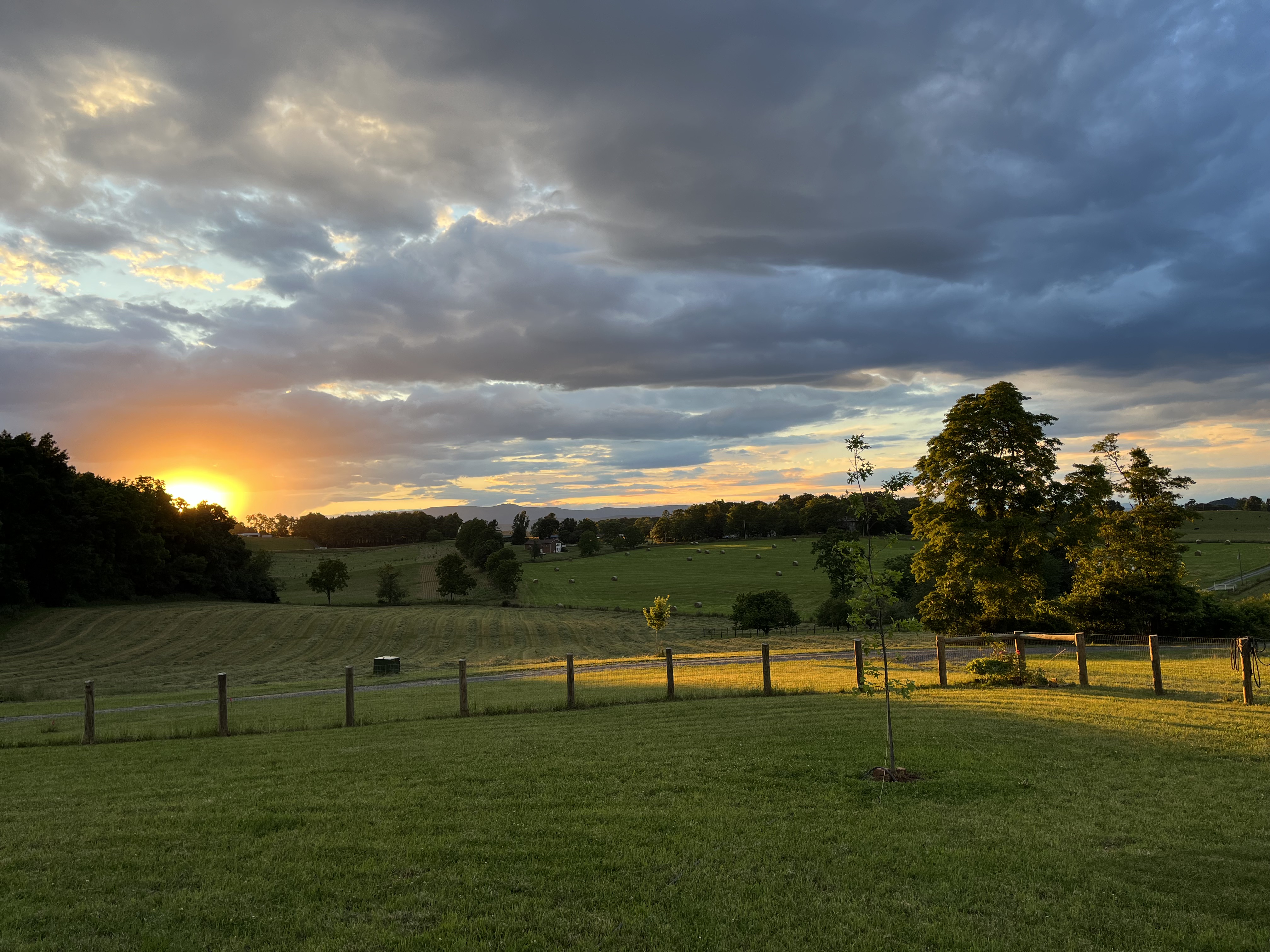
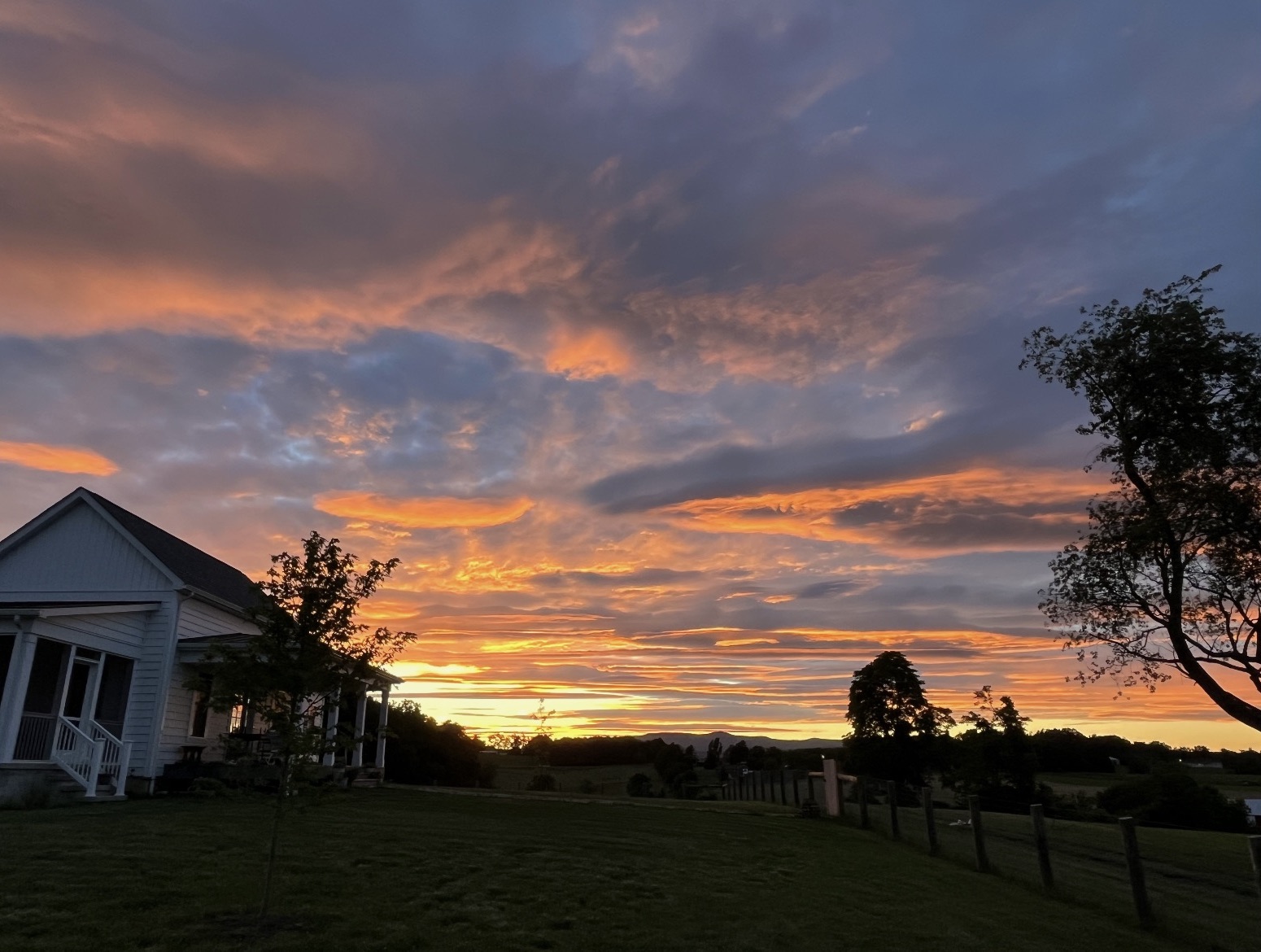
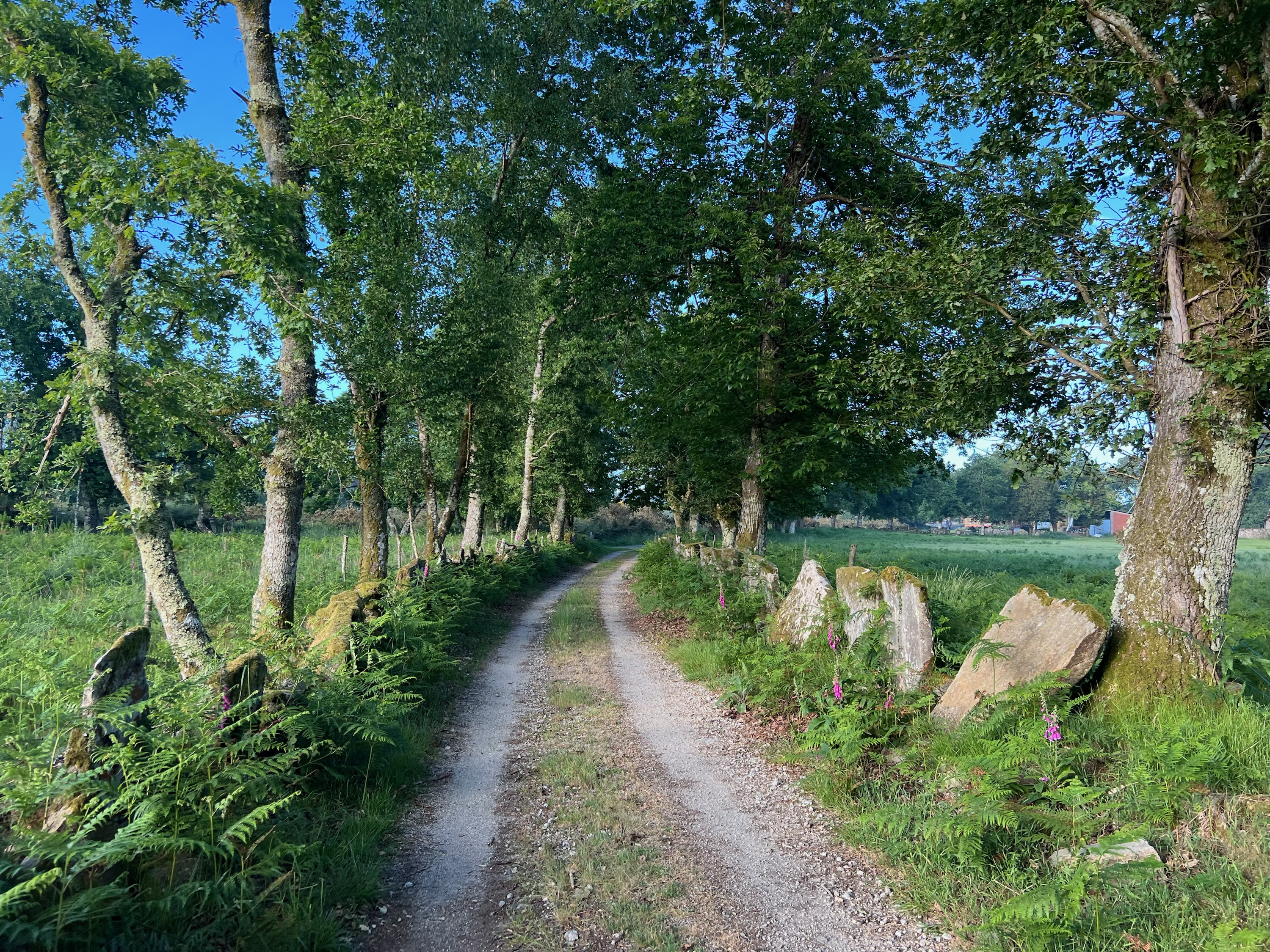
My thanks to a longtime friend, Chip Prehn, and to my brother, Greg, for the above photos. The first three come from Sassafras Farm, during haying season in Virginia, and the latter photo was taken while my brother was recently completing his fourth Camino de Santiago.

A Beautiful Place Where I Went to School

A view from the campus farm across the Connecticut River valley


In the fall of 1971, I was truly fortunate to be able to head off to Northfield Mt. Hermon School for my sophomore year of high school. After growing up mostly in Japan, and returning to the States for a couple of years, I was ready for a new challenge. I was yearning for an educational opportunity that would build upon my earlier experience at the Yokohama International School. When I arrived at Northfield Mt. Hermon (NMH) as a scholarship student, this inviting place opened the world for me, and changed my life.

Rooflines of a dorm, faculty house, and the student center in early evening light

Recently, I attended the 50th reunion of my NMH high school graduation class, which numbered about 365 in May of 1974. After graduating from this wonderful place for learning and formation, many of us at our reunion had not seen one another in fifty years! Anticipating being with school friends after such a length of time was a bit unsettling for me, given my awareness that – like others, as I came to see – I was not the same person I was when we last saw each other. I soon felt more at ease when greeted graciously by fellow members of my class and by our school hosts.

Two of the remodeled “Cottages” that serve as dorms

A theme periodically voiced during our weekend together was how troubling were the years in which we were students at NMH. The Vietnam War was still a concern; our President was in political if not legal trouble; the society around us was deeply divided and appeared to be coming apart; and large numbers of our fellow citizens seemed either unaware of or uncaring about the precarious state of the air, water, and food supply in the world around us. [In some ways, the world has not changed!]

Being the largest class in NMH’s history, at such a time, provided another challenge. Could we – from our multiple and differing backgrounds – find or make a community built of more than passing relationships upon arriving at a place that was – for some of us – far from home? To my astonishment, my first roommate was a former Yokohama classmate with whom I had last attended 7th grade, halfway around the world. And yet, I also remember my surprise at how I felt when observing the sudden absence of everyone from campus on graduation afternoon, many of whom I would not see again until our recent weekend together.

A wonderfully large green space at the center of campus

Here are a few things that distinguished my (and our) experience at NMH during those years, which are strong features of our school. The legacy of our founder, the 19th century evangelist, D.L. Moody, continues to be manifest in a strong emphasis upon spiritual and ethical values that have the power to transform both individuals and the world in which we live. Moody’s own commitment, to address not only the spiritual needs but also the social and educational needs of marginalized youth, remains central to our school’s mission. For we as alumni are rightly proud that among the first NMH students after our 1879 founding were 16 Indigenous Americans and a freed African-American from a formerly enslaved family.

The new science building

These themes are evident in our school’s mission statement, in words regarding an education that seeks to form the head, the heart, and the hands, of all those who share life together in the beautiful surroundings of the Connecticut River Valley. Fundamental to this commitment is the requirement for every student to have a work job, 3 – 5 hours per week, participating in dish crew, cleaning dorms or classrooms, or working on the school farm. These work jobs save the school a considerable amount of money that is directed toward the substantial scholarship funds that enable many students from a modest financial background to be at NMH.

Again and again during our reunion weekend I found myself saying to Martha, “I was so lucky to go here!”

Our Head of School, Brian Hargrove, speaking to us at the Alumni Convocation, in the chapel also featured in the recent film, The Holdovers

A welcome sign in the nearby historic town of Northfield, Massachusetts


Note: NMH provided a fitting setting for the movie, The Holdovers, and for many of its memorable scenes. The film was set in the time period when my fellow classmates and I were in attendance at NMH. One fellow alumnus at the Reunion was celebrating the 75th anniversary of his graduation!

Hagia Sophia’s Wondrous Dome

If reading this by email, please tap the title at the top to open your browser for the best experience. Then, clicking individual pictures will reveal higher resolution images.
Note the triangular semi-spherical panels (with angel images) on either side of the central arch


The dome over the center of Hagia Sophia has since its construction been an object of fascination, as much for its design as for its size. To stand within the space it covers is awe-inspiring. Though not unprecedented in form, the support structure for this massive dome sets the building apart. The architectural challenge the church’s designers overcame arose from a desire to set a circular dome over a square structure, especially if and when the walls of that structure would feature sizable arches.

In a traditional four-cornered room, and one in which arches (spanning the side walls) converge at the corners, a vertical line from floor to ceiling defines the juncture point of any two walls. A circular dome set on top of such a four-cornered structure would rest upon the walls, but upon the walls’ center points, above the arches. Most likely resting, therefore, upon the weakest points of those arched walls. Yet, the dome would not receive direct support at the building’s corners, usually the building’s strongest points, because the perimeter of the dome’s base would sit away from the square corners.

The genius of Hagia Sophia’s immense dome was the incorporation of what are formally termed “pendentives.” This architectural feature can be seen in the photo at the top, in the triangle-shaped, semi-spherical corner panels that allow the four corner columns to support the essential load-bearing portions of the dome’s base. It is illustrated in the diagram below (with the letter “a” representing the pendentives).

An illustration of a dome resting above pedentives

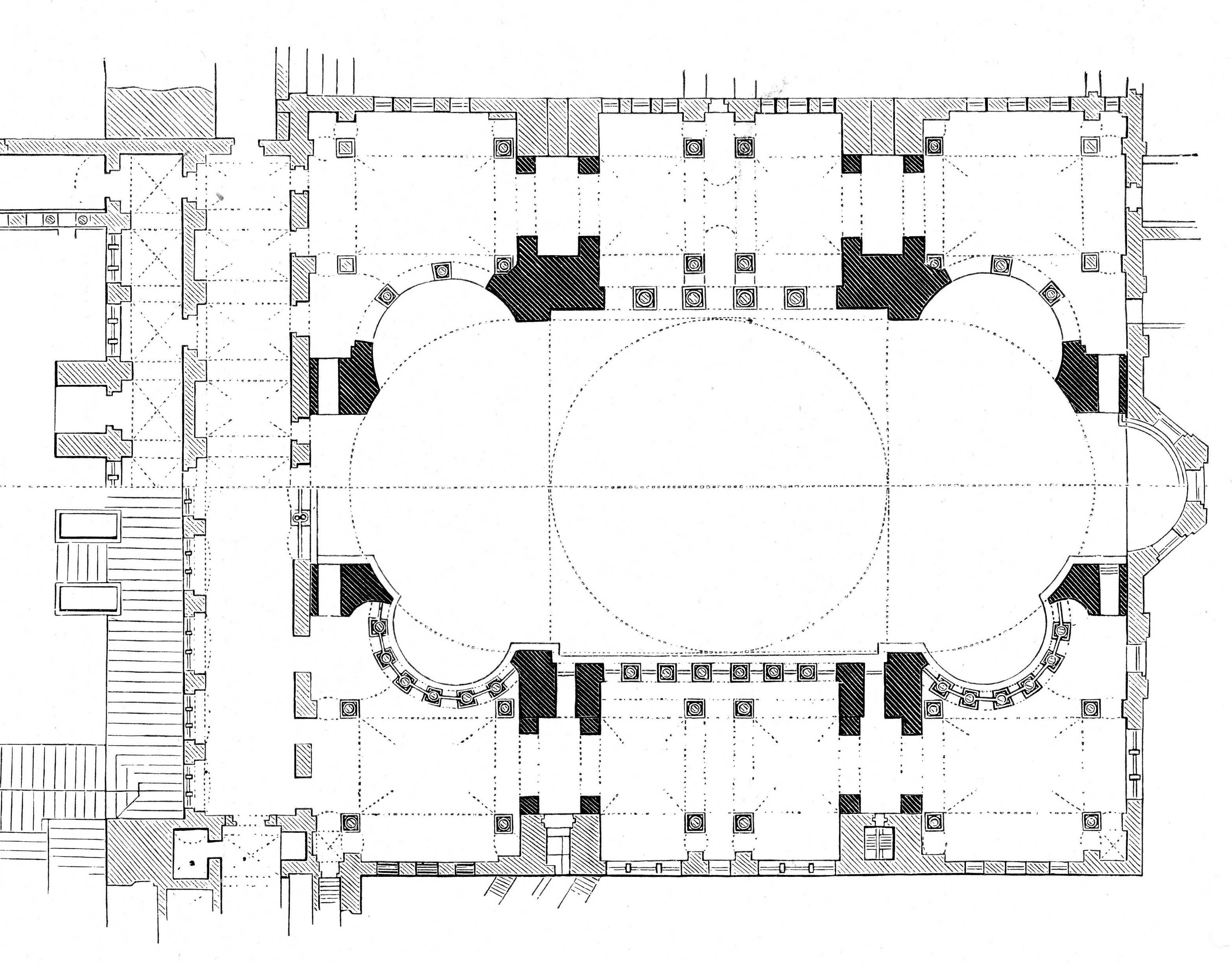
Readers of my prior post, upon the Greek Cross plan for Hagia Sophia, will observe how this mosque-cathedral has a basilica or rectangular shape at the upper level, while yet featuring a Greek Cross-shaped floor plan (see below). This is due the absence of half or semi-domes extending from the north and south sides of the building as they observably do on both the west and east ends.

Hagia Sophia floor plan, showing semi-domes (indicated by dotted lines) over the east and west ends of the Greek Cross floor plan, on either side of the central dome
Instead of the presence of half or semi-domes below the great arches on the upper level of the north and south sides of Hagia Sophia we find what are called “tympanaum.” These are wall screens that are punctuated by windows (see below).
A view of the tympanaum (or wall screen) below the dome on the south side of Hagia Sophia’s prayer space
Subsequent mosque designs, such as the breathtaking Süleymaniye Mosque in Istanbul (see below), took the same design concept forward while emphasizing the overall square shape of the Greek Cross.

These are some of the ways in which Hagia Sophia’s design set the stage for later mosque architecture. Later mosque plans tended to incorporate half or semi-domes on all four sides of the central, full-dome covered portion of the prayer space. In turn, these plans, as well as those of their predecessors, continue to influence the design of Christian churches in ways that can enhance the whole congregation’s participation in liturgy. (For more on this point, please see my prior post, “The Beauty of Hagia Sophia, and the Greek Cross”).

The Beauty of Hagia Sophia, and the Greek Cross

If reading this by email, please tap the title at the top to open your browser for the best experience. Then, clicking individual pictures will reveal higher resolution images.

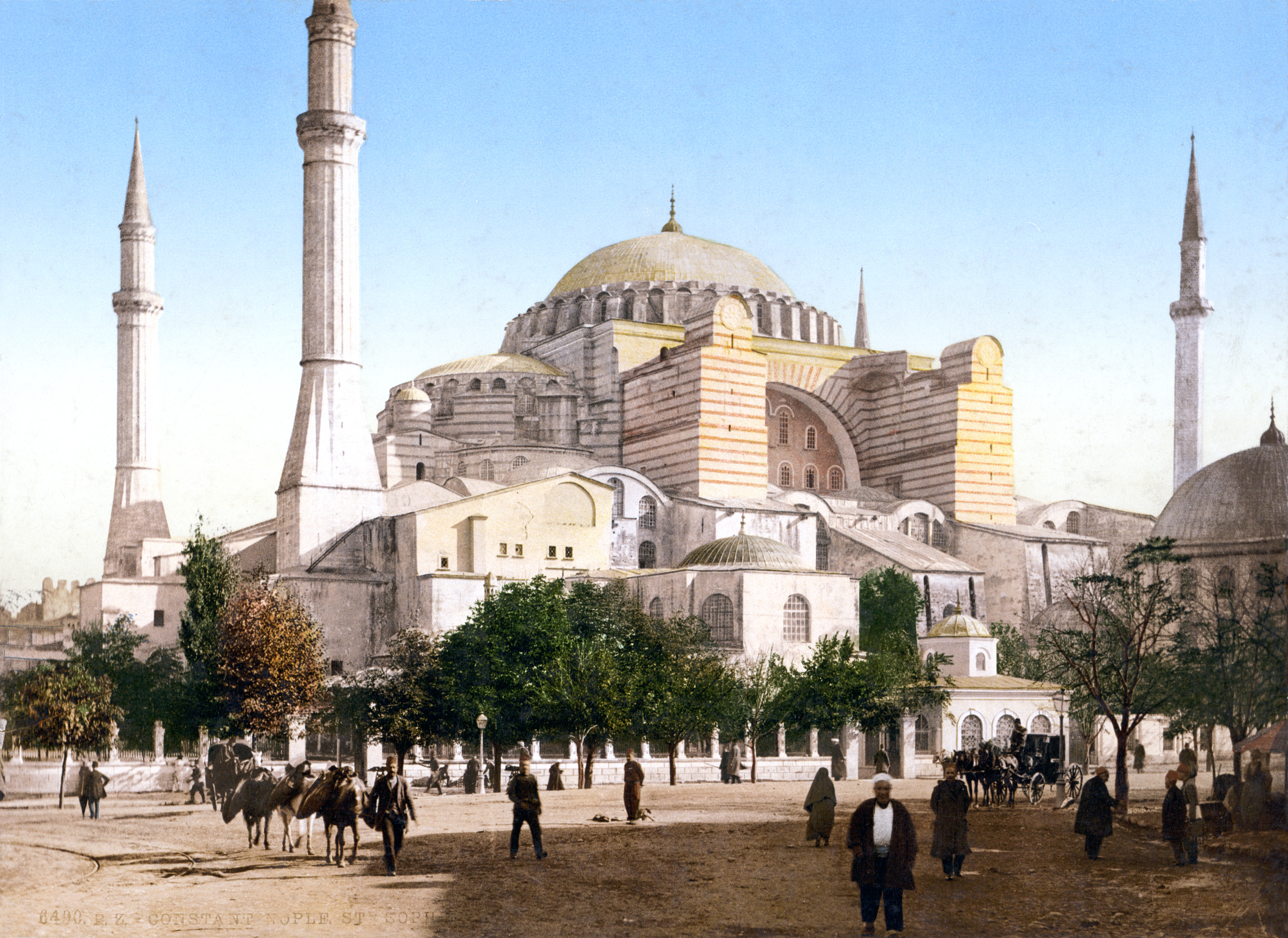
Hagia Sophia (late 19th century photo), showing a later-added (and no-longer-extant) marble paneled exterior


The first great church in Christendom, and the largest for a thousand years, was the Hagia Sophia in Istanbul. Many people think of this building as a mosque, the role in which it served from the Ottoman conquest of Constantinople in 1453 until it became a museum in 1935. The addition of minarets reinforces this historic identification of the building with Islam, and those tower-like structures once again serve (since 2020) as a means to broadcast the daily multiple summons to Muslims to attend the designated times of prayer.

This stunning building’s historical association with two of the worlds most prominent monotheistic religions has given rise to a paradox. The architectural form many of us readily associate with Islamic mosques, epitomized by present-day Hagia Sophia, is a form derived from a Christian house of worship. Most mosques, including those recently built around the world, have a structure reminiscent of this building, constructed under the reign of Justinian as the principal Christian cathedral of the late Roman or Byzantie empire, between 532 and 537 A.D.

Hagia Sophia as it sits today in modern Istanbul

The earliest Christian gathering places, before Christianity was officially recognized in the Roman Empire, were often in synagogues or in private homes as well as in safe outdoor places. Once Christians could build and maintain churches without interference, a common stylistic choice was to adopt the Roman basilica style of building, long used in Roman cities as locations for offices, courts, and for other public and business functions. They were usually designed with a rectagular floor plan, containing a central nave, accompanied by side aisles that were separated by columns supporting the central ceiling and roof.

Roof coverings over the side aisles were built at a lower height, allowing for clerestory windows in the nave above them, illuminating the central area. At one end was an apse, covered by a half or semi-dome. At the center of the apse was a dais where in Roman buildings magistrates sat, and which in later churches provided seating for the clergy.

Longitudinal plan for the Basilica of Maxentius and Constantine, Rome

Noticing how the above described spatial arrangement continues to be evident in modern churches helps us appreciate the significance of Justinian’s innovative plan for the Hagia Sophia. For the longitudinal Roman-derived spatial arrangement, evident in the basilica plan above, led in the West to the the placement of altars as well as the clergy attending them at one end of the building. Over time, these longitudinal basilica plans influenced Western medieval architects to design Gothic churches and cathedrals based loosely on the Latin cross, where the longitudinal length of the nave replicates the tall upright base of the cross, upholding the horizontal arms.

A common floor plan for Western, Latin, longitudinal church design (entrance at the west end; altar placed in the apse at the east end; nave is shaded)

By contrast, Justinian’s Hagia Sophia plan, widely influential in the Christian East, and subsequently adopted in Islamic architecture for mosques, is based on what is commonly called the Greek cross, where each of the four ‘arms’ of the cross are of equal length. Plans based upon the Greek Cross therefore lend themselves a to placement within a square and or a circle, rather than within a rectangle. They also provide scope for the placement of a large dome over the central and main part of the building.

Plan of Hagia Sophia (with an apse, but with a spatial arrangement based upon an equal-armed cross)

The effect of this Greek Cross-based development in church architecture has a symbolic significance in the liturgical use of buildings based upon it. The altar, even if placed near to one end of the building, sits more closely toward the center of the structure and within the resulting worship space. To be sure, the liturgical use of such church buildings in earlier centuries, and the theological views of those who worshipped in them, often implied hierarchical understandings of church membership, something common in the Latin West, as well. [Imagine what was subtly – if not intentionally – communicated when clergy were observed sitting in the places associated in the prior realm with public officials and the exercise of their offices.]

Yet, it is interesting to observe how a preference for Greek Cross (or circular) shaped building plans has received increased attention in modern liturgical renewal. This is because liturgical spaces based on such plans lend themselves more readily to a revived understanding of the Eucharist as an activity of the whole church, and not just of some who are designated if not also elevated to lead it, and provide its benefits.


In a subsequent post I will reflect on some further architectural features of Hagia Sophia and of designs based upon it.