philosophy

Living with God as Thou and I

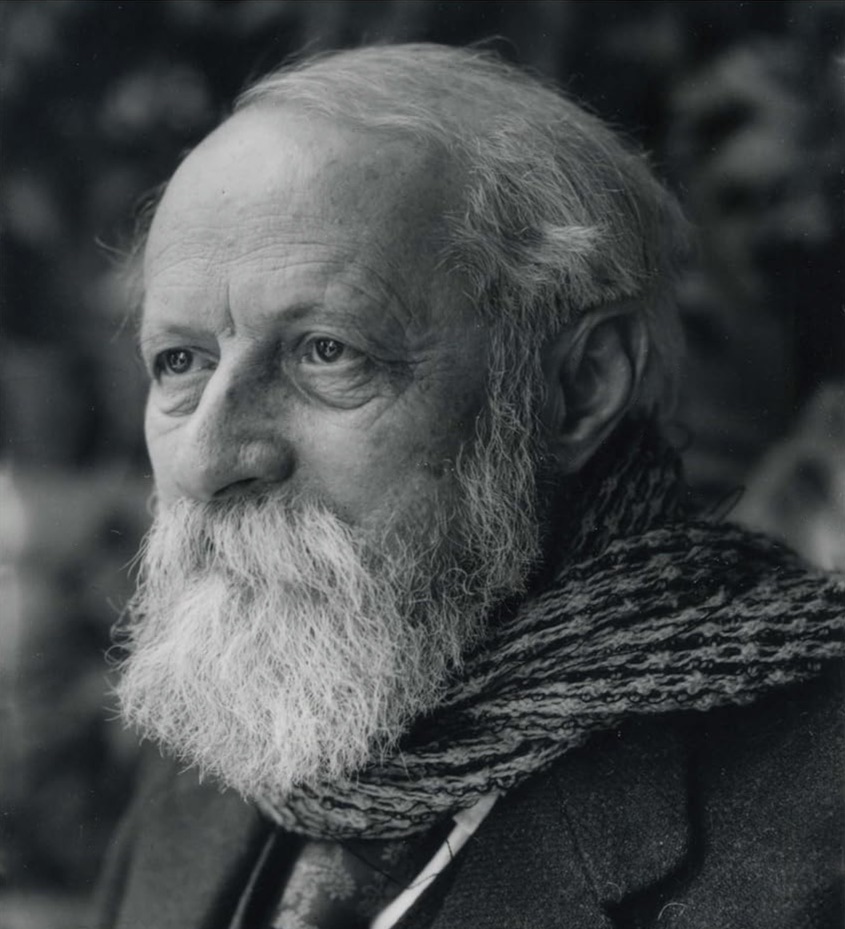
Martin Buber (1878-1965)

I was in college in the 1970’s. Though at first I was an agnostic art student while attending two Lutheran liberal arts colleges, many of my friends and two housemates were religion majors. This was at a time when the curricula for religion majors still included courses in Bible and in fundamental theology. Paul Tillich’s three Systematics volumes were still much read, as were Bonhoeffer and Barth. And Martin Buber’s once better-known book, I and Thou, was often recommended as a reading for various liberal arts majors.

The significance of Buber’s book was something I only came to realize much later, after grappling with Jean Paul Sartre’s rather dark, or as some would say ‘more realistic,’ view of human relationships. Those familiar with Sartre’s play, No Exit, may recall a phrase penned by Sartre, “Hell is other people.”

As I remember it, Sartre had in mind our experience of ourselves as being regarded by other people as an object. For Sartre, we function primarily, and are aware of ourselves, as subjects – subjects who resist being seen as the objects of other person’s perceptions and especially their judgement. Only later did I perceive the paradoxical affinity between the views of Sartre and Buber. For both were sensitive to the experiential problems that arise when people feel they are regarded as objects rather than as fellow-subjects. It is no coincidence that the lifespans of Buber and Sartre overlapped.
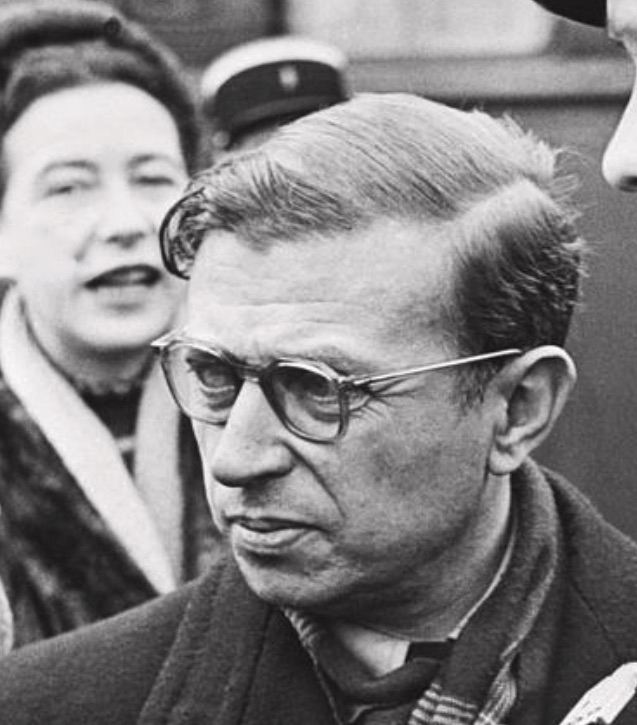
Jean Paul Sartre (1905-1980)

How hard it is for us then, spiritually and in religious terms. to be open to a related idea. For we find it difficult to experience and therefore to accept ourselves as being an object of God’s love. To see ourselves in this way is understandably uncomfortable for us, given how our fundamental way of living and of perceiving ourselves is to function as subjects who regard, come to know, and evaluate everything as an object of our perception – even and more especially, other people. And yet, as one of John’s New Testament Letters teaches us, we were first loved by God… before we were aware of it, much less come to believe this as true or live by it.

In view of these observations, we might want to invert Sartre’s rhetorical phrase regarding how our experience with other people can be ‘hellish.’ We might also say that for religious believers and especially Christians, our fellowship with other people may provide us with real experiential glimpses of what has traditionally been meant by ‘heaven.’

Here we can employ another often superficially-used phrase about certain experiences as being moments of ‘heaven on earth.’ With that phrase, we may need to expand our perception of ourselves in this way: Consciously and intentionally we want to live as an object of God’s love, of God’s enduringly positive regard and embrace, within God’s shared Trinitarian-fellowship. To see ourselves and others, as well as then to live, in this way, may require us to cease to think in terms of subject and object in a binary, either/or way. We learn from Buber that with one another we can be “I and Thou.” And each day, when first emerging from sleep, we can begin our morning with prayerfully re-orienting words like these: “Regardless of what I may have dreamed, Thou art, and as a result, I am.”

For as Jesus promised, saying, “Because I live, you also will live. In that day you will know that I am in my Father, and you in me, and I in you.” (John 14:19-20). Every day can be, and is, that day.

Our Baptism recalls Jesus’ Baptism, for both function – in part – as moments of designation. For us, it is the sacramental act when we are told that we have been included among God’s own children, made a part of Christ’s Body, and named for the community by the celebrant. In all these ways, we are the objects of God’s redemptive work through Christ and in the power of the Holy Spirit, by means of the Church. God chooses us before we are ever aware of our choice to respond.

“I recognize Thou, who first knew me before I ever became conscious of myself. Thou first loved me before I ever felt a challenge to love myself.”

Beauty: Found, Received, and Made

A photo from Èze, France (by my brother)

While undertaking my studies in ethics and moral theology, I discerned a significant parallel that has continued to shape my world-view. The parallel I have in mind connects how we understand law with how we understand ethics. In turn, I have come to see how this discernment applies also to how we appreciate beauty. 

First, about where law comes from. As I understand it, there are three principal theories about our source or sources for law, formally termed theories of jurisprudence. They are not mutually exclusive, and may function for us in overlapping ways. 

A common understanding regarding the source of law views the concept of law as fundamental to and discernible within the structure of reality. Law in this first sense is something we find, written into the patterns of the world, and of its many aspects. This idea gives rise to, but is not the same thing as, the so-called ‘laws of nature,’ or the principles that order the function of many things from the most basic particles within matter, and the function of waves like light and energy, the functions we discern within complex biological organisms however malleable they may seem to be over time, as well as within the structure of rationality. 

A well-known expression of this first concept of law is latent within the familiar phrasing regarding what it means to be a human being: “we hold these truths to be self-evident…” That is, certain truths or principles are there to be found, by those who exercise our capacity for reason and discernment. A simple but sometimes misleading label for this first concept of law is ‘natural law,’ which some skeptics might argue is neither!

The second most commonly recognized theory of the source of law can be articulated by observing those principles and ‘rules’ long-rooted in the history of our communities, which we receive from those who have come before us. British Common Law, which undergirds much of our tradition of law in the United States, is a prime example. ‘Received from history,’ and long relied upon by communities, are two basic ways to label and identify this concept of law. The familiar refrain, ‘we have always done it in this way,’ provides a ready example. 

The third way of understanding the source and character of law perceives law to be comprised of those principles and or rules that have been decided by individuals and communities. It is commonly called ‘positive law,’ a label that refers to the law that we posit, or put into place. The existence of law in this third category represents the assertion of will and of choice, for law in this sense arises from us as something we make, and is dependent upon our projection of what we wish or believe to be true. Many examples, from neighborhood clubhouse rules to Louisiana’s state constitution (resting upon the French Napoleonic legal tradition), are expressions of this approach. 

These three theoretical understandings of the source of law are relevant for my own field of ethics. For in ethics, there are three principal bases for our concept of the Good, and upon which our notion of the Good rests, which correspond to three principal forms of jurisprudence or theories of the source of law. 

Moonrise off the harbor breakwater in Antibes (photo also by Gregory Holmgren)

If this is correct, and I believe it is, then surely we can reason appropriately toward the same conclusion regarding Beauty as well as for Truth. For Beauty and Truth as Transcendentals play the same foundational role in our thinking as the Good, which functions as a principal reference point for ethics in human reasoning and experience.

This leads me to recognize how there are three principal ways of accounting for the source or sources of beauty. With regard to Beauty, positivists will contend that ideas regarding beauty are projections of those who hold them, whether by individuals or by communities. Historicists, in parallel with the common law tradition of jurisprudence, will say that notions of beauty are rooted in the histories of communities and the traditions, and are to this extent reliable guides for thinking about things. And – as follows from the preceding, those who accept the natural law tradition in jurisprudence are those most likely to view beauty as a given feature of reality, here and there for us to encounter, regardless of our shared traditions and personal aspirations. 

In closing, I want to restate a point I made above. Whether we are accounting for the source or sources of Beauty, Goodness, and or Truth, we may prefer one or more of three ways I have articulated based on the three principal approaches to the sources of law. Yet, all three approaches are likely to figure into and be a part of our thinking. For example, we may think that notions of beauty are rooted in nature, while valuing how our Western tradition of art has shaped our thoughts and those of our community, while still also recognizing how we may be somewhat arbitrary regarding the forms or standards of beauty that we prefer to value and pursue! Especially because the first or second of these three approaches may serve as a corrective to and perhaps as also a check against the potential liabilities associated with the third.

What Distinguishing Religion, Science, Magic, and Technology, Might Teach Us About Beauty

A book of essays by Peter Kreeft

Peter Kreeft has written an illuminating essay on the use of indirect communication by CS Lewis and Walker Percy. In it, and in a humorous recording of its content, he explores how both Lewis and Percy present the predicament of the modern person. We live as upside-down persons. And we are not among the first people in history to suspect this. (See St. Augustine, d. 430 AD)

As a way into the heart of his theme, Kreeft invites us to consider a hypothetical challenge posed to a child: take four common objects and sort them into two boxes. The four items are a baseball, a basketball, a baseball bat, and a basketball net. The two most obvious solutions to this challenge, based on the categories of being and doing, nicely set up a thought experiment that Kreeft intends for his audience to engage. He invites us to sort the following four things into two (undefined) categories: Religion, Science, Magic, and Technology. Try it. 

In taking up this simple quiz question, we discover one way that our contemporary thinking habits depart from those of our ancient forebears. Our common assumption that science and technology are sister fields, reliably distinguished by their empirical methodology from both religion and magic, reflects a misunderstanding. For what we may overlook in this supposition of an affinity between science and technology, as well as between the second pair of terms, is how our categorization of these four terms demonstates our understanding of what we consider to be real. And the key variable governing our typical way of sorting these four conceptual categories centers less on what is ‘real,’ and more on the significance of how we conceptualize our encounter with ‘reality.’

A theme that has surfaced from time time in this space, and which plays a large role in structuring my understanding of Beauty, rests upon my appreciation for the distinction between the meaning of the words ‘objective’ and ‘subjective.’ I credit my graduate research in ethics and moral theology for raising my awareness of what these terms can and do mean. With regard to Beauty, and more broadly about what is real versus what is presently actual in our awareness of things, ‘objective’ best refers to the objects of perception, and ‘subjective’ in a corollary way best refers to the subject of perception (I.e., to me, the observer, the knower).

CS Lewis in his Oxford study

Kreeft makes the case that both CS Lewis and Walker Percy shared a conceptual understanding with many philosophers and writers from the pre-modern era. In making the point, Kreeft quotes what he says are the three most illuminating sentences he has ever read about our civilization:

“There is something which unites magic and applied science [i.e., technology] while separating both from the “wisdom” of earlier ages. For the wise men of old, the cardinal problem had been how to conform the soul to reality, and the solution had been knowledge, self-discipline, and virtue. For magic and applied science alike, the problem is how to subdue reality to the wishes of men: the solution is a technique.”

And if we have not guessed where Kreeft is headed with all this, he puts the matter succinctly: “Technology is more like magic than like science.” It follows that he commends thinking of religion as being like science by also involving a search for what is real and true, even if differing in its methodology and content.  

Walker Percy at home in Covington, LA

A challenge related to Kreeft’s theme, regarding how we approach beauty, faces us as modern people. It stems from how – through the influence of our culture – we are inclined to think of art and architecture as being more akin to magic and technology, than to science and religion. For we tend to assume that artists and architects manipulate materials and space to stimulate certain responses from those who interact with their work. And, of course, they do. But is this all that these crafters of beautiful things accomplish? Are they not also among those who seek and make available to others instantiations of what is real, and more particularly of the beauty that is there for us also to perceive and come to know? I believe that they are. 

Artists and architects approach the world in a way that has an affinity with those who work in religion and science, while what they do may seem to be like the work of those who ‘practice’ technology or magic. For like all genuine seekers of Truth, Goodness, and Beauty, scientists (especially theoretical physicists) as well as religionists include dedicated persons who want to know these real aspects of the world that may be apprehended by those who look for them.

I continue to learn by reflecting on these themes.

Note: Kreeft develops at greater length than I have scope here to address the significance of these and related distinctions. He does this in his essay, “Walker Percy’s Lost in the Cosmos: The Abolition of Man in Late Night Comedy Format.” I commend an entertaining recording of Kreeft’s presentation of the essay’s content, which can be found on his website (by clicking this link).