Many Christians may be familiar with an old phrase, “Word and Sacraments.” This expression is often employed to help describe a comprehensive approach to Christian faith and worship that transcends some Reformation era emphases. At the time of the Reformation, the Roman Catholic Church retained a primary focus upon the Sacraments, interwoven with a sacramental understanding of the nature of the Church, while the Protestant tradition became associated with the phrase, sola scriptura, understood as ‘the Word alone.’ To emphasize the significant difference between these two focuses, indeed to privilege them, is to maintain a classic example of what I call “either/or” thinking. But what about “both–and”?
My use of the dash in the latter couplet is deliberate, and an intentional way of marking a distinction between it and that of “either/or.”
Anglicans, especially American Episcopalians, like “both–and” thinking, and our common weakness is to begin to see everything in terms of what that couplet-phrase might signify. Yet, examples abound of what we may refer to as “either/or” thinking, the most evident being the sharp divisions to be found between participants in political discourse, but also among faithful adherents to various and widely different religious traditions. But here is an irony: to begin to see everything in both–and terms, in an all or nothing way, is to think in either/or terms!
One of my early academic mentors at Oxford, whom I was later able to assist as a pastoral colleague, had a phrase that he liked to commend. “People are more often right in what they affirm than in what they deny.” Geoffrey Rowell had traced this saying back to at least the Enlightenment era, and found great beauty in its continuing applicability. I have found the same to be true, and continue to share to students the insight it represents.
Now, why or how might Geoffrey’s saying be true? I think it is often true because we tend to have more of ourselves invested in the ideas and causes we wish to affirm than in those we wish to deny. And, generally, we are not as careful in our analysis of things in the latter category. For this reason, when assigning readings to students over the years, I have suggested they keep a page for note-taking nearby, which has two columns. I have advised them to put “what the author wishes to affirm” at the top of one column, and “what the author is concerned to deny” at the top of the other. And, I have alerted them to the likelihood that – after reading and note-taking – they would not find a direct inverse correlation between the content of the two columns. The reason being that, “people are more often right in what they affirm than in what they deny,” including authors and academic scholars!
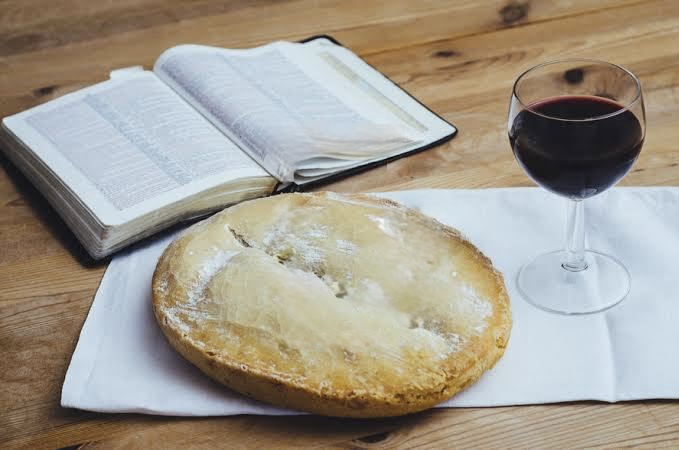
And so we come to Word and Sacraments, which I commend as a statement with continuing significance in contrast to its alternative, “either/or” form. I would observe about my own Anglican – Episcopal Church tradition that we have become rather casual in our treatment and understanding of the Word, especially as we find it employed by John in the first chapter of his Gospel. We are more comfortable with multiples of our words, words we think we can master and employ at will, while we assume that our forebears thought the same. A result can often be a low or weak view of Scriptural revelation. The danger then, as preachers, interpreters, and readers, is that we begin to substitute our words for the Word.
A further result is that we come to rely upon the liturgy, and hence also upon the sacraments, to ‘carry the freight,’ or upon emotion or shared ideology to create community and a sense of mission, which then risks becoming our mission and not necessarily God’s mission. How ironic that we, who identify with our Protestant heritage as we do our Catholic one, should begin to mimic some characteristics we associate with the Roman Catholic tradition!
John’s Gospel proclaims this profound insight right at the beginning: “The Word became flesh…” For the Word continues to become flesh, in us, because the Word continues to become flesh – or enfleshed in matter – in the Sacraments. The Church is a form of His continuing Incarnation, as the Church’s sacraments continue to ‘incarnate’ his living presence, just as does faithful Gospel proclamation of the Word.

