Transfigured By Beauty

[If reading this by email, please tap the title at the top to open your browser for the best experience. Then, clicking individual pictures will reveal higher resolution images.]

James Tissot, Jesus Goes Up Alone Onto A Mountain To Pray


In a painting whose title refers to one of Jesus’ common practices, James Tissot portrays him as caught up in prayer, an involvement he widely encouraged his followers to pursue. Regarding prayer, the Catechism in The Book of Common Prayer may surprise us. To the question, what is prayer, we find an answer which begins with these words: “Prayer is responding to God…” Jesus modeled a life wholly centered on responding to God, in heart and mind, in soul and body. On one occasion, he appeared transformed while at prayer. Over time, his followers discerned how God was fully present within him.

The story of his Transfiguration on a high mountain, reported in the first three Gospels and commemorated this past Sunday, provides a narrative demonstration of this truth. What Tissot depicts regarding Jesus when alone at prayer was later revealed semi-publicly on that mountain in the company of Peter, James, and John, as well as with the heavenly apparitions of Moses and Elijah. It was then fully revealed in Jesus’ Resurrection appearances.

Exodus 24 provides the background for this, and tells us something astonishing: “Moses and Aaron, Nadab and Abihu, and seventy of the elders of Israel went up {Mt. Sinai}, and they saw the God of Israel.” In Exodus 34, we learn that when Moses came down from the summit, “the skin of his face shone because he had been talking with God. When Aaron and all the Israelites saw Moses… they were afraid to come near him.” The text suggests that Moses then started putting a veil over his face for the sake of those who were unused to, or unprepared for, the glory and power of God’s immediate presence.

Paul, in 2 Corinthians, extends and also alters this idea of the veil. Instead of it being a means to protect people from a direct encounter with divine glory, the veil has become in Paul’s letter a kind of impediment. When our hearts and minds are not open to God, nor sensitive to God’s power, we become hardened. We become hardened in such a way that our hearts and minds are veiled, preventing us from perceiving God’s glory.

But Christ has set aside this veil. As a result, “all of us, with unveiled faces, {see} the glory of the Lord as though reflected in a mirror (2 Cor. 3:18).” And weare being transformed into the same image from one degree of glory to another, for this comes from the Lord, the Spirit.” Through prayer, we also are transformed.

Fra Angelico, The Transfiguration (San Marco, Florence)

The Transfiguration of Jesus is all about the unveiling of God’s glory. Jesus takes Peter, John and James up with him on a mountain to pray. While he is praying, the appearance of his face changes, as does his clothing. In contrast with the Exodus and Pauline images of light shining on a surface, Luke presents God’s glory as coming from within Jesus. In other words, he radiates God’s glory rather than reflecting it. Luke tells us that Moses and Elijah, who appear with him, appear in his glory. This may mean that Jesus has shared his glory with them in a way that prefigures what he will share with all of his followers after his Resurrection.

This should lead us to ask a good question: If we feel like there is a veil between us and the divine presence, where does this veil lie? Does God ‘hide’ behind a veil, either to protect us, or challenge us? Or is the veil within ourselves, formed by our spiritual blindness and our lack of openness to how the Holy Spirit imparts glory? Paul suggests that our experience may be like that of the earlier Israelites, for whom hard-heartedness caused them to be blind to the bright light of God’s glorious presence, whether in Moses’ face or when reading and hearing the Law. Hard-heartedness can be equally blinding for us, veiling the glory that is all around us.

And where, according to Paul, do we find this glory? We find it in the faces of everyone who has been open to God’s transforming Spirit. In other words, we can find it in each other, as well as in ourselves. For this reason it can be like looking into a mirror, as the glory that we will perceive in others is the same glory that they can perceive within us.

Yamasaki’s Graceful Architecture

[If reading this by email, please tap the title at the top to open your browser for the best experience. Then, clicking individual pictures will reveal higher resolution images.]

Minoru Yamasaki behind models of the proposed World Trade Center towers


Minoru Yamasaki was one of the most significant American architects of the mid-twentieth century while also one of the least known. Since 9/11, almost everyone has seen images of his now lost World Trade Center towers that formerly crowned the southern tip of Manhattan. Yet many are unfamiliar with the man who designed and gave them their attractive and delicate facades. I first encountered Yamasaki’s distinctly modern yet historically informed approach to architecture as a child while my parents were on furlough from mission work in Japan. It was likely because of Yamasaki’s Japanese heritage that they became interested in his Northwestern National Life building in Minneapolis, opened in 1965, which he had designed for that company’s new headquarters (images below).

The Northwestern National Life building has design elements recognizable in a number of other structures designed by Yamasaki. His career-long approach to architecture consistently incorporated a classically inspired modernism that features a verticality and gracefulness of design, an approach which appears to owe as much to the great European gothic cathedrals as it does to Greco-Roman antecedents. This quality of his work is particularly evident in the decorative plaza towers and buildings he designed for the 1962 World’s Fair U.S. Science Exhibit in Seattle (now the Pacific Science Center, below).

U.S. Science Exhibit towers and buildings, 1962 World’s Fair, in a vintage photo

The 1962 Michigan Consolidated Gas Company building in Detroit (below) was Yamasaki’s first ‘skyscraper.’ The stonework tracery and narrow windows on the facade of this building, as well as the arcade of columns surrounding the glass-walled atrium on the entrance terrace level, are recurring motifs in his architectural designs. Some of these elements can also be found on Yamasaki’s 1960 College of Education building for Wayne State University (further below), as well as Olin Hall and other buildings he designed for Carleton College in Northfield, Minnesota.


The Michigan Consolidated Gas Company building, Detroit. Plaza Sculpture by Giacomo Manzu.

The College of Education building for Wayne State University (Detroit, 1960)

Above: Olin Hall (Science Building) and lecture theater for Carleton College (Northfield, MN, 1961)

Watson Hall dormitory (1966) adjacent to a Japanese Garden at Carleton College (note how the exterior columns subtly curve outward at the base)

Above: McGregor Conference Center, Wayne State University (Detroit, 1957), exterior and interior

Yamasaki’s design for the Reynolds Metals Regional Sales Office (below, 1959) incorporates elements found in the buildings featured above while also architecturally acknowledging the business of the company that commissioned it. Evident is the architect’s use of ornament clad to the facade of the building, but here in the form of a metallic visual screen attached to the building’s exterior. These elements, as well as the open terrace, and the glass-walled atrium surrounded by columns, are design features that we find over a decade later in his plan for the World Trade Center.

Some aspects of Yamasaki’s architectural work such as the terrace and reflecting pool adjacent to his McGregor Conference Center, as well as to his Reynolds building, may appear to embody an aesthetic sensitivity characteristic of Japanese culture. Raised by a Japanese family in America, Yamasaki – while recovering from serious illness and surgery – traveled to Japan, Italy, and India, in 1953, on an extended sojourn that provided not only recuperation but also inspiration.

Not all of Yamasaki’s designs are characterized by strong vertical lines and distinct angles, as well as by detailed surface ornament. Two notable exceptions are his 1956 St. Louis Lambert Airport terminal building, and his 1964 West Gym for Carleton College (both below).

Despite the passage of years, Yamasaki’s architectural designs continue to have a fresh and winsome appearance. His buildings stand apart from many examples of urban modernism, where reflective glass-clad buildings often appear indistinguishable from one another and where attention to human scale seems overlooked, especially in the experience of those who approach such structures. By contrast, Yamasaki’s buildings remain attractive and inviting.

Yamasaki displaying a scale model of his Wayne State College of Education building (above), and as featured on the cover of TIME magazine (1963).

The completed twin towers of the World Trade Center prior to 9/11

David Shaner’s Beautiful Ceramics

[If reading this by email, please tap the title at the top to open your browser for the best experience. Then, clicking individual pictures will reveal higher resolution images.]

An intriguing sculptural pot by David Shaner, with an unglazed exterior


Through his love for ceramics, David Shaner became an accomplished artist whose work was and is widely known for his mastery of traditional pottery techniques as well as for the red glaze that bears his name. The influence of Japanese potters as well as those who studied their work is evident in Shaner’s own earlier pottery. Over the years his interest in non-traditional pot-making grew into a developed pursuit of what we might call ceramic sculpture. Here (below) are three Shaner pots that show his willingness to explore forms that move beyond the circular shape we usually associate with clay that has been molded on a rotating wheel and bat (or platter on which a pot is shaped). Notice the manipulation of the rims of the second and third pots, as well as the presence of the Shaner’s Red glaze on all three.


In Shaner’s work, these explorations of the plasticity associated with raw clay then progress to more dramatic departures from traditional pot making. Such pot making is largely focused on forms where the subsequent utility of the result is at least suggested if not also intended (as with Shaner’s teapot displayed in a prior post). In addition to the pot depicted at the top of this post, I share below a number of my favorite examples of what I have referred to as his ceramic sculptures.

A number of these examples of Shaner’s explorative work with fired and glazed clay are termed his series of ‘pillow’ pots, suggested by their rounded ‘puffed-looking’ forms. In addition to his regard for the work of fellow potters, Shaner admired the sculpture of the modern Japanese artist Isamu Noguchi, as well as that of the British sculptor Henry Moore, with whose work he felt an affinity. Below are some more examples of Shaner’s ceramic art.

David Shaner’s traditional-looking pots represent well his skills and lifelong dedication to mastering the medium for his chosen work. His sculptural art is more immediately identifiable as representing a vision expressed in ceramics that was uniquely his own, and which continues to be widely admired.


David Shaner taking a break, and another example of his work as a ceramic artist.

The Beauty of Shaner’s Red

[If reading this by email, please tap the title at the top to open your browser for the best experience. Then, clicking individual pictures will reveal higher resolution images.]

David Shaner, Tea Pot {Japanese style, 1977), with Shaner’s Red Glaze


Shaner’s Red is a polychromatic glaze named after the potter who first applied it to many of his pots. I became familiar with Shaner’s Red on extended visits to family friends who had a pottery studio and a kiln for firing clay at their ranch in Montana. My parents had met them on a ship returning from Japan, where our friends had pursued their interest in traditional ceramics. In addition to throwing pots, they collected a range of examples of ceramic artwork including Asian and Native American, as well as contemporary work by David Shaner and others associated with the Archie Bray Foundation, in Helena, MT. As a youth, I found the color of Shaner’s red and sometimes green and gold glaze alluring, in part because of its variability during firing. In addition to buying assorted mineral and other glaze components, Shaner also gathered found ingredients for his glazes much like weavers often gather natural materials for dying wool.

One brief biographical statement offers this tribute to David Shaner: “His exquisitely formed vessels with their understated glazes are a reflection of the man himself, a man in harmony with his environment and at peace in himself. Shaner was also noted as a teacher, a collector, and a generous contributor to the world of ceramic art and the field of environmental protection; his gardens which he called his ‘spiritual work’ included notable specialized collections.”

Among those who pursue the art of pottery, the color known as Shaner’s Red is a familiar reference point for glazes applied after a first firing of shaped raw clay. Though the red coloring is largely due to iron oxide being in the mix, this glaze by David Shaner is well known for the way it often morphs into other colors during the firing process, with beautiful results. A canister style pot by Shaner (below, 1988) displays this color variability, which is to some extent within a ceramicist’s ability to manipulate while yet retaining an unpredictability that is often a feature of this art form.

Some examples, below, of pots by other artists displaying something of the range of colors yielded by the application of Shaner’s Red.


Here is one ‘recipe’ for Shaner’s Red: 527 Potash Feldspar; 40 Talc; 250 Kaolin; 40 Bone Ash; 213 Whiting; 60 Red Iron Oxide; 2% Bentonite. The significance of the numbers and the nature of these elements are foreign to me. But they are doubtless meaningful to ceramicists who mix their own glazes. The point in sharing these details is to illustrate how, regardless of the precision involved in finding, measuring, and mixing these elements, the exact outcome of their combination and application cannot be foretold in advance.

Shaner was once asked about this at a workshop he had given. A participant later reported that “his reply was something to the effect that to make it look right, you had to be in the right phase of the moon, hold your tongue just right, call on the correct kiln gods, etc. He was obviously kidding but what he was saying is that this is a tough glaze to work with.” Another potter who has applied the same glaze offers this observation: “… the cooling schedule most affects Shaner’s (and other) iron reds. Shaner’s needs a long slow cool, or firing down, for the red color to resurface…”

Having introduced what is perhaps Shaner’s most widely-known contribution to contemporary American ceramics, his eponymous glaze, I plan in a subsequent post to share further about him and provide additional examples of his pottery, especially in light of his later transition from traditional pot making to what is more properly termed ceramic sculpture.

David Shaner in his studio (1989)

The photos behind him appear to include one of the esteemed Japanese potter, Shoji Hamada, at work on a pot (upper right). Another photo (top right) features an example of Shaner’s own work that is clearly influenced by the Japanese folk art tradition (the tea pot illustrated above).

‘Beauty’ and Jackson Pollock

[If reading this by email, please tap the title at the top to open your browser for the best experience. Then, clicking individual pictures will reveal higher resolution images.]

The Fury, 1943


The name “Jackson Pollock” and the word “beauty” may seem to make for an unlikely pairing. For some, Pollock’s famous ‘drip’ paintings are not only an acquired taste but continue to be the butt of bad jokes about what happens when you give a chimp a pot of paint.

These observations may bring to mind the story about when the art critic, John Ruskin, accused the artist, James M. Whistler, of “flinging a pot of paint in the public’s face,” and the nerve of asking two hundred guineas for the result. Whistler – painting in ways ahead of his time – wanted viewers of the work in question not to consider it as a traditional representational painting but rather as an ‘artistic arrangement.’ When asked how long it had taken him to paint the canvas, Whistler frankly admitted that it was just a few hours. But then, he added, it had taken a lifetime of learning to create the work. Jackson Pollock likely felt the same about his drip paintings, which made him famous.

Some viewers of “modern art,” particularly the genre of art commonly labeled as abstract expressionism, may wonder if the abandonment of representation in painting (and in other art forms) simply provided license for less than skilled artists to create and financially benefit from work that ‘broke all the rules.’ Yet, and paradoxically, many of those whose work we associate with this kind of art received rigorous training in traditional methods of drawing and painting at the Art Students League in New York. In effect, they had learned the rules so that they could break them with integrity. Pollock was among those learners, when he had studied under the tutelage of Thomas Hart Benton. Pollock’s earliest remunerated work was in the form of murals featuring traditional imagery, commissioned by the Depression era WPA (the Works Progress Administration) for public buildings such as libraries and post offices.

I am comfortable employing the word beauty with which to characterize and describe some of Jackson Pollock’s drip paintings. Unlike the proverbial results of turning monkeys loose with pots of paint, or giving kindergarteners free rein with the same, Pollock’s mature work evidences an aesthetic intuition formed over years of persistent engagement with paint on flat surfaces.  Over time it yielded striking results. I find many of these paintings both intellectually stimulating and emotionally stirring.

What I am calling a formed intuition within the artist’s temperament bore fruit in the form of several perceivable variables among his drip paintings. First, we can appreciate the sophistication of his color choices. Despite an initial sense that these paintings contain a cacophony of clashing streaks of full spectrum color, closer inspection reveals that Pollock often employed a limited color palette in these works, sometimes with an almost Zen-like restraint. Second, he had an undeniable eye for composition. This is discernible within the apparent chaos on the surface of his drip paintings where pattern, unexpected order, and rhythm, can convey a sense of balance. Third, the well-documented energy the artist applied to the creation of these canvases is effectively communicated by the visual results he attained, which in my experience draw the viewer in to a deepened engagement with his vision.

Pollock at work.

Drip Painting (title?), 1951

Autumn Rhythm (Number 30), 1950. This composition, despite its energetic patterning, has a subtle tone due to the very limited and neutral color palette.

Number One, 1950 (Lavender Mist). Another subtle composition, in marked contrast to The Fury, depicted above. Viewers appreciating Lavender Mist, in a photo (below) showing the scale of many of Pollock’s drip paintings.

Number 14 (Gray), 1948. Paradoxically both lyrical and restrained, where movement displaces a perceived need for the addition of color.

This one (title and date uncertain) is also lyrically full of joyous movement but with color.


Pollock’s famous Number 11, (TheBlue Poles, 1952) on display.

Pollock in motion, creating an indelible image of vitality that continues to speak to and move people today.

The Beauty of the Seth Peterson Cottage

[If reading this by email, please tap the title at the top to open your browser for the best experience.]

Frank Lloyd Wright, Cottage for Seth Peterson, 1958

The last commission completed by Frank Lloyd Wright before his death was a small cottage for Seth Peterson. While diminutive in scale, this architectural gem incorporates many of the design features we associate with the Wright’s visionary work. A native of the region near Taliesin, Wright’s home and studio, Peterson had once sought to become one of the student-apprentices there. He later sought to commission Wright to design a personal cottage, sending a check in advance. After declining Peterson’s request more than once, Wright, having already spent the fee, was obliged to fulfill the request to provide the plans. Admirers of FLW’s architecture can be glad for Peterson’s persistence and that this small project was completed with impressive results.

Sadly, Peterson did not live to inhabit the cottage. Yet subsequent owners and devotees of Wright’s legacy helped preserve this small treasure. The fully restored cottage sits on land that is now part of a state park, and it became the first Wright home later available for guest rental (and remains so).

Attention to the relatively simple floor plan of the cottage helps orient those newly acquainted with it to identify some of the principal characteristics of Wright’s many home designs.

The entryway on the upper left side of the plan is in many ways typical of Wright’s preferences in that the structure is approached from the rear and then from the side. Slender double doors open into the compact interior which at the same time appears expansive due to the raised roof and ascending ceiling, which provide shelter over a wall of glass punctuated by warm cedar or redwood uprights. Complementing the beckoning view to the left, over a valley and lake, straight ahead the visitor sees more windows and double doors that open onto a side terrace. This prompts an initial sense that the primary orientation of this small home is toward the natural beauty of the landscape just beyond.

Passing beyond the dining table and chairs (Wright designed, of course) and into the main part of the living space, a second principal point of orientation for the cottage emerges. This is as it is with most FLW-designed homes, where one finds a massive fireplace featuring the same stone work evident throughout the structure and its surrounding terraces. While fireplaces of this kind and scale provide a central anchor point for so many of these domiciles, the plan helps us perceive something more. Wright typically grouped the kitchen (what he termed the workspace), utility room, and bathroom(s) together with the central fireplace in a practical way. Yet, visually and experientially, the fireplace always took pride of place and tended to obscure attention to those other spaces and their functions.

The relatively diminutive scale of the bedroom and bathroom in this cottage befit that of the cottage as a whole, and yet a study of many of Wright’s other house plans reveals a similar result. Just like his designs for kitchens, Wright’s apportionment of space for nighttime rest and personal hygiene was at best modest. It is as if he strongly believed that the greatest amount of waking time for a home’s residents should be in its common areas, where – beyond personal needs – one might pursue learning, social interaction and an experiential connection with the natural world.

In my view, the following photographs show the cottage at its best.

The terrace, which provides a lovely place to enjoy a summer evening.

The Seth Peterson cottage continues to receive guests through all seasons of the year.

The Beauty of Alex Katz’s Realism

[If reading this by email, please tap the title at the top to open your browser for the best experience.]

Alex Katz and his portraits of Ada, January 3, above, and of Vivien, in Black Hat, below.


At the age of 95, Alex Katz is still painting! Having created a huge portfolio over decades of work he continues to explore the visual possibilities inherent in capturing a three dimensional world in the two dimensions on large surfaces. He has consistently demonstrated his gifts as a painter by his focus on representational art, and succeeded at this when many of his contemporaries succumbed to the widespread public appeal of abstract art, while others then began to mimic public and commercial print media in what we now commonly refer to as ‘Pop Art.’

Underlying the power of much of Katz’s work is his undeniable ability as a draftsman, the technical term for one who can draw and, in his case, draw well. Yet Katz has said that drawing is not a natural gift, but that it is a skill acquired through practice. “You learn how to draw, you are not born with it, the techniques you have to learn. So it’s a repetitive thing to keep doing it but you finally get good at it, and better.”

These observations are worth bearing in mind when Katz’ work is considered alongside that of his contemporaries, some of whom employed photography and graphic printing techniques with which to reproduce images that may remind viewers of commercial art such as we find in glossy magazines. Katz’ attainment of proficiency in drawing is demonstrated in his many portraits, not only of his wife, Ada, but also of his relatives and friends.

Blue Umbrella 2, with another portrait of Ada


Alex Katz, Portraits of the artist Philip Pearlstein (above), and the poet, Ted Berrigan

The visual composition of his paintings and prints, as well as the compelling quality of his representation of people and places within them, is evident. Critics commend Katz’ work for his use of color and the relatively ‘flat’ appearance of the way he tends to depict his subject matter. This may account for the apparent affinity between this artist’s paintings and his work as a print maker.

Yet, Katz’ attention to the play of light and shadow upon what he chooses to represent adds a surprising element of three dimensionality to his images. Further, though at a distance many of his paintings seem to employ strong linear demarkation to define the edges between fields of color, the artist is also adept at suggesting texture and depth in a painterly way by using subtle brush strokes that have a shading effect. The following two images help illustrate these points.

Good Afternoon, depicting a favorite summer place to visit

Blue Umbrella 2, detail

In addition to the many solo portraits of Ada and others, Katz enjoyed portraying groups of others in various situations.

Thursday Night 2

Summer Triptych

Alex Katz’s many works of art, and particularly his paintings, have grown on me. At first I tended to undervalue his representational approach to portraying people and places, not taking sufficient account of his attained gifts for drawing in his compositions as well as his sometimes arresting attention to contrasts between light and dark areas. His astonishing longevity coupled with his abiding creativity lead me to return to his work with growing appreciation. His book, Looking at Art with Alex Katz, featuring reflections on many of his favorite artists, poets and architects, reflects the wide range of his artistic awareness and sensitivity. Yet, I also admire his almost single-minded willingness to pursue his own vision for his art despite the challenging influence and popularity of many of his contemporaries’ artwork, which often headed in very different directions.

Alex Katz at work on what may be another portrait of Ada

The Beauty of Making Replicas

[If reading this by email, please tap the title at the top to open your browser for the best experience.]

‘Lego Man’ by Anders

Lego Man comes apart…

… just like the original


We have long recognized our son, Anders’, abilities in arts and with woodworking. His gifts have blessed our family in years past. But since becoming a dad, he has offered the same gifts to his children. This year he and our grandson, James, chose the theme, Lego Party, for James’ upcoming birthday. Anders set to work with cardboard, paint, and glue. The result speaks for itself.

There is something about replicas that help us better see the things after which they are modeled. Lego kits provide an excellent example. Somewhat like the work of artists who draw caricatures, Lego models when completed have the capacity to alert us to distinctive visual features of the originals that have inspired them. I find this to be especially true with the Lego kits of several Frank Lloyd Wright buildings that James expertly helped me to assemble. In particular, carefully putting together these kits has helped me to appreciate the interior spacial organization of these buildings in a way that floor plans and elevation drawings can only begin to suggest.

Assembled Lego model of Frank Lloyd Wright’s Falling Water house

The Guggenheim Museum model

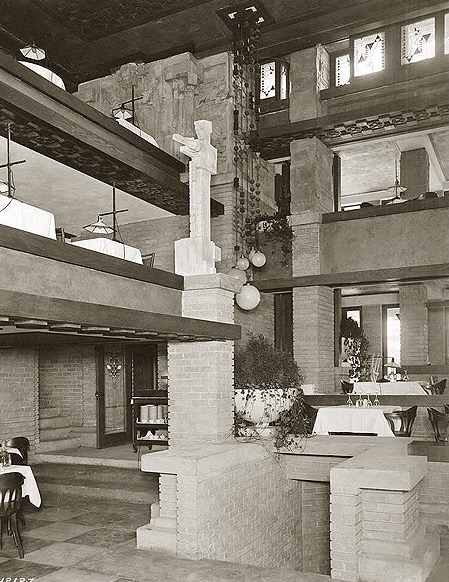
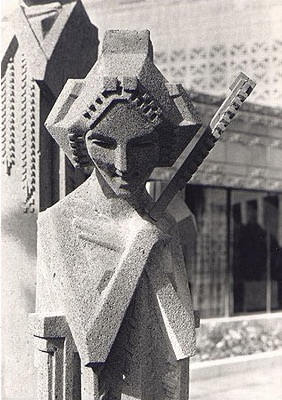
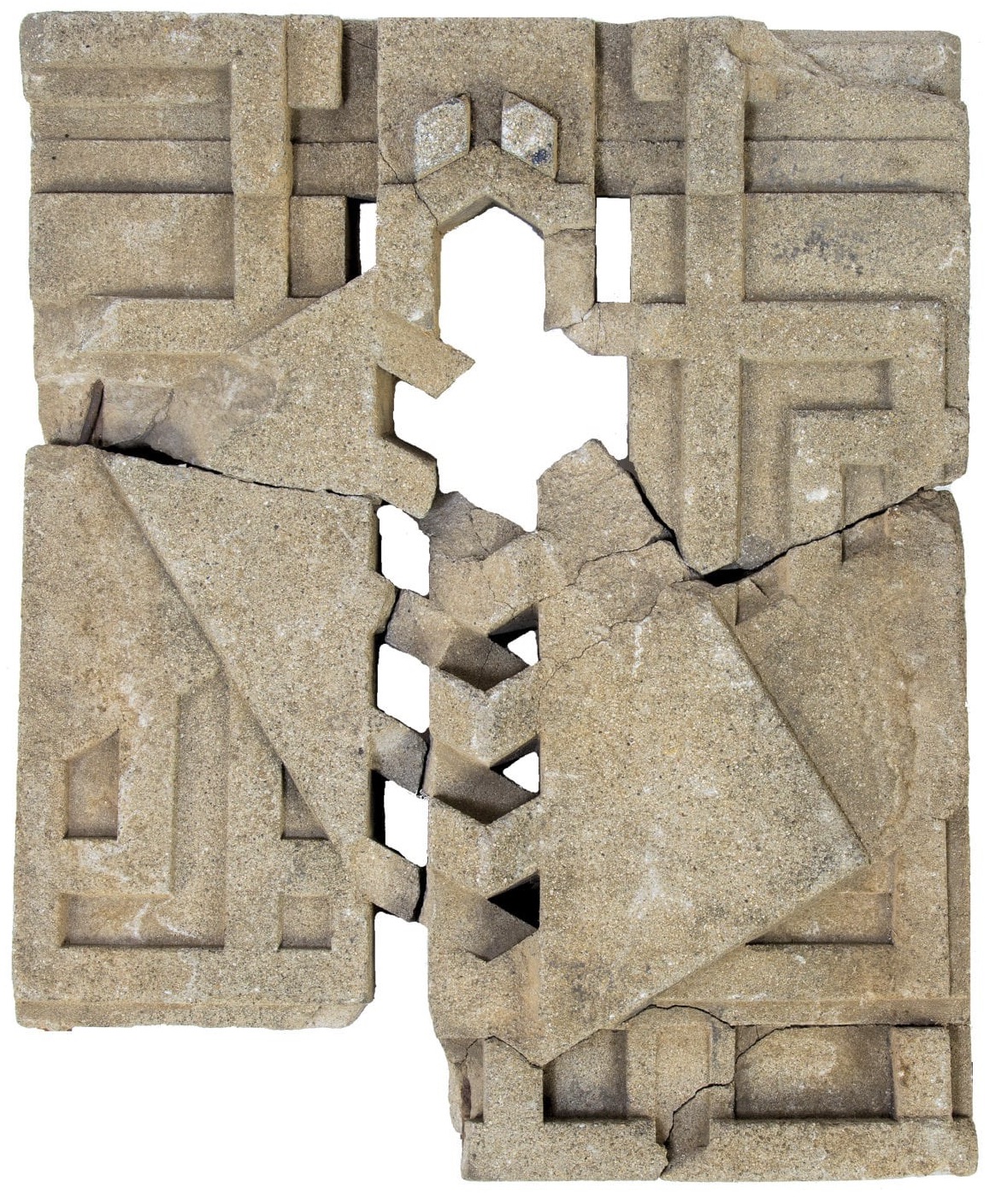
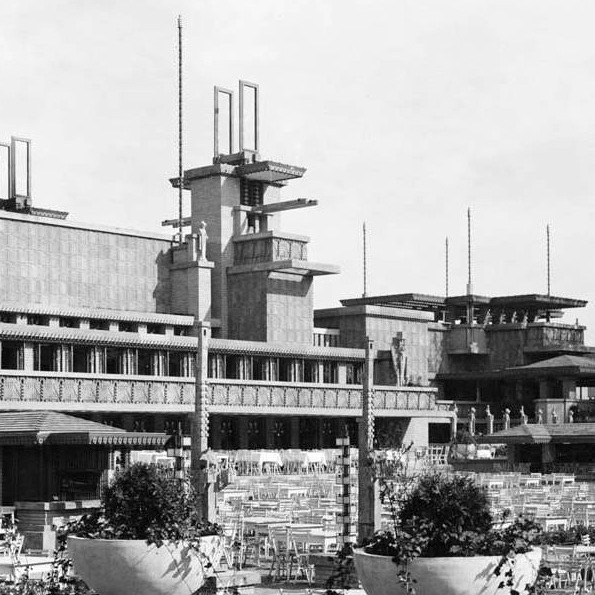
The Imperial Hotel model

Having recently encountered Anders’ Lego Man project, we came away impressed with his ability to scale up accurately a very small original into a centerpiece for a birthday celebration. We are looking forward to the party!


And He Sent Out the Twelve

[If reading this by email, please tap the title at the top to open your browser for the best experience.]

James Tissot, The Ordaining of the Twelve Disciples


As Matthew tells the story, those who are called to follow Jesus are then sent out. Before they go, they are not only commissioned to represent him and his message; he shares with them portion of his remarkable power. According to Matthew, “… Jesus summoned his twelve disciples and gave them authority over unclean spirits, to cast them out, and to cure every disease and every sickness.” They have witnessed his teaching in what we know of as the Sermon on the Mount, which in the first Gospel runs over several chapters. Yet this moment is relatively early in the Gospel narrative, and it should surprise us that Jesus is so willing to let them go out on his behalf, and apart from him.

It is sometimes observed that with certain vocations one never really ‘retires” even if one ceases to be engaged in remunerated employment. This bears witness to the fact that through the calling that underlies all other callings, our baptismal vocation never has a terminus though it may come to greater fulfillment in life. Yet as we go through successive stages in our lives, we may be more open to being ‘sent out’ when we are younger even if we continue to be open to being ‘called’ – and, indeed, called anew – through our later years. My parents were relatively young when they were sent out as missionaries to Japan, living into a pattern that we can recognize in many spheres of our human communities such as in the Peace Corps and in Teach for America. Having myself been more recently retired, I find that I am now less inclined toward the opportunity of being sent out in and for the mission of the Kingdom though I still experience being called.

For reasons like these I tend to think that the twelve whom Jesus first called to be his disciples were  more likely to have been young rather than middle-aged. In that they may have had a greater openness to discipleship formation; they may have had a greater degree of idealism and more energy for a new kind of work; and they may simply have had the prospect of more years ahead with which to share with others what they would perceive and learn about God’s mission in and to his Creation.

It is a subtle point, but this may be why Tissot – following Matthew – portrays what is titled The Ordaining of the Twelve Disciples separately from a depiction of their initial experiences of being called. For this moment in their lives and in their time with him became the occasion of their formal participation in Jesus’ mission, even when they were not in proximity to him and his work. Jesus, as Matthew tells us,  had already gone “about all the cities and villages, teaching in their synagogues and proclaiming the good news of the kingdom, and curing every disease and every sickness.” And having commissioned the twelve, and given them his own authority, Jesus sent them “out with the following instructions: ‘… go to the lost sheep of the house of Israel. As you go, proclaim the good news, The Kingdom of heaven has come near. Cure the sick, raise the dead, cleanse the lepers, cast out demons’.”

When doing this, Jesus not only equips them for the mission upon which they are sent. He also forewarns them of the adversity they are likely to face, adversity which might involve betrayal, trials and flogging, being hated, and even being put to death. This is yet another reason why I tend to think of the disciples, at this point in their lives, as generally younger than older, just as we saw with Caravaggio’s likely portray of Matthew’s calling, last week.

As we get older, some but not all of us may be less open to being sent out, and less inclined to seek such an opportunity. But we should never cease to be open to ‘the call,’ and the varying ways it may be ever-renewed in our lives.


This posting is offered in relation to the readings appointed for Proper 6, Year A, in the Revised Common Lectionary for Sunday, June 18, 2023.

The Call of Matthew

[If reading this by email, please tap the title at the top to open your browser for the best experience.]

Caravaggio, The Call of St. Matthew (1619-1620)


Artists who portray biblical figures and events – particularly those who approach their work in a self-consciously Christian way – often feel free to explore the dynamics of Gospel scenes in a personal and imaginative manner. Some Gospel stories lend themselves to such an explorative approach. Other stories seem to prompt a portrayal of biblical persons and their circumstances in a more literal, text-dependent way.

The call of the tax collector in Matthew 9 provides a good basis for both, especially at the hands of the great early 17th century Italian painter, Caravaggio. Above, we see his painting of The Call of St Matthew, based on what may be a brief narrative self-portrait provided by the Gospel writer about his decision to respond to Jesus’ summons to follow him. Here, Caravaggio displays a fidelity to the biblical story even though the artist depicts the event with figures clothed in garments characteristic of his own time and place.

Several aspects of the painting should attract our attention. For they have the power to draw us into the scene and its place in the broader sweep of what some have called ‘the great story.’ The figure on the right side of the picture is obviously that of Jesus, who with bare feet has entered the place where the tax collector Matthew may be both entertaining himself as well as conducting his business. The room where the group of men are sitting is darkened, a detail that is surely symbolic given how light enters the room from the direction of Christ’s arrival. As Matthew’s Gospel quotes Isaiah (in chapter 5), “the people who sat in darkness have seen a great light, and for those who sat in the region and shadows of death light has dawned.”

Notice also Caravaggio’s sensitive rendering of Jesus’ outstretched hand. It is highly reminiscent of Michelangelo’s nearby Sistine Chapel ceiling panel depicting God’s act of creation and gift of life to Adam through a similarly depicted outstretched arm.

But which of the sitting men portrays Matthew? The answer is by no means obvious, and may be intentionally ambiguous. A ready candidate is the gentleman facing us, seated in the middle of the group, who appears to point to himself. By his gesture, he seems to ask in response to Christ’s summons, “Do you mean me?” His pointing hand, a visual echo of the pointing hand of Jesus, and the look on his face call attention to himself. Further, this bearded man bears a resemblance to the older-looking Matthew depicted in Caravaggio’s, The Inspiration of St Matthew (shown below).

Yet, another possible candidate for an identification with Matthew in this picture is the young man portrayed on the left side of the painting, whose head is bowed over and who is focused on some coins before him. In support of this identification is the presence of two other young men sitting at the opposite end of the table, whose gaze is fixed upon the unexpected visitor. By contrast with all three, Caravaggio may instead have intended to portray the mature Matthew in his accompanying The Inspiration of St Matthew painting, as well as in his The Martyrdom of St Matthew, both of which are located in the same church in Rome as The Call painting. For in the ‘call’ image, a young man is invited to leave his dubious present occupation and circumstances in order to follow Jesus, which seems most fitting. This invitation leads to a subsequent application of the maturing man’s talents in support of God’s mission, centered on the One whom he would come to recognize as the Messiah. As Caravaggio may have depicted in this scene, the potential consequences of accepting Jesus’ summons may just be dawning upon the young man.

Caravaggio’s paintings display a remarkable skill in rendering people and places in a most realistic way. His paintings are also highly regarded in recognition of his flair for dramatic pictorial compositions that feature a strong contrast between light and dark. He might have applied these skills primarily in the pursuit of fame and material wealth. Such intentions are likely to have numbered among his goals. Yet, Caravaggio’s work exhibits an undeniable spiritual sensitivity. This makes it most appropriate that we can view and appreciate his three St Matthew paintings together in a church in Rome rather than in a museum.