Music

A Church by Errol Barron in Gulfport

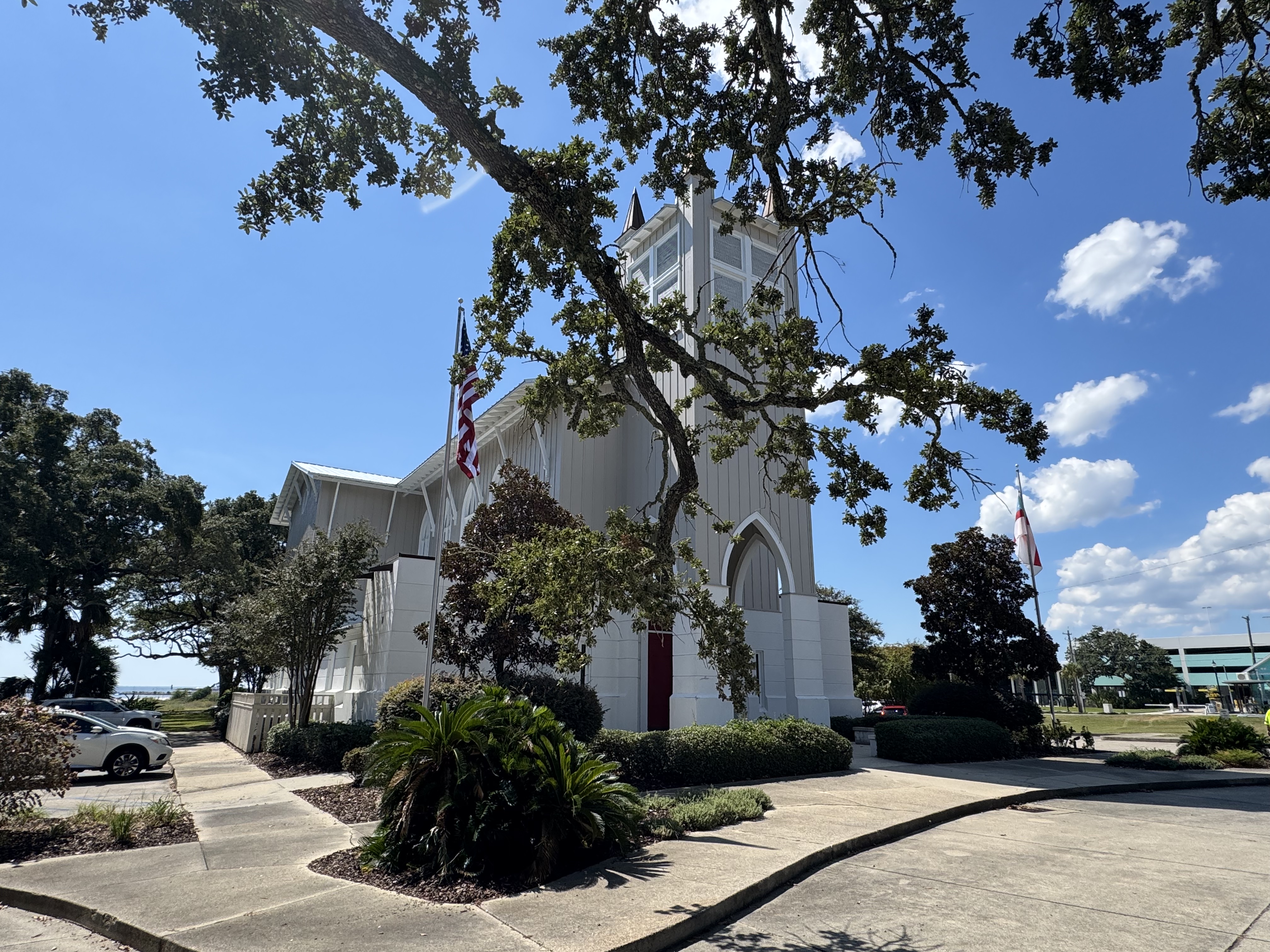
St Peter’s by the Sea, Gulfport, MS, designed by Errol Barron

Errol Barron’s work as an artist may be familiar to readers of this website based on some of his evocative New Orleans water color paintings previously featured here. His paintings of that city as well as of Tulane University, where he has taught for many years, provide strong indications that he is more than a skilled painter and draftsman, but also a trained architect. He has taught generations of architectural students at Tulane, and he has practiced his profession to great effect not only in this region but also overseas, with some houses of his located in Greece. Given Barron’s evident sensitivity to historical architecture and design features characteristic of this region, I was surprised to learn about a notable but unexpected feature of his resume. He worked for seven years with Paul Rudolph, architect of the well-known and oft-criticized Boston Government Services Center and a partial inspiration for the movie, The Brutalist.

St Peter’s by the Sea, interior

I was recently delighted to discover the Episcopal church in Gulfport, Mississippi, St. Peter’s by the Sea, and that Errol Barron was its architect. It is a gem of a church, and a very successful design that incorporates traditional ecclesiastical elements associated with European Gothic churches along with features reflecting contemporary liturgical renewal. I have heard people refer to this style of church building as Carpenter Gothic, and as Southern Gothic, and the labels seem to fit well. The worship space exudes an appreciation for traditional forms while harmoniously blending them with a contemporary focus upon light, color, and the greater participation of worshippers in flowing open spaces.

The main altar with the ornamental rood screen

Visitors to the Washington National Cathedral, and similar churches of Gothic-revival style, may recognize the particular heritage that stands behind the floor plan of St Peter by the Sea. At the National Cathedral, and in its medieval forebears (such as London’s Westminster Abbey), an arched stone ‘rood screen’ separates the chancel and choir (beyond the screen) from the nave where the congregation is seated. When, in the 1960’s, the liturgical renewal movement began to influence changes in the worship arrangements of these buildings, a new main altar was often then placed in the nave, on the congregation’s side of the rood screen. Smaller gatherings for weekday services could still occur in the choir side of that screen, while Sunday gatherings for the principal Eucharist would be celebrated in the nave, with the clergy, altar, and liturgical action proximate and visible to the congregation.

A view of the ceiling and woodwork above the choir

Though St Peter’s by the Sea is a comparatively recent building, its design reflects something of the historical sequence described above. Instead of an imposing stone rood screen, shielding the chancel and choir spaces beyond, Barron has designed an ornamental arched screen of light-colored wood that suggests rather than imposes separate areas within the overall space. This allows the evocative blue canopy of the ceiling over the chancel to draw one’s eyes forward, toward the visible clear windows at the liturgical ‘east end’ of that space behind the chapel altar, facing the seashore.

Further, the notably narrow, even sharp-looking, wooden ‘spires’ protruding above where the choir chairs are placed enhance the upward sense of lift in the nave, complemented by the radiant cream and white color scheme above where the congregation sits. Light pours in through clear windows above, while delicately fashioned and dangling wrought iron fixtures provide supplemental illumination for evening services and in poor weather.
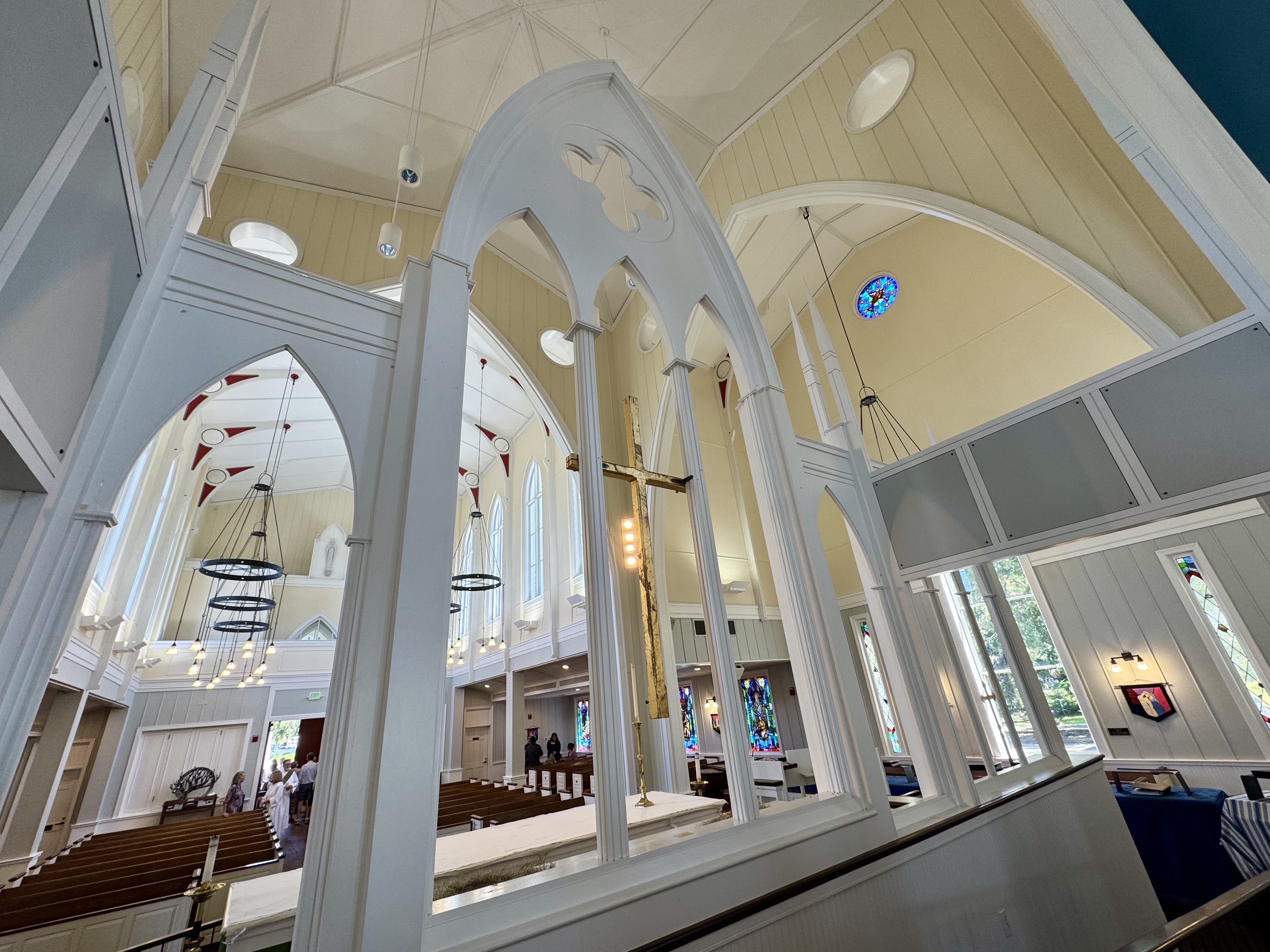
A view toward the nave from the choir, through the rood screen

On the Sunday of my recent visit, I was told that the congregation numbered about 145, and I estimate that the nave would comfortably seat about 200 people, though it could probably accommodate more. With the Gothic-inspired longitudinal floorplan, evident when one approaches the exterior of the building, a visitor might expect a rather narrow and linear worship space. Such an initial impression of the likely effect of the interior spatial arrangement is overcome by a number of subtle but effective design choices made by the architect and those who worked with him.

Accompanying the verticality of the large open area above the center of the nave are the seating areas adjoining the side aisles, taking the places of side chapels found in many medieval Gothic churches. The relatively low height of the box pews enhances the sense of horizontal width created by these adjacent seating areas, which provide relatively unobstructed views of the altar and lecterns. I also found the acoustics within the worship space to be well-suited for music as well as for public reading and speaking.

I am drawn to the ethos of historical churches; I am enthused by many examples of modern architecture; and I appreciate the fruits of the liturgical renewal movement. In my experience, a successful blend of these three things is not always found in contemporary buildings designed for worship and intended for the enhancement of congregational life. In his design for St. Peter’s by the Sea, in Gulfport, Mississippi, and in his supervision of its restoration after Hurricane Katrina, Errol Barron has achieved just such of a desirable synthesis.
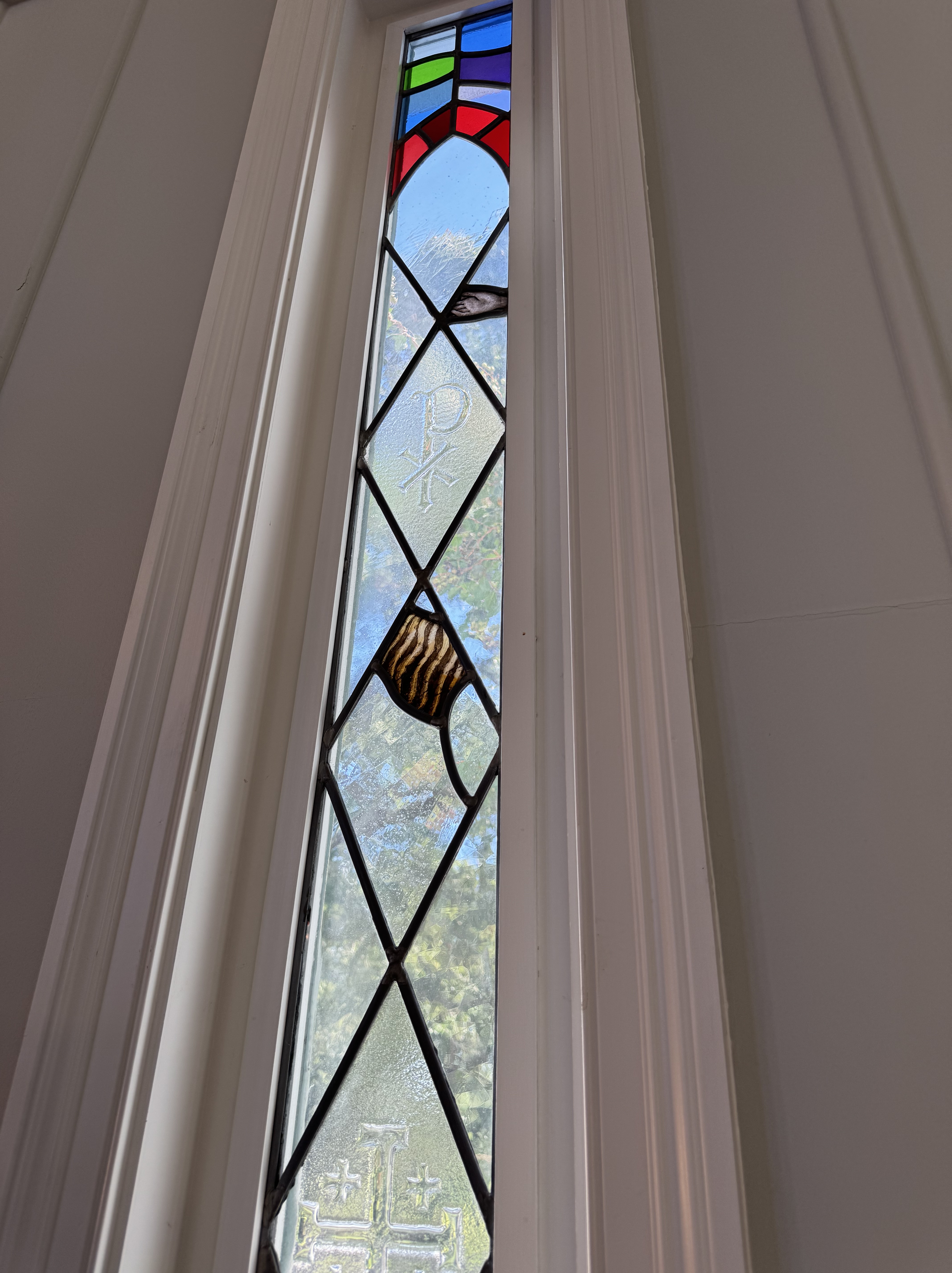
A representative side window incorporating stained glass window fragments recovered after Hurricane Katrina

Reconciliation is Always Possible

If reading this by email, please tap the title at the top to open your browser for the best experience. Then, clicking individual pictures will reveal higher resolution images.


A recent LA Times article was titled, “Hello Simon, my old friend…” Those of us who can remember the late 1960’s surely have clear memories of hearing tunes from Simon and Garfunkel’s milestone album, Bookends, and especially of the way their music was featured in the December, 1967, release of the movie, The Graduate. Even those born years later may have in their minds an inescapable link between the names of the two artists, whose cooperative work remains so memorable. Despite their ‘Oh, so beautiful’ recordings, the two broke up their musical partnership in January of 1970, shortly before the release of their best-selling and perhaps providentially titled album, Bridge Over Troubled Water.

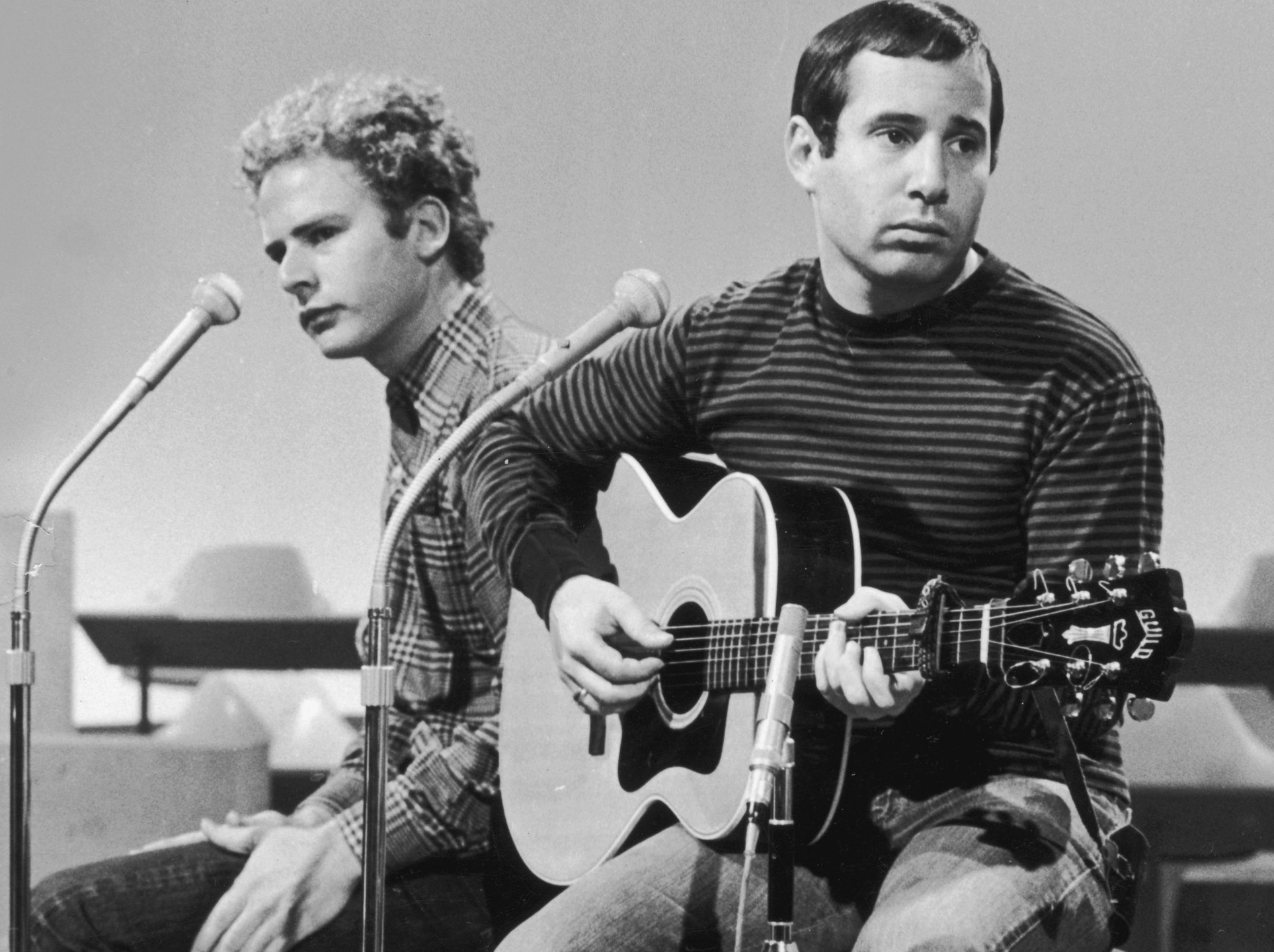
Simon and Garfunkel performing in the earlier days of their musical partnership

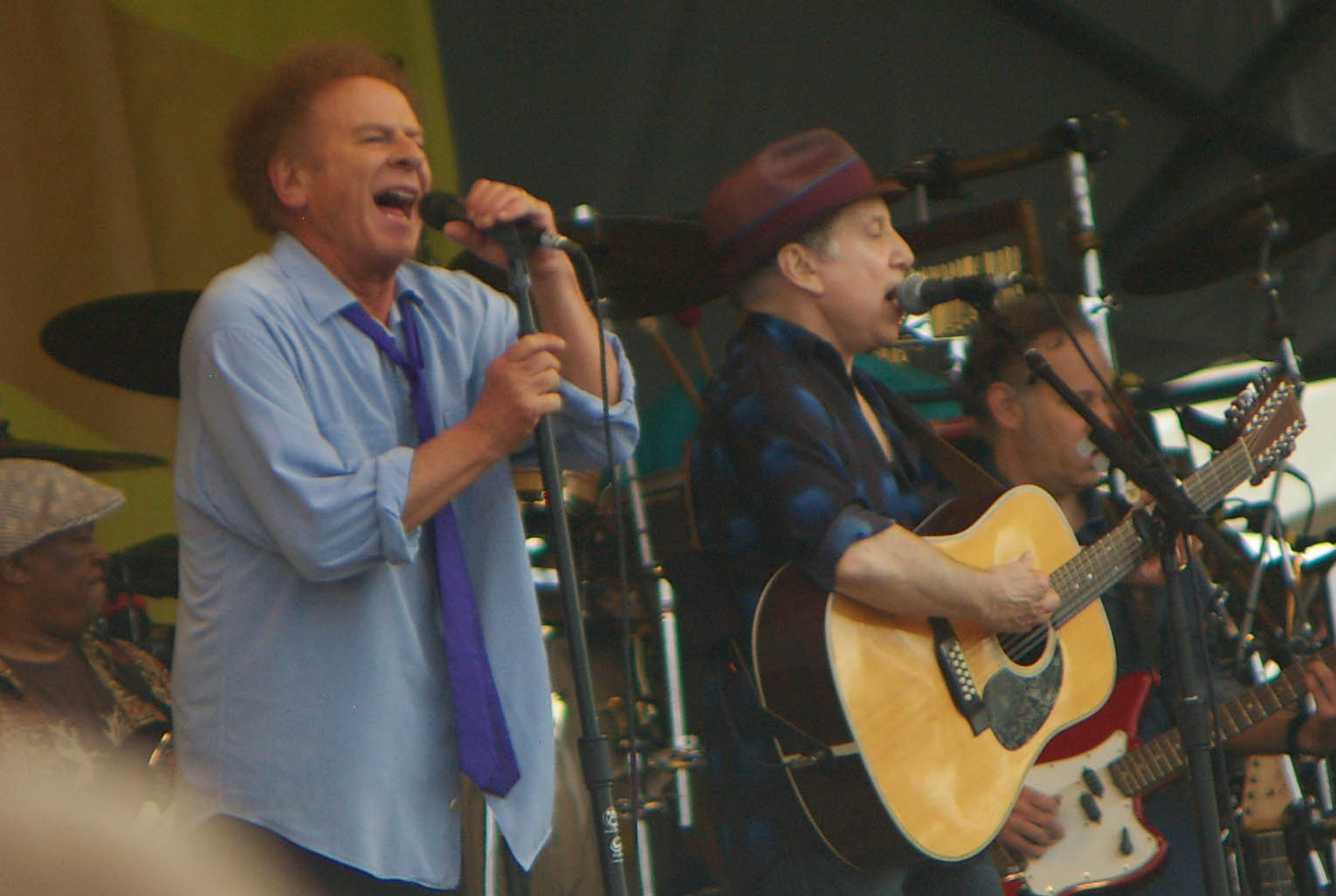
Many of us who remember hearing their music when it was first released, or who have come to love and appreciate it since those years, don’t realize the extent of their difficult creative relationship as artists. All too soon, they drifted apart, speaking only occasionally with one another, though in subsequent years they did perform together on a few occasions, including at Jazz Fest in New Orleans in the spring of 2010. To his later regret, Art Garfunkel made some unwise and unguarded comments during an interview in 2016, that were hurtful to Paul Simon.

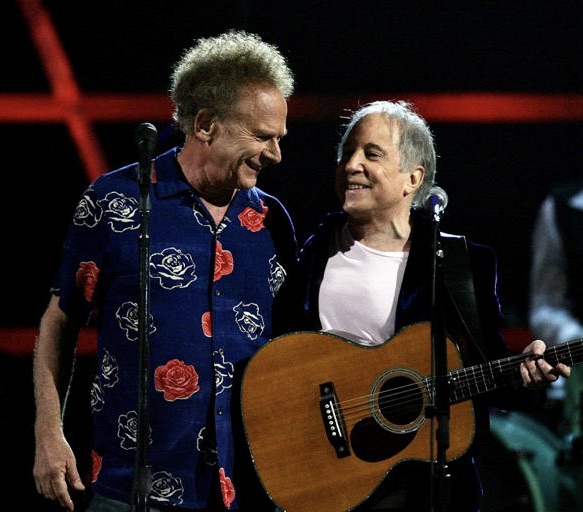
At Jazz Fest, New Orleans, 2010, with Garfunkel singing with a damaged voice adding to the strain in their relationship

Art Garfunkel has now spoken to the press about his regret concerning those prior comments, and shared what he had said to Paul Simon at a recent lunch together: “First time we’d been together in many years. I looked at Paul and said, ‘What happened? Why haven’t we seen each other?’” Garfunkel then shared this: “I cried when he told me how much I had hurt him.” “Looking back,” with obvious regret, he reflected that he had perhaps “wanted to shake up that nice guy image of Simon & Garfunkel.”

An early photo of the duo which may suggest some of the tensions in their partnership

Their reconciliation came at that long overdue lunch, which Garfunkel said, “…was about wanting to make amends before it’s too late.” Having acted upon his desire to reconnect with Simon, Garfunkel offered that “it felt like we were back in a wonderful place. As I think about it now, tears are rolling down my cheeks. I can still feel his hug.”

This recent reconciliation between Paul Simon and Art Garfunkel is heartwarming and a beautiful thing. It can be a source of hope for all of us regardless of who we are, or our place in this often confused and fast-paced world.

Simon and Garfunkel at a reunion concert in Central Park, NYC, in 1981

Reconciliation, especially following upon things we have done to hurt and impair a relationship with another person, is perhaps one of the most difficult things for us to contemplate doing, and then to try and enact. Surely, we can all acknowledge this based on personal experience. Especially when we are aware that this reality has the potential to be a shadow presence at some Thanksgiving gatherings this week, whether among family members or groups of friends.

Achieving reconciliation with another person in this life is never assured, no matter how much we may desire it. And what such a desired result may require is an openness to that hoped-for resolve happening between us, even if the circumstances surrounding that possibility seem remote and uncertain. Yet, though this kind of openness is necessary, it is not in itself sufficient for the desired result. Forgiveness by one or both parties plays a key role in the process. And forgiveness usually requires an acknowledgement rather than a dismissal of what may have happened to cause the breach in the relationship.

This is how and why memories, even of hurts, injury, and injustice, have the potential to be holy, and why forgetting (especially willful forgetting) may limit the extent to which we experience reconciliation. To forgive is an act of will, whether or not feelings of forgiveness arise within us or abide. And once forgiveness is willed, and then expressed, the reconciliation that follows upon openness might -and even may – in time happen.

There are grounds for hope, at least with regard to Simon and Garfunkel. They appear to be planning a series of reunion concerts in 2025. We can look forward to enjoying once again the fruit of this most creative musical collaboration.


The Stirring Choral Music of Michael John Trotta

If reading this by email, please tap the title at the top to open your browser for the best experience. Then, clicking individual pictures will reveal higher resolution images.

Michael John Trotta introducing his choral work, “Requiem,” in a YouTube video


Recently, I had the providential opportunity to meet Baton Rouge resident, and LSU School of Music doctoral recipient, Michael John Trotta. Only later did I learn of his impressive and internationally recognized accomplishments. Four albums incorporating recordings of his musical work can be found on Spotify, among them his stirring and evocative setting for the traditional Latin Requiem. Through subsequent messaging with him, I learned of the recording session that he directed this year of his “Requiem,” with the London Symphony Orchestra and the London Voices. It is a beautiful work of music, all the more meaningful for him and subsequent listeners in that the recording was made in support of the charity, Hospice UK.

A recent screenshot from Spotify featuring the music of Michael John Trotta

Michael John Trotta writes passionate and lyrical sacred music – a series of words not everyone will string together. Reflecting on his music, I am aware of my inclination to find verbal analogies rooted in the visual arts. And so, parallel to how some painters, sensitive to the role of light in our perception of color, seek to mix several colors to achieve a particular hue, Trotta’s choral music strikes me as an effort to express a wide and full spectrum of harmonious sound.

My initial perception of his compositions, that he presents sacred music that is passionate and lyrical, may also be akin to my use of the word beauty in connection with the paintings of Jackson Pollack. In both cases, I may be expressing an unexpected conjunction of ideas that can, I believe, properly belong together. Trotta’s musical works inspire me to write about them in this way.

Those who love to hear large groups of voices singing in harmonic patterns, especially of examples from Renaissance and early English vocal music, as well as modern compositions influenced by them, may find a similar pleasure in hearing his work. For me, this is due to how Trotta’s original choral music and his arrangements provide a moving and also meditative listening experience.

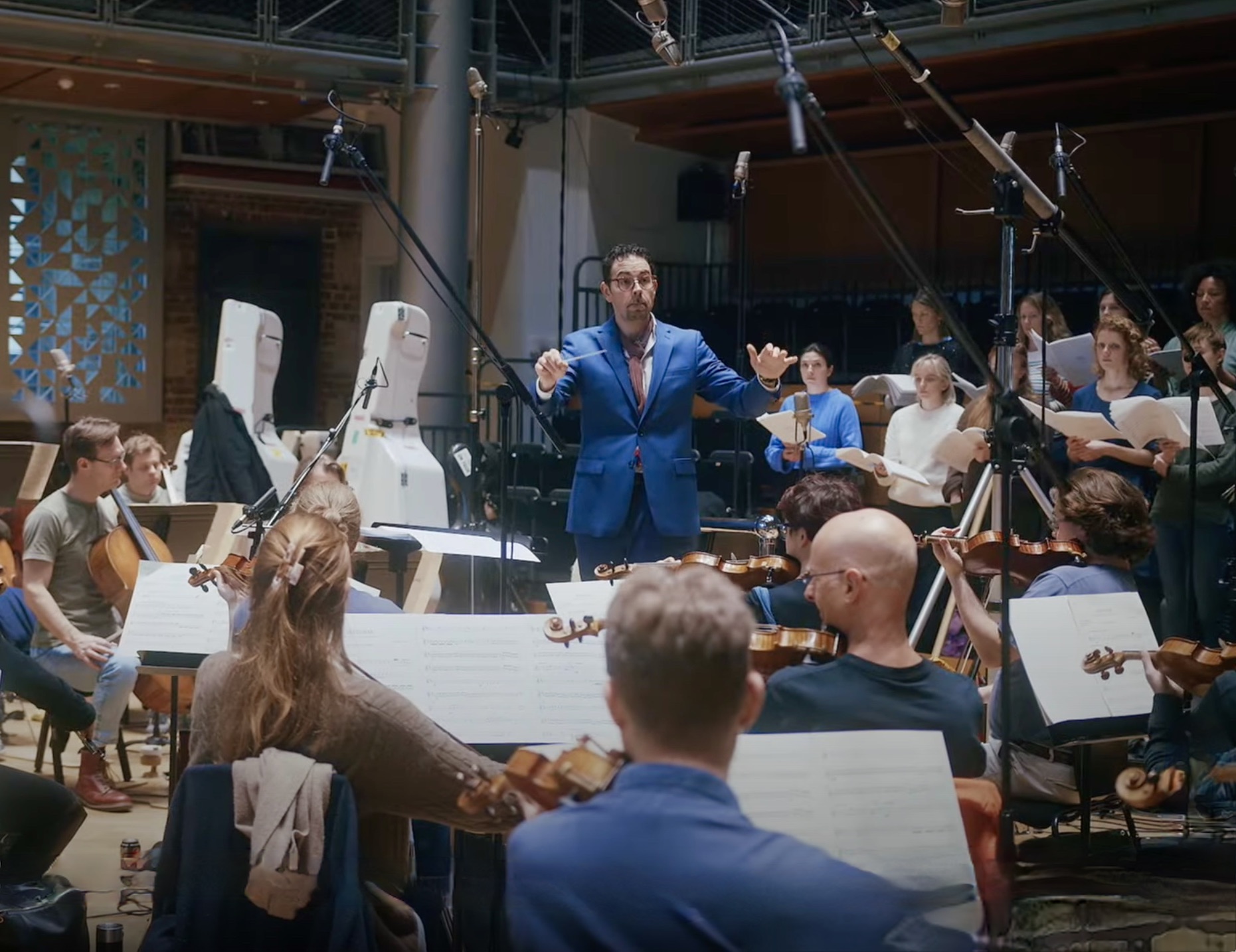
Trotta conducting the London Symphony Orchestra and London Voices while recording his “Requiem”

As an amateur listener, I find that Trotta’s compositions and arrangements are evocative of traditional art forms without sounding imitative. Composed in creative dialogue with musical history, his work retains what we might call a traditional ‘vocabulary.’ This may have parallels with what we can discern in various works by contemporary practitioners of other art forms. Parallel examples of an engagement with traditional elements in an artistic field may include composition and subject matter in painting; ornament or the lack of it and the use of certain structural elements in architecture; as well as selected harmonic patterns and chord sequences in music.

Nigel Short leading the ensemble, Tenebrae, accompanied by organ, while recording “Requiem” in the parish Church of St. John the Evangelist, Islington, North London

Michael John Trotta’s music helps support my renewed sense of confidence that contemporary artists and composers, as well as writers, can utilize and work creatively with inherited forms of expression and yet present new, fresh and compelling compositions. Trotta may epitomize the wisdom expressed by Jesus in another context, that “every scribe {or composer} who has been trained for the kingdom of heaven is like a master of a house, who brings out of his treasure what is new and what is old (Mt. 13:52).”

Michael John Trotta, in Carnegie Hall, conducting the premier of his compositional setting for the traditional Septem Verba Ultima (The Seven Last Words {of Christ})

The pieces that Trotta has composed and or arranged are not only musically harmonious, but also spiritually congruent with what we know about the grace-filled peace and presence of God. Michael John Trotta’s approach to the art of music can broaden our appreciation not only for beauty expressed in the past, but also for beauty as it may be presented anew today. I am very encouraged by my new experience of historically informed music that Trotta’s compositional work has opened for me.

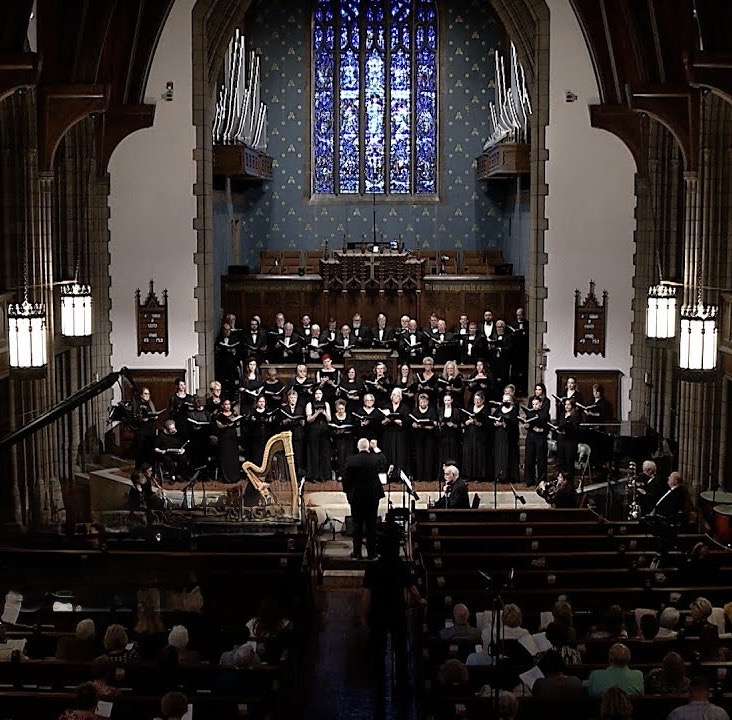
A performance of Michael John Trotta’s” Requiem,” Sunday, April 21, 2024 at Tabernacle Presbyterian Church in Indianapolis, Indiana


Since first posting this piece I have corrected a couple of the details mentioned in two of the photo captions.

Yo-Yo Ma and The Performance of Art

If reading this by email, please tap the title at the top to open your browser for the best experience. Then, clicking individual pictures will reveal higher resolution images.


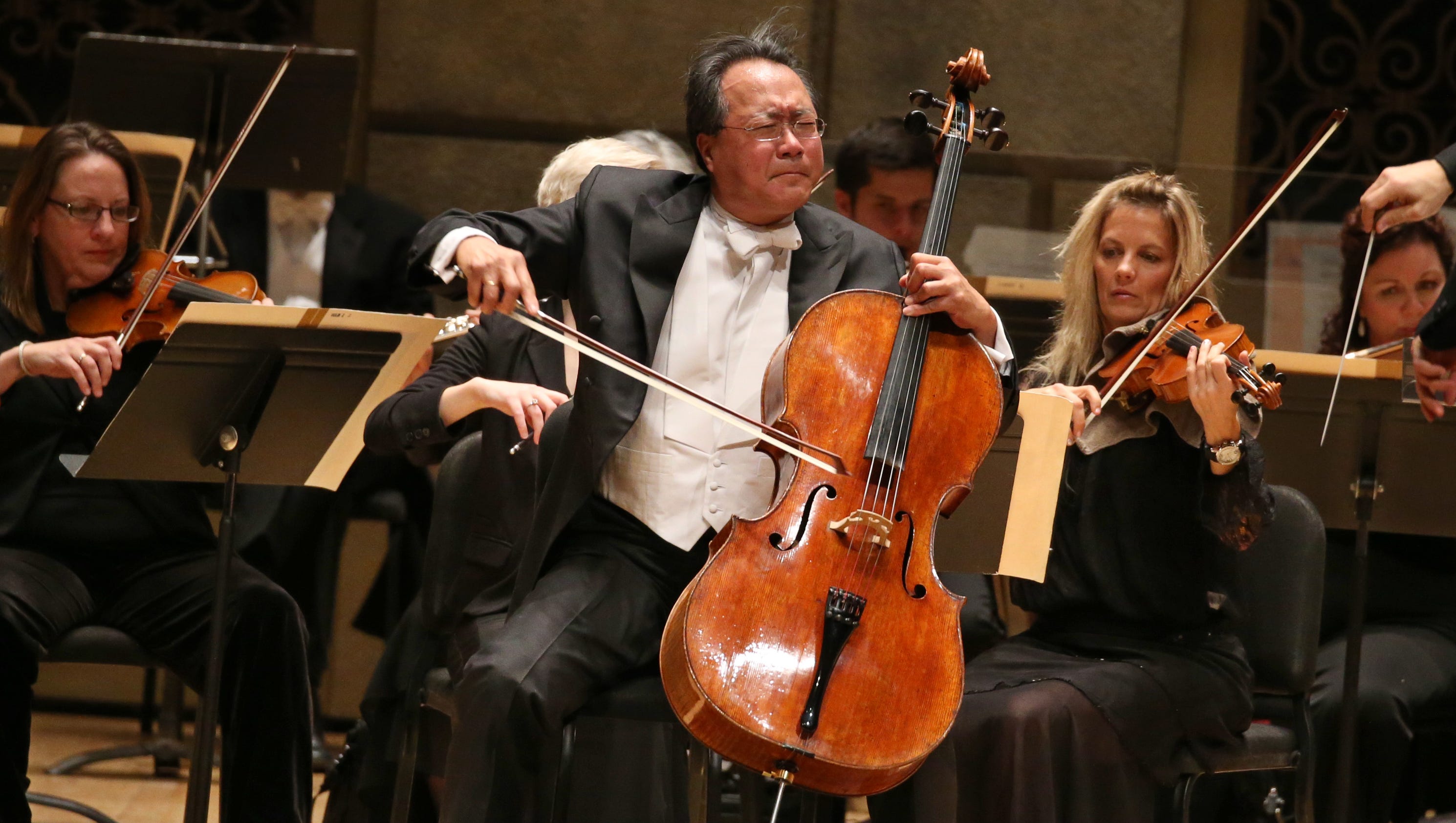
Recently, I had the opportunity to see and hear Yo-Yo Ma perform Dvorak’s Cello Concerto. Ma’s presentation of the music was stirring and evocative. Reflecting on the effect of that concert, I want to describe the experience of beauty we find in the human presentation of particular arts. The idea of performance keeps that evening in my thoughts, as well as how presentation by performers plays a significant role in certain art-forms.

When works of art are appreciated, their beauty begins to have an existence within those who encounter and engage it. This continues as we entertain those works within our imaginative and reflective consciousness. In this sense, these works of art may be said to inhabit us, having ‘taken up residence’ within our awareness, and sometimes in our dreams.

Artists convey something of the humanity we all share. They make available perceptions and insights personally important to them but which also become important to us. Artists do this by imparting aspects of their apprehension of what is beautiful, good, and or true. Appreciating their art, our perception is then made finer as we attend to their work, and as that work becomes part of us.

The creation of visual art objects such as paintings and sculptures generally occurs over a period of time, and usually happens in a private setting. Musical composition and playwriting have an affinity with the work of painters and sculptors. For writing music and plays also usually takes time and often occurs in a studio setting or personal study room. Upon completion of these works, whether paintings, sonatas, sculptures, or plays, the results may be offered to viewers and or readers. Parallel to how people often see the work of painters and sculptors, a musical composition can simply be read as a score, just as the text of a play may be read in silence by someone in a library.

In a sense, paintings are simply there. Paintings ‘speak’ in a limited way; they communicate something of an artist’s vision and experience; and, they are available for engagement by viewers who happen to, or choose to, interact with them. Yet, with works for the theater or the concert hall, something further and significantly different happens when a concerto or a play is ‘performed.’ With performances, features of the personality of the composer or writer – as well as those of the performers – are in a position to be displayed and conveyed.

Clearly, we recognize that what is shared in works of art is important to us. How musical or theatrical works of art are then presented can be just as important, especially as they are performed.

Within the visual arts, an artwork comes to inhabit the viewers who engage it. With arts that are performed, performers also inhabit the works they present. This has a significant effect upon our shared engagement with concerts and plays. And Yo-Yo Ma, as a highly skilled performer, provides a compelling example of what it means effectively to communicate a composer’s imaginative vision and passion to a receptive audience.


Note: blog settings have been changed to provide more opportunity to offer comments, using the link below.

Beauty Springeth Out of Naught

The Queen’s coffin is borne into St. George’s Chapel, Windsor


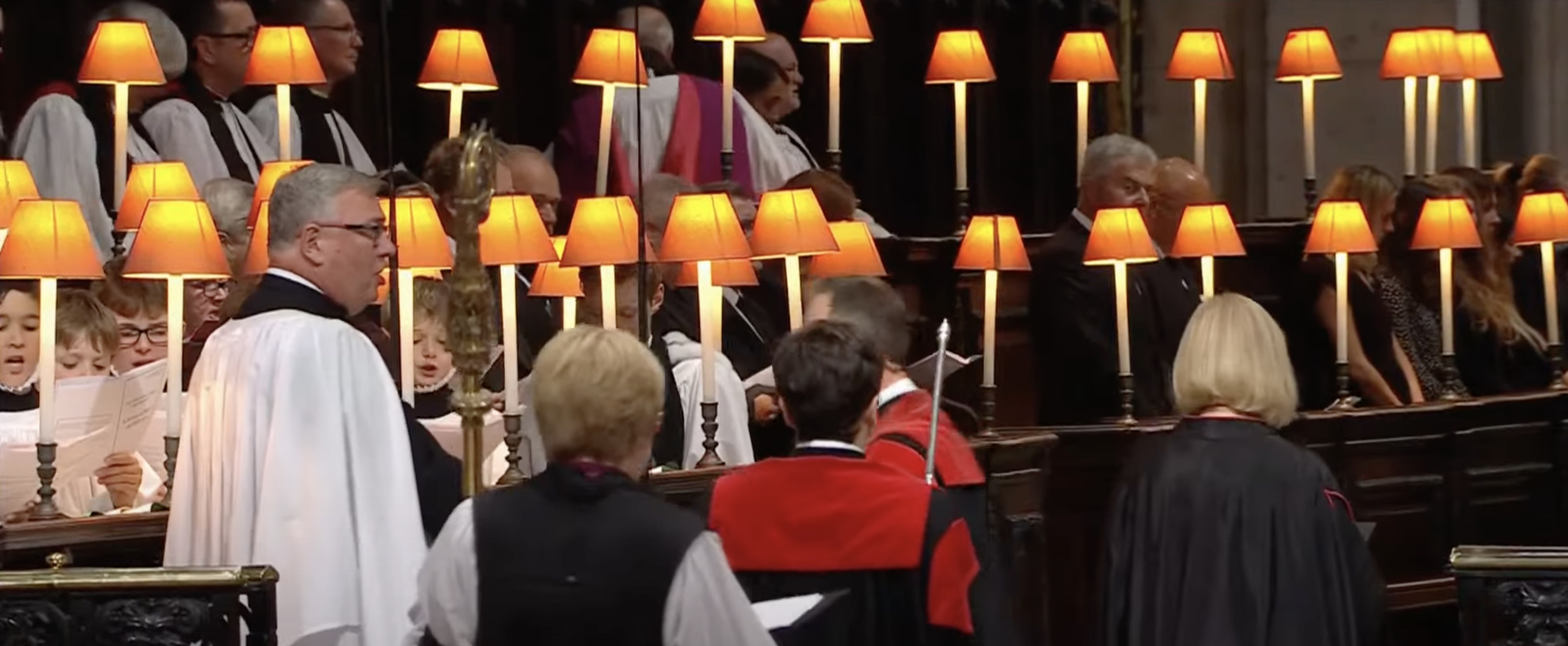
Once again, to my delight, the Robert Bridges’ text, “All my hope on God is founded,” set to Herbert Howells’ tune, Michael, was a musical selection for the Committal Service for the late Queen, this time as part of a liturgy in the more intimate setting of  St George’s Chapel, Windsor. This is a hymn tune and text that might deepen your spiritual life. It certainly has had this effect upon me.

One of the striking lines in Bridges’ remarkable hymn text, sung by the whole congregation at the Queen’s Service of Committal, is this: “God’s great goodness aye endureth, deep his wisdom, passing thought: splendour, light, and life attend him, beauty springeth out of naught.”

That line wonderfully honors the biblical account in Genesis of God’s creation of the vastly beautiful universe out of nothing, as well as the glory of the Lord’s resurrection after crucifixion from an empty tomb. It provides an encouraging reminder that even when we feel most empty, or when circumstances seem most unpromising, God brings light in the darkness, and creates beauty where ugliness seems to prevail.

Bridges’ compelling hymn text complements all that has been said in honor of the late Queen’s reliance upon her faith, her life of duty and service, and self-sacrifice. Indeed, the role of faith in her life, and her unhesitating devotion to it, are the kinds of attributes that later lead those who propose additions to the Church’s calendar to consider someone like Elizabeth II for such a fitting remembrance.

For all her hope on God was founded, and she exemplified the beauty of a well-lived public life. She might well have protested that it was an apparent ‘beauty sprung out of naught,’ but the recent fortnight of observances and demonstrations of respect show that most think and believe otherwise.This fits with how -as a sincere Christian- she truly believed that Grace provides where human limitations fall short.

Here is the full text of the hymn. Verse 2 was omitted at the Queen’s Committal service, perhaps out of sensitivity regarding her solemn commitment to upholding the institution of the monarchy. But I very much doubt that the Queen had any hesitation about the generic point of those words.

All my hope on God is founded;
he doth still my trust renew.
Me through change and chance he guideth,
only good and only true.
God unknown,
he alone
calls my heart to be his own.

Human pride and earthly glory,
sword and crown betray his trust;
what with care and toil he buildeth,
tower and temple, fall to dust.
But God’s power,
hour by hour,
is my temple and my tower.

God’s great goodness aye endureth,
deep his wisdom, passing thought:
splendour, light, and life attend him,
beauty springeth out of naught.
Evermore
from his store
new-born worlds rise and adore.

Daily doth th’ Almighty giver
bounteous gifts on us bestow;
his desire our soul delighteth,
pleasure leads us where we go.
Love doth stand
at his hand;
joy doth wait on his command.

Still from earth to God eternal
sacrifice of praise be done,
high above all praises praising
for the gift of Christ his Son.
Christ doth call
one and all:
ye who follow shall not fall.

Based on its inclusion in the September 9 Service of Remembrance (along with an anthem setting by Howells), and it having been featured again at the September 19 Committal service, this hymn was surely one of the Queen’s favorites. For we are told that she selected all the music and other liturgical and ceremonial details for these recent services. With its lyrical melody, and its positive and faith-stirring text, so fitting to the Queen and her life, “All my hope on God is founded” is another treasure among works offered for Anglican worship and liturgy.


The photos above are screen capture images from the Royal Family’s YouTube channel recording of the Committal Service for Her Majesty The Queen.

The Truth Within Beauty


There is something remarkable about traditional English and Anglican choral music. We hear it in the sustained notes sung without vibrato, and the full throated melodical willingness almost to shout out the most stirring words in beloved anthems.

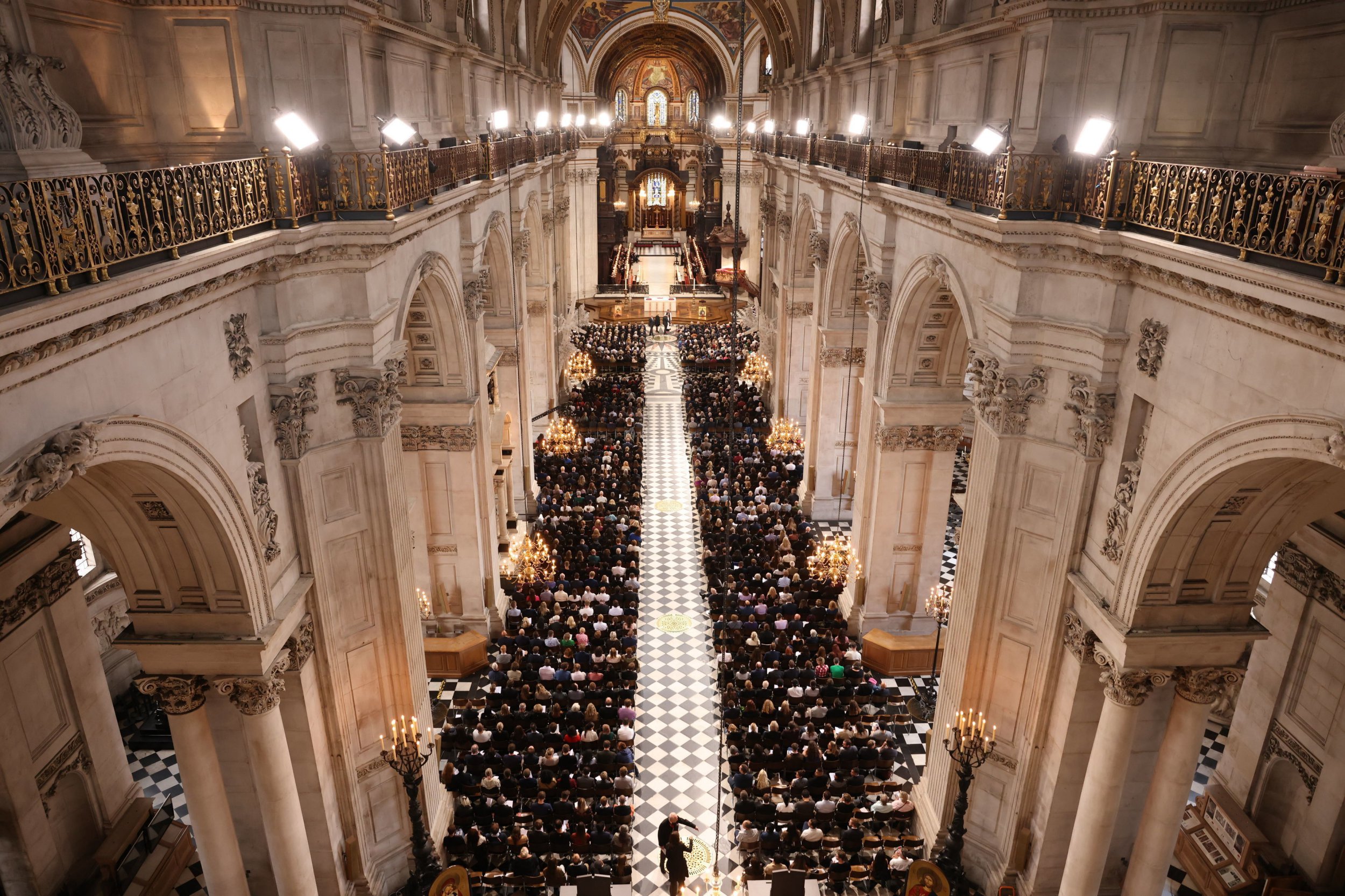
For me, this was most movingly displayed in the recent Service of Prayer and Reflection on the Queen’s Life, broadcast from St Paul’s Cathedral, London, following the televised address by the new King Charles.

The beautifully lyrical Herbert Howells tune, Michael, set for the processional hymn, was a most appropriate way to begin this liturgy remembering Elizabeth. Especially with its text, so meaningful for the occasion (“All my hope on God is founded…”). And then, to my further wonder, the first anthem was also a stirring setting by Howells, and sung in the most inspiring way by the cathedral choristers.

Having lived almost six years in England, all of it at Oxford, with the opportunity to hear Evensong sung by equally gifted choirs on a daily basis during term, has surely disposed me to a particular bias. English Anglicans can do liturgy and ceremony in the most superior and yet also spiritually evocative way, especially when it is non-politicized. We have much to learn from them on this side of ‘the pond.’

Perhaps it is first a willingness – by some of the most reticent people I have lived and worked with – to reach for and grasp at transcendence. And then, to express that desire and its fulfillment in worship, in a way that is so compelling for many. Witness two thousand seats filled on short notice in a first come, first served way for the Prayer and Reflection service for Queen Elizabeth. Many of those among the congregation appeared moved by the experience though it was also apparent that not all were familiar with Anglican hymns or forms of worship.

I would suggest that it was, and will remain, in large part the capacity of music – and music well-composed and well-prepared – which draws people into the power of beauty, and which also creates experiences of transcendence and of truth. Yet it is also the power of the word, both in the form of the words of the liturgies as well as in the Word as presented in Scripture. Well-chosen and well-presented biblical and liturgical texts, as well as those prepared for proclamation, allow people unfamiliar with the Christian faith and its customary practices to find themselves stirred. For this preparation and these practices invite others to be curious about the transcendent motivation behind and accounting for these remarkable occasions of public worship.

I have no doubt that the Queen’s upcoming funeral will provide no less of such an experience.


The above photos are screen captures of images from the UK’s Sky News streaming rebroadcast of the Service of Prayer and Reflection on the Queen’s Life, from St. Paul’s Cathedral, London (https://www.youtube.com/watch?v=KgOridFp7Do). Here is a link to the full text of that service (C ofE_Anglican_service_of_prayer_and_reflection_1)

I offer this with grateful thanks for the music ministry of John Hamersma, Mary Hamersma Baas, and Benita Woltersdorf-Fredlund, whose ministries have not only enriched my life and those of many others, but also have changed and affirmed our lives forward in a most positive way.