Liturgy

The Truth Within Beauty


There is something remarkable about traditional English and Anglican choral music. We hear it in the sustained notes sung without vibrato, and the full throated melodical willingness almost to shout out the most stirring words in beloved anthems.

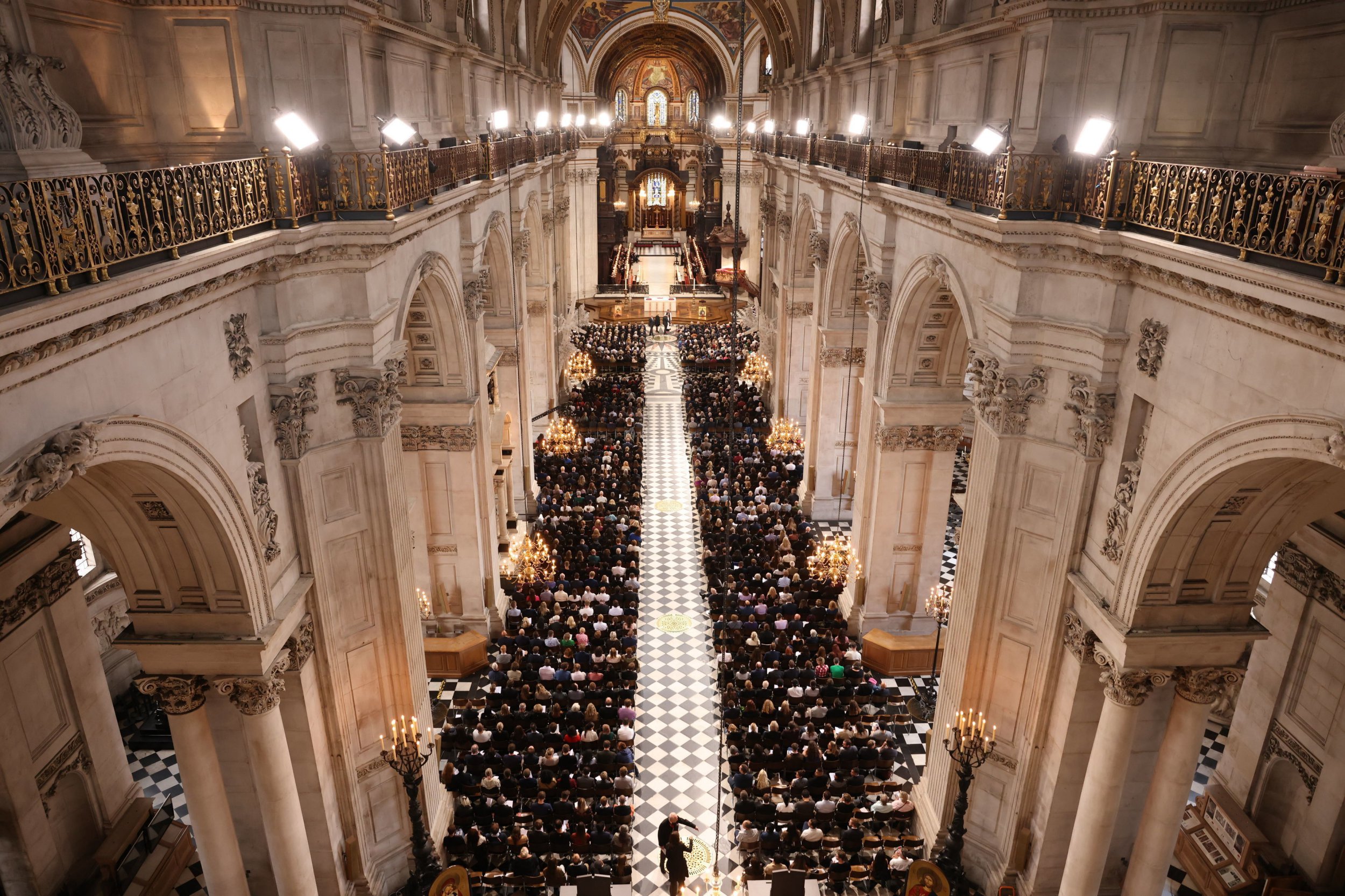
For me, this was most movingly displayed in the recent Service of Prayer and Reflection on the Queen’s Life, broadcast from St Paul’s Cathedral, London, following the televised address by the new King Charles.

The beautifully lyrical Herbert Howells tune, Michael, set for the processional hymn, was a most appropriate way to begin this liturgy remembering Elizabeth. Especially with its text, so meaningful for the occasion (“All my hope on God is founded…”). And then, to my further wonder, the first anthem was also a stirring setting by Howells, and sung in the most inspiring way by the cathedral choristers.

Having lived almost six years in England, all of it at Oxford, with the opportunity to hear Evensong sung by equally gifted choirs on a daily basis during term, has surely disposed me to a particular bias. English Anglicans can do liturgy and ceremony in the most superior and yet also spiritually evocative way, especially when it is non-politicized. We have much to learn from them on this side of ‘the pond.’
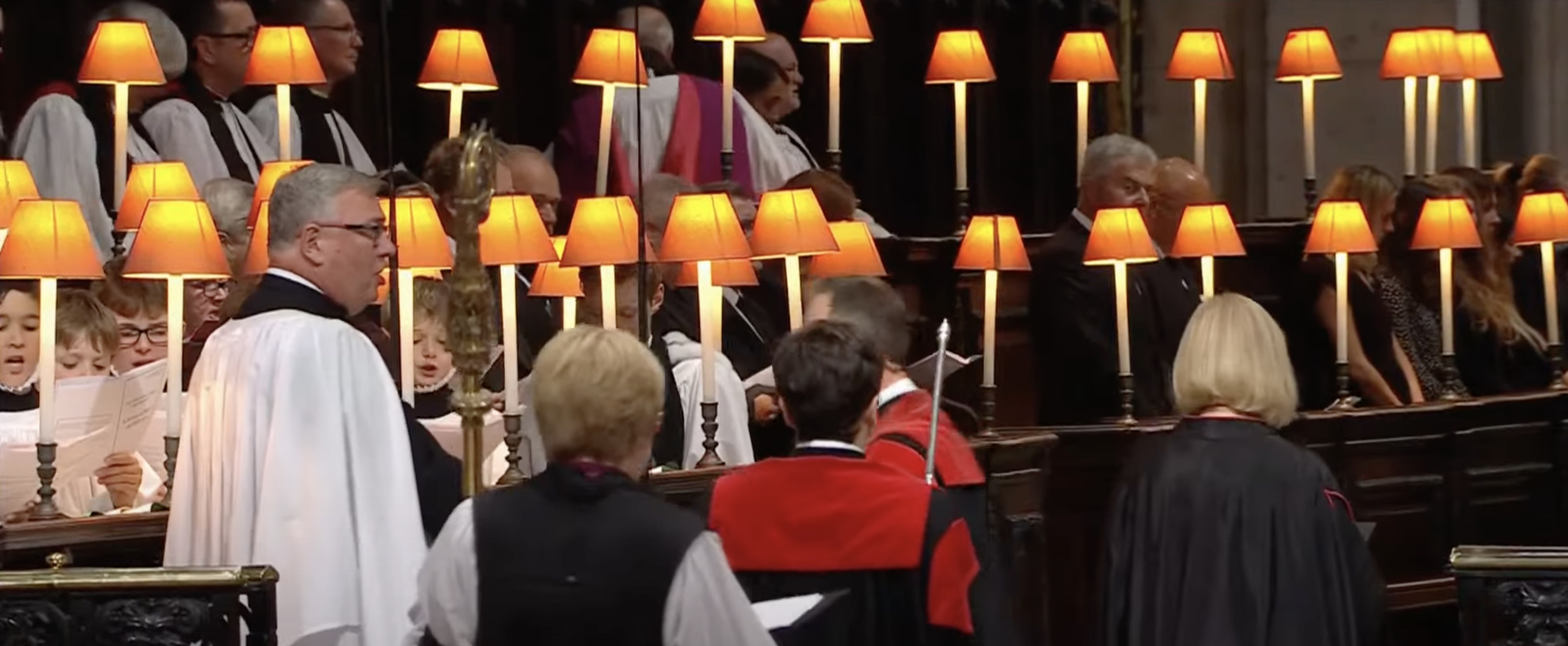
Perhaps it is first a willingness – by some of the most reticent people I have lived and worked with – to reach for and grasp at transcendence. And then, to express that desire and its fulfillment in worship, in a way that is so compelling for many. Witness two thousand seats filled on short notice in a first come, first served way for the Prayer and Reflection service for Queen Elizabeth. Many of those among the congregation appeared moved by the experience though it was also apparent that not all were familiar with Anglican hymns or forms of worship.

I would suggest that it was, and will remain, in large part the capacity of music – and music well-composed and well-prepared – which draws people into the power of beauty, and which also creates experiences of transcendence and of truth. Yet it is also the power of the word, both in the form of the words of the liturgies as well as in the Word as presented in Scripture. Well-chosen and well-presented biblical and liturgical texts, as well as those prepared for proclamation, allow people unfamiliar with the Christian faith and its customary practices to find themselves stirred. For this preparation and these practices invite others to be curious about the transcendent motivation behind and accounting for these remarkable occasions of public worship.

I have no doubt that the Queen’s upcoming funeral will provide no less of such an experience.


The above photos are screen captures of images from the UK’s Sky News streaming rebroadcast of the Service of Prayer and Reflection on the Queen’s Life, from St. Paul’s Cathedral, London (https://www.youtube.com/watch?v=KgOridFp7Do). Here is a link to the full text of that service (C ofE_Anglican_service_of_prayer_and_reflection_1)

I offer this with grateful thanks for the music ministry of John Hamersma, Mary Hamersma Baas, and Benita Woltersdorf-Fredlund, whose ministries have not only enriched my life and those of many others, but also have changed and affirmed our lives forward in a most positive way.

The Beauty of Kingdom Potential


What has Jim Janknegt depicted with his painting? Right away, we can see that he portrays the Kingdom mustard seed parable in Mark’s Gospel. With his focus on this parable, we should remember that the Gospels include two kinds of mustard seed teaching. One is in Jesus’ parable ~ about the huge potential of what God can do with apparently small bits of the Kingdom. Jesus’ other teaching is about the tremendous potential of what we might accomplish through personal believing, especially given how personal faith can otherwise be deficient or defective.

To help recognize this difference, between Jesus’ Kingdom parable and his other teaching referring to the size of our personal believing, consider what we see in Janknegt’s painting. In the foreground we see things we usually think of as being big ~ like big cities, their large buildings and the businesses they house. Dwarfing them is a great tree, which may represent the ‘Tree of Life.’ Like the small mustard seed, the great tree that it becomes represents what the Spirit is doing with God’s Kingdom.

Notice the community for which the great tree provides a place of habitation ~ a community characterized by many birds, including both a beautiful peacock and a spoonbill, an owl and a descending dove. In traditional mythology, birds represent communication between the realm of the sky and the realm of the land, or between the heavenly sphere and that of the earth. The Tree of Life provides a context for this communication, and for the Kingdom community that God’s Spirit nurtures between the two.

If we ever worry or despair about the smallness of our faith, we should remember Jesus’ emphasis upon the huge potential of God’s Kingdom power. The seed of this Kingdom potential is planted within us at our Baptism.


This post is based on my homily for Sunday, June 17, 2018. Jim Janknegt’s painting, Worlds Smallest Seed, is used here with his permission. {Editorial note: I preached on this Gospel reading, and referenced Janknegt’s evocative painting again on Sunday, Jun 16, 2024. Here is a link to my reflections on the same Gospel reading.}

The Arms of Love

Today we commemorate Charles Henry Brent, who in 1902 was called from a slum parish in Boston to serve as Missionary Bishop of the Philippines, arriving on the same ship as William Howard Taft, the territorial Governor and future President. Brent’s missionary vision was evident in his sustained commitment to minister to those at the margins, his work toward ecumenical unity among churches, and his pastoral oversight as a bishop. A much loved prayer written by Brent is now one of the prayers for mission in the Book of Common Prayer:

Lord Jesus Christ, you stretched out your arms of love on the hard wood of the cross that everyone might come within the reach of your saving embrace: So clothe us in your Spirit that we, reaching forth our hands in love, may bring those who do not know you to the knowledge and love of you; for the honor of your Name. (BCP:101)

Through our small hands, his great arms of love still reach out to embrace the world, and touch everything within it. Through our hands those arms of love transform our work and our play, so that small activities and projects become part of his greater and divine work of love.

Not just through the hands of the priest who reaches out to hold a baby at the font, but also through the hands of a neonatal nurse who tends a newborn in the hospital; the hands of a teacher who writes a supportive comment on a young students worksheet, and a parent who tucks a child into bed at night.

The Lord of glory stretches out arms of love through the hands of painters who help us see light, the hands of poets who put down patterns of words to help us perceive what is true, and the hands of musicians who express harmonies rooted in a beauty more profound than we can create by ourselves.

I hope you see glimpses of those great arms of love at work through your hands.

(Shown above is John Singer Sargent’s bronze casting of a plaster study he did (around 1900) in preparation for his mural series at the Boston Public Library. Both the Hirshorn Museum in Washington and the Tate in London have examples.)